Bleaching brown hair to blonde takes at least one session with 20-volume developer, 50 minutes max on the hair, and about $50 in materials.
Most home attempts stall at orange because people rinse too early or skip the toner that cancels brass. Lift to level 9 or 10 first, then match your toner to that base: level 10 toner for level 10 hair, or the result stays yellow.
1. Prep Hair Before Bleaching
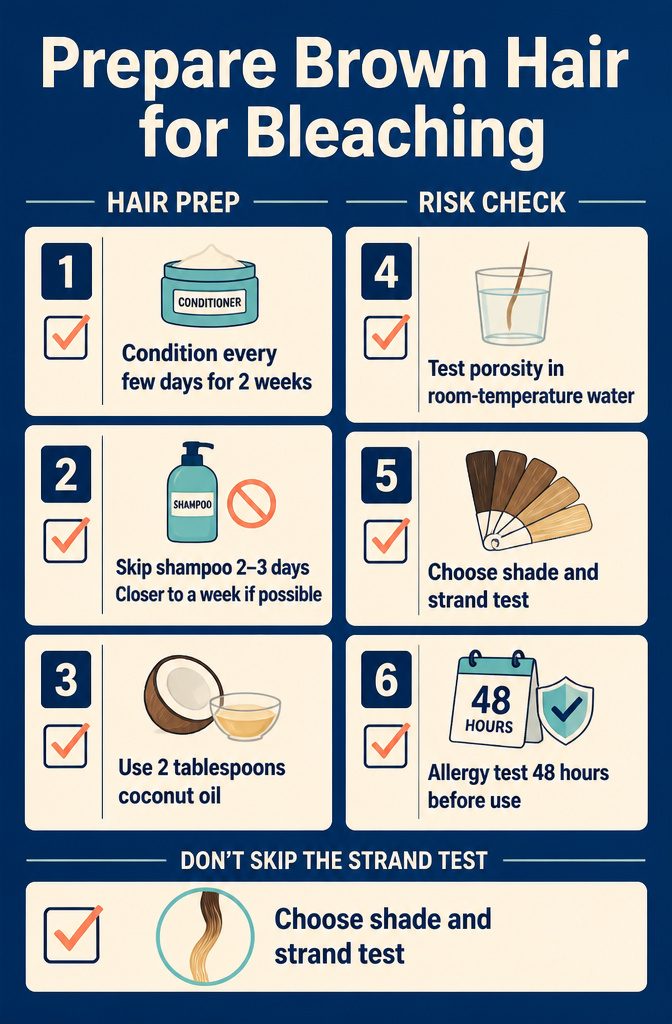
Start about 2 weeks out with this checklist:
- Condition every few days for 2 weeks.
- Skip shampoo for 2–3 days, closer to a week if you can; your scalp oils shield your skin.
- Coat dry hair in about 2 tablespoons of coconut oil the night before.
- Test porosity: a clean strand in room-temperature water sinks (high), hovers (medium) or floats (low). High porosity grabs bleach fast, so go gentler.
- Choose your target shade, then strand test it.
Garnier puts the skin check plainly:
You should do an allergy alert test 48 hours before each use of the product.
— Garnier
That means every box, even if you’ve bleached before.
2. Choose Developer and Mix
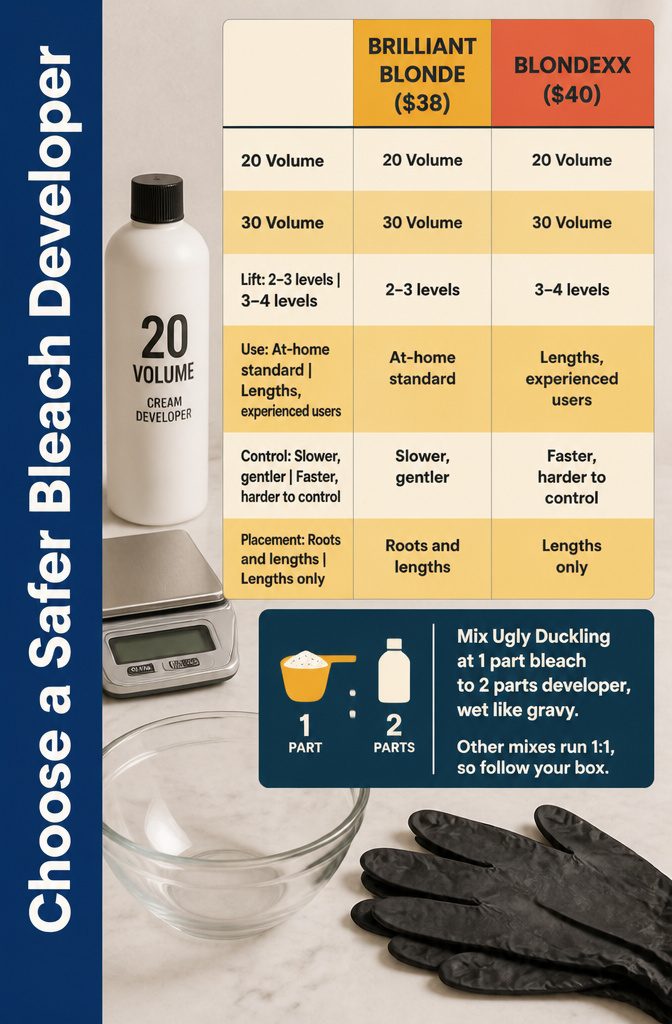
Stay at 20 volume or lower and the lift is slower but much less likely to leave hot spots.
The alternative is 30 on the lengths and 20 at the roots for a 5–6 level jump, which I’d leave to anyone who has bleached before.
| Volume | Lift | Use |
|---|---|---|
| 10 | n/a | Gentle |
| 20 | 2–3 levels | At-home standard |
| 30 | 3–4 levels | Lengths, with experience |
| 40 | n/a | Professionals |
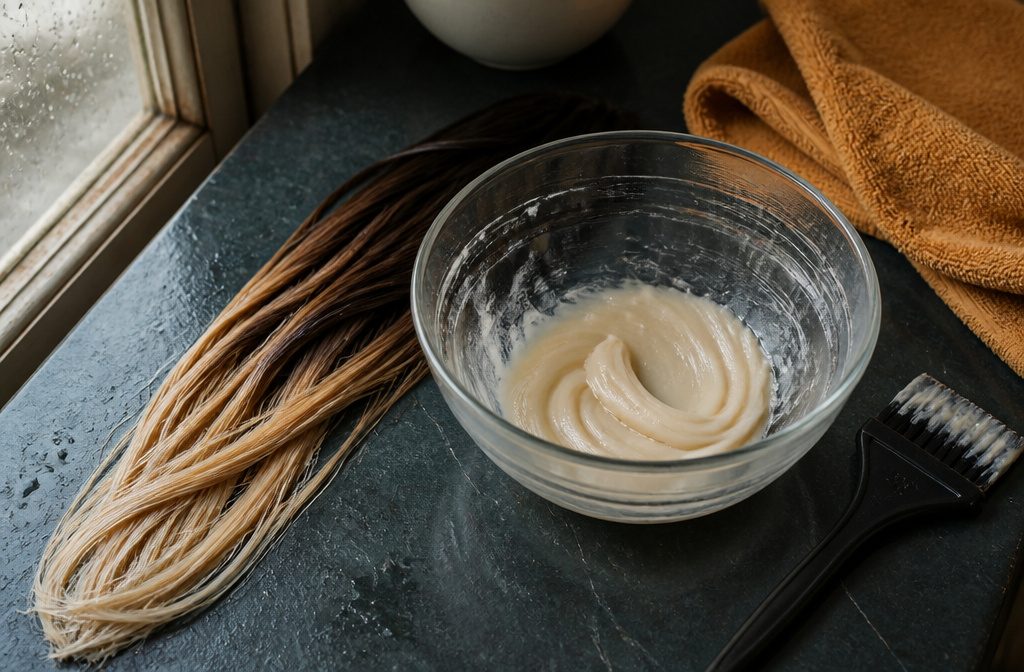
Mix Ugly Duckling at 1 part bleach to 2 parts developer, wet like gravy.
Other mixes run 1:1, so follow your box. Brilliant Blonde lifts up to 8 levels and Blondexx up to 7, at $38 and $40.
3. Section and Apply
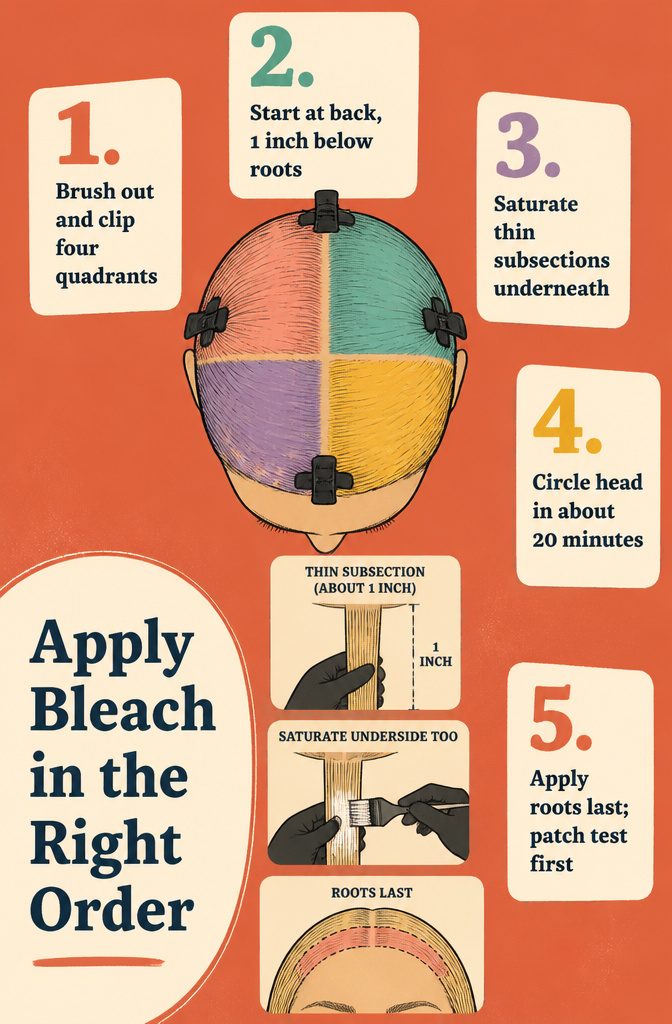
- Brush out knots, then divide your hair into four quadrants, two front and two back, and clip each one. Thick hair can take up to 6 sections.
- Start at the back, where hair is thickest and lifts slowest. Begin 1 inch below the roots and work the mix through mid-lengths and ends.
- Take thin subsections, about 1 inch thick if your hair is fine. Flip each one over and saturate the underside too, so no spot gets missed.
- Move quadrant by quadrant and aim to circle the whole head in about 20 minutes. On previously lightened hair, keep bleach off the old color; overlapping can turn it mushy.
- Do the roots last, since body heat makes them lift fastest. Test a small patch first, because bleach can itch.
4. Process, Check, Rinse
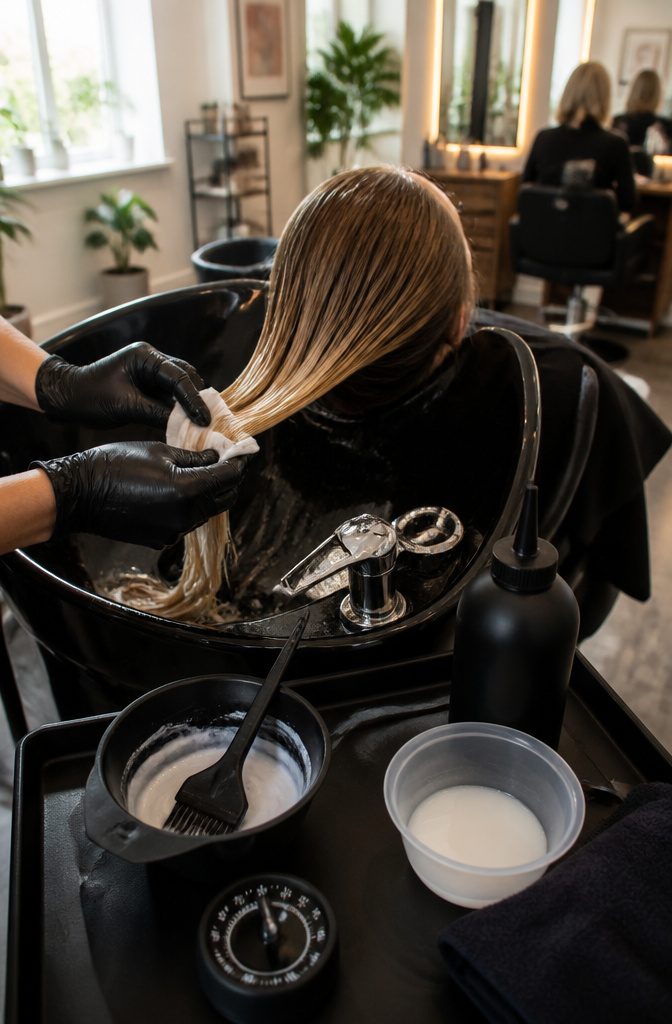
Rinse by color, not the clock.
Wipe the bleach off one strand around the 5-minute mark and look at the shade underneath. Rinse once the whole head is a consistent level 9 or 10, with no brassy yellow or orange patches left, because those block your toner later.
Garnier allows 20–30 minutes on the lengths and another 20 for the roots, and one box caps you at 50 minutes.
Treat those as ceilings, not targets. If your hair lifts early, it comes out early.
For a gentle 1–2 shade lift, a bleach bath is the better call: bleach and developer cut with equal parts clarifying shampoo, checked every 5–10 minutes. It will not take jet-black hair to platinum, and I wouldn’t ask it to.
5. Tone the Result
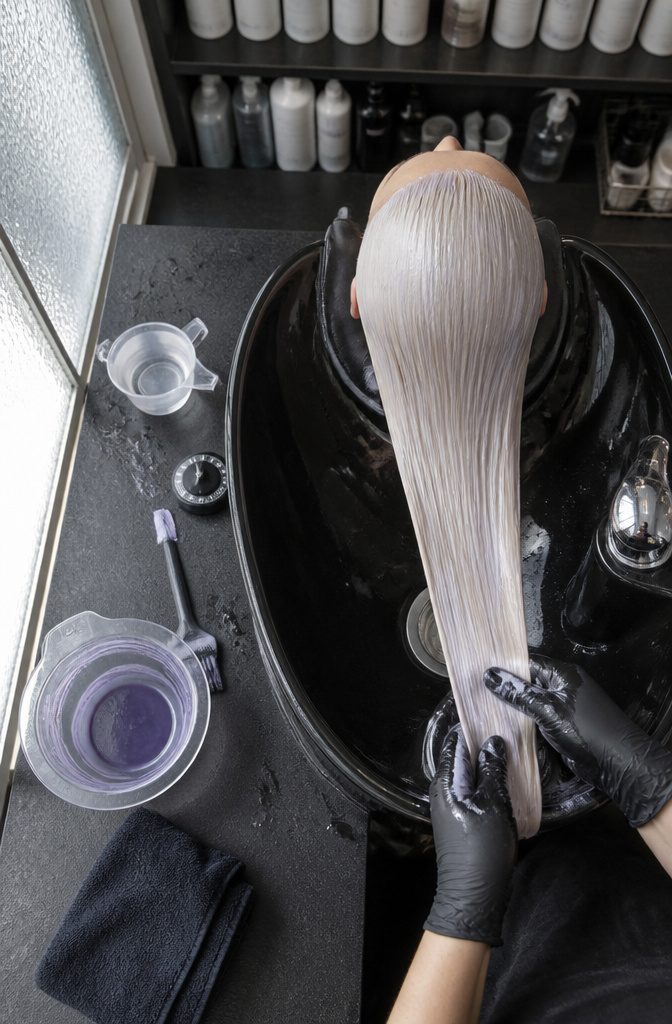
Toner cancels the orange and yellow left behind once the bleach is rinsed out.
It comes in three types: intense-lift, regular-lift and non-lift gloss. On well-lifted hair, a non-lift Blondify liquid toner is the easy route.
Pour it over the hair, rub it in, and leave it for 10 minutes. Match the toner to the hair: level 10 toner for level 10 hair, level 9 for level 9.
In the regular-lift range, violet-based Pearl Blonde gives a white, pearl-like blonde, while blue-based Silver Blonde looks like a more natural white. For a very pale base, I’d choose Wella T18.
Toner is demi-permanent, so reapply it every 6–8 weeks. The listed toners cost $19 each.
Why Brown Hair Turns Orange
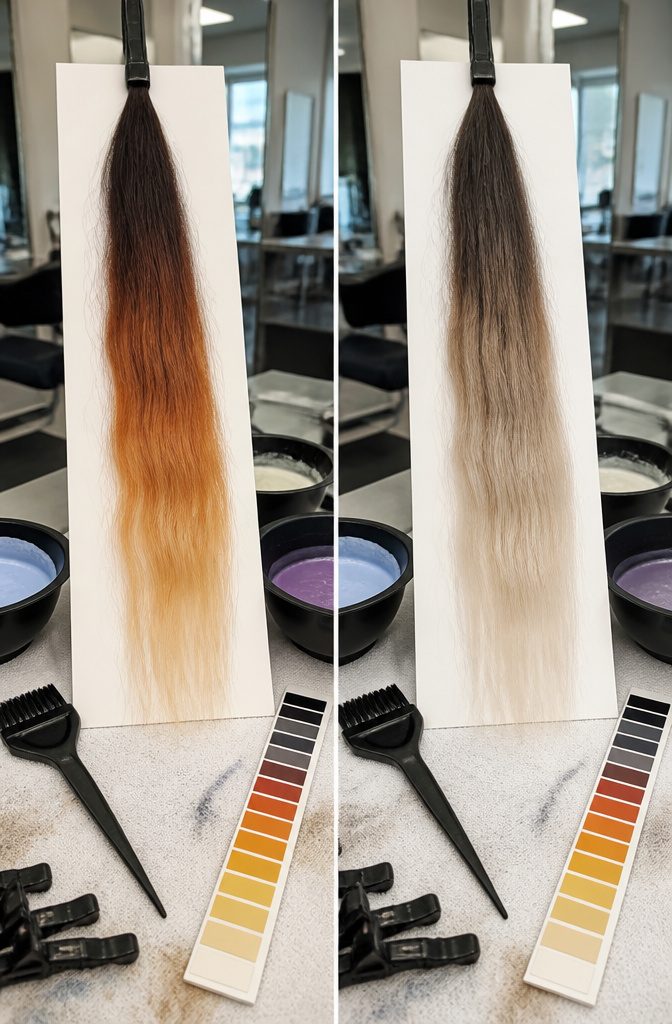
Brown hair hides warm pigment, and bleach uncovers it in stages. On the 1–10 scale, where 1 is jet black and 10 is the palest blonde, a level 4 dark brown lifts through red, then orange, then yellow.
Brown to blonde means a 5–6 level lift, so I’d plan on more than one round. A common routine for very dark hair is two bleachings and one toning, while all-new-growth hair may need just one.
Blue toner cancels orange and purple cancels yellow. Toner can’t work through leftover brass, so lift to level 9 first, using a lower-volume developer for a gradual, even lift.
Damage Risks at Home
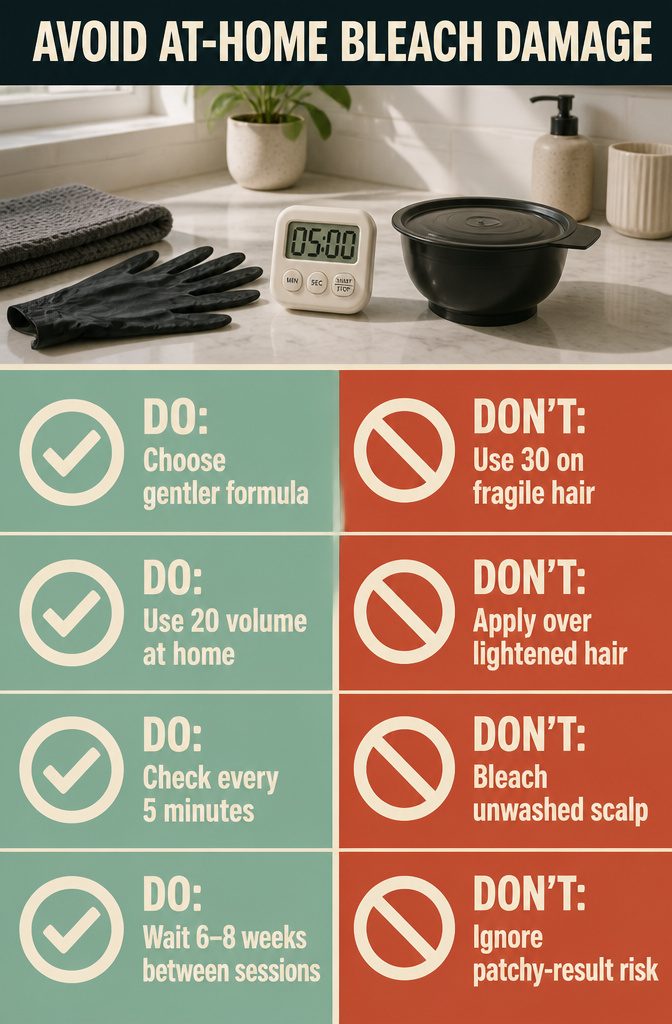
Bleaching at home can work, but these risks decide whether it does:
- Porosity and prior color change how bleach reacts, so dyed or high-porosity hair needs a gentler formula.
- Stronger developer lifts faster and is harder to control. At home, 20 volume is the safer pick and 30 is the ceiling, only on healthy, virgin hair. Check every 5 minutes.
- Unwashed hair keeps natural oils that cushion the scalp.
- Keep bleach off hair that is already lightened; apply only to new growth.
- Wait 6–8 weeks between sessions, and at least 3 weeks for an early touch-up.
- Salons charge $300–500 plus a 20% tip; home materials run about $50. I’d still book a stylist if a patchy result would upset you.
Aftercare for Bleached Hair
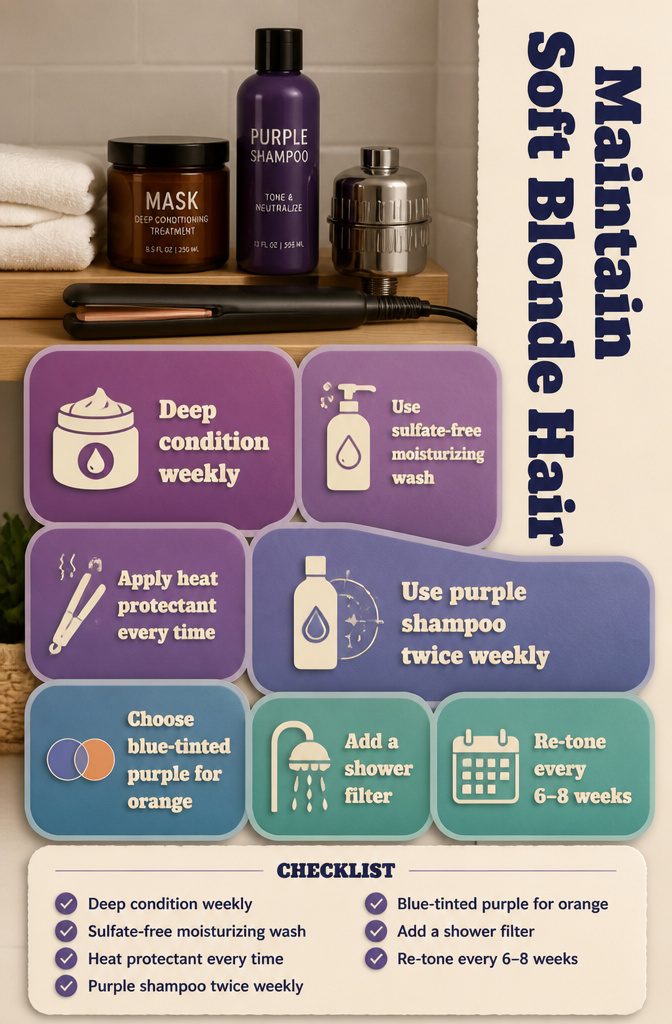
Bleached hair stays soft and on-tone with a short routine, and I’d keep every piece of it:
- Deep condition weekly. A rich mask replaces lost moisture and smooths the lifted cuticle, so strands look shiny instead of straw-like.
- Use sulfate-free, moisturizing shampoo and conditioner. Sulfates also strip toner, which shortens its life.
- Limit heat. Apply a heat protectant every time a tool touches your hair.
- Fight brassiness with purple shampoo twice a week. Hair bleached to a lighter brown does better with a blue-tinted purple, since blue cancels orange. Alternate it with a color-protective shampoo to avoid a lilac cast, or use a purple mask.
- Add a shower filter. Iron in hard water pushes bleached hair toward orange.
- Re-tone every 6–8 weeks with a demi-permanent toner.
Frequently Asked Questions
Can brown hair be bleached blonde?
Yes, brown hair can be bleached blonde with the right products and technique. Most dark brown hair requires a 5–6 level lift, often needing 2 bleaching sessions and 1 toning session to reach pale blonde without orange tones.
How do you bleach dark hair without it turning orange?
Use 20 volume developer for a slower, more controlled lift and rinse only when your hair reaches level 9 or 10 with no brassy patches.
Follow with a blue-toned toner to cancel any remaining orange, since brown hair uncovers warm pigment as it lifts.
What color does brown hair turn when bleached?
Brown hair lifts through stages of red, orange, and yellow before reaching blonde. A level 4 dark brown typically shows orange tones midway through the process, which is why toning after bleaching is necessary for a clean blonde result.
Should I wash my hair before bleaching it?
Skip shampoo for 2–3 days before bleaching, or closer to a week if possible. Your scalp’s natural oils protect your skin from irritation and reduce damage during the bleaching process.
How often can you bleach your hair?
Wait 6–8 weeks between bleaching sessions, or at least 3 weeks for an early touch-up. Bleaching strips the hair, so longer intervals allow it to recover and reduce the risk of breakage.
Can you bleach wet hair?
You can bleach wet hair, but water dilutes the bleach and makes it less effective. Apply bleach to dry hair for better, more predictable lift.
How do you care for bleached hair?
Use sulfate-free moisturizing shampoo and conditioner, deep condition weekly, and limit heat styling with a protectant every time. Add purple shampoo twice a week to fight brassiness and re-tone every 6–8 weeks to keep the color fresh.