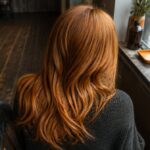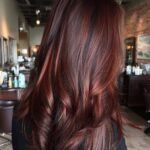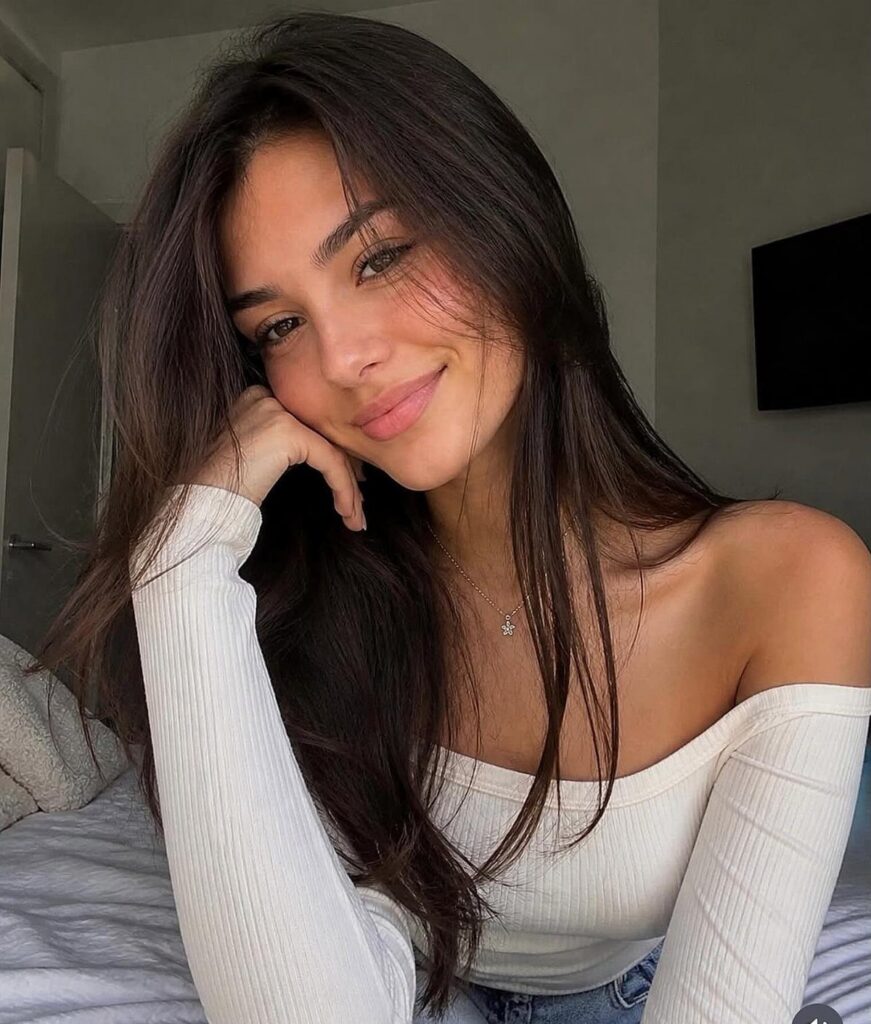
Skin undertone steers the choice: golden, warm complexions look best in chocolate with a hint of red, while cool or olive complexions suit deep, velvety browns that carry no red at all.
The range runs from Pure Cocoa, one all-over brown with no highlights to maintain, to Butterscotch Balayage, chocolate brown with caramel ribbons.
Start with Choosing Tones for Complexion, then read Color-treated Hair Maintenance to see how much upkeep you’ll sign up for; that’s the order I’d go in.
1. Chocolate Cherry Hair
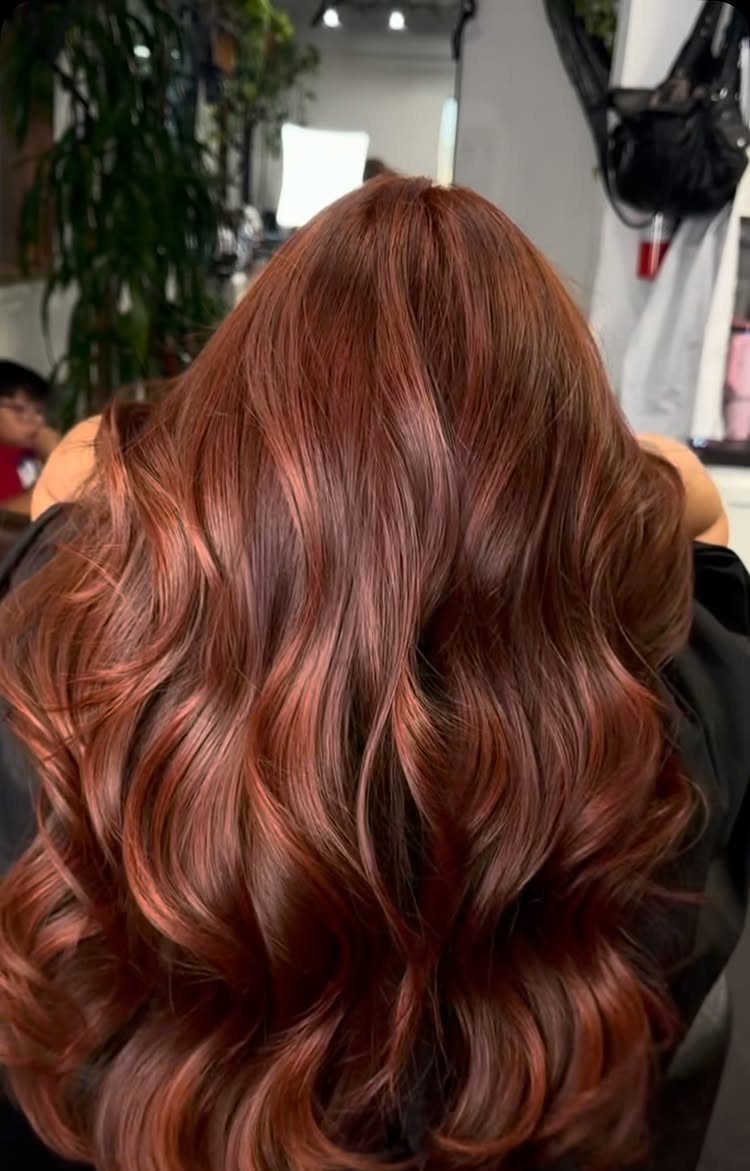
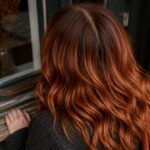
Red is only a whisper in this color. Chocolate brown holds the foundation, and the cherry only appears where the loose waves catch light.
When you book, ask for a chocolate base warmed with cherry, and say whether you want it brighter (cherry) or moodier (burgundy). I lean toward cherry on waves, because the movement lets the red flicker instead of sitting flat.
2. Caramel Balayage
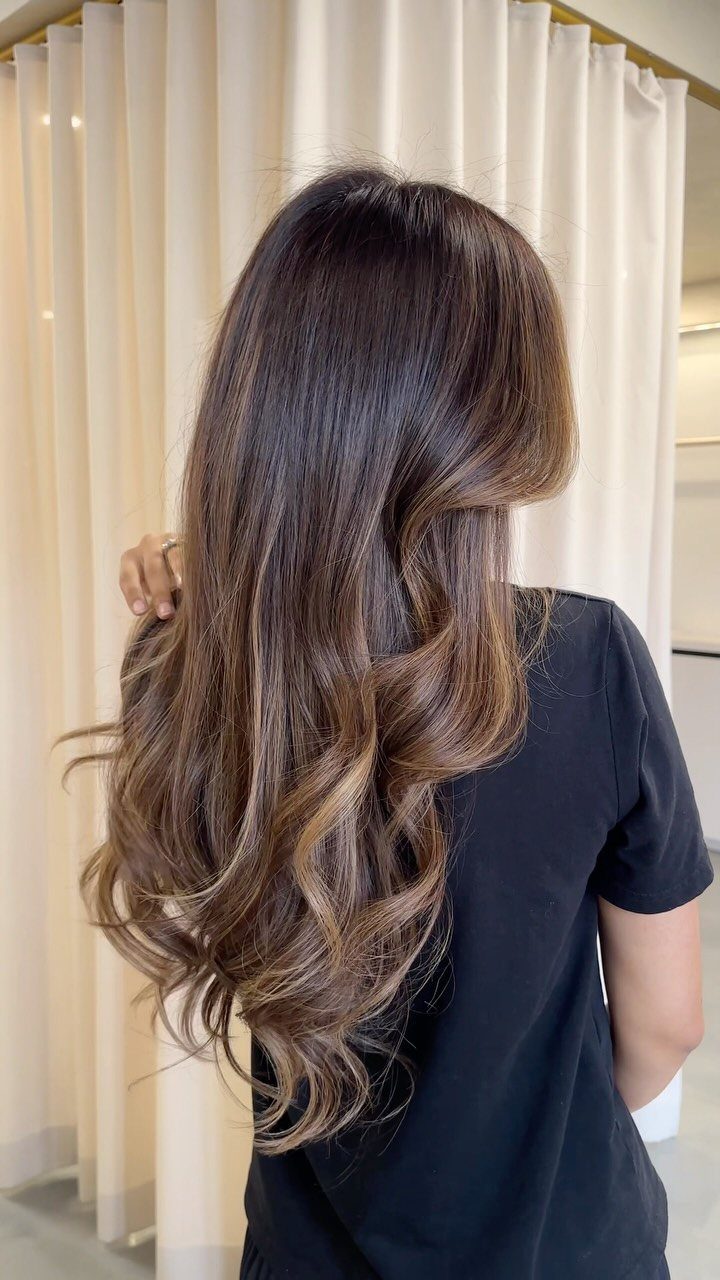
Ask for balayage by name and you get caramel painted by hand, with no hard lines between it and the chocolate base.
That soft blend is the whole look, so tell your stylist you want it diffused through the lengths rather than set in stripes.
Each curve in a long wave shifts which tone sits on top, so this color looks best on hair with length and movement. I’d keep the caramel clearly lighter than the base so the contrast reads.
3. Dark Chocolate with Highlights
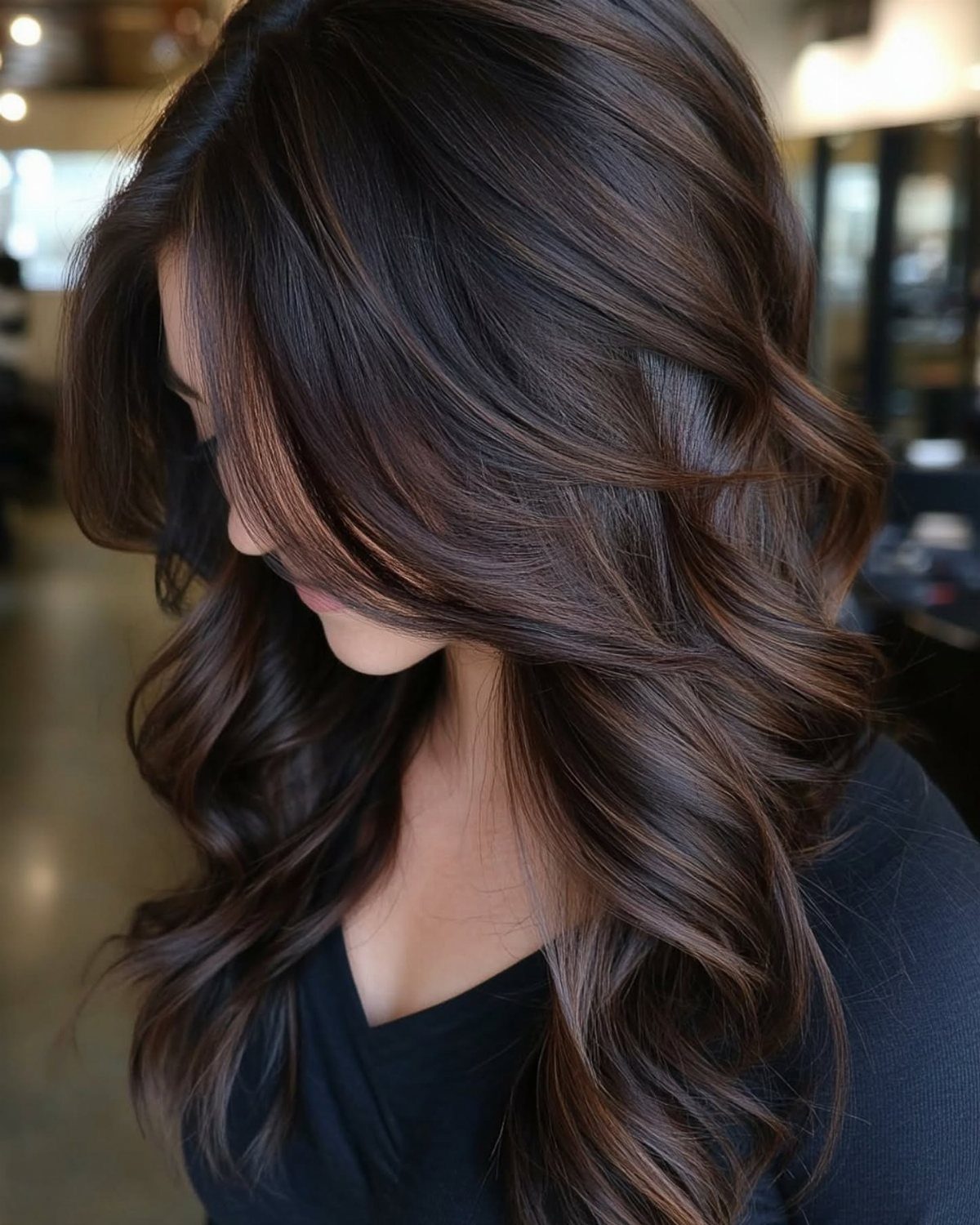
Subtle is the word to say out loud in the chair. This look keeps the deep dark-chocolate base in charge and adds only a few fine, lighter pieces around it.
Highlights that sit close to the base color give dimension without making the hair look striped.
If you’re unsure, I’d go fewer and finer, because more can always be added at the next visit. Wavy texture helps, scattering the lighter strands through the length.
4. Honey Highlights
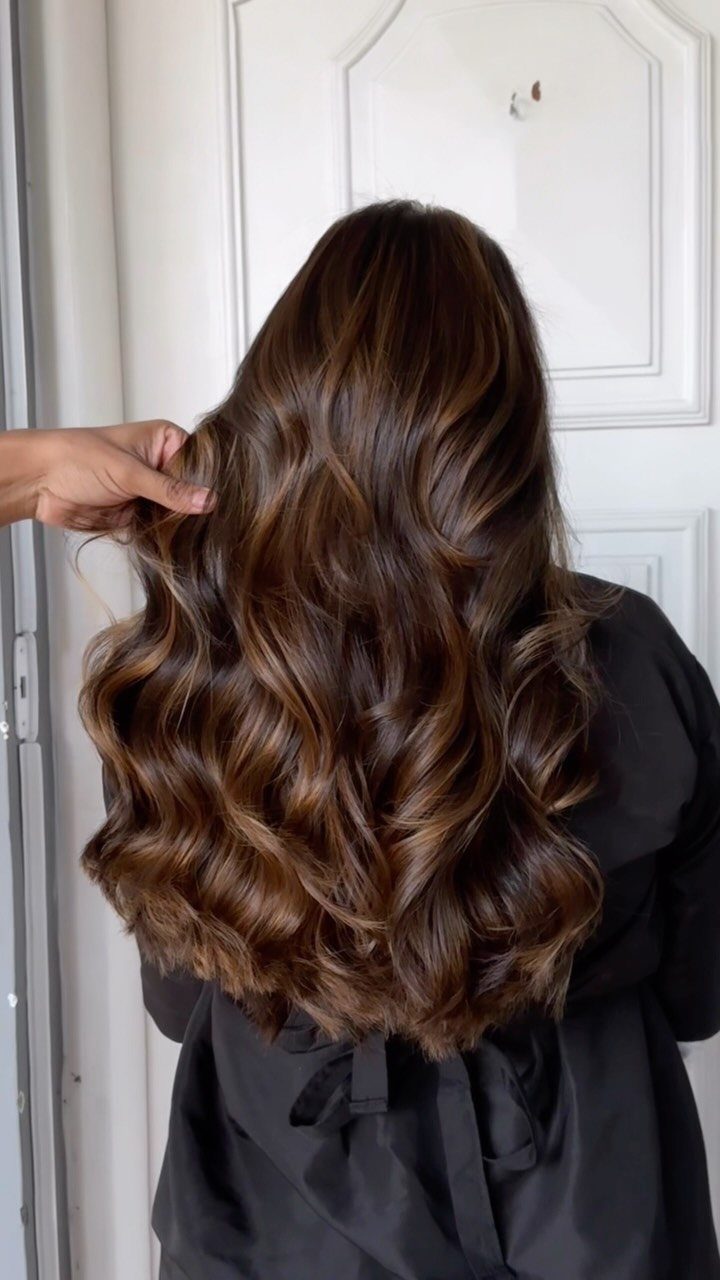
Honey brings a sunlit warmth to chocolate brown, and curls spread it nicely, flashing gold on the turn of each curl.
Name the tone as honey when you book, since "blonde" or "caramel" can send a stylist somewhere else.
I like honey best when it’s concentrated in a few pieces rather than a full head of foils, so the chocolate base still reads as the main color.
5. Light Chocolate Brown
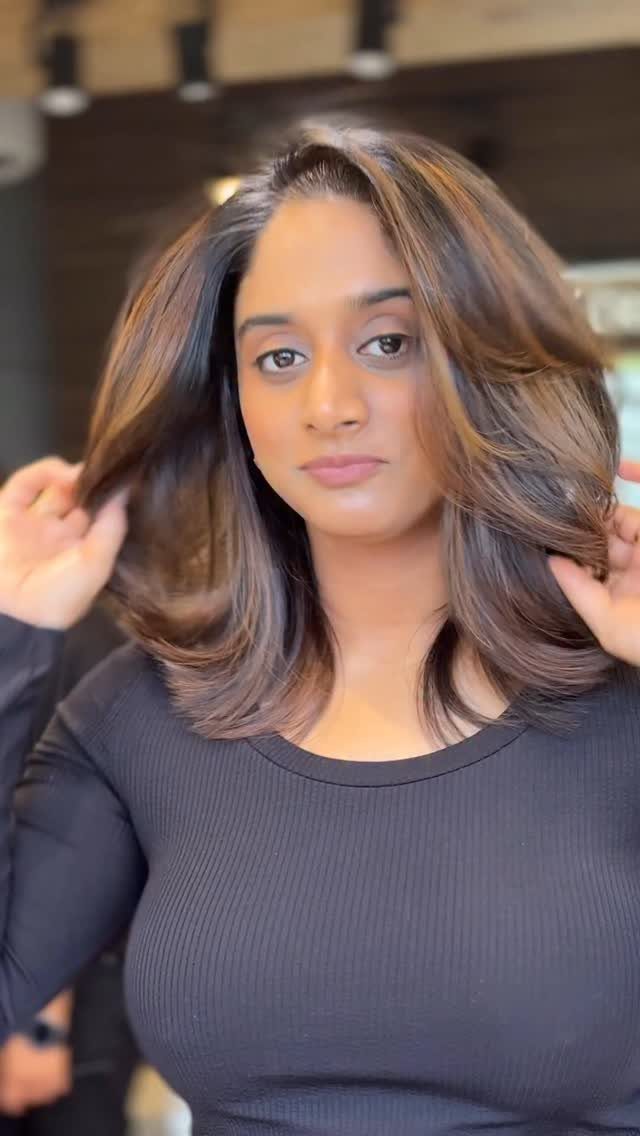
"Light" means different things to different stylists, so bring a photo and point at the exact brightness you want.
Light chocolate brown sits a step softer than deep brunette, with enough lift that warm highlights show up without any bleach-blonde contrast.
Volume suits it.
Blown-out length lets the brighter shade glow instead of falling flat against the face. If deep brown feels heavy on you, this is the easier place to start.
6. Cinnamon Chocolate Brown
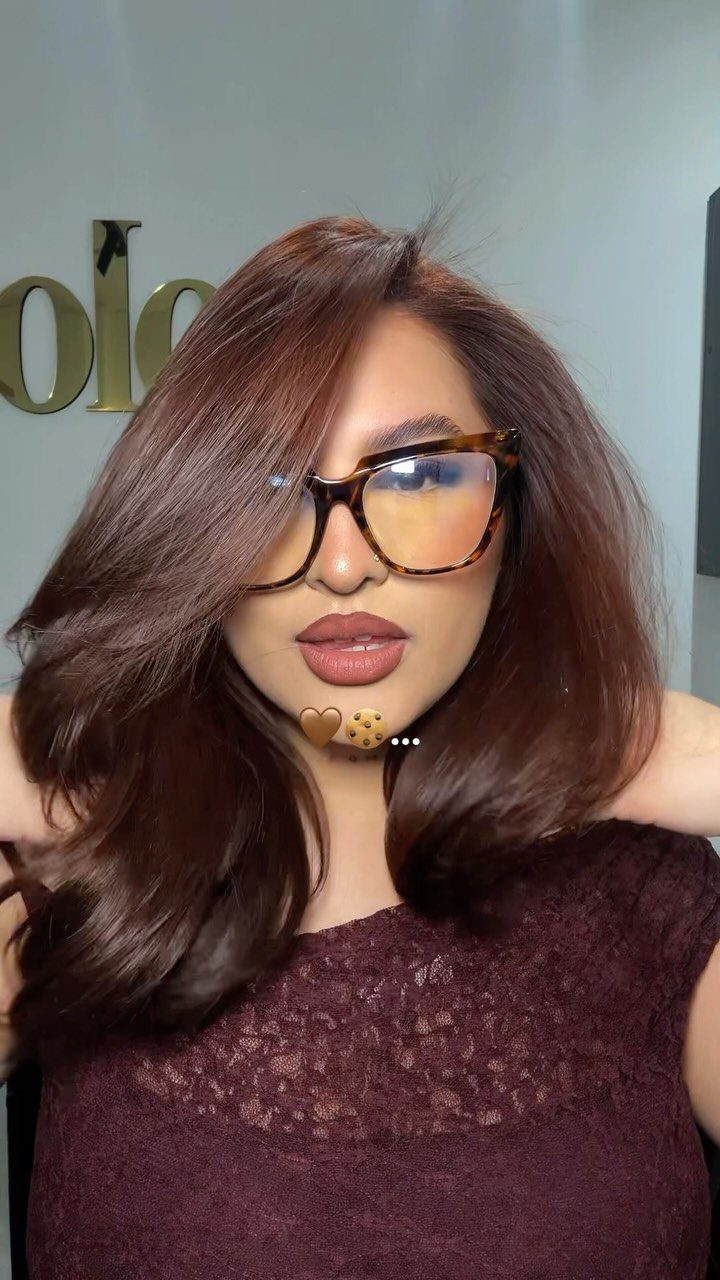
Spice is the best way to describe it: chocolate brown with cinnamon and copper running through, warm without turning fully red.
Ask for cinnamon or copper-brown accents on a chocolate base, and mention that you want them to read as brown first.
Long hair gives the color room to shift from deep at the roots to warmer through the ends. For red warmth that stays in the brunette family, I’d pick this over a full auburn.
7. Chocolate Mocha Hair
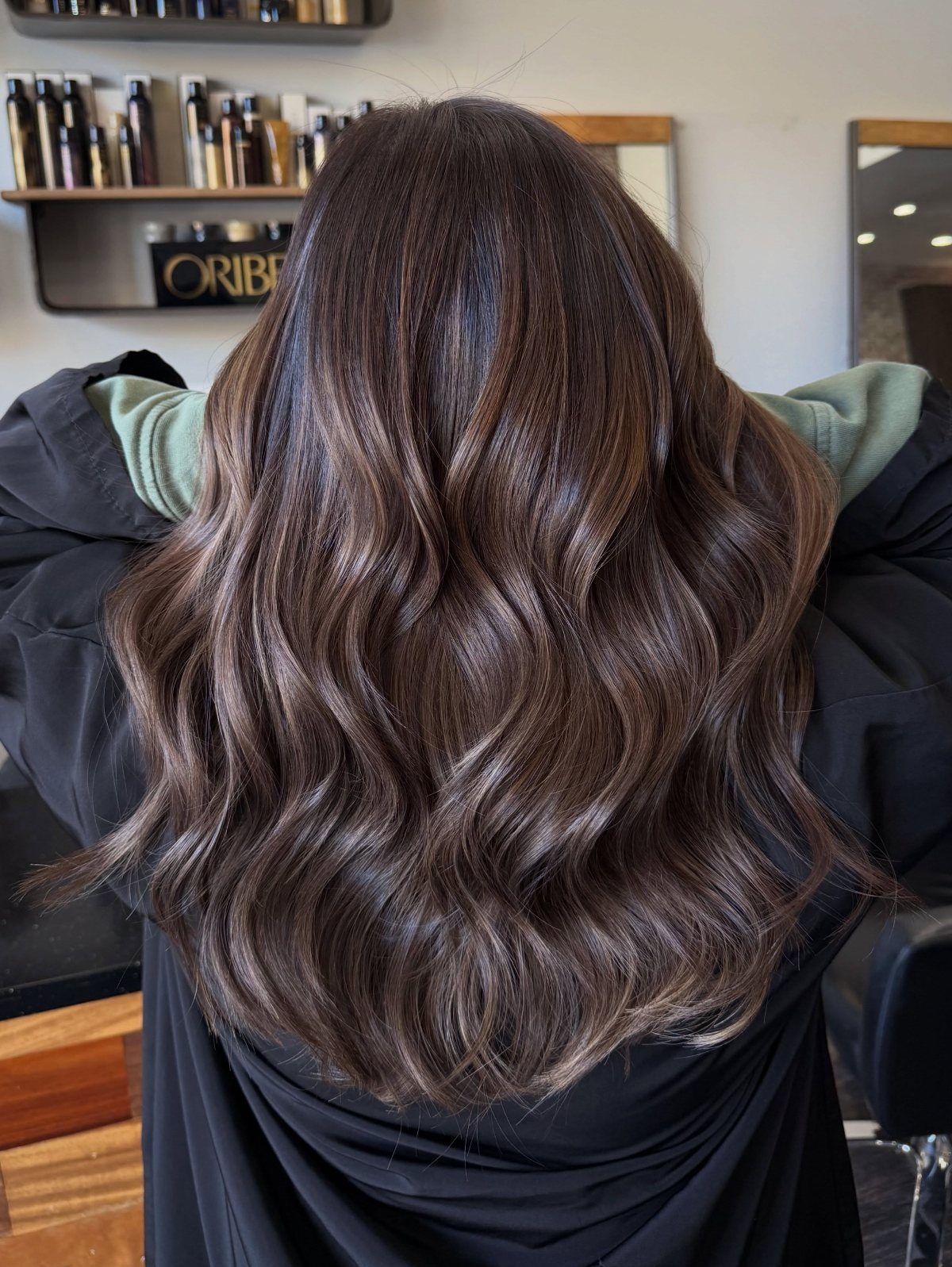
Cool espresso tones run through a chocolate-brown base, which leaves the shade deep and glossy rather than warm. Ask for espresso blended into the chocolate, and say you want the cool side of mocha.
Waves show that blend off, since each bend catches a different depth of brown. I’d skip anything golden with it, because warmth would pull the mocha away from its cool, quiet finish.
8. Golden Bronze
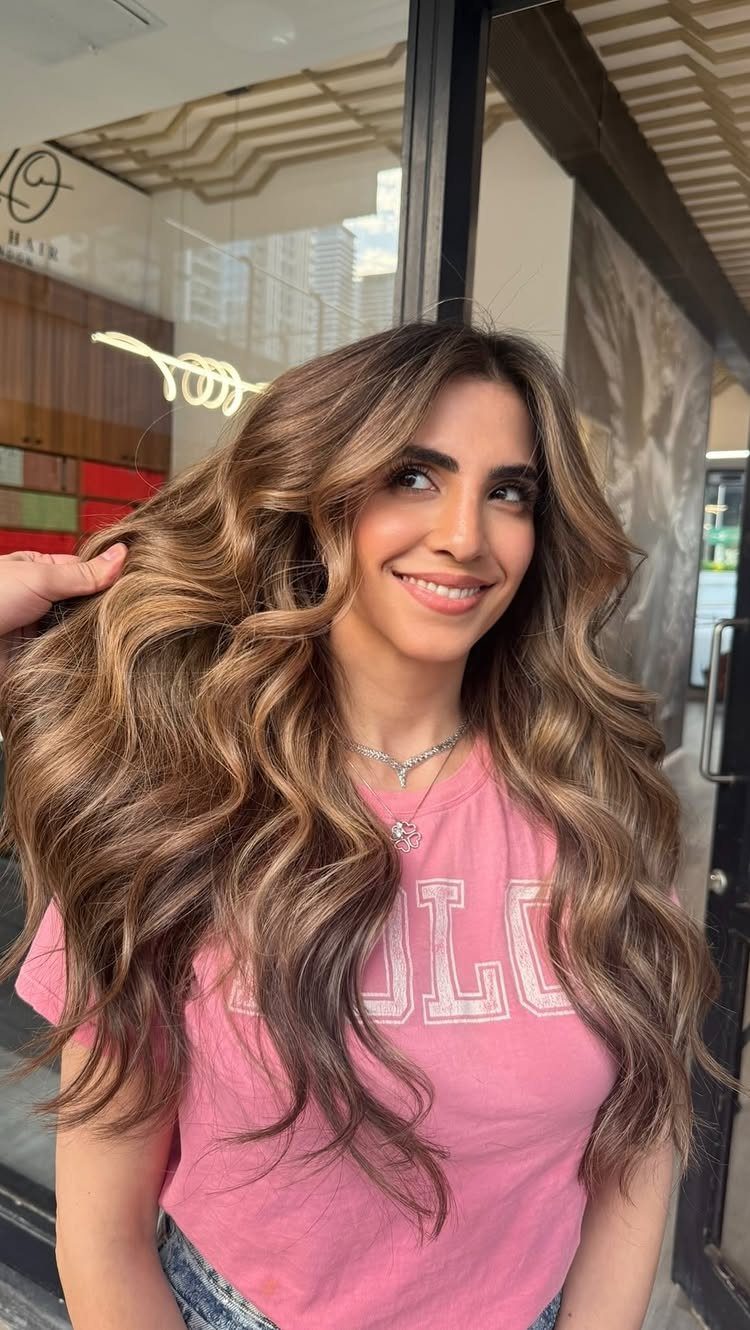
Sunny without being red: that is what golden bronze does for a brown base. The undertone leans gold, so it brightens the hair without any copper or auburn showing up.
Use the words "golden bronze" at booking, and add that you want no red.
Long waves give the highlights room to spread across the length. I’d choose this over a cinnamon shade if you want brightness that stays clearly brunette.
9. Bronze Highlights
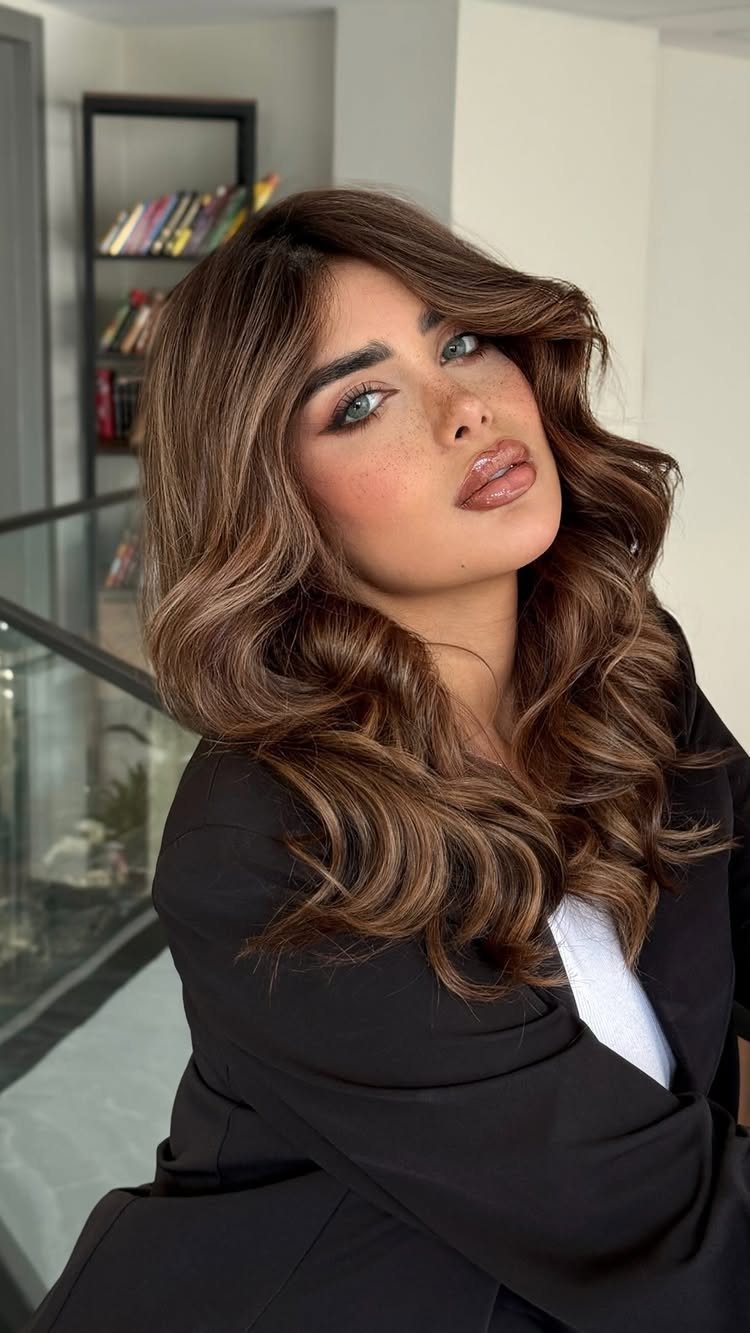
Bronze gives chocolate brown a faintly metallic warmth, as if the highlights were catching lamplight. Caramel accents sit beside the bronze and keep the whole color from going flat.
Ask for bronze and caramel together on a chocolate base, and bring a photo so your stylist can match the exact depth.
Waves help, because they break the highlights into soft pieces. I like it best when the bronze stays fine and the base stays dominant.
10. Espresso with Hazelnut Ribbons
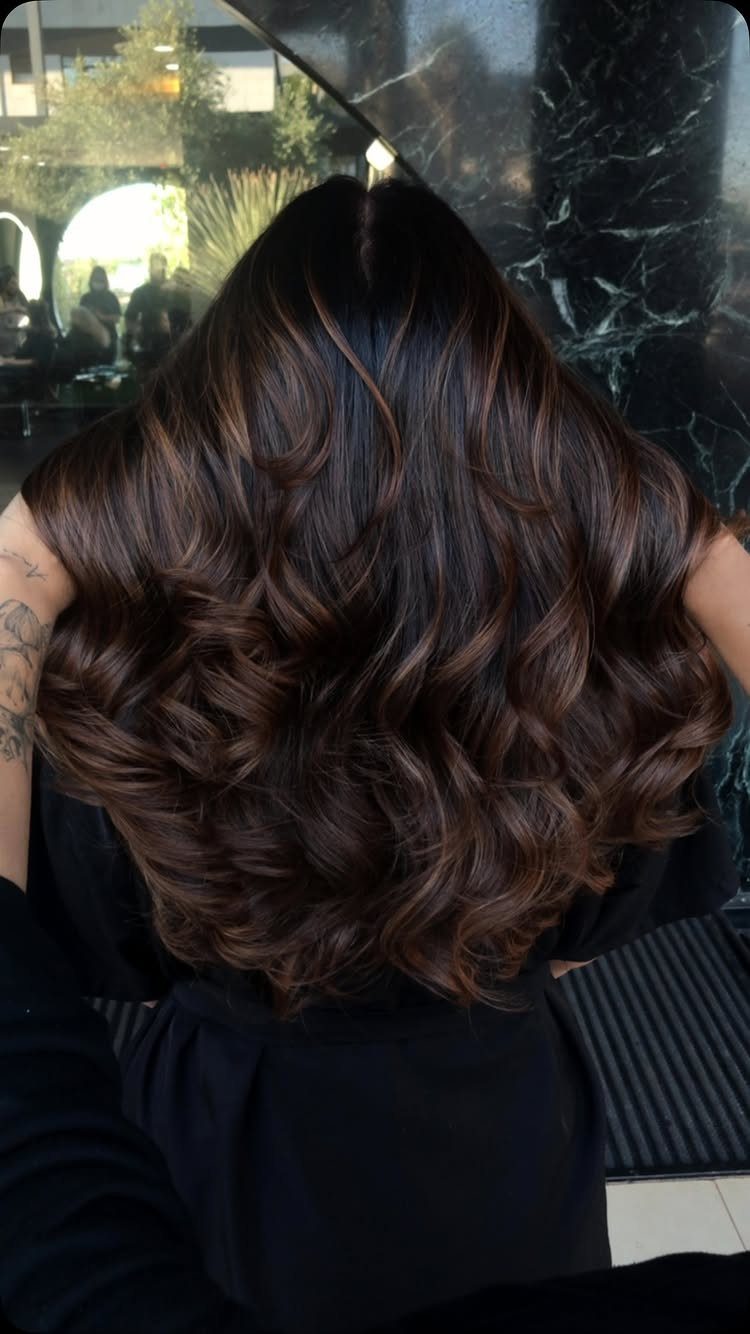
Espresso is the darkest brown you can pick for this, so hazelnut ribbons stand out against it without needing much lift.
Light chocolate and hazelnut pieces thread through the deep base and brighten it around the face and through the lengths.
Ask for ribbons, not an all-over highlight, so the espresso stays the main color.
Glossy curls and waves make the lighter strands flash and disappear as the hair moves. I’d keep them thin; thick ones turn stripey on a base this dark.
11. Mocha Blended Highlights
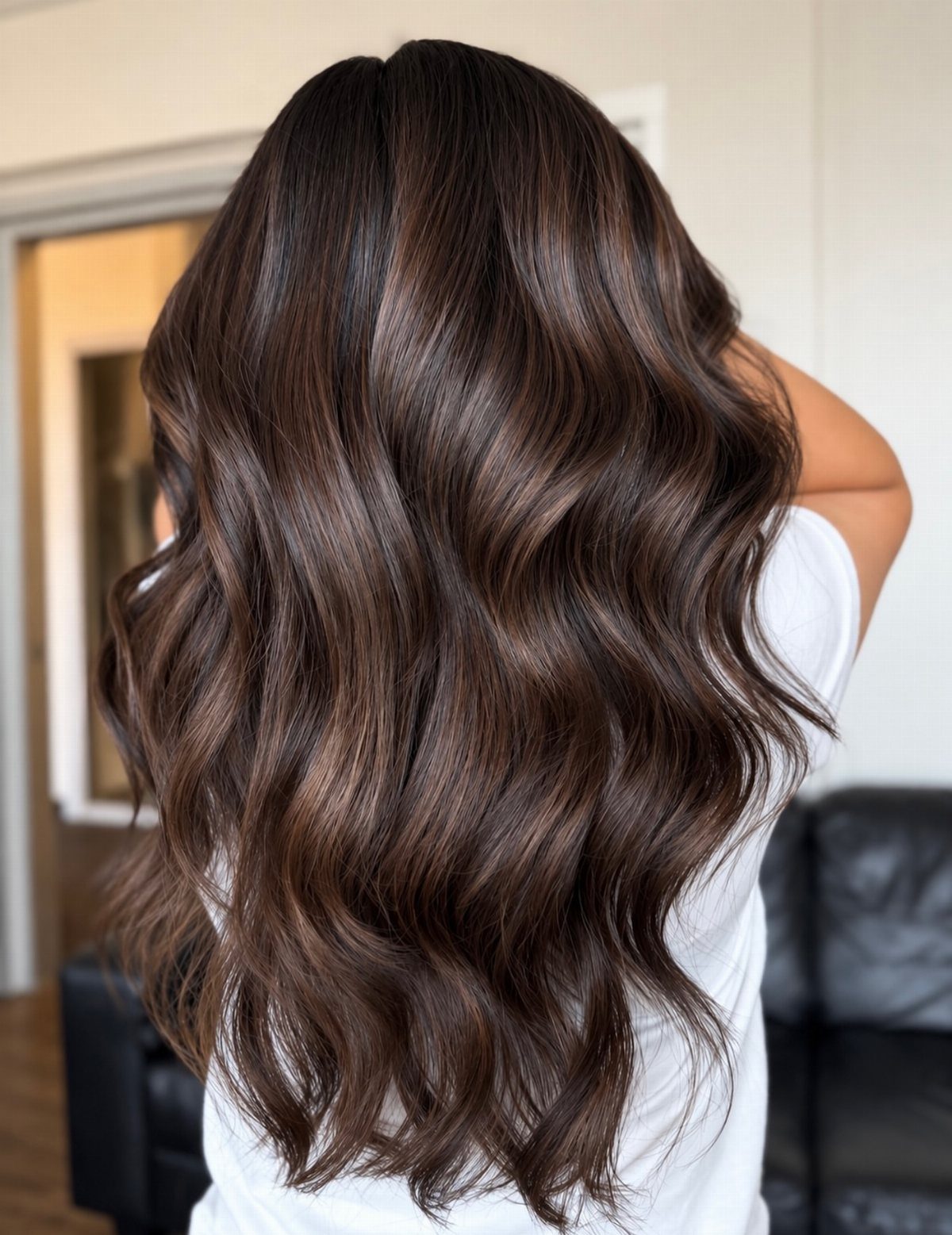
Mocha blended highlights melt into the cocoa brown base, adding a little softness through long waves.
Tell your stylist to stay within one or two shades of your mocha and to blend them rather than space them out.
That is the whole request. I think this is the right pick if you want your color to look like good natural hair on a day you didn’t plan for.
12. Milk Chocolate Brown
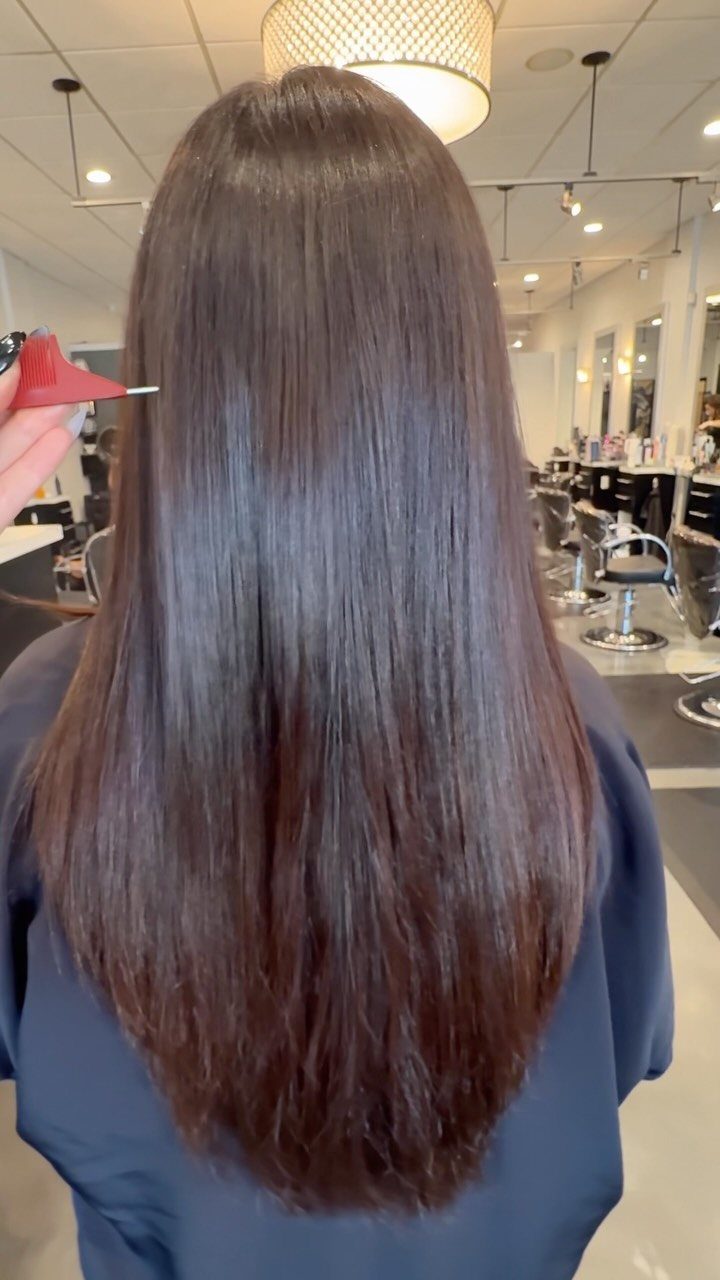
Milk chocolate brown gets its softness from ash. It is a medium brown with the warmth taken down, which makes it flattering on cooler skin tones.
Ask for an ashier medium brown and say "milk chocolate" so it does not come out golden.
Straight hair shows the cool tone evenly from root to end, with nothing breaking it up. If your skin runs warm, I’d steer clear of ash browns, since they can look flat against it.
13. Butterscotch Balayage
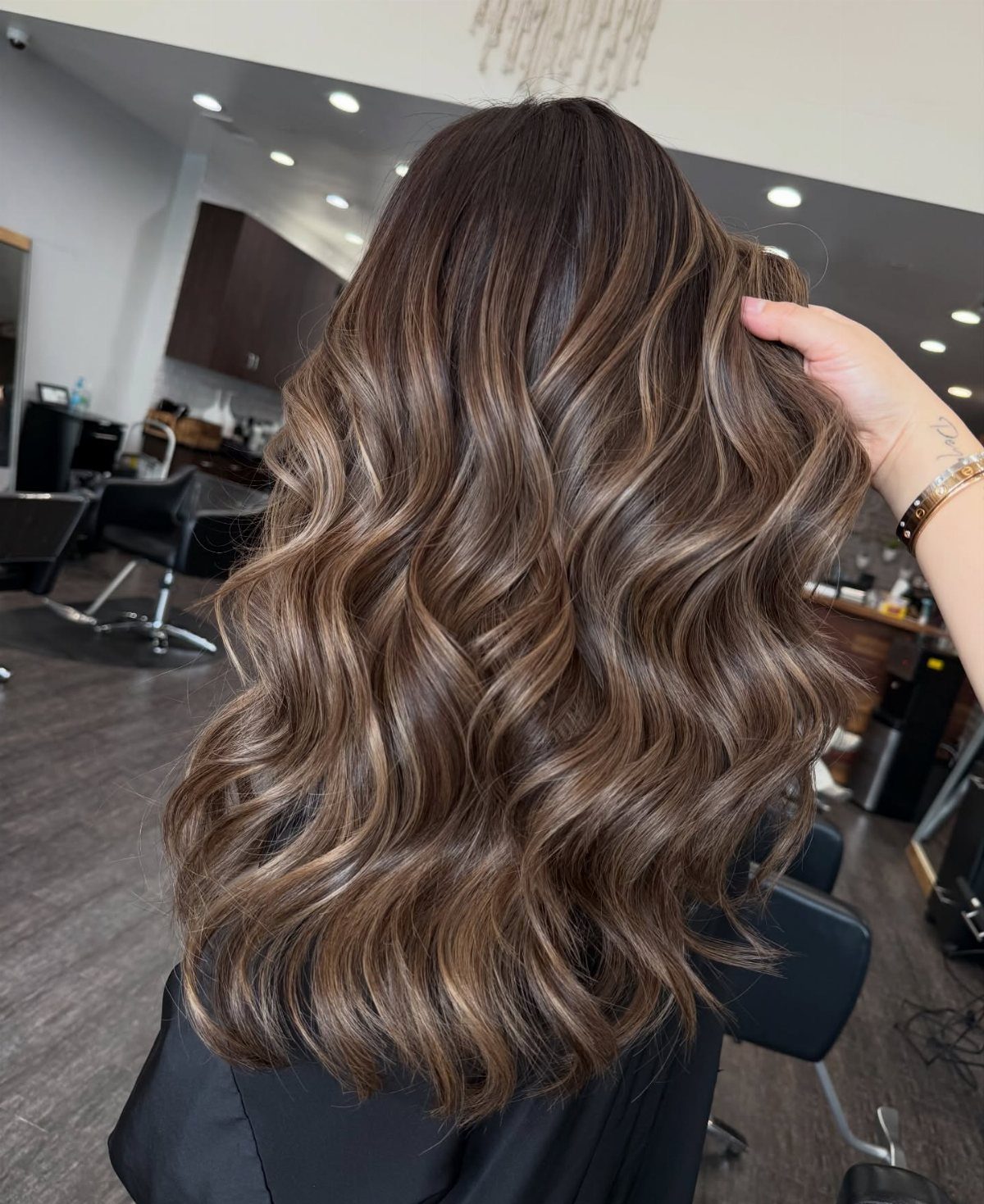
Butterscotch is a warmer, deeper gold than caramel, and on a mocha or chocolate base it reads as glowing sections instead of pale streaks. Wavy hair shows it best, since each bend turns a different ribbon toward the light.
Say "butterscotch" at booking and bring a photo, because "golden" can land anywhere between honey and blonde. I’d keep it hand-painted and soft at the root so the base stays the main color.
14. Chocolate Chestnut Hair
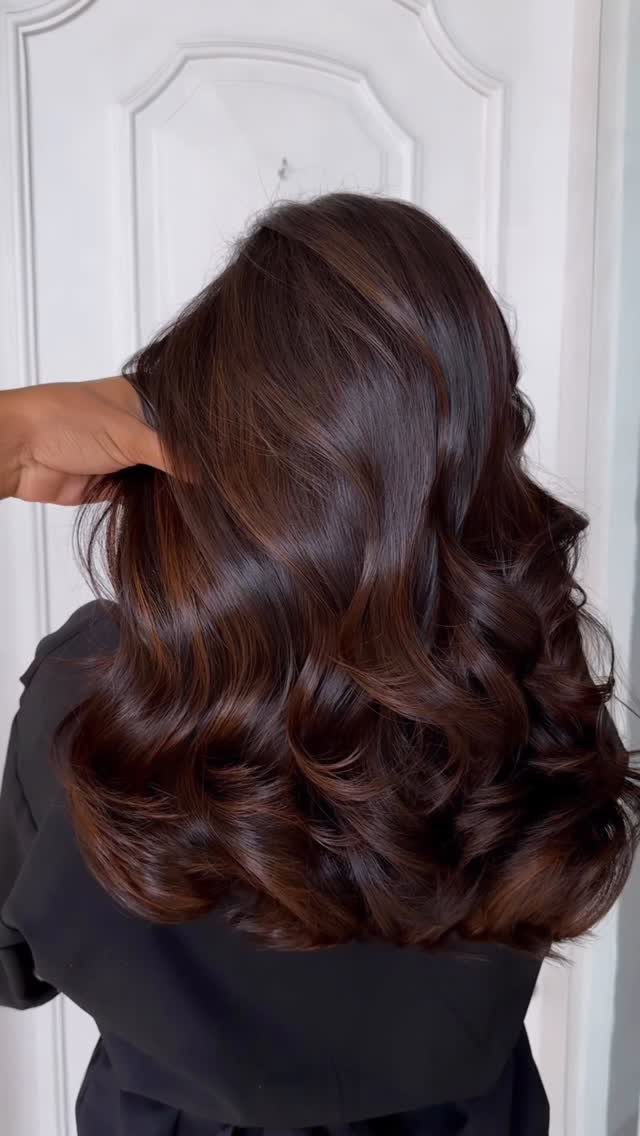
Chestnut is what happens when chocolate brown picks up a lighter, bronzy tone with a faint red undertone. Loose curls spread it out, so the warmth shows up as shine rather than as a separate color.
Tell your stylist you want deep chocolate with just a hint of chestnut warmth, kept soft rather than obvious.
Of the reddish browns, I’d put this one ahead of a full copper if you want something that still looks like plain brunette.
15. Chocolate Brown Balayage
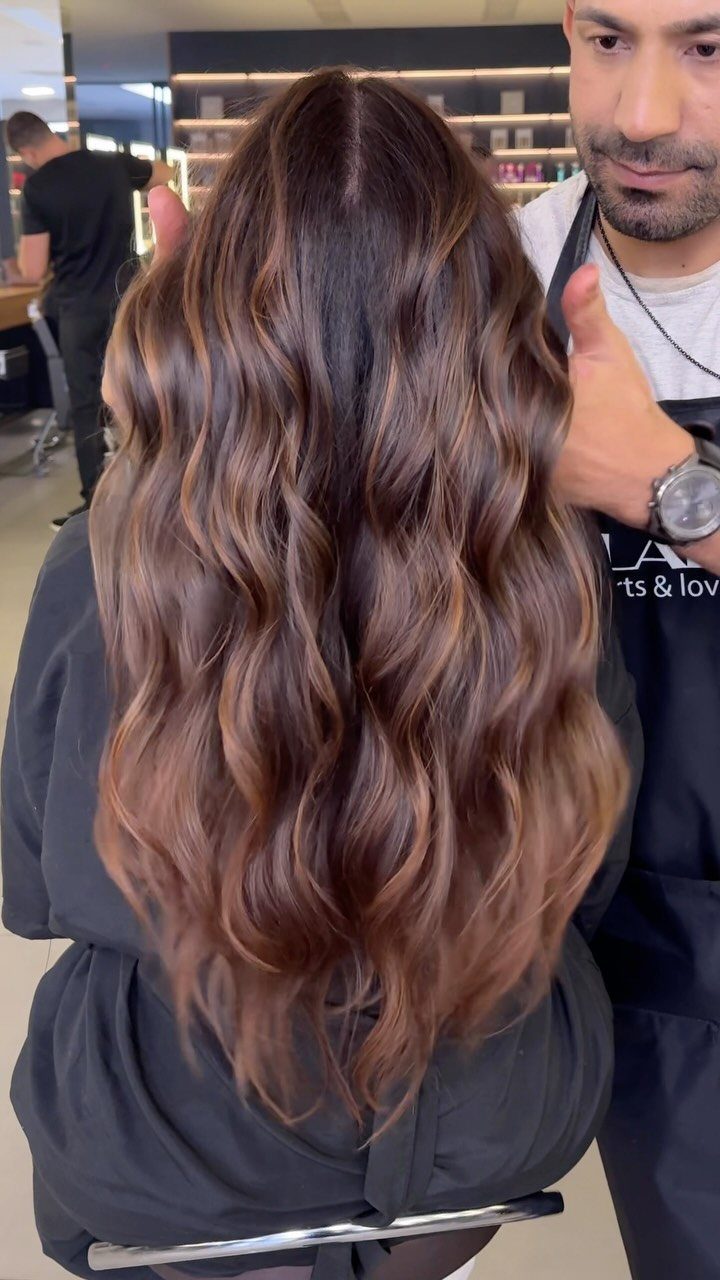
Balayage here means lighter brown tones painted by hand into a chocolate base, with no visible line where one ends and the next begins.
On long, wavy hair, the shift from dark to light has plenty of length to spread across.
A saved photo helps your stylist match the depth, so request soft, lighter brown painted through the mid-lengths and ends.
I’d stay within a few shades of the base. That keeps the grow-out gentle and the color looking like natural dimension.
16. Chocolate Brown with Caramel Ribbons
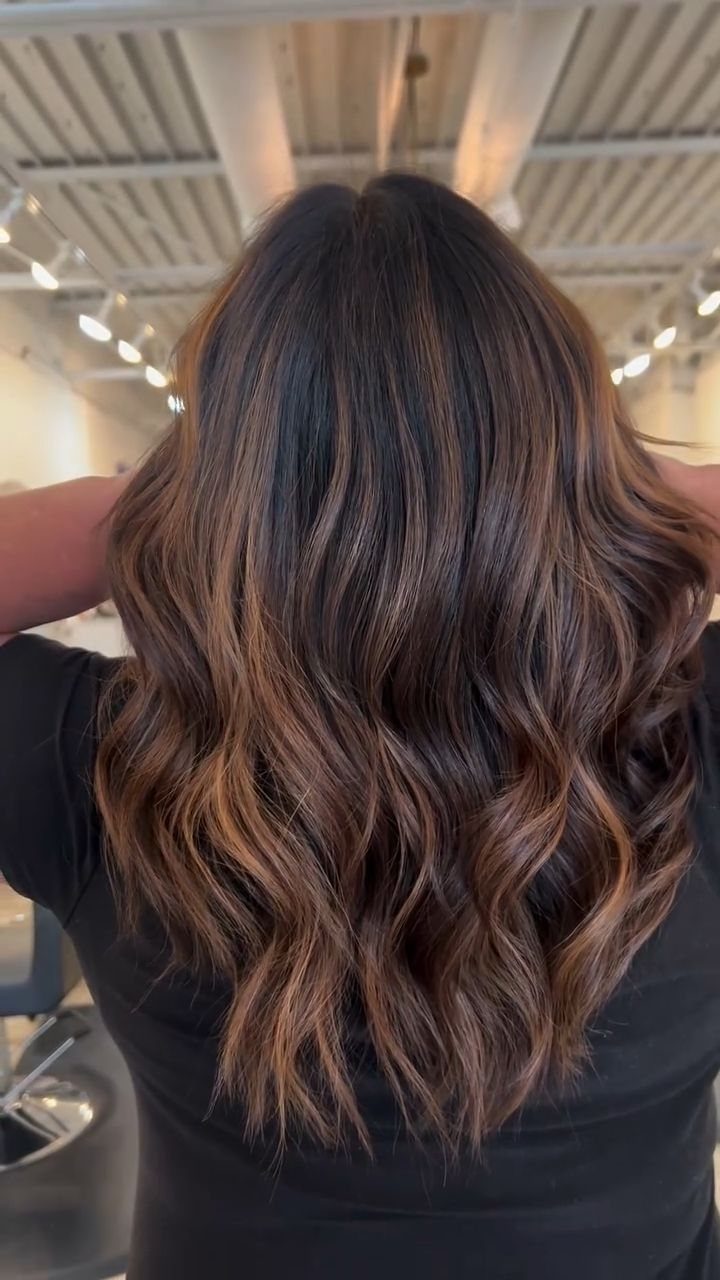
Caramel ribbons are the bolder cousin of a soft blend: distinct bands of light that ride through a chocolate base and give waves their movement.
Use the word "ribbons" when you book, and ask for them placed where the hair bends.
I like them best when they are clearly visible but still thinner than the chocolate between them. Too wide, and the color stops looking like brunette with caramel and starts looking striped.
17. Chocolate Brown with Lowlights
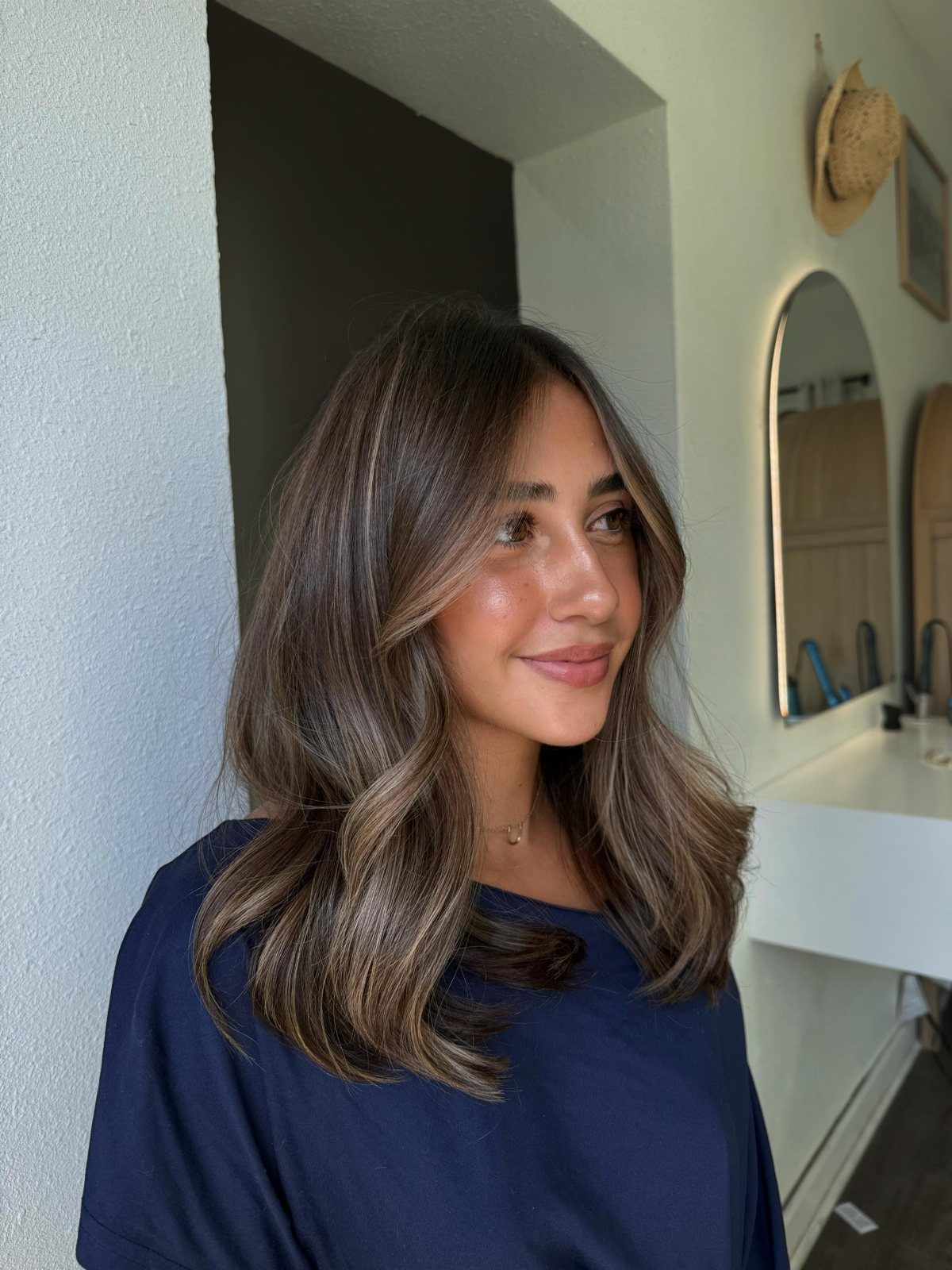
Lowlights work in reverse of highlights: instead of adding light, they tuck darker strands under chocolate brown to give the color depth. The result is a shade that looks richer without getting any lighter.
Ask for lowlights a shade or two deeper than your base, and bring a photo to point at.
Wavy, medium-length hair shows the shadows nicely. If your color looks flat, I’d try this before reaching for highlights.
18. Rose Gold Chocolate Highlights
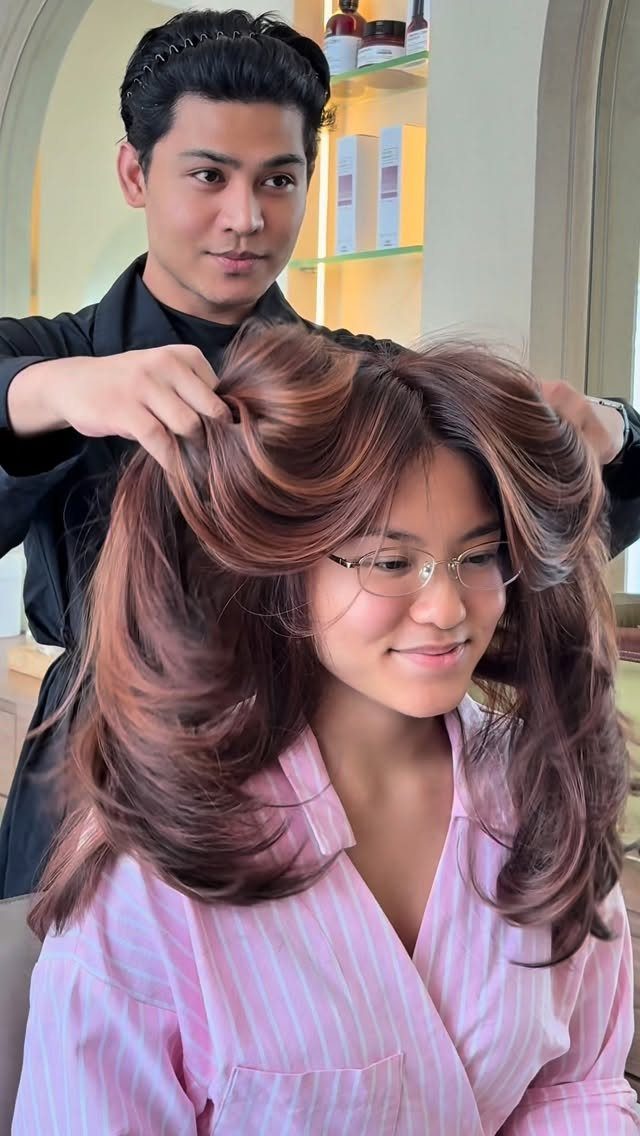
Rose gold lays a warm, slightly metallic tint over chocolate hair, pinkish where it catches light and still brown everywhere else. Long layers give it plenty of surfaces to catch.
Ask for rose-gold highlights on a chocolate base, and have your stylist keep them fine so they read as a tint, not a streak of pink.
I’d go for a handful of pieces around the face first. They’re easy to add to later.
19. Toffee Highlights
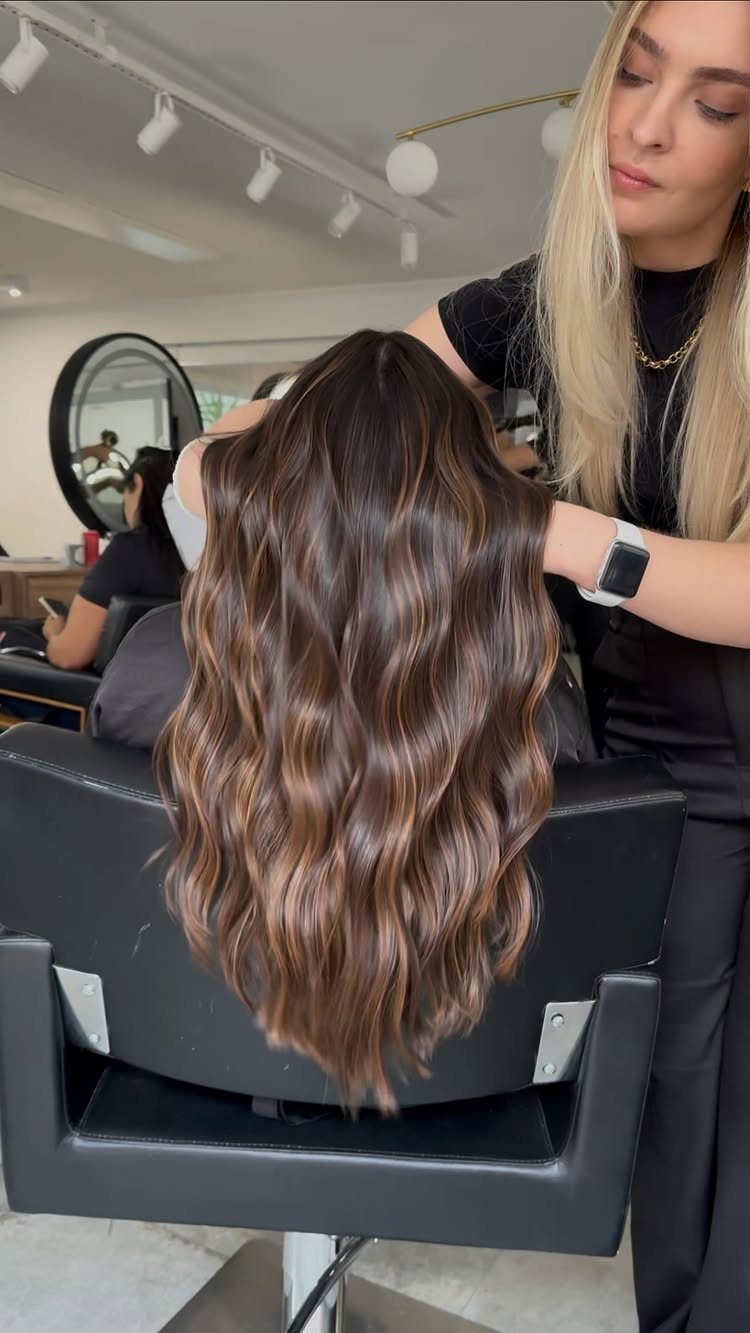
Toffee sits warmer and a touch deeper than honey, which is why it flatters light chocolate brown without turning it blonde. Against the wavy lengths in this look, the highlights read as glow rather than contrast.
Say "toffee" when you book and bring a photo, so your stylist doesn’t drift toward caramel or gold. I’d keep the pieces fine and spaced, since the chocolate base should stay the main color.
20. Espresso Brown Balayage
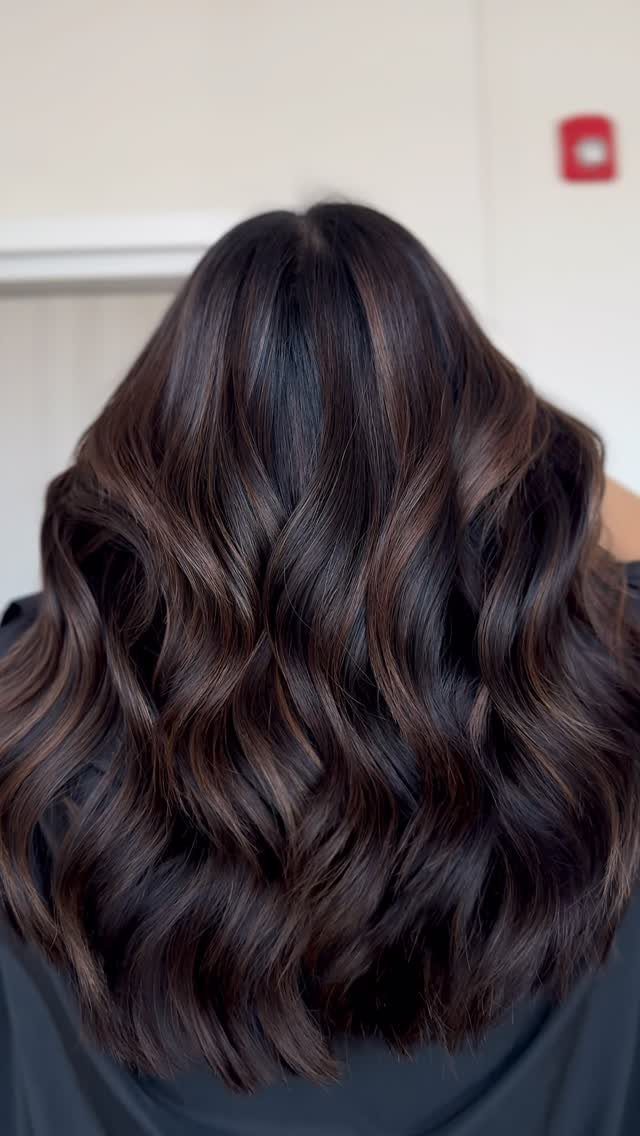
Dark espresso gives balayage a harder job: the lighter chocolate-brown has to show up against a base that is nearly black-brown. That is also the appeal, because even a small lift looks rich instead of loud.
Ask for chocolate-brown balayage on espresso, hand-painted and kept subtle.
I’d stay in the brown family and avoid anything golden, so the base keeps its depth. On long, wavy hair the shift from root to ends has room to stretch out, so the color reads soft instead of striped.
21. Chocolate Copper Stripes
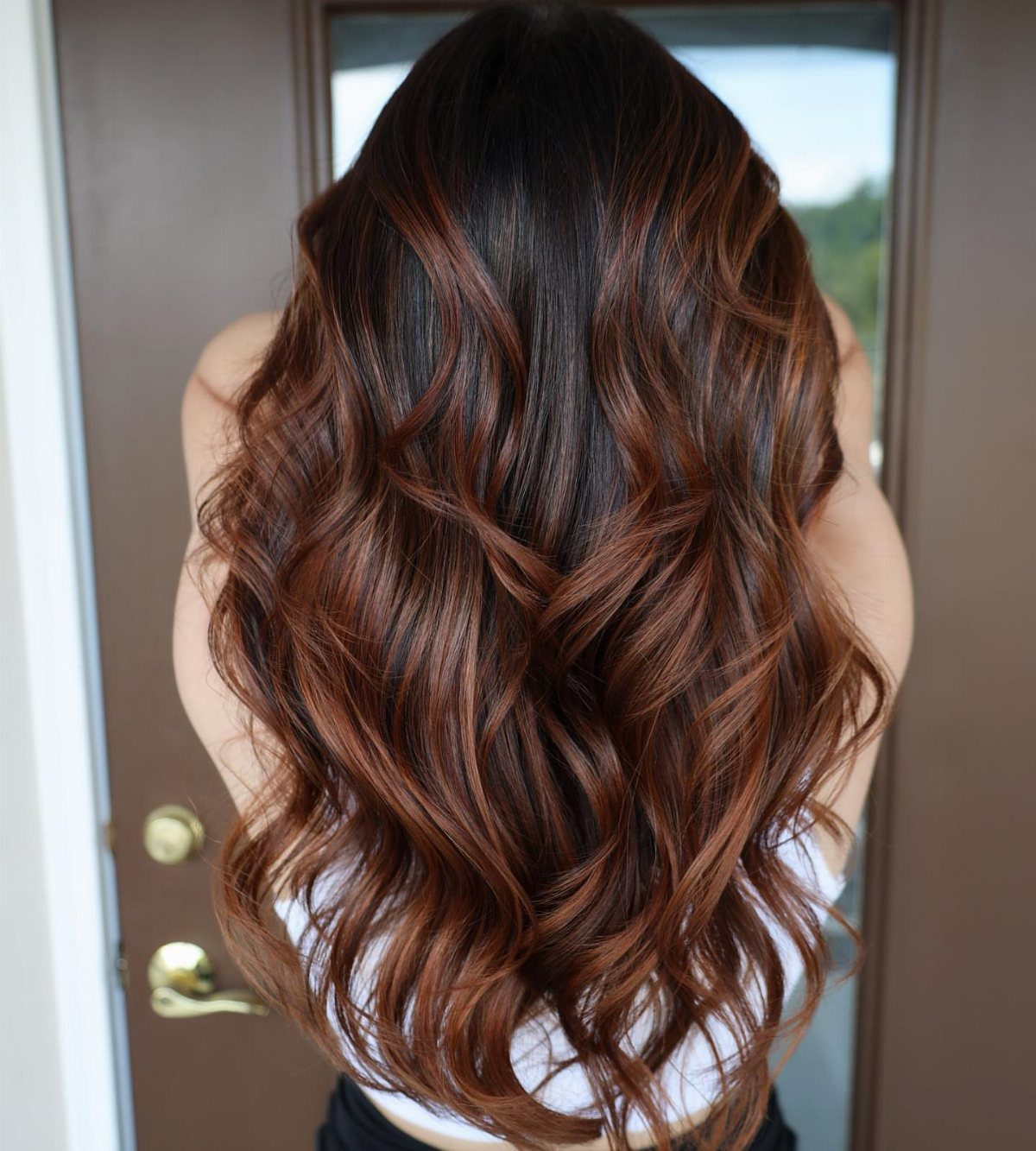
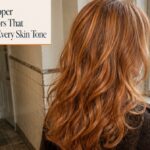
Copper placed through the middle lengths, not parked at the ends, is what separates this from a standard ombré. The warmth shows up where the waves bend, and the roots and tips stay cocoa brown.
Ask for copper streaks through the mid-lengths and bring a photo so the width is clear.
I’d go thin. A few narrow copper pieces read as shine in motion, while wide ones can pull the whole color toward red.
22. Silver Streaks
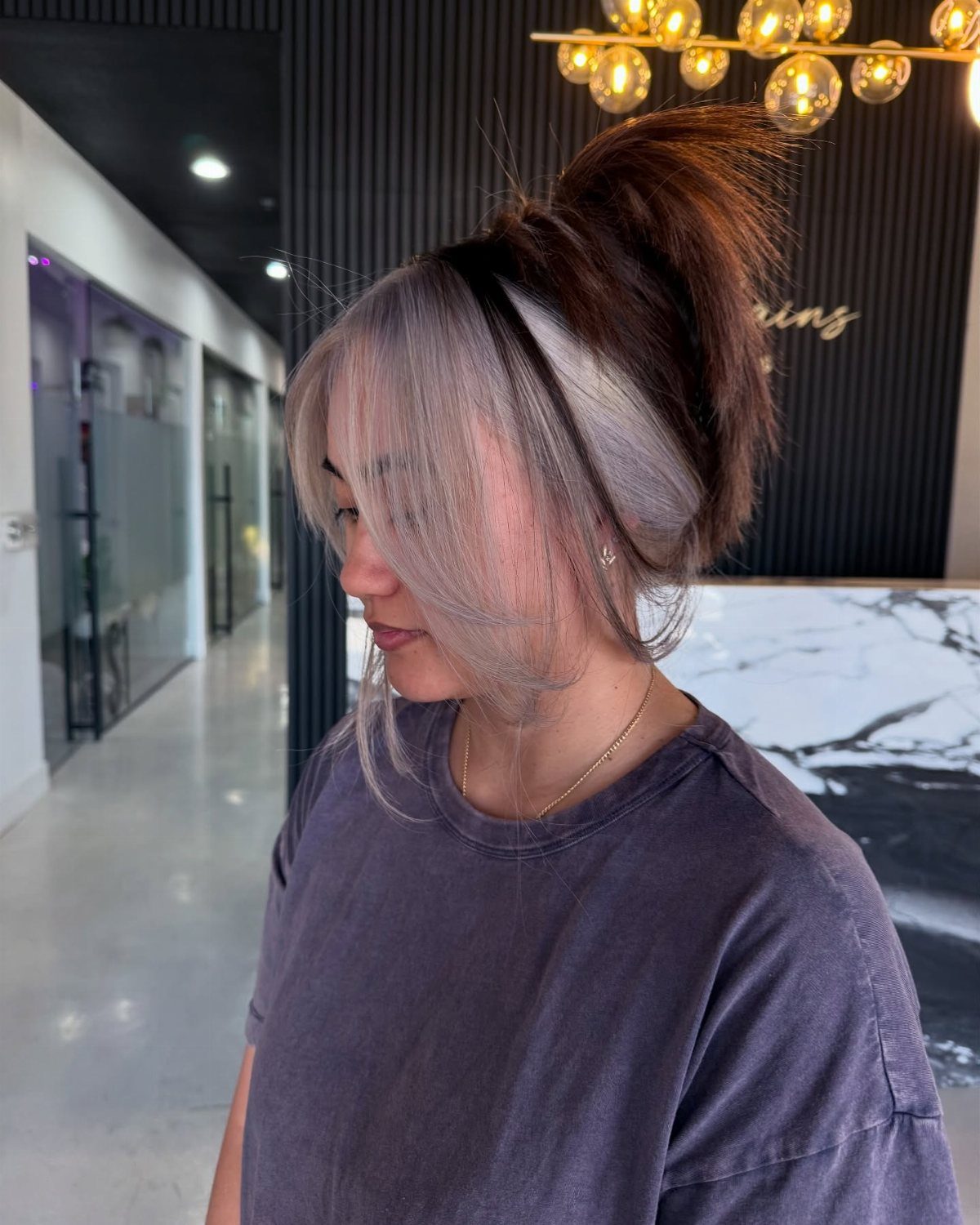
Silver against chocolate is a bold contrast, and keeping it to a few face-framing pieces up front is what makes it wearable. Two or three bright pieces sit right by the cheekbones, so the eye goes straight to them.
Book it as silver face-framing streaks on a dark brown base, and expect your stylist to lighten those sections before toning them.
I’d start with just the front pieces. They’re far easier to add to than to remove.
23. Dark Brown Chocolate Hair Color
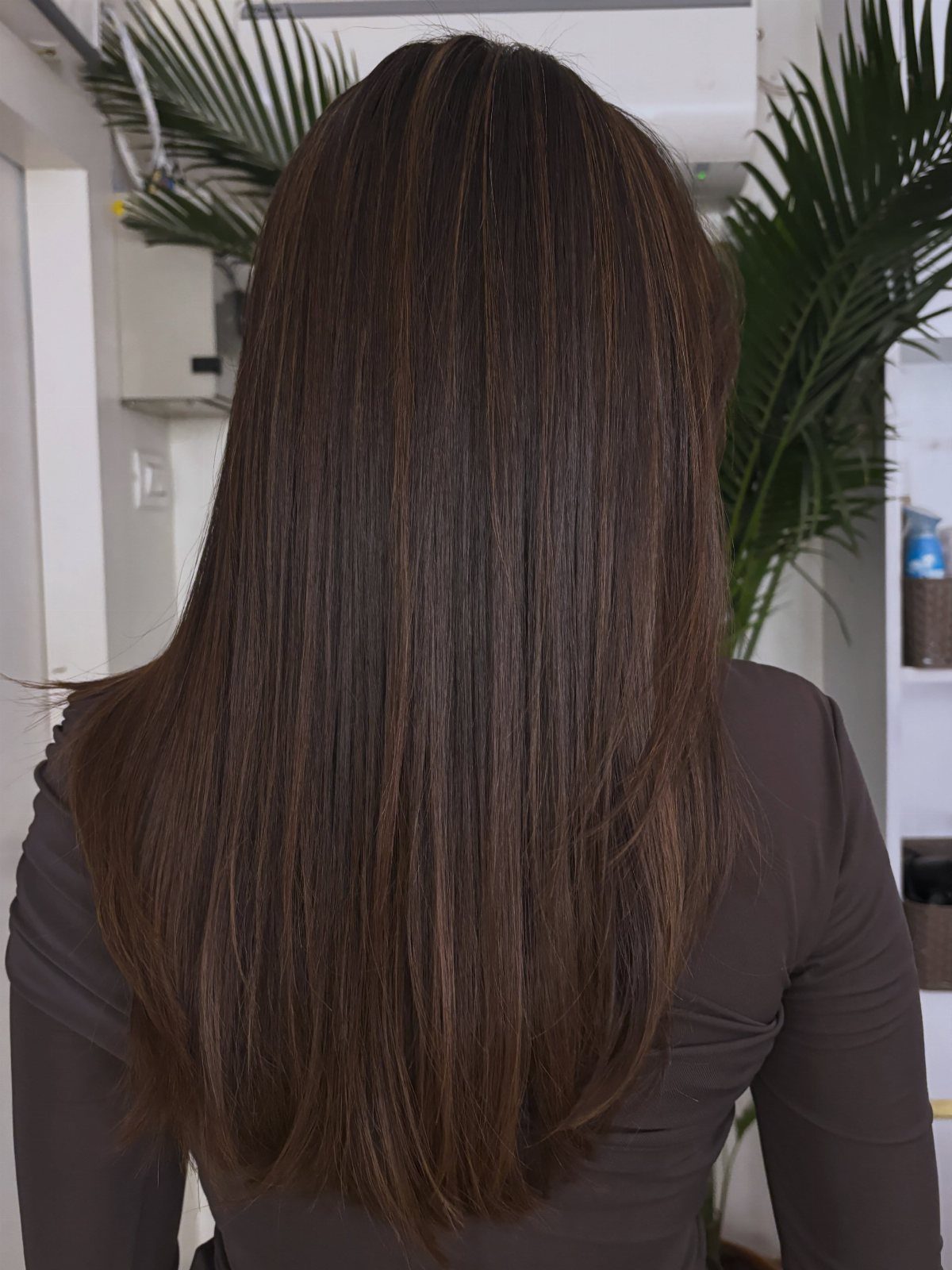
Darker than dark chocolate should look bold, luxurious and intense, so the base needs real depth with nothing washed out. A few barely lighter strands are enough to stop it from reading as one flat sheet.
Straight, long hair shows that depth best, since there are no breaks in the shine.
At the salon, name a deep chocolate base with just a few soft, lighter strands, and have a photo ready to show your stylist. I’d choose this over a lighter brown if you want your color to make a statement.
24. Pure Cocoa
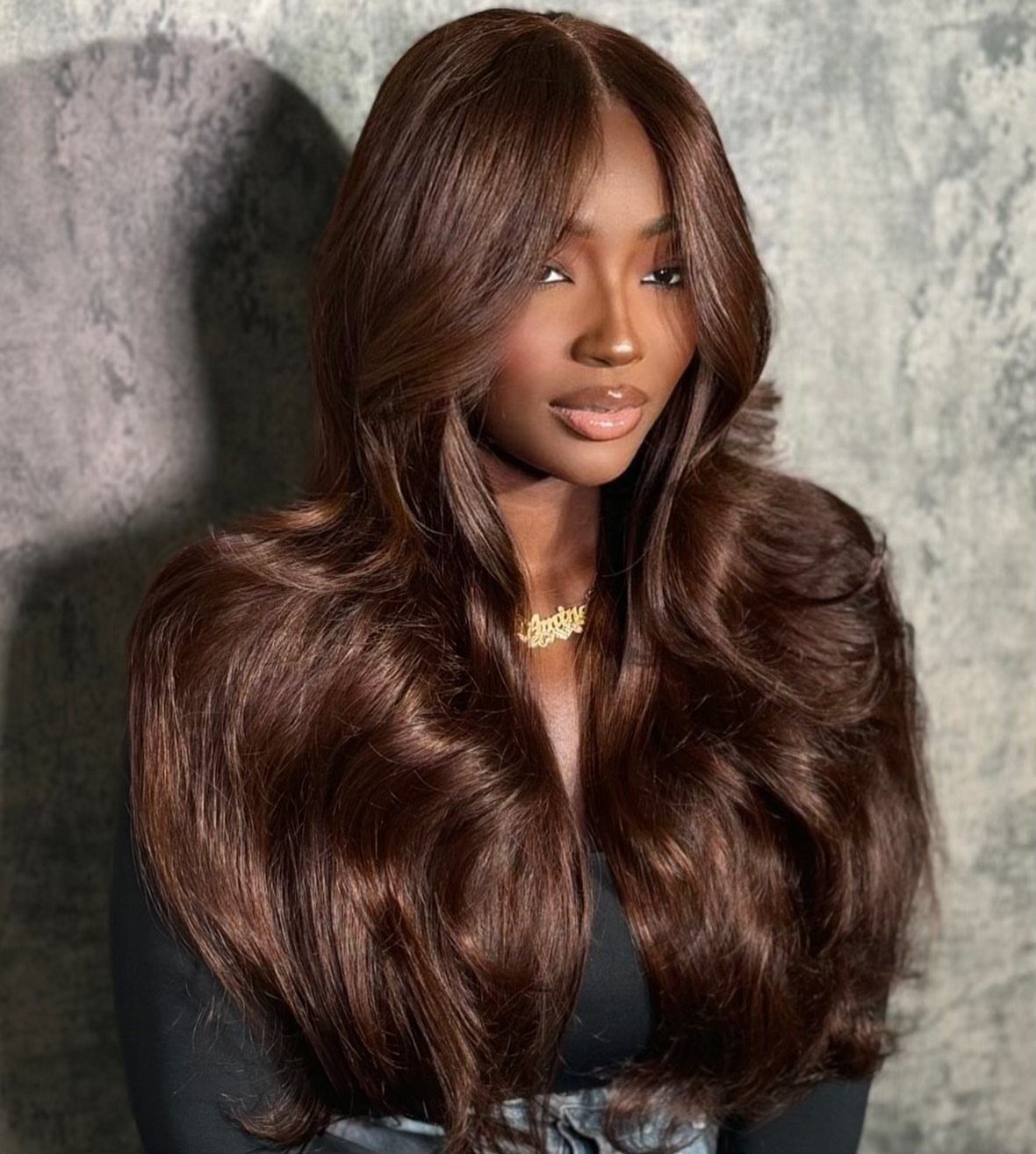
No highlights, no ribbons: pure cocoa is one all-over brown, applied in a single process. The color does its work through shine alone, which is why it looks so polished with voluminous loose waves and bangs.
Ask for a solid cocoa brown and skip every extra.
I like it because nothing competes with the gloss, and there are no highlights to maintain. Waves add movement, so a flat color never looks flat.
25. Chocolate Brown Glass Hair
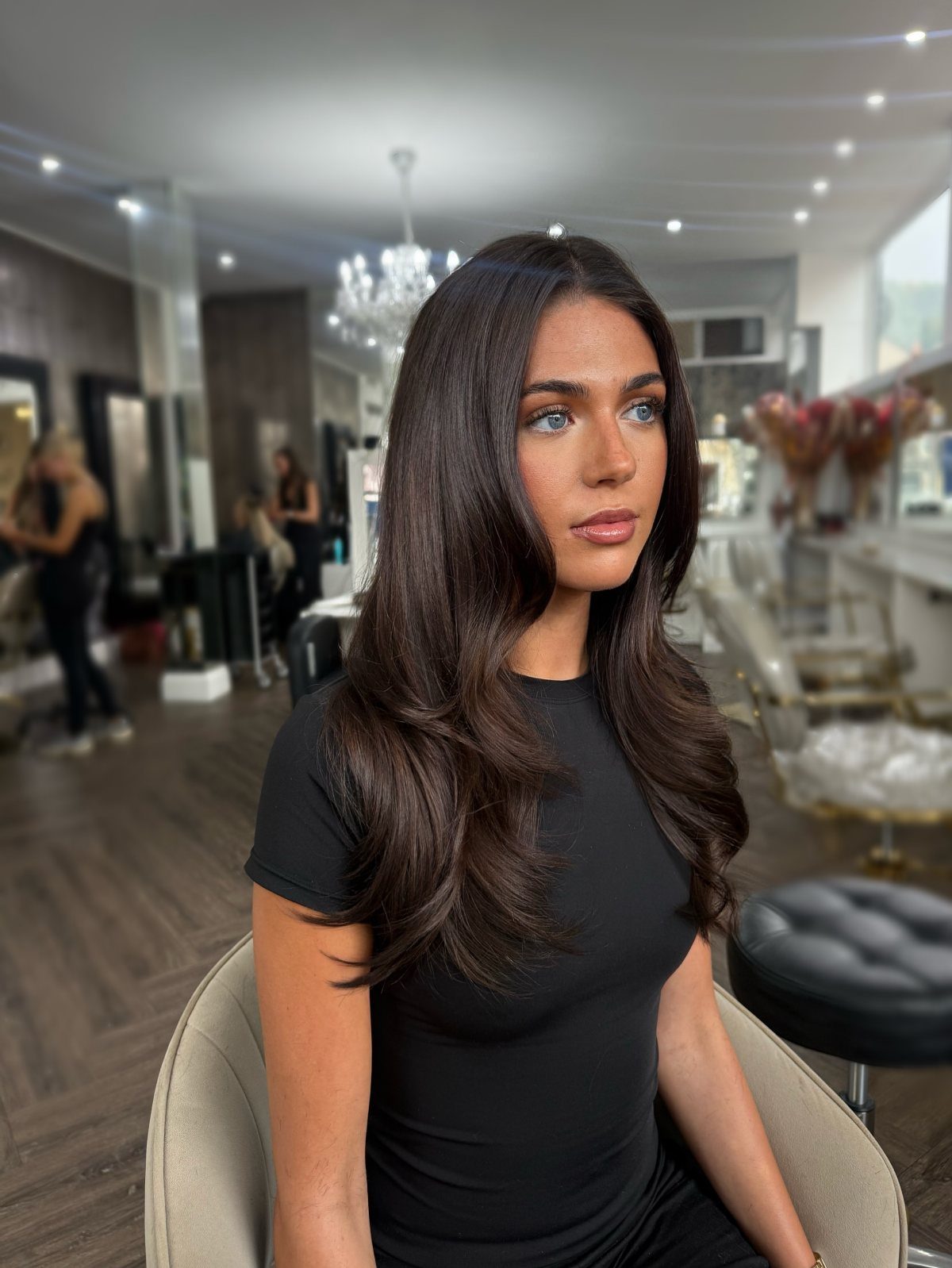
Glass hair is a finish more than a color: chocolate brown smoothed and sealed until the surface throws back light like a mirror. On long hair, that unbroken shine makes the brown look deeper than it is.
Ask for a gloss treatment on a solid chocolate base, and say you want mirror-like shine. I’d pick this over any highlighted shade if polish matters more to you than dimension, since nothing interrupts the reflection.
26. Light Brown Highlights
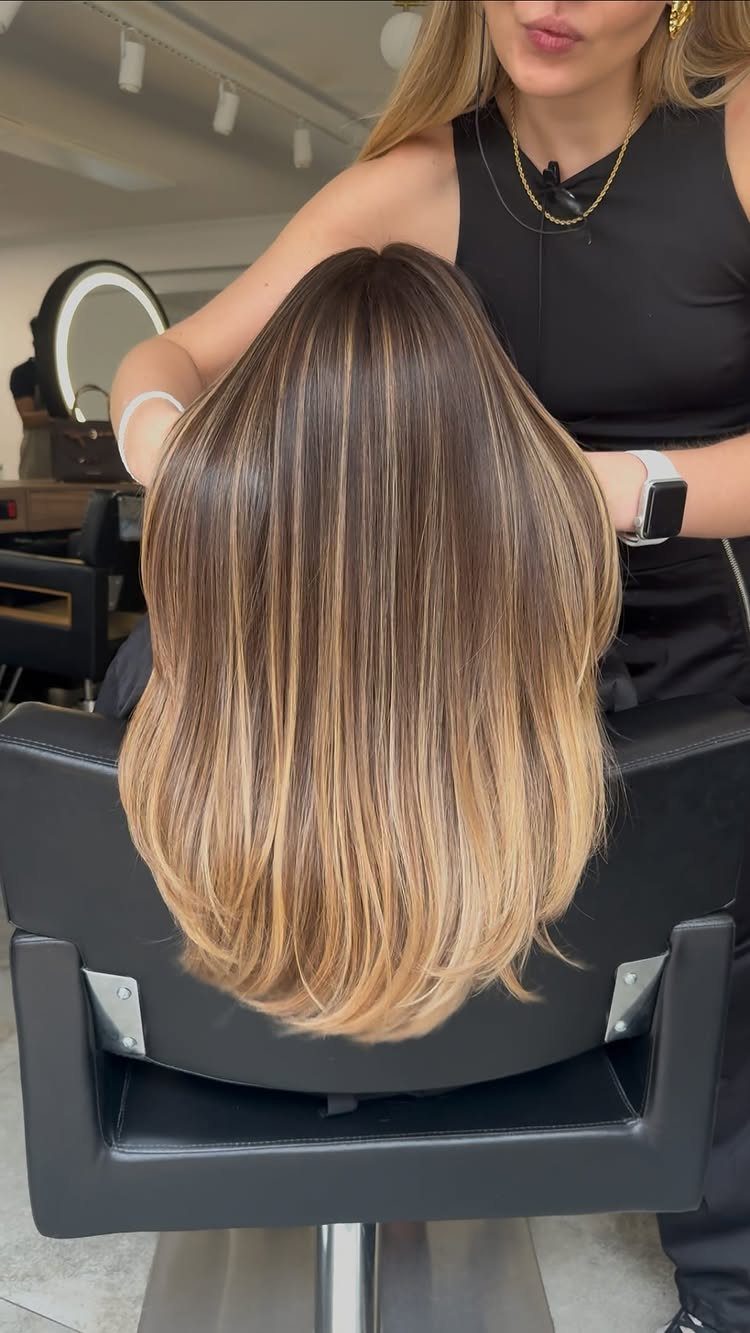
Keep the highlights within 2–3 tones of your cocoa base and the lightness reads as dimension, never as stripes, which is why this version looks natural on almost everyone.
Against long, straight lengths, each lighter piece stays visible from root to end.
Highlights can slide from light brown toward warm blonde faster than most people expect, so tell your stylist exactly how much gold you want, and show a photo rather than just saying "caramel."
I’d keep them close to the base color for the most believable result.
27. Chocolate Caramel Hairstyle
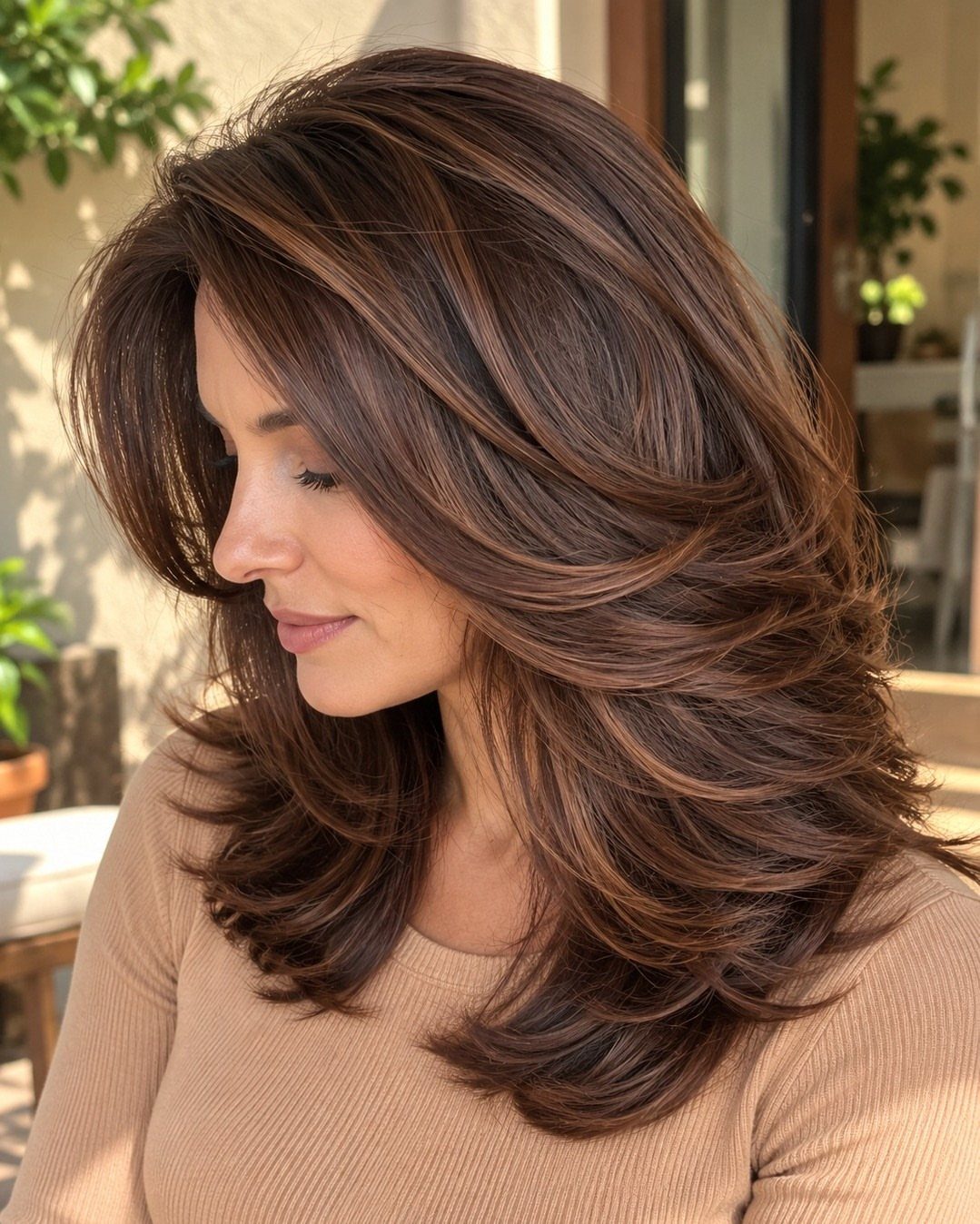
Caramel placed around the face and through the layers does 2 jobs: it brightens the complexion and makes thin ends look fuller, since light and dark strands read as depth.
Request chocolate brown with caramel highlights, and ask your stylist to follow the layers so the color moves with the cut.
Voluminous layers show it best. I’d choose this over a flat all-over brown if you want the hair to look thicker without changing the cut.
The trend has also caught in the world of beauty, and notably, hairstylists are now seeing a rise in cocoa-adjacent hairstyles taking shape.
28. Multi-hue Chocolate Balayage
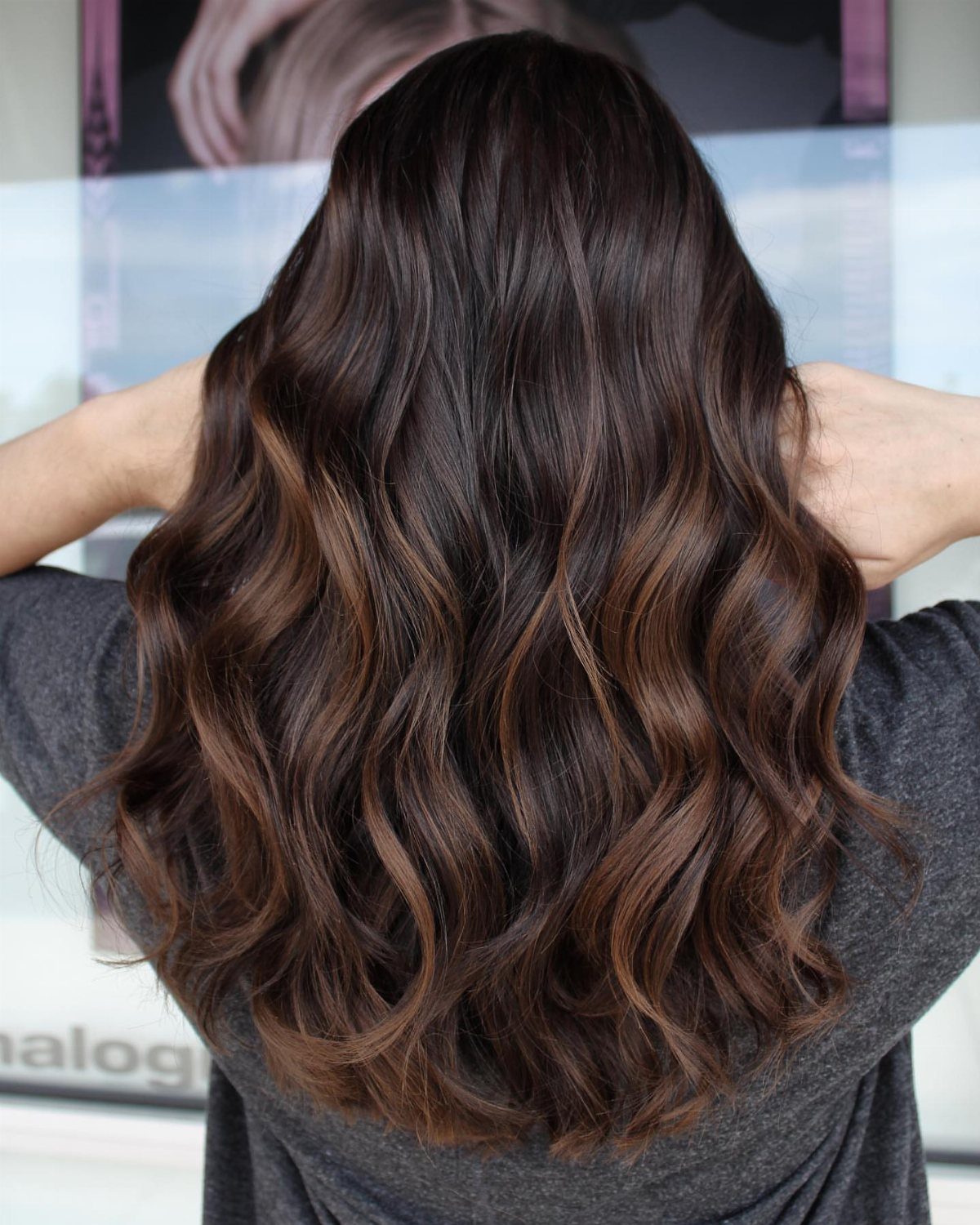
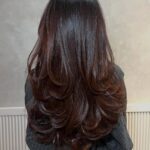
Cool and warm browns share one head here, with light and dark pieces blended so the color never settles into a single tone. Seen from behind, long waves let the dark roots melt into balayage strands.
Ask for a multi-tonal balayage on a chocolate base, and name both the cool and the warm tones you want so they don’t merge into one.
I’d keep every shade within the brown family. That way the mix reads as depth and not as patches.
Color-treated Hair Maintenance
Sulfates strip both natural oils and color pigment, so a sulfate-free, color-safe shampoo and conditioner is the first swap I’d make.
Rinse with cool water, too: hot water lifts the cuticle and lets dye escape faster, while cool water seals it so light reflects smoothly.
Brassiness comes in two forms, and the toner depends on which one you see.
Blue shampoo cancels orange, and purple cancels yellow, which helps if you have golden pieces. Purple shampoo works well once or twice a week.
Between salon visits, a brunette gloss or a pigmented toning mask can bring back the warmth and shine that washing strips out.
A brunette gloss every 3–4 weeks keeps the tone fresh, and a red-brunette gloss can stretch to every 4–6 weeks. A mask goes on after shampoo and sits for 10 minutes.
Over time, flat irons, curling wands and hot blow-dryers wear down the dye inside the strand, and cocoa shades drift toward dull or brassy.
Spray or smooth a heat protectant through damp hair every time you reach for a blow-dryer or hot tool.
Choosing Tones for Complexion
Start with undertone. Warm golden skin looks good in chocolate with a warm reddish sheen.
Eye color gives a second check. Hazel, green and golden-brown eyes pair well with warm tones, and very light or very dark eyes pair well with cool ones.
One group should go carefully: if your natural hair is light golden blonde or strawberry blonde and your skin is clear and warm, chocolate can wash out your face.
I’d try a softer, lighter brown before committing to a deep one.
Age plays a part as well. Warm shades are gentler and don’t spotlight skin imperfections as sharply, so glowing highlights and warm amber undertones suit older women well.
Salon Color Versus Home Dye
A boxed dye gives you one shade, and brown from a single tube tends to look flat. Salon color layers several tones, and that is where the dimension comes from, so highlights, lowlights and hand-painted pieces belong in the chair.
Home care fits in between appointments. A color mask in a chocolate shade tops up tone, fights brassiness and keeps hair hydrated, and it works best once a week.
An at-home gloss is the other easy option, and it boosts shine on freshly colored hair. I’d treat it as upkeep, never as a stand-in for the base color.
Frequently Asked Questions
Does chocolate brown hair make you look younger?
Chocolate brown with light brown highlights is the safest route to a fresher look at any age. Highlights should sit within 2–3 tones of the base color; go further and they stop reading as dimension and start looking like stripes.
Warm, glowing touches like amber undertones help too, since a flat single-tone brown can look washed out, and warmer shades are softer on skin. Dark chocolate also covers gray well.
What is the most attractive brown hair color?
If I had to pick one brown with the widest reach, it would be chocolate, since it flatters more skin tones than any other brown. It can run light and milky, deep and dark, or carry caramel highlights.
For a statement, I’d pick a dark chocolate base with a few soft, lighter strands. Deep brown can feel heavy on some people, and light chocolate brown is a softer first step.
What is chocolate brown hair color?
Expect a dark brown with rich, warm undertones; the name stretches from near-espresso depth to lighter, softer versions.
It can be milky and light, dark, or caramel-toned. Cool takes exist too: mocha, with espresso blended in, stays deep and glossy instead of leaning warm.