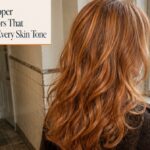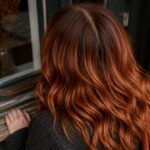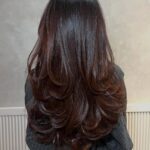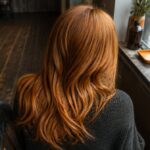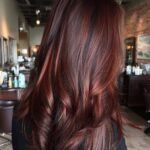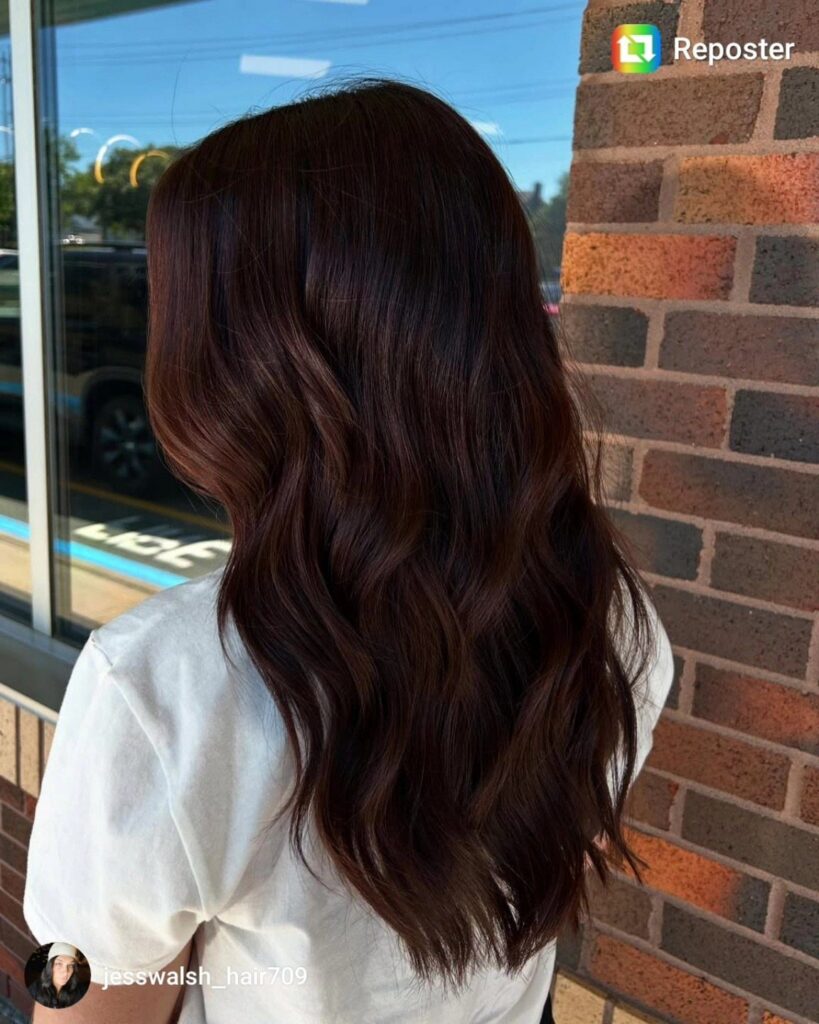
The looks here run from a dark, warm one-tone chestnut that needs almost no upkeep to caramel ribbons, bright copper and ruby red that call for regular toning.
How much maintenance you will actually keep up decides which one is yours: the closer a color sits to your natural roots, the more gracefully it grows out, and the redder or brighter it goes, the more often you’ll be back in the chair.
Whichever you choose, ask for a "shadow root" by name, since it tells your stylist you want regrowth that blends instead of drawing a line.
1. Golden Chestnut Balayage
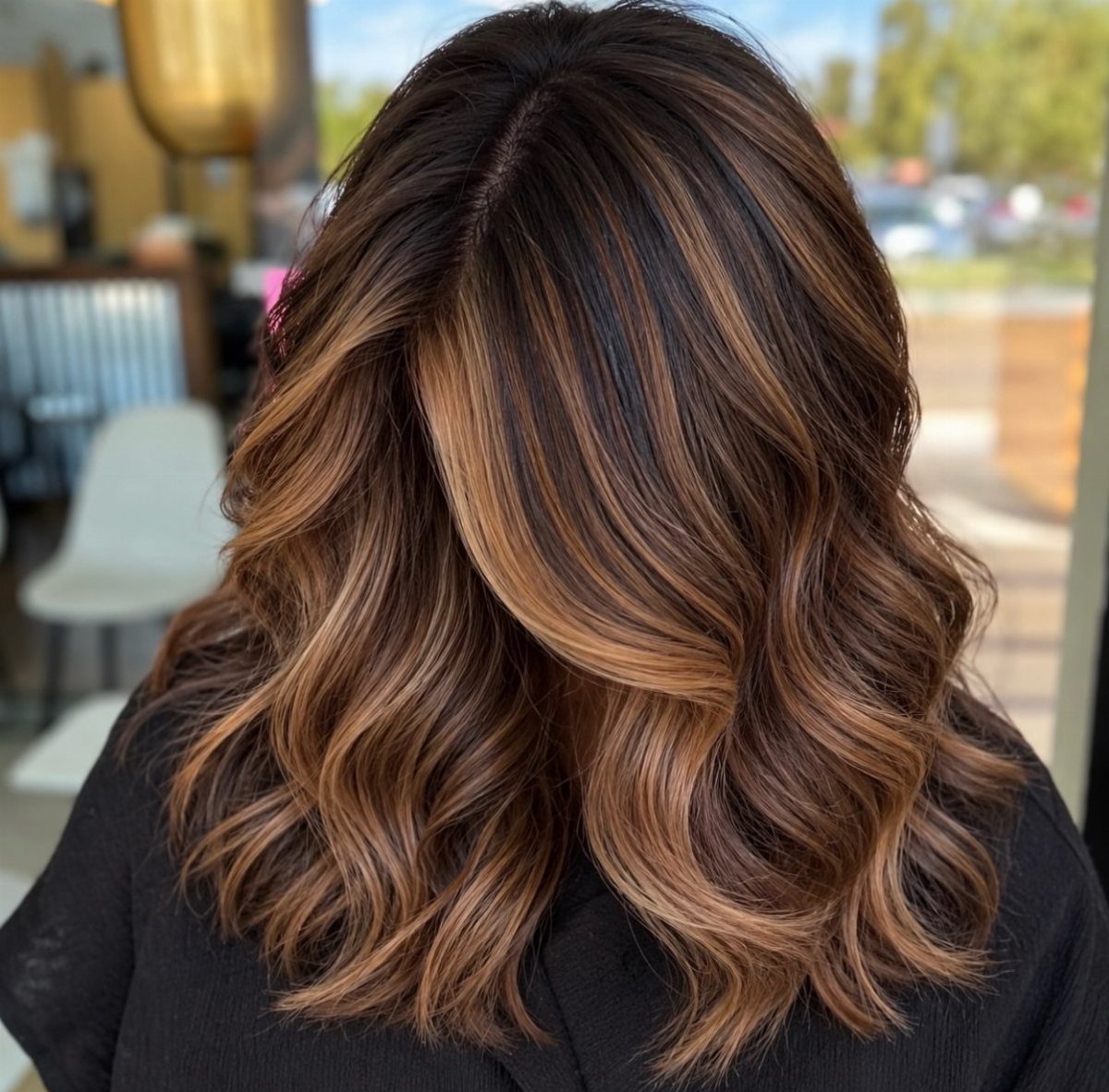
Reddish chestnut lowlights are what keep this balayage from drifting into plain bronde. They sit between the walnut roots and the lighter caramel ends, so the blend looks softer and warmer than a straight brown-to-blonde fade.
This is my pick for brightness without a stark line near the scalp. Request lowlights in that reddish chestnut tone, with roots left dark and natural-looking.
2. Chestnut Highlights
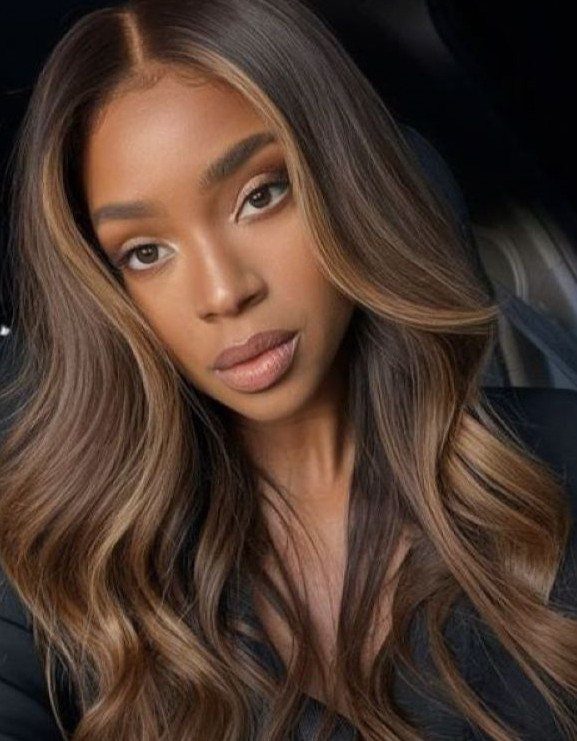
Subtle highlights on a warm chestnut base are the easiest way to add light without changing what makes the color work.
Ask for pieces only a shade or two lighter than your base, so the result reads as sun-touched hair and not stripes.
On long waves, the lighter strands catch the curve of each wave and give it more shape. Compared with a bolder lift, I’d take this for a result that looks like your own hair on a good day.
3. Red and Gold Highlights
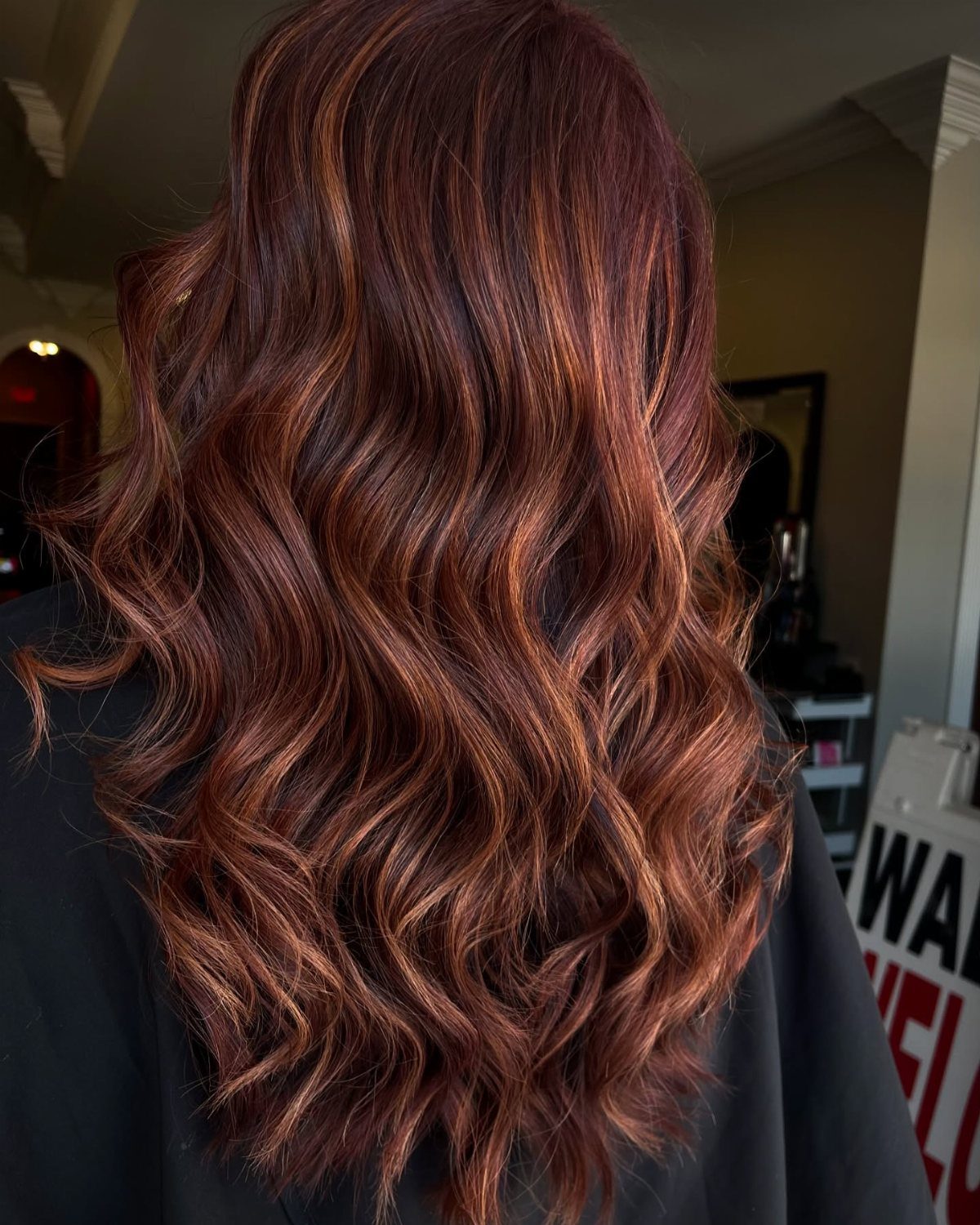
Autumn is the right word for this one: dark chestnut threaded with fine red and gold highlights, the kind of color that looks richer as the light changes.
Red and gold side by side keep a deep brown from feeling flat.
Bring both tones to your stylist and request them in thin, scattered pieces. Heavy placement turns it into a calico effect, and the subtle version is the better look.
4. Deep Red Chestnut
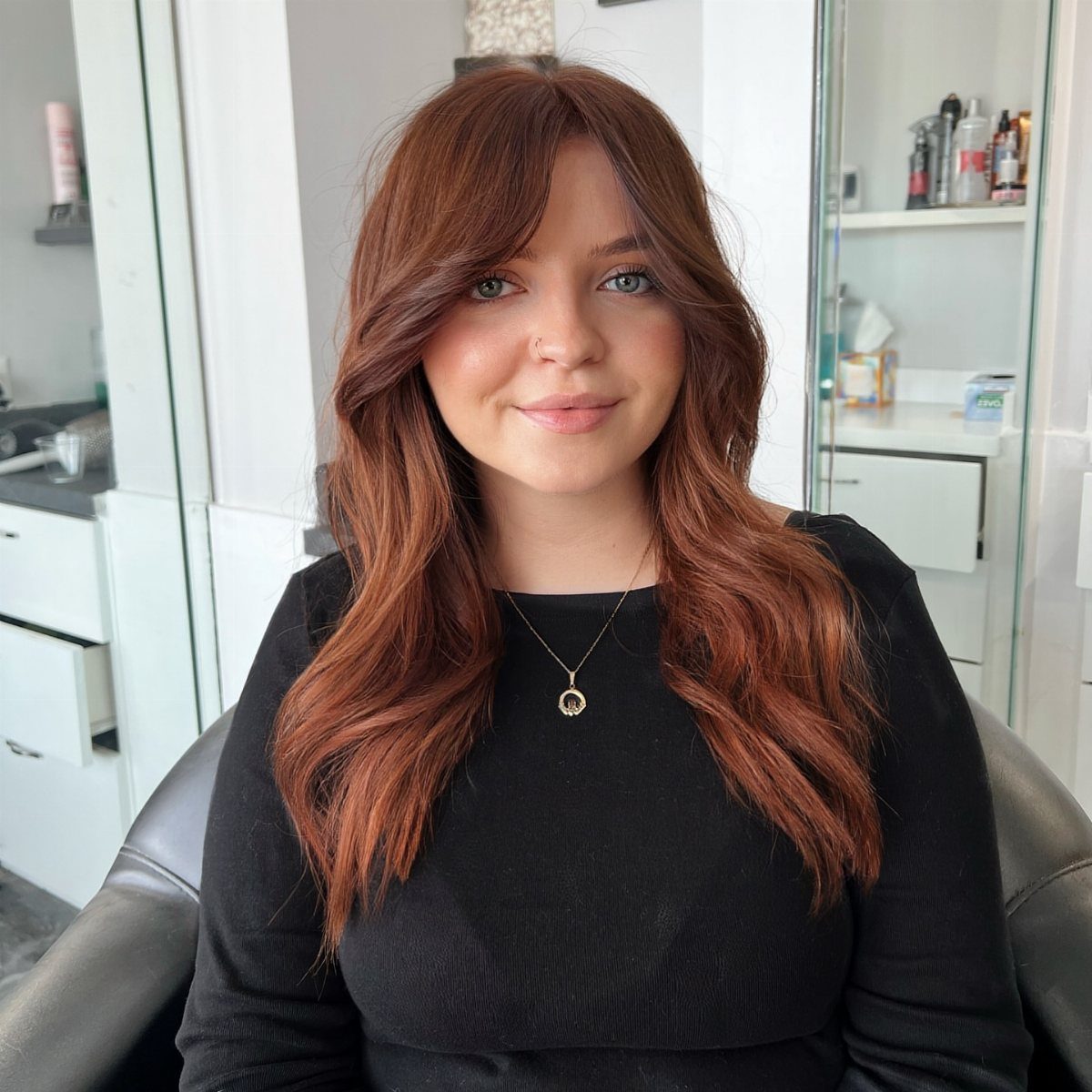
Brunettes after a change that stops short of a leap should look here. A deep red cast over chestnut brown refreshes everything from crown to ends while staying inside your natural family of colors.
It also works well with bangs, since the red adds warmth right around the face. Bring a photo and ask for reddish chestnut, not auburn, so the color stays brown first and red second.
5. Bronde Balayage
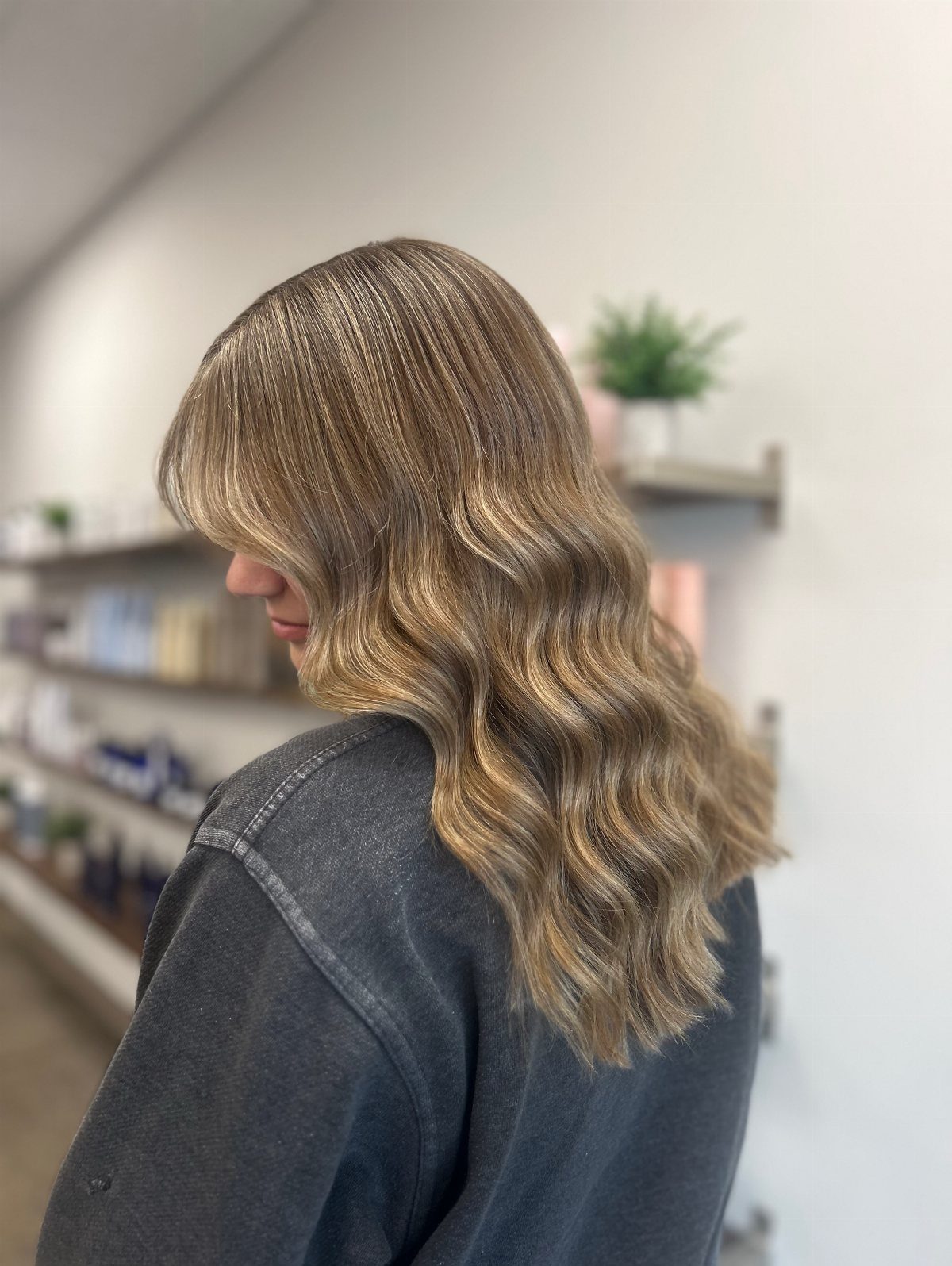
Picture a light brown that looks as if someone stirred milk into it. That is the effect of this soft balayage: gentle, diffused, and far from the stark contrast of high-lift blonde.
Ask for light brown with soft blonde pieces painted through the lengths. The gradual blend is the selling point, and I’d keep the lightest tones away from the roots so the grow-out stays easy.
6. Milk Chocolate Highlights
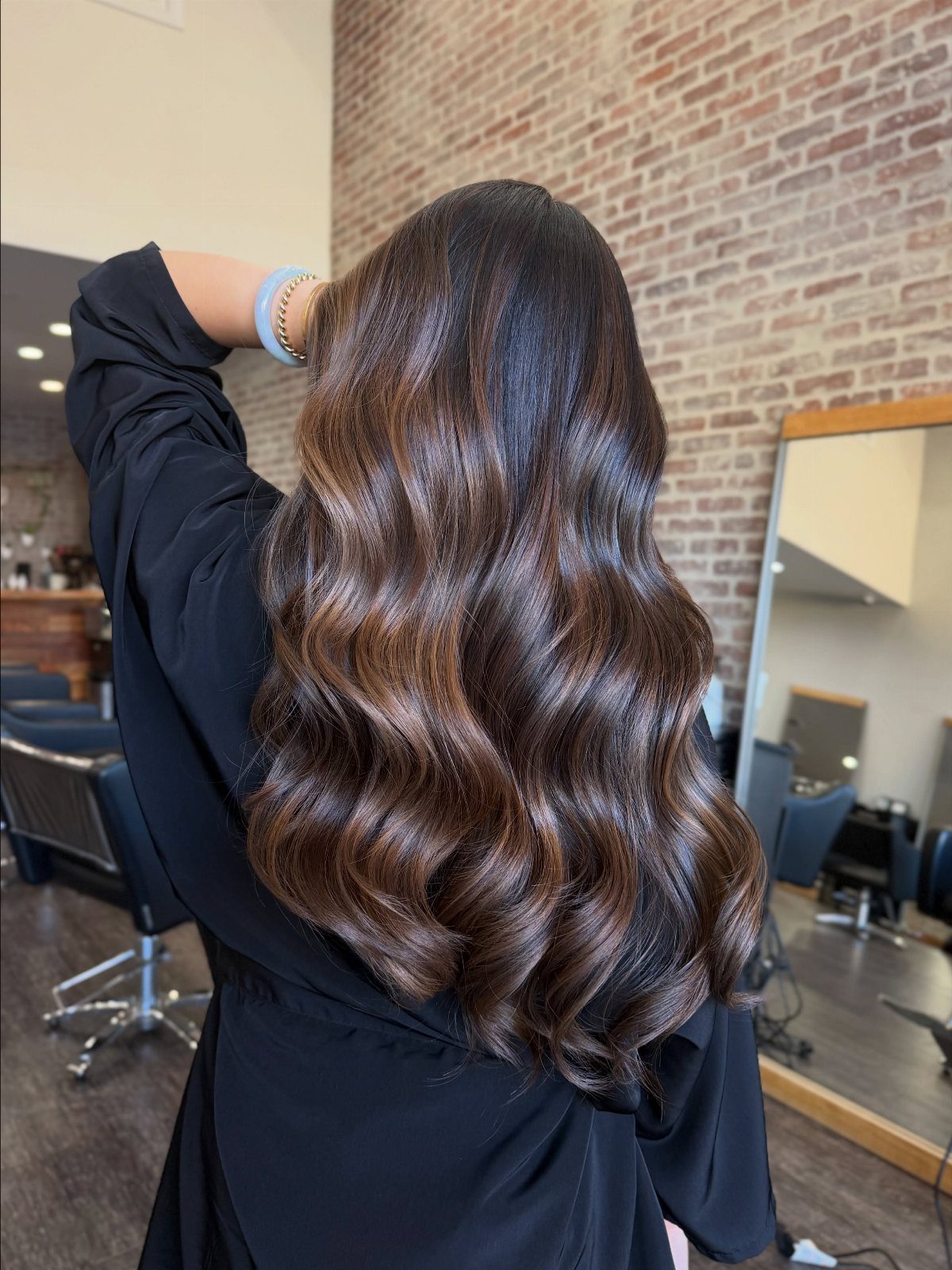
A few lighter pieces scattered through a deep brown base do more than a full head of highlights ever could.
Milk chocolate is the right tone to request: warm, soft, and close enough to the base that the dimension looks natural.
Ask for them placed sparingly, mostly where hair falls around the face and through the lengths. Sparse placement is what keeps the dark base looking rich.
7. Black Roots Chestnut Ends
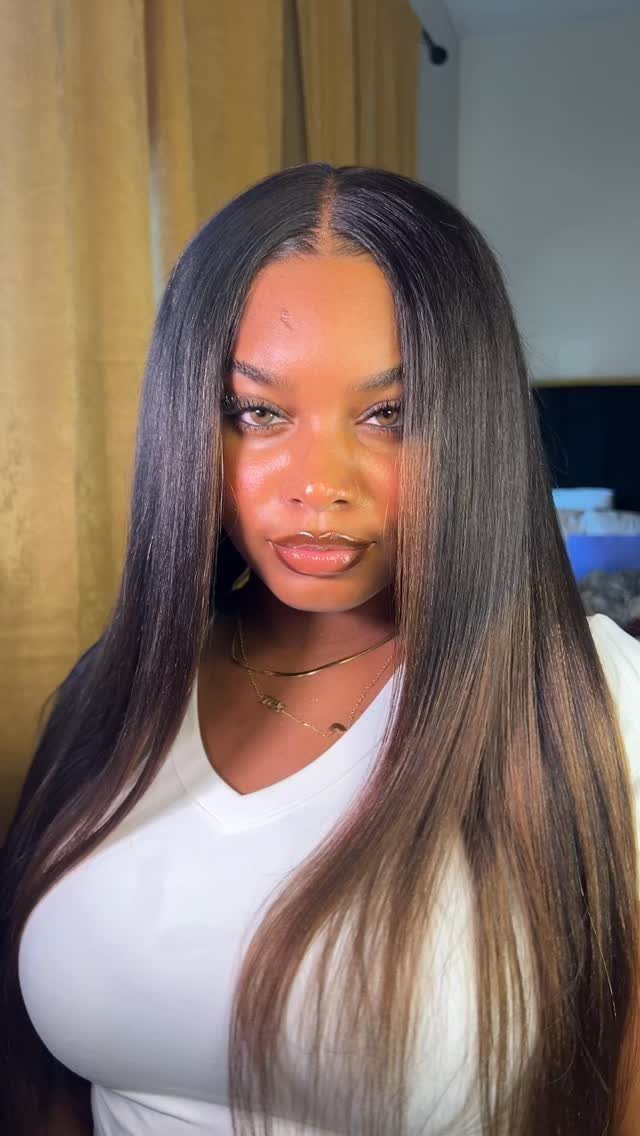
Black at the scalp with reddish-brown ends is a fade that looks planned from the first inch. The dark root gives the chestnut room to read as warm instead of washed out.
Ask for the black to stay deep through the crown and the chestnut to come in gradually down the lengths, so there’s no visible band.
Because the roots are already dark, grow-out hides easily, which is why I’d pick this over a lighter base.
8. Ash Brown Highlights
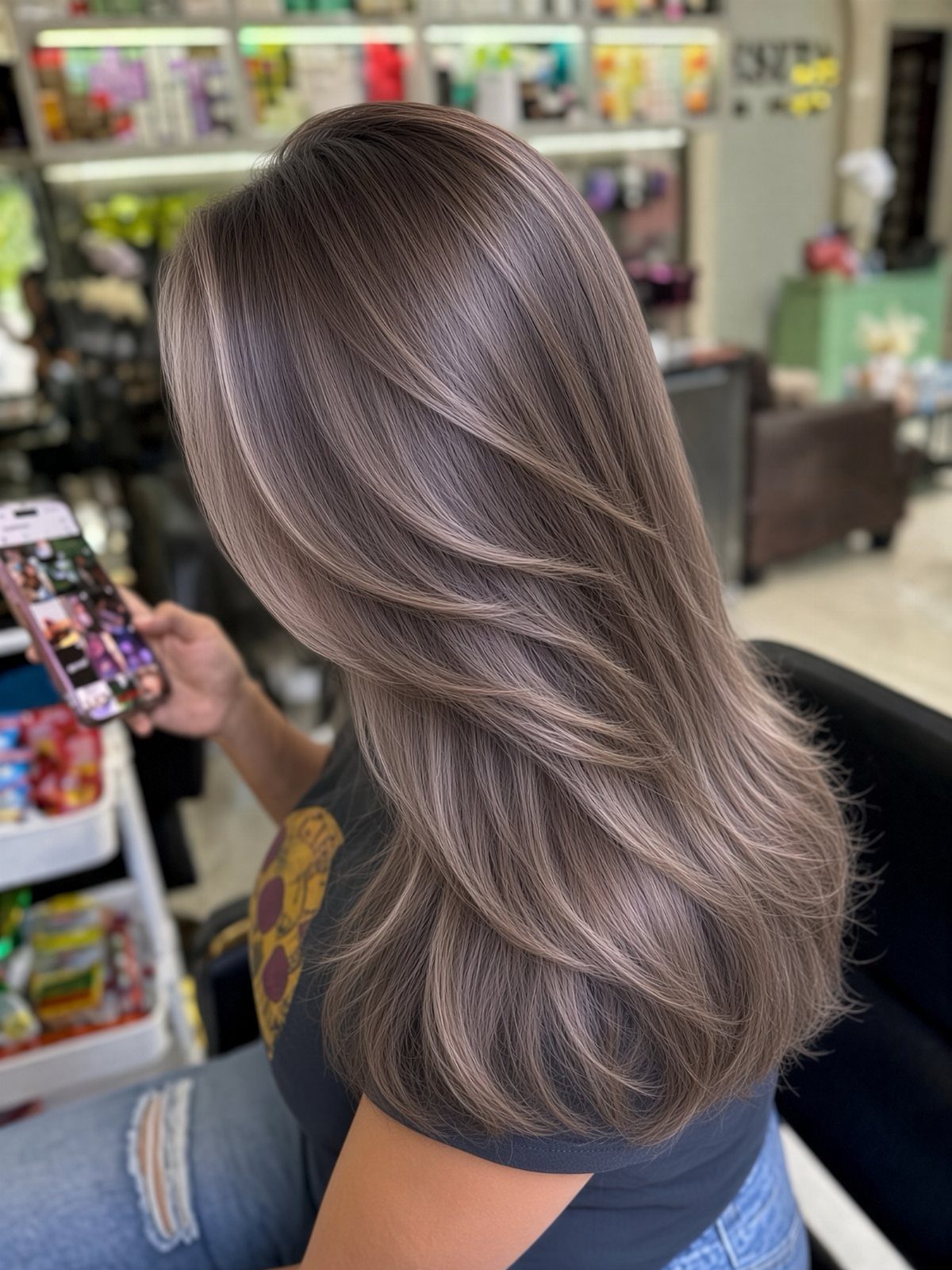
Ash brown runs cool, and chestnut highlights keep it from going flat. Laid over a soft ash base, those warm pieces add life without turning the whole head red or gold.
Ask for the highlights fine and subtle, close to the base tone.
On layered hair, they sit in the movement of each layer. I like this for anyone who wants warmth in small doses.
9. Dark Roots Chestnut Base
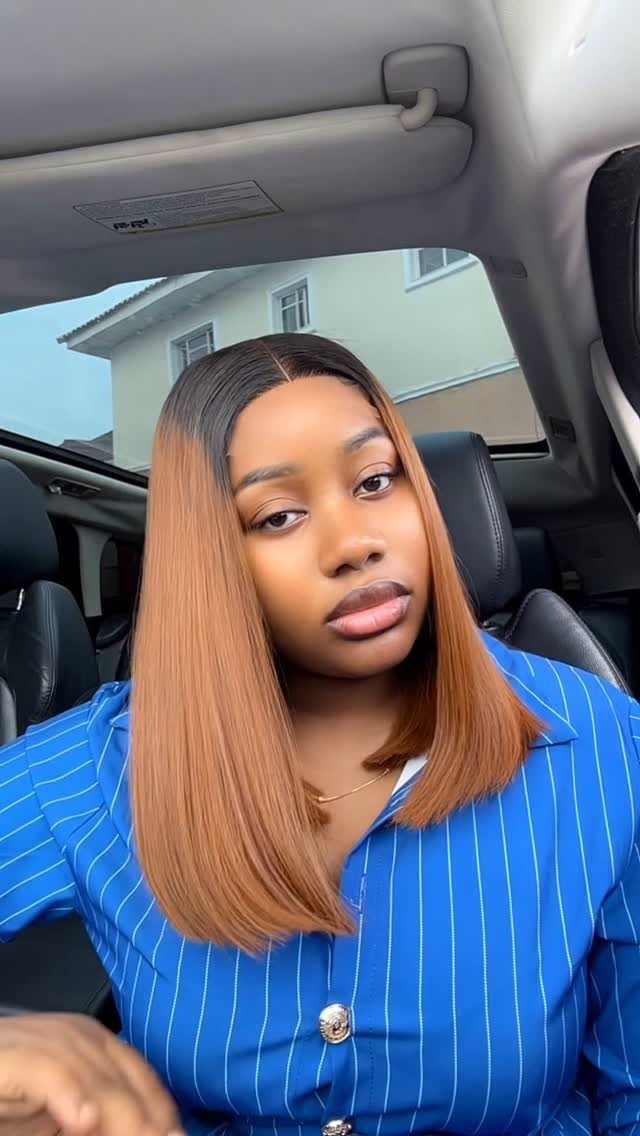
A chestnut base with a golden undertone and darker roots is about as forgiving as color gets. The shadow at the scalp makes the gold look deeper and more expensive, and it keeps the regrowth line from announcing itself.
Tell your stylist you want the roots left a step darker, then blended softly into the chestnut. On straight, mid-length hair that blend shows clearly, so ask for it feathered, not sharp.
10. Black Chestnut Ombre
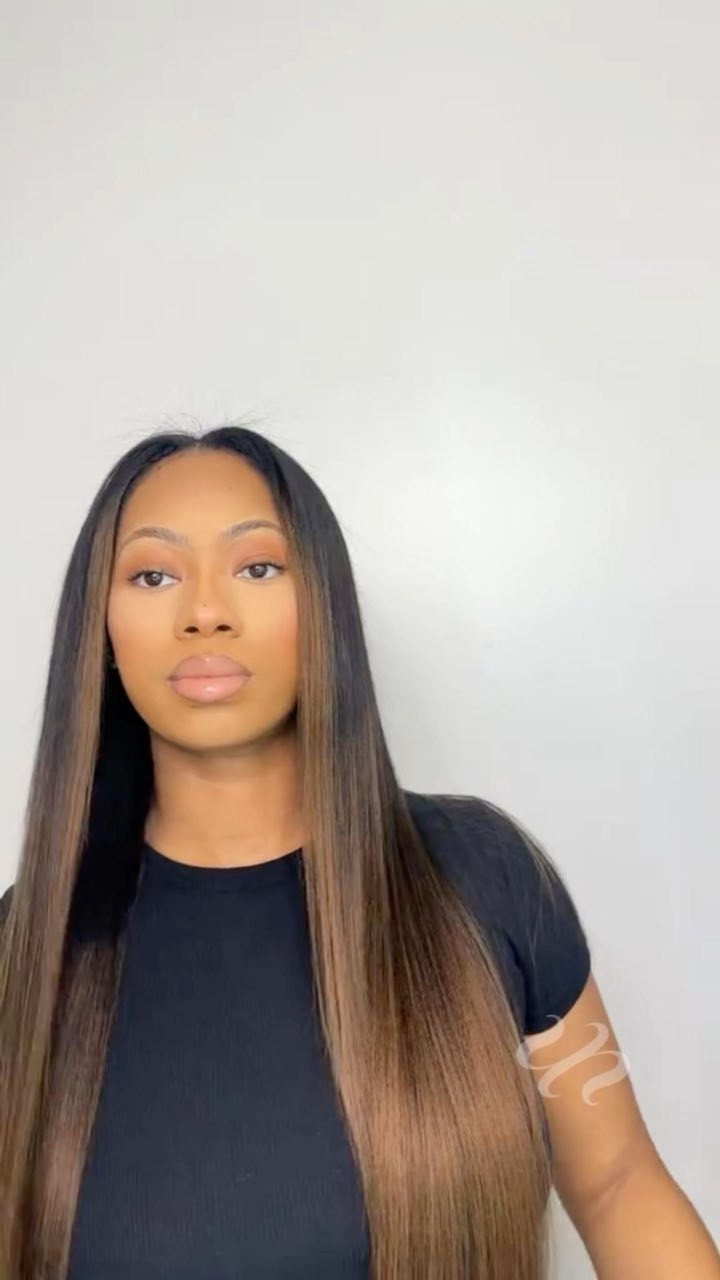
Black and chestnut share one thing: both are rich, so the move from one to the other can be dramatic without looking harsh. Here the base stays a true black, and the ends warm into chestnut brown.
Ask for a long, smooth ombre so the color shifts over several inches instead of at one point.
Straight, long hair shows that gradient best. I’d keep the chestnut warm, not ashy, so it glows against the black.
11. Chocolate Chestnut Brown
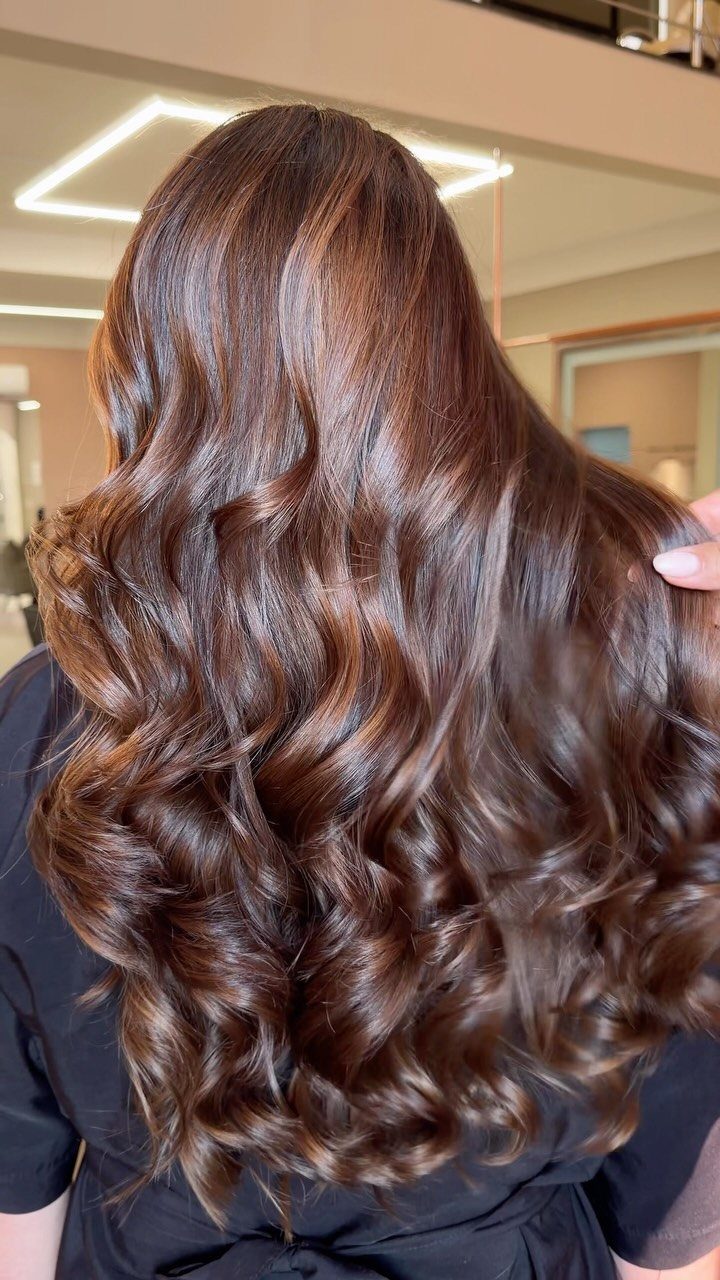
Chocolate and chestnut together give brown more range than either shade alone: chocolate brings depth, chestnut brings a warm cast. The two sit close enough that the blend reads as one rich, glossy color.
Waves are where this shines, since each curve catches the light and shows both tones.
Ask for chestnut woven into a chocolate base, not blocked on top. I’d choose it for a change that’s easy to live with.
12. Deep Chocolate Chestnut
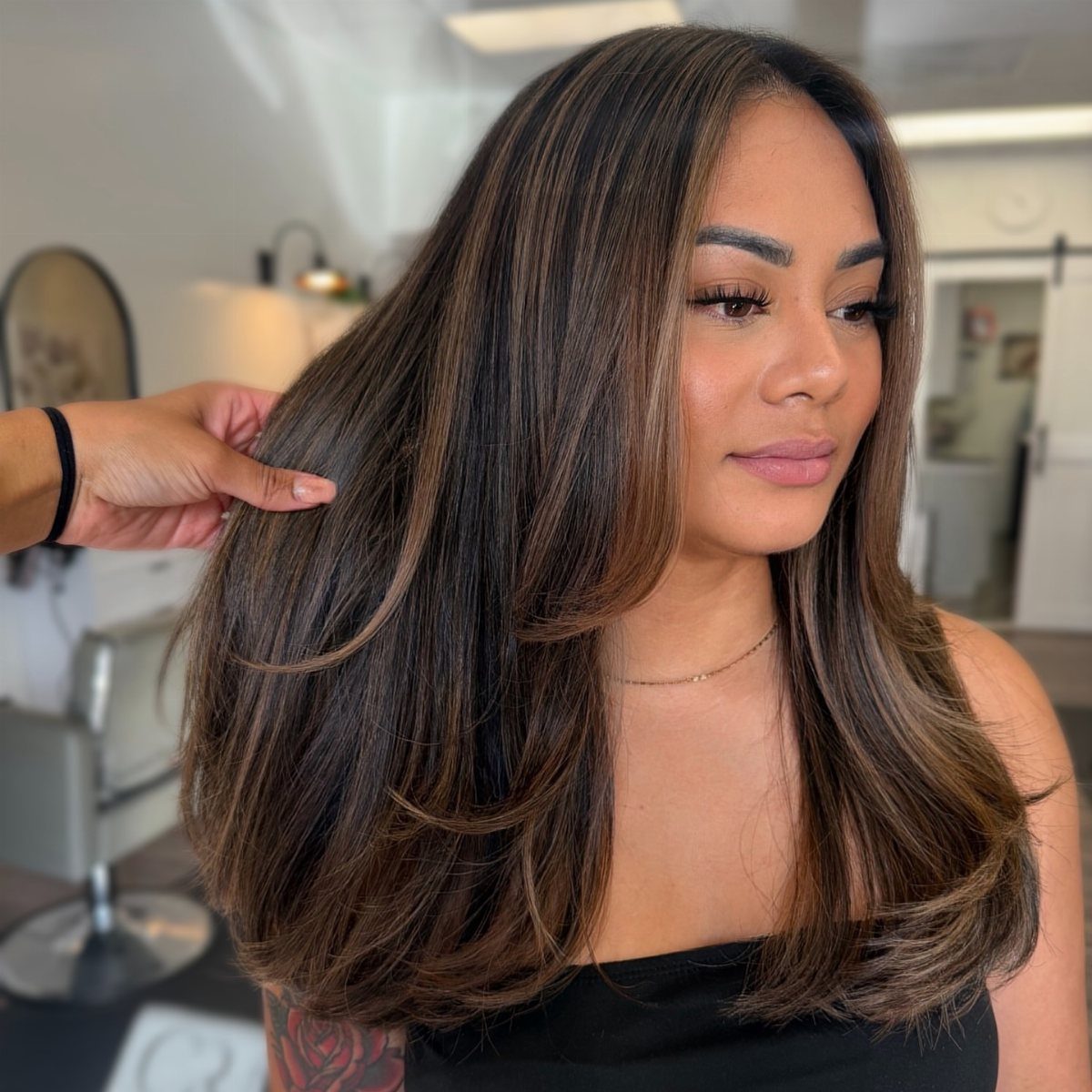
Nearly black chocolate is the starting point here, and chestnut and mahogany balayage rise out of it like embers. The dark base does the heavy lifting, so the lighter strands only need to be a few notes warmer to show.
Ask for the mahogany placed in thin pieces around the face and mid-lengths, with the chestnut softening the transition.
Keep the roots dark. A glossy finish makes this color look its best.
13. Chestnut Babylights
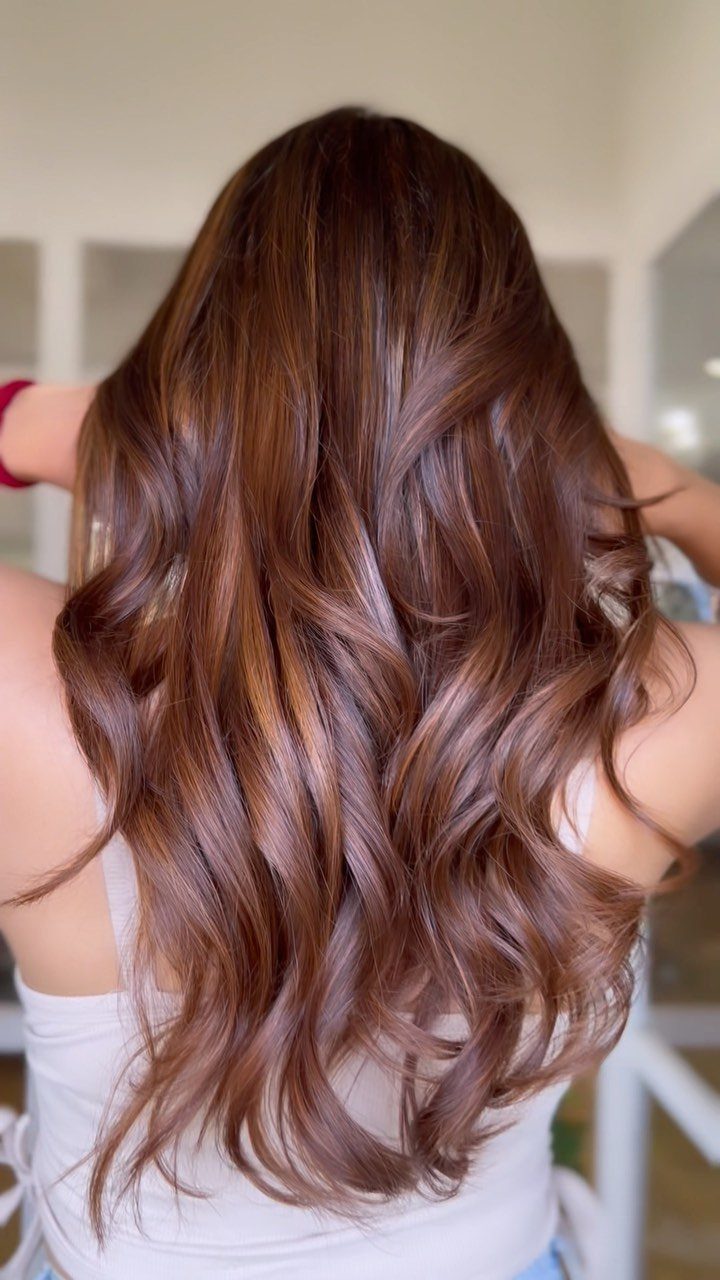
Fine highlights scattered all through a chestnut base disappear into the color instead of announcing themselves. That’s babylights: thin enough that the eye reads them as texture, not stripes.
The finer the weave and the closer to your natural base, the softer the lift.
On wavy hair, they catch the curve and add light without changing the overall color story. I’d take this over heavier highlights any day for a result that looks unforced.
14. Chestnut Reddish Brown
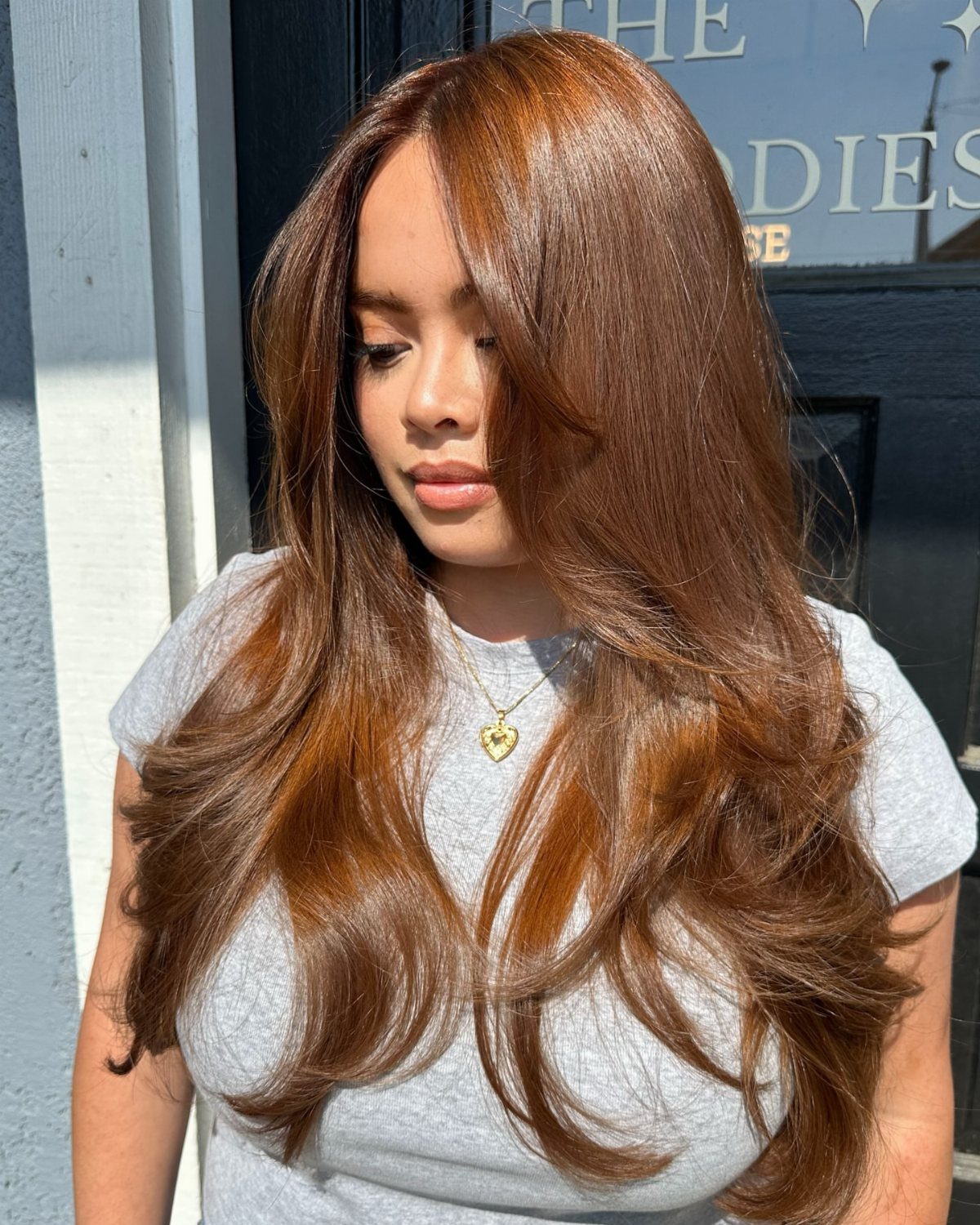
Chestnut brown with a reddish cast is warm without crossing into auburn territory. Add fine golden highlights and the whole thing glows, especially on long hair where the length gives the color room to shift.
Ask for highlights that stay light and sparkling, not brassy.
The reddish base keeps them from looking too blonde. On waves, the interplay between the warm brown and the gold is what makes this work.
15. Caramel Highlights
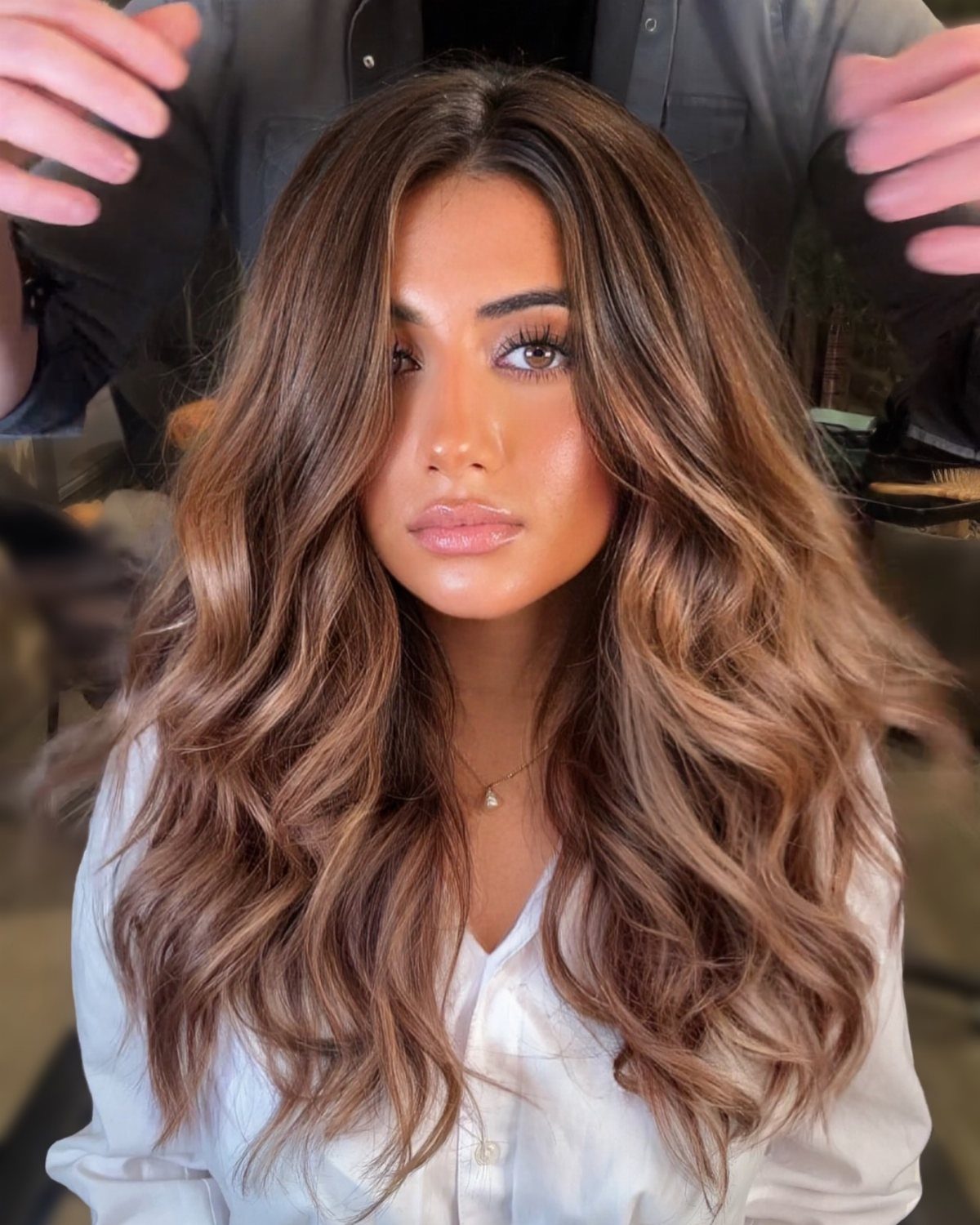
Caramel against a deep chestnut base delivers contrast that’s visible from across a room. The lighter pieces sit in thick, intentional ribbons, so this is not a subtle look.
Ask for the caramel to stay warm, not ashy, and request placement around the face and through the crown.
On long waves, the contrast gives the hair more movement. I’d choose this for anyone ready to commit to regular toning, since bright caramel fades faster than a closer match.
16. Chestnut Copper Brown
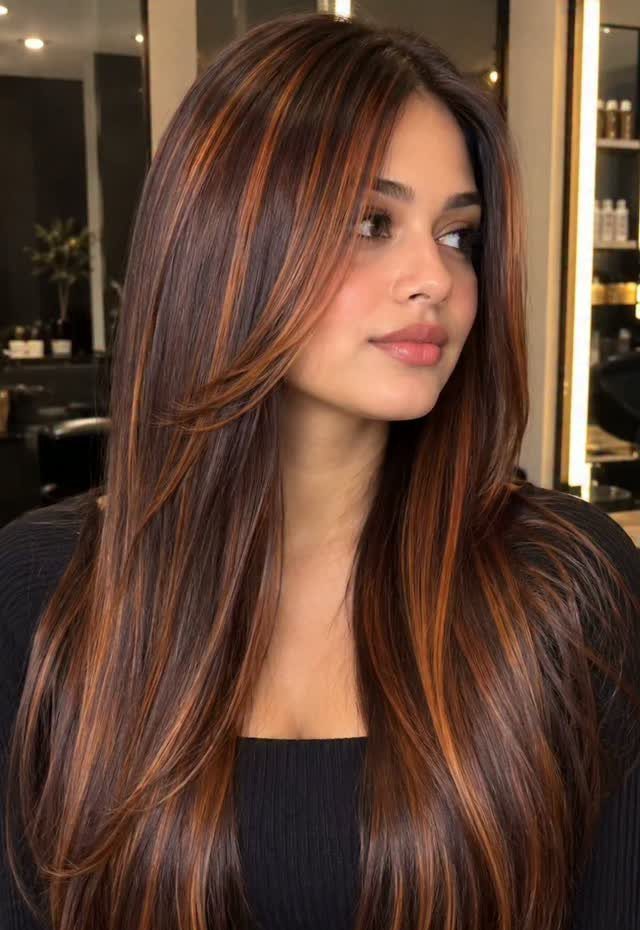
Copper threaded through chestnut brown adds a metallic shine that reads as polish, not just warmth. Multiple shades of brown layered together keep the color from looking one-note.
Keep the copper as an accent rather than the main event, woven through in narrow sections.
Straight hair shows the shine best. This is my pick for a rich finish that doesn’t require a drastic color change.
17. Dark Chestnut Brown
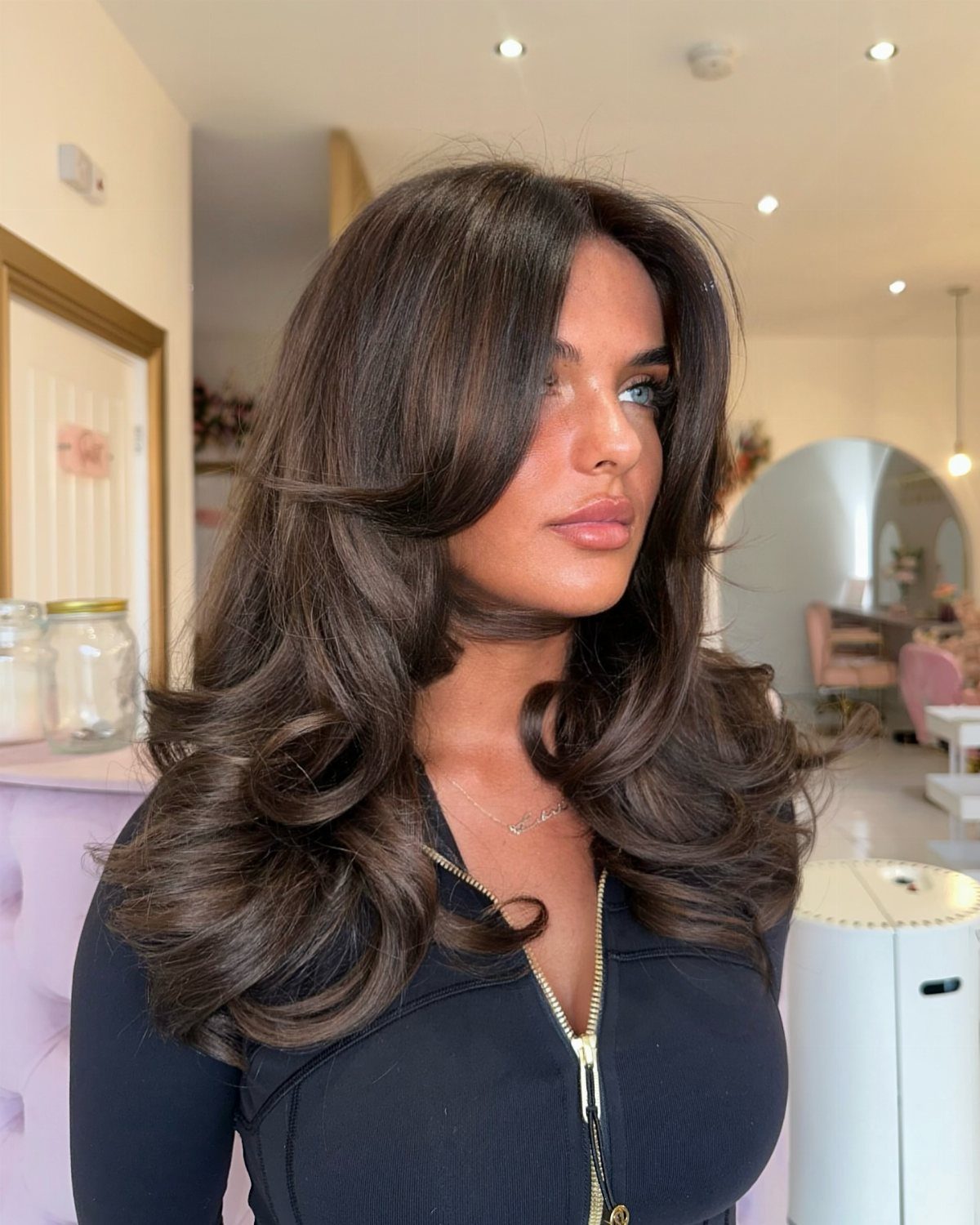
Dark chestnut that shifts slightly warmer toward the ends is the kind of color that looks expensive because it looks like hair, not dye. The subtle gradient keeps it from reading flat.
Ask for a soft melt from dark roots to a lighter chestnut at the ends, with no visible line.
Loose waves show the shift clearly, and the grow-out is invisible. I’d take this over a bolder ombre for a low-maintenance result that still has dimension.
18. Mahogany Chestnut Highlights
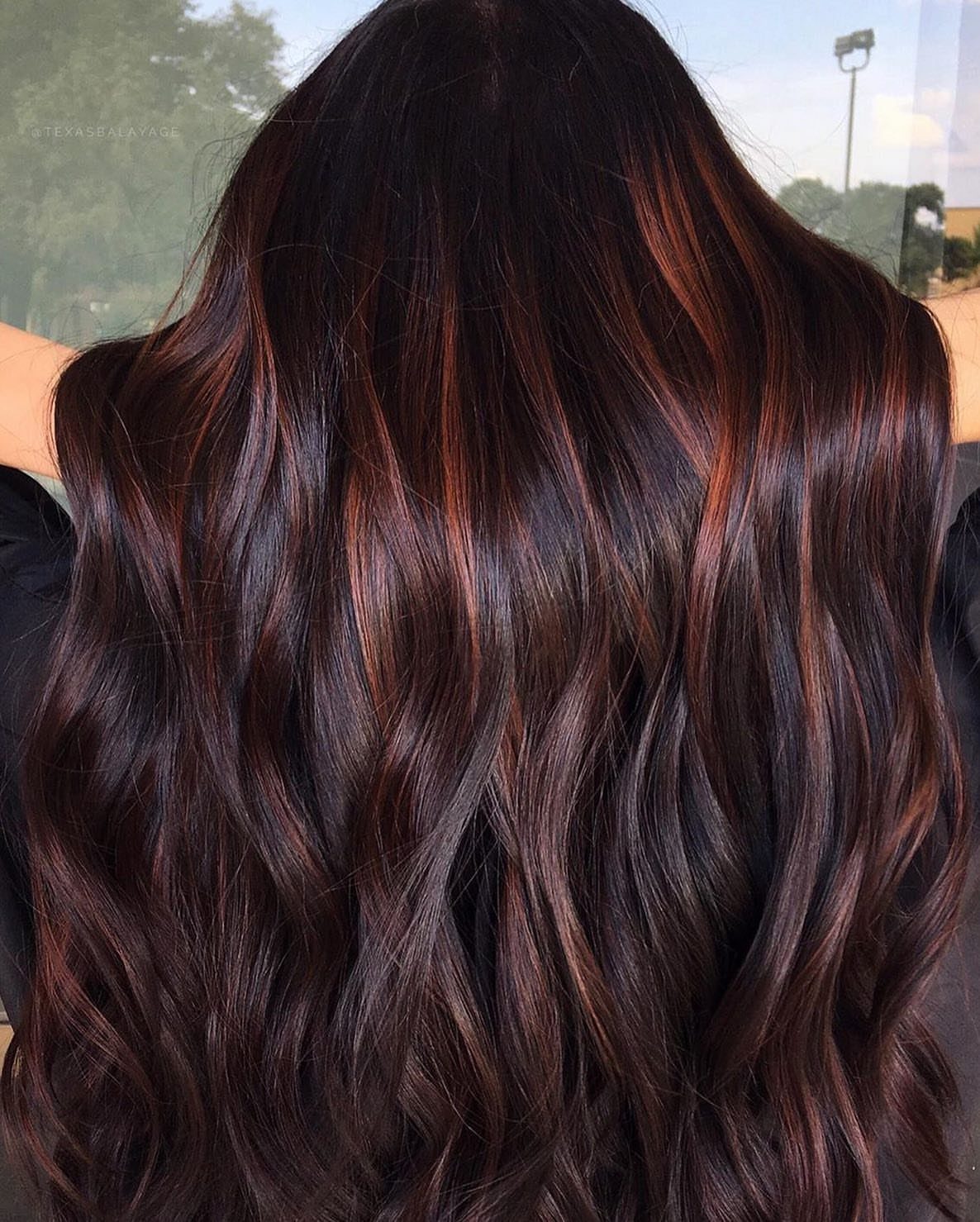
Mahogany highlights scattered through black hair add warmth in thin, irregular ribbons that avoid the striped effect of a heavy hand. The placement is what matters: fine pieces that catch the light without announcing themselves.
Specify mahogany chestnut by name so you get warmth without veering into obvious red territory.
On wavy hair, the ribbons follow the movement and add depth. This is the way to lighten black hair without losing the richness of the base.
19. Soft Auburn
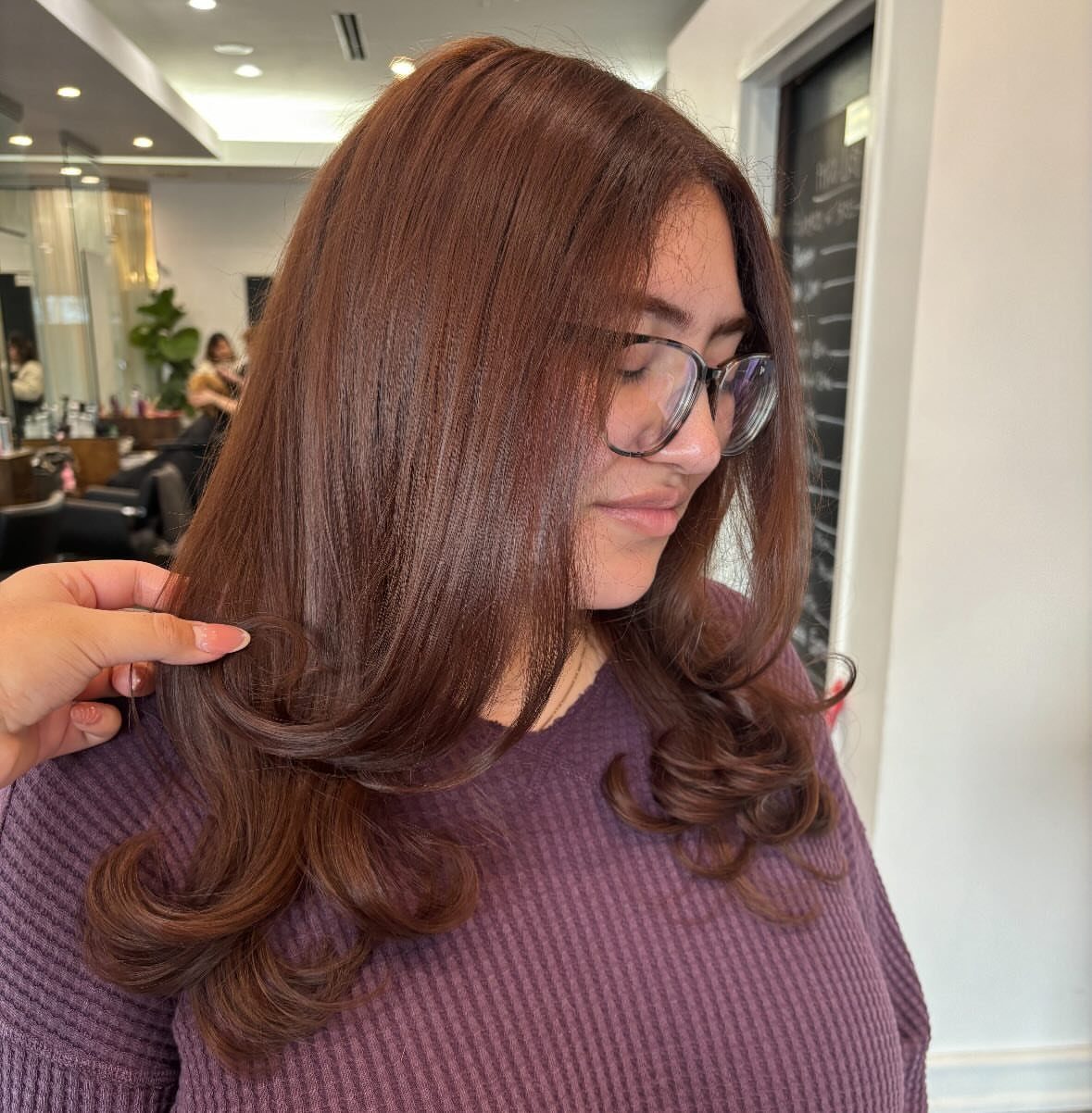
Auburn that leans chestnut instead of fire-engine red is the move for anyone who wants visible warmth without committing to a full red. The reddish tone registers clearly but stays grounded in brown.
Ask for soft auburn or auburn chestnut, not just auburn, so the formula stays on the warmer side of brown.
On long waves, the color shifts as the hair moves. I’d pick this over a deeper brown for anyone ready for a change that still reads as brunette first.
20. Toffee Balayage
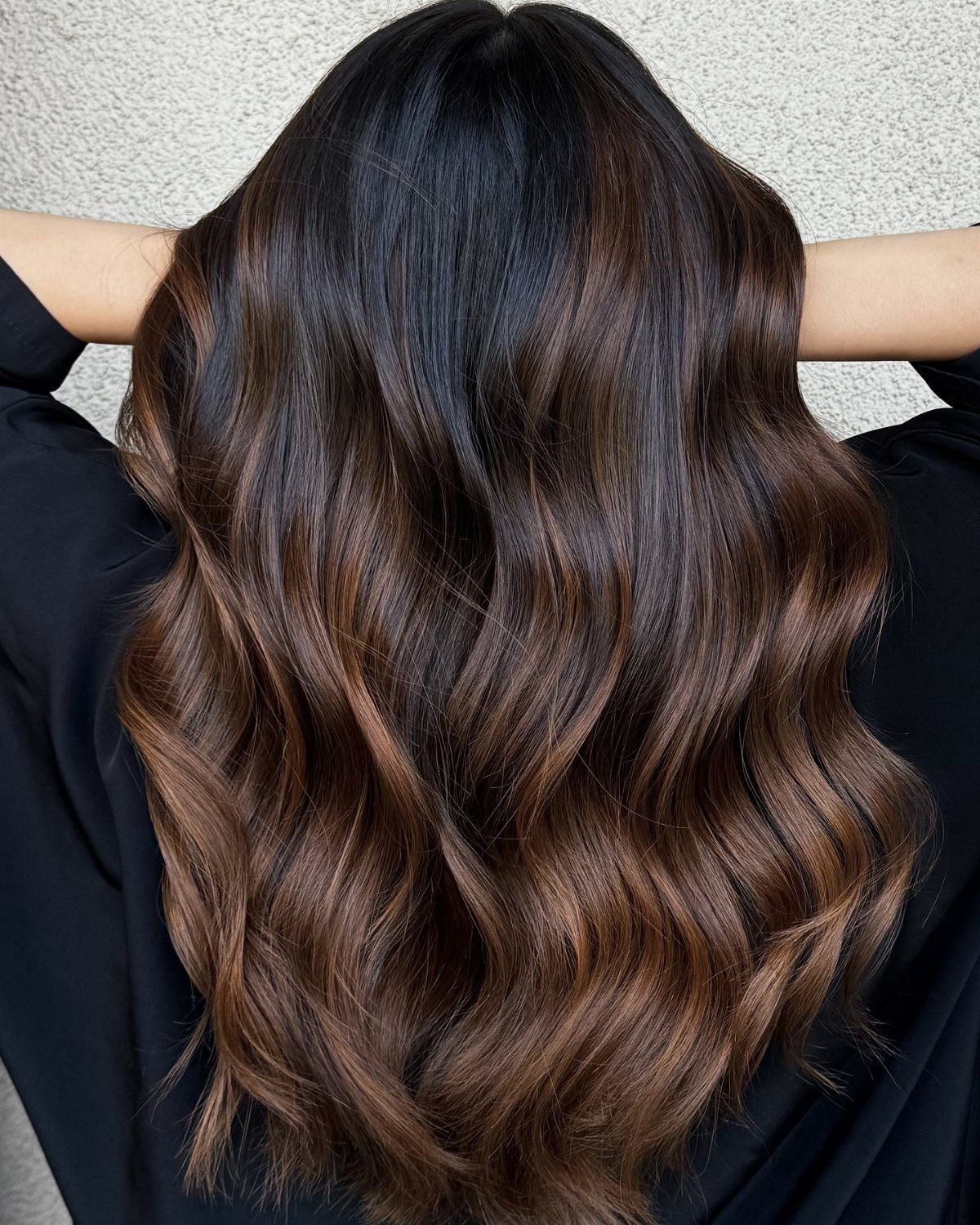
Golden chestnut balayage over nearly black hair gives you warmth without lifting the base too far. The toffee tone sits a few shades lighter than the root, so the contrast is visible but not stark.
Request toffee or warm chestnut for the painted sections, and keep the base dark.
The gradual blend means grow-out stays soft. On waves, the lighter pieces follow the curve and add dimension where the hair catches light.
21. Warm Dark Brown
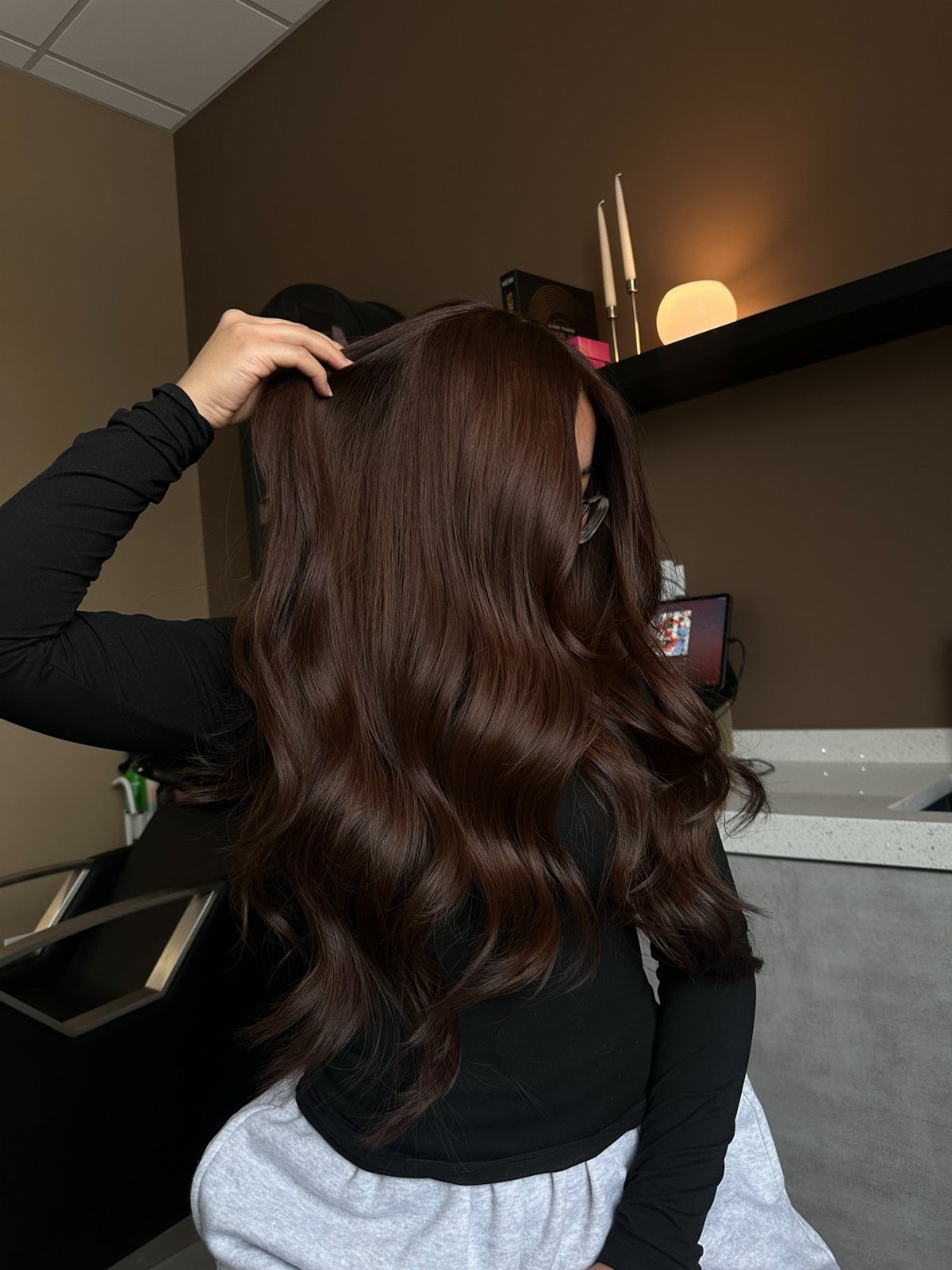
An all-over dark chestnut that stays rich and warm without sliding into black is harder to find than it sounds. This is that: deep brown with a golden undertone that keeps it from looking flat.
Ask for a warm dark brown or chestnut brown base, and specify you want warmth, not ash.
On long waves, this shade looks its deepest, because the length gives the light room to pull out warmer flecks as the hair moves.
For a one-tone color that needs little upkeep and still looks alive, this is the one I’d pick.
22. Eggplant Brown
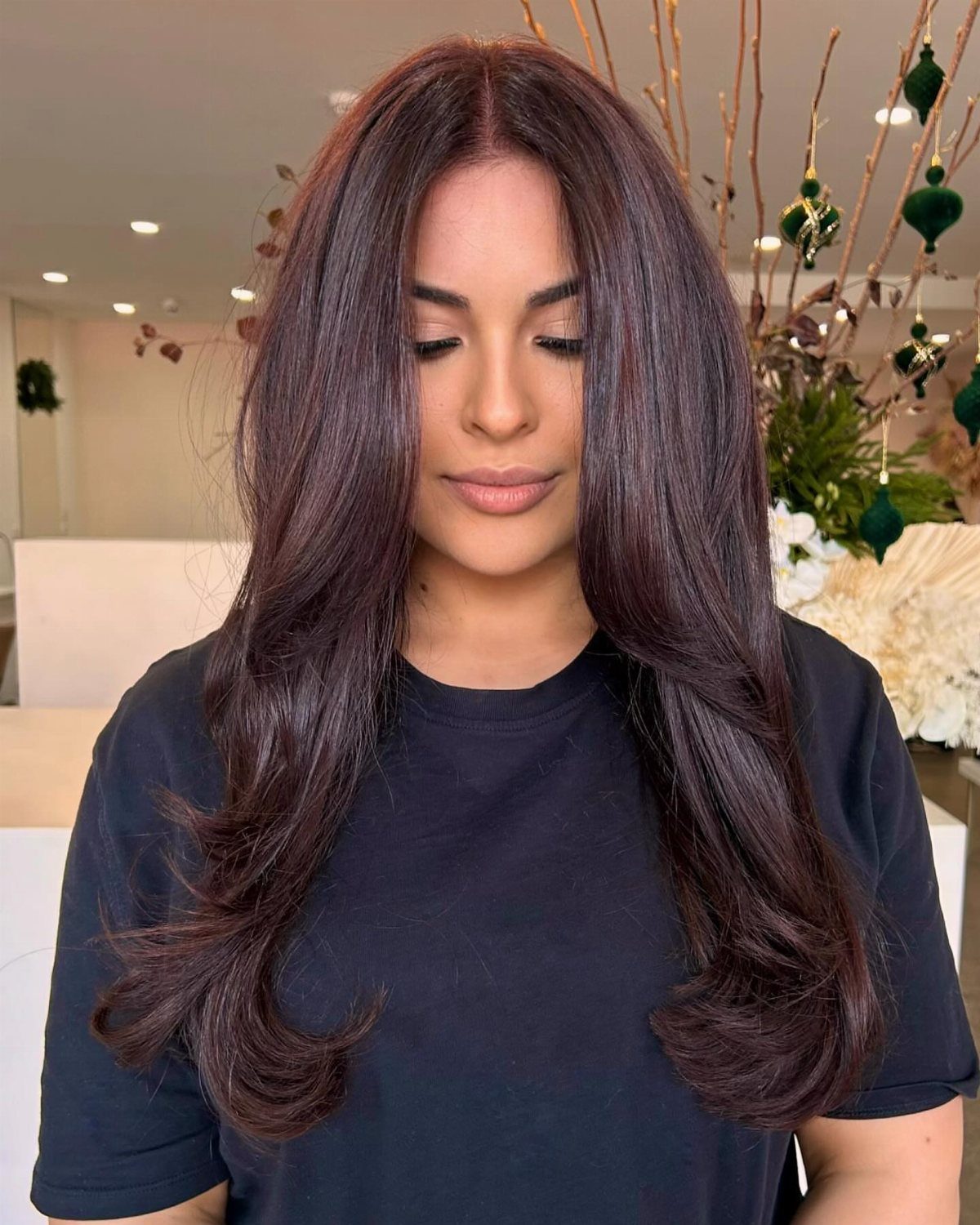
Eggplant brown is chestnut with a cool, purple-leaning undertone that makes it read darker and richer than a straight warm brown. The finish matters here: glossy is what keeps it from looking dull.
Ask for a deep chestnut with cool or violet undertones, and request a gloss treatment to lock in the shine.
On long, curled hair, the light catches the curve and shows the color’s depth. This is my pick for anyone after something darker and moodier than standard chestnut.
23. Foxy Red Ombre
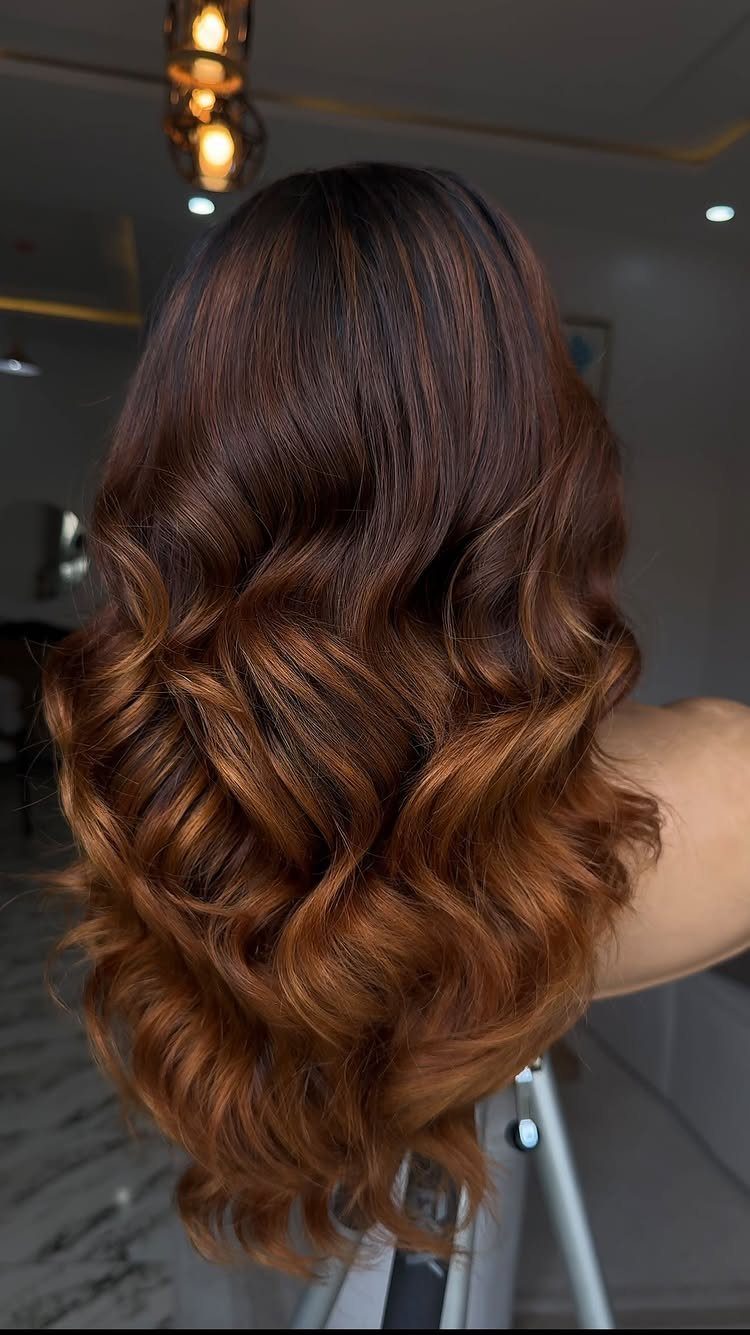
A long ombre from dark brown roots to chestnut red ends is the way to bring red into your hair without starting at the scalp. The fade sits over several inches, so the color builds gradually instead of banding.
Ask for a smooth gradient with the red kept in the chestnut family, not bright copper.
On wavy hair, the shift reads as natural dimension. Grow-out hides easily since the roots stay dark.
24. Bright Copper
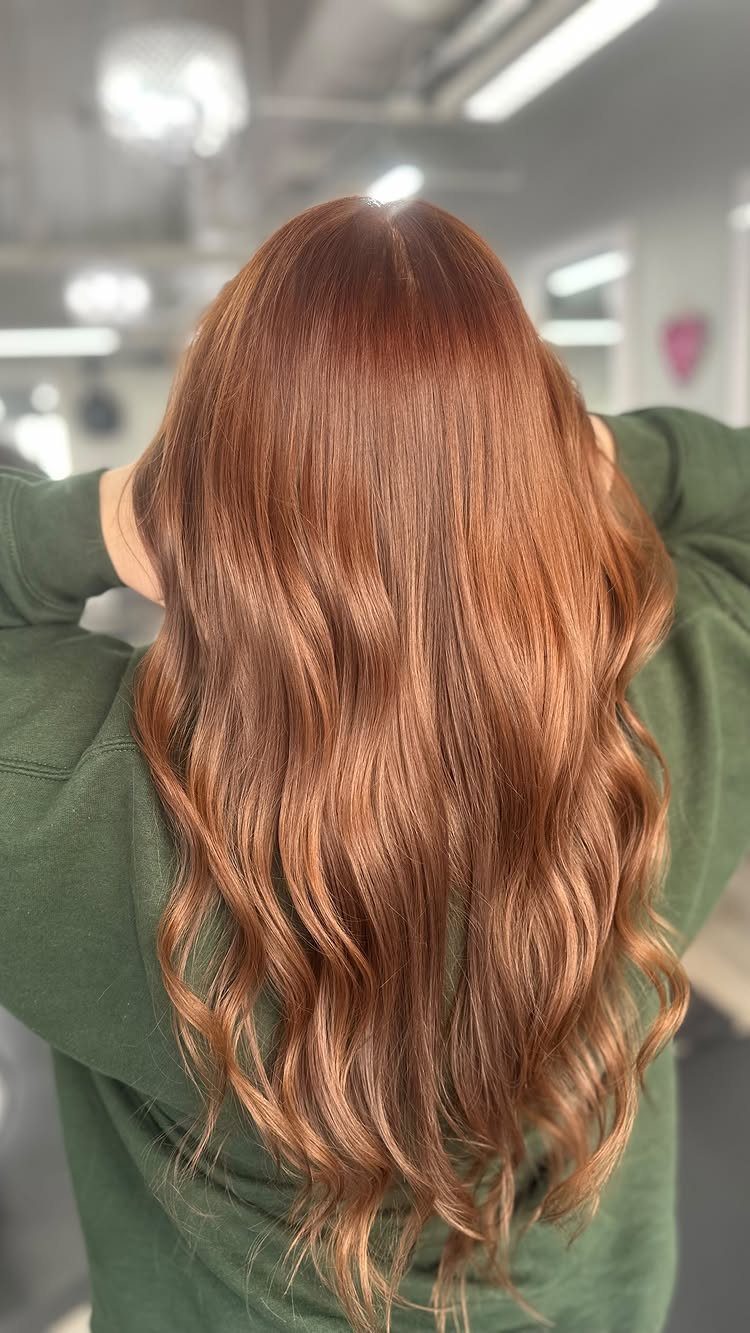
Copper chestnut is the bridge between warm brown and true red. The color reads as copper first, brown second, so this is for anyone testing the water before a full red leap.
Request copper chestnut or bright copper brown, and expect the result to pull more red than standard chestnut.
On long waves, the metallic warmth catches every curve. I’d choose this for a bolder change that still stays inside the brown family, just barely.
25. Vivid Caramel Balayage
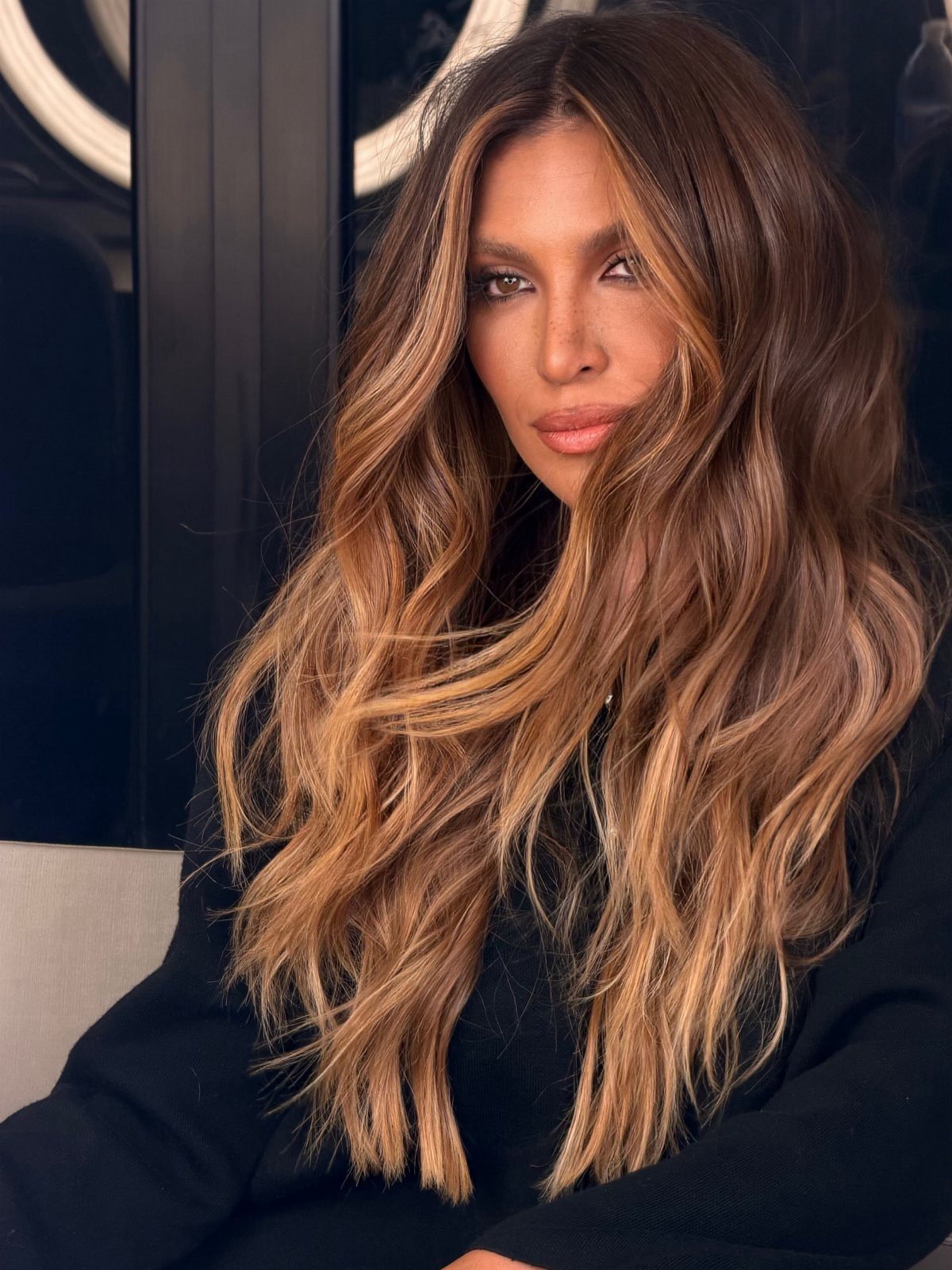
Caramel ribbons painted through a chestnut base give long waves a warm, sunlit contrast. The color is vivid enough to read from a distance, and it still sits inside brown.
Ask for balayage with the caramel hand-painted, not foiled in stripes, and keep the roots close to your natural chestnut.
Brighter caramel needs toning to stay golden. I’d pick this over a subtler tone if you want the color noticed.
26. Rose Gold Hues
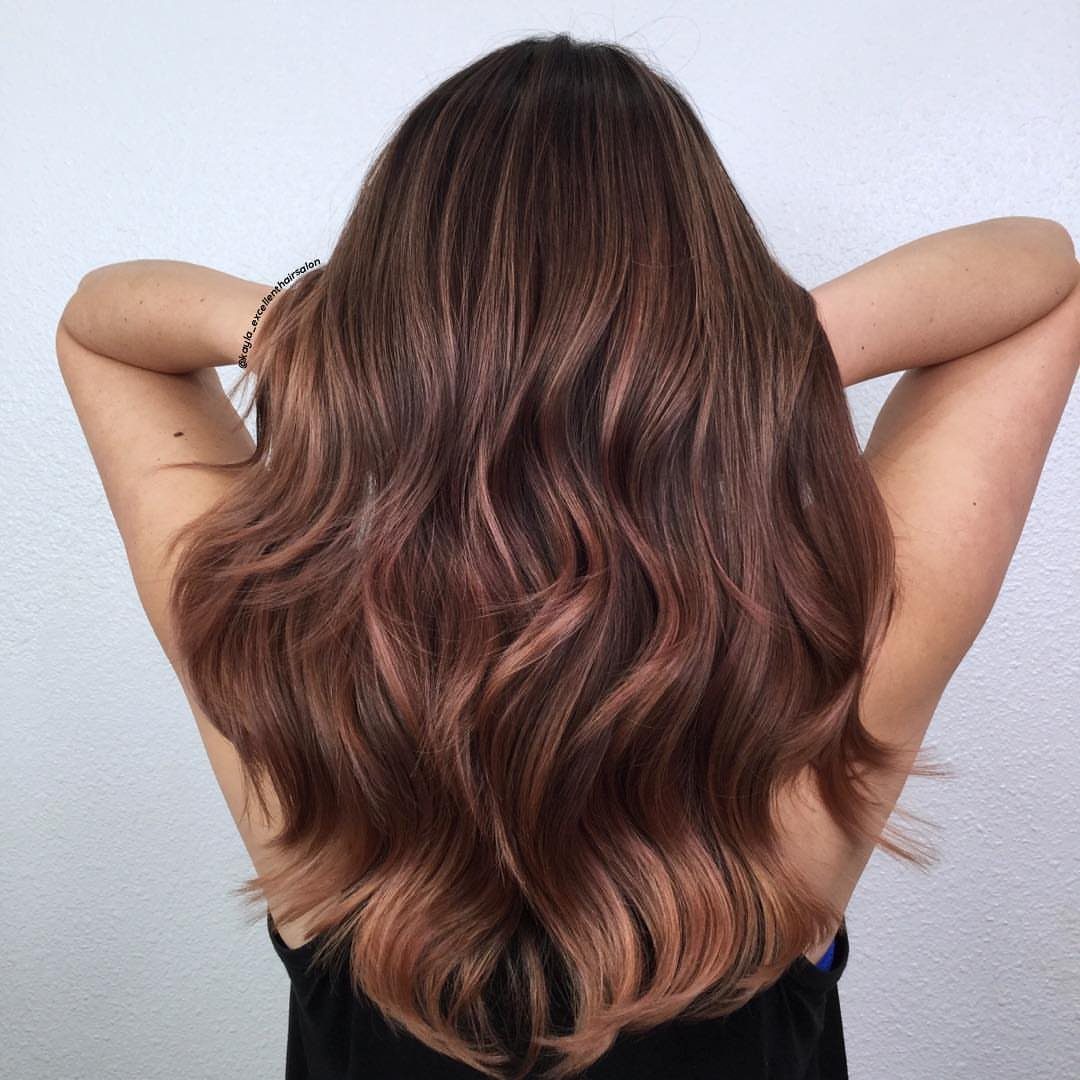
Rose-gold tones slipped into chestnut brown add a faint pink-copper glow that plain brown can’t give. On long waves it shows up in the curves and stays soft everywhere else.
Ask for rose gold as a fine accent through the lengths, not an all-over shade, so the base still reads as chestnut.
Pastel pink tones fade faster than brown, so plan on toning. I like it as a quiet, unusual twist.
27. Ruby Red
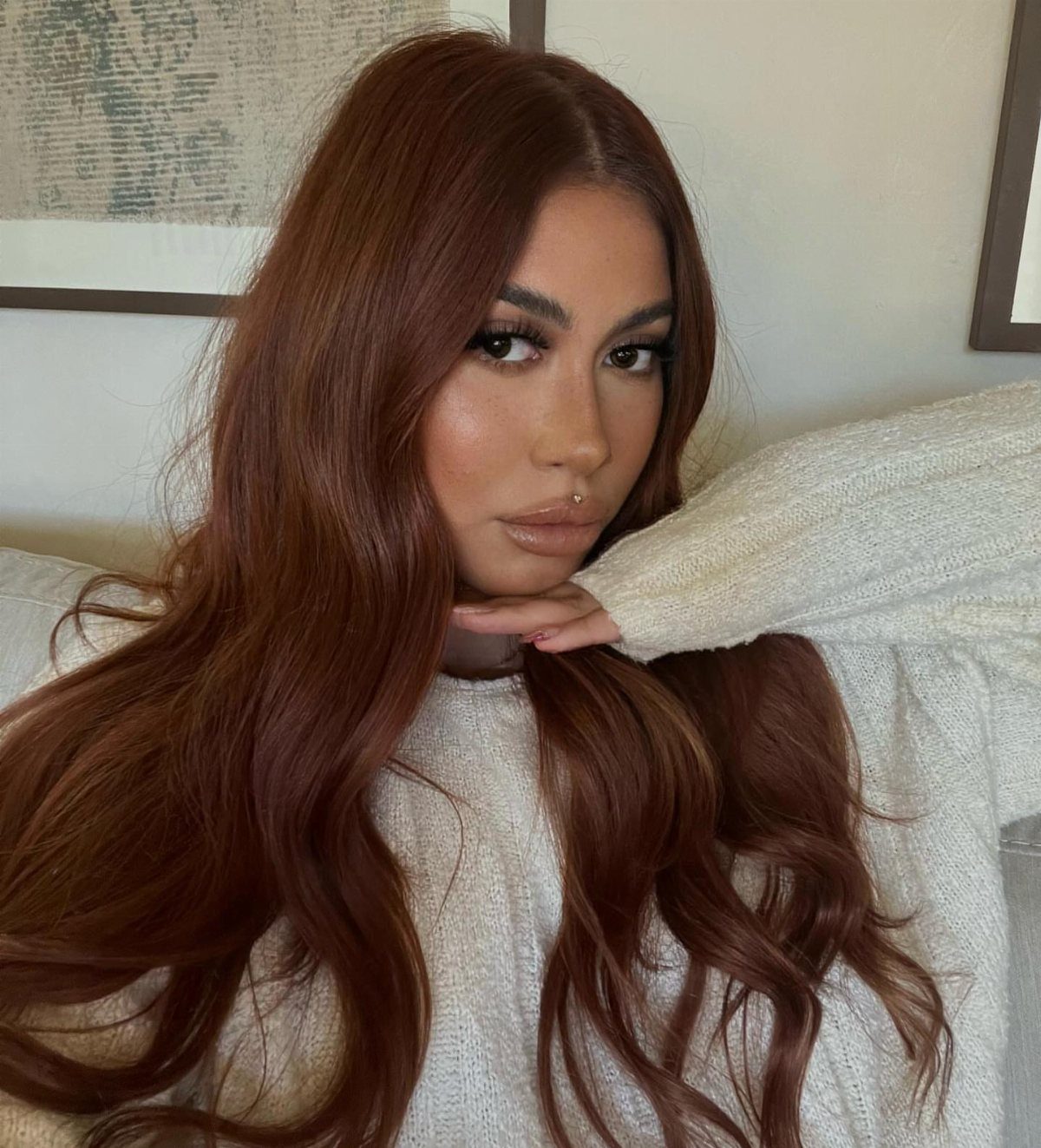
Chestnut pushed toward ruby red gives you a deep, wine-leaning brown that glows under indoor light. It sits between brunette and a true red, so it’s an easy first step into red.
Ask for ruby-red tones laid over a chestnut base and a gloss to finish, since shine is what makes red look rich instead of flat.
Long waves show the glow best. I’d choose this over bright copper for a deeper, more polished red.
28. Dark Gold Chestnut
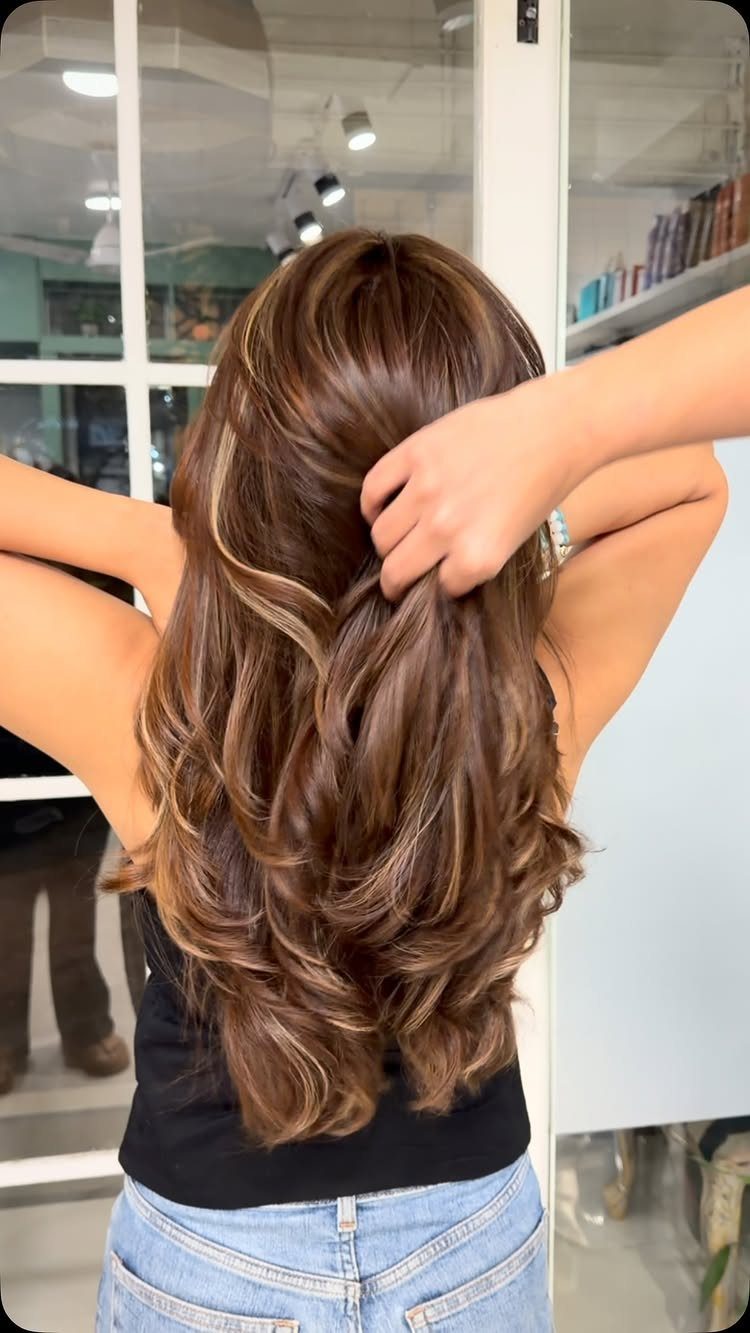
Dark chestnut with golden tones running through it looks like warm brown hair lit from within. The gold stays soft, so it reads as depth, not as highlights.
Ask for golden-brown pieces blended into a dark chestnut base, with the roots left deep.
Long curls spread the gold across the length and make it look layered. This is my pick if you want warmth that never looks bleached.
29. Glazed and Glossy
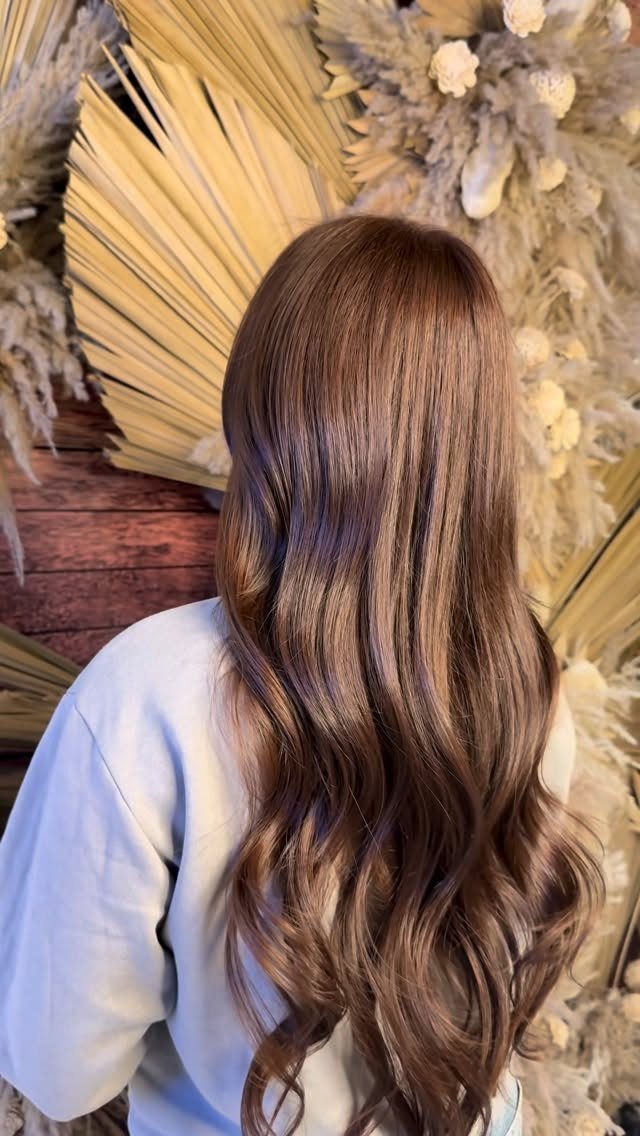
Shine does most of the work on this color. Chestnut brown with a glazed finish looks richer than the same shade left matte, and long waves reflect light along every bend.
Ask your stylist for a gloss or glaze at the end of your color appointment.
It sits on top of the base shade and smooths the surface, so the chestnut reads deeper. I’d always add it, since it makes a simple color look finished.
30. Multidimensional Balayage
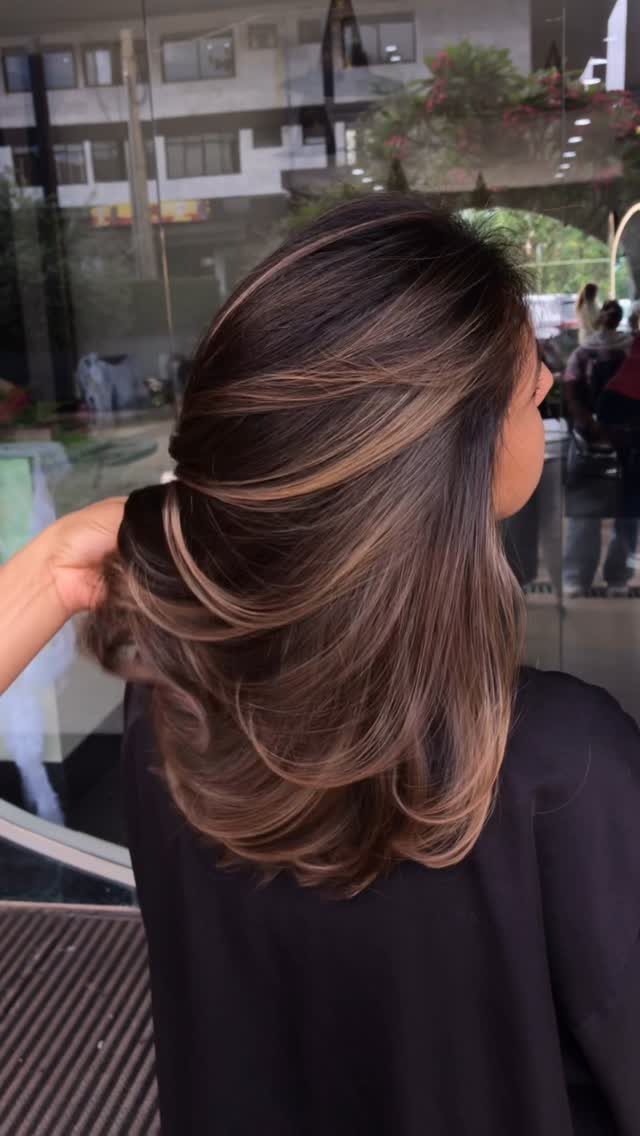
Several shades of brown and caramel layered together make hair look dimensional instead of flat. Balayage lets the lighter pieces fall where the layers move, so the color seems to shift as the hair does.
Ask for balayage in a few close tones, not a single highlight shade, and have the lightest pieces placed around the face and through the ends.
Layered cuts show the dimension best. It’s the version I’d choose when you want movement, not a statement.
Chestnut Shade Definition
Chestnut sits on a brown base with a thread of red running through it, and you control how much of that red shows by choosing a cooler, muted version or a warmer, glowing one.
They can be barely there or clearly hued, which is why one name covers such a wide stretch of color.
At the light end, brunette drifts toward bronde, with caramel warmth in between. At the other end, the shade edges toward nearly red.
Earthy and warm is the common thread.
Skin Tone Suitability
Most skin tones can carry chestnut, though it looks best on medium to deep complexions with warm undertones. That reddish warmth echoes the golden notes already in warm skin, so the color and the face look like they belong together.
Fair skin takes a little more thought. I’d start with a copper-leaning chestnut, and a stylist can tune the shade up or down to fit your complexion.
If you’re not sure whether your undertone runs warm, notice whether gold or silver jewelry looks better on you. Gold usually points to warm.
Grow-out and Upkeep
Rooted looks are easier to live with than an all-over color. A shadow root, a root smudge, or slightly darker roots let the regrowth blend in instead of drawing a line, so the color fades gracefully.
Use the words "shadow root" when you book, since it tells the stylist you want an easy grow-out.
Red is the exception: it isn’t easy to maintain. The redder you go, the more upkeep to plan for, so if you want low effort, keep red as an accent rather than the whole head.
Frequently Asked Questions
What is darker, brown or chestnut brown?
Neither is automatically darker, because chestnut is a brown with a thread of red through it, not a separate step on the depth scale.
A dark chestnut stays deep without sliding into black. Chestnut runs a wide range: at its lightest it slides into bronde with a caramel glow, and at its deepest it reads almost red.
What hair dye color is chestnut brown?
Think of chestnut as a brown with a red base, and that red can sit quietly in the background or show up as an obvious tint.
The shade is earthy and warm, so it reads as reddish brown, never as true red. At the salon, ask for chestnut brown or reddish chestnut and specify warm over ash; that one word keeps the formula from turning cool.