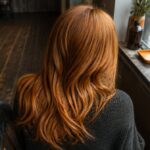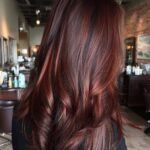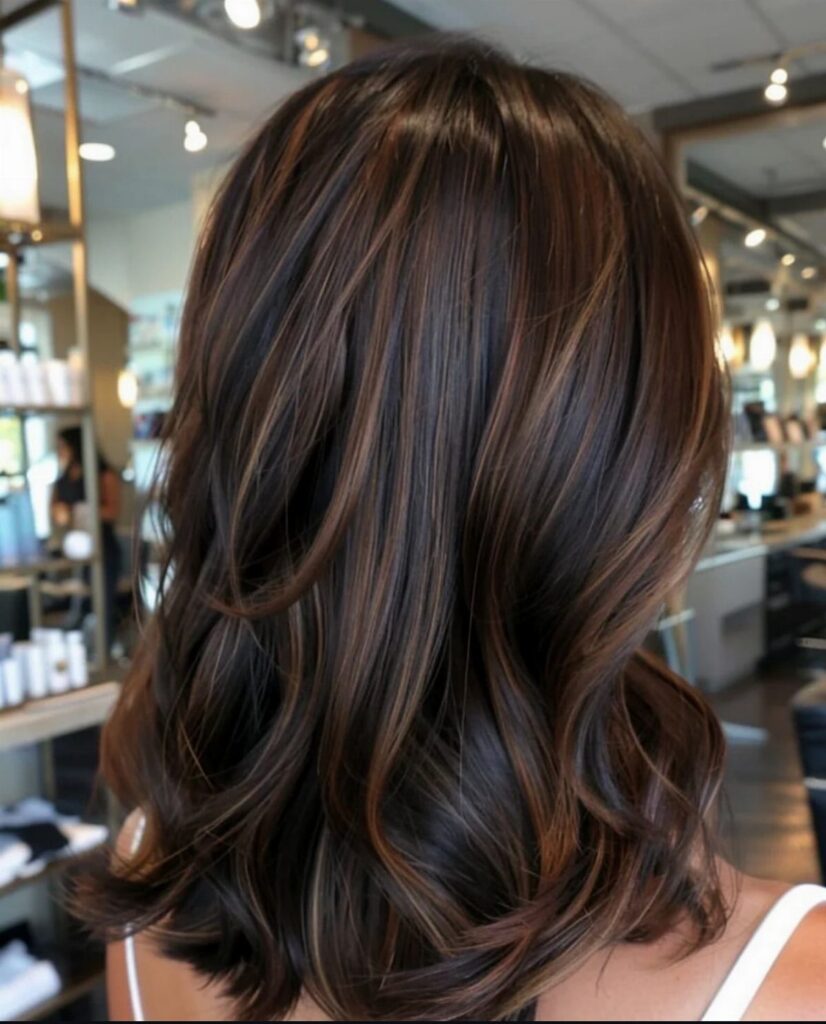
Your skin’s undertone decides which of these browns works for you: warm skin leans toward chestnut, honey and deep golden, while cool skin suits ash, smoky and gray brown.
Shades here run from Nearly Black Brown Hair to Light Ash, with solid colors, Bronze Babylights, highlighted versions and a color-melted dark brown in between, so depth shifts as much as tone.
1. Chestnut Brown
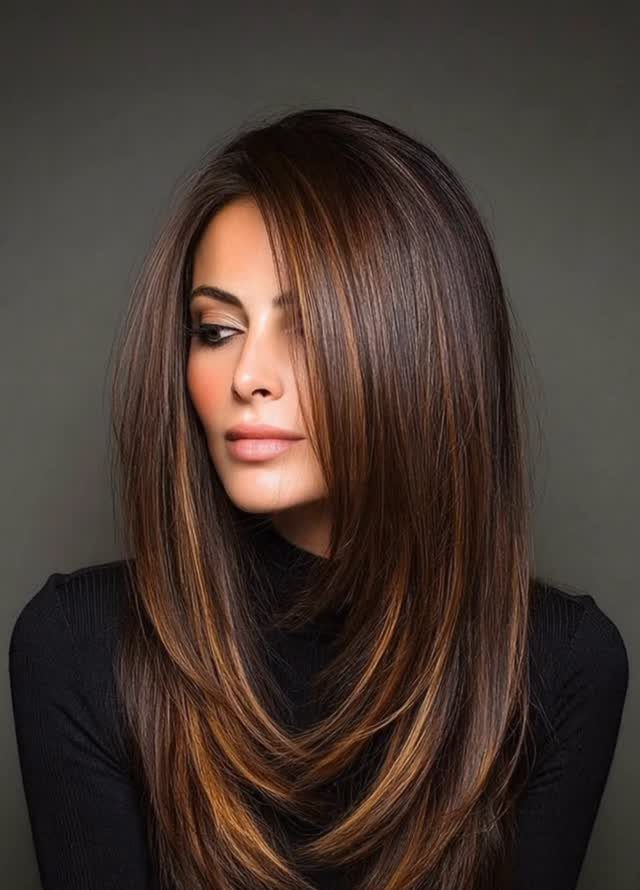
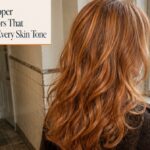
Warm is the word for chestnut: a brunette base laced with auburn, copper or golden notes, so it catches light as reddish brown rather than flat dark.
Long layers suit chestnut well, because layering lets those warm tones shift from root to end.
Jet shades can look harsh against some skin, and chestnut is my pick there, since it keeps real depth without the severity. Ask a stylist for chestnut by name, and say which note you want leading: copper, auburn or gold.
2. Dark Brown Hair with Caramel Highlights
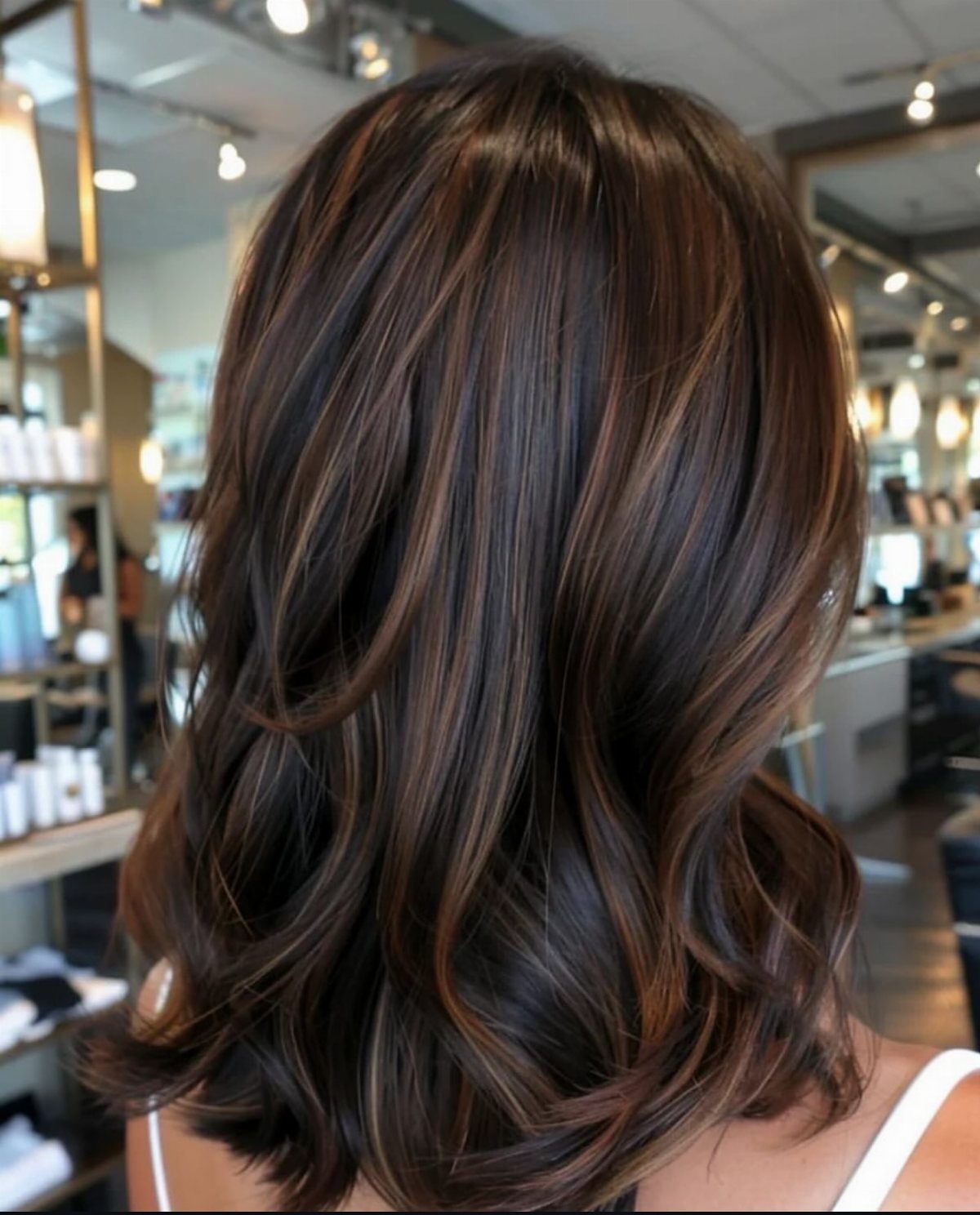
A few caramel pieces laid over a dark brown base brighten the hair around the face and through the ends, while the overall color stays deep.
That restraint is the appeal: you get movement and warmth in waves like these without committing to a lighter head of hair.
For a salon visit, ask for subtle caramel pieces rather than bold stripes, and bring the photo so the placement is clear. Wavy texture helps, since the curves scatter the highlights naturally.
3. Chocolate Brown
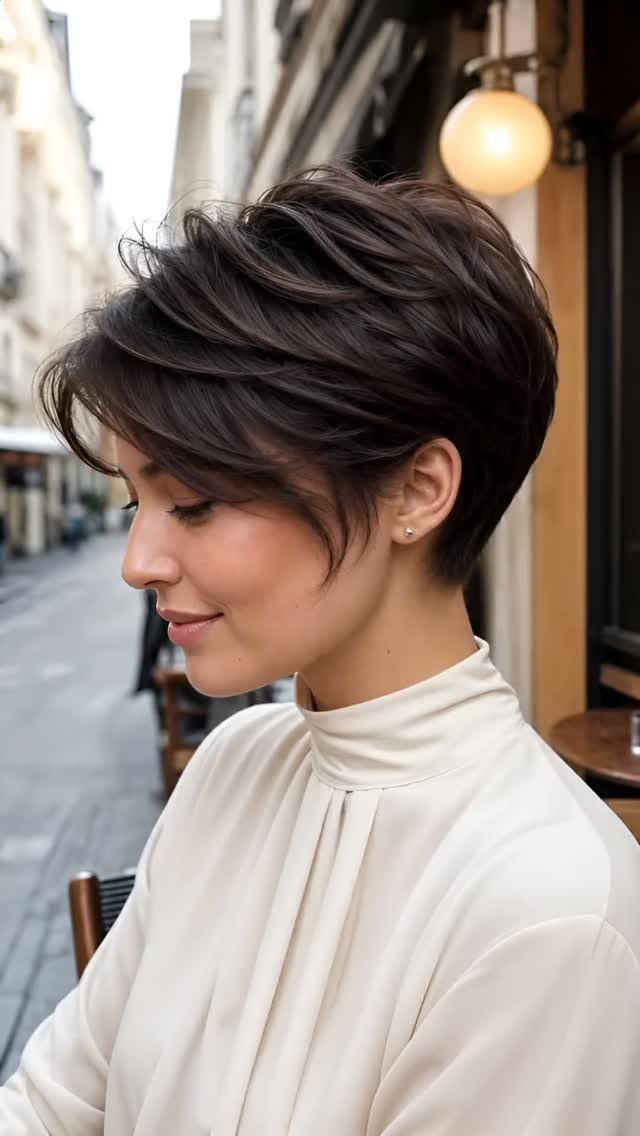
Short hair shows off chocolate brown better than almost any other length. On a pixie cut, the shade reads as one smooth, glossy sheet, modeled on dark chocolate, with no length to hide any dullness.
That makes shine the real job here. Chocolate is my pick for a rich brunette that looks polished with almost no styling, and a close crop keeps the effort low.
Name the shade at the salon or check the box label, and skip the model photo on the front.
4. Caramel Brown
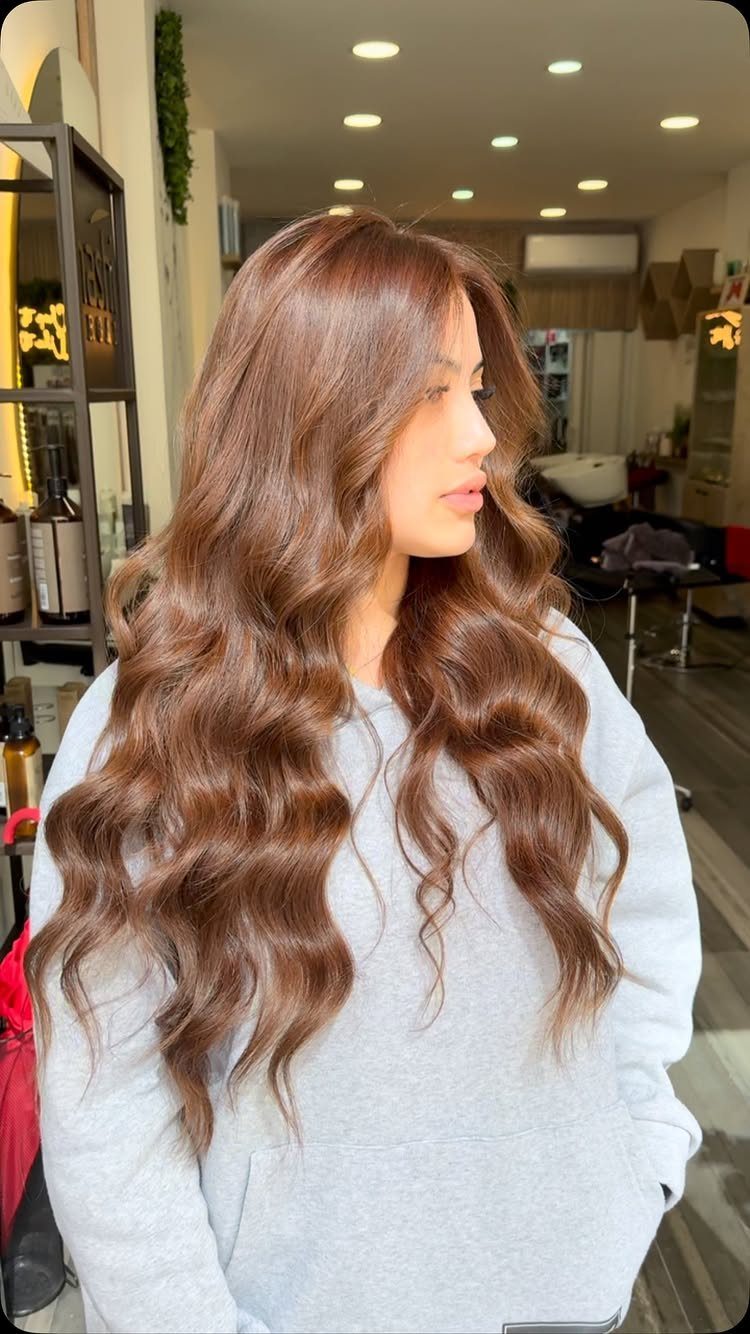
Caramel brown sits in the middle: warm, dimensional, and clearly brown rather than blonde. Long waves like these give the color room to show its variation, with the golden tones shifting as the hair moves.
If you are deciding between this and a darker brunette, I would pick caramel when you want people to notice the color in daylight.
Pick a deeper shade for a quieter result. Wavy or loosely curled styling suits it best.
5. Shiny Bronze Brown Hair
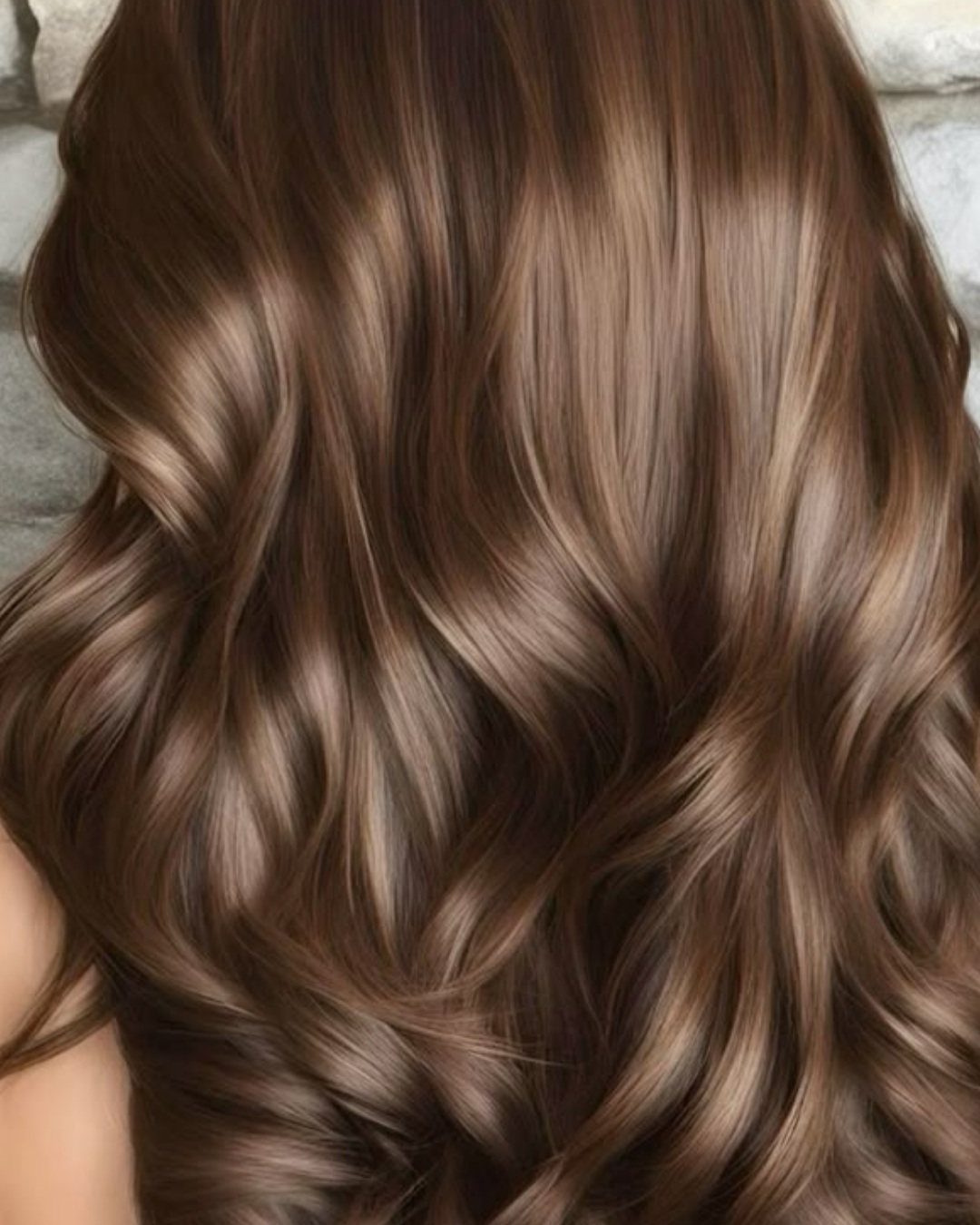
Bronze brown is the louder cousin of the usual brunette: bright, shiny and made to be noticed. Soft, defined waves help, because every curve gives the glossy finish another surface to reflect.
This is a statement shade, so I would keep the styling simple and let the shine carry it. Plan on a gloss-friendly routine, since this shade depends entirely on the hair staying smooth and reflective.
6. Bronze Babylights
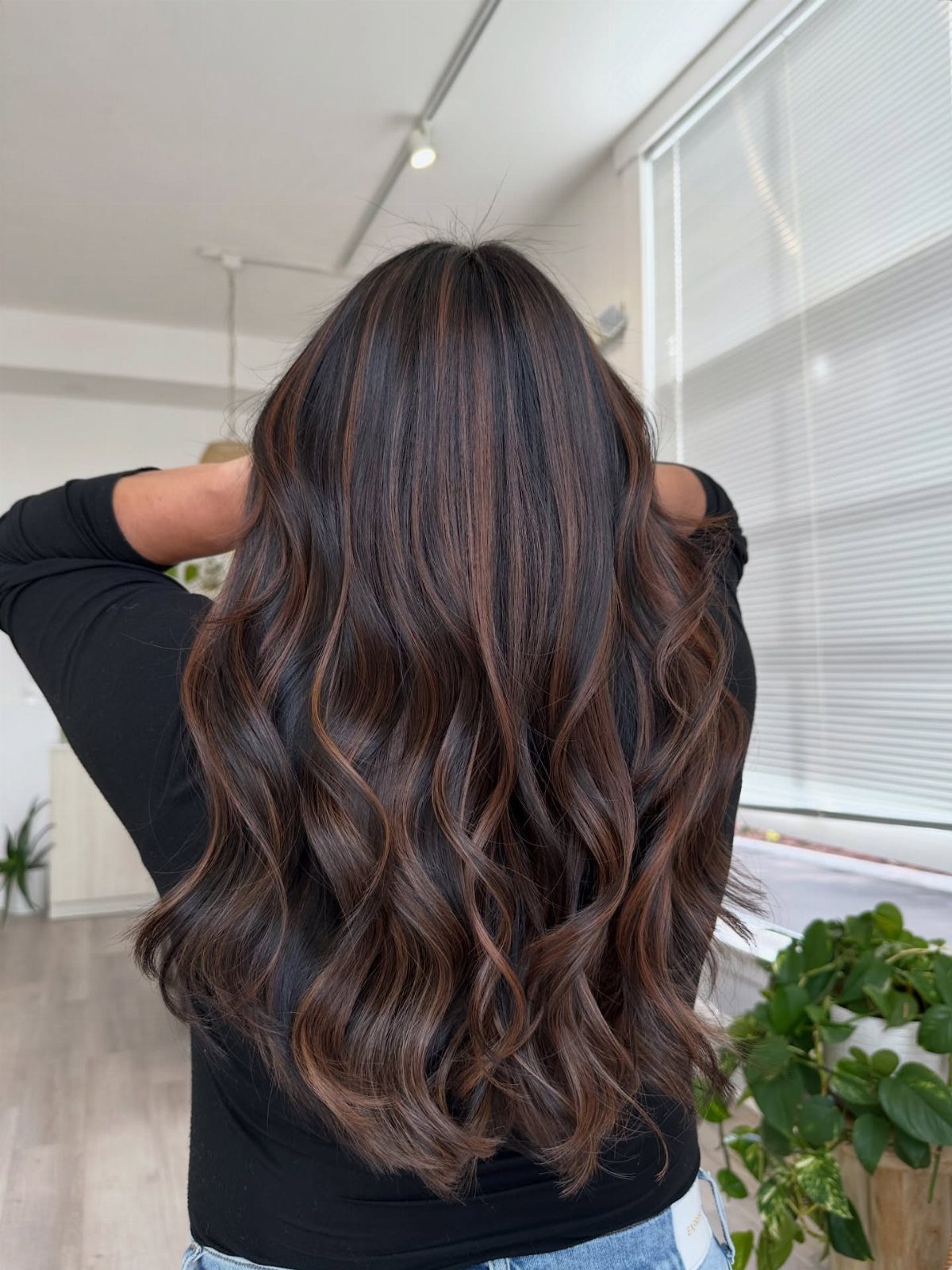
Babylights are fine highlights, and in bronze they add a soft glow through dark brown waves instead of obvious stripes. From a distance the hair simply looks richer; up close you see the thin threads of warmth.
I would choose this if you like the idea of highlights but dislike visible lines. Ask for bronze babylights placed throughout, and bring the photo so the fineness is clear.
7. Espresso Brown
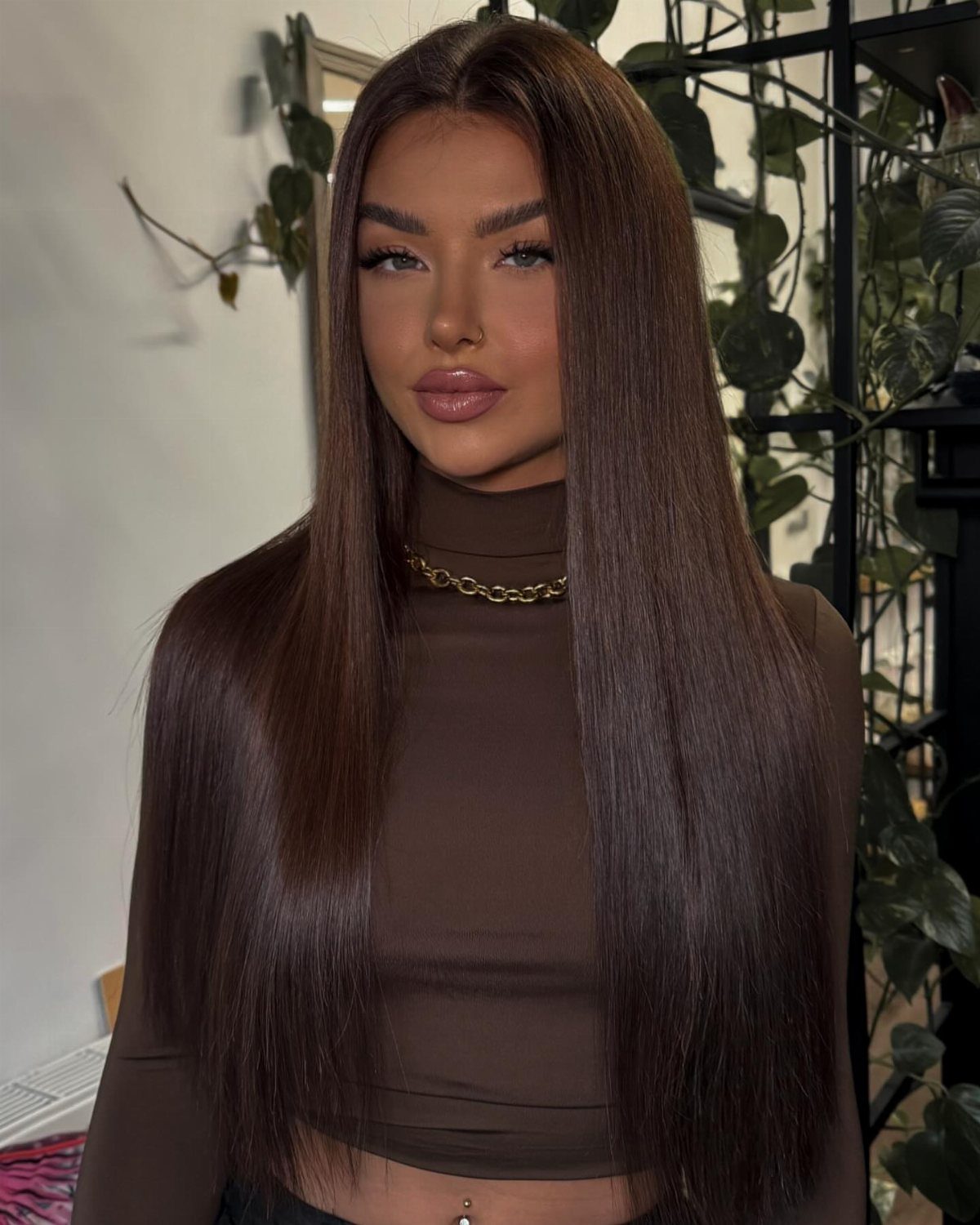
One step short of black: that is espresso, the deepest brunette before jet. On long, straight hair parted down the middle, it reads as a single dark, sleek sheet.
I like it for anyone who wants near-black drama with a softer edge. Ask for espresso by name, and say you want it dark but still brown, so the stylist doesn’t push it all the way to black.
8. Mahogany Brown
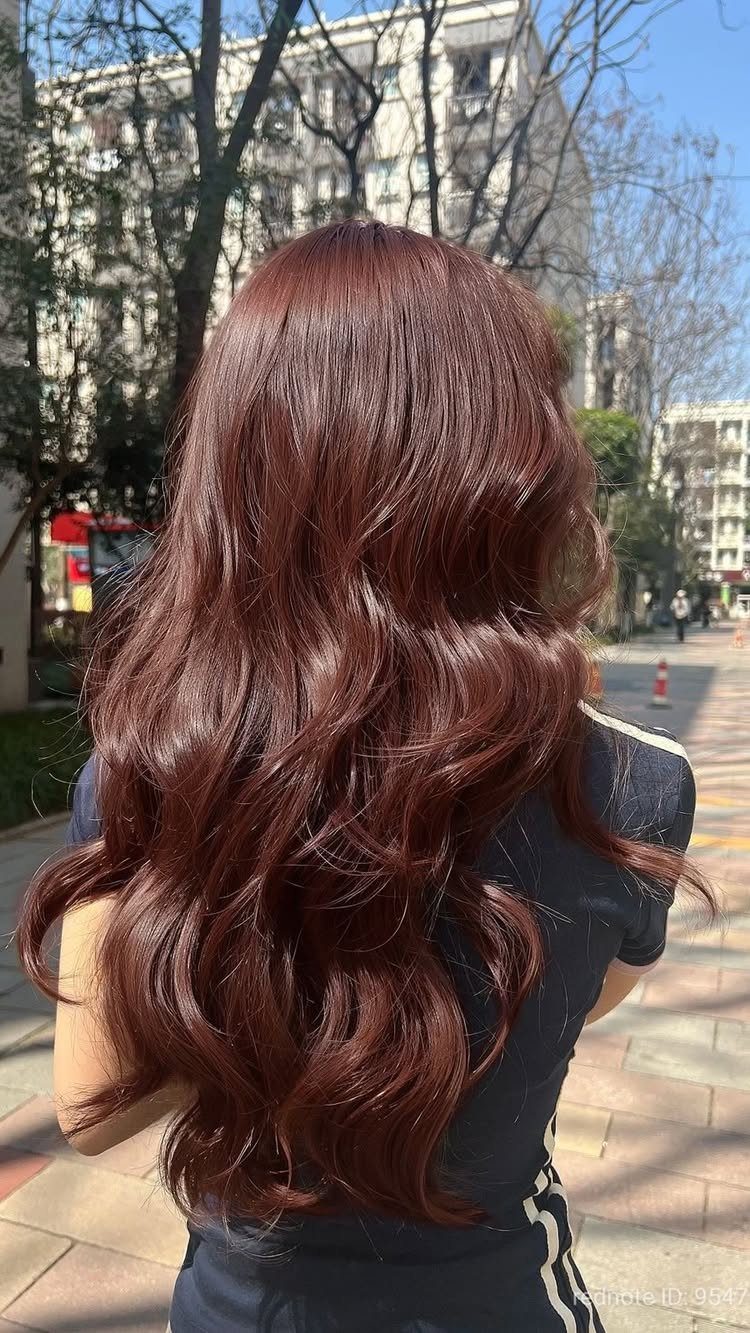
Mahogany looks like plain dark brown indoors, but in direct sun its red-violet undertone comes up, so judge the shade outside before you commit.
The reddish, slightly violet dimension comes forward on a bright day, and long waves give it plenty of surface to shine.
I would pick mahogany over a plain dark brown when you want color that rewards a second look. Tell the stylist whether you want the red or the violet-red leaning stronger, and bring the photo.
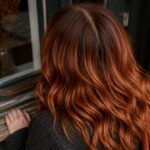
9. Auburn Brown
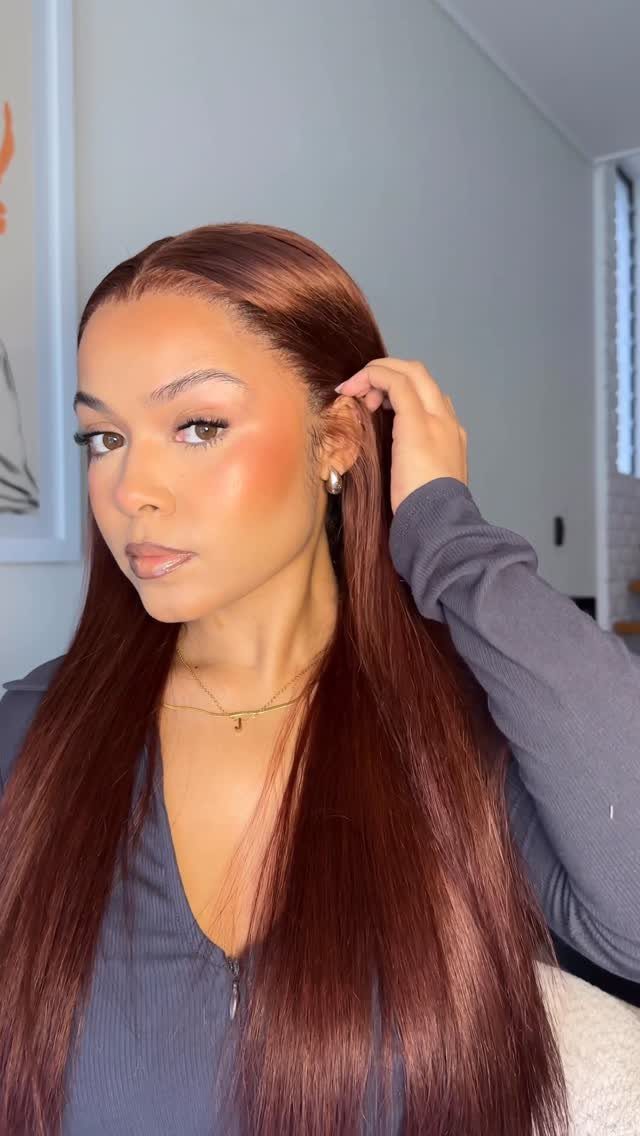
Brunette first, red second: auburn brown keeps a brown base and lets a red-brown cast show through.
Auburn brown shows its red cast most clearly on straight, glossy hair, because waves and texture break up the shine and mute the color.
If full auburn feels like too big a step, this is where I would start. Ask for auburn brown rather than auburn, so the stylist keeps brown in the lead.
10. Honey Brown
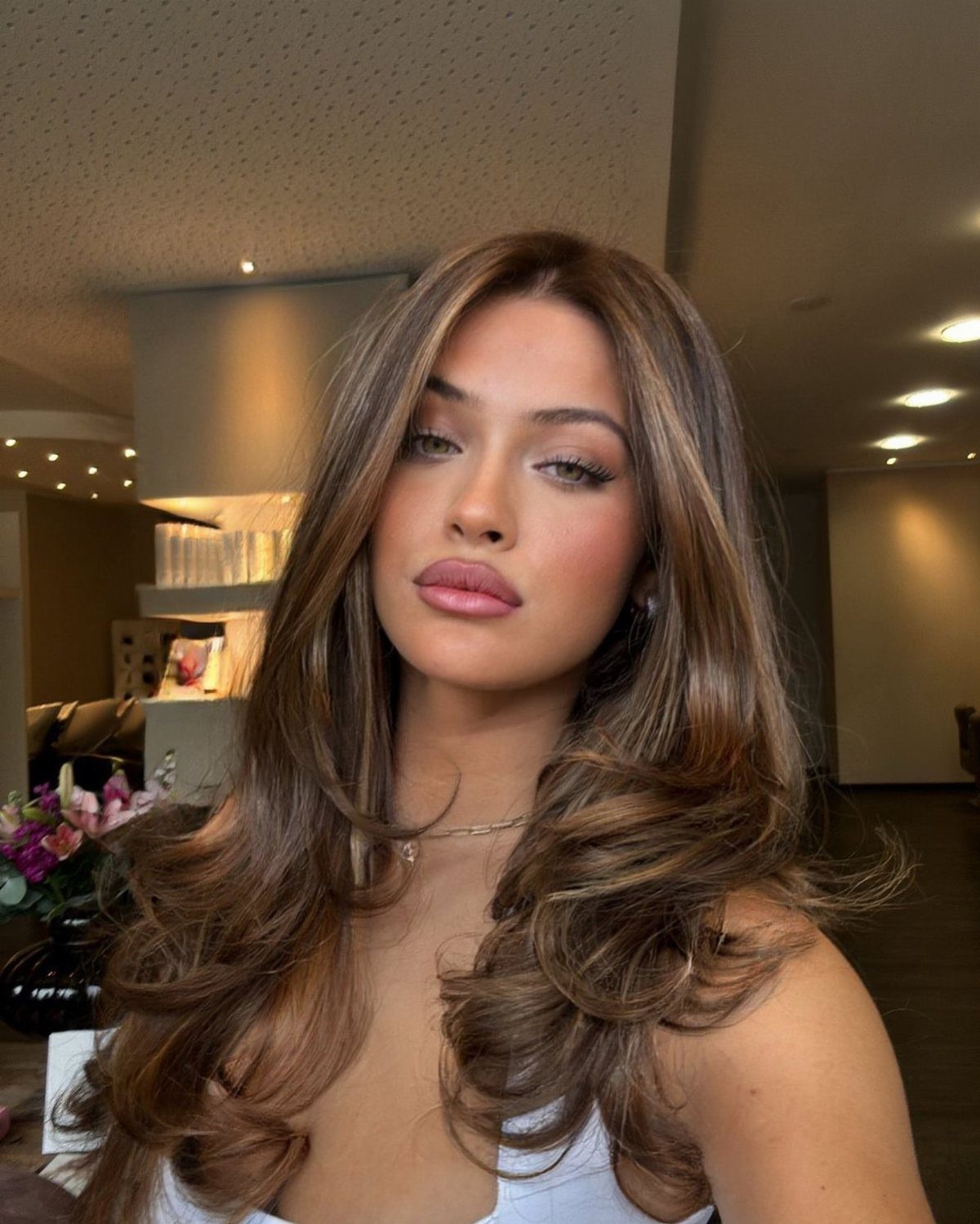
Honey brown pairs a warm brunette with lighter, golden strands. Long curls scatter those strands through the length, so the warmth looks blended instead of striped.
Honey means different things to different stylists, so describe the exact tone you want, golden or beige, and say which strands should go lighter. I would choose it when you want warmth without leaving brunette behind.
11. Dark Brown Hair with Auburn Brown Highlights
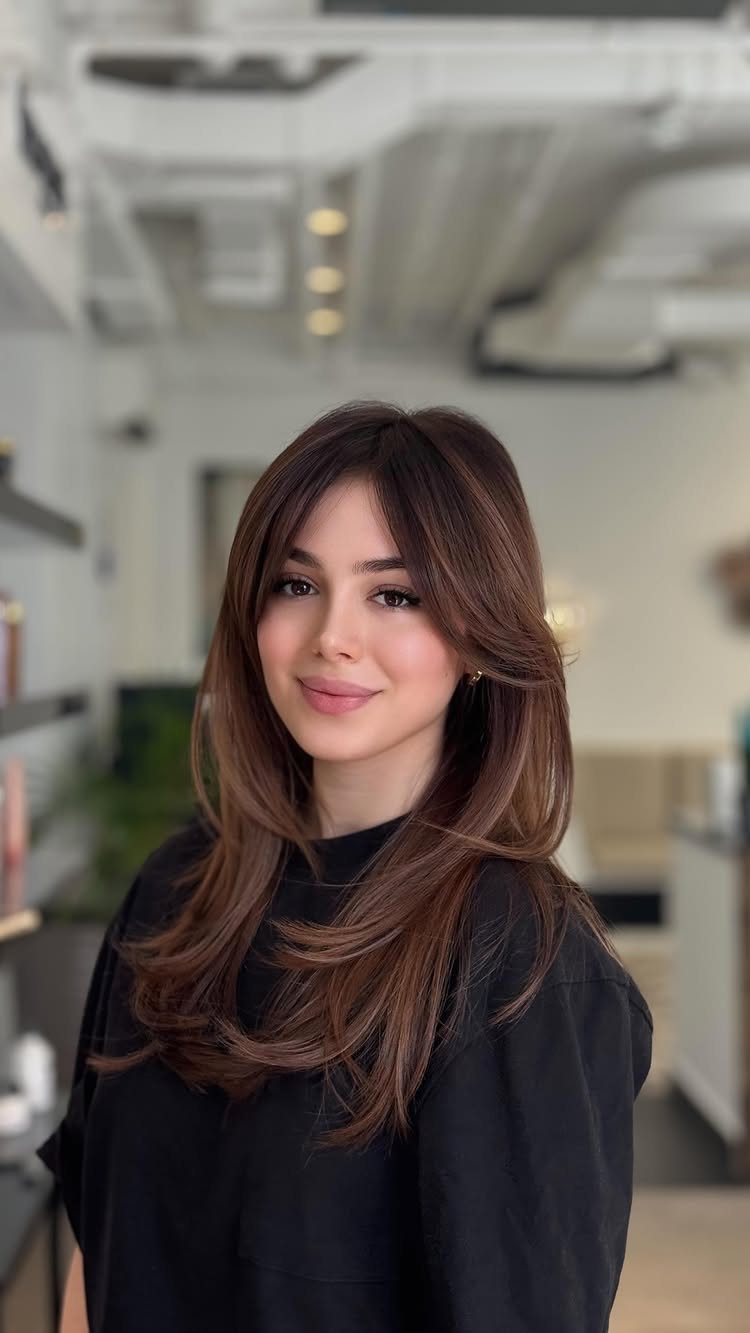
Layers do the work in this one. Auburn highlights on a dark brown base catch light differently on each layer, so the red appears as an accent while the base stays deep.
I see it as the gentler route into red: you get the glow without recoloring everything. At the salon, name both parts, auburn brown highlights over a dark brown base, and say where you want the red to sit.
12. Smoky Brown Hair
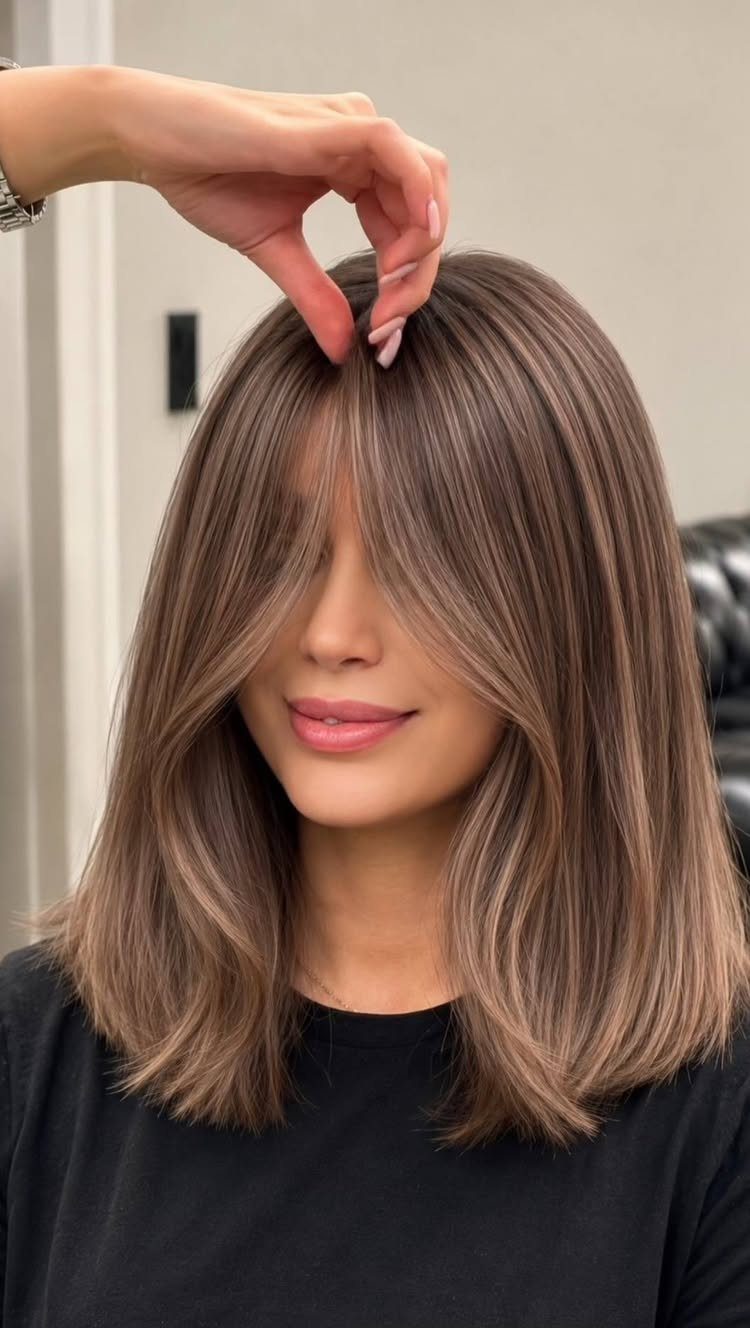
Smoky brown is a muted brunette, and cut to the shoulders with curtain bangs, the color and the shape support each other.
Smoky brown has more depth in layers, where the underside reads darker and the top pieces pick up more of the ashy tone.
When you book, name both the shade and the curtain bangs, and bring the photo. I would choose this if red and gold tones are not what you are after.
13. Dark Brown Hair with Golden Strands
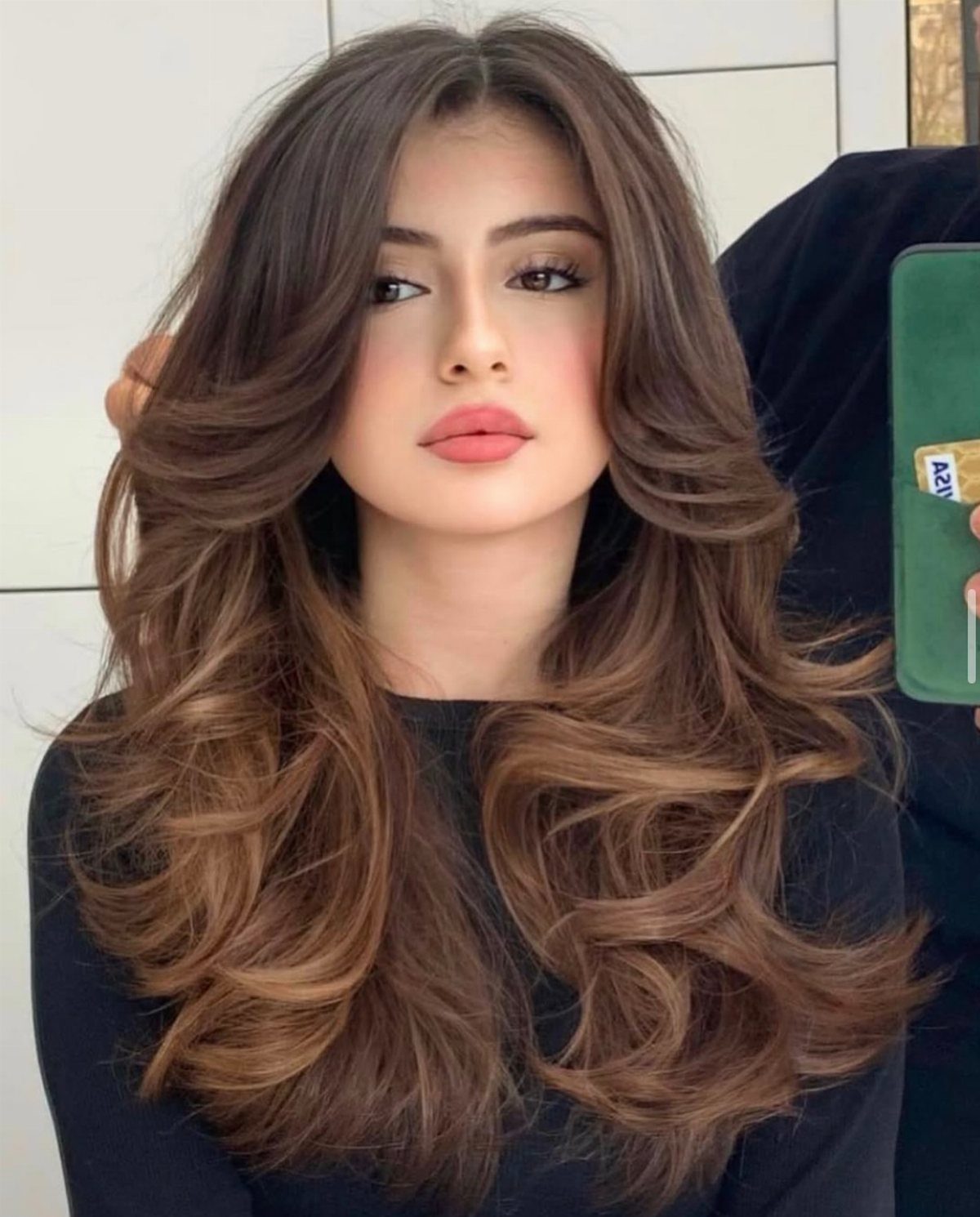
Golden strands threaded through a dark brown base give long, curled layers a warm flicker that plain brunette lacks. Voluminous curls help, because each bend lifts a few gold pieces into view while the rest stays deep.
I would choose this over full caramel if you want depth to stay in charge.
Ask for golden strands on a dark brown base, and say how many pieces you want, a few or a lot, so the gold doesn’t take over.
14. Dark Neutral Brown Hair
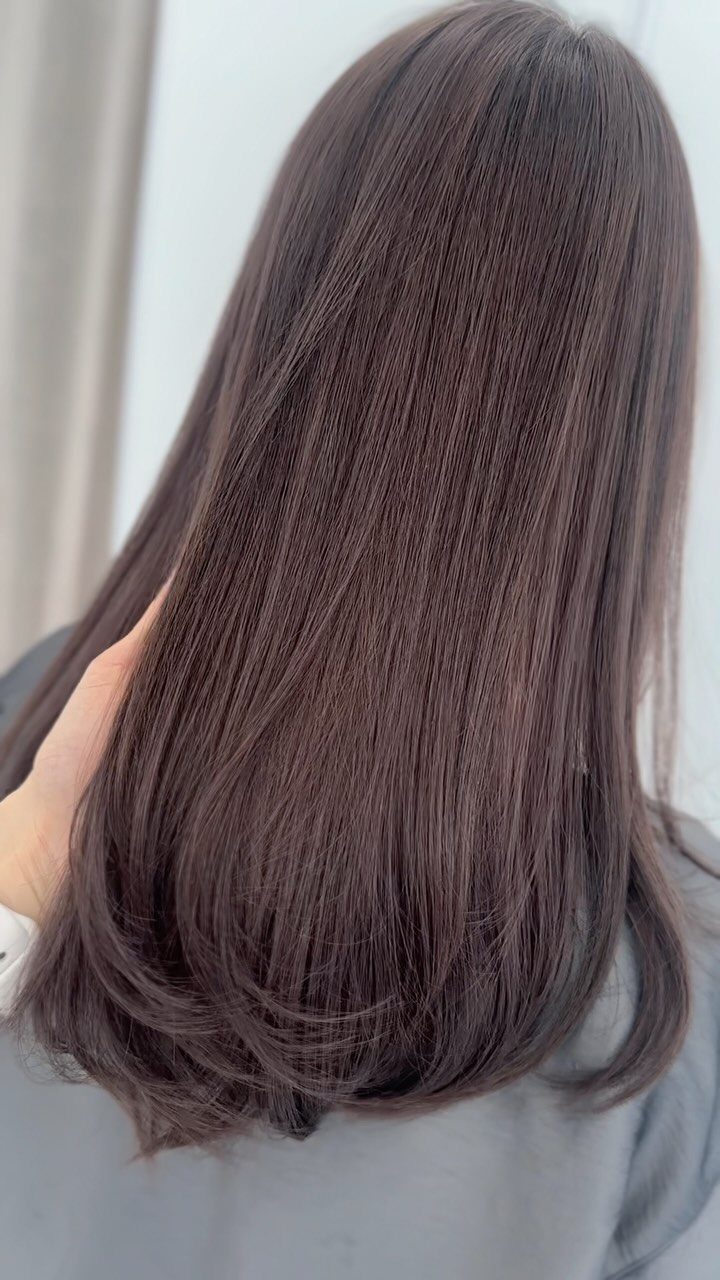
Neutral is the whole idea here: a dark brown with no strong red, gold or ash leaning, so it reads as plain, natural brunette.
With no warm or cool lean, the shade reads clean and quiet on straight, smooth lengths, where shine does most of the work.
I like it for anyone who wants brown that goes with everything.
At the salon, name the shade and add that you want it to look neither golden nor ashy in daylight. On a box, check the shade chart on the back, not the model photo.
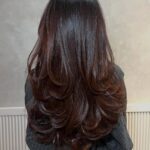
15. Dark Brown
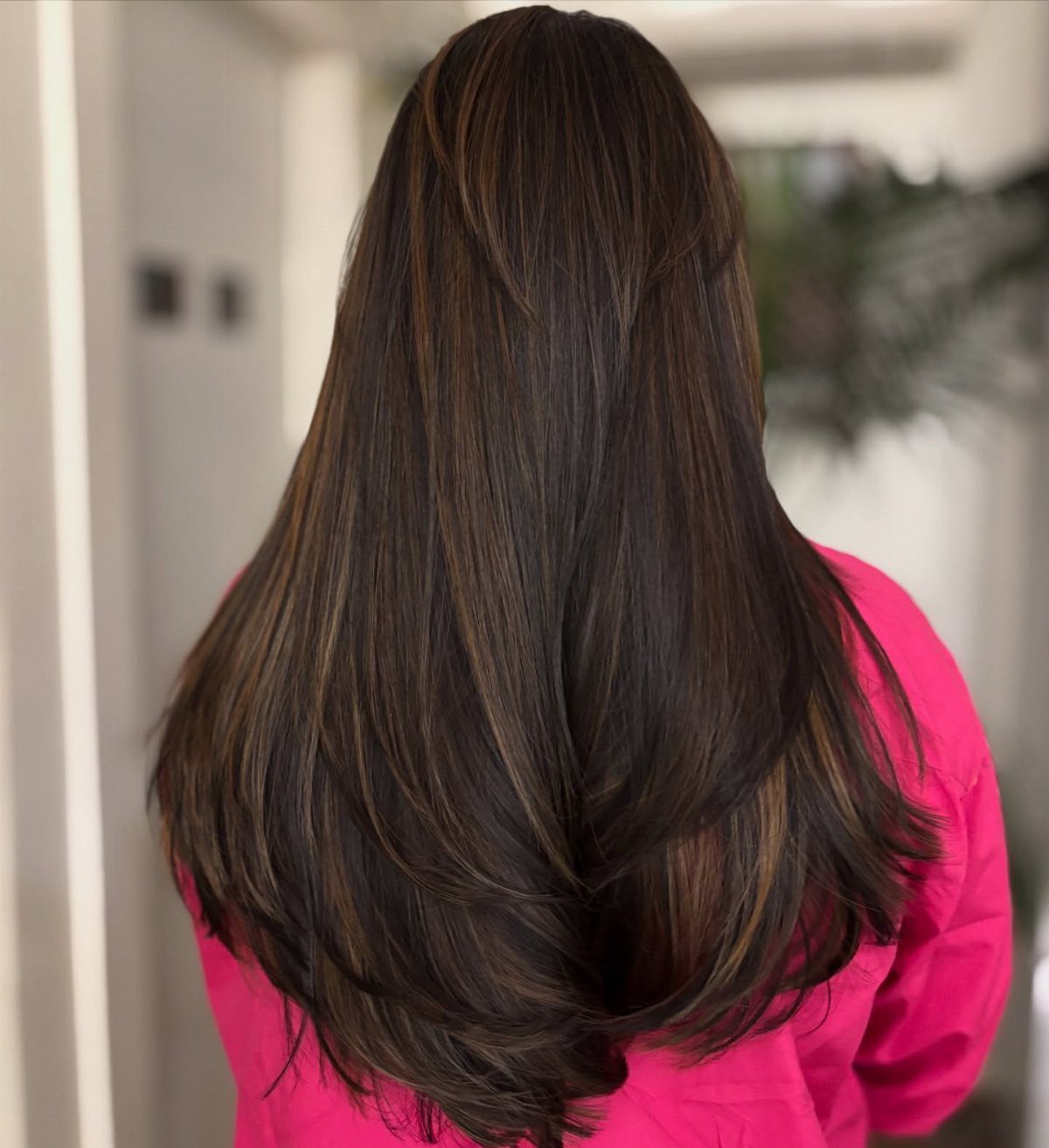
Deep brunette is the classic for a reason: it runs from neutral to warmer tones and suits nearly everyone. With long layers and a few lighter strands, it gains movement without losing its depth.
I would pick dark brown when you want something dependable.
Decide first whether you lean neutral or warm, then tell the stylist. If you want subtle lighter strands like these, say so up front and ask for them kept fine.
16. Ash Brown
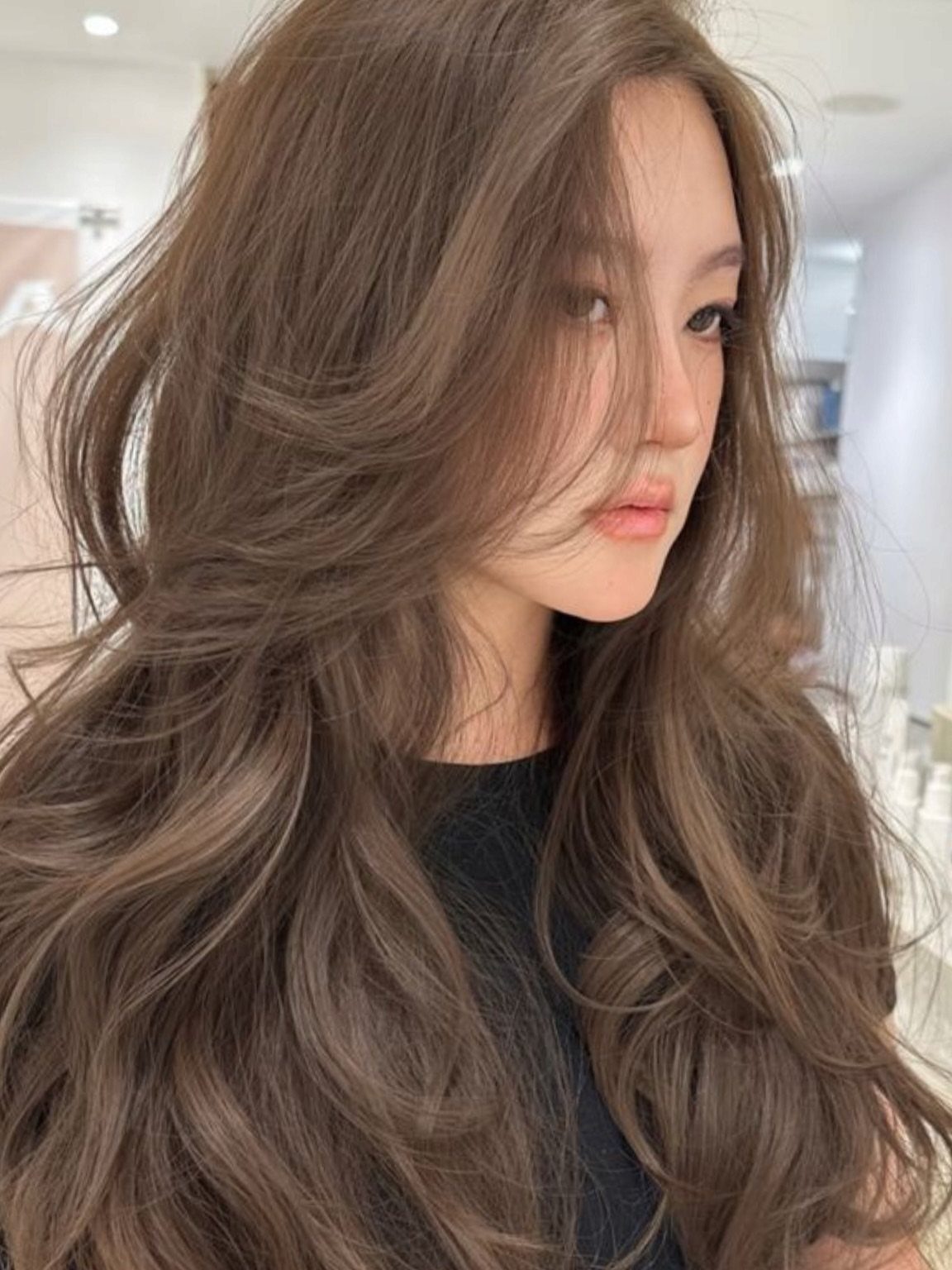
Ash brown is brunette with a gray tint, made to keep warmth and brassiness down. Long waves in a cool tone like this look smoky and soft rather than golden.
If orange or red tends to creep into your brown, this is the shade I would try. Ask for ash brown by name and say you want it cool, not flat gray.
Ash browns exist to cancel orange and gold, so go by the swatch chart on the box; the model photo is lit and edited to flatter.
17. Light Brown Hair Color
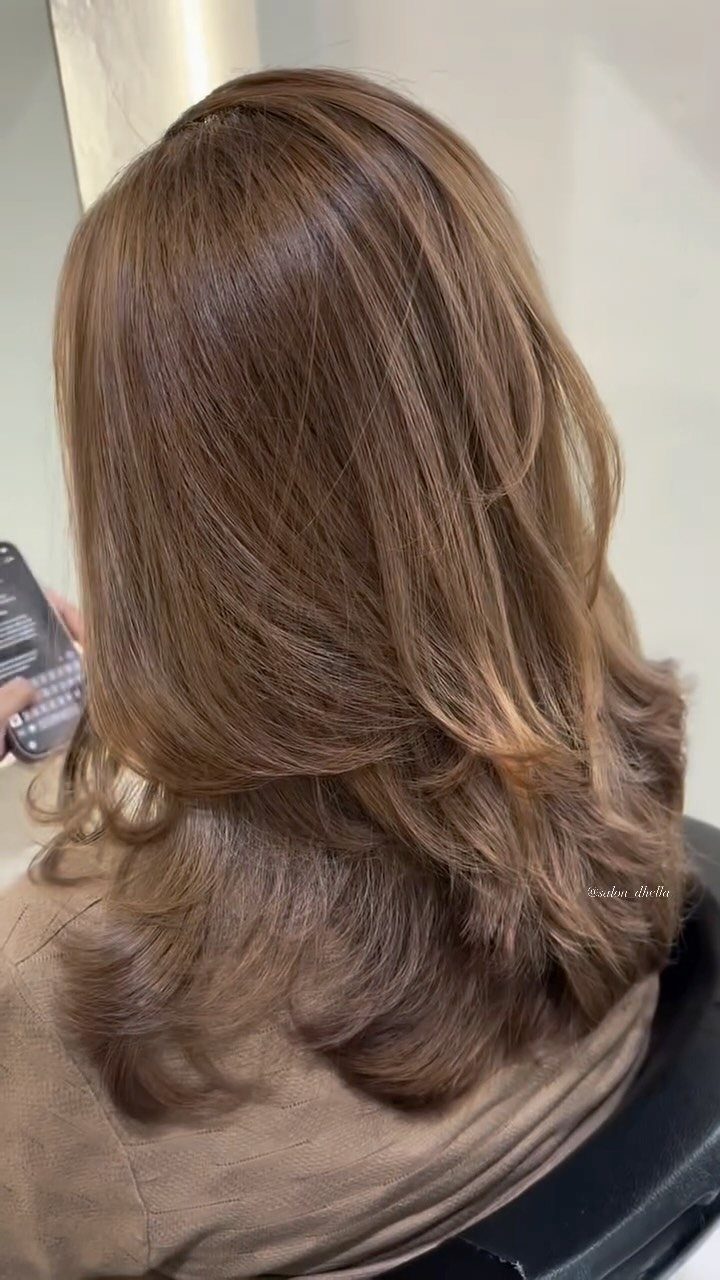
Light brown sits well below dark brunette and gives layered, curled ends a soft, open look. It is an easy shade to wear if full dark brown feels heavy.
Bring a photo to the salon, since light brown can mean golden, neutral or ashy depending on the stylist.
State which one you want. I would choose it for wavy or curled hair, where layers show off the shade nicely.
18. Dark Brown Hair with Blonde Highlights
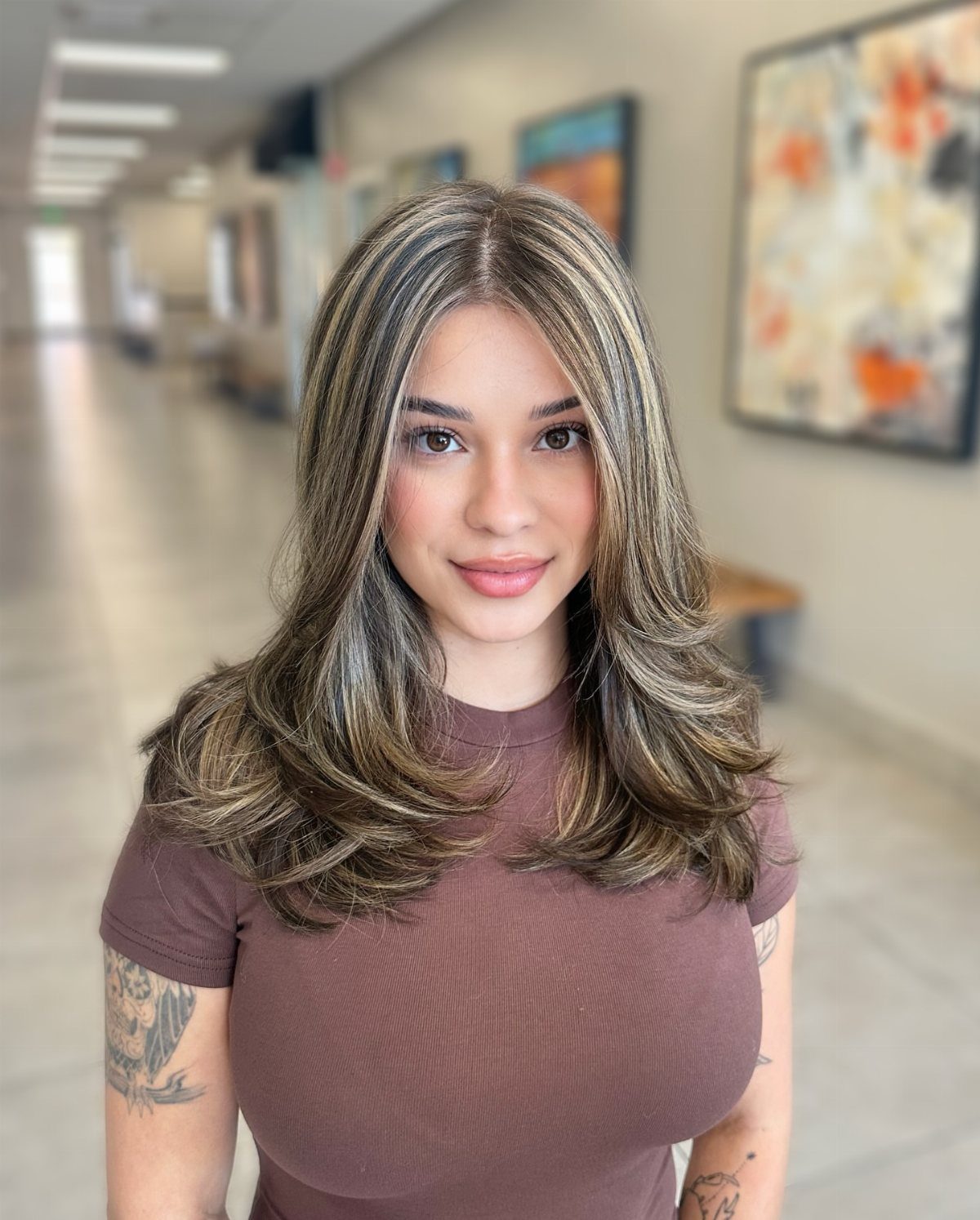
Blonde against dark brown is a high-contrast pairing: the lighter pieces stand out sharply, so placement matters more than anything. Layers help, because each one carries its own streaks and the contrast looks planned.
This is my pick for anyone who wants an obvious change without leaving brunette.
Ask for blonde highlights over a dark brown base and tell the stylist how bold you want them, fine and scattered or wide and loud. Bring the photo.
19. Nearly Black Brown Hair
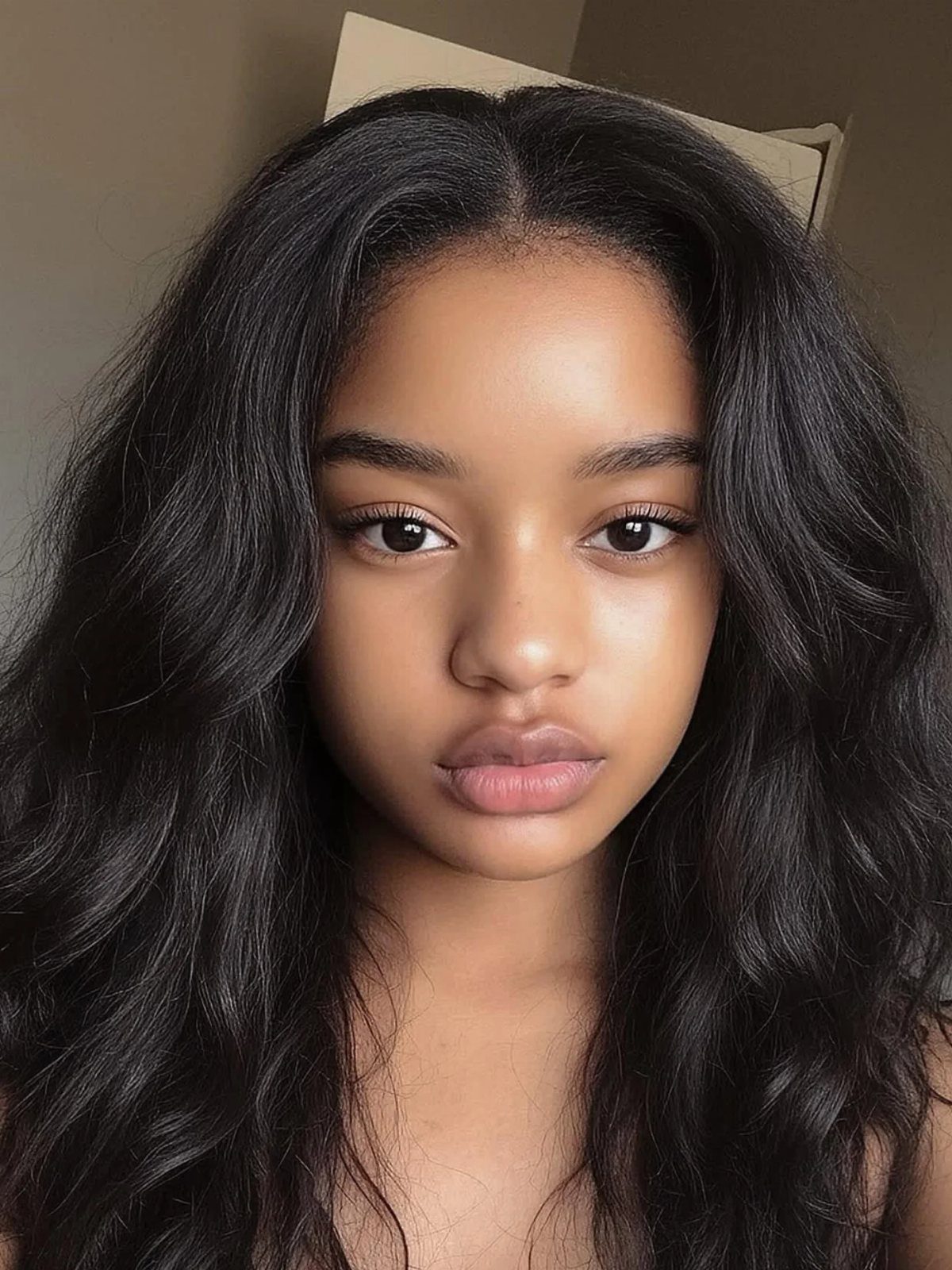
Black to the casual eye, brown on closer inspection: that is the whole trick of nearly black brown.
Long waves parted at the center let the shade read as one deep sheet, with the brown only showing where the curves catch light.
I would choose it over true black when you want that drama with a little give. Ask the stylist for nearly black brown by name and bring the photo, so the result stays brown at the edges.
20. Deep Golden Brown Hair
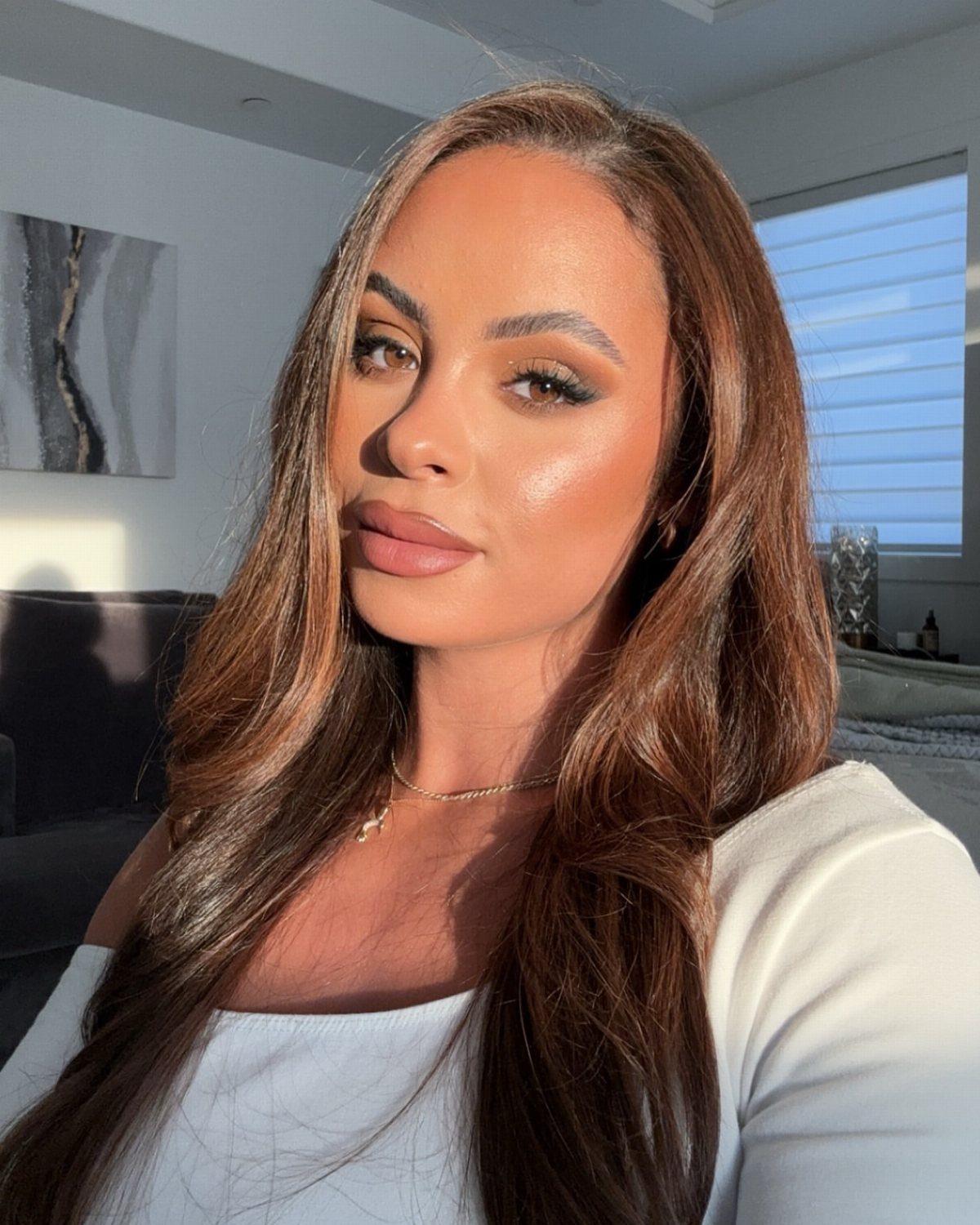
Mild warmth is what defines deep golden brown: it leans gold, never red. Long, loose waves with a few subtle warm highlights, like these, let the gold show in bright light while the base stays dark.
If copper and auburn feel like too much, this is the warm brunette I would pick. Tell the stylist you want gold without red, and check the shade in daylight before you settle on it.
21. Light Ash
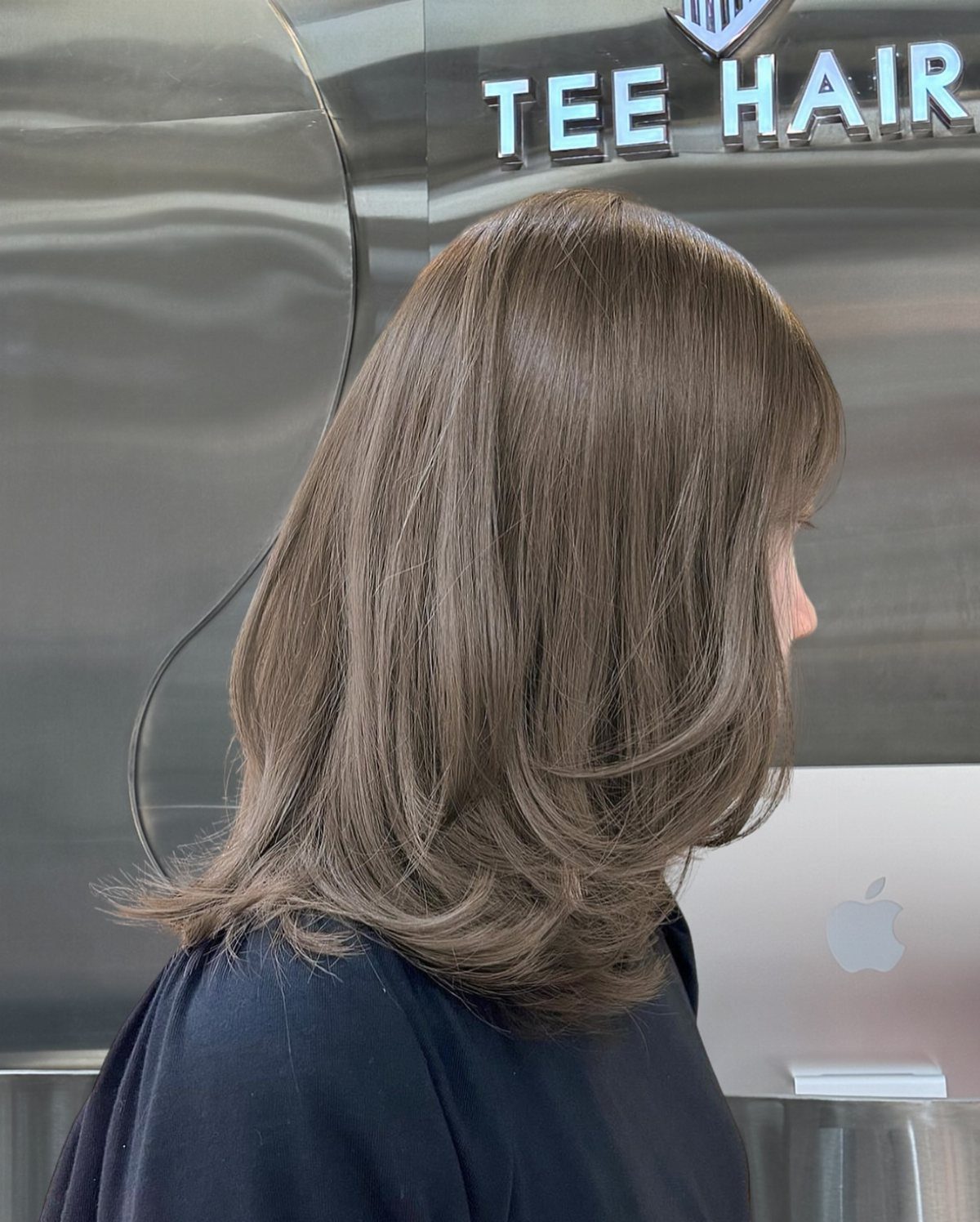
Cool and light, with the ashy tone doing the work: light ash brown sits well above the darker shades on this page. Layers at medium length suit it, since each tier picks up the cool tint a little differently.
I would try it if warm browns never looked right on you. Ask for light ash by name and bring the photo, because a light brunette can slide golden without a clear request for cool.
22. Darkest Brown Hair
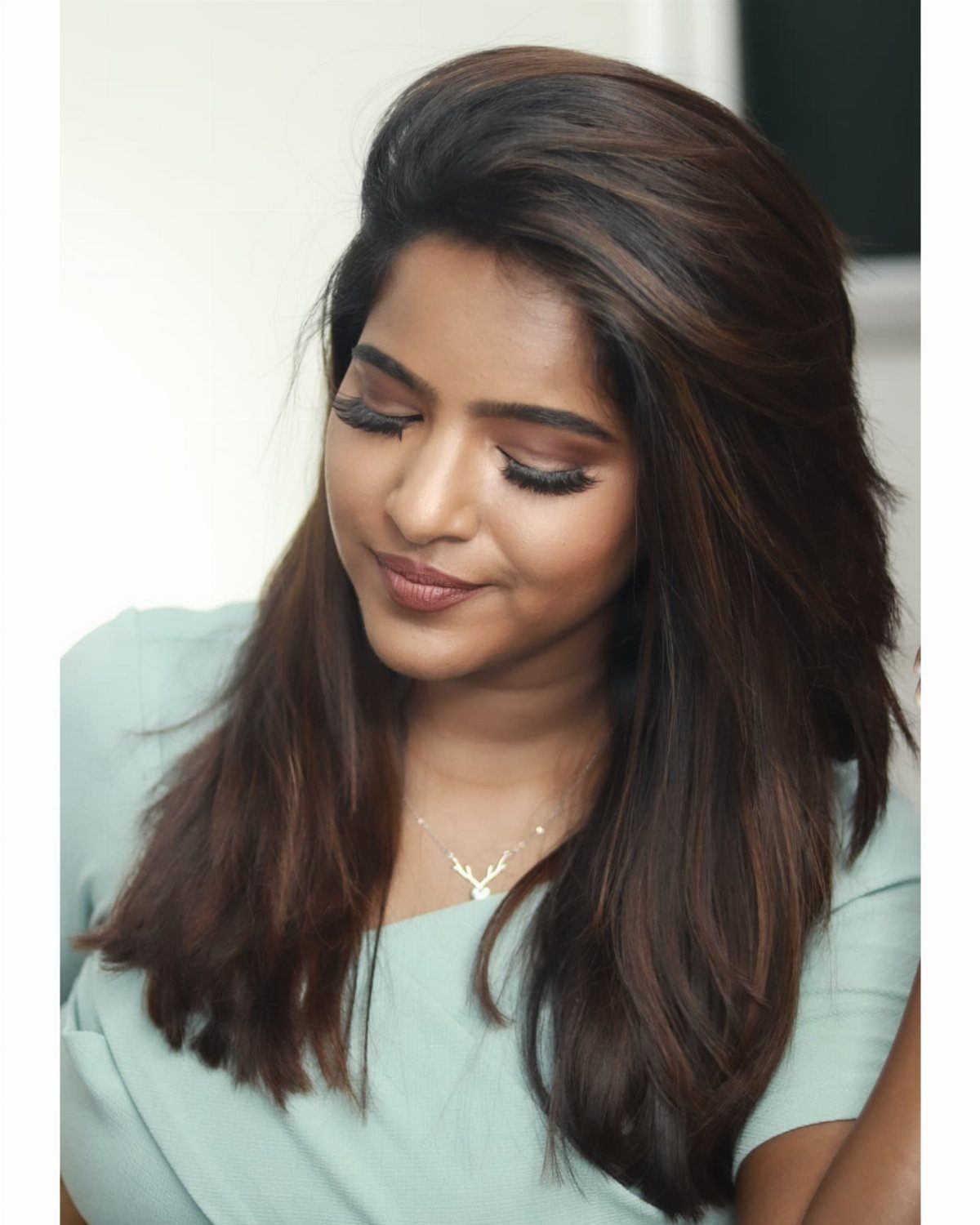
Darkest brown is about gloss more than color. Worn long and glossy, as here, it reads as a smooth, deep curtain with almost no variation, so any dryness shows quickly.
I like it for anyone who wants the deepest brunette without going to black.
Bring the photo and name the shade as darkest brown, since that word is what keeps a stylist from drifting toward black. A shine treatment keeps it looking rich.
23. Medium Brown Hair Color
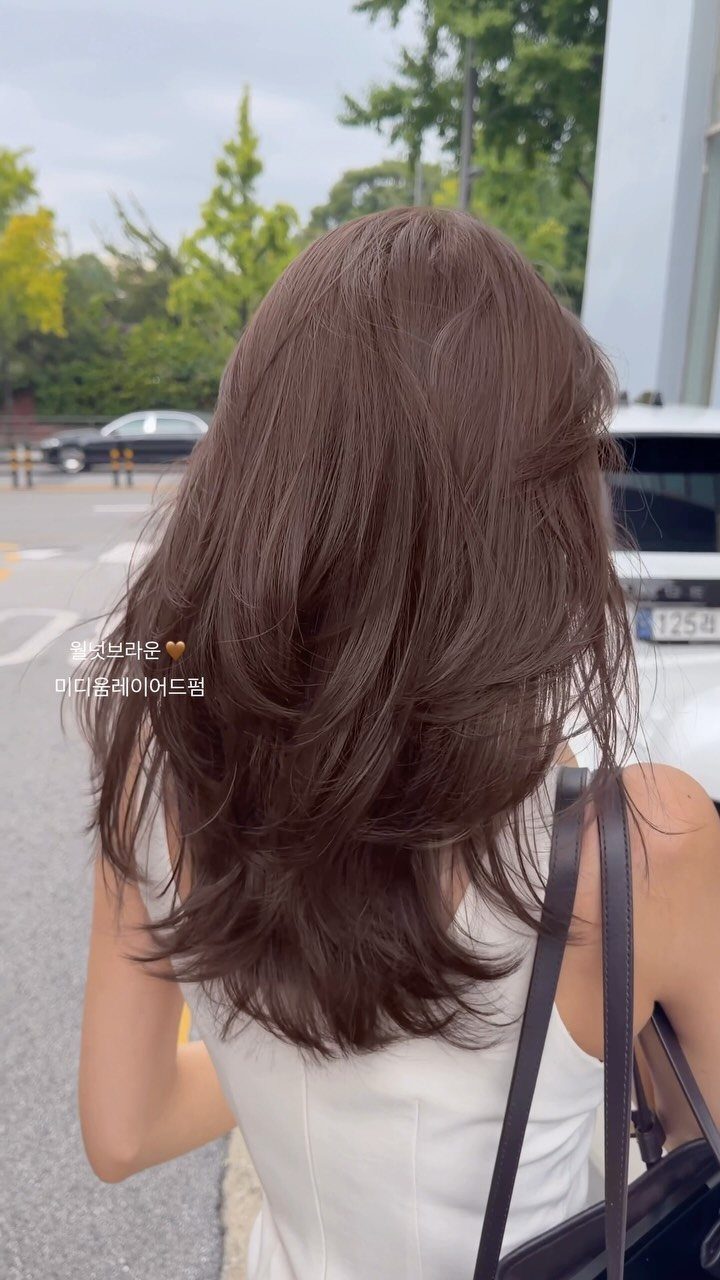
Medium brown is the easy middle: not heavy, not pale. Layers matter here, since they give the shade movement as the hair falls past the shoulders.
I would pick it when dark brown feels too serious and light brown feels like too big a leap.
Bring a photo to the salon, and say whether you want it warm, neutral or cool, because medium brown can go any direction.
24. Gray Brown
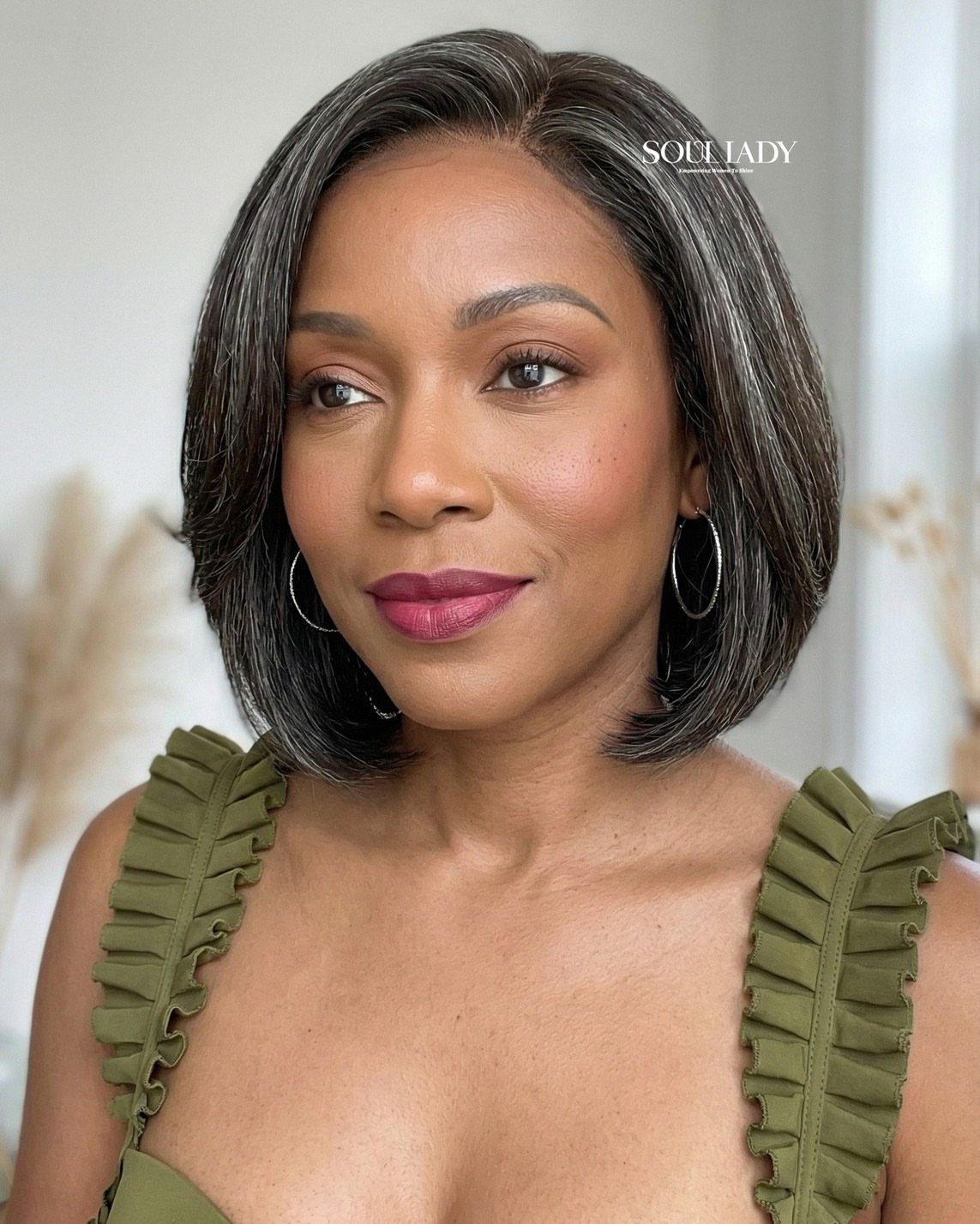
Gray brown is moody by design: a dark brunette with cool gray strands running through it. A sleek bob keeps the effect crisp, because the clean edge lets the gray read as a deliberate color instead of fading.
This is my pick for cool-toned brunettes who want something less ordinary than ash.
Say gray brown out loud, then tell the stylist whether you want a few silvery strands or a heavy wash of ash, because the two read very differently. Bring the photo.
25. Walnut Brown
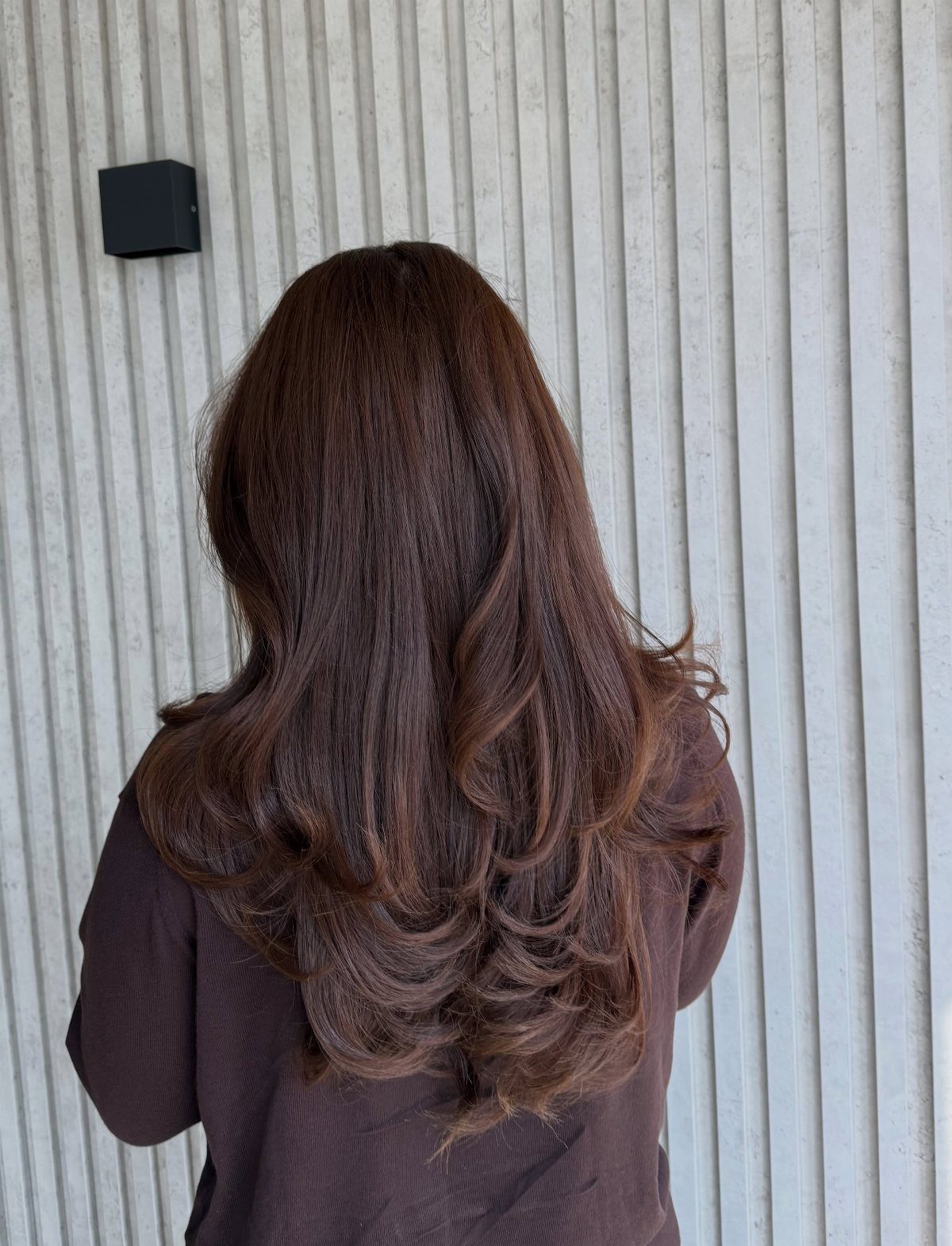
Walnut brown sits in the middle of the brunette range, a medium shade with soft, neutral undertones that never lean red or gold. On layered, wavy lengths like these, the color stays even from root to tip.
I would pick it when espresso feels too heavy and honey too warm.
Name the shade at the consultation, specify neutral so it doesn’t drift warm or ashy, and show a reference photo so the stylist lands on the same depth.
26. Tortoiseshell Brunette Hair
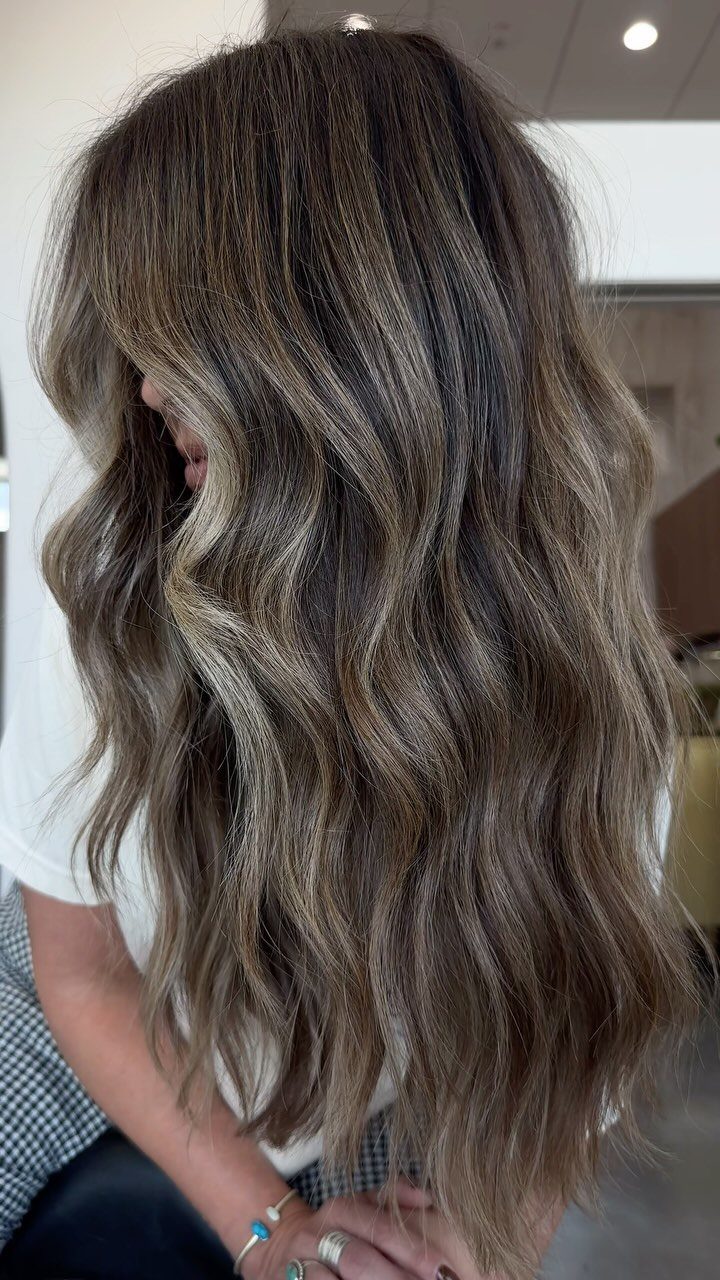
Tortoiseshell brunette blends several brown tones through the hair, so no single shade dominates. Dark roots melt into dimensional brown and lighter pieces, which keeps regrowth from showing as a hard line.
That softness is why I like it for anyone covering gray.
A gray-blending technique camouflages regrowth on dark brunettes without permanent color, which keeps the grow-out line soft instead of stark. Ask for tortoiseshell by name, mention any gray, and request the face frame and ends lighter.
27. Tiger Eye Brunette Hair
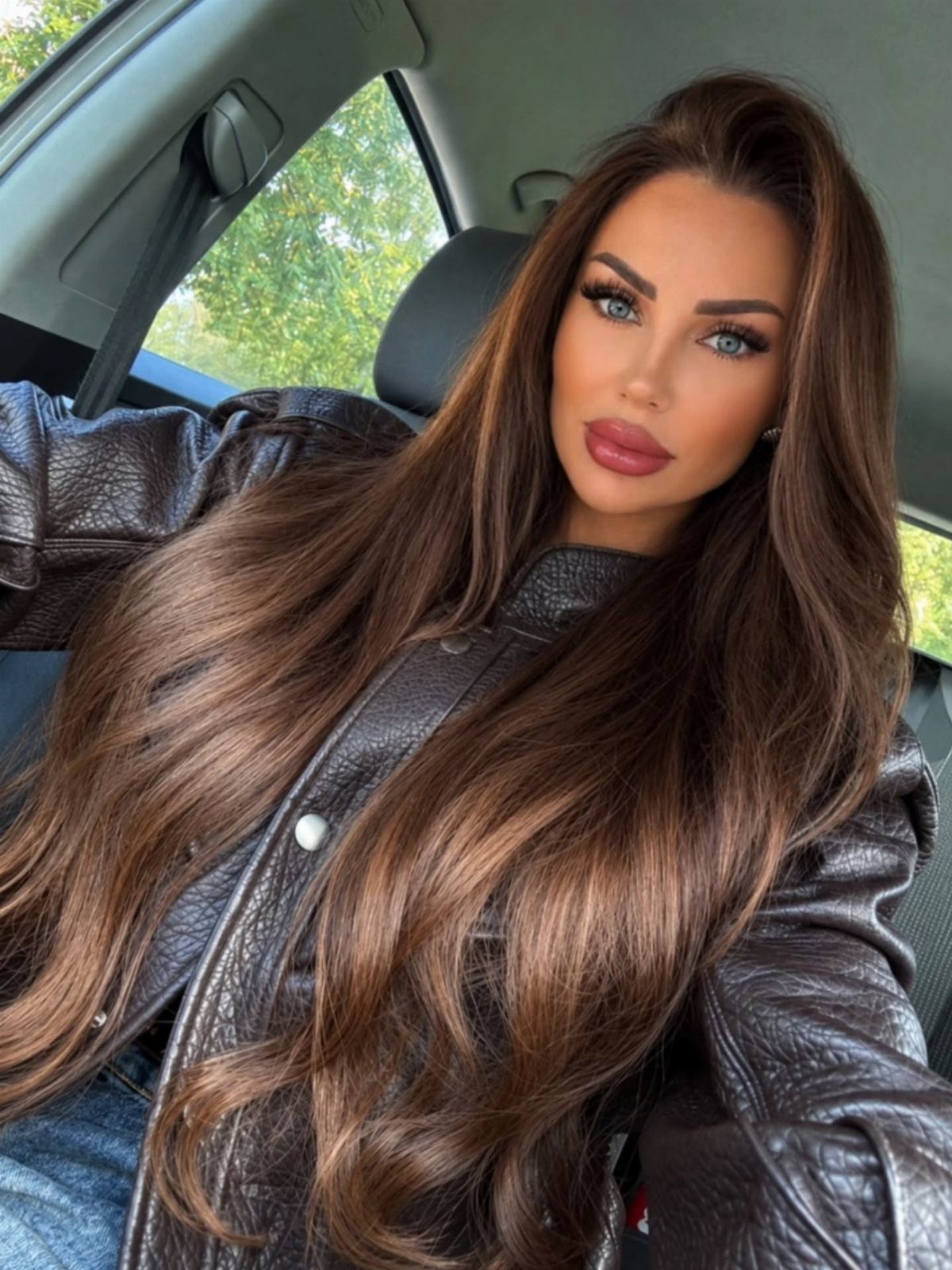
Tiger eye brunette is dark brown warmed with lighter, glinting pieces, the way the gemstone flashes when it moves. On long waves, those pieces catch the light and shift as you turn your head.
I would choose it over a flat single shade if you want brown with some life in it. Name the technique, bring the photo, and ask for the lighter pieces to stay dimensional rather than stripe-like.
28. Color-Melted Dark Brown Hair
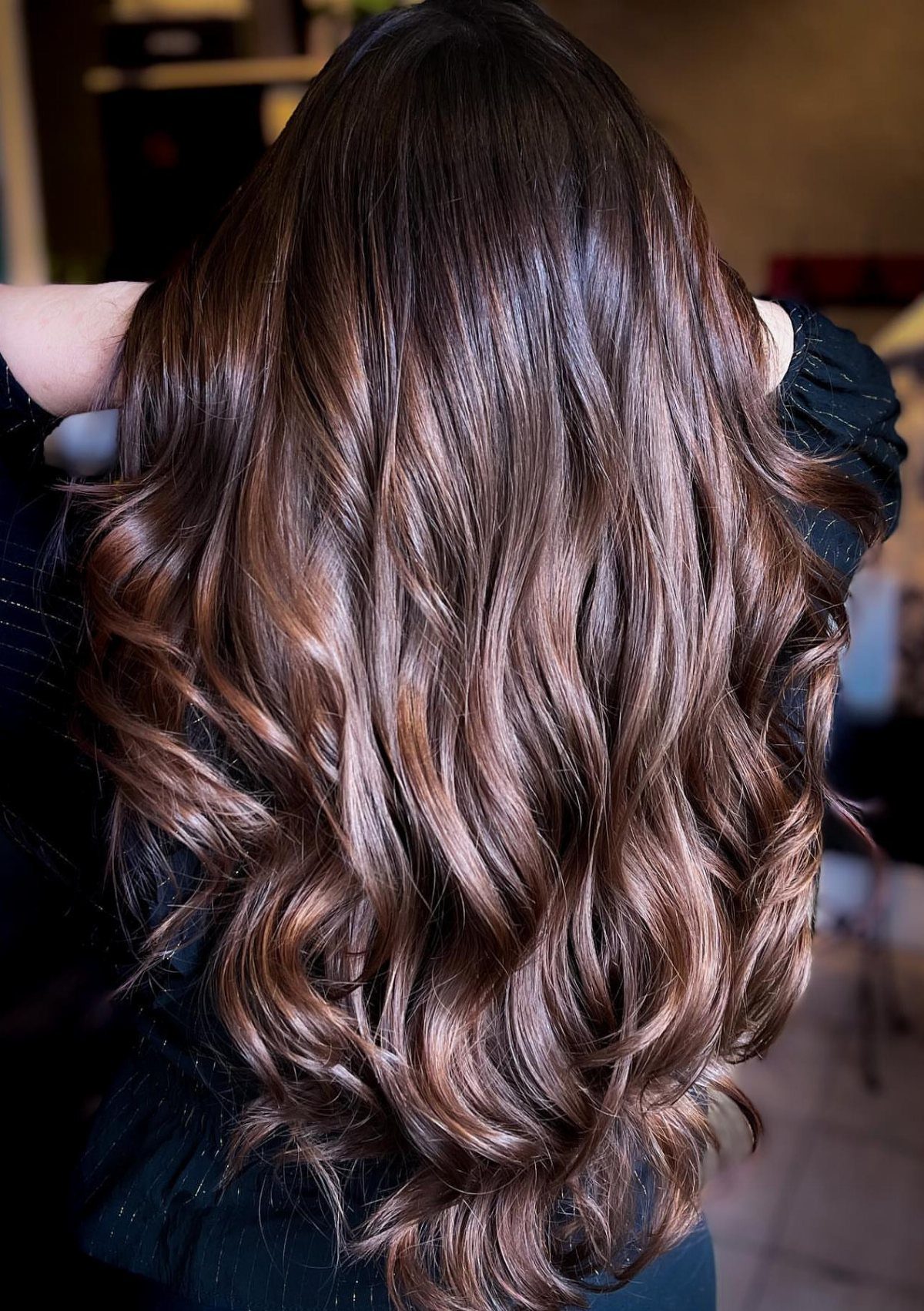
Color melting means no visible lines: dark brown at the root slides into lighter brown tones and warm highlights, with every transition blended. On long waves, the shift reads as natural depth rather than separate colors.
This is the version I would ask for if you dislike obvious highlights. Say "color melt" at the salon, show the photo, and specify how light you want the ends so the blend lands where you expect.
Color Fade and Brassiness
Brown dye fades toward whatever sits underneath it, and on most heads that means red, orange or yellow creeping back in.
Slowing it down starts in the shower: use color-safe or sulfate-free shampoo, wash less often, and finish with a cool-water rinse.
Toning handles the rest. Brown hair that has turned orange or red needs the opposite color to cancel it, and blue is that color, so a blue-toned shampoo or conditioner tones the warmth back down.
If red is the stronger problem, a green-toned product is the better match, so judge your own color before you buy.
A blue color-depositing conditioner works well on highlighted, balayaged and natural brown hair alike. I would use it as a weekly or occasional swap for regular conditioner rather than a daily habit, and watch how your color responds.
A gloss between salon visits also refreshes shine and tone.
While there are countless benefits to dark brown hair color, there is one catch. “All brunettes fade warm, whether they start warm or not,” says Shvonne Perkins, master colorist and lead educator at Madison Reed.
— Glamour
Choosing Undertones and Shades
Every brown has a cool or warm lean, and the shade that flatters you usually matches your skin’s undertone.
Neutral skin, where you can’t tell, can wear warm or cool browns, which makes your choice easier.
2 other clues help.
Warm undertones often come with warm hazel, green or brown eyes. Your wardrobe is a useful check too: if olive green, deep red, coral and creamy neutrals look best on you, you likely lean warm.
Check your wrist in natural light, since indoor bulbs can skew the color of your veins.
At-home Dye and Lightening
A dark brown shade is often within reach of a permanent at-home dye, and the process is the same each time: test, prep, mix, apply, wait, rinse. Do the strand and skin test first, and don’t skip it.
Vivid or fashion colors are a different story. Semi-permanent dye deposits color but cannot lift any, which means it only shows up properly on hair that has already been lightened to a pale or medium blonde.
If your hair sits anywhere from black to light brown (levels 1–6), bleach first for a true result.
On dark hair that hasn’t been bleached, a highly pigmented dye can still leave a tint, but it reads softer and less saturated than the same shade on lightened hair.
If bleaching feels like too big a step, a temporary color spray lets you try the shade for a day and wash it out.
Frequently Asked Questions
What is a good dark brown hair dye for women?
Neutral dark brown wins as the low-risk choice: with no obvious red, gold or ash cast, it looks like natural brunette hair and sits well beside almost any outfit or skin tone.
If you’re buying a box, trust the color chart printed on the back over the model on the front, whose photo is lit and retouched to look its best.
If red starts showing through later, a green-toned shampoo and conditioner such as Matrix Total Results Dark Envy neutralizes it.
What are the best colors to dye dark brown hair?
Caramel, auburn brown or golden highlights, bronze babylights and a color melt all add warmth while the base stays deep. Babylights are very fine highlights, and a color melt blends dark roots into lighter brown with no visible lines.
Nothing contrasts with dark brown like blonde, so request thin, soft highlights and carry a photo to show your stylist exactly where they should go.
How do I choose a brown hair color?
Match the shade to your skin’s undertone: warm skin suits warm browns, cool skin suits cool ones, and neutral skin can wear either.
Look at the inside of your wrist by a window, since indoor bulbs tint your veins and can mislead you. Once you’ve picked a dark brown shade, talk with your stylist about the time and money the upkeep will take.
What are the different shades of brown hair?
Brown runs from light to medium to dark, and each level can lean warm, neutral or cool.
Chestnut, caramel and honey lean warm, mahogany and auburn brown lean red, walnut is a medium brown with neutral undertones, and ash brown is the cool option. Espresso sits at the dark end, one step short of black.
Can I dye my dark hair without bleaching it?
Yes, as long as you stay in deeper shades. A permanent box dye can often get you to dark brown without bleach; pick a highly pigmented, full-coverage formula for hair that hasn’t been lightened, or try a temporary spray.
Results are less vivid than on lightened hair, and anything brighter or lighter generally needs pre-lightening first.
How do you maintain dark brown hair color?
Brown color slips toward the tone underneath, typically red, orange or yellow, so upkeep mostly means slowing that shift. Pick a sulfate-free or color-safe shampoo, space out your washes and finish with a rinse of cool water.
A blue color-depositing conditioner swapped in for your regular one now and then tones orange back down, and a green-toned product handles red. Between salon appointments, a gloss restores shine too.
What is dark brown hair color?
Dark brown is a rich brunette, running from neutral to warmer tones, that flatters almost every face.
It sits anywhere between warm chocolate or chestnut and cool ash, with espresso at the darkest end. Thin, lighter pieces through the strands give movement while the depth stays put.