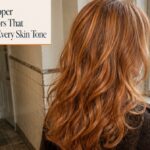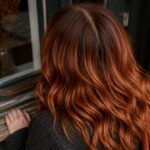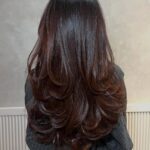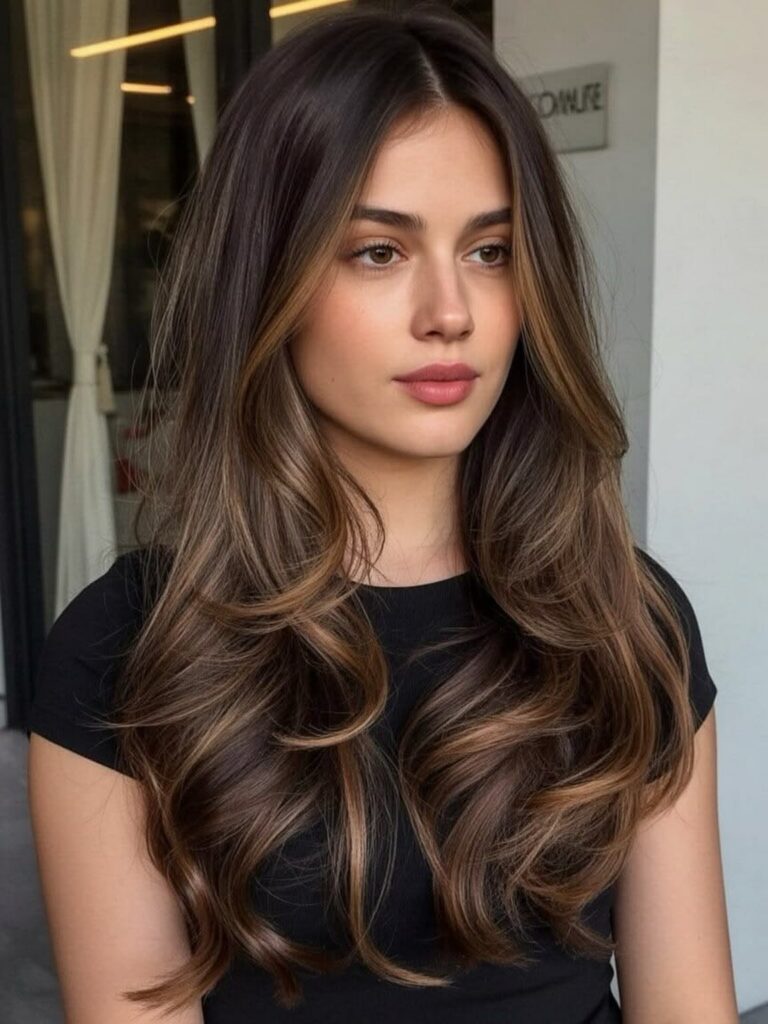
The range is wide: Fine Caramel Streaks sit at the quiet end, Black to Caramel Balayage asks for a longer appointment, and Copper Caramel Ombre is the boldest of the three.
Your skin’s undertone decides which one is yours: warm skin suits Golden Caramel or Honey Caramel, while cool skin looks better in Cool-Toned Caramel.
1. Dark Caramel Balayage
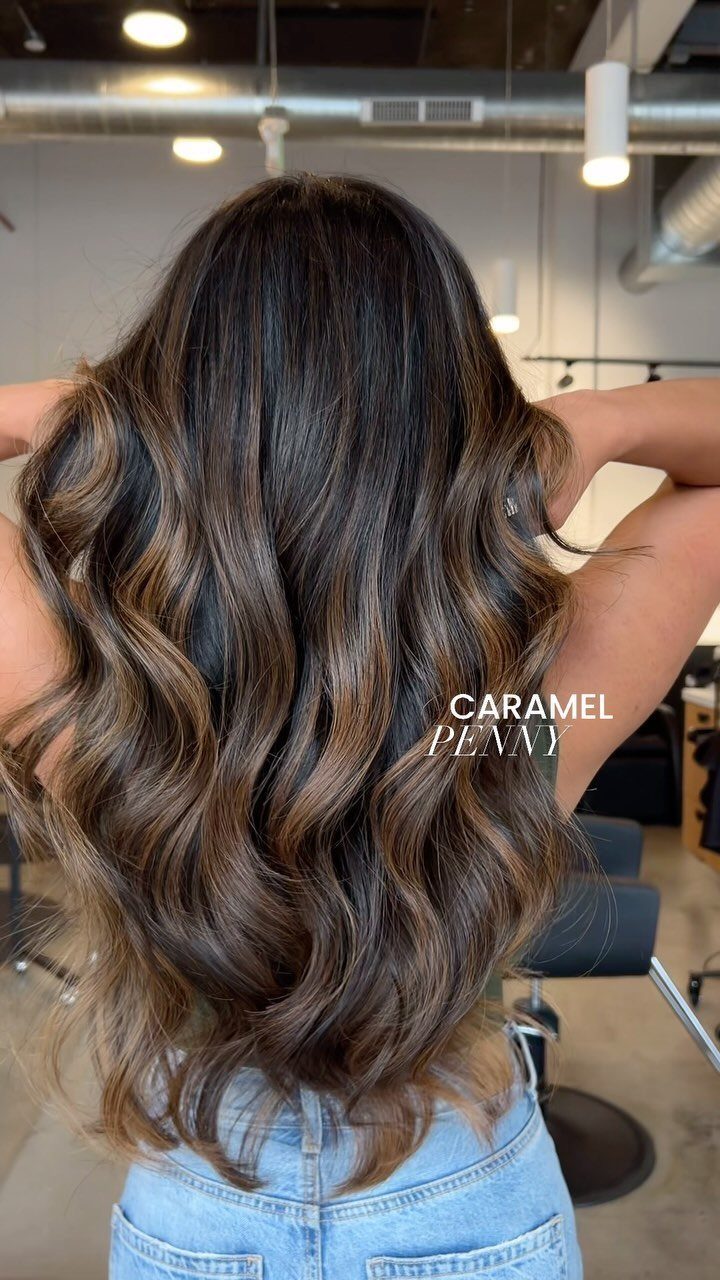
A dark base that melts into caramel is the easiest balayage to live with, because the lightest color sits mid-shaft and at the ends instead of starting at the scalp.
Ask your colorist for hand-painted caramel on long, loose waves, with the roots left deep brown.
Regrowth blends in rather than drawing a line, so the color holds up between visits. A photo helps, and so does saying "dark caramel balayage" by name.
2. Caramel Face Frame
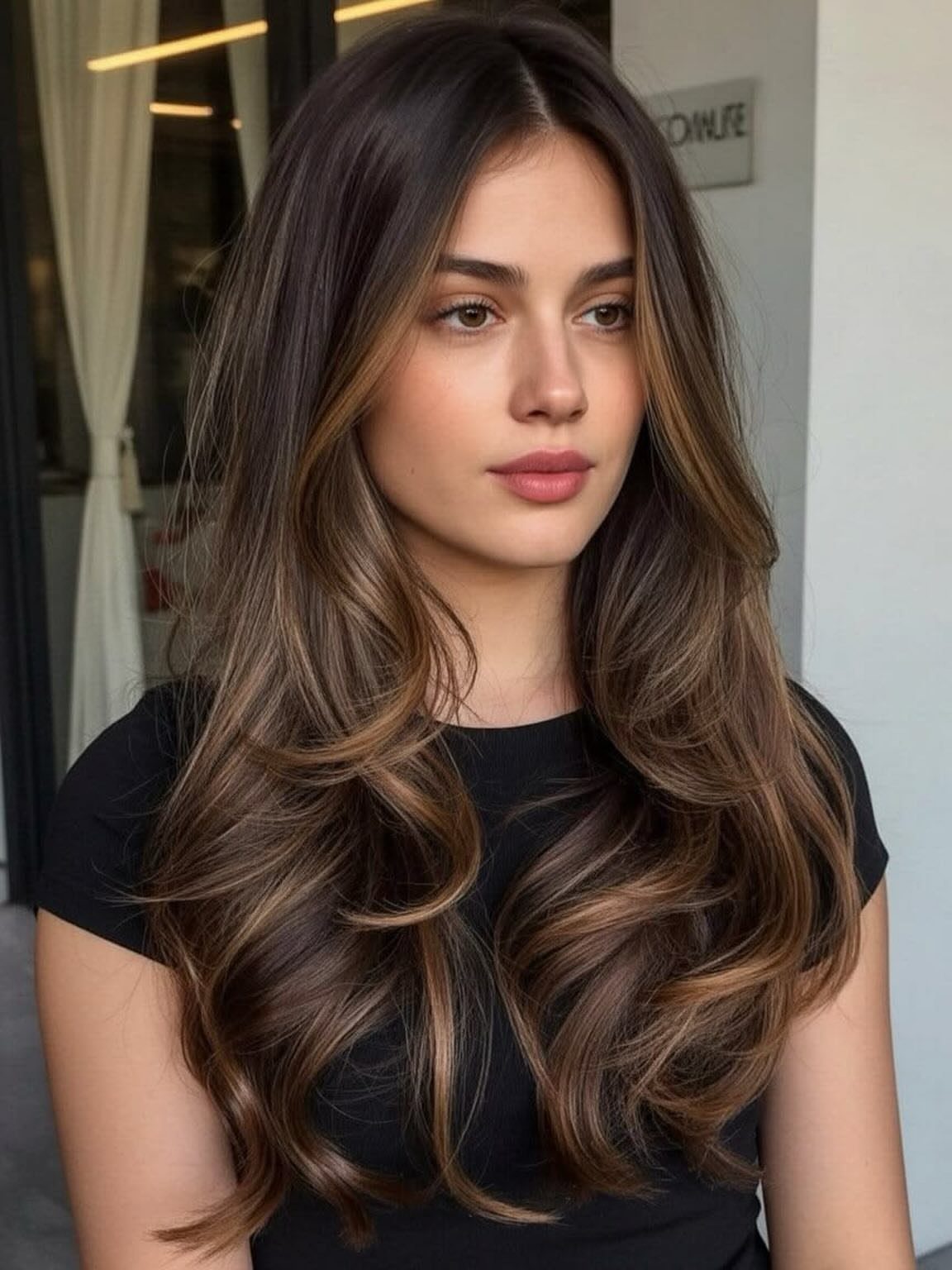
Chunky caramel pieces right at the front do the most for the least color. Because only the hair around your face is lightened, the rest of the length stays deep brown and the brightness lands where the eye goes first.
I like this on long waves, where the lighter pieces fall forward and catch the light. Ask for the thicker sections to be placed around the face, and show your colorist exactly how wide you want them.
3. Dark Root Melt
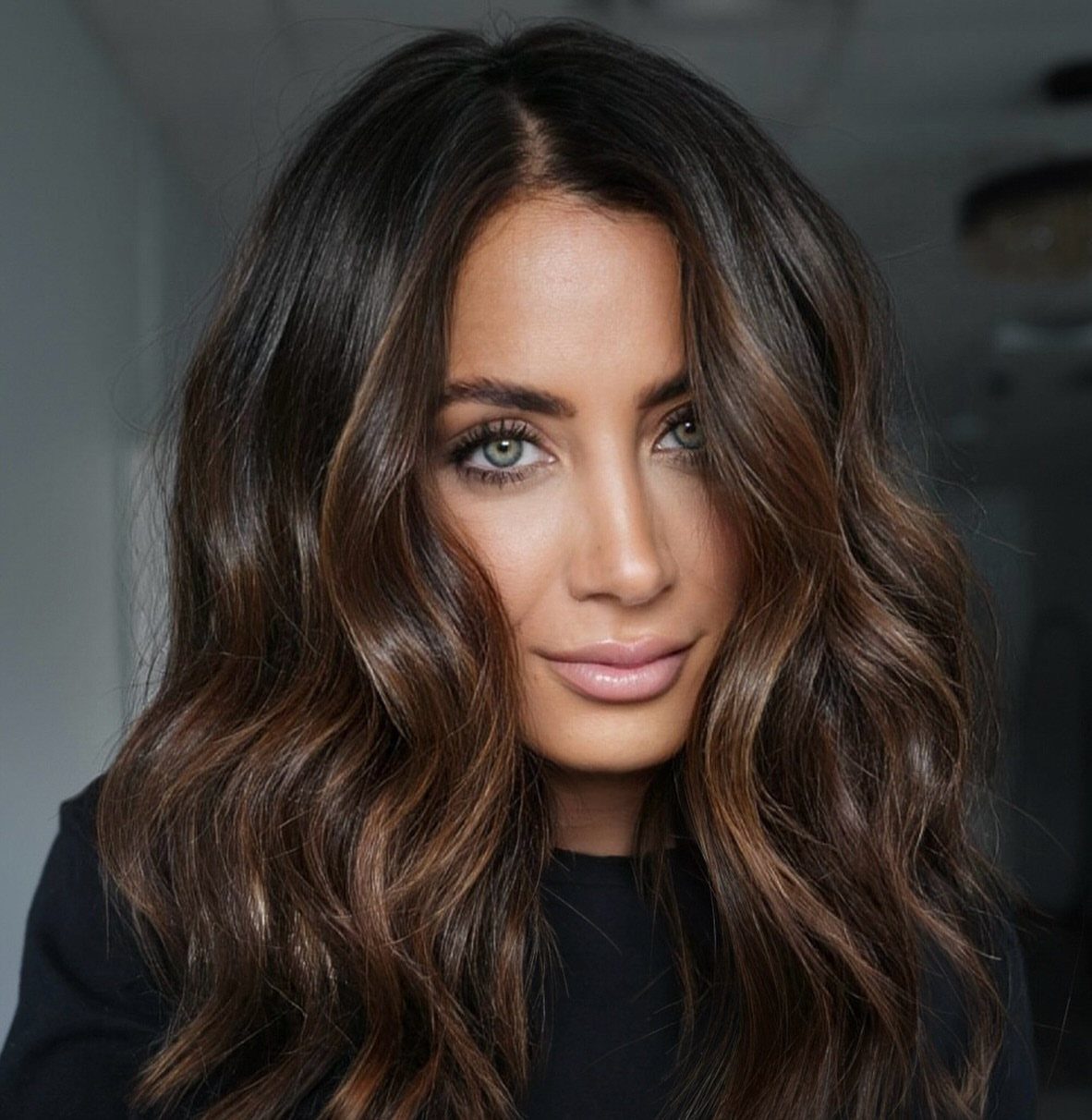
A root melt is the reason caramel can look expensive instead of striped. The dark brown at the scalp is blended down into the lighter lengths, so no hard line shows as the color grows out.
On wavy hair, the waves blur the transition even more.
Ask for a "dark root melt" with caramel through the mid-lengths and ends. I would choose this over a bright, even caramel if longer gaps between salon visits matter to you.
4. Dark Caramel Brown
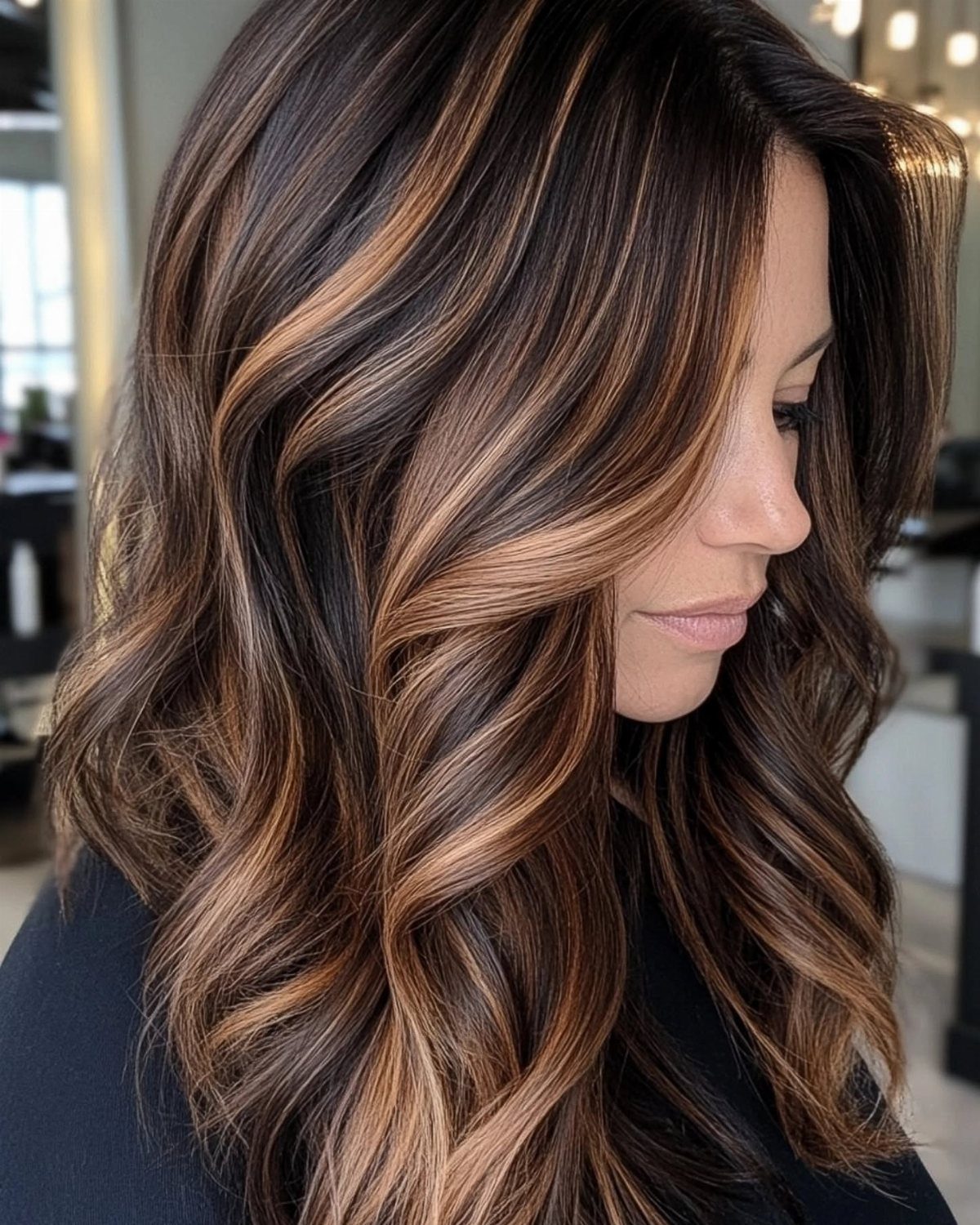
Dark caramel brown is for anyone who wants caramel to read as depth rather than as a highlight. The base stays a rich brown, and the caramel shows up as softer, warmer dimension through long waves.
Because the shift is gentle, it suits people nervous about going visibly lighter.
Ask your colorist for caramel-brown tones that sit close to your natural brown. Bring a photo, since "caramel" can mean very different things to different people.
5. Caramel Highlights
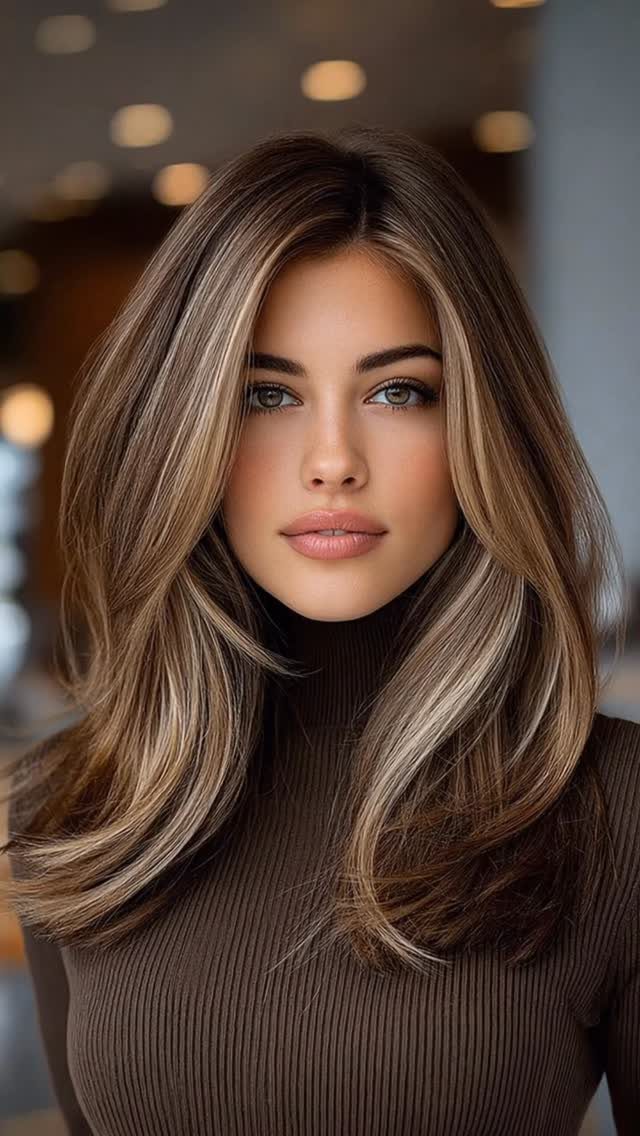
Lighter caramel sections against a brown base give the clearest contrast of the six here. Dark roots stay in place while the highlights add brightness through long, full lengths.
This is the look to pick if you want the caramel to be noticed. Tell your colorist how bright you want the lightest pieces, and ask for dark roots to be kept so the grow-out stays easy.
6. Cool-Toned Caramel
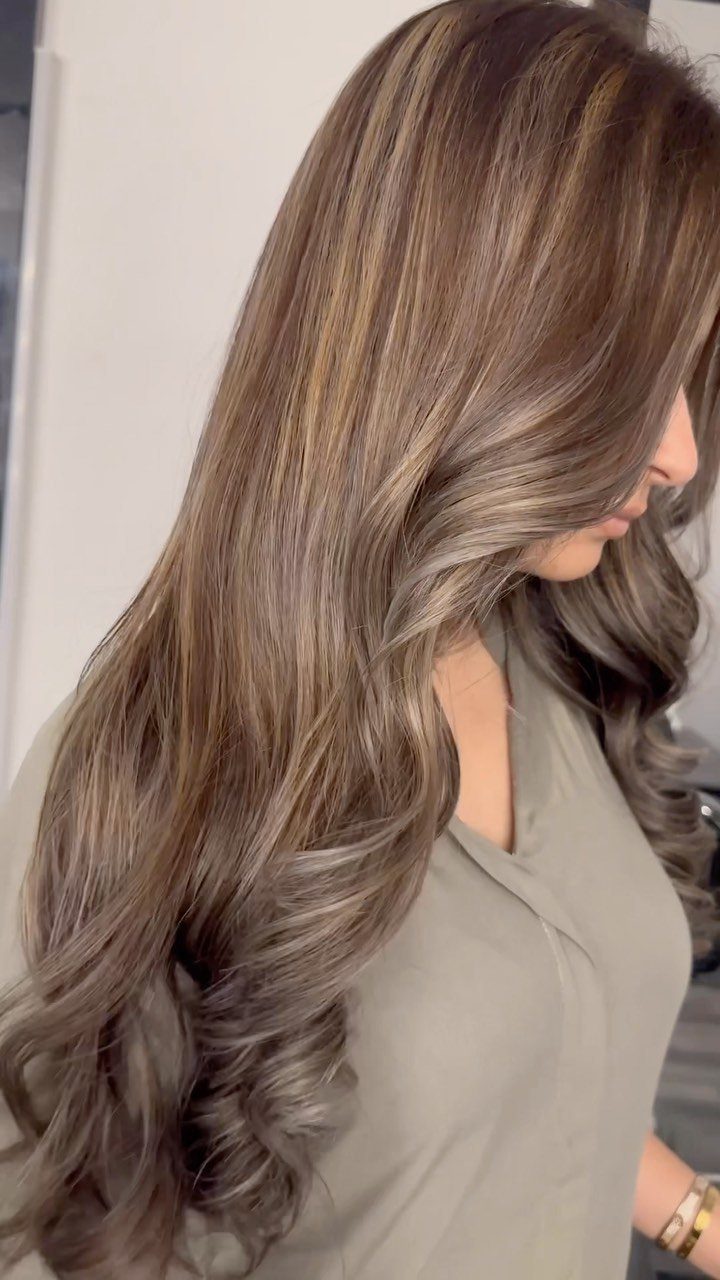
Ashy, cool beige caramel is the answer when golden tones look brassy on you. Over a brown base, it gives a softer, smoky version of caramel that sits quietly against the hair.
If warm caramel makes your skin look sallow or flushed, I would try this first. Ask your colorist for "cool-toned caramel" or "ash caramel" and show a photo, because the line between cool and muddy is thin.
7. Caramel Bronde
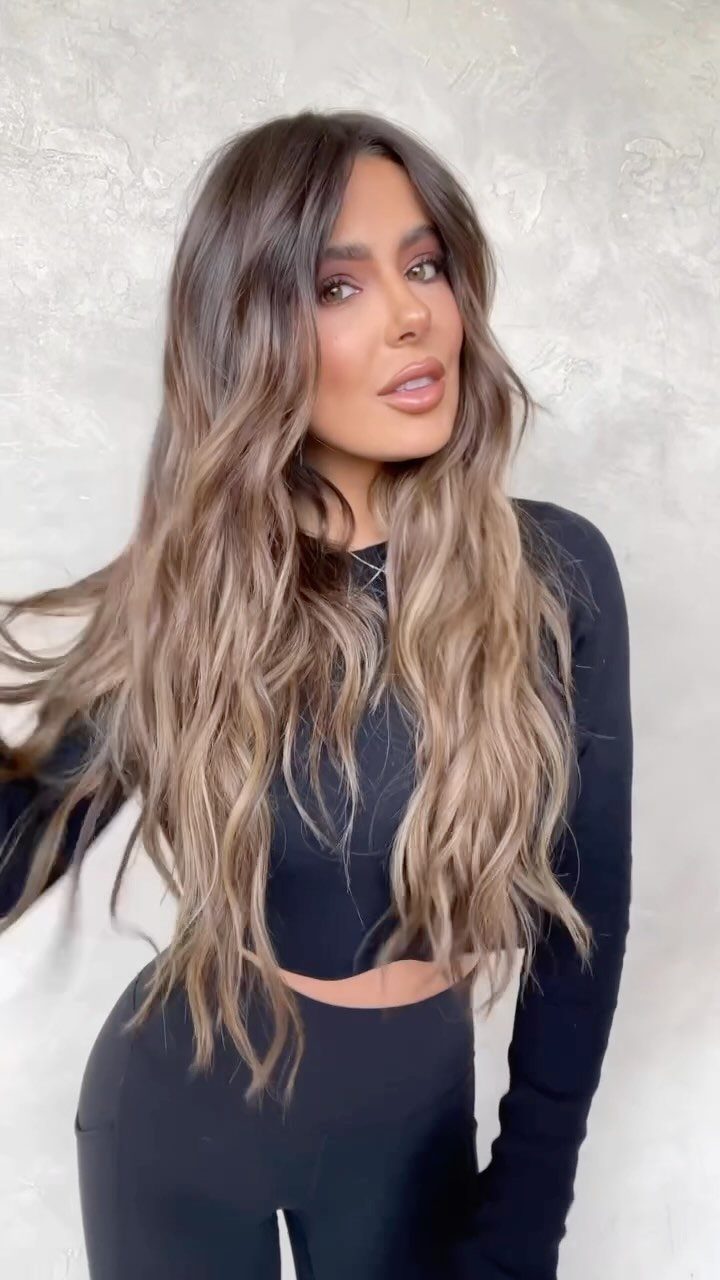
Bronde sits between blonde and brown, and adding caramel warmth keeps it from looking too cool or too flat. The color reads as soft brown in low light and blonde in bright light, with long waves showing off the shift.
If you like the idea of caramel but want more lift than a dark balayage gives, this is the middle ground. Ask your colorist for bronde with caramel tones, and keep the roots darker so regrowth stays soft.
8. Subtle Caramel Ribbons
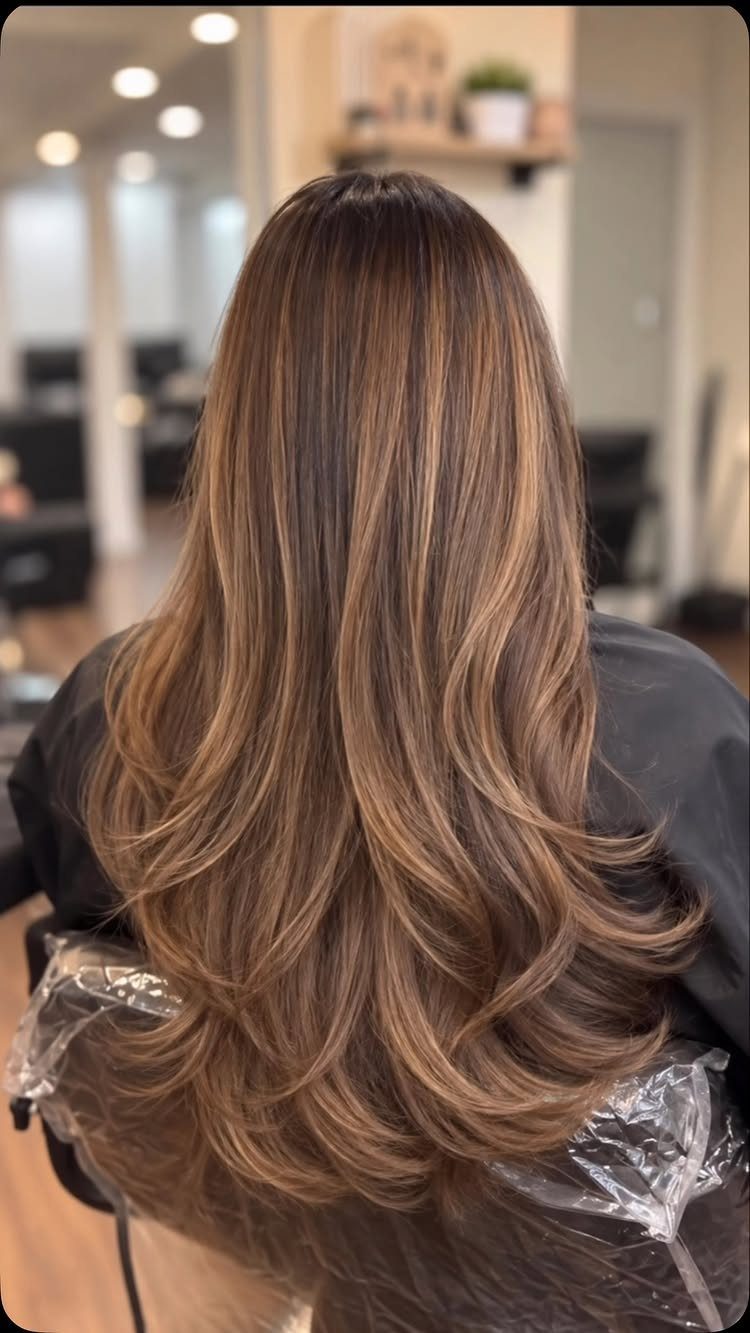
Thin, hand-painted ribbons of caramel through a dark brown base give dimension without obvious contrast. The ribbons sit close to the natural color, so the change is gentle and grows out smoothly.
On long hair, the ribbons catch light as the hair moves.
This suits anyone who wants caramel to look natural rather than bold. Ask for fine ribbons placed sparingly, and say you want the base left dark.
9. Black Caramel Highlights
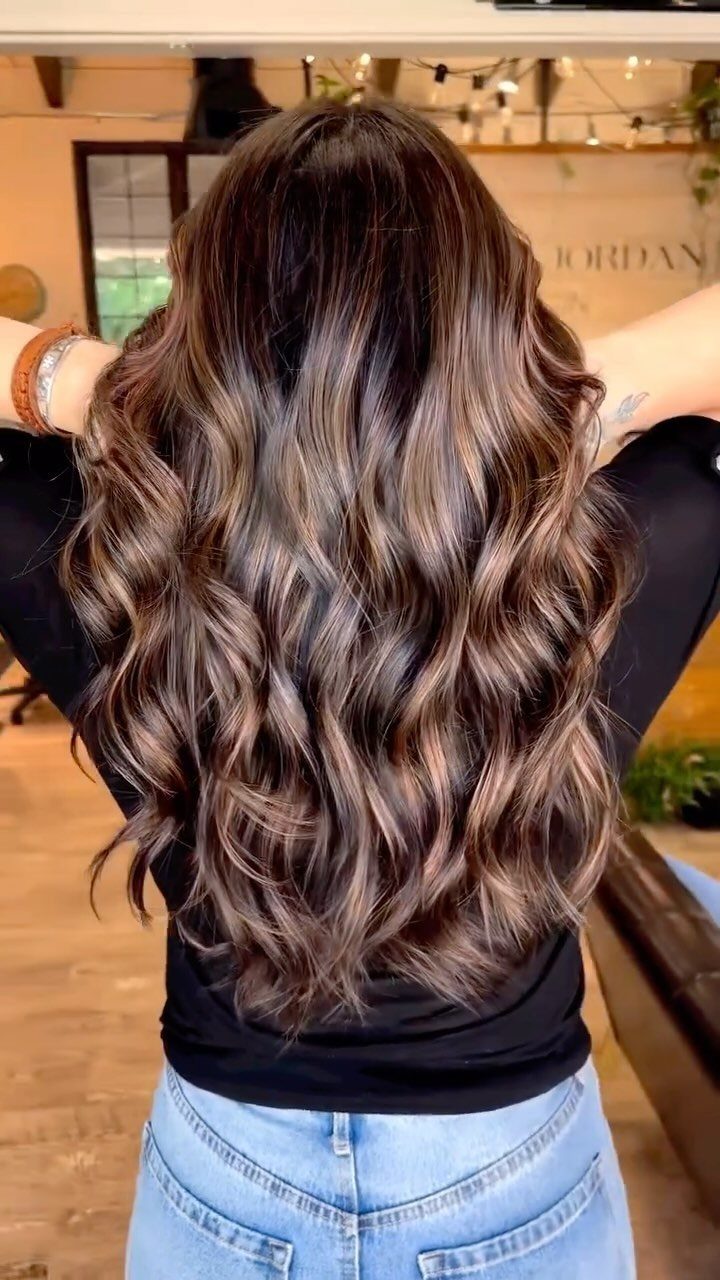
Black hair has to be lifted much further to reach caramel than brown does, so the work is heavier, but what you get back is warm brightness set against real depth.
The caramel stays warm and rich rather than turning brassy, and the dark base keeps the color grounded.
Because black hair shows less dimension on its own, the caramel adds movement. Tell your colorist you want caramel highlights on black hair, and expect to sit longer than you would for a lighter base.
10. Chocolate Caramel Balayage
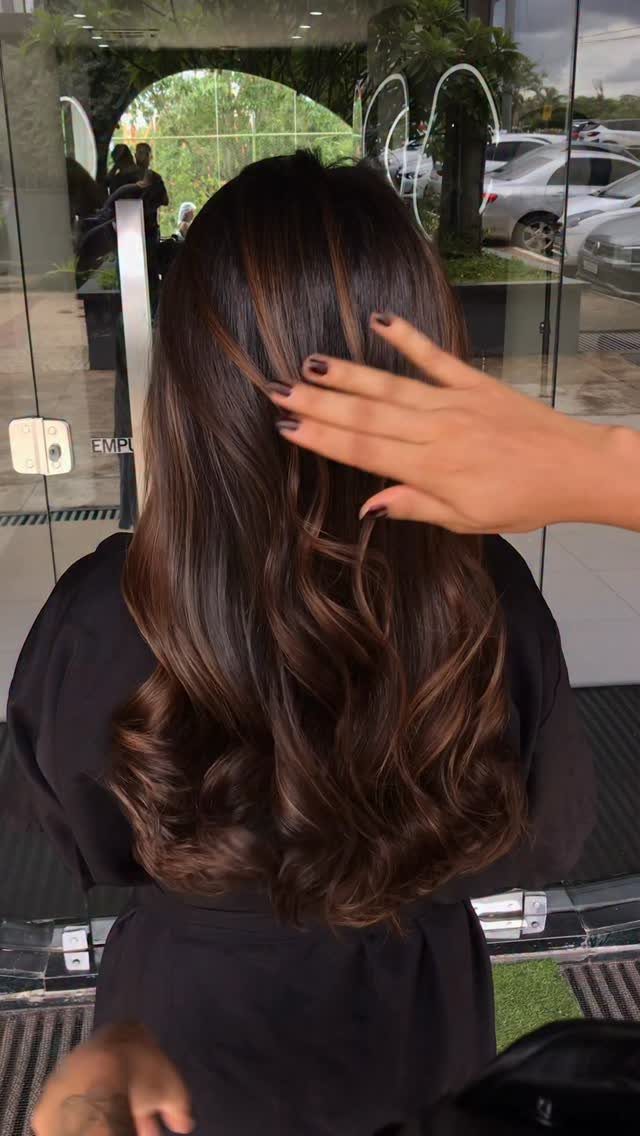
Chocolate roots that fade into caramel lengths give a soft, natural-looking balayage. The chocolate stays rich and deep, and the caramel warms up the ends without going too light.
Pick this one if you want the caramel to look grown-in, as though the sun did the work, not like fresh paint. On long hair, the blend softens as it grows, so touch-ups can stretch longer.
11. Caramel Ribbon Highlights
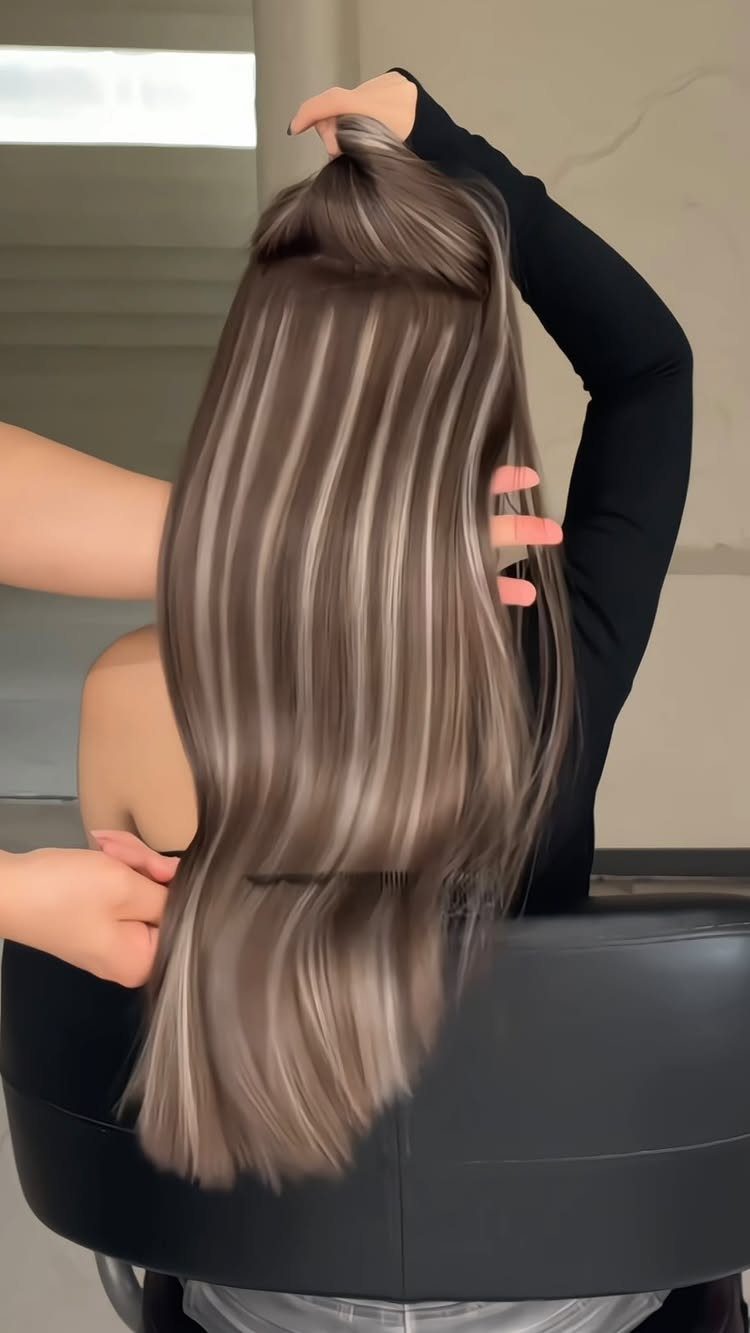
Thicker sections of caramel create more contrast than fine ribbons, so the color shows up clearly against a dark brown base. The ribbons are painted by hand rather than foiled, which gives a softer edge than traditional highlights.
If you want caramel that reads as intentional color rather than subtle dimension, ask for ribbon highlights. Tell your colorist how wide you want each section, and bring a photo so the placement matches what you have in mind.
12. Golden Caramel
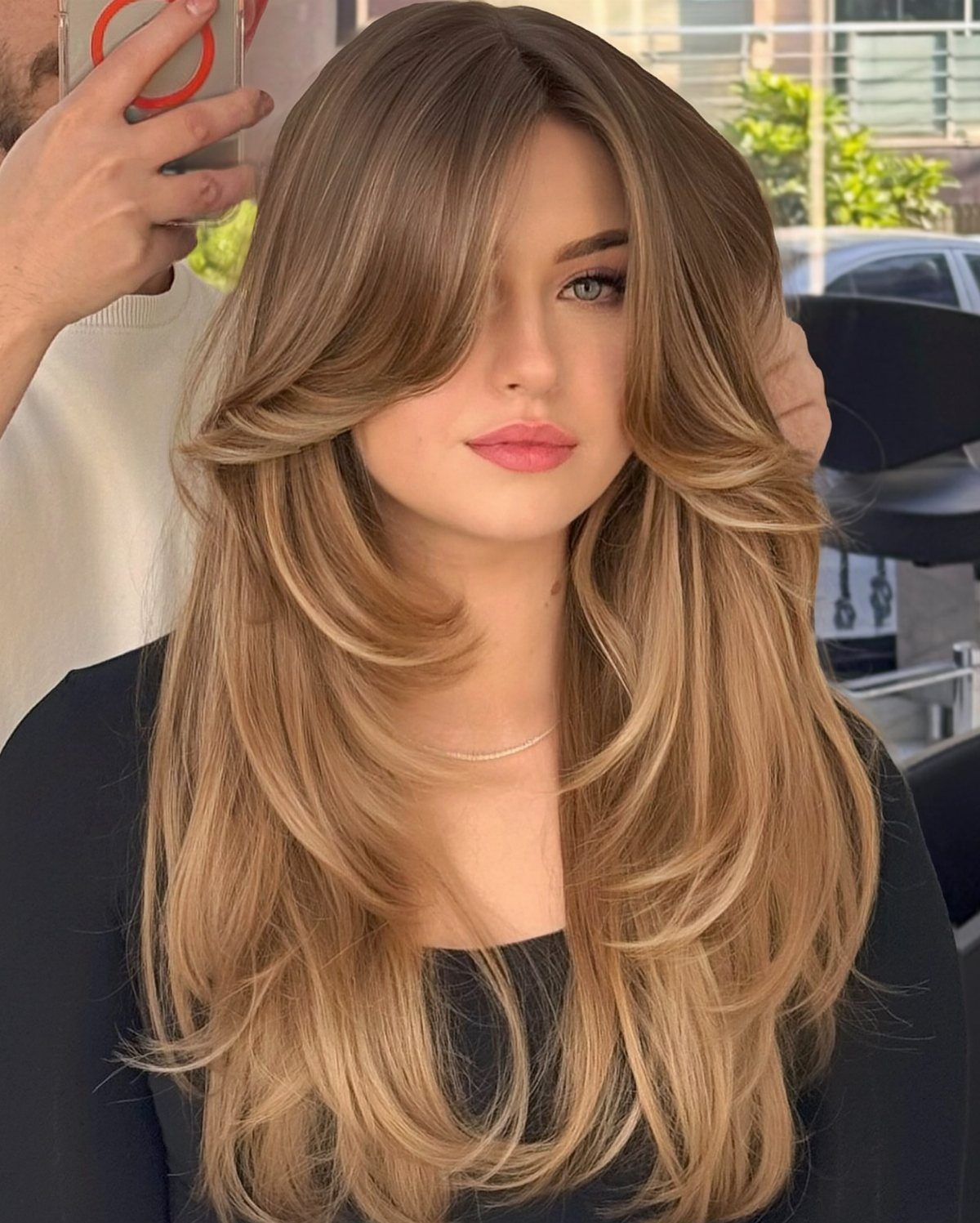
Golden caramel leans warm rather than neutral, with yellow-toned caramel running through the lengths. On layered hair, the color catches light at different angles and the golden tone stands out.
This suits warm skin tones better than cool ones.
Easy flushing, or a sallow cast next to golden shades, points me toward a cooler, ashier caramel. Ask for golden caramel, and make sure your colorist knows you want warmth, not ash.
13. Fine Caramel Streaks
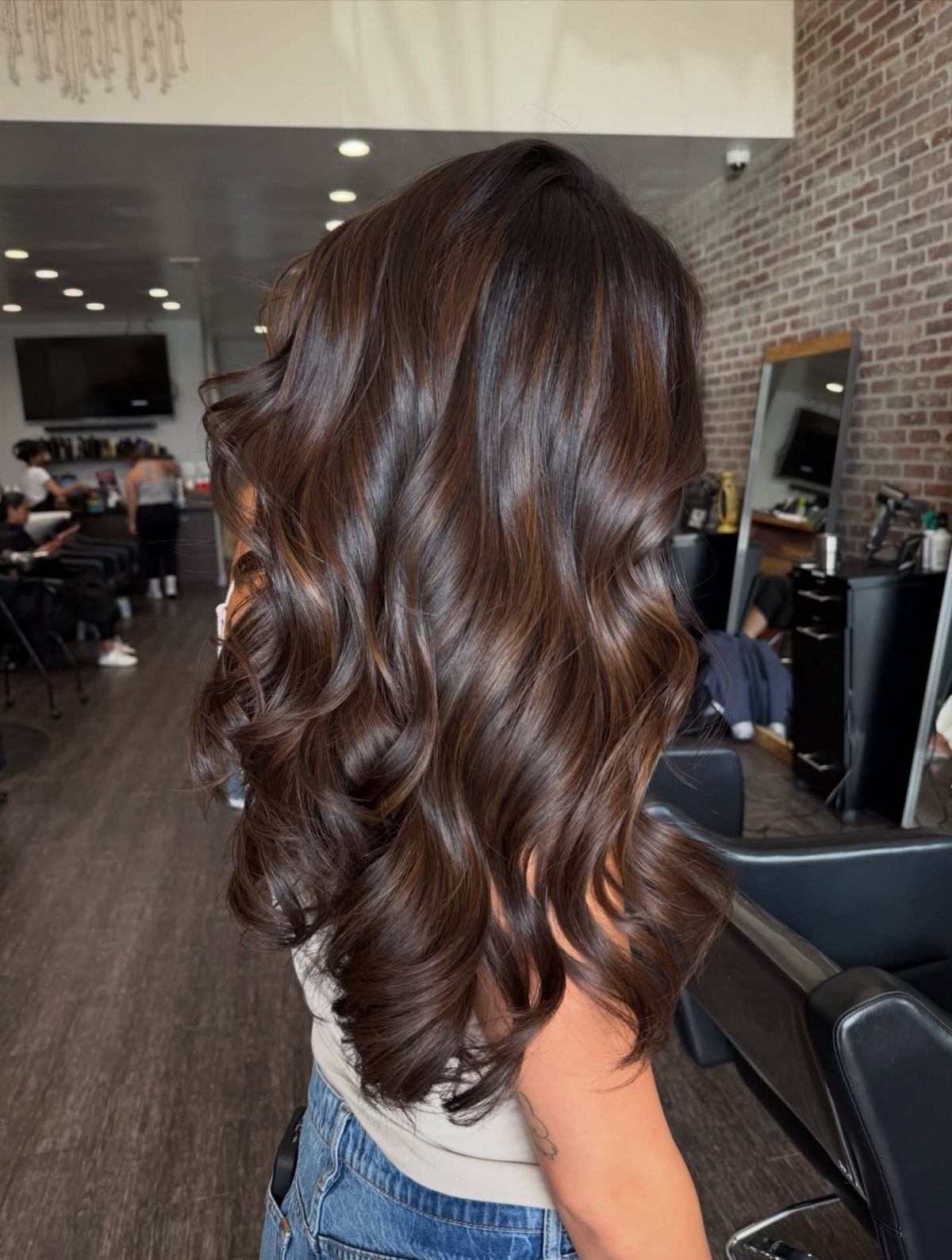
Fine caramel streaks are the quietest way to wear this color. Thin strands of caramel run through loose dark brown waves, so the hair looks warmer and fuller without any obvious blocks of lightness.
I would pick this if you want people to say your hair looks great without being able to say why.
Ask your colorist for very fine streaks and a brown base left mostly alone. Bring a photo, since "fine" varies from one stylist to the next.
14. Honey Caramel
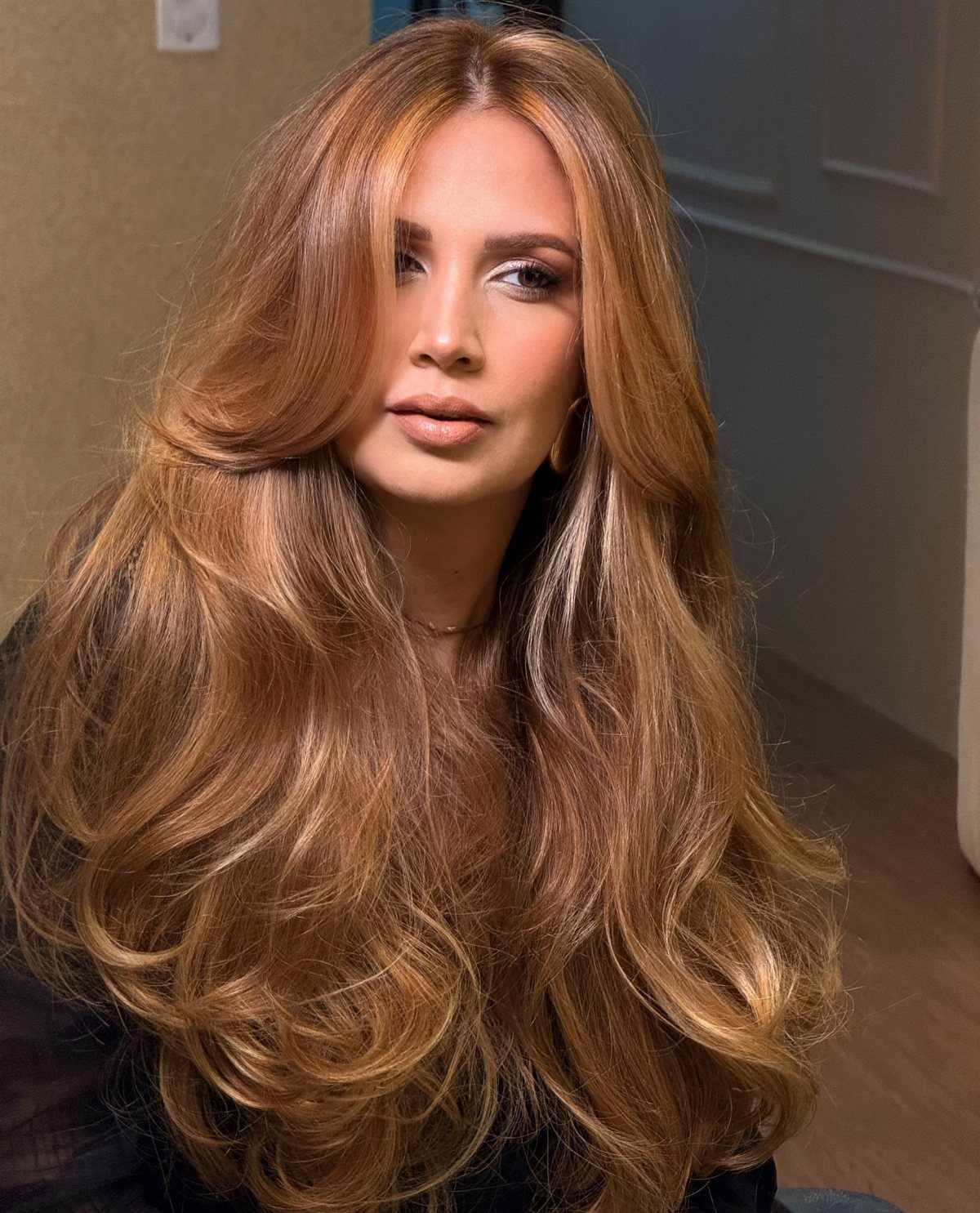
Honey caramel is the lighter, sweeter end of the family: a golden, glowing shade that reads closer to warm amber than to brown.
Because the color runs throughout, soft curls and waves show it off well, with the light moving through each bend.
Ask for "honey caramel" and bring a photo, because honey can drift toward blonde or toward orange depending on who mixes it.
If golden shades flatter you, as they do on warmer skin tones, this is a good pick. Without warm undertones in your skin, a cooler caramel is the safer pick, since honey’s gold can pull sallow.
15. Milk Chocolate Caramel
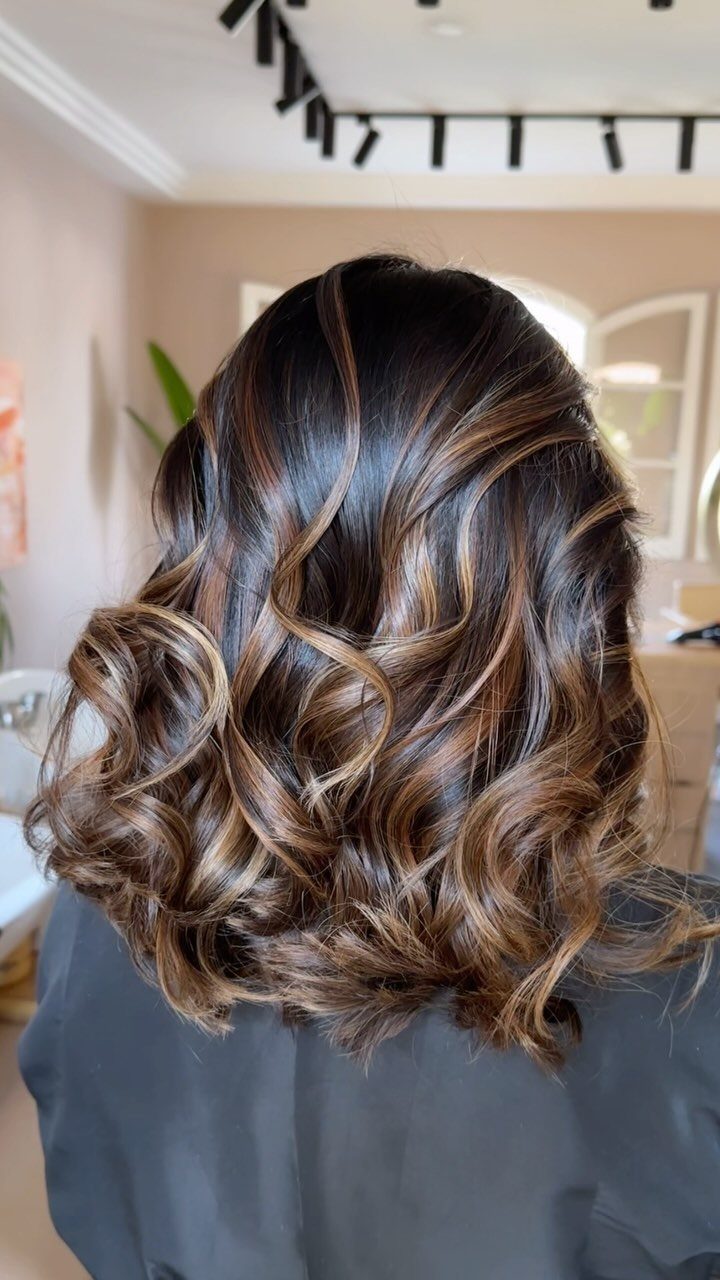
Milk chocolate sits a step softer than espresso or dark chocolate, and caramel laid over it keeps the whole head of color in one warm family.
Curls make this work especially well: the caramel catches on the outer curl while the brown stays underneath.
I like it for people who want caramel without leaving brown behind. Ask your colorist for a milk chocolate base with caramel pieces, and show a photo so the 2 tones land at the right distance from each other.
16. Chocolate Caramel Strands
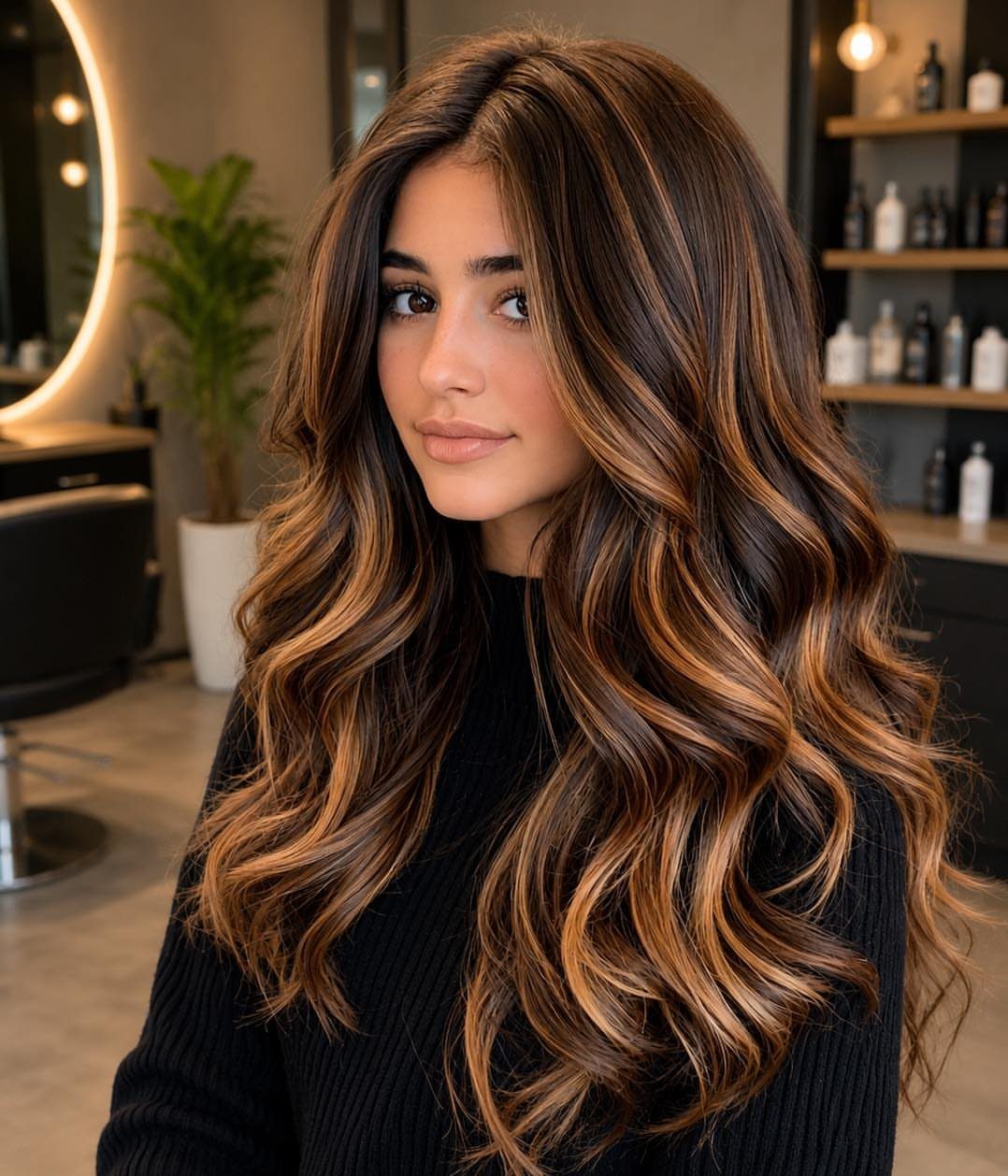
Chocolate hair with reddish caramel-blonde pieces gives you contrast with a warm, coppery edge. The deep brown stays rich, and the lighter strands pick up a rosy tint instead of a flat gold.
This is bolder than a plain caramel highlight, so I would choose it for long waves where the color has room to show.
Tell your colorist you want the red tone in the caramel, not just brightness, or the pieces may come out more yellow than you planned.
17. Caramel Bronde Cut
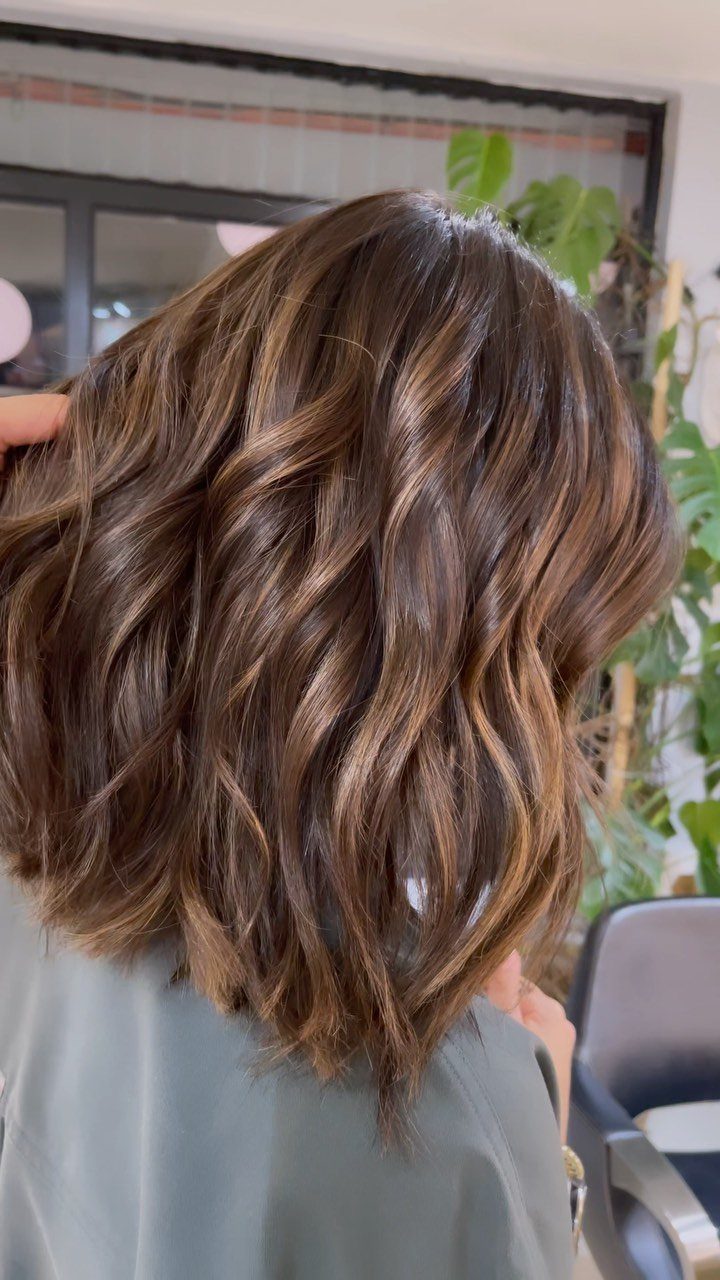
A choppy cut with waves through the mid-lengths and straighter ends makes balayage look lived-in and textured. The caramel bronde sits across the broken-up layers, so every uneven edge gets a little color.
Ask for a choppy, shoulder-length cut and a balayage painted to follow it, with the roots kept darker.
Style the waves from the mid-shaft down and leave the ends straighter. A heat protectant before any hot tool helps keep the lightened ends in good shape.
18. Caramelized Rose Gold
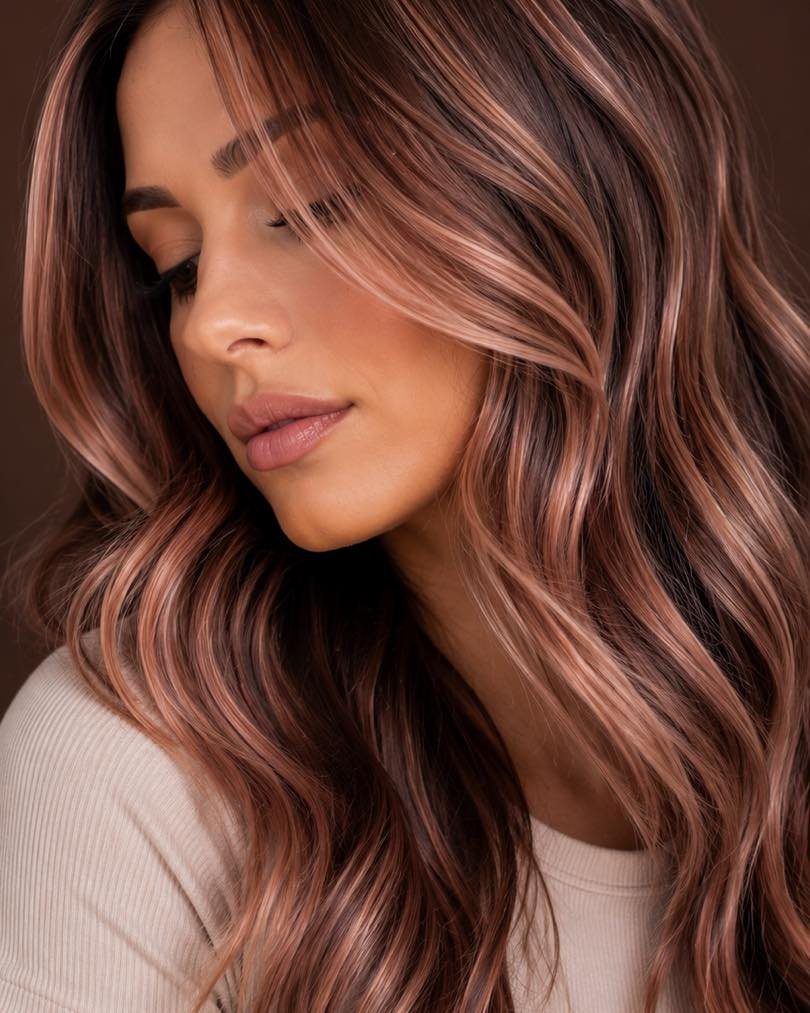
Rose-gold highlights add a soft red cast to brown hair, so caramel turns pinkish and warm instead of purely golden. On long dark waves the effect is subtle, more glow than statement.
I would choose this over classic caramel if you want a little color that still looks natural.
Ask your colorist for "rose-gold caramel" and show a photo, because the red can lean copper or pink depending on the formula. Color-safe shampoo helps hold the tint.
19. Black to Caramel Balayage
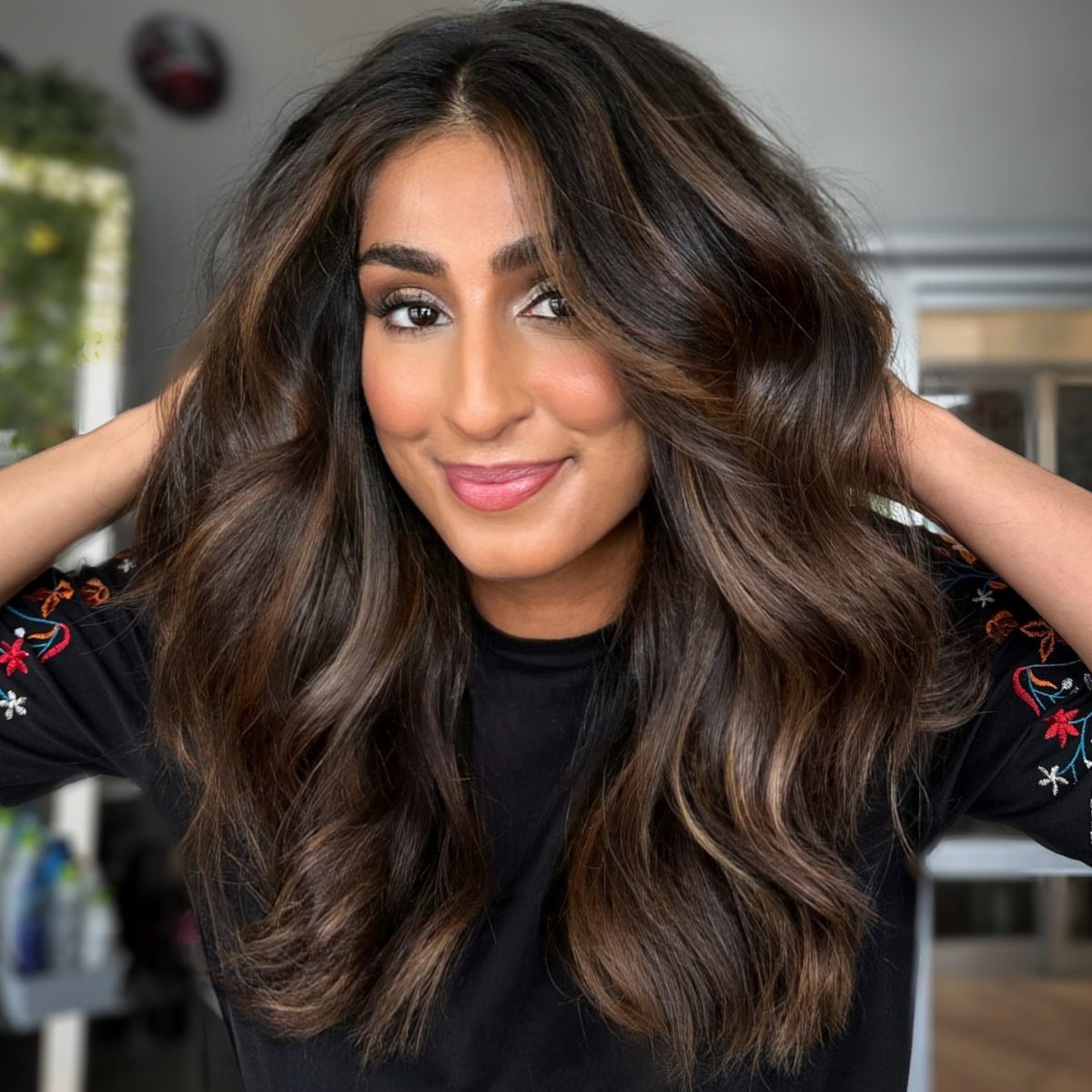
Going from black to caramel is a big jump, and the contrast is the appeal, though the copper caramel ombre is the bolder of the three.
Dark brown-black stays at the scalp while warm caramel lightens the lengths, so the long waves show a clear shift from deep to bright.
Black hair has to be lifted far to reach caramel, which means a longer appointment.
Ask your colorist for "black to caramel balayage" and bring a photo of how much contrast you want. Color-safe shampoo and a heat protectant help keep lightened lengths from drying out.
20. Auburn Caramel Highlights
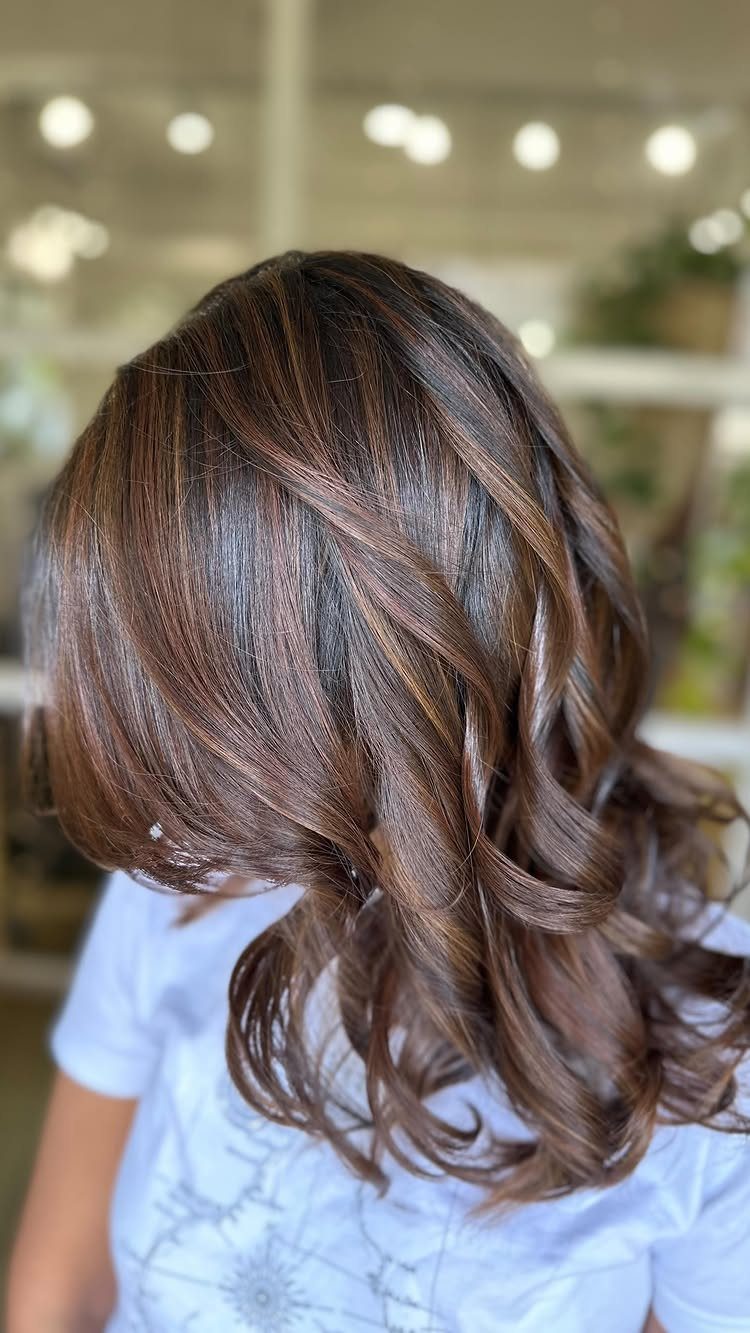
Auburn already runs warm, and caramel highlights take the edge off it. The red stays in the base while softer golden pieces run through the waves, so the color reads as dimension rather than a flat copper wash.
I like this for shoulder-length hair, where the highlights have room to show without overpowering the red.
Ask your colorist to keep the caramel close to the auburn so the two blend. Bring a photo, since caramel against red can drift orange if the tone isn’t matched.
21. Curly Caramel Highlights
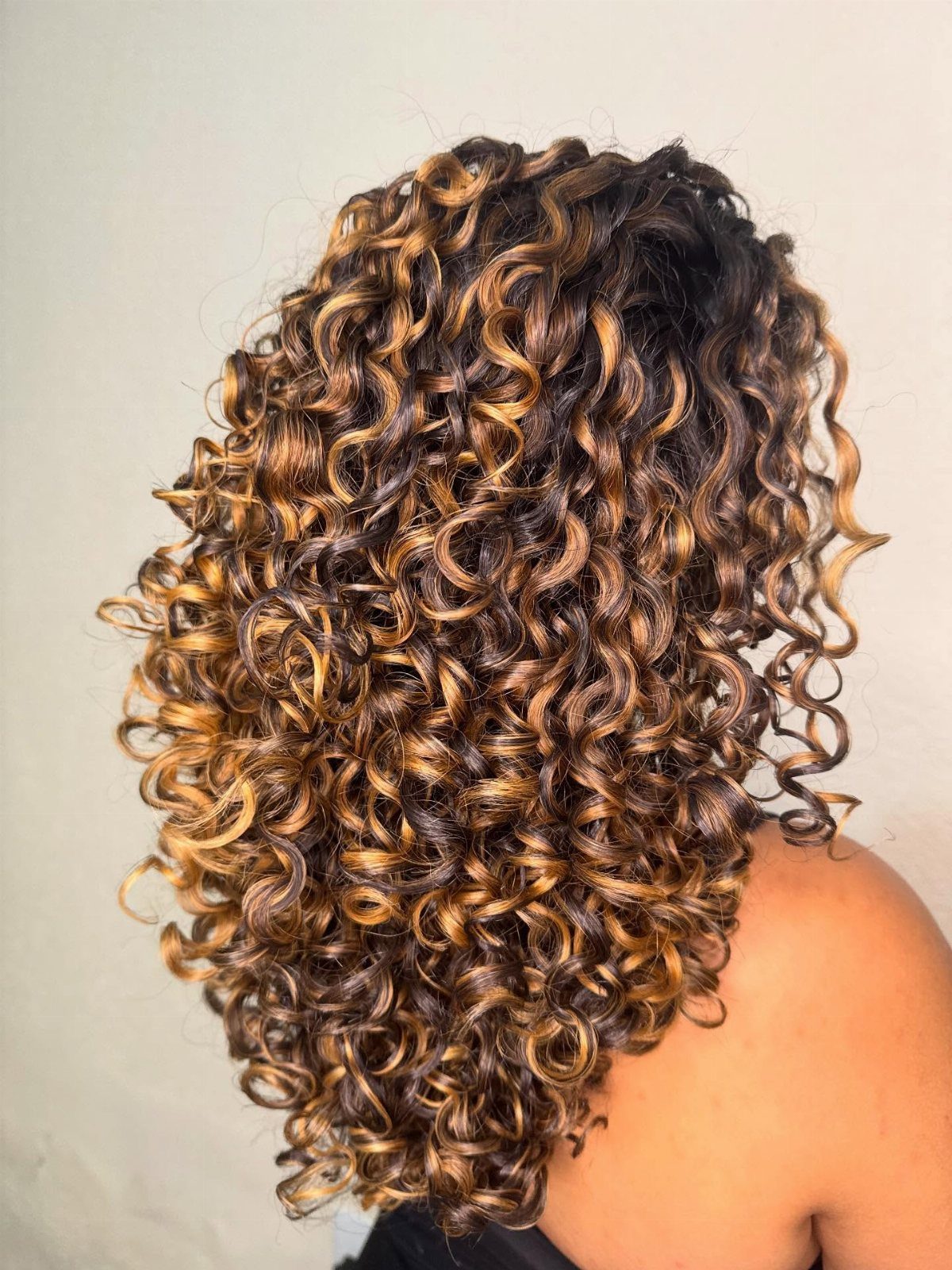
Curls break caramel highlights into small pockets of light, so each spring shows a different shade. Dark brown ringlets with caramel running through them look fuller and more dimensional than one flat color would.
If your hair is curly, ask your colorist to place the highlights with your curl pattern in mind, ideally on dry hair so they can see where each curl falls.
A lighter hand keeps the brown rich. Plan on a deep conditioner afterward, since lightened curls tend to run drier.
22. Mahogany Caramel Highlights
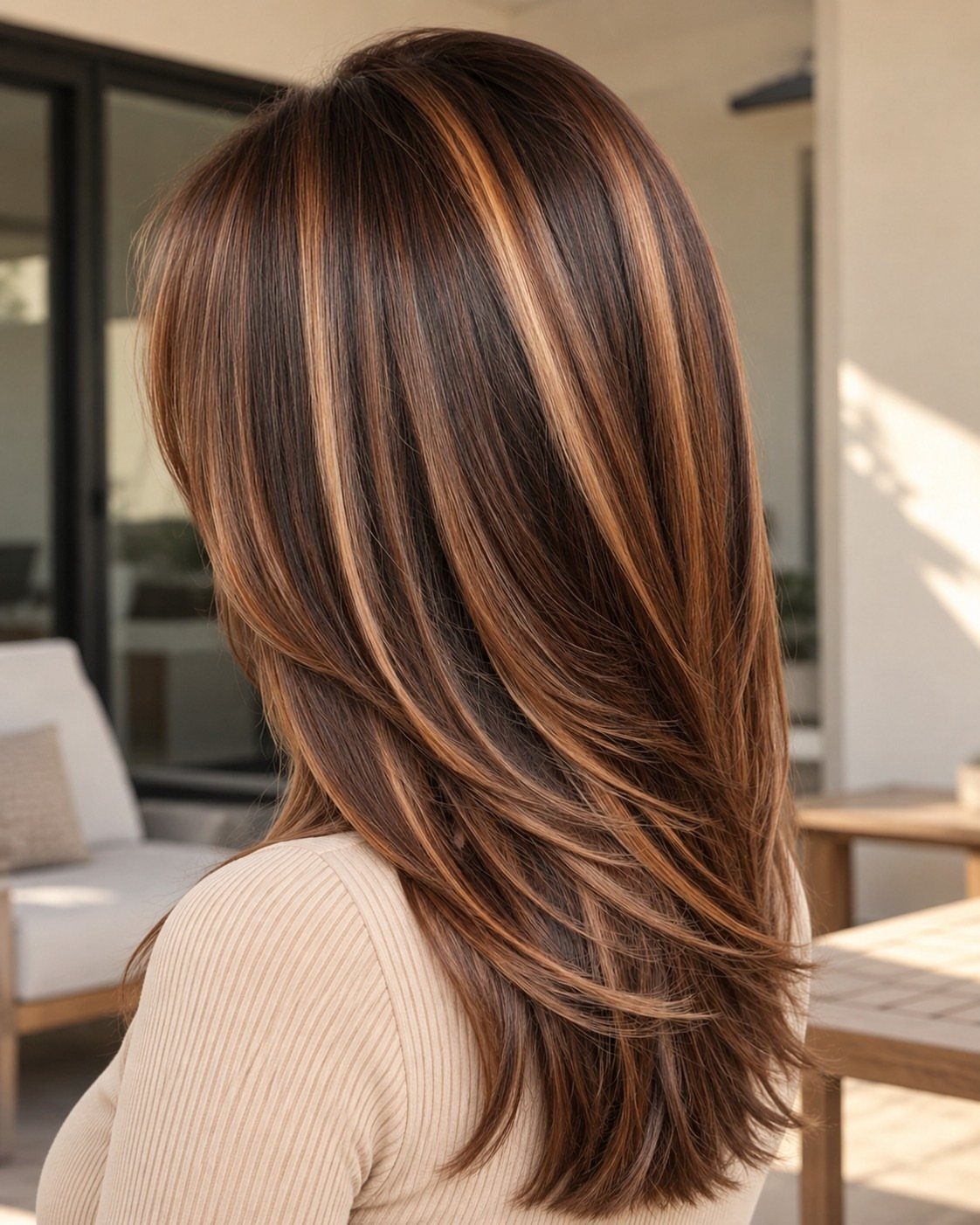
Mahogany carries a cool red-brown undertone, and caramel laid over it comes out warm without clashing. Dark, wine-tinged color holds at the base, while the caramel pieces lift the lengths so long layers catch more light.
Layers help here: each cut section gives the caramel a place to catch light.
Ask for a mahogany base with caramel highlights and show a photo, because mahogany can read as plain brown if the red is left out. I would keep the highlights fairly fine so the base stays the star.
23. Caramel Pixie Cut
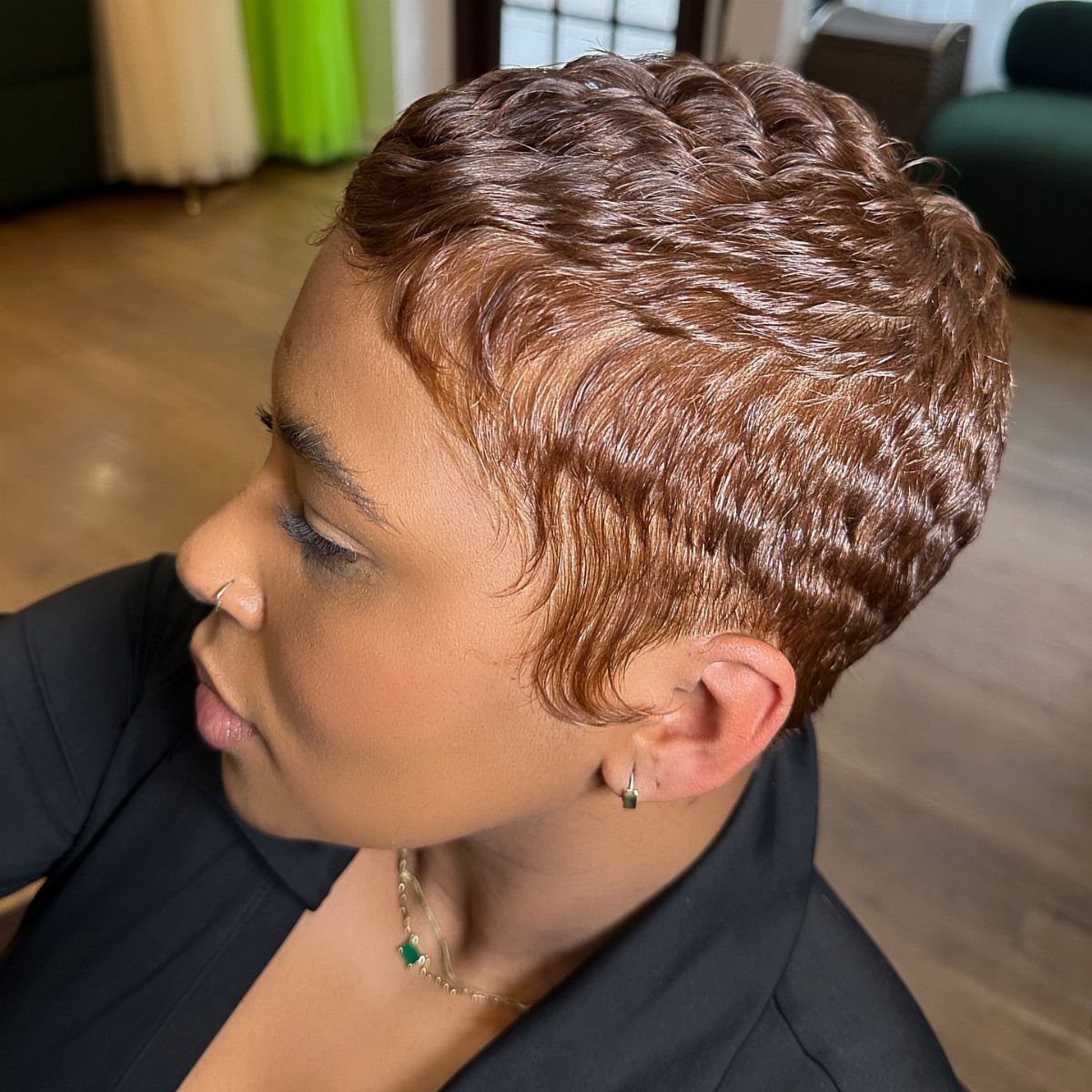
A pixie cut in caramel puts all the color within an inch or two of your face, so the shade matters more than it does on long hair.
Short waves styled close to the head give the color a soft, textured finish.
Ask your stylist for a wavy pixie and a warm caramel with a coppery lean, then show a photo to settle how light it should go.
Short hair shows regrowth quickly, so I would expect more frequent visits than with a long balayage.
24. Rooted Caramel Blonde
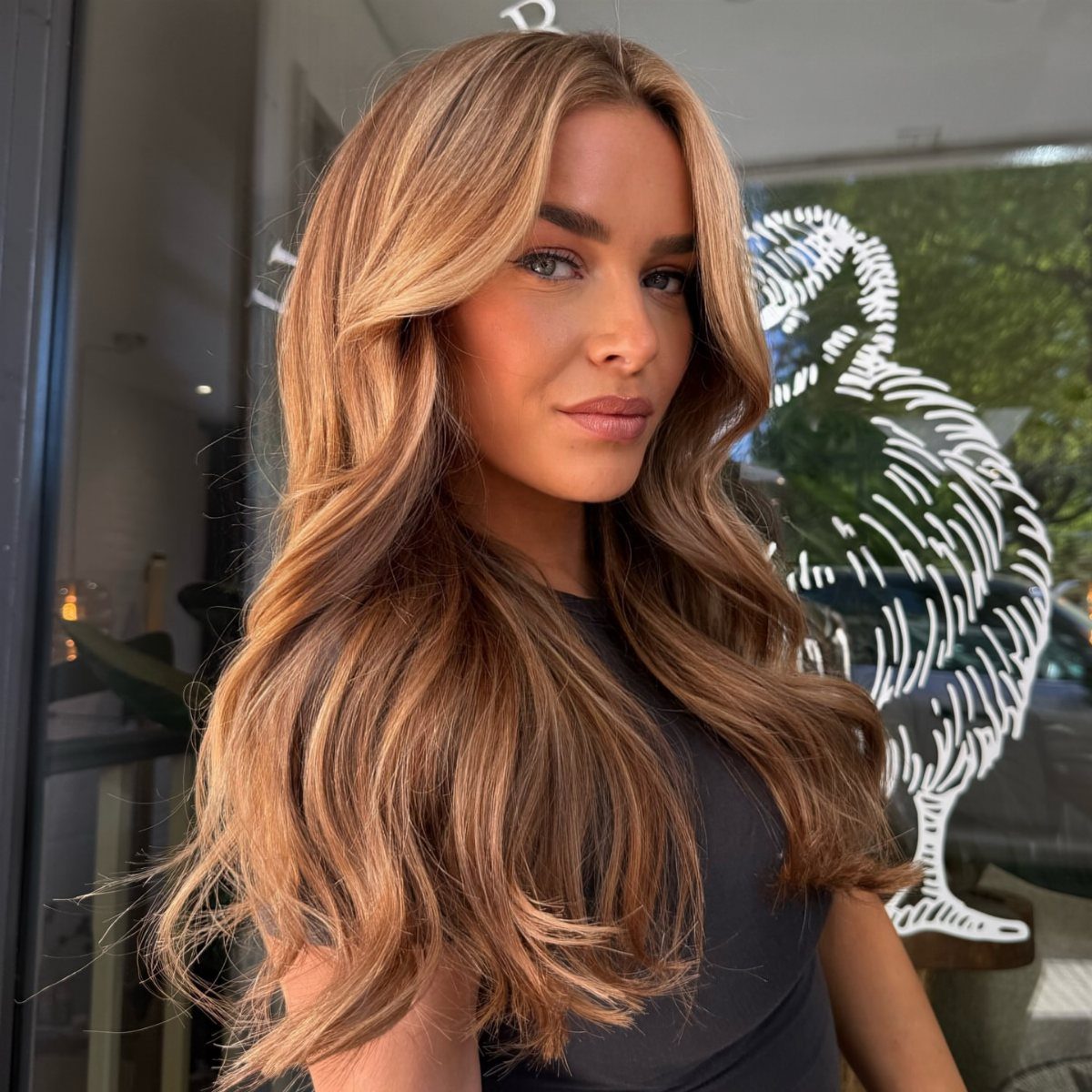
Dark roots that show are what make this look work. Caramel blonde runs through long waves while the roots stay deliberately darker, so there’s no scramble to cover regrowth every few weeks.
When you book, name the look as "rooted caramel blonde" and tell the colorist to leave the root dark instead of blending it into the lighter color.
If you want more time between salon visits, I’d choose this over solid all-over blonde, since regrowth reads as part of the design.
A reference photo helps, because how deep a root should sit varies a lot from one colorist’s idea to the next.
25. Tawny Caramel
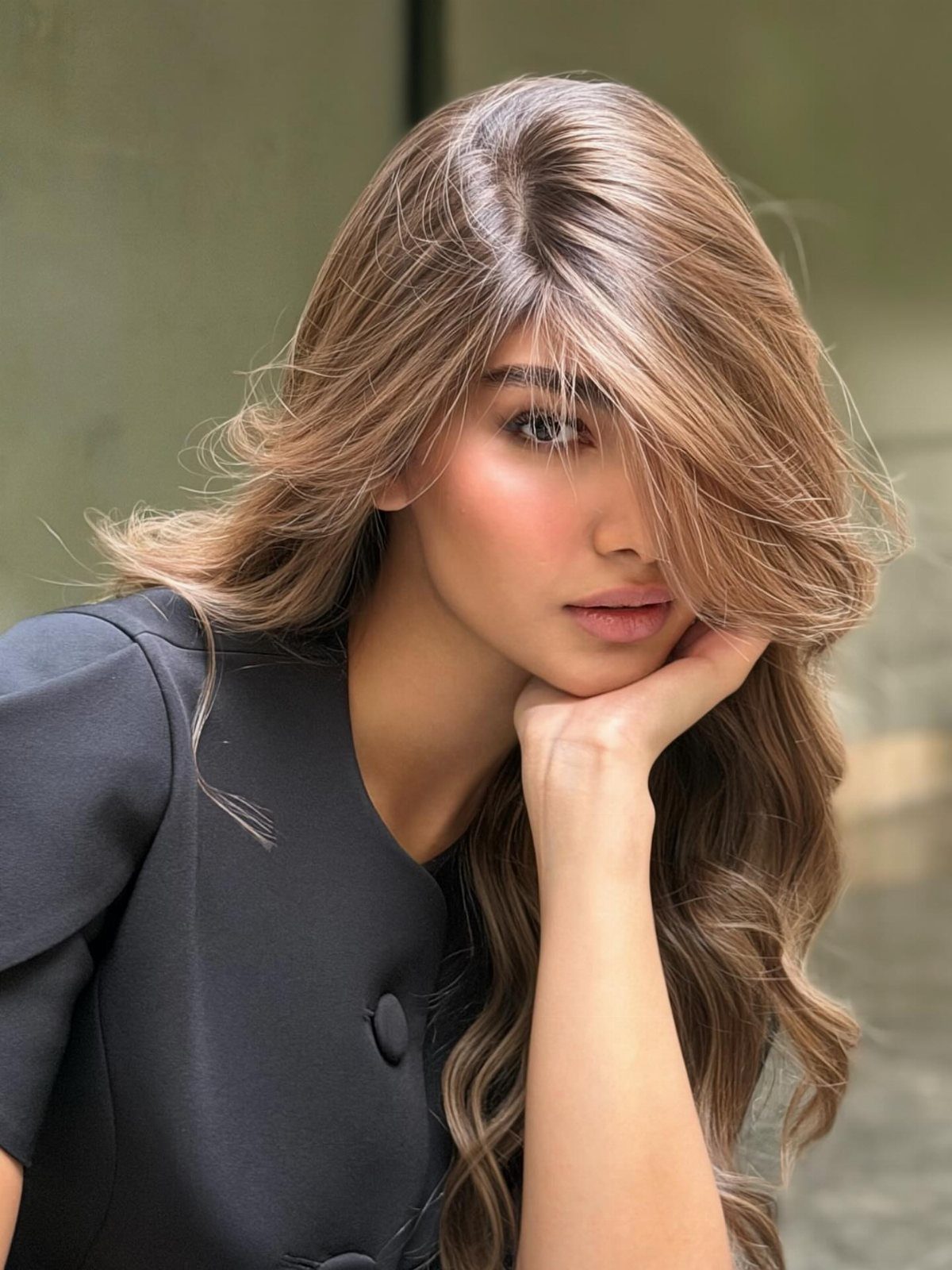
Tawny sits between light brown and orange-brown, so it reads warmer than a plain caramel without tipping into red. Through long waves, the highlights look sun-warmed.
Name it "tawny caramel highlights" and carry a reference photo, since a weak toner lets that brownish-orange slide toward straight orange. I would pick this over a golden shade if you want warmth that still looks like brown hair.
26. Caramel Blonde Highlights
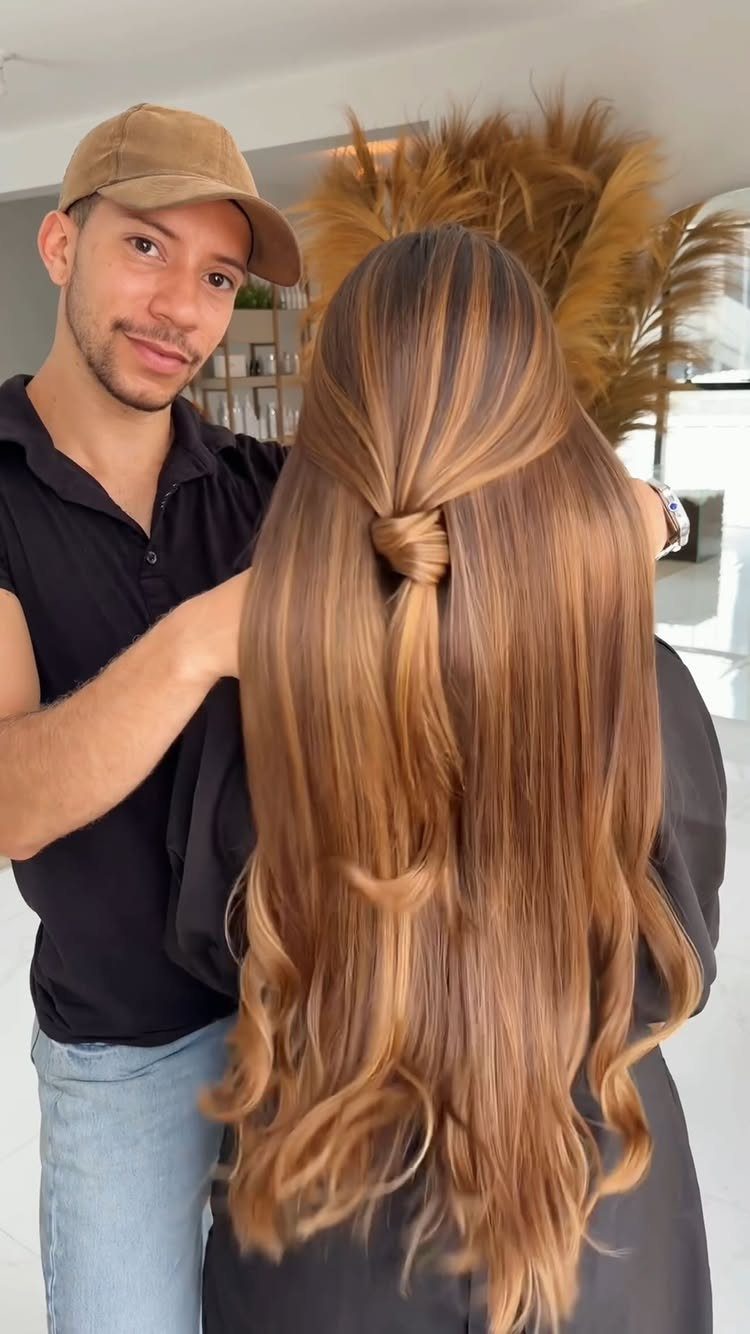
Light caramel against dark brown is a high-contrast pairing, and loose curls spread it around so the lighter pieces show from every angle.
Tell your colorist you want caramel-blonde highlights on a dark brown base and how bright you want them, since "light caramel" can slide toward straight blonde.
I’d keep the brown dominant so the lighter pieces read as highlights, not as a different head of hair.
27. Partial Caramel Highlights
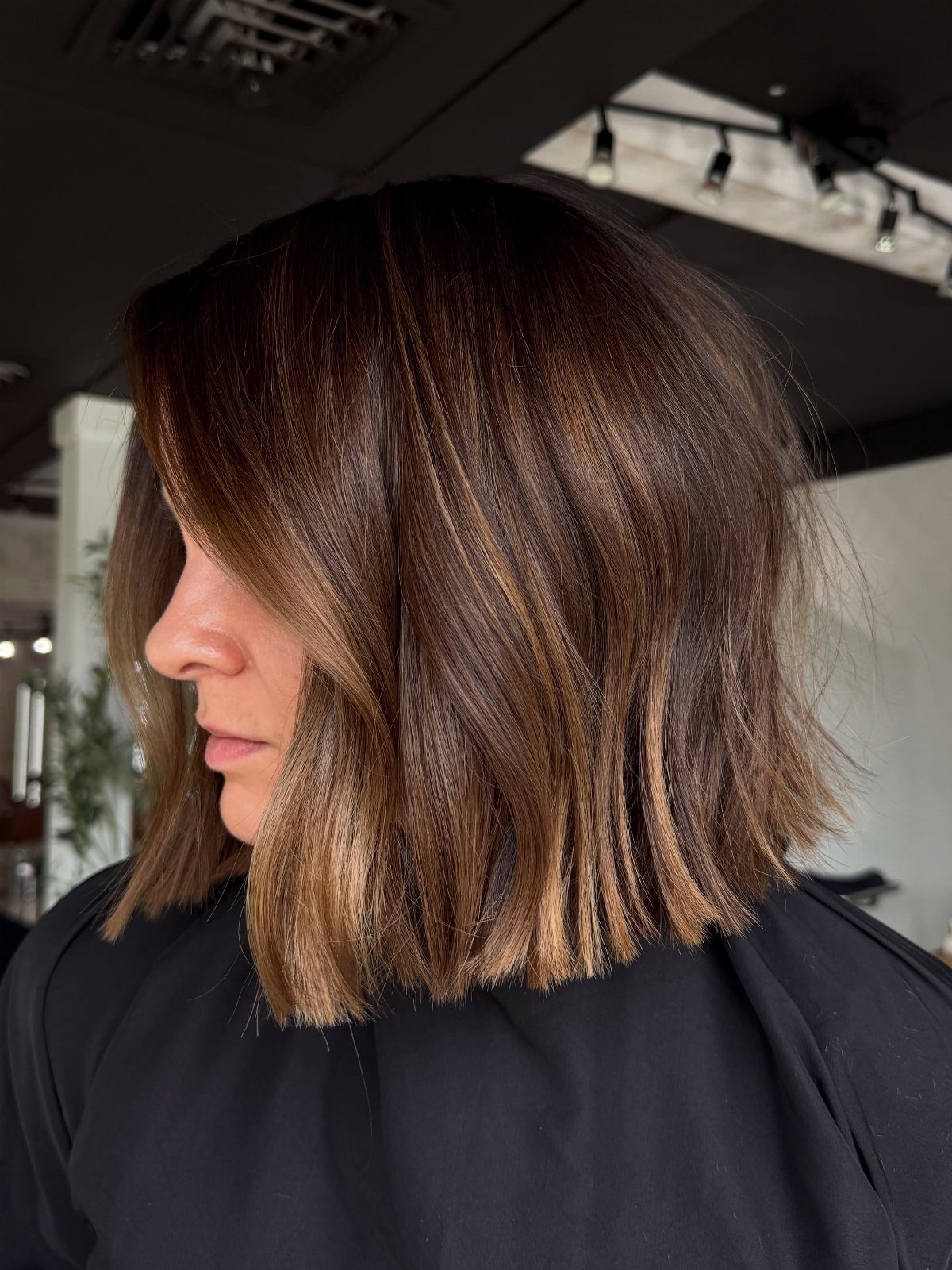
On a shoulder-length bob, partial highlights put caramel only in selected sections, and the rest of the brown stays untouched. That keeps the color focused and means less of your hair goes through lightening.
Ask for caramel-blonde pieces placed where you want the eye to land, and point to those spots in a photo.
Short hair has little room to hide a poorly placed section, so I would settle placement before any color goes on.
28. Wavy Caramel Strands
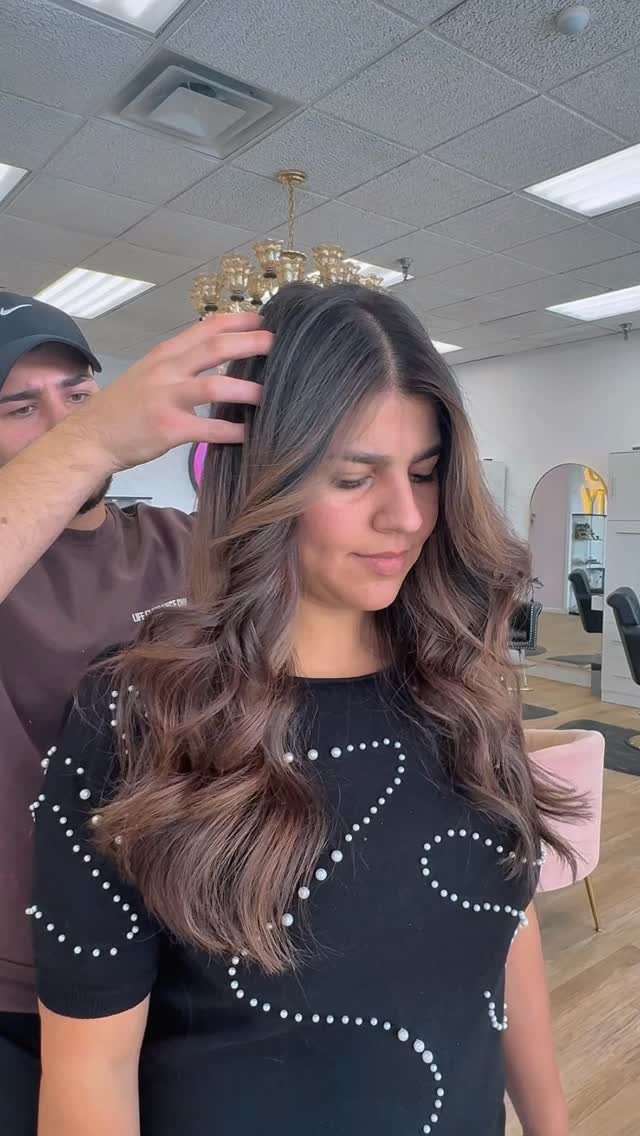
Subtle warm strands in long, wavy brown hair add just enough glow that the waves look deeper, not busier. The brown does most of the work.
Tell your stylist you want just a few caramel strands woven through the lengths, with the base color left exactly where it is.
I like this for anyone who wants a first step into caramel before committing to a full balayage. Spray a heat protectant on before the curling iron touches the hair; lightened strands dry out faster than virgin ones.
29. Copper Caramel Ombre
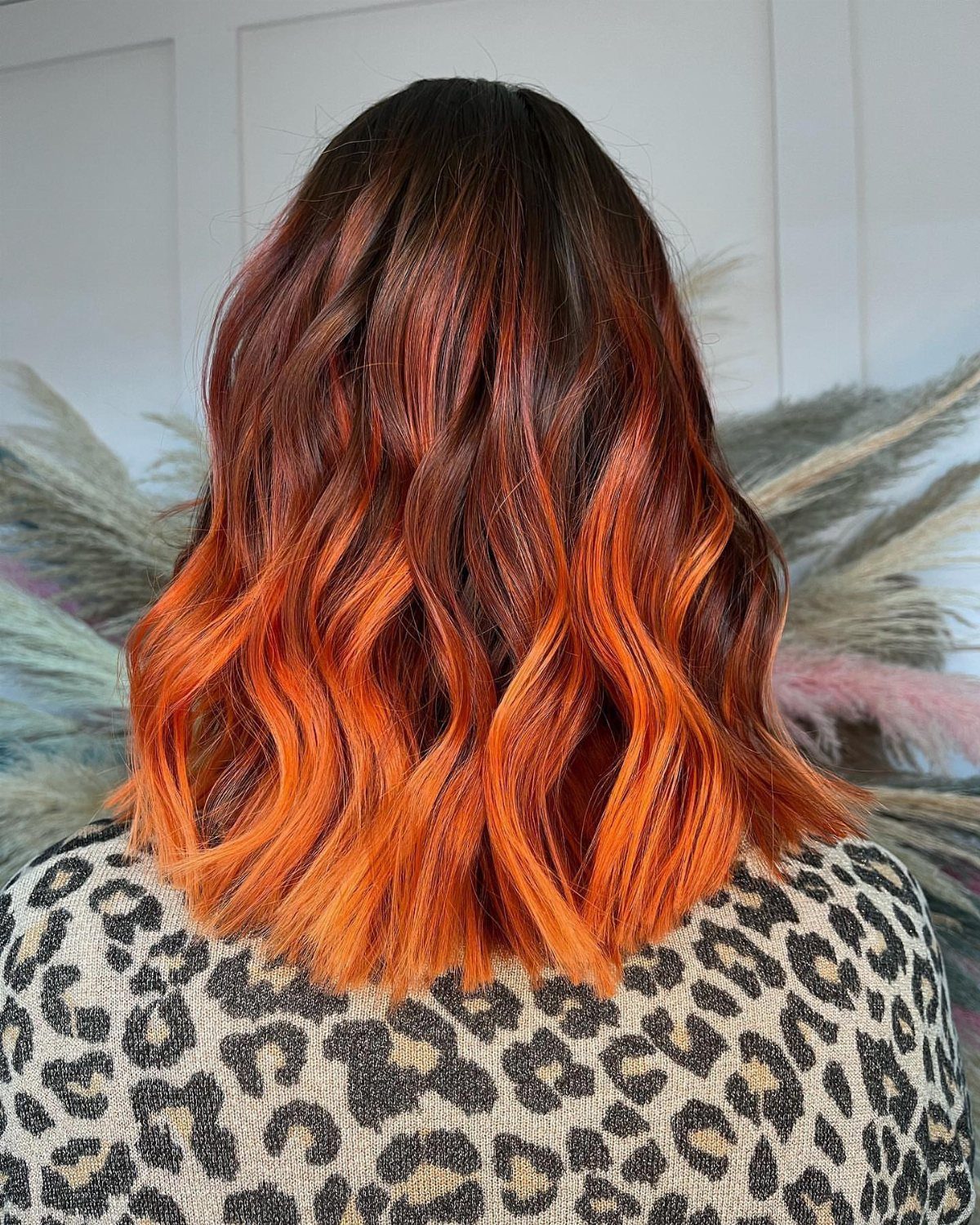
Dark brown roots that melt into vivid copper-orange ends make this the loudest idea in the caramel family. On shoulder-length waves, the shift from deep to bright happens over a short distance, so it reads as a statement.
Ask for a copper ombre and bring a photo, because orange this vivid can go brassy fast.
I would choose it only if you enjoy being noticed. Copper is the first shade to fade, so a color-safe shampoo is worth buying to keep it bright between salon visits.
30. Caramel Curtain Bangs
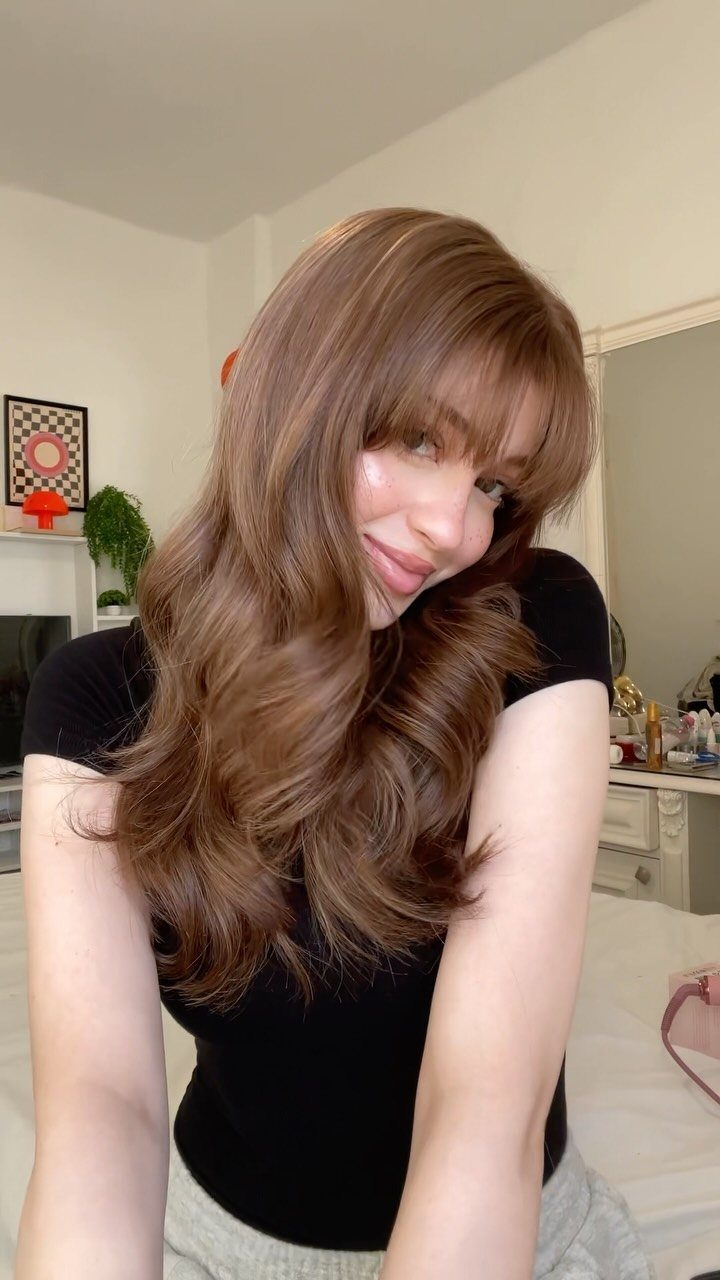
Curtain bangs part in the center and sweep to each side, which frames the face and lets caramel-brown waves fall around them. The longer hair keeps its volume, and the bangs add a soft line at the cheekbones.
Ask your stylist for curtain bangs cut into long, wavy hair, and have them cut while the hair is dry so you can see how the waves sit.
I’d keep the caramel running through the bangs so they match the length.
Choosing Caramel for Your Coloring
Caramel is flexible enough that almost anyone can wear it, as long as the shade is matched to you.
With a cool undertone, you can still have it.
If you can’t tell which side you fall on, a rough test is whether gold or silver jewelry flatters you more. Gold usually points warm, silver cool.
Let your colorist make the final call on the shade and finish. Many caramel shades exist, and picking the right one is their job.
Color Care and Salon Upkeep
Switch to a shampoo and conditioner made for color-treated hair as soon as you leave the salon. L’Oréal Professionnel Vitamino Resveratrol Color Radiance is one example; it contains the antioxidant resveratrol.
Warm caramel can slide toward orange between appointments. Brass Off from Matrix Total Results is a toning system that leaves a little blue-violet pigment behind with every wash, and that pigment neutralizes the orange and yellow creeping into your caramel.
Plan a touch-up or gloss every 6–8 weeks. Between visits, cut back on heat styling, since hot tools dull the color faster.
Lightening and Hair Protection
Starting from dark hair, expect more than one bleach session before you reach caramel. Bleach always causes some damage, even in careful hands, so the aftercare matters as much as the appointment.
Redken’s Acidic Bonding Concentrate is one example of a bond-repair treatment: it works inside the strand to rebuild the bonds that color and lightening break down.
Heat protection needs to be a habit. A few drops of a shine serum that doubles as a heat protectant, like Wella’s Ultimate Smooth Miracle Oil Serum, shields strands before blow-drying, flat ironing or curling.
It also guards against fade and brassiness, which matters most with warm shades.
Book a patch test with your stylist 48 hours before every coloring appointment, since a reaction can show up even if your last visit went fine.
Frequently Asked Questions
What color is caramel hair color?
Picture a warm brown with honey and amber running through it: lighter than chestnut, deeper than most blondes, and right in the middle of the two.
It runs from light and beachy to deep, rich brown, so whether it reads as blonde or brown depends on the base and how light the pieces go.
Honey caramel sits at the light end, closer to warm amber, while dark caramel brown keeps a rich brown base with only warm dimension on top.
Does caramel hair make you look younger?
It can. The warm tone softens harsher facial features, and the right technique makes hair look fuller and airier.
I’d start with fine caramel streaks or a dark caramel brown if you’re unsure, since both warm up the hair without a big jump in lightness.
How do I maintain caramel brown hair?
Upkeep comes down to 3 habits: a sulfate-free shampoo and conditioner, a tinted mask every couple of weeks to keep the warmth from fading, and a heat protectant before the flat iron or curling wand touches a strand.
Warm caramel can drift toward orange and brassy between salon visits, and a toning shampoo with blue-violet pigment counters that. Lightened hair dries out faster than untouched hair, so curly or heavily lifted hair also benefits from a deep conditioner.