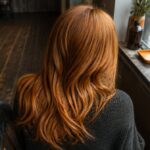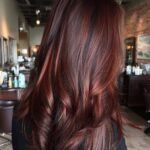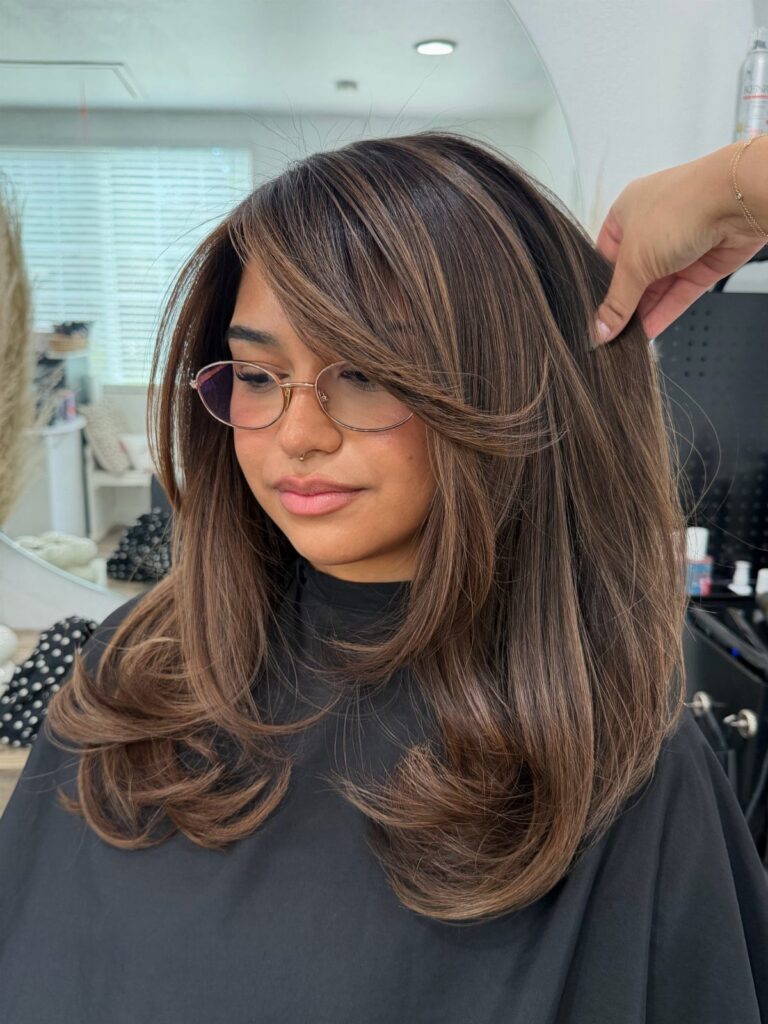
The looks below cover mocha and amber layers, caramel and golden balayage, candlelit highlights, copper tones, chocolate bobs and midnight roots with lighter ends.
Medium to deep skin tones carry the warmth in most of these, and fair complexions get their own auburn copper route.
1. Mocha Waves with Illumination
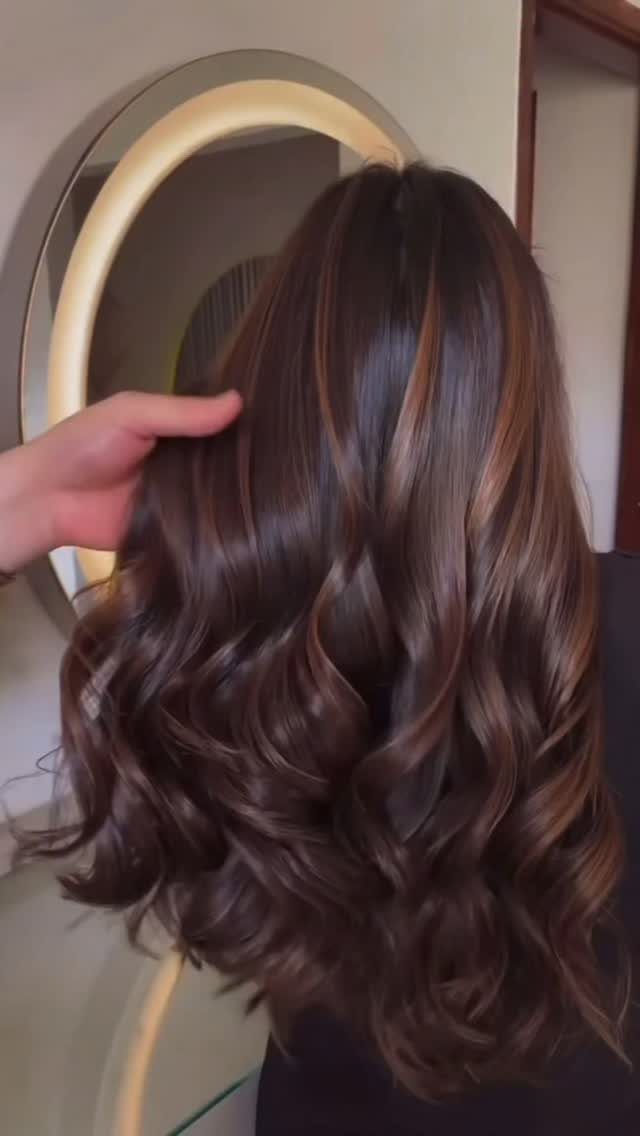
Deep mocha only gets this dimension from the lighter brown pieces running through it. Ask your stylist for a mocha base with lighter brown pieces blended in, not a stripe of contrast.
Waves make the most of it, since each bend catches the lighter strands and then loses them again. I would leave the length long and loose and let the curl do the work.
2. Candlelit Face-Framing Pieces
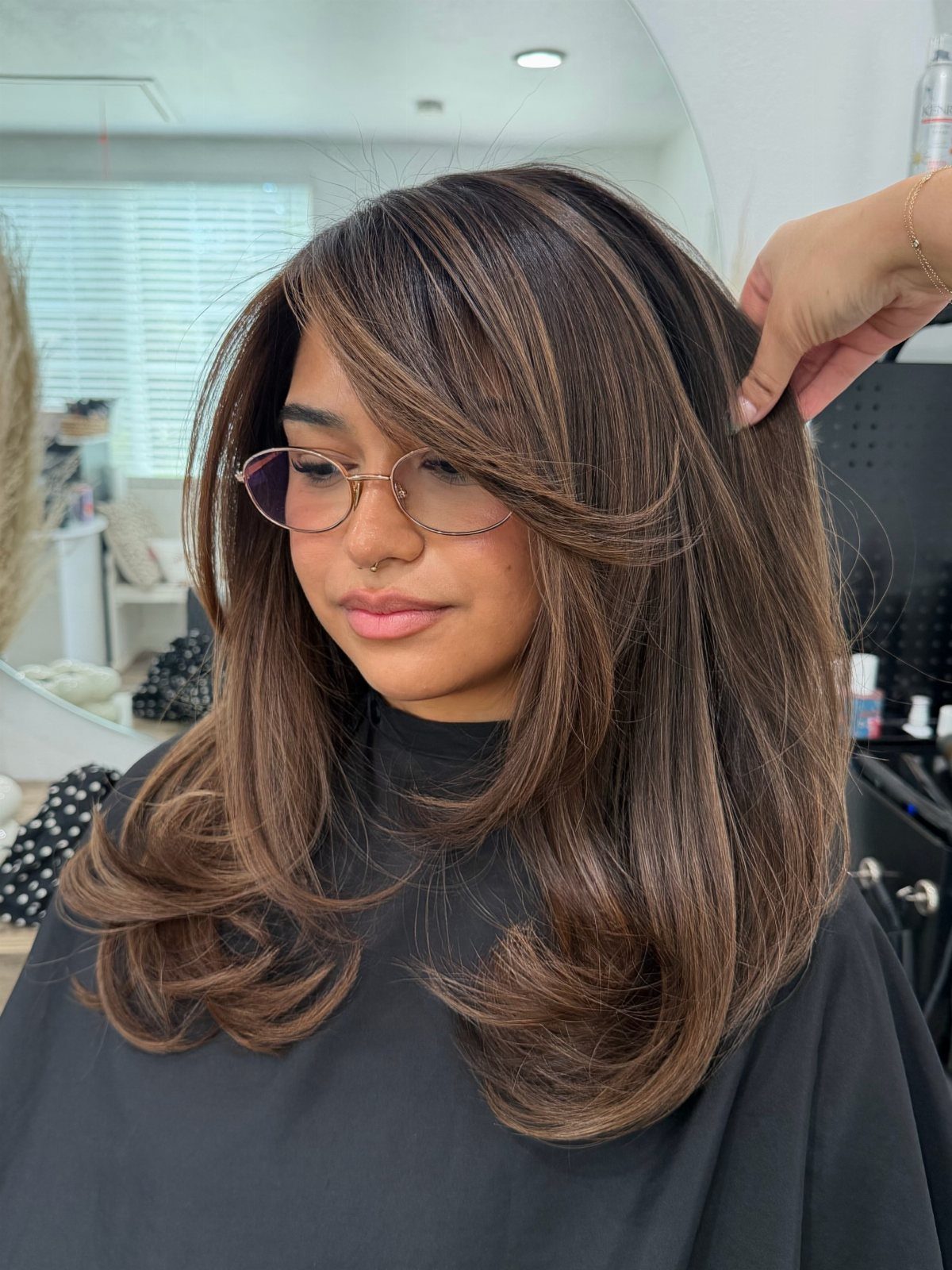
Lighter pieces placed only around the face are the smallest way to try a new brightness on chestnut. The rest of the hair stays its richer brown, so the color experiment stays contained.
Book it as face-framing highlights on chestnut layers, and say "soft" so the pieces stay subtle instead of chunky. Layers give those front strands somewhere to fall, which is why I like them together.
3. Red Cocoa Bob
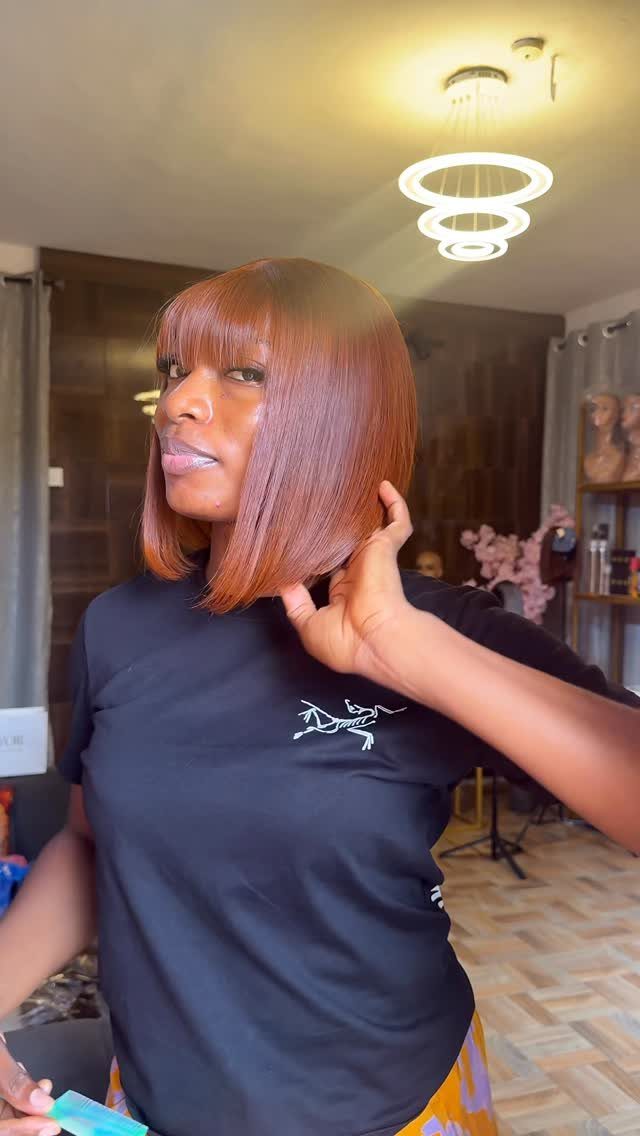
Red cocoa is a brown that leans red, and a sleek finish shows that lean better than any texture would. Pair it with an elongated bob and blunt bangs, and the color becomes the first thing anyone sees.
Name all three when you book: red-brown color, elongated bob, blunt bangs. Think about the bangs before the color, because they change how you style your face every morning.
4. Caramel Balayage Mane
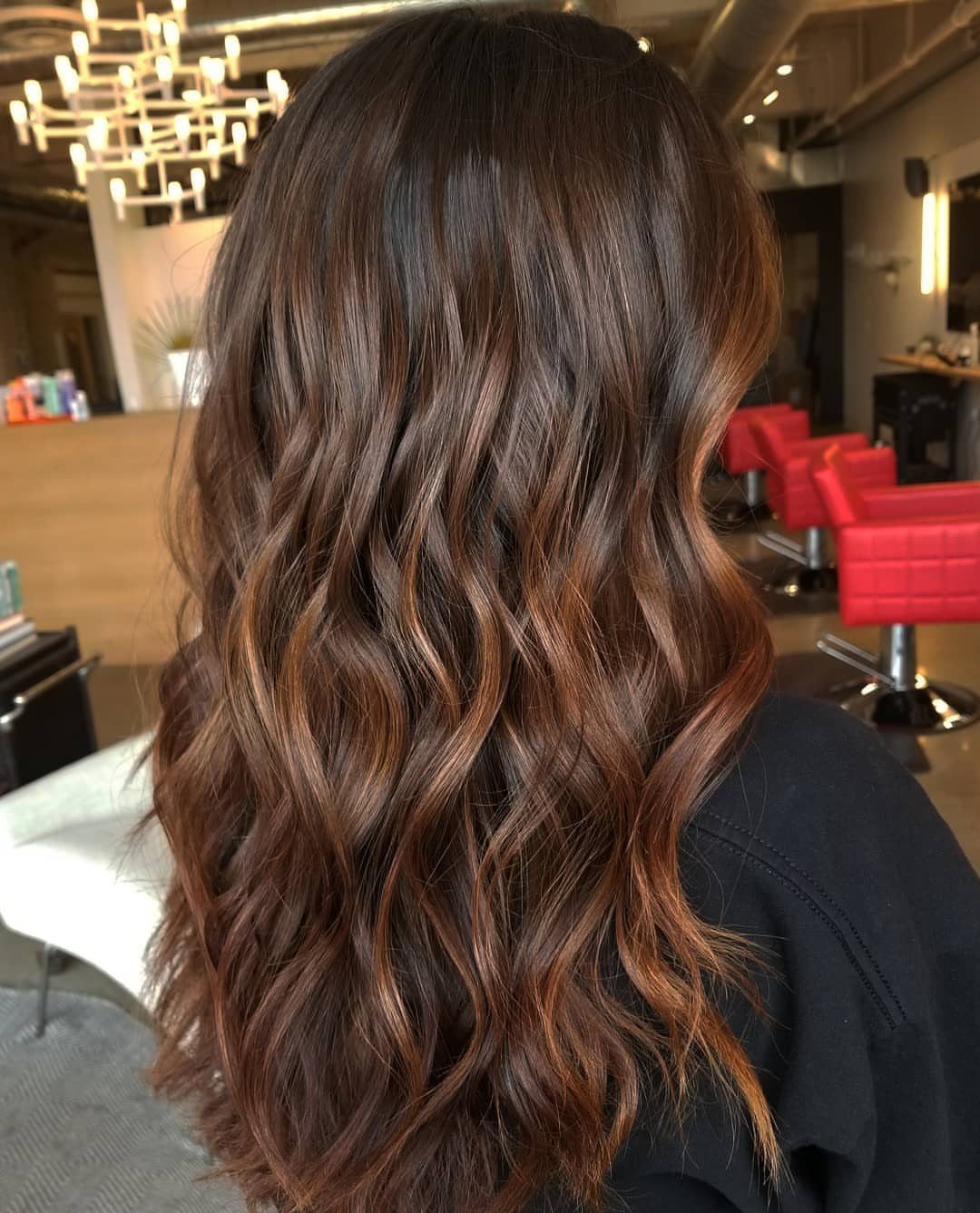
Length is what this look is built on. Hand-painted caramel balayage runs through long chestnut waves and gives a lot of hair some depth and movement.
Ask for caramel balayage on a chestnut brown base, and keep the tone warm so it sits close to the brown instead of fighting it.
I would wear it in loose waves, since waves spread the caramel across the whole length.
5. Brunette with Honey Pieces
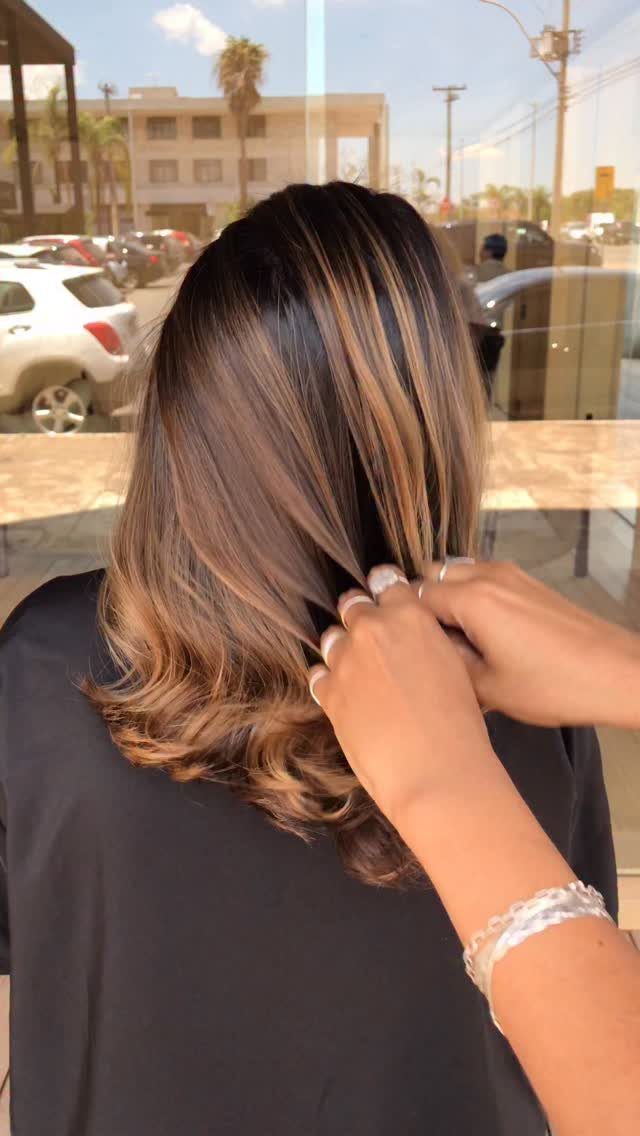
Honey is the word to use if you want brighter brown without going blonde. The pieces sit on a neutral brunette base and lift it a little at a time.
Medium length works well for this. Curling just the ends adds movement that shows off where the honey sits, since each loose bend turns the lighter pieces toward the light instead of hiding them against the base.
Show your stylist the shade you want and ask for pieces, not an all-over lightening.
6. Sun-Kissed Brunette Shag
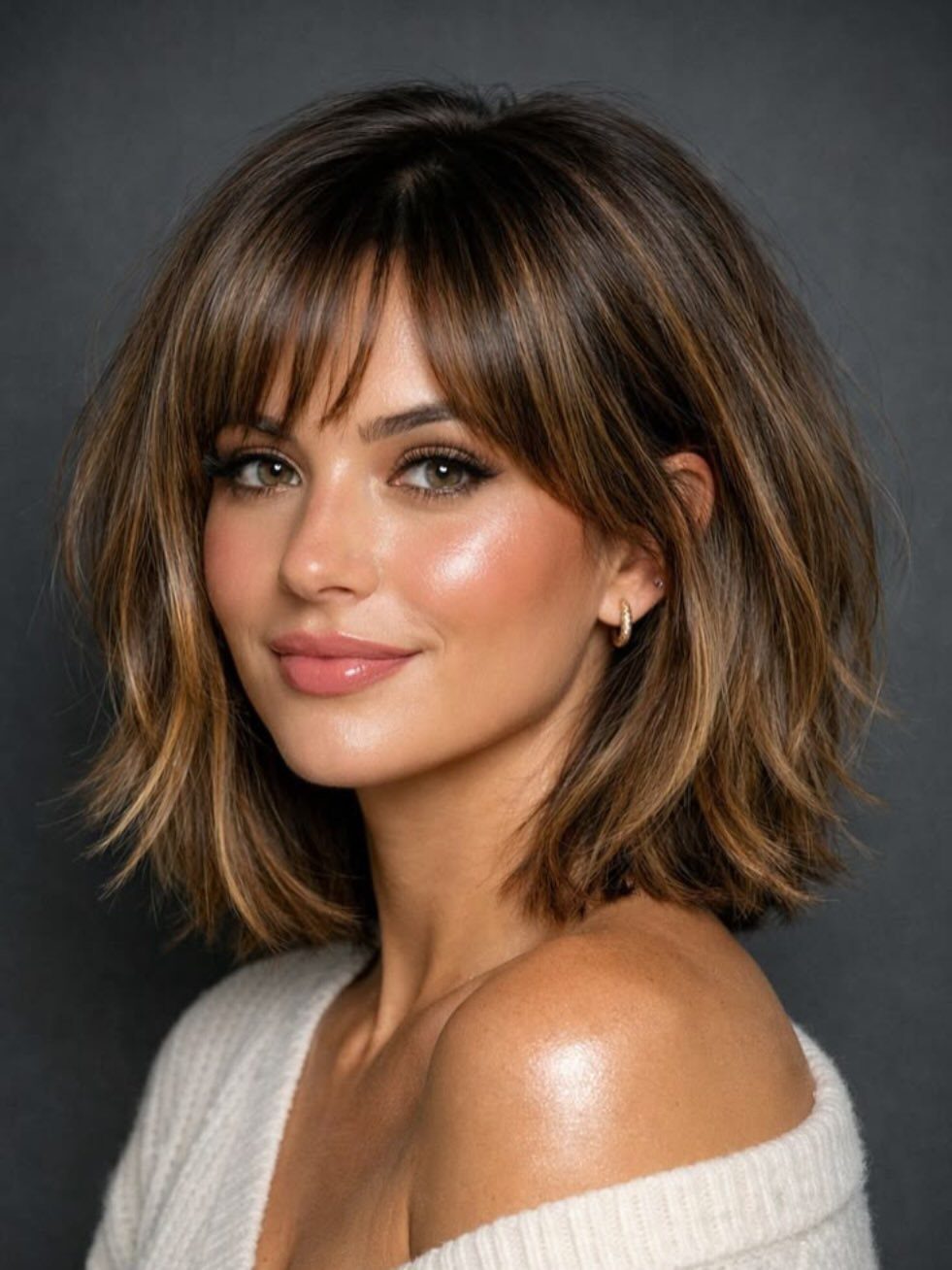
Choppy layers do half the work in a shag, and the highlights do the other half. Warm pieces on chestnut brown pick out the cut’s ragged edges so the texture shows from across a room.
Soft bangs finish it.
Bring a photo and ask for a shag with soft bangs and warm, sun-kissed highlights. I would keep the highlights to a few pieces, because the layers already add plenty of interest.
7. Modern Refined Streaks
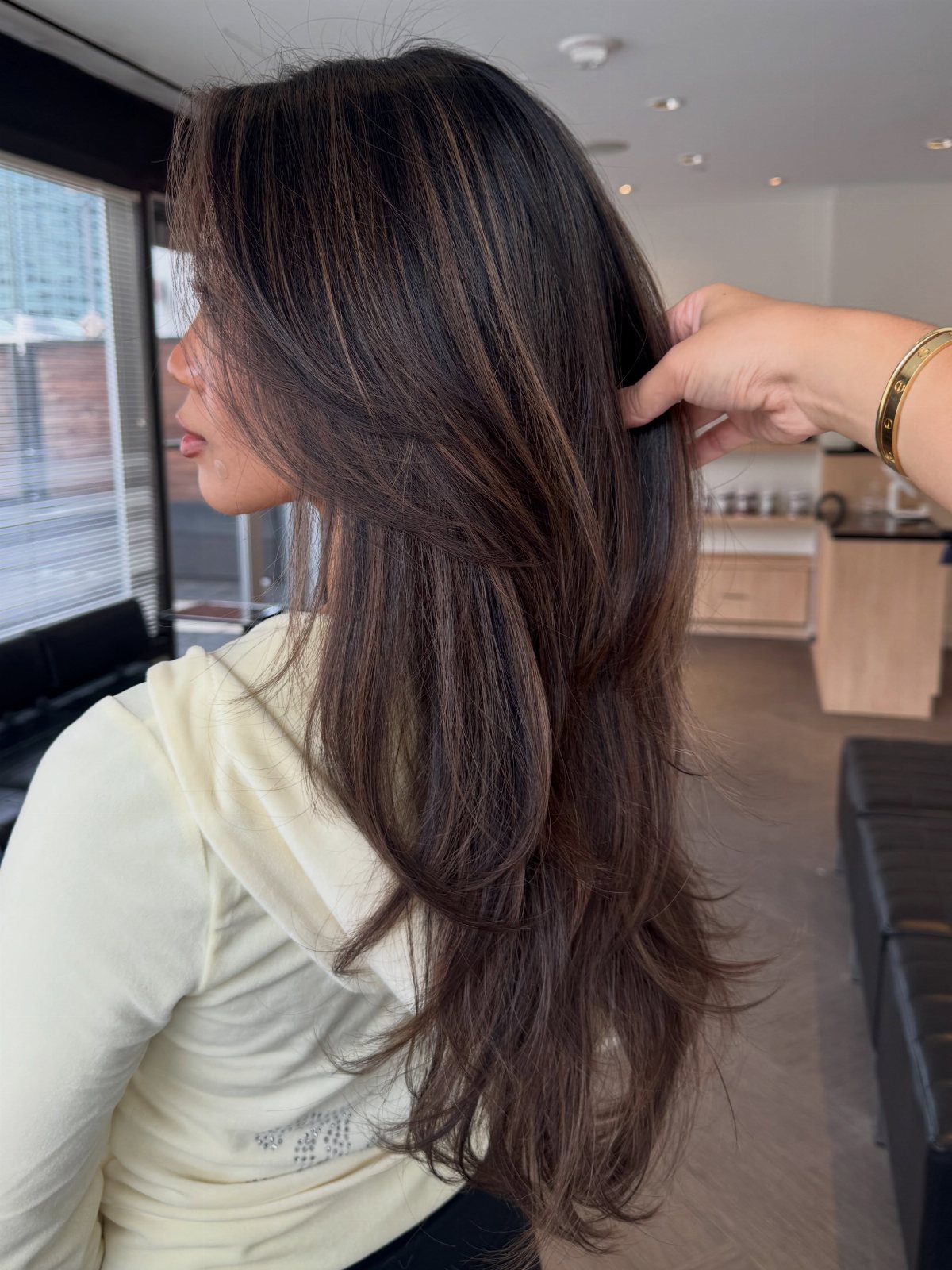
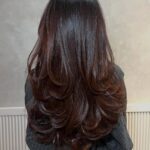
Fine streaks can read as dimension rather than stripes, and dark hair shows that best. On long, layered chestnut, a few lighter pieces catch the light along the length while the base stays rich.
Ask for subtle, refined streaks and say you want them blended, not high-contrast. Layers help, since they let the lighter strands separate and fall in different places.
8. Candlelit Red Balayage Highlights
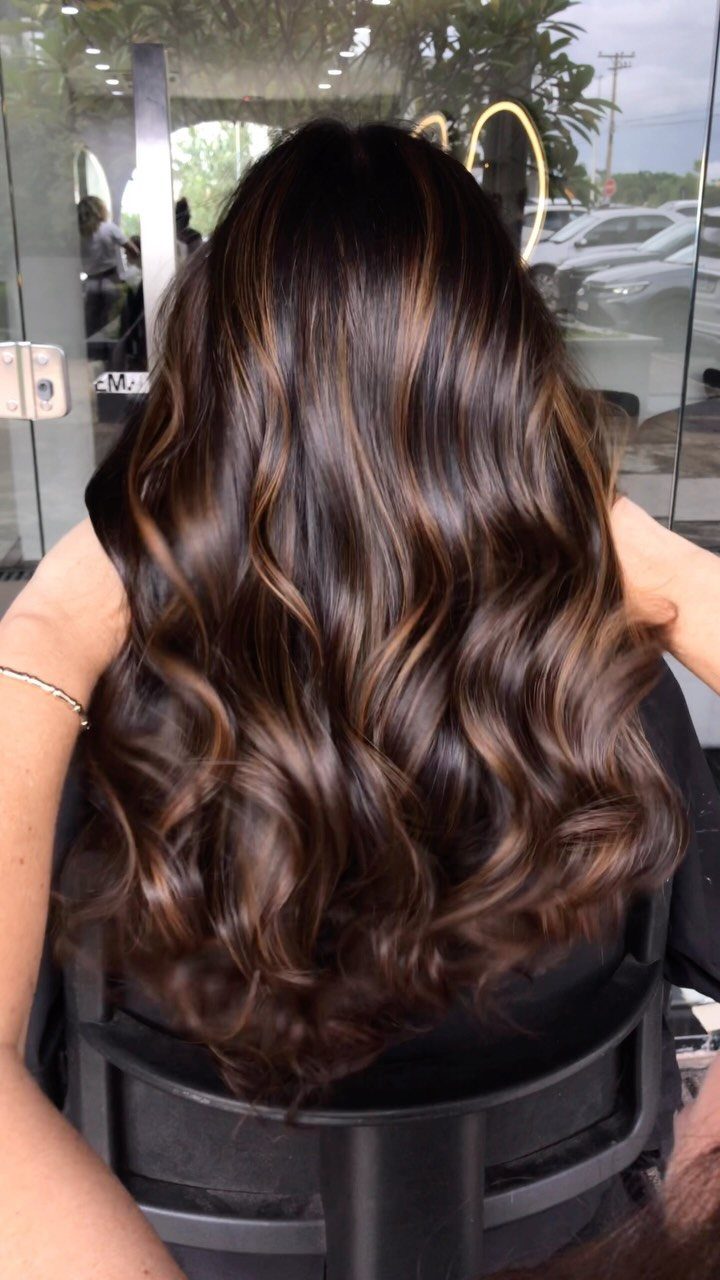
Red shows up as sparkle here, not as a flood of color. Higher-contrast balayage on wavy chestnut gives you warm red flashes that move whenever the hair does.
More frequent highlights are what create that movement, so ask for red balayage with plenty of placement through the length.
Wavy texture keeps the contrast from looking flat. I would choose this over an all-over red if you want to keep your chestnut base.
9. Amber Chestnut Layers
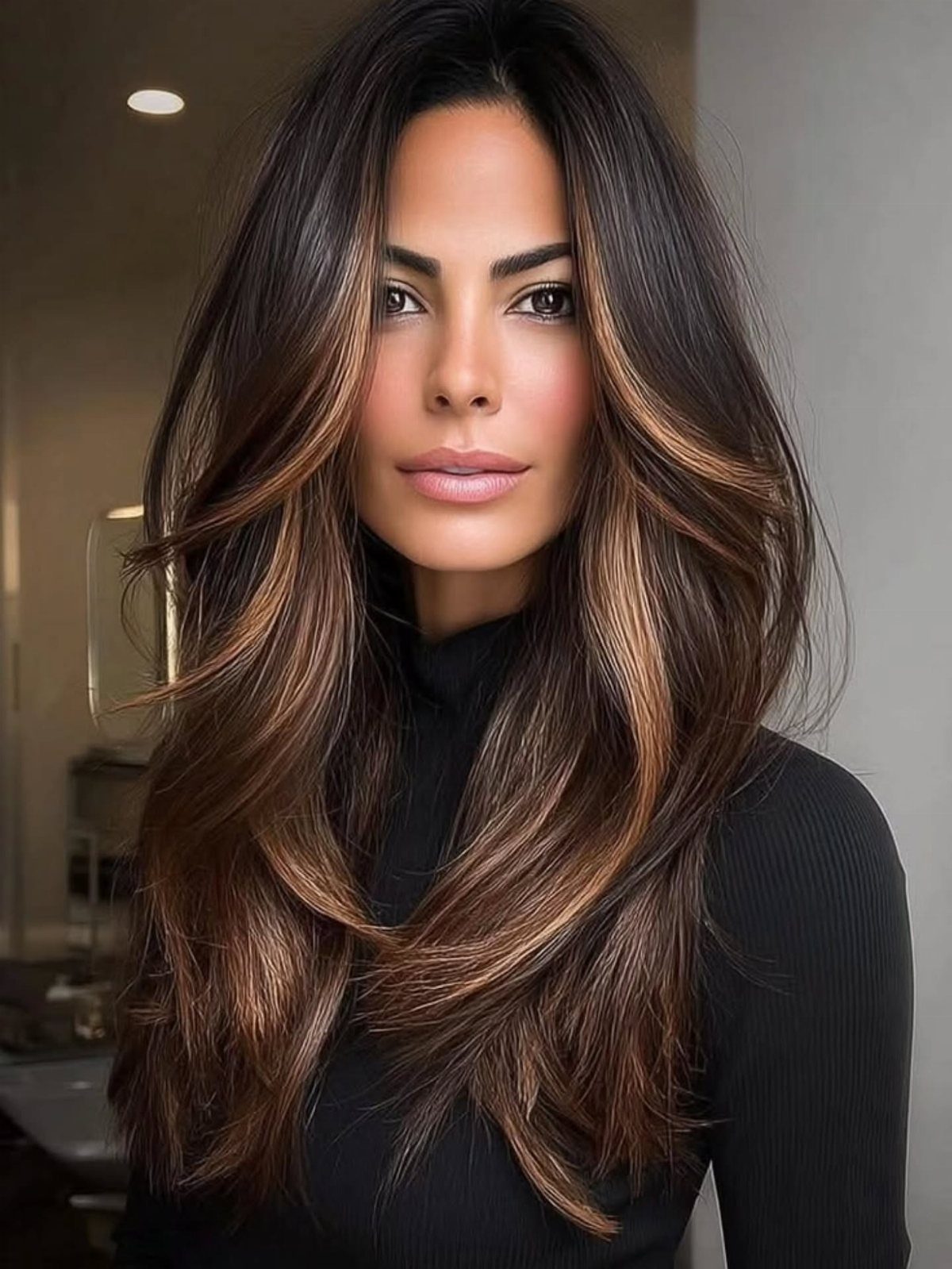
Mahogany and cinnamon make up the base, and chestnut highlights plus golden babylights lift it. Because babylights are so fine, the brightness builds gradually without a visible line.
Ask for a mahogany-cinnamon base, then chestnut highlights, then golden babylights on top, and your stylist will know exactly what you mean.
Long layers frame the face and give those lighter strands room to show. Keep the gold fine and sparse if you want the warmth to read as depth.
10. Umber Chestnut Caramel
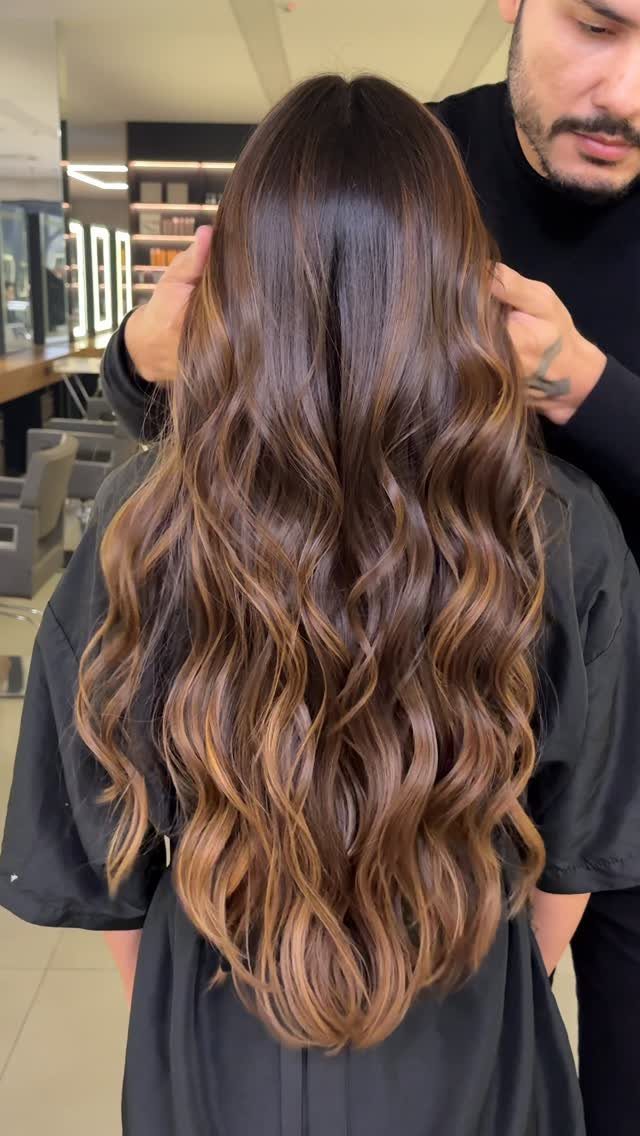
Umber roots are the anchor, and chestnut, gingerbread and caramel step down the length from there. Starting dark at the root makes the lighter shades look deeper instead of stark.
Ask for an umber root blended into chestnut, with gingerbread and caramel through the mids and ends.
Long waves spread the warm tones evenly. I like that the dark root keeps this from looking like a stripe of regrowth.
11. Deep Chocolate Chestnut
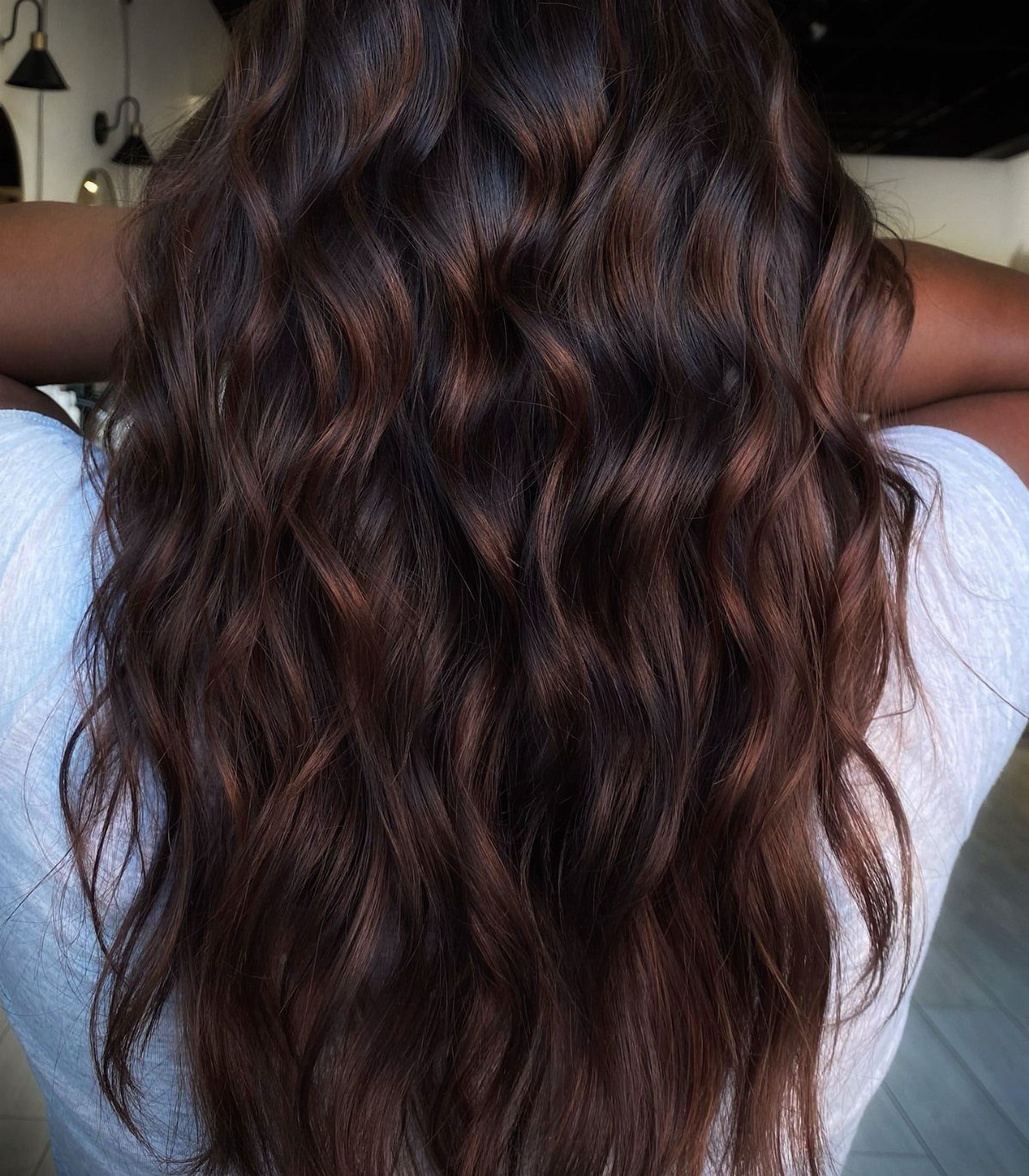
A near-black chocolate base is the starting point, and the color only appears in movement. Chestnut, mahogany and sangria balayage sit low-key inside it, so you see a flash of red-brown in the light and almost nothing indoors.
Ask for balayage in those 3 tones and keep the base dark.
Long waves show off the shifts best. This suits you if you want change without going noticeably lighter.
12. Golden Chestnut Balayage
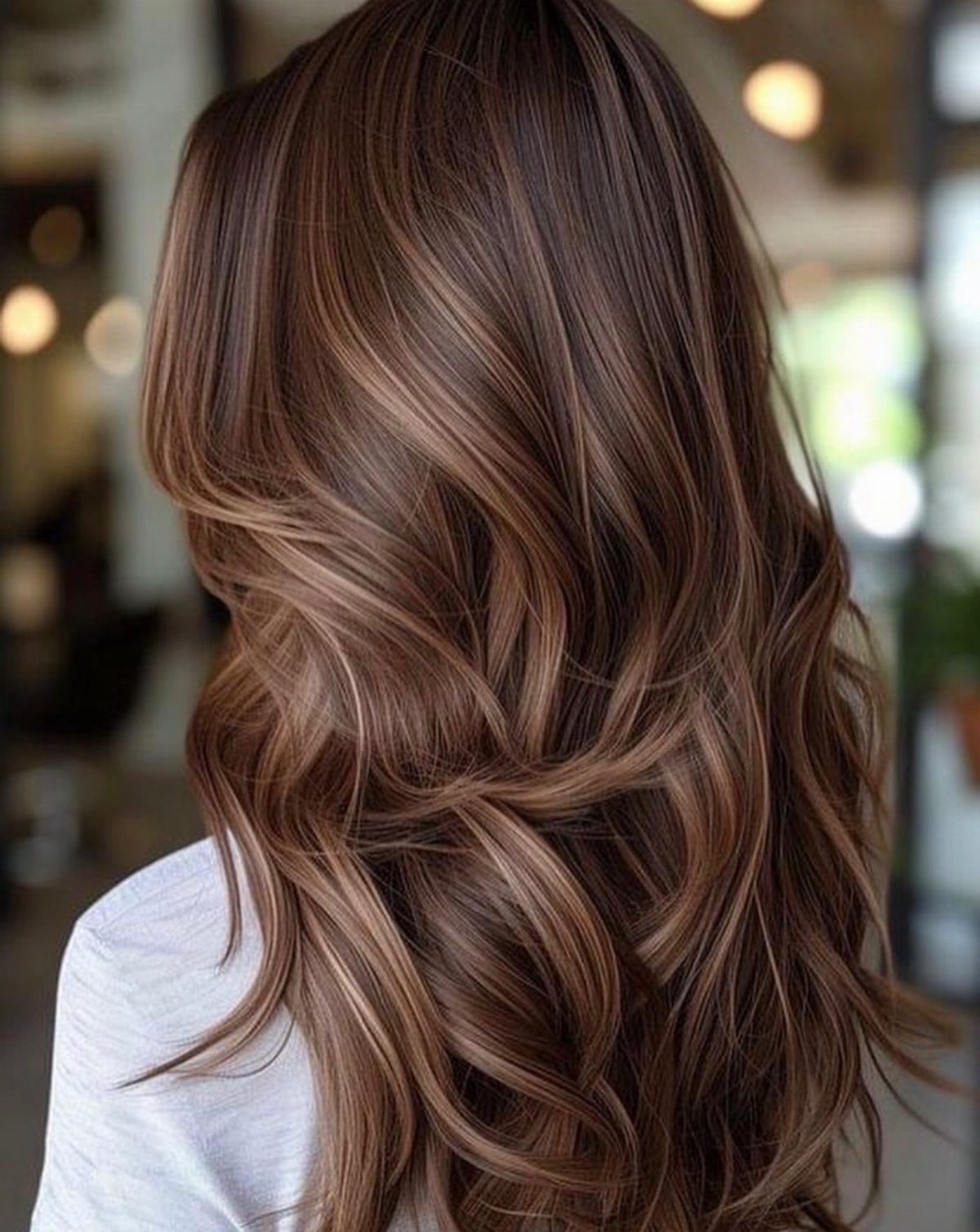
Light bronde balayage on chestnut gets its depth from the reddish chestnut lowlights set between the bright pieces. Without them, the lighter color can look flat.
Book bronde balayage with reddish chestnut lowlights, and keep the base warm so everything stays in the same family.
Wavy lengths scatter the contrast naturally. I would pick this over plain golden highlights if you want a brighter result that still looks like brown hair.
13. Chestnut-Toned Babylights
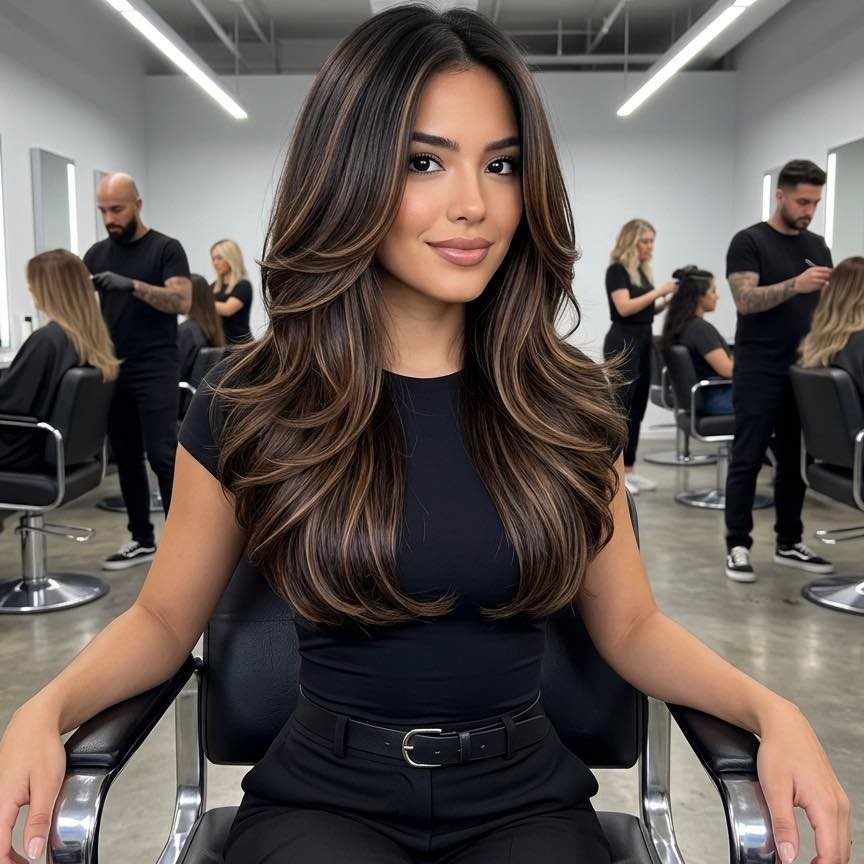
Babylights are fine enough that the highlights fade into the brown, so the hair reads as one even chestnut instead of a base with streaks on top. That makes them the quietest way to add dimension.
Ask for chestnut-toned babylights through long layers and say you want it to look like all-over chestnut, not highlighted. I would keep the tones close to the base, since closeness is what makes the color look natural.
14. Ginger Curly Balayage
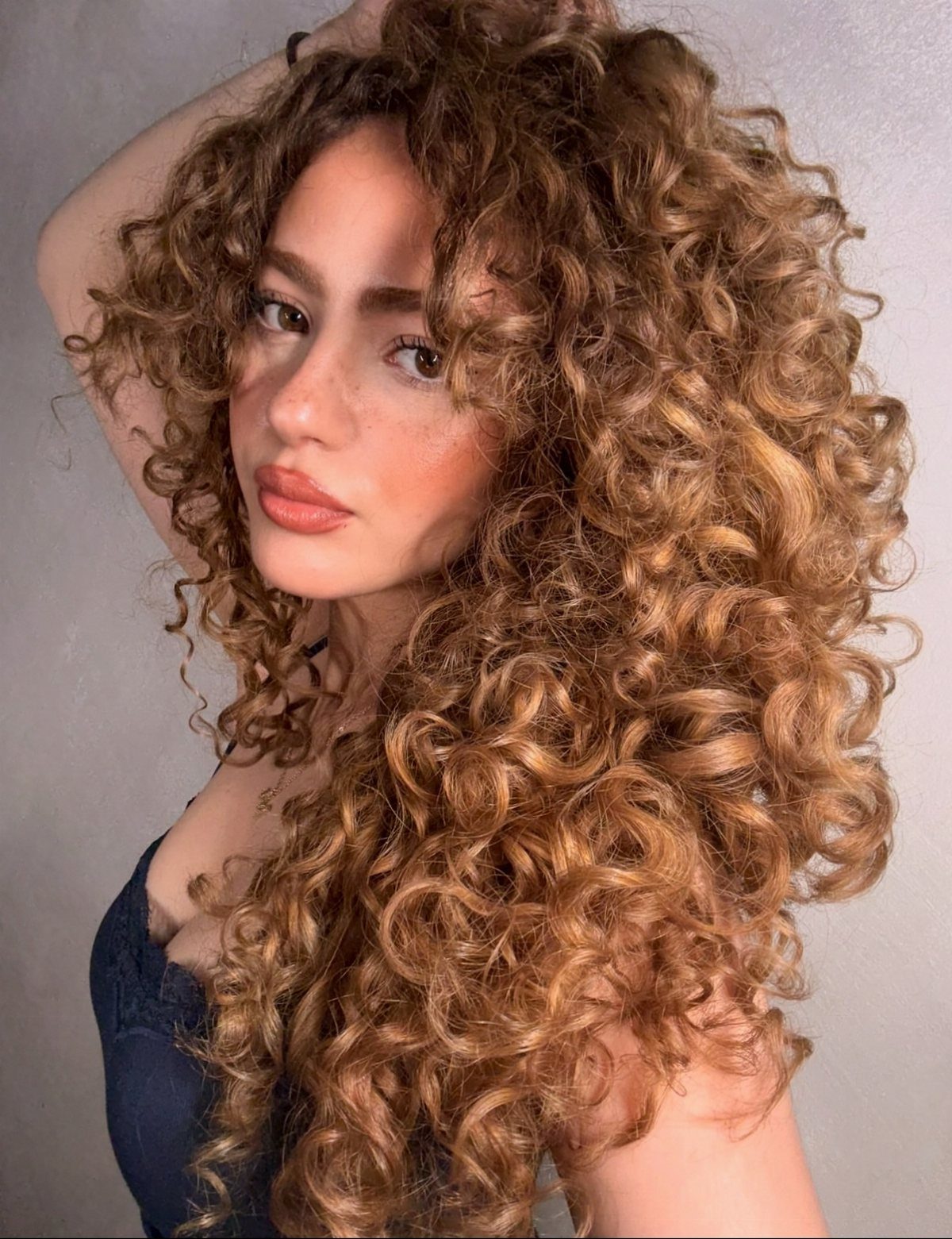
Curls give copper something straight hair can’t: every ringlet shows a different mix of ginger and brown. A warm, almost-copper balayage on chestnut stays soft this way, with the brighter tone gathering where the curls twist.
Ask for balayage painted on long curls, with the copper kept warm and close to the chestnut. I would have it done on dry, defined curls if your stylist offers that, so the placement follows your real pattern.
15. Midnight Roots with Highlights
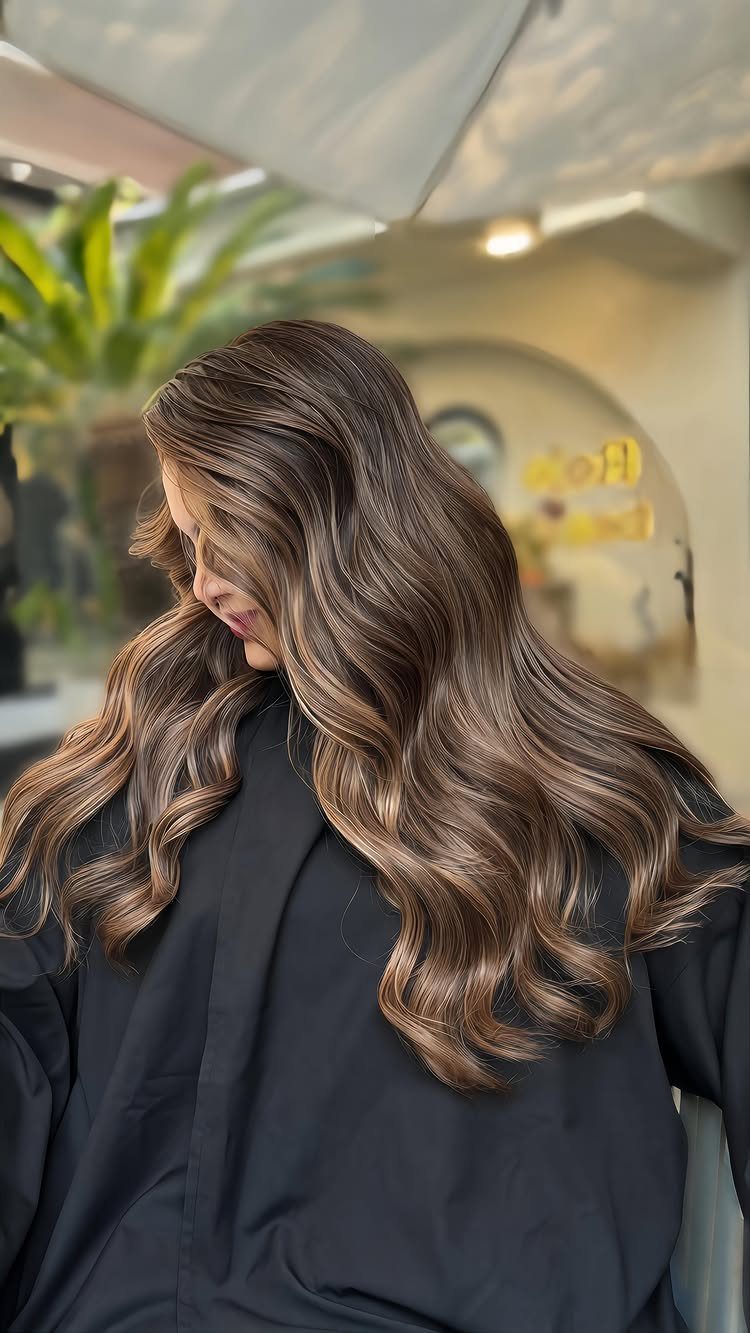
Black-brown roots set the frame, and chestnut balayage carries through the rest. The darker start keeps the lighter color looking deep instead of washed out.
Ask for dark black-brown roots blended into chestnut balayage, and say "throughout" so the color runs the full length.
Waves help the contrast move. I like this for anyone who wants highlights without a hard line at the part as the roots grow in.
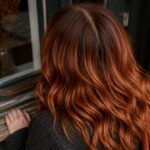
16. Chestnut Copper Balayage
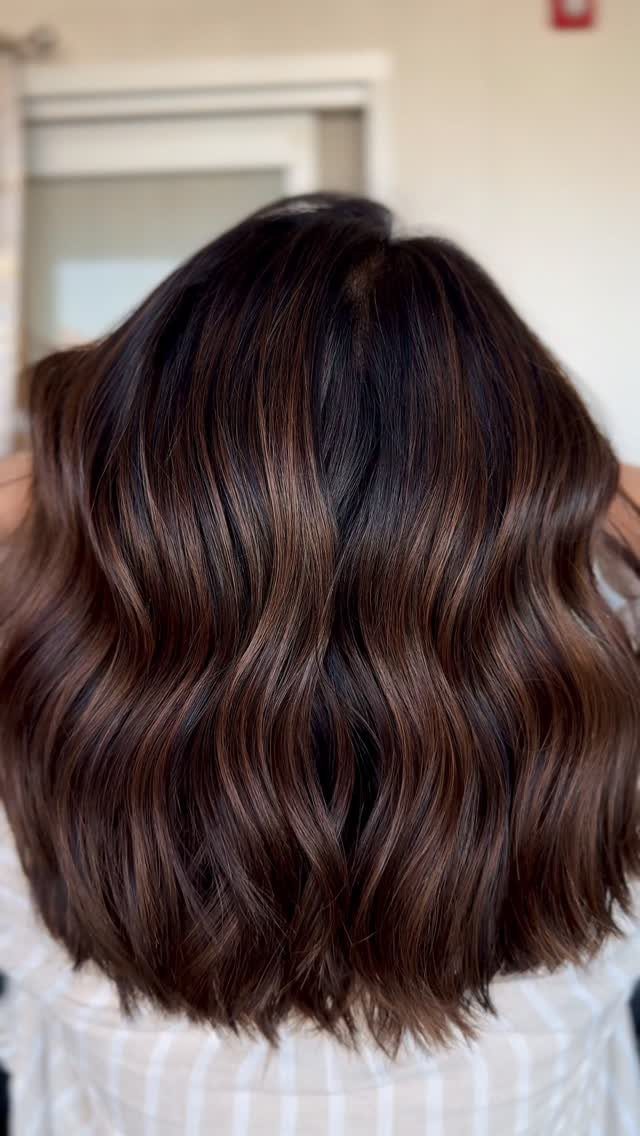
3 tones do the work here: dark roots, gingerbread and chestnut highlights through the middle, then copper-red balayage at the ends. The red saves itself for the finish, so the top stays brown.
Screenshot this one for your stylist and spell out the formula: a deep chestnut root, gingerbread through the mid-lengths, and hand-painted copper-red balayage melting into the ends.
Shoulder-length waves keep all 3 tones visible at once. If you want the red less loud, ask for it only on the last few inches.
17. Spiced Blonde Chestnut
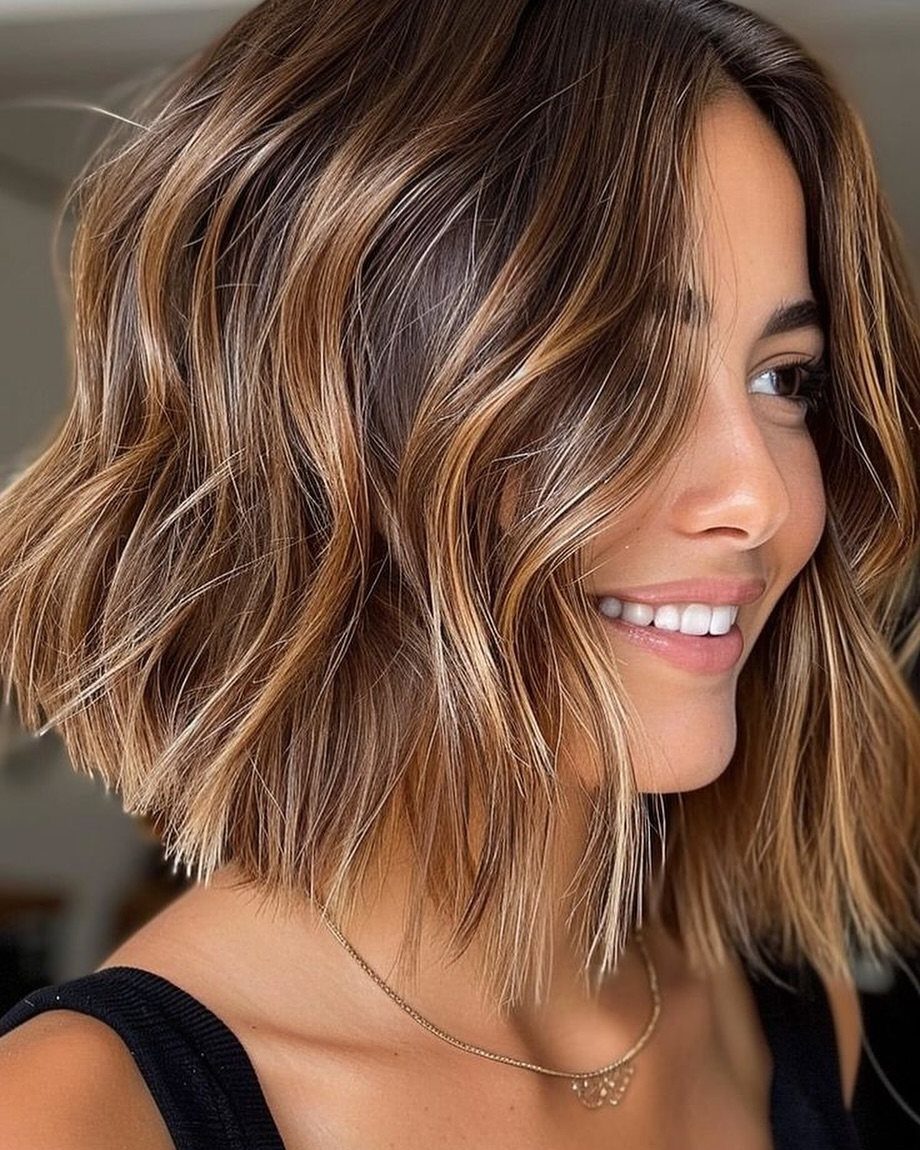
A chestnut bob can lean toward blonde without losing its brown base. Warm blonde pieces around the face and dark blonde balayage through the rest do the shifting.
Book layered chestnut with warm blonde face-framing highlights and dark blonde balayage, and say "dark" blonde so it stays close to the chestnut.
Wavy texture at shoulder length lets the blonde catch light. For anyone craving brighter hair without losing the brunette base, this spiced blonde-chestnut blend beats going full blonde, and it grows out far more gently.
18. Chocolate Bob Highlights
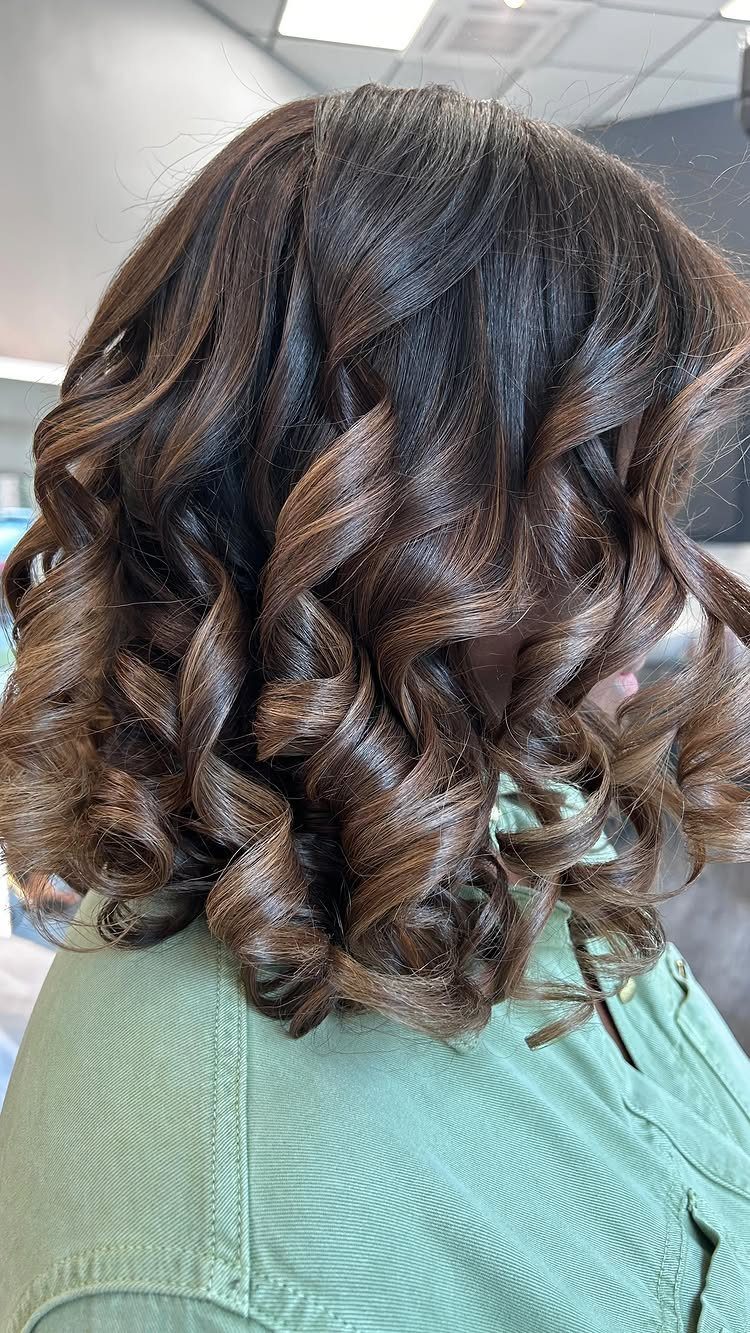
Copper babylights are what keep a chocolate bob from reading flat. They are fine enough to glow inside the brown without turning it orange.
Ask for a textured chocolate bob with copper babylights, and finish it in loose curls with some shine.
Texture in the cut helps the copper separate. I would keep the copper warm and sparse, so the chocolate stays the main color.
19. Subtle Golden Chestnut
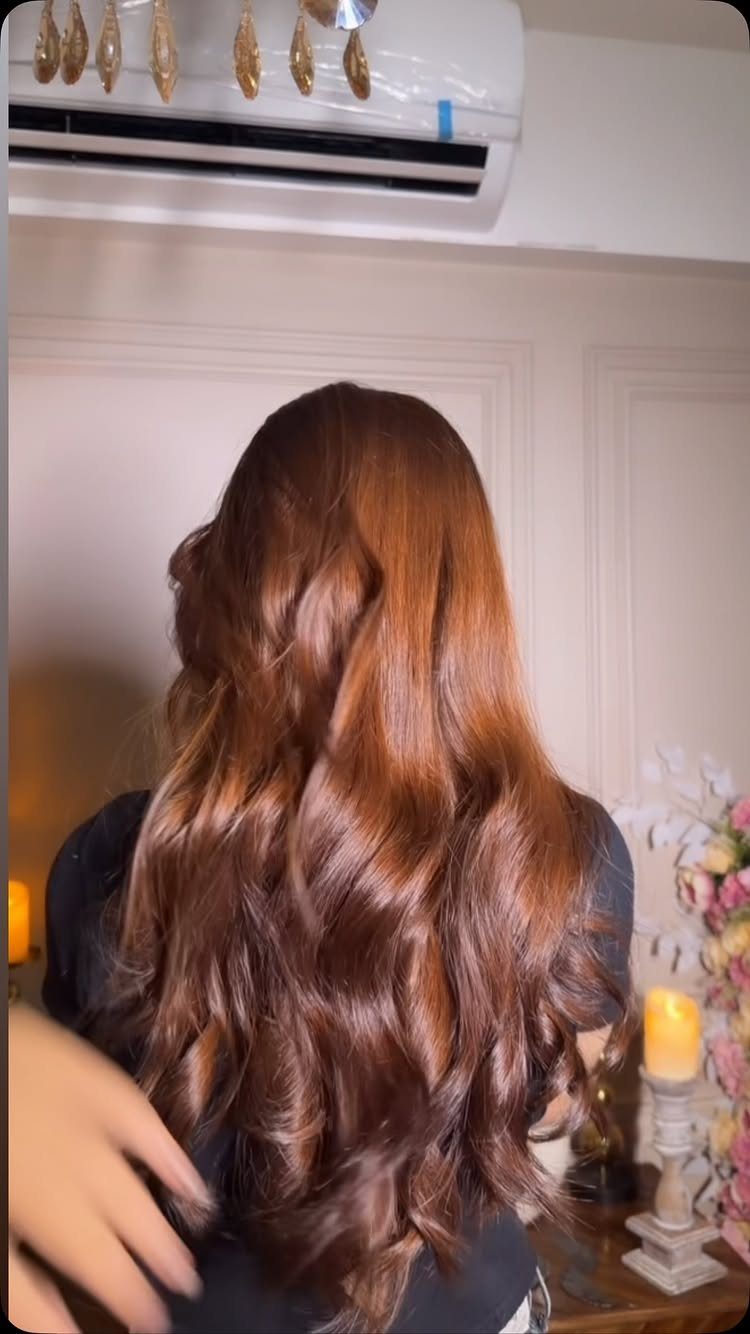
Gold this faint works because it reads as warmth in the chestnut, not as highlights. On a warm-toned brunette, a few very subtle golden pieces bring out the hues already in the hair.
Ask for very subtle golden highlights on chestnut and say "barely there" so the stylist keeps them close to your base.
Long, loose waves spread that glow along the length. I would stop at a few pieces, because more gold starts to look like a different color.
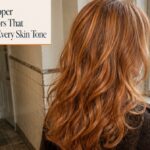
20. Fair-Skin Auburn Copper
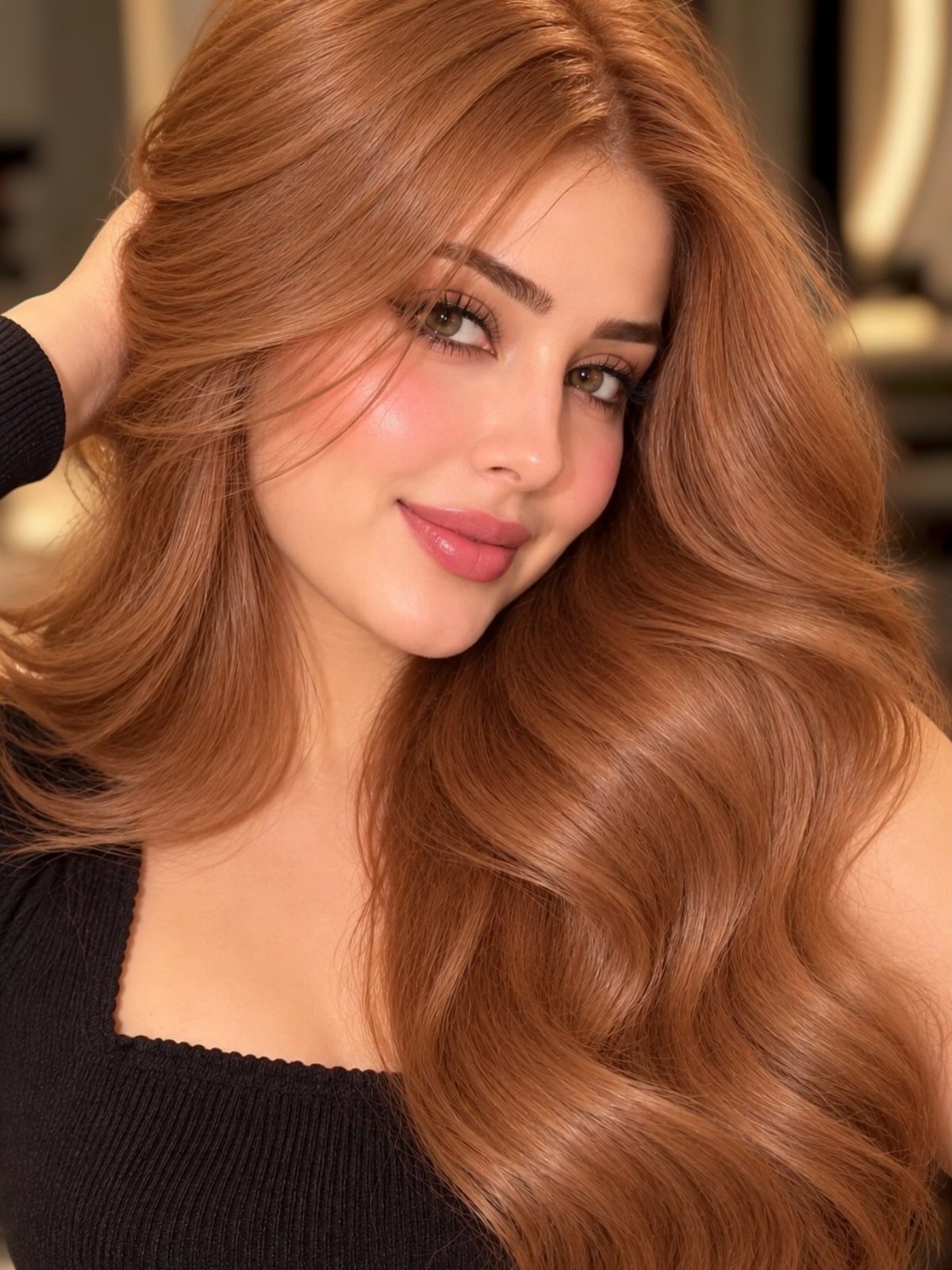
Copper-auburn is a palette built around fair complexions, and the waves keep it soft instead of flat. Long, loose movement lets the red and copper shift from strand to strand.
Bring a photo and ask for a copper-auburn shade, naming both tones so your stylist doesn’t settle on plain red. I like it left long with soft waves, since the length gives the color room to show.
Fair skin is the reason to choose this one. Pick it if you want a change that still suits your complexion.
Choosing Chestnut Tones
Chestnut is brown with red undertones, and that red can stay subtle or turn bright. Decide how loud you want it before you book, because that one choice changes how the color sits against your skin.
Warm undertones with a medium to dark complexion are the best match, since the warmth in the shade plays up the golden tones in warm skin.
If you can’t tell your undertone, check whether gold or silver jewelry flatters you more; gold points warm.
Chestnut still works across many skin tones, hair types, textures and lengths. If you fall outside that warm, medium-to-dark group, a colorist can tailor the shade to your features and complexion, and I would take that consult seriously.
Low-maintenance Color Choices
Upkeep comes down to how the color behaves at the root. A root smudge or shadow root is the request that makes regrowth look planned instead of overdue, since it blurs the line where new growth starts.
For the base, umber with chestnut hints or subtle chestnut undertones stays close to natural brown. Less contrast between your roots and the rest means less to correct as the hair grows.
Hickory roots under nearly-copper highlights add more color to the same approach, with lighter strands laid over a darker base so your natural glow still reads through.
I would choose this over a bright all-over shade if fewer appointments are the goal.
Chestnut already looks expensive without a heavy routine, so there’s no reason to chase a fussy formula.
Frequently Asked Questions
What is darker, brown or chestnut brown?
Neither is darker by default. Chestnut is brown with red undertones, and how deep it looks depends on the base and the highlights around it.
A near-black chocolate base with chestnut and mahogany balayage reads very dark, while chestnut with light bronde balayage lands much brighter.
What hair dye color is chestnut brown?
The red notes can read as a quiet warmth or flip into something unmistakably copper.
That level of red intensity changes which undertones flatter you, so pin it down first. A mahogany and cinnamon base is one way to describe a warm chestnut to your stylist.