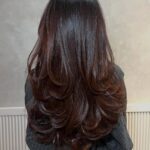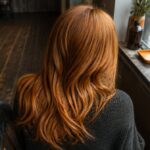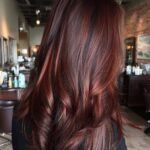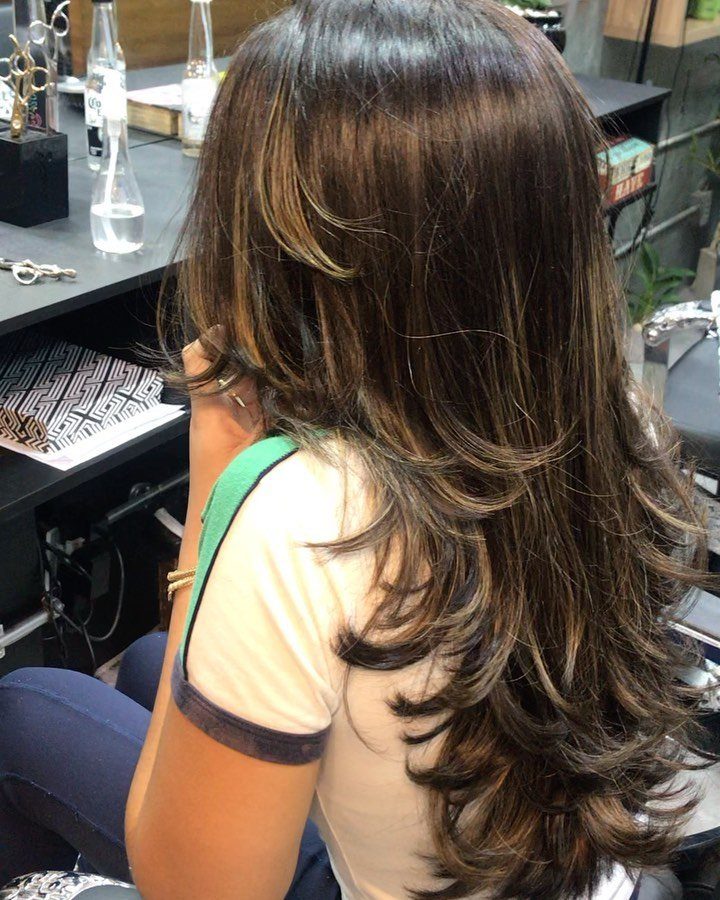
Long layers run from nearly invisible cuts that take out bulk and keep every inch of length, to choppy shag and wolf cuts with visible broken-up ends, and some add balayage or caramel highlights on top.
Curl pattern settles the choice more than anything else: identical layers sit differently on waves, coils and straight strands, and curly hair shrinks as it dries, so a cut that looks long when wet can end up an inch or two higher.
Expect the shortest layers to go soft and shapeless first, which is why a trim every 8–10 weeks keeps any of these cuts looking intentional.
1. Shaggy Layers
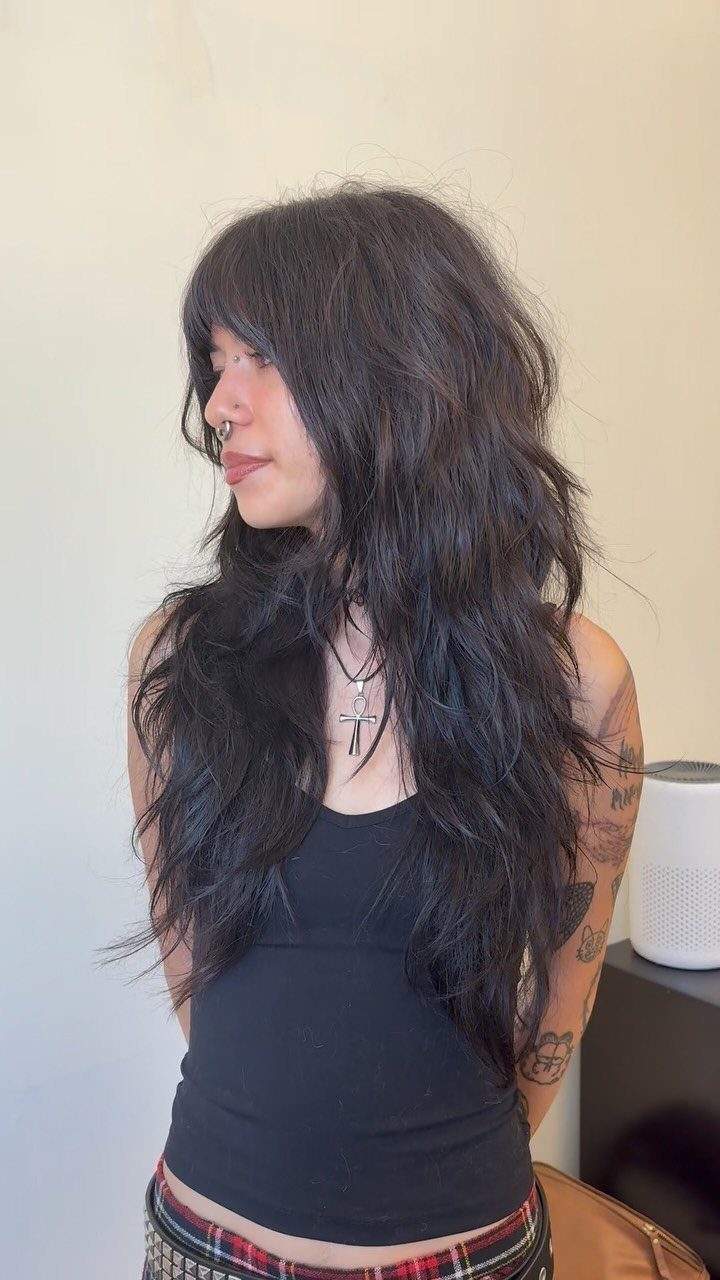
Choppy, broken-up ends are what make a shag read as a shag, and on long hair they give the length a lived-in, tousled outline instead of one heavy line.
Ask your stylist for visible texture through the ends and short, wispy pieces around the bangs.
Style it with a loose wave and finger-rake it rather than brushing. Brushing smooths out the very separation the cut is built on.
2. Face-Framing Layers
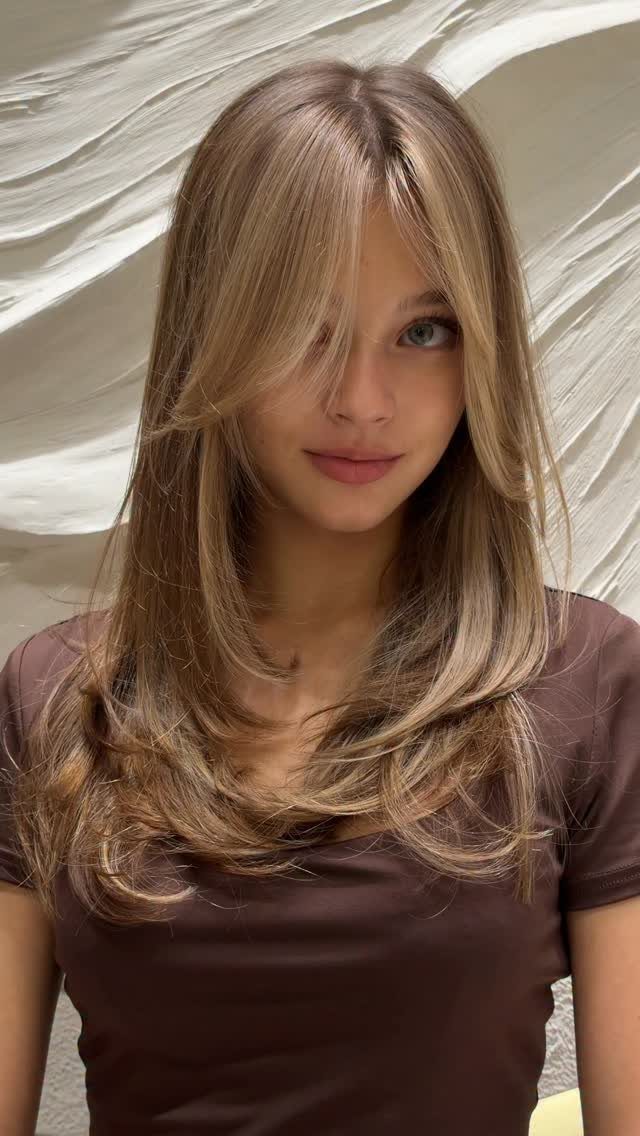
Shorter pieces at the front sweep down and melt into the longer lengths, which puts the attention on your cheekbones and jaw without costing you any length at the back.
That makes it an easy first step if you want layers but hate the idea of a big chop.
Curling the ends with an iron pulls those front pieces away from the face and gives them a soft, outward flip. The shortest piece decides what gets framed, so settle where it will land before the first snip.
3. Long Wavy Layers
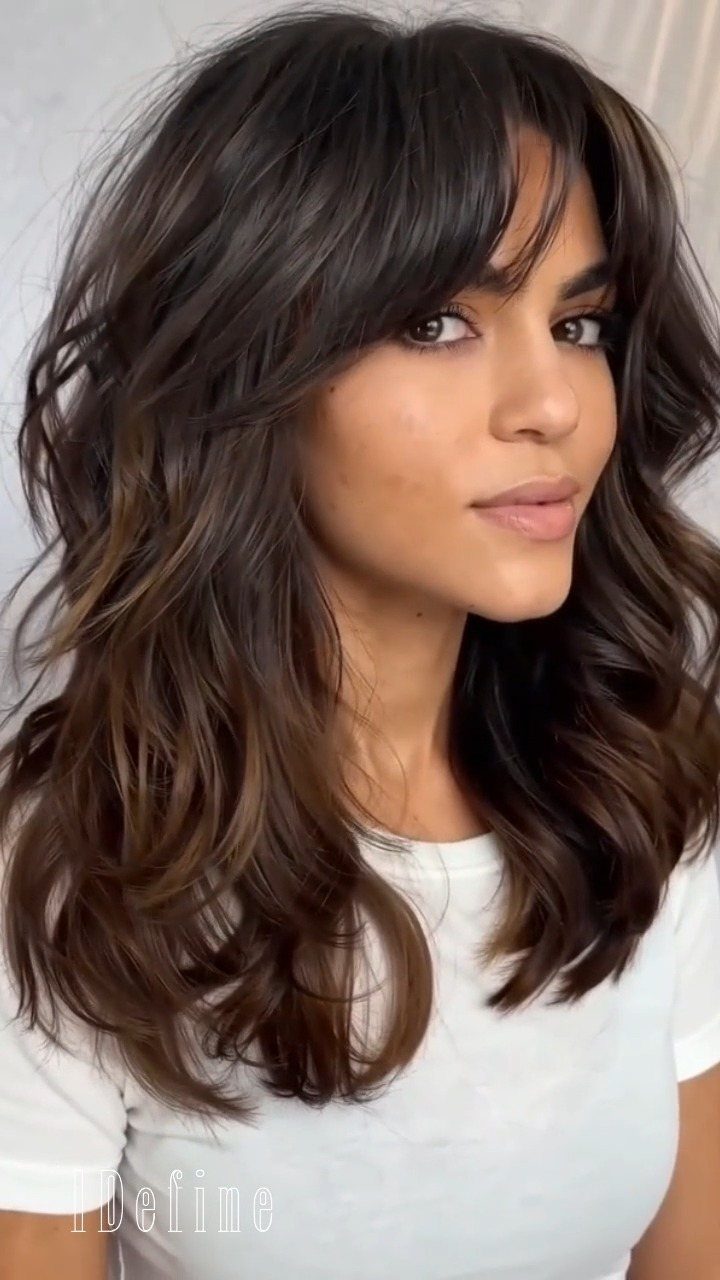
Waves need room to move, and long layers give them that room. Without them, the weight at the bottom pulls the bend straight; with them, the wave shape shows from root to end.
I like this best with shorter pieces around the face, where the waves bounce up first.
Dry with a diffuser, or wrap sections around a curling iron and let them cool before you touch them. Skip the brush afterward.
4. Long Layered Curls
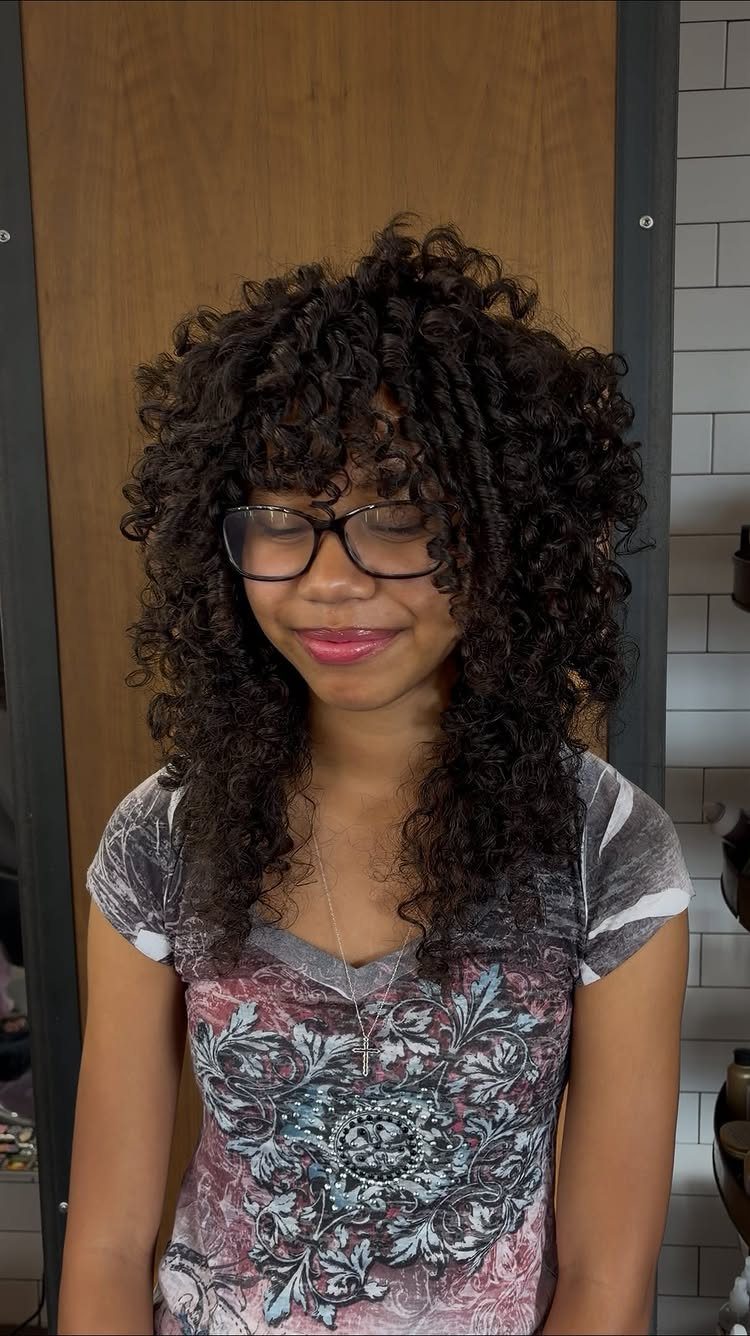
On curls, layers do the job of taking weight off. Without them, hair tends to stack into a triangle that sits wide at the bottom; with them, curls lift and the whole shape looks lighter.
Curly hair is best cut dry or on dry-styled curls, so your stylist can see where each curl actually lands. Dry with a diffuser, and try not to touch the curls until they are fully set.
5. Layered Bangs
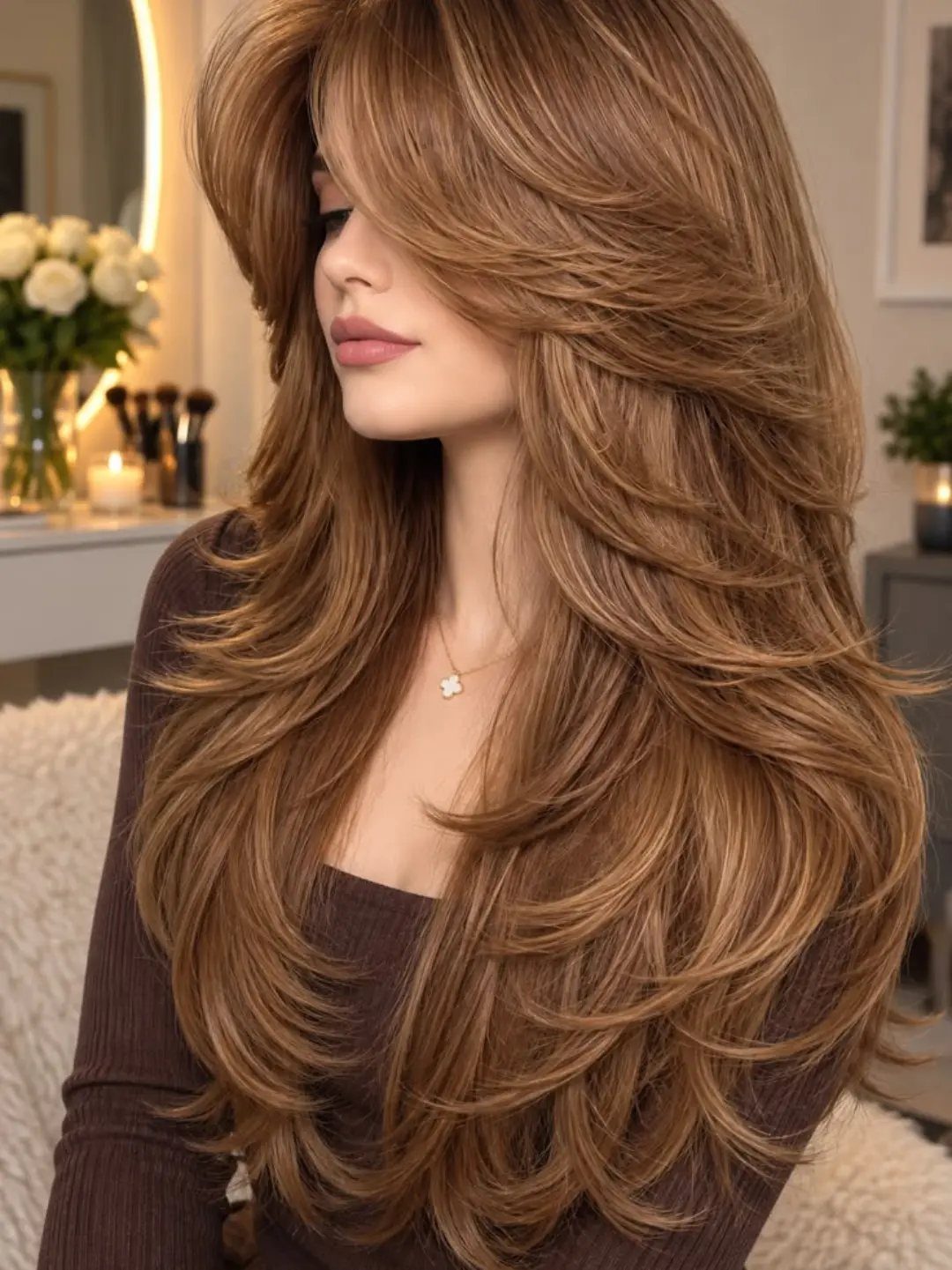
Curtain bangs that part down the center and sweep outward, joined to long layers, give you a fringe without a hard line. They blend straight into the length instead of sitting apart from it.
Bangs cut long enough to tuck behind the ears make growing them out painless. A round brush and a blow-dry that pushes the bangs away from the center is the easiest daily routine.
6. Side-Swept Layers
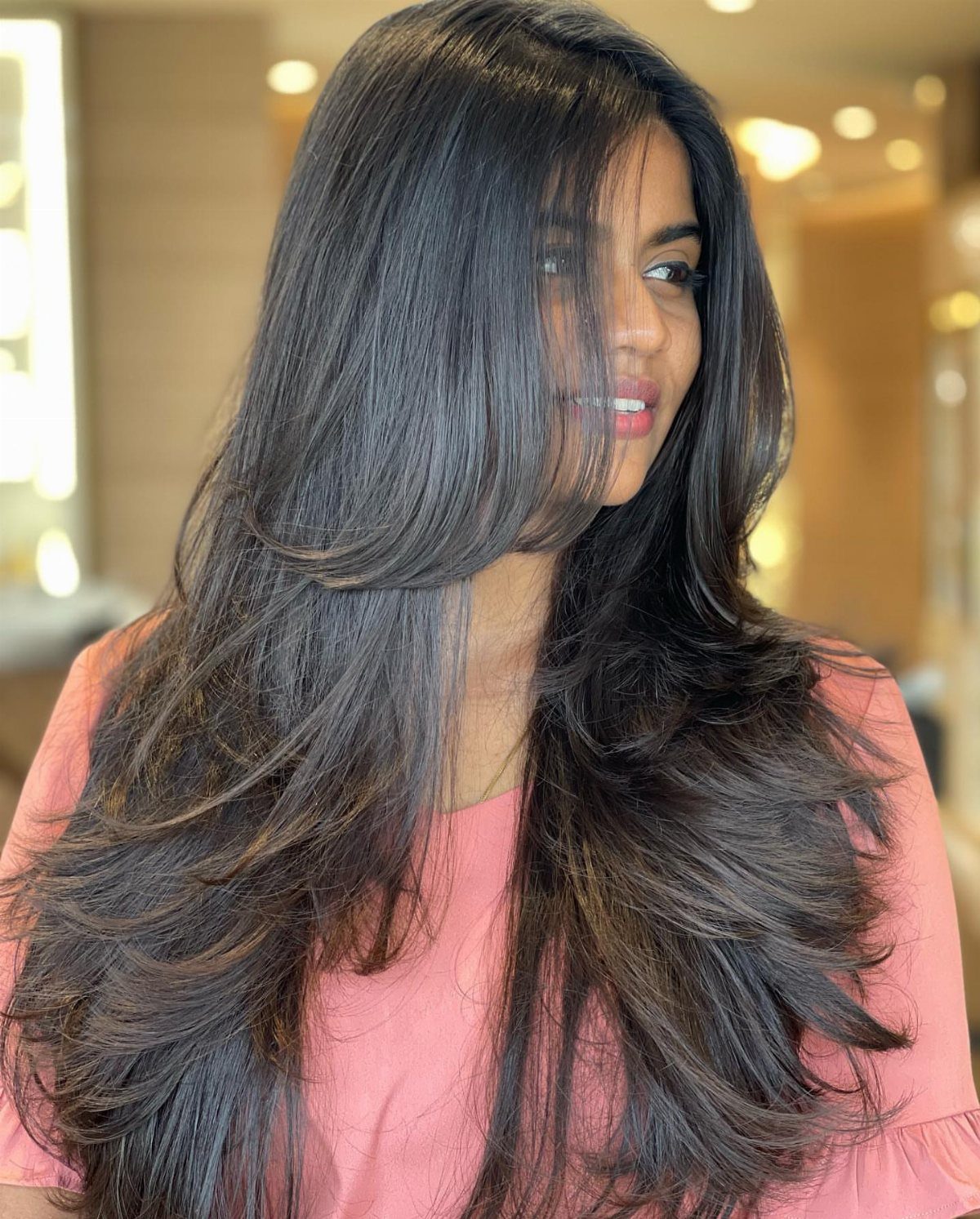
Sweeping long layers to one side builds a relaxed shape with plenty of volume, and it works well on days when a center part feels too flat.
Part your hair deeper on one side and blow-dry the heavier section up and over with a round brush.
Layers help here because they keep the sweep from collapsing under its own weight. If your hair is fine, I would ask for them to start around the cheekbones or lower.
7. Balayage Layers
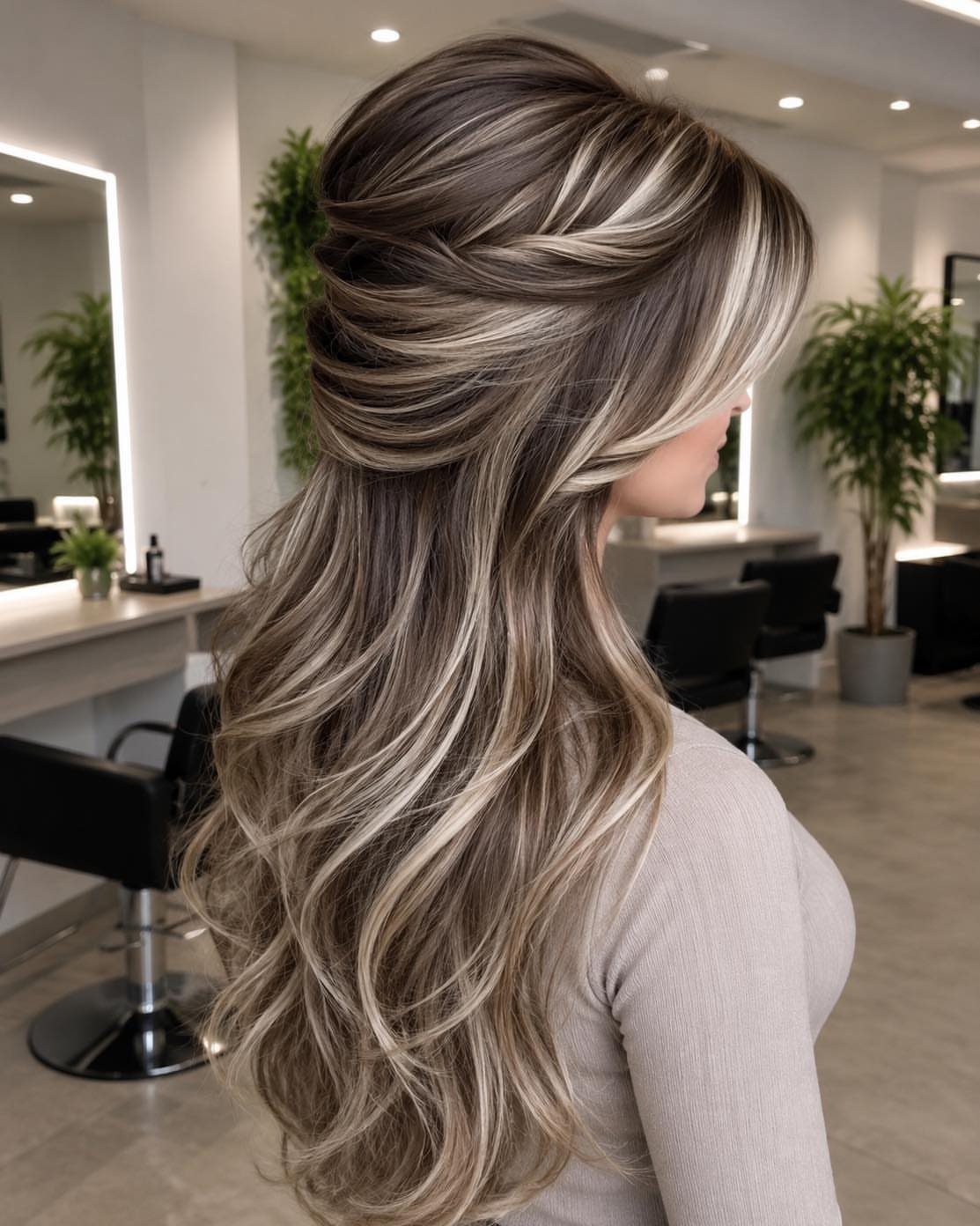
Silver-blonde balayage against dark roots gives layered curls something extra to show off: the lighter ends catch the eye at every bounce, and the shadowed root keeps the color from looking flat.
Hand-painted color tends to grow out softly, so there is no hard regrowth line to chase.
Ask your colorist to place the brightest pieces where the curls will sit on top, not buried underneath. Set the curls with an iron and pin the top half back for the half-up finish.
8. Side-Swept Bangs
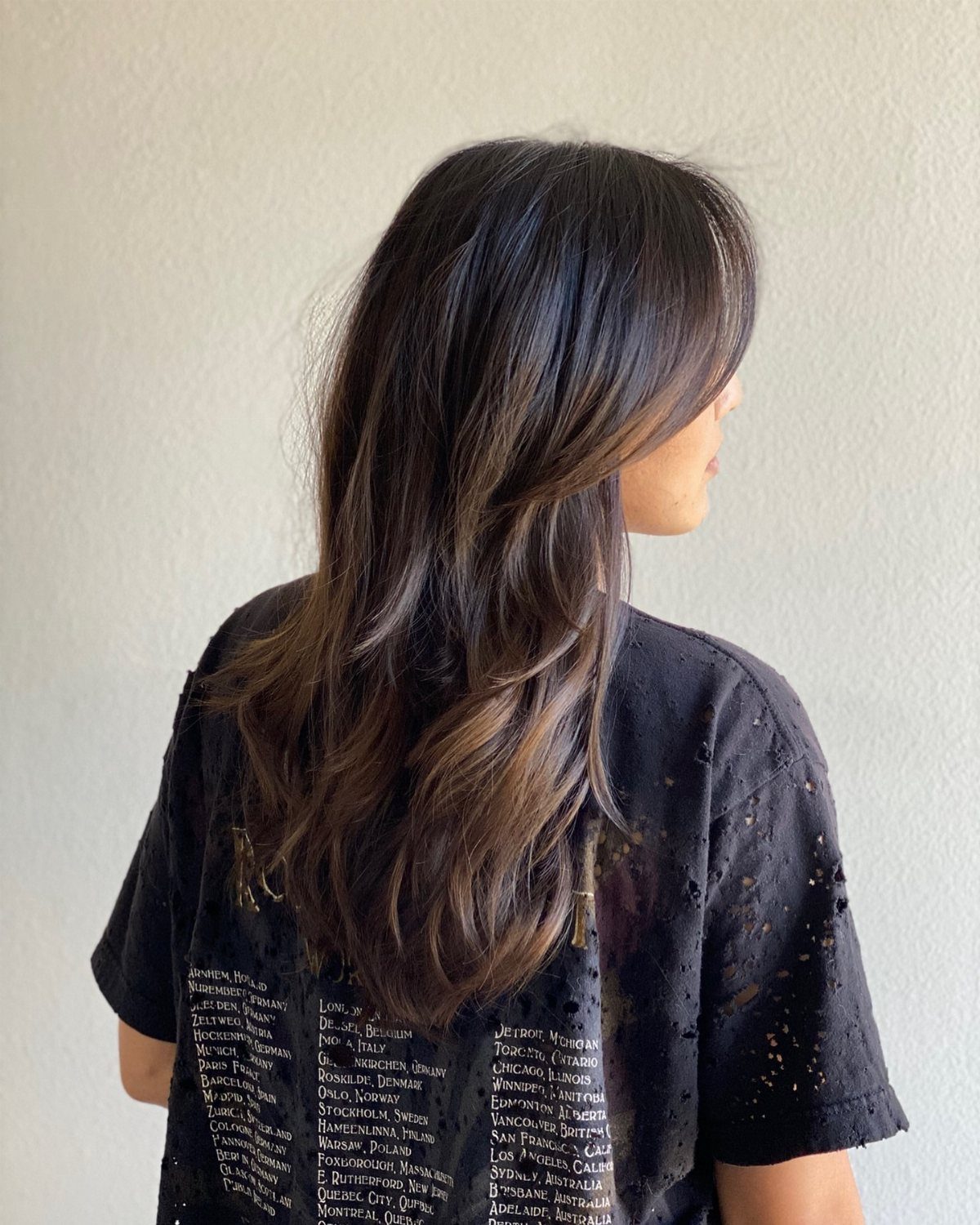
A side sweep gives long layered hair a diagonal line, and that angle is what separates it from a straight fringe. It also reads well from behind, because the layers carry the shape down the back.
Blow-dry the bangs across your forehead with a round brush while they are still damp, then let them cool in place.
A deep side part is easy to test at home, so wear it for a few days before you book the cut.
9. Invisible Long Layers
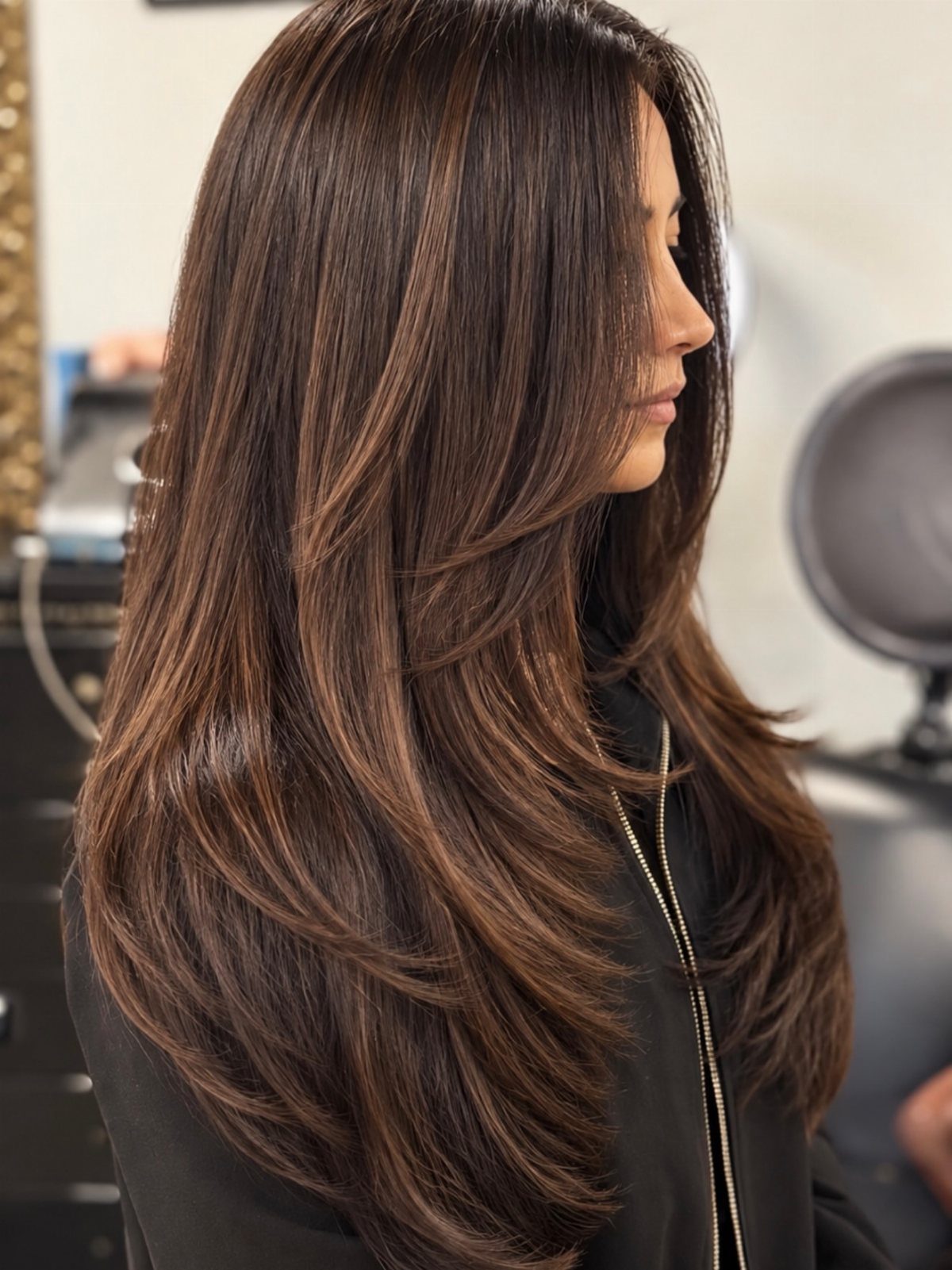
Nobody should be able to spot these layers, and that is the appeal. They take bulk out of dark, thick hair while the ends stay full and the length stays put, so you get movement without the stepped look.
Tell your stylist you want weight removed, not length. A round brush turned under at the ends keeps that softly curved finish, and a quick pass is enough on most mornings.
Martin’s next recommendation is another luxurious-looking style inspired by the supermodels of decades gone by. “For women who want to keep their length, long invisible layers are much more flattering than heavy, choppy layers,” he says.
10. Wispy Layers
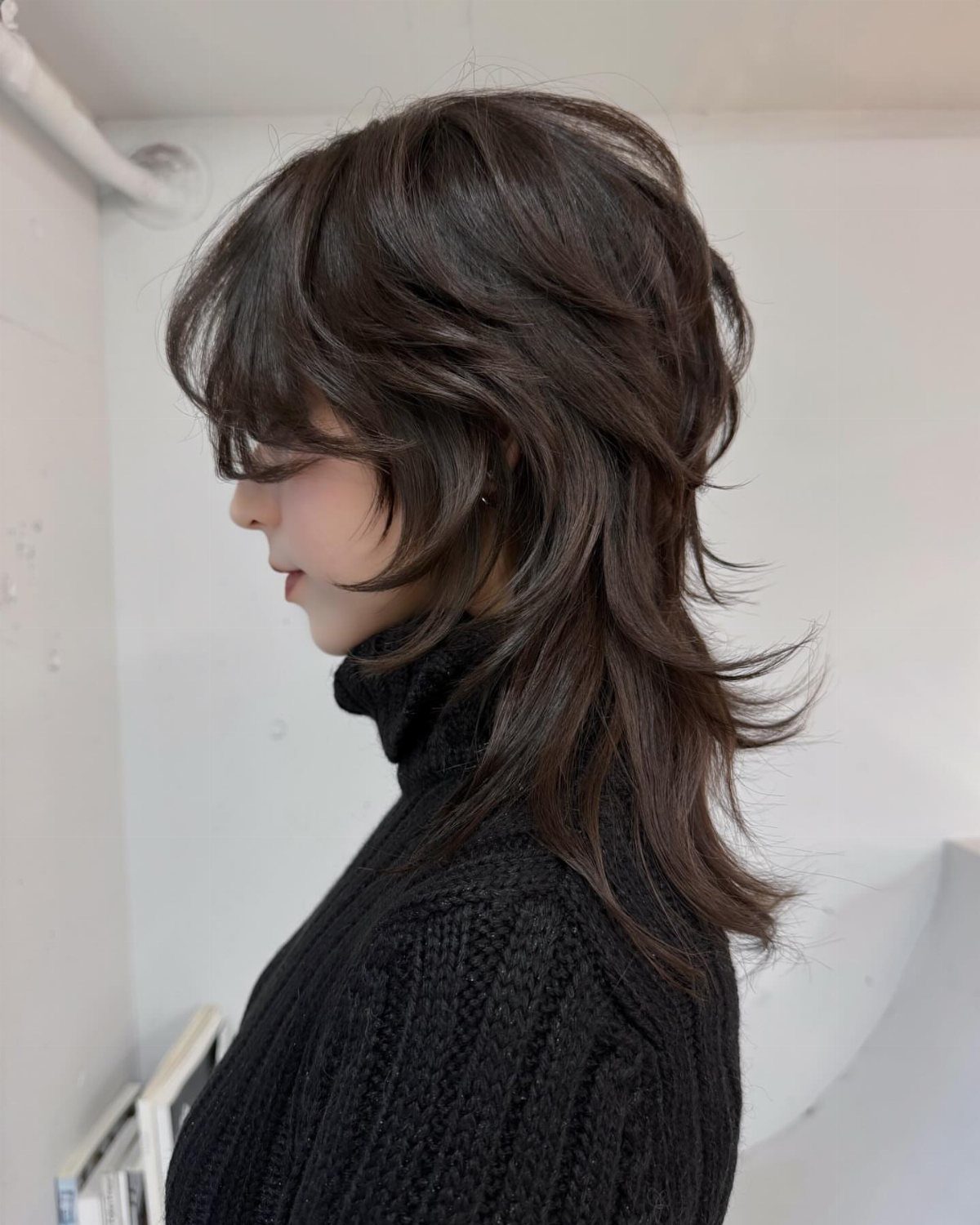
Fine, feathery layers make long hair look airy and a little undone, which suits brown hair that otherwise falls in one dense sheet. Wispy ends and soft bangs do most of the work.
Ask for point cutting or razored ends so the pieces break up instead of lining up.
Skip heavy creams, since they weigh the wisps down and clump them. A light texture spray and a rough blow-dry are plenty.
11. Waterfall Layers
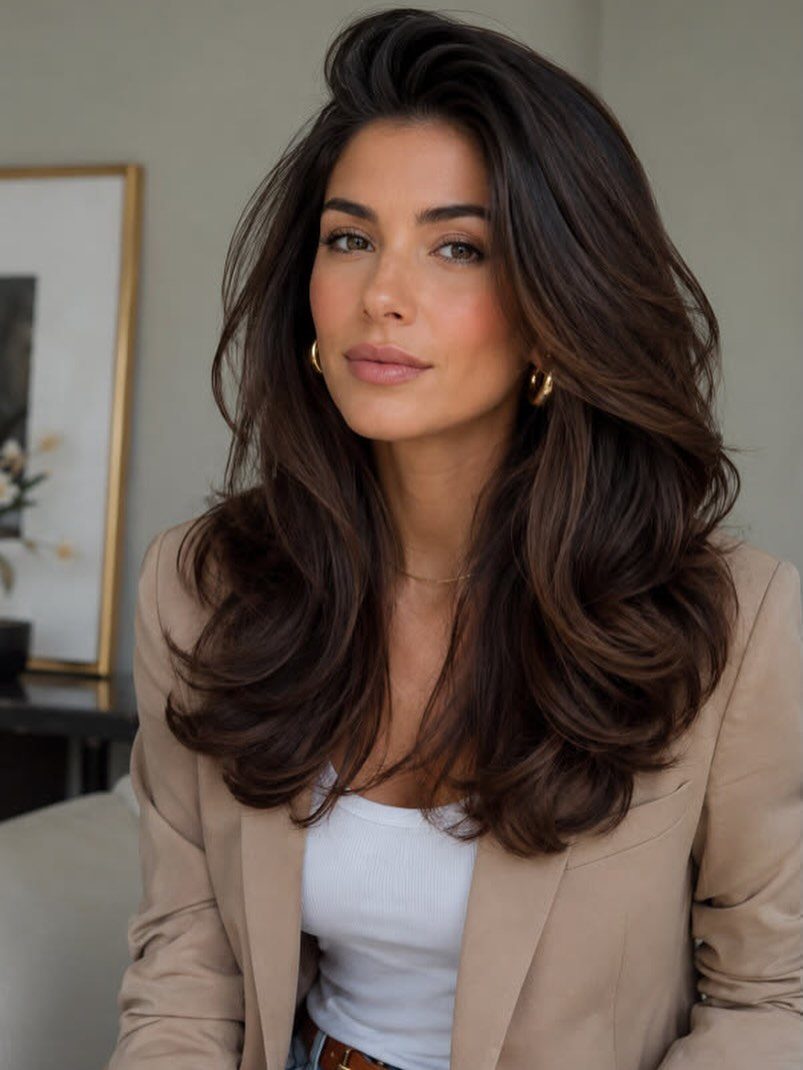
Waterfall layers step down the length in a slow cascade, so each section spills over the one beneath it. With dark hair and soft, full curls, that overlap creates movement that looks expensive.
I would pick this over choppy cuts if you want volume with no visible steps. Curl the hair in large sections away from your face, let each curl cool, then loosen with your fingers instead of a brush.
12. Highlighted Layers
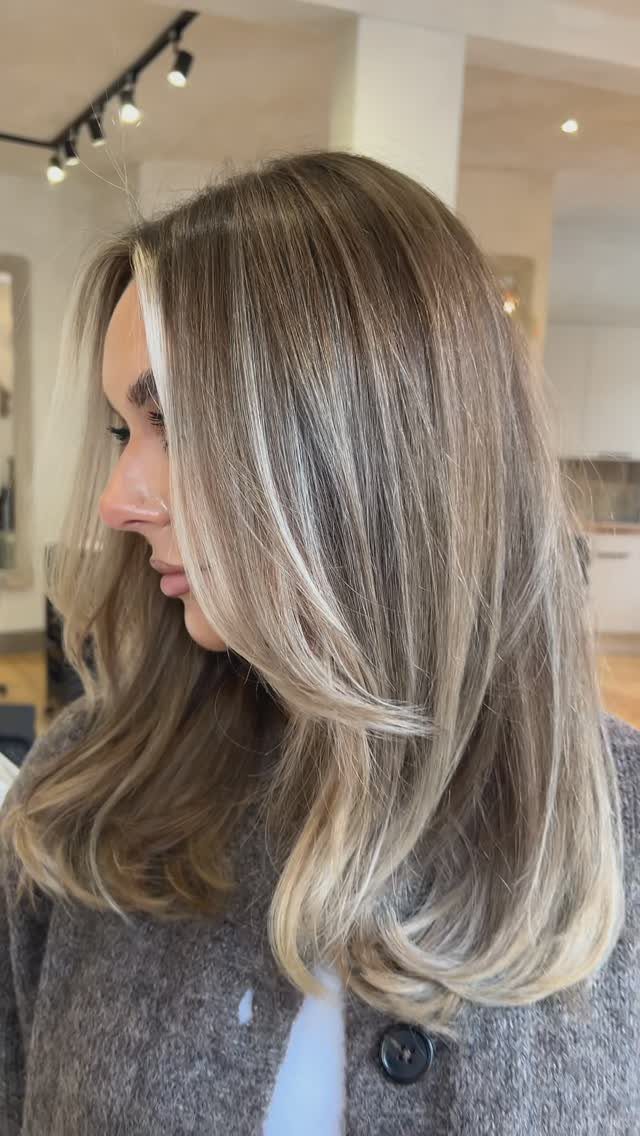
Pale blonde highlights on ash-brown hair make every layer visible. Without them, the steps in a cut can blur together; with them, the lighter pieces trace each layer and add definition.
Ask for the highlights to be placed around the face and through the top layers, where light hits first.
Ash tones keep the brown cool, though blonde on brown will need regular toner and a purple shampoo to stay that way.
13. Long Layers
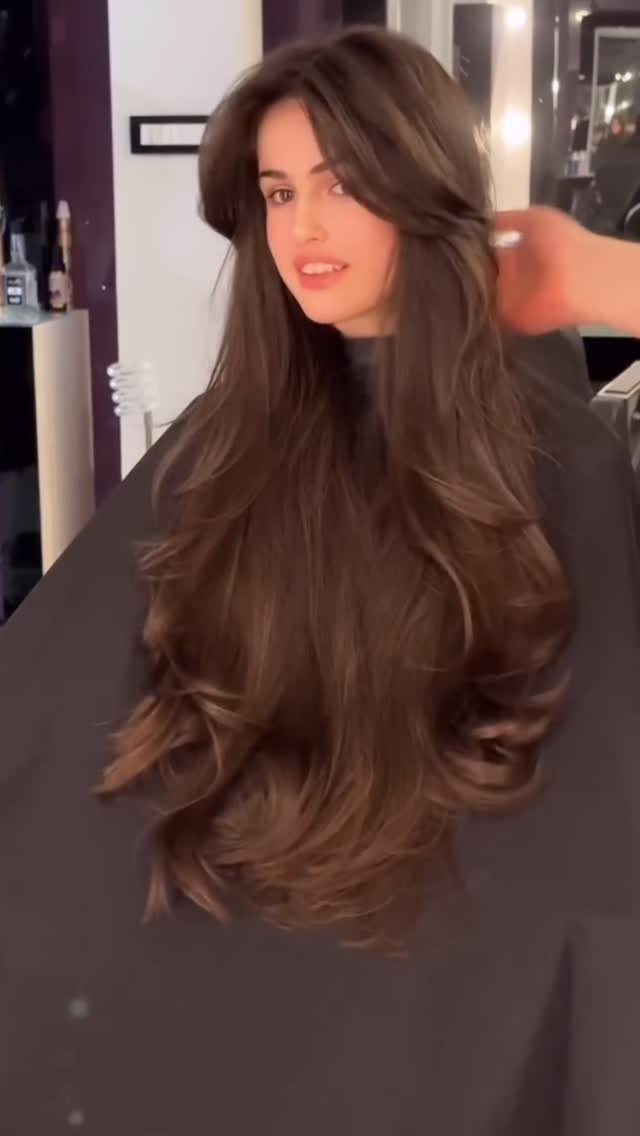
Blended layers keep the length where it is and still give the hair movement and lift.
Soft curls like these show the effect best, since the layers let each curl sit on its own instead of stacking into one heavy mass.
Ask your stylist to blend the layers so no step is visible, and say plainly that you want to keep your length.
Once the iron has set a curl, leave it alone until it feels cool, because brushing or finger-combing it while warm drops the bend.
14. Straight Long Layers
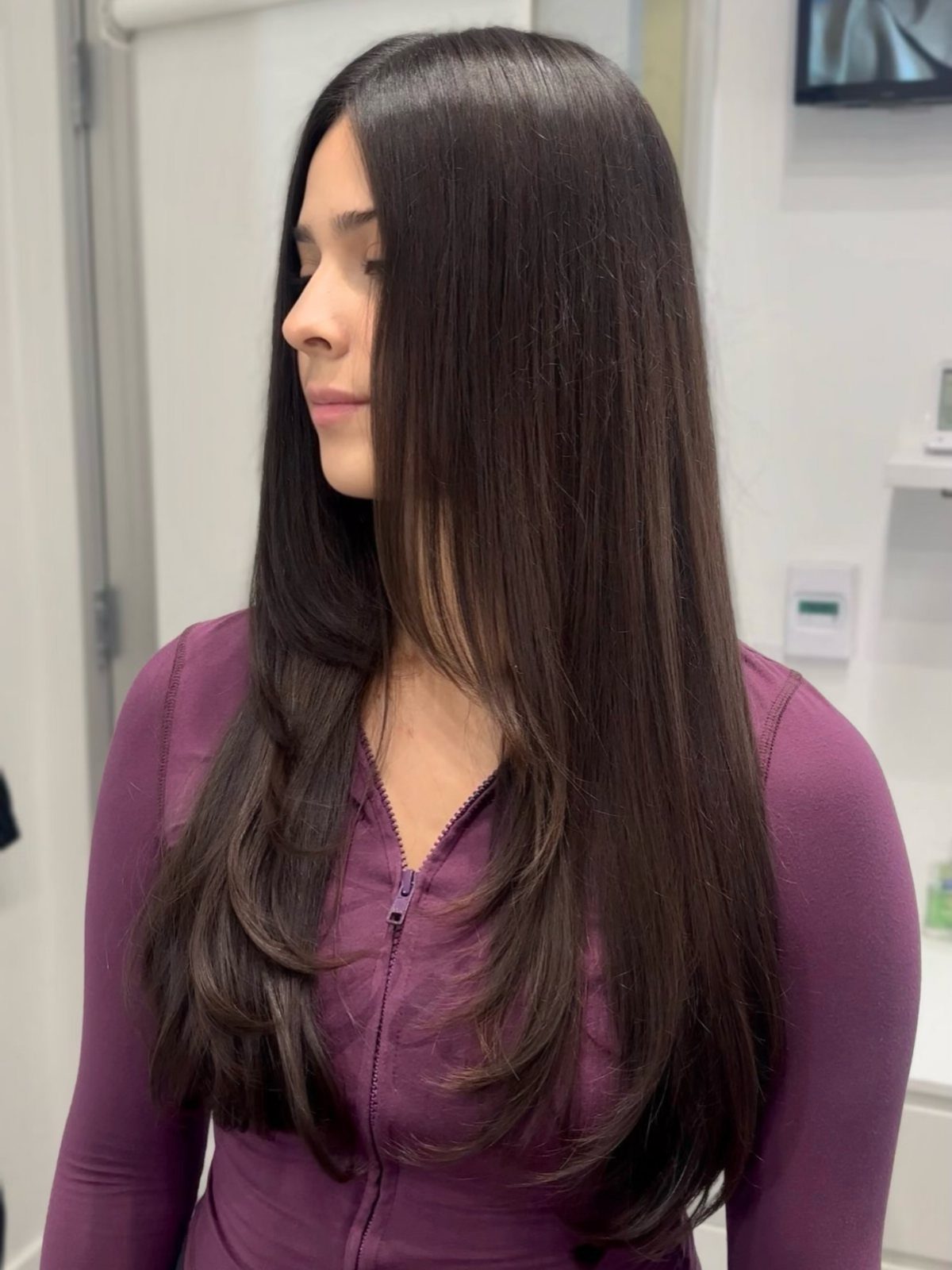
Smooth, straight hair can still carry layers; they just read quietly. The layering is visible when the hair swings, and it is easy to wear without any styling beyond a blow-dry.
I prefer this on dark brown hair, where the layers catch light along the length and the finish looks polished.
A round brush rolled under at the ends does most of the shaping as you blow-dry, so the flat iron only needs to touch the pieces that kick outward.
15. Minimalist Waves
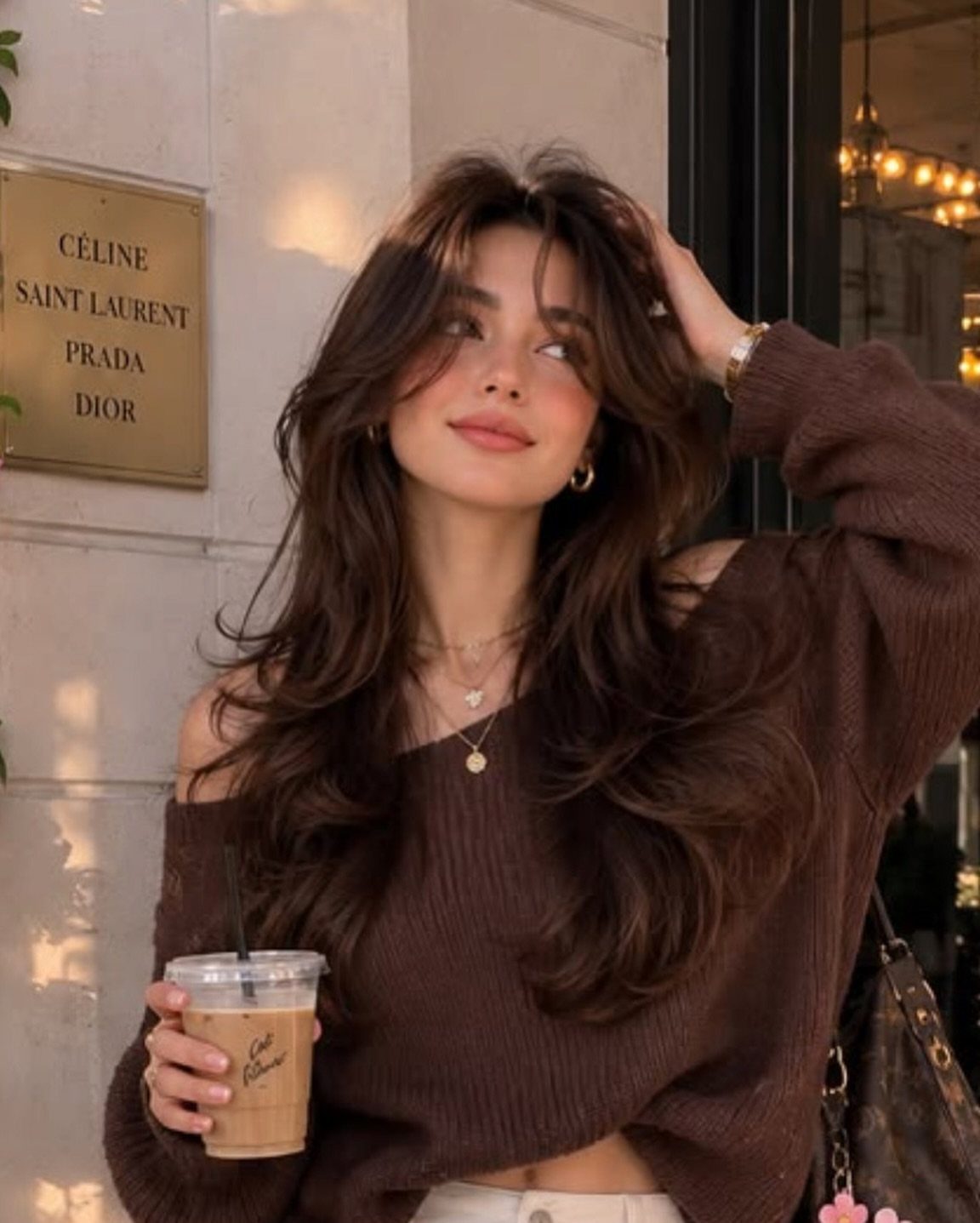
Loose, easy waves on soft blended layers are the lowest-effort version of this cut, and they suit nearly any hair type or texture. Because the layers are subtle, the waves do the visible work.
Wind big, loose sections around the barrel, skip the last inch, and wait for each wave to cool before you shake it out. I would skip the brush so the bends stay soft and uneven rather than uniform.
16. Chopped Layers
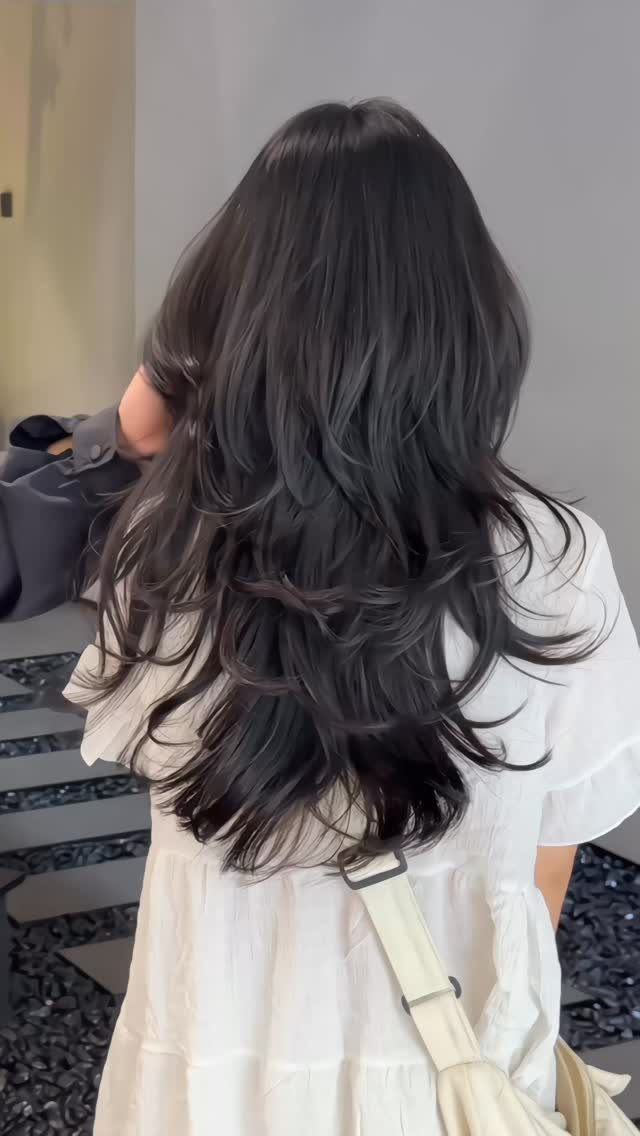
Short, choppy layers remove weight from long dark hair and add body where it would otherwise hang flat. The ends flip and separate, so the back has texture instead of one solid edge.
Tell your stylist to put the texture into the last few inches only and to leave the weight of the length alone.
Style with a blow-dry and a round brush to flip the ends outward, then break the pieces apart with a little texture spray.
17. Layered Fringe
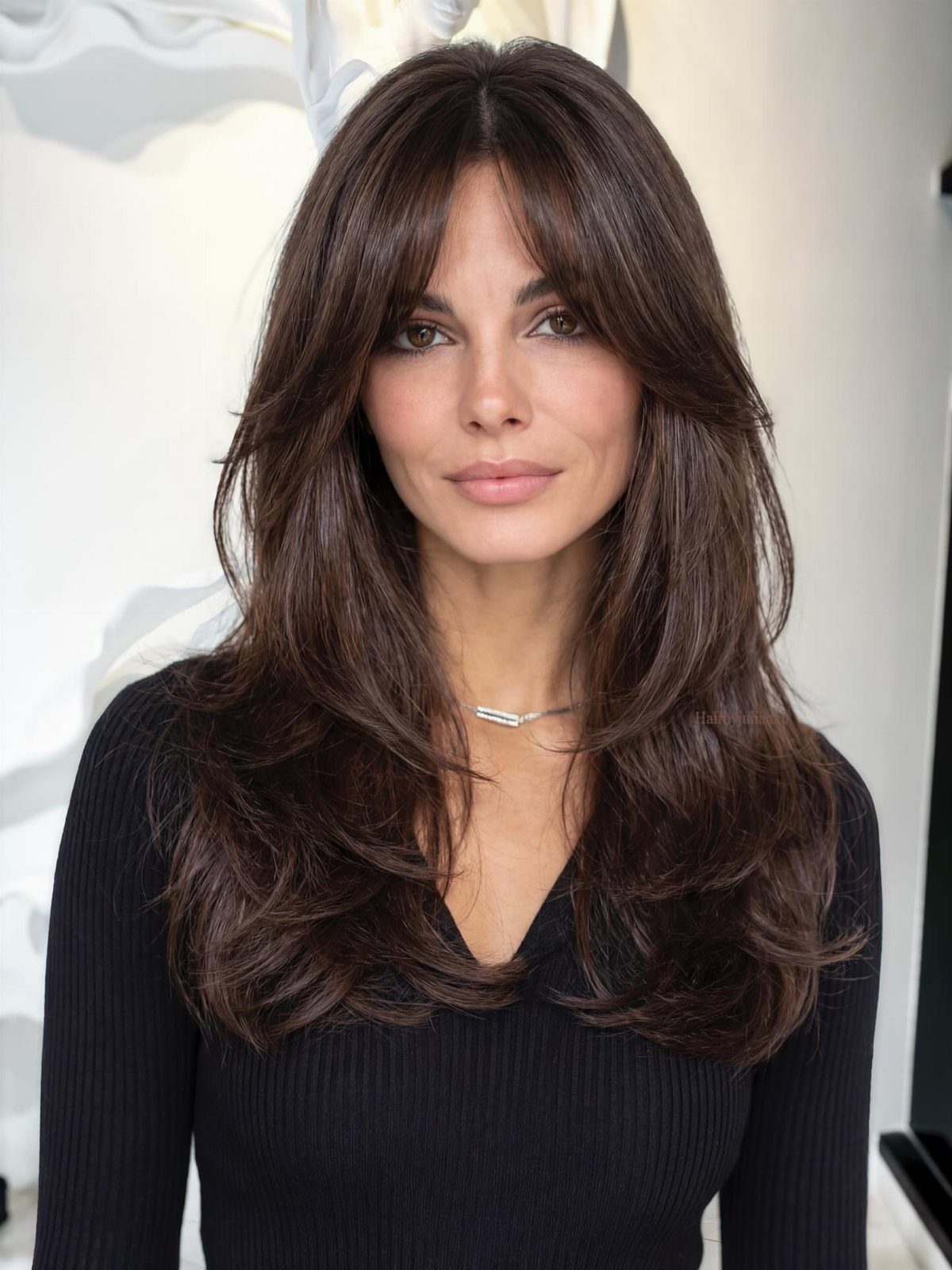
A fringe cut just above the eyeline, paired with long layers, frames the eyes and keeps the length behind it. Parted in the middle, it opens up instead of sitting like a curtain.
Tell your stylist exactly where it should land, since a few millimeters changes how it sits on your face.
Dry the fringe first, while it is still damp, with a small round brush, and use a light hand with product so it stays soft rather than flat.
18. Blunt Bangs and Layers
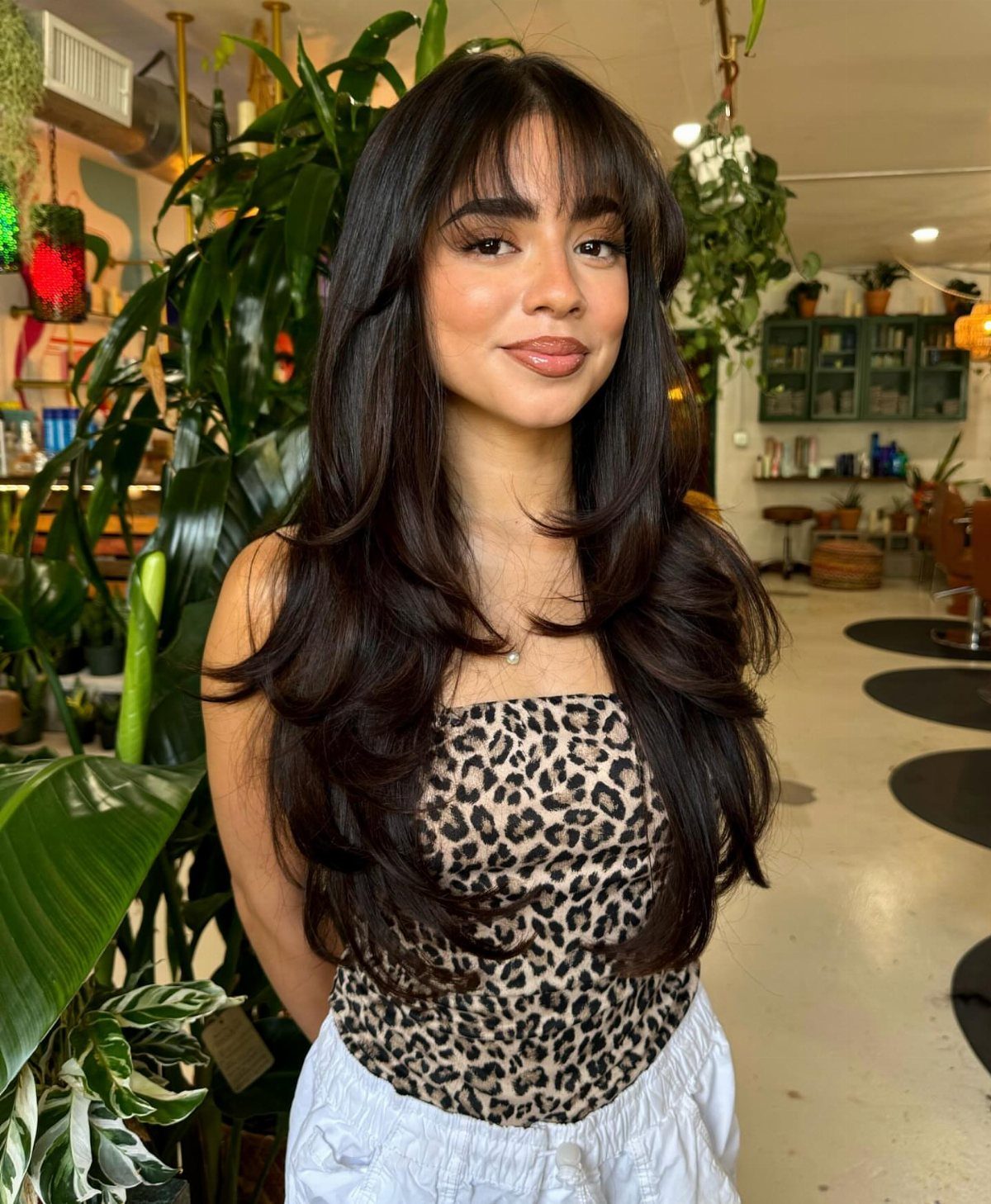
Straight-across bangs draw a firm line at the brow, while layers through the back take weight out so the length still moves. The contrast between the two is what makes this one work.
I would keep the bangs slightly wispy at the edges if you want an easier daily look. Blow-dry them flat with a small round brush, then use a light texture spray so they don’t clump.
19. Wolf Cut
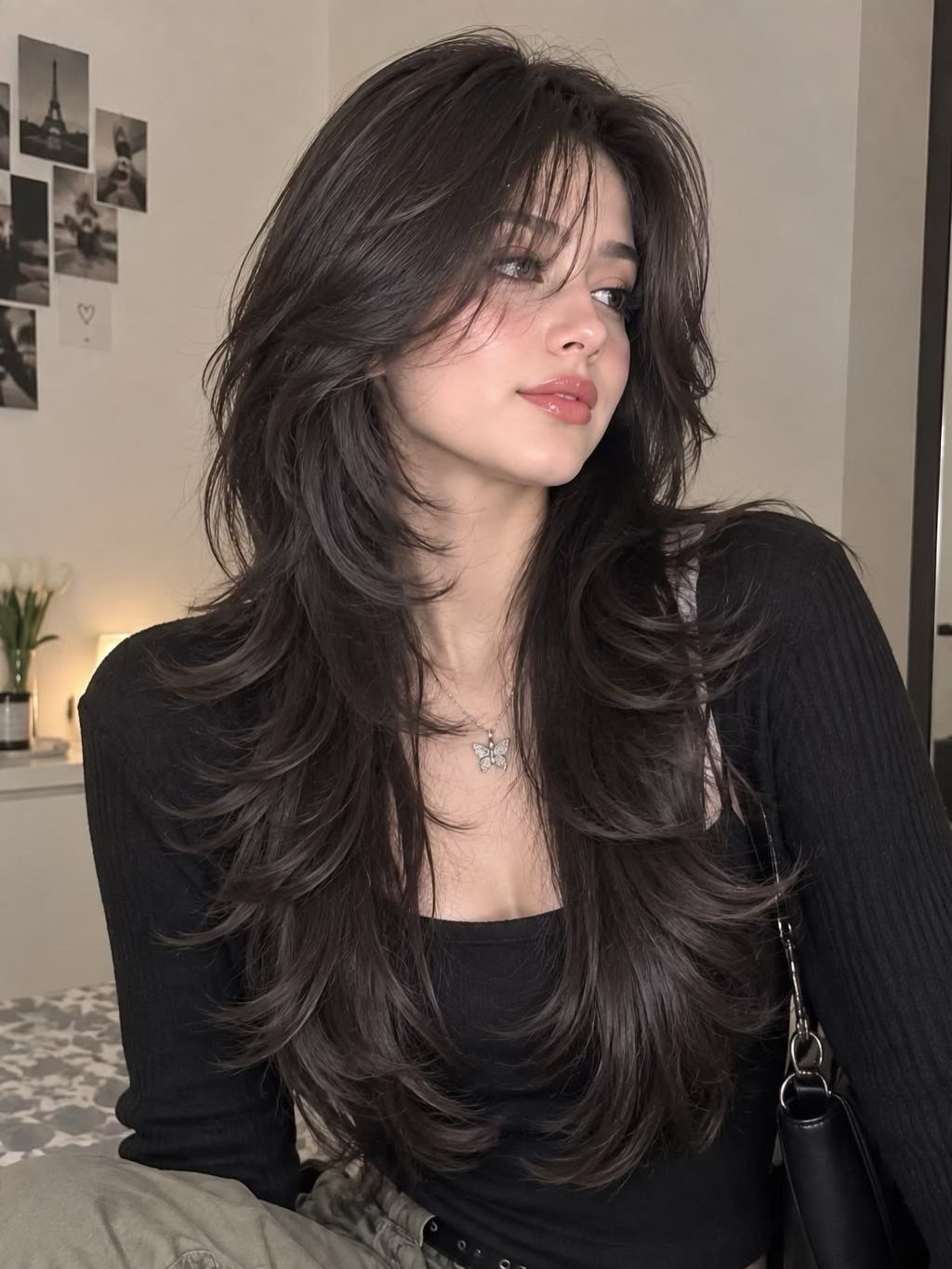
Short, choppy layers through the crown and ends give this cut its edge, and the curtain bangs soften it so it stays wearable on long dark hair. The shorter pieces add dimension that a single-length cut can’t.
I would ask for the choppiest sections to sit around the top and face, where the shape shows first. Rough-dry it and shake the pieces out with your fingers.
20. Feminine Layers
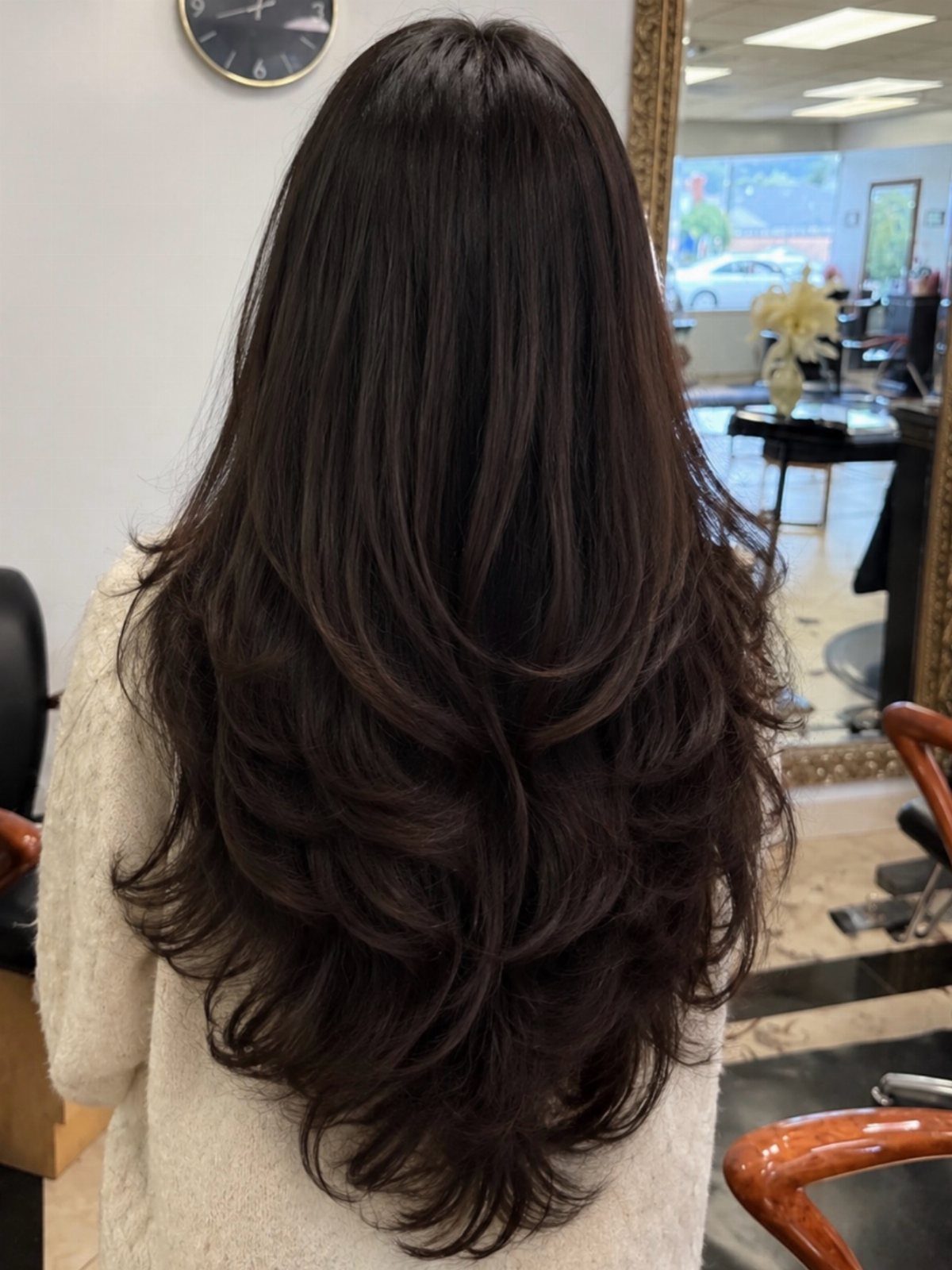
From behind, the curl at the bottom is what gives the layers their shape.
Hands off the curls until they are cold, because touching warm hair pulls the bend right out. Then loosen the bends gently so the volume stays soft rather than stiff.
21. Graduated Layered Haircut
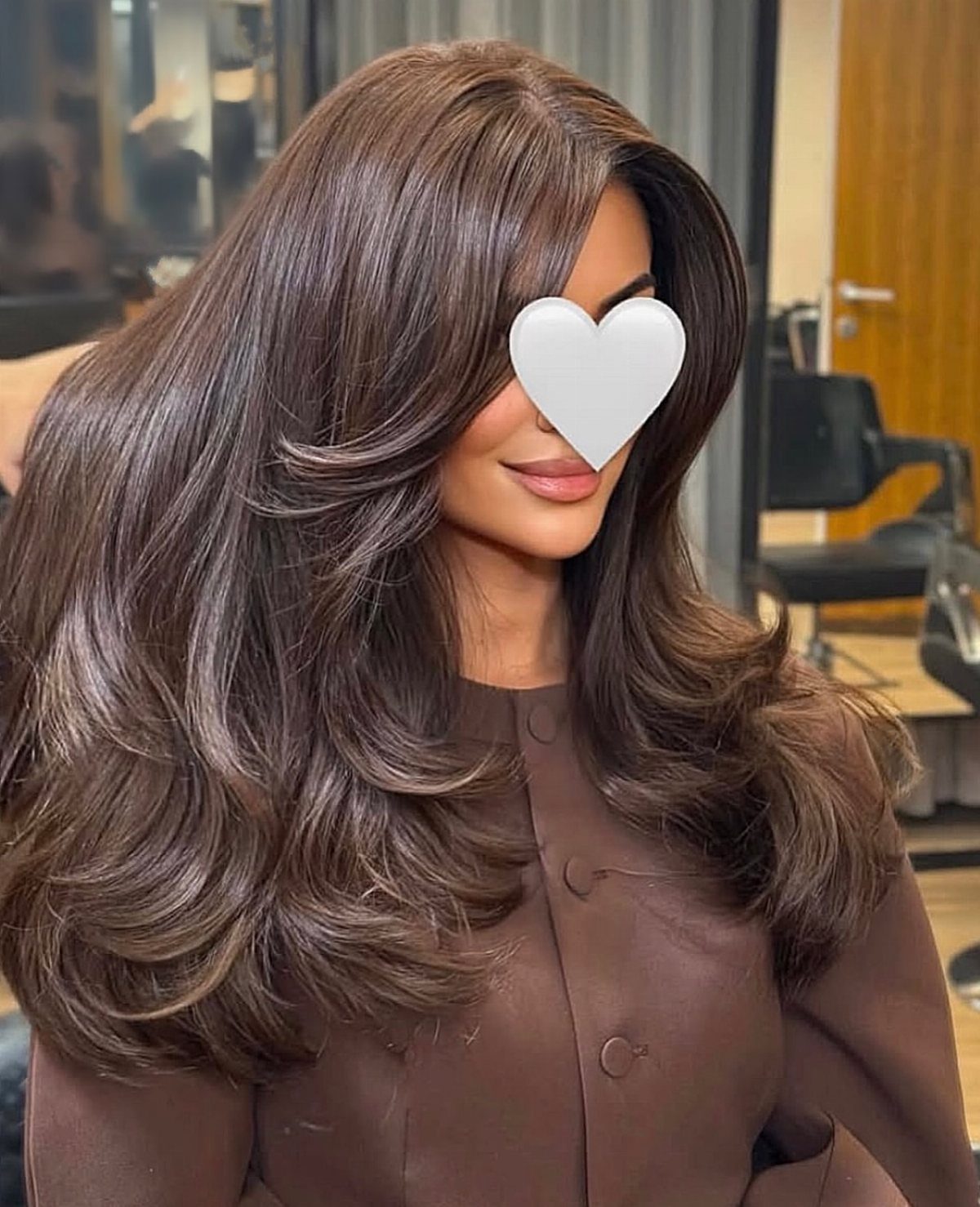
Graduated layers stack from shorter to longer, so the hair builds toward the ends instead of falling in one flat sheet. On brown hair with a blowout, that buildup shows as full, curled ends with a rounded finish.
Ask your stylist for a gradual step between layers, not a sharp one. I would finish with a round brush and curl the ends under for the fullest shape.
22. Caramel Tresses with Bangs
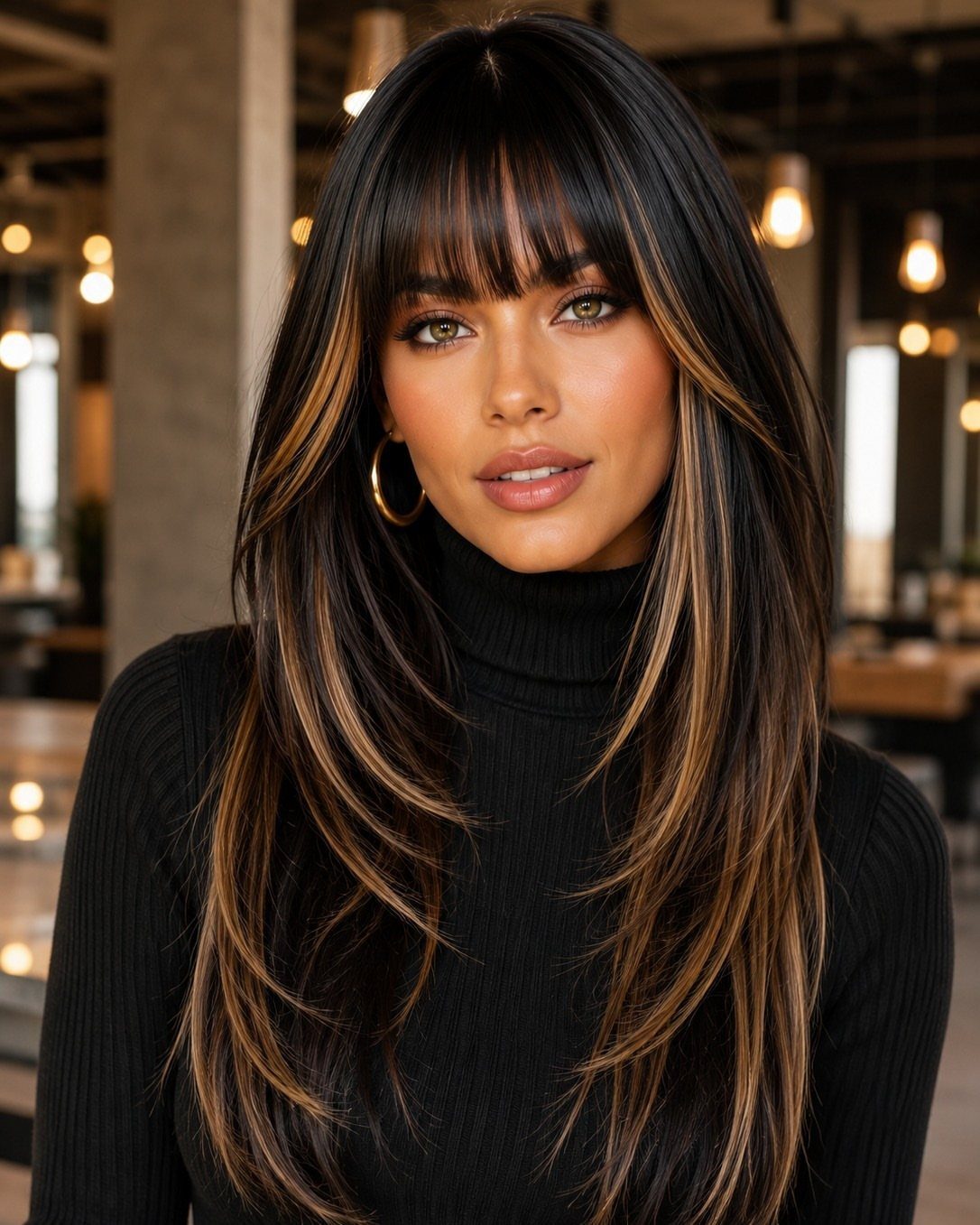
Caramel highlights on dark layered hair add warmth without leaving the natural range, and they pair well with full bangs because the lighter pieces catch the light around the face. The color looks soft next to brown.
Ask your colorist to keep the caramel in fine pieces through the layers, not heavy stripes. Dry the bangs while they are still damp, rolling them under a small round brush so they curve in instead of lying flat.
23. Soft Waves and Layers
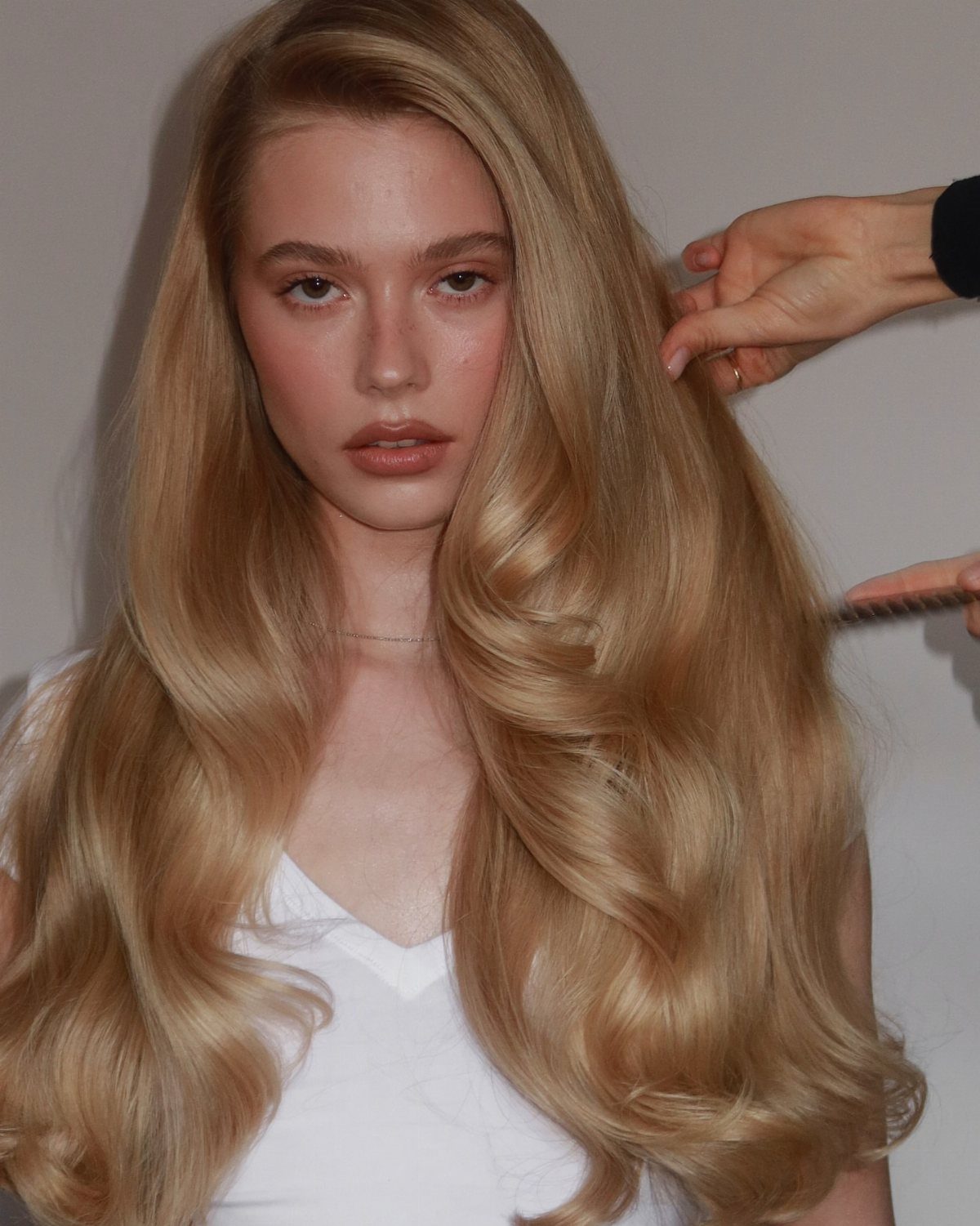
Blended waves on long blonde layers give the hair movement you can see from every angle. The layers let each wave sit apart, so the lengths never stack into one heavy mass.
A light brush-through at most, so the bends stay soft.
24. Body-Boosting Layers
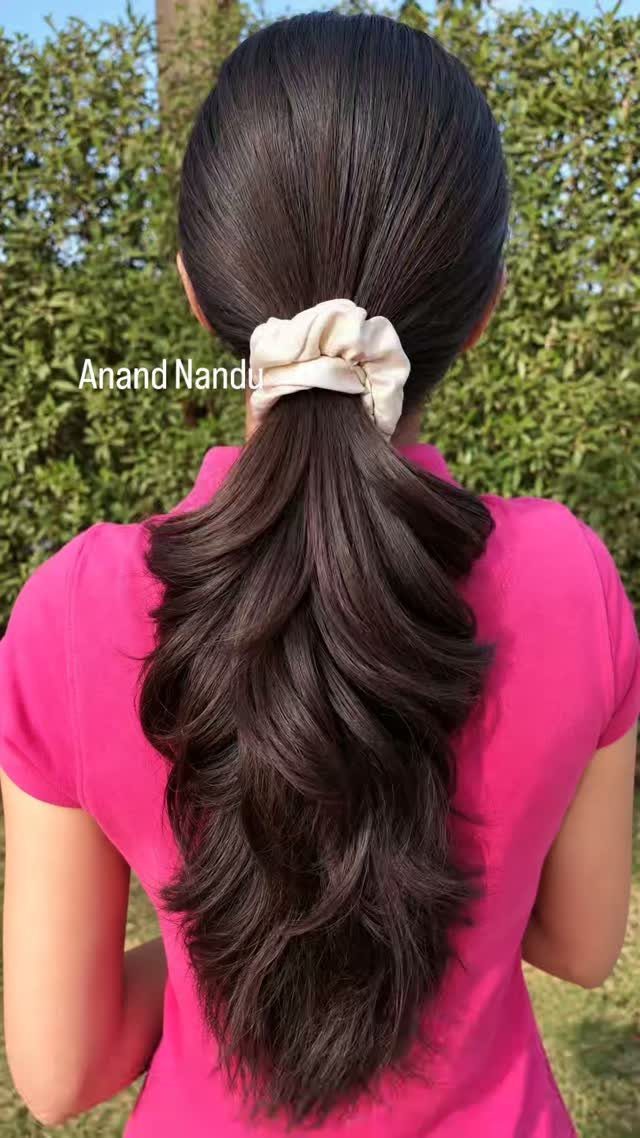
Gradual layers keep curled sections defined, since each curl has its own length to sit on instead of piling onto the one beneath it.
That matters most for dark hair worn in a ponytail, where the curls need to show below the band.
Set the curls with an iron, let them cool fully, then pull the hair back loosely. I would leave a few curled pieces free around the face.
25. Marquise Layers
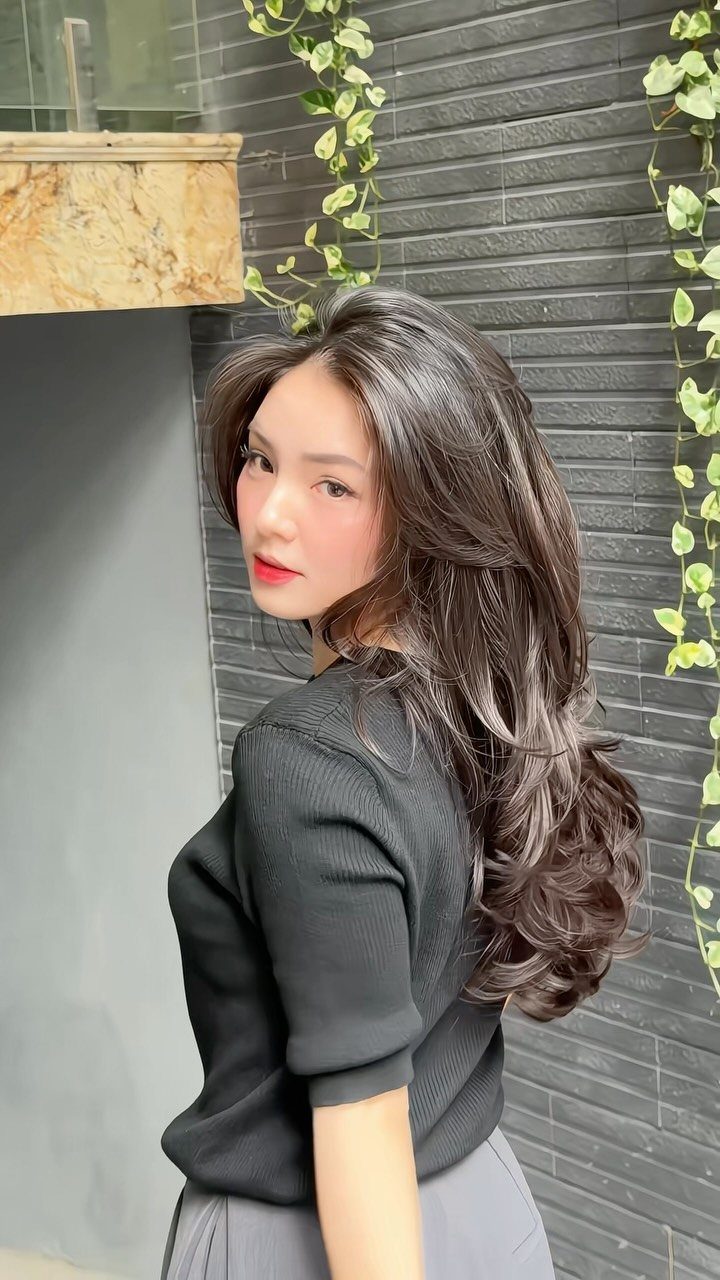
Marquise layers taper from the cheekbones down, so the hair narrows toward the ends instead of stacking at the bottom. On long dark brown hair, that taper leaves the curled ends light and shapely.
Ask for the first layer to land at the cheekbones and for the length to stay untouched. A curling iron on the ends, wrapped away from the face, finishes the shape.
26. All-Over Layers
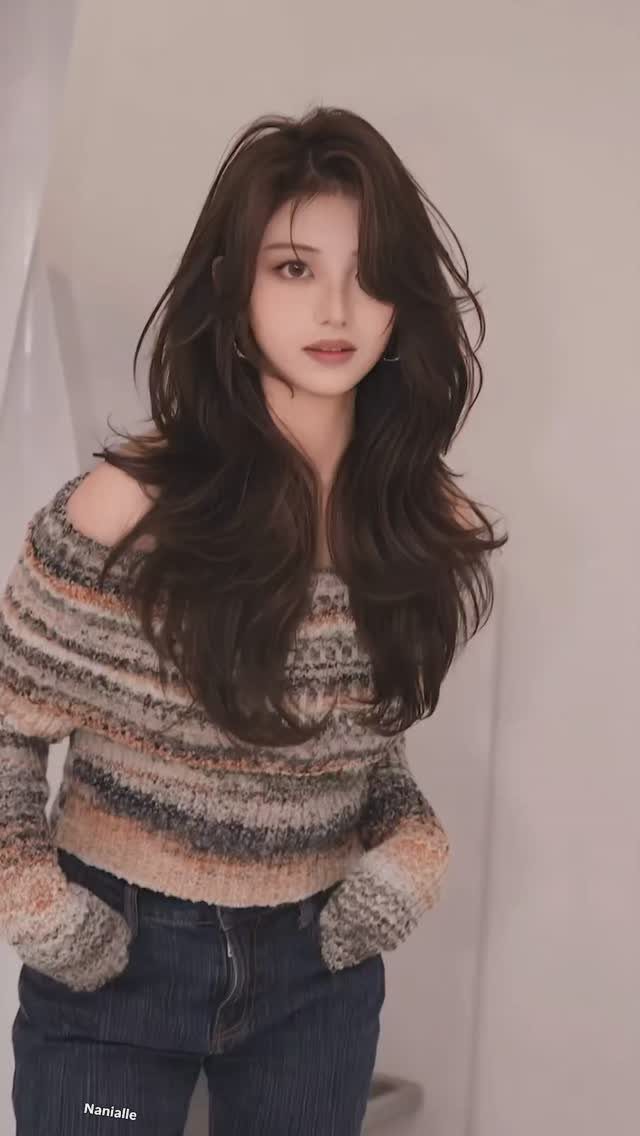
Layers placed all through the hair, not just at the ends, give long brown hair lift from the crown to the tips. That is why the volume reads full even when the hair is worn loose and simple.
Tell your stylist you want layers through the whole length, and ask for them blended so no single step shows.
Start the blow-dry at the roots, lifting each section with a round brush, and finish by rolling the ends under so the layers curve in toward your face.
I would skip heavy serums, since they flatten the lift you paid for.
27. Flippy Layers
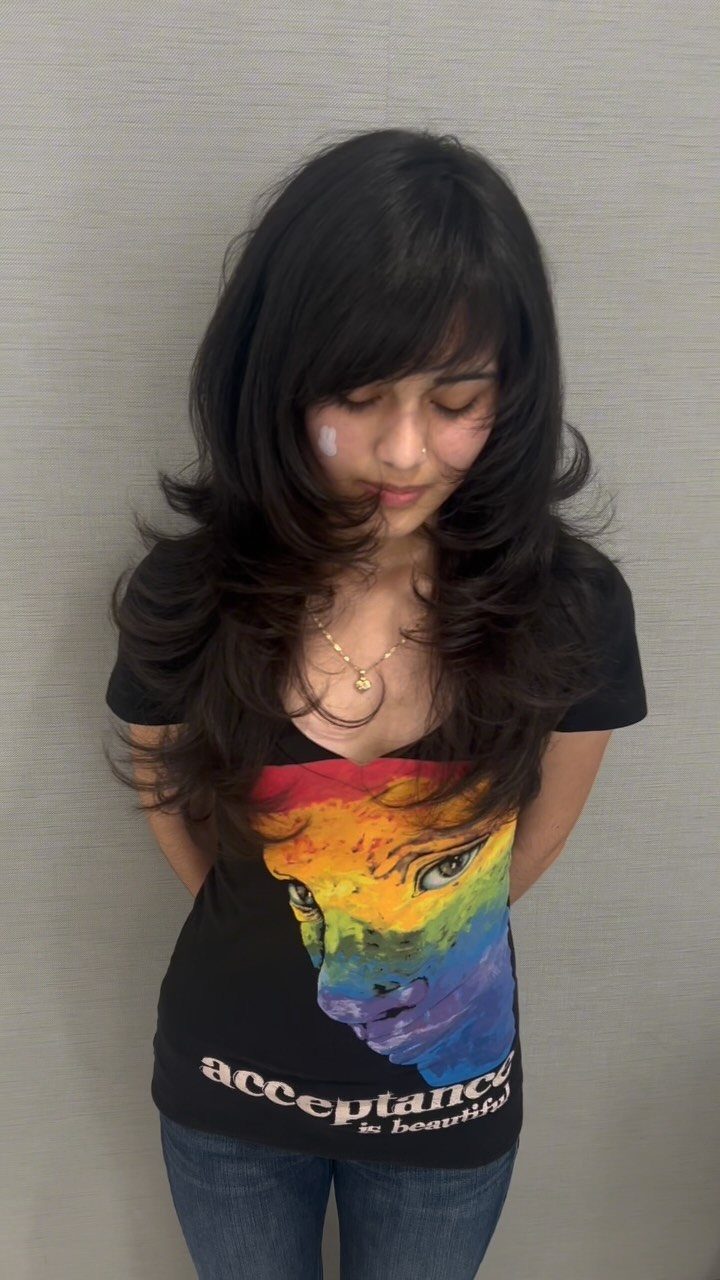
Ends that flip outward turn long dark layers bouncy, and side-swept bangs keep the flip from feeling too stiff. The shape depends on layers short enough to kick out on their own.
Blow-dry with a round brush and turn the brush away from your face at the ends, then hold each section until it cools.
I would curl the ends outward with an iron on days when the blow-dry relaxes. Keep product light so the bounce stays.
28. S-Curve Layers
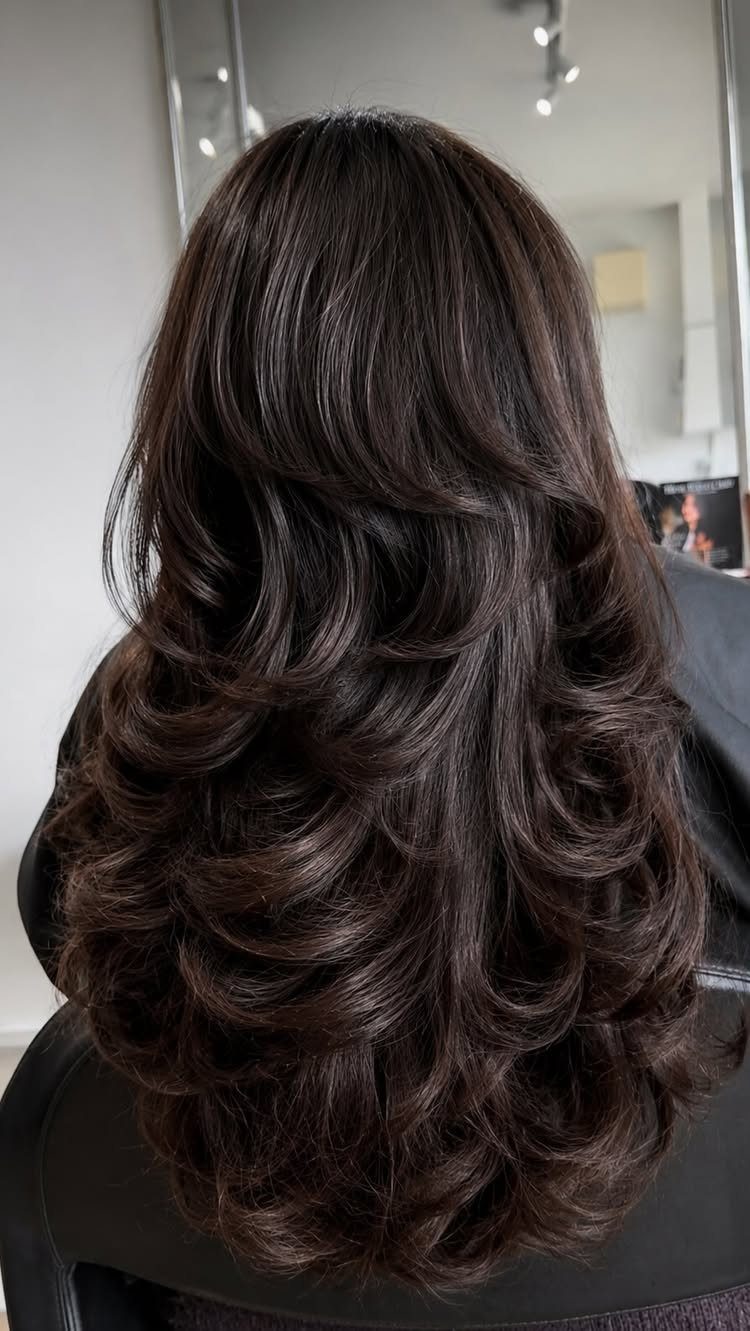
Seen from behind, S-curve layers read as long, glossy waves that bend one way and then the other down the back. The layers give that wave body, so the shape holds its volume instead of hanging in a flat sheet.
Curl alternating sections in opposite directions with an iron, one toward the face and the next away, then let everything cool before touching it. A light finger-comb loosens the pattern into a soft S.
Trim Schedule and Upkeep
Plan on a trim every 8–10 weeks. The shortest layers are the first to lose their shape as hair grows, and a regular trim is what keeps them holding it.
You can ask for the length to stay exactly where it is and for the layers alone to be refreshed. That keeps upkeep small without costing you inches.
Long layers sit better when the products stay light, so I’d pick a volumizing shampoo and conditioner over anything heavy or creamy. Layers rely on lift, and a heavy formula pulls them flat.
Choosing and Placing Layers
Bring a photo, but treat it as a guide to the shape, not a pattern to copy. The same layers land differently on every curl pattern, so placement should be worked out on your hair.
Curls spring up once they dry, so a piece cut wet can end up shorter than you planned.
If you switch between a center part and a side part, keep your front layers from getting too short.
Pieces cut for one part can look awkward on the other, and a little extra length lets them fall well either way.
Frequently Asked Questions
What are face framing layers for women?
Face-framing layers are shorter pieces cut at the front that fall down and blend into the longer hair behind them.
Cut around the face, these pieces pull the eye toward the cheekbones and jawline, and the back keeps its full length.
Since the back stays long, face-framing layers are the low-risk way to try layers when a big chop feels like too much.
What are the different types of long hair haircuts?
Blended long layers keep your length and add movement and lift, while shaggy layers give you choppy, broken-up ends with a tousled outline.
Face-framing layers shorten only the front pieces, and layered curls take weight off so the curls don’t stack into a triangle.
Curtain bangs, which part in the center and sweep outward, join smoothly into any of these, and a wolf cut pairs short choppy crown and ends with them.
How to style really layered hair?
Blow-dry with a round brush, starting at the roots and lifting each section, then roll the ends under for a curved finish or turn the brush away from your face for a flip.
Waves and curls do best with a diffuser, and they should be left alone until they are fully cool or set.
Use a heat protectant before any hot tool, and keep other products light, since heavy creams and serums flatten the lift that layers create.
What face shape looks best with layers?
Layers can work on any face shape when they are placed well. Long layers add vertical lines that stretch a round face, while an oval face can carry shorter pieces near the front.
A photo shows you the shape, not the result on your hair; texture and density change how layers fall, so let your stylist decide where they go.
Where should layers start?
Where the first layer lands is flexible, anywhere from chin height down to the very ends, and your texture and face shape set the spot.
With fine hair, I’d start layers at the cheekbones or lower so the ends keep their weight.
If you switch between a center part and a side part, keep the front layers from getting too short, because pieces cut for one part can look awkward on the other.
Who shouldn’t get layers?
Very fine or thin hair can look thinner with layers, and extremely curly or coarse hair can turn frizzy, so those are the 2 cases that call for care.
Care is not the same as avoiding them: on fine hair, starting the layers at the cheekbones or lower works well, and curls often benefit because layers remove weight and keep the shape from sitting wide at the bottom.
For curls, ask for a dry cut so your stylist can see where each one lands.