Sunlight does two different things to black hair: it makes the color look lighter or bluer in the moment, and it permanently breaks down melanin.
Only the second is permanent. UV oxidizes the pigment in exposed strands, so black hair can turn dull brown or brassy orange, and it stays that way until the affected length is cut off.
1. How Black Hair Reflects Light
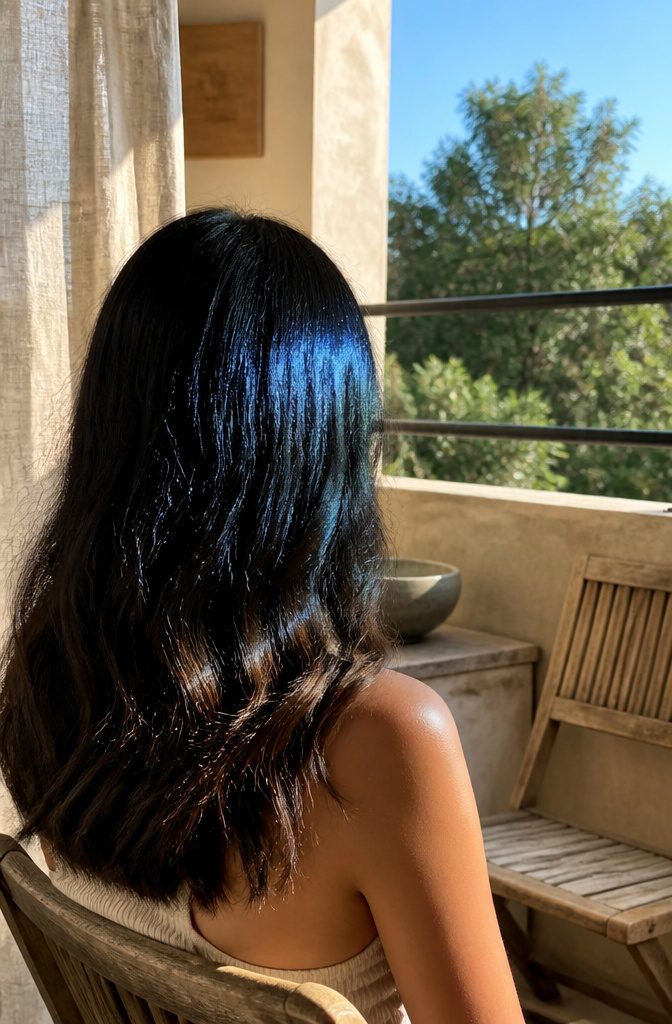
Black hair is reflective, which means it rarely looks fully dark in bright light. Raven-black hair, the darkest shade, can appear almost blue under certain conditions.
That effect comes from how densely packed eumelanin pigment sits in the strand with no pheomelanin to warm it. It behaves like a raven’s wing.
Very dark brown hair can read as black indoors, then show warm undertones the moment you step outside.
The shift is lighting, not damage. Black hair doesn’t absorb all the light that hits it the way a matte surface would.
It bounces enough back that you see dimension, sometimes a hint of warmth, sometimes that cool blue cast depending on the pigment density and the angle of the sun.
2. How Sunlight Changes Pigment
The pigment shift is permanent. Hair contains two melanin types: eumelanin, which gives dark color, and phaeomelanin, which gives light.
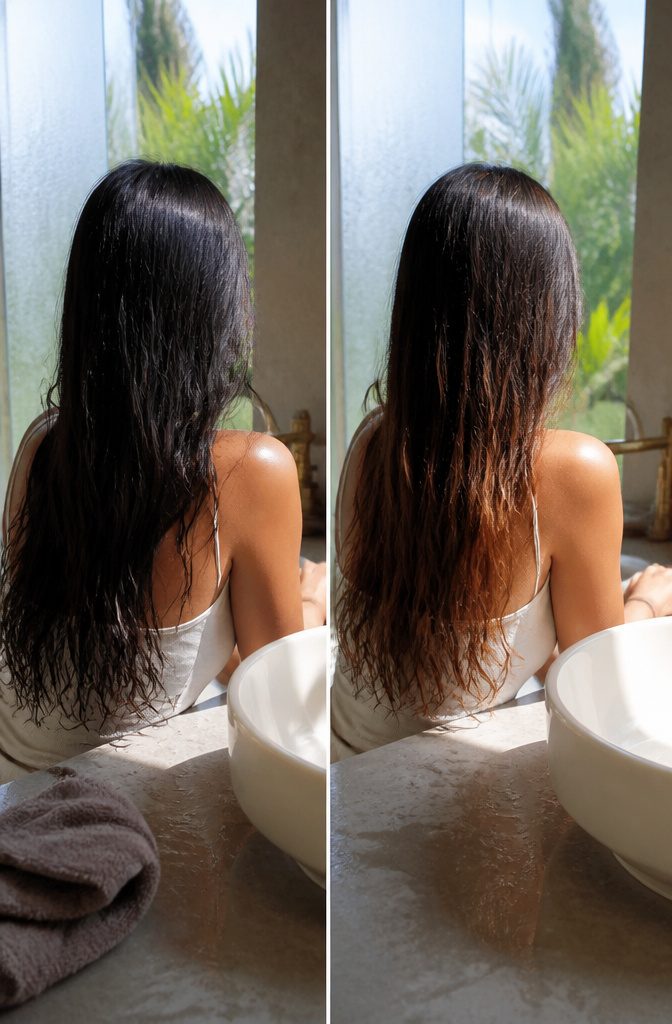
UV rays break down the melanin in exposed strands and leave them lighter. Since hair is dead once it leaves the follicle, the affected part stays that way until you cut it off.
The chemistry behind it runs on hydrogen peroxide. That compound oxidizes melanin and pulls color out.
Heat and sunlight speed the breakdown, though not by a huge margin. Black hair exposed to sun long enough can turn dull brown or take on brassy orange tones, depending on how much unreacted melanin remains.
This is separate from the optical effect I covered earlier. Sunlight reflecting off the surface makes hair look lighter in the moment; UV breaking down pigment changes the strand itself.
Looking at your hair won’t tell you whether the lighter shade is temporary surface dryness or pigment that has actually broken down, so if your hair looks lighter after a week outdoors, assume some of that shift is real and here to stay.
3. Why Color and Damage Vary
Why Color and Damage Vary
Not all brown-looking hair is damaged, but several things can shift black hair lighter or duller:
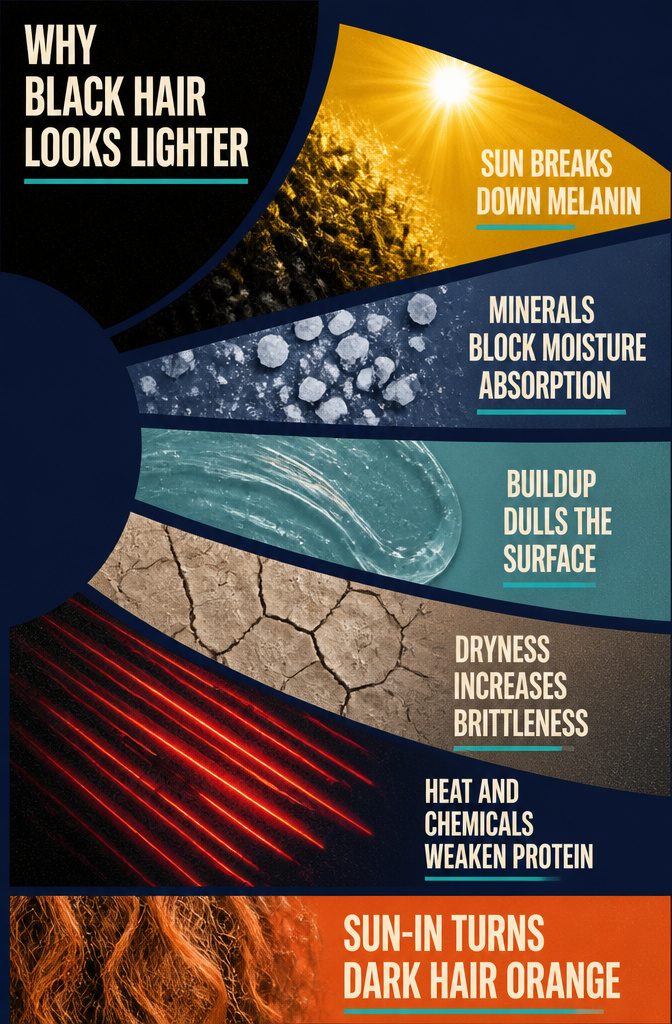
- Sun exposure breaks down melanin pigment and dries the shaft, which makes hair more prone to breakage.
- Hard-water minerals like calcium and sulfur sit on top of the hair shaft instead of penetrating, preventing moisture absorption and dulling the surface.
- Product buildup leaves a film that blocks light and changes how color reads.
- Dryness from lack of moisture or humidity makes hair look lighter and feel brittle.
- Chemical treatments including bleach and hydrogen peroxide solutions weaken protein structure.
- Heat styling compounds oxidation damage.
- Genetics determine how much melanin you have and how it responds to environmental stress.
Dark hair lightened with Sun-In can turn brassy or orange rather than blonde, since unreacted melanin pushes warm tones. The effect is permanent and the peroxide weakens hair, so deep conditioning matters if you go that route.
4. What It Means and What Helps
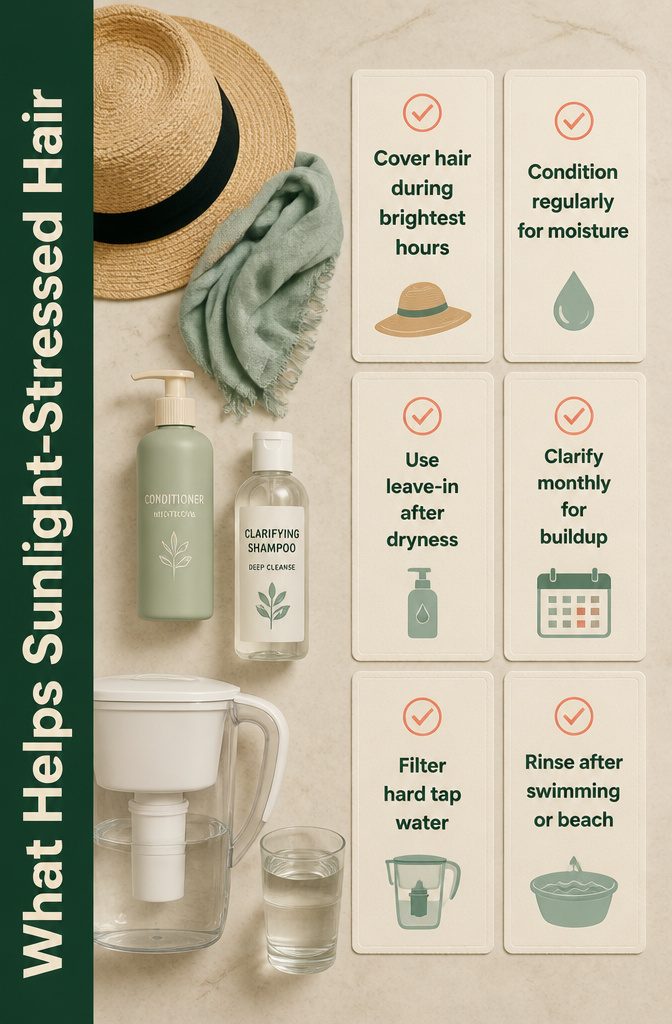
The brown cast may not mean damage. Black hair can show brown or reddish tones naturally depending on genetics and natural undertones, so a lighter look in sunlight does not always signal a problem.
If your hair feels dry or shows a shift that bothers you, a few moves help:
- Limit direct sun or cover your hair with a hat or scarf during the brightest hours.
- Keep hair moisturized with regular conditioning. If dryness sets in after time outside, a leave-in conditioner brings softness back.
- Clarify monthly to clear buildup that can dull color.
- Use filtered water if hard water runs through your taps. Minerals leave deposits that alter how hair looks.
- After swimming or beach days, rinse hair and scalp thoroughly before adding moisturizer back in. Salt water wears hair out and makes sun exposure hit harder.
Sun-In and Deliberate Lightening
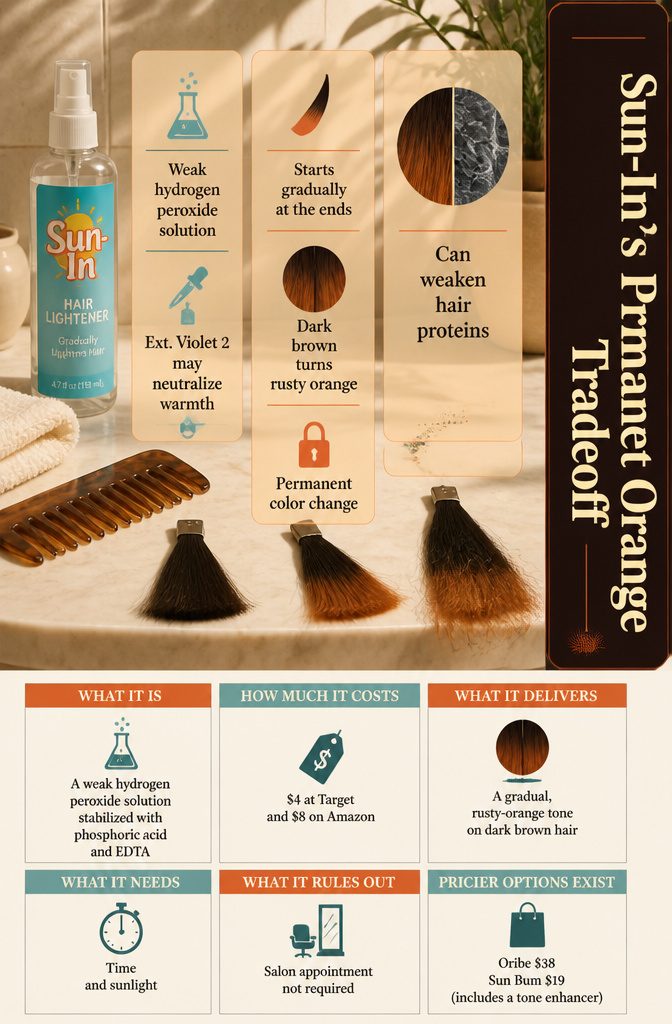
Some people want the lift.
Sun-In is a weak hydrogen peroxide solution stabilized with phosphoric acid and EDTA, sold for $4 at Target and $8 on Amazon, and it delivers a gradual, rusty-orange tone on dark brown hair that starts at the ends.
The effect is permanent, and hydrogen peroxide can weaken hair proteins over time, making strands more prone to breakage.
I think of it as a low-commitment way to test lighter ends without booking a salon appointment, but it comes with the understanding that you’re trading some structural integrity for color.
There are some products that might contain a small amount of a dye called Ext. Violet 2 to help neutralize orange or yellow tones.
— Allure
That dye helps if the orange skews too warm for your taste. Pricier options exist: Oribe Bright Blonde Sun Lightening Hair Mist at $38 and Sun Bum Blonde Lighten & Tone Kit at $19, which includes a tone enhancer.
The ingredient lists might show more conditioning agents, but the lightening performance stays roughly the same across the board.
Afro Hair on Vacation
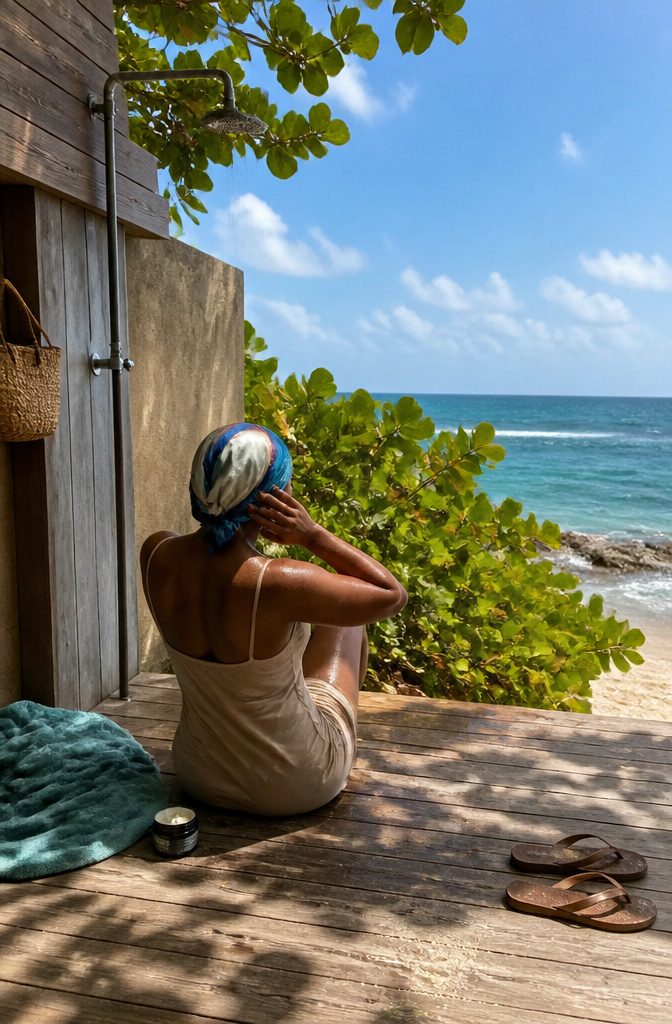
Direct sun and salt water leave afro hair drier and more prone to damage, so wear a hat or scarf, ideally silk-lined, during the hottest parts of the day.
Consultant Trichologist Eleanore Richardson-Ampaw says exposure to salt water wears hair out and makes it more vulnerable to sun damage. Rinse your hair and scalp thoroughly after time in the sun, then reapply a moisturiser.
Protective styles can help, but only if they’re done right.
Braids, updos, passion twists, faux locs, twist outs, cornrows and chunky plaits all keep ends tucked away. The catch: if applied too tightly, protective styles can cause traction and breakage.
Richardson-Ampaw says they should be loose, easy to undo and redo, and not add extra weight to your hair or scalp. Don’t pick a style just to avoid dealing with your hair on holiday; there will be repercussions.
Frequently Asked Questions
Why does black hair look brown in sunlight?
Bright light reveals warm undertones that indoor lighting hides, and that part is only an optical effect.
UV rays also break down melanin in exposed strands, which lightens them for good until the damaged length is cut off. Hard water minerals, product buildup, and dryness can add to the brown cast.
What does black hair look like in sunlight?
It can look blue-black or warm brown, depending on pigment density, the angle of the sun, and your genetics.
Raven-black hair, the darkest shade, can look almost blue because it has dense eumelanin and no pheomelanin to warm it. Black hair reflects enough light that it rarely looks fully dark outdoors.
What is brown black hair?
It is very dark brown hair that reads as black indoors.
Once you step into direct light, its warm brown undertones show. That change comes from the lighting, not from damage.
Is sunlight good for black hair?
No. UV rays break down melanin and dry out the shaft, which leaves hair lighter and more prone to breakage.
A hat or scarf during the brightest hours of the day cuts down the exposure, and regular conditioning helps with the dryness.
Is it normal for black hair to turn brown in the sun?
Yes, it is common, and it can come from two sources. Some of the shift is lighting and passes once you’re back indoors, while some is UV breaking down pigment, which is permanent.
If your hair looks lighter after a week outdoors, assume part of the change is real. Natural brown or reddish undertones from genetics are not a sign of damage.
Why does black hair look red in sunlight?
Some black hair carries reddish or brown undertones naturally, and direct sun makes them easier to see.
Sun exposure can also break down pigment and leave unreacted melanin behind, which gives dull brown or brassy orange tones. If the red looks dry or brittle too, sun damage is the likelier cause.