A perm is a permanent chemical treatment that changes hair’s curl pattern, but in Black communities the word often means a relaxer that straightens.
Either way, every treated strand stays changed, and only new growth returns to your natural texture. Quia Bethea used a perm to loosen 4B hair to something between 3A and 3C.
Two Meanings of Perm
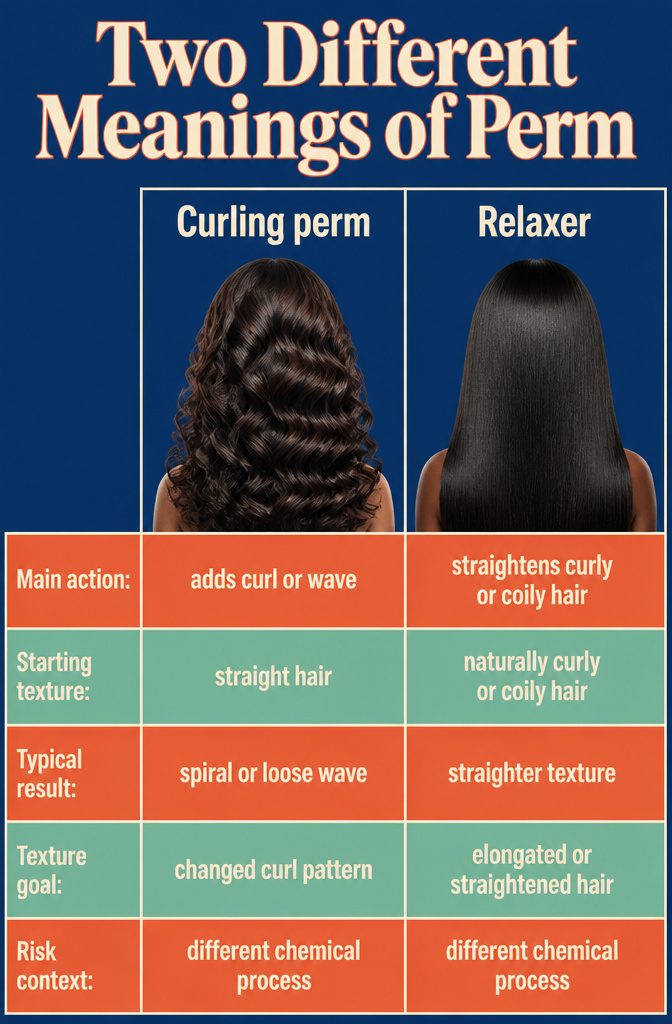
The word splits before you do anything else.
For most readers a perm is a chemical process that adds curl or wave to straight hair, the kind of spiral or loose wave you see bouncing back in trend pieces every few years.
But in Black communities the same word often means the opposite: a relaxer that straightens naturally curly or coily hair.
Hair consultant Mickiēla Mbatha puts it plainly: a perm is any permanent chemical process that manipulates the hair into a different curl texture, from elongated waves to tight coils or straighter altogether.
The confusion matters because a search for perm on Black hair could mean either one.
A reader looking to loosen 4B coils to a 3A wave and a reader wanting to keep her natural texture but shift the curl pattern are after two different processes with different risks, and the rest of this article keeps them apart.
What Chemical Treatments Do
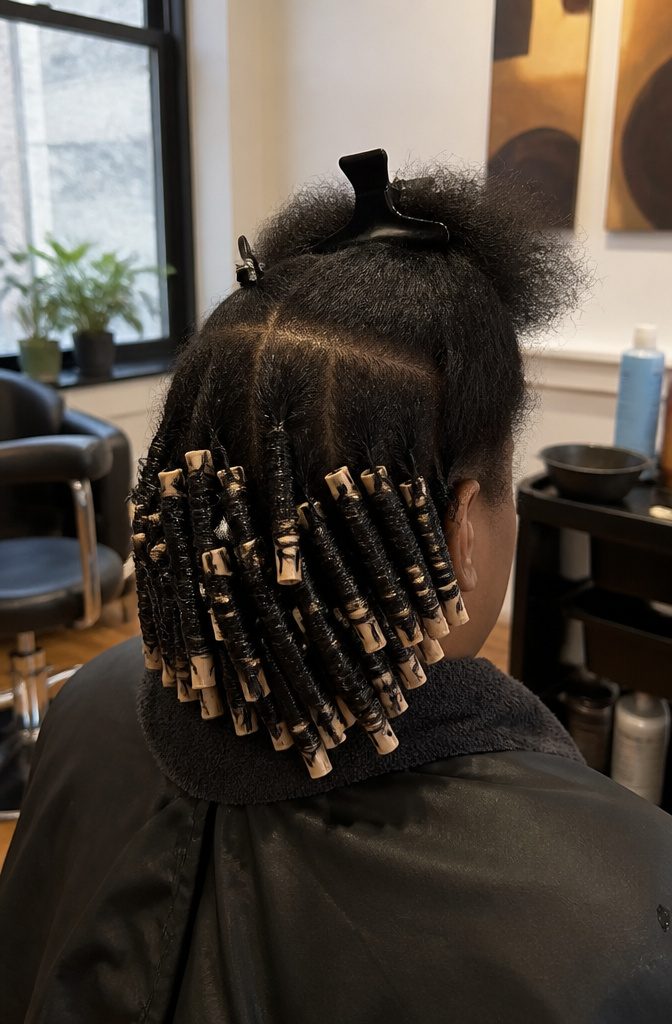
A perm changes the protein bridges inside each strand so the hair can be wrapped on rods and set into curls or waves.
A relaxer works on the same structure for the opposite result: it loosens curl texture so the hair lies straighter. Either change is permanent for every strand it touches, and only new growth comes in with your natural texture.
Reported harm includes irreversible damage, breakage, and burns that scab on the scalp.
A 2022 National Institutes of Health study linked hair-straightening chemicals to a higher risk of uterine cancer, and more research is needed to show causation. Outcomes also differ: some people describe soft, defined curls, while others describe hair that snaps.
Process and Results
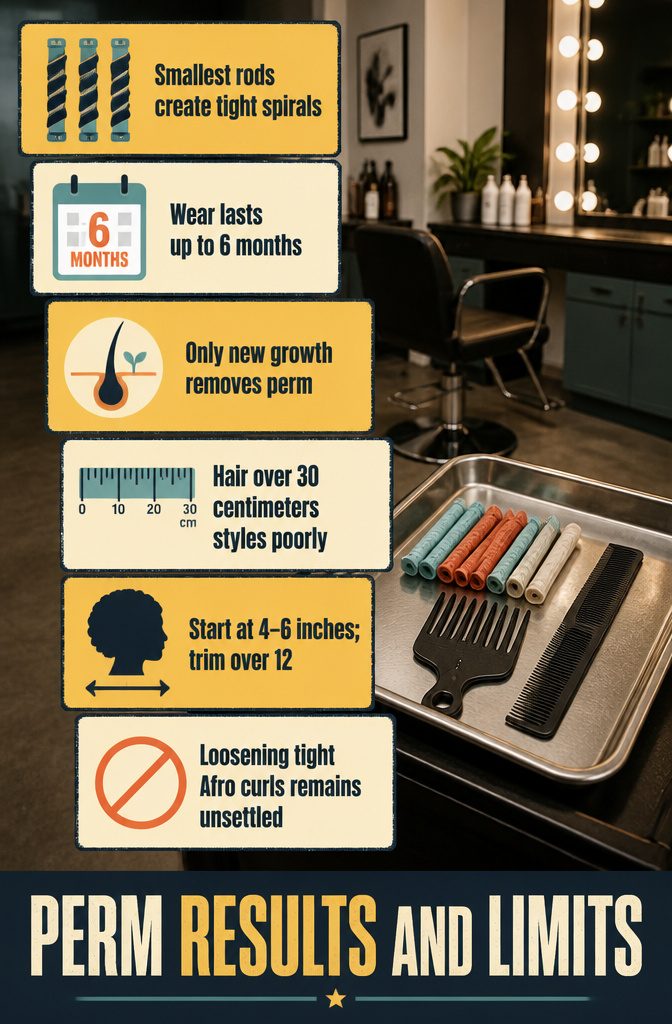
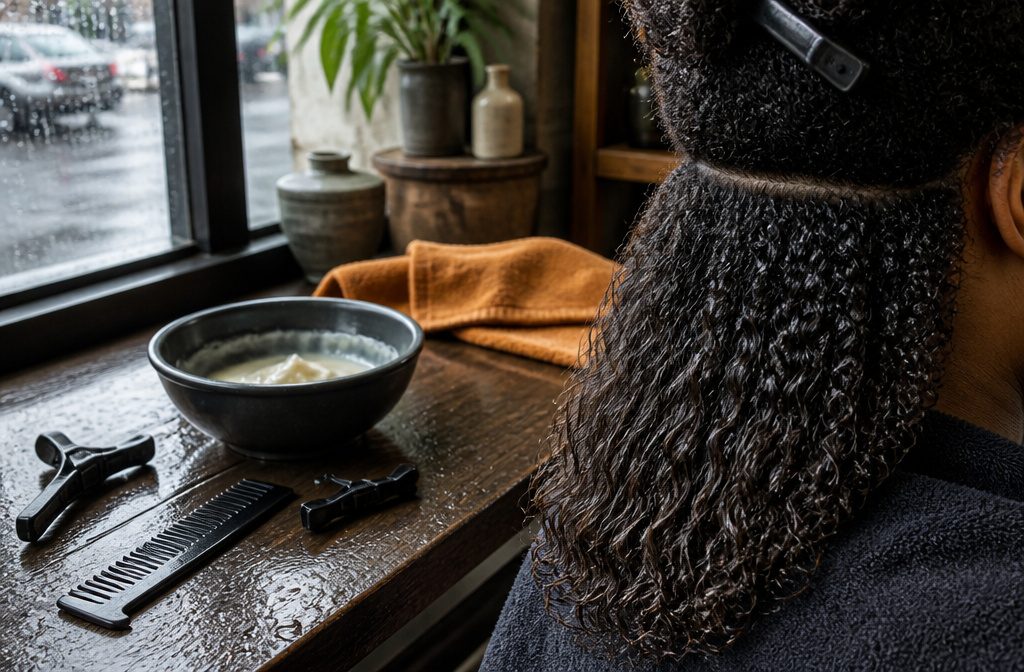
Salon perms for this look use the smallest rods available, which set the hair in tight spirals. A few days later, a wide-toothed pick separates the curls, and a fine-toothed comb teases small sections until the volume looks right.
Expect up to 6 months of wear. A perm can’t be washed out, and only growth removes it; the new hair usually comes in as natural-looking waves.
Hair longer than 30 centimeters is very hard to style because of its weight.
For an afro built from straight hair, start at 4–6 inches and trim anything over 12. Whether a perm can loosen very tight Afro-textured curls is still unsettled, so I wouldn’t promise it.
Suitability and Natural Hair
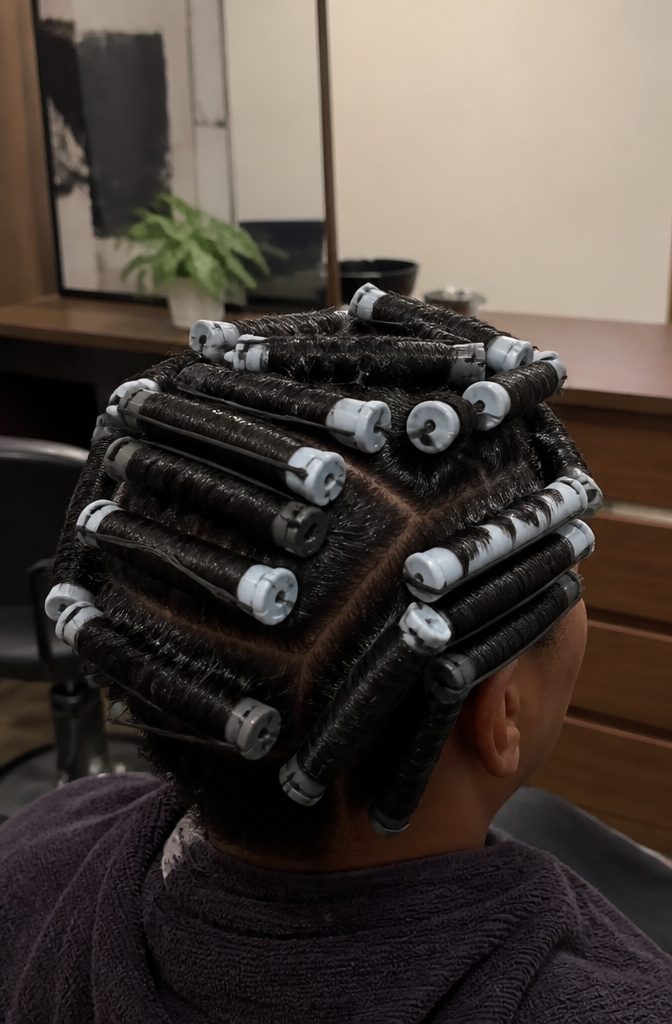
A perm suits straight to wavy hair, and a hairdresser can tell you which treatment fits yours.
Natural hair is the alternative, and the pressure around it is measurable. The 2023 CROWN Workplace Research Study found this:
Black women’s hair was more than twice as likely to be perceived as unprofessional. More than half of those surveyed felt they had to wear their hair straight in a job interview, and two-thirds had changed their hair for one.
That pressure is part of the decision.
Age matters too: a Feb. 16, 2013 forum thread about a 6-year-old advised against relaxing, since a child that age has little sense of upkeep.
Curl Pattern and Texture
Curl Pattern and Texture
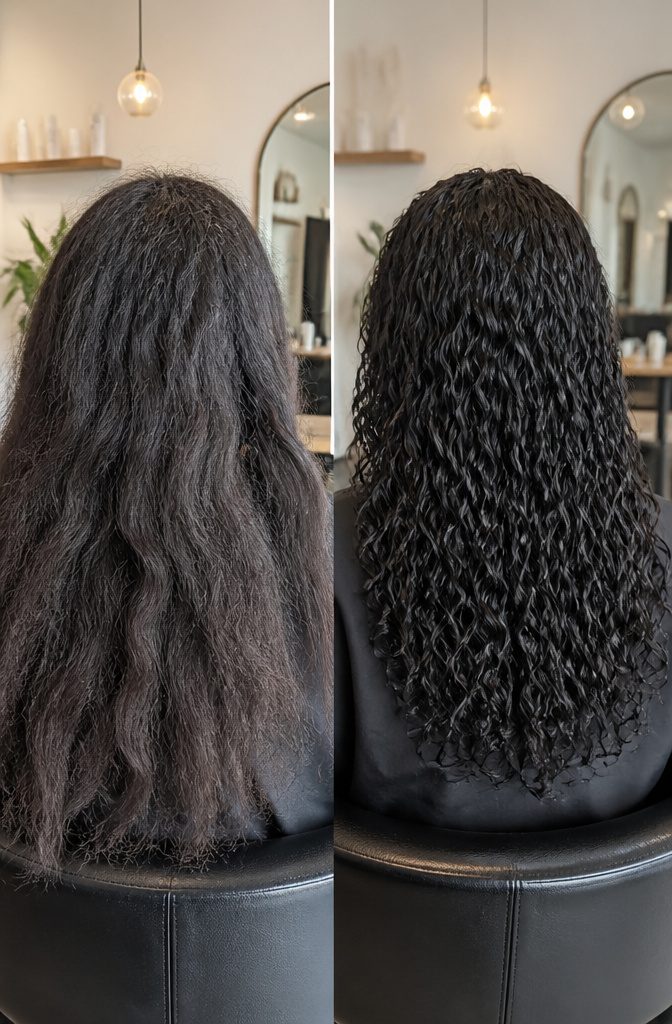
The perm you need depends entirely on where you start. Quia Bethea had 4B hair and used a perm to loosen it toward something between 3A and 3C, shifting from a tight coil to a defined wave.
That’s one direction. The other runs the opposite way: straight hair can build an afro with a tight spiral perm, combing out the fresh curls and teasing them to the height and fullness you want.
The method matters there too. A braid approach works if you section the hair into at least six or eight pieces, keeping nothing thicker than half an inch so the curl takes evenly.
Standard perms assume you’re starting from straight to wavy hair and want to add wave or curl. The question for tight Afro-textured curls is whether a perm can loosen them at all, and Bethea’s result shows it can.
Damage and Aftercare
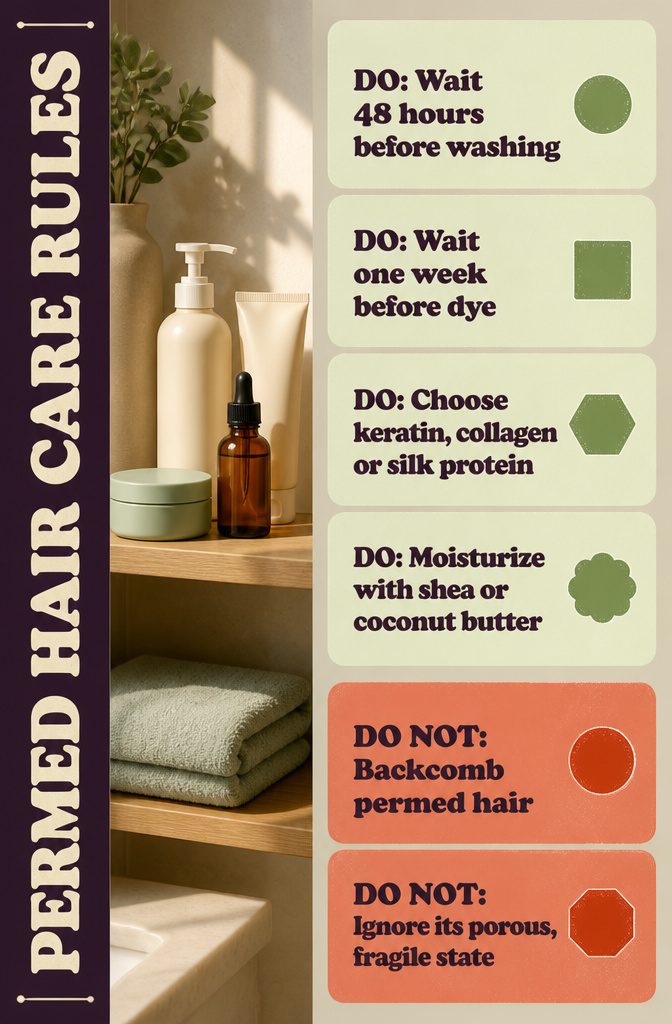
Chemically treated hair needs a gentler hand and a careful first few days. Wait at least 48 hours before washing or wetting your permed hair, and hold off on any hair dye for a week so the treatment can fully set.
After that window, the protection routine looks like this:
- Look for products with keratin, collagen, silk protein, aloe vera or amino acids. These ingredients rebuild strength, add moisture and keep the texture soft.
- Use a pea-sized amount of shea or coconut butter as a daily moisturizer.
- For coarse or very dry hair, work a few drops of jojoba or olive oil through to keep strands soft.
- Avoid backcombing. Permed hair is already more vulnerable to breakage, and teasing adds stress it doesn’t need.
The perm opens up the hair structure to reshape it, which means it stays more porous and prone to damage long after the appointment. Treat it like you’re working with something that’s been through a lot, because you are.
Frequently Asked Questions
How long does permed hair stay?
A perm lasts up to 6 months.
The curl is permanent on treated strands and only grows out as new hair comes in, so you can’t wash it away. New growth typically appears as natural-looking waves rather than returning to your original texture all at once.
Does a perm damage hair?
Yes, perms can cause irreversible damage and breakage because they permanently alter the protein structure inside each strand.
Reported injuries include burns, scabs on the scalp, and hair that snaps off. The chemical process leaves hair more porous and vulnerable long after the appointment.
Are perm hairstyles suitable for everyone?
Perms work best on straight to wavy hair. A hairdresser can assess your specific texture and recommend the right treatment, but chemically treated or relaxed hair may not be a good candidate since additional chemicals can worsen damage.
Can straight hair make an afro?
Yes, but only with a tight spiral perm using the smallest rods available.
After the treatment sets, you comb out the fresh curls with a wide-toothed pick and tease small sections with a fine-toothed comb until you reach the volume and height you want.
What perm makes hair curly?
A curly perm uses small plastic rods to set tight spirals into straight or wavy hair.
The size of the rod determines how tight the curl will be: the smallest rods create the tightest afro-style curls, while larger rods produce looser waves.
Can a person with 4c hair get a perm?
Yes. A perm on 4B or 4C hair works to loosen the curl pattern rather than add curl, shifting tight coils toward a looser 3A to 3C wave.
This process is sometimes called a curly perm or texturizer and uses the same chemical treatment as a standard perm but with a different goal.