Go one length if your hair is fine with see-through ends, or if you want easy mornings; go layered if it’s thick, wavy or curly.
Density flips the fine-hair call: fine but plentiful hair can take a few long face-framing layers. Layers also need trims every 6–8 weeks, while one-length stretches to 10–12.
What Layered and Non-Layered Hair Actually Mean
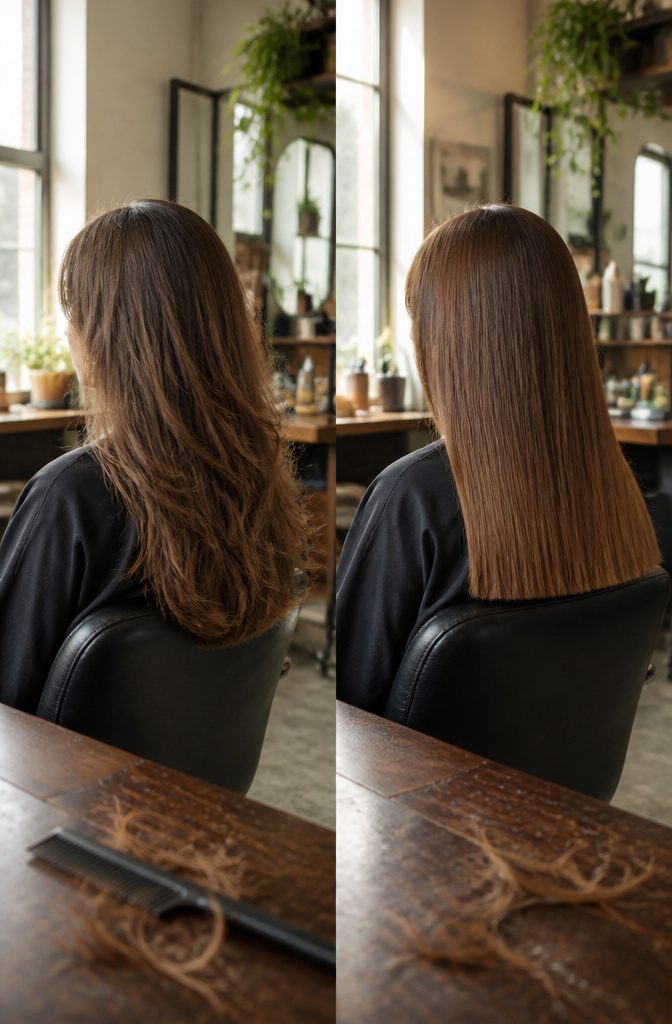
A layered cut uses deliberately different lengths: the top or inside sections sit shorter than the longest perimeter, and the gap can be dramatic or barely visible.
A non-layered cut, the one-length or blunt cut, keeps most strands falling to the same visual baseline, which gives a solid, dense-looking bottom edge.
"One length" is not literal, though. Growth patterns and the curve of the head mean no two strands match exactly, and a stylist may still add slight graduation or invisible internal work so the perimeter sits right.
If you want a truly solid shape, I’d ask for no visible layers and weight preserved, then confirm whether any internal removal is planned.
Length Structure and How It Changes the Shape
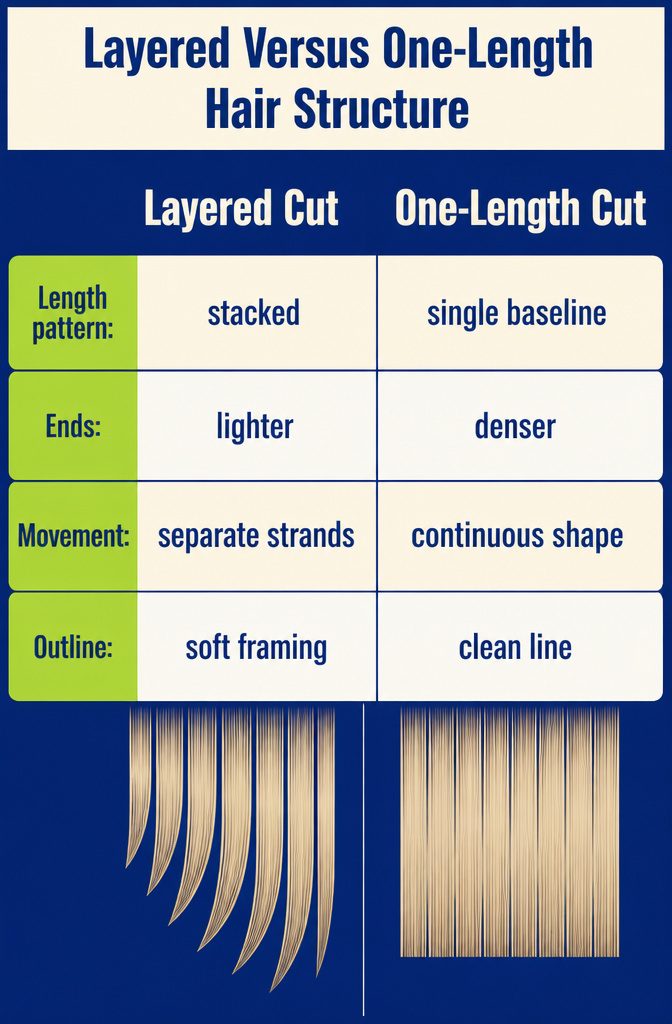
The practical divide is cutting hair to multiple lengths versus keeping most strands at a single perimeter. Layered cuts stack shorter sections over longer ones, sometimes dramatically and sometimes so subtly you notice only when the hair moves.
A non-layered cut keeps nearly all the length at one visual baseline, which sources often call a blunt or one-length cut.
That structural choice sets up every other contrast.
Layers create lighter ends because the perimeter holds less hair. Non-layered cuts pack the full thickness right to the edge, so the bottom looks denser and more substantial.
Movement changes too: layered hair separates into individual strands that swing and bounce independently, while a blunt cut moves more like one continuous shape.
The geometric difference between stacked lengths and a solid outline decides whether the cut will frame your face softly or hold a strong clean line, whether it will need definition to show its shape or look polished air-dried.
Movement and Texture Against Clean Lines
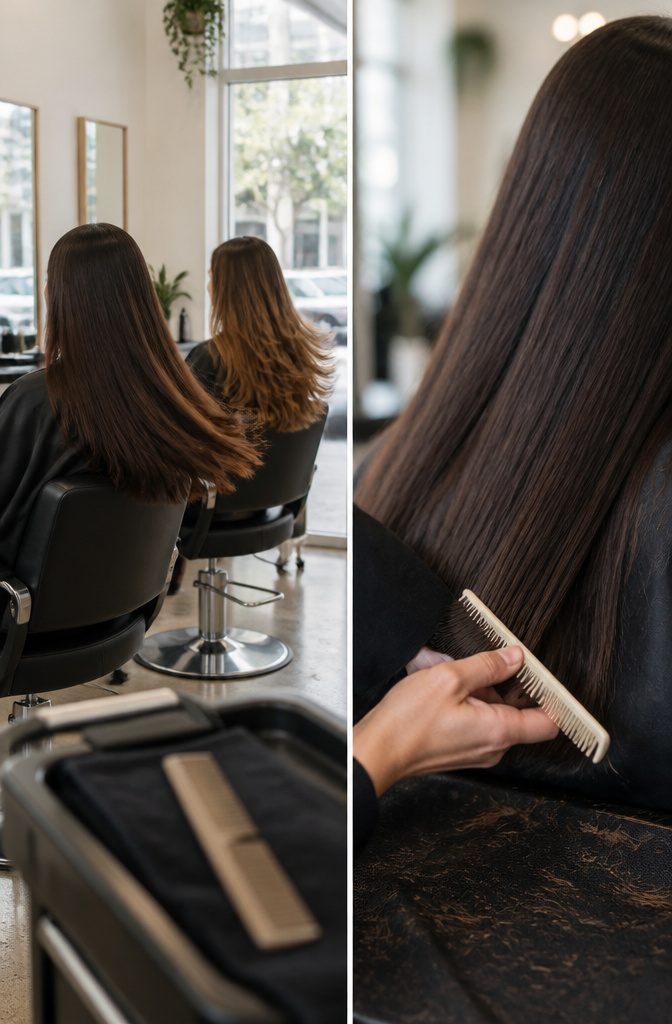
Layers cut the hair into lighter, more separated pieces that move independently, so the whole shape looks textured and dynamic.
Each strand ends at a different point, which means they don’t all swing together. The result is softer, more flowing, and you can see individual strands catch light or shift as you turn your head.
Non-layered hair keeps all the length at one line, so it moves like one continuous shape rather than breaking into separate sections. The outline stays clean and compact.
Because the ends are all together, the movement reads as more structured and deliberate. It’s stiller, but that stillness gives the cut a bold, polished presence that layered hair can’t match.
The tactile difference shows up when you run your hands through it.
Layered cuts feel lighter and looser, with more air between sections. Non-layered hair feels denser and more substantial, especially at the ends where all the weight sits.
Volume, Weight, and Where the Fullness Sits
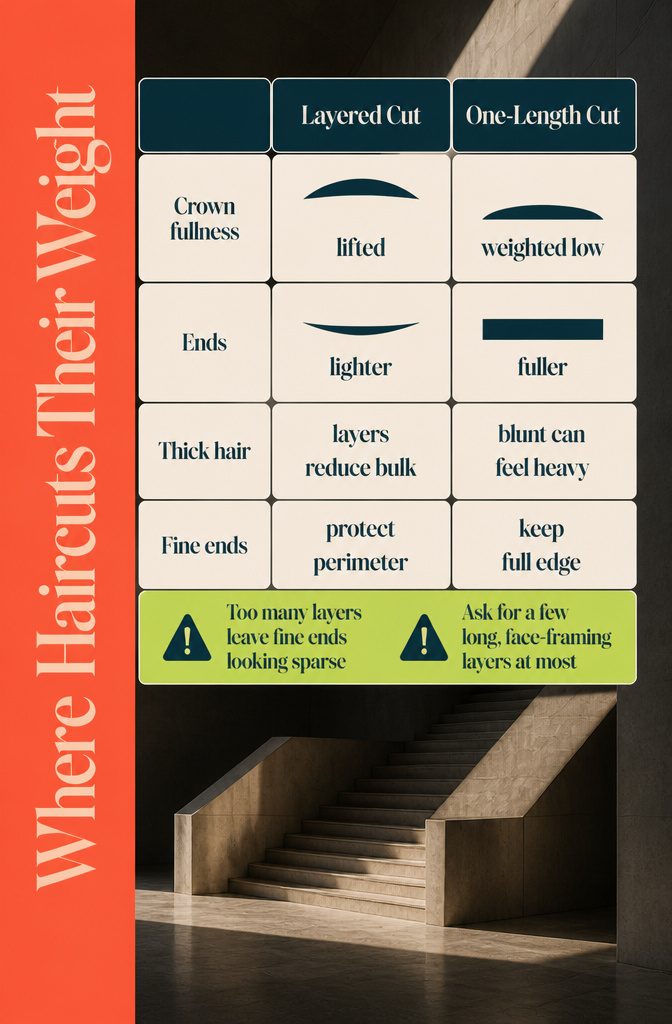
Layers take weight out of the hair, so it lifts at the crown and settles with movement.
A one-length cut keeps all that weight at the bottom, which is why non layered hair has a smooth, heavy fall and ends that read as fuller from the outside.
On fine hair, I’d protect the perimeter. Too many layers leave fine ends looking sparse, so ask for a few long, face-framing layers at most.
Thick hair is the reverse.
A blunt cut can feel heavy and bulky, and layers keep the shape from going triangular. If your hair is thick and you still want a full hemline, restrained internal layers do that job.
Which Cut Fits Fine, Thick, Straight, Wavy, and Curly Hair
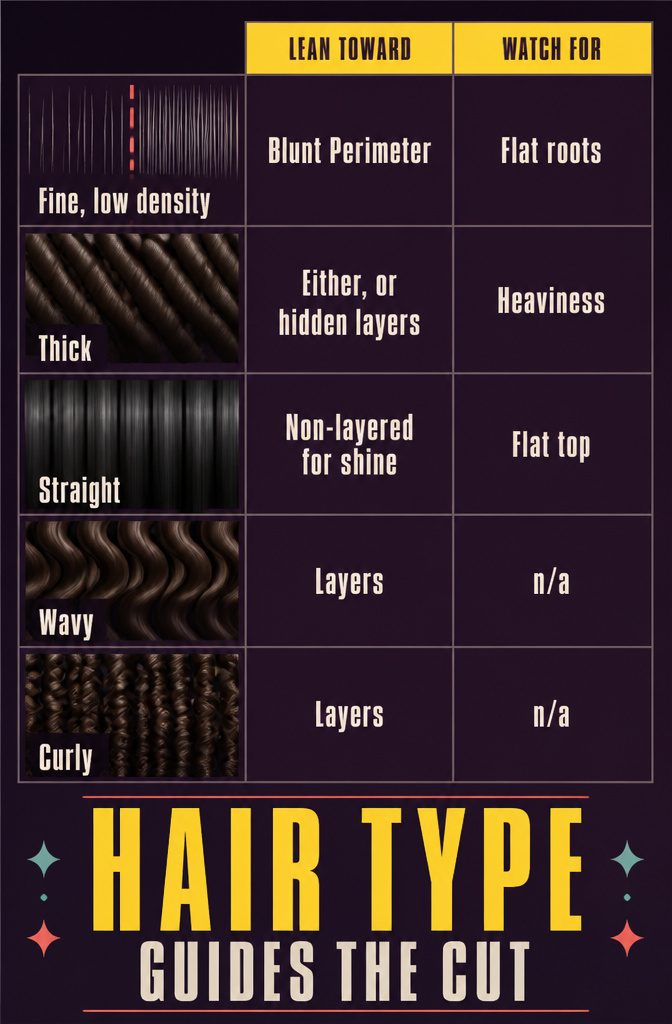
Fine hair gets two opposite answers, and the split is about density, not strand width.
Fine describes the diameter of each strand; low density means fewer strands. If your ends look see-through, go blunt.
If you have fine but plentiful hair, a few long, face-framing layers can add lift. I’d skip short layers all over either way, since they expose gaps.
| Hair type | Lean toward | Watch for |
|---|---|---|
| Fine, low density | Blunt perimeter | Flat roots |
| Thick | Either, or hidden layers | Heaviness |
| Straight | Non-layered for shine | Flat top |
| Wavy | Layers | n/a |
| Curly | Layers | n/a |
Thick hair can go either way, but blunt can feel heavy, so a hush cut removes weight quietly.
Face Framing and What Each Cut Does to Features
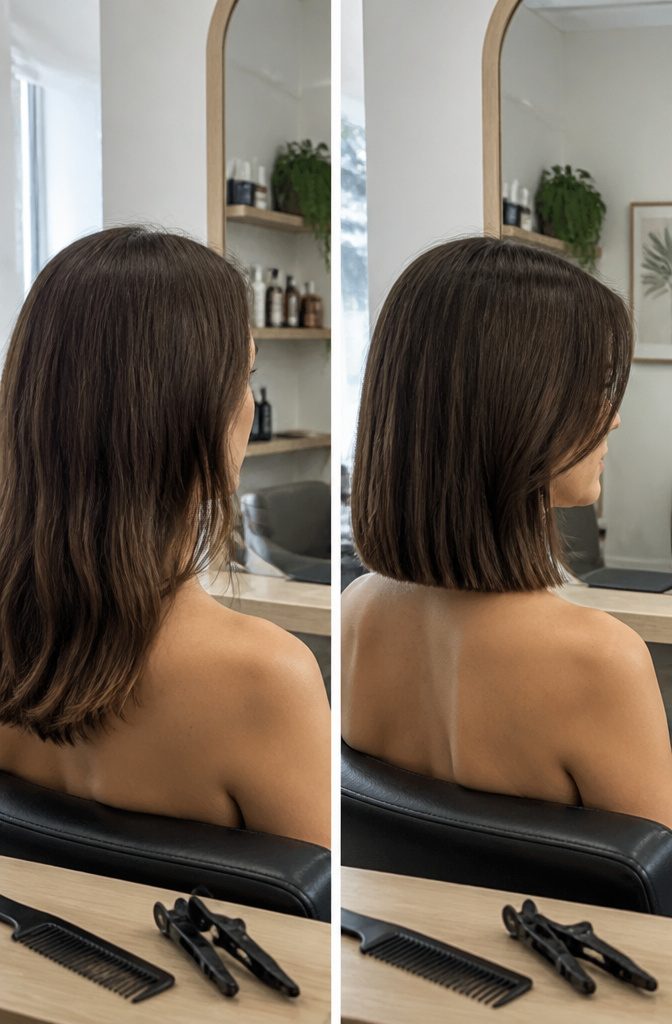
Layers soften and non-layered cuts define. A blunt line stops at one length, so the eye reads the outline and the jaw or collarbone becomes the frame.
Face-framing pieces near the cheekbones pull attention there, while longer pieces near the jaw or collarbone draw a different line.
The usual pairings: long layers add height for round faces, soft wispy layers smooth the angles of square faces, and oval faces can wear nearly anything.
I wouldn’t start with face shape, though.
Density and the styling you’ll actually do matter more than a category. The same blunt lob changes with a center part, side part, fringe, or tucked sides, so adjust those before ruling a cut out.
Daily Styling Effort and What Each Cut Demands
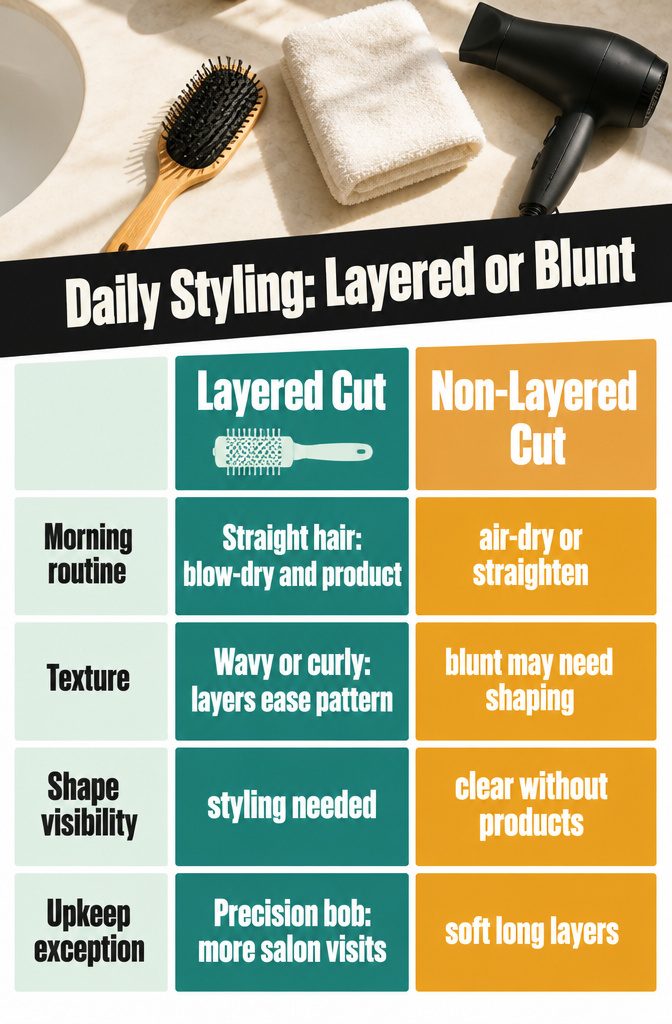
Non layered hair is the easier call for most mornings.
A blunt cut is simple to air-dry or straighten, and it doesn’t need products to make its shape visible. Layers on straight hair usually want a blow-dry, a round brush and some styling product before each section shows up.
Texture changes the math.
On wavy or curly hair, layers can take less work because the cut helps the natural pattern settle. A precision bob is the exception: it needs more salon visits than soft, long layers, since a little growth blurs its line.
If you rarely pick up a round brush, skip any cut that only looks right after a full blowout. Ask your stylist how it behaves air-dried.
Maintenance, Trims, and How Each Cut Grows Out
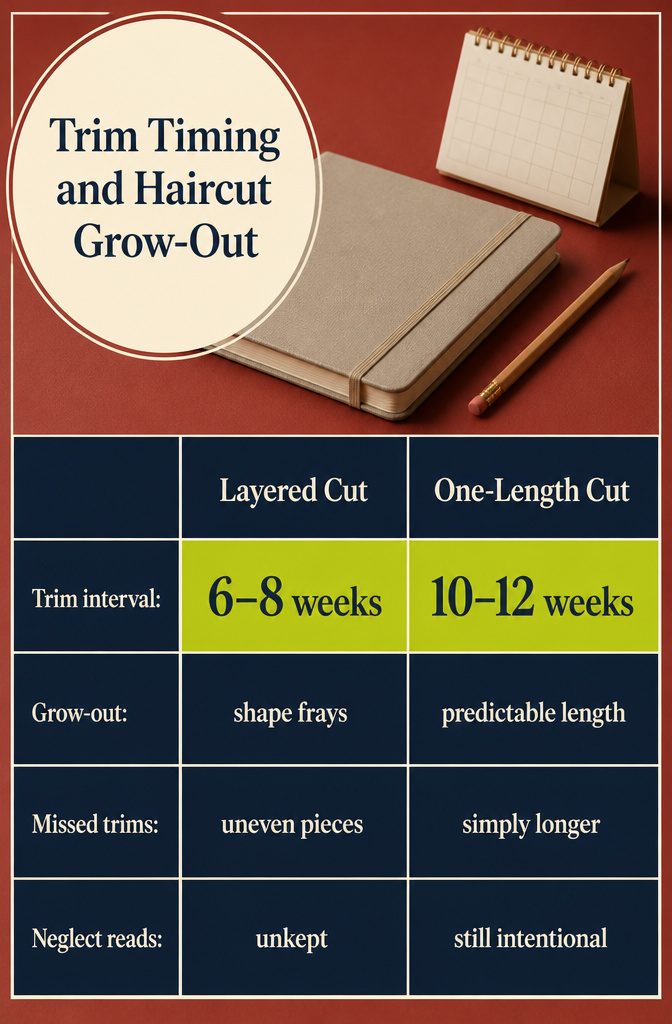
Layered cuts ask for trims every six to eight weeks to keep the shorter pieces sitting where they should.
Let those appointments slide and the shape starts to fray at the edges, with pieces that no longer blend or frame the way they did fresh from the chair.
One-length hair grows out more predictably because there is no stagger to maintain.
You can stretch trims to ten or twelve weeks without the cut looking obviously grown out, which makes it easier to keep in decent shape if you hate booking appointments or your calendar stays chaotic.
I find that layers telegraph neglect faster than blunt cuts do. A one-length cut past its trim date just looks a little longer; layers past theirs look uneven, and that reads as unkempt rather than intentional.
Tradeoffs, Risks, and What Can Go Wrong
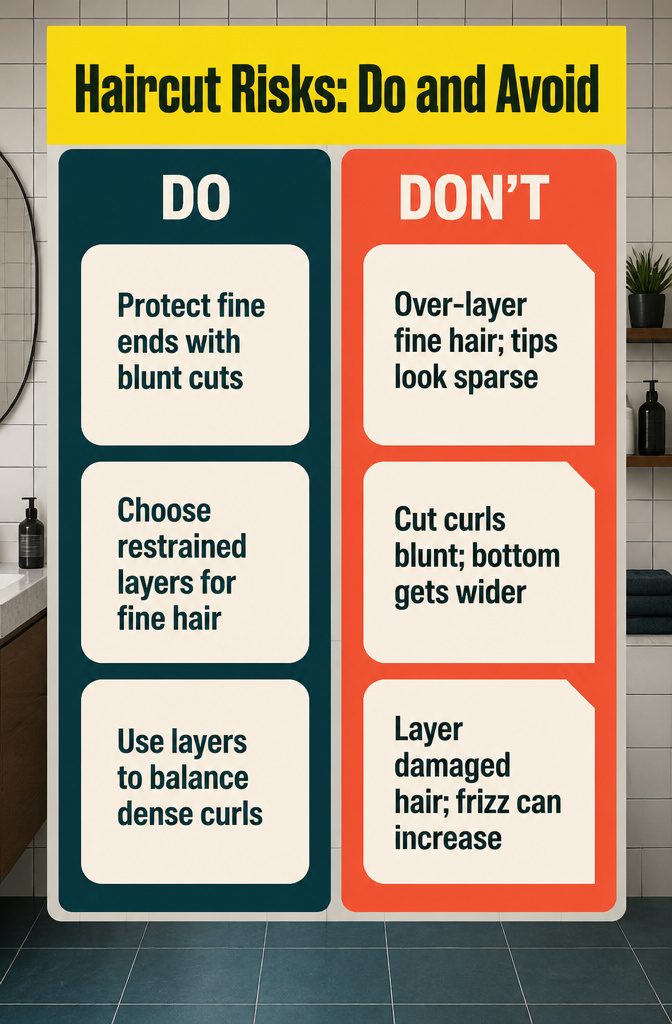
Fine hair is where too many layers backfire: the tips can look sparse and thin, while a one-length cut keeps the ends looking thicker and fuller.
Dense and curly hair has the opposite problem. Cut at a single length, it tends to build a heavier, wider shape at the bottom, because curls pull upward and outward.
If your hair is damaged or porous, I would think twice before adding layers, since they can make it look even frizzier.
The cut itself does not cause damage, though. Heat, chemical processing, and rough handling do, so the real risk is a layered shape that has you curling or blow-drying every morning.
How the Choice Changes at Long and Medium Length
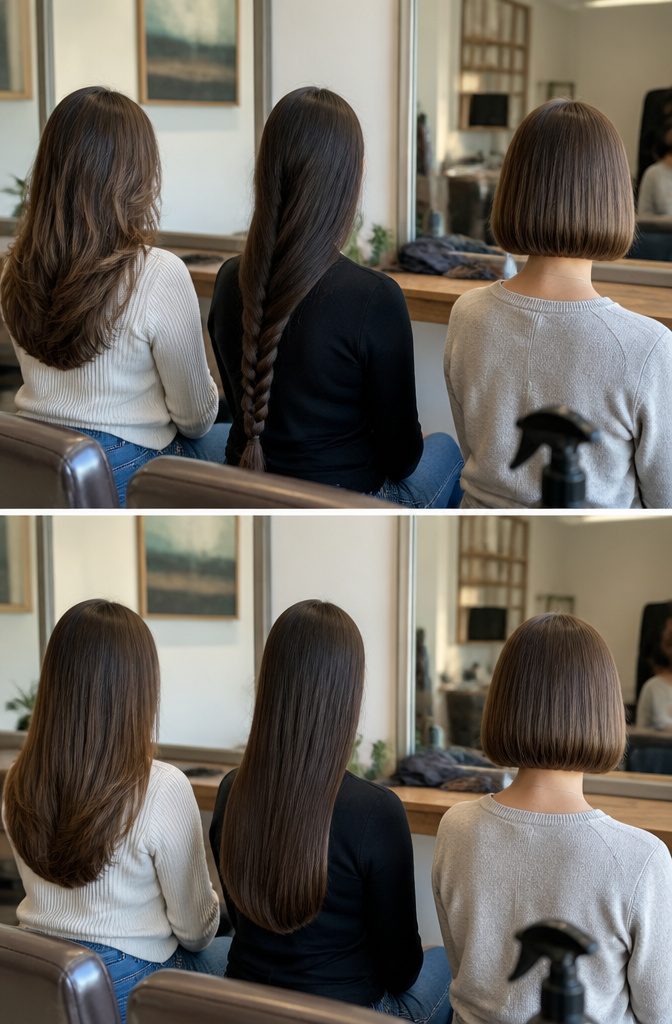
Long hair is where layers earn their keep.
Starting below the chin or collarbone, they take weight out of the mid-lengths and add swing without costing length. One-length long hair gives thick-looking ends and clean braids, but on dense hair it gets heavy and can pull waves straighter.
For anyone stuck between the two, I’d pick a soft U-shaped perimeter: it softens the baseline without layering the whole interior.
At medium length, layers add texture and a lighter feel, while a one-length bob or lob gives thick, blunt ends and a bold, structured silhouette.
Either way, tell the stylist where the shortest piece lands when dry, or "long layers" can end up cheek-length.
Curly Hair, Shrinkage, and the Triangle Problem
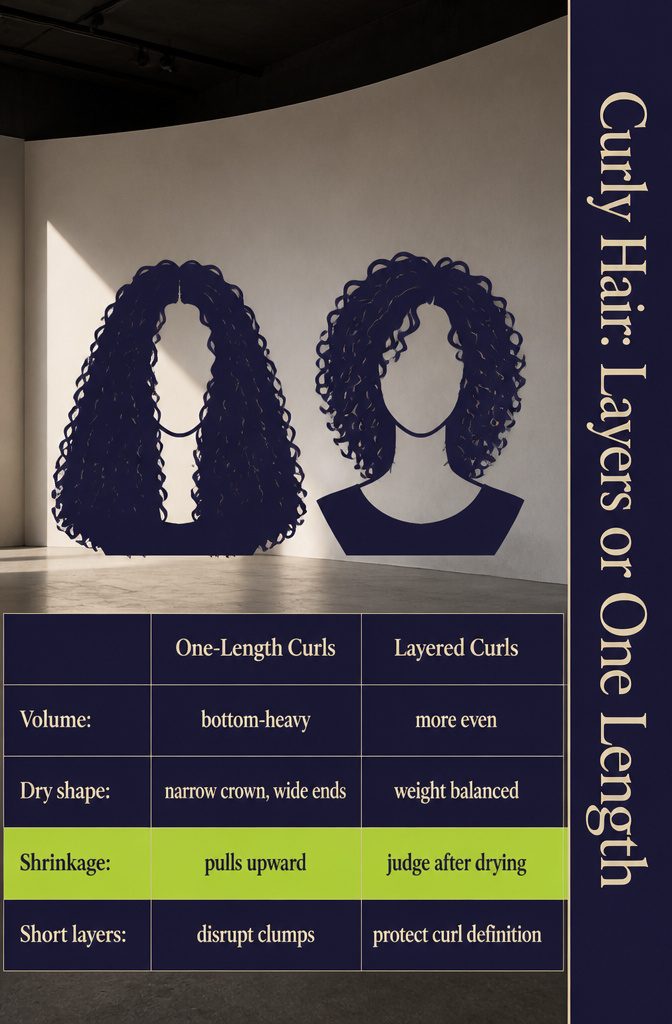
Curly hair calls for a different calculation. A one-length curly cut tends to pull volume toward the bottom, creating the triangle shape that shows up in nearly every complaint about blunt cuts on curls.
The curl pattern shrinks upward as it dries, and without layers to distribute weight, you end up with a silhouette that’s narrow at the crown and wide at the ends.
Some people want exactly that fullness, but most find it harder to manage day to day.
Layers prevent that bottom-heavy shape by removing weight from the sides and allowing curls to spring up more evenly. But go too short or add too many and you risk disrupting the curl clumps, which creates frizz instead of definition.
The finished dry shape matters more than wet length, so judge the cut after shrinkage rather than while the stylist is working through damp hair.
For fine curls, fewer and longer layers protect fullness. For very dense curls or coils, strategic layers improve balance without turning the whole cut into a texturizing experiment.
Bring a reference with a curl pattern and density close to yours, because curly cuts need to be customized to the actual curl rather than treated like a one-size approach.
Middle-Ground Cuts That Split the Difference
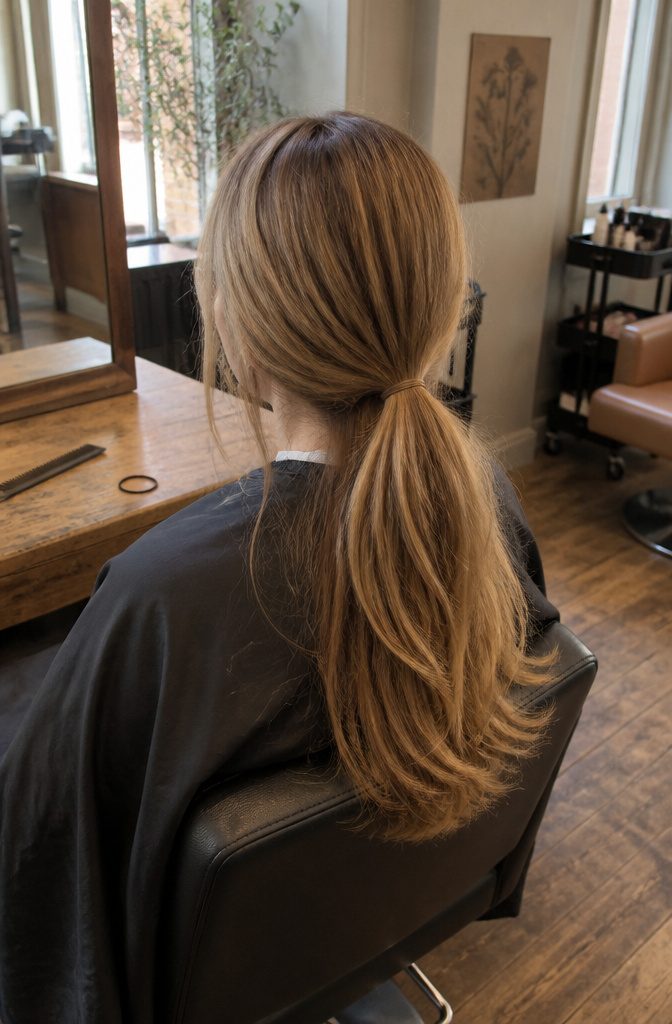
Keeping a full perimeter while cutting layers inside it is the compromise I’d choose for most long hair.
Long layers that begin below the chin or collarbone keep the impression of length and add swing, and face-framing pieces change the shape up front without thinning the back.
A soft U-shaped baseline works the same way: it looks less severe than a straight-across edge, and it needs no layering through the interior.
Fine, long, or curl-prone hair gets the most from this approach, since shape arrives without costing much fullness.
One check before you commit: show the stylist where your shortest piece will land when dry. Otherwise "long layers" can become cheek-length pieces that slip out of your usual ponytail.
How the Same Principles Apply to Men’s Cuts
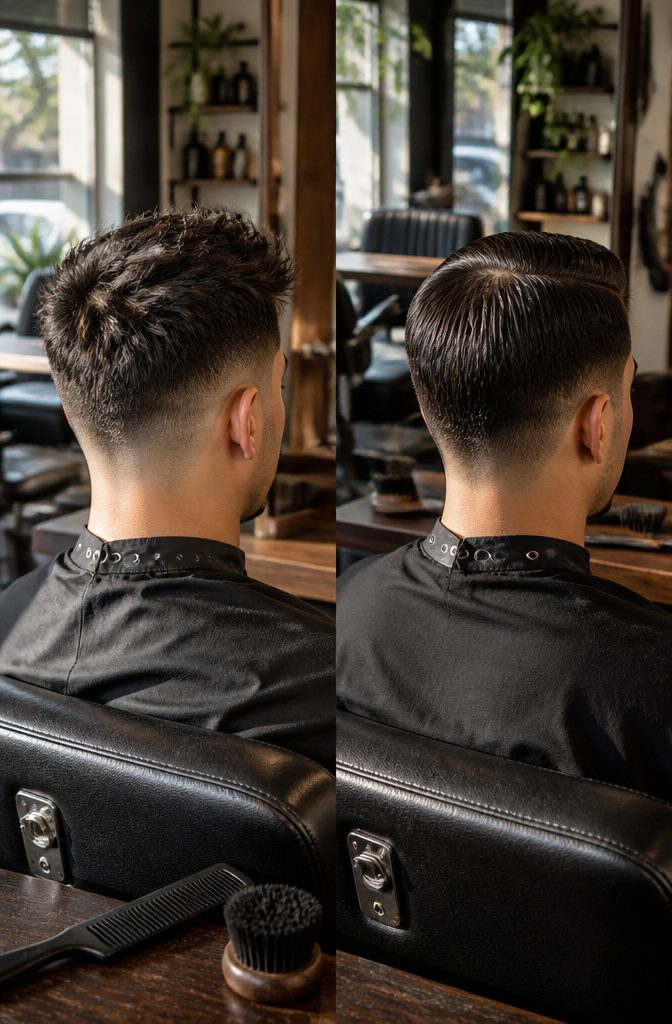
The same cutting principles apply whether the client is a man or a woman, so the decision still starts with density, texture, the outline you want and how much time you give the mirror.
Buzz cuts, tight fades and classic side parts are usually non layered: they sit close to the head, hold their outline as they grow, and respond well to regular clipper maintenance.
A fade and layers aren’t opposites, though.
A fade describes the sides, while layering describes the top, so a clipped or faded perimeter can carry a layered top. Medium and long scissor cuts, like curtains, textured crops and swept-back looks, use layers for texture and direction.
Thick or curly hair usually looks better layered. Straight, fine hair often looks cleaner without.
What to Ask Your Stylist and What to Bring
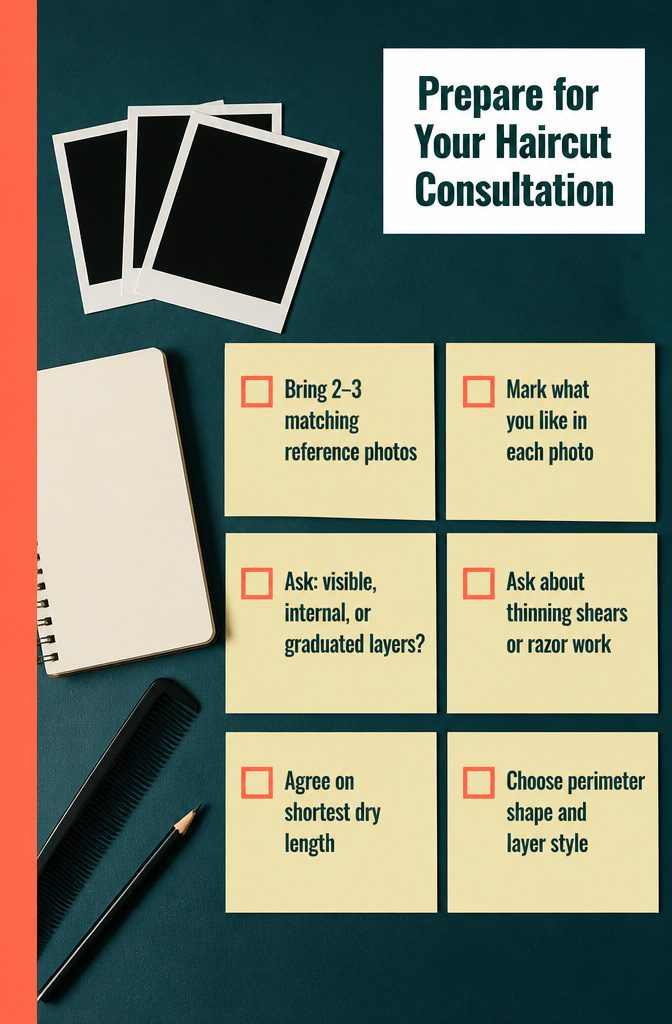
Bring two or three reference photos that match your own density, texture, length, and shrinkage.
Mark what you actually like in each one, because the thing you’re drawn to might be the colour or the styled finish rather than the cut itself.
Questions to ask before the stylist starts:
- Does the plan include visible layers, internal layers, or graduation?
- Will they use thinning shears or razor work?
- Where will the shortest layer sit, and how full will the bottom stay?
- Will the perimeter be straight, U-shaped, or V-shaped?
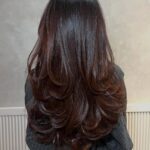
- If I’m asking for layers, which style: butterfly cut, long layers with curtain bangs starting below the chin, shag, V-cut layers, face-framing layers, wolf cut, hush cut, or feathered medium layers?
- If I want a blunt cut, which shape: blunt bob, lob, A-line, or U-shaped?
Agree on the shortest dry length before cutting begins.
Frequently Asked Questions
What is the difference between layered and non layered hair?
Layered hair is cut to several lengths, with shorter sections sitting over longer ones.
Non layered hair keeps most strands at one visual baseline. Layers remove weight and add movement, while a one-length cut carries its full thickness to the edge, so the bottom looks denser and the outline cleaner.
Do layers take more maintenance than non layered hair?
Usually yes. Layered cuts need a trim every 6–8 weeks to keep the shorter pieces in place, and on straight hair they often want a blow-dry and product to show their shape.
Non layered hair can stretch to 10–12 weeks between trims, though a sharp precision bob is the exception and needs more frequent visits than soft long layers.
Does curly hair look better with layers or without?
Most curly hair does better with some layers, because a one-length cut tends to pull weight to the bottom and form a triangle.
Going too short or adding too many layers can break up curl clumps and cause frizz. Non layered curly hair works if you like the fuller shape and the stylist cuts for dry shrinkage.
Is non layered hair boring?
No.
A blunt, healthy cut reads as sleek, elegant and timeless, with a bold clean line that layers can’t copy. You can also change the look with a center or side part, a fringe, or tucked sides.
Should fine hair have layers or no layers?
It depends on density. If your ends look see-through, a blunt perimeter makes them look fuller.
If your hair is fine but plentiful, a few long face-framing layers can add lift. Short layers all over expose gaps in either case.
Does layered hair work for men?
Yes. Medium and long scissor cuts like curtains, textured crops and swept-back styles use layers for texture and direction.
A fade describes the sides while layering describes the top, so a faded perimeter can carry a layered top. Buzz cuts and tight fades are usually non layered.
What kind of hair suits layers?
Thick, wavy and curly hair usually suit layers best, since they remove bulk and help the natural pattern settle.
Fine hair with high density can take a few long layers. Fine hair with low density tends to look fuller with a blunt perimeter.