Undertone narrows the choice faster than anything else: warm skin pairs well with copper, deep, dark reds tend to wash out a fair complexion, and deeper skin tones can carry saturated shades like burnt orange, fiery red and deep burgundy.
The range starts at black cherry, which reads almost black until light catches it, and ends at bright copper, a red-orange that practically glows beside a window.
1. Deep Crimson
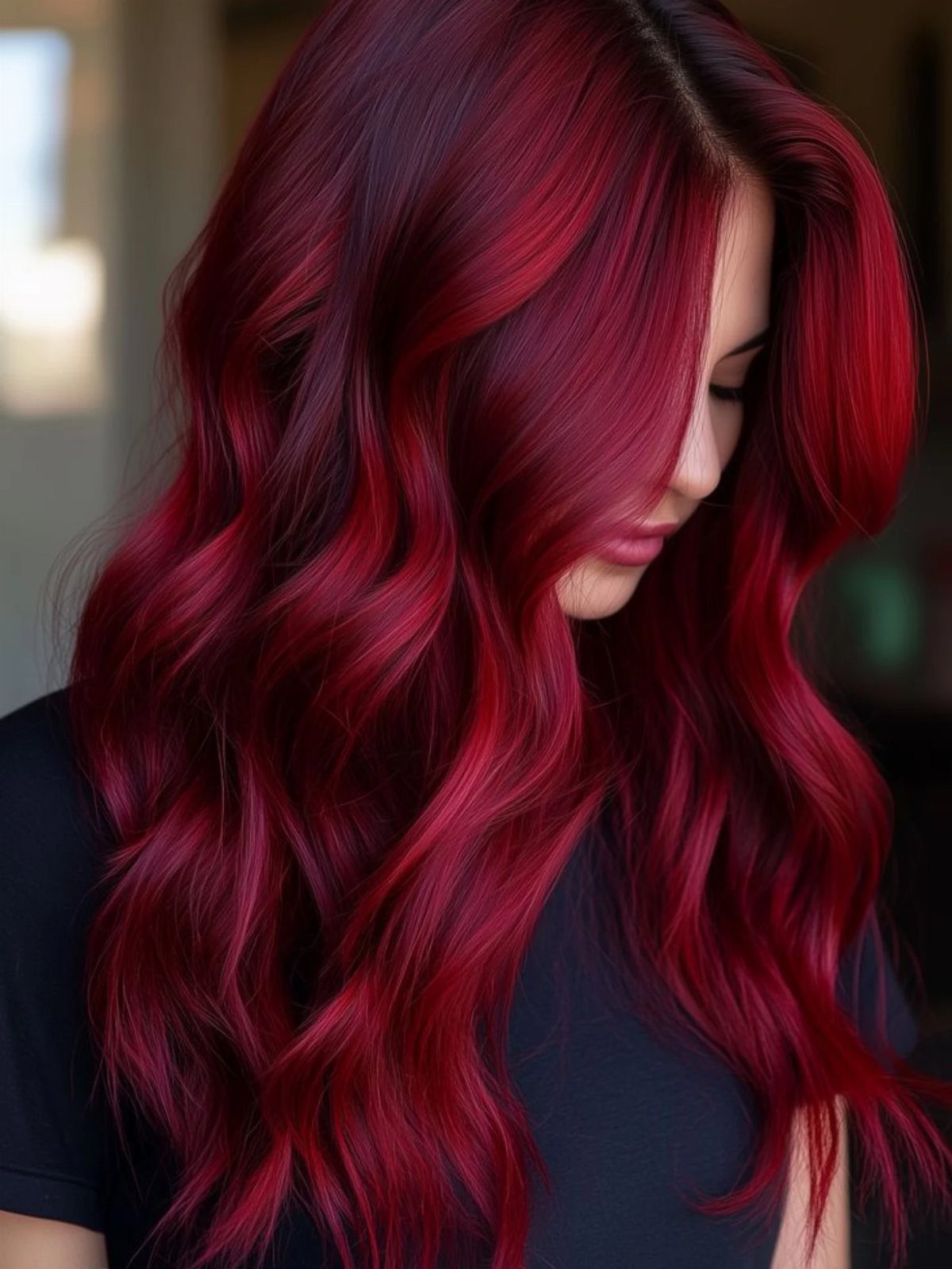
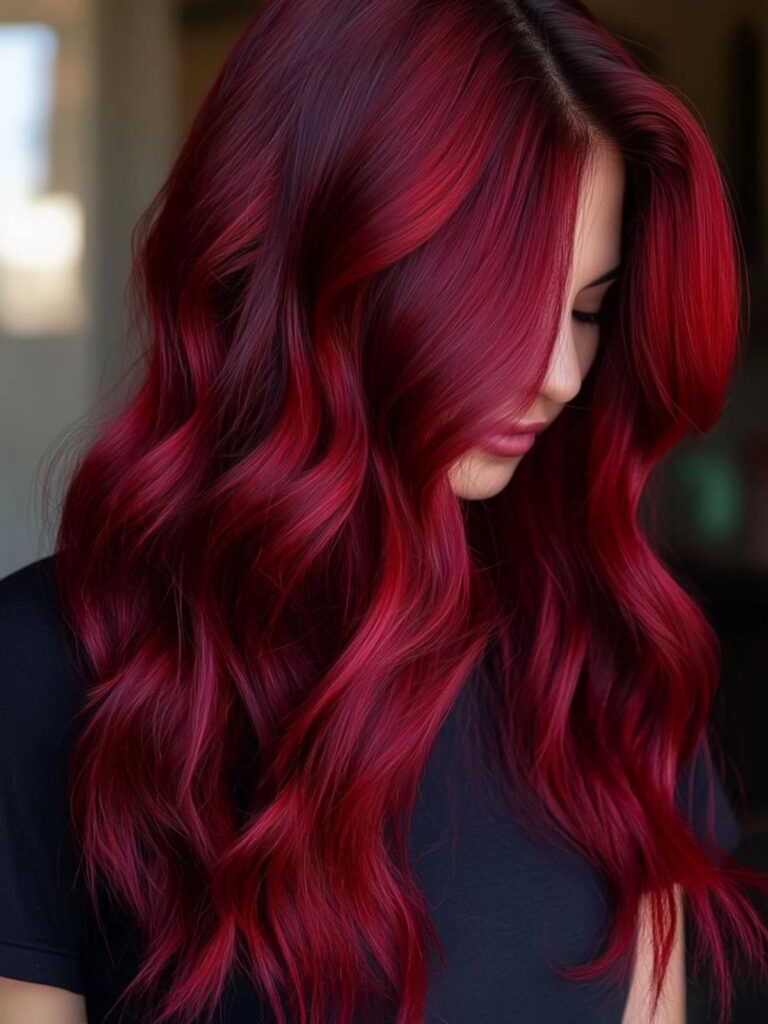
Deep crimson sits where red stops being warm and starts getting serious. On long, loose waves like these, the color pools in the curves and reads richer than it would on straight hair.
I’d pick it over a brighter red if you want something that looks intentional from across a room. Dark clothing, like the black top here, makes it stand out even more.
A stylist can tune how much blue or orange goes in, so bring the photo and say "deep crimson" by name.
2. Burgundy
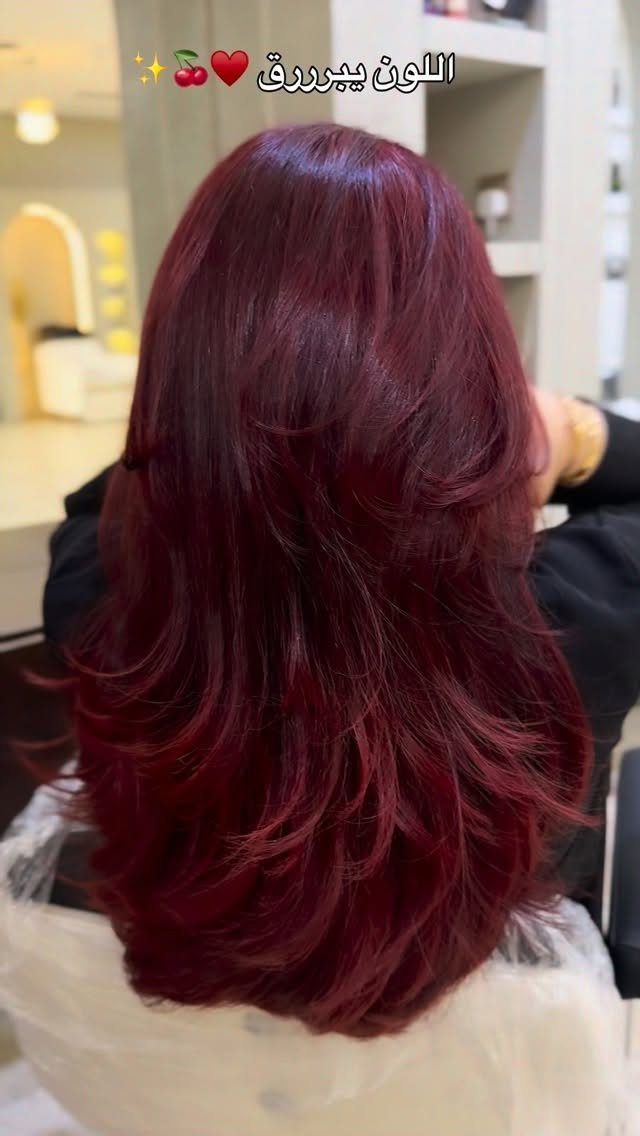
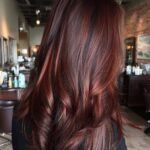
Burgundy is a cool red with a hint of violet, and I find it the easiest of the dark reds to wear every day.
It looks best glossy. Long layers with soft waves, like this cut, give the color movement, so light catches different depths as the hair swings.
Cool undertones mean it can look flat if the hair is dull, so a gloss-friendly routine matters more here than with warmer reds.
If you’re choosing between burgundy and crimson, go burgundy for a quieter, more wearable result.
3. Medium Auburn
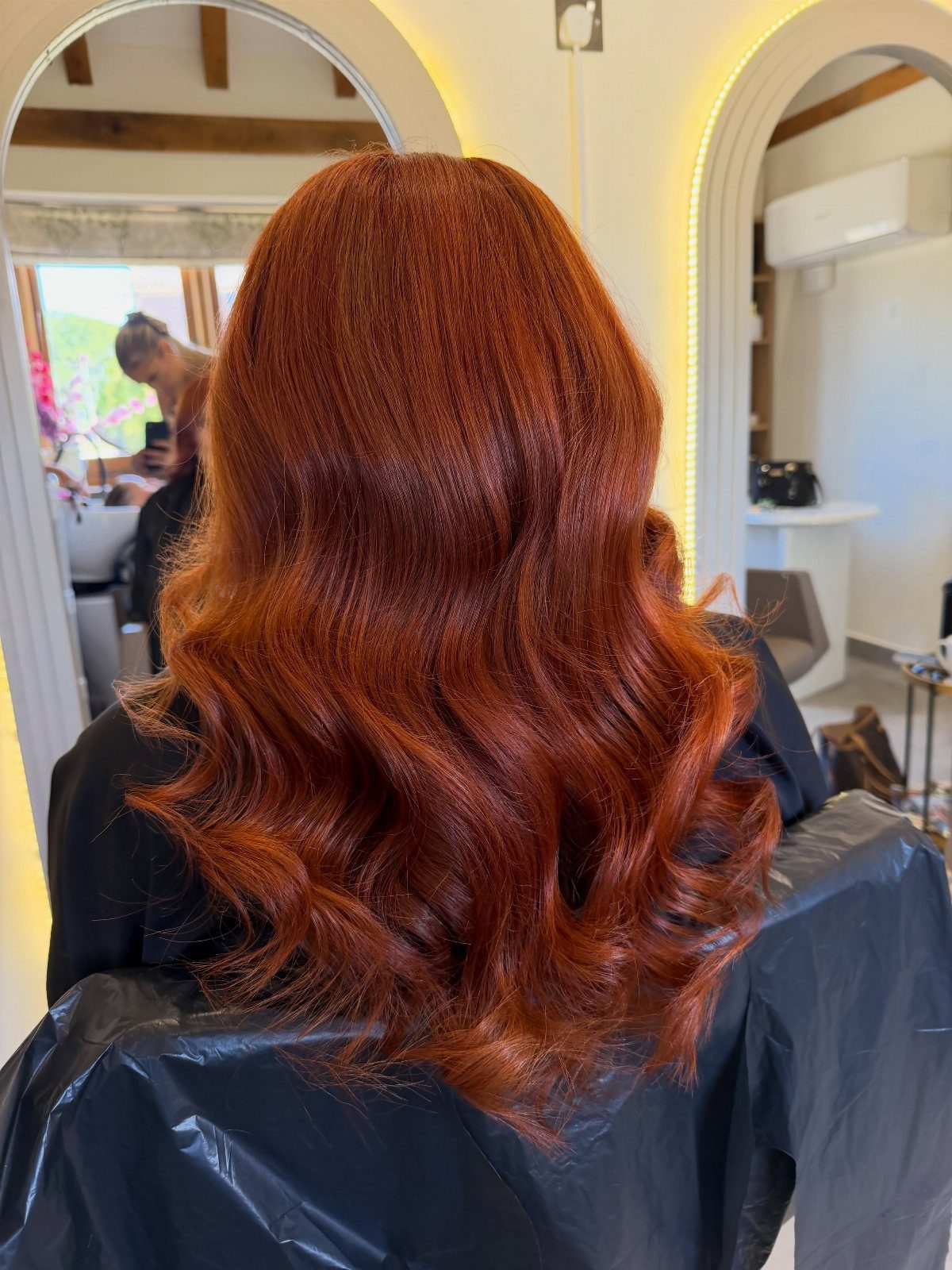
A medium auburn lands halfway between red and brown, which is why it flatters so many people. It adds dimension without making anyone stare at the color before the face.
Curls and loose waves show it off best, because the red and brown tones separate a little in every ring of hair. Straight hair will still look good, though it reads flatter.
If you want a first step into red, this is the one I’d hand a nervous friend. Ask a stylist for medium auburn by name and point to the photo.
4. Dark Auburn
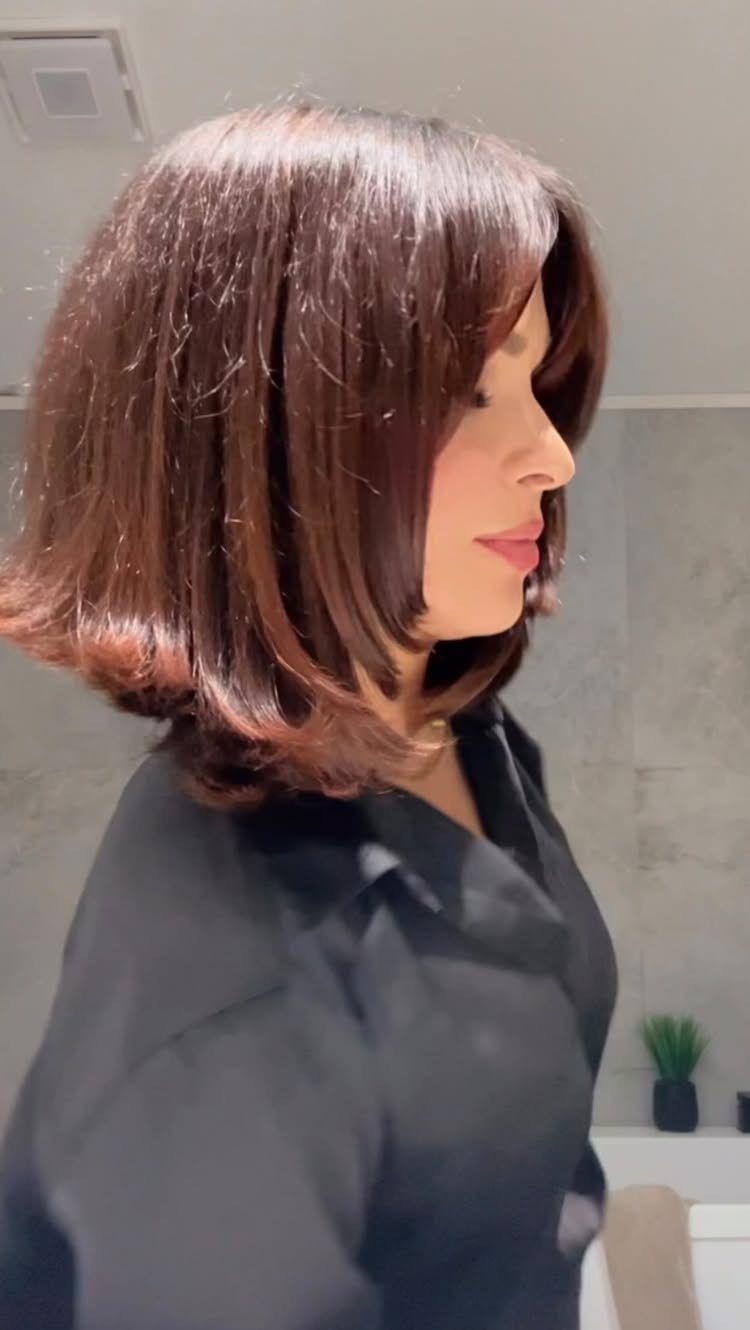
Autumn leaves meet dark chocolate in a dark auburn, and a blunt chin-length bob is a sharp way to wear it. The clean edge makes the shine look deliberate, and a short cut means less hair to color and maintain.
Skip it if you want a loud red. This one is subtle, closer to brown in low light and more red in sun.
I like it for anyone who wants red to read as polished rather than playful. A glossing treatment will keep that finish going between visits.
5. Light Auburn
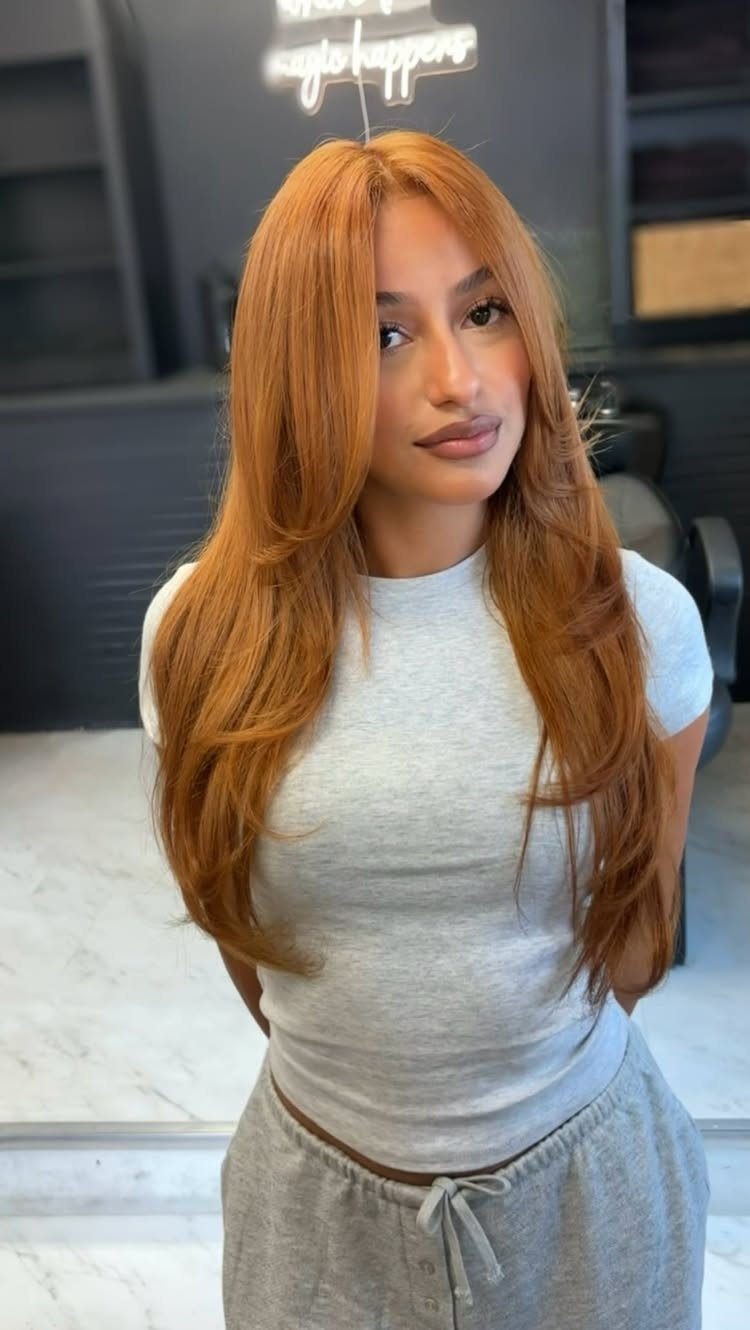
Light auburn is the gingery, bright end of the family, and it’s the one I’d steer cooler, fairer complexions toward. Against pale skin the warmth looks natural, almost like hair you were born with.
It’s also much brighter than deeper auburns and burgundy-leaning reds, so expect it to draw attention. Long, straight-to-wavy lengths show off the full color from root to end.
If you have a deeper or warmer complexion, a medium auburn may sit more comfortably. Light auburn rewards a fair base.
6. Black Cherry
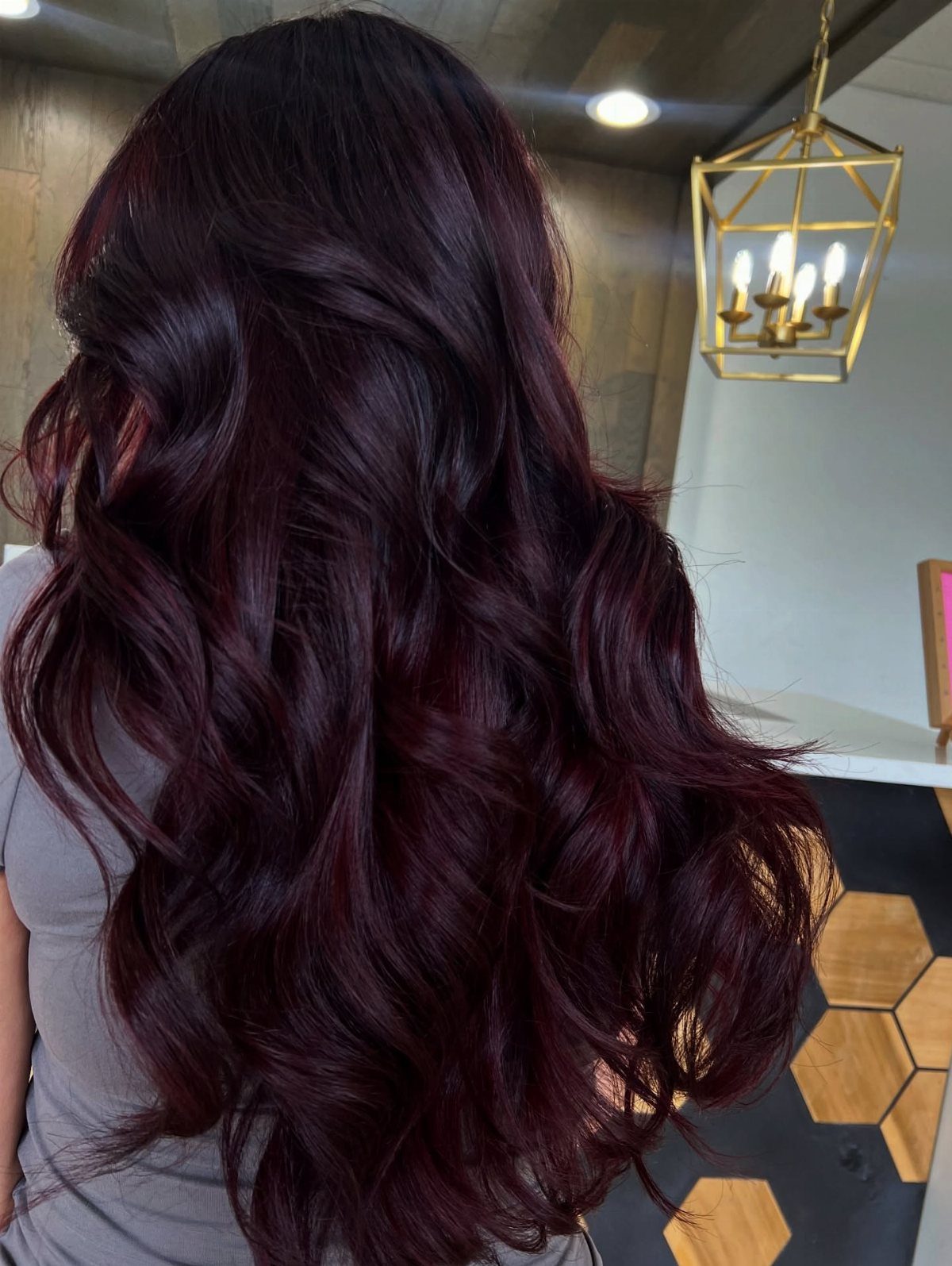
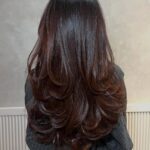
Black cherry is almost black until light hits it, then the red shows up. I like it as a moody alternative to jet black, because the cool red keeps it from looking flat.
Long, wavy hair adds to the effect: the waves catch light unevenly, so the burgundy glints appear in some spots and disappear in others. That interplay is what you’re paying for.
Dark color shows shine and dullness equally, so keep the hair healthy. Of the red shades here, this is the one I’d choose for evening and fall.
7. Pink and Red Hair

Pink threaded through burgundy is a bolder move than either color alone, and the streaks do the work. Against the deep red base, the pink reads as highlights that happen to be loud.
Place them around the face and through the length, as here, so the brightest color frames the eyes. A soft pink top echoes it, though a darker outfit would let the hair carry everything.
I’d ask a stylist for this rather than try it at home, since streaks need to be placed by hand.
8. Copper Brown Hair
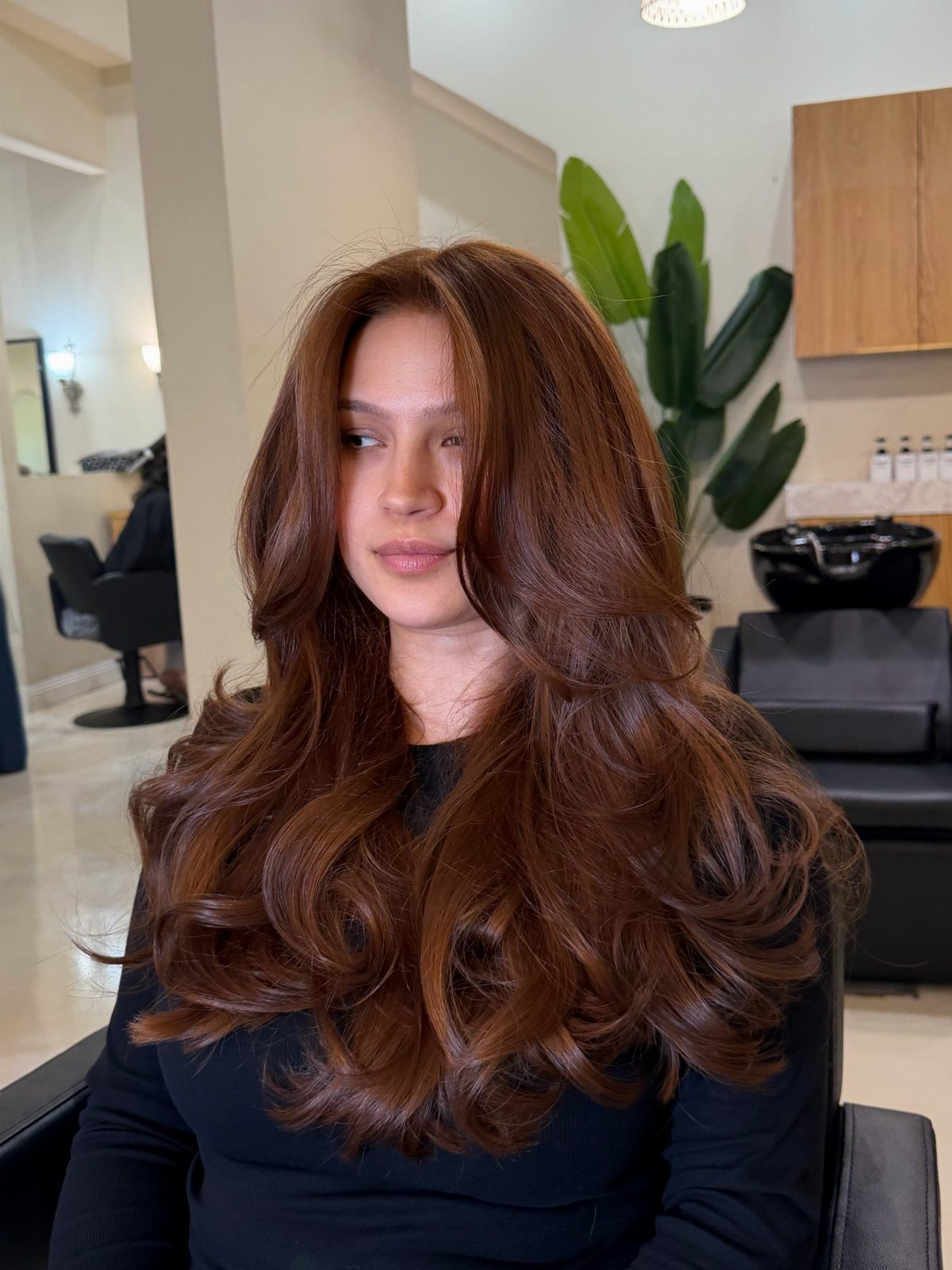
Copper brown is brown with a warm, metallic glow, and on long curls like these the shine does most of the talking. It’s the red-leaning shade I’d choose if you want warmth without committing to a true red.
Because it sits close to a natural brown, regrowth is gentle and the shade suits a drugstore budget better than brighter reds do. Gloss keeps the curl pattern looking polished.
Bring the photo to your stylist and ask for copper brown by name.
9. Red Ombre
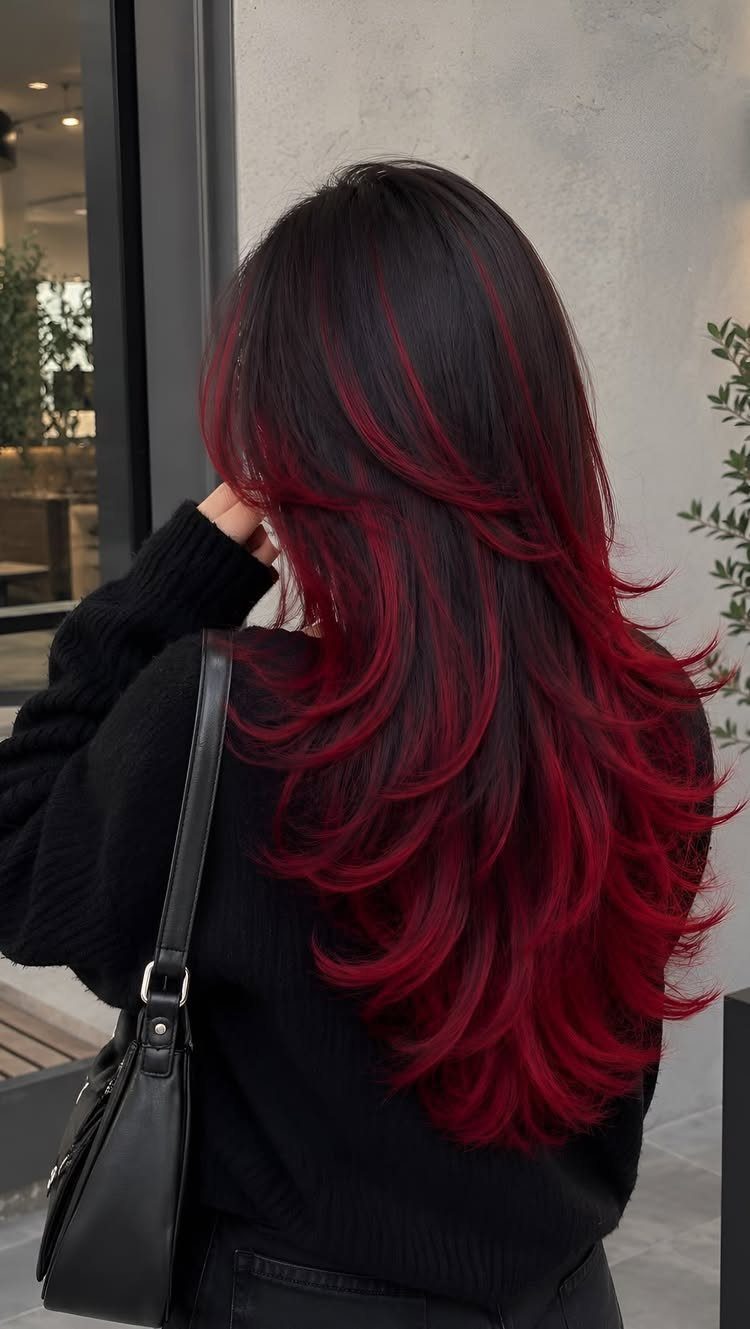
A black-to-red ombre keeps your roots dark and saves the color for the ends. Here the blend starts as black and deepens into red through the layers, so the lower half of the hair carries the change.
Layers help the red show up in movement.
For a first red, I think this is the lowest-pressure way to try one.
10. Purple Over Red
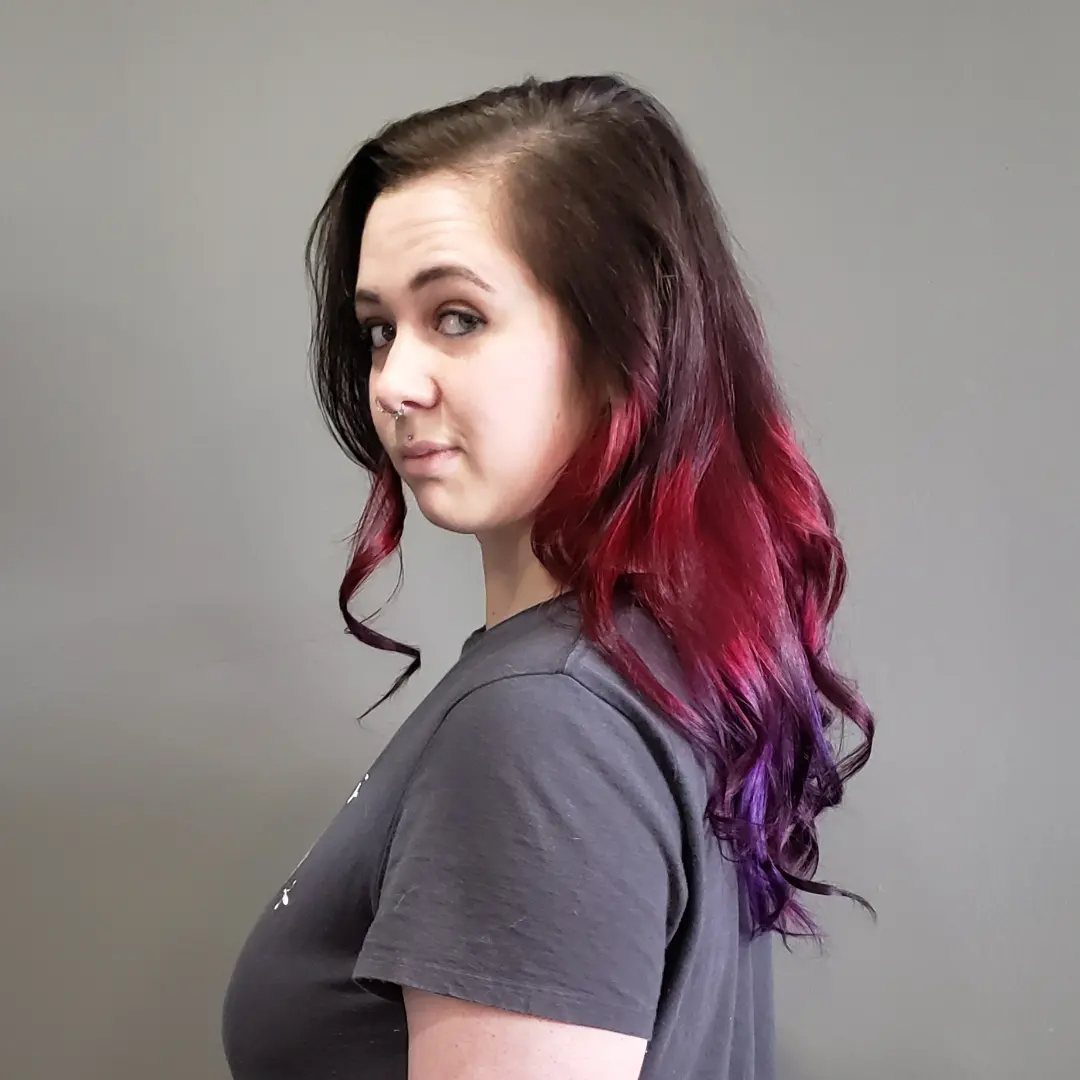
Purple laid over faded red gives a smooth, blended finish: dark roots, a red middle, and violet at the ends.
The red doesn’t have to be fresh. Faded red is a fine base, and the purple settles over it.
Wavy hair suits it, because the transition shifts position as the waves fall. I like it best for someone who already has red on their hair and wants a change without starting over.
Have a stylist place the purple so the shift looks gradual, not striped.
11. Bright Copper Hair
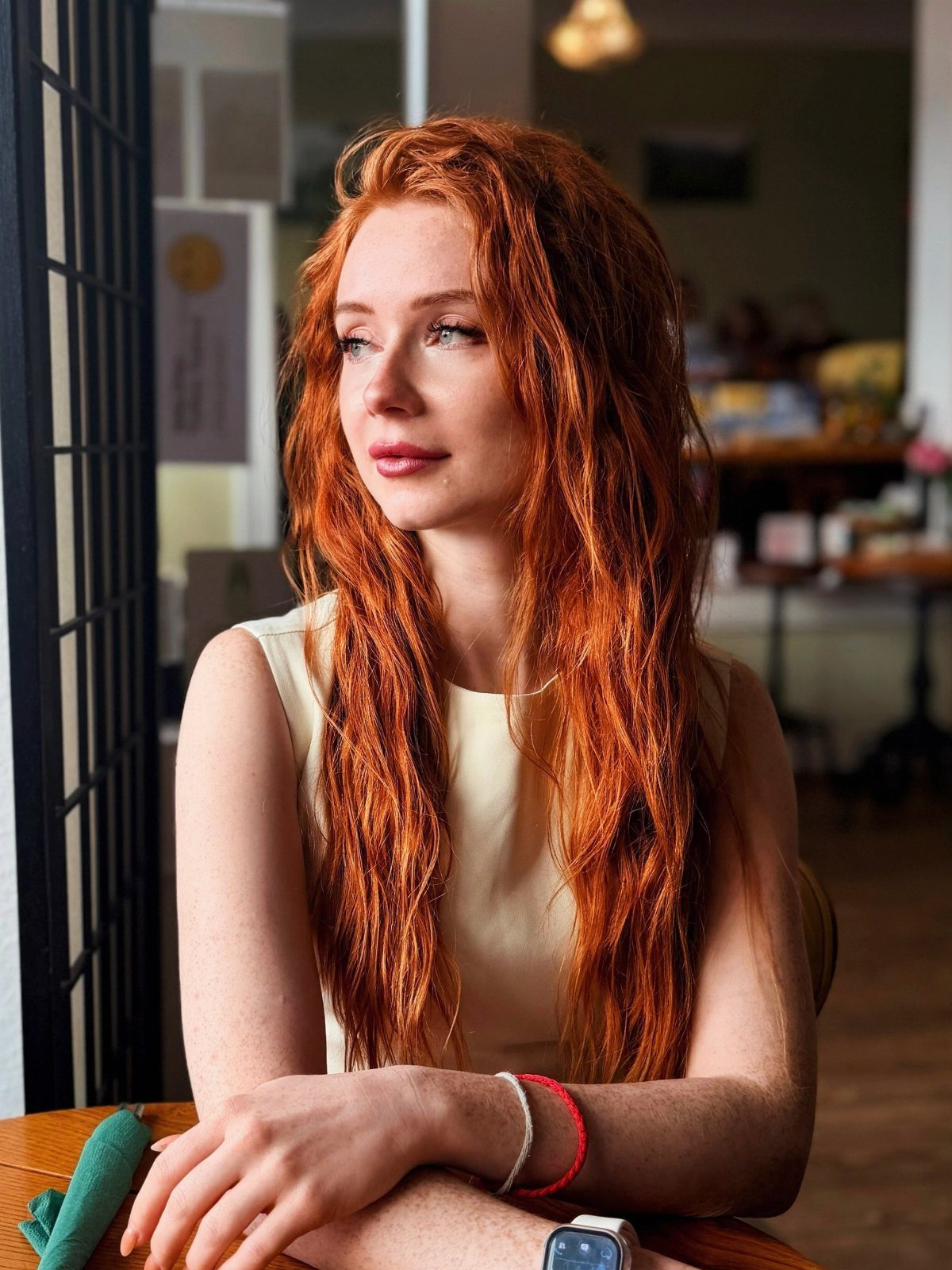
Bright copper is the loudest of the copper family, a red-orange that glows near a window. On long, loose waves it catches the light along every bend.
I’d pick it for anyone who wants to be noticed and doesn’t mind the upkeep that comes with a vivid shade. Compared with copper brown, it asks for more commitment and shows more.
Say "bright copper" to your stylist and bring this photo so the brightness matches what you picture.
12. Orange Red with Bangs
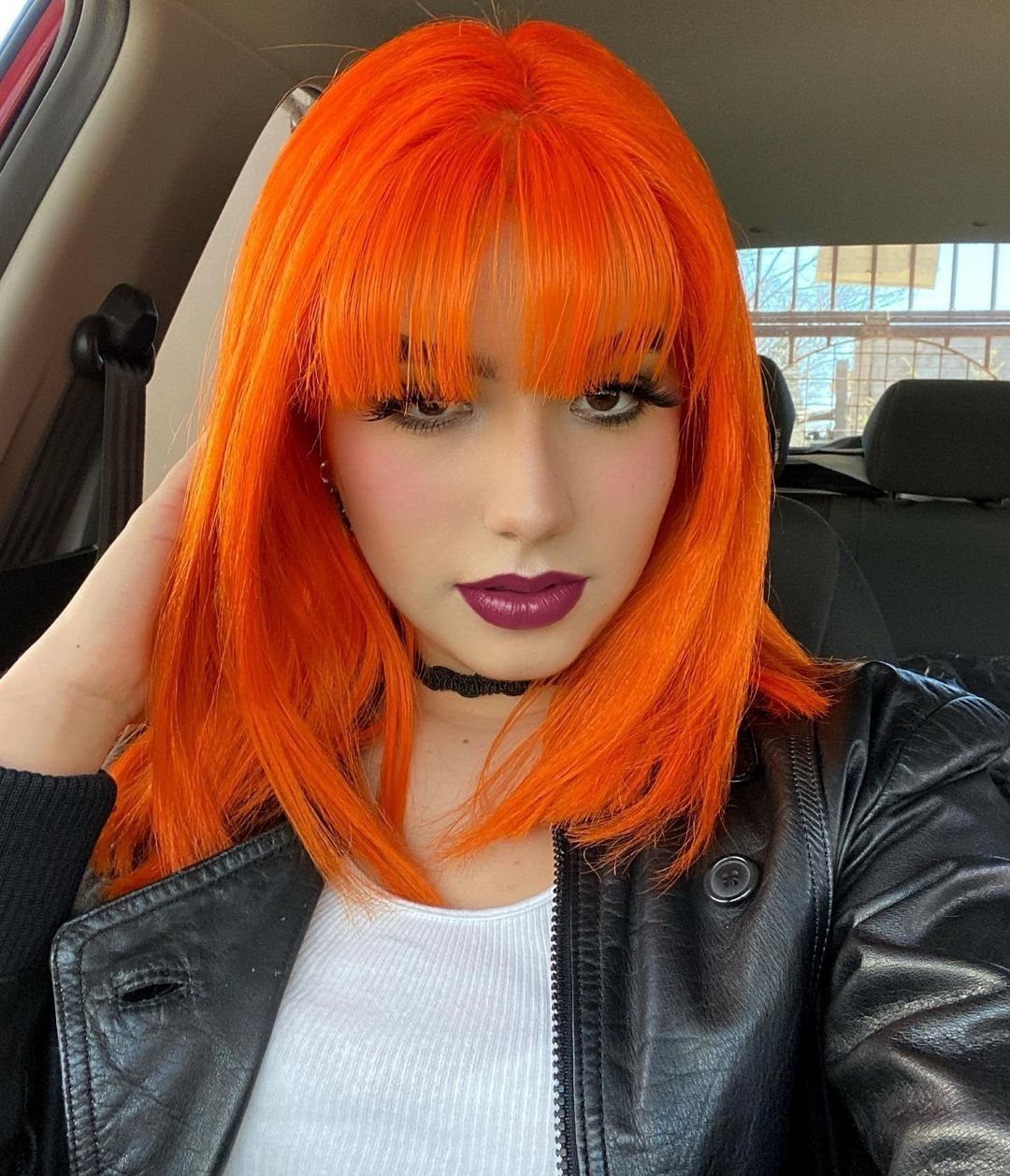
Orange red with blunt bangs is a shoulder-length look built on contrast: a vivid color and a hard, straight fringe. The blunt line makes the color read as a deliberate choice.
Orange red can read sweet, so I pair it with deeper accents like a dark lip and black or charcoal clothing to keep it grounded. I’d choose it if you like an edgy finish.
Bangs need regular trims to hold their shape, so plan on that alongside the color. Ask for blunt bangs and orange red by name.
Choosing Red by Skin Tone
Start with undertone, because it narrows the choices faster than anything else. Warm skin pairs well with copper.
Rose gold and reddish blonde flatter fair skin best. Deep, dark reds tend to wash out a fair complexion, so I steer that skin tone toward warm copper, strawberry blonde or a brighter true red.
Deeper skin tones can handle saturated reds like burnt orange, fiery red and deep burgundy.
Check your eye color and your current hair color too. Both change how a red looks next to your face, and your starting color decides how much work the dye has to do.
Red Color Upkeep
Red fades faster than any other shade, so book a refresh as soon as every 4 weeks. Healthy hair holds color longer, which makes the routine matter as much as the dye.
Swap in a shampoo and conditioner labeled color-safe and formulated for treated hair. A color-depositing shampoo can keep the shade vivid between visits.
Space out your wash days and let dry shampoo cover the gaps. Use conditioner at every wash, since it coats each strand in a protective film, and add a deep conditioner or leave-in to help the red stay put.
Rinse in warm water, not hot, so the cuticle stays smooth and sealed.
Air drying is gentlest, but if you reach for a blow dryer, keep it on warm and spray heat protectant before any hot tool touches your hair. Heavy sun is worth avoiding as well.
While fading is natural, especially with red hues, Clairol’s Liquicolor Soy 4 Plex is designed to stay in your hair for good.
— Glamour
Preparing for At-home Color
Run a patch test 48 hours before coloring, even if you’ve dyed your hair plenty of times. Rash, redness, swelling, burning or itching means stop and don’t use the product.
Then run a strand test.
Color a small section from the underside, roots to ends, for the full time on the box, then rinse and blow dry. It shows you the real tone and whether the timing suits you.
If you’re going from one red to another, wash with clarifying shampoo first to lift product buildup and soften the old color toward a lighter starting point. Deep condition between clarifying sessions, and strand test before you commit.
Frequently Asked Questions
What is the best reddish brown hair dye?
Copper brown and medium auburn are the two reddish brown shades I’d start with. Medium auburn sits midway between red and brown, and the red-brown version looks best on medium or olive skin.
For a boxed dye aimed at brunettes going red, L’Oréal Paris Superior Preference Fade-Defying Color + Shine System is a pick worth a look.
What color compliments red hair the most?
Earth tones like olive green and cool dark brown complement red hair well, and jewel tones like emerald green and sapphire blue do too.
Dark clothing in black or charcoal makes the color stand out and keeps brighter reds grounded. A dark lip works the same way with orange reds.
Does red dye damage your hair?
Red asks more of your hair than most shades. A color-safe shampoo, conditioner at every wash, a hair mask or deep conditioner and heat protectant before hot tools help keep the hair in good shape.
How can you get a natural look with red hair dye?
Stay close to a shade hair can grow naturally, such as copper, a golden-based red or a warm chestnut, and swatch the tones before you commit.
For the most believable red, I’d book a colorist, because dark hair often has to be lightened first and a pro controls how far that goes.
Medium auburn and copper brown are the two I’d point to, because they blend red and brown instead of reading as a bold red.
How can you prep your red hair for another color?
Wash with a clarifying shampoo first. It lifts product buildup and softens the old red toward a lighter starting point.
Condition deeply in the gaps between clarifying washes, and test a single strand before coloring the whole head. Dyeing at home adds one more step: dab a patch test on your skin 48 hours before you color.
How do you maintain red hair?
Use a color-safe shampoo and conditioner made for treated hair, and add a color-depositing shampoo to keep the shade vivid between visits.
Space out your washes and let dry shampoo fill in, rinse with lukewarm water rather than hot, and mist on a heat protectant before any styling tool.
Red is the quickest shade to fade, so book a refresh about every 4 weeks and keep the color out of strong sun.
Is it possible to cover red hair with another color?
Yes. Purple, orange and blue are the shades that cover red best, and black will cover it too, though warm undertones can show through in some light.
Your current shade, past color and porosity all change the result, so strand test first. Black is a long commitment too, since getting back out of it later takes real work.
Can you dye red hair brown?
Yes, and laying dark pigment over red is the most direct way to get there. The result depends on the red you start with, so test a strand before doing it all over.
How do you choose a red hair color that complements your skin tone?
Undertone narrows the options faster than any other factor, so settle that before you pick a red. Copper flatters warm skin, rose gold or reddish blonde suits fair skin, and a red-brown auburn works on medium or olive tones.
Your eye color and the hair color you start from both shift how a red reads, so check them before you commit.