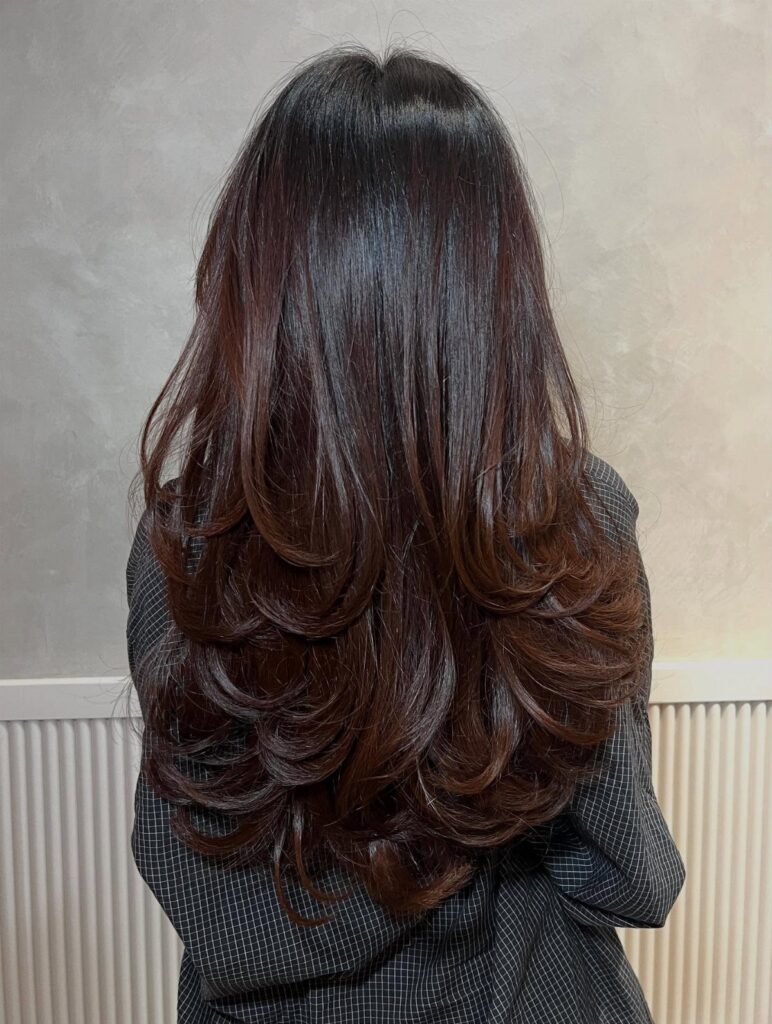
These cuts range from a barely-there change at the ends to layers cut from the crown down, and from choppy shags to sleek, straight lengths with a curved tip.
Hair thickness decides which one is yours: thick or bulky hair needs layers to remove weight, while fine hair needs them for the body a single blunt edge never gives.
Butterfly layers, V-cut layers and curtain bang layers are specific shapes, so I’d bring a photo and ask for them by name.
1. Shaggy Layers
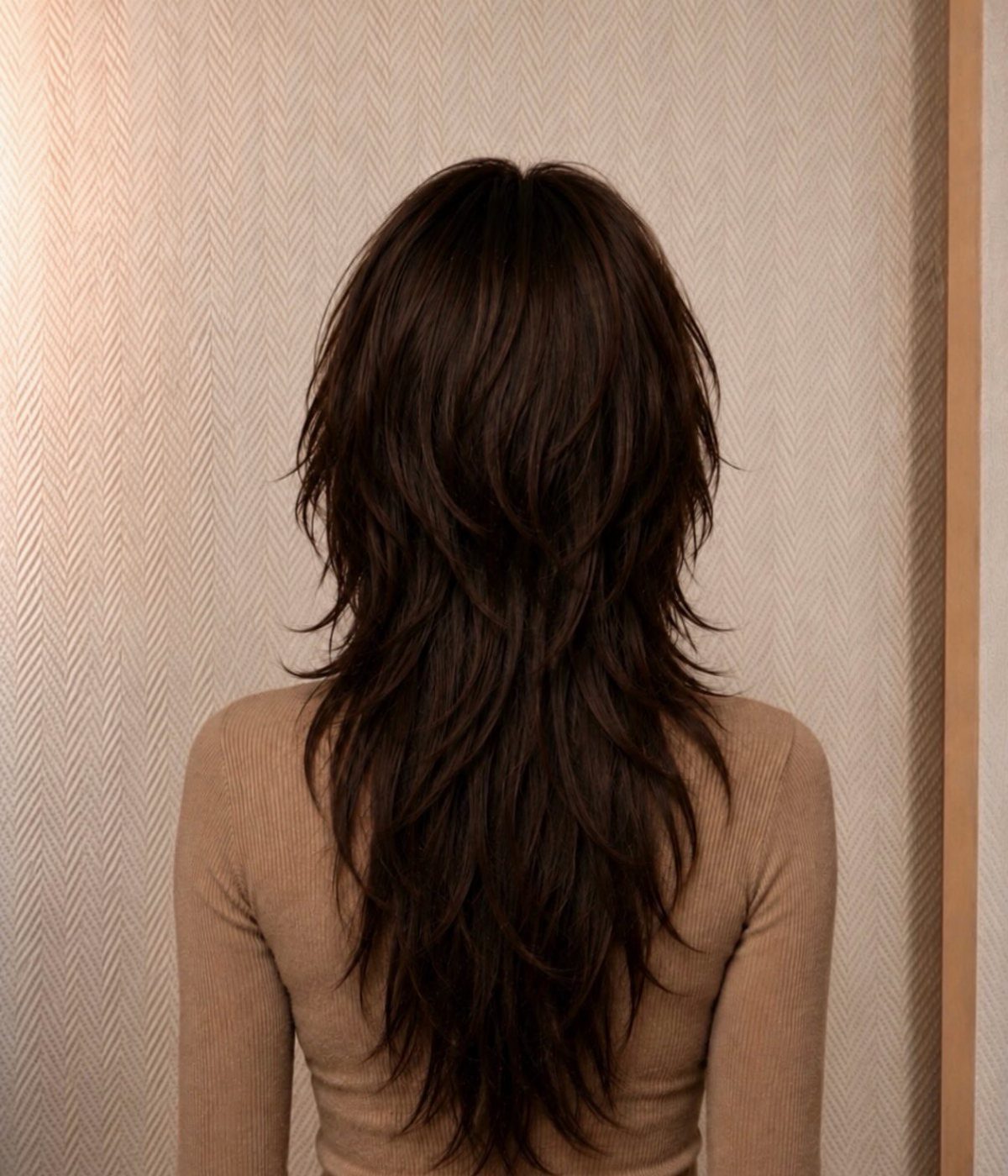
Choppy, broken-up ends are what make a shag read as a shag, and on long dark brown hair they stack up around the crown to give it lift.
The ends look rough on purpose, so a smooth, sleek finish defeats the cut.
For a shaggy cut, I’d tell the stylist to take the layers shorter through the top while leaving the back at full length. Air-dry or scrunch lightly, and leave the texture alone.
2. Shag with Blonde Highlights
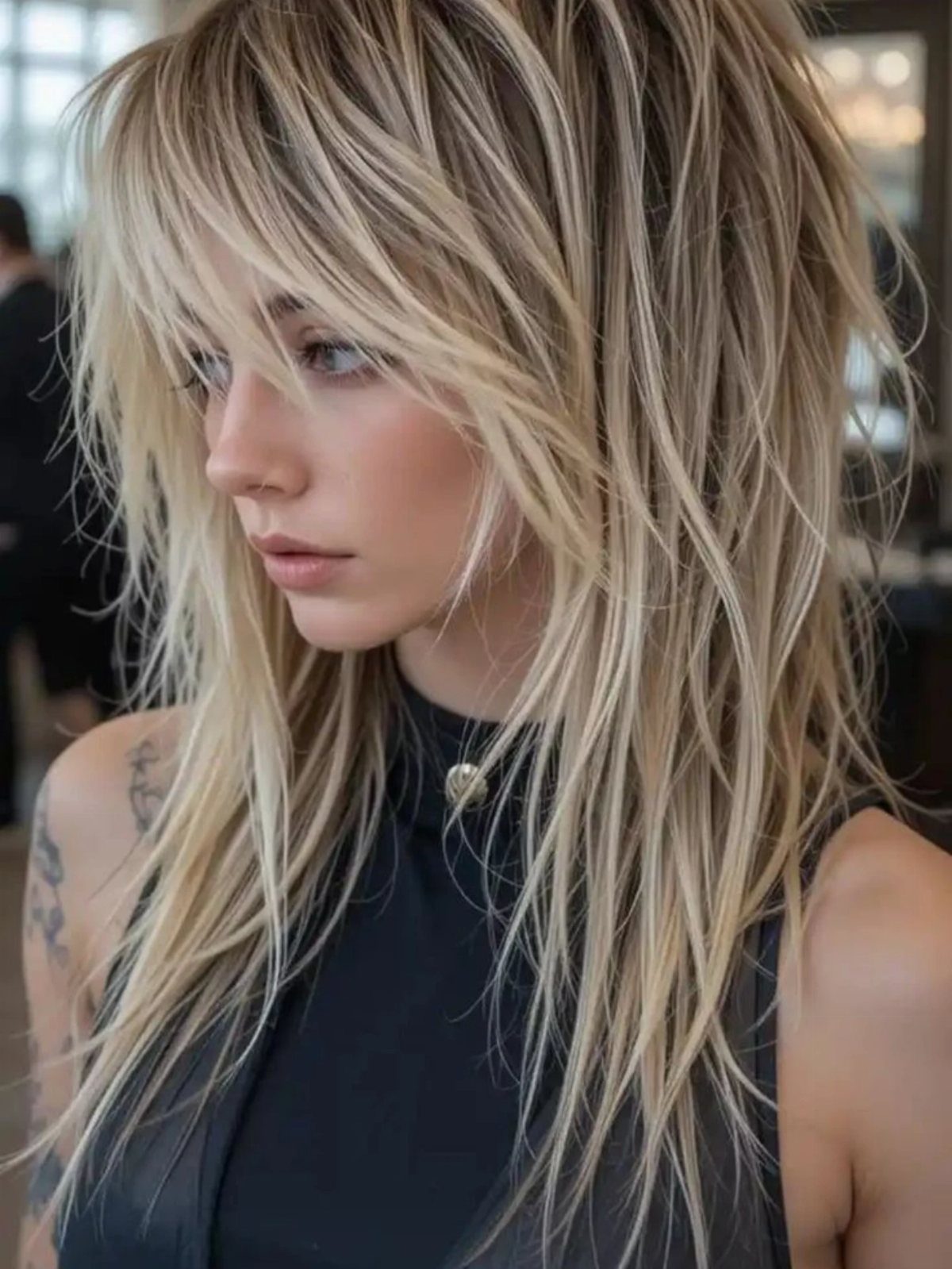
Light highlights do a lot of work on a shag.
Because the layers break up and overlap, each lighter strand picks up light on its own, which makes the cut look fuller and more textured than a single flat color would.
Waves suit this best. I’d have highlights placed near the face and across the top layers, where the movement is.
3. Face-Framing Layers
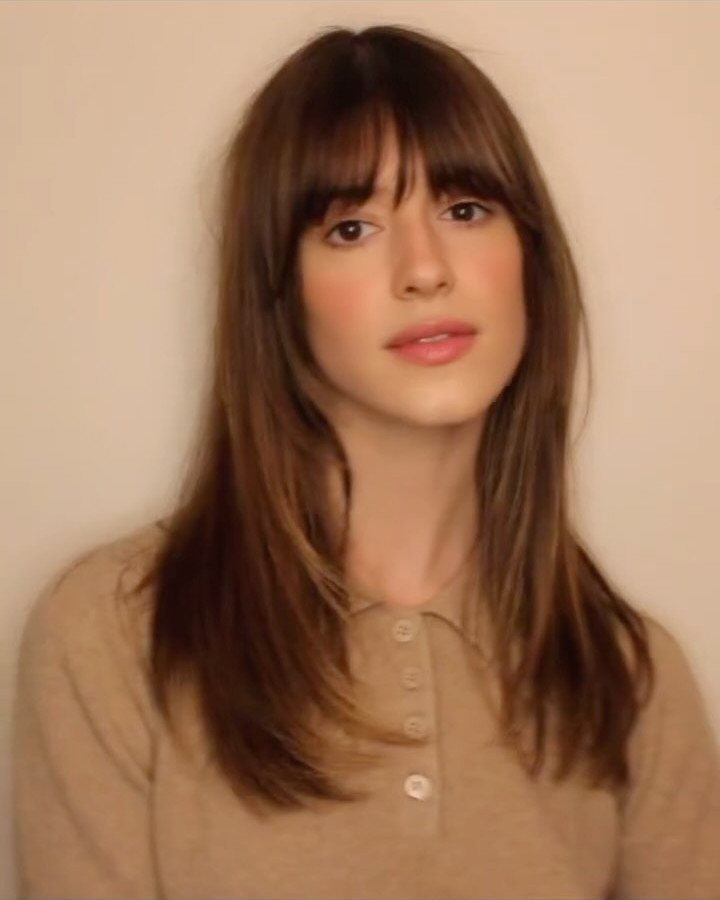
Shorter pieces up front land at the cheeks and jaw, then blend into the longer lengths, so the cut still reads as long hair. That blend is what to ask for by name.
On brown hair with bangs, front layers also help the bangs settle into the rest of the cut instead of looking like a separate piece.
Of all the long-layer options, I find this one the easiest to bring to a stylist, because the request is simple.
4. Soft Long Layered Waves
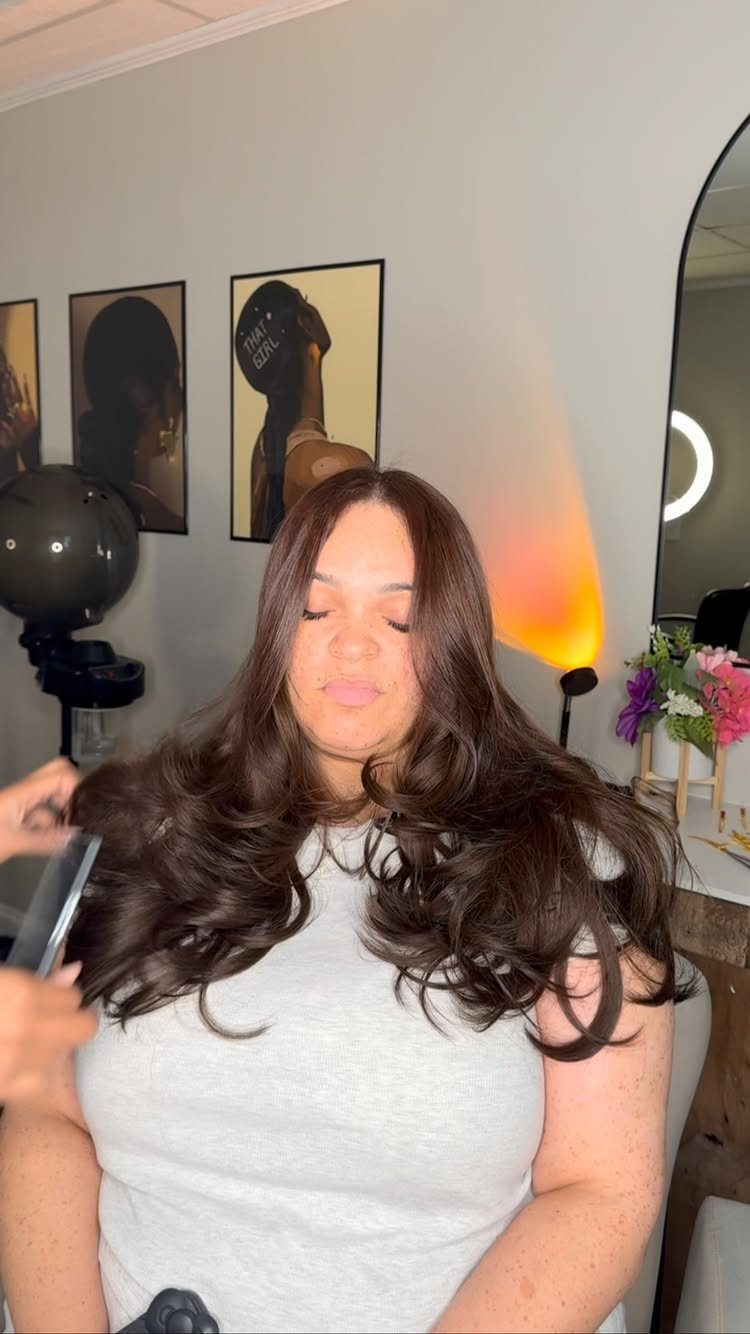
Long layers give waves room to move, and the waves in turn show off the layers. Cut straight across, the same hair would fall as one heavy sheet.
Keep the waves loose and smooth, as in this brown version.
I like the soft finish over tight, defined curls here. It lets the layers do the talking.
5. Layered Curls
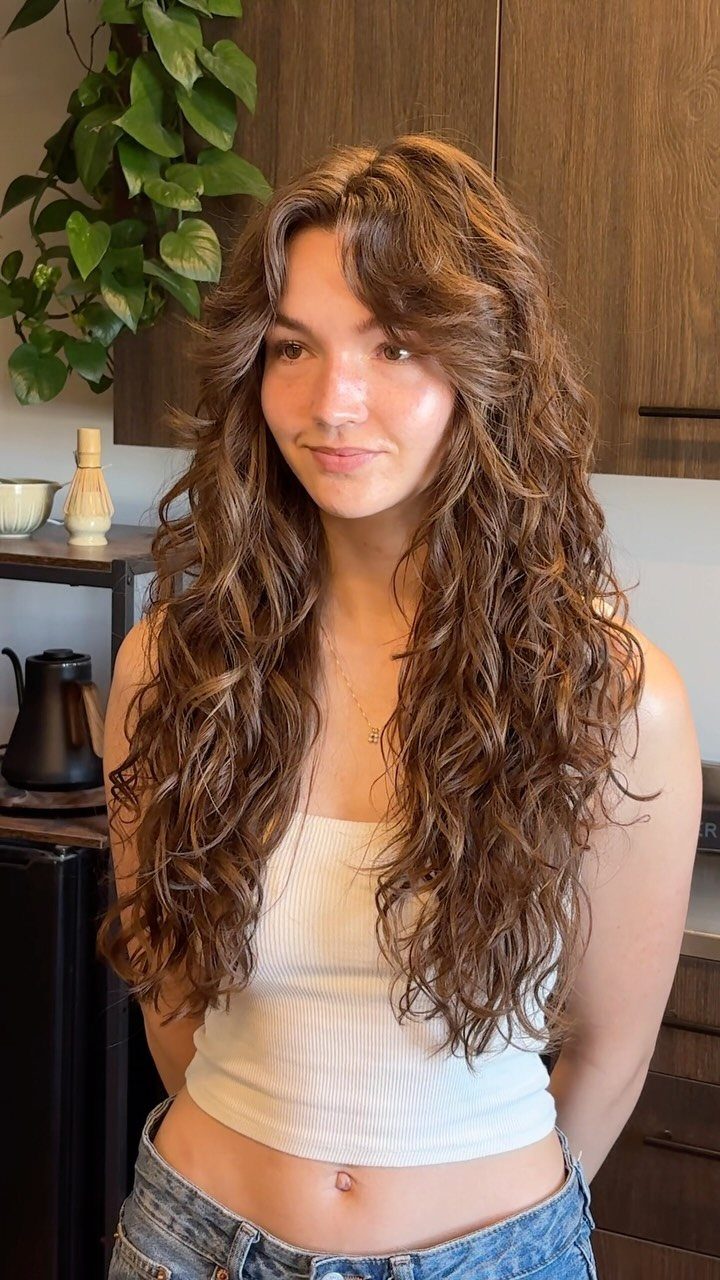
Thick curly hair gets heavy fast, and layers fix that. Layers lift curls at the crown and remove weight from the middle lengths, so the curls stack instead of hanging in one dense mass.
Tell the stylist the layers should be cut with your curl pattern in mind, and expect the hair to sit differently once it dries. For long brown curls like these, I’d choose layers over a single blunt length every time.
6. Sandy Beige Balayage Layers
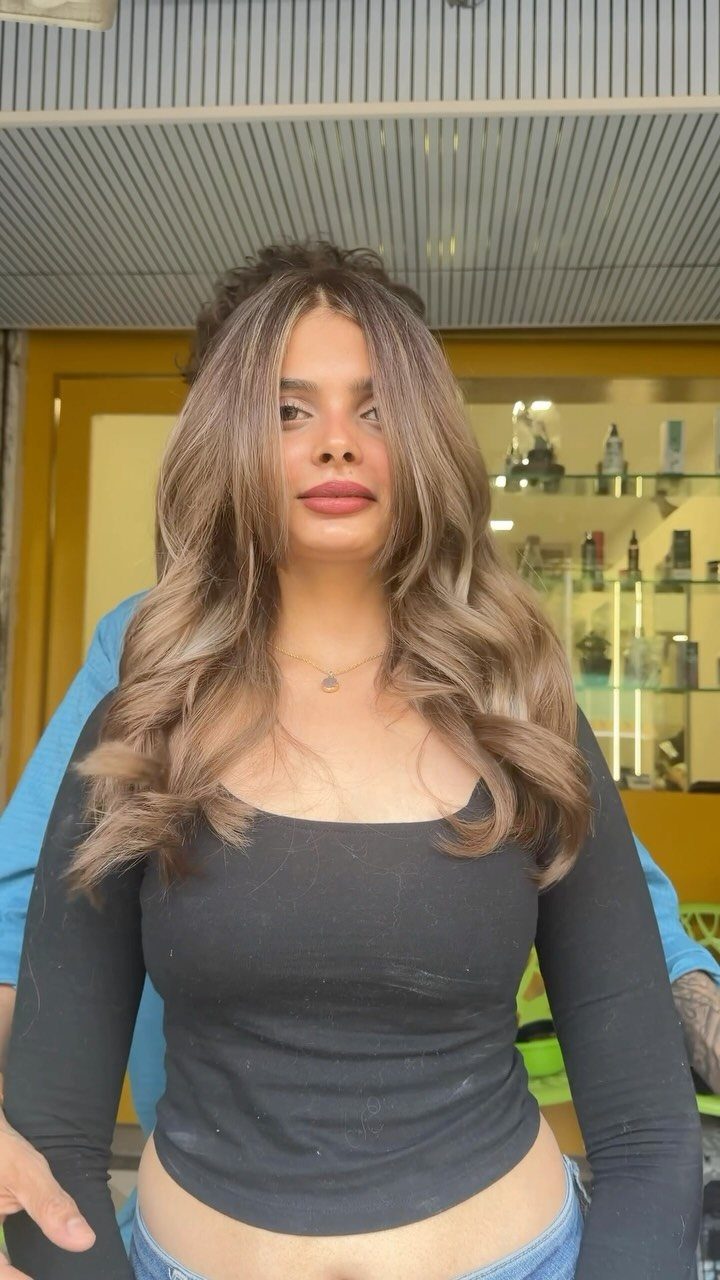
Balayage gives layered hair dimension since the color is painted on in sweeps, not placed in uniform stripes. In sandy beige, that gives each layer its own shade and depth.
Loose waves show it off best. If you’re taking a photo to a stylist, name both the cut and the color, since layers and balayage are 2 separate requests.
7. Honey-Blonde Long Wavy Layers
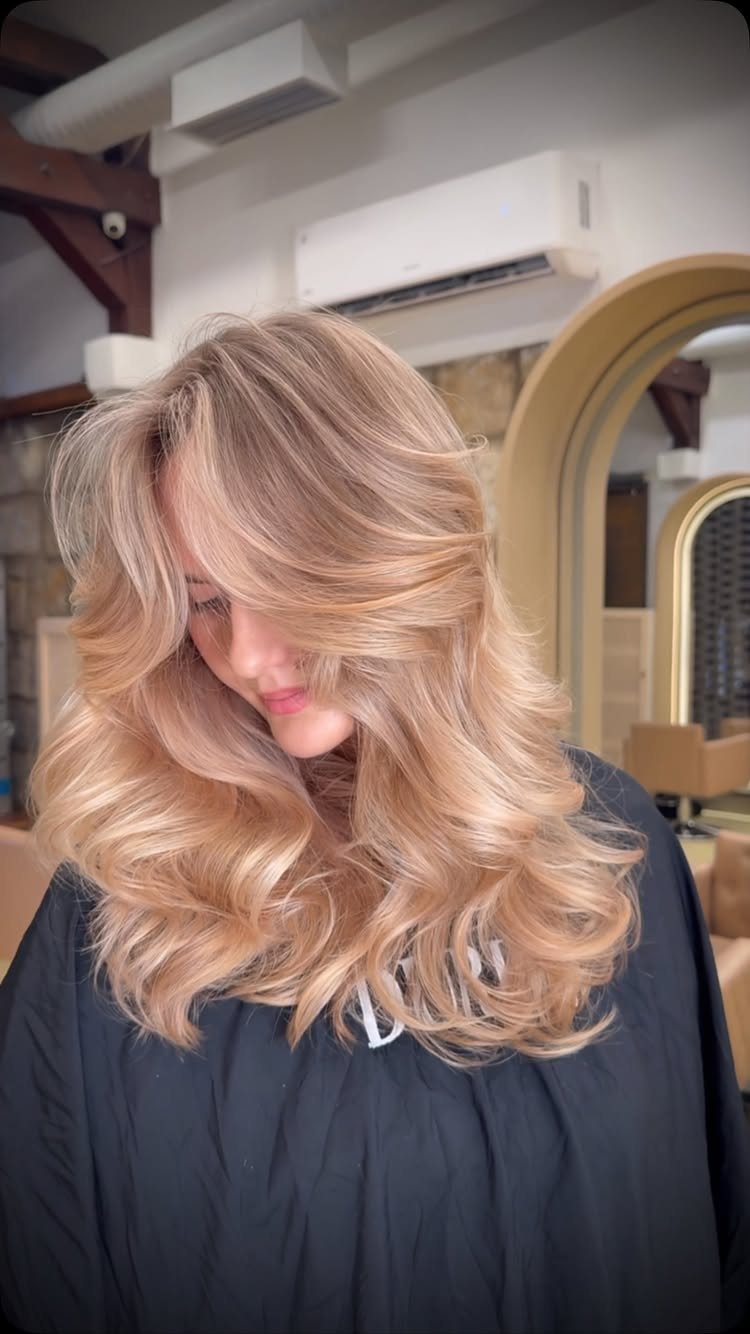
Honey is a golden, warm blonde, and wavy layers break it into lighter and deeper patches as the lengths overlap. Loose, full waves like these make the blonde read dimensional rather than flat.
I’d ask the stylist for "honey blonde" by name, since plain "blonde" leaves too much room for a cooler result.
8. Curtain Bang Layers
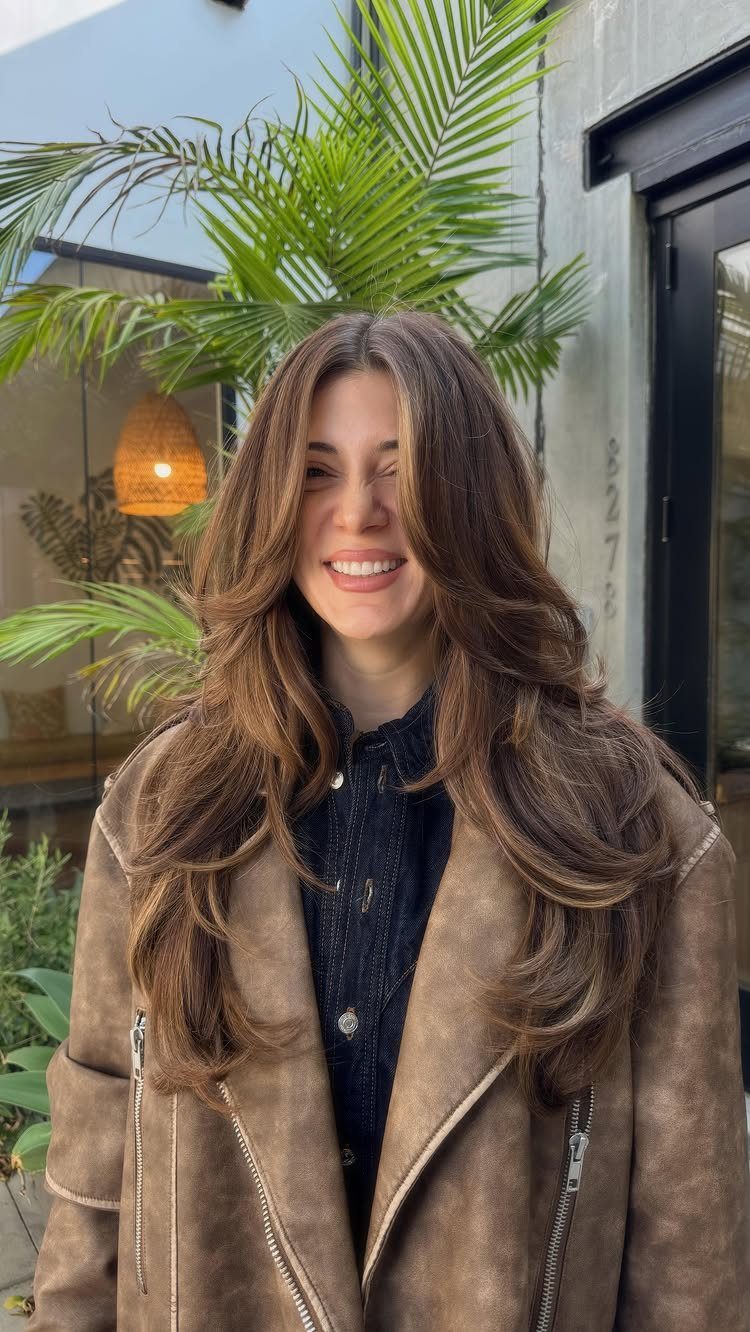
Parted down the middle and swept out to each side, curtain bangs open the face and then run into the long layers behind them.
Ask for the bangs to blend into the length so there’s no hard line where they end.
9. Butterfly Layers
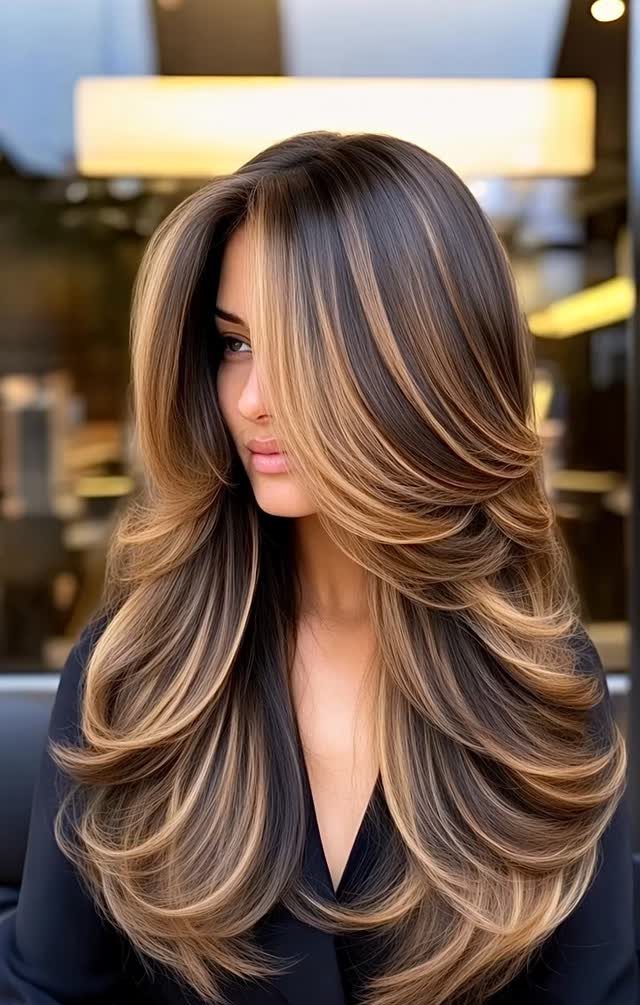
Butterfly layers put two lengths in one cut: shorter layers at the cheekbone or jaw, stepping down into the longer hair below. Use the name "butterfly layers" and bring a photo, since it’s a specific shape.
A voluminous wave blow-dry suits it, and I’d add caramel highlights as here, because the short top layers and long lower ones each pick up their own tone.
10. Caramel Highlighted Layers
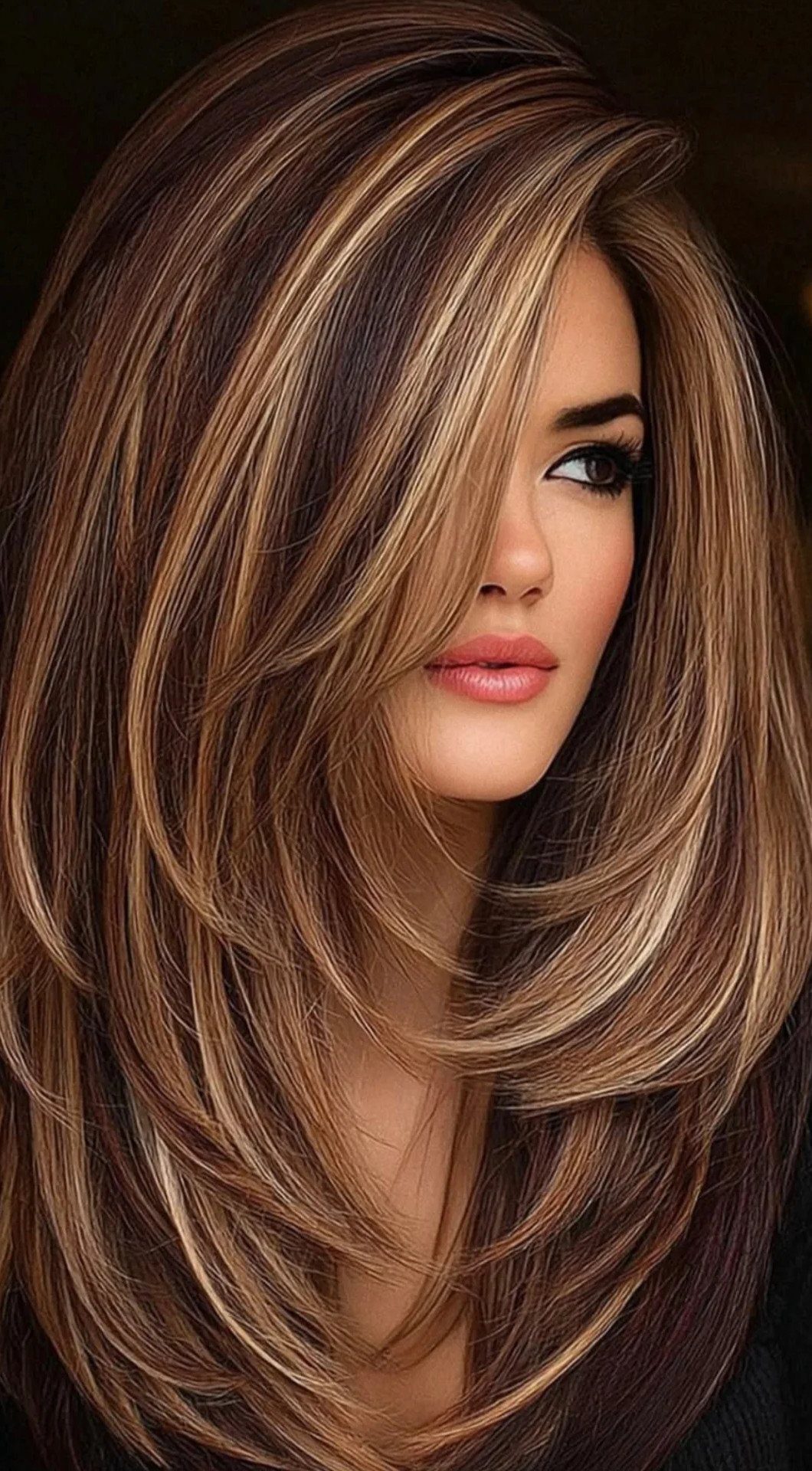
Sweeps of caramel through brown layers add light without turning the hair into a different color. A voluminous blowout shows off the highlights and the layers together.
I’d pick caramel running through the layers over one solid block of it. The color follows the cut, which is how this one looks.
11. Layered Fringe
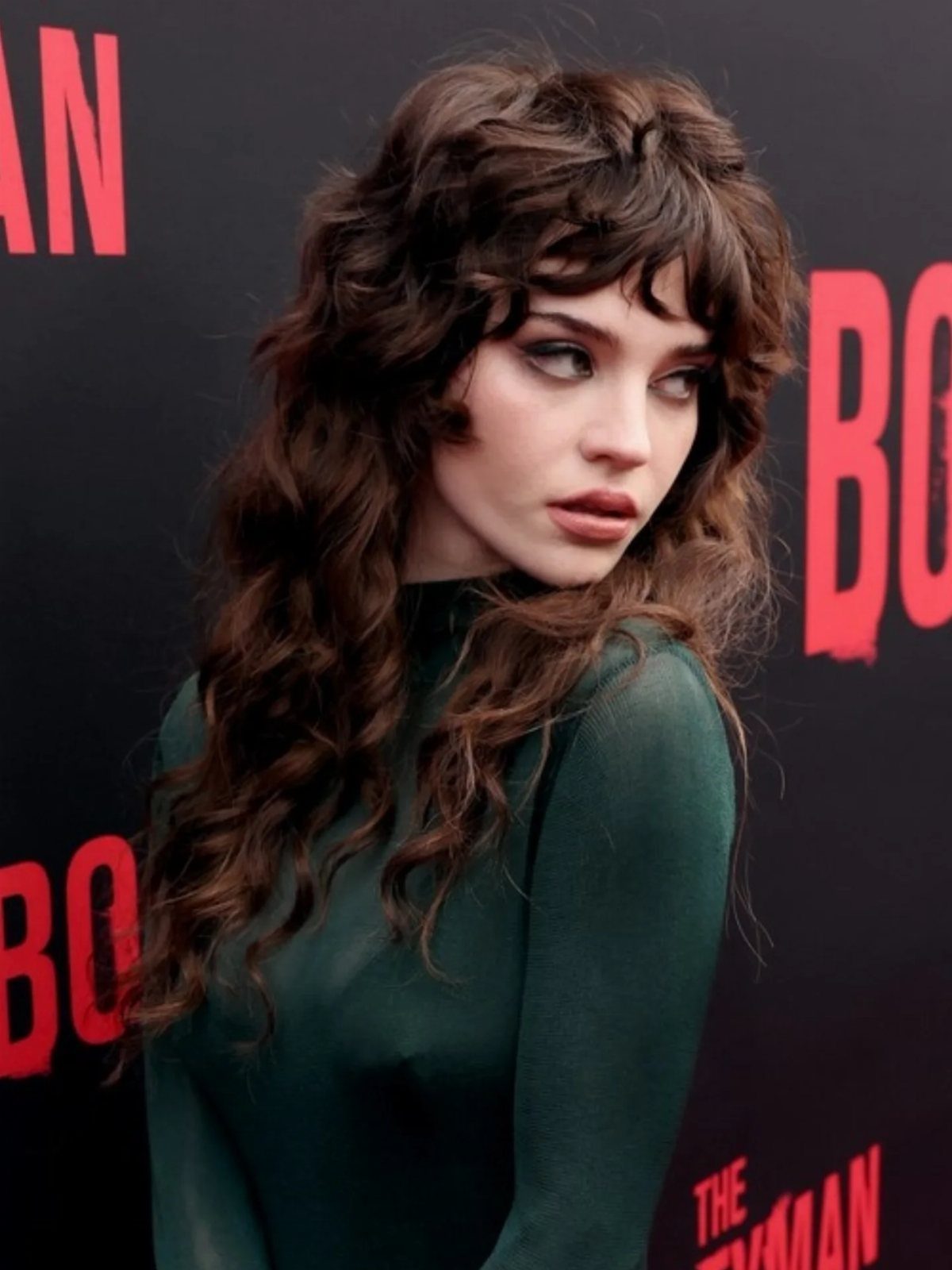
Defined at the front and long everywhere else, this cut pairs a wispy fringe with layers that fall in dark waves. The fringe gives the face a clear starting point, so the rest of the hair can stay loose.
I’d keep the fringe light and see-through, as here, so it sits comfortably against the longer layers.
12. Rounded Long Layers
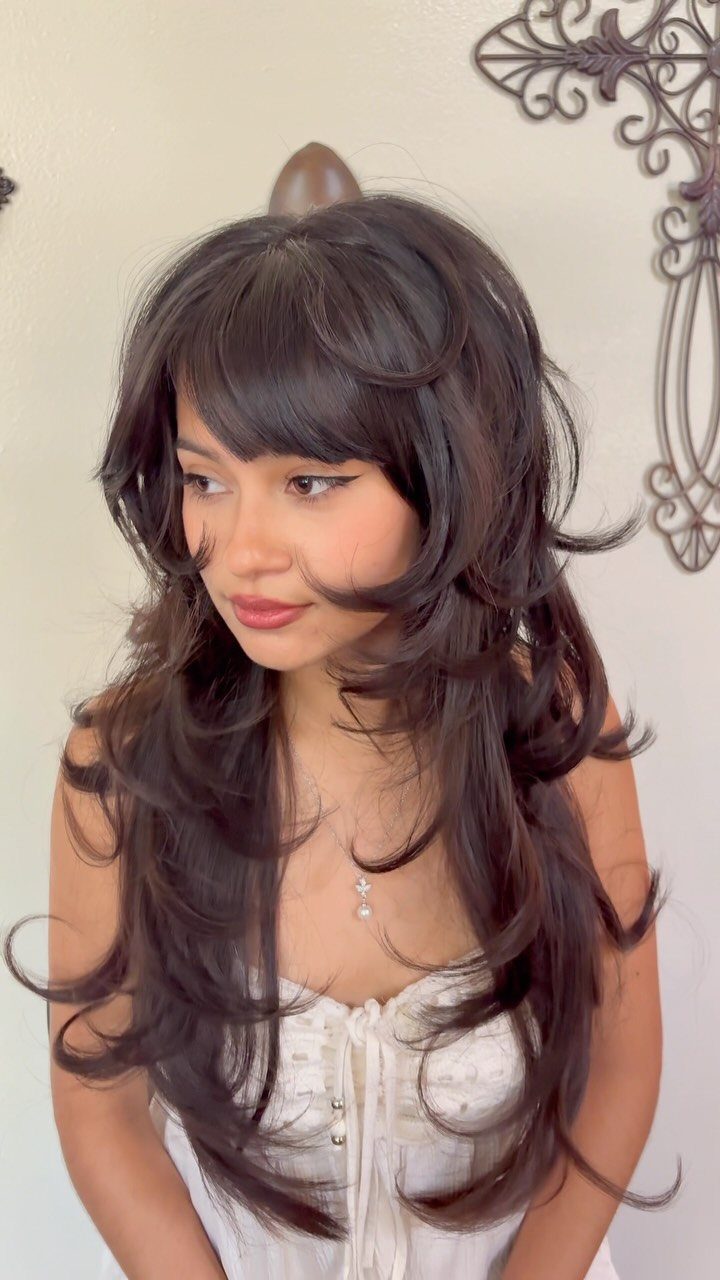
Instead of ending in a straight line, rounded layers curve inward, which gives dark brown hair a soft, full outline. Curling the ends under, as here, finishes the shape.
Full bangs fit well with this cut. If you want that pairing, tell the stylist the bangs should match the rounded layers.
13. Straight Long Layers
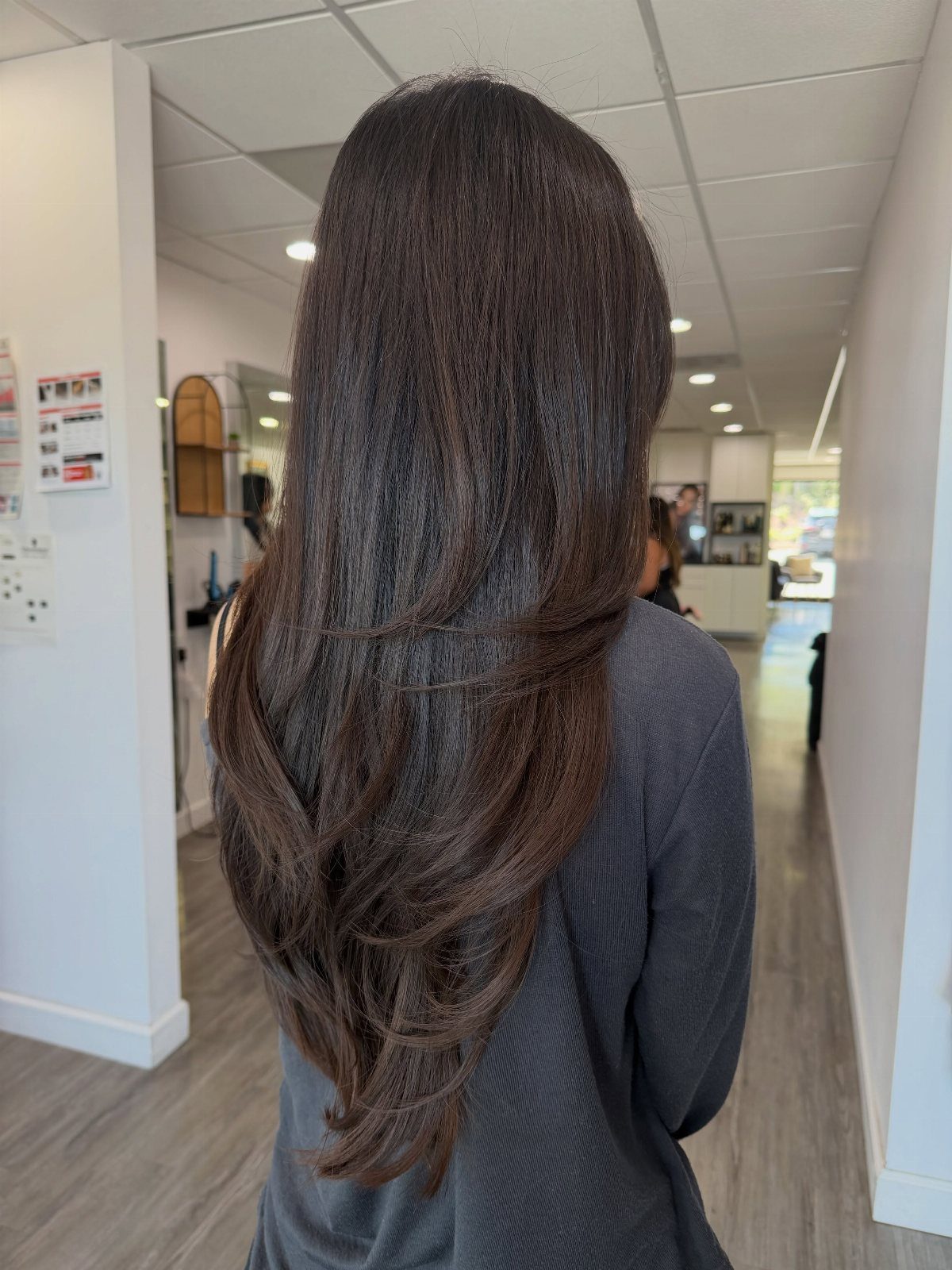
Smooth through the lengths and loosening only near the ends, this cut keeps dark brown hair sleek while the curved tips add a little movement. Ask for the layers to sit low so the length stays full.
I’d choose this over heavy, choppy layers if you like a polished finish. Blow-dry straight, then turn the ends under slightly so the curve shows.
Martin’s next recommendation is another luxurious-looking style inspired by the supermodels of decades gone by. “For women who want to keep their length, long invisible layers are much more flattering than heavy, choppy layers,” he says.
14. Blended Long Layers
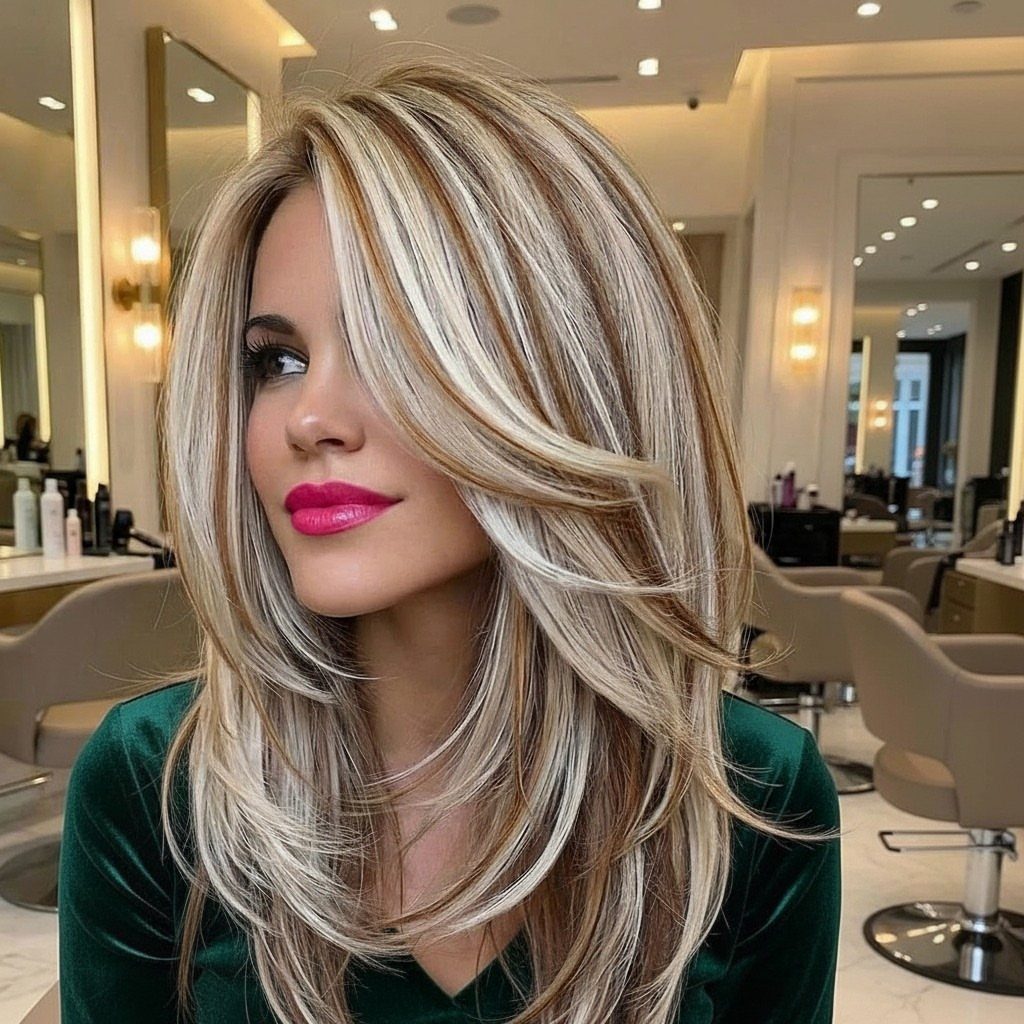
Nobody should be able to spot where one layer stops and the next begins. That is what blended layers mean: the length stays, and only the weight and the stepped lines are taken out.
If you add highlights to long layers, the face-framing strands show them first, so I put the brightest pieces there and keep the rest of the lift softer.
Tell the stylist you want movement without losing length, and bring a photo of the finish you want.
15. Curved ’90s Blowout with Invisible Layers
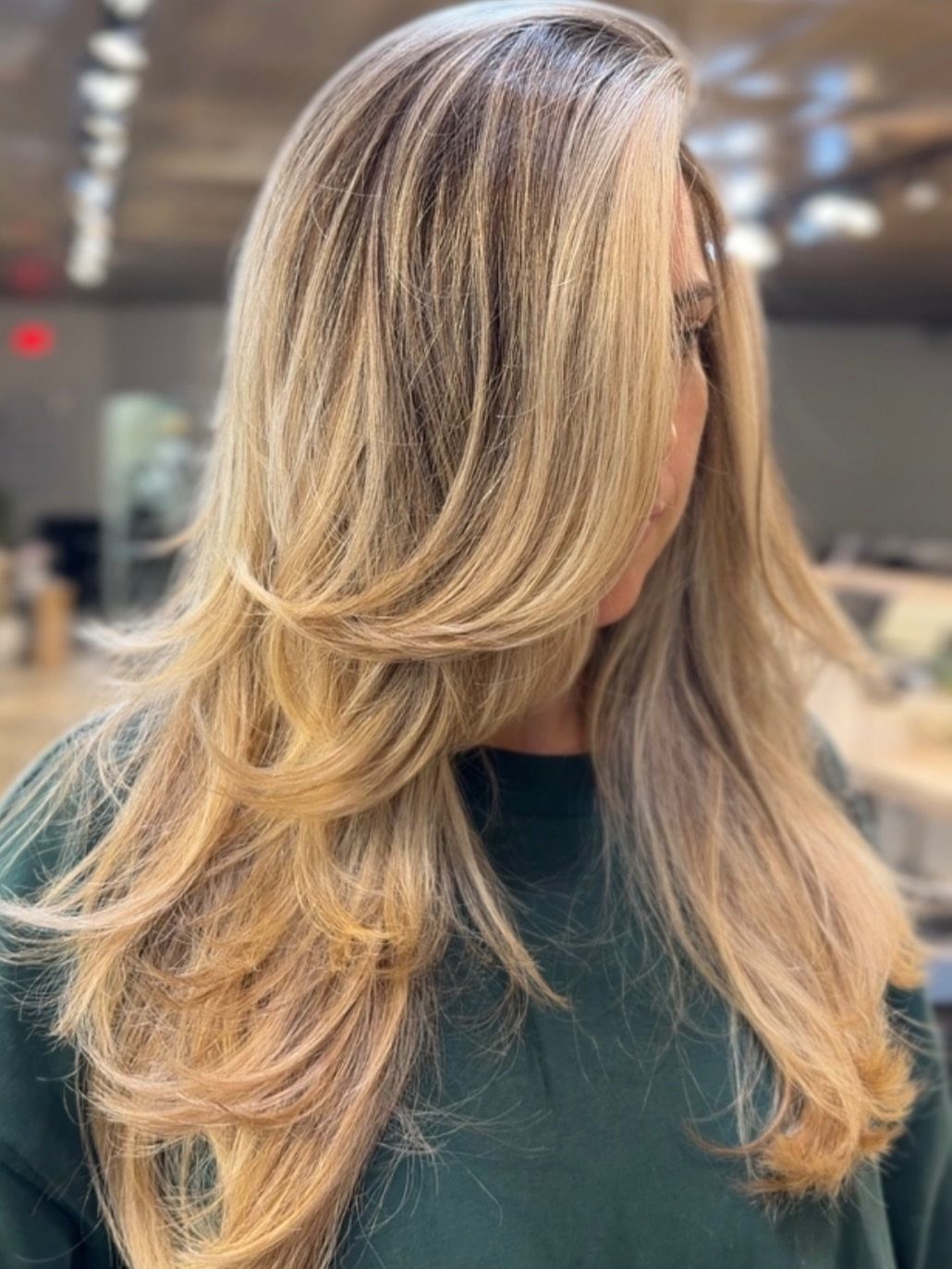
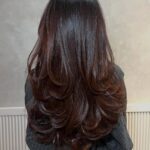
Invisible layers are cut inside the hair, so you get crown lift and swing without any visible steps. The ends stay full, and the blowout curves softly around the face.
Ask for them by that name, and add that you want a ’90s-style curved blowout. I like this on long blonde hair because the volume looks expensive, not teased.
16. Straight Blonde Long Layers
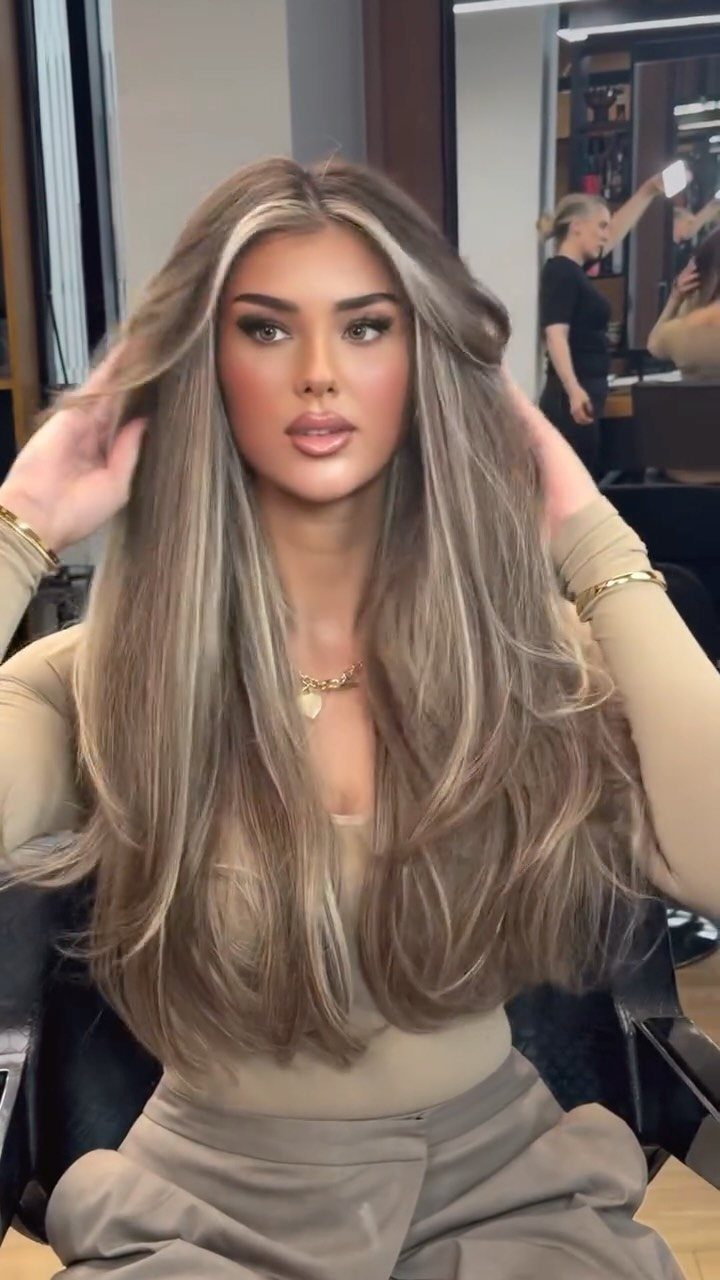
Straight hair gives blonde nowhere to hide, so the cut line and the color placement both show. Long layers keep the length from looking like one flat sheet of yellow.
Name the cut and the shade as 2 separate requests. I’d keep the finish smooth and straight, as here, and let the layers add the depth.
17. Caramel Tresses with Bangs
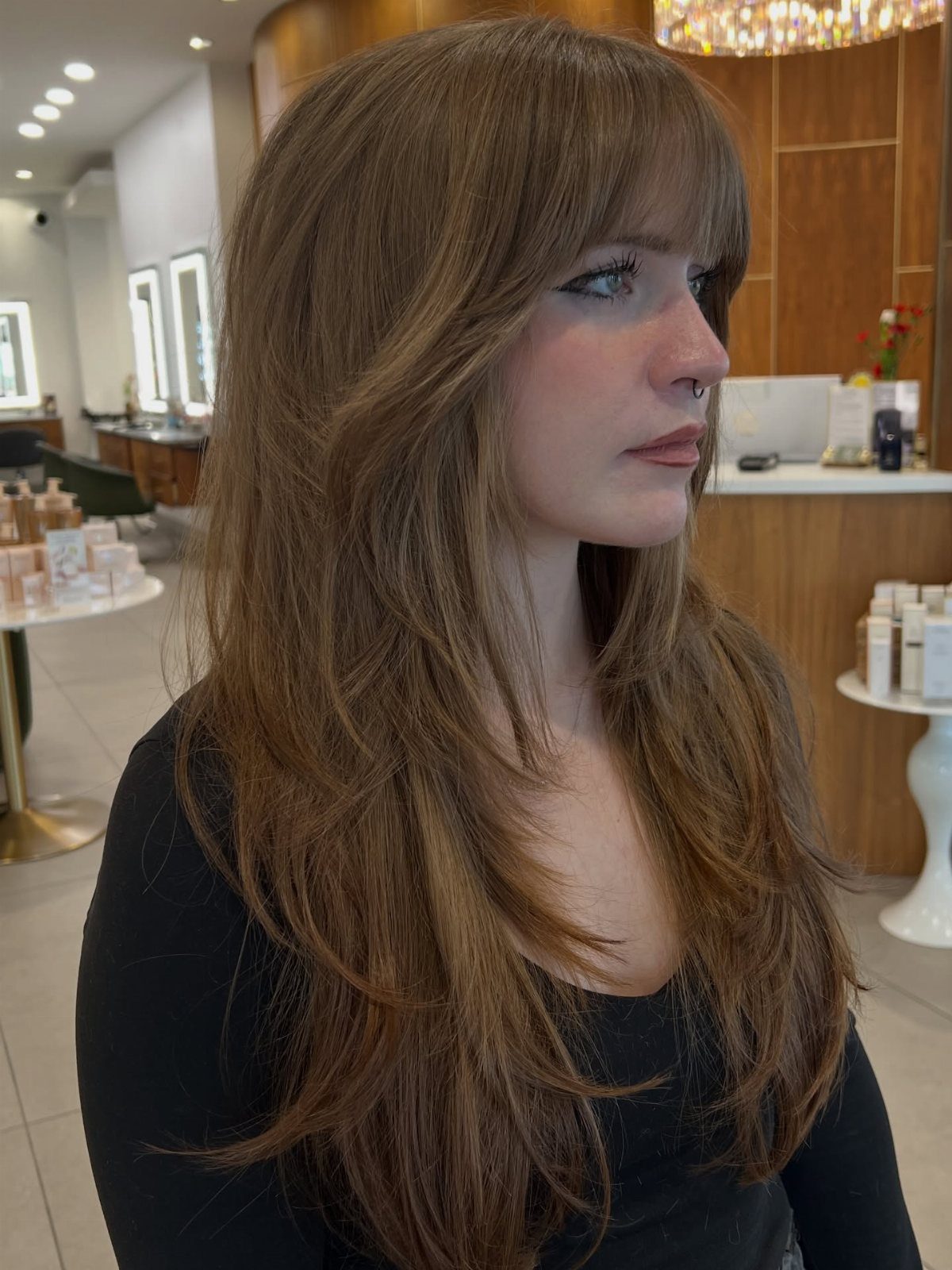
Full bangs are the commitment in this look; the caramel waves are the easy part. Together they frame the face from the forehead down, and the layers keep the length moving behind.
Bring a photo that shows the bangs and the waves together. I’d pick caramel-brown over anything paler here, since it keeps the bangs from looking heavy.
18. Loose Layered Locks
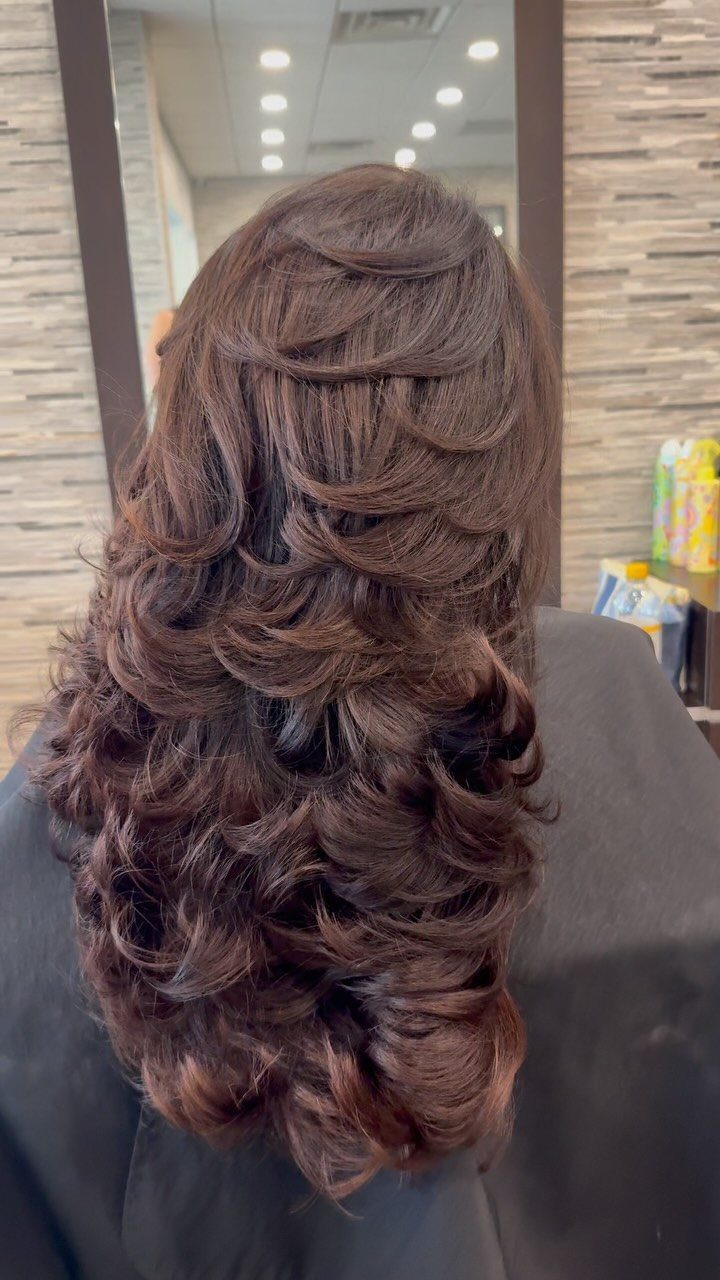
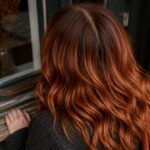
On curly hair, layers stack so each curl overlaps the next, and a reddish-brown color reads deeper wherever those curls meet.
I’d keep the curls loose and full, as here, because tight ringlets would shorten the whole look. Ask for cascading layers and let the length fall down the back.
19. Blunt Bangs
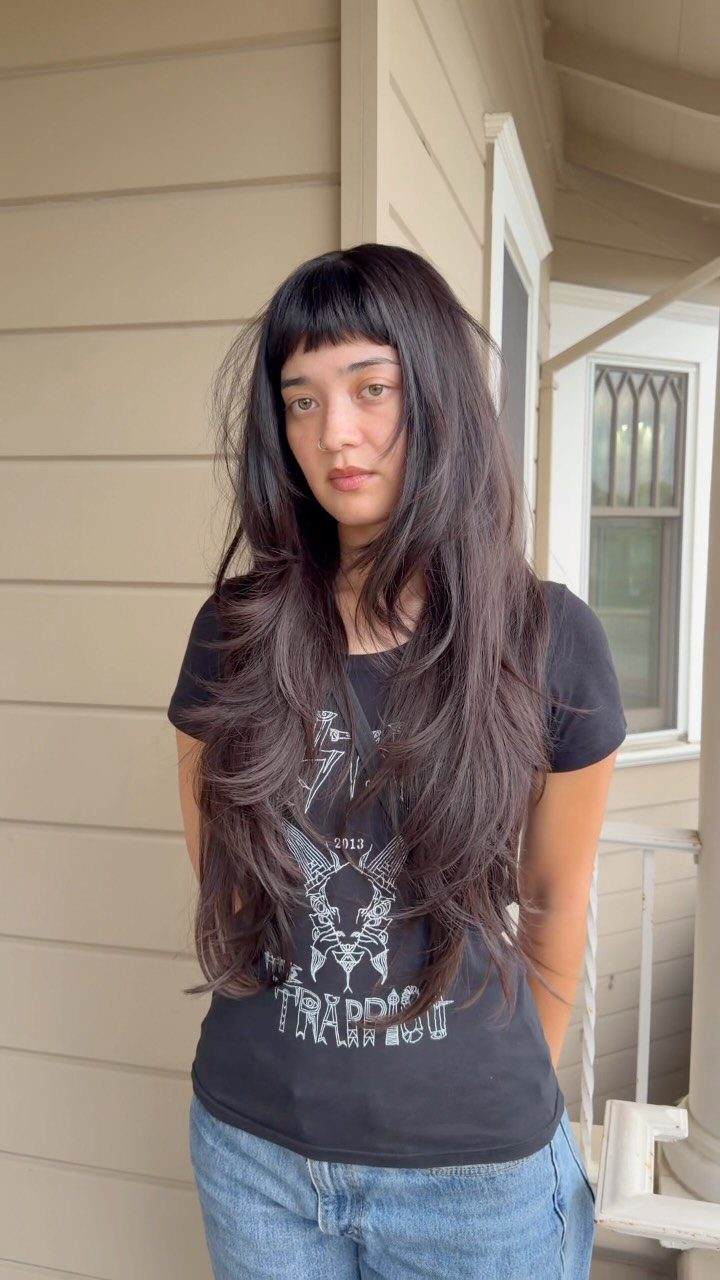
Blunt bangs cut in one straight, heavy line, and that weight sets them apart from the wispy fringe in entry 11. Against long layers, the hard edge up front balances the soft, broken-up movement through the rest of the hair.
Tell the stylist you want the bangs cut straight across and the layers kept long. I’d bring a photo, because "bangs" alone could come back wispy or curtained.
20. S-Curve Layers
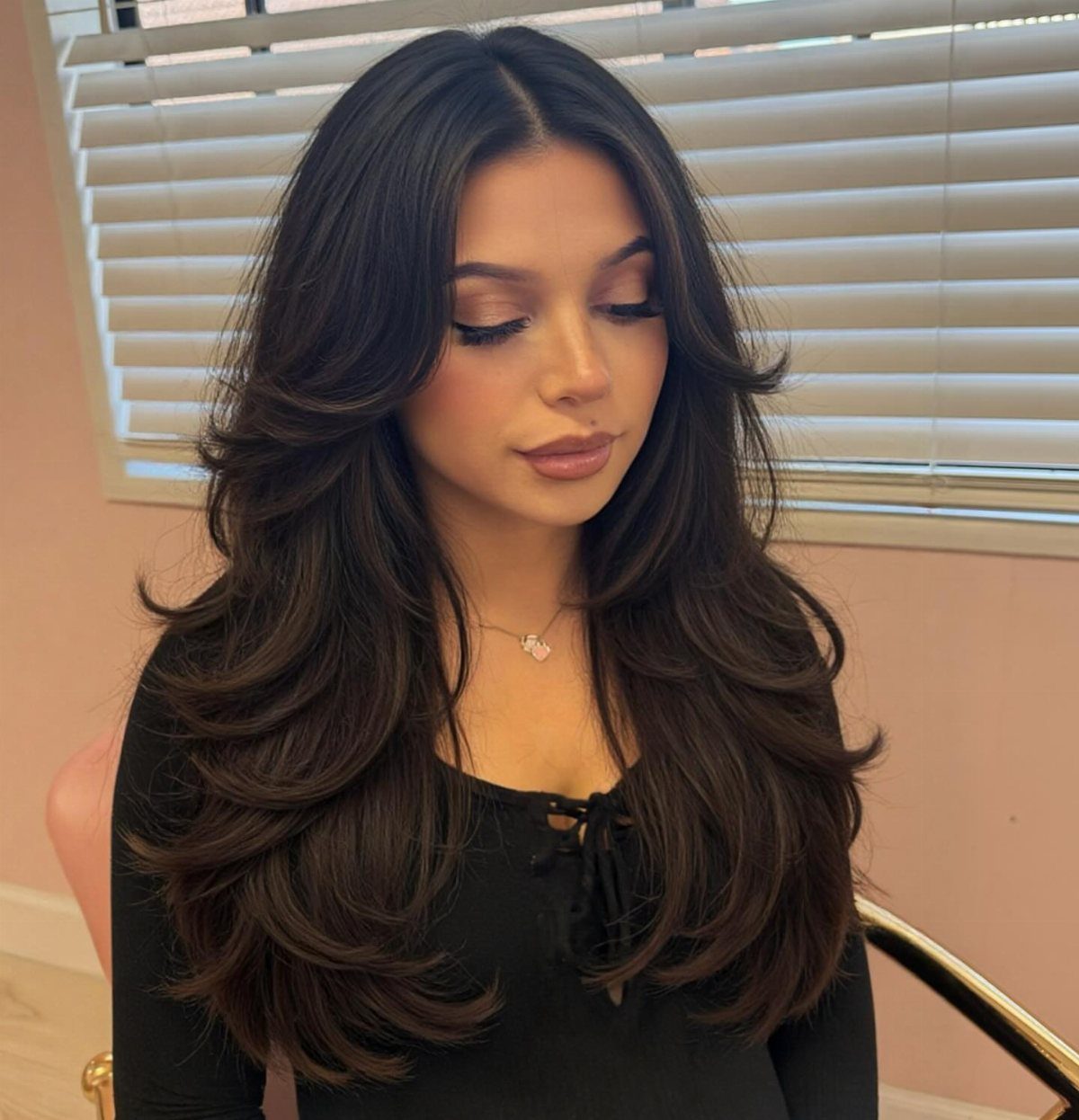
Layers cut to bend in an S shape give long dark brown hair body without much effort. The waves curve one way, then back the other, so the hair looks full around the shoulders instead of hanging flat.
For this one, ask for "S-curve layers" and bring a photo. A round brush or a loose curl on a large barrel gives the shape at home, and I’d stop short of brushing it out, since brushing flattens the bends.
21. U-Shape Long Layers
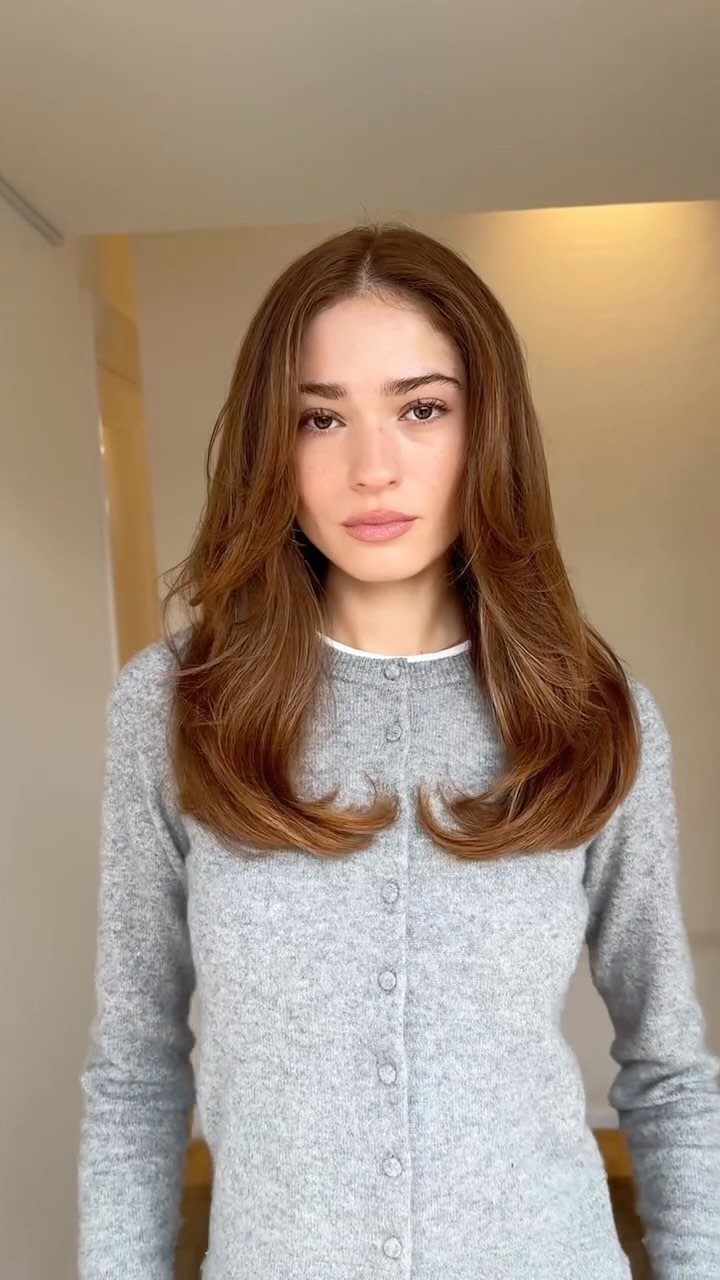
A U-shape cut curves the back of the hair into a soft, rounded U instead of a straight or pointed edge. On reddish-brown hair, that rounded finish keeps the length looking full right to the ends.
Ask for the U-shaped back with layers over the top, and curl the ends softly, as here. I’d go with this if you want long hair that looks even and gentle, not sharply cut.
22. Feathered Layers
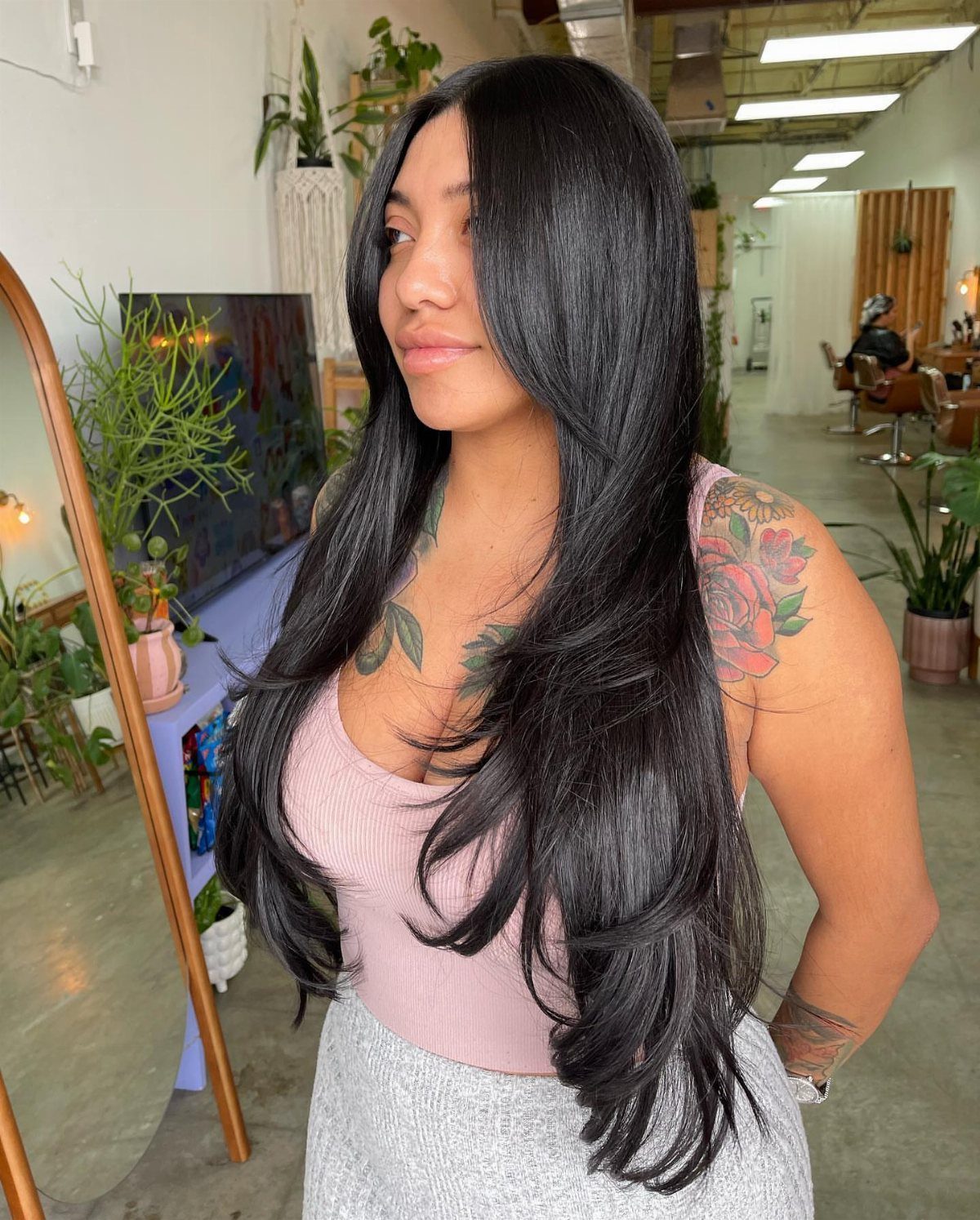
Feathered layers sweep and bend outward at the front, so the outline looks light and wing-like instead of cut in a line.
Name it as "feathered layers" and ask for the front sections to curve away from the face. I’d keep the black shiny and smooth, because a dull finish hides the sweep.
23. V-Cut Layers
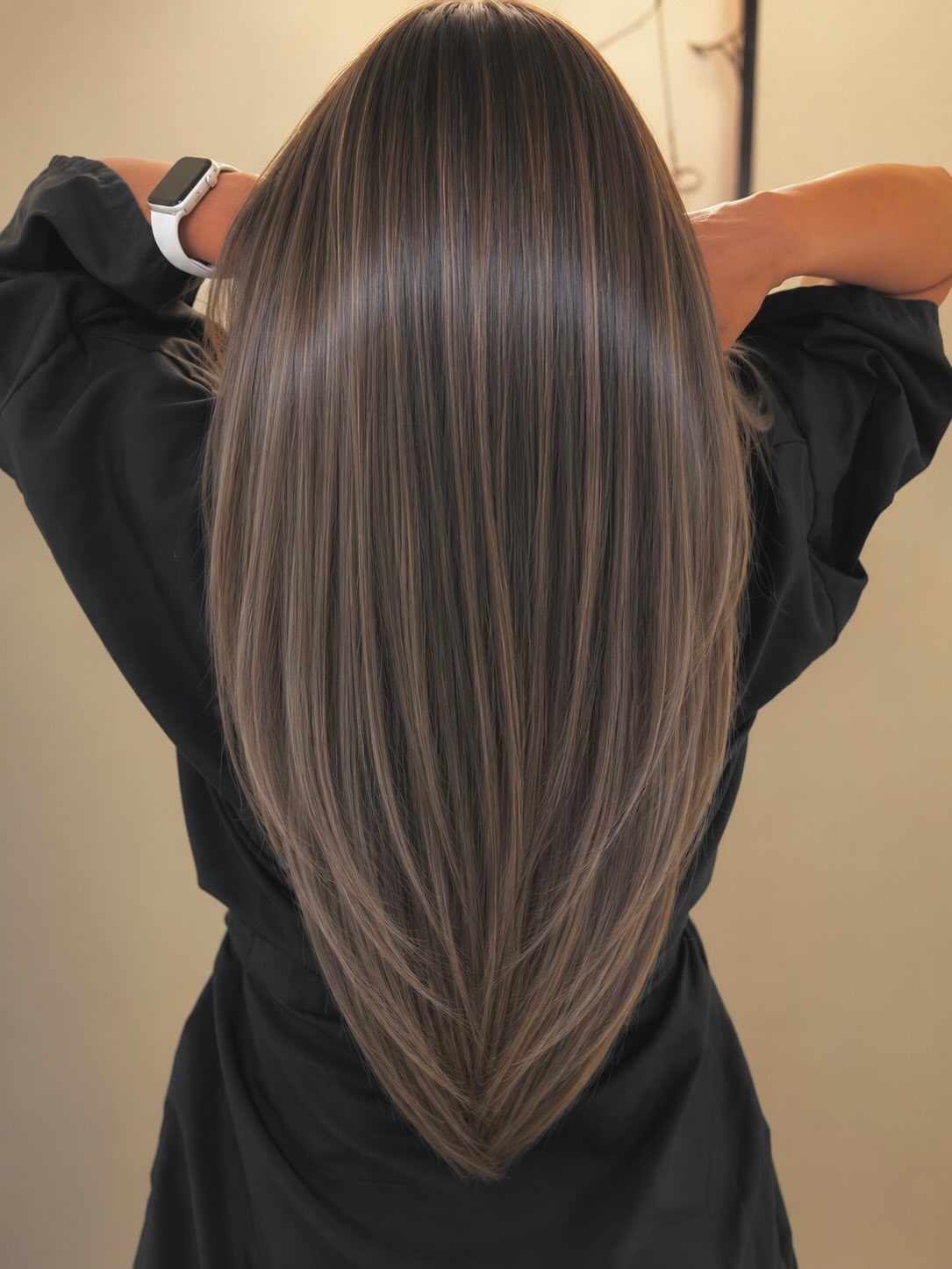
Seen from behind, a V-cut narrows the hair to a point at the center back, with the longest strands running down the middle.
Long angled layers lead into that point, and on straight brown hair with highlights the lines stay clear.
Tell the stylist you want a V at the back and angled layers, then bring a back-view photo, since the shape is hard to describe. Straight hair shows the cut best.
24. Flippy Layers
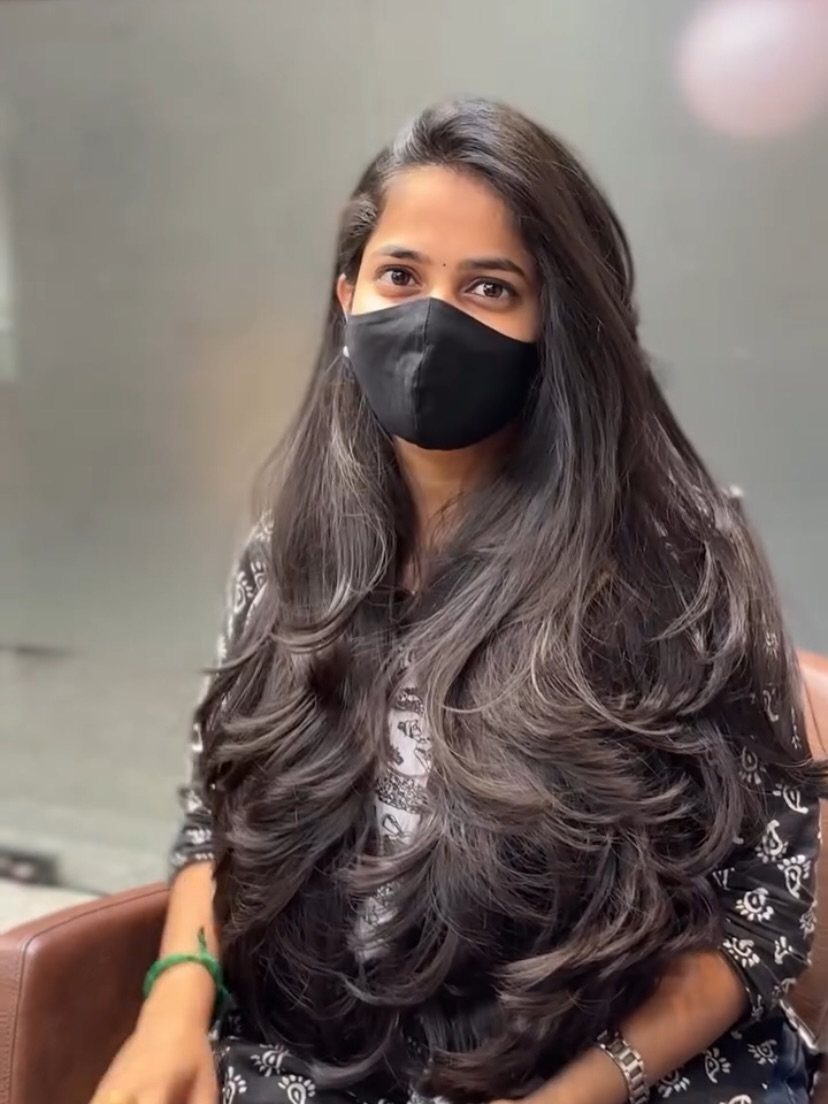
Ends that flip outward give long dark layers a bouncy, lively swing. Flippy layers need the ends cut so they can turn out, then styled that way, or they just fall straight down.
I’d ask the stylist for layers built to curl outward, and use a round brush or a curling iron to turn each end away from the body.
Compared with the curled-under finish in entry 13, this one reads younger and more playful.
How Layers Change Hair
Layers do two jobs, and which one you get depends on your hair.
On thick or bulky hair, they remove weight so the length bounces instead of dragging down around the face. Fine hair gains the most here, because stepped lengths create the look of body that a single blunt edge never will.
Depth is the other effect. Different lengths catch light at different angles, which creates natural highlights and shadows and gives even a single solid shade more richness.
How far the layers run sets how bold the cut looks. Keep the layers near the ends for a soft, barely-there change, or cut them from the crown down for the full, dramatic version.
If you’re unsure, I’d start subtle, because more can be cut later and none can be added back.
Placement can also be tailored to your features, so ask where the shortest pieces will land on your face.
Stylist Consultation and Upkeep
Start with the length itself.
Decide on face-framing pieces or bangs before the scissors come out. Both change how the layers are planned, and both work well with this cut.
Upkeep is mostly a calendar question.
A trim every 8–10 weeks is the schedule I’d follow, because the shortest layers lose their shape first. It matters more if you blow-dry or curl most mornings, since regular heat styling shows a worn-out shape quickly.
At-home Styling Guidance
Crown lift decides whether long layers look full or flat. Aim the dryer at the roots, pulling them up and away from the scalp, and hold that lift until the hair cools so the shape stays.
Skip that step and the layers underneath can look lively while the top falls limp.
For a straight finish, plan on about 15 minutes:
- Blow-dry on medium heat.
- Lift at the roots with your fingers or a flat brush, then brush the rest flat.
- A dab of pomade on your palms will tame any flyaways.
For texture instead, I’d stay with lightweight products and dry with a diffuser so the layers keep their natural flow.
Frequently Asked Questions
What are the different types of long hair haircuts?
Most long cuts are layered, and the types differ by where the shortest pieces land and what shape the ends take.
Shaggy layers have choppy ends and lift at the crown, face-framing layers start at the cheeks or jaw, and butterfly layers pair shorter cheekbone-length pieces with long hair below.
Shape cuts like the U-shape, V-cut and feathered layers change the outline, and bangs, whether curtain or blunt, can sit on top of any of them.
How to style really layered hair?
Start at the roots: aim the dryer there, pull the hair up and away from the scalp, and hold it until it cools so the lift lasts.
Medium heat and roughly 15 minutes will get long layers straight: lift the crown with a flat brush or your fingers, brush the remaining lengths smooth, then tame flyaways with a small dab of pomade.
Texture comes easiest with a light mousse worked through damp hair and a diffuser on low, which lets each layer fall in its own pattern.
Should you have layers in long hair?
Yes, for most hair types, because layers do a different job depending on your hair.
Unsure? Keep the first round of layers near the ends, because more can always be cut later and length can’t be put back.
What to tell your stylist?
Say you want to keep your length, add long layers, and keep the bottom even all the way around.
Settle face-framing pieces and bangs with your stylist before any cutting begins, since each one changes how the layers get mapped out.