The styles here run from flat, scalp-hugging cornrows and stitch braids to jumbo box braids, Havana twists and long faux locs that carry real weight.
Section size decides which one fits you: fewer, larger sections mean a shorter appointment and a bolder look, micro braids take a long session, and heavier lengths pull harder on your hairline.
If your edges are the worry, knotless braids, which feed the extension in gradually, sit easier at the root.
1. Cornrows
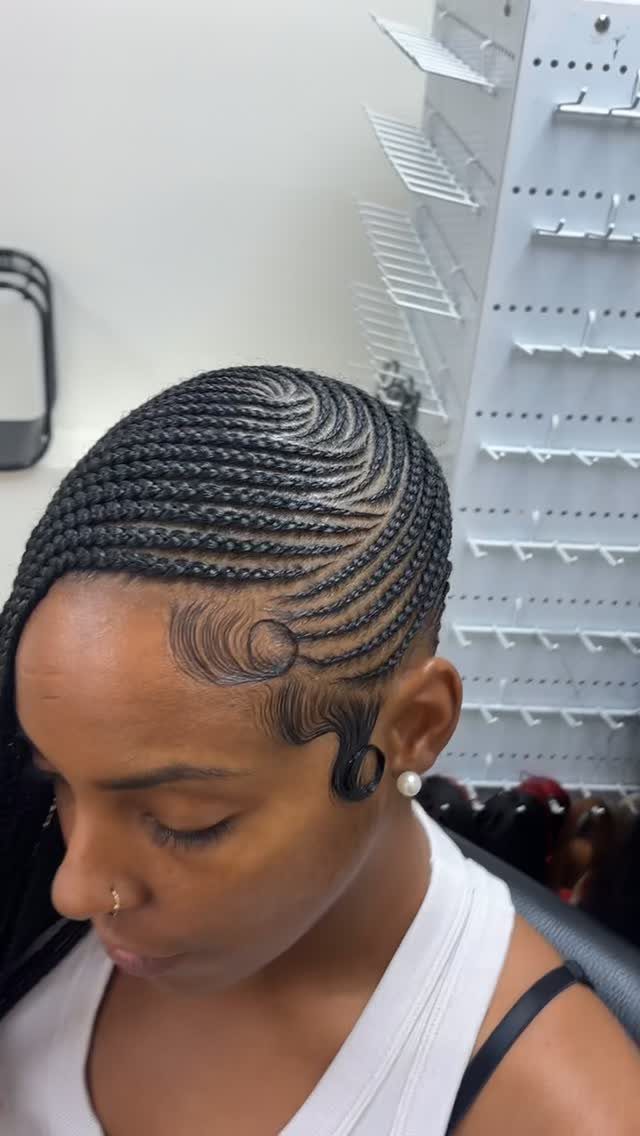
Cornrows sit flat against the scalp, so the pattern is the whole show: curved rows that sweep back and around, with the edges laid neatly along the hairline.
Because the braids stay so close to the head, this is a style where the parting matters more than anything.
If you are bringing a picture to a stylist, point to the direction of the rows and the finish at the edges. Straight back, curved or swirled all read very differently.
2. Braided Ponytail
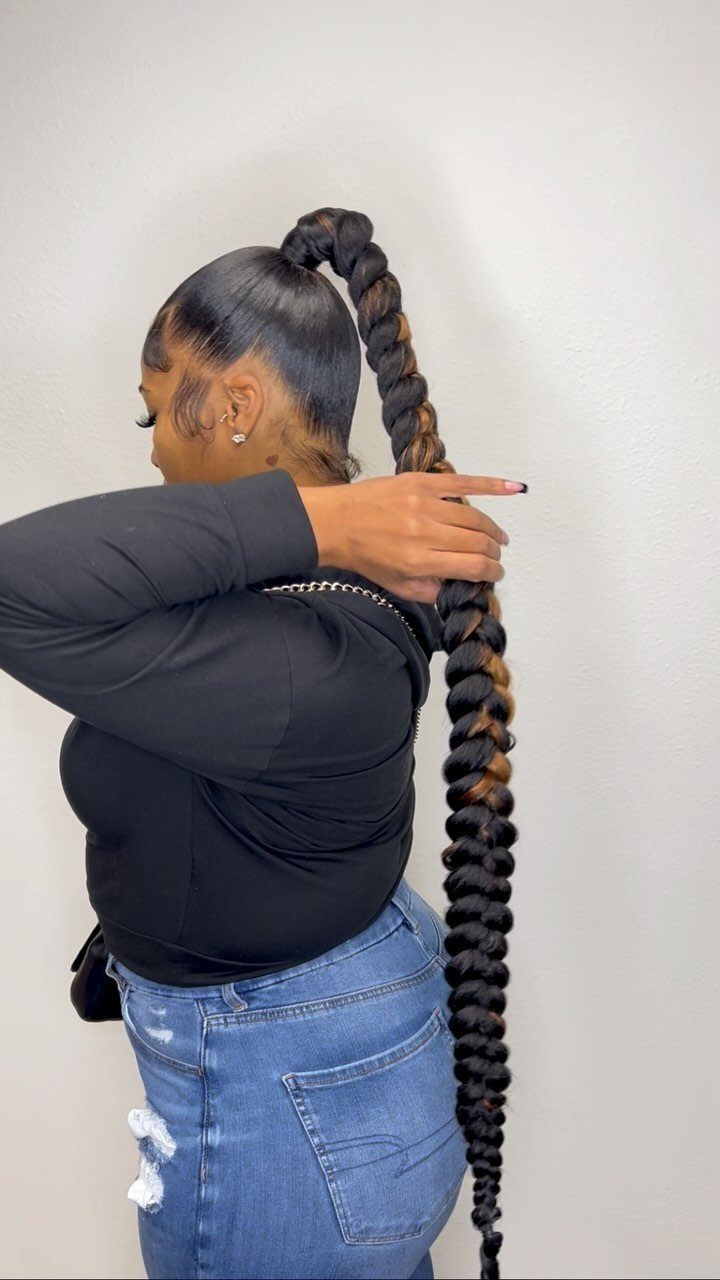
A braided ponytail turns one thick plait into the entire hairstyle, gathered at the crown and left to hang long.
Height is the first decision. High reads sleek and lifted, low feels softer, and a side-swept version suits anyone who wants the weight off-center.
I like the high version best for showing off length and thickness at once. For a bit of dimension like the brown pieces here, ask for them to be braided in rather than added afterward.
3. Feed-In Cornrows
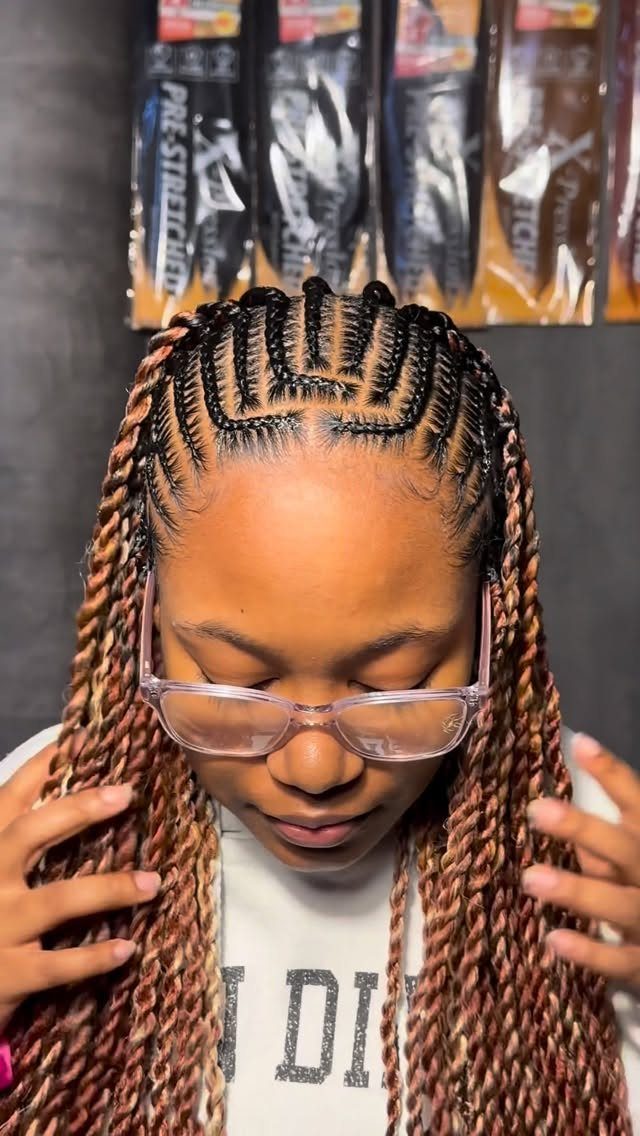
Feed-in cornrows start with a small amount of hair at the root and add extra strands bit by bit as the braid travels along.
That gradual build is what lets the braid taper smoothly at the scalp and then continue into length, instead of starting thick and bulky.
This is the version I would show a stylist for long braids that still lie flat up top. Mention the colors you want mixed in, since blending brown and black happens during the feeding.
4. Boho Braids
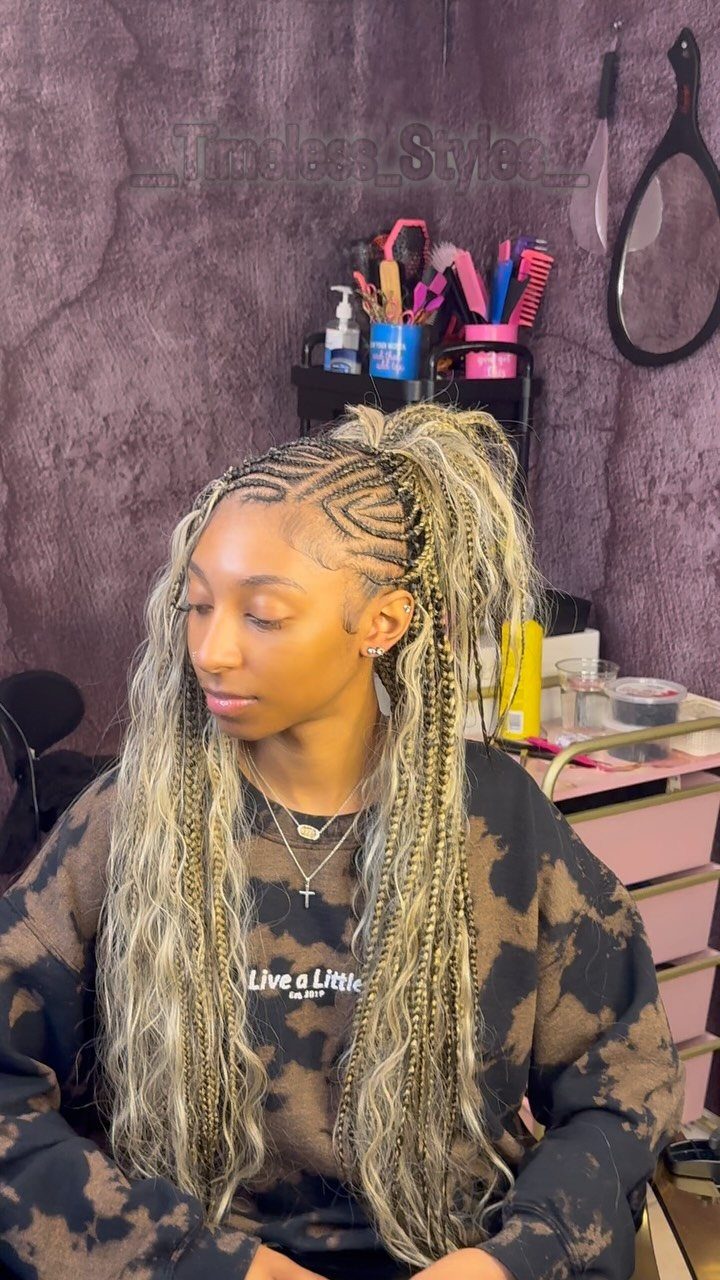
Boho braids pair neat, structured plaits with loose curls or a deliberately undone finish, so the look lands somewhere between polished and relaxed. The soft, wavy sections give the style its movement.
If you like a style that does not look too precise, this is the one I would pick.
Ask your stylist where the curls should begin; the placement changes how bohemian the final result feels, from just the tips to a good portion of the length.
5. Boho Tribal Braids
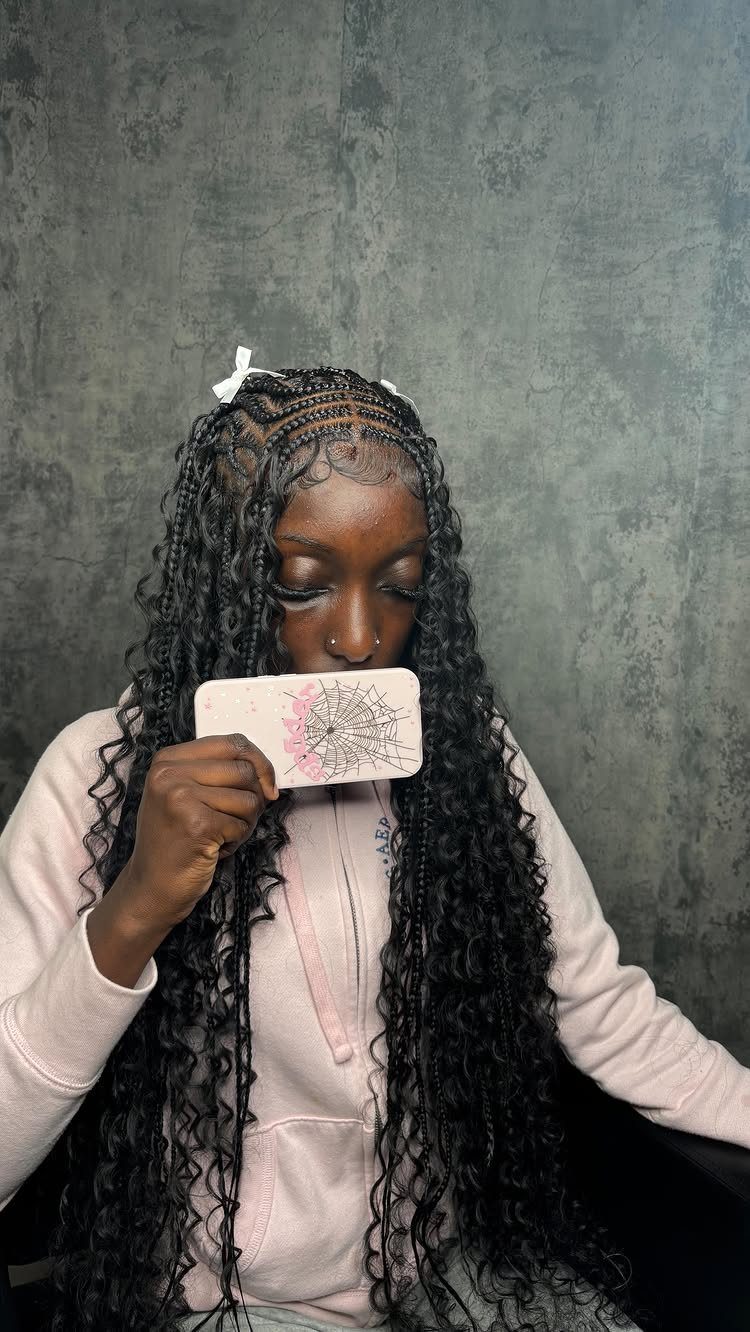
Geometric parting is what separates boho tribal braids from the softer boho look: clean, angular sections on top, then curly ends that let the style loosen toward the bottom. The contrast between sharp lines and loose texture is the appeal.
I would choose this if plain braids feel too tidy but you still want crisp shapes at the scalp.
When you show the style to a stylist, name the pattern you want up top and the curl you want below as 2 separate requests.
6. Fulani Braids
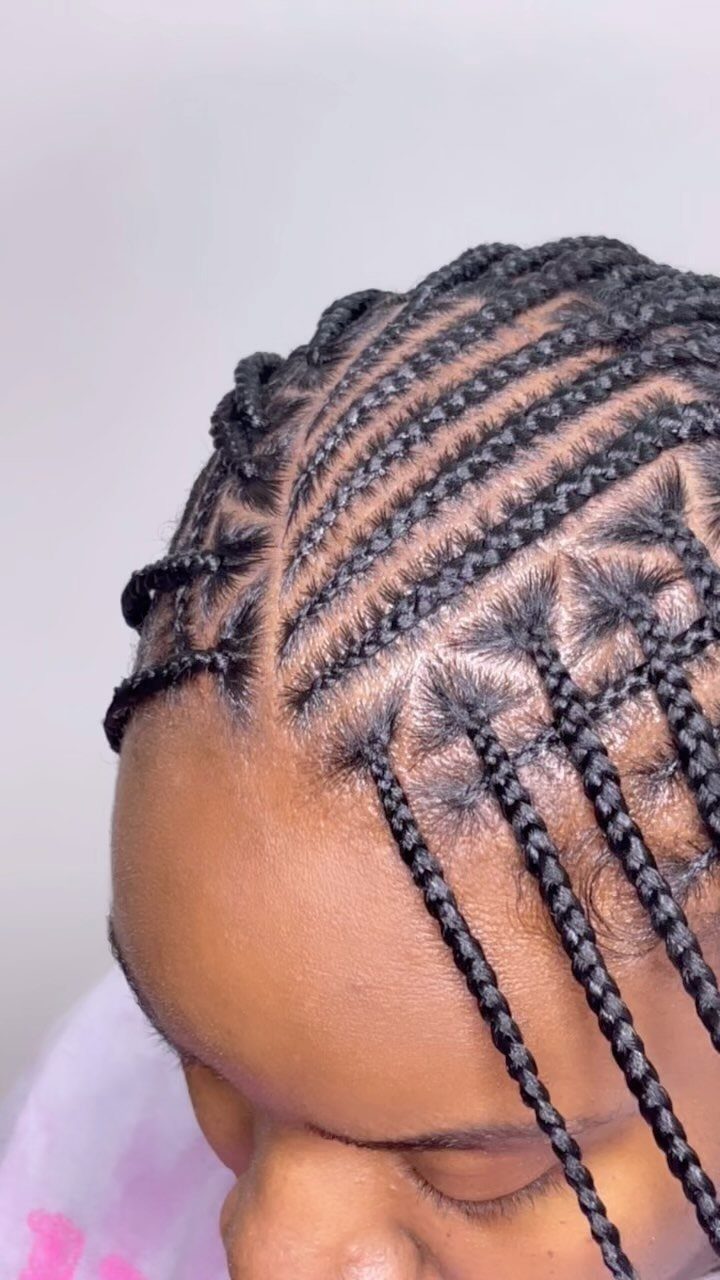
Fulani braids combine cornrows at the scalp with thinner braids that hang free, and many versions run a single braid down the center. Flat sections next to loose ones make them instantly recognizable.
When you ask for them, mention the center braid up front, since it defines the look for many people.
I find the style works best when the cornrow pattern is the first thing you decide, because the hanging braids follow from it.
7. Knotless Braids
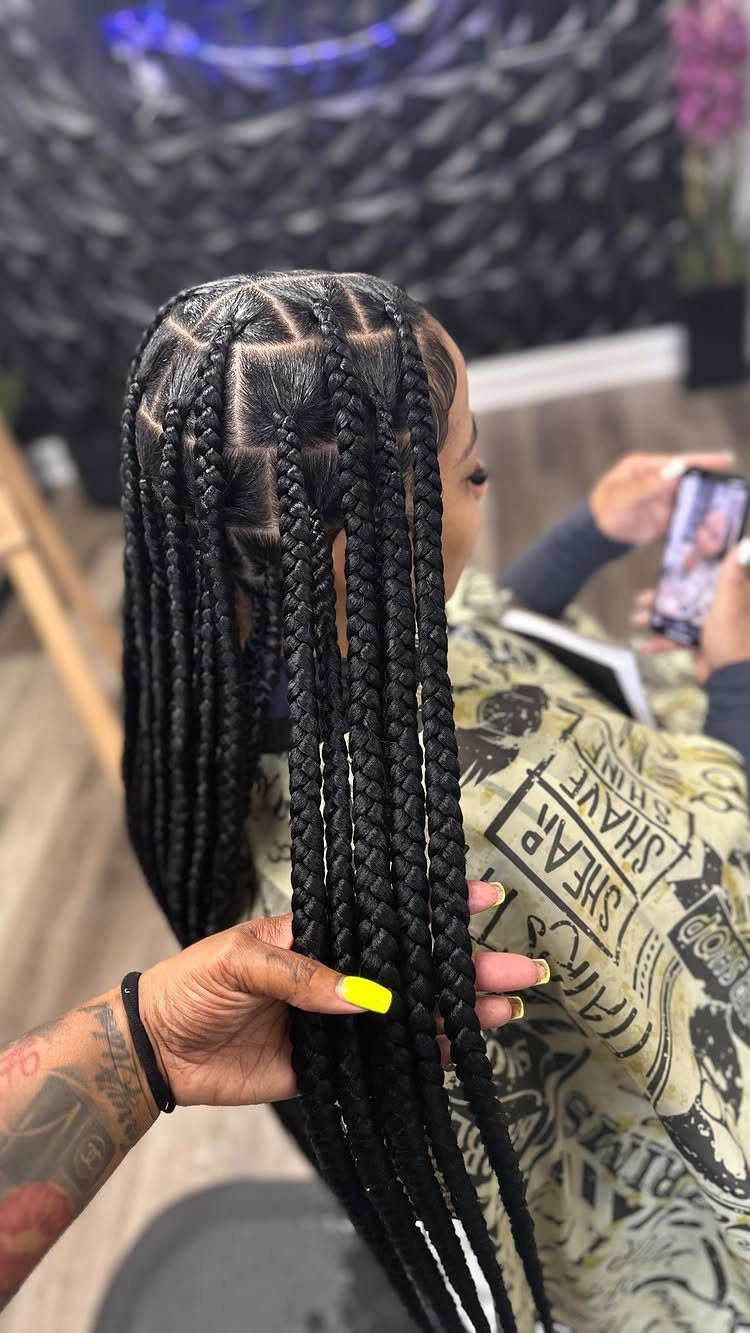
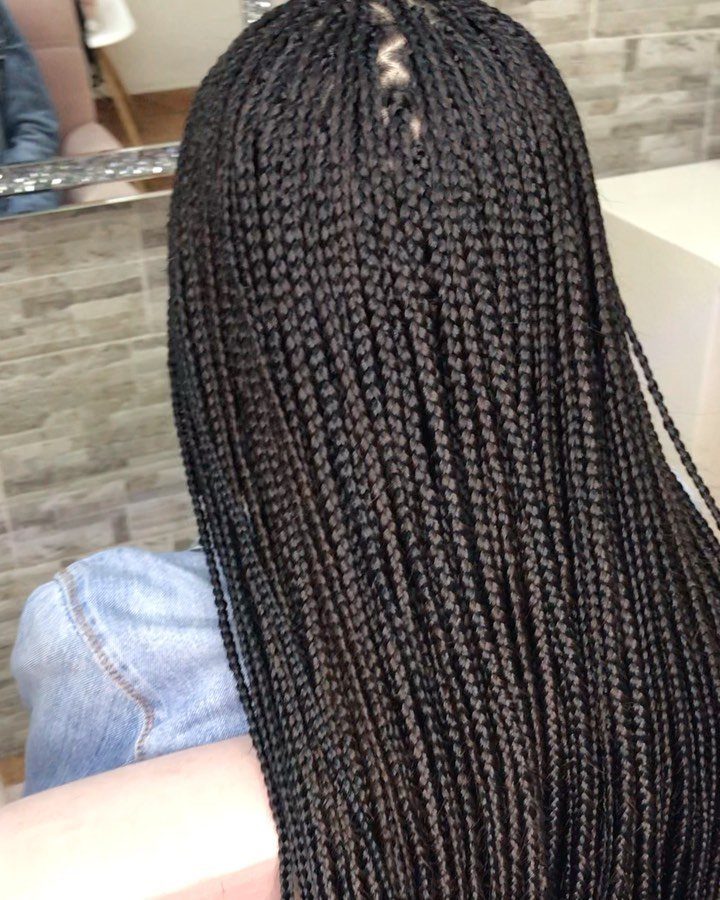
Knotless braids begin with the natural hair alone and bring in the extension a little at a time as the braid travels down. With no bulky knot sitting at the root, the base lies flatter and the parts look cleaner.
Book them by the name knotless braids, and request that the extension be fed in gradually.
That one phrase separates them from a standard braid started with a knot. I would pick this for long, straight-down lengths like the black ones here.
8. Jumbo Box Braids
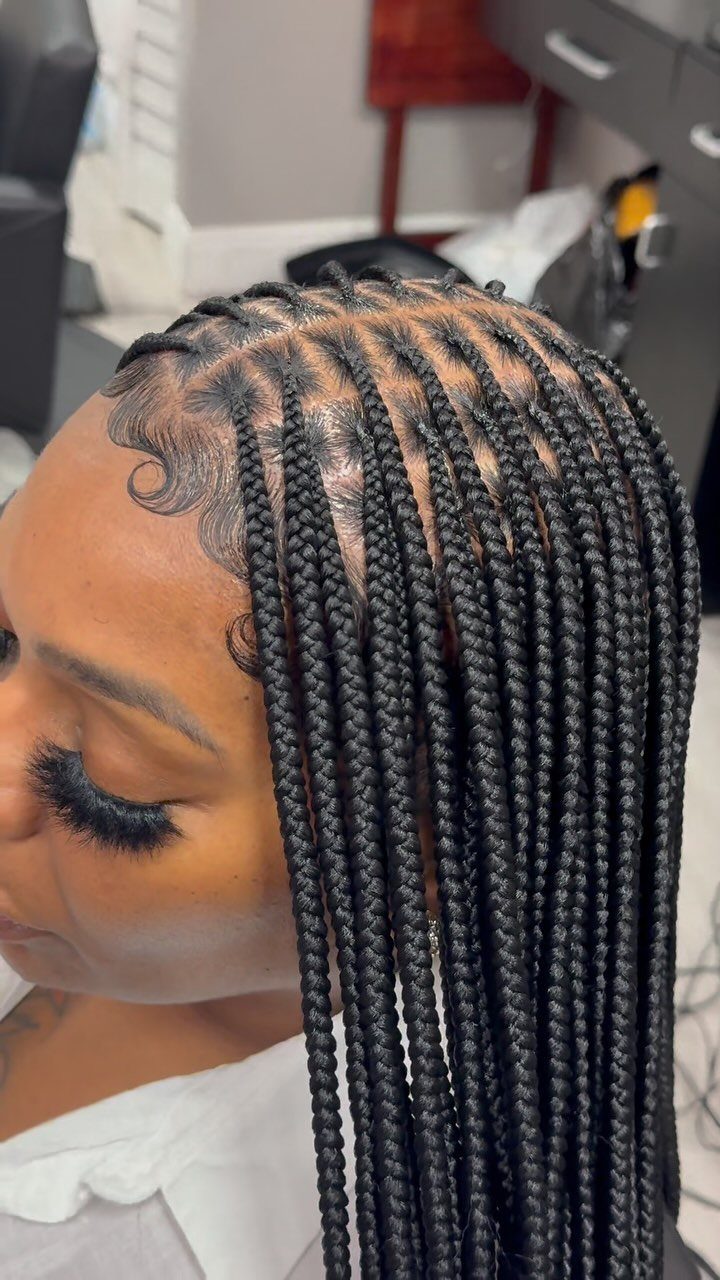
Jumbo box braids use fewer, larger sections, so each braid reads as a thick rope instead of a fine line. Bold, graphic lines are what these braids are built for, and the chunky parts deliver them.
Chunky braids make the parting very visible, so ask for clean, square sections and tidy edges. I like them swept over one shoulder, which shows off the thickness without hiding the face.
Larger sections also mean fewer braids to install, which is a plus if you dislike long sessions.
9. Micro Braids
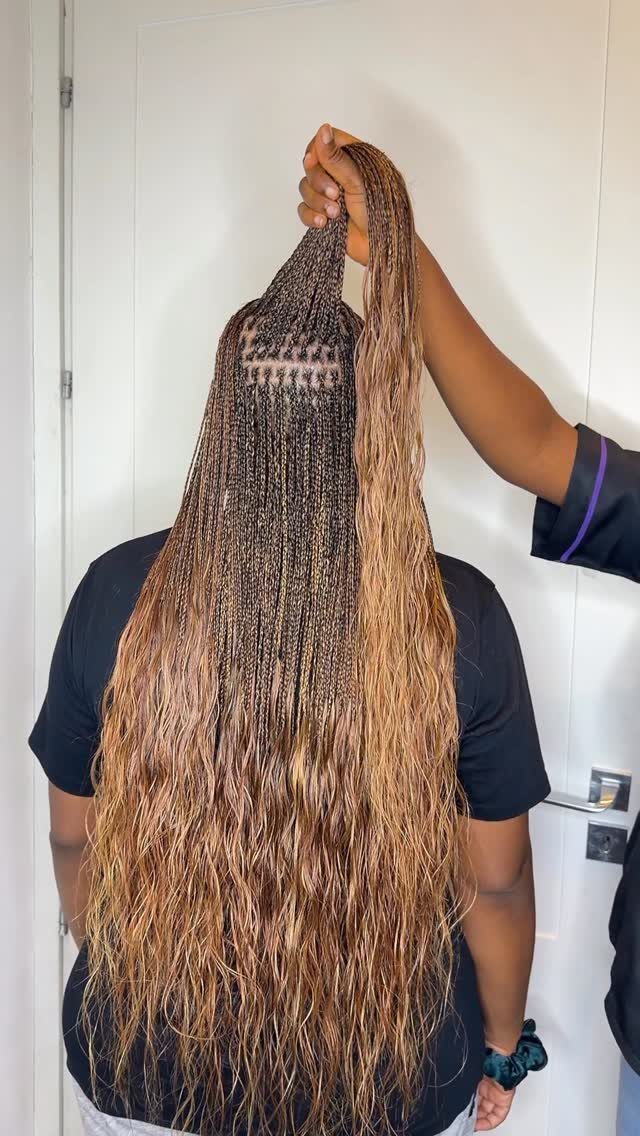
Micro braids are tiny, and from a few feet away they can pass for loose, flowing strands. Up close, you see how fine each one is.
My honest caution: small braids mean a lot of them.
Plan for a long appointment and ask your stylist for an estimate before you book. Honey-brown with wavy ends is a pairing I would request by name, with the waves added at the tips.
10. Passion Twists
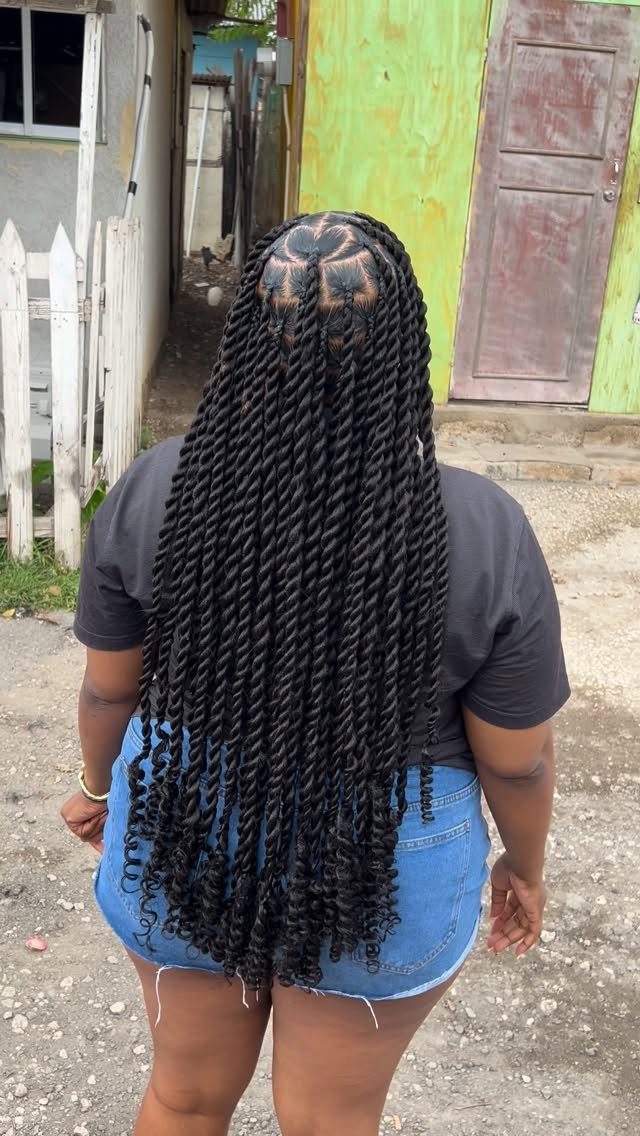
Passion twists are curly, textured twists that look soft and natural rather than slick. The coiled finish gives them movement that a straight twist lacks.
Square parts, as seen here, keep the scalp looking tidy and give the length an even, organized fall.
A photo works best when you name 2 things apart: the curl pattern you want and the shape of the parts. I would choose black for a classic look, though the texture does the real work.
11. Braided Bob
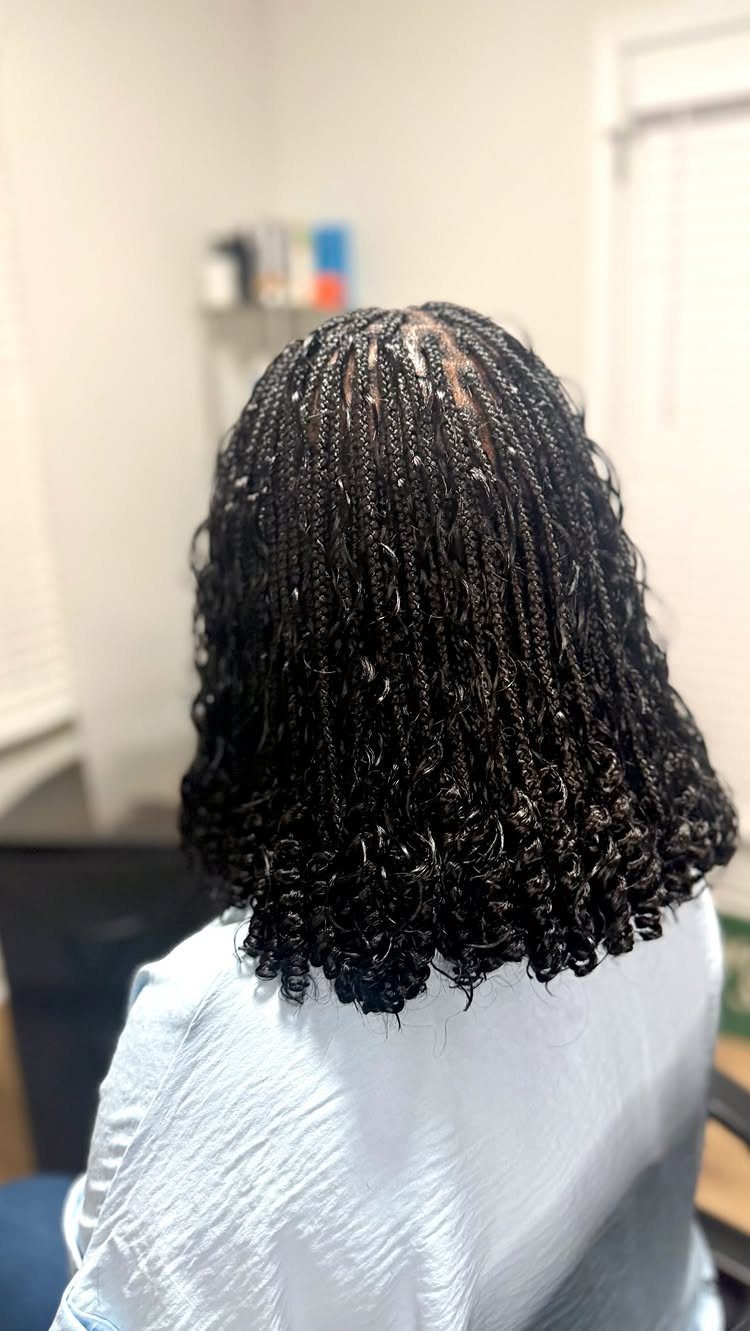
A braided bob stops at the shoulders, and that shorter length puts the shape front and center. Curled ends round it out, so the outline sits full instead of blunt.
Tell your stylist the exact length you want, since it is easy to land longer than you pictured.
I like this cut for anyone who wants braids without the weight of waist-length hair. The maker of this one offers 1-on-1 sessions if you want personal guidance.
12. Braids with Curly Ends
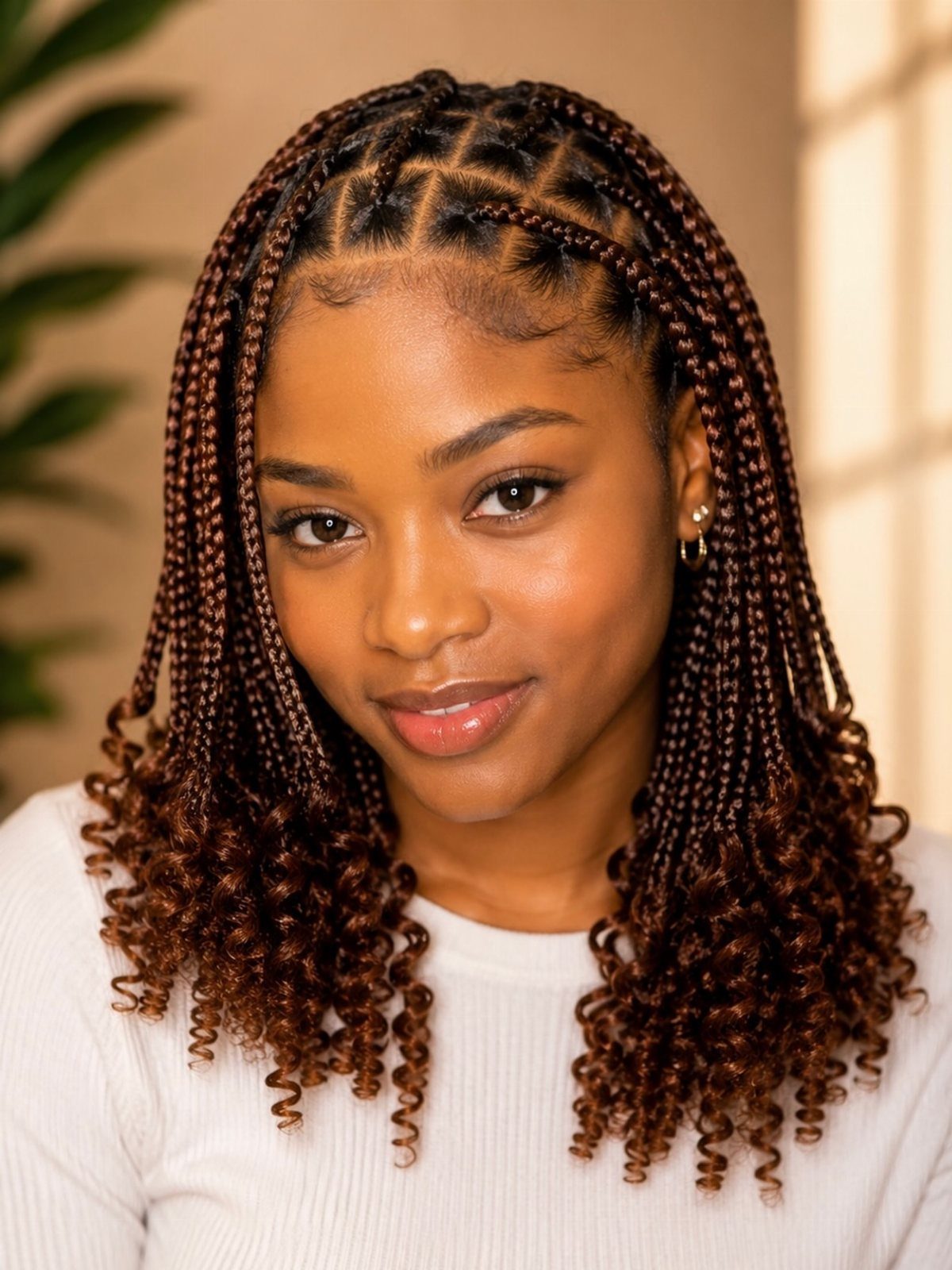
Braids that stop short and finish in loose curls give you a defined top and a soft bottom. Cornrows can lead into long braids, with the curls taking over where the braiding ends.
Ask your stylist how far down the braiding should go before the curls begin; that decision sets the whole feel.
Shorter curls look playful, longer ones look fuller. For something softer than a fully braided finish, I would go with loose brown curls at the ends.
13. Braided Mohawk
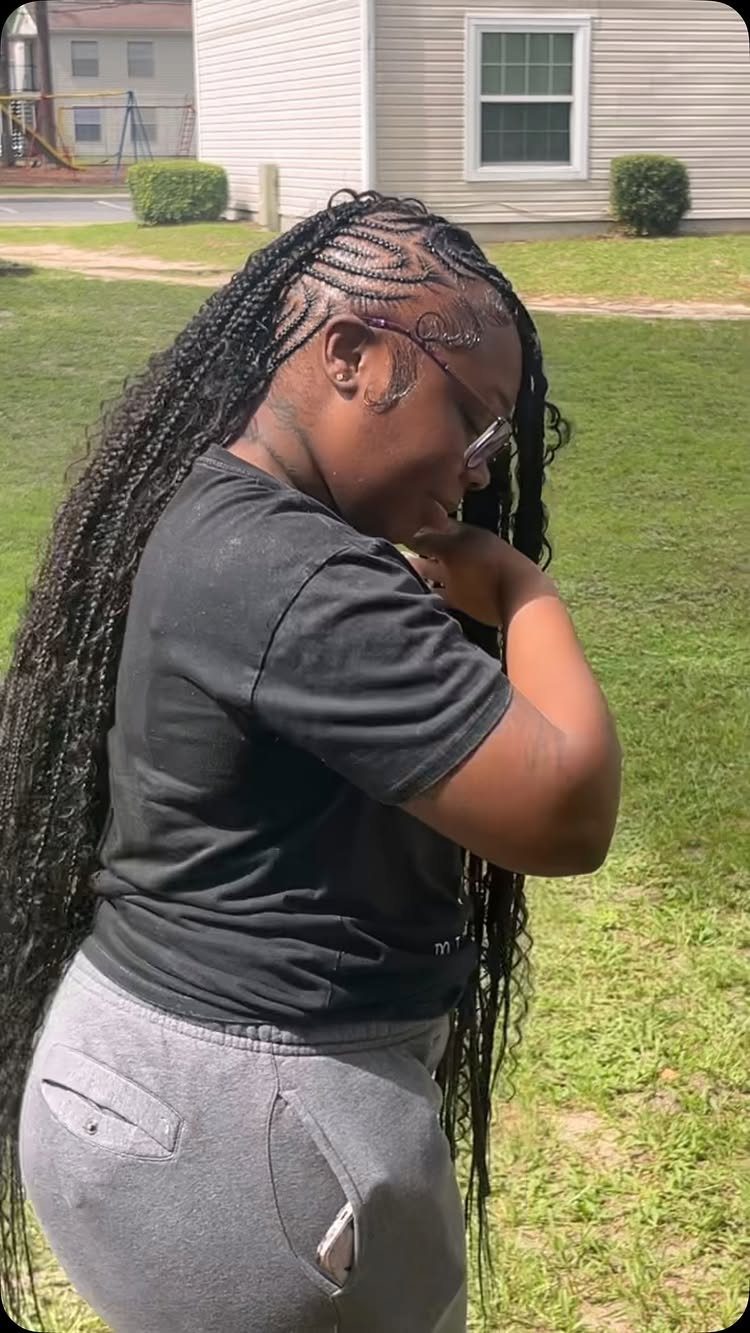
A braided mohawk gathers the length into a raised center strip and keeps the sides closely braided, so the shape reads as a ridge of long braids down the middle of the head.
I would ask for the sides to be done tight and tidy, since they frame the whole look.
Tell your stylist how tall you want the center to stand and where it should end, because the length at the back changes the whole silhouette.
14. Faux Locs
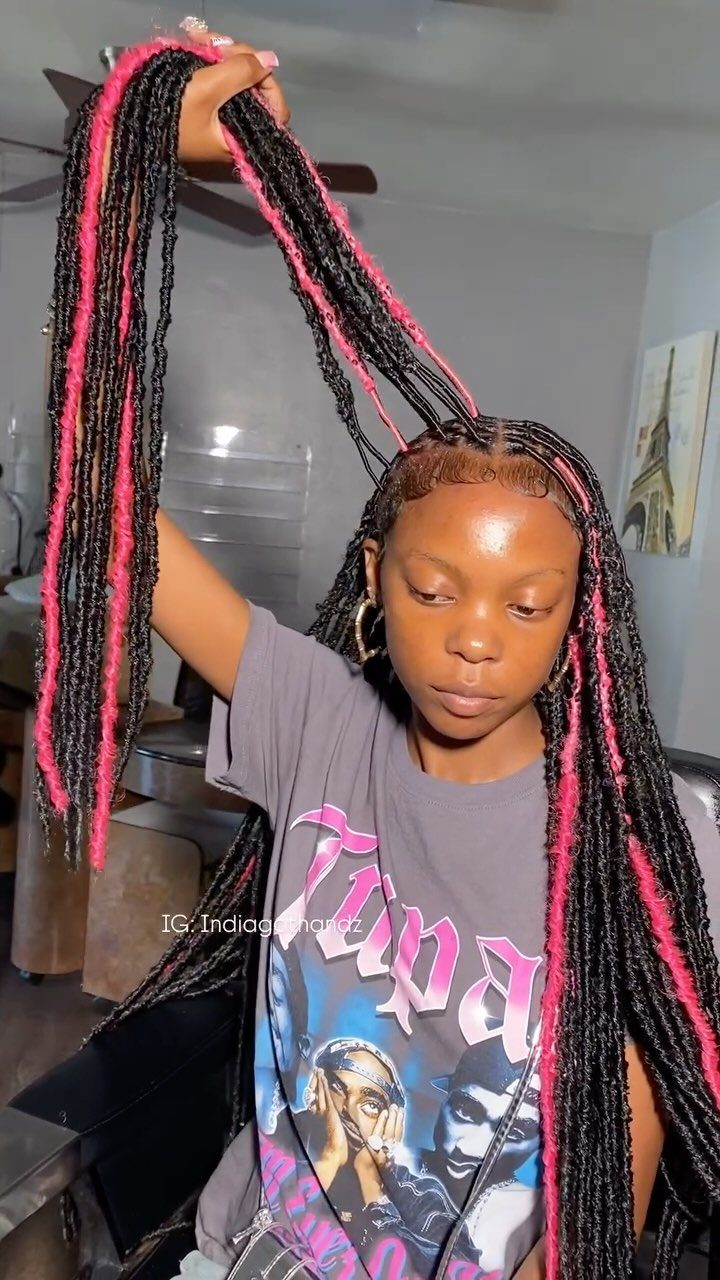
Faux locs give you the look of locs without the commitment, since the extensions are added to your own hair and come out again later.
Color is where this style gets fun. Black mixed with pink is a pairing worth asking for by name, and tell your stylist how much pink you want so it doesn’t land heavier than you pictured.
Long faux locs also carry real weight, so ask about length before you book.
15. Two-Strand Twists
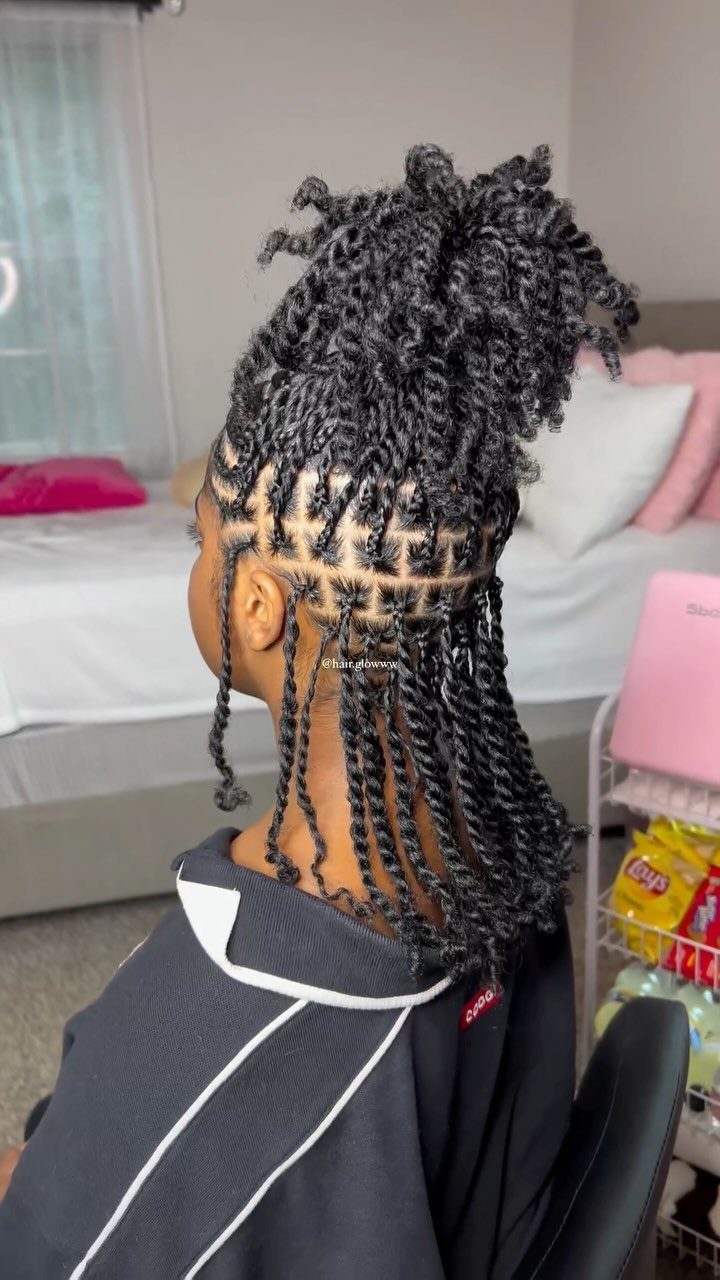
Two-strand twists wind two sections of hair around each other, which is a simpler motion than a braid and gives the finished twist a rope-like look.
For a half-updo like this one, ask for square parts and a high puff of curls on top, with the twists hanging below.
I like the contrast: the puff is soft and full while the parts stay crisp. Name both pieces when you book, the twists and the puff, so nothing gets left out.
16. Kinky Twists
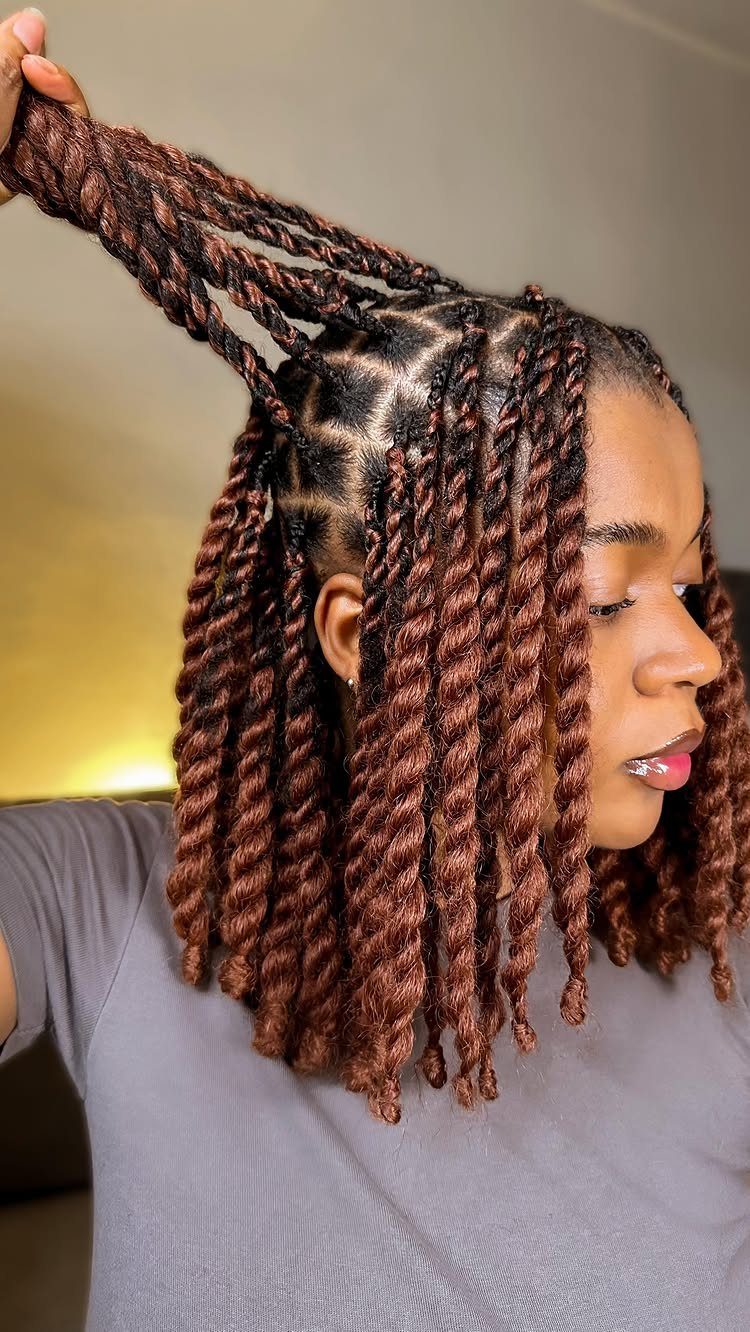
Kinky twists have a rough, textured finish that sets them apart from smooth, slick twists, and a reddish-brown shade brings out every bit of that texture.
The geometric braids at the hairline are the detail I would copy.
Ask for them as a separate request from the twists, and say how sharp you want the angles. If you prefer a quieter look, you can skip the pattern and keep the hairline plain.
17. Spring Twists
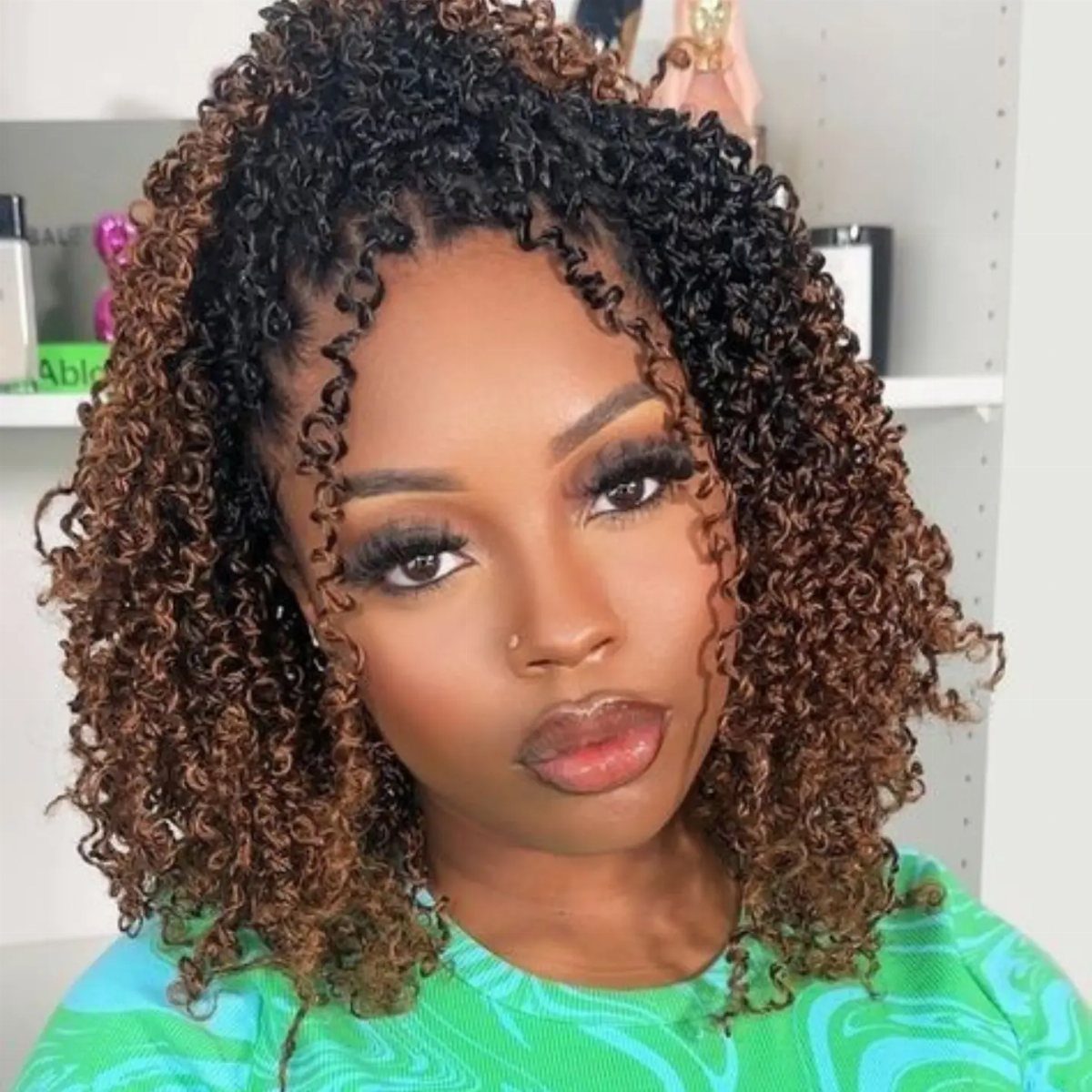
Spring twists end in soft, curly coils, and mixing brown and black gives the length a lived-in, multi-tone look. Shoulder length keeps spring twists light and easy to wear.
When you book, ask for the brown and black to be blended through the twists instead of kept in separate sections. I would pick this if you like movement and a bit of bounce more than a sleek, straight line.
18. Beaded Fulani Braids
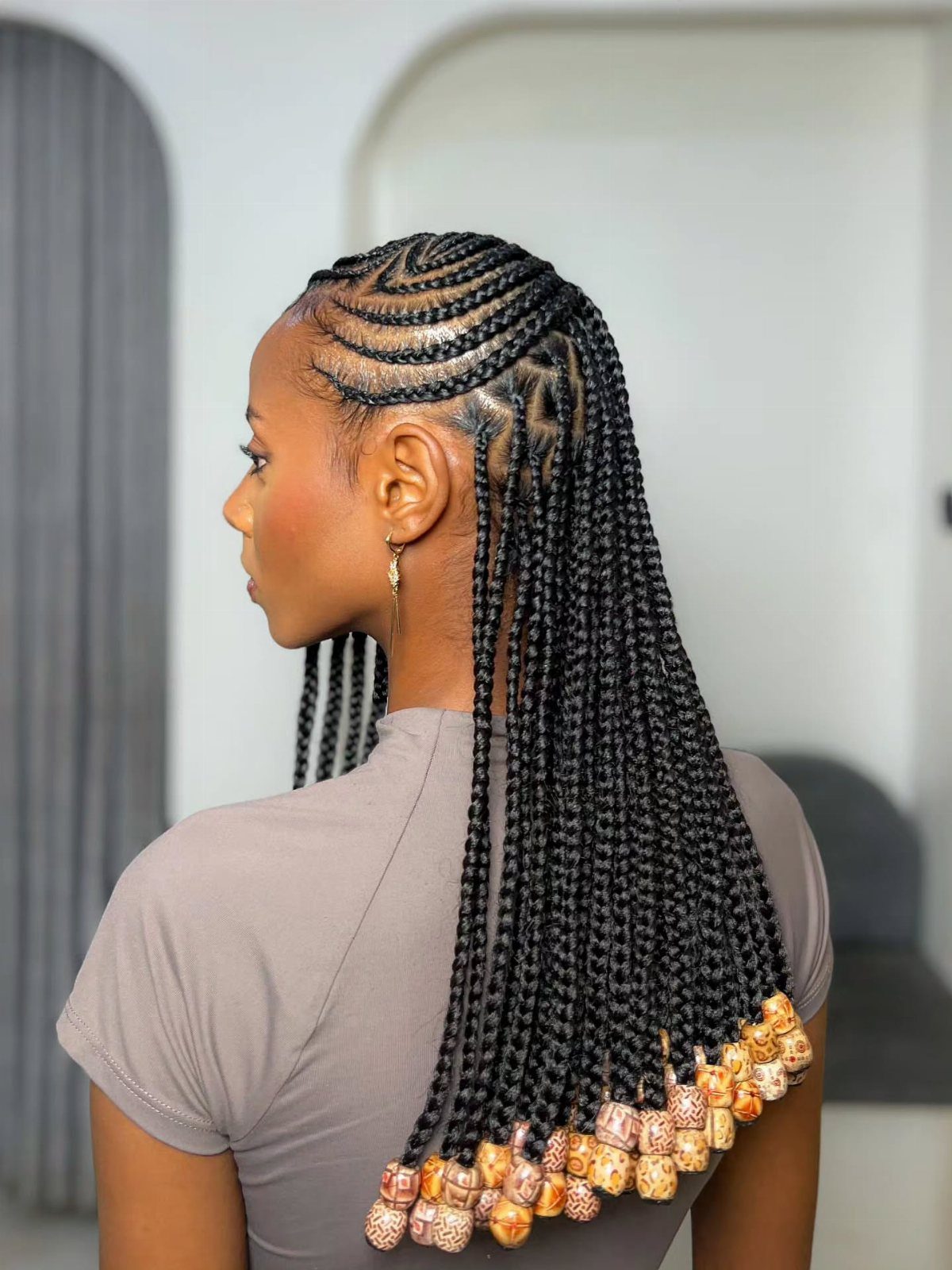
Straight-back cornrows lead into long braids here, and decorative beads finish the ends so the style has a little sound and sparkle when you move.
Decide on the beads before your appointment. Bring a picture of the size and color you like, and tell your stylist how many braids should carry them.
I find a few beads on the ends look cleaner than beads scattered up the length, though that comes down to taste.
19. Side-Swept Cornrows
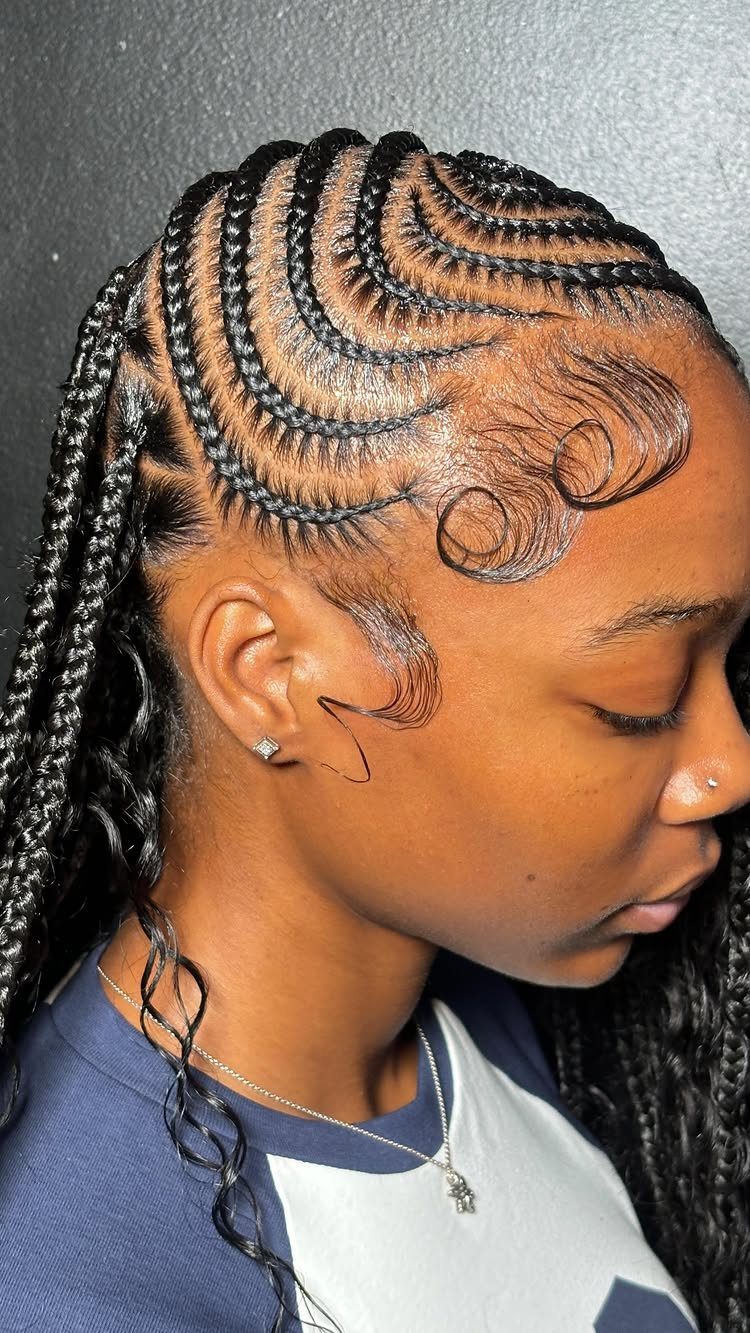
Every row bends toward one side here, so the direction of the sweep is the first thing to settle.
Tell your stylist which side the rows should finish on and whether you want a gentle curve or a deeper one.
I would also ask for the styled baby hairs as a separate request, since they frame the face against the curves. Long braids hang from the ends of the rows.
20. Classic Box Braids
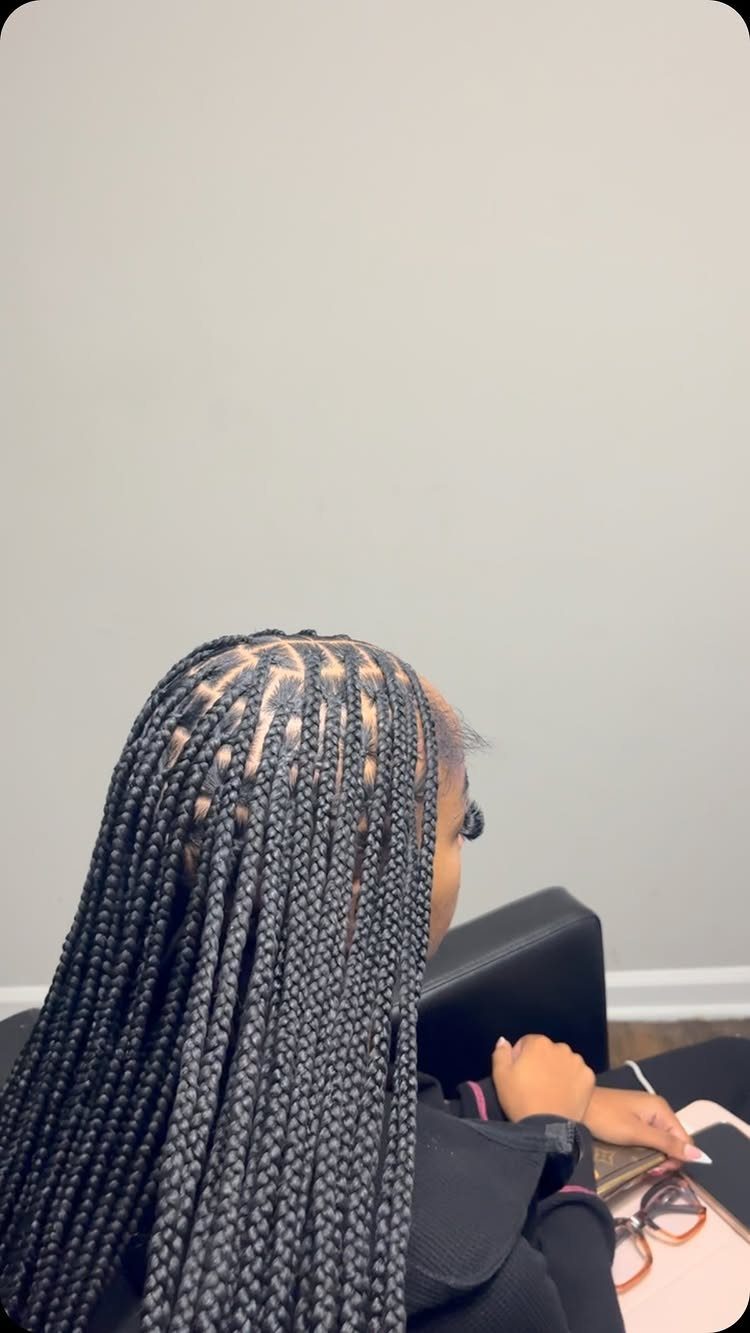
Plain black, evenly sized and hanging long: that combination is what makes box braids classic.
Square parts are the signature, so ask for clean squares and braids of matching thickness.
I would choose this version if you want a style any stylist recognizes from its name alone. Settle the length before you sit down; at this length the braids fall well down the back.
21. Braided Bun
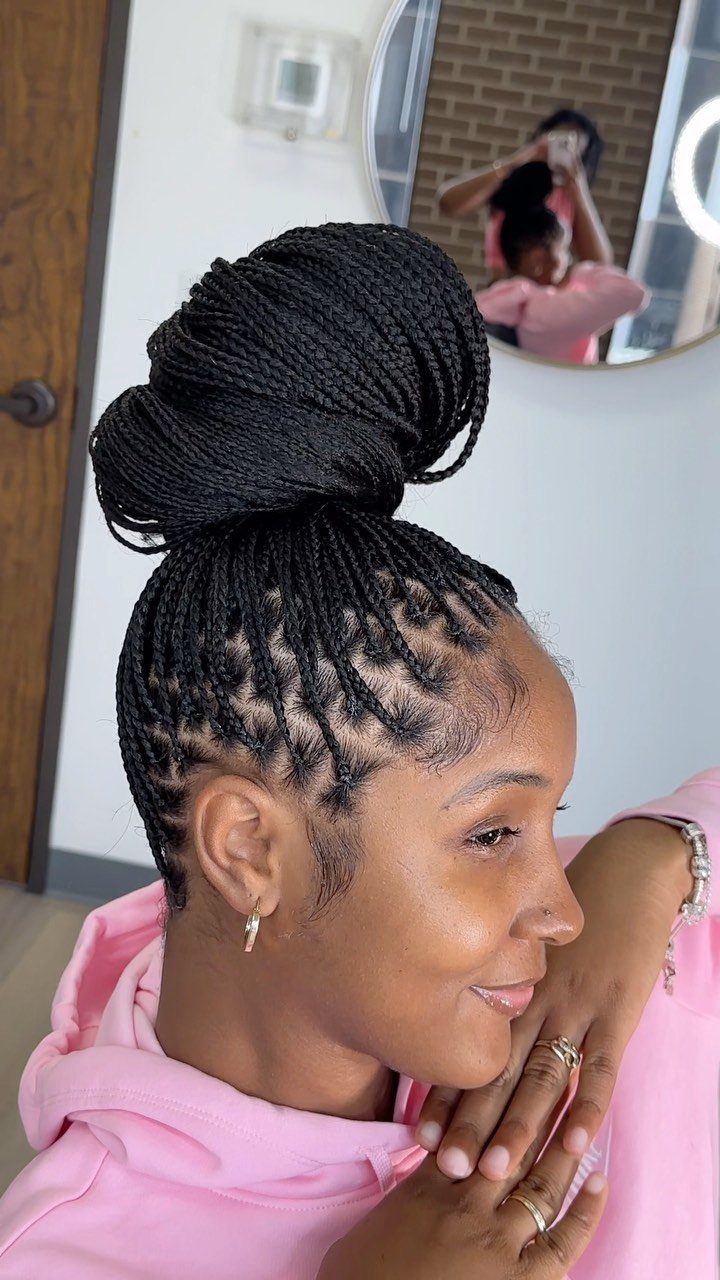
High, low, side or oversized: where the bun sits decides the whole look.
A high, large braided bun gives the most lift and shows off the pattern of the braids, while a low bun sits softer at the nape and suits a more relaxed look.
Say exactly where the bun should sit and how big you want it, since placement and size change the whole shape. Neat braiding matters more in a bun than in loose braids, because every braid stays in view.
22. Snake Braids
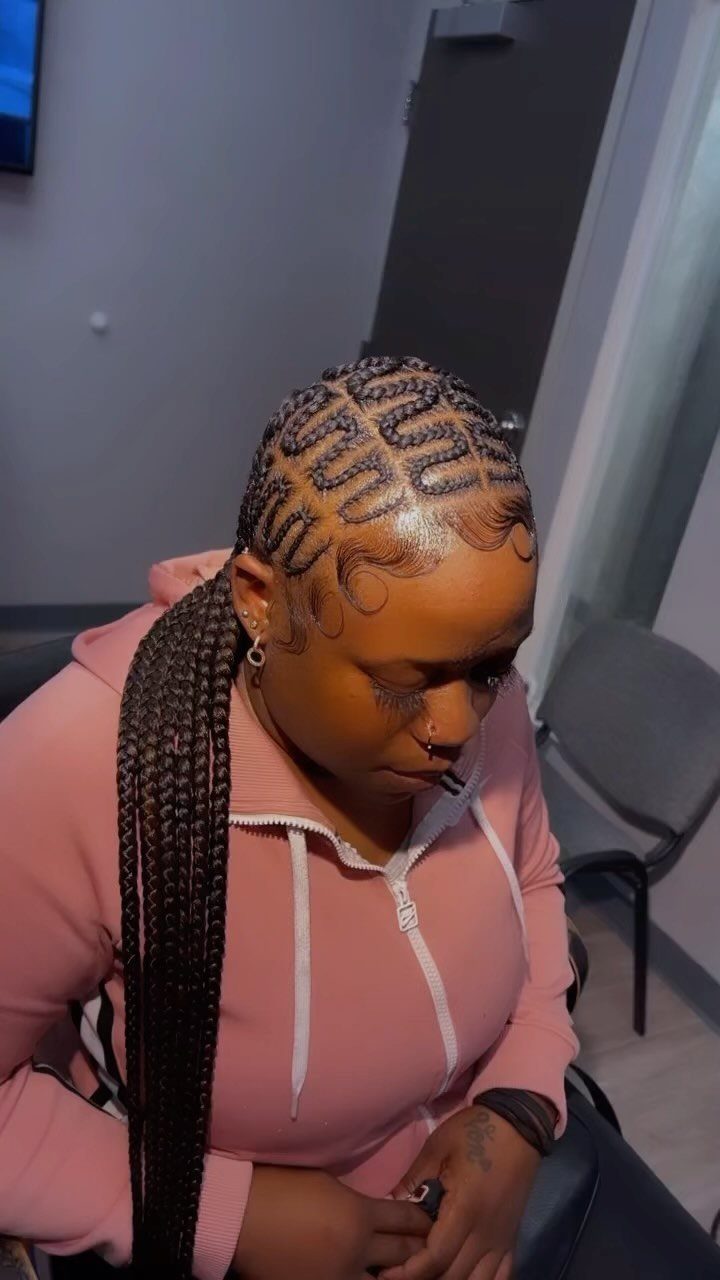
Winding S-shaped curves across the scalp give snake braids their name. Thin braids follow the bends, then continue into long braids below.
Show your stylist the exact bend you want, since a tight S and a wide loop read very differently.
I like the pattern on a solid dark color, where the curves stay easy to see. Ask how many curves your head will fit before you book.
23. Triangle Box Braids
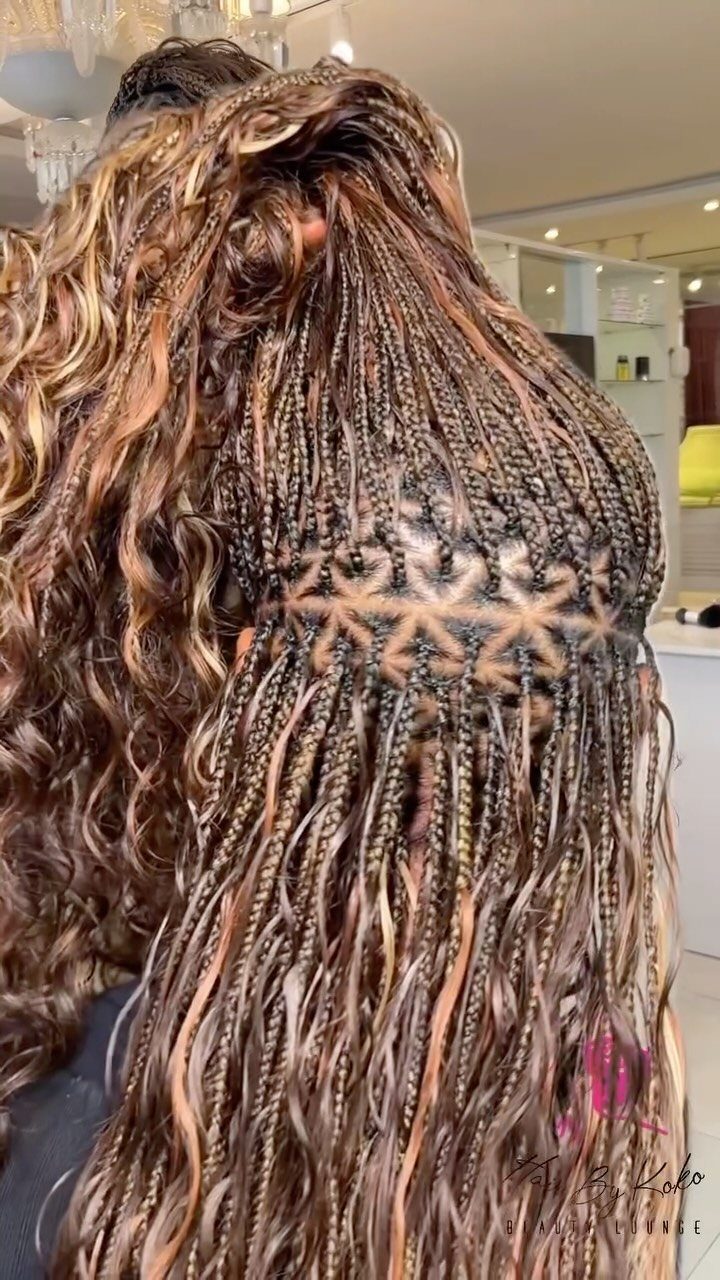
Triangle parts at the crown set these box braids apart from the usual squares.
Ask for triangular sections by name, and point to where on the head you want them.
The brown and blonde highlights are a separate request; say how many blonde braids you want so the mix lands where you picture it. Ask for the price up front.
24. Asymmetrical Tribal Braids
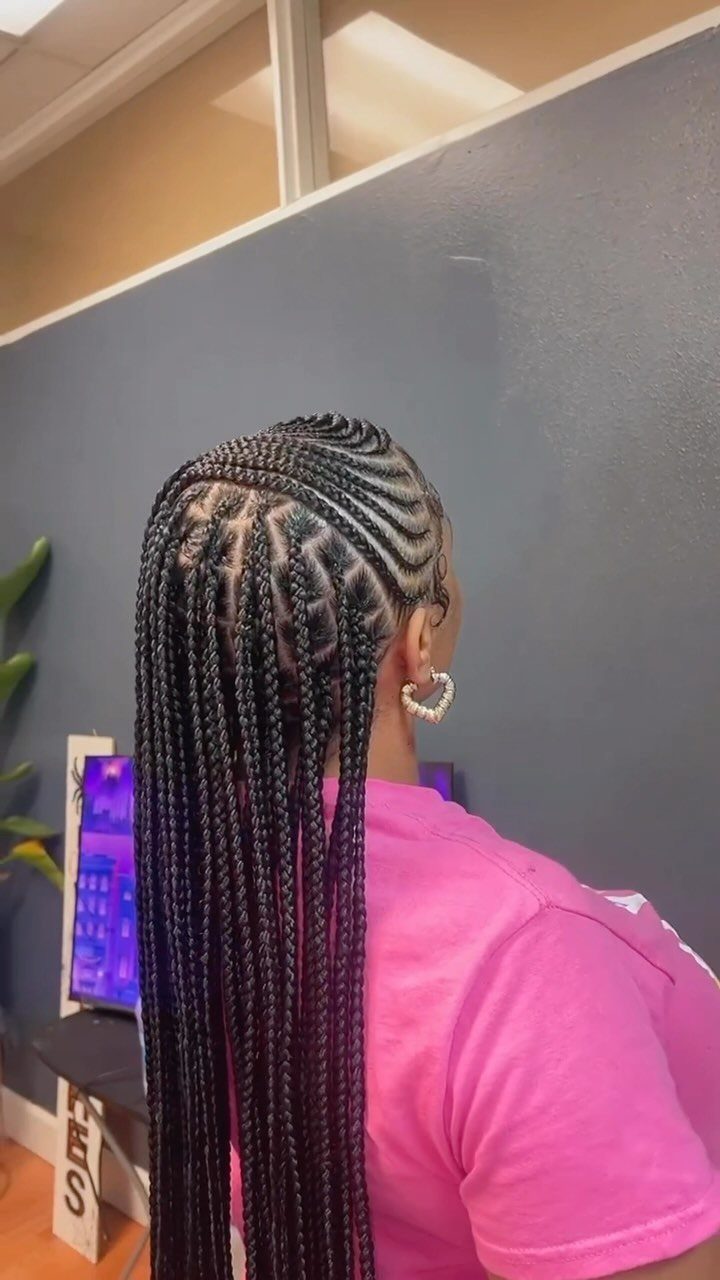
Split the front with an off-center part and each side can carry its own braiding.
Tell your stylist where the part sits and what pattern belongs on each side.
I find it works best when one side stays simple and the other holds the detail, though that is taste. Long black braids hang below, so the asymmetry lives only at the front.
25. Half-Up Braids with Curls
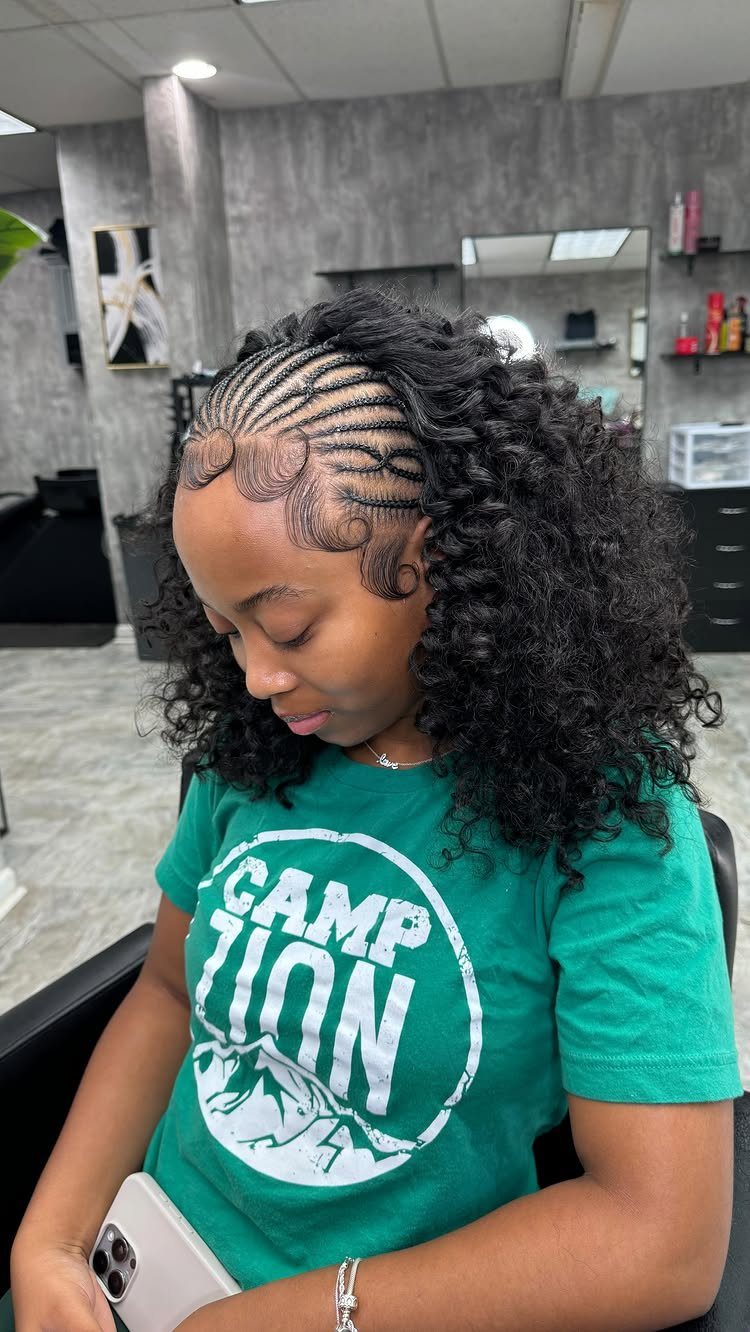
Cornrows across the top and loose curls below make this half-up style two looks in one: a structured crown over a soft, full finish at the shoulders.
Black braids with curls is a combination I would book by name.
Book this as "half and half" with braids, and ask up front whether 16 braids and design parts are priced as extras. Ask whether your price covers the designed parts or only the braids.
Decide how many braids you want on top before you sit down.
26. Rapunzel Goddess Braids
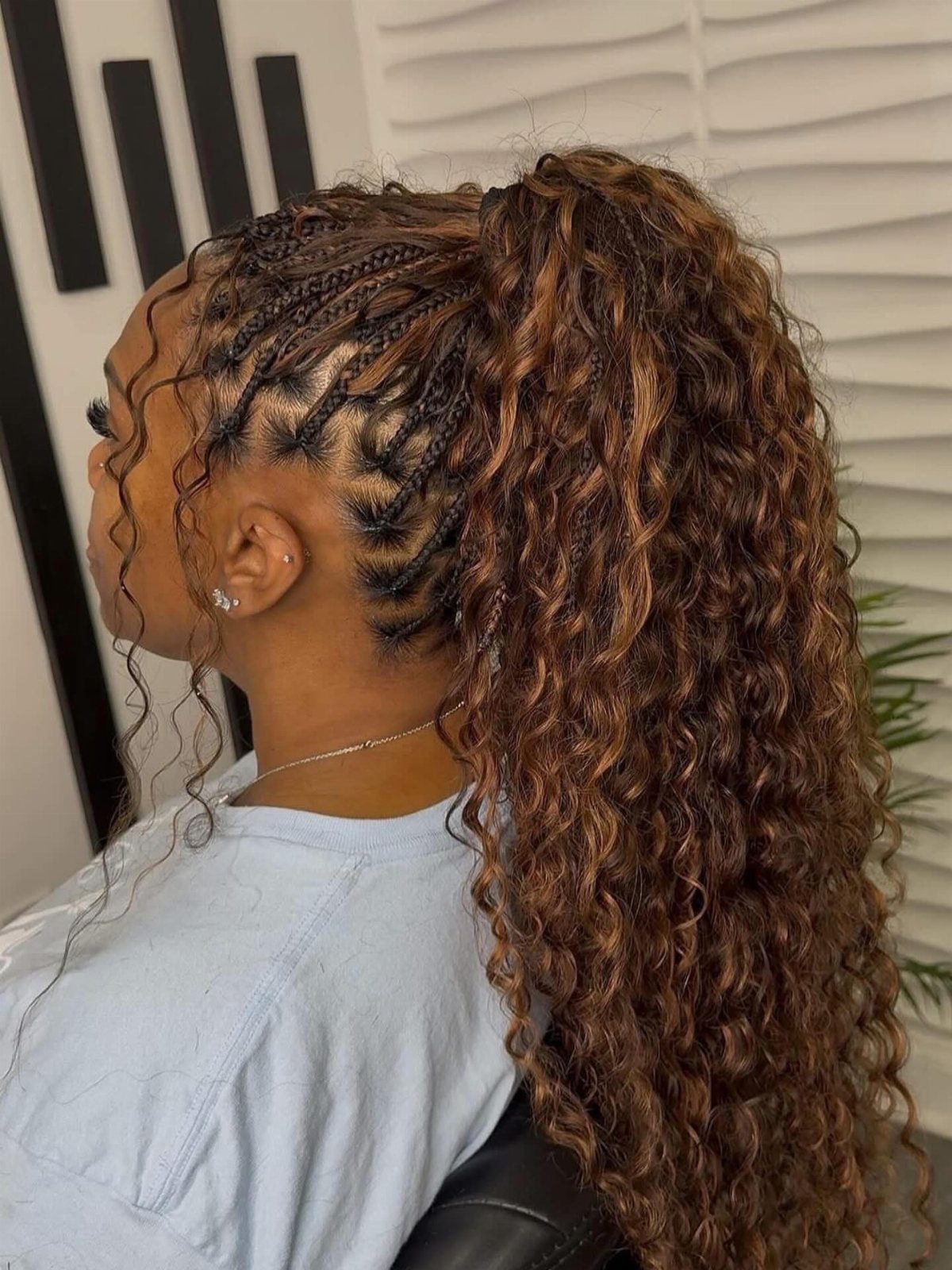
Long brown goddess braids that open into loose curls, all pulled into a high ponytail: this is the Rapunzel version, and the length is the whole idea.
Ask for the braids to start at the scalp and for the curls to be left free at the ends.
I would choose a high ponytail over wearing it down, since it shows the braiding and keeps the volume lifted. Settle the ponytail height before you book.
27. Blonde Fulani Braids
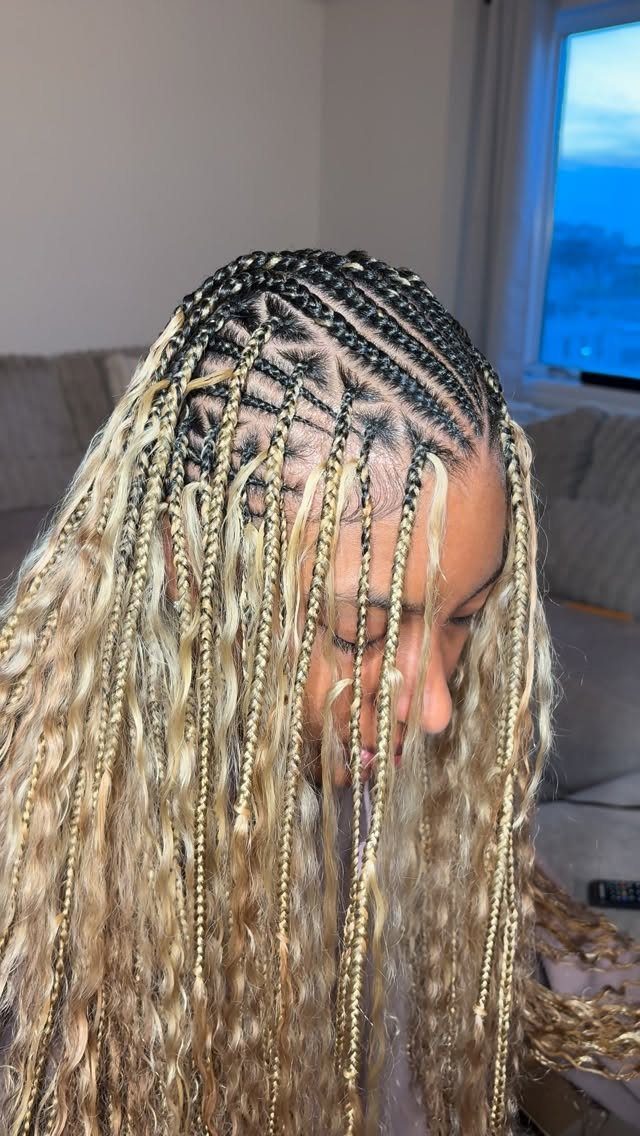
Blonde against black does the work: dark cornrows at the scalp, then long wavy braids that carry the lighter color down the length.
Fulani braids make a good base for blonde because the cornrows stay dark and the color lives in the hanging braids.
Ask how much blonde to mix in, and say whether you want it through every braid or only some. I would keep the cornrows black for contrast.
28. Box Braids
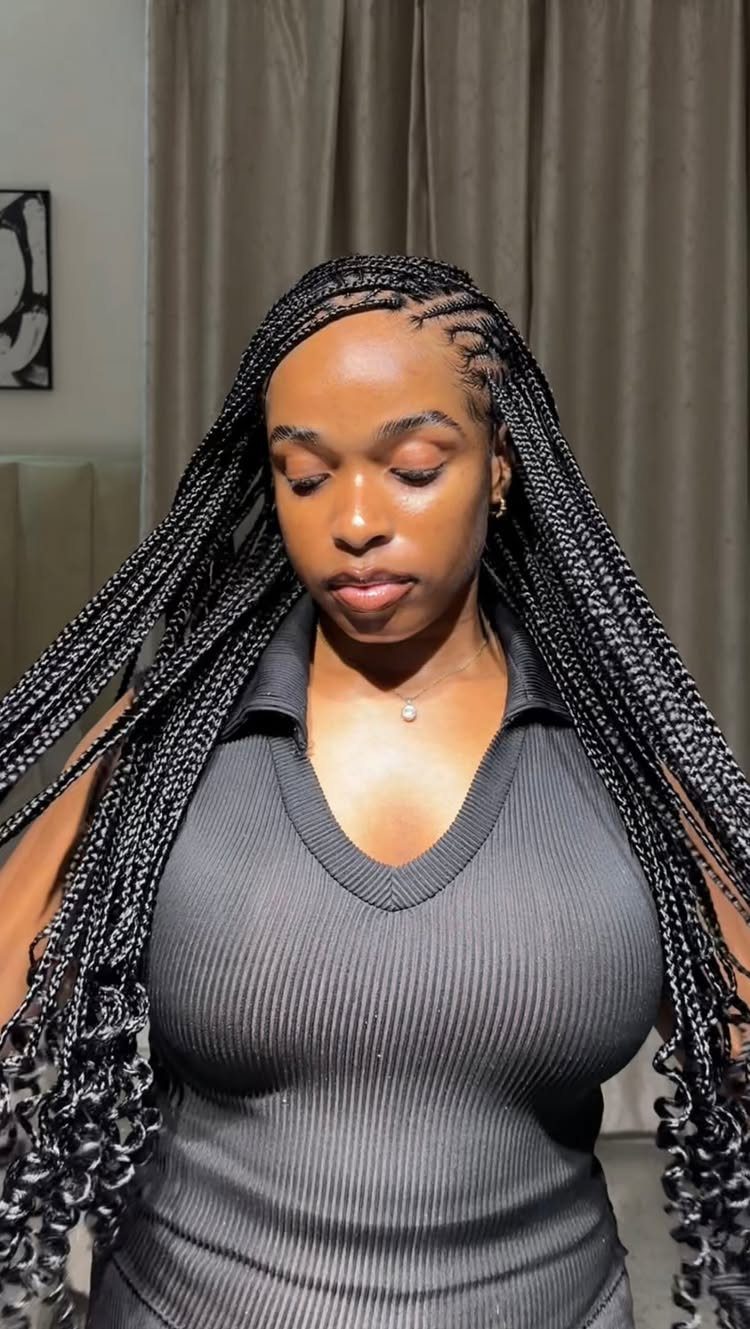
Square sections of hair, each braided into its own braid: that is all box braids are, and the simplicity is why they last as a standard.
For long black box braids with curly ends, I would ask for the finish by name: loose, curled tips rather than sealed straight ends.
Tell your stylist you want the curls added at the tips, and agree on a length first, since these fall well past the shoulders.
Ask for even squares so the parts look clean.
29. Stitch Braids
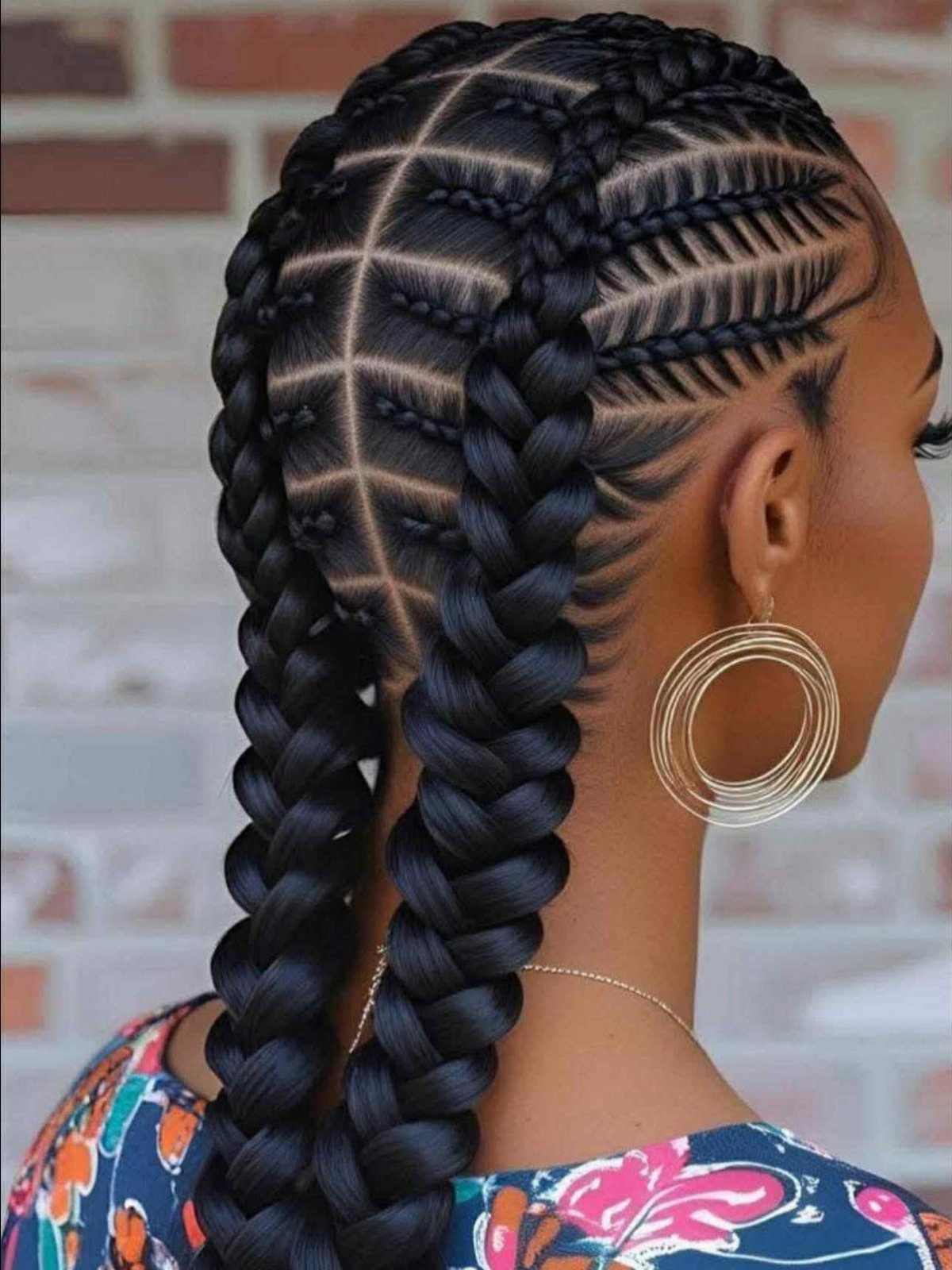
Stitch braids are cornrows with the sectioning left on display: precise, curved partings that look like rows of stitching, followed by thick braids down the back.
The parting is the skill, so look at a stylist’s past work before you book.
With stitch braids, I would ask for curved lines that stay evenly spaced, and for braids thick enough to give the heavy look. Say how thick you want them when you book.
30. Senegalese Twists
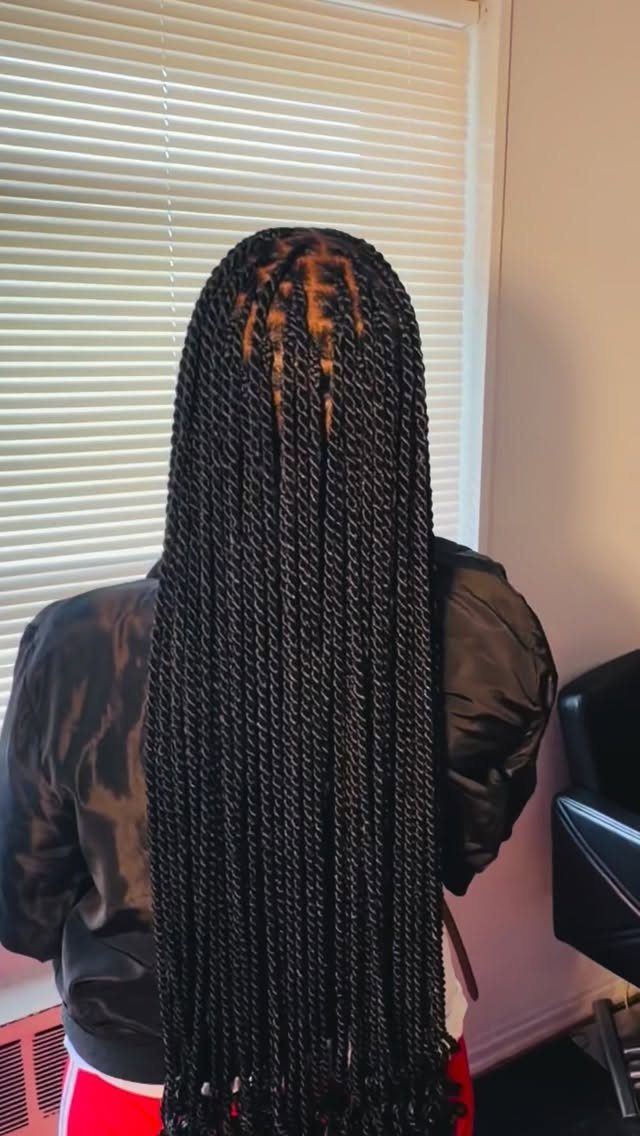
Senegalese twists are made with smooth braiding hair, which gives them a glossy, sleek finish that textured twists do not have.
Black twists falling straight down from neat roots show the style at its cleanest.
Ask for evenly sized sections, because uneven parts show right at the scalp. I would choose this over a rougher twist if you want a polished line with little fuss in the finish.
31. Marley Twists
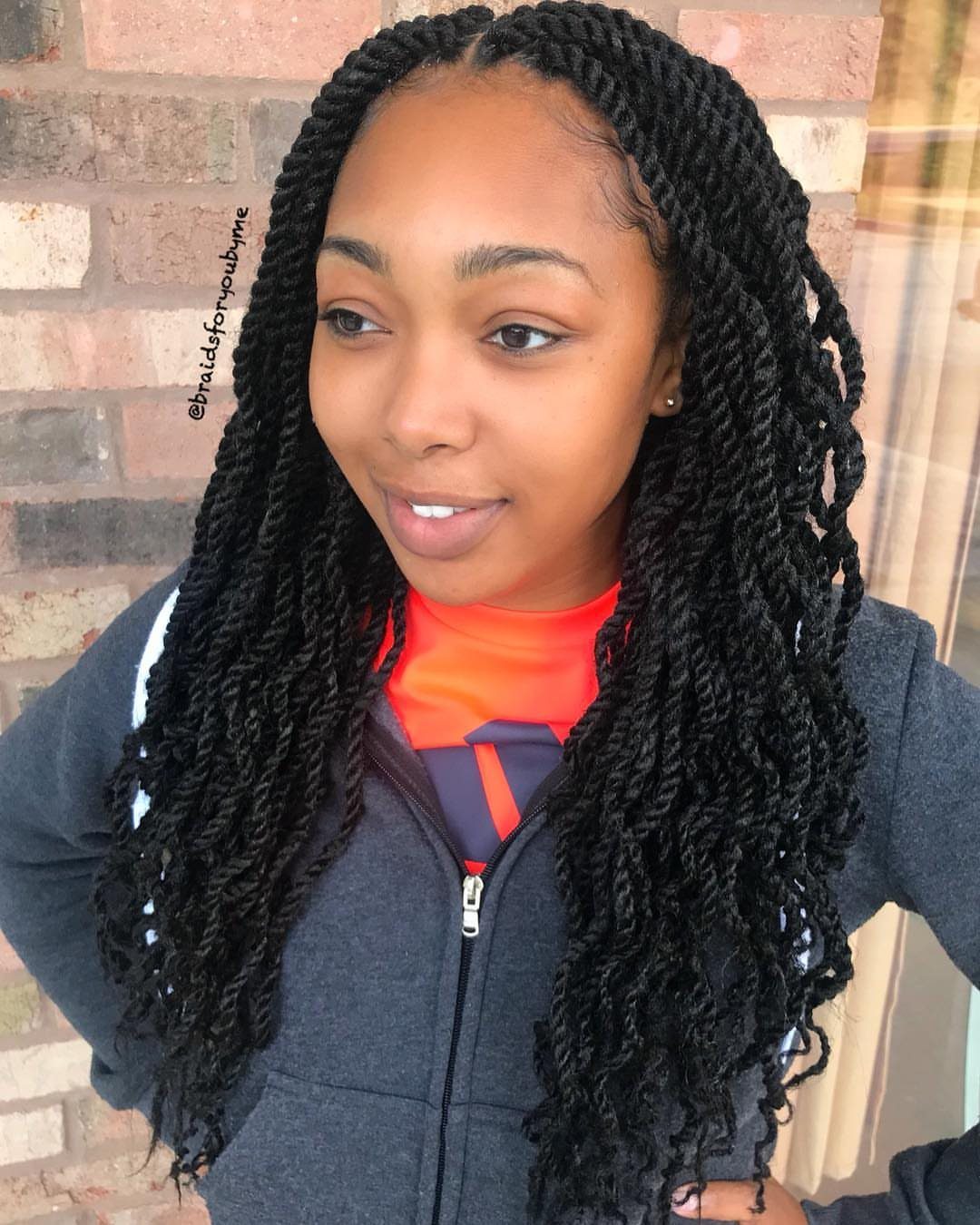
Marley twists carry a rough, kinky texture that mimics the look of locs without locking the hair. The coarseness sets them apart from smooth Senegalese twists and gives the length a fuller, heavier finish.
Ask for Marley hair by name when you book, since the texture is what makes the style.
For fullness and a soft, slightly undone finish, Marley twists are the pick I lean toward over any sleek, polished option. Long twists like these carry weight, so settle on a length before your appointment.
32. Havana Twists
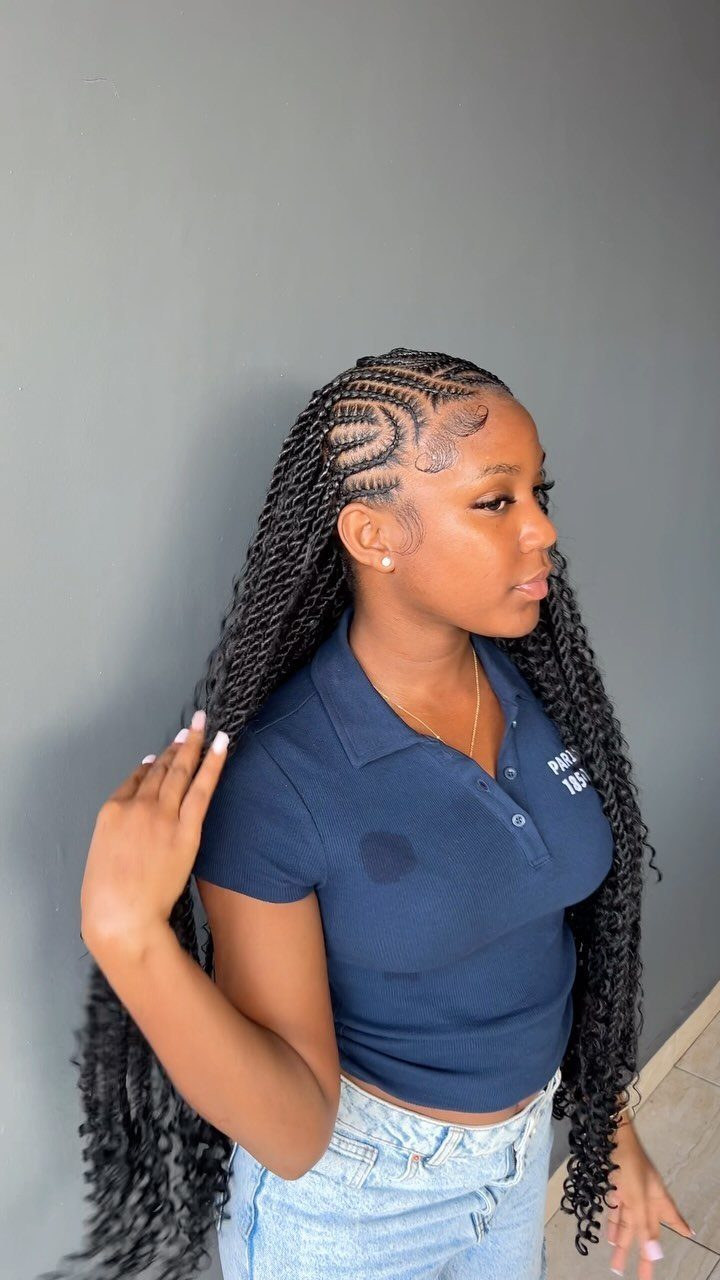
Havana twists are thicker than most other twists, and that extra width gives them a chunky, statement look. The curved cornrows at the scalp are a detail I would copy, since they frame the face before the twists take over.
Ask for Havana hair and tell your stylist how thick you want each twist.
Length matters here because the thickness adds weight. I would choose this if you want a bold, full twist that reads from across a room.
33. Lemonade Braids
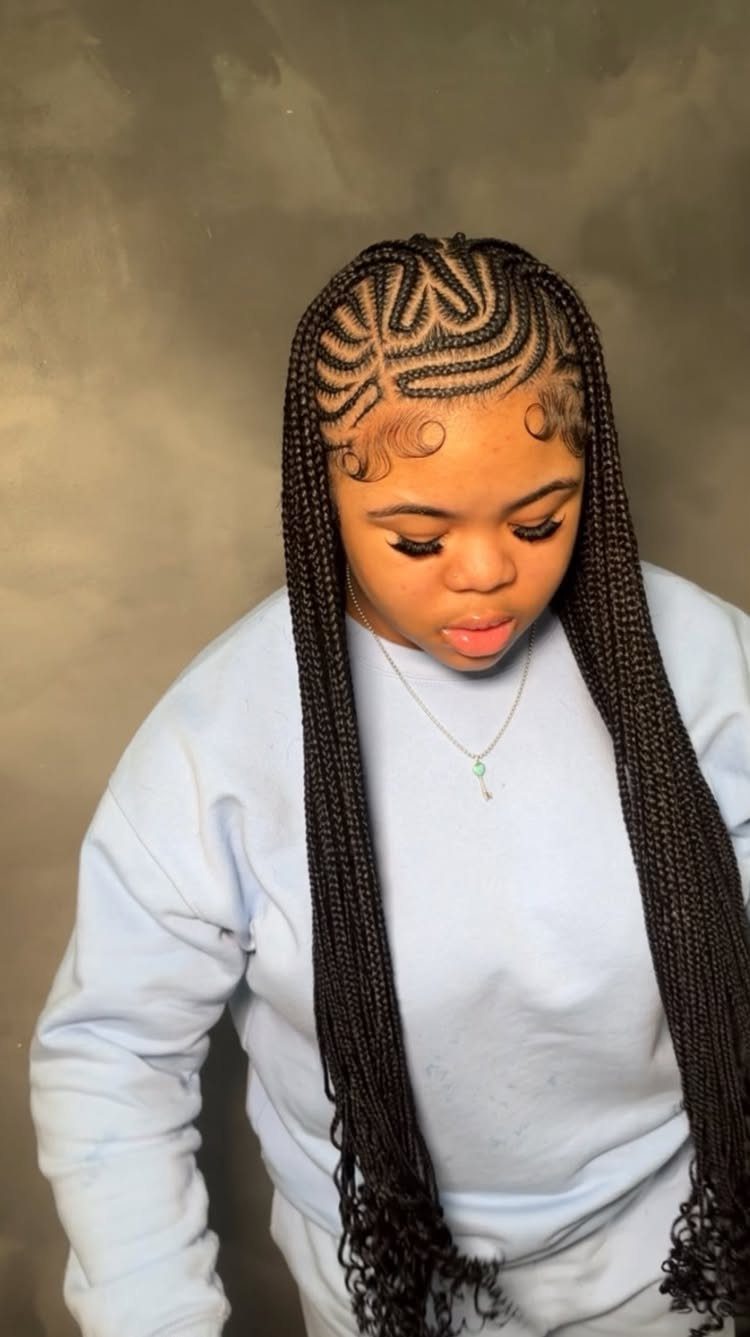
Long cornrows swept to one side and falling straight down: that is what lemonade braids are, and the side sweep is the decision that sets the whole look.
Settle the direction before the first part is made: choose which side the braids sweep toward and how sharply they slant across the head.
Patterned parts at the scalp are worth asking for as a separate request if you want more detail. I like curly ends here, since they soften the sweep without losing the direction.
34. Zigzag Cornrows
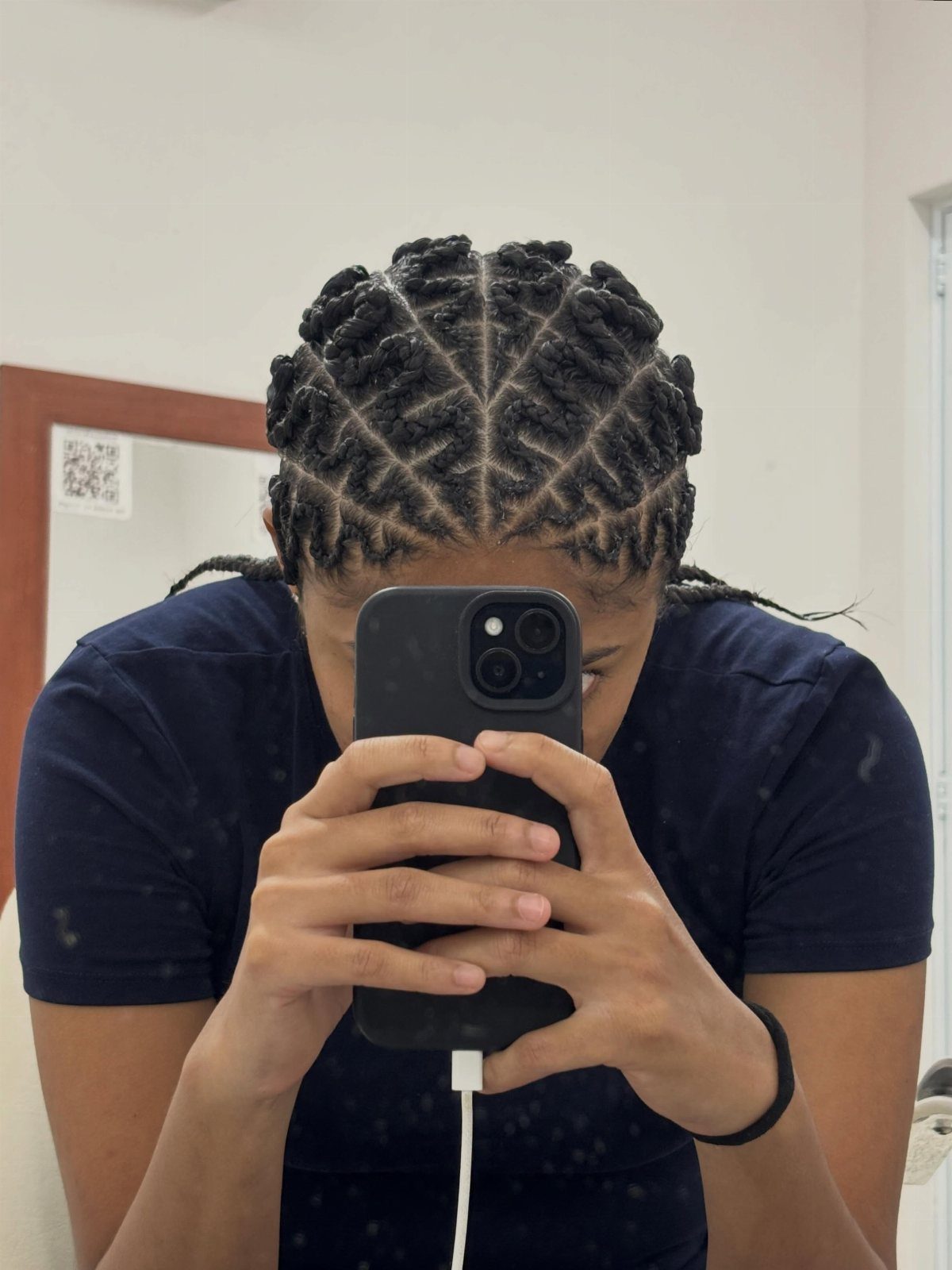
Zigzag cornrows get their name from the angled parts between raised rows, which form a lightning-bolt pattern across the scalp.
A tight zigzag and a wide one look nothing alike, so bring a photo of the angle you like and use the style’s name when you book.
I would pick this if you want a pattern that sits loud and geometric, and tell your stylist how many zigzag sections your head can fit before you book.
Care and Scalp Comfort
Tension decides how a braid feels on day 3, and the style matters less than how tightly it is worn. A hairline stays happier with knotless braids and a looser hand, since nothing yanks the roots tight.
Small or heavy styles put extra strain on the edges when the sections are cut wrong.
At night, cover your braids with a satin or silk scarf or bonnet. Moisturize the scalp regularly and cleanse gently; heavy oils build up and leave the scalp coated rather than comfortable.
Between installs, work a little leave-in or oil into the edges and let the hairline go braid-free for a stretch.
If a style feels tight enough to cause a headache, it is too tight, and it is worth having it loosened early.
Preparing for a Stylist
Bring one photo, then say 5 things out loud: the braid type, which way the parts run, how wide each braid is, how the ends finish, and the total length with any added hair.
Written out in that order, it leaves little room for a stylist to guess.
Before starting, a skilled braider should walk you through the section count and how snug the braids will be. If yours does not bring it up, ask.
Prepare your hair first: wash it and moisturize it. Patterned styles like tribal braids look best when the extension hair matches your texture and shade, and the design only reads well if the parts underneath are crisp and even.
Choosing by Time and Upkeep
4 things settle this: your natural length, the hours you can sit for an install, how many weeks you want the style to hold, and the event on your calendar.
Short natural hair opens up two-strand twists and small cornrows, but it limits long box braids unless hair is added.
For a hectic stretch, pick something flat to the scalp that needs no morning work; for a big event, a sculpted style that photographs well earns the extra effort.
Section size also sets the clock. Larger braids take less time to install, and smaller ones take longer; small knotless braids look beautiful at mid-back or waist length, but plan on extra time in the chair.
Curly, boho finishes ask for more maintenance, with frequent moisture and curl redefining, than a sleek defined braid does.
“Goddess braids must be properly maintained throughout the duration of the style,” says Nayla Chalas, master braider and educator at NVYLV Salon. “As you may know, you are not only managing braids, but human hair as well.”
— Glamour
Frequently Asked Questions
What type of braids are in Black culture?
Cornrows are the most common, and box braids, knotless braids and twists sit right beside them. Cornrows lie flat against the scalp, box braids are square sections each braided on their own, and twists wind 2 strands around each other.
Boho and goddess braids leave loose curled ends that read softer, and on finer or thinner hair I would keep them on the larger side so the weight stays light.
What are knotless braids?
A knotless braid starts from your own hair alone, and the stylist weaves in thin pieces of extension hair gradually on the way down the length.
Skipping the knot at the scalp means a flatter base, a more natural look at the root and neater parts.
At the salon, ask for "knotless" by name and for the extension hair to be fed in gradually; that detail separates them from braids that begin with a knot.
What is the difference between goddess braids and bohemian braids?
Goddess braids read tidier and more defined, while boho braids are looser, with a slightly undone finish.
Boho styles can carry curls throughout the length or only in select spots. Whichever you want, tell your stylist where the curls should begin, since that placement sets how relaxed the finished look feels.
How do you maintain goddess braids?
Cover your hair at night with a silk or satin scarf or bonnet, or sleep on a silk or satin pillowcase.
Keep the scalp moisturized, and when it needs washing, use shampoo diluted with water and go easy with your fingertips. Detangle the curly ends too, especially after they get wet, to keep frizz down.