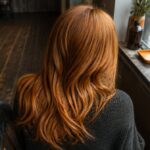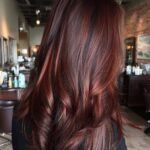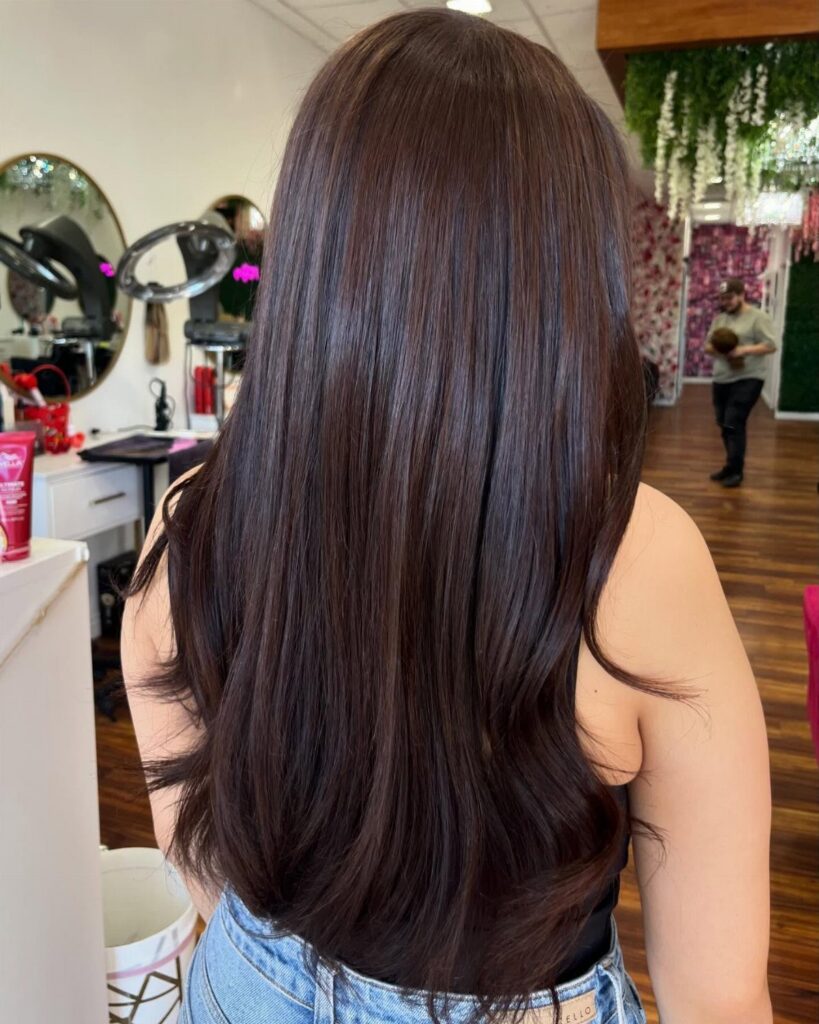
Match the brown to your undertone first: ash-leaning browns sit best on cool skin, gold or copper browns flatter warm skin (or a cooler brown can tone it down), and neutral skin gets to go either way.
At one end sits Espresso Brunette, deep enough to look black until sun catches it; at the other is Ash Brown Blonde, which needs lifting and a longer chair time.
Settle the undertone first, then decide how much color work you want to take on.
1. Mocha Caramel
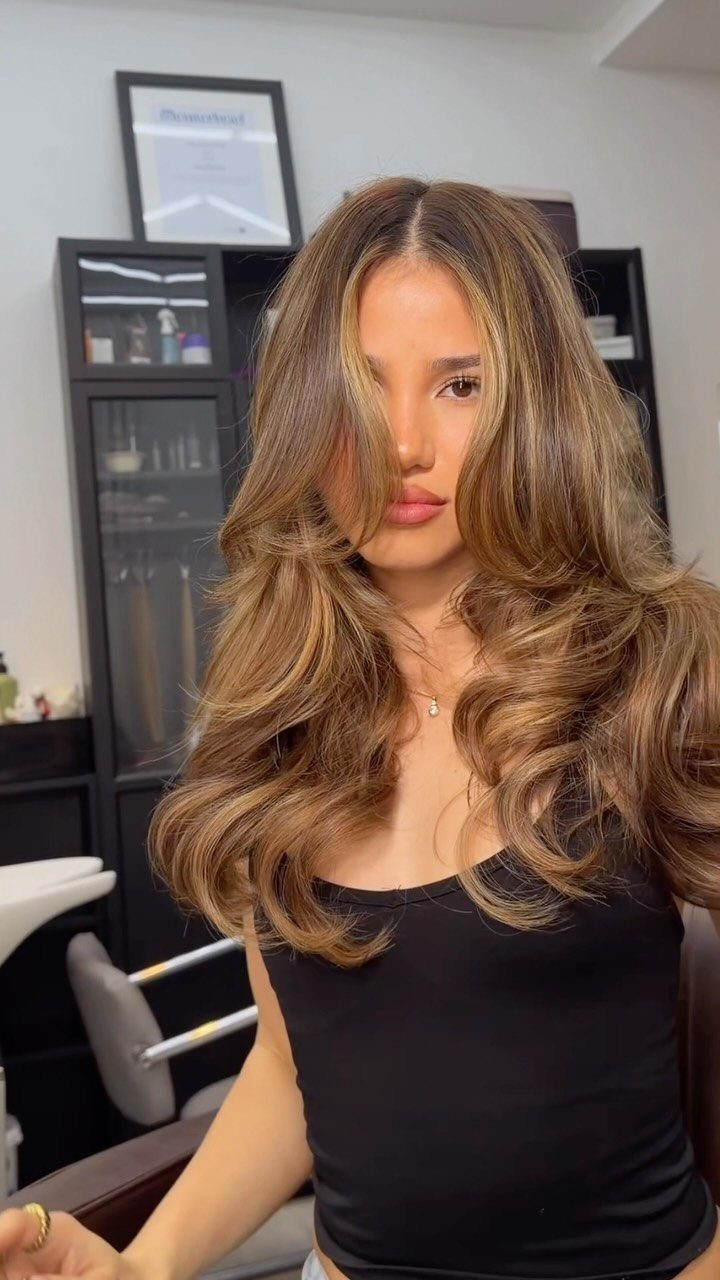
A mocha base with caramel pulled through it keeps the depth of brunette while adding a warm glow where the waves catch light.
Ask for highlights or balayage in caramel rather than a single all-over shade, so the dimension shows up in the bends of the curl.
I like this on long, wavy hair, where the warm pieces break up the dark base instead of sitting on it like stripes.
2. Dark Chocolate
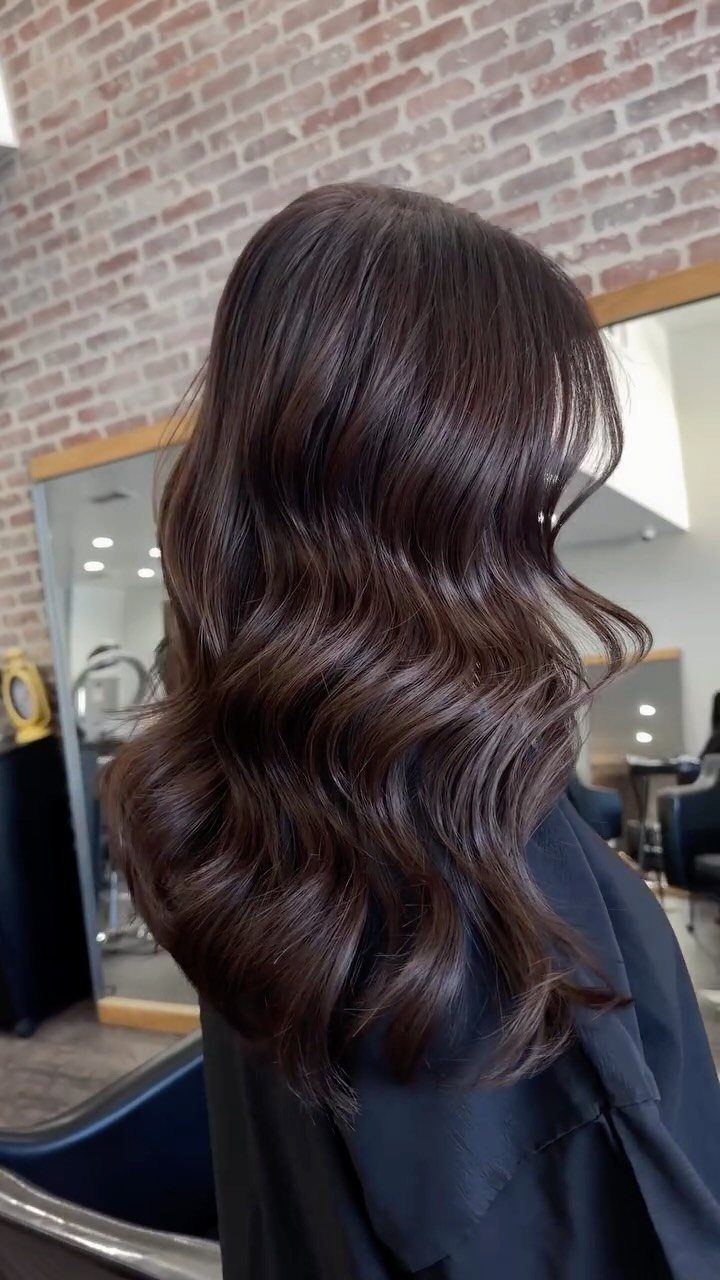
Dark chocolate is worth the appointment only when it comes out glossy. A deep chocolate brunette can lean cool or stay neutral, and you should tell your colorist which you want, because the two read very differently in daylight.
On long, loose waves, shine does most of the work. I would pick a gloss finish over any extra dimension here.
3. Deep Chestnut
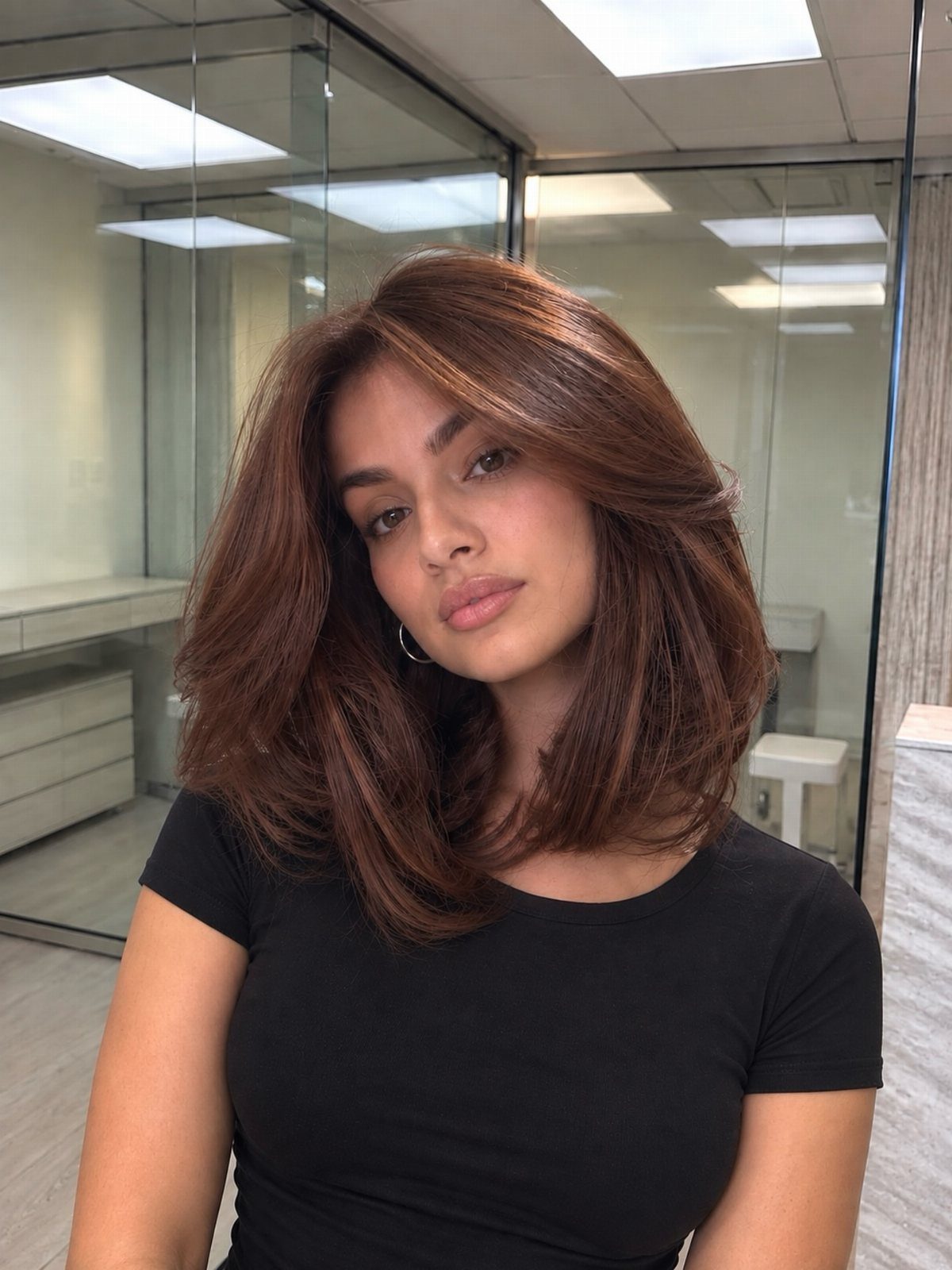
Chestnut goes deeper than most people expect when you ask for it by name, and this version sits closer to dark brown than to light. Layers add volume at medium length, so the color moves instead of lying flat.
If your natural hair is already a mid to dark brown, this is a small step to ask for. A saved photo plus the words "deeper chestnut" keeps the stylist from drifting lighter.
4. Toasted Caramel
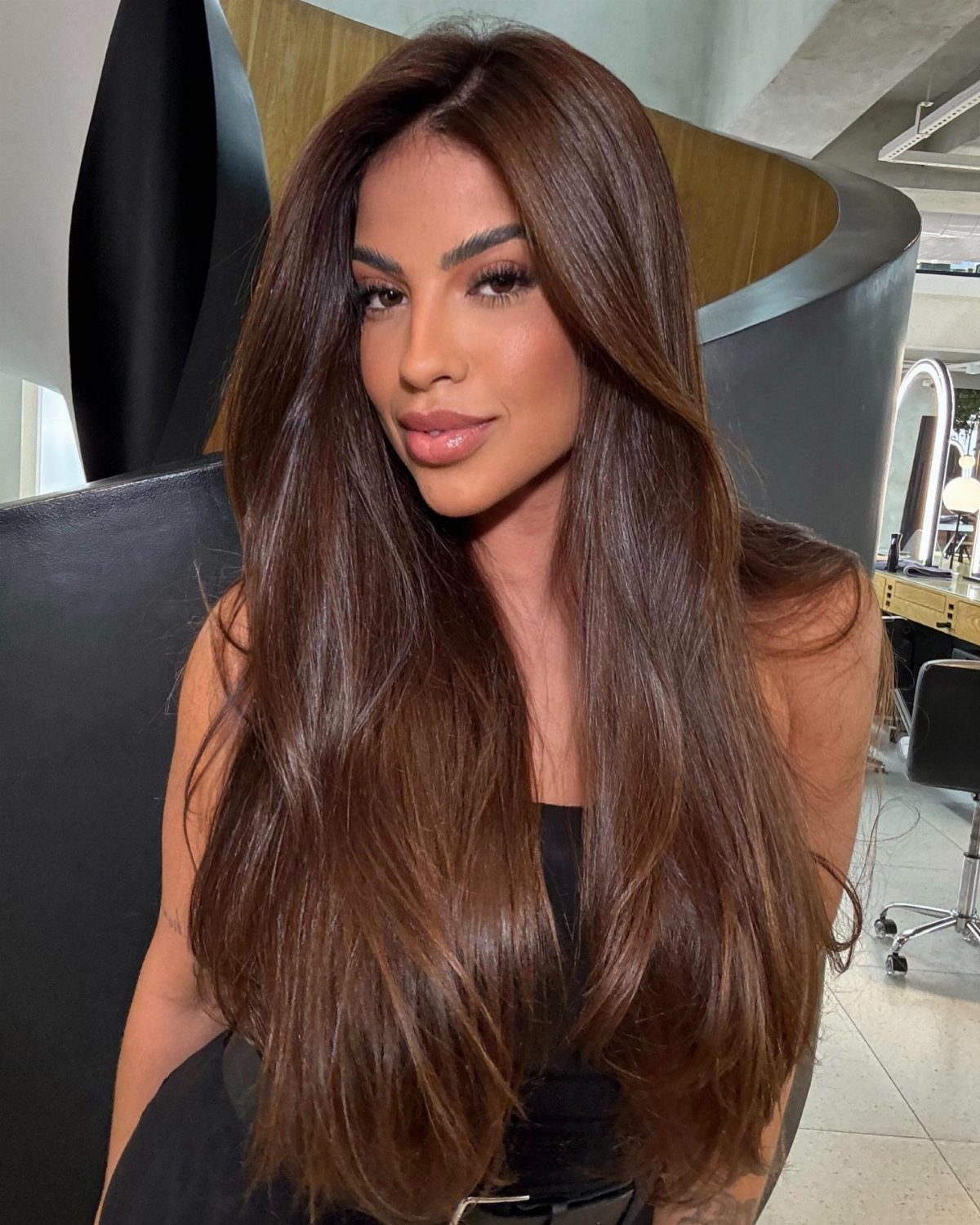
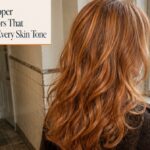
Toasted caramel, to my eye, is a dark chestnut that has been warmed with golden and copper undertones rather than a true caramel.
That distinction matters at the salon: ask for warmth in the base, not for bright ribbons of blonde.
It suits long, glossy hair best, where the copper flickers in the light. I would choose it over cooler browns if your skin leans warm.
5. Caramel Brown
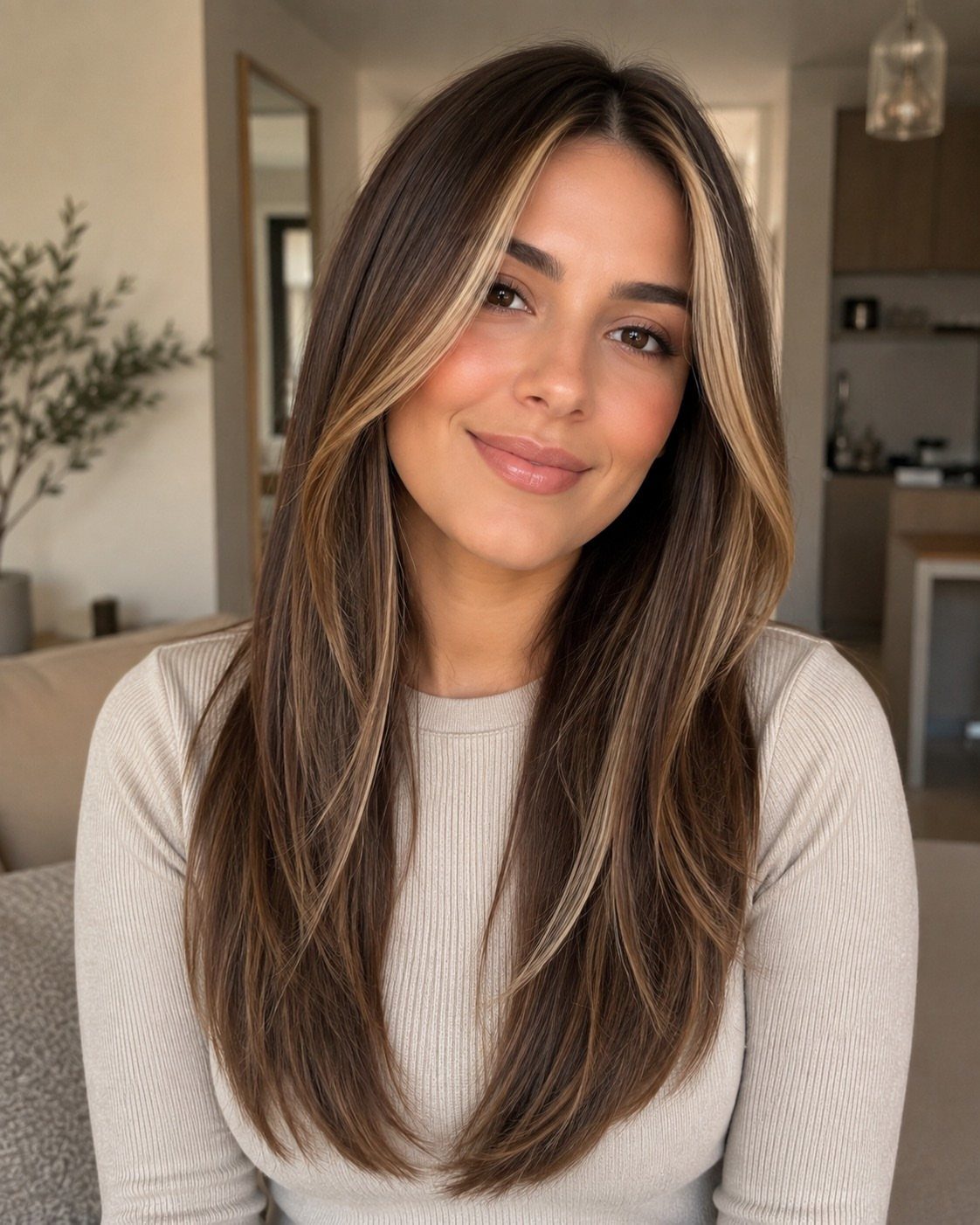
Caramel brown starts with a medium brown and brightens it with warm caramel highlights, which makes it an easy first step if dark brown feels too heavy around your face. The highlights frame the face and soften the overall shade.
Keep the caramel warm and close to the base, and the eye takes it as dimension, not contrast. Long hair lets the shade spread out and actually show.
6. Medium Brown Layers
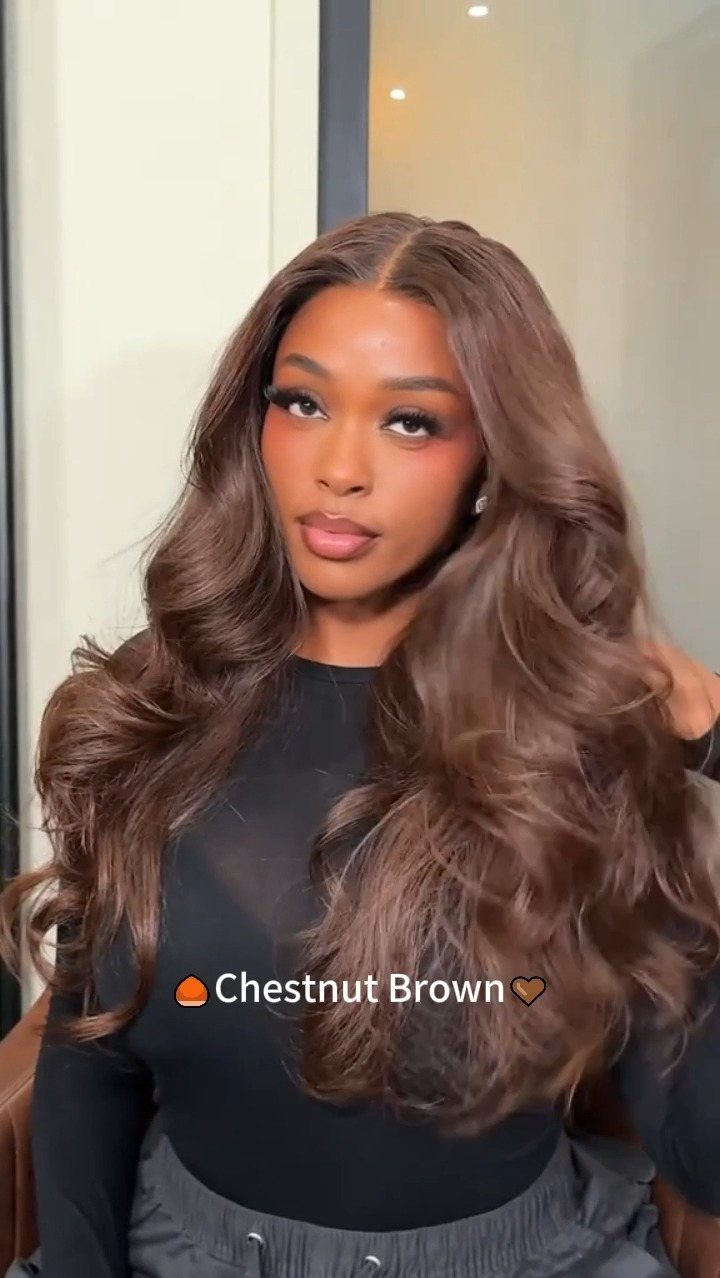
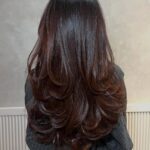
Here the haircut does as much as the color. A light chestnut brown on long layers gives you movement and lift through the waves, and the layers keep the shade from looking like one flat block.
Book the layering and the color together, since long, voluminous waves carry this look. I would keep the chestnut on the lighter side and let the cut add the depth.
7. Espresso Brunette
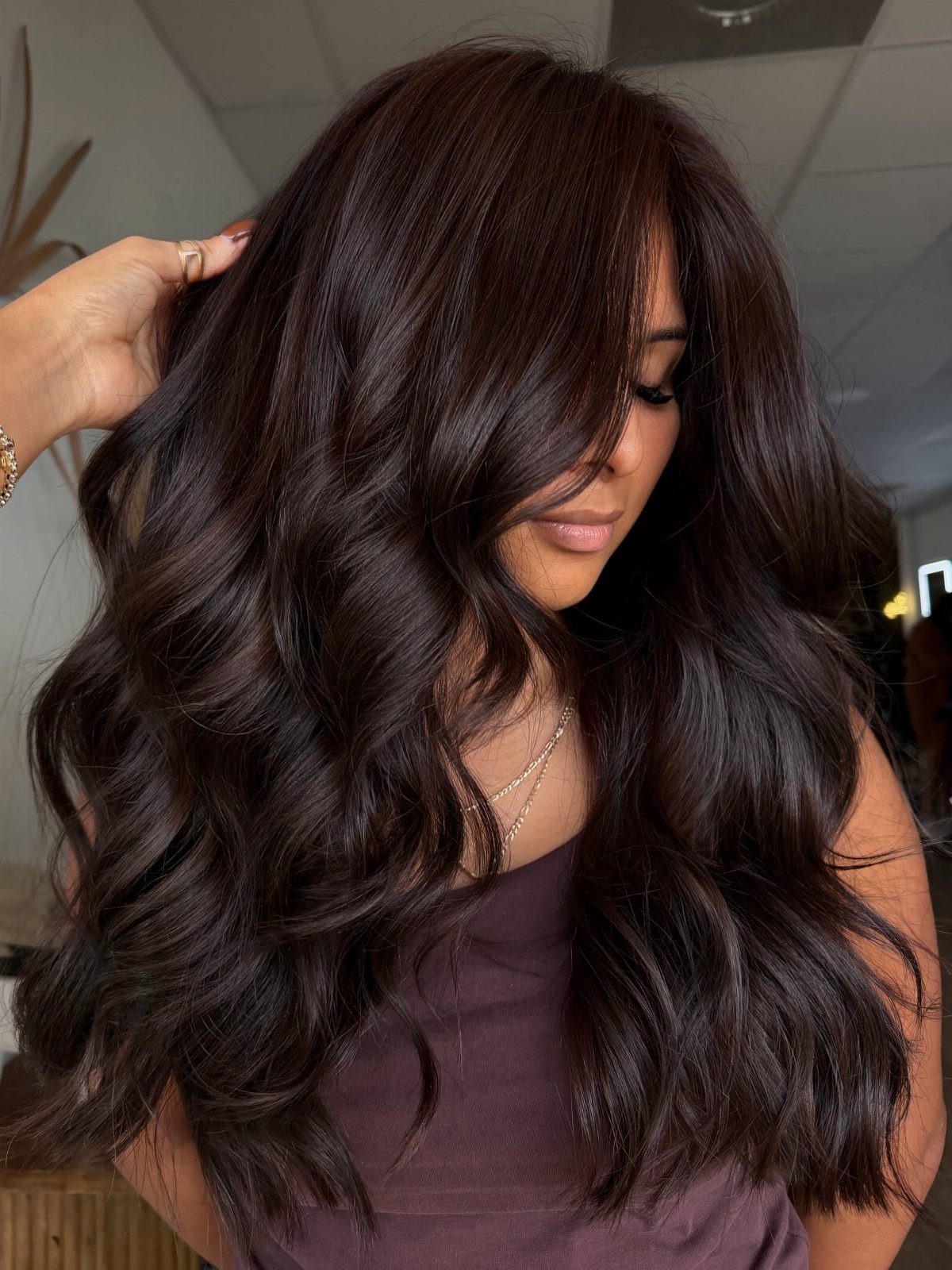
Espresso reads as nearly black until sunlight hits it, and this cool-toned version keeps that deep, sleek finish from turning flat. Gloss is what sells it, so ask for a glaze or gloss step along with the color.
Long waves suit it well, since the curves catch light across all that dark.
Cool jewel tones like emerald, sapphire and plum sit best against espresso, so if that’s most of your closet, this is the shade I’d pick over a softer, warmer brown.
8. Auburn Brunette
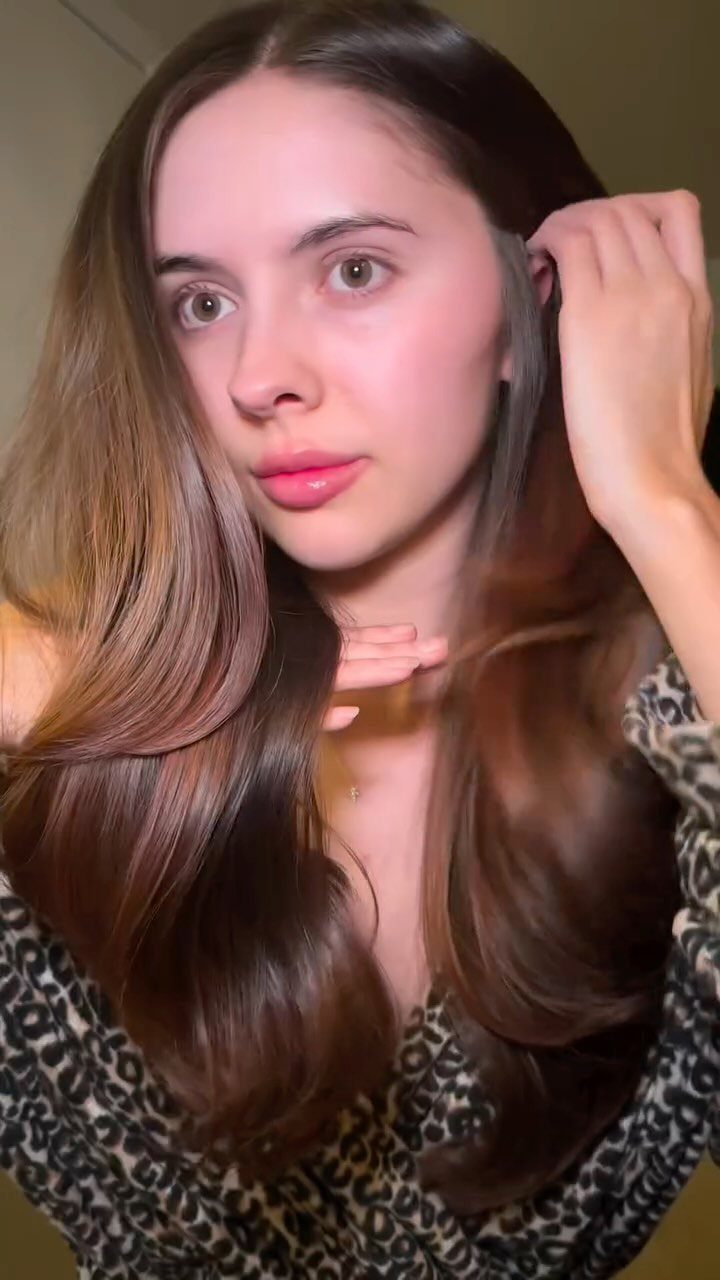
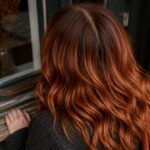
Auburn laid over a brunette base gives you red warmth without committing to a full copper. It works on naturally dark hair or on lighter brown, so the starting point is flexible.
Ask for the red to be blended softly into the brown, not placed in distinct bands.
On long waves, the blend is what makes it look natural. Tell your colorist you want deep auburn, since "red" alone can land much brighter.
9. Golden Brown
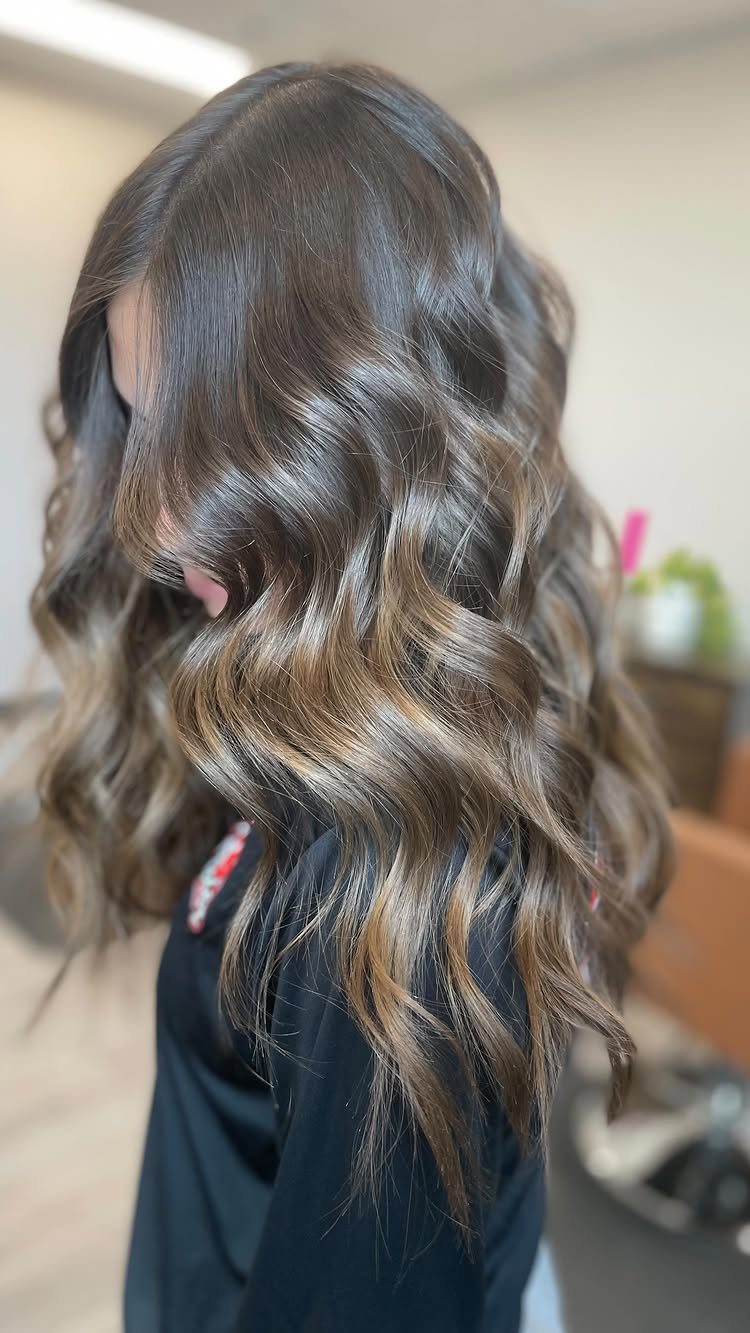
A warm brown base with golden undertones is the easiest way to make dark hair look sunlit without lifting it far. Wavy lengths show the gold in the turns of each curl.
Warm or golden undertones tend to glow against this shade, while a cooler brown can leave the same skin looking a little flat.
Bring a photo and use the word "golden" for the undertone, because a stylist who hears only "brown" may default to neutral.
10. Ashy Brunette
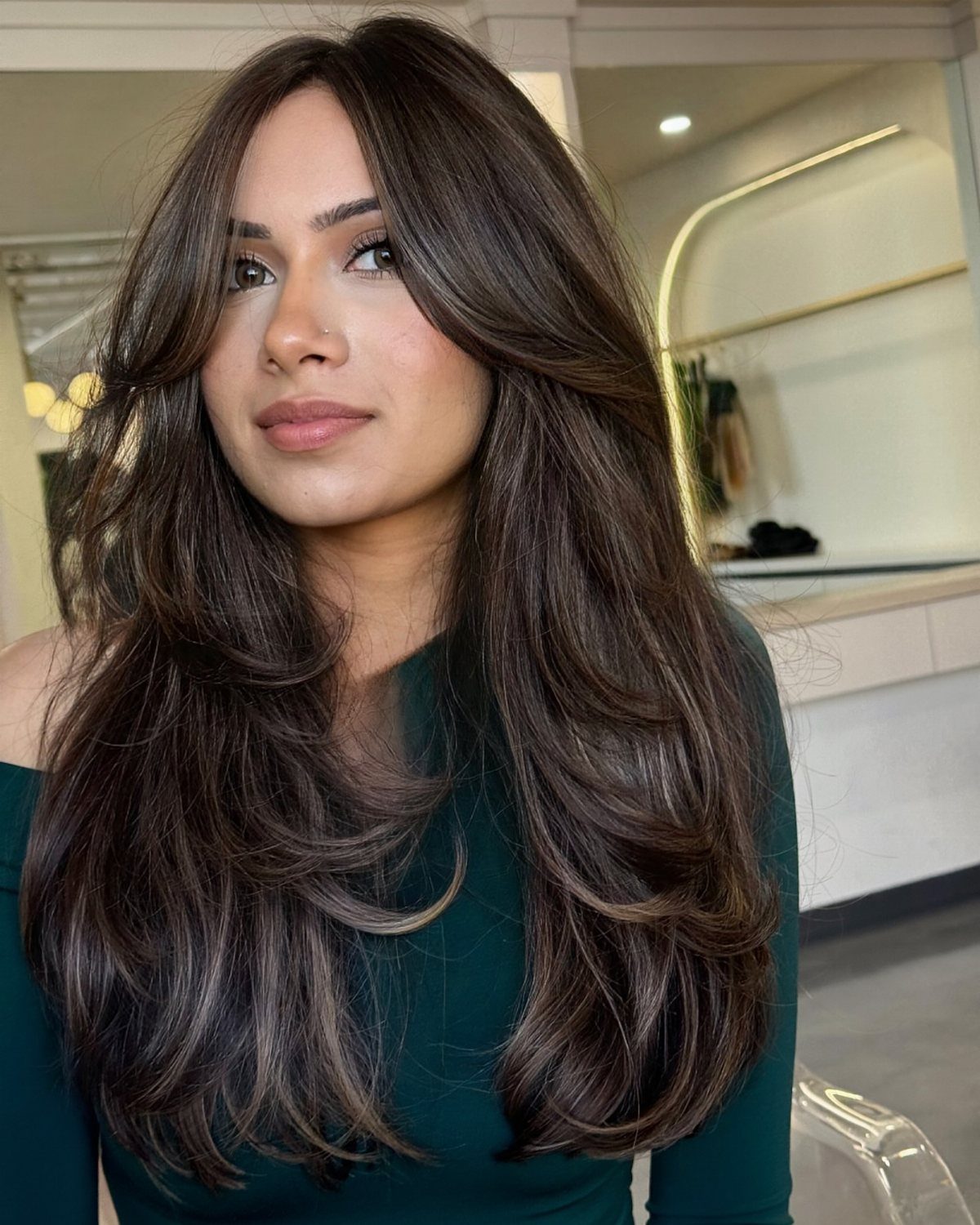
Ashy brunette is a cool brown that cancels out warmth, which makes it a smart move if olive or golden undertones in your skin or hair tend to overpower you.
Layers and soft waves keep the cool tone from looking flat.
Ask for "ashy" or "cool-toned" by name, and expect to repeat it at the salon. I like it best when the cut has movement.
11. Charcoal Brown
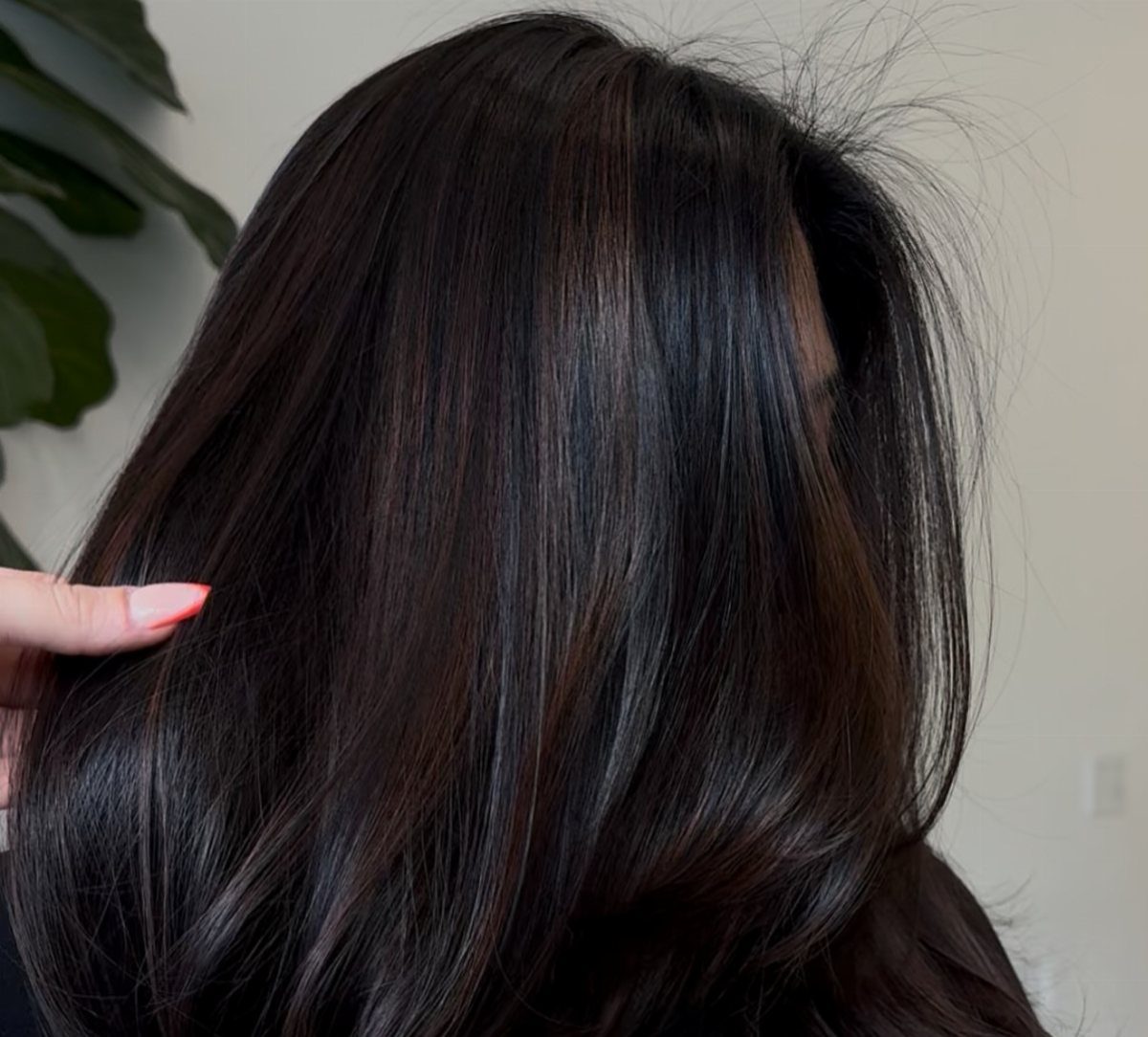
Charcoal brown sits between Brown Smoke and Cool Ebony: a dark brown with a cool, smoky cast and no red in it. Smooth, layered lengths show it off, because the shine reads as a soft gray-brown sheen.
Pick this when espresso feels too black and ashy feels too light. Ask for charcoal by name and bring a photo, since the cool tone is easy to misread as plain dark brown.
12. Nut Brown
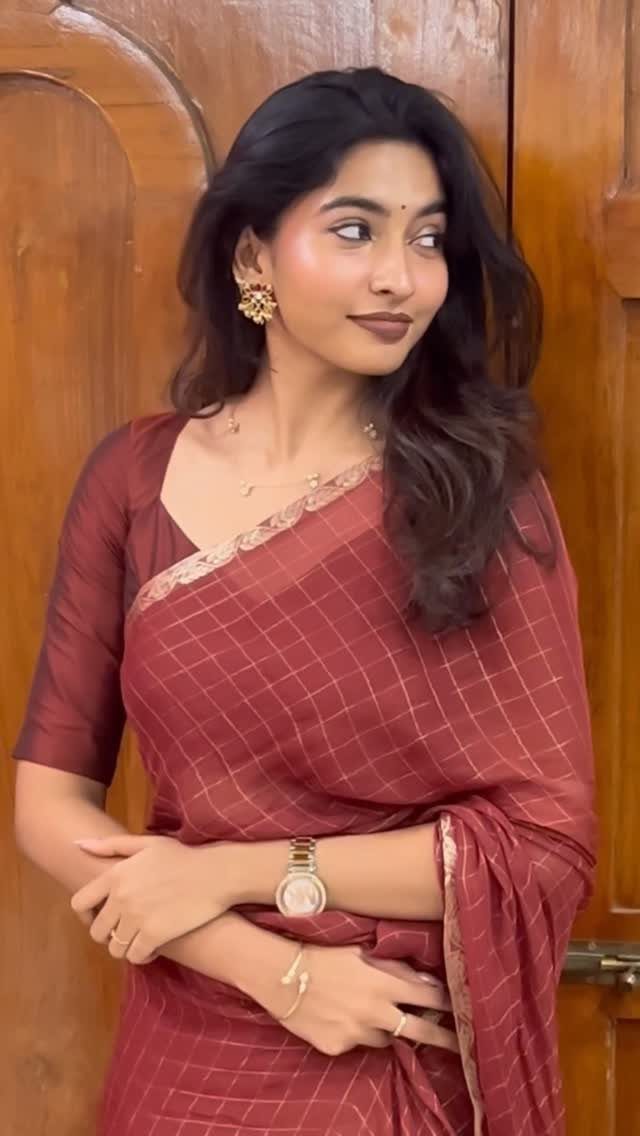
Nut brown is a deep golden brown with mild warmth rather than a red cast, so it stays earthy and calm. Long waves give it room to show that golden depth.
I would choose it if auburn feels too bold but plain dark brown feels flat. Tell your colorist you want golden warmth with no red, because that one detail keeps the shade from drifting copper.
13. Mahogany Brown
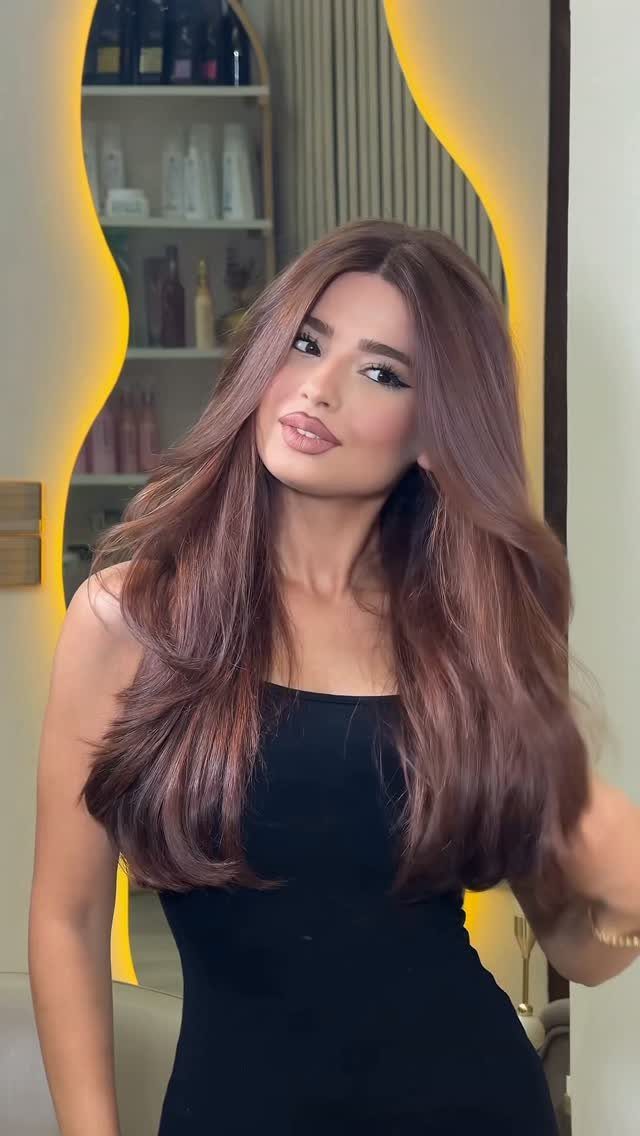
Mahogany brown is a dark brunette with a faint red-brown depth, and the subtle contrast is what keeps it from reading as one flat color.
Ask for soft dimension rather than obvious highlights, so the shade shifts a little as the waves move.
Bring a photo and say "mahogany" by name. On long, wavy hair, I would keep the contrast low and let the depth do the work.
14. Charcoal Highlights
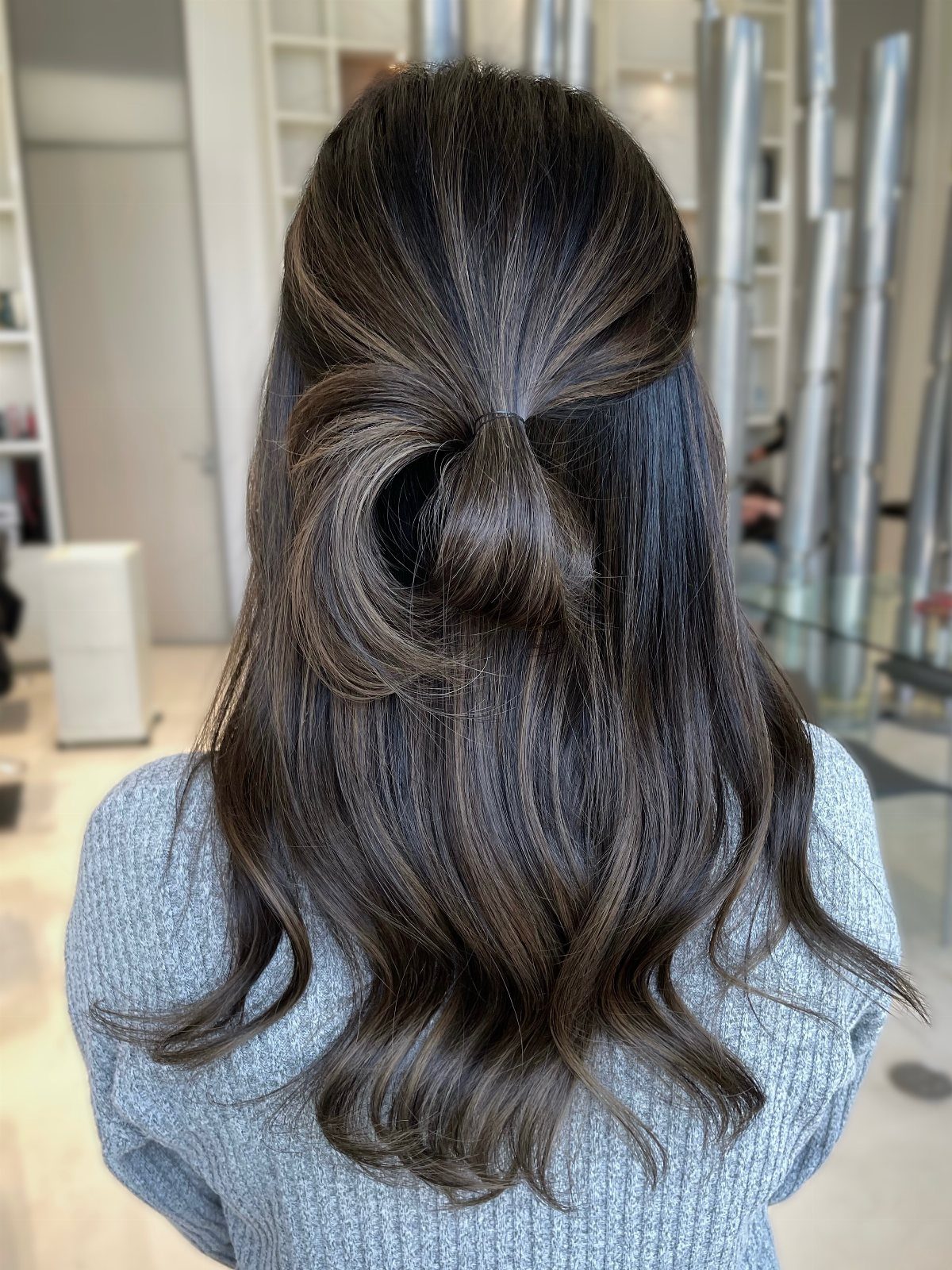
Cool, chocolatey highlights laid over a brunette base give you contrast without any warmth creeping in. Ask for charcoal tones in the highlights and tell your colorist you want them cool, since "brown highlights" alone can come out golden.
Long waves show the mix best, and a half-up knot lets the highlights sit on top where they get seen. Next to Charcoal Brown, this one keeps the base darker and puts the cool tone in the pieces.
15. Deep Bronze
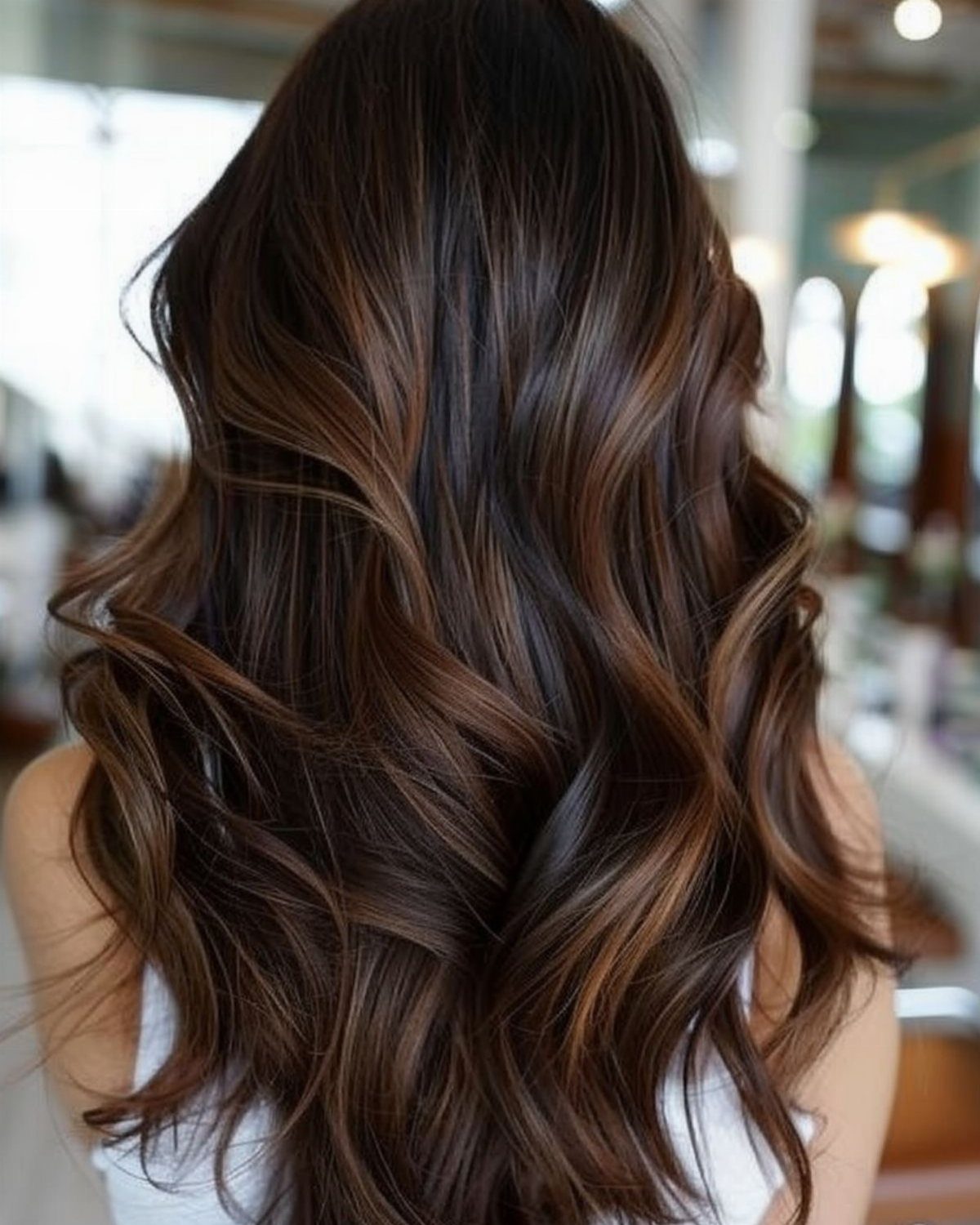
Deep bronze is a warm brunette with a glossy finish, and the glisten is half of what you’re asking for.
Request a gloss step along with the color, and add highlights around the face so the warmth lands where it flatters.
On long, wavy hair, the bronze catches light in the curves. I would pick it over a flatter brown if you want warmth without going fully red.
16. Burnt Honey
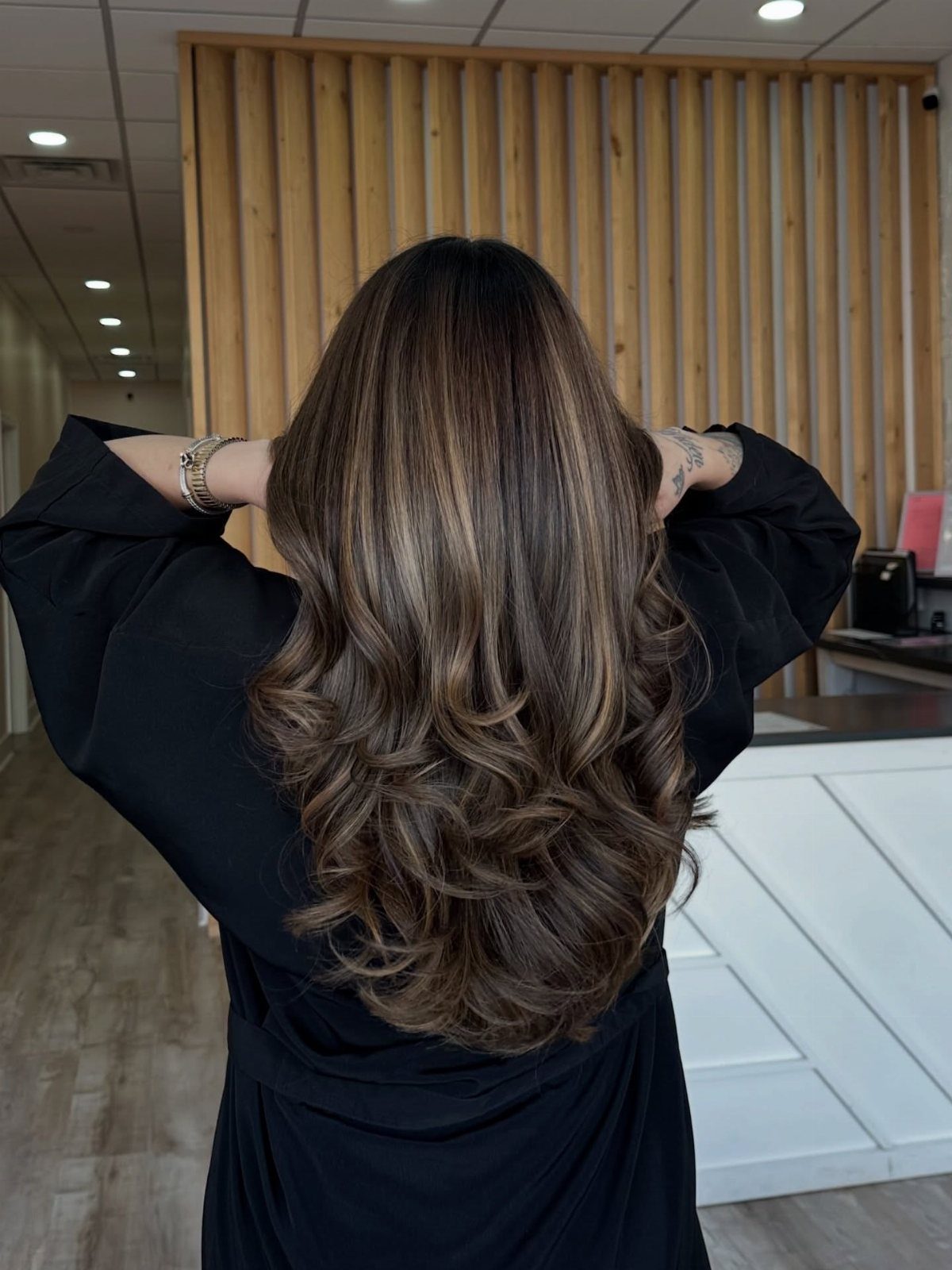
Burnt honey keeps a dark brunette base and adds sunny golden highlights with very little red in them. Keep the gold subtle and warm, close to the base, so it reads as sunlight in the hair.
Tell your colorist "golden, not red" so the highlights don’t drift copper.
It sits near Golden Brown, but the highlights here are more noticeable. Long, wavy hair gives them room to show.
17. Light Brown
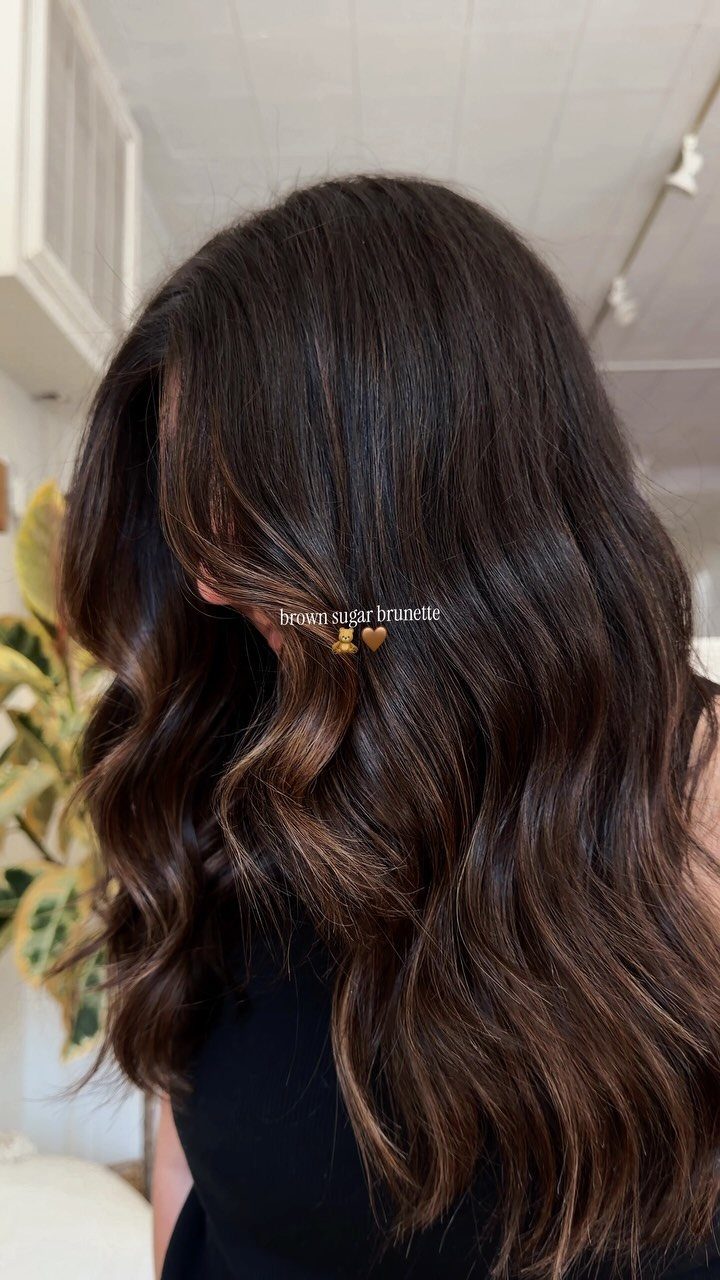
Light brown accents on a dark brunette base are the gentlest color change you can make, because the shift stays within a single shade family.
The lighter pieces should be barely there, a shade or so off the base, so the result looks like natural dimension and not highlights.
I would ask for "brown sugar" tones and have the colorist place them sparingly through long waves. It’s a good first step if you’re nervous about going lighter.
18. Smoky Brown
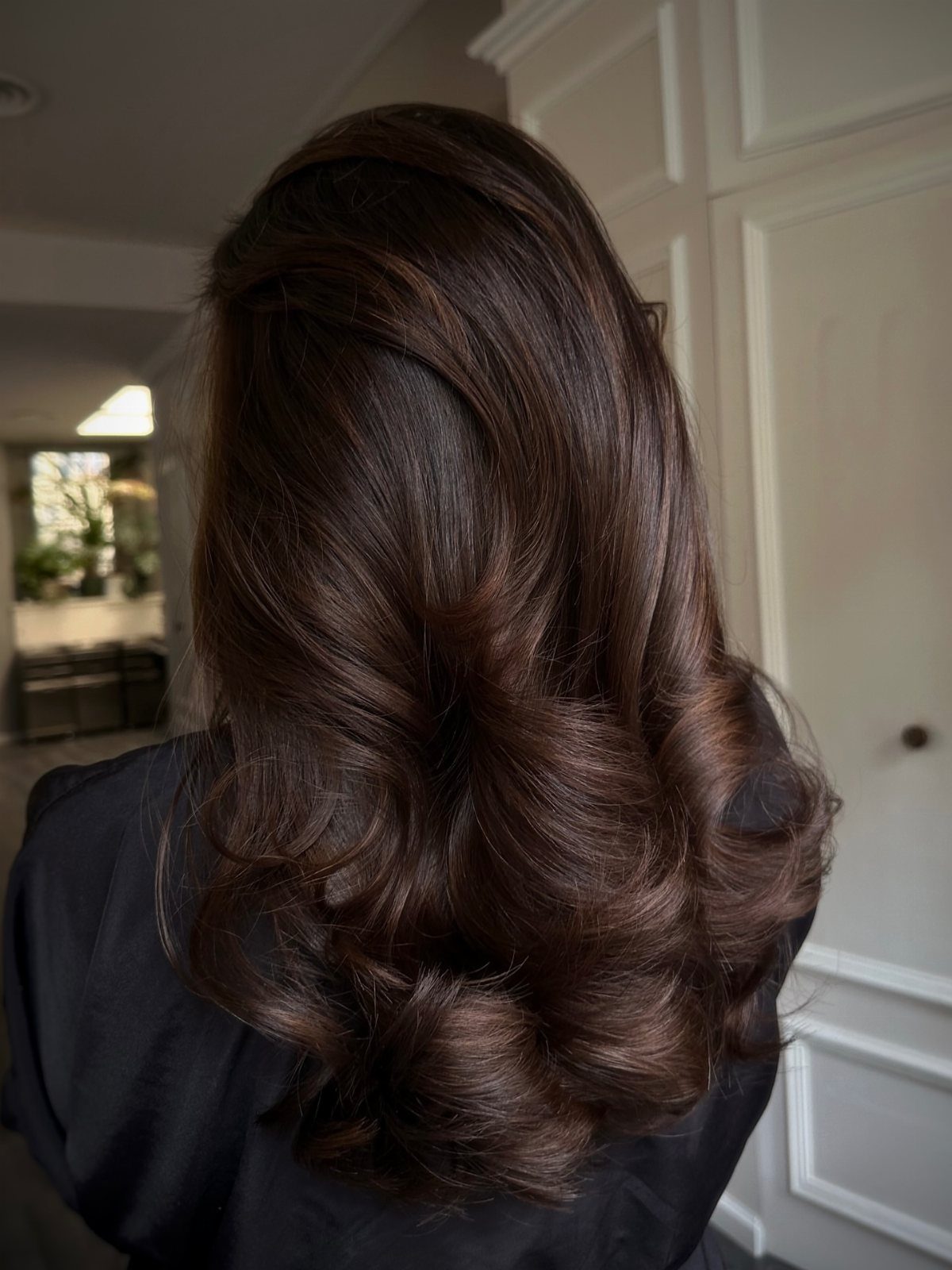
Smoky brown is a natural-looking brunette with a cool, hazy tone and no obvious highlights. Gloss matters most here, since voluminous loose curls turn that cool cast into a soft shine.
Ask for "smoky" and "cool" together, and bring a photo, because plain dark brown is where a stylist may land without it. It’s less stark than Charcoal Brown; I’d choose it if you want cool without a gray cast.
19. Nearly Black Dark Brown
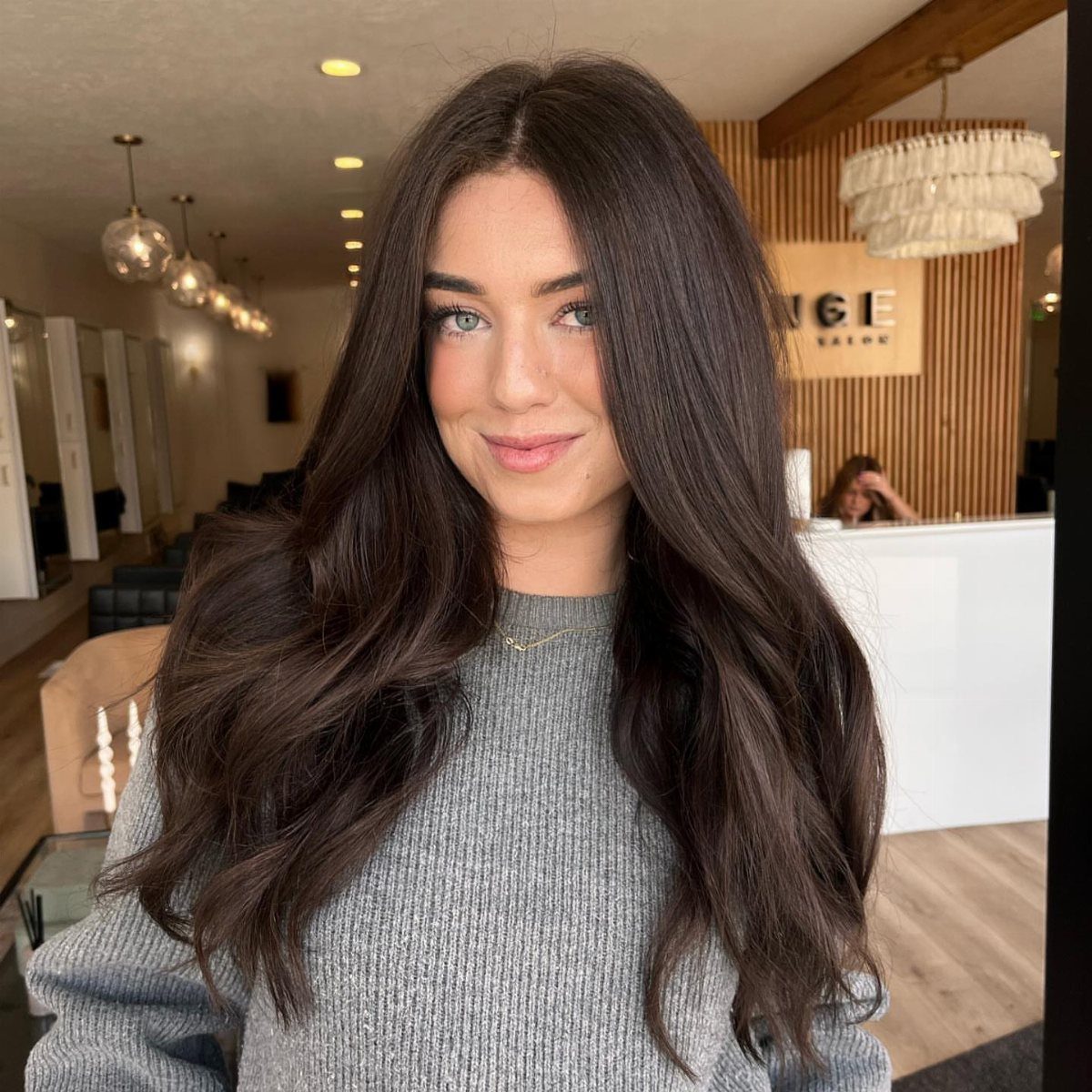
Nearly black dark brown is the pick when you want the drama of black without the flat, inky look of a box-dye jet.
Under salon lights it still reads brown, and that softness is what keeps long waves from looking heavy.
Ask for a gloss on top of the color, since shine is what separates this from plain black. Tell your colorist "black-brown, not jet black" and bring a photo.
20. Sparkling Auburn
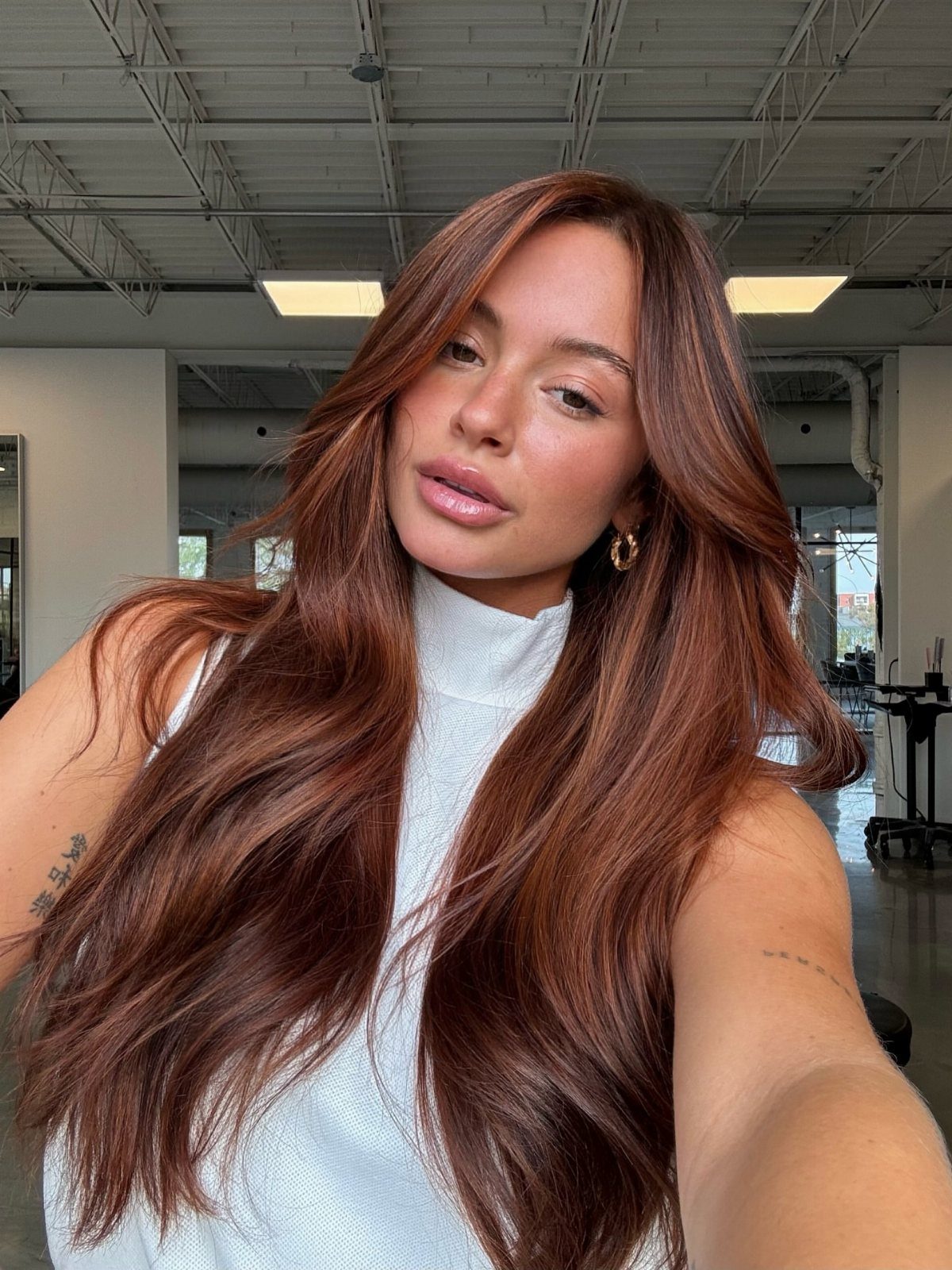
Soft cinnamon warmth on a dark brown base gives you a hint of red without moving into full auburn. Sparkling is the right word only if the finish is glossy, so request a gloss step with the color.
I would keep the cinnamon low and close to the base, which fits long waves best.
Say "cinnamon" and "dark" together, because "auburn" alone may come out redder than you want. It sits warmer than Nut Brown but milder than Auburn Brunette.
21. Dark Cinnamon
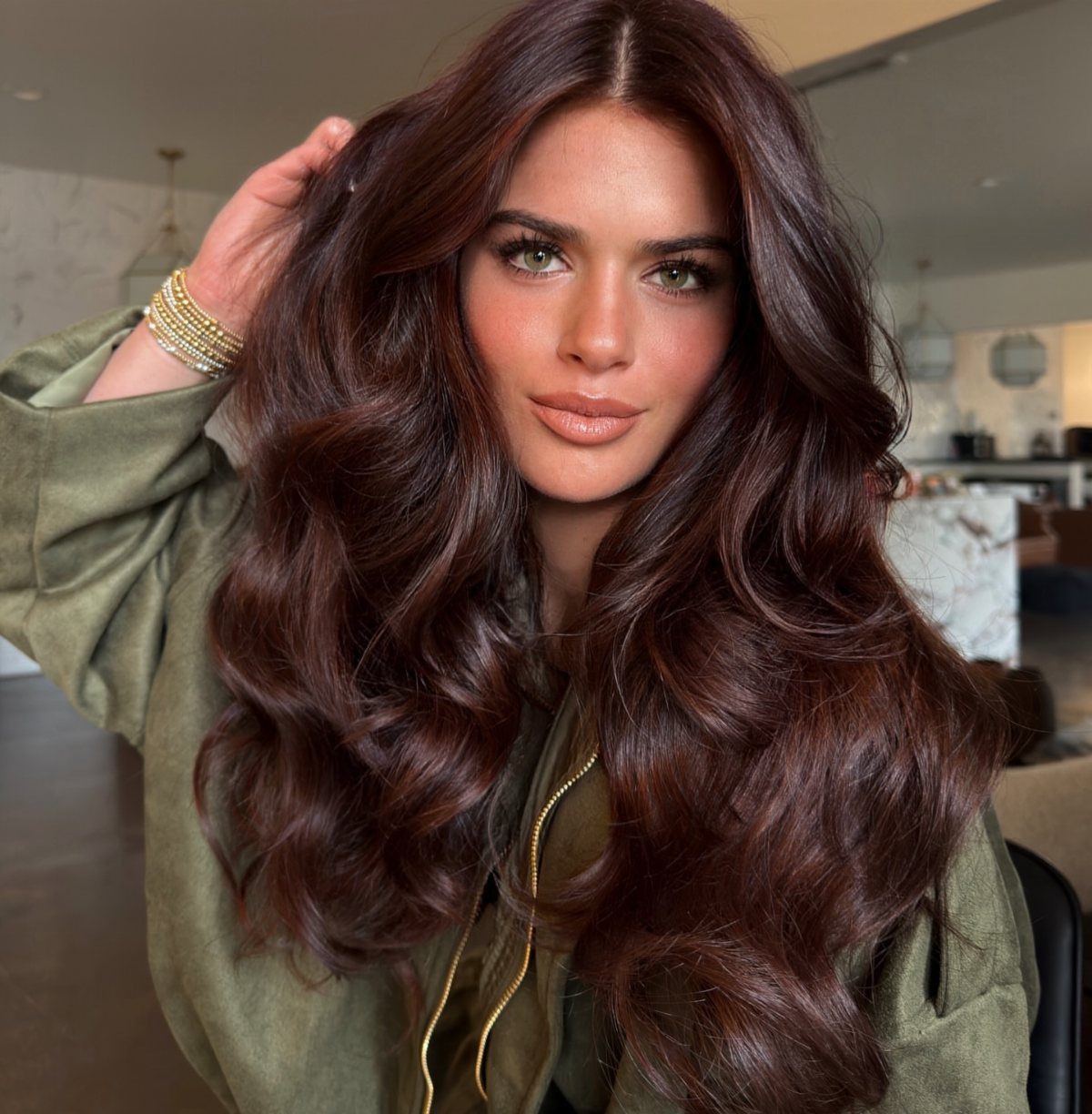
Dark cinnamon brown with lighter highlights runs warmer than most brunettes, and the highlights are what keep a voluminous cut from looking like a single dense color.
Ask for the lighter pieces to stay warm and a few shades from the base.
Volume helps this one, because the highlights show in the lift and in the gaps between curls. For warmth that stops short of red, dark cinnamon beats a flat dark brown every time.
22. Honey Balayage
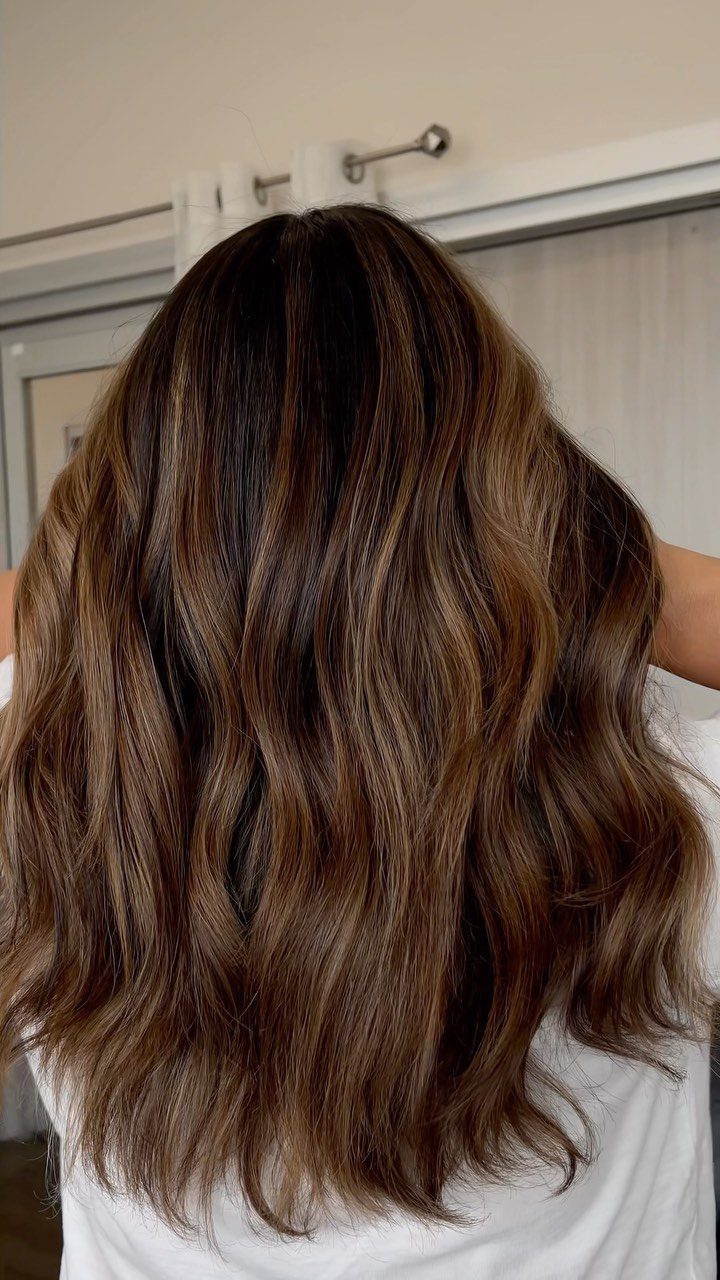
Honey balayage on dark brown is hand-painted, so the color is laid in sweeps instead of foils, and the chunky version leaves bolder ribbons than a soft blend.
Ask for honey, not blonde, and decide up front how bold you want the pieces.
Long waves display the placement from every angle, including the back.
If you want less contrast, ask for the honey to be finer and closer to the base. I prefer the chunkier look on very dark hair, where it actually registers.
23. Ash Brown Blonde
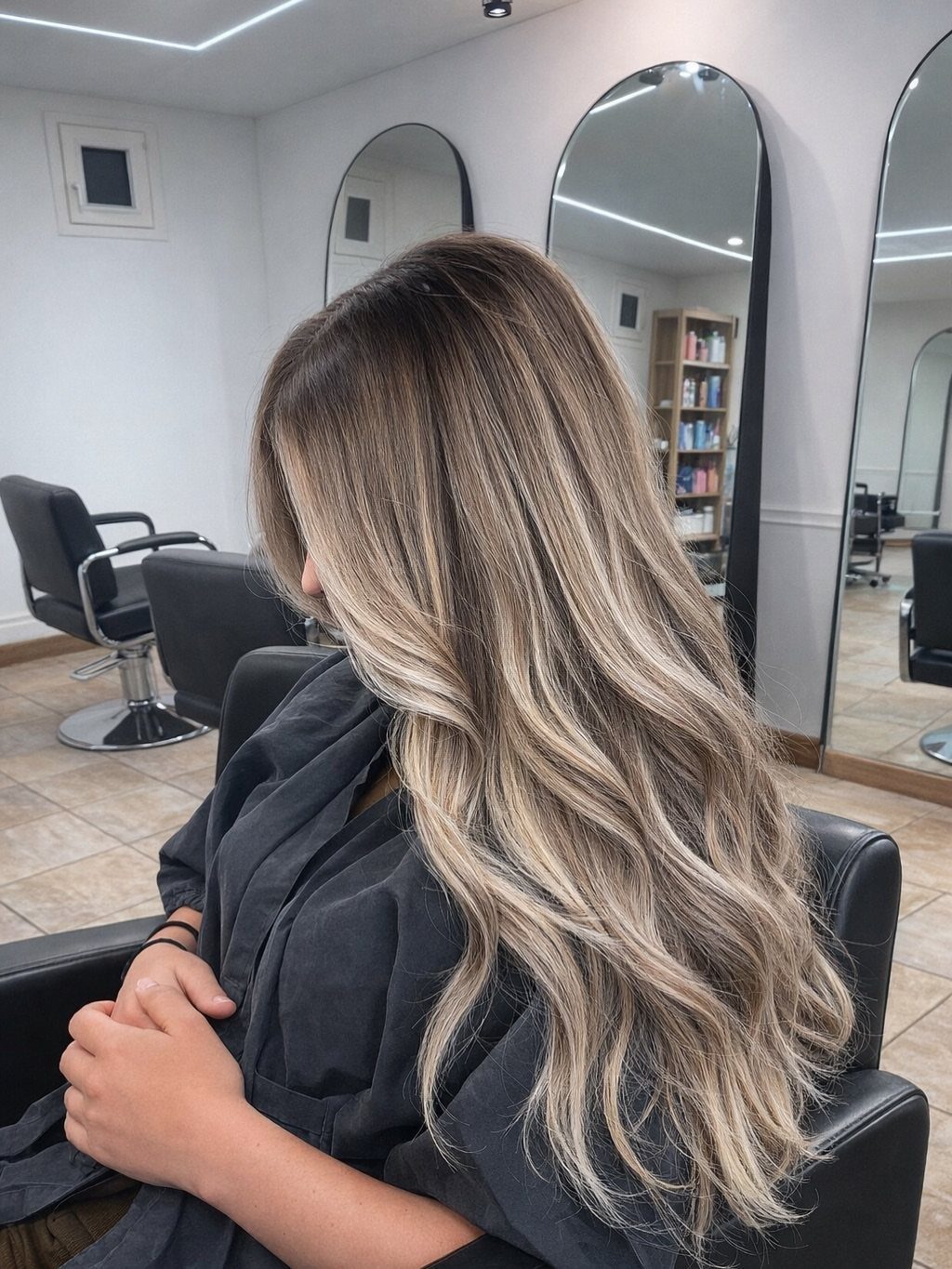
Bright blonde highlights over a dark brown base give about the highest contrast you can get in brunette hair, and the cool, ashy tone keeps the blonde from turning yellow against the brown.
Expect a longer salon visit than for a gloss or a tone-on-tone color, since the blonde has to be lifted.
Ask for "cool blonde" and "ash" by name and bring a photo. On long waves, I would keep the brightest pieces toward the front.
24. Reverse Ombre
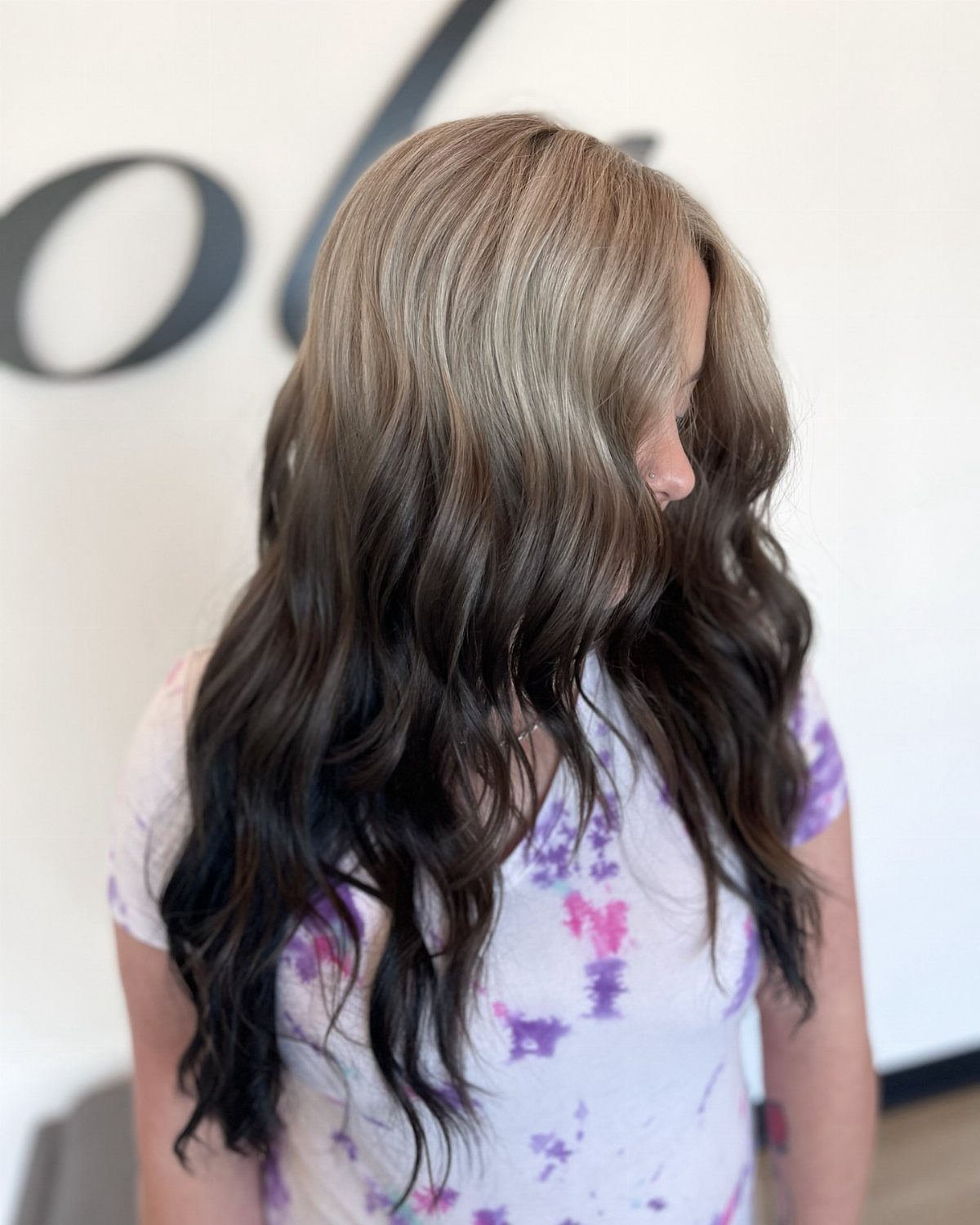
Reverse ombre flips the usual fade: lighter at the roots, darker through the ends. It’s an unusual way to wear a brunette-and-blonde mix, and it works best when the transition is blended, not a hard line at mid-length.
Ask for a soft melt where the light meets the dark, and bring a photo.
Long waves help the blend read as intentional. I’d skip it if you want low upkeep, because the light roots will show growth sooner than a dark root would.
25. Muted Mushroom Hair
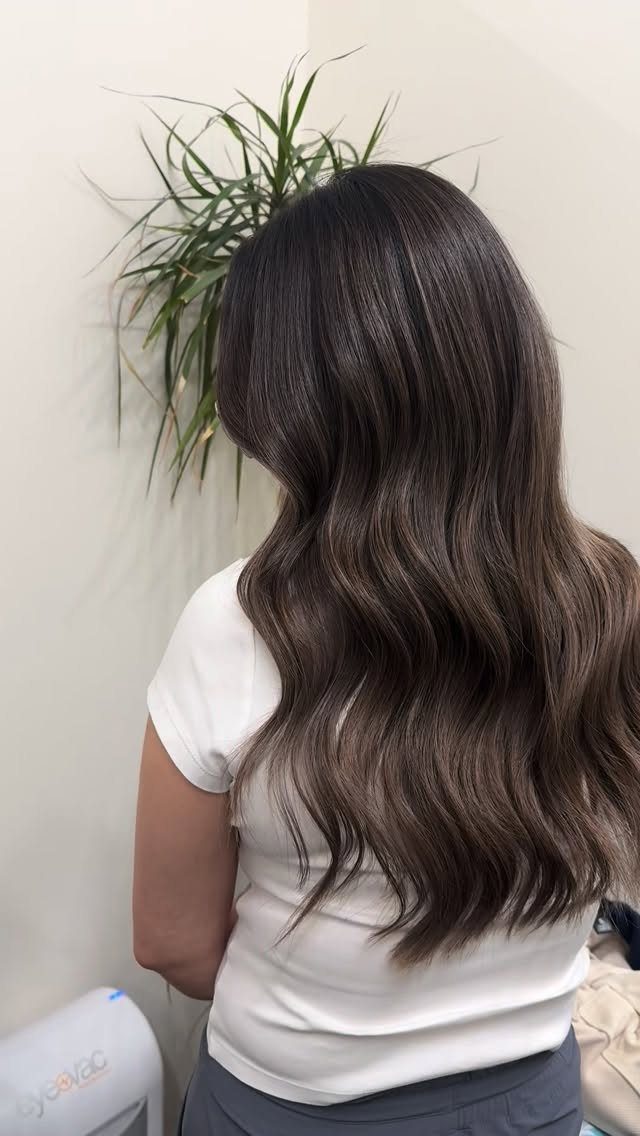
Muted mushroom is an ash-brown with the warmth taken out, soft and a little gray, so it sits quieter than Ashy Brunette. Long waves show the flat, smoky tone from behind as well as they do from the front.
Ask for "mushroom" by name, add "muted" and "no gold," and bring a photo, since a stylist who hears only "ash" may go cooler or lighter than you want. I’d choose it if you like understated color.
26. Sunkissed Streaks
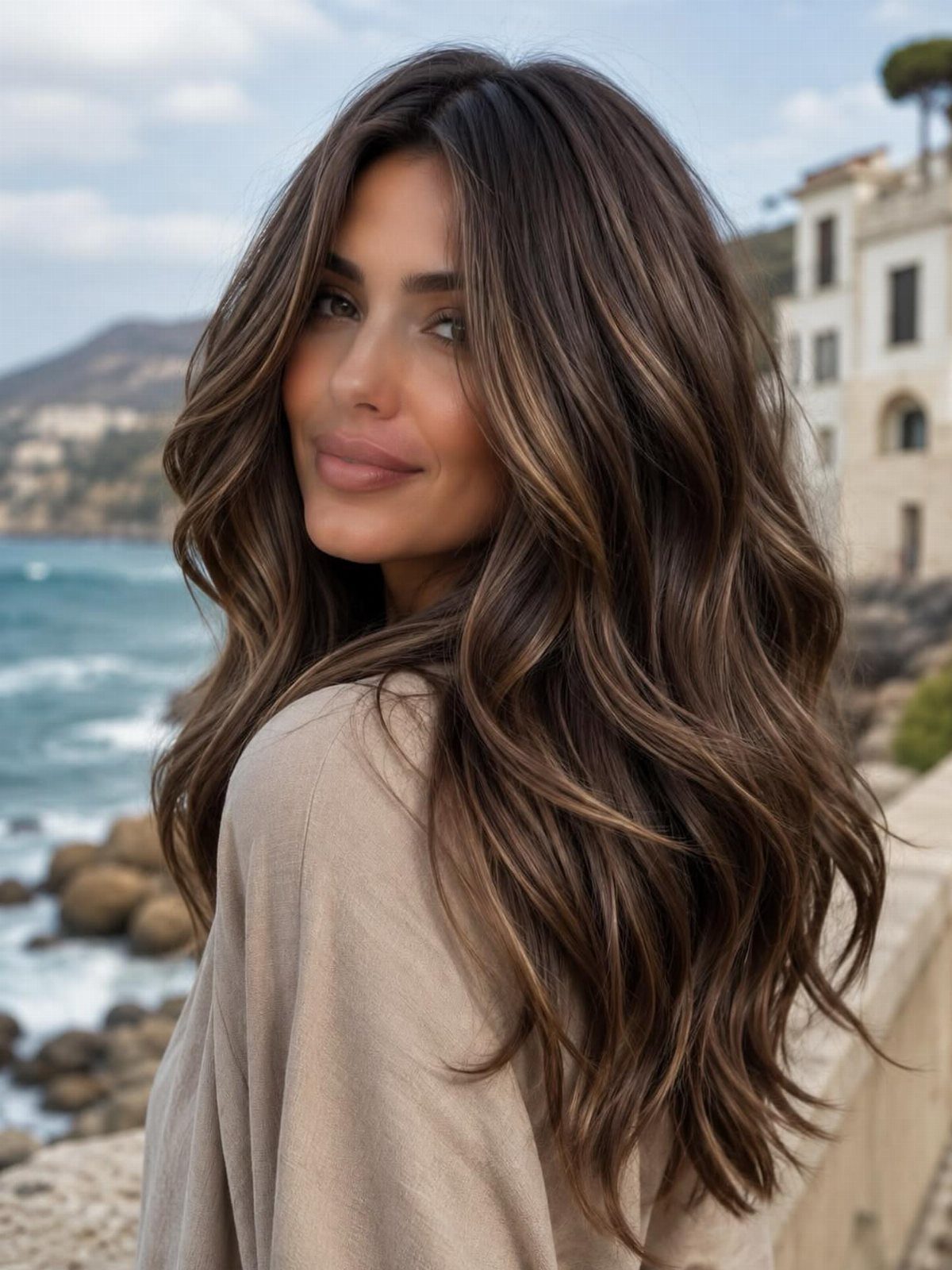
Sombré is the soft cousin of ombré: the shift from dark to golden is gradual, so you get a sunny brown without chunky stripes through the strands. Dark brown waves with fine golden streaks is the look.
Ask for "sombré" and "golden brown," not "highlights," and say you want the gold subtle.
I’d keep it close to the base. It grows out gently, which suits a long stretch between salon visits.
27. Dark Neutral Brunette
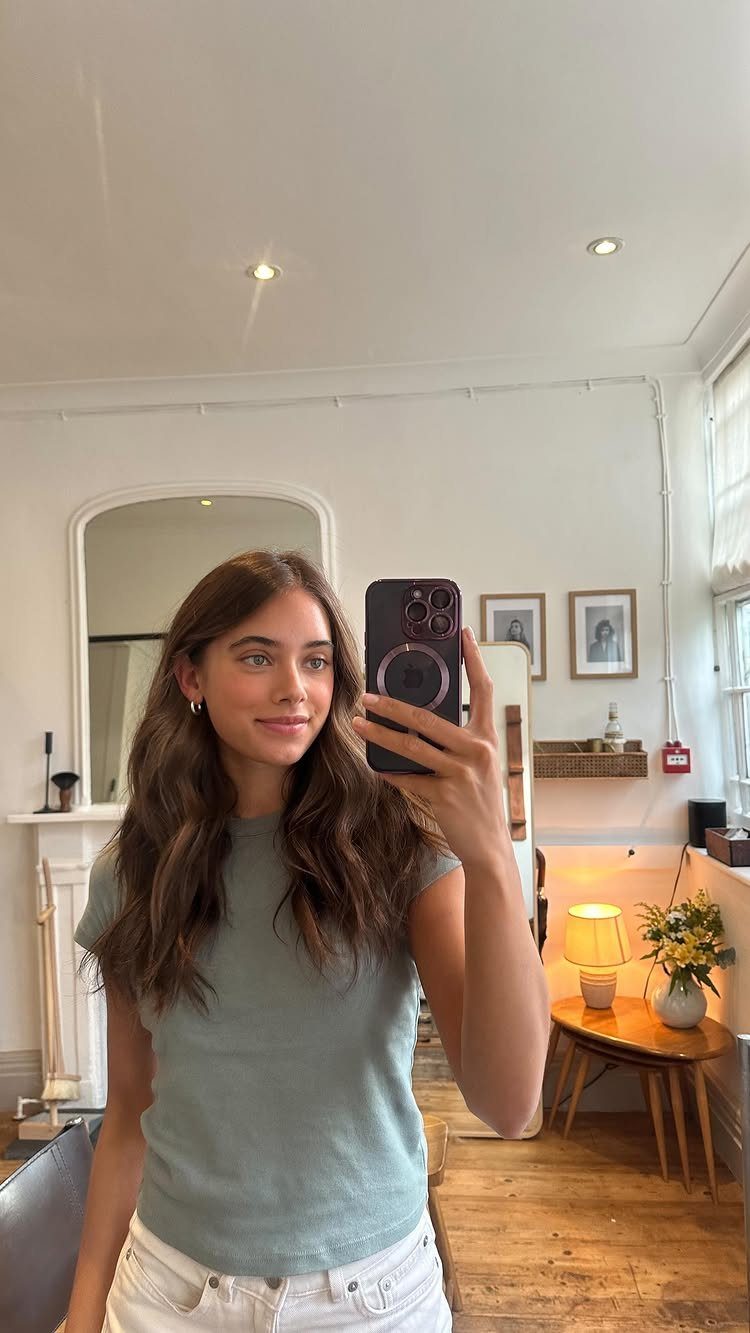
Dark neutral brunette is a deep brown that leans neither cool nor golden, with just a hint of warmth in the light. It’s the easiest dark brown to live with, and long waves keep it from looking flat.
Tell your colorist "neutral, with a touch of warmth." I’d pick it over Espresso Brunette if you want depth without that near-black finish.
The creator of this one said it was her first fully brown hair since about age 16, so a full switch to dark can feel strange at first.
28. Sugar Pecan Highlights
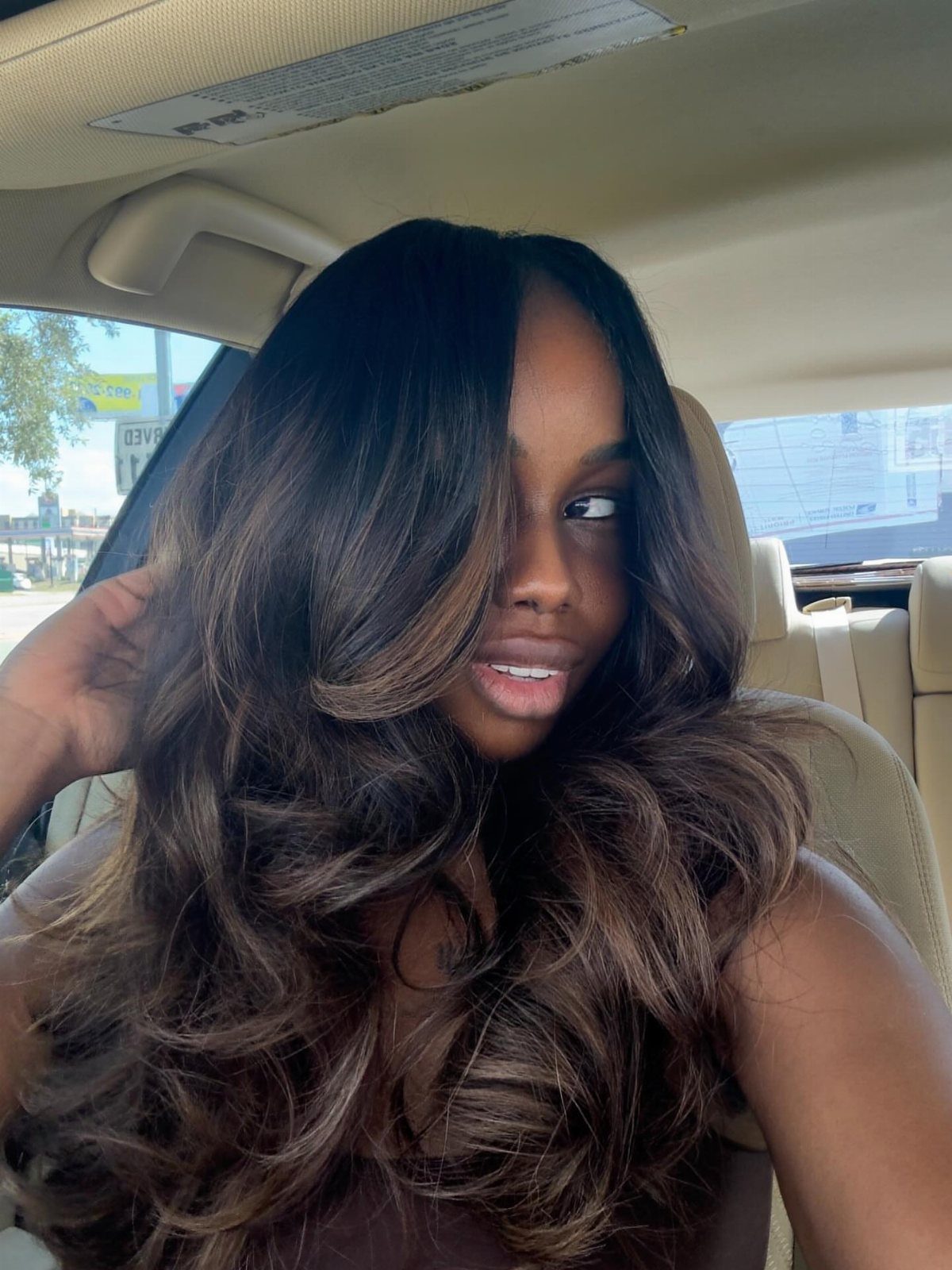
Sugar pecan keeps the back and lengths dark and puts the soft highlights at the front, so the light sits right around the face. Voluminous curls spread those pieces through the shape.
Ask for face-framing highlights only, and keep them a few shades off the base so they read as soft. I like this when you want a brighter face without lightening everything, since the rest of the hair stays low-effort.
29. Highlighted Espresso Waves
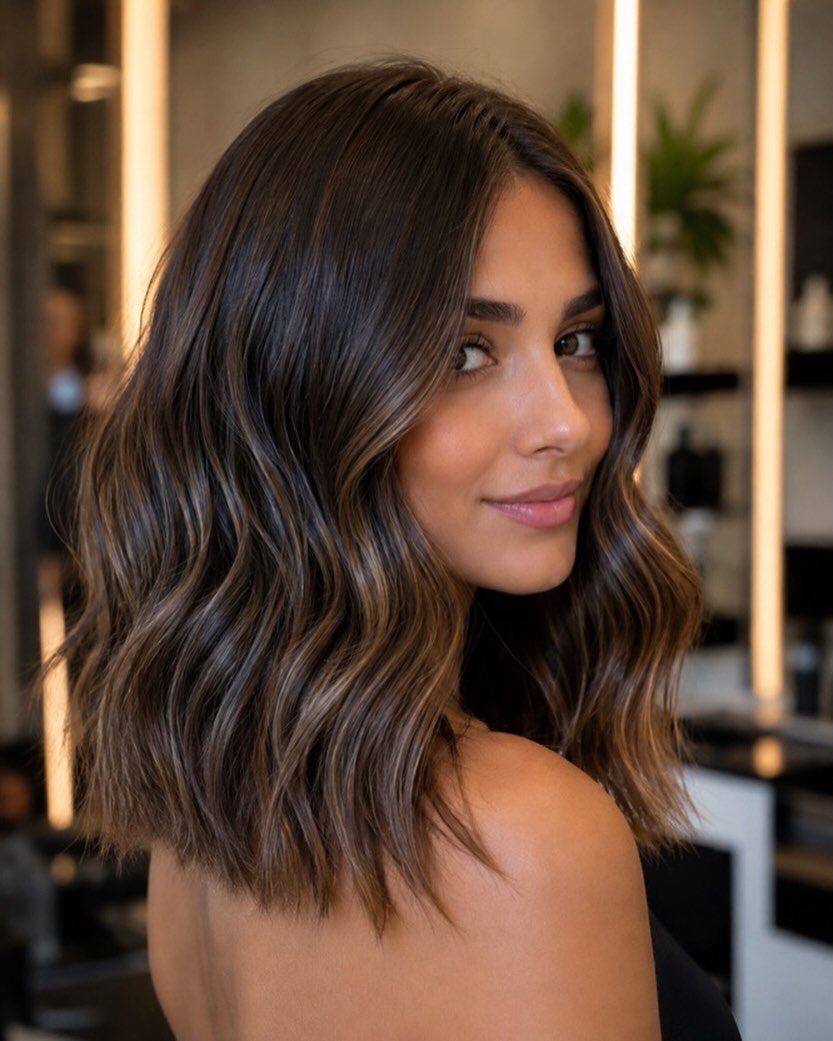
Espresso with a softly blended balayage is dark at the root and lifts gradually into lighter brown ends, so there’s no line where one stops. Wavy, shoulder-length hair shows the blend well.
At the salon, tell your stylist the highlights should stay within the brown family, a few shades lighter than your base at most, and book a gloss at the end so the waves catch the light.
Compared with Espresso Brunette, this one adds dimension, and I prefer it for that reason.
30. Chestnut Golden Balayage
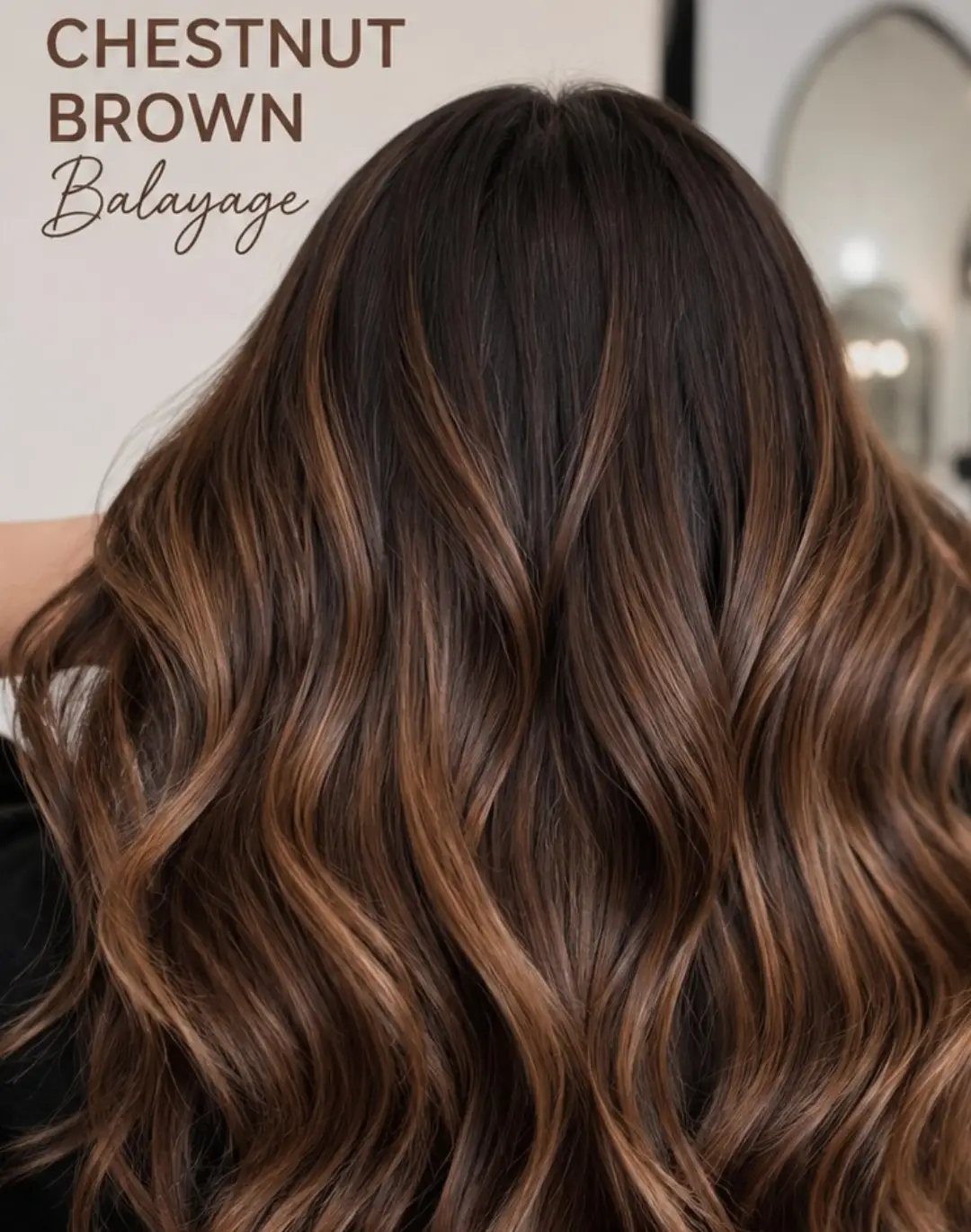
A dark chestnut base threaded with lighter golden brown is balayage at its most wearable. The gold is painted through the lengths, and the roots stay dark.
Ask for "chestnut" and "golden," and have the colorist keep the strands fine.
Long waves let the placement show from behind. The golden ribbons get the attention, but the dark chestnut base is what keeps this balayage looking rich, and it means the roots can grow in for months without a harsh line.
31. Dark Hair Contouring
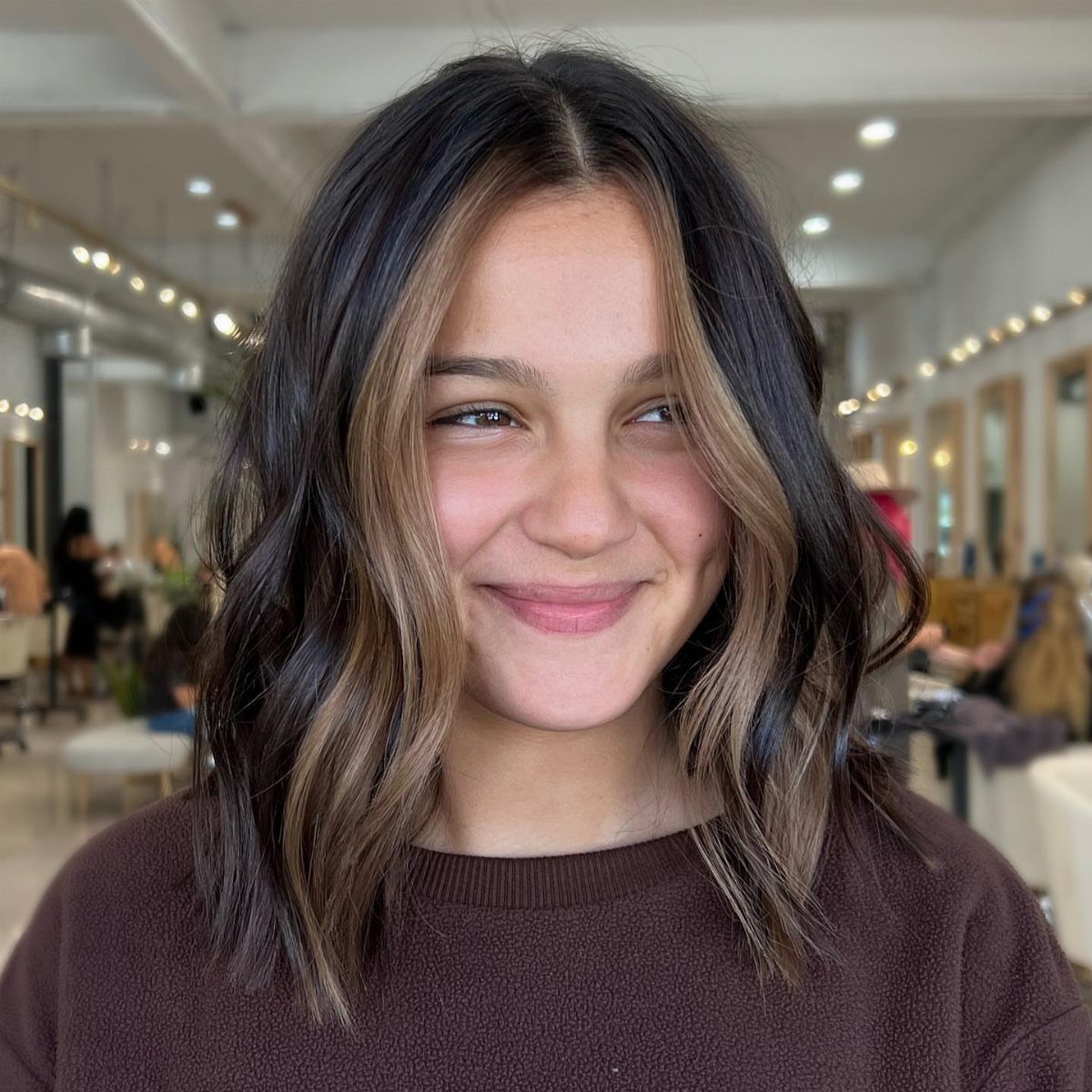
Face-framing highlights go only at the front hairline, so the light sits exactly where it brightens your skin and the rest of the dark brown stays untouched.
Ask for pieces a shade or two lighter than your base, and tell your colorist you want them soft around the face.
Wavy hair helps, since the movement scatters the lighter strands instead of leaving 2 stiff stripes. I’d pick this over an all-over lightener if you want less salon time and a darker overall color.
32. Saddle Brown Curls
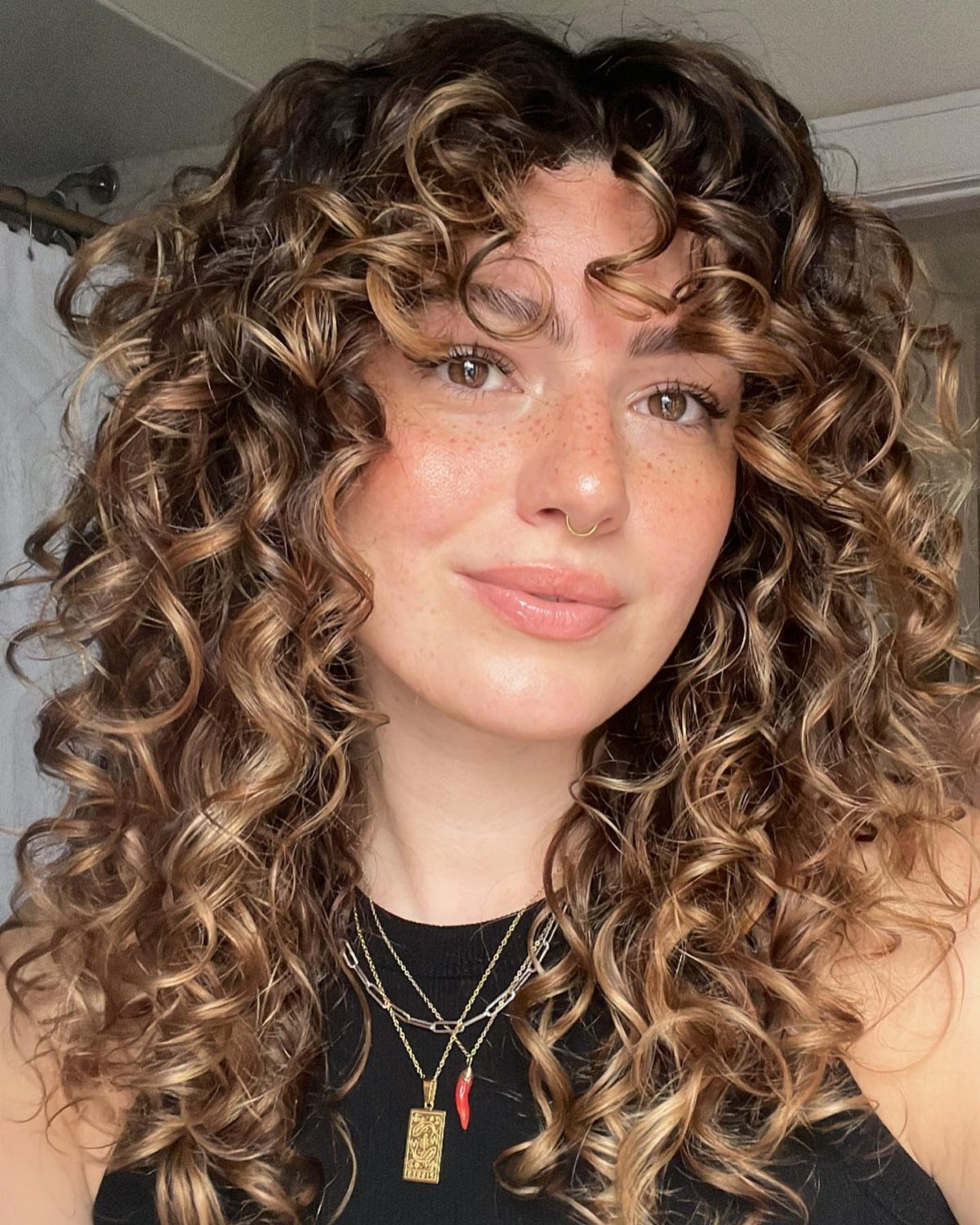
Saddle brown is a warm, medium-deep brown, and curls give it plenty of surface to show that warmth.
The curly fringe is a bigger commitment than the color, so decide on it first: it adds shape around the face but needs its own styling.
Ask for "saddle brown" and spell out that you want it warm without tipping into red; a photo of the exact shade settles any doubt before the bowl comes out.
Keep the curls moisturized, because dry curls turn a warm brown dull fast.
33. Dark Auburn Balayage
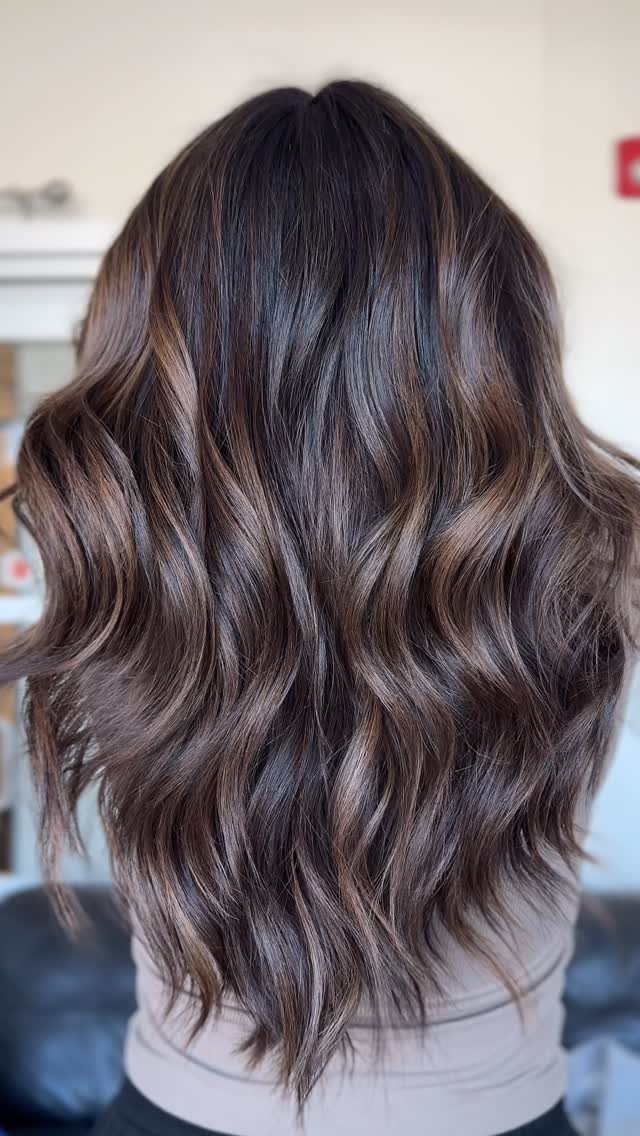
Dark brown with auburn balayage is velvety rather than bright: the red lives inside the brown instead of sitting on top of it.
Ask for auburn painted by hand through the lengths, and keep it deep so it reads as richness, not copper.
Shoulder-length waves display the placement well from behind.
I’d choose this over a full auburn if you want red without a color that dominates. It sits warmer than Dark Cinnamon, with more depth than Sparkling Auburn.
34. Honey Chunky Highlights
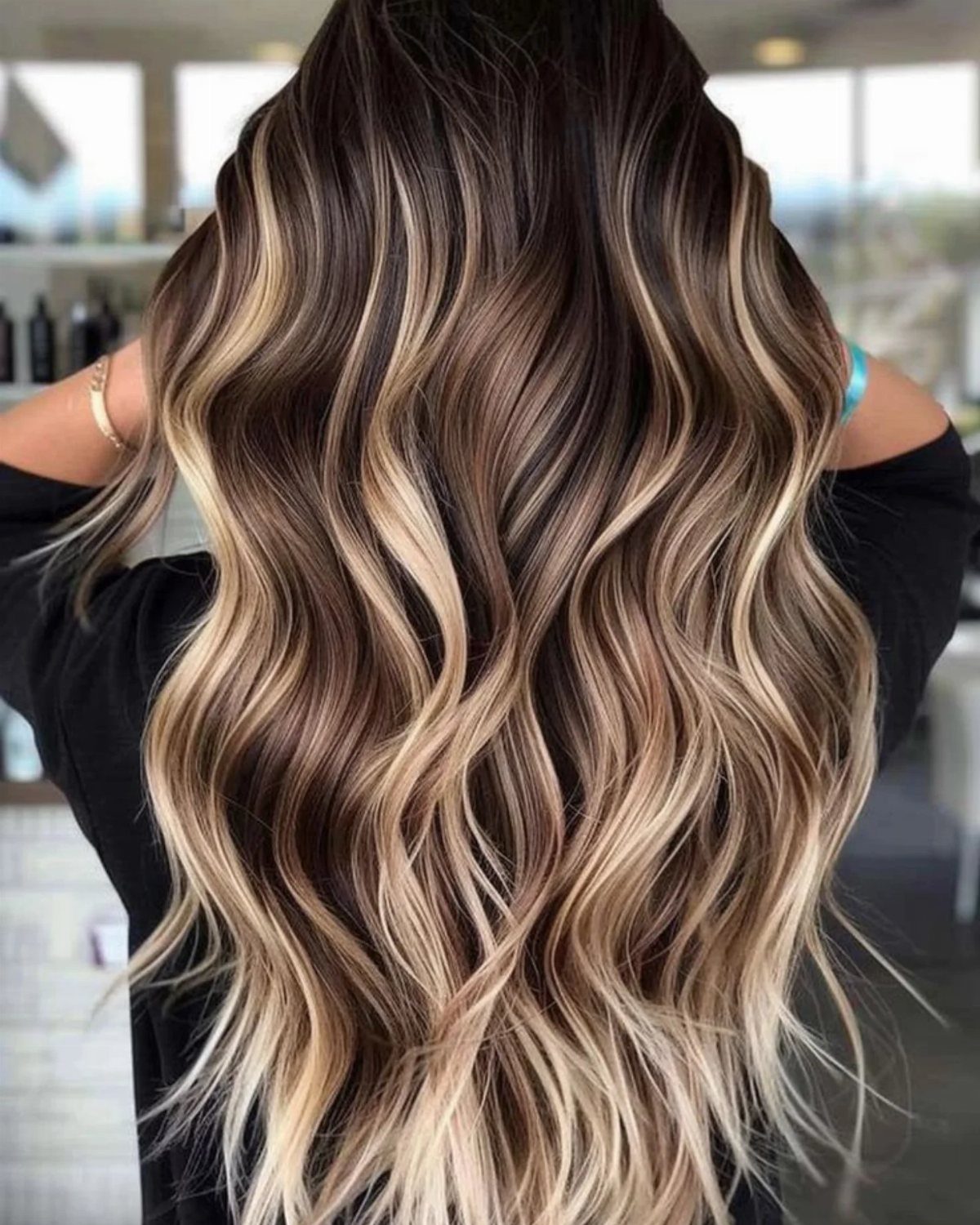
Thick honey-blonde ribbons against milk chocolate brown is balayage turned all the way up. Ask for broad, chunky pieces and say "honey," so the blonde stays warm against the brown.
Decide how bold you want it before you sit down, and bring a photo, since chunky can slide into stripes if the placement is left to guesswork.
Long waves suit it, and I prefer the bolder version on brown this deep, where finer strands would vanish.
Choosing Tones for Undertones
Check the inside of your wrist in natural light: blue or purple veins point to a cool undertone, green ones to warm.
Blue points to cool undertones, green to warm, and a mix of both usually means neutral, which can wear either direction.
Cool skin pairs well with balanced ash. Warm skin gives you a real choice: match it with gold or copper for a blended look, or balance it with a cooler brown so the hair stands apart from the skin.
I lean toward matching when I want softness and balancing when I want contrast.
If the vein test is unclear, hold warm and cool colors up near your face and see which makes your skin look clearer. The colors you already reach for in your closet are a decent clue too.
Color Fading and Upkeep
Brown fades warm. As it loses depth, reddish or orange tones start to show through.
A color-depositing conditioner can rebalance that between appointments, and so can a demi- or semi-permanent color. A color-protecting shampoo slows the fade, and a heat protectant keeps hot tools from speeding it along.
How often you return depends on how far your shade sits from your natural color.
Naturally dark hair needs the least. Medium to blonde natural hair may need touch-ups every 4–6 weeks.
With a shade close to your natural one, regrowth hides well enough that you can stretch to a few months and book a gloss in the gap.
While there are countless benefits to dark brown hair color, there is one catch. “All brunettes fade warm, whether they start warm or not,” says Shvonne Perkins, master colorist and lead educator at Madison Reed.
— Glamour
Color Lift and Salon Commitment
Before you pick a shade, tell your stylist how much time and money you’re willing to put in. Going lighter may call for bleach, and the lighter the target, the more that conversation matters.
Bright blonde over a dark base can take multiple sessions with your colorist, not one. Ask up front how many visits to expect and what the full total looks like, so the number doesn’t surprise you at the second appointment.
If that sounds like more than you want, stay close to your natural color. The smaller the shift, the fewer trips to the salon.
Frequently Asked Questions
What is the best dark brown hair color?
Dark neutral brunette is the easiest one to live with. A true dark brown sits between cool and golden, and shows only a little warmth when light hits it.
If shine matters most to you, I’d go with dark chocolate and ask for a gloss finish, since gloss does most of the work on deep brown.
Cool and neutral look very different in daylight, so say which one you want before the colorist mixes anything.
What is very dark brown hair called?
Deepest brunette is the name for the darkest brown.
Dark chocolate is the usual name, and from across a room it can pass for a soft black. Ask for espresso if you want the deepest brown; it looks black indoors and turns brown only in direct sun.
If you want the drama of black without a flat jet finish, ask your colorist for "black-brown, not jet black" and add a gloss on top.
What skin tone does dark brown hair look good on?
Dark brown suits nearly every skin tone, so undertone mostly decides which version to pick. Warm or golden undertones glow against golden brown, while cooler skin looks best in espresso or ash-toned brunettes.
Neutral skin can wear almost any brunette. If golden or olive undertones tend to overpower you, an ashy brunette cancels some of that warmth.
Who is a good candidate for dark brown hair color?
Anyone with naturally dark hair is an ideal candidate. Lighter starting points, even blonde, can carry dark brown if the shade flatters your skin and eyes, but expect a root refresh every 4–6 weeks.
How do I maintain dark brown hair color?
Use a color-depositing conditioner, or a demi- or semi-permanent color, to balance the warmth that shows as the shade fades.
Switch to a color-safe shampoo and spray a heat protectant before any hot tool. Plan on a root visit every 3–5 weeks when the color sits well away from your natural shade or gray is coming in thick.