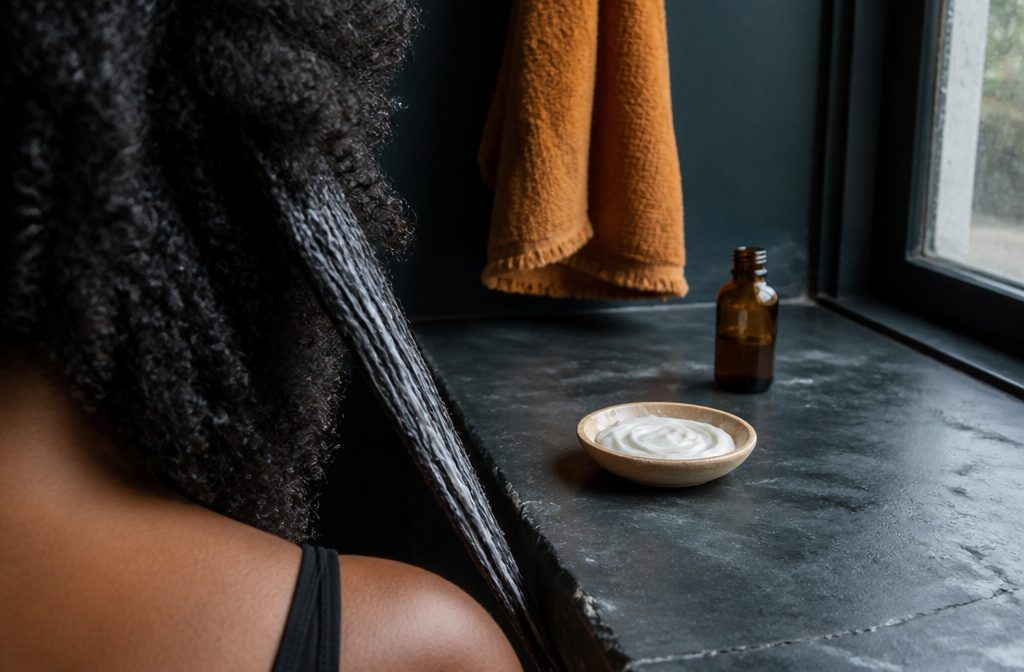
Soft, hydrated hair takes water first, then cream, then 3–4 drops of oil, and it costs a few minutes a day plus one weekly wash.
People get the order wrong: oil on dry hair seals the dryness in. Low-porosity hair needs cream before oil (LCO), while high-porosity hair takes oil first (LOC).
1. Start With Clean Hair and Remove Buildup
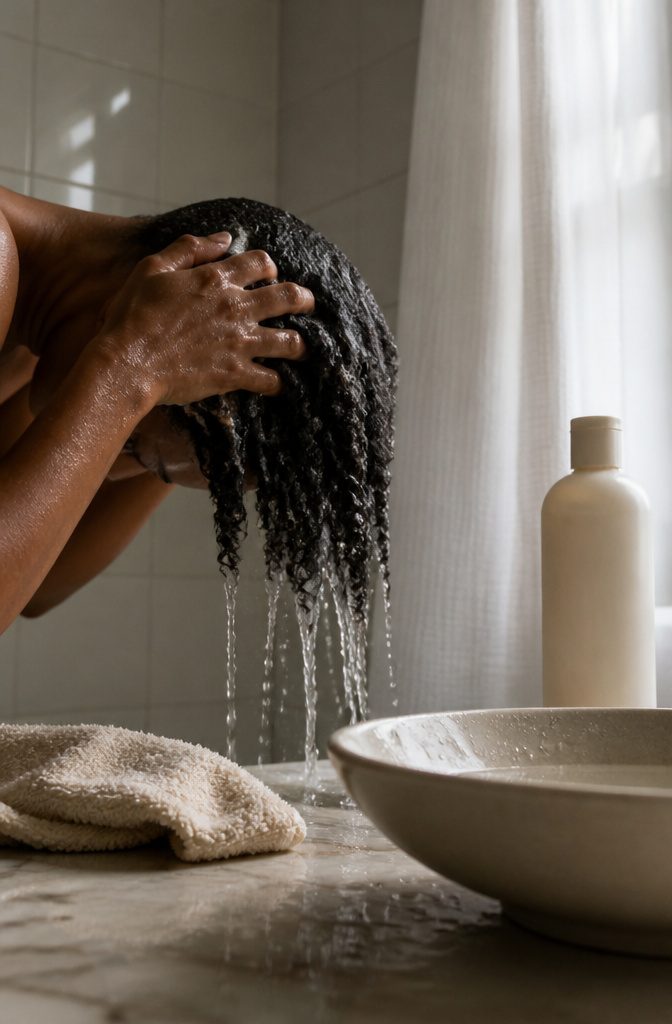
Buildup sits on the hair shaft like a film, and moisture cannot absorb through it.
Products layer on top instead of sinking in, which means you can moisturize all day and still end up with dry hair underneath. A gentle wash clears that film and leaves the cuticle ready to take in water.
I look for a sulfate-free shampoo and warm water.
Sulfates strip natural oils faster than Black hair can replace them, and warm water opens the cuticle just enough to lift dirt without shocking the strand. How often depends on how much you use and how your scalp behaves.
Washing once a week keeps most people ahead of buildup, though once every two weeks works if your hair does not produce much oil or you use lighter products.
Overwashing pulls out the sebum your hair needs, so finding that line matters more than sticking to a fixed schedule.
2. Apply Water or a Water-Based Moisturizer First
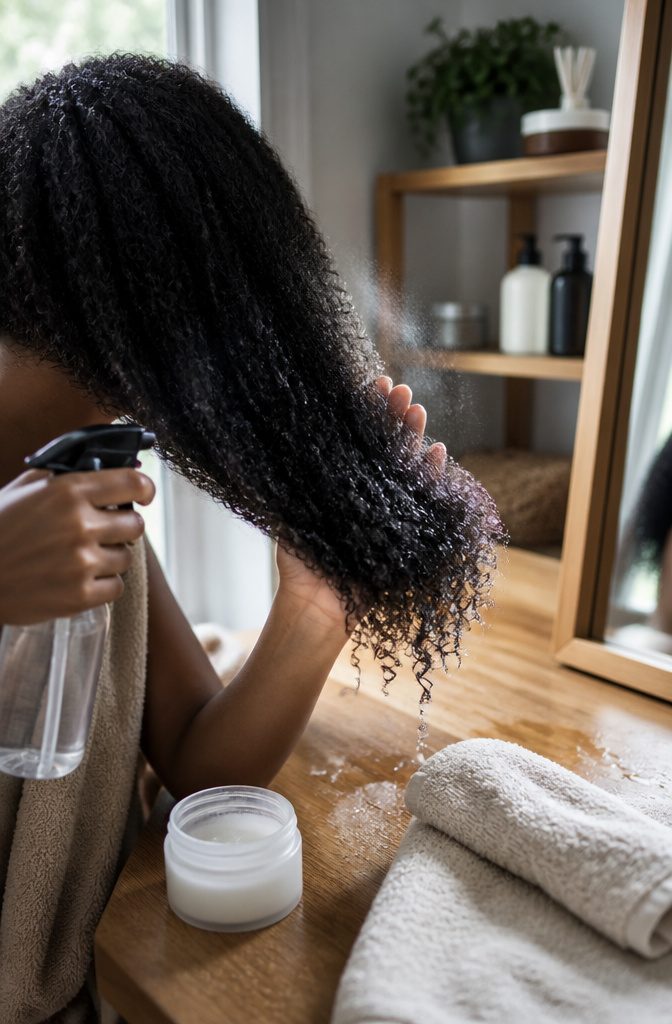
Water comes first because it is the moisturizer.
Healthy hair holds about 10–15% water, and when that drops, the strand turns brittle. Everything else in the routine supports that starting hydration.
Both the LOC and LCO methods begin with water or a water-based product, never with oil.
I use a spray bottle to lightly mist sections, or I reach for a water-based moisturizer such as S Curl. A dime-sized amount rubbed between my palms is enough.
Moisture is lost faster from the ends upwards so this is where moisturizer application should be concentrated.
The bottom two inches take the most damage and lose water faster than the root, so that is where I concentrate product.
Some sources recommend spritzing twice daily to keep that baseline up between wash days. If your hair reverts when damp, you can still mist lightly and follow with the next layer before it fully dries.
3. Deep Condition Weekly to Strengthen the Cuticle
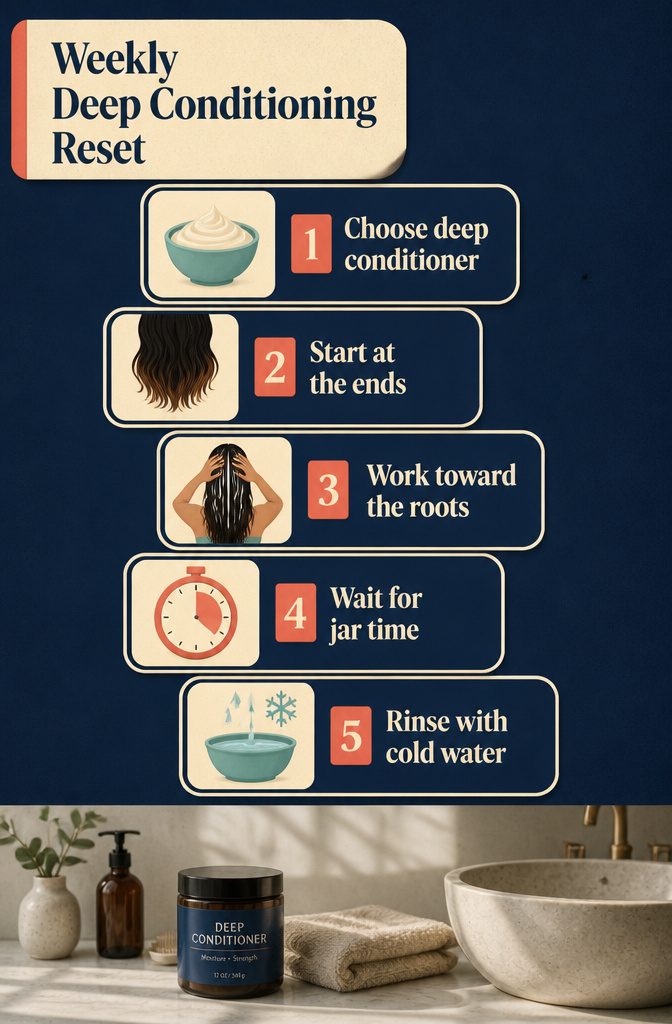
Deep conditioning works differently than the quick conditioner that goes on after shampoo.
It strengthens the cuticle and helps the strand hold onto moisture longer, which matters when you’re working with hair that dries out fast. I treat it as the weekly reset that keeps breakage down and softness up.
There are five conditioner types worth knowing: instant, cream-rinse, deep, moisturising, and protein. The first two are light and rinse out fast.
Deep and moisturising conditioners sit longer and deliver more. Protein conditioners rebuild structure, but some are strong enough that using them more than once a month can make hair stiff rather than resilient.
On wash day, I work deep conditioner from the ends up toward the roots.
The ends have been around longer and need it most. After the conditioner has sat for the time the jar recommends, a cold rinse seals the cuticle and locks everything in.
4. Add Cream or Lotion Where Your Method Calls for It
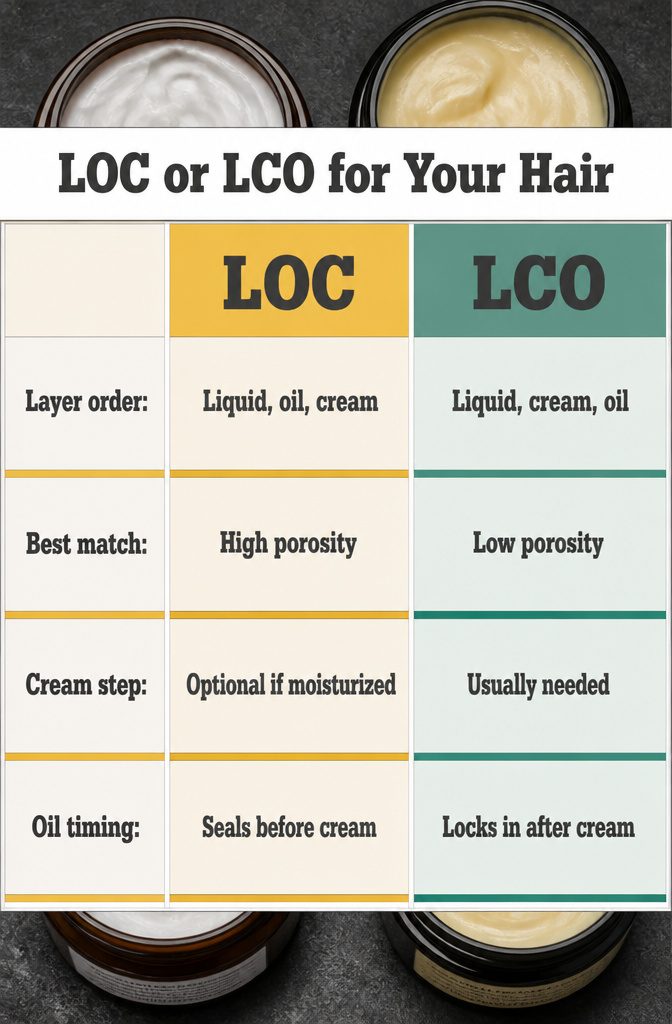
Once water is in, the order you layer cream and oil depends on your hair porosity.
LOC (liquid, oil, cream) suits high-porosity hair because the oil seals before the cream adds weight, while LCO (liquid, cream, oil) suits low-porosity hair that benefits from cream penetrating before oil locks everything down.
The cream step itself is optional in LOC if your hair feels moisturized without it, but low-porosity hair usually needs that extra layer to hold onto hydration.
For the cream, go for something that sinks in rather than sitting on top.
Shea Moisture Coconut & Hibiscus Curl & Shine Style Milk works well for lighter hold, As I Am DoubleButter Cream runs thicker if you need more weight, Mielle Organics Avocado Moisturizing Hair Milk balances the two, and TGIN Butter Cream Daily Moisturizer leans richer for coarser textures.
Apply it section by section, working from ends to roots so the driest parts get the most product.
5. Seal With Oil to Lock Moisture In
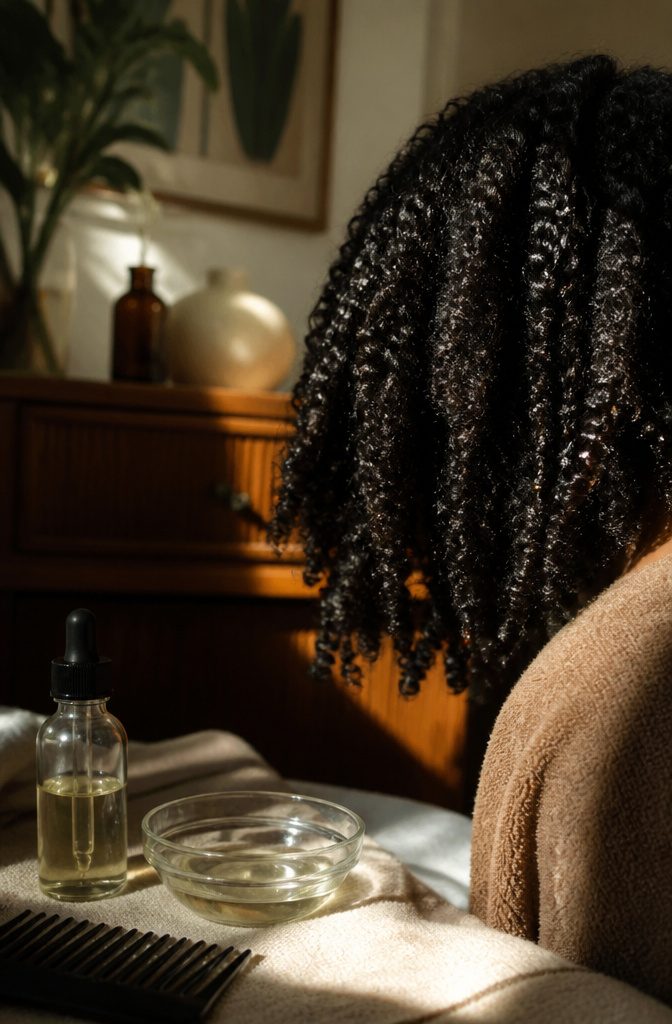
Oil seals moisture rather than adding it. If you apply oil to dry hair, you lock in the dryness instead of fixing it.
The oil forms a barrier, and once it sits on dry strands, water can’t get through. That makes the step order matter: hydrate first, then seal.
Three to four drops is enough. More than that and the oil starts to coat the hair, which weighs it down and makes fine hair look greasy.
A light seal is all you want, so use just enough oil to cover the water-based product underneath without drenching the strands.
Coconut oil is the most common choice, followed by jojoba, avocado, argan, castor and sweet almond.
I tend to reach for coconut or jojoba because they spread easily and disappear into the hair without residue. Black seed oil is particularly effective for locking in hydration if you need something that holds longer between washes.
6. Cover Hair at Night With Satin

Once you’ve applied moisturizer and oil, cover your hair with a satin bonnet before bed.
Cotton pillowcases pull moisture out of each strand while you sleep, and the friction leaves you with frizz by morning. Satin minimizes both, so the work you just put in actually lasts through the night.
The bonnet has to be satin or silk.
Anything rougher undoes what you sealed in. I keep one on the nightstand so it’s already there when I’m too tired to think about it.
If you wear protective styles during the day, those help too, as long as they’re not so tight they stress the hairline.
Box braids, twists and cornrows all reduce how much you’re manipulating your hair, which means less breakage and better moisture retention between wash days.
7. Repeat Daily to Weekly Depending on Your Hair
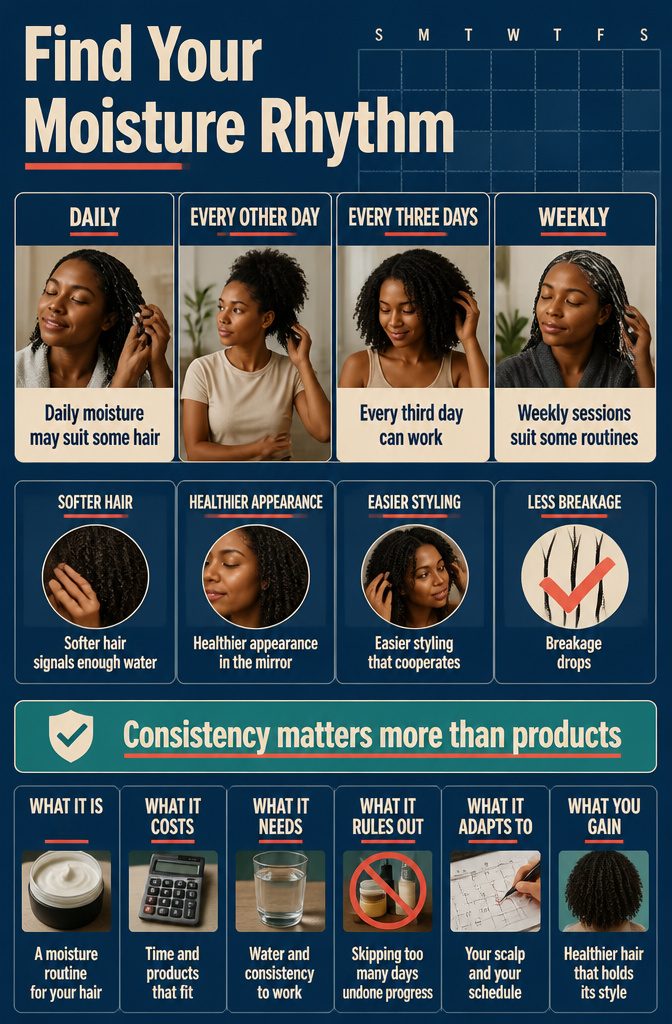
Once you have a routine that works, the question becomes how often to repeat it. Some hair needs moisture daily.
Other people find every other day or every three days works better, and some go a full week between sessions. Your scalp and your schedule decide that, not a universal rule.
The feedback loop is simpler than it sounds. Hair that is getting enough water feels softer when you touch it, looks healthier in the mirror, and cooperates when you style it.
Breakage drops. If none of that is happening, the routine itself might be sound but the frequency is off.
Daily moisture can feel like a lot of upkeep, but skipping too many days undoes the work you put in earlier that week. Consistency matters more than any single product you choose.
Why 4C Hair Dries Out So Fast
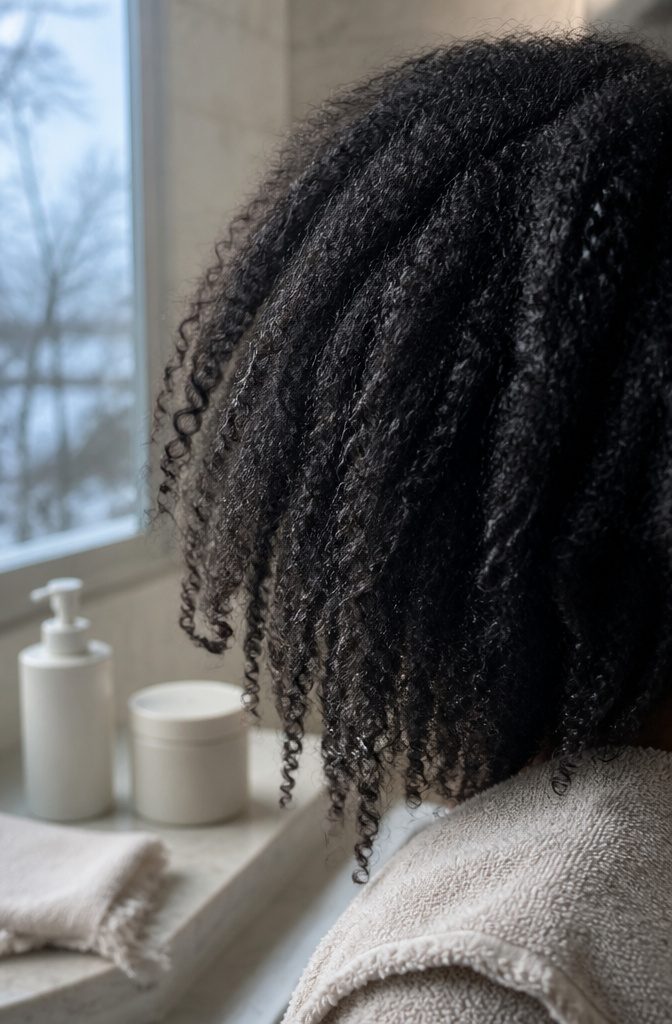
The tight curl pattern of 4C hair keeps natural oils stuck at the scalp, unable to slide down the strand the way they would on looser curl types.
Moisture evaporates faster than you can replace it, which is why hair that felt soft yesterday can feel brittle by lunch.
A few other habits make the problem worse:
- Overwashing strips what little oil managed to coat the strand, leaving hair drier than it started.
- Excessive heat from flat irons and blow dryers pulls water straight out of the cuticle.
- Sulfate shampoos break down natural oils faster than gentler cleansers.
- Product buildup blocks moisture from getting in at all.
- Cold or windy weather saps hydration from hair that already struggles to hold it.
- Skipping deep conditioning means you never restore what daily styling takes out.
- Failing to seal moisture in with oil lets water evaporate before it does any good.
Dryness leads directly to breakage. Hair that loses moisture becomes stiff, then brittle, then snaps.
Moisturizing the Scalp and Hair Under Protective Styles
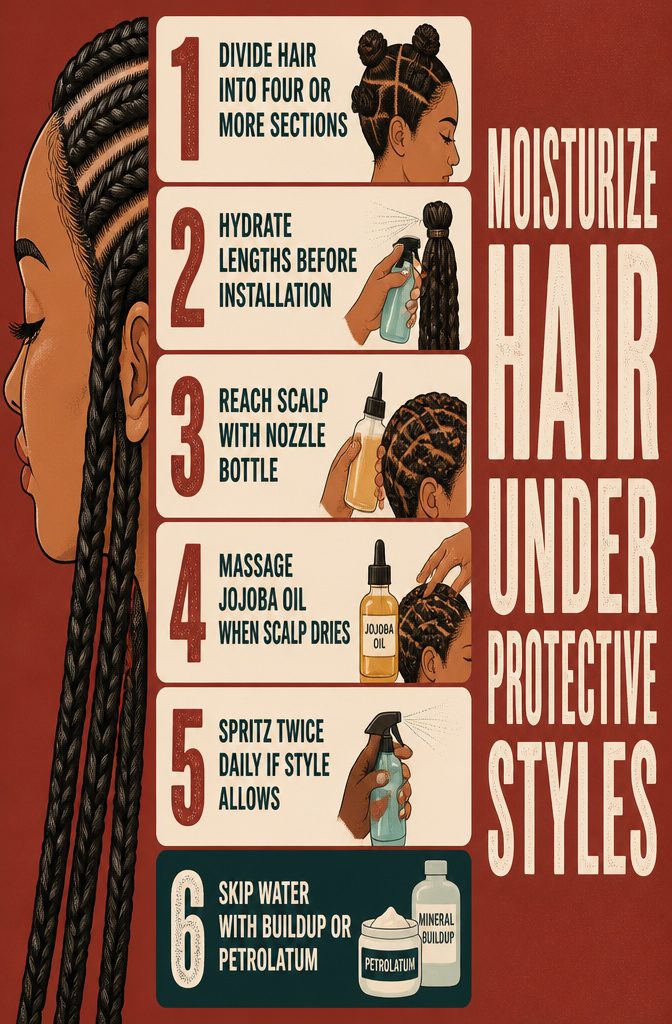
Protective styles keep tension off your hair, but they do not keep it moisturized on their own. The scalp and the braided or twisted lengths still dry out, and going weeks without attention means the hair underneath comes down brittle.
Moisturize your scalp as needed and hydrate the hair before you install the style and again while it is up.
Divide your hair into four or more sections depending on thickness, then apply a water-based spray or light moisturizer to the lengths that will be tucked away.
For box braids or cornrows already in place, use a nozzle bottle to reach the scalp with oil or a thin leave-in, working section by section so nothing gets missed.
If your scalp runs dry, massage a small amount of jojoba oil onto it regularly. Jojoba mimics sebum and keeps the scalp environment ready to supply oil down the hair shaft.
Spritz braids or twists with water twice a day if the style allows it, but skip this if you have mineral buildup or heavy petrolatum products that block water from getting in.
Frequently Asked Questions
How can I moisturize and seal fine hair without weighing it down?
Use a small amount of moisturizer and only 3–4 drops of oil.
Anything more starts to coat the strand, which flattens fine hair and makes it look greasy. A lighter cream such as Shea Moisture Coconut & Hibiscus Curl & Shine Style Milk keeps the hold low.
What is the best moisturizer for 4C hair?
Choose a cream that sinks into the strand instead of sitting on top.
As I Am DoubleButter Cream is thicker, Mielle Organics Avocado Moisturizing Hair Milk sits in the middle, and TGIN Butter Cream Daily Moisturizer is richer for coarser textures.
A shea butter base is a good ingredient to look for, and petrolatum or mineral oil should stay out of the top 5 ingredients.
Why is my 4C hair always so dry?
The tight curl pattern keeps natural oils at the scalp, so they cannot travel down the strand.
Habits can add to it: overwashing, heat styling, sulfate shampoos, product buildup, cold or windy weather, skipping deep conditioning, and not sealing in moisture with oil. Dry hair turns brittle and then breaks.
How do I hydrate dry Black hair and keep it that way?
Start on clean hair with water or a water-based moisturizer, then seal with 3–4 drops of oil, concentrating on the ends because they lose water fastest.
Deep condition once a week, and cover your hair with a satin bonnet at night. Oil never goes on first, since it locks in dryness instead of fixing it.
What is the LCO method for 4C hair?
LCO stands for liquid, cream, oil, applied in that order.
Water or a water-based product goes on first, a cream follows, and oil seals everything last. It suits low-porosity hair because the cream can sink in before the oil closes the strand off.
How often should Black hair be oiled?
Oil goes on as the last step each time you moisturize, so the schedule follows your routine, which can be daily, every 2–3 days, or weekly depending on your hair.
Apply it only after water and moisturizer, and keep it to 3–4 drops. If your scalp runs dry, massage in a small amount of jojoba oil regularly.