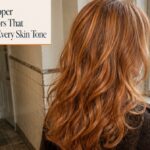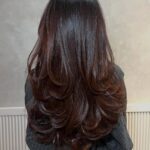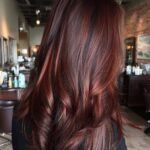
Black hair can go to dark or medium brown, or stay black, with a box dye and no bleach, in about 30–45 minutes of processing.
Anything brighter fails, since semi-permanent dye has no peroxide and can only darken. Lifting more than 3 shades belongs with a stylist, and the 48-hour allergy patch test is the step people skip.
What black hair can hold without bleach
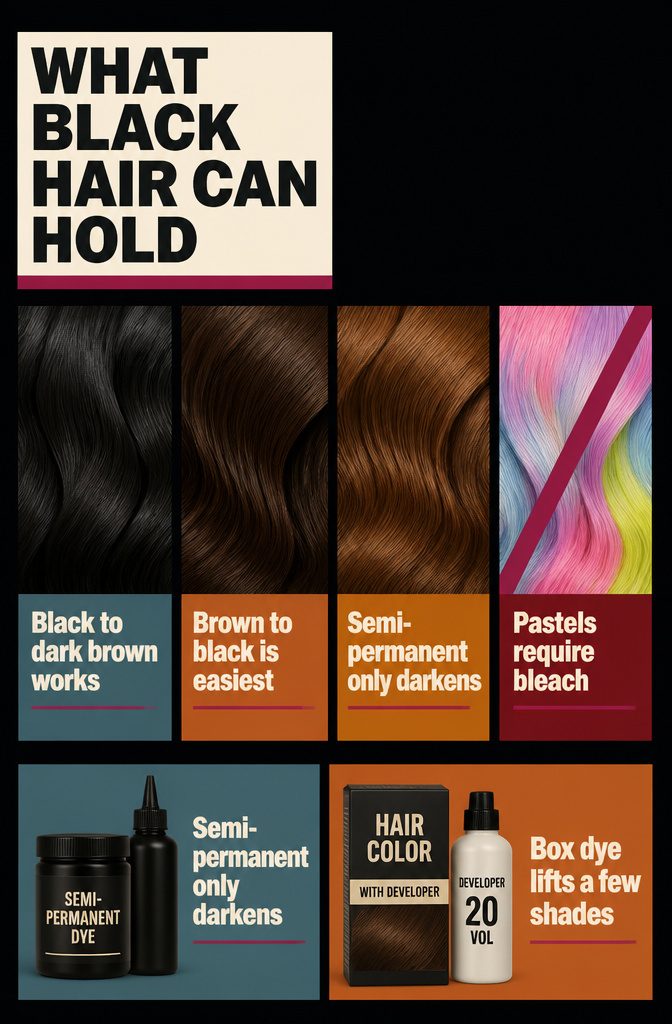
Black hair holds color at the same depth or darker. Black to dark or medium brown works, and brown to black is the easiest move of all, because the dye adds pigment instead of lifting it.
Brighter is where it breaks.
Semi-permanent dye has no peroxide, so it can only darken, and vivid shades barely register on black strands. The rule is blunt:
There’s no way to get pastel or brightly colored hair without bleaching your hair.
— wikiHow
So I’d skip pastels and neons unless you’re willing to bleach. Virgin hair can lift a few shades with a box dye that includes developer, but anything lighter or brighter than that needs bleach.
1. Check your hair history and pick a shade
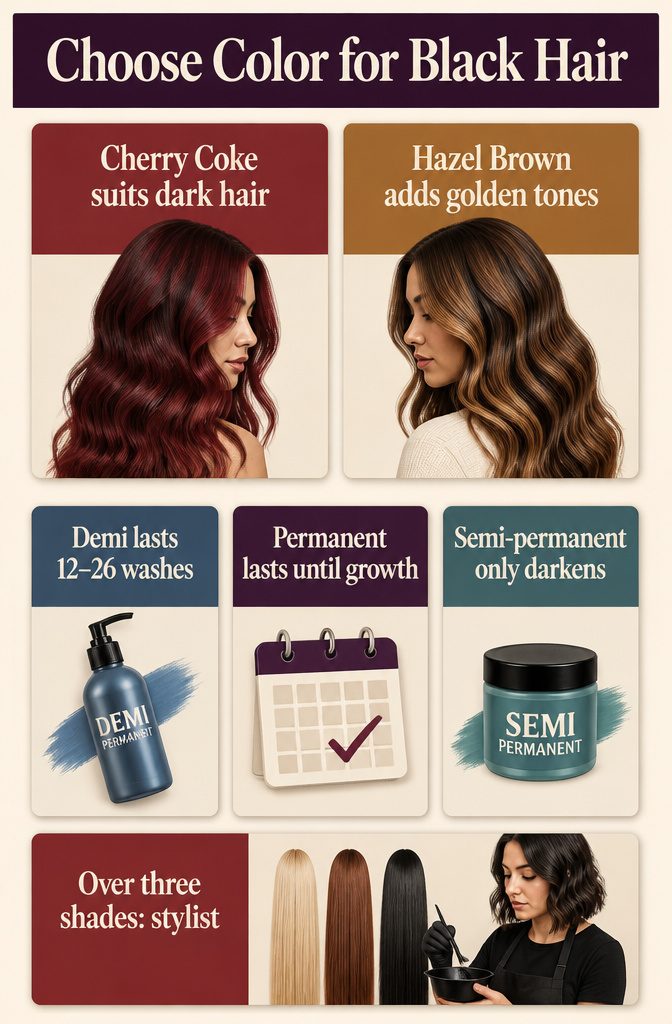
Natural black shows little vivid color, so choose a shade that works with the darkness.
Cherry Coke (a deep red) and Hazel Brown (brown with golden undertones) are tints formulated for dark hair. For red, purple or blue, I’d reach for Splat or Manic Panic, which are also made for dark bases.
For a slight lift, go demi-permanent or permanent. Demi lasts 12–26 washes, while permanent lasts until it grows out.
Semi-permanent has no peroxide, so it only darkens. An ash tone 1–3 shades lighter than your own keeps brassiness down.
Blonde or pre-colored hair going black, or any lightening past 3 shades, belongs with a stylist.
2. Run an allergy patch test 48 hours before
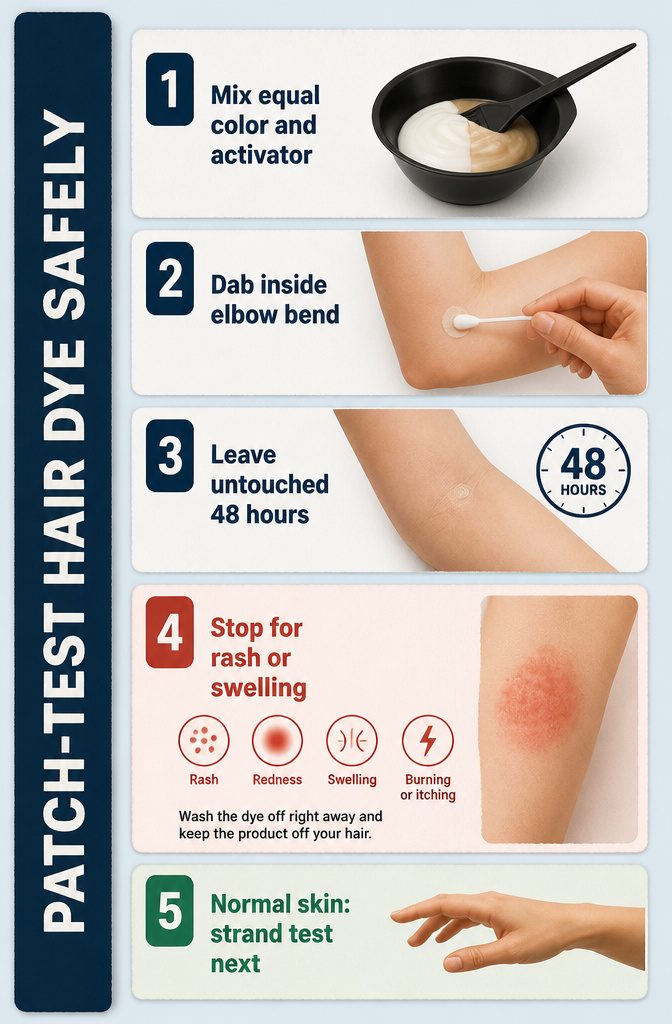
Allergic reactions to hair dye are rare but can be severe, and this test comes before the strand test and before any dye touches your head. Even if you color often, I would not skip it.
- Mix small, equal amounts of color and activator in a non-metallic bowl, using a plastic spoon.
- Dab a little of the mixture on the inside of your arm near the bend of the elbow, using a cotton ball or swab.
- Let it dry, then leave it alone: do not wash it off for 48 hours.
- Check the spot. Rash, redness, swelling, burning or itching means stop. Wash the dye off right away and keep the product off your hair.
- If the skin looks and feels normal, move on to the strand test.
3. Test a hidden strand to confirm the result
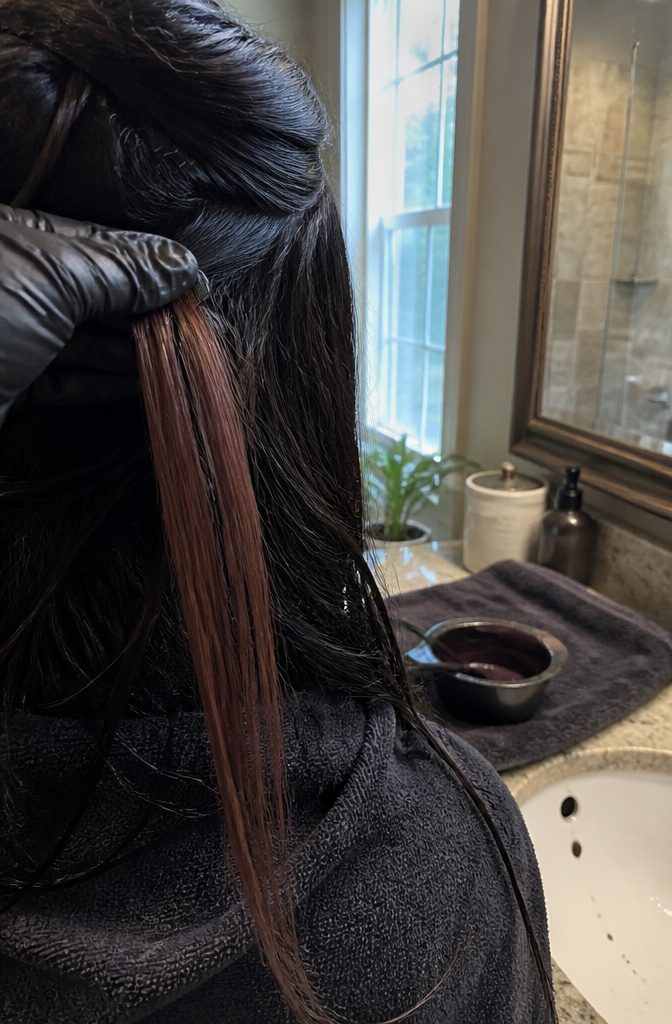
Choose a small section hidden underneath the top layer of your hair, so a surprise never shows. Put on gloves, apply a small amount of dye, and follow the timing printed in the kit.
Rinse after the full recommended processing time, then look at the color. Judge the shade only after that full time and rinse, not partway through.
Results vary from one head of hair to the next, so the strand is the only preview of your shade that counts. If it disappoints, adjust the formula or the processing time before you touch the rest of your head.
4. Shampoo 12–24 hours before, no conditioner
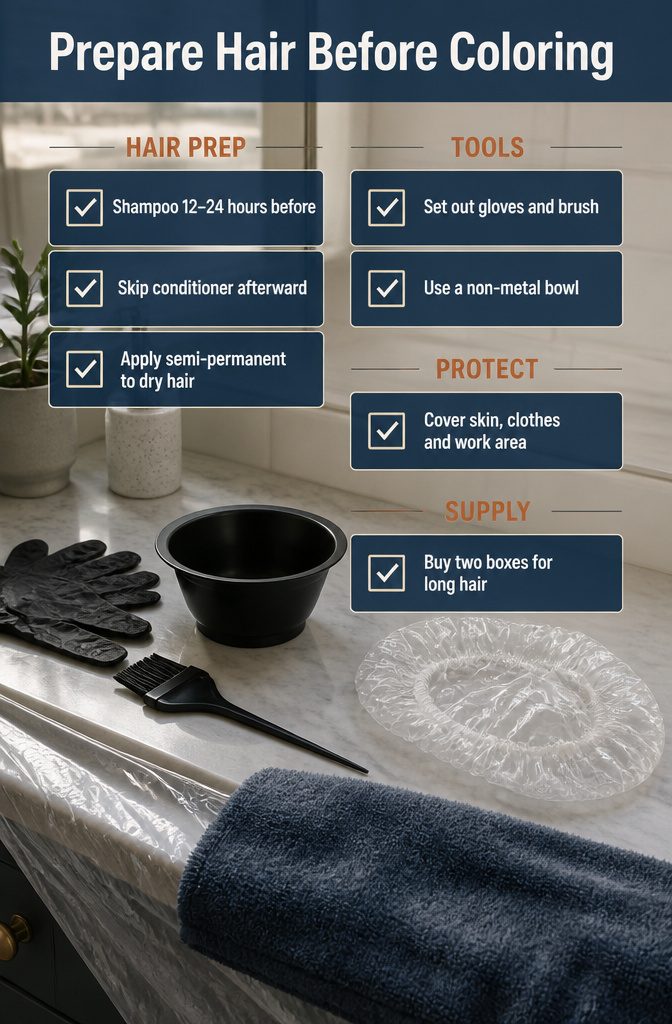
Shampoo 12–24 hours before you color, then leave the conditioner out. Conditioner leaves a film that can get in the way of the dye, so apply semi-permanent color to freshly washed, dry hair with nothing added after the shampoo.
Set out your tools before you open the box: gloves, an applicator brush, a non-metal bowl, and a shower cap or plastic grocery bag.
Follow the kit’s instructions closely, and cover your skin, clothes and work area first. Dark dye stains fast, and an old towel over your shoulders costs nothing.
Buy two boxes if your hair falls below your shoulders or is coarse, curly or coily. Running short halfway through is a worse problem than having a little left over.
5. Divide into sections and apply dye from roots to ends
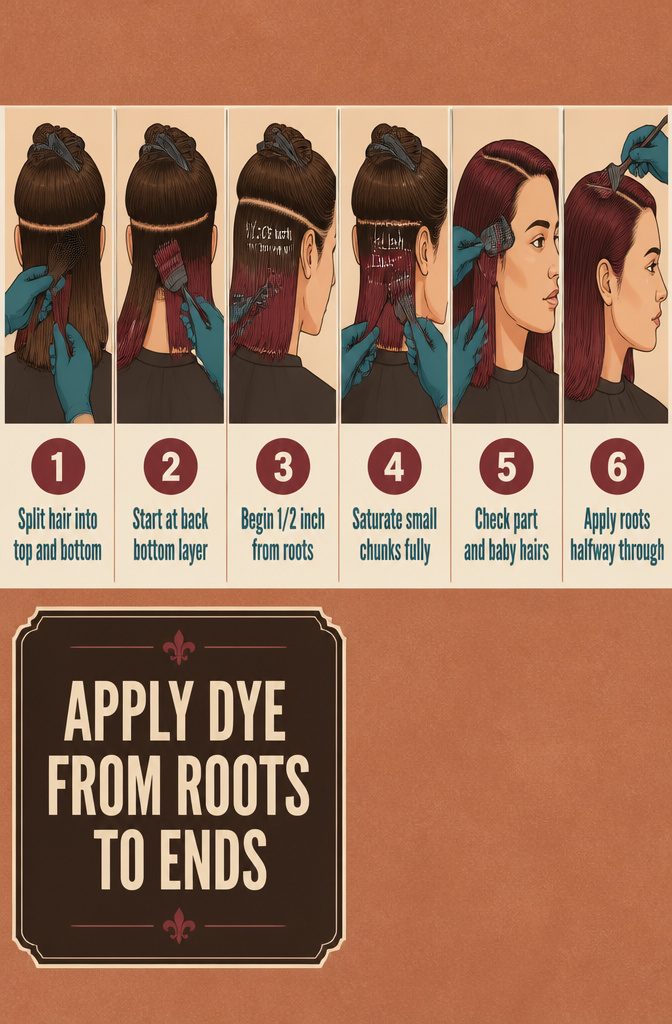
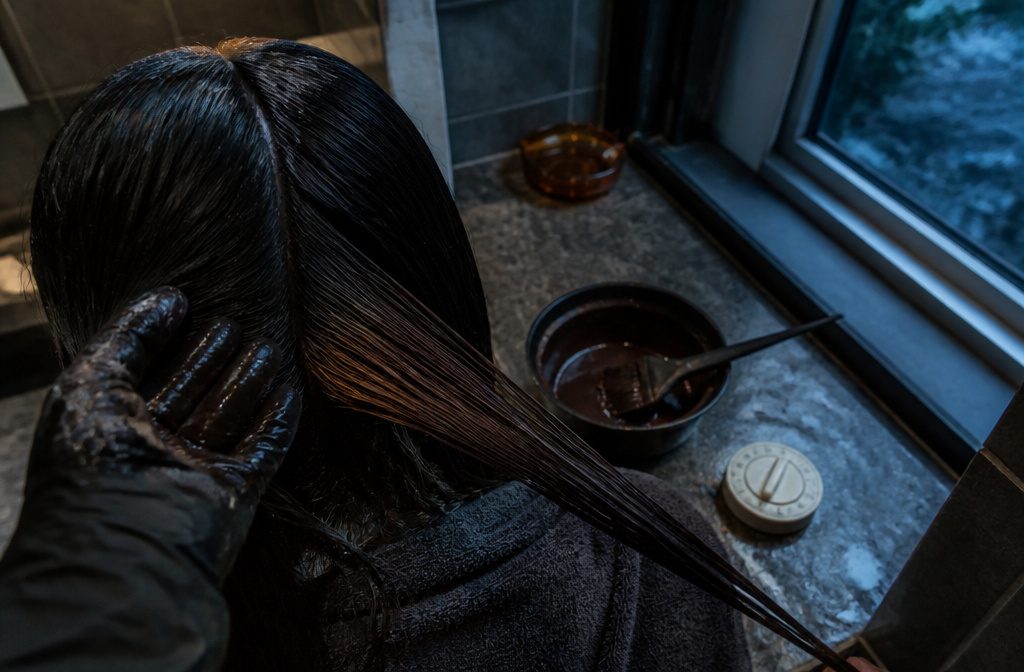
- Put on gloves, then use a brush to split your hair into a top layer and a bottom layer. Clip the top layer up.
- Start at the back of the bottom layer, since hair tends to run lighter at the crown. Apply dye about 1/2 inch (1.3 cm) from the roots, then blend it toward the ends with your fingers or an applicator brush.
- Work one small chunk at a time, adding dye as needed. Saturation matters more than speed.
- Release the top layer and repeat, chunk by chunk.
- Check your sideburns, baby hairs, part and cowlicks before you stop. I’d go over these last, because they’re the spots people actually see.
- Halfway through the processing time, apply dye to the roots. Heat from your scalp makes color develop faster there.
6. Let the color process 30–45 minutes
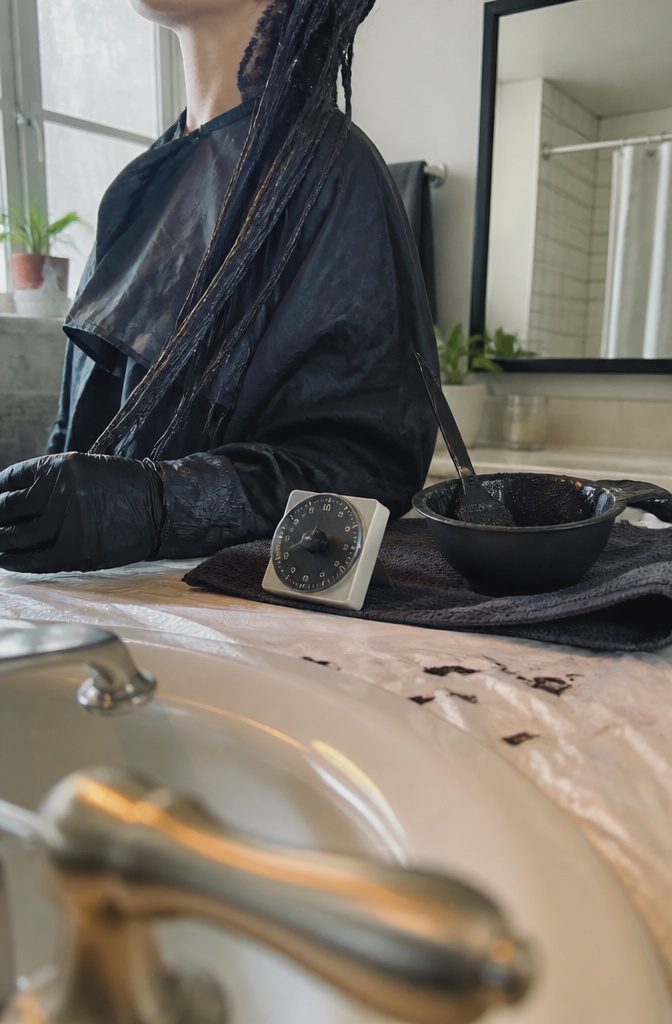
Most conventional dyes ask for 30–45 minutes on the hair, but your package has the final word.
Check the processing time printed on the box and set a timer, since brands differ and going over or under changes how the color looks. Start the clock once the last section is coated, not when you begin applying.
A conditioning semi-permanent dye is looser about timing.
It may be left on longer than a conventional formula, and about 10 minutes of gentle heat helps the color settle. Read that product’s own directions before stretching the time.
7. Rinse with cold water until it runs clear
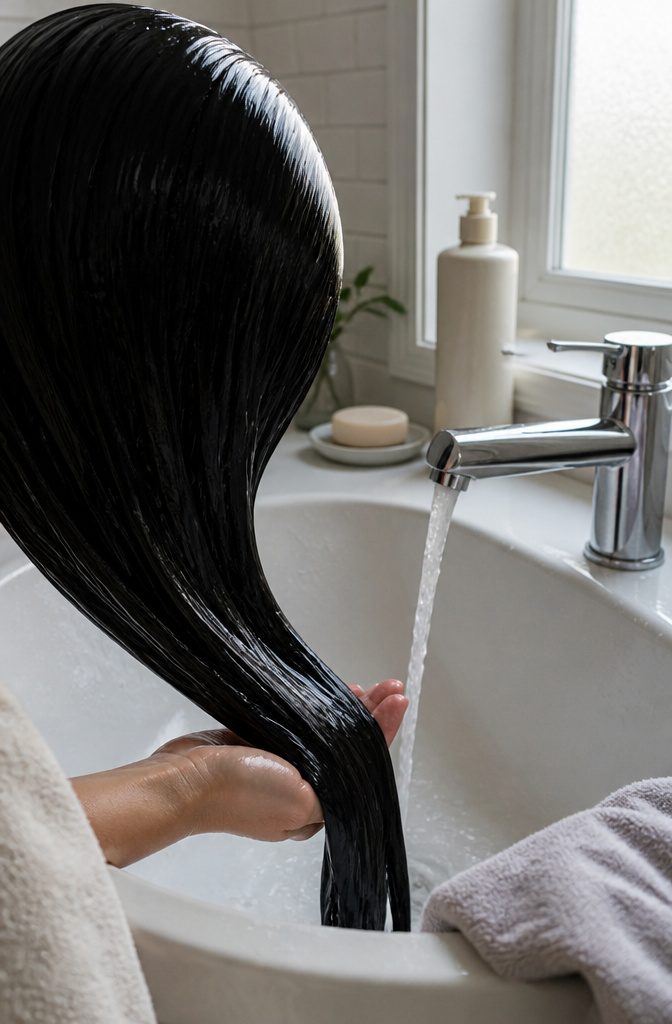
Once the processing time is up, rinse with cool water until it runs completely clear.
Cold is better than lukewarm here, because cold water seals the cuticle, and a sealed cuticle holds the color inside the strand instead of letting it slip out.
Dark dye can keep tinting the water for a while, so don’t stop at the first sign of improvement.
Next, work in a color-safe conditioner (many kits include one) and leave it on for 2–3 minutes.
Finish with another cool rinse to close the cuticle again. I’d also skip shampoo for at least a few days, since stripping the surface early is the quickest way to fade a fresh shade.
8. Wash 2–3 times a week with color-safe products
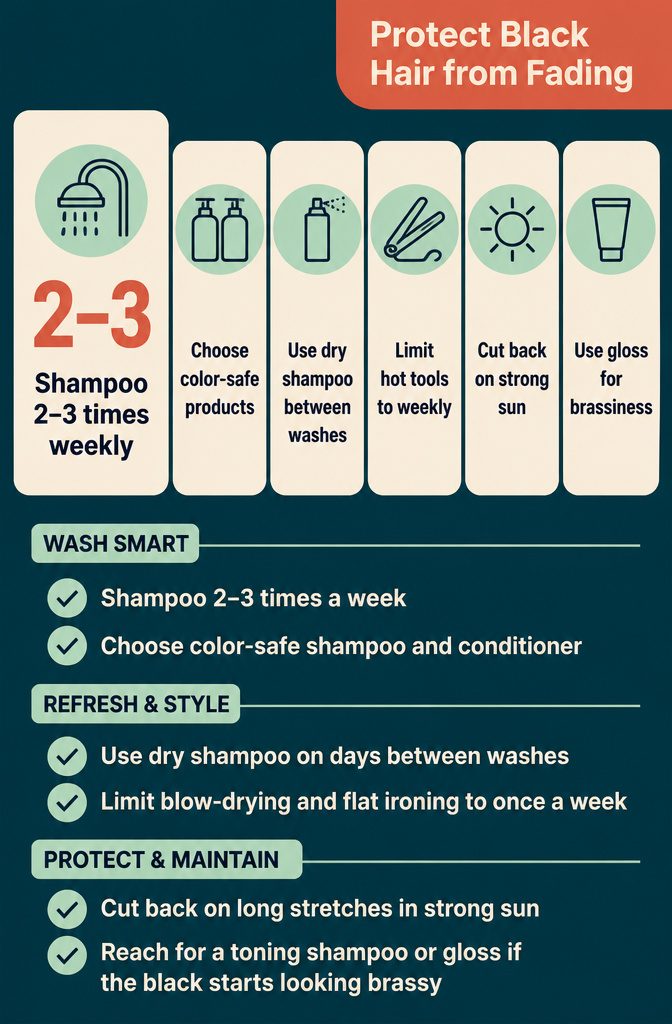
Fading comes from washing, heat and sun, so I set the routine up before the first wash.
- Shampoo 2–3 times a week, no more. Less washing keeps the black from fading and keeps moisture in your hair.
- Choose a shampoo and conditioner made for color-treated hair. They’re formulated to preserve color.
- Use dry shampoo on the days between washes to keep roots looking fresh.
- Limit blow-drying and flat ironing to once a week. Styled hair often looks better a day or two later anyway.
- Cut back on long stretches in strong sun, which dulls color.
- Reach for a toning shampoo or gloss if the black starts looking brassy.
Temporary and natural options worth trying
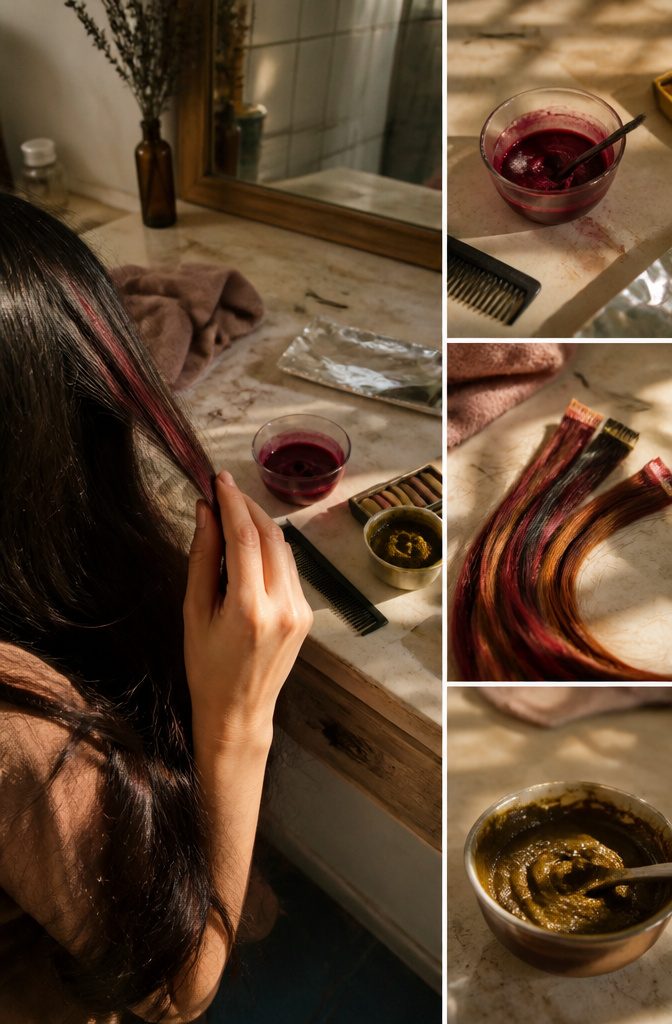
Pick by how long you want the color to last.
- Hair chalk is the quickest test of a shade. Set it with heat styling or hairspray, and it comes out at your next wash.
- Temporary dye lasts a few washes. I’d start here for a first try at color.
- Extensions add color with no product on your own hair at all.
- Kool-Aid sets in a few hours. Wrap the colored sections in foil so it doesn’t bleed.
- Beet juice mixed with coconut or olive oil gives a red tint. Cover it and leave it a few hours.
- Henna paste, made from henna plant leaves, also sits a few hours.
- Coffee or tea rinse: 15–20 minutes. Gelatin: about 30 minutes.
- Rosemary and sage rinse: at least 30 minutes, and it darkens rather than lightens.
- Lemon juice and sunlight, apple cider vinegar, or cooled chamomile tea are the gentle lightening options.
When to see a professional instead
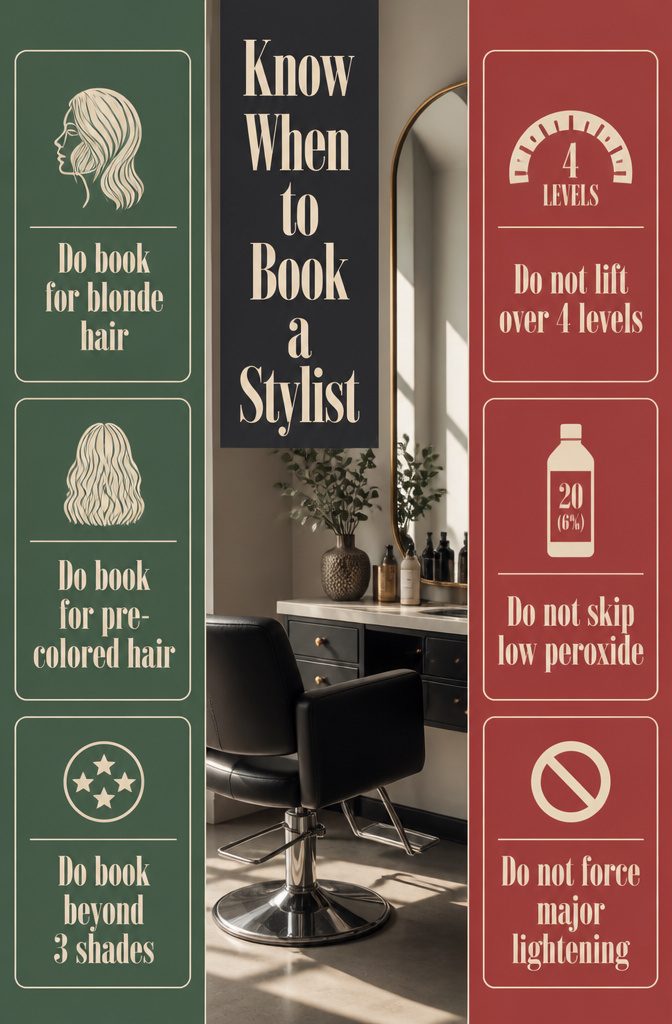
Dyeing blonde or pre-colored hair black is a salon job.
Previously colored hair may need color correction, or even bleach, before the shade takes evenly, and that is not a bathroom-sink repair. Wanting to lighten more than 3 shades is another reason to book a stylist.
If you stay home, keep the lift small. I’d pick a dye that lightens hair no more than 4 levels, and pair it with a low-peroxide developer such as 20 (6%), which is gentler on strands that are already dark and dry.
Dyeing black hair without bleach works best when the box asks for modest change. When the look in your saved photo needs more, a professional will get you there with less damage.
How to fix brassiness after lightening
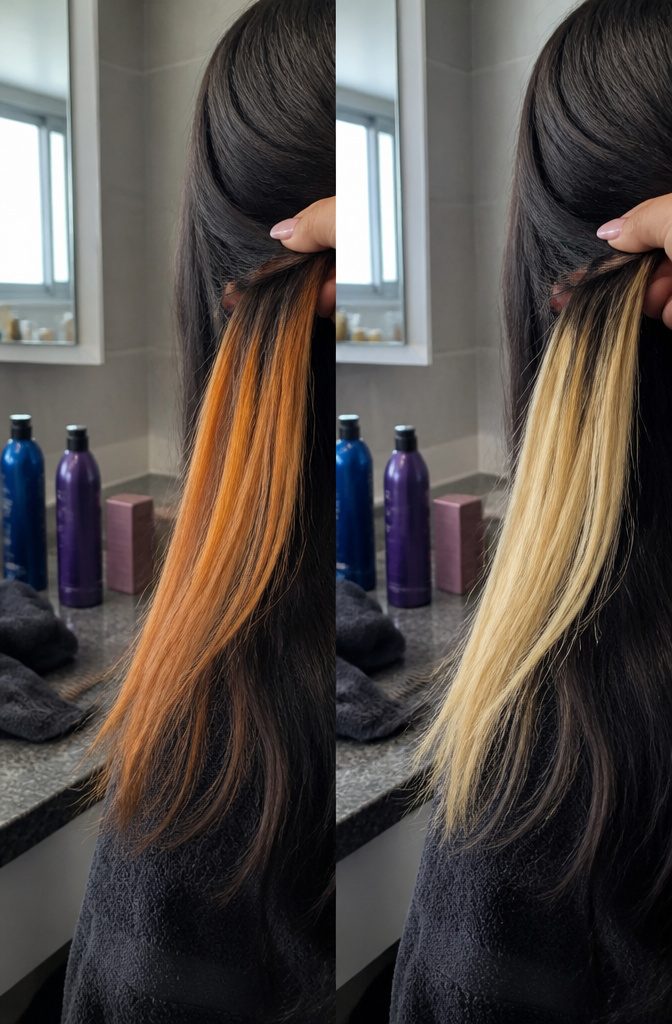
Black hair hides red and orange pigment, and lifting it even slightly pulls that warmth forward. Orange means the hair stopped at the red-orange stage; yellow means it lifted further.
Blue-tinted shampoo cancels orange, the usual problem on lifted black hair, while purple cancels yellow and suits lighter, golden results. Pick blue for orange, purple for yellow.
When shampoo won’t budge the brass, a gloss or toner deposits the opposite tone in one sitting.
Read the before-and-after chart on the box before choosing a shade, since it shows how the dye reads on dark hair. If the tone looks off and you can’t name it, I’d book a stylist rather than guess.
What can go wrong and how to avoid it
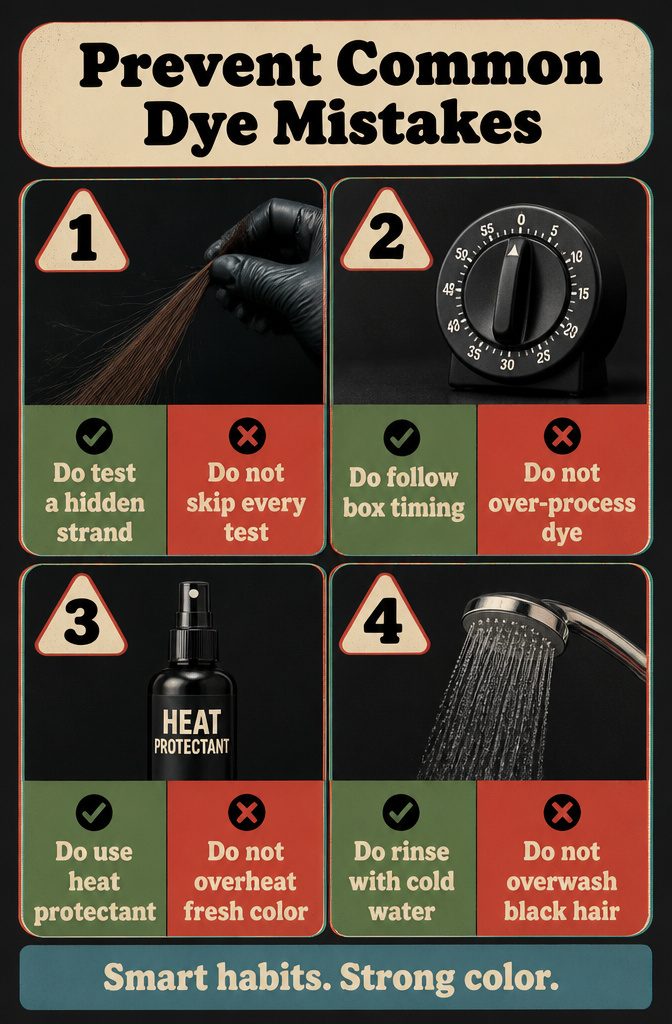
Most damage from box dye traces back to four habits, and each has a simple fix.
- Skipping the test: a dab on a hidden strand shows uneven color or a wrong shade before it lands on your whole head. Do it every time, even with a brand you have used before.
- Leaving dye on too long: extra minutes over-process the hair, leaving it over-porous, dry and prone to breakage. Follow the box timing exactly and set a timer.
- Too much heat: hot tools on fresh color dry out strands further. I’d air-dry when possible and use a heat protectant on the days you can’t.
- Overwashing: frequent shampooing fades black faster. Switch to color-safe shampoo and conditioner, rinse cold to seal the cuticle, and add a color-depositing shampoo between full washes.
Frequently Asked Questions
Do you have to bleach black hair to dye it?
No, not if you stay at the same depth or go darker.
Black to dark or medium brown works without bleach, and brown to black is the easiest move. Pastels, neons and any big jump in lightness need bleach, because dye without peroxide can only add pigment.
Can I dye black hair red without bleach?
Yes, but expect a deep, rich red rather than a bright one.
Virgin black hair can take a red tint made for dark bases, such as Cherry Coke, Splat or Manic Panic. A brighter red on black strands, or on hair that’s already been colored, needs bleach first.
Can you lighten black hair with box dye?
Only a little.
Virgin black hair can lift a few shades with a box dye that includes developer, and a low-peroxide 20 (6%) developer is gentler on dark, dry strands. Lightening past 3 shades, or on pre-colored hair, is a job for a stylist.
What brown hair dye is good for black hair?
Pick a brown formulated for dark hair, like Hazel Brown, a brown with golden undertones.
If you want a slight lift, choose a demi-permanent or permanent dye in an ash tone 1–3 shades lighter than your own to limit brassiness. Semi-permanent brown only darkens, so it adds little on black.
What are the steps for dyeing black hair at home without bleach?
Run an allergy patch test 48 hours ahead, then test a hidden strand.
Shampoo 12–24 hours before coloring with no conditioner, apply the dye in sections starting about 1/2 inch from the roots, and leave it on for the time printed on the box, usually 30–45 minutes.
Rinse with cool water until it runs clear, then use a color-safe conditioner.
How do I care for black hair after dyeing it?
Wash only 2–3 times a week with shampoo and conditioner made for color-treated hair, and skip shampoo for the first few days.
Dry shampoo covers the days between. Limit heat styling to about once a week and cut back on long stretches in strong sun, since both dull the color.