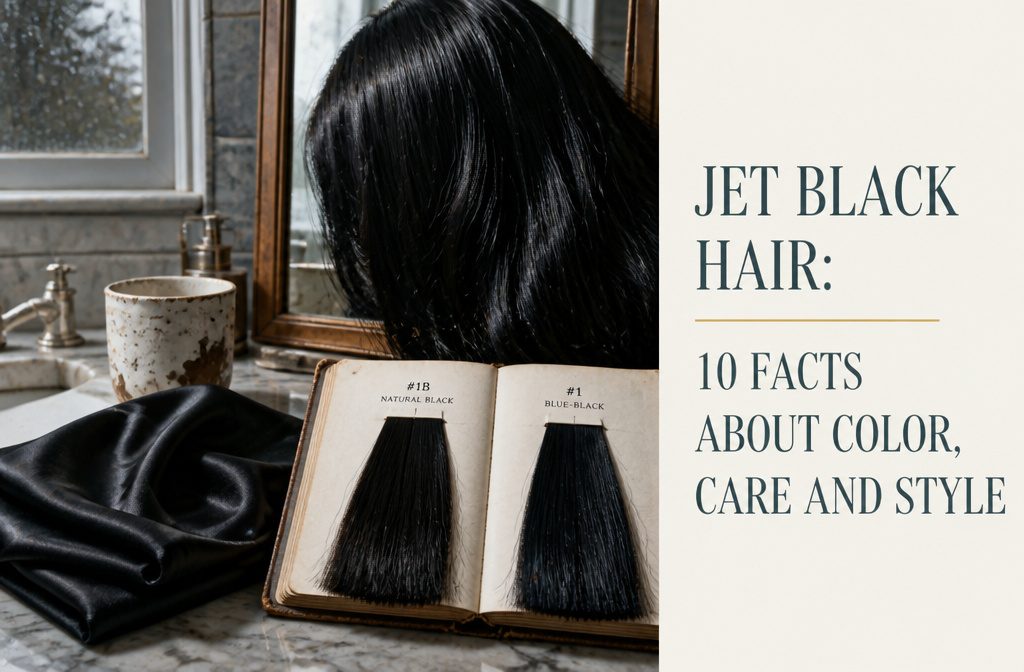
Choose natural black (#1B) unless you want drama: it suits 90% of dark-haired people, while the cooler, blue-violet #1 shows no brown at all. Moving from #1B to #1 is easy, but going back takes bleach, color remover and a colorist.
What Jet Black Hair Is
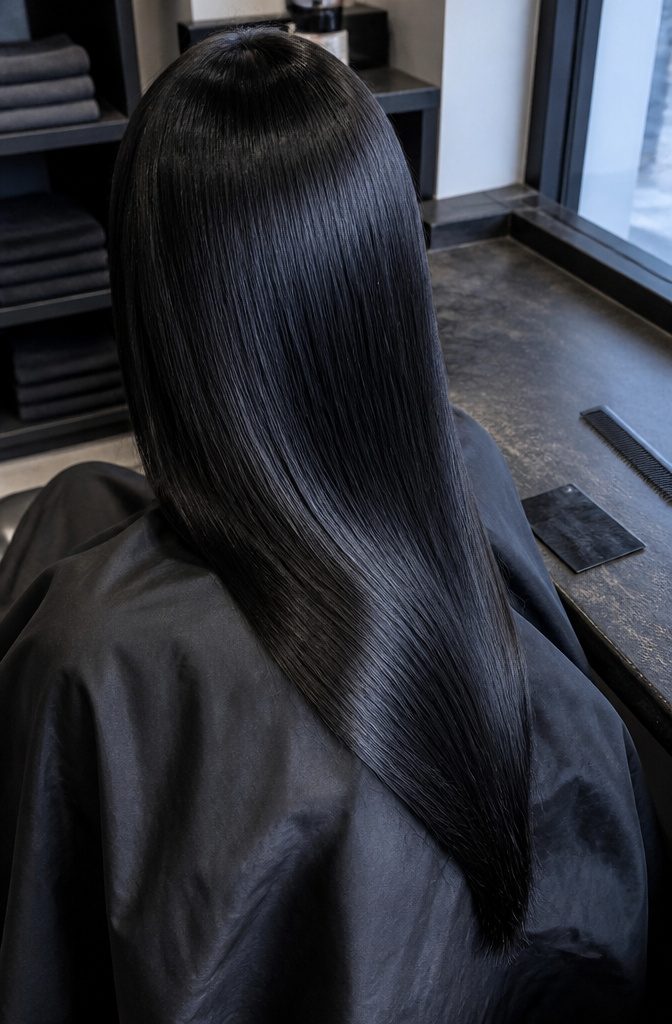
Jet black is the deepest black on the color chart: a cool-toned, fully saturated black with blue or violet undertones and no visible brown.
You will see it sold as raven black, blue-black, ink black or onyx black, and in extension terminology it is simply #1. It carries the highest pigment load of any black, so it absorbs almost all light.
That is why it looks solid, opaque and glossy instead of soft. I treat the cool cast as the real test: if a swatch leans warm or shows brown at the edges, it is a softer black, not jet.
How Jet Black Differs From Natural Black
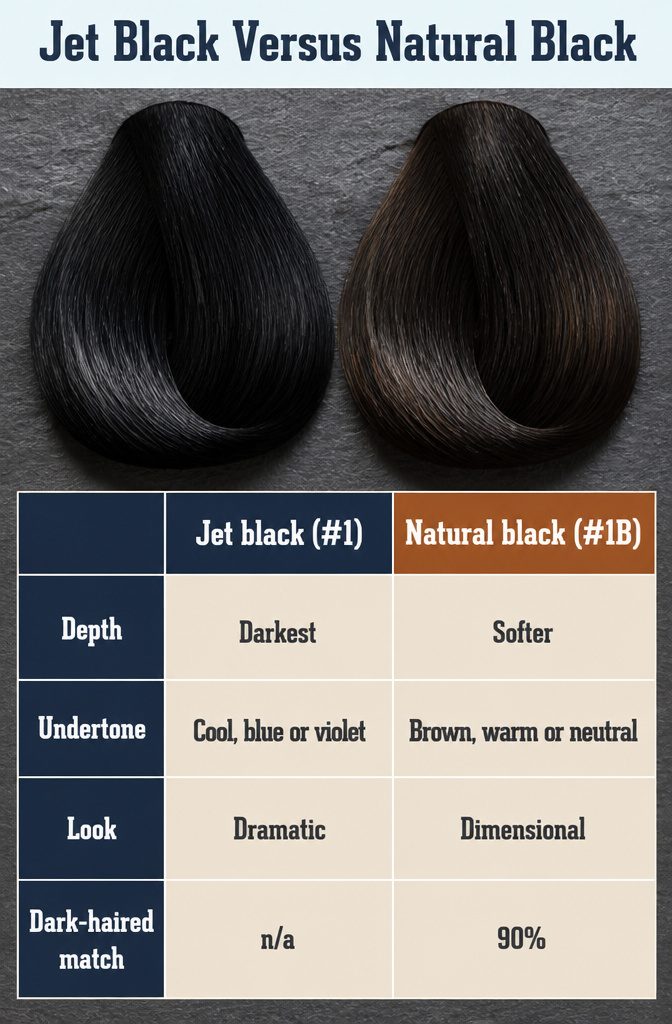
Jet black (#1) is the darker, cooler shade, and natural black (#1B) is the softer one. Natural black reads browner with more dimension, while jet black leans blue or violet and looks far more dramatic.
| Jet black (#1) | Natural black (#1B) | |
|---|---|---|
| Depth | Darkest | Softer |
| Undertone | Cool, blue or violet | Brown, warm or neutral |
| Look | Dramatic | Dimensional |
| Matches dark-haired people | n/a | 90% |
For a first black dye job, or if you plan to add extensions, I’d go with natural black.
It matches 90% of dark-haired people and blends more easily. Pick jet black only when you want the drama.
How Lighting Changes What You See
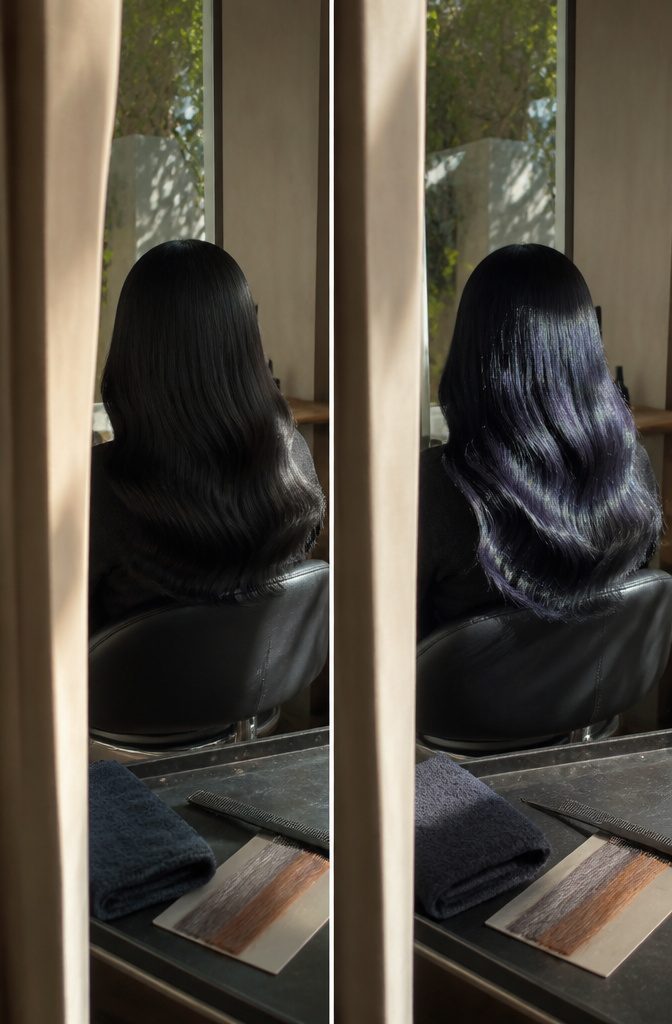
Indoors, jet black reads as solid, deep and opaque.
In sunlight it picks up a bluish sheen, and under evening light or a camera flash it turns very dramatic. Studio light makes it reflective and glossy, and when the hair is healthy it can look almost liquid.
Natural black plays by looser rules.
Indoors it reads as a deep brown-black, and in sunlight warm brown tones come up. Shade settles it into a soft, natural deep black, and studio light gives it dimension and a subtle shine instead of a mirror finish.
If I were choosing between the two, I’d compare them in direct sunlight, because that’s where they separate most: cool blue on one side, warm brown on the other.
Whether Jet Black Occurs Naturally
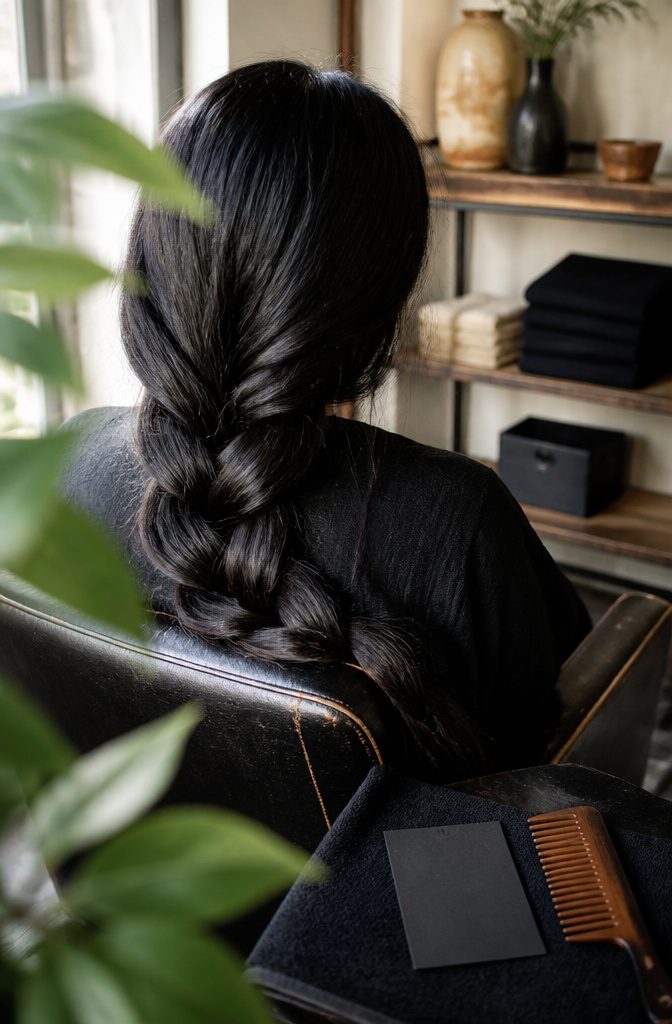
Jet black occurs naturally. It is an ordinary hair color across Africa and Asia, and it turns up more often in parts of America and Southeast Asia too.
The shade comes from melanin the follicle deposits. In jet black, that melanin is oxidized, which is why the strand reads as a very deep brown rather than a flat black.
Dyed jet black works differently. The color is fully saturated pure pigment, with no shifting of tone and high contrast.
I’d say natural jet black is a deep brown, while dyed jet black is built to hold no brown at all. Lifestyle changes won’t move your shade; only bleach or dye will.
Who Jet Black Hair Suits Best
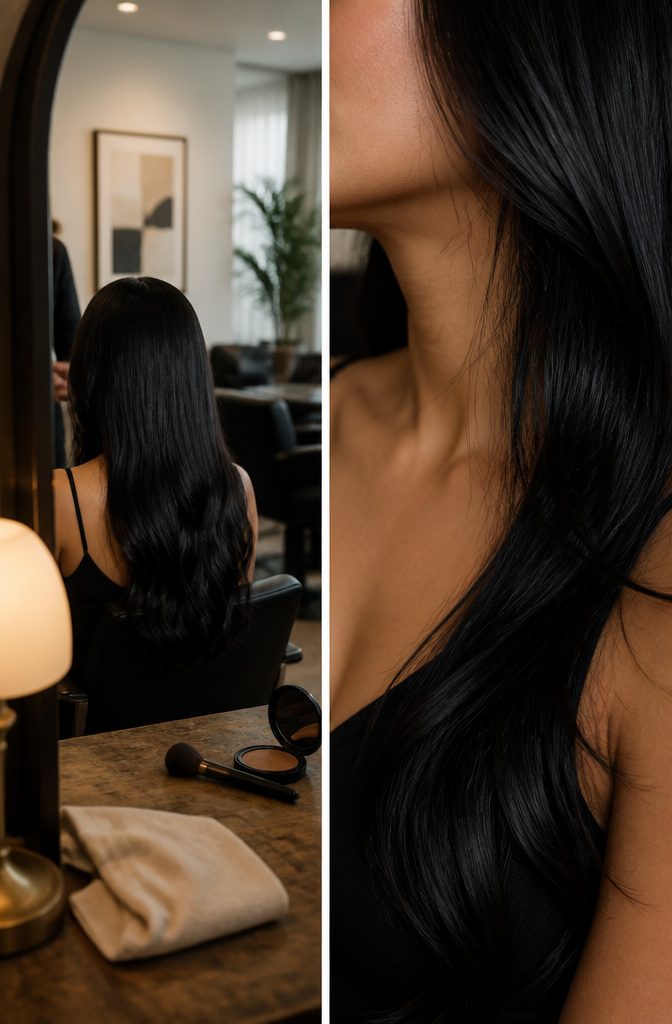
Jet black flatters cool-toned skin, olive undertones and medium-to-deep complexions best, and sharp features hold up well against it. It also suits anyone who wants strong contrast on purpose.
Very warm or golden undertones, redness-prone skin and fair porcelain skin are harder fits, and on porcelain the color can look stark. Dark shades reflect little light, so hair can read heavy and flat.
None of that rules it out.
Makeup and styling can balance the contrast on any complexion, such as a softer lip on pale skin or loose texture instead of a blunt line. Still, I’d put your own preference ahead of any chart.
Straight Styles That Work With Jet Black
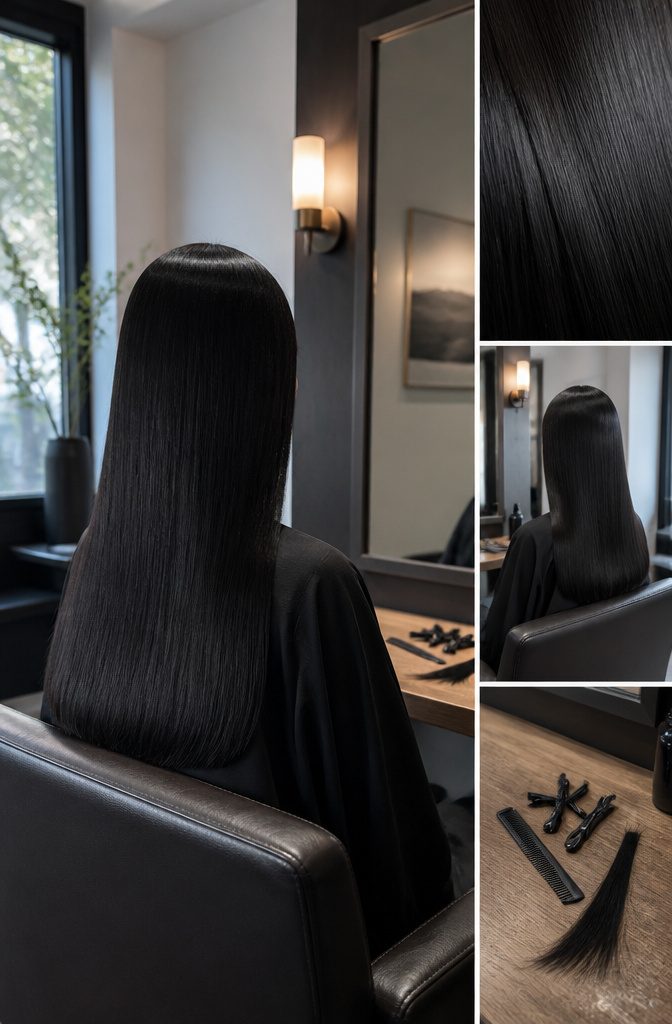
Straight jet black rewards clean geometry, smoothness and sharp cuts. These are the styles I’d bring to a stylist by name:
- Blunt bob: the sharp edge becomes the focal point and emphasizes the jawline. This is the cut jet black flatters most.
- Long, one-length cut: blunt ends keep the line crisp.
- Controlled layering: keep it minimal, because heavy layers diffuse the impact and weaken the sleek silhouette.
- Long center part: it creates symmetry and elongates the face.
- Low ponytail or sleek bun: minimal and authoritative, right for professional and formal settings.
- Half-up: it only works if crown volume stays controlled and tension is balanced.
Smoothness should come from alignment, not product weight. A lightweight finisher beats a heavy serum, since shine should look glass-like, never oily.
How I Keep Sleek Jet Black Hair Sharp
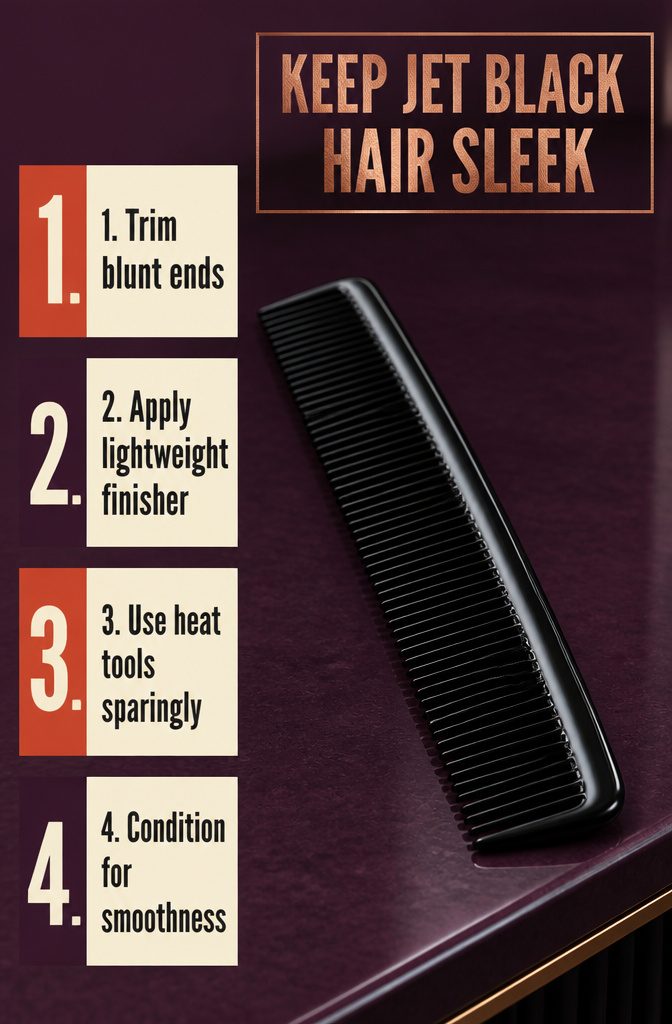
Sleek jet black hair depends on a precise cut, a smooth surface and controlled shine.
Blunt ends and long one-length styles show it best, and I’d skip heavy layering, which diffuses the silhouette. Trims every six to eight weeks keep those ends sharp.
Smoothness should come from alignment, not product weight.
A lightweight finishing product beats a heavy serum because it adds reflection without flattening movement. Repeated high heat disrupts the cuticle and dulls shine, so use tools sparingly at controlled temperatures.
Over-washing strips oils and under-washing leaves buildup, so keep moisture balanced and condition for smoothness, not volume. Sleep on a low-friction surface, and go easy on repeat processing, since dryness and uneven texture show fast on black.
Adding Curls, Highlights and Color Variations
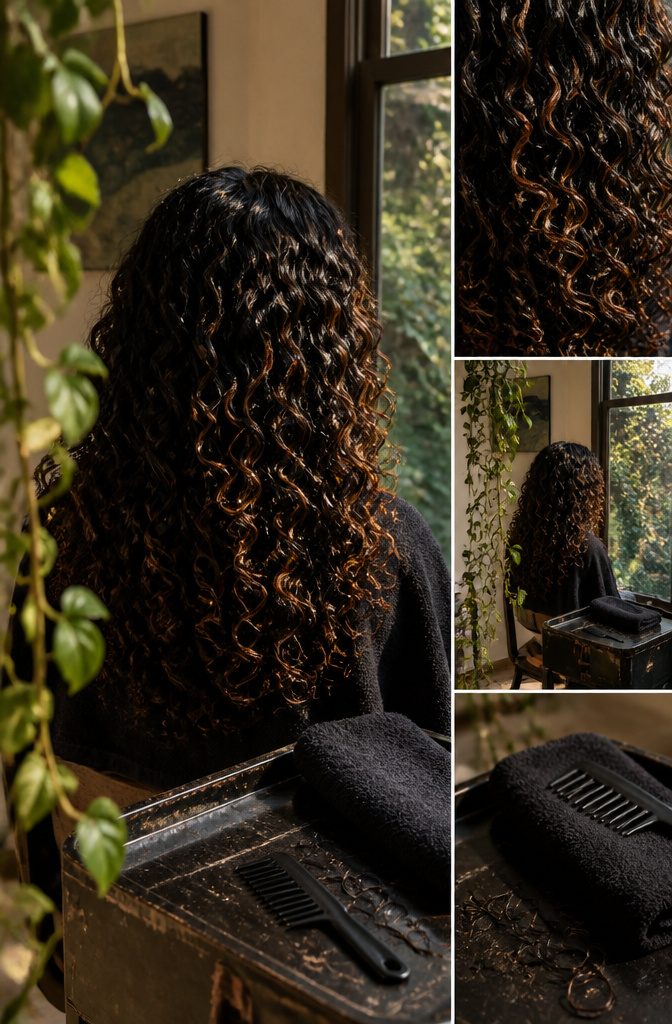
Five ways to break up solid black without a full lightening job:
- Warm highlights: Jet black reflects little light, so it can look heavy and dull. Warm highlights glow in the sun and make the color look brighter and younger. Only some strands get bleached and dyed, which is gentler than going lighter all over.
- Money pieces: Two warm, face-framing strands put the brightness next to your skin. If you want the smallest bleach commitment, I’d pick these over full highlights.
- Jet black curly hair: Curls add movement and shape that flat black lacks.
- Jet blue-black: This keeps the depth and shifts the cast cooler instead of lighter.
- Curtain bangs: Soft, parted bangs add shape around the face with no color work.
Matching Jet Black Extensions to Your Hair
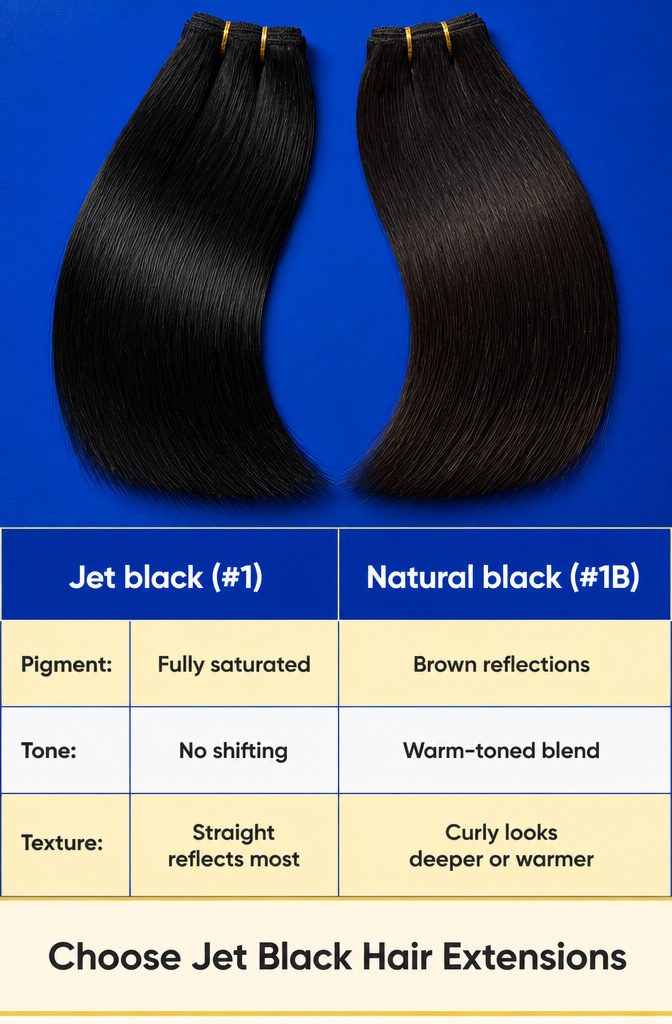
Match tone, density and texture. Miss one and the break in reflection shows, and root bulk or uneven density makes it worse.
For dyed or extremely dark hair, I’d choose jet black (#1): fully saturated pigment, no shifting tone, maximum contrast.
When you’re unsure, buy natural black (#1B). It suits most brunette-black and warm-toned dark hair, and its brown reflections blend realistically.
Texture shifts the result too. Straight hair reflects the most light, wavy hair softens undertones, and curly hair can look deeper or warmer than the swatch.
How to Lighten Jet Black Hair
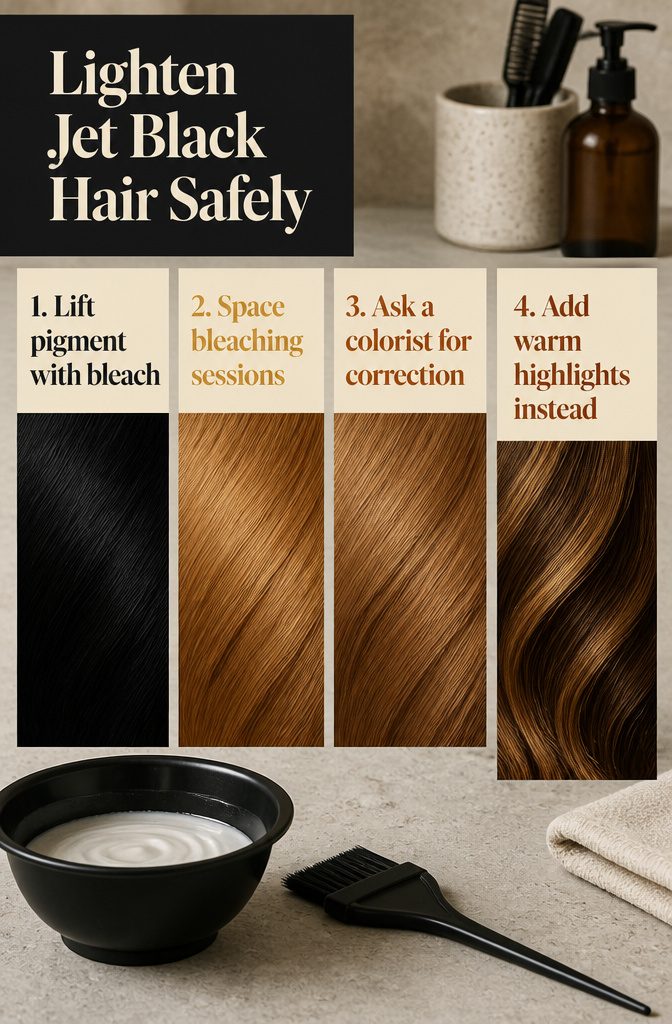
Going lighter from jet black is slow work. The pigment has to be lifted with bleach, and reaching a noticeably lighter shade usually takes multiple bleaching sessions, spaced out so the hair holds together instead of breaking.
Direction matters.
Moving #1B darker into #1 is easy, but getting jet black back to natural black is not, since removing that pigment takes bleach, color remover and professional correction. I’d hand that step to a colorist.
If a full lift feels like too much, warm highlights are the better move. Only some strands get bleached and dyed, so the result looks naturally brighter while the rest of your hair skips the process.
How Texture Changes the Color You See
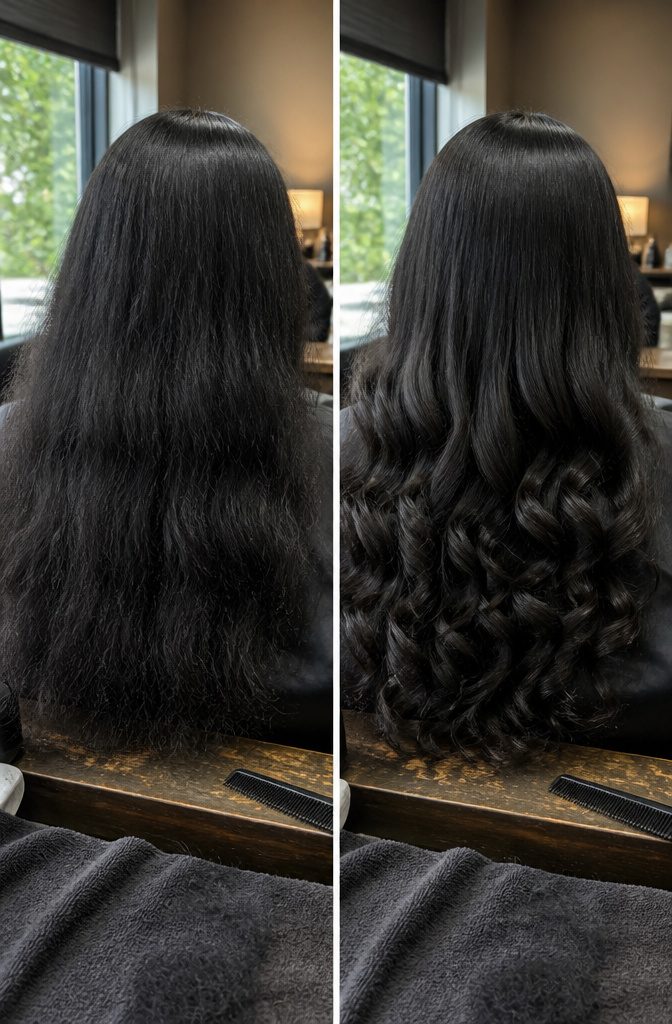
Straight hair lies flat and reflects light in one long, even band, so whatever undertone sits in the color shows clearly.
Waves break that band into softer pieces, and the undertone blurs with it. Curls scatter light in every direction, which makes the same shade look deeper and darker than it does on a straight cut.
That scatter also takes the harshness out of jet black on curly hair, while natural black reads rich and warm.
I’d pick a shade by curl pattern as much as by the name on the box, because one swatch will not look the same across all three textures.
Straight hair is the least forgiving: the shine that gives it that clean line also shows every flaw.
Blue, Violet and Brown Undertones
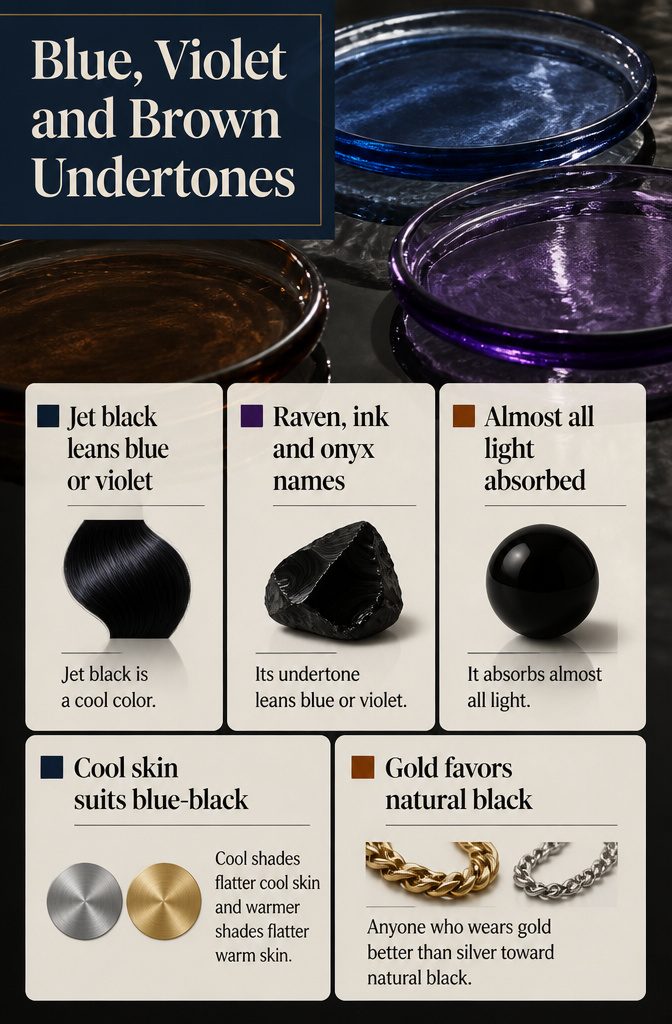
Jet black is a cool color.
Its undertone leans blue or violet, which is why it gets called blue-black, raven, ink or onyx. It absorbs almost all light, so it looks solid, opaque and glossy, with no brown in it.
Natural black behaves differently: most "black" hair is really a very dark brown with extremely cool undertones, so it looks softer and lets a little brown show where light hits.
The usual skin rule applies here. Cool shades flatter cool skin and warmer shades flatter warm skin.
I’d steer cool or neutral complexions toward blue-black, and anyone who wears gold better than silver toward natural black. Holding each metal against your face settles most doubts.
Why Damage Shows More on Jet Black Hair
Jet black hair is a solid, deep field of color, so flaws have nowhere to hide. Dryness reads as dullness, uneven texture catches light in patches, and buildup clouds the surface.
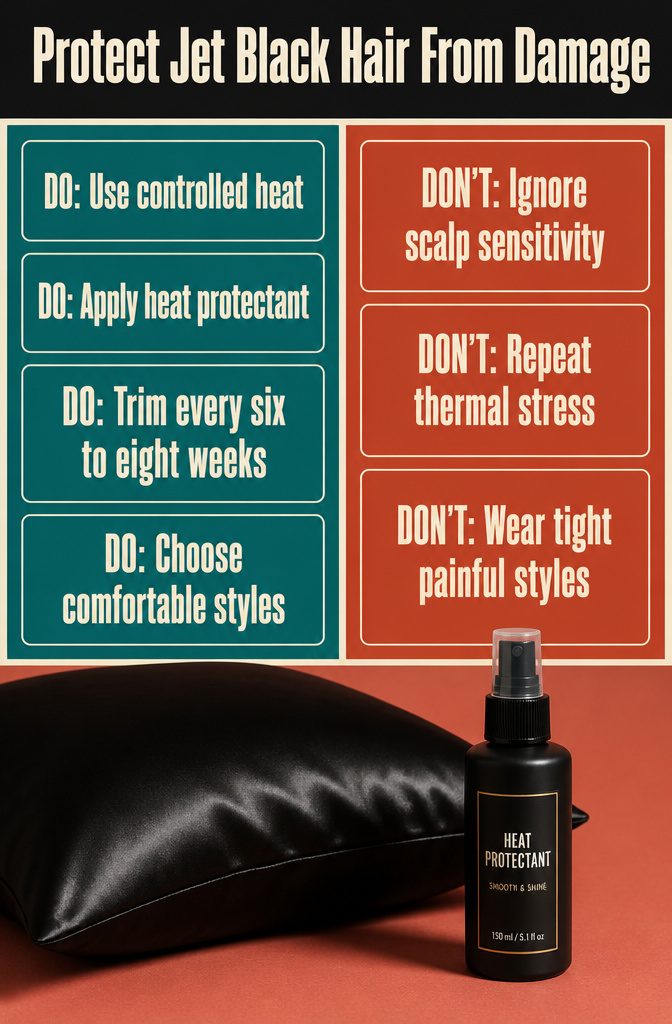
Over-processed hair goes flat instead of glossy. Controlled heat with a protectant preserves shine, and a trim every six to eight weeks keeps the lines clean.
Upkeep stays straightforward with proper care, but the color asks for precision. Tightness, discomfort or sensitivity on your scalp during heat styling or tight styles is a warning sign.
Chronic tension and repeated thermal stress can irritate the scalp and weaken the hair fiber, and I’d skip any look that hurts to wear.
Does Jet Black Make You Look Older
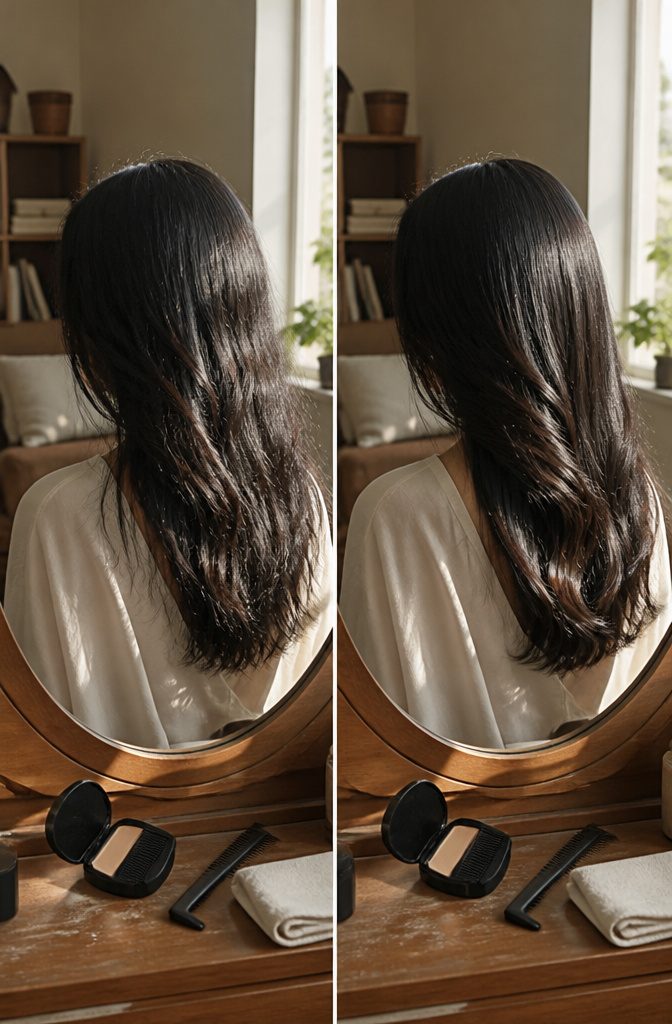
Jet black doesn’t reflect light well, which is where its "older" reputation comes from: the color can read heavy and lose life, especially on hair that’s flat or weighed down.
Warm highlights are the fix I’d choose. They glow in sunlight and make the hair look less closed and dull, and you keep the depth that made you want black in the first place.
Skin tone and age matter less than people fear. The contrast can be balanced with makeup and styling to suit any complexion, so adjust those before you reach for a lighter base color.
Heavy styling products work against you, because they flatten black fast. A lightweight finish keeps the shine moving.
Frequently Asked Questions
Is jet black hair the same as natural black, or is it darker?
No, jet black is the darker of the two. Jet black (#1) is a cool, fully saturated black with blue or violet undertones and no visible brown, while natural black (#1B) reads browner and softer.
The heavier pigment load in jet black is what makes it look so dramatic under light.
What color braiding hair is jet black?
Look for color #1, the jet black series.
It is deeper and cooler than natural black (#1B). If you are unsure which to buy, natural black is the safer match for most dark hair.
Is jet black hair natural, and who has it?
Yes, it occurs naturally. It is an ordinary hair color across Africa and Asia, and it shows up more often in parts of America and Southeast Asia too.
Natural jet black is really a very deep brown, because oxidized melanin creates the shade, while dyed jet black is built to hold no brown at all.
Why is jet black hair so attractive?
The deep, fully saturated pigment absorbs almost all light, so the color looks solid and glossy, and healthy hair can look almost liquid. The cool blue or violet cast adds high contrast, which many people want on purpose.
Does jet black hair make you look older?
It can, because the color reflects little light and may read heavy or lifeless, especially on flat or weighed-down hair.
Warm highlights brighten it while keeping the depth. Makeup and styling can also balance the contrast on any complexion.
How do you lighten jet black hair?
Expect multiple bleaching sessions, spaced out so the hair doesn’t break.
Going from jet black back to natural black is also hard, since it takes bleach, color remover and professional correction. If a full lift feels like too much, warm highlights process only some strands.
Does jet black hair suit all skin tones?
It can work on any complexion with some adjusting.
It flatters cool-toned, olive and medium-to-deep skin most, while very warm undertones and fair porcelain skin are harder fits. Makeup and styling balance the contrast, such as a softer lip on pale skin.
Is jet black hair harder to maintain than other colors?
It takes more precision, because damage shows more on a solid, deep color.
Care itself is still straightforward: trim every six to eight weeks, keep heat controlled, and balance washing so oils are not stripped and buildup does not cloud the surface.
Can straight black hair look flat?
Yes, if it is over-processed or weighed down by heavy products. A precise cut and a lightweight finisher keep the shine moving, while a heavy serum can flatten it and make it look oily.
Are extensions safe for sleek black hairstyles?
Yes, when they are perfectly matched and applied conservatively. Match tone, density and texture, using jet black (#1) for dyed or extremely dark hair and natural black (#1B) when you are unsure.
Does heat styling ruin the shine of black hair?
Excessive heat does. Repeated high heat disrupts the cuticle and dulls the surface, while controlled temperatures with a heat protectant preserve the shine.