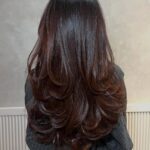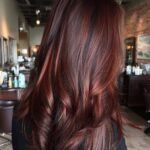
Your starting hair color decides which of these reds you can reach without trouble.
Dark Auburn and Violet-Red sit well on a darker base, while Blood Orange and Bright Poppy usually need lightening first on dark hair, so for those two I’d lean toward a salon.
The range runs from Light Copper Brown, a shade that barely looks like a change, to Crimson Red and Bright Poppy, which stop a room.
1. Light Copper Brown
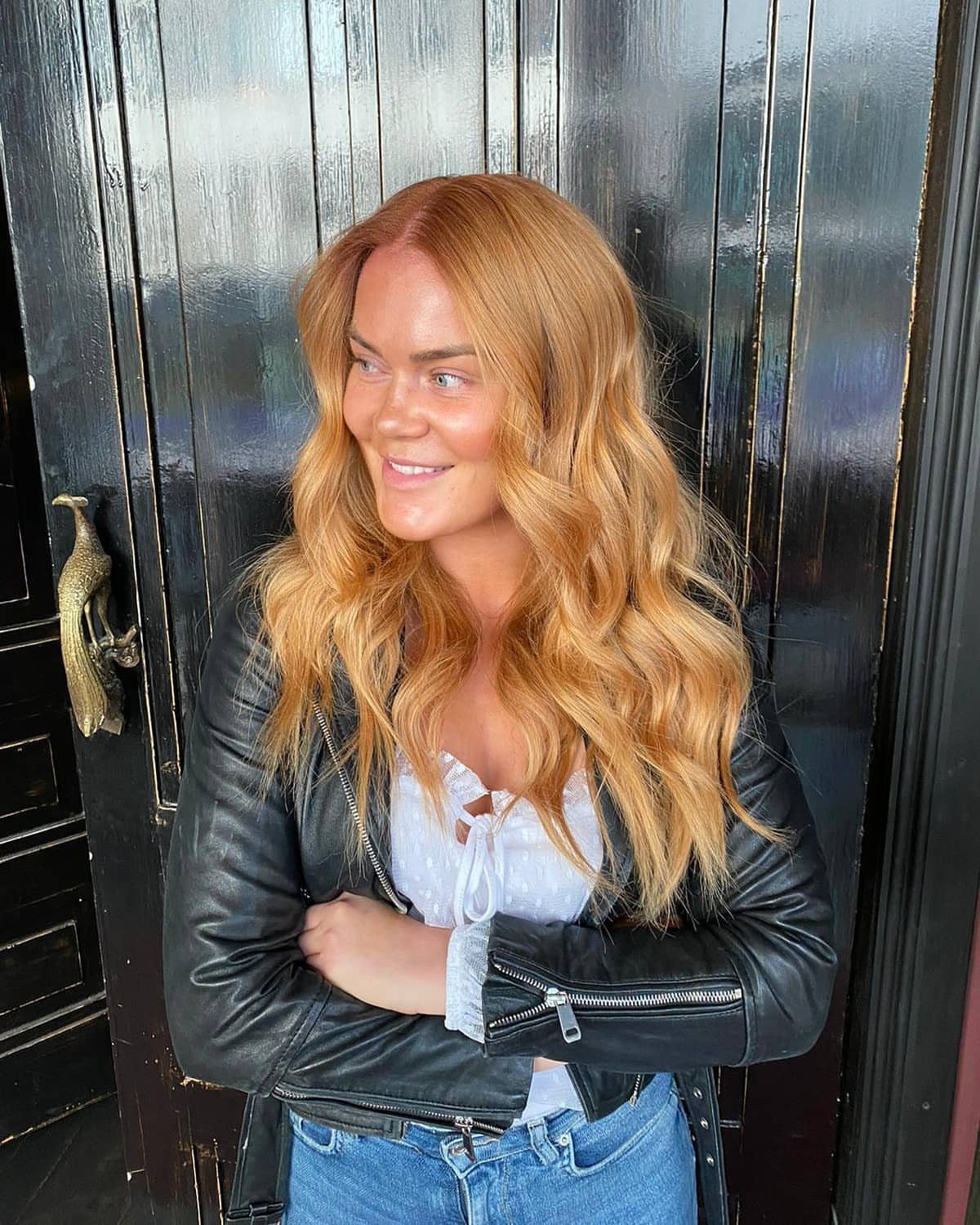
Brown stays the base here and copper does the talking. For me that makes light copper brown the gentlest way into red: nothing about it looks like a dramatic change, yet the warmth shows in every wave.
Ask for a light brown base with copper-red running through it.
Say "copper" rather than "red," or you may get something brighter than you planned. A light to medium brunette is the easiest starting point.
2. Dark Strawberry Blonde
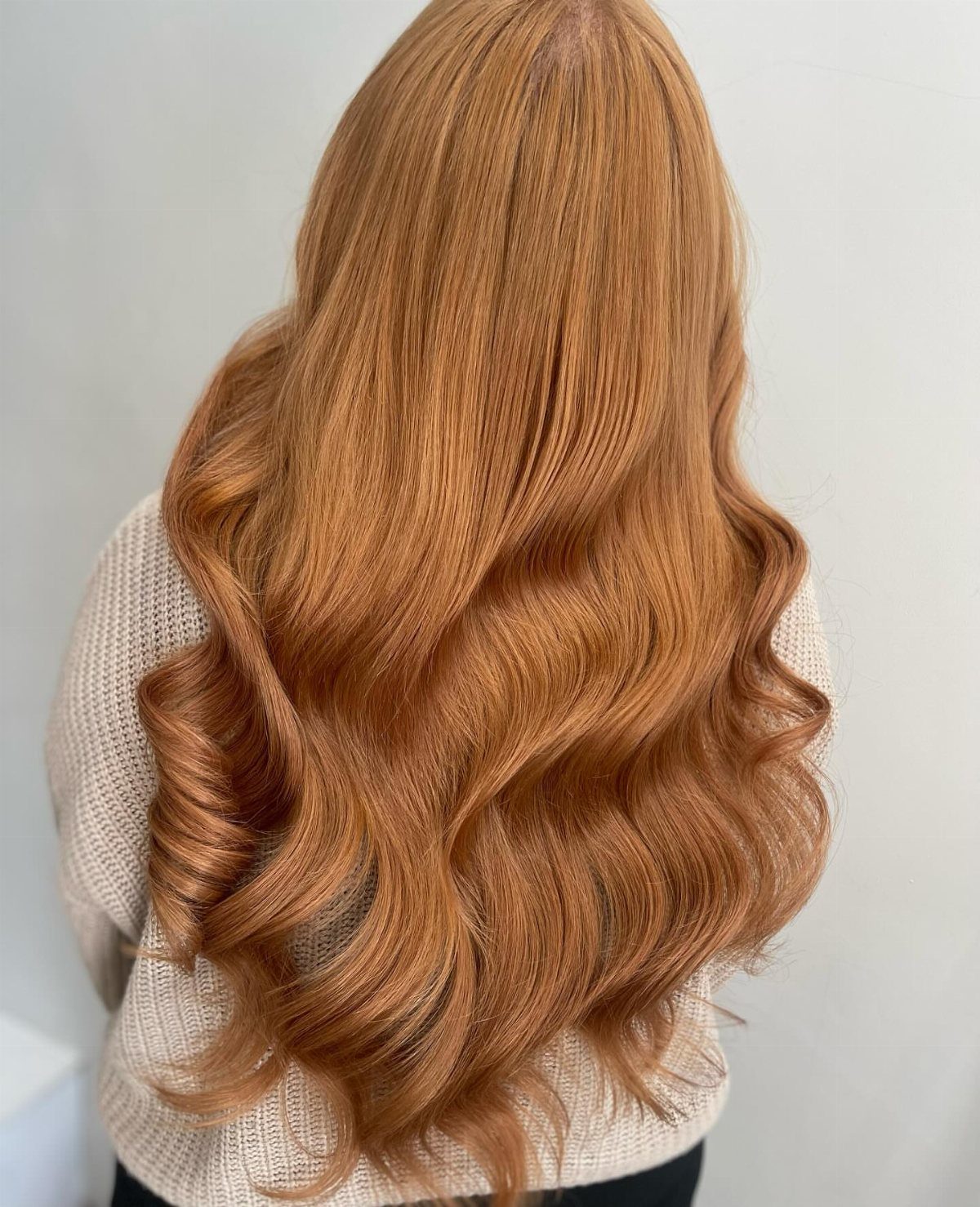
Gold and red share the work in dark strawberry blonde, and the word "dark" keeps the shade from drifting into pale peach.
Warm skin tones tend to suit golden shades, so check your jewelry: if gold looks better on you than silver, I’d say this is a safe pick.
Loose waves let you see the mix of tones better than flat, straight styling, which is how I’d wear it.
3. Dark Roots
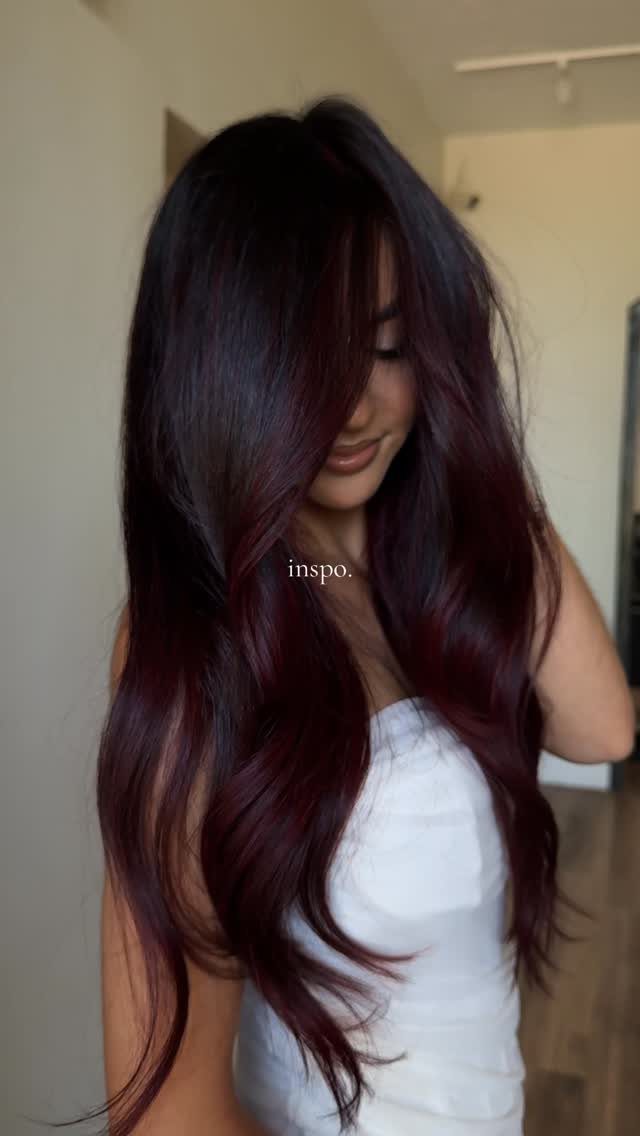
A shadow at the root gives this red its deliberate look. With deep, dark roots and burgundy-red through the lengths, regrowth never draws a hard line, so I’d choose it for anyone who dreads frequent touch-ups.
The blend takes work.
Ask for a soft, blurred root, because a harsh band reads as a missed appointment rather than a style. Dark color at the top also suits readers who already have brown or black hair.
4. Light Auburn

Sunlight is the real test for light auburn, and this shade passes by looking like hair that grew in this way. It is a soft red-brown, closer to a warm glow than a statement.
Pick it when you want red that no one questions at work or at family dinners.
A light brown starting point gets there with less work than black hair would, since darker hair has to be lightened first. Pinterest photos help here: save two or three and compare.
5. Medium Auburn
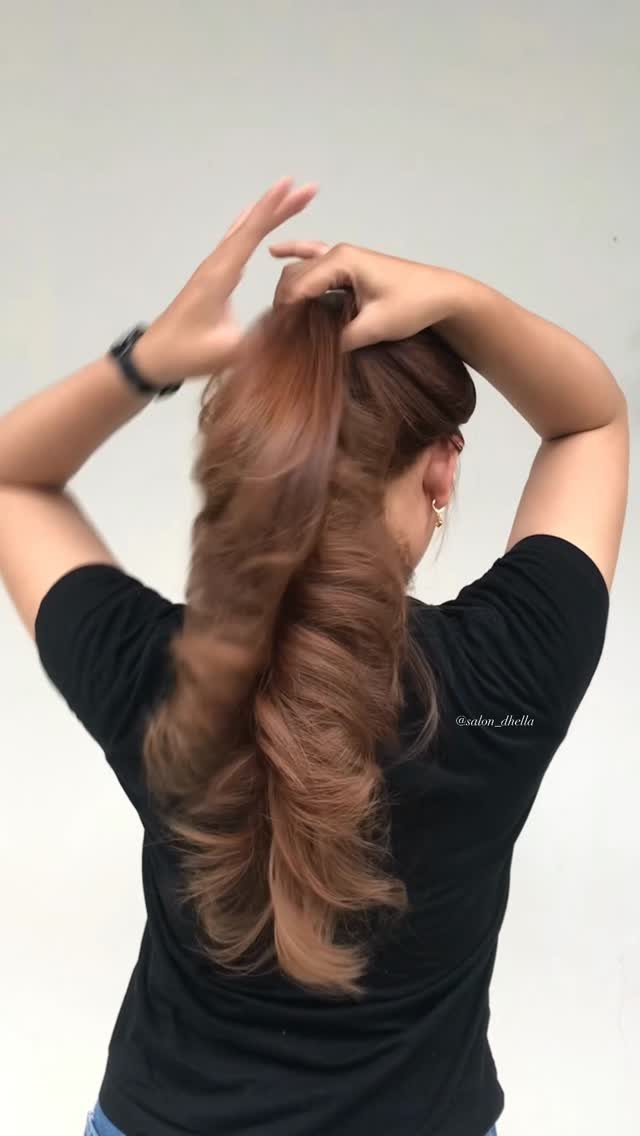
Medium auburn is the one I’d hand to anyone who cannot decide between a light red-brown and a deep one. It sits in the middle, rich enough to read as red and grounded enough to feel wearable every day.
"Medium" means different things to different stylists, so show them a picture instead of relying on the name alone.
Hair pulled into a ponytail also shows the shade clearly, which makes it a good way to check the color in daylight.
6. Crimson Red
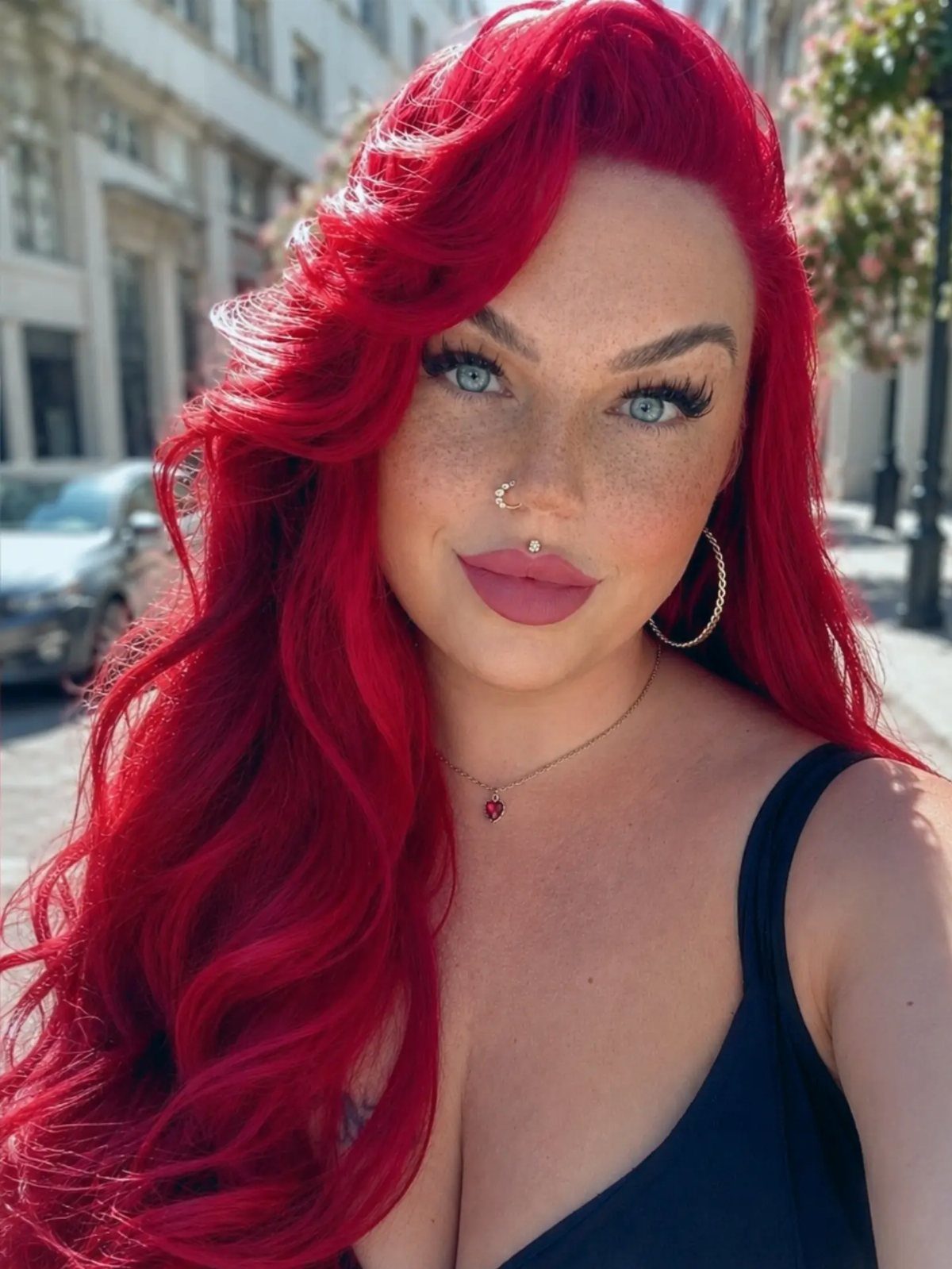
Crimson on textured hair is a bold choice, and I think it is worth making. The shade is vivid and cool-leaning, and waves give it dimension that flat hair cannot.
If you start with dark brown or black hair, plan on a stylist: strong red usually needs the base lightened first.
Textured hair also runs drier, so budget for a moisturizing mask or gloss to keep the color looking rich between visits.
7. Dark Auburn
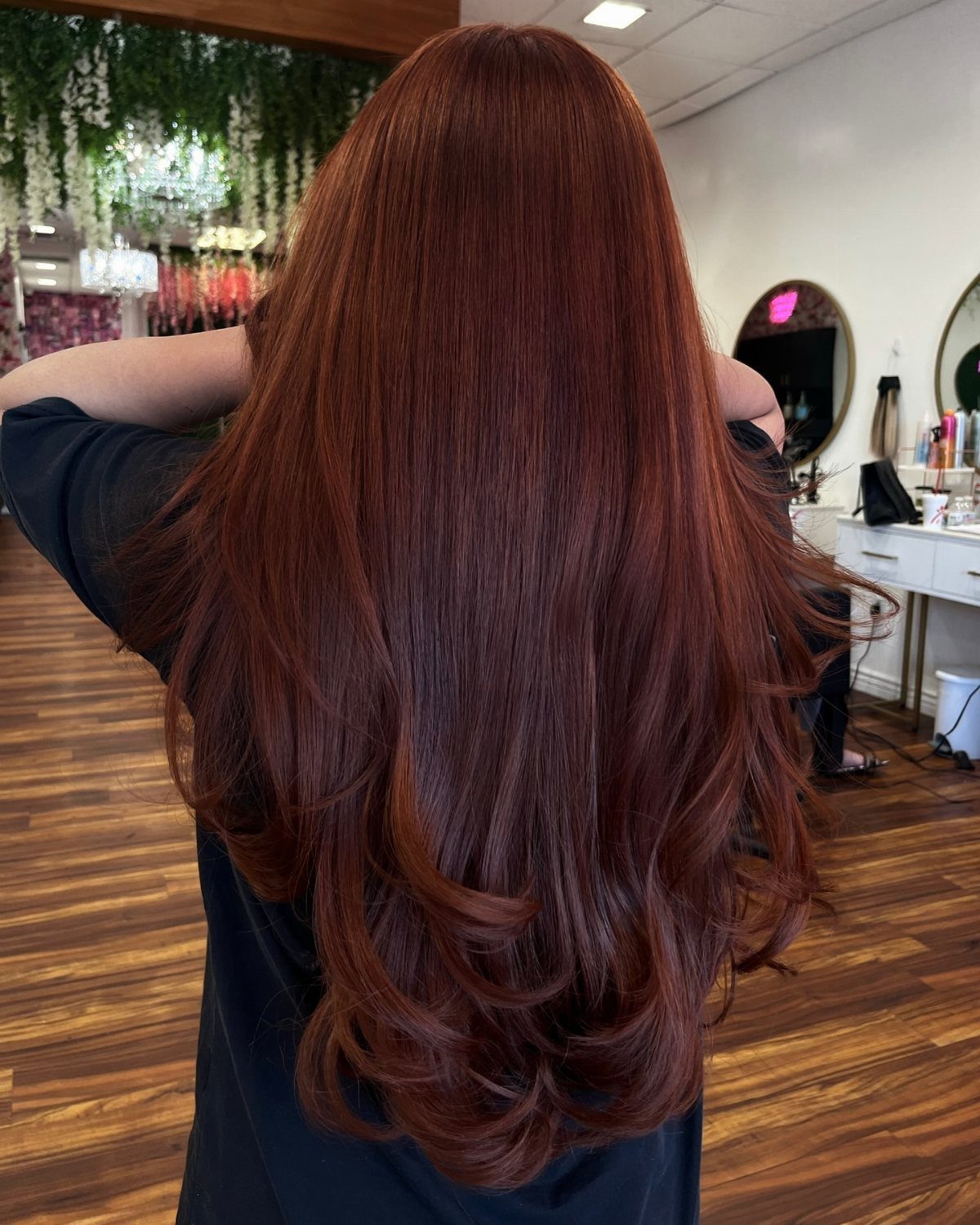
Dark auburn holds red in the shadows, which means it reads as brown until the light hits it.
That subtlety is exactly why I would pick it if my starting point were already dark brown: the shift feels natural, and grow-out barely shows.
Waves help the red catch the light.
Ask for depth at the root so the color looks lived-in from day one, and bring a photo that shows the back view, since that angle tells a stylist more than the front does.
8. Crimson Moon
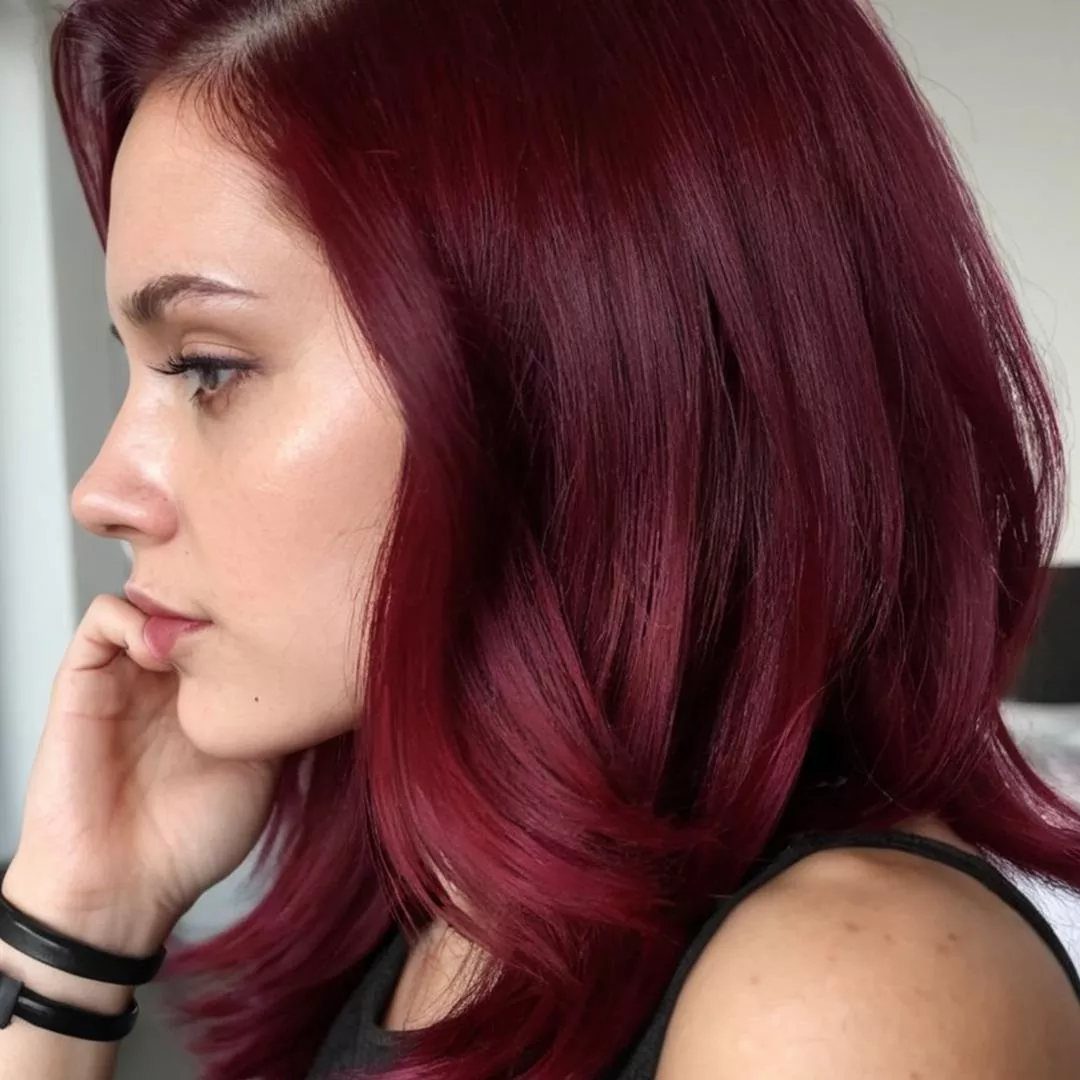
This is maroon with weight behind it. The shine matters as much as the color here, because a flat finish turns this deep red muddy instead of rich.
A gloss treatment after coloring locks in that reflective quality. If your hair tends toward dryness, plan on a weekly mask: the shinier the surface, the more saturated the color looks between touch-ups.
9. Violet-Red
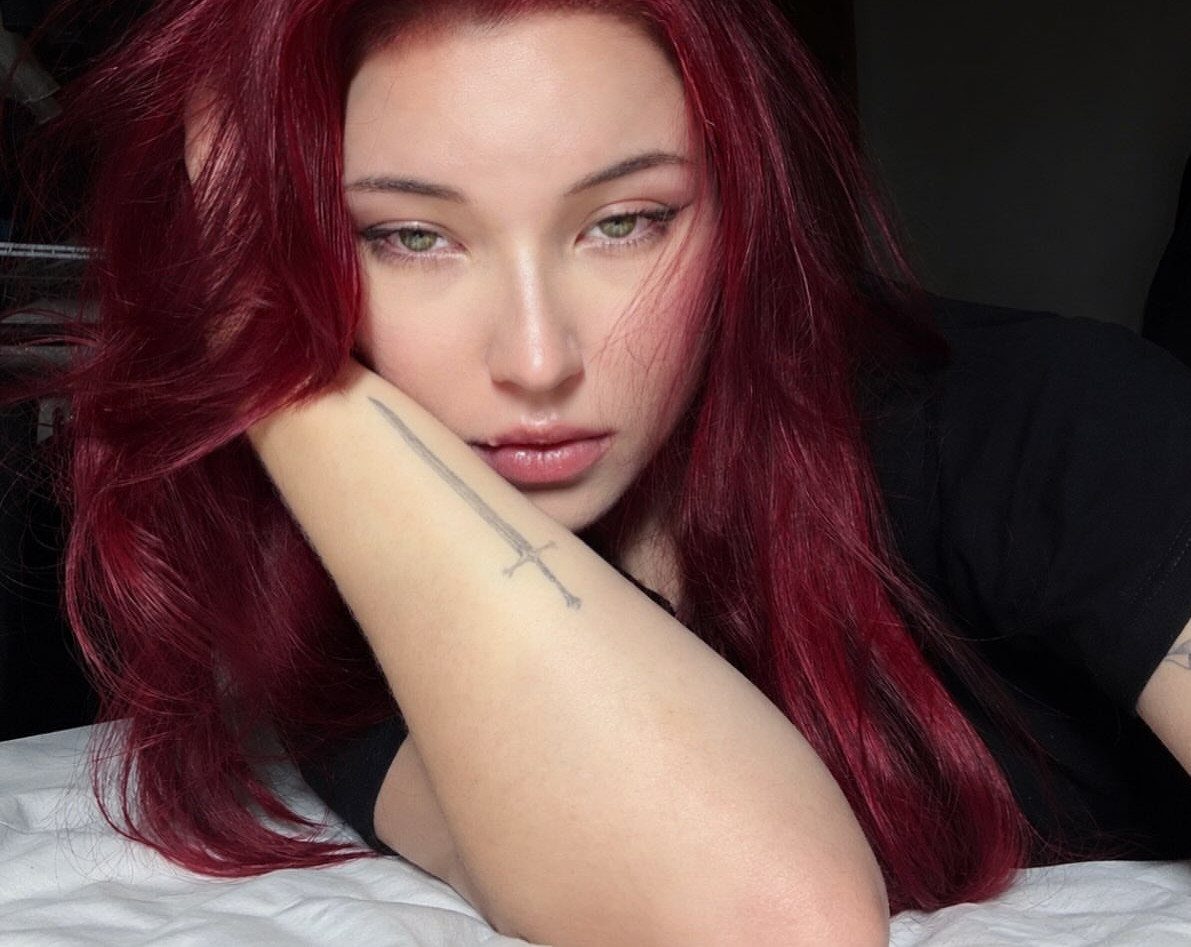
Violet-red leans cool, and that purple edge keeps it from reading as a typical auburn. Length shows the dimension better than a short cut would, since the color shifts slightly from root to end.
Starting with dark hair makes this shade easier to reach than you might expect, because the base does not need to be lifted as high as it would for a bright red.
A stylist who understands cool tones is non-negotiable here: one degree too warm and the violet disappears.
10. Bright Poppy Hair Color

Bright poppy is the red that stops a room. No warm brown softens it, no burgundy tones it down, and volume makes it look even bolder.
Pale skin tends to carry this shade well, though I have seen it work on deeper tones when the undertone matches.
Hair this bright fades faster than a muted red, so budget for a color-depositing conditioner and expect to refresh it every 4 to 6 weeks.
11. Cinnamon Copper
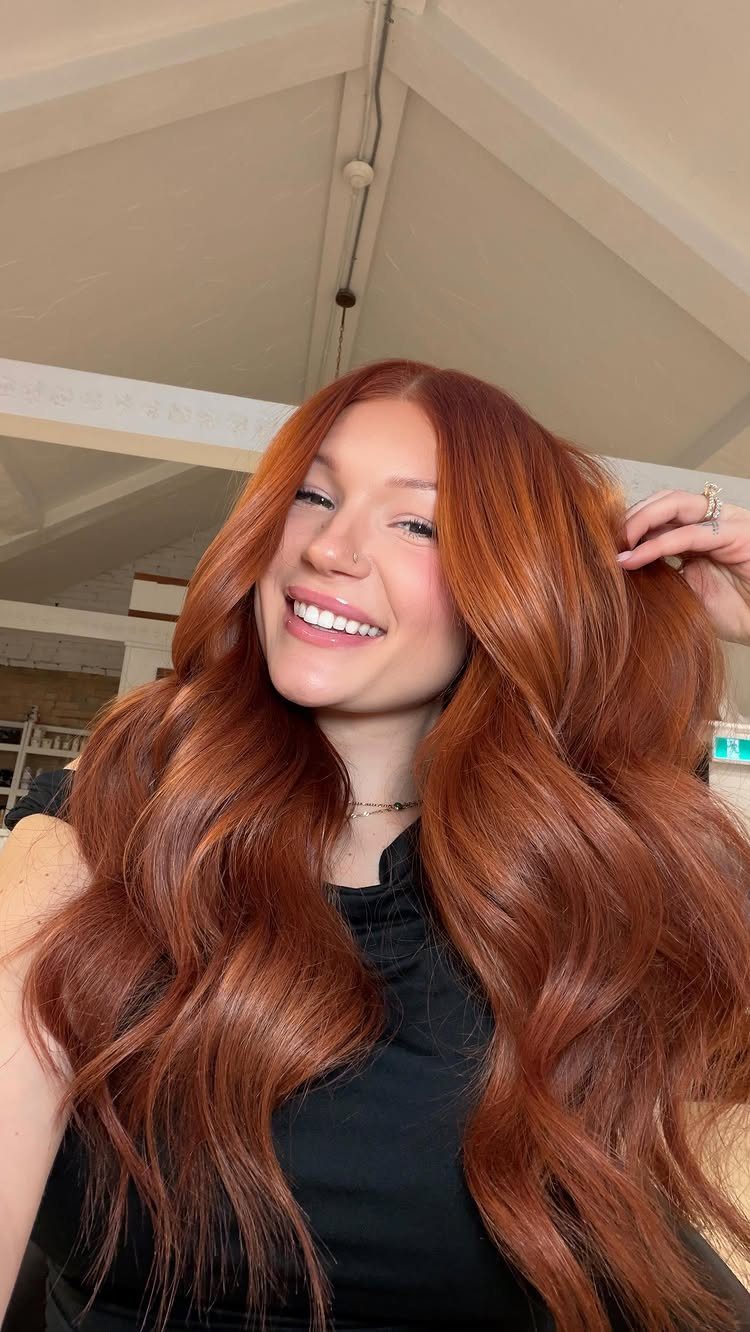
Cinnamon copper mixes light and dark in one look, with warmer copper pieces lifting a cooler brunette base.
The contrast gives movement without a full balayage session, which makes it a middle option for readers who want dimension but not the upkeep of heavy highlights.
Ask for both lowlights and highlights rather than one or the other, because the blend is what makes this shade work. The reddish-brown base also means regrowth blends in better than it would with a brighter copper.
12. Ruby Burgundy Curls
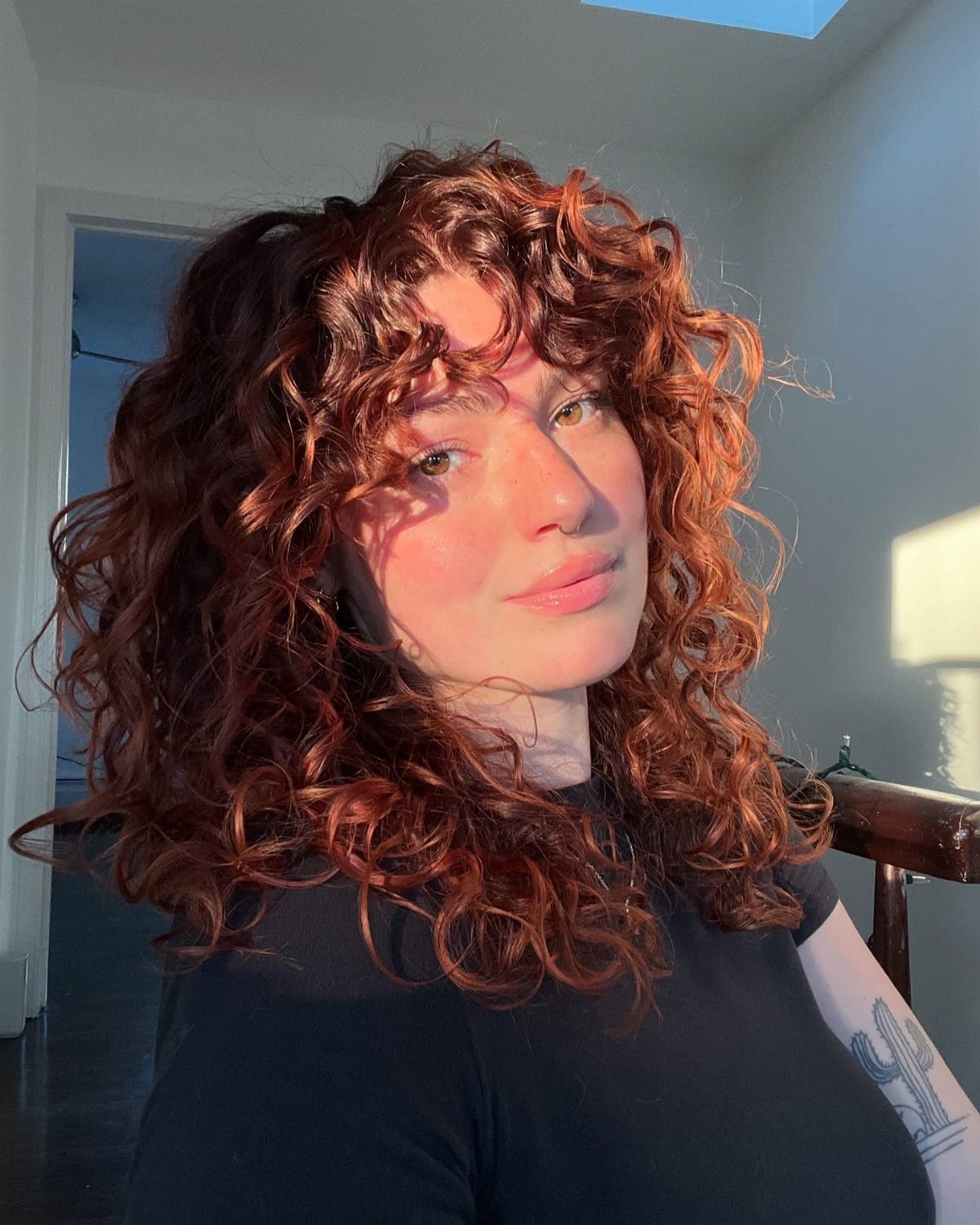
Ruby burgundy on curls catches light in a way straight hair cannot, because each curl reflects the color differently. The deep red base leans slightly brown, which keeps it from looking costume-like even at full saturation.
Curls hold onto moisture better when the color is fresh, so I would schedule the dye job a week before an event rather than the day before.
A leave-in conditioner also helps keep the texture soft, since color-treated curls can turn wiry if they dry out.
13. Blood Orange Hair Color
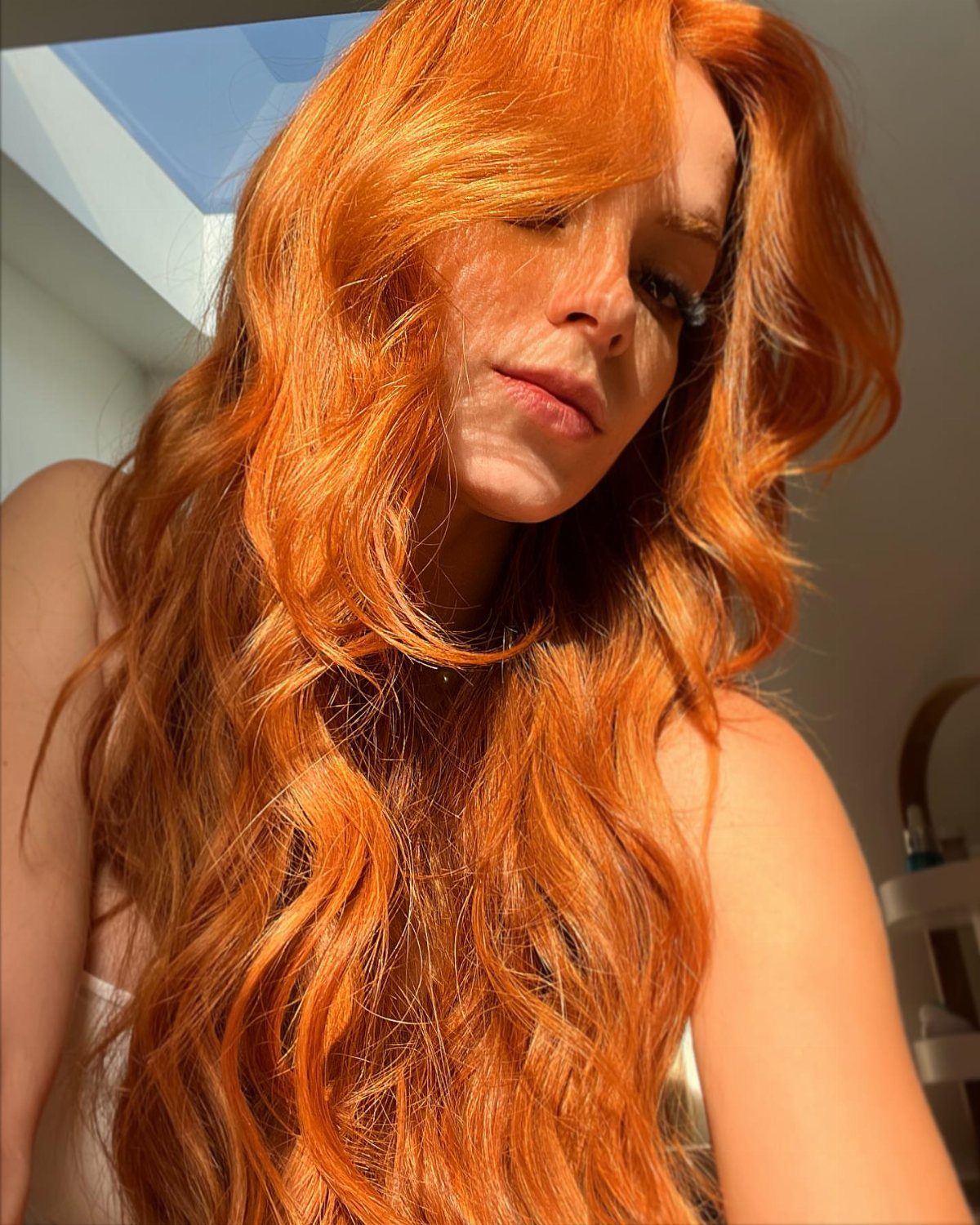
Blood orange is the warmest bright red I would reach for, closer to true orange than most people are willing to go. In direct sun, blood orange lights up and glows, where deeper reds mostly sit flat.
Skin with warm or neutral undertones tends to carry this better than cool ones, where the orange can look jarring.
Starting hair needs to be lifted high, usually to pale yellow, so expect bleach and a stylist who knows color theory.
A color-depositing mask once a week keeps the brightness from dropping to coral within a month.
Red Color Fading and Upkeep
Red is the first color to leave your hair, so upkeep matters more here than with brown or black. Washing only a few times a week slows the loss, and a sulfate-free, color-safe shampoo and conditioner protect what’s left.
Cold water helps preserve vibrancy, and so does cutting back on heat styling. Stirring a little of your dye into your conditioner puts pigment back between full applications.
Semi-permanent red typically lasts 2–8 weeks, depending on your base color, the health of your hair and your routine. Plan your next application around that window instead of waiting for the color to look tired.
Choosing At-home or Salon Color
A colorist can custom-mix copper, red or gold tones to build a result that looks dimensional and real. At-home dye gives you far less room to adjust, because the shade in the box is the shade you get.
Swatch a shade before committing to it. Boxes come in permanent, demi-permanent, semi-permanent and temporary formulas, so match the formula to how long you want to live with the color.
Your starting point matters most.
Dark hair may need bleach before a brighter red looks believable, while burgundy and dark auburn can show up on a darker base. If you want the brighter end of the range on dark hair, I’d book the salon.
Natural-looking red hair is extremely difficult to achieve, but the best at-home red hair dyes make it easy.
— Glamour
Even Application and Color Testing
Scalp heat speeds up processing, so the roots often come out a shade brighter than the rest of a red.
Strand-test before any change. Color one small hidden section, wait out the full processing time and check the result in daylight.
Between full colorings, a root touch-up in a matching red-brown, such as dark, medium or light auburn, covers regrowth.
Red fades and dries out faster than most shades, so a weekly deep conditioner and a color-safe shampoo are worth the habit.
Frequently Asked Questions
What is the best reddish brown hair dye?
Medium auburn is my pick for most people: it reads clearly as red, yet it sits easily into an everyday routine.
If you start from dark brown, dark auburn is the better call: the red stays in the shadows and regrowth barely shows.
For a boxed option on brunette hair without bleach, L’Oréal Paris Superior Preference Fade-Defying Color + Shine System offers red-toned browns and holds for about 9 weeks.
Show your colorist a photo, since one stylist’s "medium" can land closer to copper and another’s closer to mahogany.
What color compliments red hair the most?
Green. It sits directly opposite red on the color wheel, which is why green-based toners and ash shades cancel red pigment.
If your hair has turned too red or too warm, a green-based toner, ash dye, clarifying shampoo or semi-permanent color will cool it down and give a more natural result.
How do you keep red hair from fading?
Red pigment slips out of the hair faster than any other shade, so rinse cool, keep shampooing to 2–3 times a week, and choose products labeled sulfate-free and color-safe.
Less heat styling helps too. Between full applications, stir a little of your dye into your conditioner to put pigment back; red leaves hair faster than brown or black, so this extra care pays off.
What are the different shades of red hair dye?
Red shades fall into 3 groups. The soft, warm end includes light copper brown, dark strawberry blonde, cinnamon copper and the light, medium and dark auburns.
The deeper, cooler end has ruby burgundy, crimson, a maroon-toned crimson moon and violet-red, while bright poppy and blood orange are the vivid ones.
Match the formula to your commitment: permanent lasts until it grows out, demi- and semi-permanent fade over several weeks, and temporary rinses out in a wash or two.
Can I get these shades on unbleached hair?
Deep reds like burgundy and dark auburn can work on a darker base without bleach. Bright reds and fiery coppers need hair pre-lightened to level 8–10, and blood orange has to be lifted all the way to pale yellow.
How can you get a natural look with red hair dye?
Choose a brown-leaning red such as light auburn, dark auburn or copper, and book a colorist if you can, since they custom-mix copper, red and gold tones for a dimensional result.
A soft, blurred dark root also looks deliberate and keeps regrowth from drawing a hard line. At home, swatch a copper, golden-based red or warm chestnut first, and remember that darker hair may need bleach.
What are the best tips for dyeing hair red at home?
Apply color to the mids and ends first and the roots last, because scalp heat makes roots process brighter than the rest of the hair.
Use a darker mix on the roots and a softer one through the lengths to even it out.
Test one hidden strand, let it process for the full time on the box, and judge the result in daylight before coloring the whole head.
The model on the box is styled and often edited, so go by the color chart on the back and swatch the dye before committing.