Semi-permanent black can fade in 6–8 washes with a clarifying shampoo. Permanent black takes several weeks and multiple rounds of color remover, with 3 applications in a row as the usual limit.
People go wrong by leaving remover on longer, which can darken hair, or by jumping to bleach, which can’t be undone.
1. Clarifying Shampoo for Gradual Fading
Clarifying Shampoo for Gradual Fading
If the black came from a semi-permanent formula, a clarifying shampoo can lift it in 6–8 washes.
Gloss and demi-permanent take longer, somewhere between 4 and 12 washes, but the method stays the same. Reach for something like L’Oréal Paris EverPure Sulfate-Free Clarifying Shampoo with Antioxidants two or three times a week, and follow with a deep conditioner.
The matching EverPure Restoring Conditioner keeps things from turning straw-dry while you wait. Expect several weeks before you see real change.
Permanent black is a different story.
Shampoo alone will not strip it. What it can do is fade residue and product buildup after you’ve used another method, but it will not pull the color from your hair on its own.
If you want the gentlest route and time is on your side, growing it out or cutting it short does the least damage of anything here.
2. Vitamin C Paste
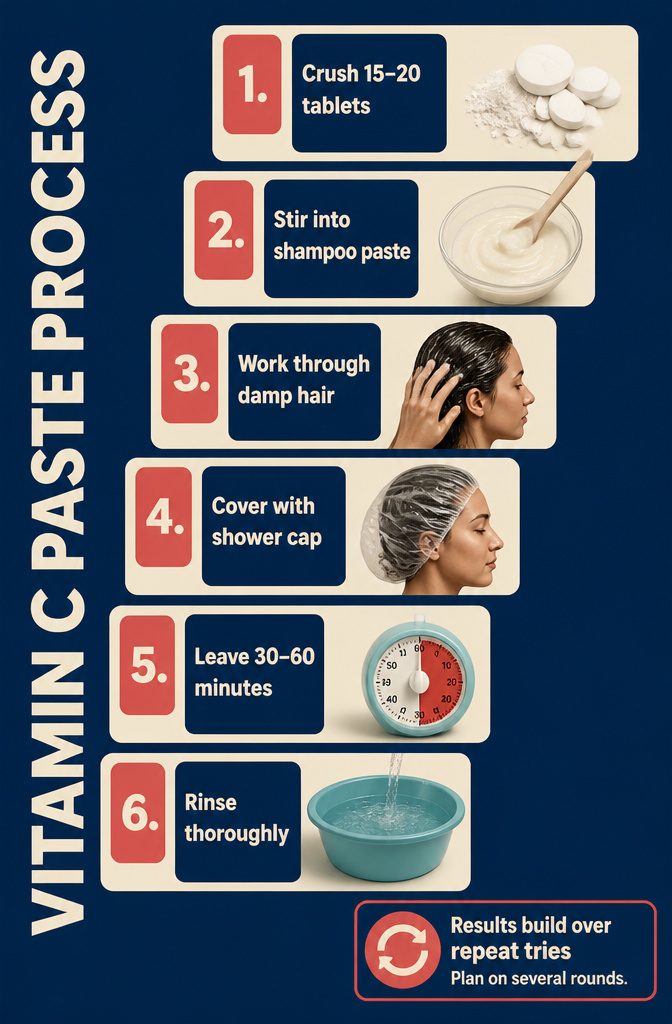
Crushed vitamin C makes a mildly acidic paste, a gentle step up from clarifying shampoo rather than a leap past it.
- Crush 15–20 vitamin C tablets into a fine powder.
- Stir the powder into anti-dandruff shampoo until it forms a paste.
- Work the paste through damp hair.
- Cover your hair with a shower cap.
- Leave it on for 30–60 minutes.
- Rinse thoroughly.
Black dye rarely gives way in one sitting with this method.
Results build over repeat tries, so I’d plan on several rounds before judging whether it’s working. If one session barely moves the color, that’s normal for a treatment this mild.
3. Color Remover for Dark Dyes
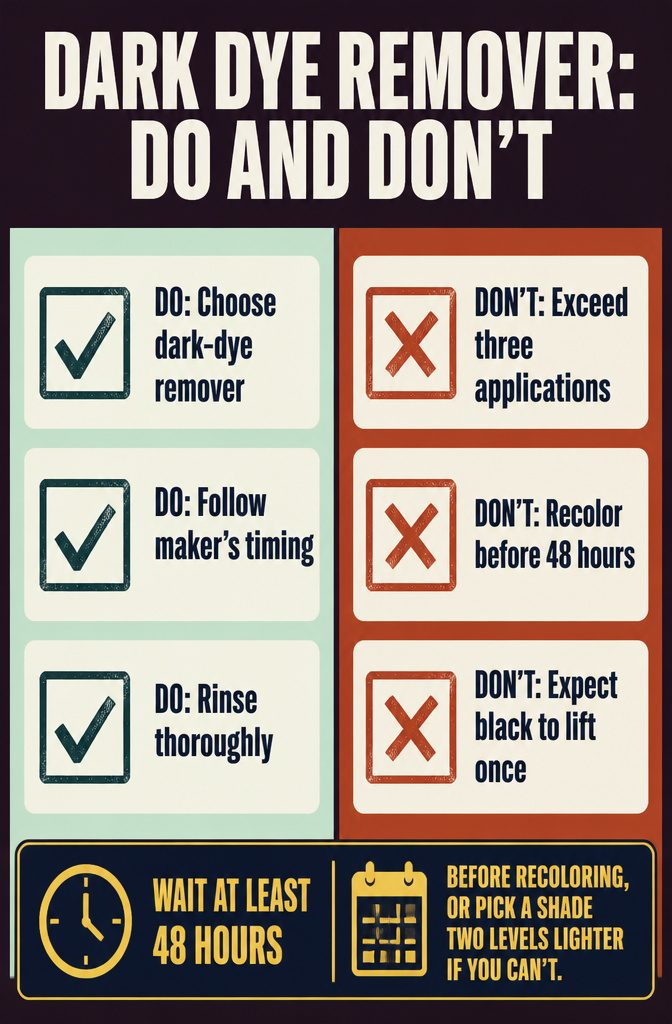
Choose a remover made for dark dyes, such as Wella Color Renew, Efassor Bond Enforcing Color Remover or Elumen Color Return. Follow the maker’s timing, because leaving it on longer does not remove more color and can darken hair.
Three applications in a row is the usual limit, and a thorough rinse keeps the color from re-oxidizing and darkening. Drop color-protection shampoo and conditioner a few weeks beforehand.
Very dark shades resist removers, metal dyes may not come out, and black can take multiple sessions.
Warm, brassy or copper tones may show afterward; toner or recoloring fixes them. Wait at least 48 hours before recoloring, or pick a shade two levels lighter if you can’t.
4. Bleach as a Last Resort
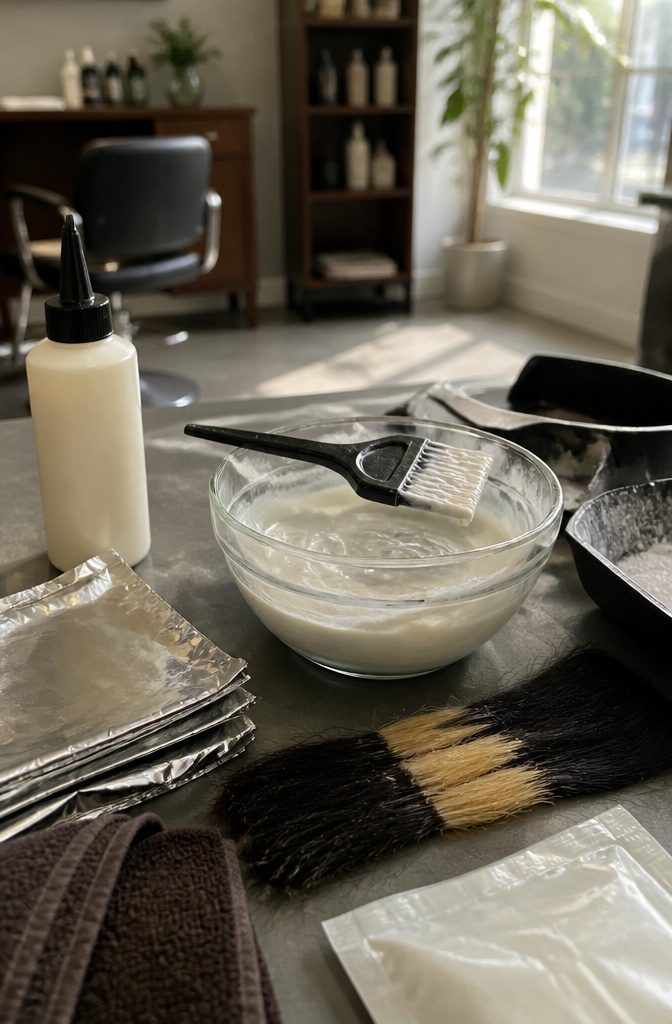
Bleach is the last stop, and I’d leave it to a colorist. It removes natural and artificial pigment alike, so it lightens hair rather than lifting out the dye, and remover cannot undo bleached hair afterward.
L’Oréal Paris USA puts the risk plainly:
Never use bleach without experience: Bleach is powerful and permanent. Misuse can cause uneven lift, banding, and breakage. When in doubt, book a pro.
A good appointment starts with a strand test, uses a low-volume developer to limit damage, and ends with intense hydration treatments. Skip any of those at home and the repair work is yours.
5. Aftercare for Stripped Hair
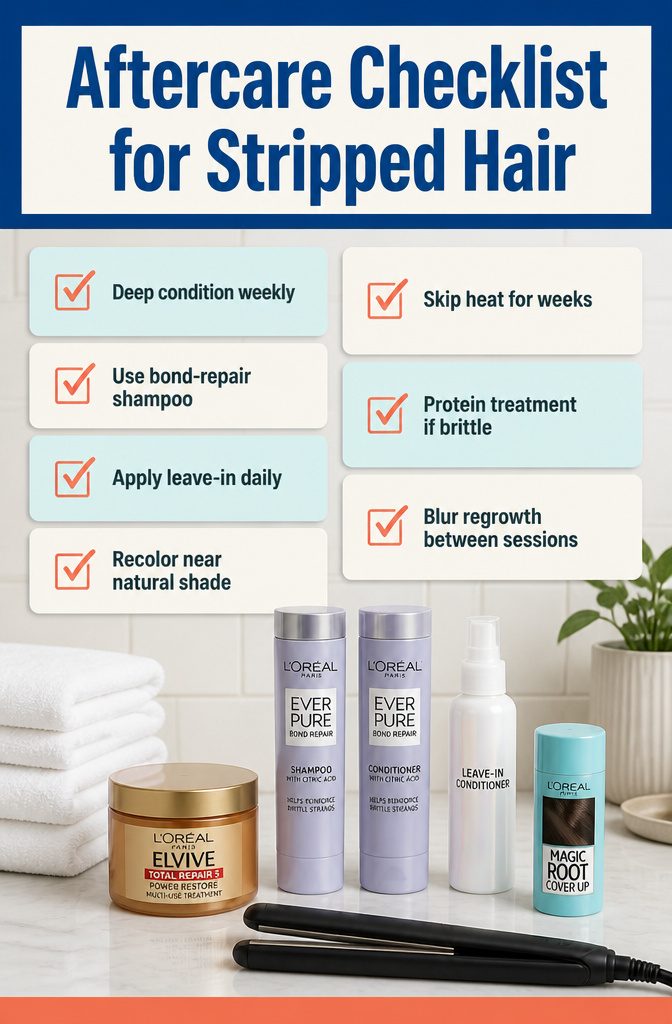
Freshly stripped hair needs a few weeks of gentle handling before it behaves again.
- Deep condition once a week with L’Oréal Paris Elvive Total Repair 5 Power Restore Multi-Use Treatment.
- Wash with EverPure Bond Repair Shampoo and Conditioner with Citric Acid, which helps reinforce brittle strands.
- Apply a leave-in conditioner every day.
- Skip heat styling for a few weeks. Air-dry and save the flat iron for later.
- Add a protein treatment only if the strands feel weak or brittle.
- If you recolor, stay close to your natural shade. I’d start with Excellence Crème Universal Nudes, part of the 30-shade Excellence Crème range.
- Blur regrowth between color sessions with Magic Root Cover Up.
6. When to Call a Pro
Gummy, overly dry, or breaking hair is your cue to stop, and I mean mid-process, not after one more round.
Permanent black is a salon job at heart. A colorist doing color reduction or professional correction can lift artificial pigment with minimal damage, and can fix orange bands too.
If breakage worries you, ask for a strand test first. Stylists typically check a small section, often at the nape, before touching the rest of your head.
Stopping early costs far less than repairing hair that has been pushed too far. No shade is worth losing length over, and healthy hair always beats a specific color.
Why Black Dye Resists Removal
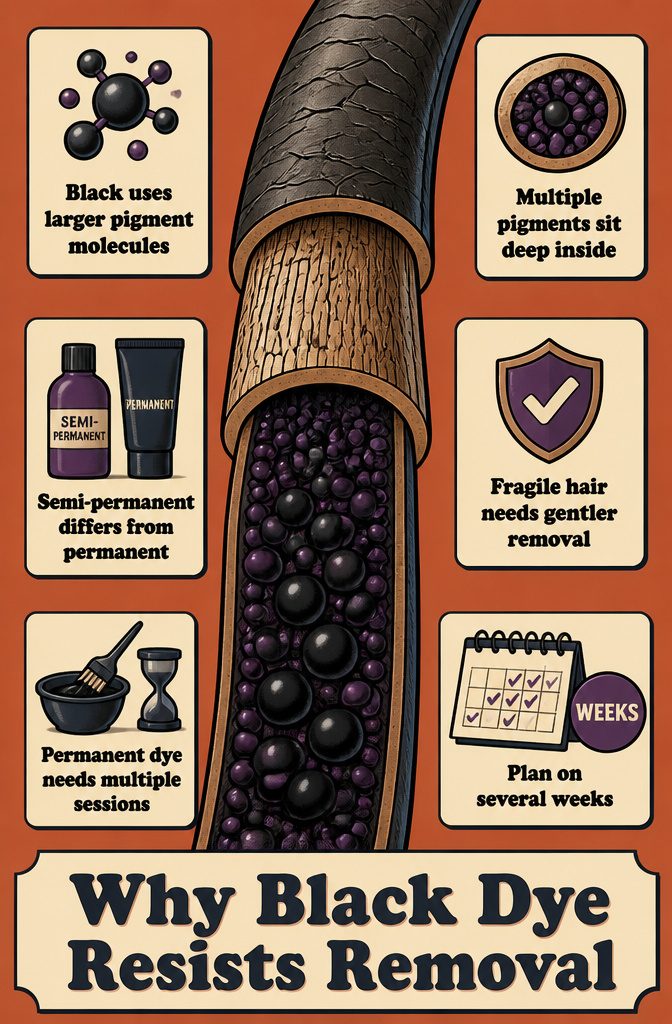
Black and vivid red are the two hardest shades to remove. Black dye is built from larger molecules, often a mix of several pigments, and it sits deep in the hair shaft, so it rarely lets go in one pass.
Four things decide how it goes: whether the dye was semi-permanent or permanent, how recently you applied it, the condition of your hair, and what color you want next.
Semi-permanent black is a different job from permanent. Coarse, healthy hair generally tolerates stronger removers better, while fine or fragile hair and a sensitive scalp need a gentler start.
For permanent black, I’d plan on several weeks and multiple sessions, not one afternoon. Forcing everything into a single harsh round on fragile hair is the fastest way to damage it.
Color Remover vs. Bleach
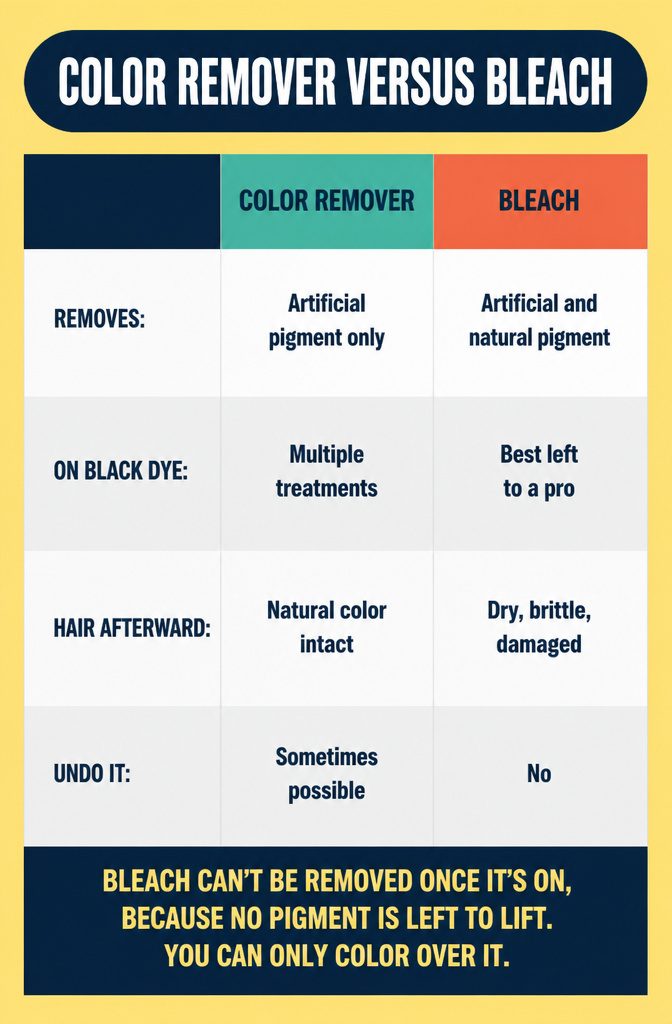
Color remover dissolves artificial pigment and leaves your natural pigment alone.
Bleach removes both. The two compare like this on black dye:
| Color remover | Bleach | |
|---|---|---|
| Removes | Artificial pigment only | Artificial and natural pigment |
| On black dye | Works, often over multiple treatments | Works, but best left to a pro |
| Hair afterward | Natural color intact | Dry, brittle, damaged |
| Undo it | n/a | No |
You only get your original shade back in some cases. Earlier oxidizing color may already have lightened your natural pigment, so remover can reveal something lighter than you remember.
I’d start with remover every time.
Bleach can’t be removed once it’s on, because no pigment is left to lift. You can only color over it.
Frequently Asked Questions
How can I remove black hair dye at home?
Start with a clarifying shampoo 2 or 3 times a week plus a deep conditioner, then move to a color remover made for dark dyes if the black holds on.
A vitamin C paste is a gentler add-on, though results build over several rounds.
This works best on semi-permanent black; permanent black rarely comes out at home in one go. Stop if your hair turns gummy or starts to break.
What is the fastest way to remove black hair dye?
A salon remover or color-correction service is the fastest route.
At home, clarifying washes plus a remover can speed up fading of semi-permanent dye. Stacking treatments adds damage, so go carefully if you combine them.
Will color remover remove permanent black hair dye?
Often, but usually over multiple treatments.
Very dark shades resist removers, and metal dyes may not come out at all. Shampoo alone will not pull permanent pigment, so a colorist doing color reduction is the safest option for permanent black.
What is the hardest hair color to remove?
Black and vivid red are the two hardest. Black dye is made of larger molecules, often a blend of several pigments, and it sits deep in the hair shaft.
Does black hair dye wash out with clarifying shampoo?
Semi-permanent black can fade in about 6–8 washes, while gloss and demi-permanent formulas take roughly 4–12.
Permanent black does not wash out. Clarifying shampoo only fades residue and buildup on it.
Should I use bleach or color remover on black hair dye?
Try remover first.
It dissolves artificial pigment and leaves your natural pigment alone, while bleach removes both and leaves hair dry and brittle. Bleach is also a one-way step, since no pigment is left to lift afterward, so leave it to a colorist.
How does color remover work?
It enters the hair shaft and dissolves artificial pigment, which then rinses out.
Your natural pigment stays in place. People use it to reduce unwanted color or to prepare hair for a change in tone.
Will I get my original hair color back after using color remover?
Only in some cases. Earlier oxidizing color may have lightened your natural pigment, so remover can reveal a shade lighter than you remember.
Why is my hair brassy or yellow after color remover?
Warm, brassy or copper tones can show once the black is gone. A toner or a fresh coat of color corrects them, and a colorist can also fix orange bands.
Can color remover fix bleached hair?
No.
Remover only lifts color that is darker than your natural shade. Bleached hair may have no natural pigment left, so the remover has nothing to work on.
Can all types of hair dye be removed?
No.
Removability depends on the maker’s instructions. Metal dyes may not come out, and very dark shades resist removers, so black can take several sessions.
How many times can I use a color remover?
Up to 3 applications in a row is the usual limit. A recent mistake may need only 1, but black often takes more.
Why did my hair get darker after using color remover?
Incomplete rinsing is the usual cause, because leftover product lets the color re-oxidize. Leaving remover on longer does not lift more color and can darken hair, so follow the maker’s timing and rinse thoroughly.
Can I dye my hair right after using color remover?
Wait at least 48 hours. If you can’t wait, choose a shade 2 levels lighter than the one you want.
Should I stop using color-protection shampoo before a color remover?
Yes. Color-protection shampoo and conditioner can keep remover from working, so drop them a few weeks beforehand.