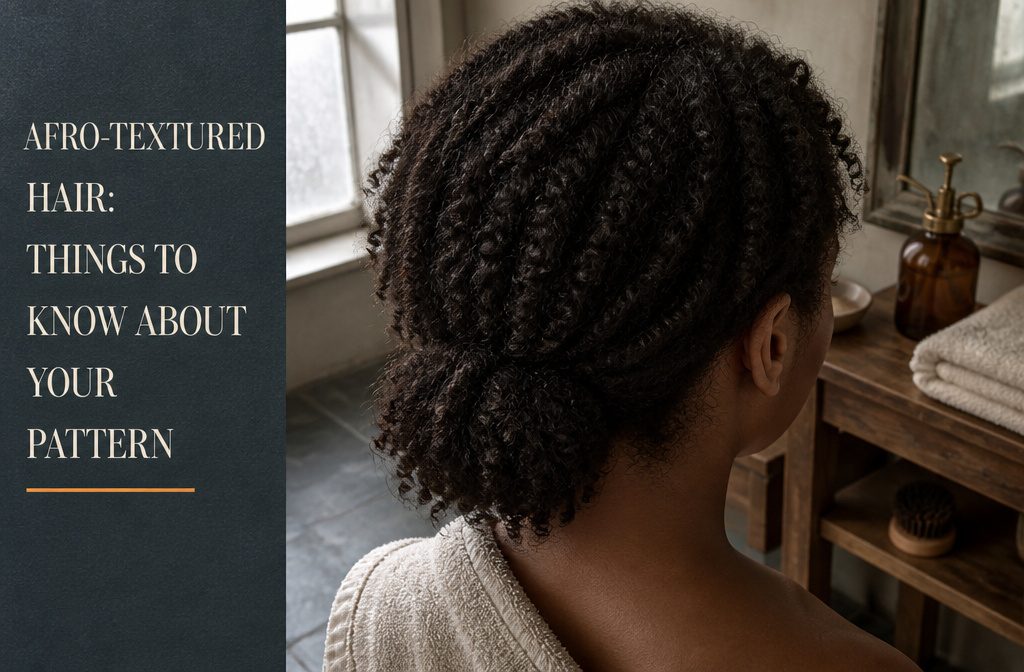
Afro-textured hair is Type 4 hair, the category that covers tightly coiled or kinky strands that spring from the scalp in dense patterns.
The curl structure creates a hydration problem: the flat, ribbon-like shape of each strand and the twisted path it takes make it harder for scalp oils to reach the ends, which is why 4c hair can stretch shampooing to once every 2–4 weeks while 4a needs it twice weekly.
1. What Afro-Textured Hair Means
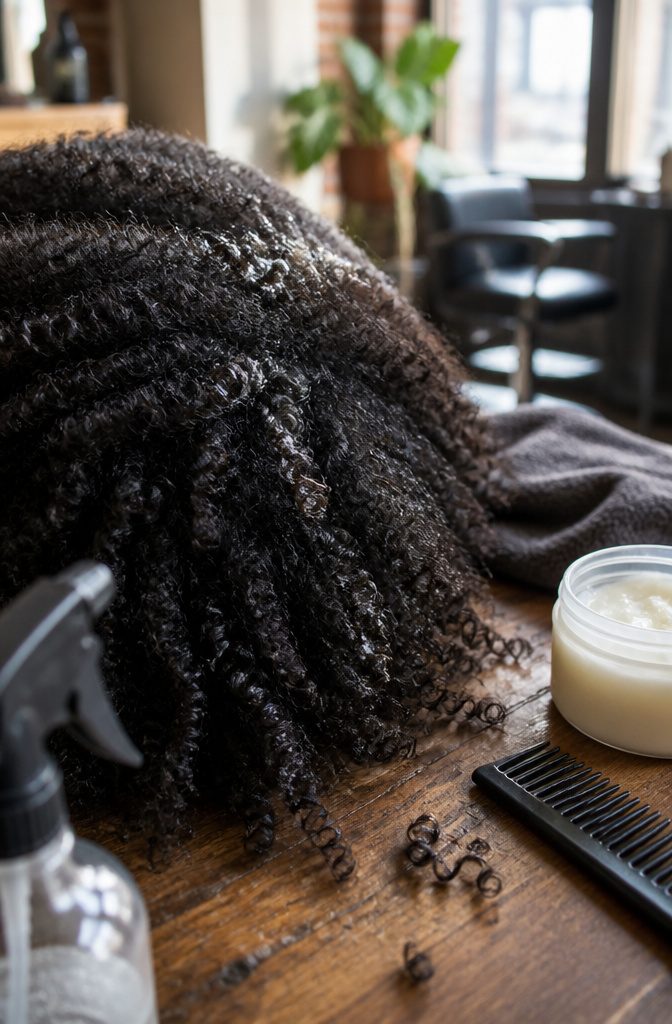
Type 4 hair is what people mean when they say afro-textured. The two names describe the same thing: tightly curled or coiled strands that spring from the scalp in dense patterns, ranging from soft, defined spirals to tight zigzag coils.
The structure is different from straighter types. Each strand is flat and ribbon-like rather than round, which gives afro-textured hair its distinct curl.
It also has fewer cuticle layers, the protective outer shell that keeps moisture in and damage out. That makes it more fragile than it looks.
The curl itself creates a second problem. The hair shaft twists as it grows, and that twisted path makes it harder for scalp oils to slide down to the ends.
Straighter hair gets coated naturally; afro-textured hair runs dry by design. I mention this not as trivia but because it drives every care decision that follows.
2. How Hair Charts Work
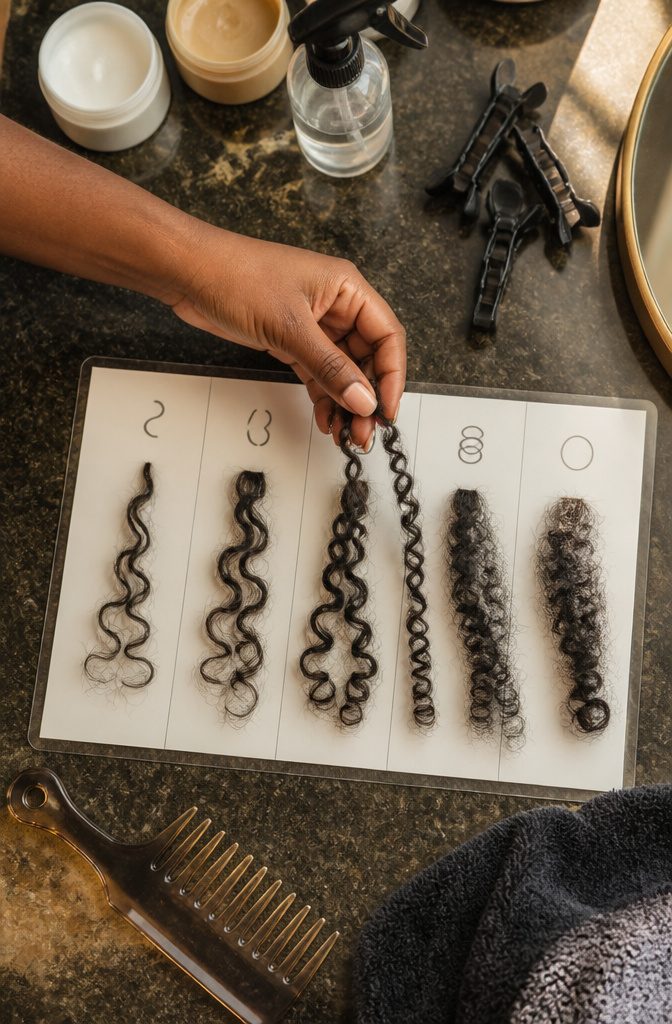
A hair type chart sorts hair by texture and coarseness as well as curl pattern, which makes it more useful than systems that track curliness alone.
Hairdressers rely on these charts to pinpoint what kind of care a strand actually needs, and the black hair types chart pays attention to both the pattern and the coarse texture that other systems miss.
The Type 1–4 curl pattern system is separate from the three biological growth forms. Lanugo is the fine prenatal hair, vellus is the short body fuzz, and terminal hair is the thick, pigmented kind growing from your scalp.
Terminal hair is what gets classified in the curl system, because that is the hair you wash, style and cut.
Real hair is more complex than any label.
Hair charts group types in different ways, and plenty of heads show 2 or 3 patterns at once. The chart gives you a starting vocabulary, not a diagnosis that settles everything.
3. 4a, 4b and 4c Patterns
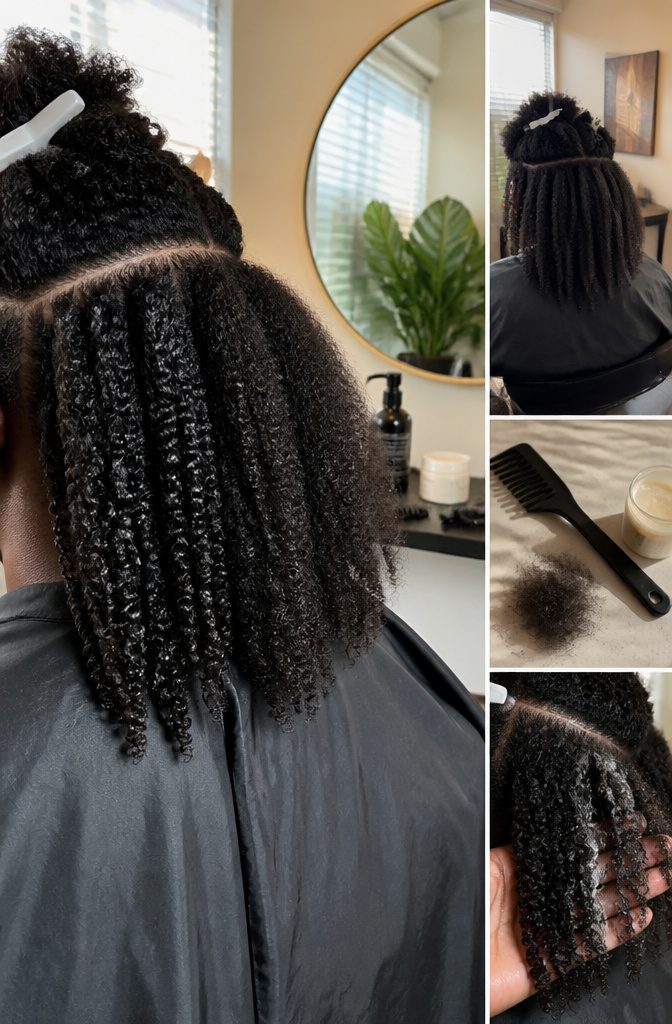
The Type 1–4 system splits hair into straight, wavy, curly and coily groups, with A, B and C subcategories inside each to capture how loose or tight the pattern runs.
Type 4, also called coily or kinky hair, forms tight curls in patterns that range from small S-shaped coils in 4a to the sharp zigzags of 4b and the densest coils of 4c.
Sources describe the progression as moving from looser curls to tight coils, also known as 4a, 4b and 4c hair types.
The 4a pattern looks like tightly coiled springs with a visible S curve. 4b shifts to a Z pattern that angles rather than curves, and 4c coils so tightly the individual curl shape nearly disappears.
All three sit under the Type 4 umbrella, but the differences matter when you’re choosing products or deciding how much time a style will ask for each morning.
4. Find Your Own Type
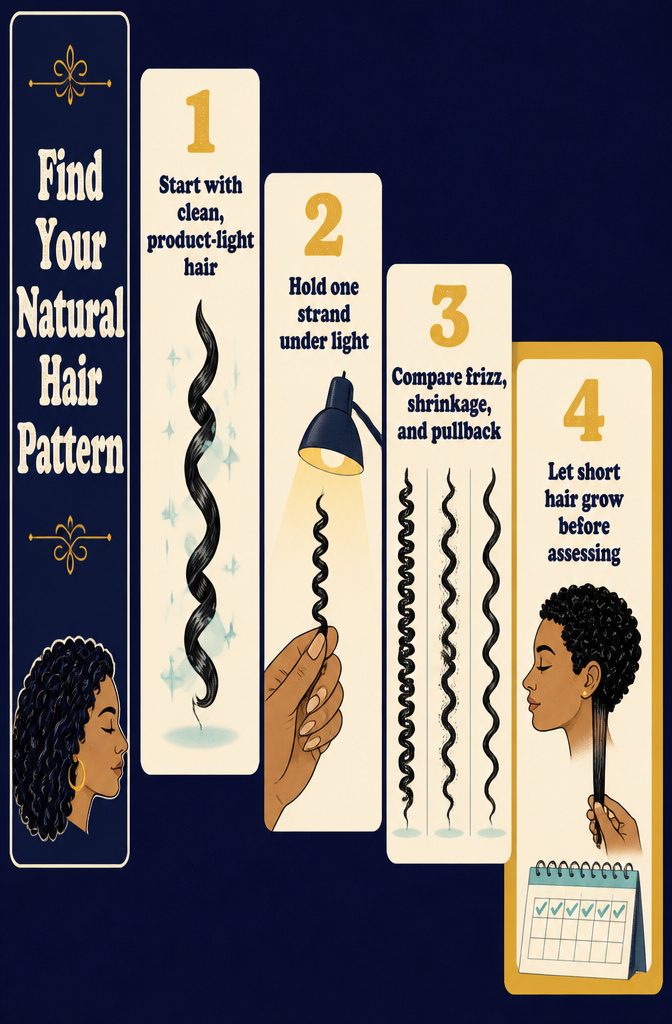
- Start with clean, product-light hair so you can see your actual pattern without buildup changing what the strand looks like.
- Pull out a single strand and hold it under light. The shape it takes tells you where you fall on the chart: tight coils, zigzag bends, or something looser.
- Compare what you see with real-life examples and pattern charts. Look at frizz, shrinkage and how much the strand pulls back when dry.
- If your hair is under an inch, it may be too short to assess. Let a small section grow out and wait a week or two before your next cut. Your type never changes, so you only need to do this once.
5. Type and Styling Choices
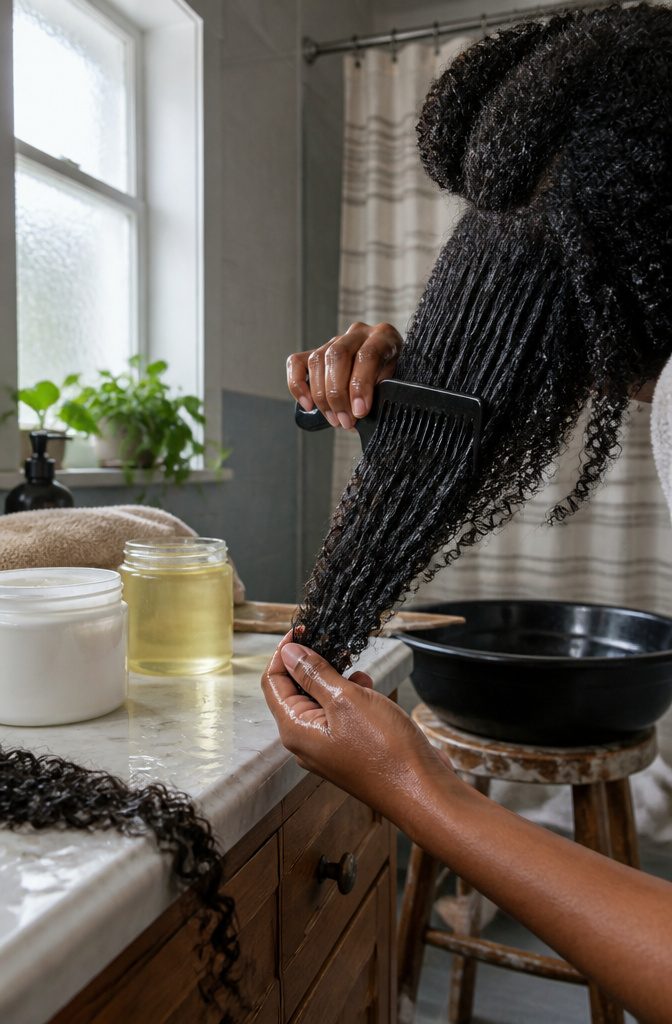
Your pattern decides which comb glides and which one snags.
Type 4a curls can handle a wide-tooth comb if the hair is damp and conditioned, but 4c needs a pick or an even wider spacing to avoid the discomfort and damage a fine-tooth comb causes on kinky texture.
The same logic runs through product choice: tighter coils make it harder for scalp oils to travel down the strand, so 4a benefits from moisturizing shampoo, a leave-in conditioner, and an oil such as jojoba or coconut to seal moisture at the ends.
Breakage follows dryness and frequent manipulation, so daily moisturizing and regular trims matter more than elaborate styling. Heavy work like braiding and cornrows can harm both hair and scalp if overdone.
Biotin shows up in advice on reducing breakage and hair loss, and coconut oil appears again in the same context. The tighter your coil, the more your routine should favor hydration over handling.
Strand Thickness
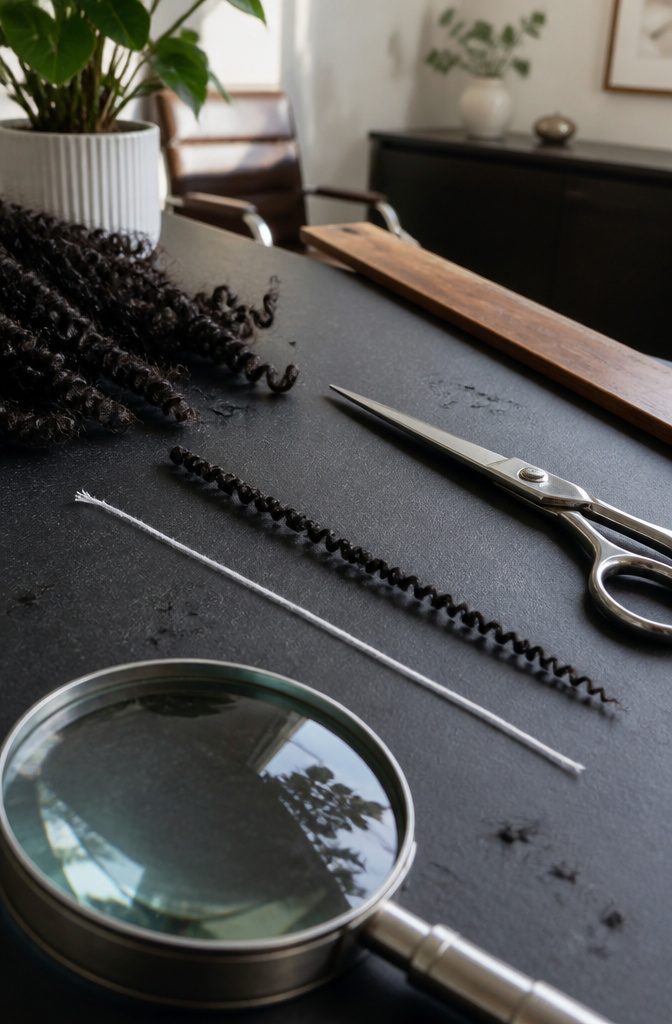
Texture here means the thickness of each strand, not how the hair feels when you touch it. The comparison point is a piece of sewing thread.
Fine hair is thinner than that thread, medium matches its width, and thick hair is coarser. This is measured strand by strand, separate from curl pattern entirely.
The charts I referenced earlier track both. Pattern tells you whether you land in 4a, 4b or 4c, and texture tells you whether those coils are fine, medium or thick.
A 4c head can be fine-textured, and a 4a can be coarse. The two classifications run parallel, and both matter for how products sit and how styles hold.
Wash Day Numbers
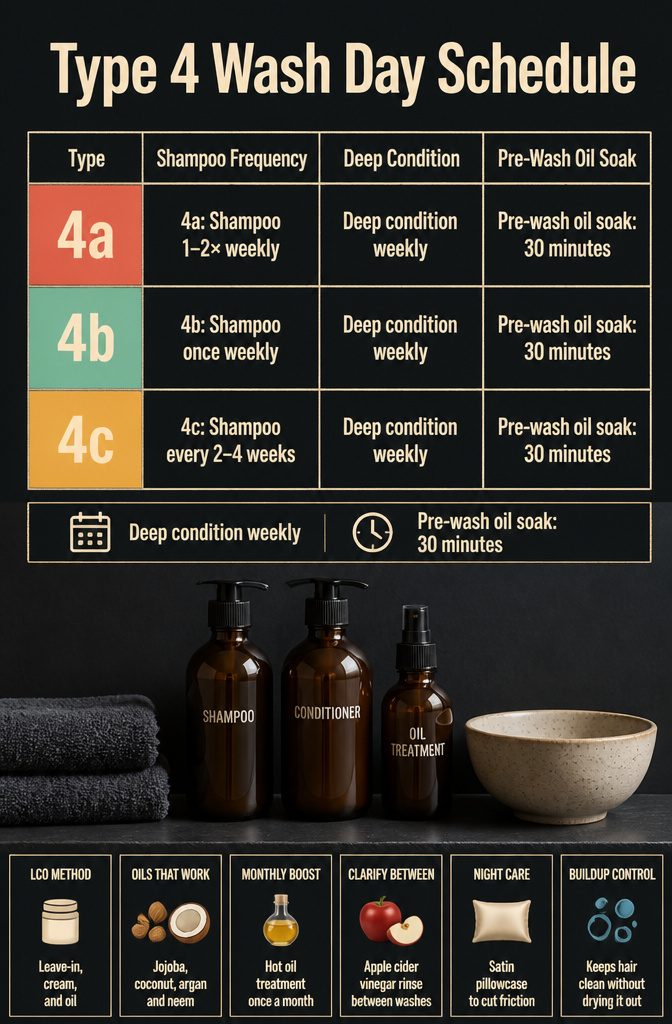
Type 4a typically needs shampooing once or twice a week, with a deep conditioning treatment once a week and about 30 minutes of coconut oil before washing. Type 4b does well with shampooing once a week and the same oil pre-treatment.
Type 4c can stretch shampooing to once every 2–4 weeks, though deep conditioning should still happen at least weekly. Another approach suggests washing roughly every week to week and a half to avoid drying the hair out further.
| Type | Shampoo Frequency | Deep Condition | Pre-Wash Oil Soak |
|---|---|---|---|
| 4a | 1–2× per week | Weekly | 30 minutes |
| 4b | 1× per week | Weekly | 30 minutes |
| 4c | Every 2–4 weeks | Weekly | 30 minutes |
Between washes, the LCO method layers leave-in conditioner, cream, and oil; jojoba, coconut, argan and neem all show up regularly.
I’d add a hot oil treatment once a month, an apple cider vinegar rinse between washes to clear buildup, and a satin pillowcase to cut friction overnight.
Frequently Asked Questions
What exactly is a hair type chart?
A hair type chart categorizes hair by texture, coarseness, and curl pattern.
Hairdressers use these charts to identify what kind of care a strand needs, and black hair type charts track both the curl pattern and the coarse texture that other systems leave out.
The Type 1–4 system splits hair into straight, wavy, curly and coily groups, with A, B and C subcategories inside each.
What are the 4 types of natural hair?
Type 1 is straight, Type 2 is wavy, Type 3 is curly, and Type 4 is coily or kinky.
Each type has A, B and C subcategories that describe how loose or tight the pattern runs. Type 4 covers afro-textured hair, which includes tight coils ranging from soft spirals to dense zigzag patterns.
How do I know what kind of Black hair I have?
Start with clean, product-light hair so you can see your actual pattern without buildup.
Pull out a single strand and hold it under light to see whether it forms tight coils, zigzag bends, or something looser, then compare what you see with pattern charts and real examples.
Look at frizz, shrinkage and how much the strand pulls back when dry.
How do you determine your type if your hair is too short?
If your hair is under an inch, let a small section grow out and wait a week or 2 before your next cut.
Your type never changes, so you only need to do this once. Once it’s long enough, you can pull a strand and see its natural pattern.
Is there a difference in hair kinds between men and women?
Men’s and women’s hair types are generally identical in chemical composition and structure.
The distinction is style and grooming habits, not the hair itself. The same Type 1–4 curl pattern system applies to both.
What is the texture of Black hair called?
Type 4 hair, also called afro-textured, kinky or coily hair. The 2 names describe the same thing: tightly curled or coiled strands that spring from the scalp in dense patterns.
Each strand is flat and ribbon-like rather than round, which gives it its distinct curl and makes it more fragile than it looks.