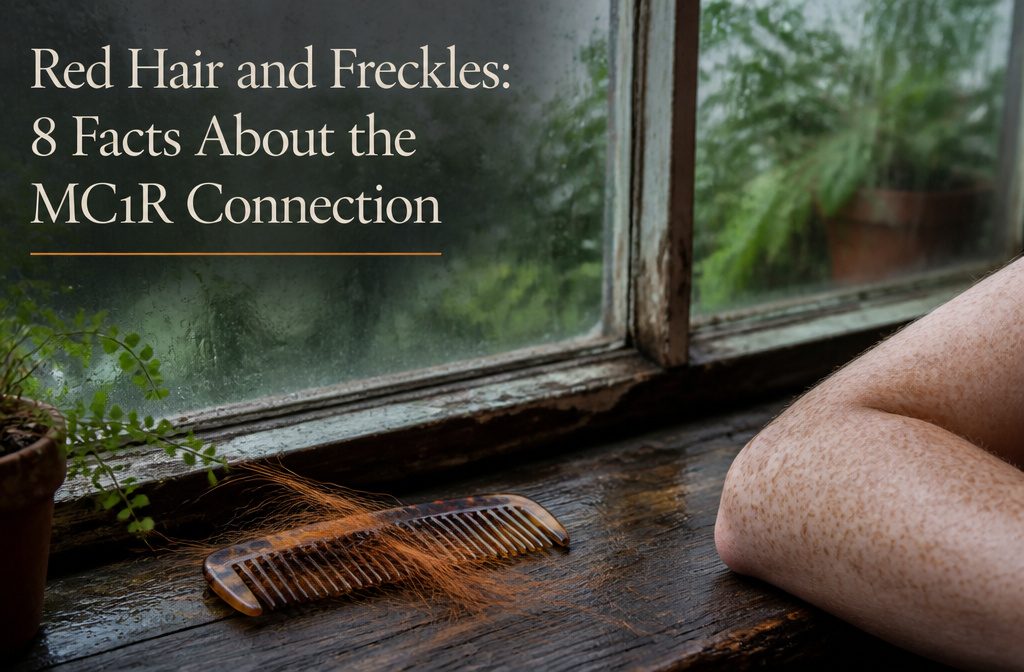
Red hair and freckles come from the MC1R gene, which controls the balance between two kinds of melanin; when it changes, pheomelanin builds up instead of eumelanin, giving hair a reddish cast and freckles a rusty look.
The link is statistical, though: around 20% of redheads never develop freckles, and any ethnicity can.
What a Freckle Is
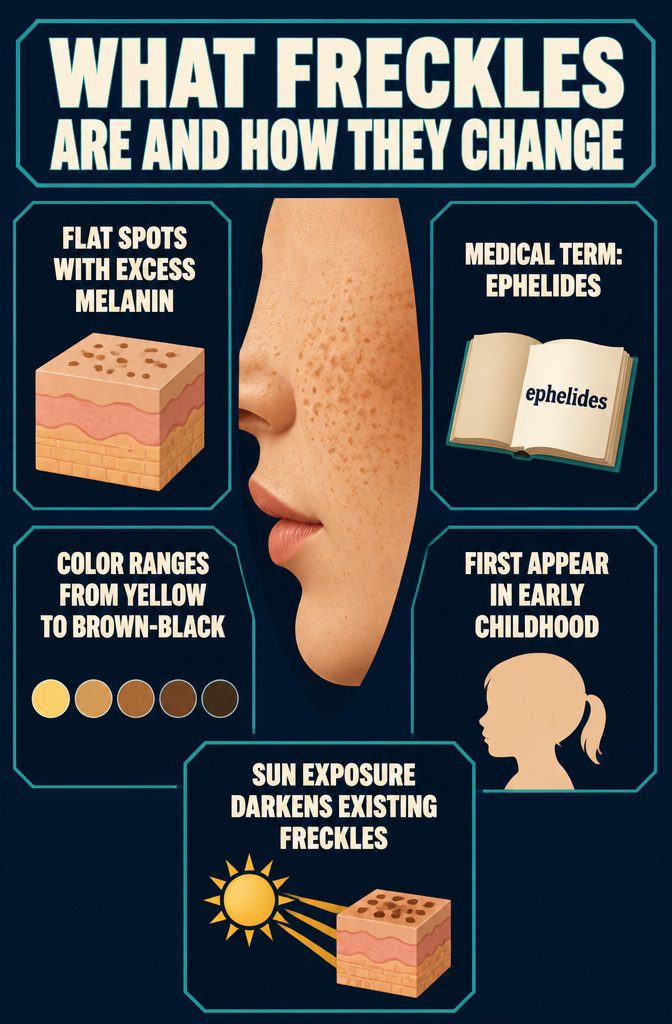
A freckle is a small, flat spot on the skin caused by pigment cells that contain excess melanin.
The medical term is ephelides. They range in color from yellow, tan, and light brown to red, brown, or brown-black, depending on your skin tone and how much melanin the cells produce.
No one is born with them. Freckles appear in early childhood, become more visible in summer when sun exposure triggers melanin production, and may fade as you get older.
The number, density, and pattern vary widely from person to person. Some people have a few scattered spots; others have widespread coverage across the face, shoulders, and arms.
Freckles are most common in people with lighter Fitzpatrick skin types, particularly those with reddish blonde or red hair.
That pairing isn’t universal, but it’s the usual match. Genetic factors determine whether you’re predisposed to them, but sun exposure makes existing freckles darker and can prompt new ones to form.
Melanin and Sun Exposure
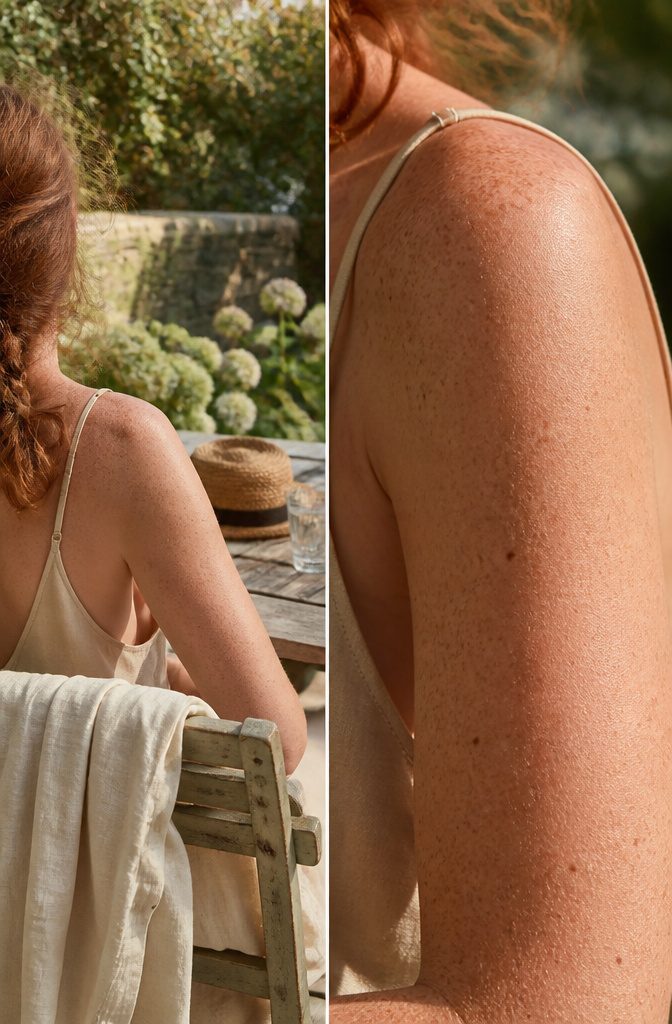
Melanocytes make melanin, the pigment protein that darkens your skin when UV light hits it. Think of it as your skin putting on sunglasses.
UV stimulates melanin production, and depending on how your melanocytes are distributed, the result looks different. In some people, melanocytes spread evenly across the skin, so sun exposure produces a smooth tan.
In others, melanocytes bunch up in clusters, and the sun triggers concentrated flecks of melanin instead. That’s a freckle.
Sun doesn’t create freckles from nothing, but it makes existing ones darker and brings out new ones that were barely visible before.
This is why freckles stand out most in summer. The more UV exposure, the more melanin those clustered melanocytes pump out, and the more contrast you see between freckled and non-freckled skin.
The MC1R Connection
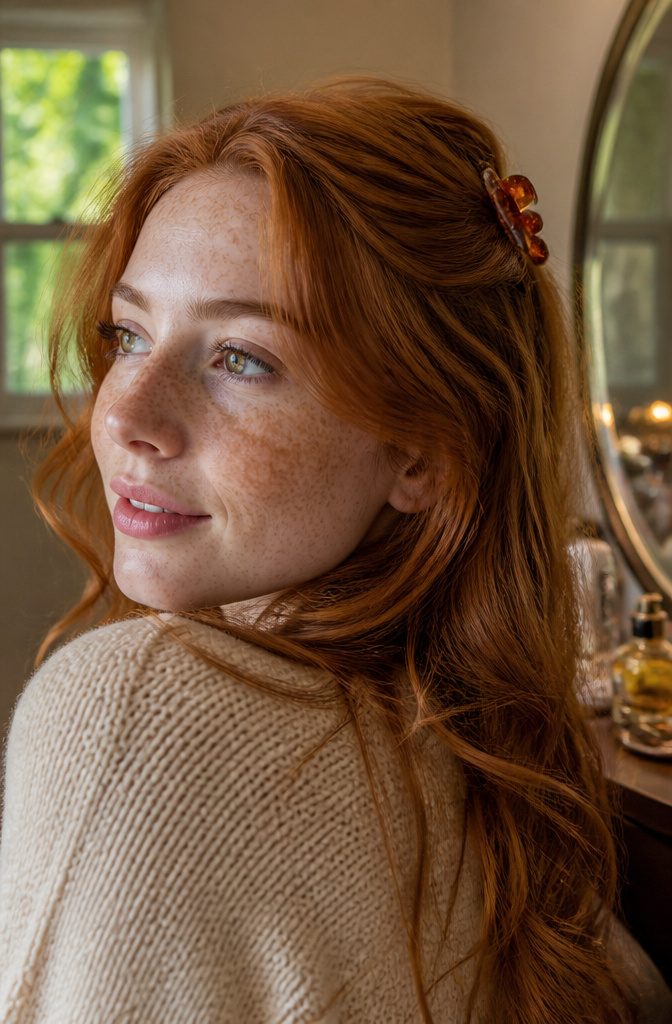
The MC1R gene sits on melanocytes, the cells that make pigment, and controls the balance between two kinds of melanin.
When MC1R changes in a particular way, pheomelanin builds up instead of eumelanin, which gives hair its reddish cast and freckles their rusty look.
The gene governs both at once, which is why the two traits travel together so often.
Freckles are always a family affair: Parents pass on the likelihood of freckling, as well as its locations across the body.
That means the pattern you see on your arms or across your nose comes down to you the same way the red itself does. The placement is inherited, not random.
The 20% of Redheads Without Freckles
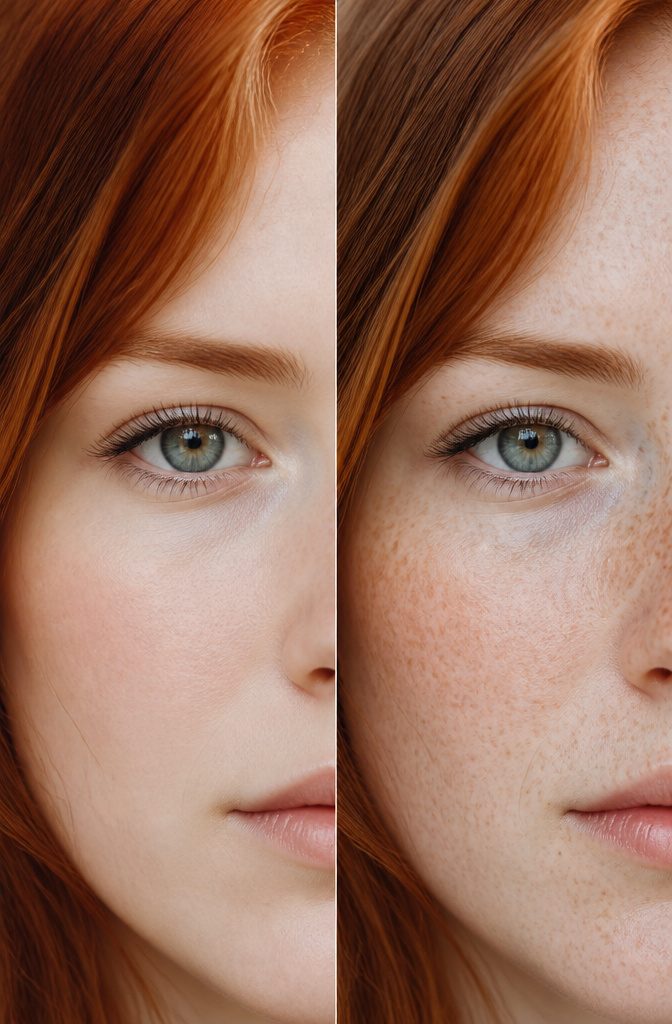
Not every redhead has freckles. Around 20% of people with red hair do not develop them at all, which surprises anyone who assumes the two always arrive together.
The MC1R gene explains why freckles are so common in redheads, but it does not guarantee them. MC1R controls both red hair and melanin production, and freckles depend on how that melanin behaves in the skin.
The freckle gene itself is dominant, which is why freckles show up in plenty of people who never had red hair.
But the link is statistical, not absolute. If you have red hair and no freckles, you are in the minority but not an outlier.
Other Genes Behind Freckles

MC1R gets most of the attention, but it’s not the only gene behind freckles.
About a decade ago, scientists identified another freckle-related gene in Chinese populations, and the genetic picture is still incomplete. Researchers have not yet mapped all the causes, even though freckles appear across a wide range of ethnic groups.
What remains consistent is that freckles run in families.
Parents pass down both the tendency to freckle and the areas where they’ll show up. The precise genetic mechanism varies, but the inheritance pattern does not.
If you have freckles, the unfreckled skin around them will be more susceptible to sunburn, so sunscreen matters more than you might expect.
The freckles themselves are flat pigment marks and not a concern on their own, unlike raised moles. Think of them as your skin’s built-in reminder to reapply.
Where Freckles Appear
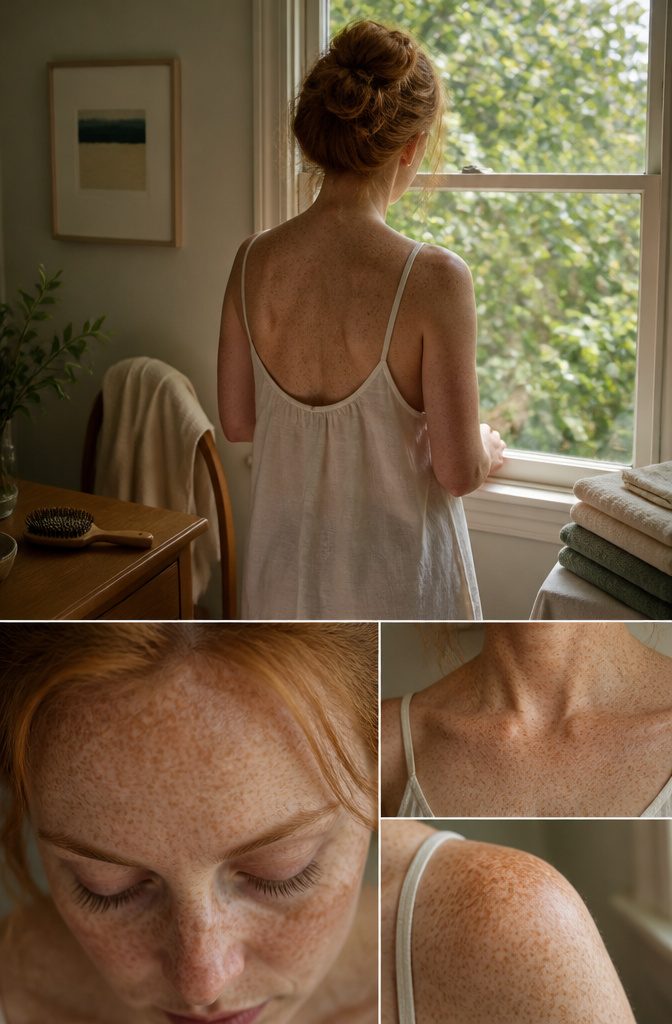
Freckles can show up anywhere on the body that absorbs UV light, which puts the face, neck, chest, shoulders and arms at the top of the list.
Body freckles and face freckles are the same thing. The difference is how densely they cluster and where the skin gets the most exposure.
I’ve noticed that plenty of people have freckles concentrated on the nose and forehead but stay relatively clear everywhere else. That’s just one way the freckle gene can express itself.
Some redheads are covered shoulder to elbow, others have a light dusting across the cheeks and nothing below the collarbone. For some, freckles only come out in summer when UV exposure ramps up, then fade back down once fall arrives.
Density varies from person to person, and there’s no single pattern that applies to everyone with MC1R variants. You might have heavy freckling on your upper chest but clear arms, or the reverse.
Freckles, Moles and Sunspots
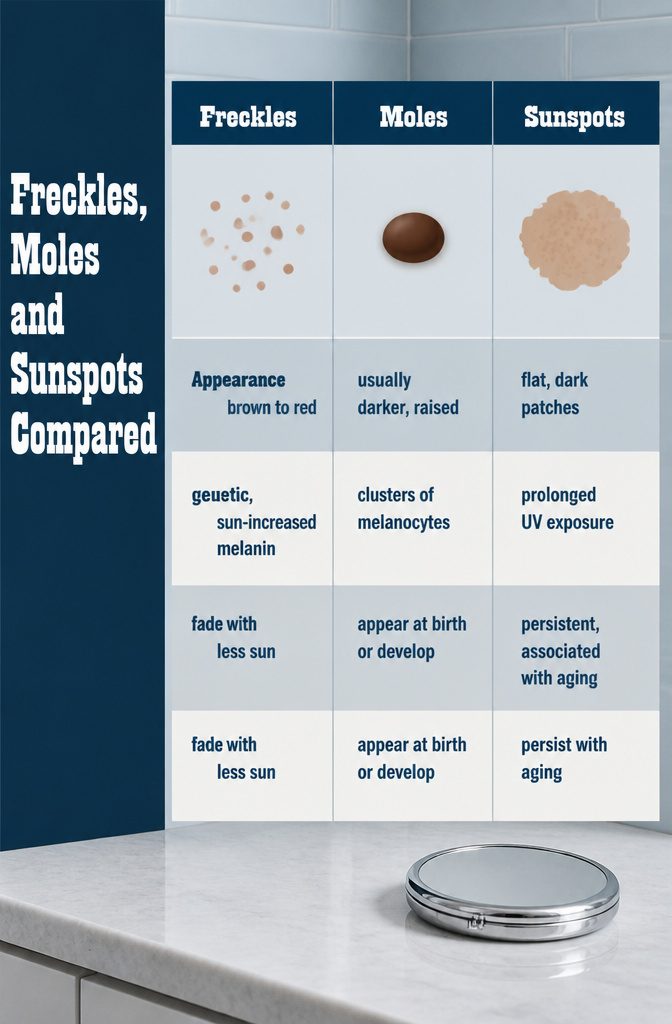
All three marks show up on skin and darken with sun, but they come from different places and behave differently once they are there.
Freckles are flat, genetic and often fade with less sun; moles are usually darker and raised; sunspots are persistent flat patches tied to prolonged sun exposure and aging.
| Mark | Appearance | Cause | Behavior |
|---|---|---|---|
| Freckles | Flat, light brown to red | Genetic, increased melanin from sun | Fade with reduced sun exposure |
| Moles | Usually darker, raised | Clusters of melanocytes | Appear at birth or develop over time |
| Sunspots | Flat, dark patches | Prolonged UV exposure | Persistent, associated with aging |
Most moles are benign, but changes in size, shape or color should be checked by a doctor, as these can sometimes indicate skin cancer.
Sunspots, while generally harmless, stay put and can be treated or lightened with skincare if they bother you.
Sunscreen and Skin Safety
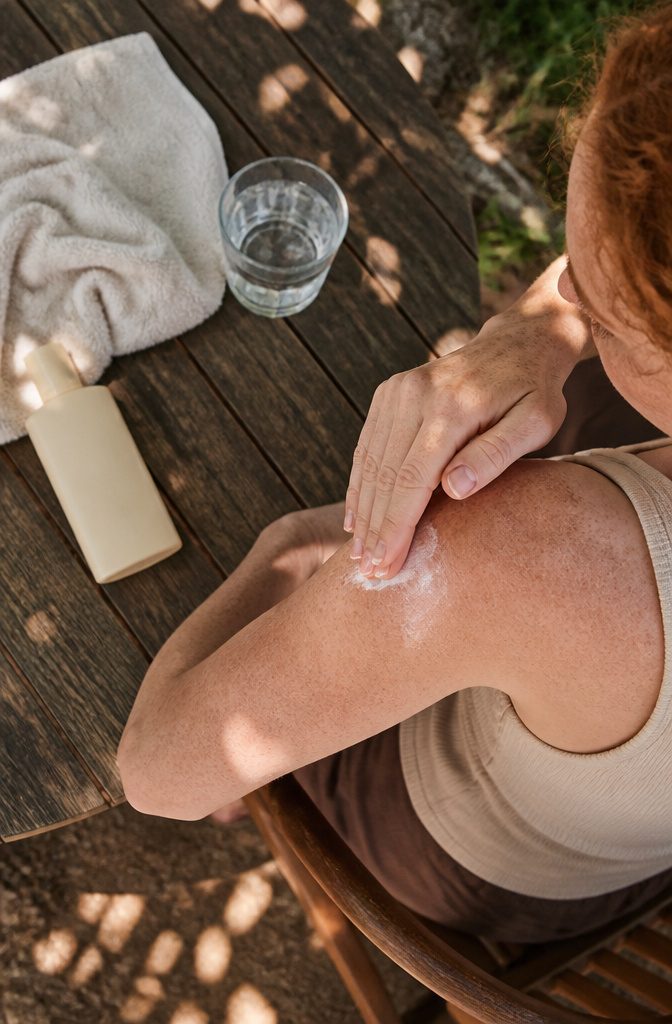
Freckles are benign. They are pigment, not a health threat, and having a lot of them is no reason for alarm on its own.
The skin between them deserves more of your attention. Areas without freckles may be especially prone to sunburn, and that runs against instinct, since the speckled patches look like the part that needs protecting.
I’d treat the clear stretches as the weak spots. Wear plenty of sunscreen over all of it, freckled or not, and don’t assume a bare-looking shoulder or forearm is safer than a heavily freckled cheek.
Inside a Freckle
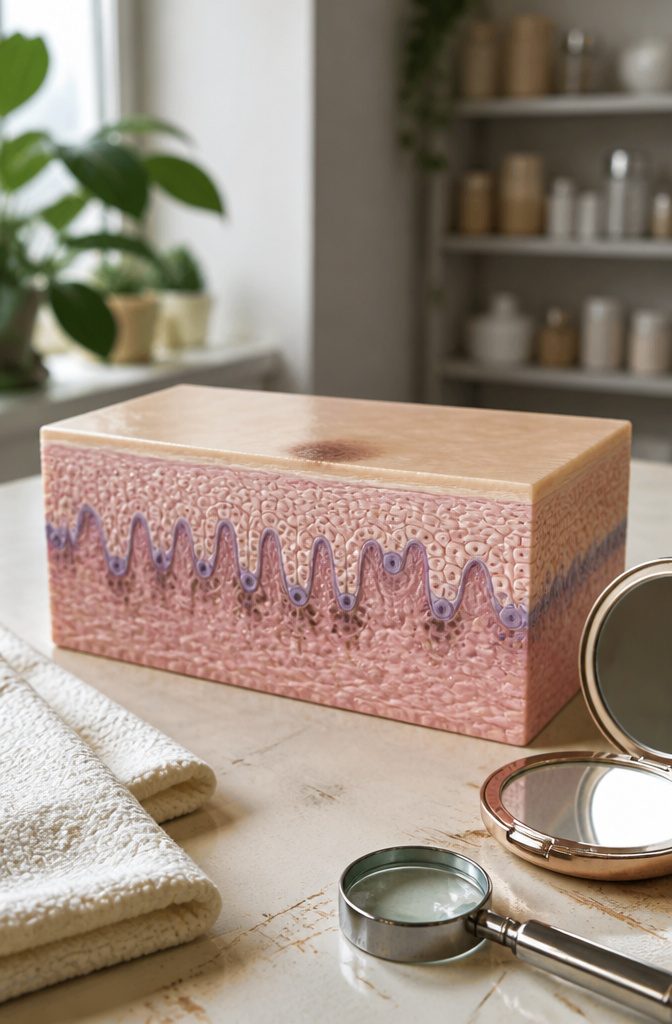
A freckle holds about 40% fewer melanocytes per square millimeter than the skin beside it. That sounds backward for a dark spot, but the cells that remain can carry multiple large melanosomes, the packets where melanin is made and stored.
Below the surface, the rete ridges, the ridged boundary between the top skin layer and the one under it, are elongated and clubbed in a freckle.
Melanin is also increased in the basal epidermal unit, the bottom layer where pigment cells sit among neighboring skin cells. I find that a more useful picture than "extra pigment": fewer cells carrying heavier loads.
Freckles Across Ancestries

Ireland and Scotland get the credit, but red hair with freckles did not start there. The trail points to central Asia.
Freckled, red-haired people turn up in accounts from the Slavic region, the Volga region of Russia, Eastern Europe, Italy, Morocco, Algeria and all regions of Asia. Northern and western Europe just record the highest numbers today.
Freckling isn’t locked to one family tree either: any ethnicity can develop freckles. MC1R is not the only gene involved, and a separate one has been tied to freckles in Chinese populations.
When I save reference photos, I stop filing freckles under "Celtic." They show up on far more faces than that.
Where Red Hair Began
The Celtic fringe gets the credit, but red hair and freckles did not begin in Scandinavia, Ireland or Scotland.
The trail points to central Asia, and red hair shows up in ancient humans from roughly 30,000–80,000 years ago, tied to the early migrations out of Africa.
It has also been recorded across the Slavic region, the Volga region of Russia, Eastern Europe, Italy, Morocco, Algeria and all of Asia.
Early scientists proposed that red hair helped people make vitamin D in cold, dim climates. I like the logic, but it remains a theory.
Today the numbers peak in northern and western Europe. Ireland leads per capita at 10%, and about 6% of Scotland has red hair, with Edinburgh holding the highest concentration in the world.
Shades of Red Hair
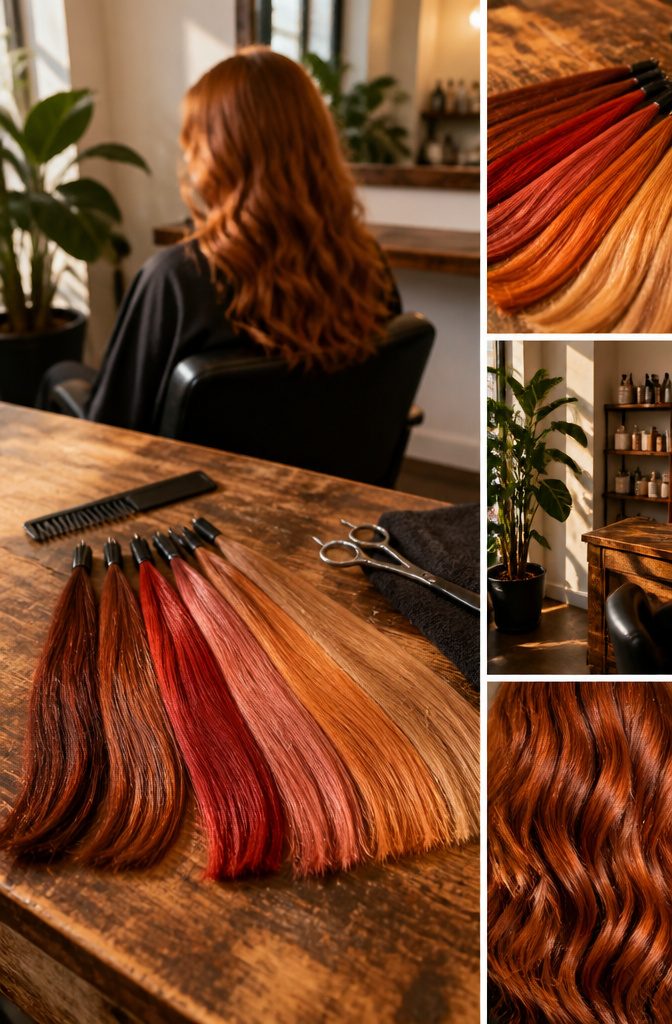
Red hair covers more ground than one color. Auburn leans brown with a red cast, ginger runs closer to orange, and deep red goes darker and richer.
Rose gold is softer and pinker, deep ginger adds depth to that orange, and strawberry blonde is blonde warmed with red. International Redhead Festivals have celebrated as many as 50 shades, so these six are a starting point.
Names shift from stylist to stylist, so I’d bring a photo rather than rely on a label like "ginger."
Red hair has also shown up in paintings and folk stories for centuries, usually as the detail the eye lands on first.
Frequently Asked Questions
Are red hair and freckles linked?
Yes. The MC1R gene influences both hair color and pigment production, so the two traits often appear together.
The link is statistical, not guaranteed: some redheads have no freckles, and many freckled people never had red hair. Freckles on the body follow the same rules as freckles on the face.
Why do redheads have freckles?
A changed MC1R gene lets pheomelanin, a rarer reddish pigment, accumulate in place of the usual brown-black eumelanin.
That buildup gives hair its red cast and freckles their rusty tone. Variations in MC1R may also affect how many freckles a person gets.
What percentage of redheads have freckles?
Roughly 80%.
Around 20% of redheads never develop freckles, so they are common but not a sure thing. MC1R explains why the two overlap so often, but it does not guarantee freckling.
What is a freckle?
A freckle (medical term: ephelis) is a small, flat spot of skin where pigment cells hold extra melanin.
Colors run from yellow and tan to red, brown, or brown-black. Nobody is born with them: they show up in early childhood, stand out most in summer, and may fade with age.
What causes freckles?
Genes and sunlight working together. In freckle-prone skin, pigment cells sit in clusters, so UV exposure produces concentrated flecks of melanin instead of an even tan.
Parents pass down both the tendency to freckle and where the spots appear, and MC1R is not the only gene involved.