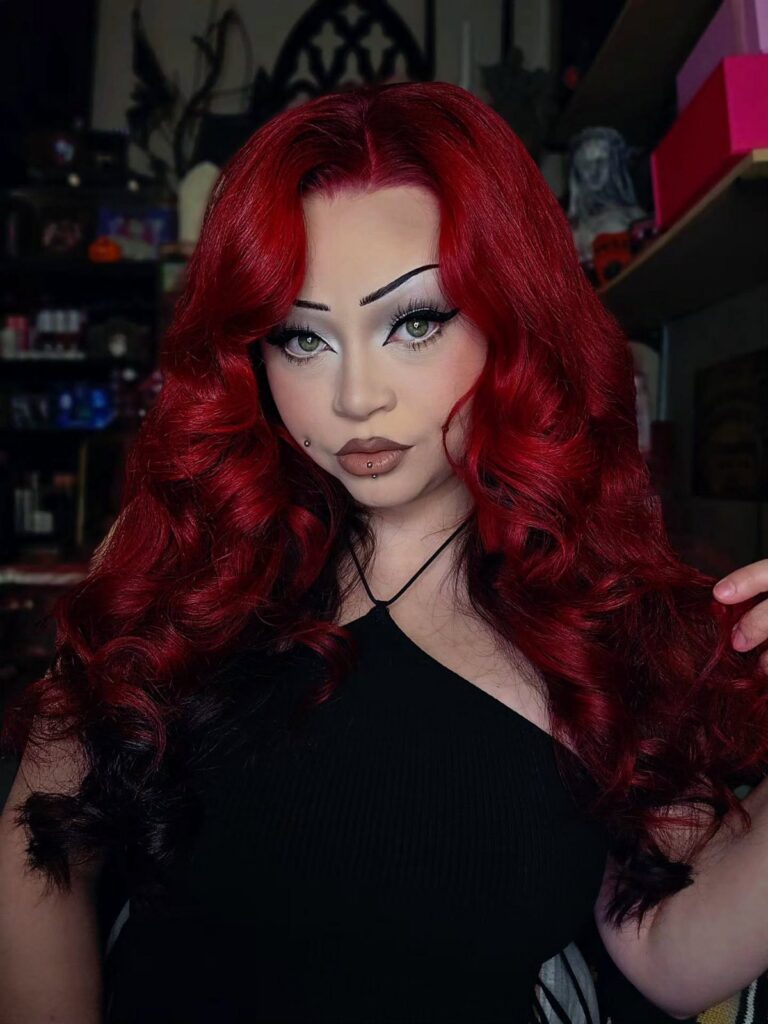
Red shades here run from black cherry, which looks dark from a distance and shows its red only in good light, to bright poppy and scarlet, which stay loud in any light.
Your starting color decides where to begin: brunettes get the easiest result from dark red, mahogany or brown-red. The brighter the shade, the sooner fade shows.
1. Cinnamon Red
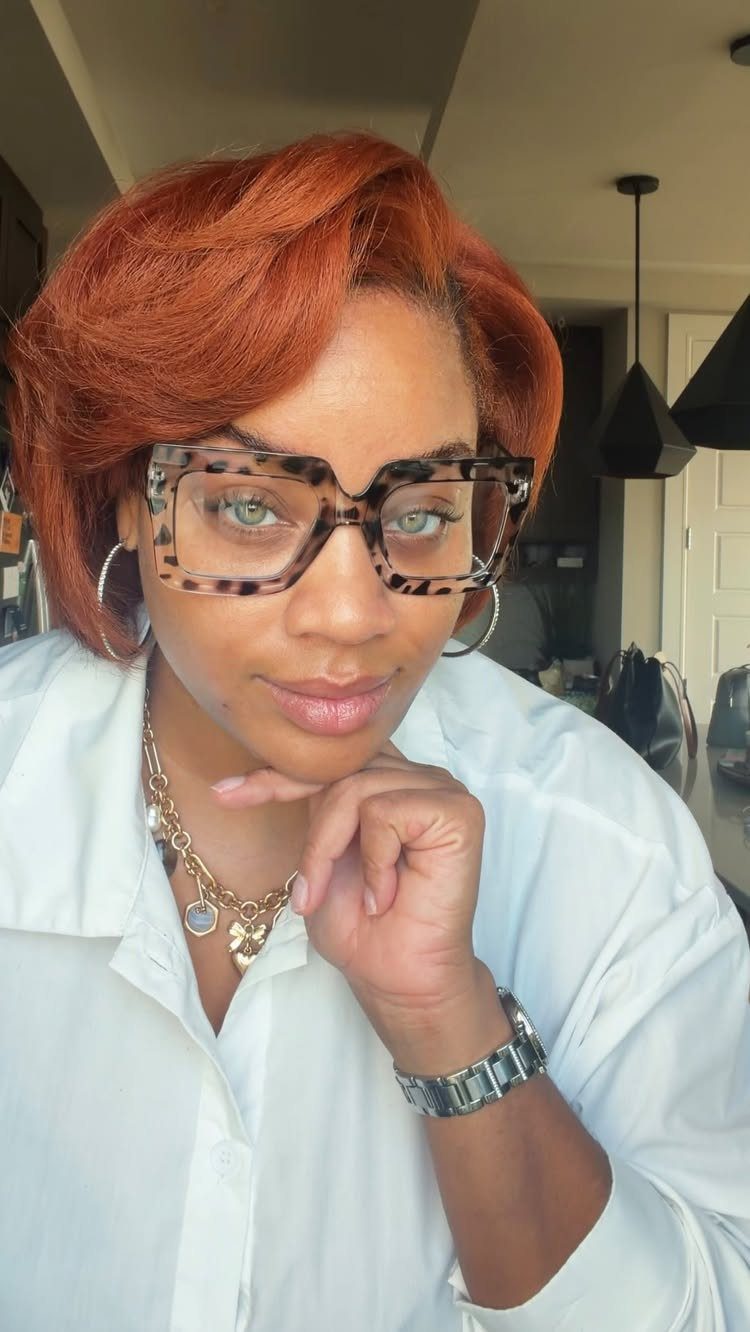
Cinnamon red is the red I would hand to anyone nervous about going red at all. The warmth reads as a brown-leaning copper, so it sits comfortably next to gold jewelry and doesn’t shout.
On short, voluminous hair like this, the color does a lot of the work, because the volume catches light and shows off the warm tones.
Ask your stylist for "cinnamon" by name and bring a photo, since one person’s cinnamon is another’s auburn.
2. Dark Red Hair
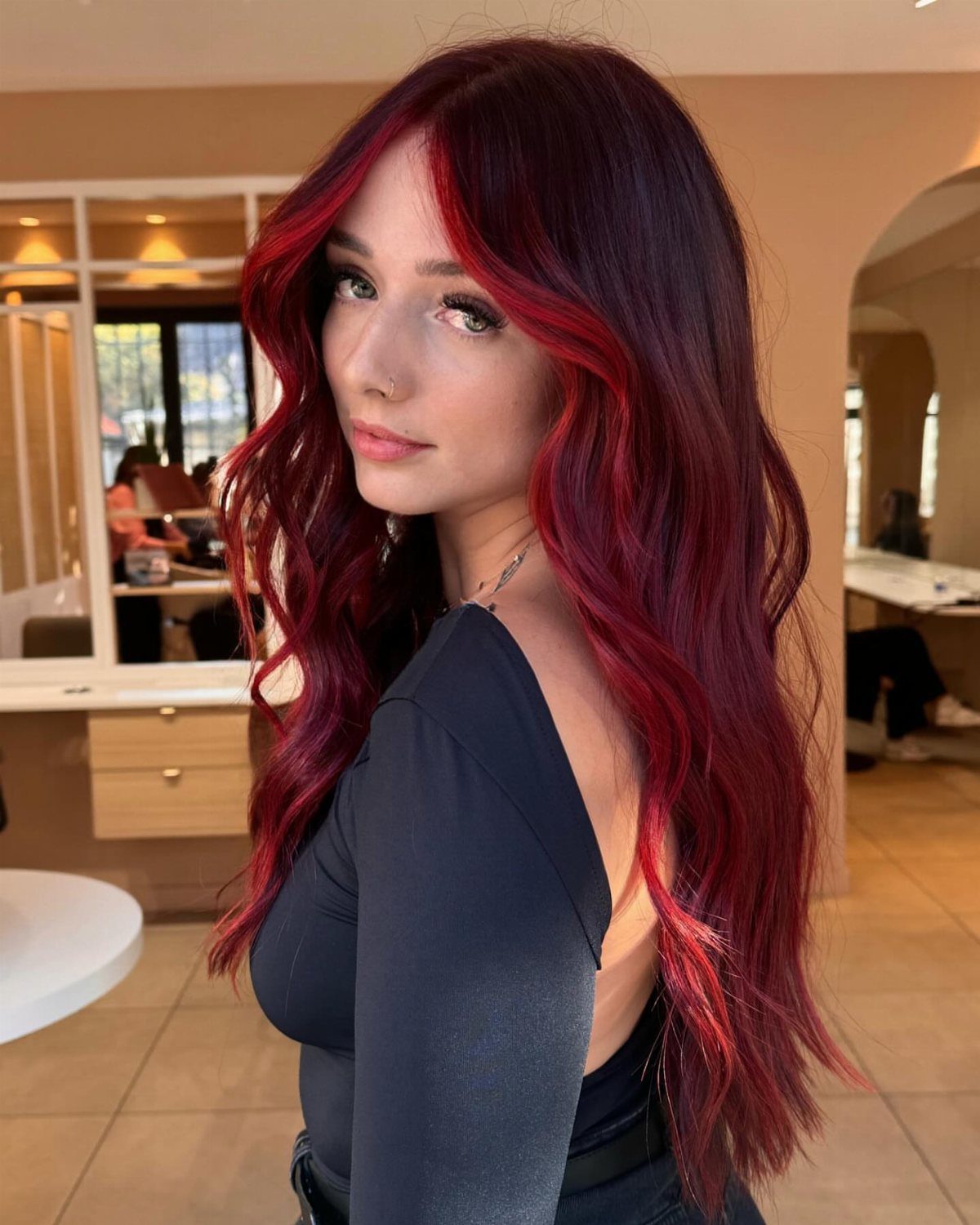
The shadowed root means grow-out looks planned rather than neglected.
I like the bright pieces up front best. They brighten the face without turning all of your hair vivid red.
If you’re a brunette, this is an easy way in: have the streaks placed around your face and leave the rest deep.
3. Black Cherry
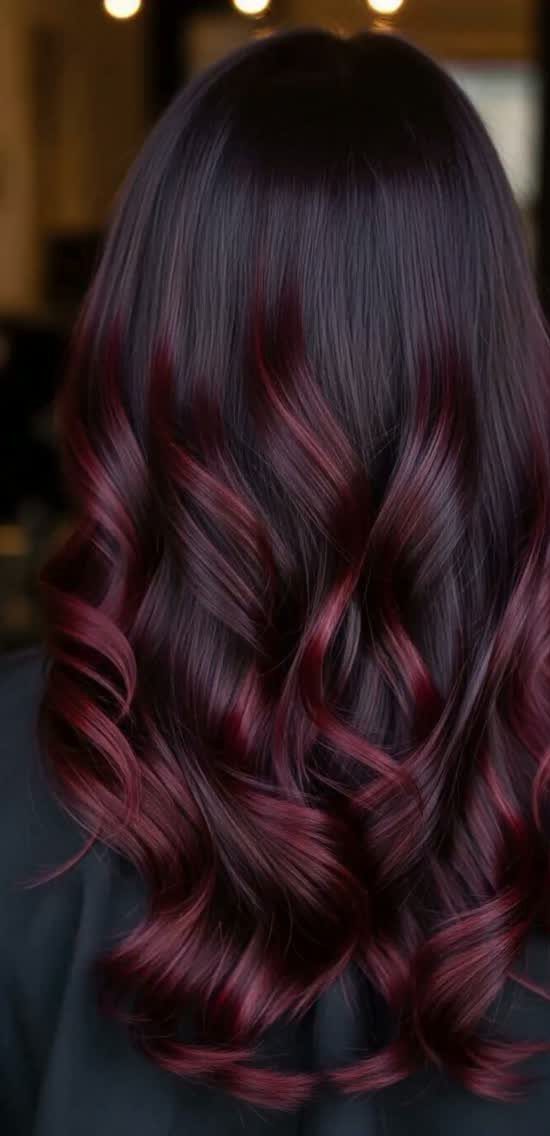
The cool, moody cast is the appeal: it reads dark from a distance and shows its red only in good light.
That makes it a good pick for anyone who wants red without anyone calling it "red hair" at the office. Brunettes get there most easily.
Waves help, since every curve catches a different shade. Bring a photo and say "black cherry" so your stylist aims cool, not orange.
4. Burgundy
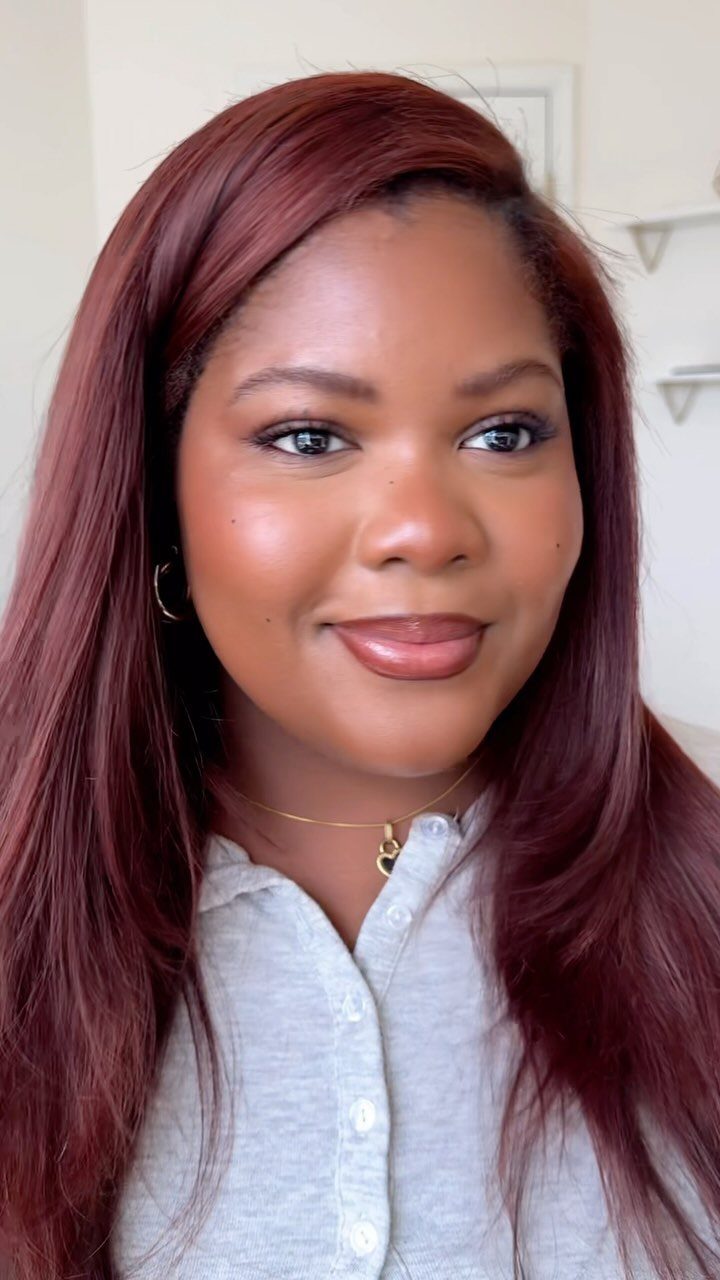
Violet undertones are what separate burgundy from every warmer red on this list. Long, straight-to-softly-bent hair shows that cool depth best, and gold jewelry looks great against it.
Choose burgundy if copper or ginger feels too bright for you. It’s rich without being loud.
I’d say it’s the most polished of the dark reds, though it’s also the one where the exact shade matters most. Before the appointment starts, find out how much violet the stylist plans to use.
5. Copper Red
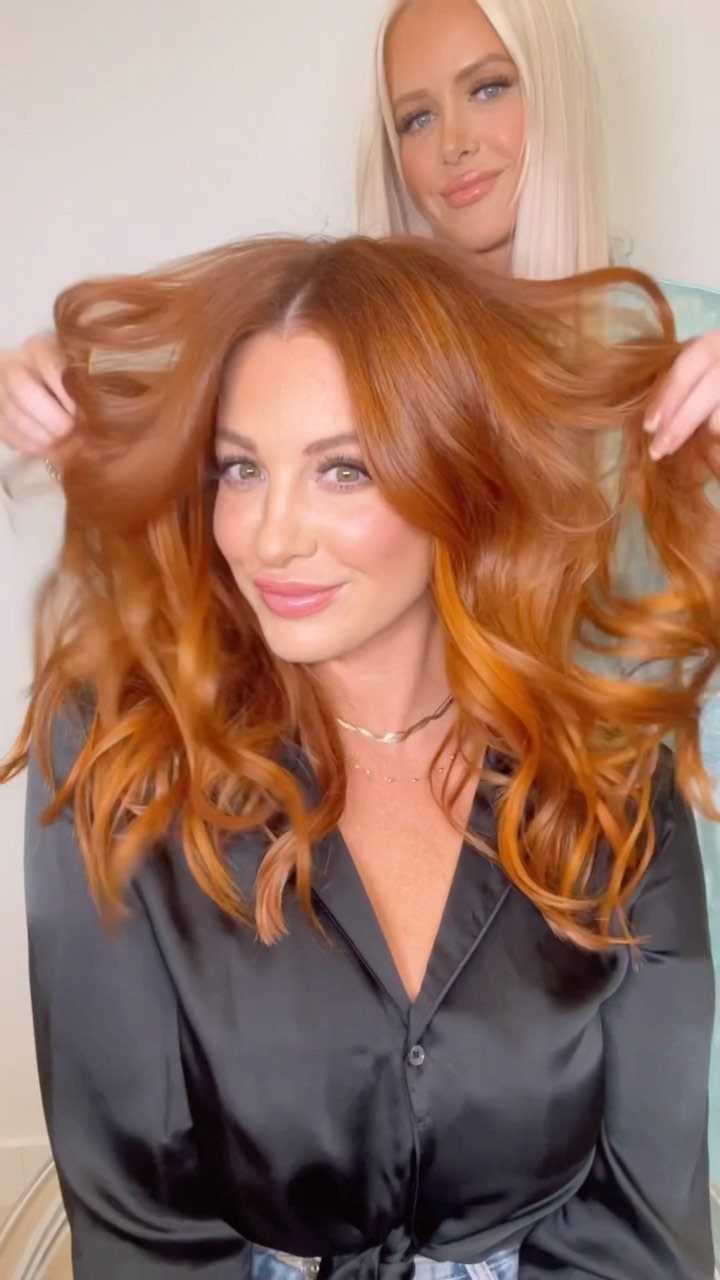
A tinted conditioner is the practical detail that makes copper red livable. Copper is the shade that seems to slip away first, and a color-depositing conditioner between salon visits tops it back up at home.
Long, wavy hair like this gives plenty of surface for the color to glow. If you’re a natural redhead, copper red is a gentle way to deepen what you already have.
Pick a conditioner that matches your shade as closely as possible, and use it as a refresh rather than a fix.
6. Ruby Burgundy
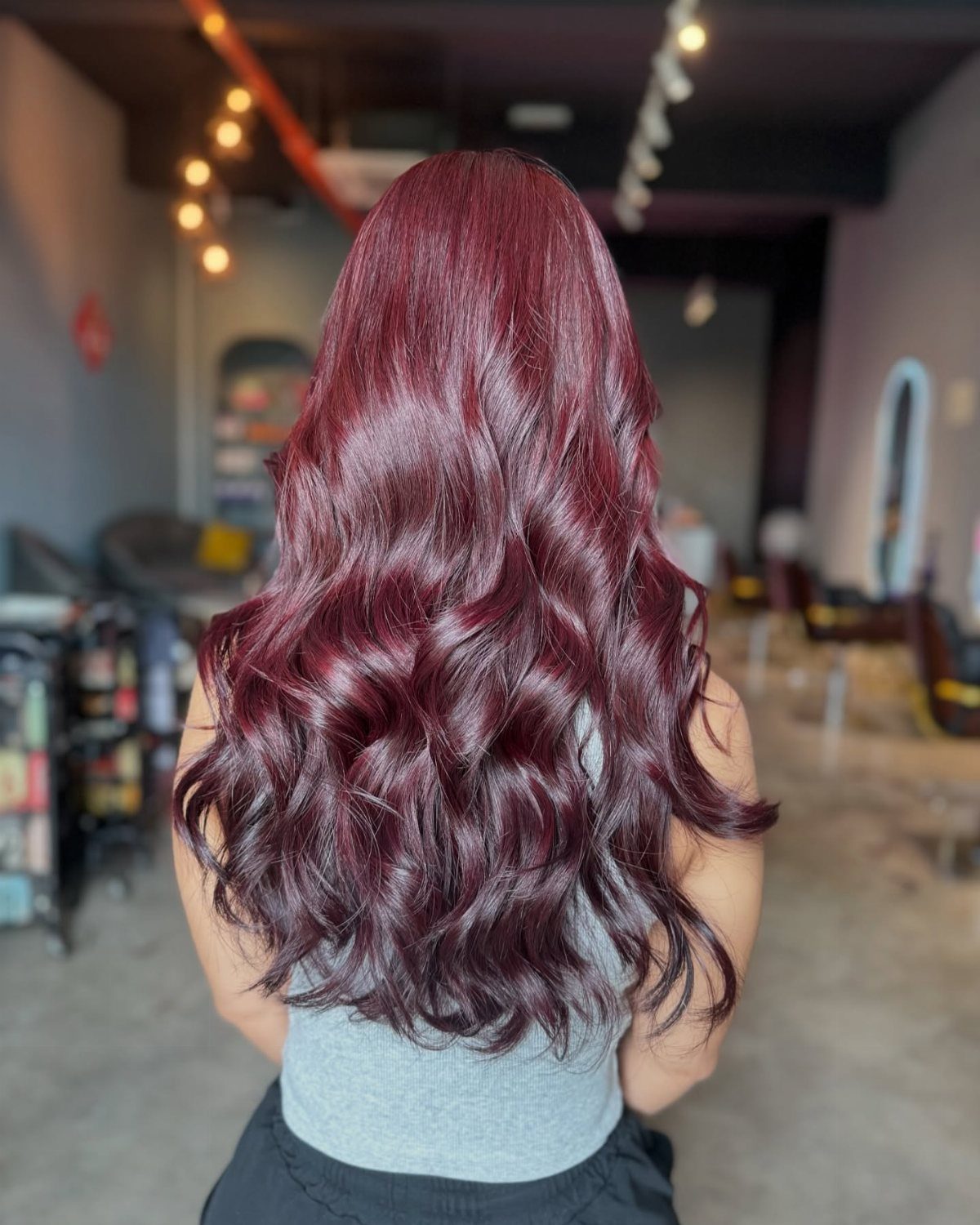
Curls and ruby burgundy suit each other. Waves and ripples scatter the light in different directions, so the deep red looks fuller and more dimensional than it would on flat, straight hair.
This is a shade I’d choose for wavy or curly hair over almost anything else in the dark-red family. It adds vibrancy without going bright.
Ask for "ruby" alongside "burgundy" when you book, because ruby pulls the color toward a livelier red and away from a flat wine tone.
7. Bright Copper
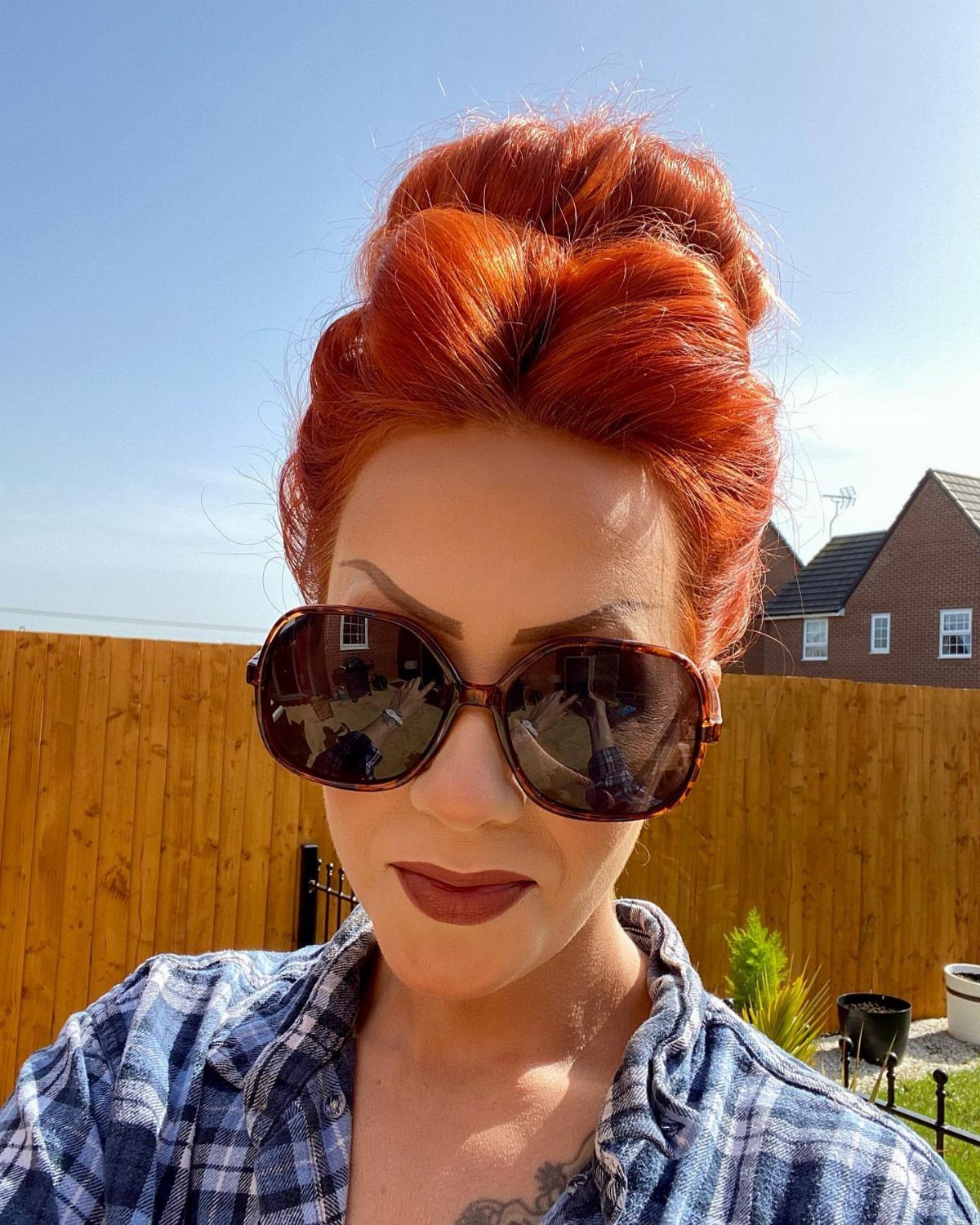
Shiny new penny is the right comparison: bright copper is a vivid, warm red that stays loud even when the hair is pinned up and out of the way.
An updo like this one shows the color off, since nothing hides it. I’d pick it over softer coppers if you want people to notice the color before anything else.
Expect to want a refresh sooner than with a deep red, because brighter shades show fade faster. Say "bright copper" when you book, and bring a photo.
8. Peachy Red
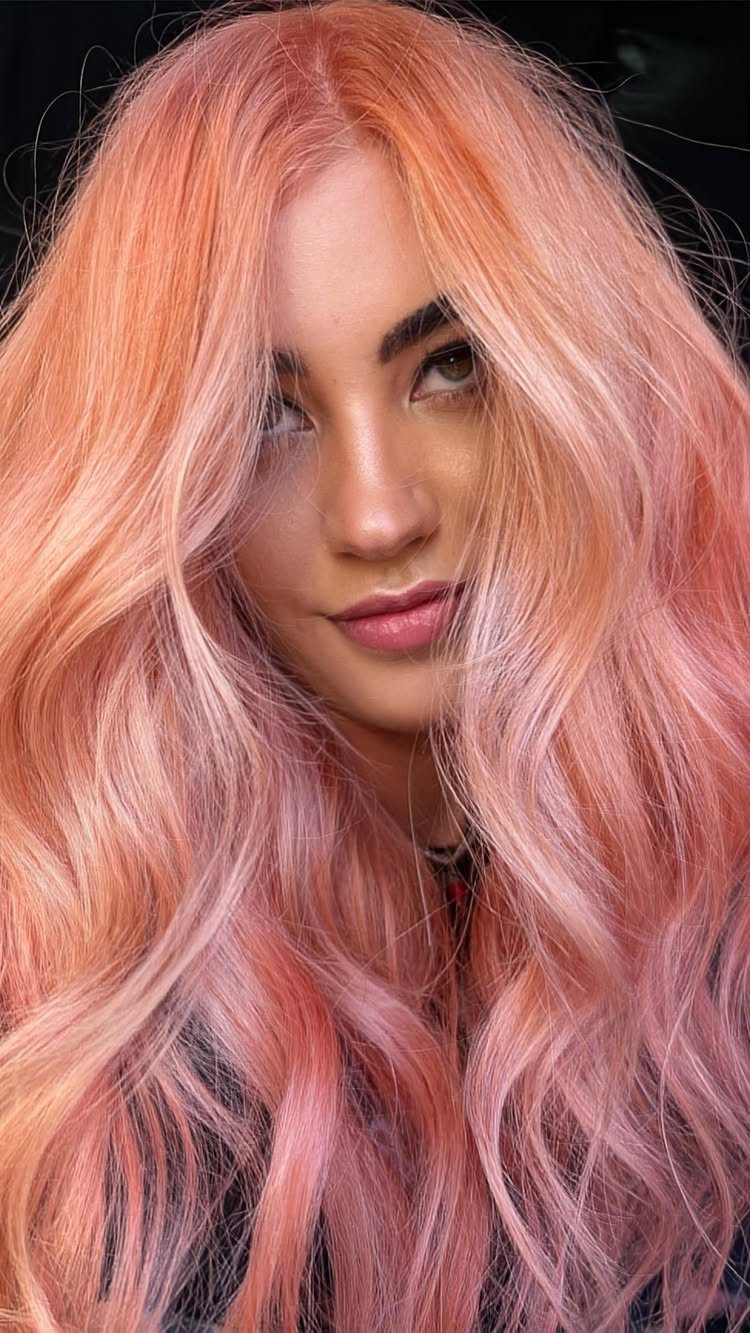
Peach, apricot and strawberry all sit inside this one shade, which is why peachy red looks different from every angle. It lands as a reddish orange with a soft, almost pink edge.
Long waves suit it well, because the ripples let those tones shift as the hair moves. A dark backdrop or dark clothing makes the color glow.
Ask for "peachy red" and name all 3 tones, so the stylist doesn’t settle on plain orange. It’s the version I’d try if copper feels too flat.
9. Dark Red
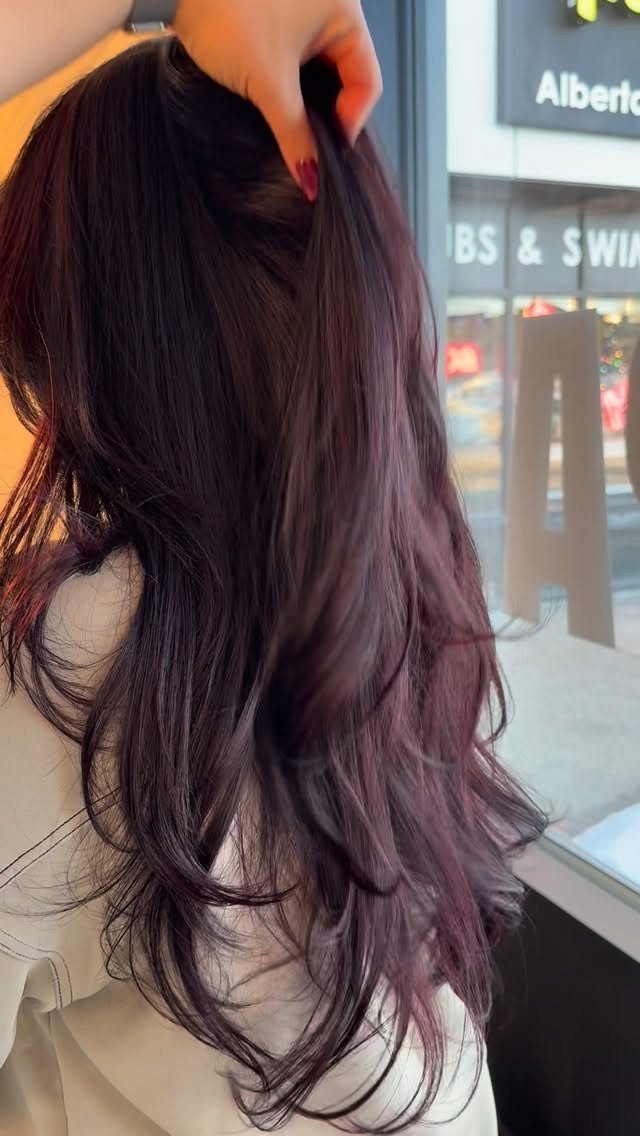
Brunettes looking for a change will find dark red the gentlest step away from brown. The shade is a red-brown that still reads as natural in daylight.
Long waves give it movement, and the red shows most where the hair lifts and turns. I like it because it feels like your own hair on a very good day.
Bring a photo of the exact depth you want. Tell your stylist how far from brown you’re willing to go, since dark red can lean browner or redder.
10. Rose Gold
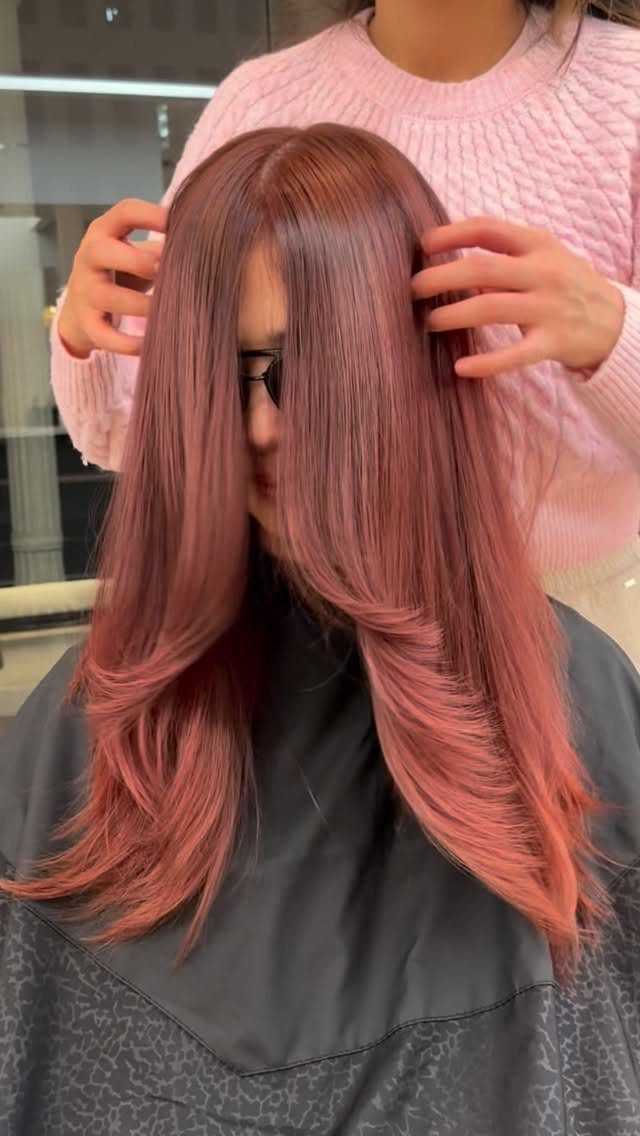
Rose gold red is a soft, light shade that blends pink with a touch of golden warmth, and the mix reads as dimension rather than one flat color.
Here the warm coppery highlights keep the pink from turning cool or candy-like.
Long layers help, because the cut breaks the color into soft pieces and lets each tone show. I’d choose this over a flat pastel pink every time.
Ask your stylist for dimension rather than one all-over shade. Say "rose gold" and mention the coppery warmth, so the gold doesn’t get lost.
11. Violet-Red
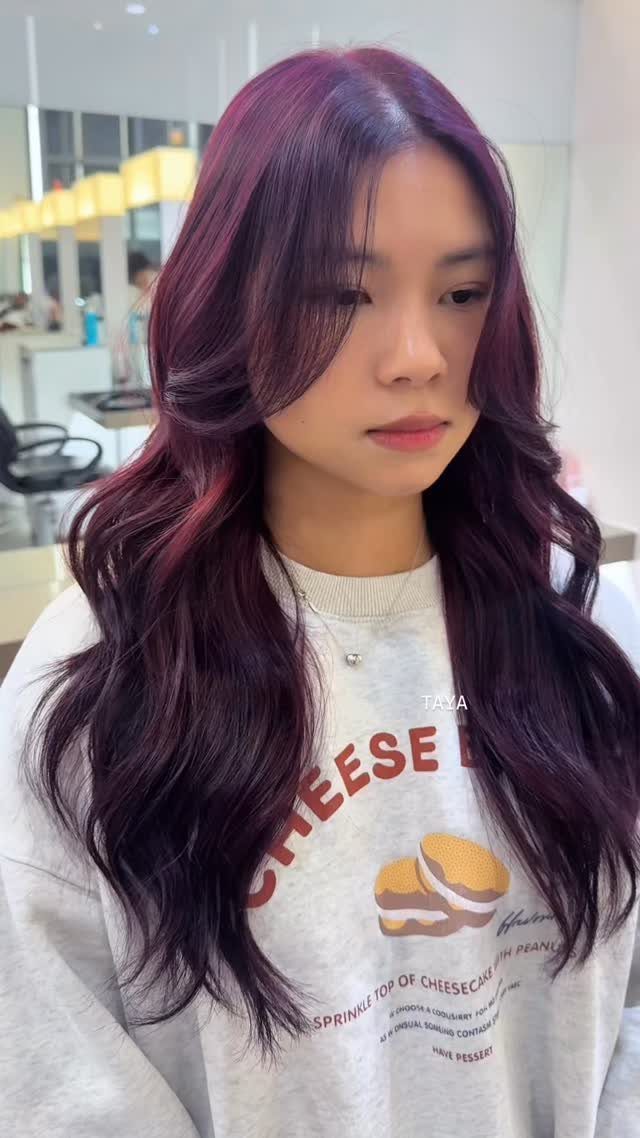
Violet-red runs cooler than the other reds here: purple in the base makes it look deeper and slightly shadowed, especially indoors. It’s the one to choose if orange-leaning reds wash you out.
Long, loose waves bring out the dimension, since the violet shows in the curves and the red in the lighter spots. Compared with burgundy, it’s brighter and less wine-dark.
Book with the words "violet-red" and bring a photo, because the balance of purple to red is where this shade goes right or wrong.
12. Light Auburn
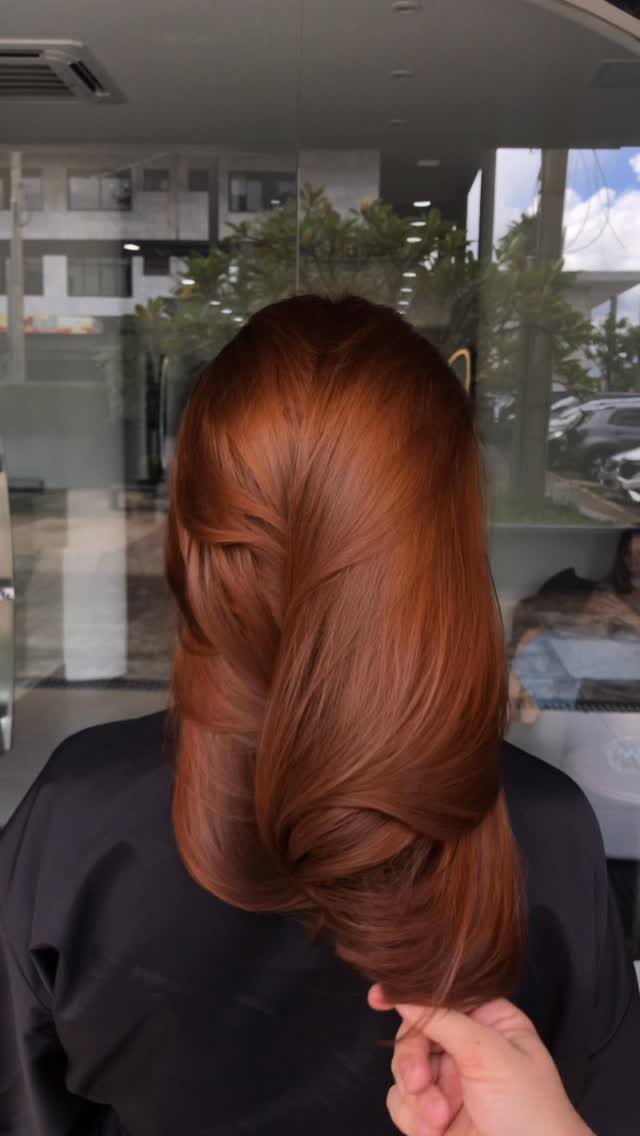
Fairer, cooler complexions get the most from light auburn. It’s a gingery red, soft enough that it doesn’t overpower pale skin.
A glossy twisted braid like this one shows off the shine, and gloss is half of what makes the shade look expensive. If you wear your hair down most days, a smooth blowout does the same job.
Ask for "light auburn" and bring a reference photo that shows the ginger you want, so the stylist doesn’t pull it darker or pinker.
13. Strawberry Blonde
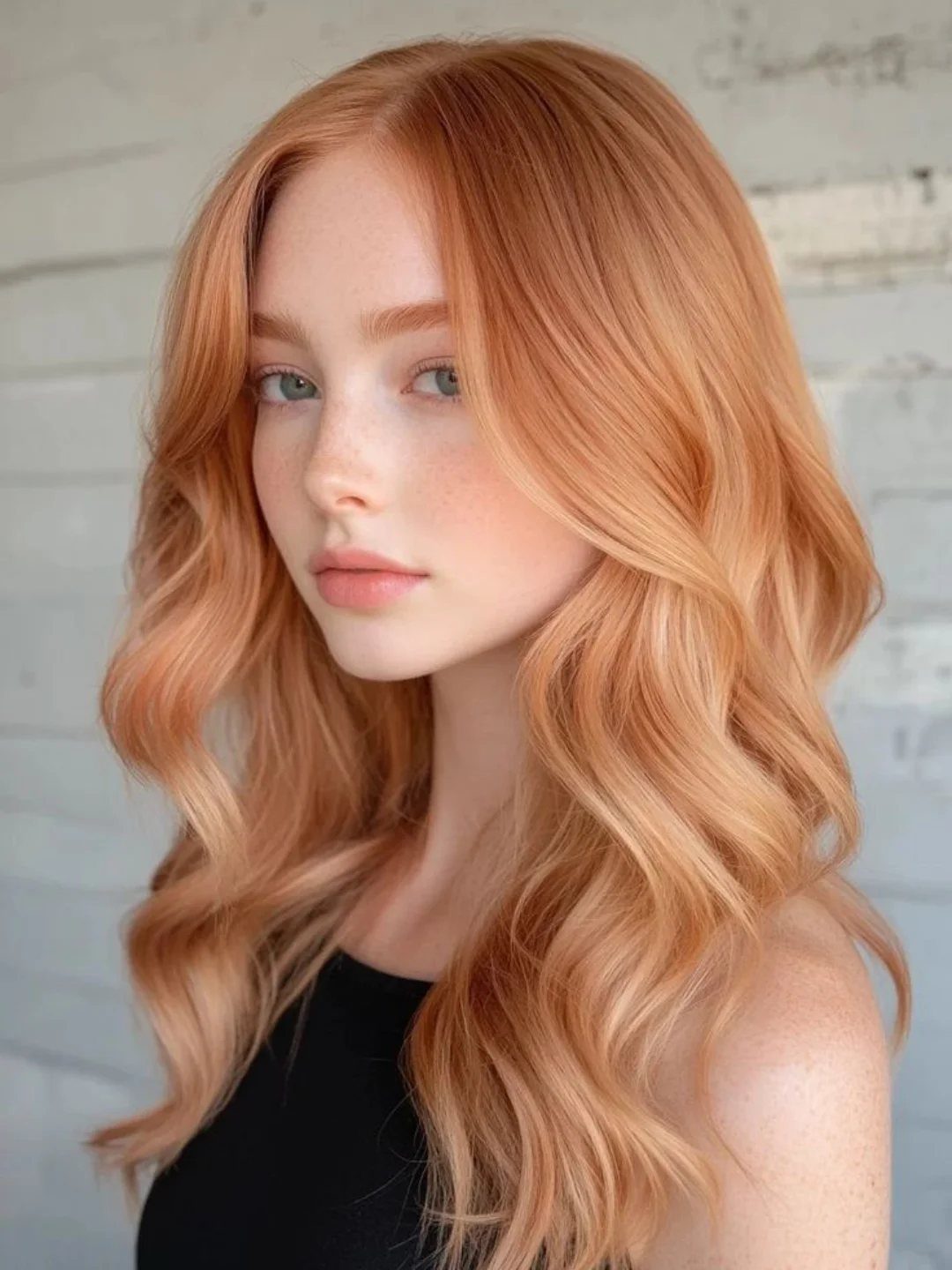
Strawberry blonde is the softest door into red I know. It’s a warm reddish blonde, so you keep the lightness of blonde and add a rosy-gold warmth on top.
Long, loose waves like these let the color move from gold to pink-copper as the hair shifts. I’d pick it if full copper feels like too big a leap.
Bring a photo and say "strawberry blonde," then tell your stylist how red you want it. That one word decides whether you land on gold or on ginger.
14. Deep Crimson
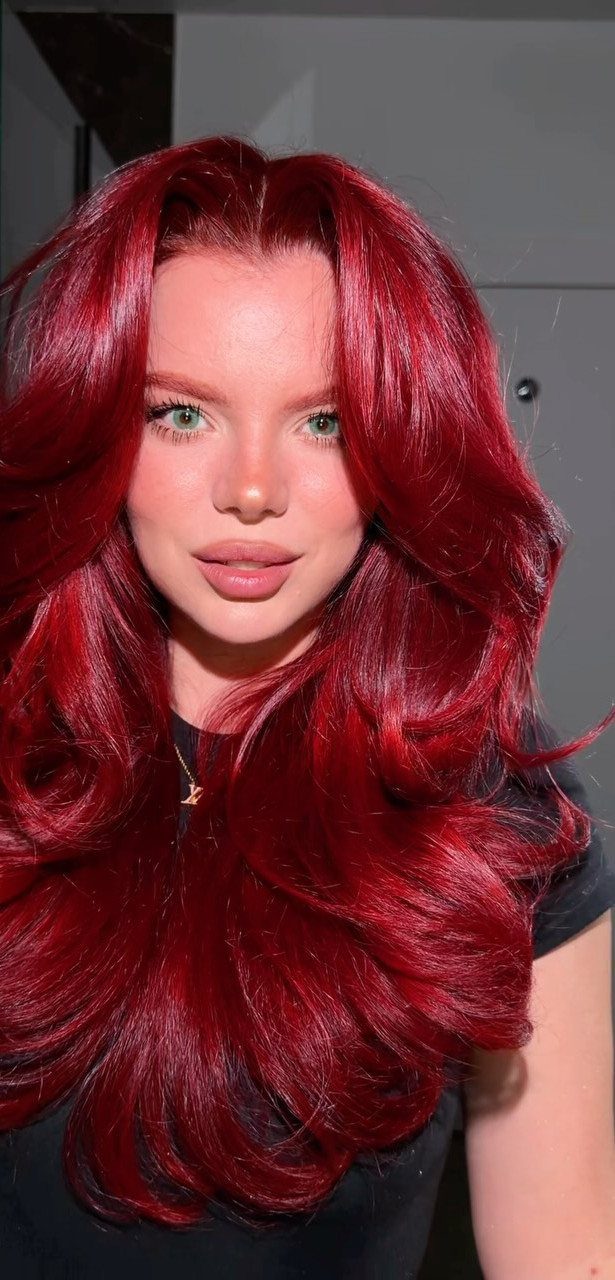
Deep crimson is red with the volume turned down: dark enough to look rich, red enough that nobody mistakes it for brown.
Glossy, long waves suit it, since shine is what makes a dark red read as crimson and not as flat dye.
Gold jewelry looks good against it, and so does a plain black top.
Name "deep crimson" when you book, and bring a photo, because crimson sits close to burgundy and your stylist needs to know which side you want.
15. Brown-Red
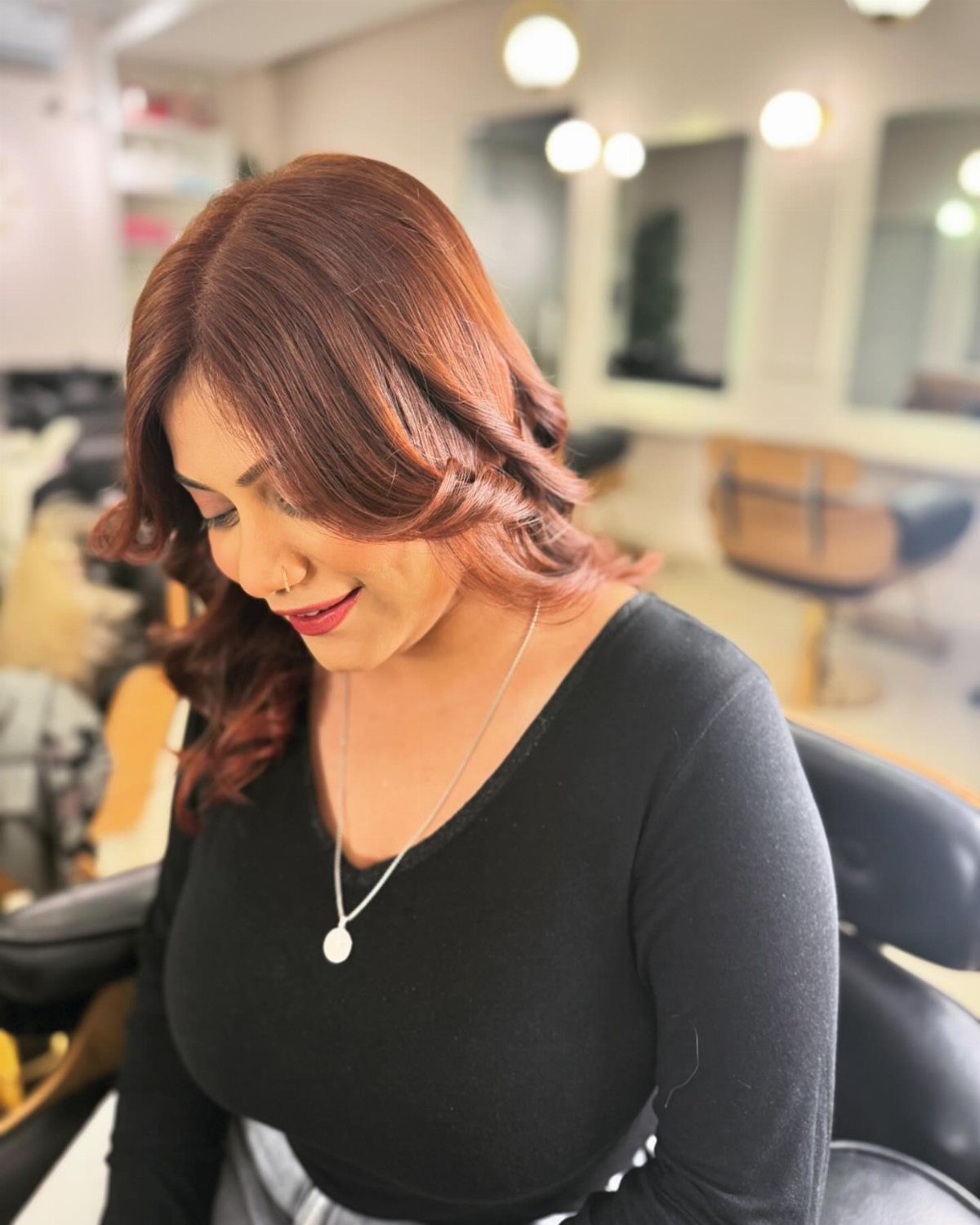
Brown-red works as a blend, not a statement: brown stays in charge and red adds warmth through the layers.
Layers help a two-tone color: each one catches light differently, so the brown and the red read as separate tones instead of blending into one.
I’d send a brunette here before anywhere brighter. You get a visible change, and the color still looks like your hair.
Ask for "brown-red" and tell your stylist which one should lead. Without that, the red can end up louder than you planned.
16. Auburn
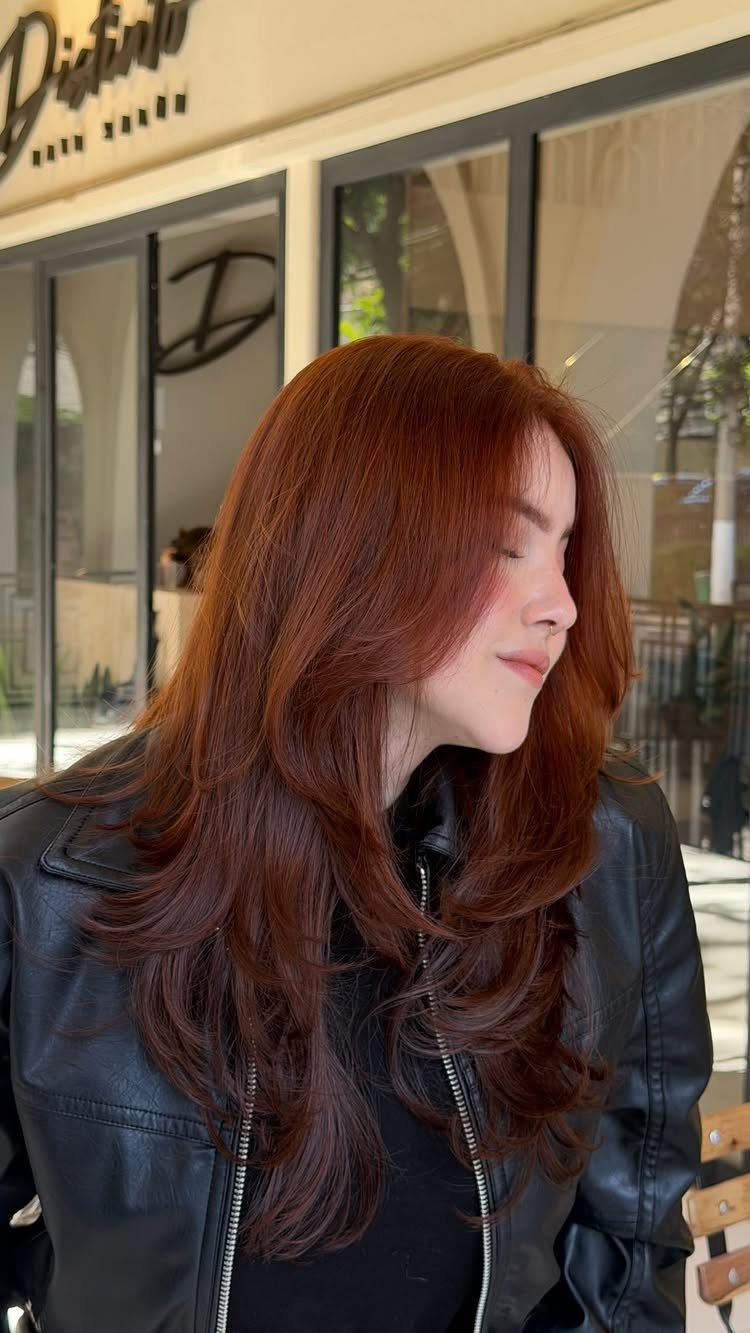
Auburn lives between red and brown, which is exactly why so many people can wear it. Warm reddish-brown tones look natural outdoors and rich in a photo.
Long layers add movement, and the color flashes lighter where the hair turns. I’d choose auburn over a true red if you want something easy to live in.
Bring a reference picture and say "auburn." The shade drifts toward brown or toward copper depending on the stylist, so the photo settles it.
17. Cowboy Copper
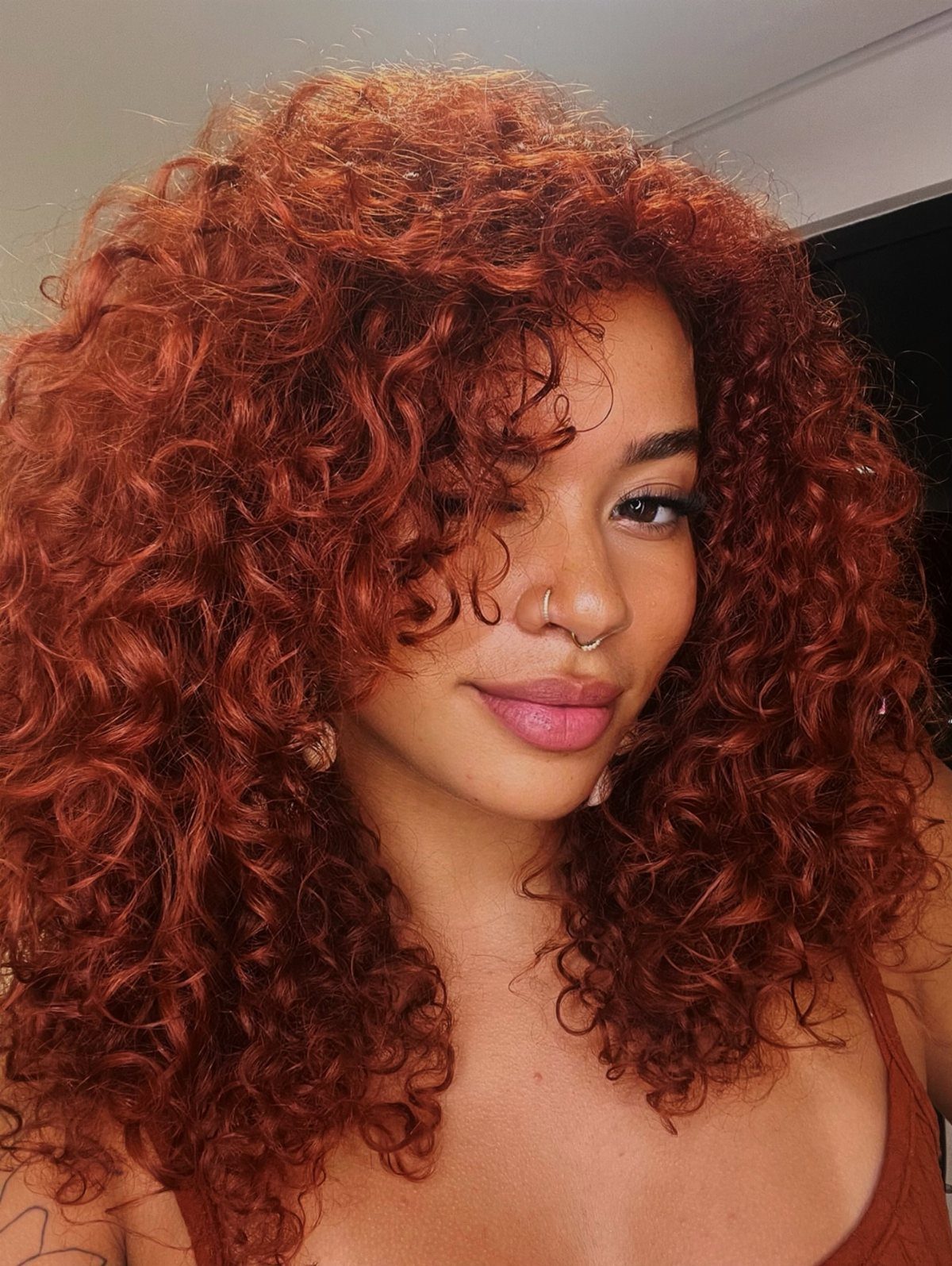
Cowboy copper is a quiet move: a red-copper shade that adds warmth without turning your hair into a headline.
Curls add surface area, so the copper catches light from more angles and looks fuller and brighter than it would on straight hair.
Anyone nervous about a bright copper should start here, since it is a gentler step toward red.
Ask for it by that name, and let a reference photo settle how warm you want it. The name is trendy, so your stylist may picture something different without a visual to work from.
18. Red-Toned Locs
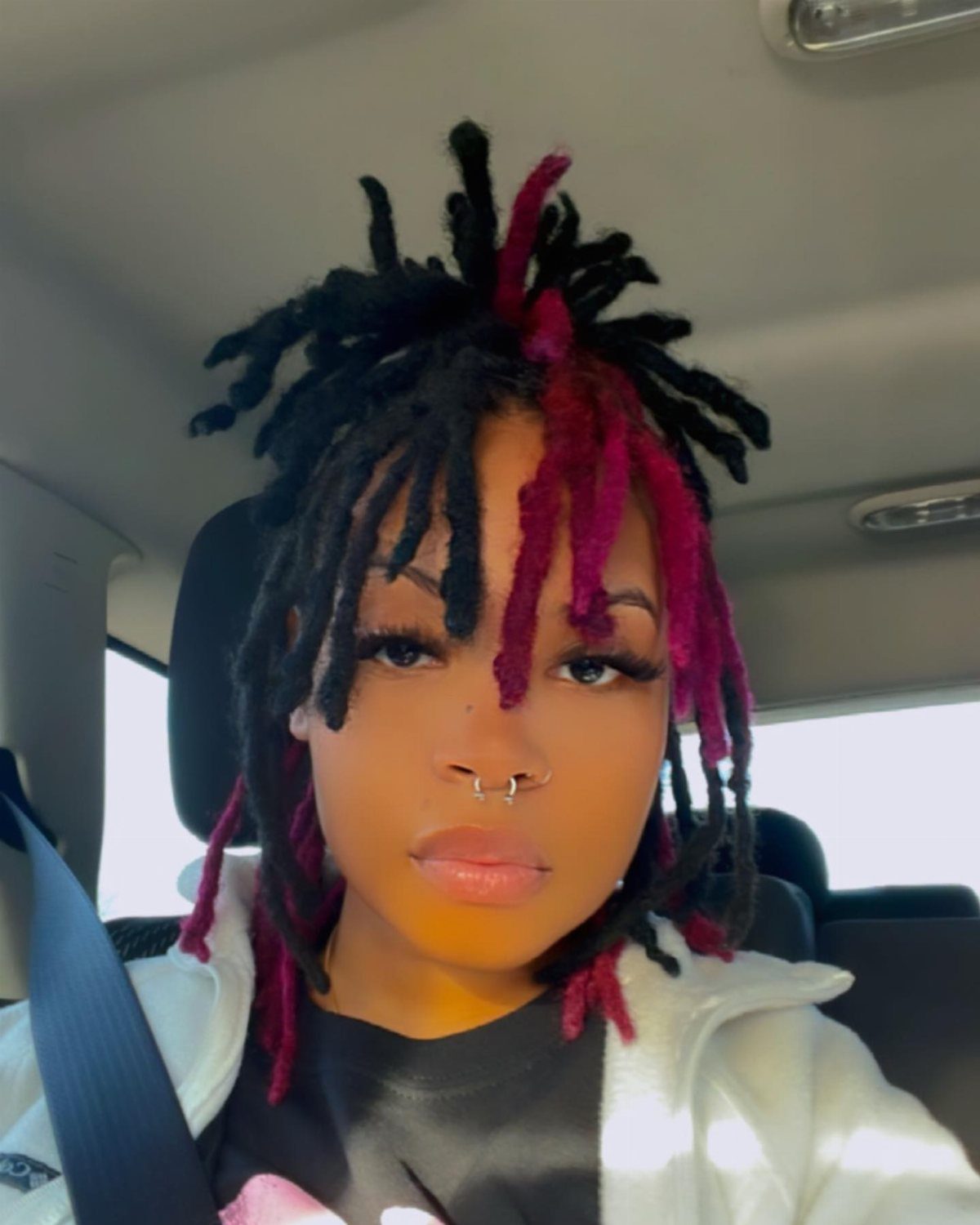
Red-toned locs let you add color without dyeing everything. Here, black locs carry magenta-red pieces, so the red frames the face and the rest stays dark.
I like this for anyone who wants red on a small scale, because it reads as a deliberate accent, not a full change.
Decide where the red goes before you book. Pieces near the face show most, and your loctician or colorist can place them to match.
19. Bright Poppy
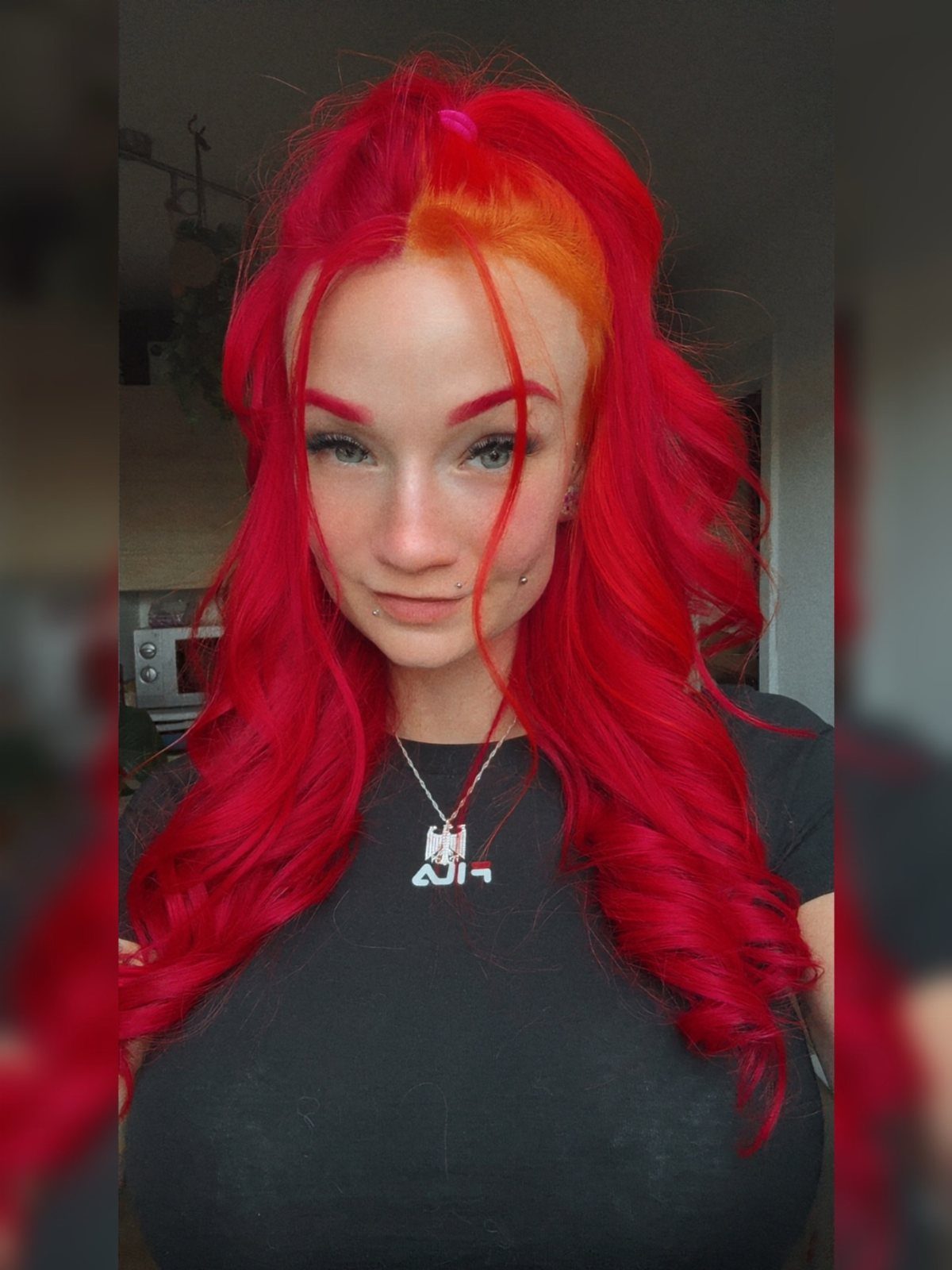
Bright poppy is a loud, true red with rusty lowlights and gold accents running through it, so the color looks lit from inside instead of painted on flat.
That depth is what I like most. A single-tone poppy can read like a costume, while the rusty and gold pieces give it a natural look in motion.
Ask for "bright poppy" and mention the rust and gold by name, so your stylist builds dimension rather than one solid red. Bring a photo.
20. Deep Maroon
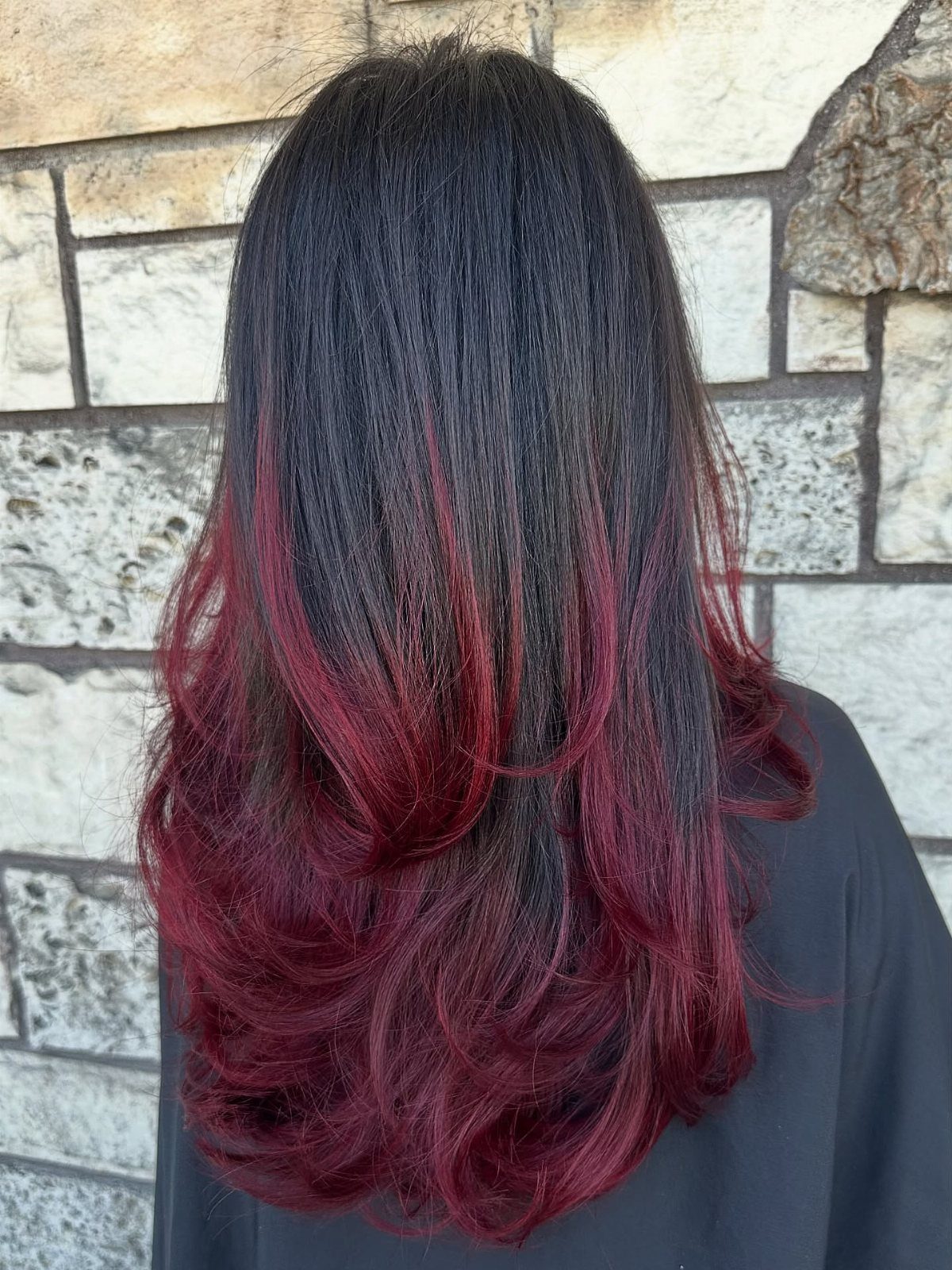
Black roots fading into wine-red ends make deep maroon the most wearable bold red on this page. The dark top keeps things grounded, and the color only really arrives from mid-length down.
I’d choose this over a full maroon if you want an easy grow-out, since new growth just extends the dark section. Long layers and curls at the ends help the wine tone catch light.
Say "deep maroon" and tell your stylist where the black should stop, because that line decides everything. A photo settles it.
21. Ginger Spice
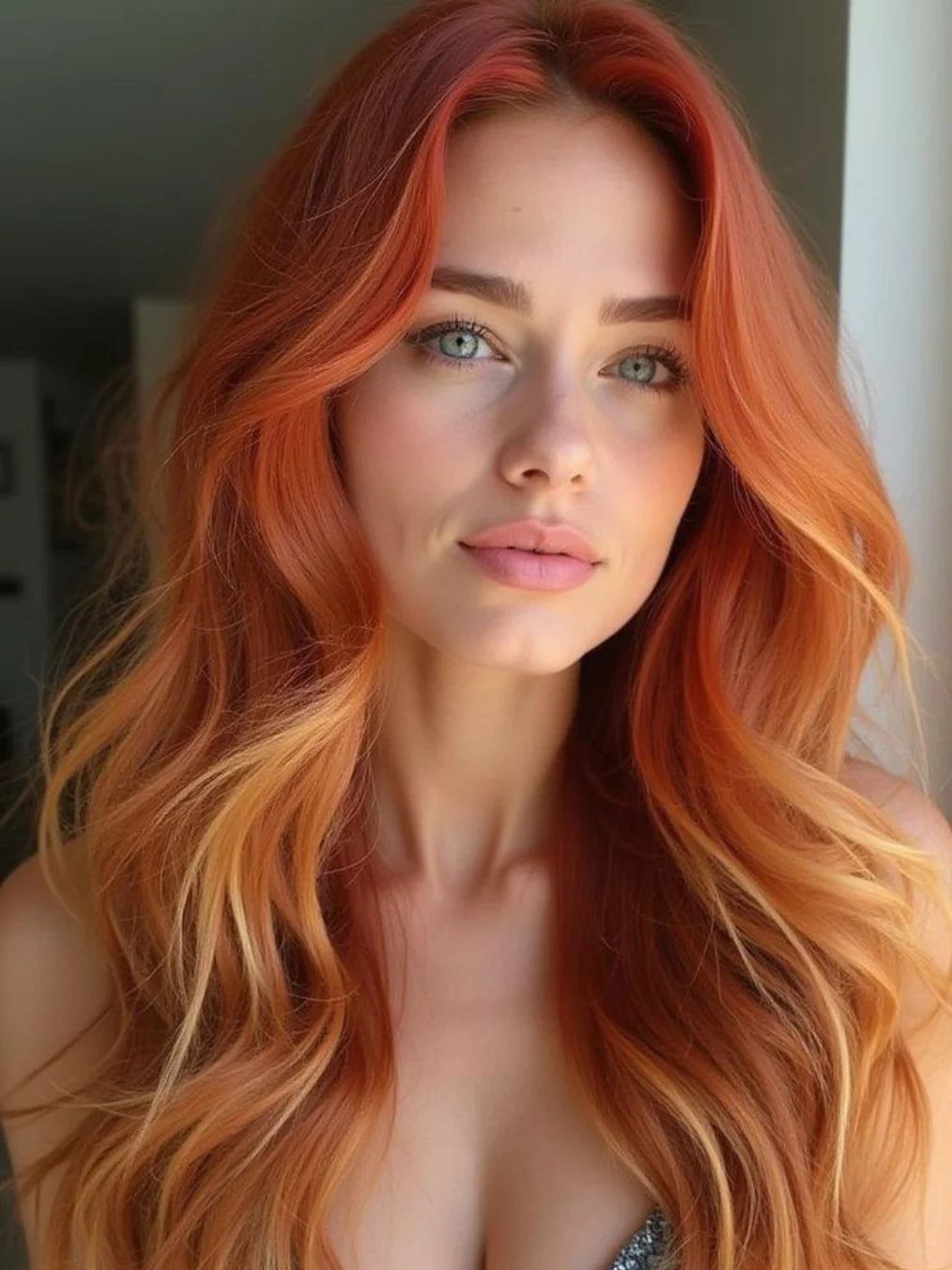
Ginger spice sits close to light auburn, but blonde highlights and rusty tones push it warmer and brighter. Golden pieces through ginger-red give long, wavy hair a sunlit look.
Waves are the right pairing, since each bend flips between red and blonde. I’d pick this over plain ginger if you want the color to look different from one hour to the next.
Name "ginger spice," then ask how much blonde your stylist plans to add. Too much and the red fades into strawberry blonde; too little and you lose the glow.
22. Mahogany
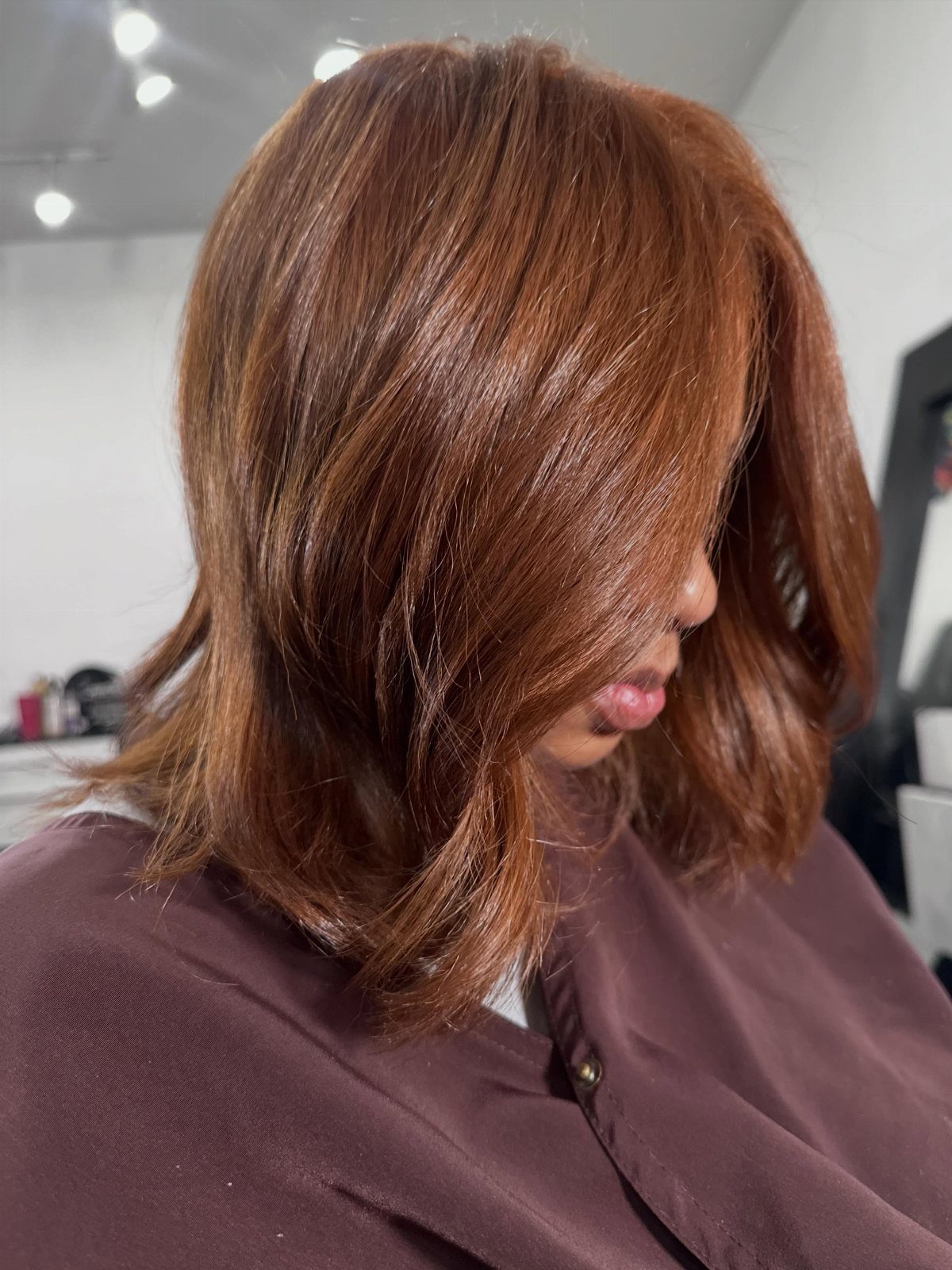
Mahogany is a deep brownish red, and the restraint is its strength: it’s never too bright, and it still looks clearly red in strong light.
On shoulder-length hair, layers bring out the glossy finish, which is what makes mahogany look rich and not muddy. I’d steer a brunette here if dark red still feels like too big a step.
Ask for "mahogany" and bring a photo, because the line between mahogany and brown is thin. Tell your stylist you want the red to show.
23. Raspberry Hair
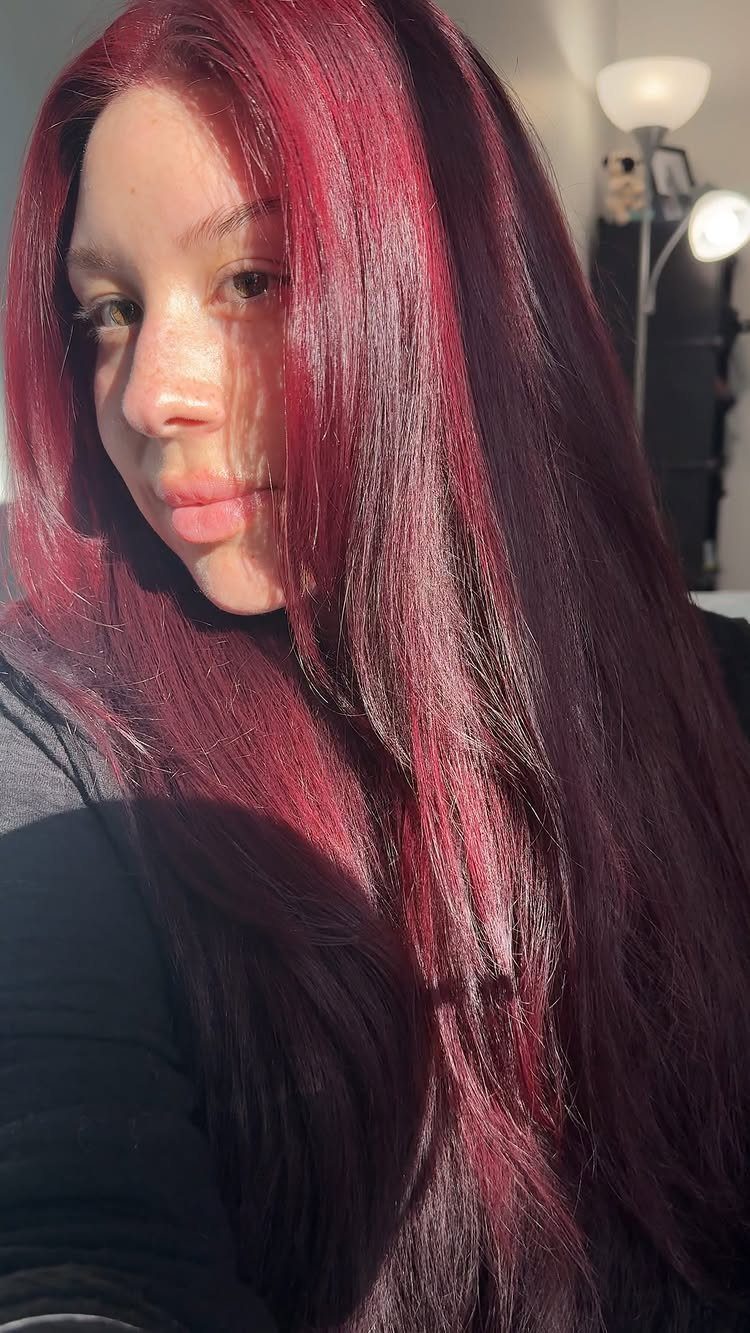
Raspberry hair is a moody dark red with pink and violet mixed through it, and the pink pieces are what stop it from reading as plain burgundy.
It looks best on long hair that falls over dark clothing, since the contrast makes the berry tones stand out. I’d pick it over burgundy if you want cool depth with a little brightness added.
Book with "raspberry" and ask your stylist to keep the pink as highlights against a darker base. A photo helps, because raspberry can easily drift too pink or too purple.
24. Red Velvet
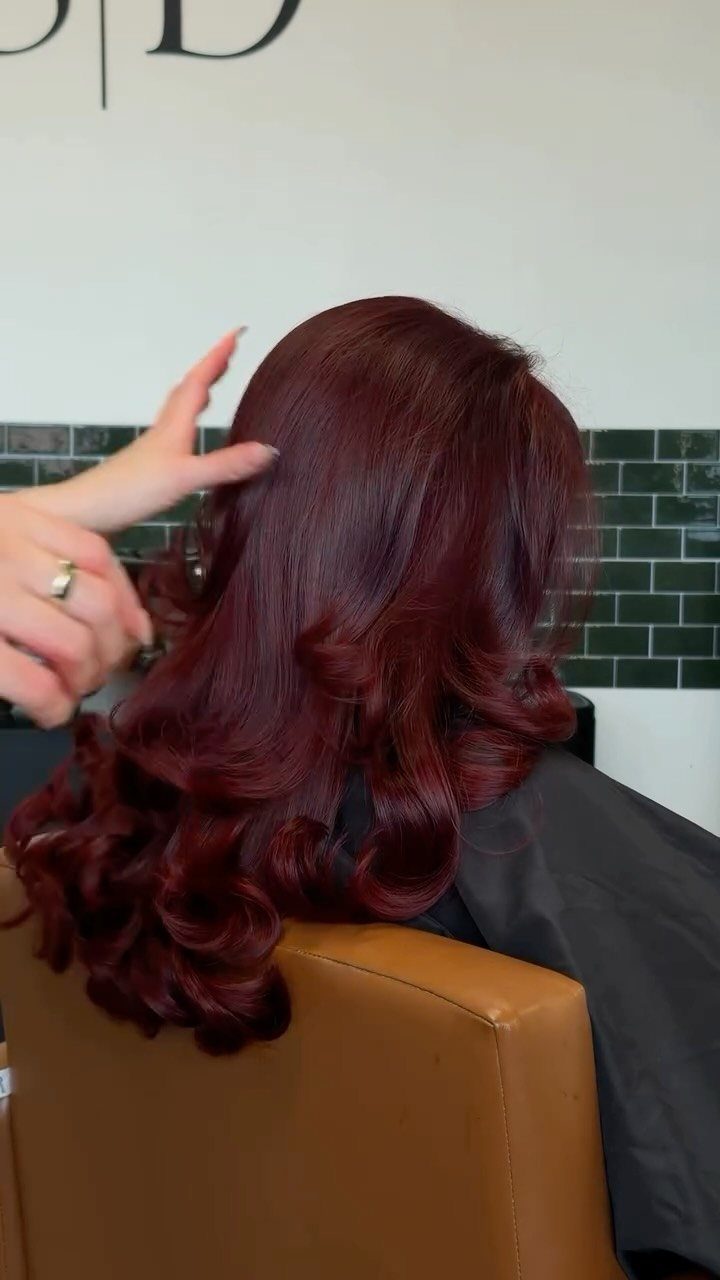
Red velvet blends red, violet, burgundy and maroon into one dimensional shade, so the color changes tone depending on how the curls sit and where the light falls.
Curls are the ideal match, because each ringlet shows a different layer of the blend. I’d choose it over a single-tone burgundy when you want depth you can see up close.
Plan on a multi-step color rather than a quick all-over dye. Saying "red velvet" gets the conversation started, but listing the shades in the blend keeps your stylist from guessing at what you mean.
25. Scarlet
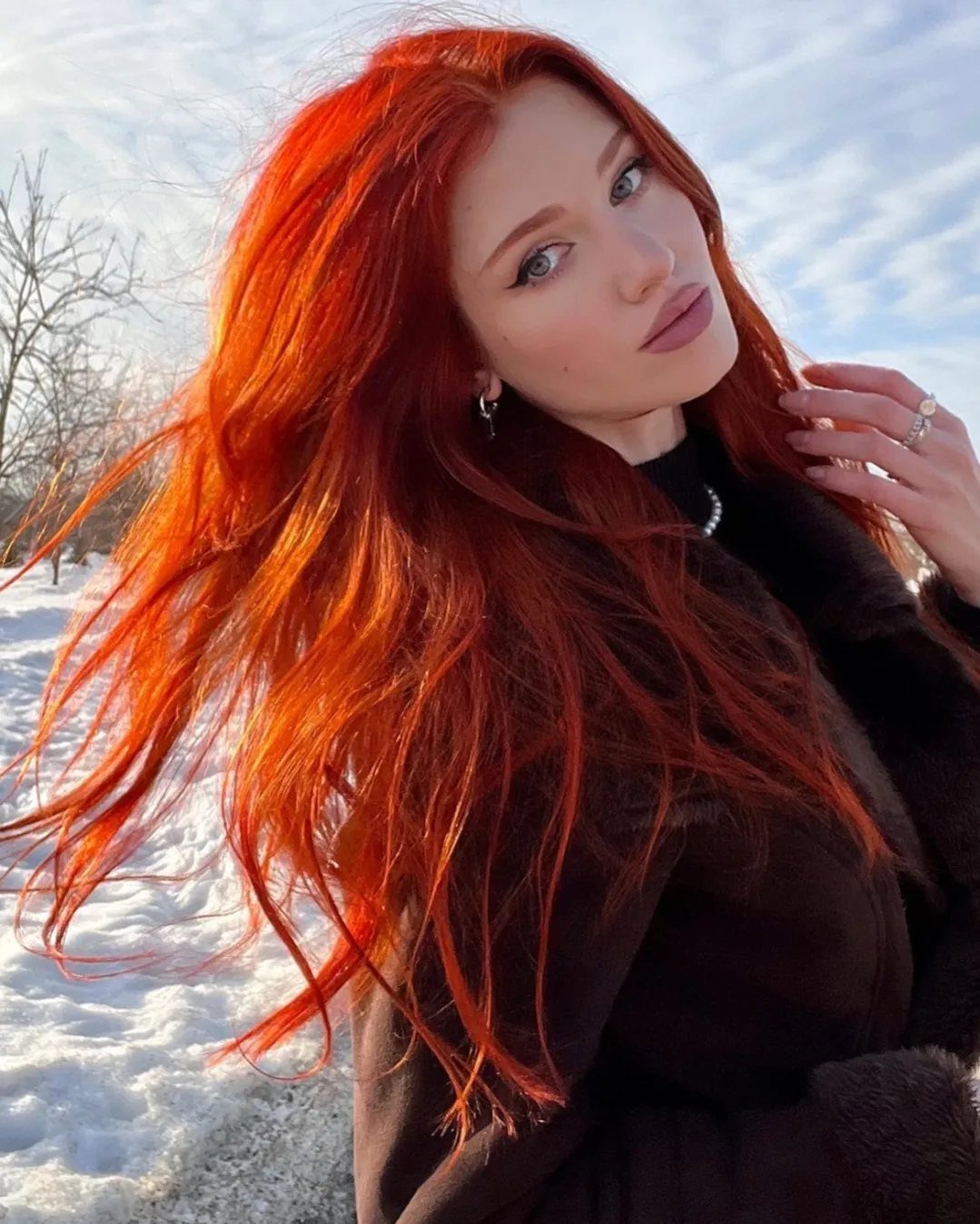
Scarlet is a saturated crimson red with a hint of brown underneath, and that brown keeps it from turning into a flat, costume-bright shade. Long, straight-to-wavy hair shows the full length of color, and a dark coat sets it off.
If you want a bold red that still has some depth to it, scarlet is my pick over a bright poppy shade. It’s a color that looks strong in every light.
Ask for "scarlet" and say you want crimson with a trace of brown. Bring a photo, since scarlet can drift orange or pink without one.
26. Dark Auburn

Dark auburn pairs autumn red with chocolate brown, and the two tones sit close enough that the color reads as one warm, deep shade. Hair this long lets the red flicker through when you lift it or turn your head.
It’s what I’d suggest to a brunette who finds light auburn too ginger. Compared with mahogany, it’s warmer and less purple-leaning.
Book it as "dark auburn" and bring a photo showing how much red you want against the brown. That ratio is what separates it from plain brown.
Keeping Red Color Vibrant
Red is the color that leaves first, so the routine matters as much as the appointment. Wash only a few times a week, because every wash pulls a little pigment out.
Use a shampoo made for red hair, or at least one labeled color-safe, and keep the water lukewarm. Hot water strips color faster.
Heat styling fades red too. I’d save the flat iron and curling iron for days that really need them and let hair air-dry the rest of the time.
Color strips moisture from the hair, which is why I pair a hydrating shampoo with a matching conditioner to keep red hair soft and shiny. Add a gloss on a regular basis to refresh the shine between full color appointments.
Choosing a Shade for Skin Tone
Skin tone is a starting point, not a rule. Certain reds sit more naturally on certain complexions, but nothing here is strict.
Light red shades can suit natural blondes. Medium reds flatter both fair and deeper complexions, which makes them the safest middle ground if you can’t decide.
Dark reds are the usual suggestion for deep skin, and for anyone after a dramatic effect.
Before booking, hold your reference photo next to your face in daylight. If the shade looks harsh or washed out against your skin, move one step lighter or darker and ask your stylist what they’d adjust.
Planning a Red Color Change
Red fades fast and is stubborn to remove, so I’d hesitate before giving up a highlight pattern that has worked for you all year.
There is no single red shade, which is why one inspiration photo isn’t enough. Take several, and point out what you like in each: the depth, the warmth, the brightness.
A shade slightly brighter than your target is what I’d request from your stylist, since red mellows within a few washes. Red fades and settles, and the vivid version on day one is often the right one on week four.
Before you sit in the chair, pick up a sulfate-free, color-safe shampoo and conditioner so your care routine begins the same day as the color.
Frequently Asked Questions
Can I dye red hair?
Yes. Natural redheads can take copper a shade richer without a big jump, so it’s the low-risk way to build on the red already growing in.
Red pigment slips out within a few washes and clings hard when you try to strip it, so a color that already works for you deserves a second look before you swap it.
What are the shades of red hair?
Red hair falls into 3 rough groups. Light reds include copper, strawberry blonde and light auburn, and they suit natural blondes.
Auburn, cinnamon and crimson sit in the middle of the red range and look good on fair and deeper skin alike, so I point undecided readers there first.
Black cherry and burgundy are the deepest reds, and I’d match them to deep skin tones or anyone who wants a bolder, moodier finish.
Why does a girl dye her hair red?
Usually for warmth, a change, or attention, depending on the shade. Brunettes often choose dark red, mahogany or brown-red because the color still looks like their own hair.
Black cherry looks dark from a distance and shows its red only in good light, so it adds red quietly. Bright copper is the opposite: it stays loud so people notice the color first.