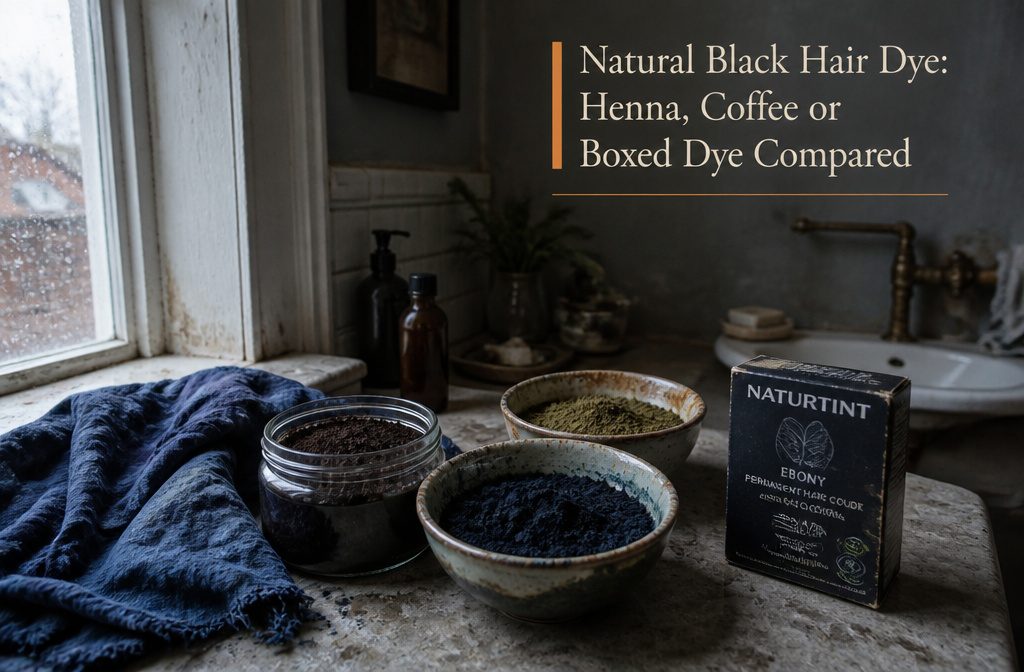
Natural black hair dye usually means henna followed by indigo, a two-step plant process that builds deep brown to near-black without ammonia or PPD.
Mixing both powders at once gives brown or auburn, not black, and the indigo step alone can last 3 hours if you want the deepest shade.
Naturtint 1N Ebony covers about 95% of gray in one session, the highest measured here, while henna-indigo can match that only after three to four hours of processing.
Henna, Coffee or Boxed Dye
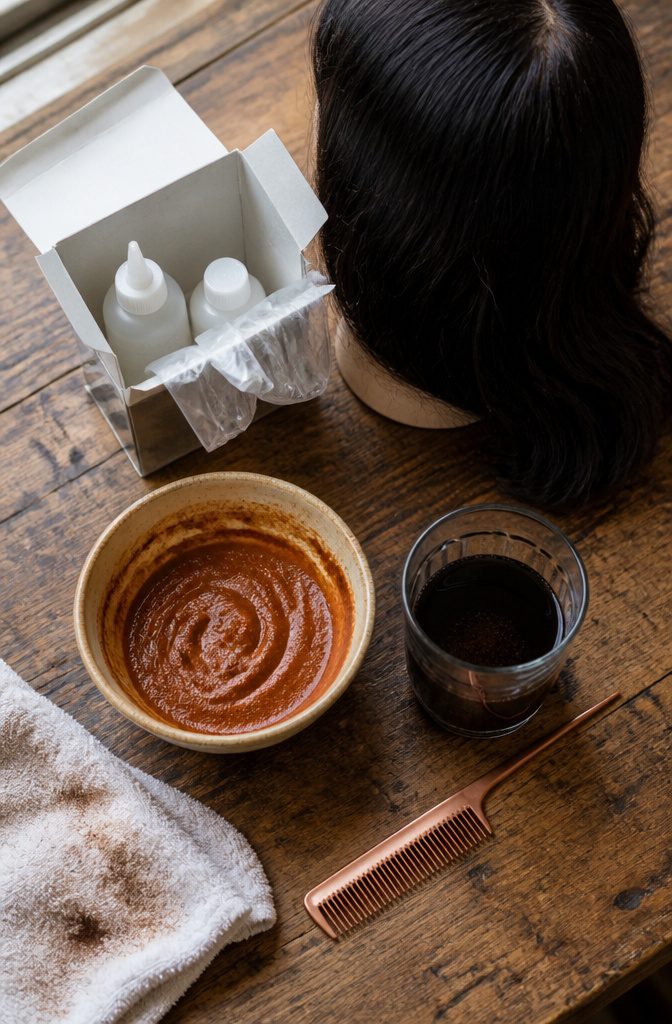
Henna, Coffee or Boxed Dye
Henna followed by indigo is the plant-based route to black. Ancient Sunrise Henna + Indigo runs two steps: henna first to create a warm orange base, then indigo to layer cool blue-green on top.
That combination produces deep brown to near-black, depending on timing and your starting color. The chemistry only works in sequence.
Mixing them at once gives brown or auburn, not black. Products like Midnight Natural Black Beard Color list indigo, henna, amla and neem with no PPDs or ammonia, though not every natural label means fully plant-based.
Coffee is a temporary darkener.
Brew 2 cups (470 mL) of dark roast, mix in 4 tablespoons of grounds, and apply to clean, mostly dry hair for 30–45 minutes. It may not turn red or blonde hair fully black, and the color washes out quickly.
Boxed dyes span permanent, semi-permanent and demi-permanent formulas.
Naturtint 1N Ebony and Herbatint 1N Black are two permanent options tested on regrowth. Midnight Natural Black sits between semi and permanent, lasting 4–6 weeks depending on wash frequency and hair type.
Color Results by Starting Shade
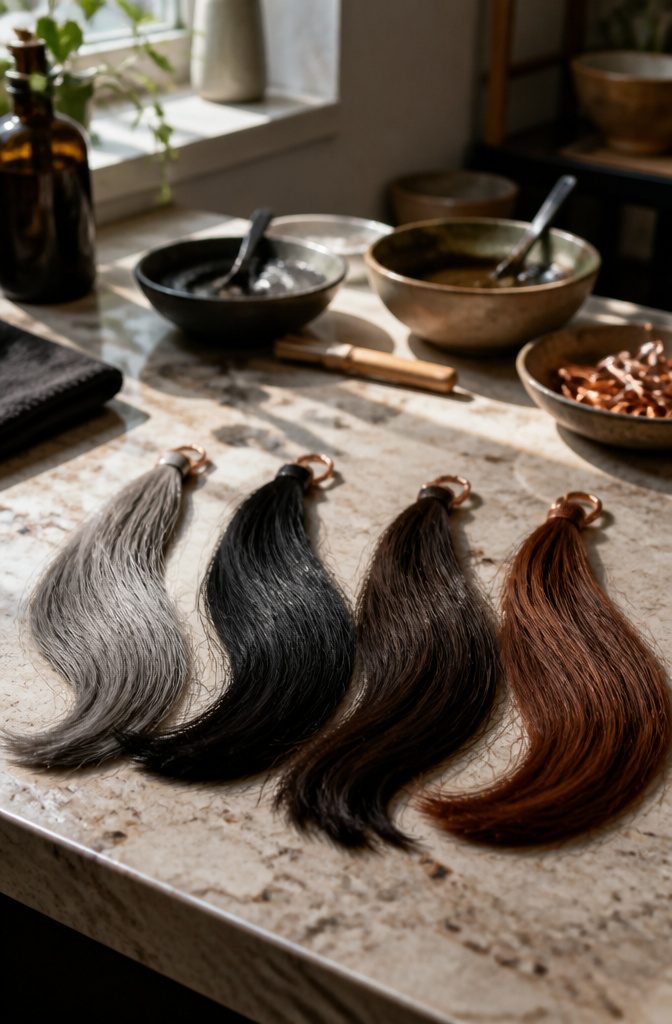
Three timings sort the shades: indigo for 45 minutes to 1 hour gives deep brown, 1–2 hours reaches near-black, and up to 3 hours builds the deepest black.
Henna goes on first, since indigo alone turns bluish-green on undyed hair, and mixing the two in one step gives brown or auburn, not black.
White or light gray hair shows the biggest shift, while naturally black hair gains only depth and gloss. Brown hair ends up dark brown that reads almost black indoors.
Black generally covers red, though I’d plan on two rounds for bright red, or a brown or burgundy layer first. Light or highlighted hair needs a copper gloss before blue-black, to avoid a green cast.
Gray Coverage From 70% to 95%
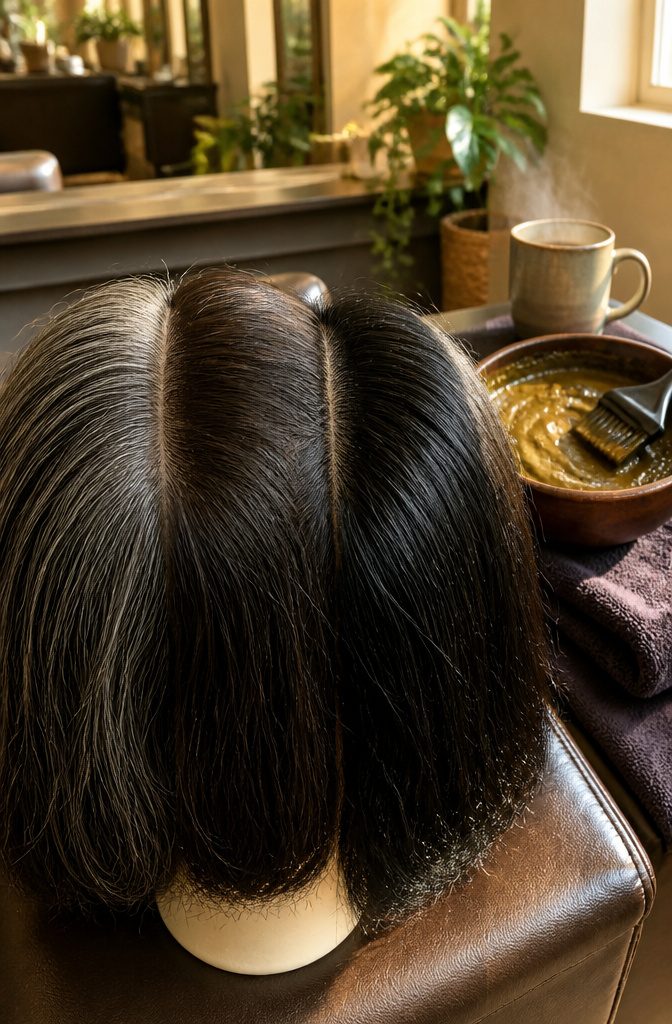
Naturtint delivers about 95% gray coverage in one go, the highest figure measured across any boxed method. Herbatint lands at 85–90% on the first pass, but a quick root touch-up two weeks later brings it to 95%.
That second round takes time most people would rather skip, though the coverage ends up matching. Color Touch Demi Permanent caps out at 70%, enough for scattered grays but not for heavy coverage.
Henna-indigo can reach full gray coverage, but how well it works depends on how long the paste sits on your hair. Stubborn gray calls for 3–4 hours of henna before you layer the indigo.
White or light gray hair takes the deepest color, while coarse hair may need maximum time to absorb properly. The method works, but it demands patience and a warm room if your hair resists color.
For reliable gray coverage without guesswork, Naturtint wins in a single session. Henna-indigo can match it, but only if you commit the hours.
Time and Application Effort
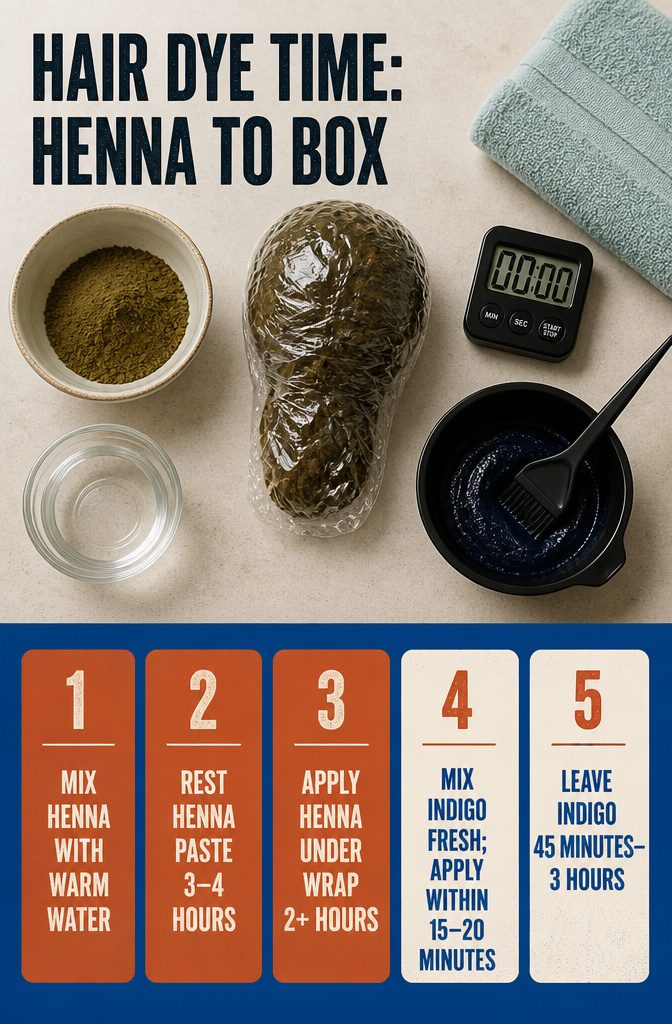
Henna blocks off your whole Saturday.
The powder sits 3–4 hours after you mix it with warm water before you can touch your hair. Then it goes on for at least 2 hours under plastic wrap, usually longer if you want deep color.
Indigo adds another step and a ticking clock: you mix it fresh and get it on your hair within 15–20 minutes or it loses strength.
It stays on 45 minutes to 3 hours depending on how black you want. Some people mix henna and indigo together in one go, others layer them.
The two-step method won, in my reading, for evenness and control, though it stretches the timeline further. No shampoo for 24–48 hours after indigo, which means planning around workouts and bedhead.
Boxed color moves faster. Naturtint runs 35 minutes at roots and 10 on lengths.
Herbatint takes 40 and 10. Coffee rinses take 30–45 minutes.
All of them ask for sectioning and full saturation, but you’re done in under an hour start to finish. Fine or porous hair may need 20–30 minutes less processing, so check a test strand if you’ve bleached before.
How Long Black Lasts
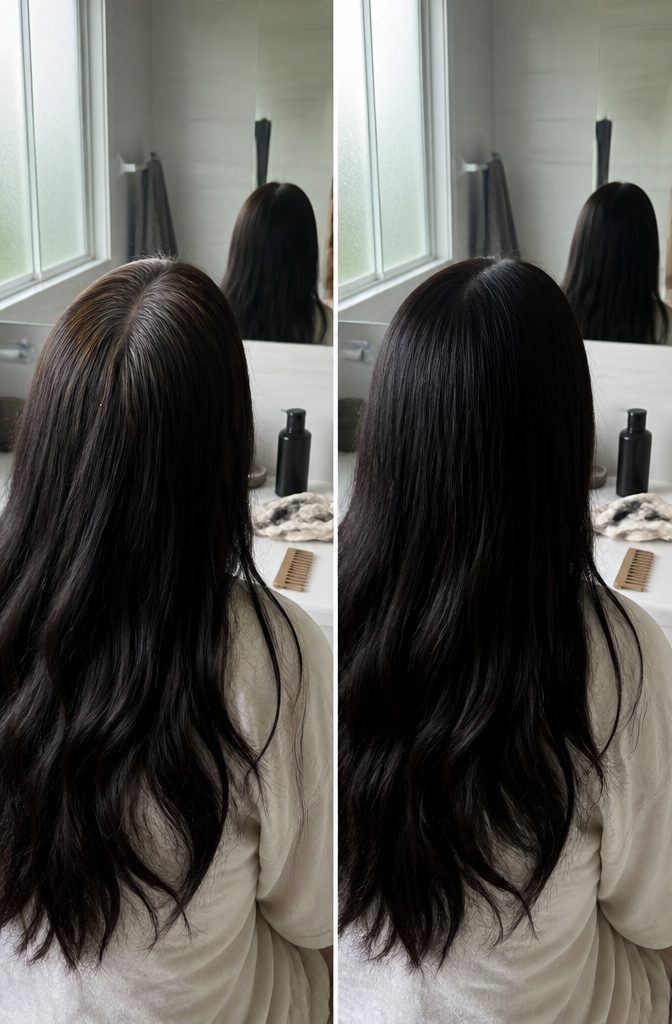
Black holds differently on everyone, but the general window for most methods is four to eight weeks before fading shows.
Henna-indigo builds on itself and typically gives you seven to eight weeks before the tone mellows to a very dark brown.
You’ll want to repeat every four to six weeks to keep depth, and you should wait at least two weeks between applications to let the dye fully oxidize.
Coffee lasts the shortest and needs reapplication twice a month to hold any visible tint.
Boxed permanent dyes like Vidal Sassoon and Clairol Nice’n Easy stay strong for around eight weeks.
Naturtint holds four to five weeks, and Wella Color Touch fades after 28 washes. Touch-ups often become necessary within four to six weeks, and black regrowth can show as early as two weeks because of the contrast.
Cold water and sulfate-free shampoo help preserve tone longer, and an old pillowcase the first night after coloring saves your sheets from smudging.
| Method or Product | Duration Before Fading | Reapplication Frequency |
|---|---|---|
| Henna-indigo | 7–8 weeks | Every 4–6 weeks |
| Vidal Sassoon | 8 weeks | As needed |
| Clairol Nice’n Easy | 8 weeks | As needed |
| Naturtint | 4–5 weeks | As needed |
| Wella Color Touch | 28 washes | As needed |
| Coffee | n/a | Twice a month |
Sensitivity and Removal
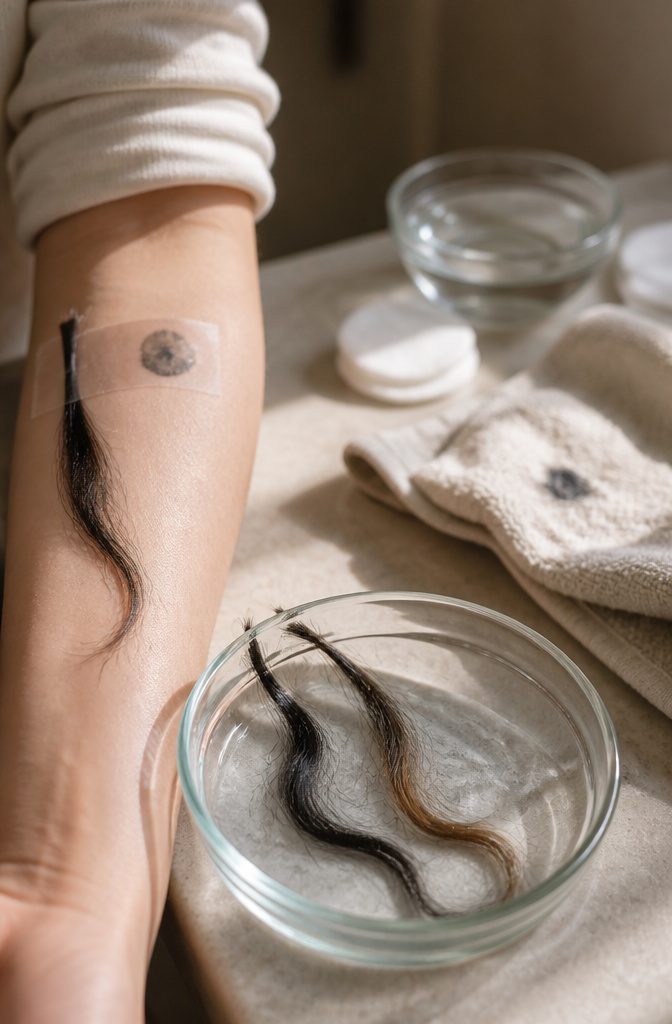
Patch test first, whichever route you pick, even with a dye sold as suitable for sensitive skin. On bleached or chemically treated hair, add a strand test, since results there can be unpredictable.
Permanent black is hard to remove and may need stripping to go lighter.
Henna-indigo is just as stubborn to lighten. If you switch, wait at least 2 months after henna before using permanent dye, or stay with semi-permanent.
Colorists favor a gentler first step:
Many hair colorists recommend walking before you run, so perhaps try a semipermanent black hair dye before you reach for a permanent one.
— Glamour
Semi-permanent lets you live with the shade first. Permanent black and henna-indigo ask you to grow it out.
Mistakes That Leave Color Uneven
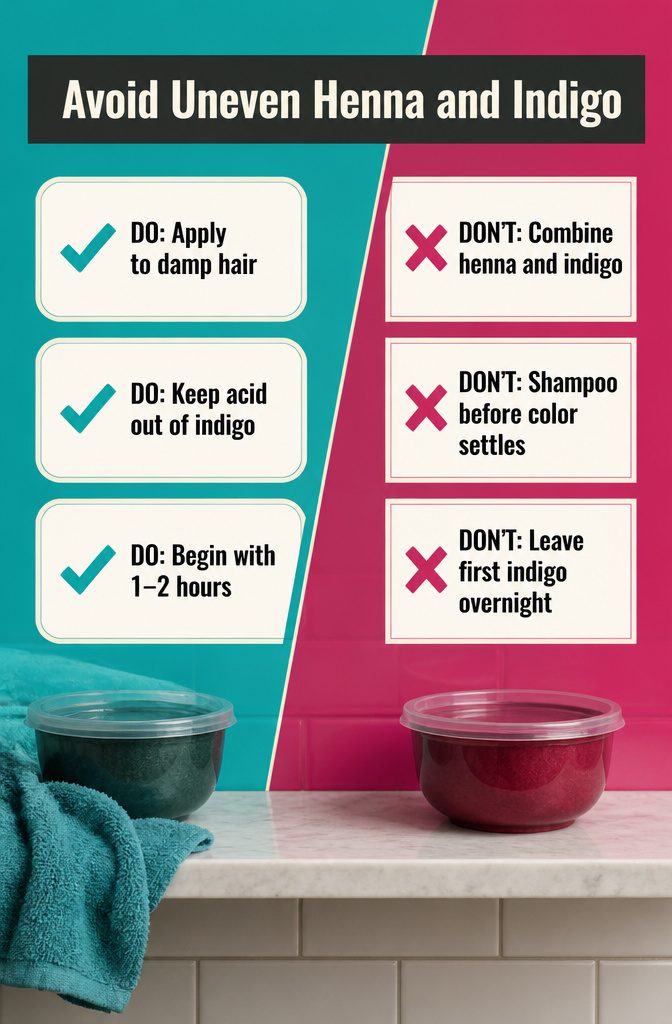
Uneven or off-tone results usually come from one of these moves:
- Henna and indigo go on in two separate steps. Combining them in one step is a common reason black comes out patchy.
- Keep acid out of the indigo mix.
- Apply to damp hair, never dry. Dry strands soak up color unevenly.
- Hold off on shampooing. Washing too soon cuts the color short before it settles.
- Start indigo at 1–2 hours, especially the first time. Overnight is too long for a first try, and I’d skip it.
- Light hair or highlights can turn greenish. A copper gloss first helps prevent it.
Frequently Asked Questions
Which black dye is best for hair?
Naturtint 1N Ebony delivers 95% gray coverage in one session and works well on regrowth. For plant-based options, henna followed by indigo produces deep brown to near-black with no PPDs or ammonia, though it demands 3 to 4 hours of processing time.
Vidal Sassoon’s Ultra color line gives a glossy, salon-style finish at home, and the color holds for about 8 weeks.
Can I dye my hair black at home?
Yes.
Boxed dyes like Naturtint and Herbatint finish in under 45 minutes and require only sectioning and full saturation. Henna-indigo is messier and takes a full afternoon, but both methods work at home with careful application.
Will black hair dye cover red?
Black generally covers red, though bright red may need two rounds or a brown or burgundy layer first. The darker the red, the easier the coverage.
How can you get extremely black hair at home?
Choose blue-black rather than soft black, since regular black is the deepest shade available. Make sure hair is fully saturated, follow the box instructions exactly, and gloss after to lock in shine and depth.
Are there disadvantages to dyeing your hair black?
Permanent black is hard to remove and may need stripping to go lighter.
Henna-indigo is just as stubborn to lighten. Both ask you to grow the color out if you change your mind.
Can I mix henna and indigo to save time?
Combining them in one step gives brown or auburn, not black.
The two-step method creates the chemical interaction that produces deep black. If time is tight, apply henna in the evening and indigo the next morning.
How long does the color from henna and indigo last?
Henna-indigo typically lasts 7 to 8 weeks before the tone mellows to very dark brown. Reapplication every 4 to 6 weeks keeps the depth, and you should wait at least 2 weeks between applications to let the dye fully oxidize.
Is this safe for chemically treated or bleached hair?
Results on bleached or chemically treated hair can be unpredictable. Run a strand test first, and expect fine or porous hair to need 20 to 30 minutes less processing time.
Will it cover grays completely?
Naturtint reaches about 95% gray coverage in one session.
Henna-indigo can match full coverage, but stubborn gray calls for 3 to 4 hours of henna before you layer the indigo. White or light gray hair takes the deepest color.
Can I leave indigo on overnight for a deeper black?
No.
Start with 1 to 2 hours, especially the first time. Overnight is too long for a first application and can lead to uneven results.
Which powder makes hair black naturally?
Henna followed by indigo is the plant-based route.
Henna creates a warm orange base, then indigo layers cool blue-green on top to produce deep brown to near-black. Indigo alone on undyed hair turns bluish-green, so the henna step is not optional.
How to make homemade black dye for hair?
Mix henna powder with warm water and let it sit 3 to 4 hours.
Apply to dry hair, wrap in plastic, and leave on for 2 hours. Rinse, then mix fresh indigo with warm water and a pinch of salt and apply for 45 minutes to 3 hours depending on how black you want.
Coffee brewed with 2 cups of dark roast and 4 tablespoons of grounds can darken hair temporarily, but it washes out quickly.