The range in this list is wide: Medium-Length Long Layers need almost no styling, while the Stacked Lob and Brushed-Out Barrels call for a full session with a round brush or hot tool.
What picks yours is how many minutes you will spend on your hair each morning, since every layer adds styling time and more salon visits than a single length.
Book the next appointment before you leave the chair, because 6–8 weeks is about as long as the shortest layers hold their shape without fraying at the ends.
1. Medium-Length Face-Framing Layers
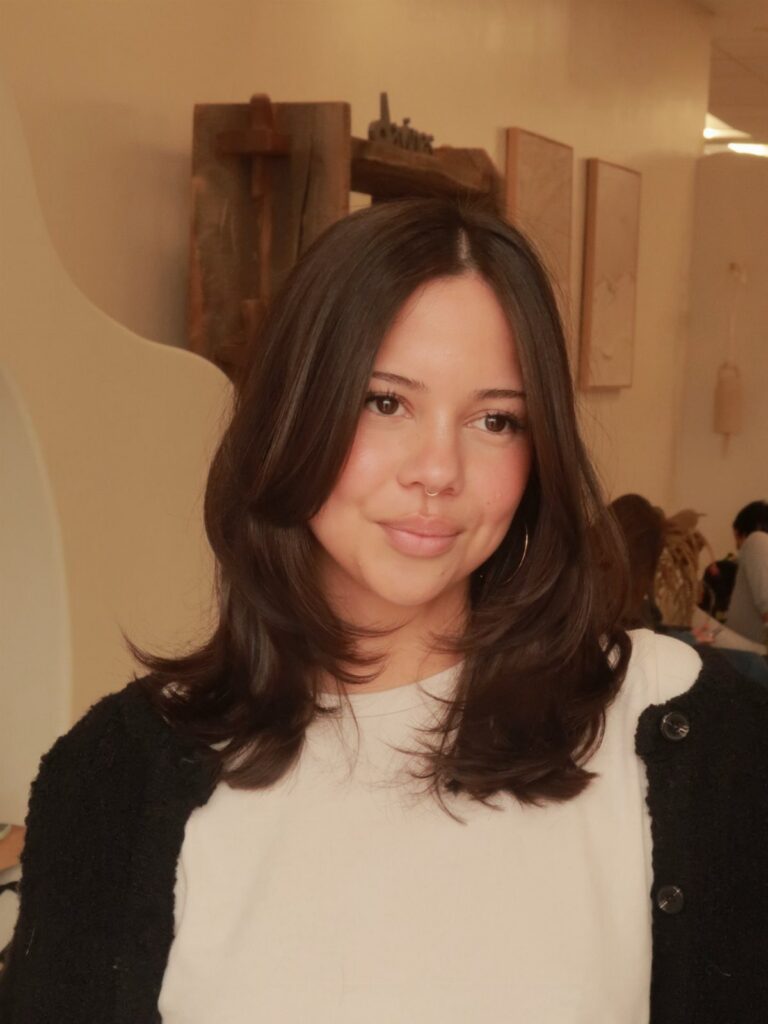
Front pieces that fall past the chin do the shaping in this cut, while the back keeps its full shoulder-length weight. That split is what I like: you get a framed face without giving up length.
Ask your stylist for the shortest front layer to land near the cheekbone or chin, and say you want the rest left long.
Brown hair shows off the lines of a cut well; a round brush rolling the front pieces away from your face during a blow-dry is all the styling it needs.
2. Curly Layers
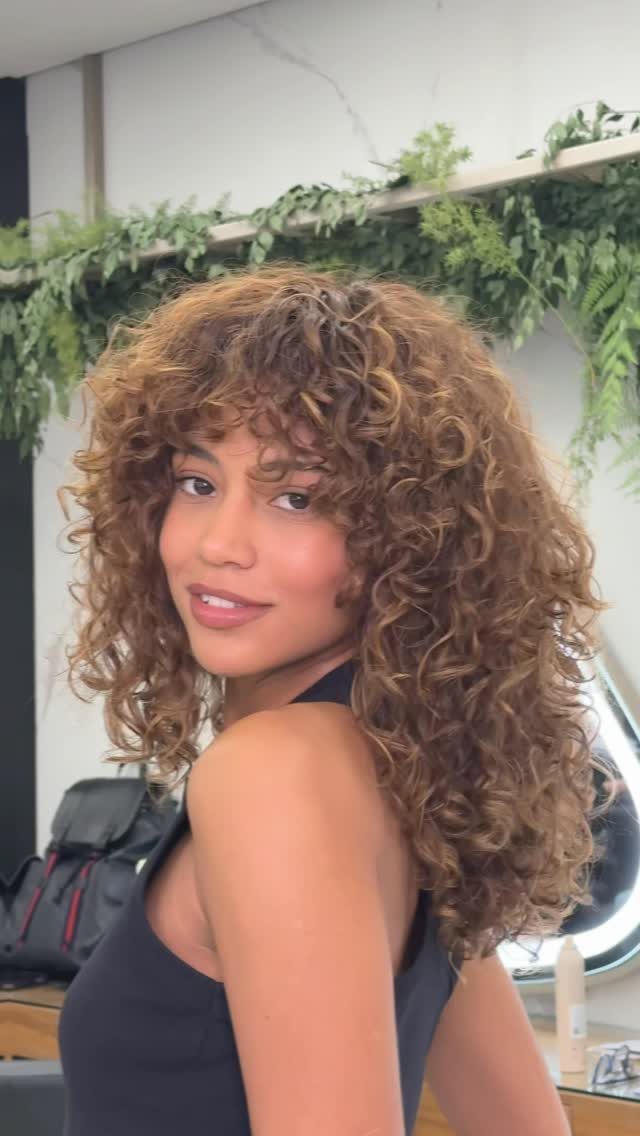
Medium-length curls tend to stack into a triangle, wide at the bottom and flat on top. Layers fix that by removing weight so each curl can spring up instead of hanging.
If you have curls like these, ask for the cut to be done on dry hair, curl by curl, so the stylist sees how each one actually sits.
Bangs add another curl pattern to manage, so I would only go that route if you enjoy styling in the morning. A diffuser keeps the volume intact.
3. Medium-Length Long Layers
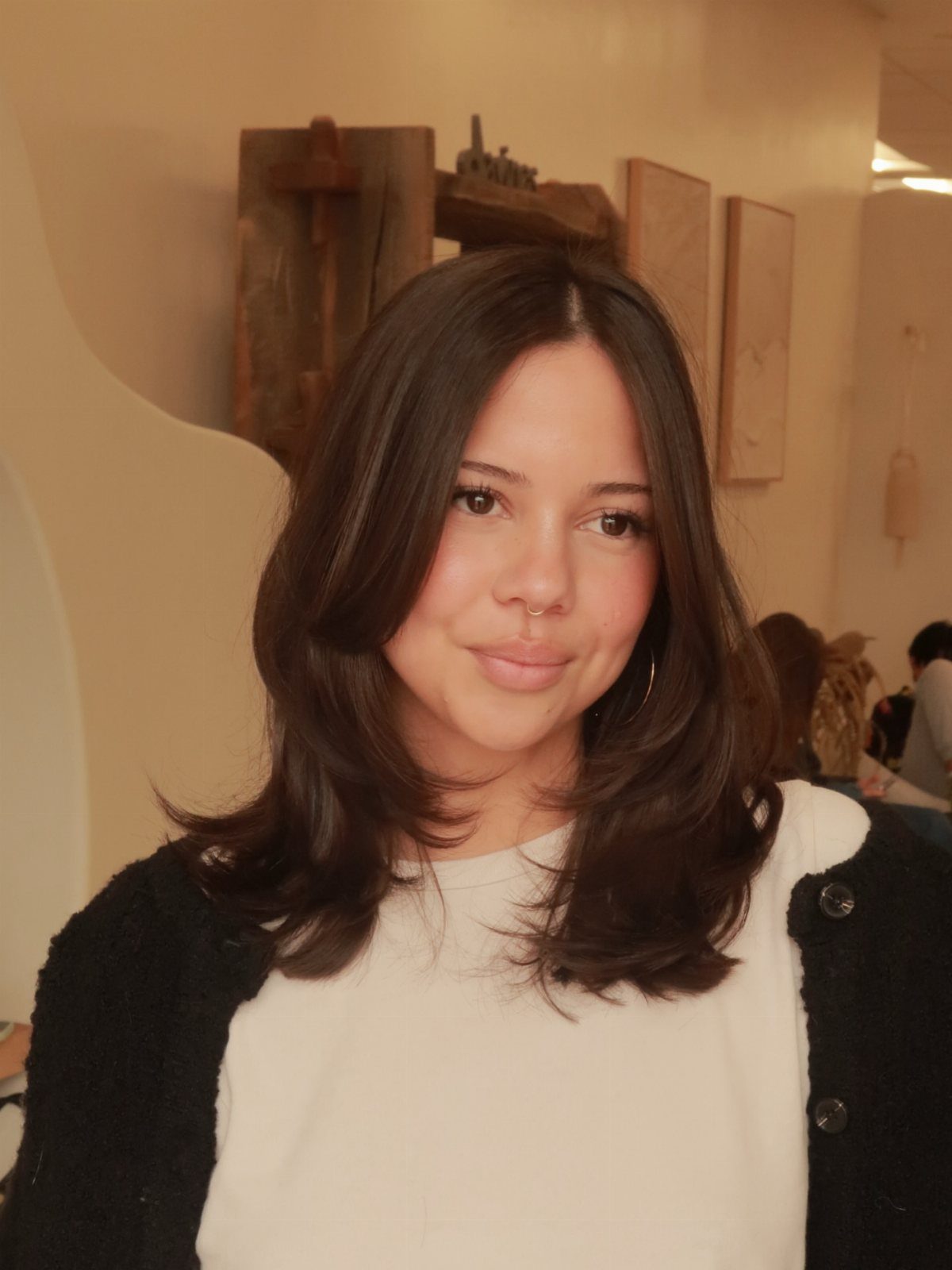
Long layers are the easiest layered cut to live with, and I would pick them first for anyone who wants shape without a styling routine.
The pieces are cut long enough that the hair still falls the way it naturally wants to.
Tell your stylist to start the layers below the chin and to leave your length alone.
Curling just the ends, as in this look, takes a few minutes and gives the cut some finish. It also grows out gracefully, since no single layer is short enough to look odd.
“For women who want to keep their length, long invisible layers are much more flattering than heavy, choppy layers,” he says.
4. Choppy Bangs
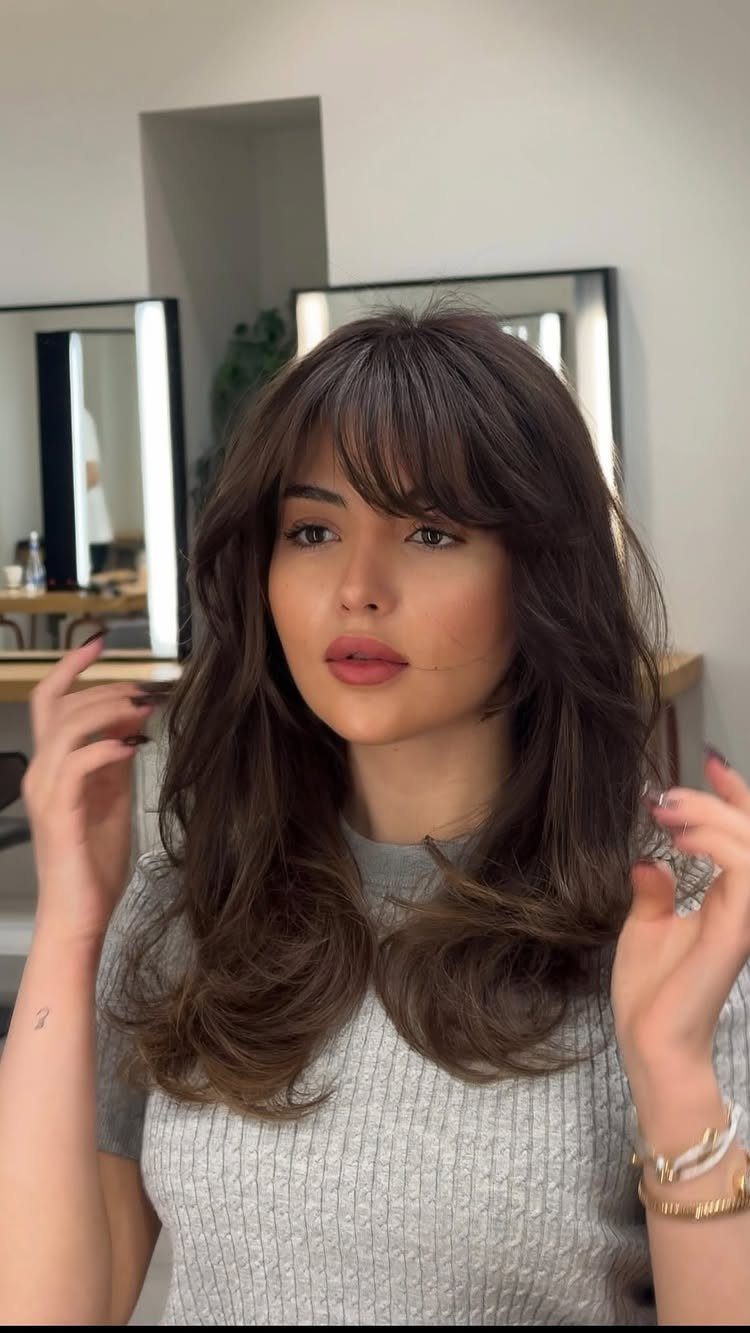
Choppy bangs bring texture to the front of a layered cut, and they work best when the layers behind them are cut with the same uneven, piece-y feel. Smooth layers with choppy bangs look mismatched.
Show your stylist the exact bang length you want, since a small difference changes how they frame the face.
Texture paste or cream worked through the ends keeps the pieces separated. Be honest with yourself about trims: bangs usually need touching up sooner than the rest of the cut.
5. Choppy Layered Lob
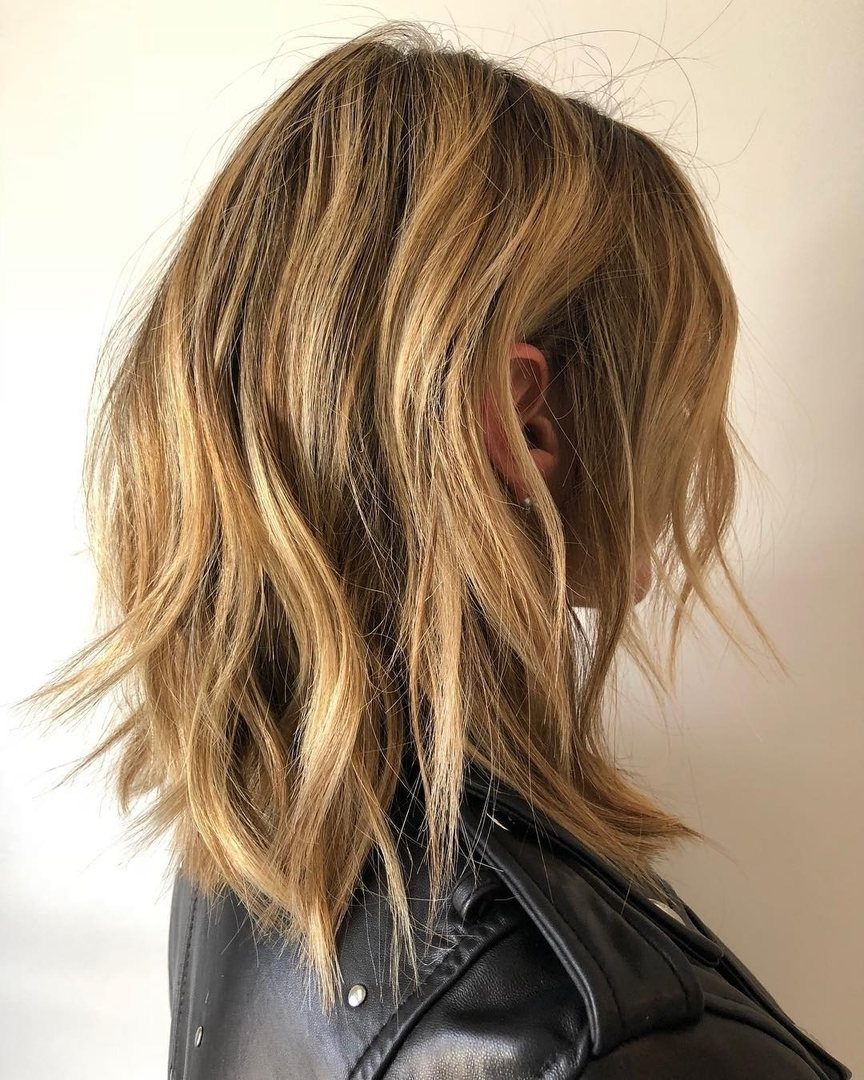
A lob with choppy layers is one of my favorite fixes for fine hair, because the uneven ends create the look of more density than a blunt line would. Blunt cuts on thin strands can look sparse at the bottom.
Keep the layers shallow so you don’t thin the ends out further.
Loose waves soften the choppiness, and they work especially well on blonde, where the color shifts from piece to piece. Sea salt spray at the roots adds grip and lift.
6. Bouncy Blowout
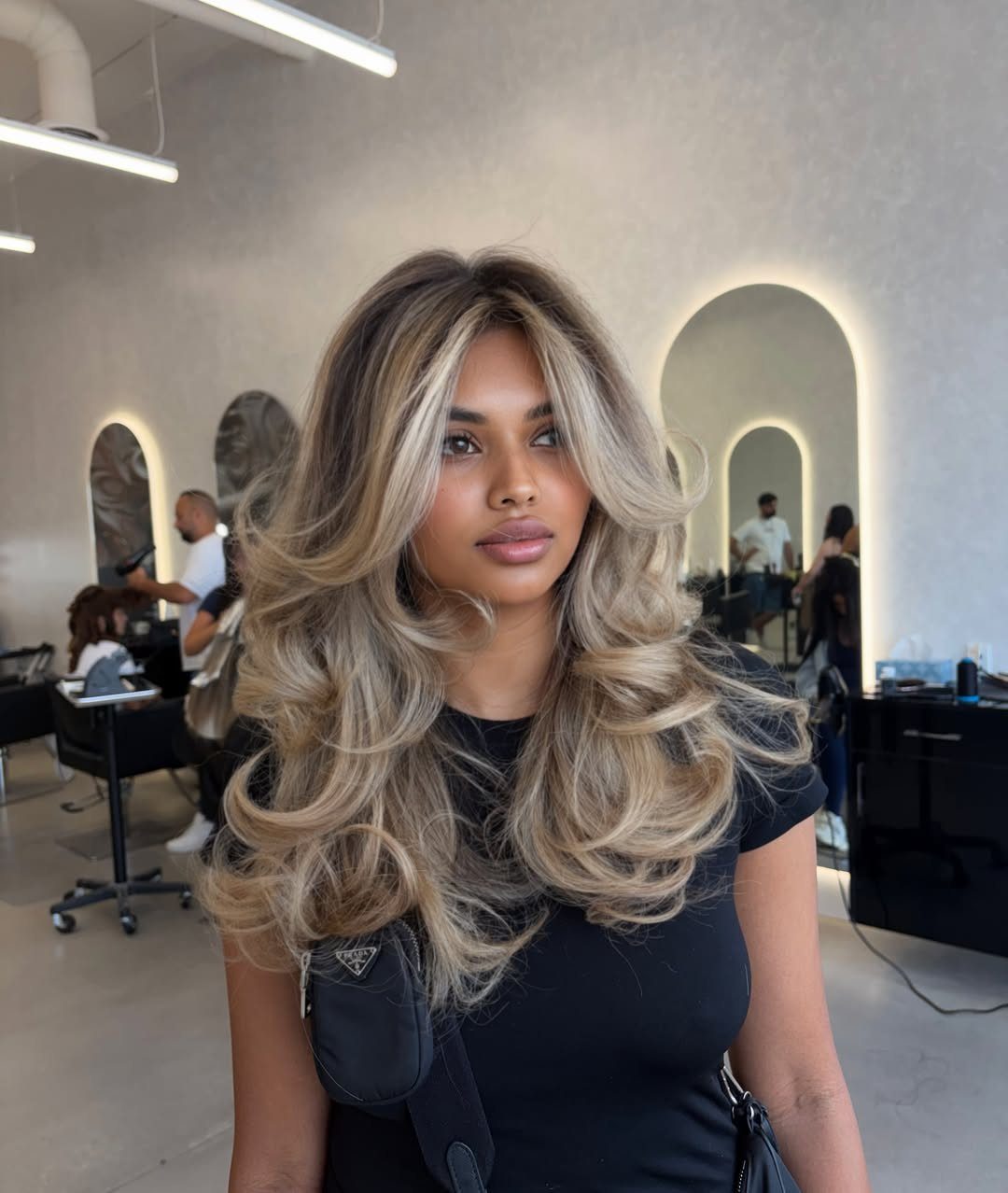
Volume at the crown and ends that turn under are what make a blowout read as bouncy instead of just big. Layers carry most of the work, since they take weight off so the hair can lift.
Ask your stylist for layers cut through the mid-lengths, then dry the hair in sections with a round brush, lifting at the roots and rolling the ends under.
Mixed blonde and brown tones show the movement well, because each layer catches light differently.
Plan on a full blow-dry session, not a quick pass. This one rewards patience.
7. Flipped Ends
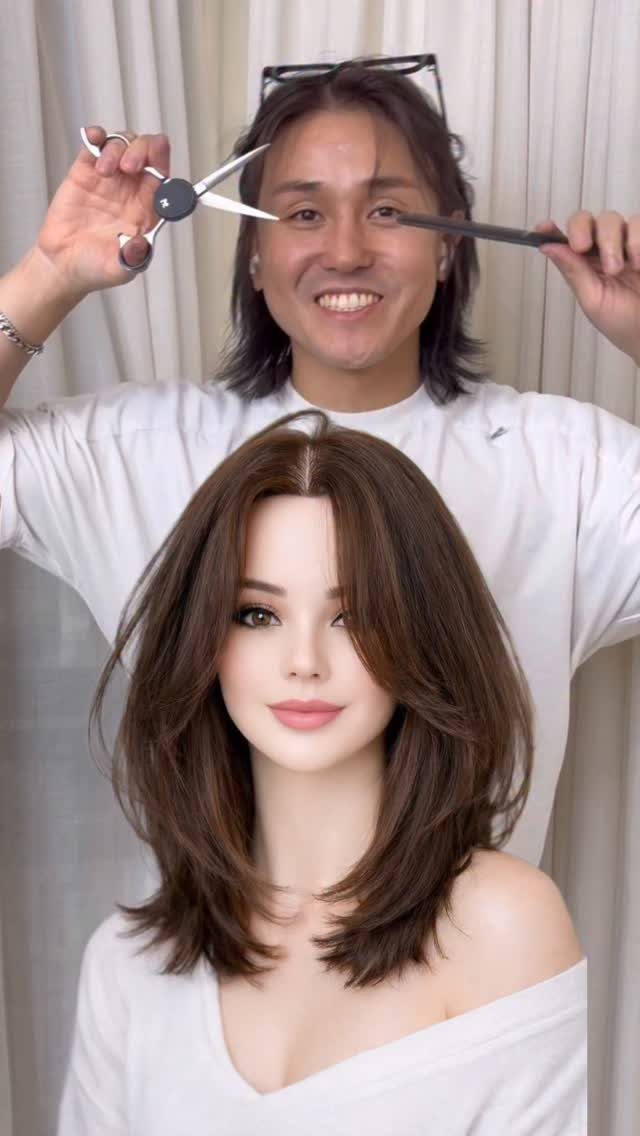
Smooth hair that kicks outward at the ends looks polished without looking fussy. I like it for anyone who wants a finished shape but would rather skip curls.
Tell your stylist you want layers with enough movement that the ends can flick out on their own.
At home, roll a round brush under each section as you blow-dry, then turn the brush outward at the bottom and hold for a few seconds.
A light smoothing cream or serum on the top layer keeps the finish sleek without weighing the flip down.
8. Medium-Length Layers with Curtain Bangs
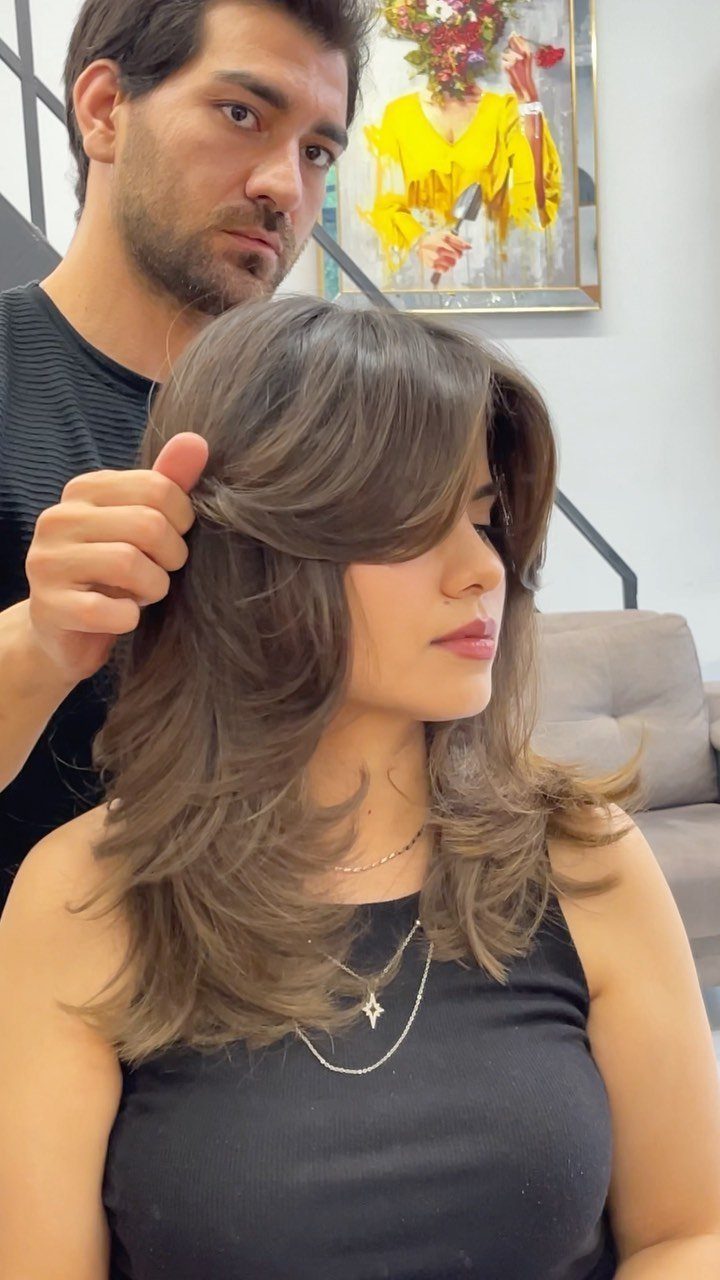
A center part decides everything with curtain bangs. Curtain bangs part in the middle and sweep out toward each cheek, so they look best with a clean center part and ends cut to melt into the front layers.
Tell your stylist you want the bangs connected to the face-framing pieces, not cut as a separate block.
Start with the bangs when you blow-dry: use a round brush and roll each side outward, away from the center part. Then work through the rest.
9. Layered Italian Bob
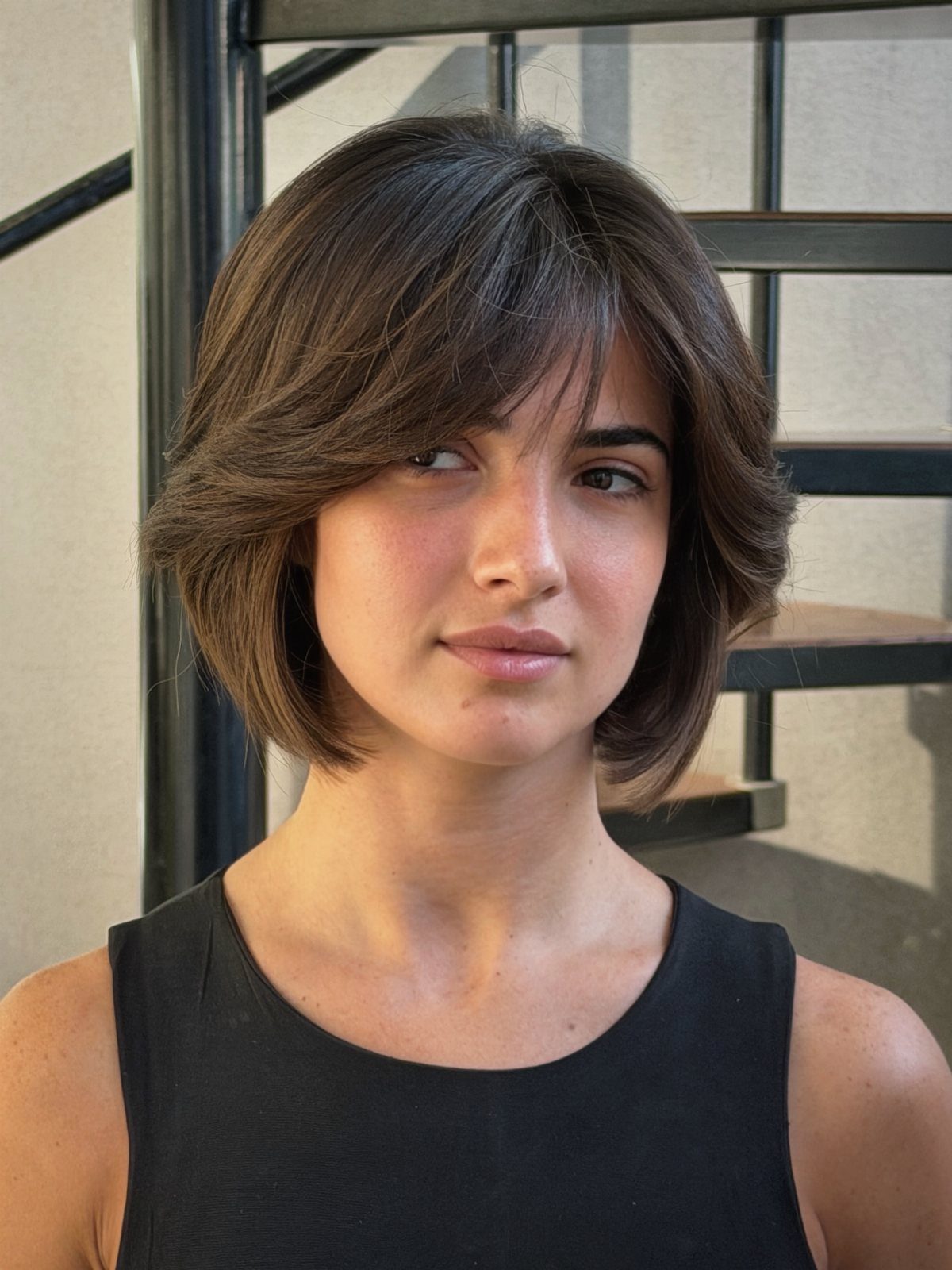
Longer pieces up front are what set this bob apart from a plain one. The layers stay soft, and the front sections fall past the back to frame the face.
Bring a photo and point to where the front pieces should land. Ask for the bangs to be cut long enough to sweep to the side instead of lying flat across the forehead.
A round brush and a few minutes of blow-drying will give the ends a gentle bend and keep the sweep in place.
10. Feathered Side-Part Layers
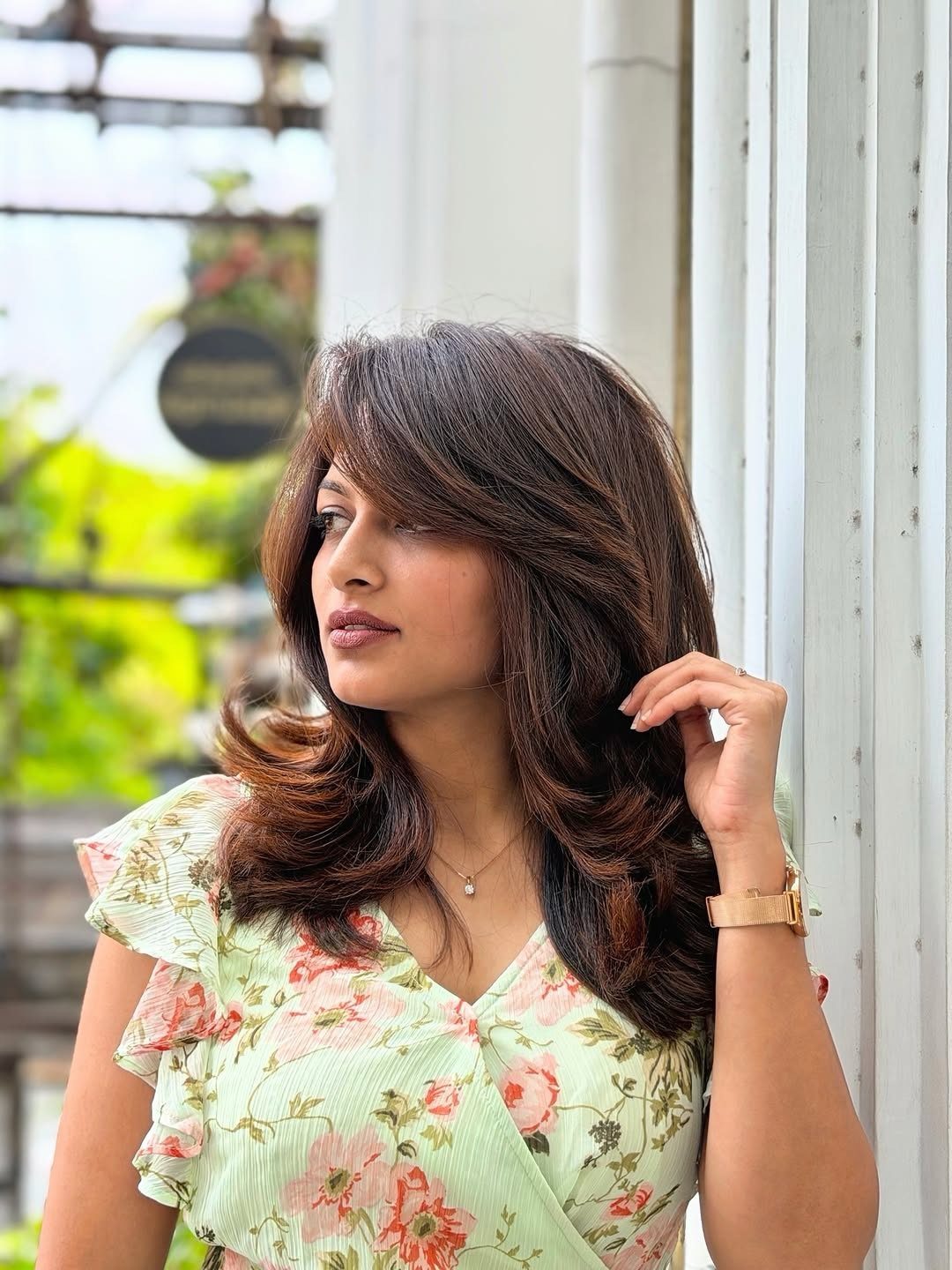
Part your hair deep to one side and the whole cut changes: more hair falls across one side of the face, and the feathered layers get room to show.
Curl the ends away from your face with a curling iron, then run a brush through to blend the curl into soft, feathered pieces.
A deep part can also take some of the weight off the forehead. Set the part while the hair is damp so it stays where you put it.
11. Tousled Tapered Layers
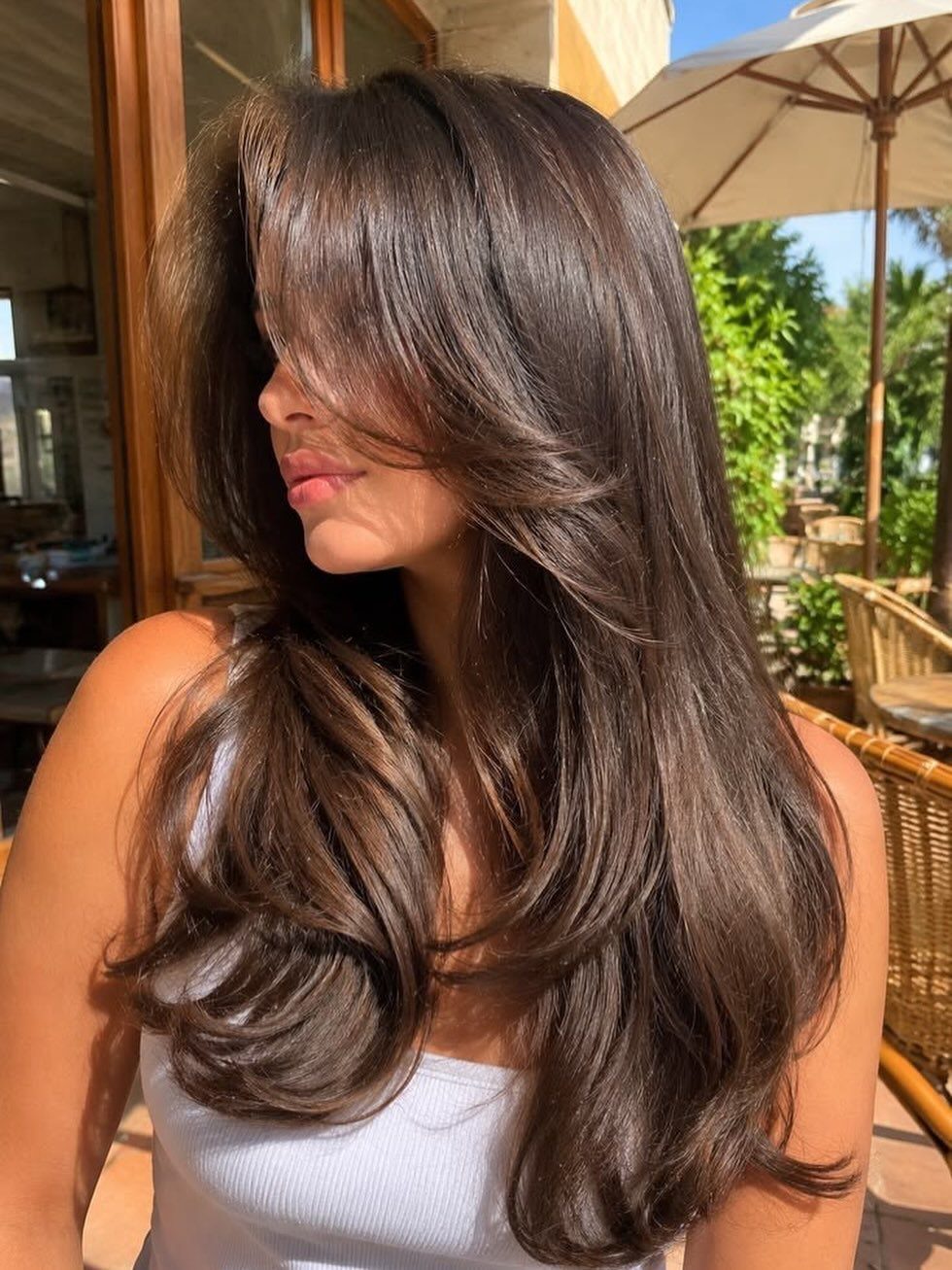
Bulk tends to gather at the ends of medium-length hair, and tapering removes it. The layers get lighter toward the bottom, which lets the tousled texture move instead of sitting heavy.
Ask for tapered ends and no loss of overall length.
For styling, I would use a texture spray and loosely twist or scrunch sections until you get relaxed waves. Dark brown hair shows off shine, so a drop of smoothing oil on the ends is worth adding.
12. Stacked Lob
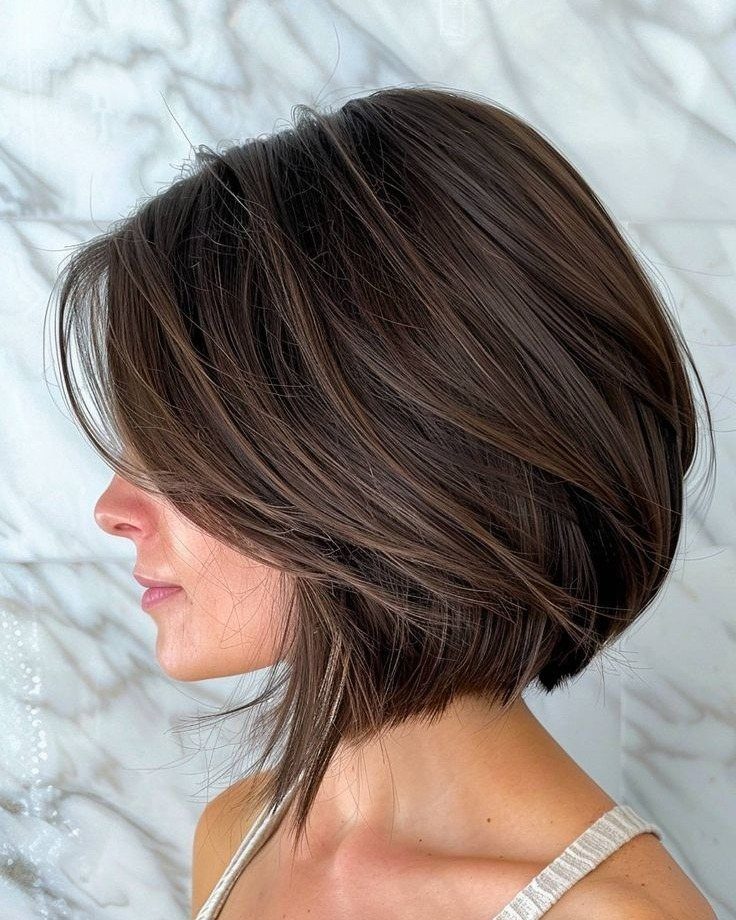
Stacking builds the back of this lob into a rounded shape, with shorter layers piled up at the nape and longer pieces left in the front.
Ask for the stack to be cut gradually, so the curve looks soft instead of stepped.
For the back, lift at the roots with a round brush and turn the ends under as you dry, which holds that rounded stacked shape.
If that much shape feels like a lot, a lighter stack with fewer layers is a calmer option.
13. Brushed-Out Barrels
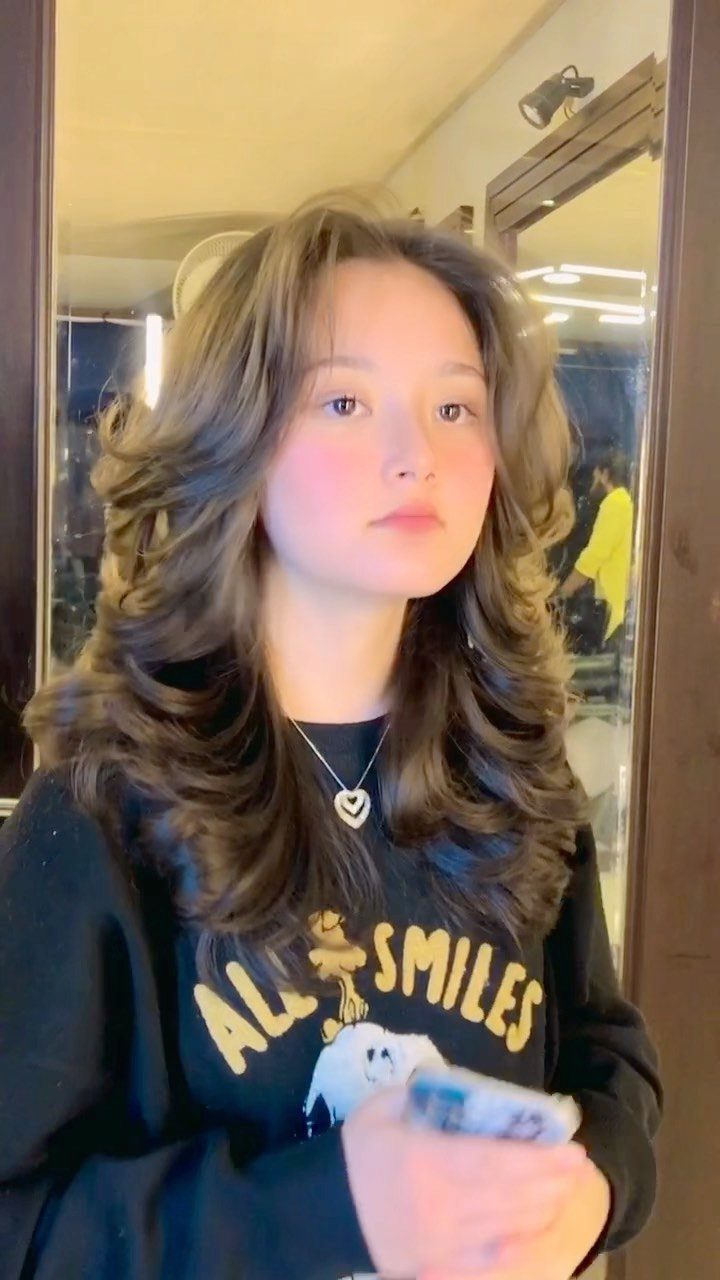
A brushed-out barrel curl is a curl you break up on purpose. Set the bends with a hot tool, then run a brush through them until the ridges soften into one full, fluffy shape.
For brushed-out barrels, tell your stylist you want the layers cut with movement in mind, because that is what gives the ends enough freedom to turn outward.
Curl in sections, let each one cool, and brush only after that. Brushing a warm curl pulls it straight.
Expect volume, and expect to redo it. It’s a styling session, not a wash-and-go.
14. Medium-Length Layered Lob
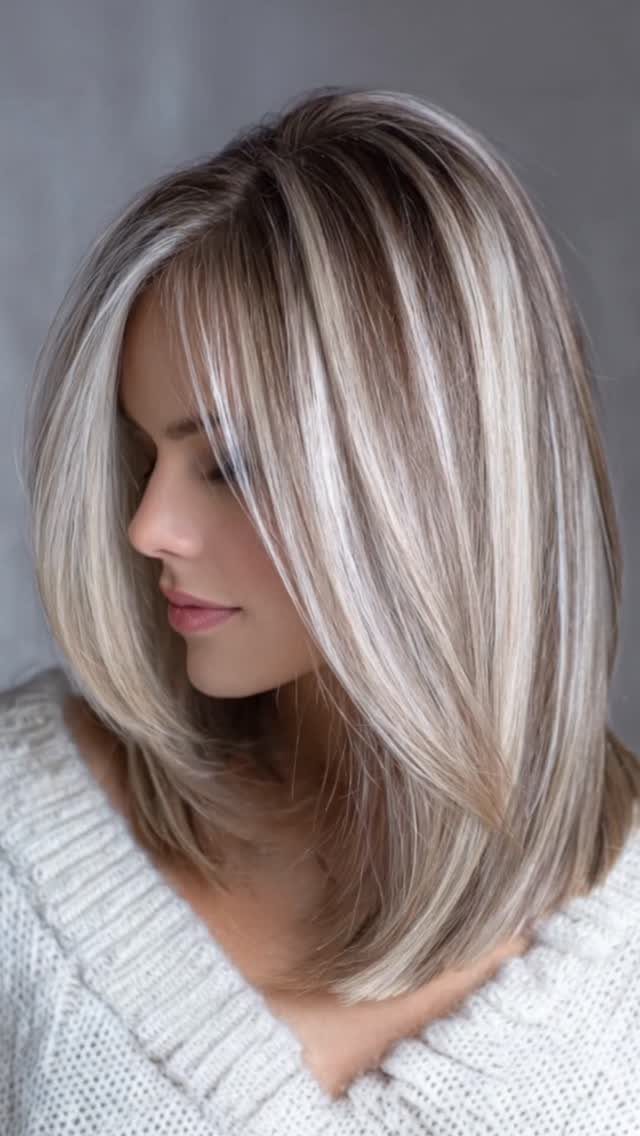
Blonde with dark roots suits a layered lob well, because the layers scatter the highlights and the roots keep the color from looking flat. A near-center part shows off that contrast.
Ask for layers that start around the collarbone and stay light, so the lob keeps its weight at the bottom.
Blow-drying the ends around a round brush for a minute or 2 puts a soft curve in them, and that small bend keeps the lob from looking flat.
Highlights with grown-in roots also tend to forgive a late salon visit.
15. Medium-Length Layered Bob
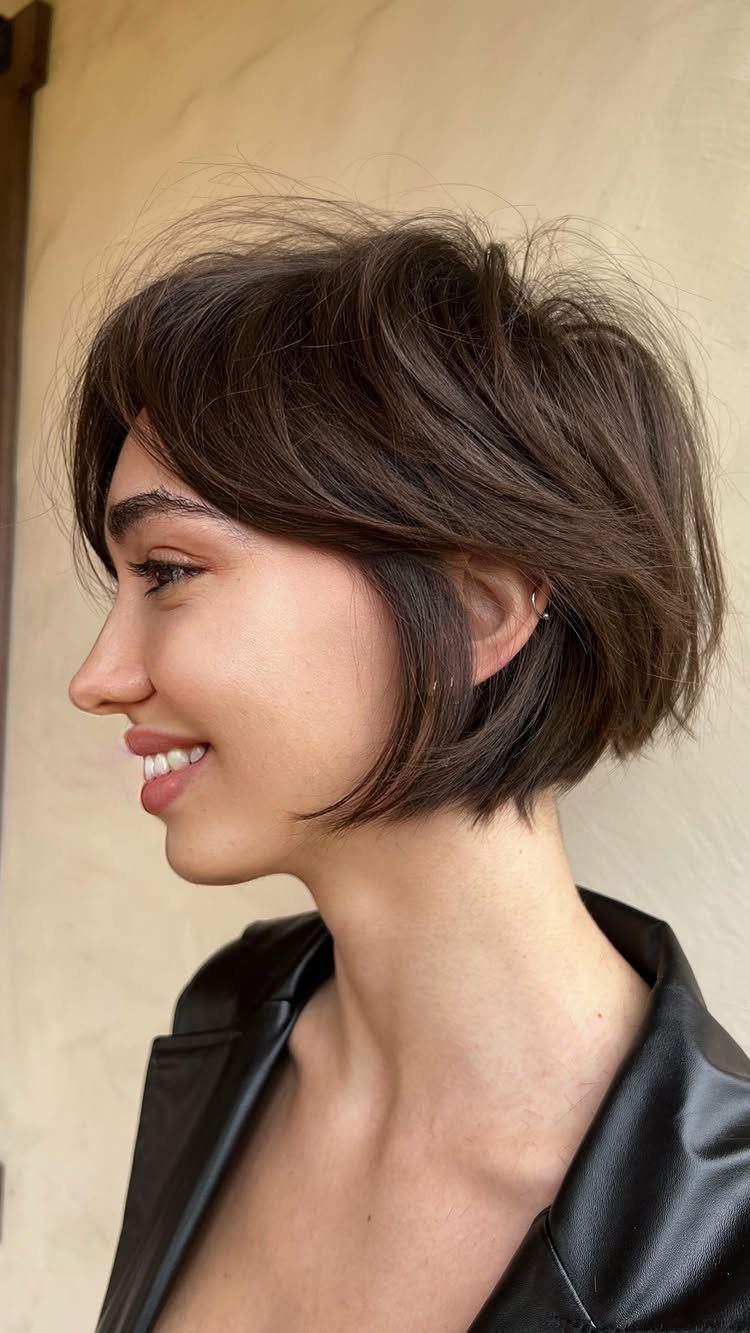
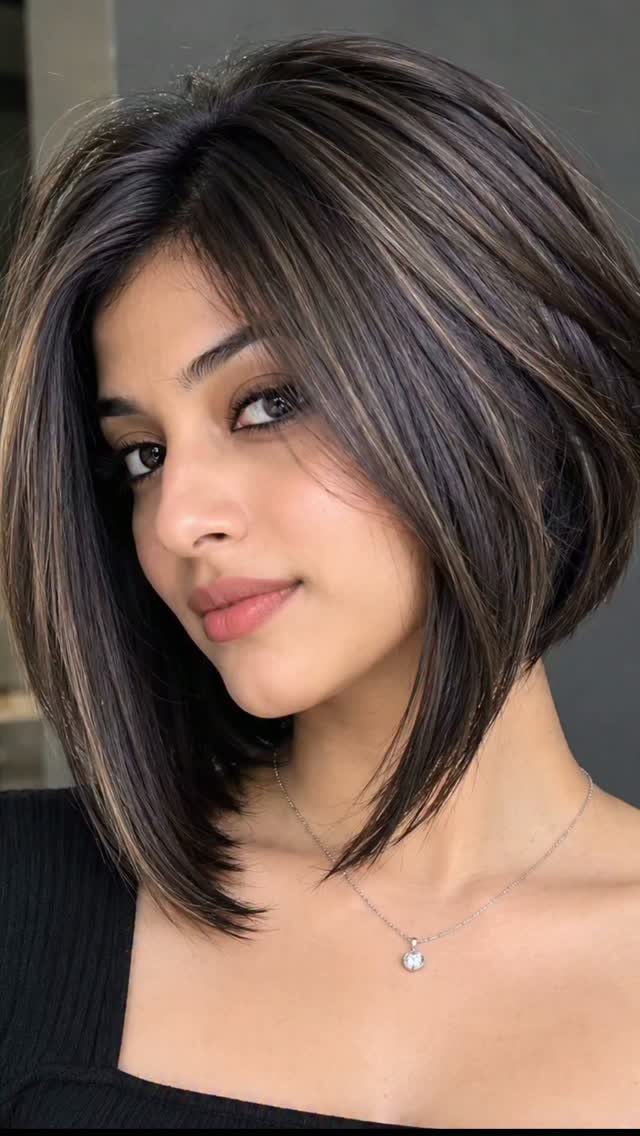
Layers inside a bob do the job of movement. Without them, a bob can sit like a helmet; with them, it swings and lifts at the ends.
Photo in hand, show your stylist the exact spot where the side-swept bangs should land.
Long enough to sweep across, short enough to stay out of your eyes. Ask for the layers to be blended into the bangs so nothing looks cut separately.
On dark brown hair every line of the cut shows, so I work a pea-sized dab of smoothing cream through the ends to keep them tidy.
16. Birkin Boho
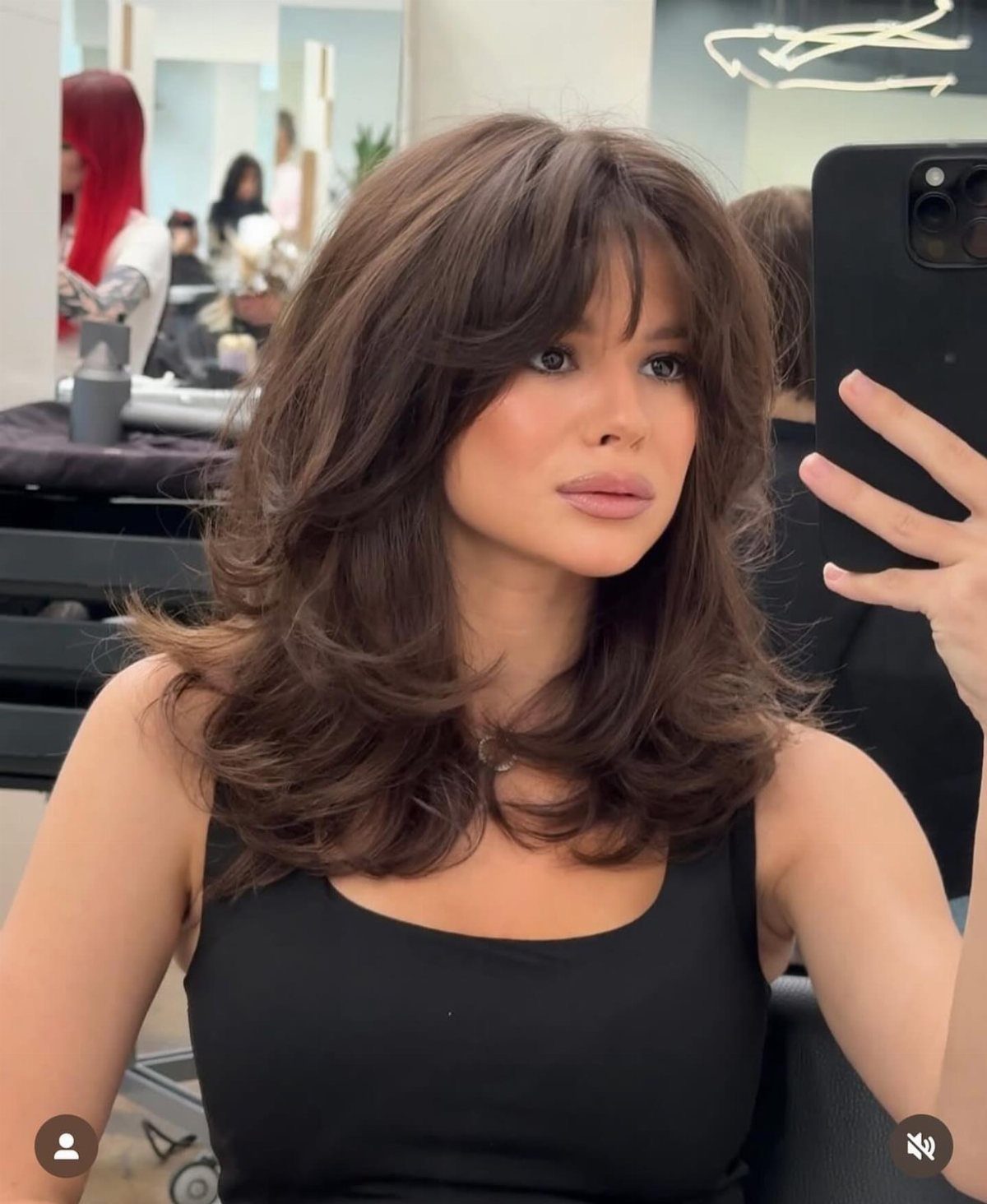
Birkin boho is the Birkin fringe loosened up: wispy, a little broken, never blunt. Layers blend into it so the whole cut reads as one soft shape.
Tell your stylist you want the fringe deconstructed, which means thin, uneven pieces instead of a solid curtain. Then ask for the layers to melt into it.
For daily styling, finger-comb the fringe and let it dry mostly on its own. This is a good pick if you’d rather not spend your morning on it.
17. Waterfall Layers
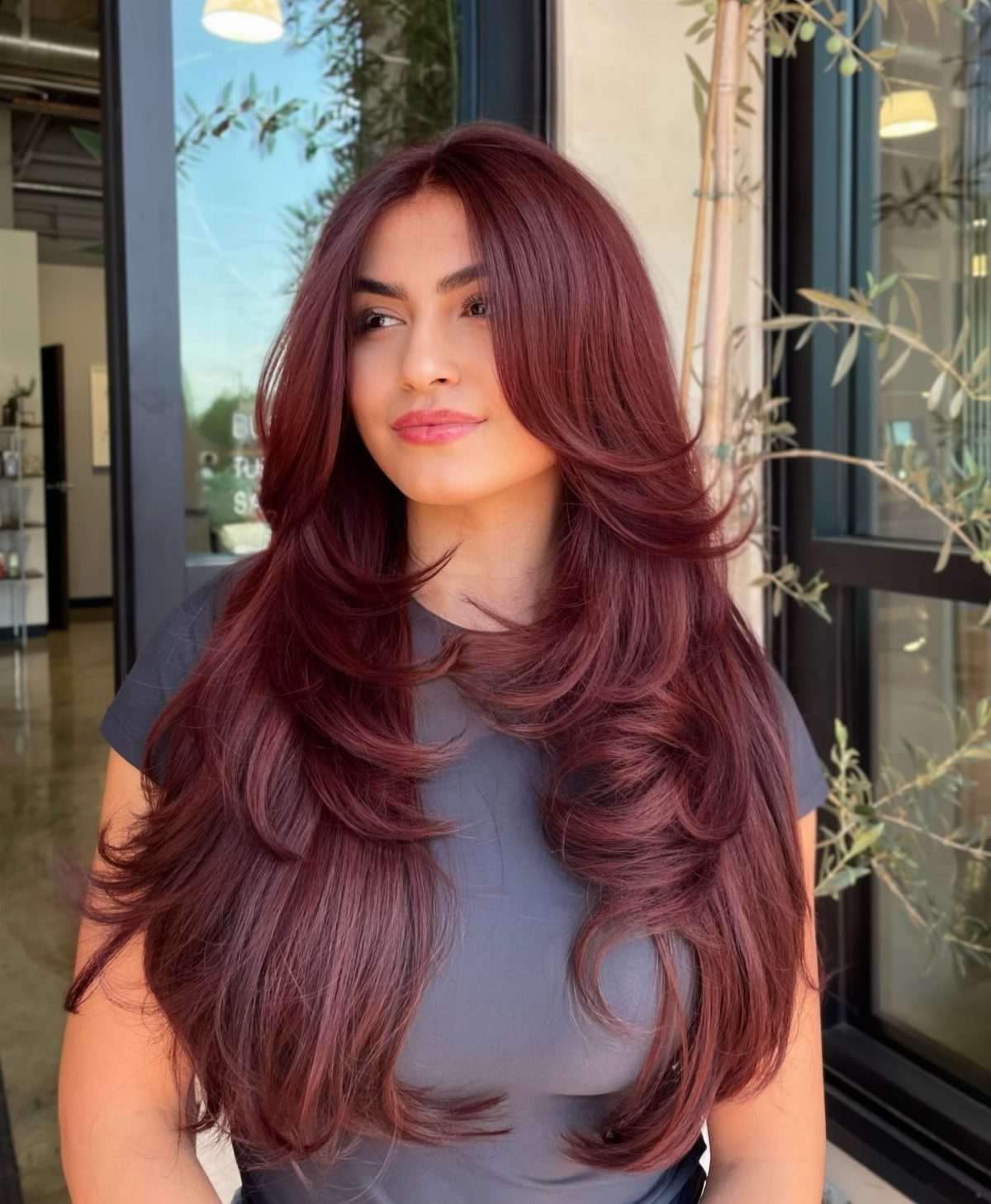
Waterfall layers cascade through the mid-lengths, adding body where long hair tends to hang flat. The top stays smooth while the lower layers stack up like steps.
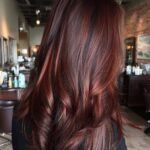
Curl the ends and turn them in, as in this burgundy version, to make the cascade visible.
Deep red and burgundy tones show every layer, which is a point in their favor. Whether your hair is colored or natural, a round brush and a light mist of spray will do the job.
Heat and Hair Care
Heat protectant goes on before any hot tool touches your hair, and the blow dryer counts. Flat irons, curling wands and dryers all run hot, and a protection spray applied first shields the strands and limits damage.
Make it a habit on every styling day, not just the days you pull out the iron. A layered cut looks best when the ends are healthy, and the ends take the most heat.
Deep conditioning belongs in the routine too. I would work it into your wash schedule rather than saving it for when the hair already feels dry.
For medium lengths, a little hair oil on the ends adds hydration between treatments. Use a small amount, because oil piled onto layered ends will weigh them down.
Layer Upkeep and Growing Out
Layers hold their shape only if you keep trimming them. A trim every 6–8 weeks removes split ends and stops the ends from looking frayed, while a visit every 2–3 months can work if your hair grows slowly.
Count the cost before you book. Layers add styling time and usually mean more salon appointments than one length does.
Growing them out is the slow part. Going from layers back to a single length takes time, so decide whether you can live with that stretch before the first cut.
Frequently Asked Questions
Which cut is best for medium hair?
Long layers are my pick for most people, since they start below the chin, leave your length alone and fall the way your hair naturally wants to.
Fine hair does well with a choppy lob with shallow layers, because uneven ends look denser than a blunt line.
For curls, ask for the layers to be cut dry, one curl at a time, so the stylist can watch where each piece springs up and settles.
What haircut has a lot of layers?
Waterfall layers have the most going on: they cascade through the mid-lengths and stack up like steps while the top stays smooth.
A stacked lob also packs in plenty of layers: short, tight pieces build up at the back of the neck while the front stays longer.
Both options cost more time at the mirror and more trips to the salon than one-length hair does.
How to style medium-length hair with layers?
Dry the hair in sections around a round brush, pulling up at the roots, then roll the ends under for a soft curve or turn them out for a flip.
For a softer finish, curl just the ends or work texture spray through and scrunch loose sections into waves. Put heat protectant on first, since the ends take the most heat.
How to maintain your layered cut?
Apply heat protectant before every styling session, blow dryer included, and book a trim every 6–8 weeks.
Put a deep conditioner on the regular wash-day calendar rather than waiting until the hair already feels parched. A few drops of oil on the ends add moisture between masks, though a heavy hand leaves layered ends hanging limp.
How often should you get a trim?
Every 6–8 weeks keeps layers in shape by removing split ends and stopping the ends from looking frayed.
Slow growers can stretch the gap to 2–3 months. Bangs grow into your eyes well before the rest of the cut needs attention, so book a quick tidy between full appointments.