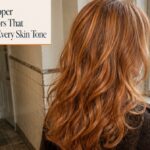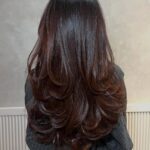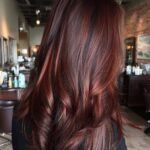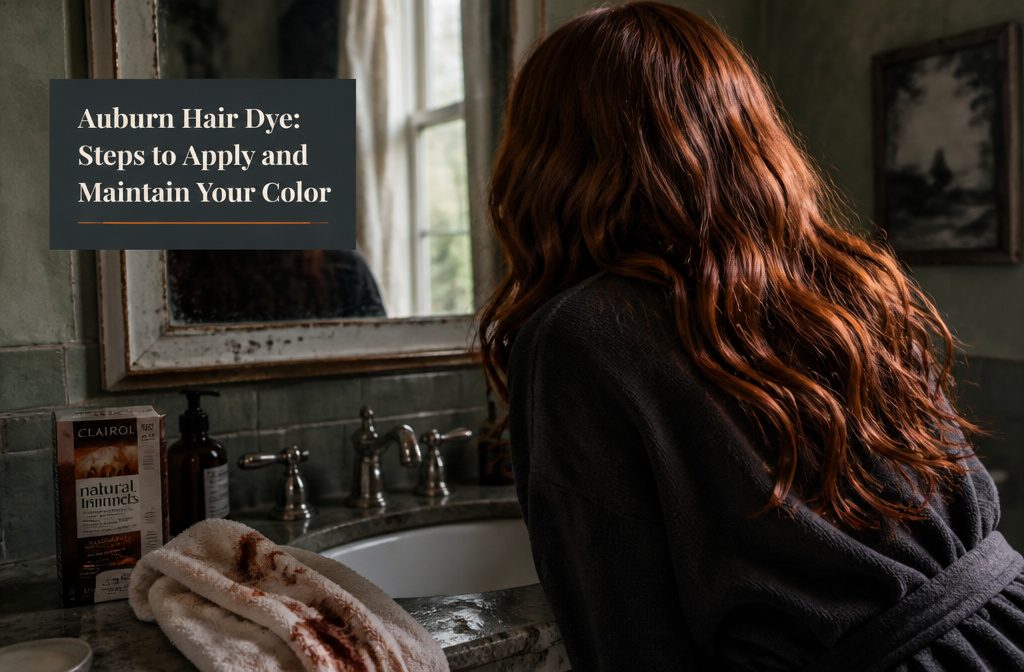
Auburn is a reddish-brown: a brunette base with red, amber, or copper running through it, deeper and more muted than copper and less violet than burgundy.
It works best on light to medium brown hair. Already bleached or colored strands are porous and can grab the dye unevenly, coming out darker than the box shows.
What Auburn Hair Color Means and How It Differs from Copper or Burgundy
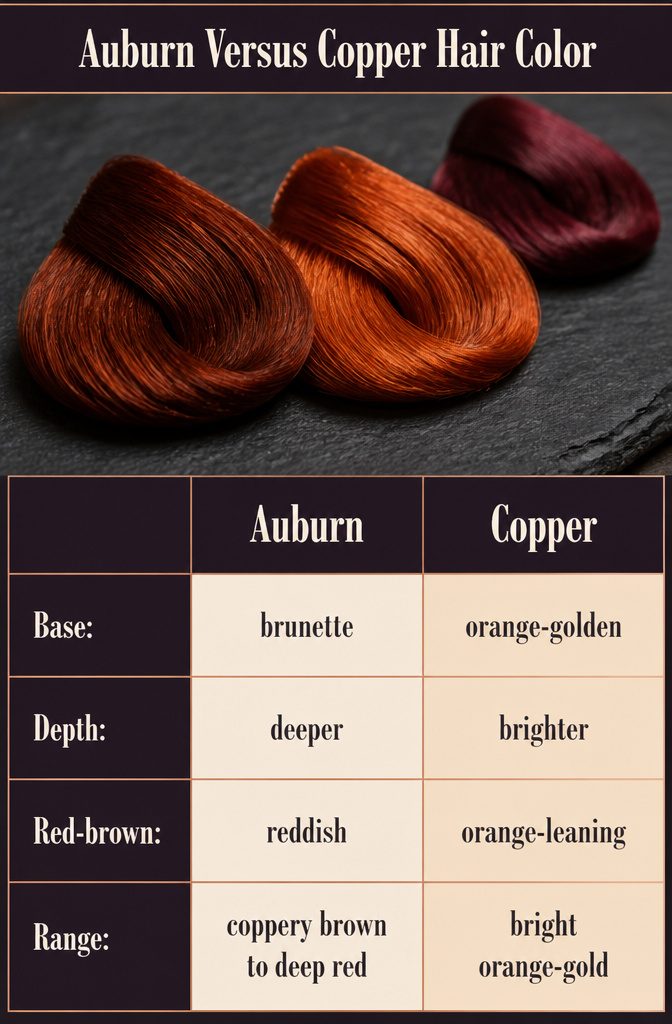
Auburn sits between brown and red, with a rich brunette base and warm tones of red, amber, or copper threaded through.
The shade runs deeper and more muted than copper, which tilts brighter and more orange or golden. Think of auburn as reddish-brown rather than brownish-red.
Chestnut has less red and reads closer to brown. Burgundy leans purple.
Auburn holds more red than chestnut but stays warmer and less violet than burgundy. The range stretches from light coppery brown through deep red-burgundy, so two people can both call their color auburn and look quite different.
The most classic version lands squarely in the middle, warm but not vivid, with a cinnamon cast that catches the light without shouting.
1. Pick Your Auburn Shade by Starting Hair Color
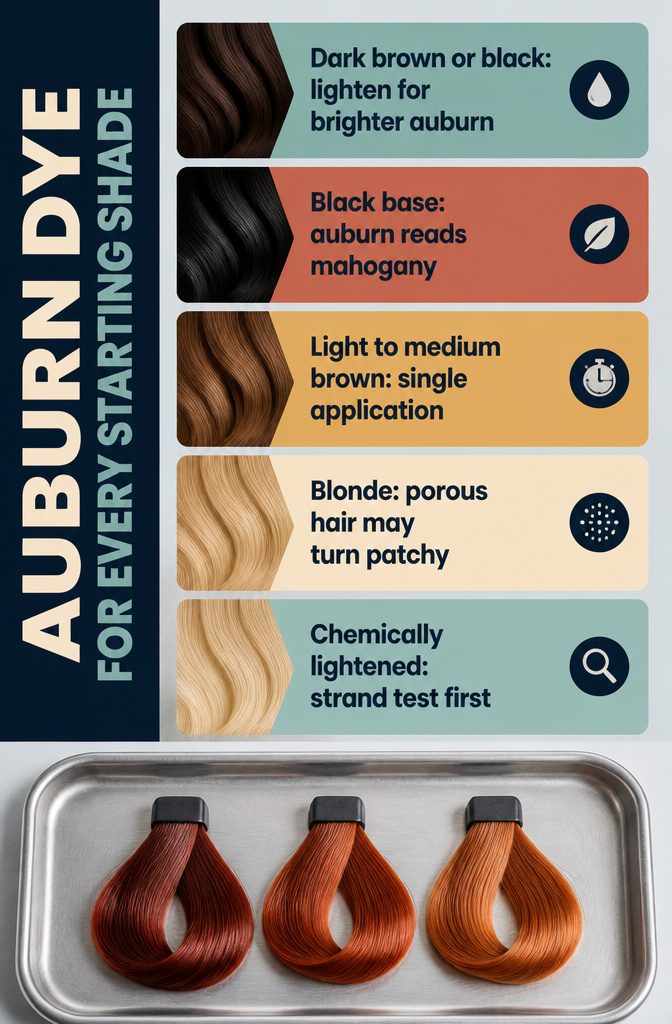
Your starting shade decides which auburn tones will lift properly and which ones need multiple sessions.
Dark brown or black hair can pull off auburn, but expect to lighten first if you want anything brighter than a deep reddish-brown. The color will read more subtle on a black base, leaning toward mahogany rather than copper.
Light to medium brown is the cleanest match for most auburn dyes. You already sit close enough to auburn that a single application can land you anywhere from a warm chestnut-red to a bright, coppery finish.
Garnier and L’Oréal both position auburn as a natural step between brown and red, so the pigment takes predictably.
Blonde hair will grab auburn fast, sometimes too fast.
Porosity matters here more than depth, especially if you have chemically lightened hair. Run a strand test before committing to a full head, because damaged sections can soak up color unevenly and turn patchy or too dark.
2. Match Auburn Undertones to Your Skin
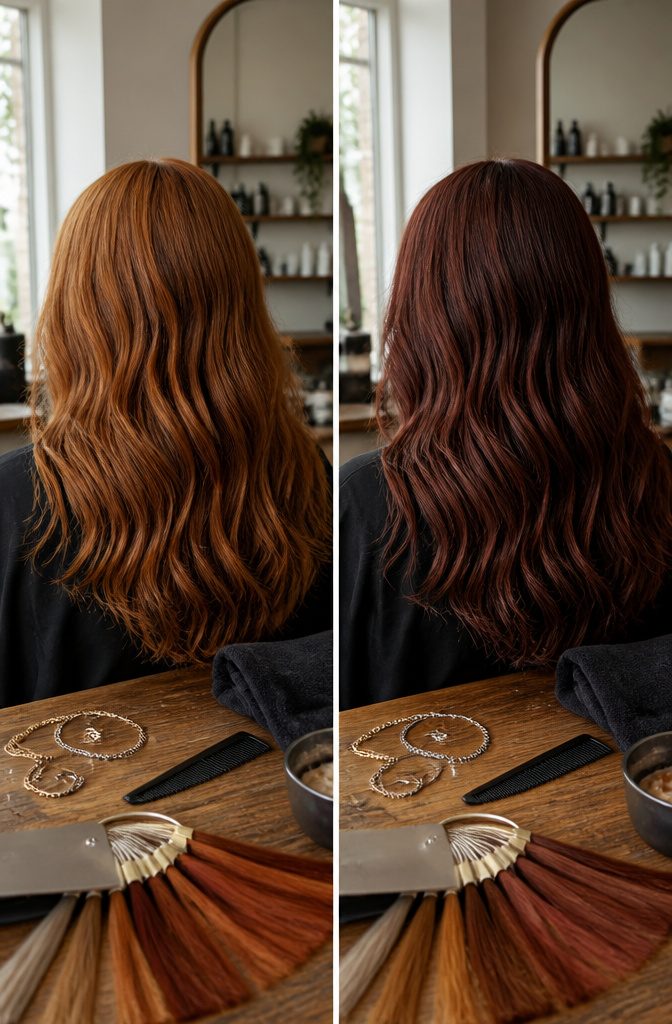
Undertone makes or breaks an auburn. Warm auburn suits warm skin, cool auburn suits cool skin, and neutral undertones can wear any auburn without fighting the base.
The deeper, more balanced auburns pair best with cool undertones.
Think chocolate brown with rich red overtones rather than copper fire. Warm undertones pull toward the golden end: coppery brown, light auburn with visible gold, anything that leans orange rather than burgundy.
If you know your jewelry test, you already know your undertone.
Gold looks right on warm skin, silver on cool. If both work or neither stands out, you likely sit neutral and can pick based on the mood you want rather than complexion match alone.
Garnier and L’Oréal Paris both offer virtual try-on tools and shade quizzes that let you preview before committing to a permanent color, worth using if the undertone question still feels uncertain.
3. Test, Prepare and Mix the Dye
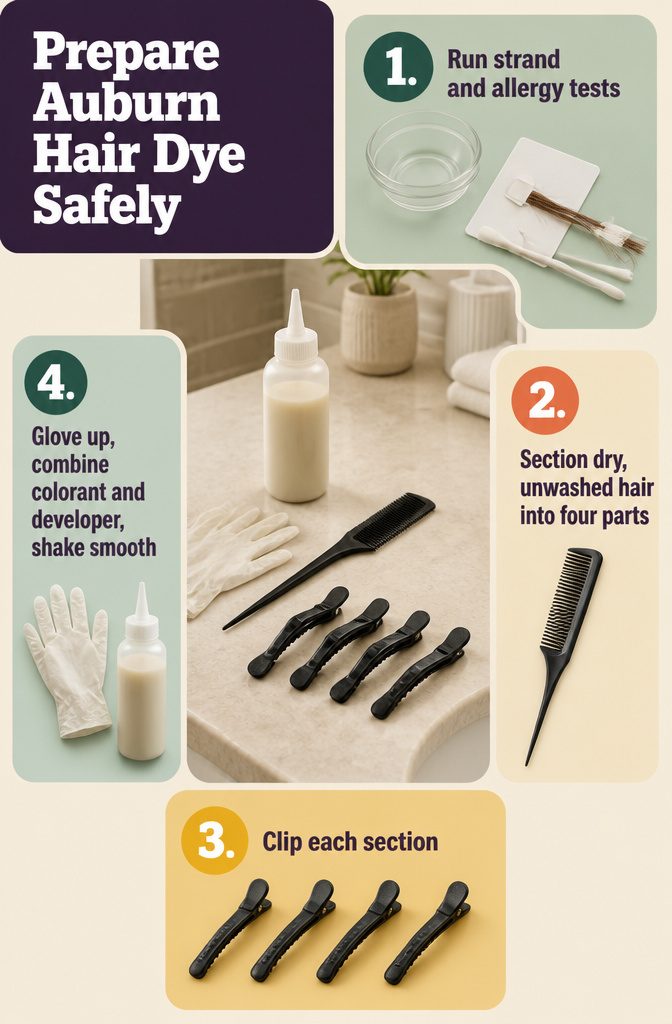
- Run a strand test and an allergy test first. The strand test previews your result and shows whether your hair is healthy enough to color, which matters most on chemically lightened hair. The allergy test checks how your skin reacts to the dye chemicals.
- Section dry, unwashed hair into at least four parts and clip each one. Unwashed hair keeps its natural oils, which cushion your scalp.
- Put on the gloves from the box, then empty the colorant into the developer bottle. Shake until the mixture turns smooth and creamy. Streaks of unmixed formula mean patchy color, so I’d keep shaking past the point where it already looks done.
4. Apply Root to Tip and Process
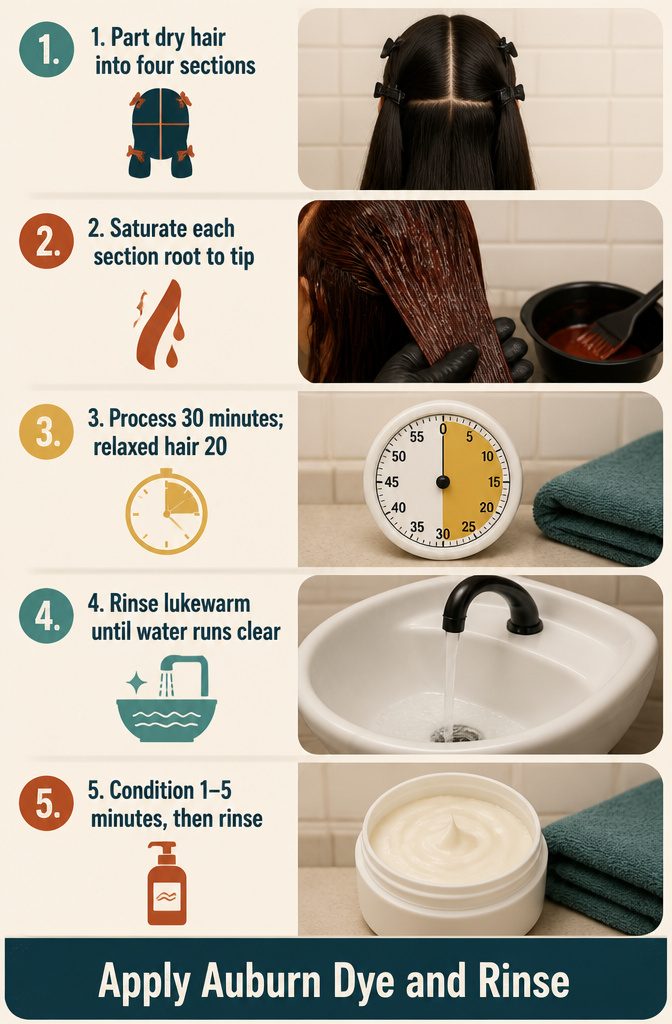
- Part dry, unwashed hair into four sections using clips or ties for easier control.
- Apply the auburn hair dye mixture from root to tip, working through one section at a time. Use your gloved fingers or an applicator brush to distribute the color evenly, smoothing it through each section until fully saturated.
- Process for 30 minutes if your hair has never been dyed, or 20 minutes on relaxed hair. Set a timer to avoid over- or under-processing the color.
- Rinse with lukewarm water until the water runs clear. Do not shampoo yet.
- Apply the post-color conditioner included in your kit, let it sit for one to five minutes as directed, then rinse again and air-dry to see the result.
5. Touch Up Roots Every 4 to 6 Weeks
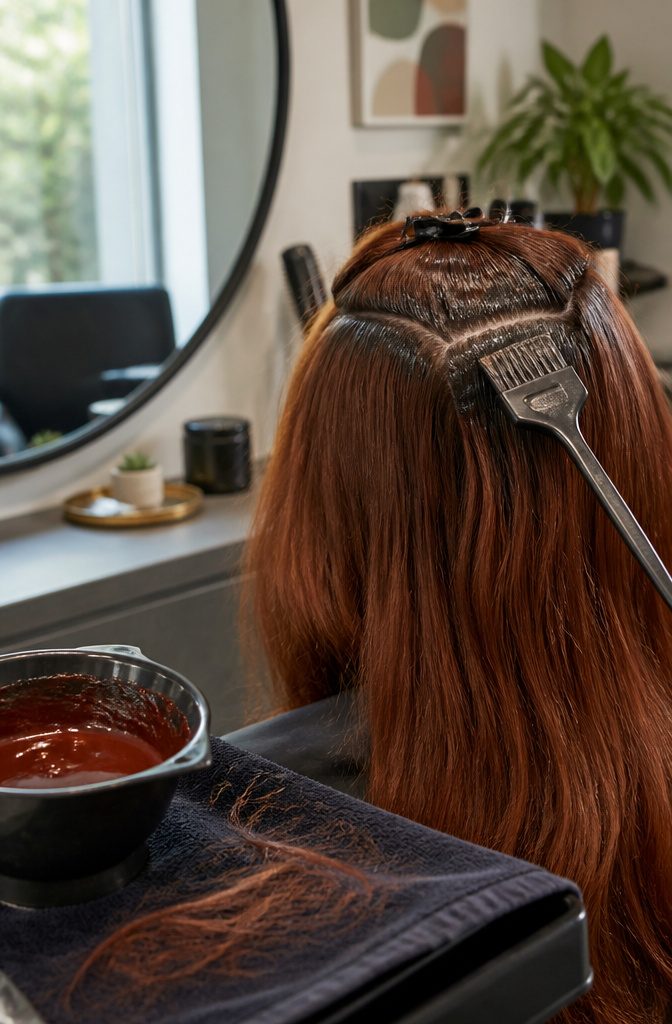
Retouching roots takes about 10 minutes of work, and the usual window is 6 to 8 weeks after your last full color.
Most auburn wearers end up recoloring every 4 to 6 weeks, depending on how much regrowth shows and how far the shade has faded.
Apply the dye to the regrowth only.
Keep it off the lengths and ends, because overlapping fresh color on already-colored hair builds dark bands. Let it process 20 minutes on natural hair or 15 on relaxed hair.
If the lengths look dull, pull the mixture through the ends for the last stretch.
That refresh takes an extra 10 minutes on natural hair or 5 on relaxed. For more depth at the root, go one shade darker than your main color; otherwise use the same shade.
Keep Color from Fading with Sulfate-Free Care and Cool Water
Auburn stays vibrant longer when you protect it from the things that strip color fastest.
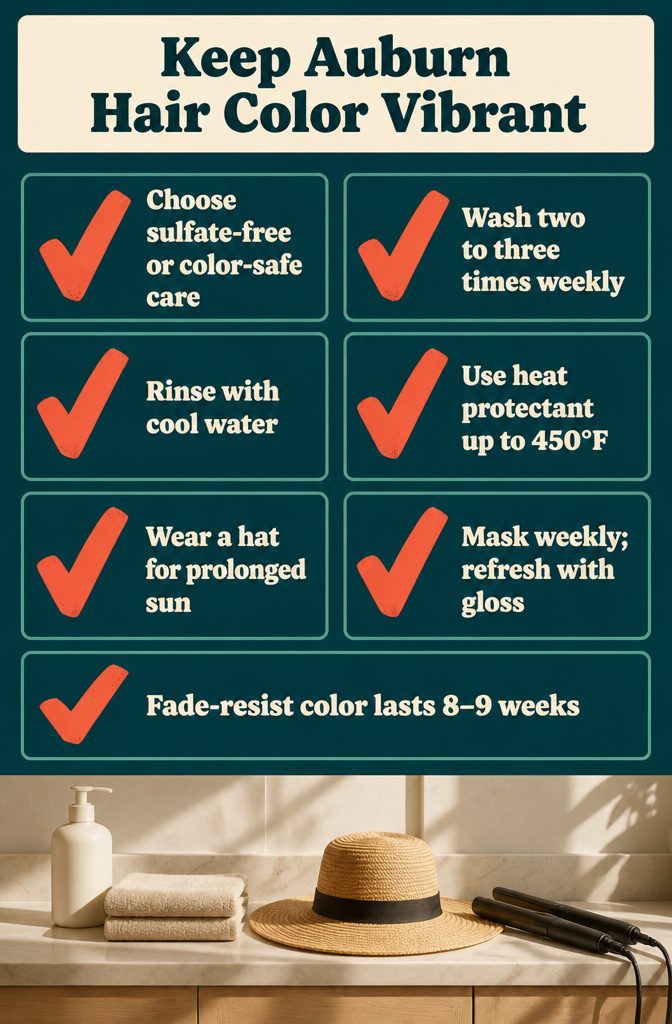
Switching to sulfate-free or color-safe shampoo and conditioner is the first move, and washing two to three times a week instead of daily keeps more pigment in your hair between touch-ups.
A few more habits make a real difference:
- Rinse with cool water. Hot water lifts the cuticle and lets color wash out faster; cool water seals it and keeps auburn from looking flat.
- Limit heat styling. Blow dryers, flat irons and curling tools pull moisture out of color-treated hair the same way hot water does.
Heat styling, like hot water, can strip your strands of moisture and make your color appear dull or flat.
When you do need heat, prep your hair with a protectant first. The L’Oréal Paris EverPure Bond Repair+ Oil-in-Serum shields up to 450°F, and Garnier Hair Honey Milk 450°F Heat Shield Spray does the same.
- Protect from sun. UV exposure fades auburn fast. Wear a hat when you’re spending hours outside, or wait 48 hours after coloring before prolonged sun exposure.
- Use a weekly mask and color-refreshing gloss. Masks nourish hair that dyeing drains of protein, and glosses deposit fresh pigment between applications.
Fade-resist formulas that pair all of this can last up to 8 or 9 weeks before your next full color.
Auburn Shade Options and What They Look Like
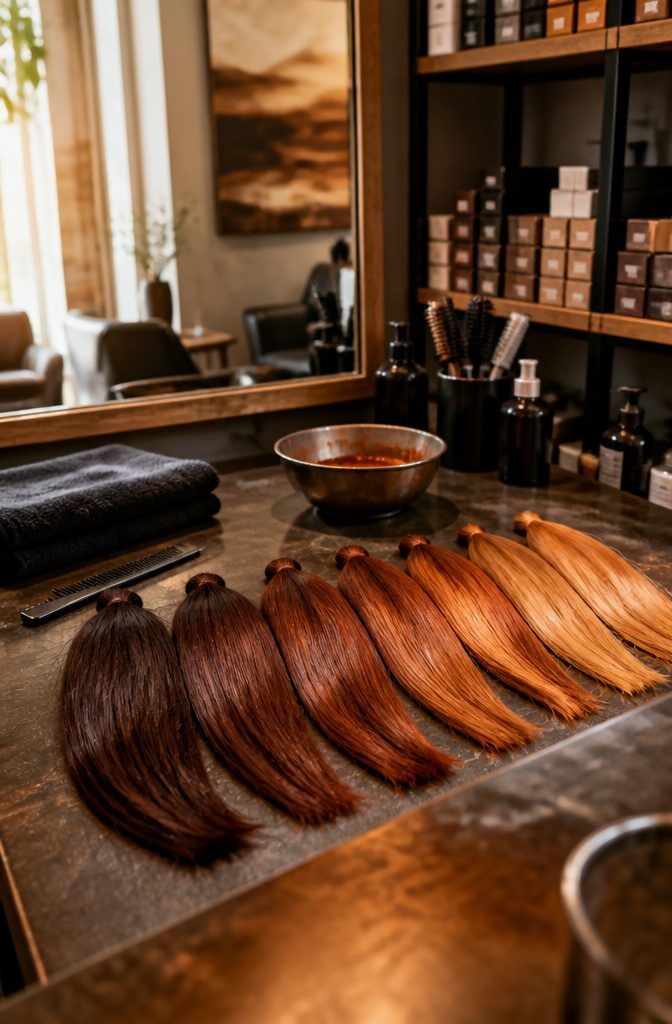
Auburn pulls in seven named options, starting with the deepest and moving toward lighter reds: Dark Auburn, Medium Auburn Brown, Light Auburn, Lightest Auburn, Medium Reddish Blonde, Natural Copper, and Spiced Copper.
Lightest Auburn holds up to nine weeks before fade becomes visible.
Medium Auburn Brown sits in a sweet spot between vivid and subdued, reading chestnut in low light and flashing muted crimson outdoors. The warm end of the range spans Natural Copper and Spiced Copper, both pushing further into red.
Retailers sort by intensity. Light auburn includes Clairol Nice ‘n Easy 6R Light Auburn at $10.49.
Medium auburn options run from L’Oréal Paris Superior Preference Medium Auburn Brown at $12.49 down to Dark & Lovely Fade Resist Rich Auburn at $7.49. Dark auburn covers L’Oréal Paris Superior Preference Dark Auburn 4R at $8.49.
Gray Coverage and Coloring Previously Treated Hair
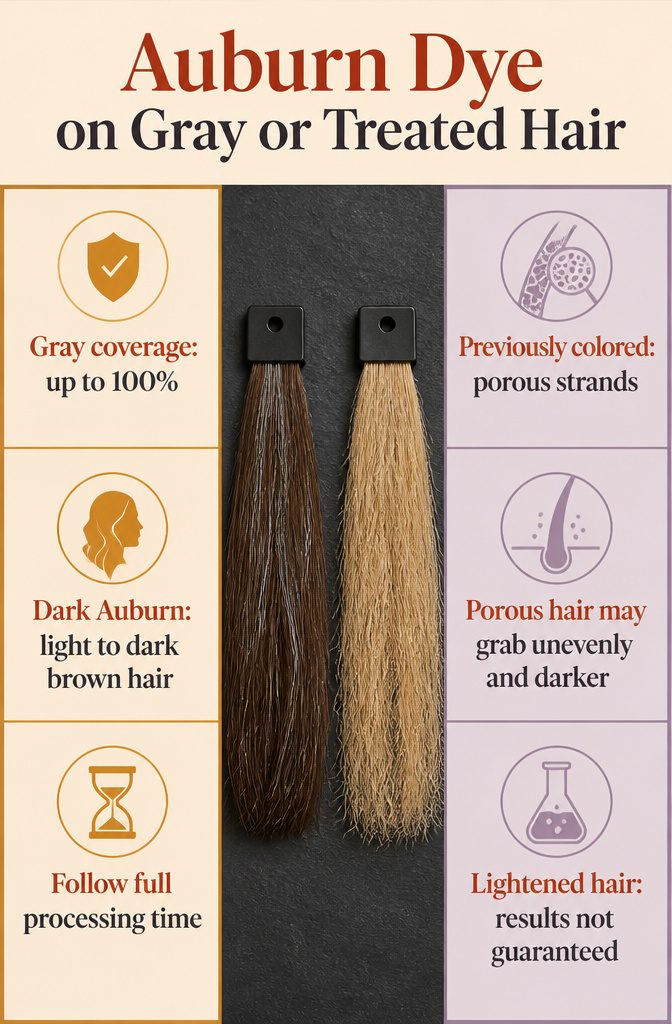
Gray coverage is the easy part of this section. A box like L’Oréal’s Superior Preference in Dark Auburn claims 100% gray coverage from root to tip, and it’s made for light to dark brown hair.
That holds only if you follow the directions and the full processing time, so don’t cut the timer short on stubborn temples.
Hair that’s already colored or bleached is the harder case. It’s porous, and porous strands can grab auburn dye unevenly and come out darker than the box shows.
Run a strand test first, and if your hair feels compromised, wait. On chemically lightened hair, results vary and can’t be guaranteed, even with a test.
Frequently Asked Questions
Is auburn hair red or brown?
Both.
Auburn is a reddish-brown, built on a brunette base with warm red, amber or copper tones. It runs from light coppery brown to deep red-burgundy, so two people with auburn hair can look quite different.
Can I dye dark hair auburn without bleaching it?
Yes, if you’re after a deep reddish-brown.
On dark brown or black hair, anything brighter than that needs lightening first, and the color reads subtler, closer to mahogany than copper. Dark & Lovely says its Fade Resist Rich Auburn shows up on dark, textured hair with no bleach.
What skin tone suits auburn hair?
Undertone matters more than depth.
Warm undertones look best in coppery or golden auburns, cool undertones suit deeper auburns with balanced red and brown, and neutral undertones can wear any auburn. If gold jewelry flatters you, you’re likely warm; if silver does, you’re likely cool.
How often can I color my auburn hair?
Most people recolor every 4 to 6 weeks, depending on how much regrowth shows and how far the shade has faded. On touch-ups, put the dye on the roots only, since overlapping on colored lengths builds dark bands.
Which auburn hair color is the best?
There’s no single best shade; it depends on your starting hair color and your undertone.
Light to medium brown hair is the easiest match for most auburn dyes. Garnier and L’Oréal Paris both offer virtual try-on tools and shade quizzes if you can’t decide.
Can I use auburn dye on previously colored or bleached hair?
Yes, but expect results to differ from the box.
Colored or bleached hair is porous, so it can take up auburn unevenly and come out darker than shown. Do a strand test first, and hold off if your hair feels damaged.
Will auburn hair dye cover gray?
Many will.
L’Oréal’s Superior Preference in Dark Auburn claims 100% gray coverage from root to tip on light to dark brown hair. That depends on following the directions and using the full processing time, especially on stubborn areas like the temples.