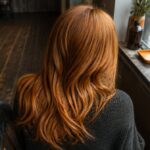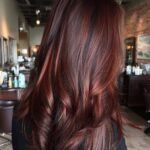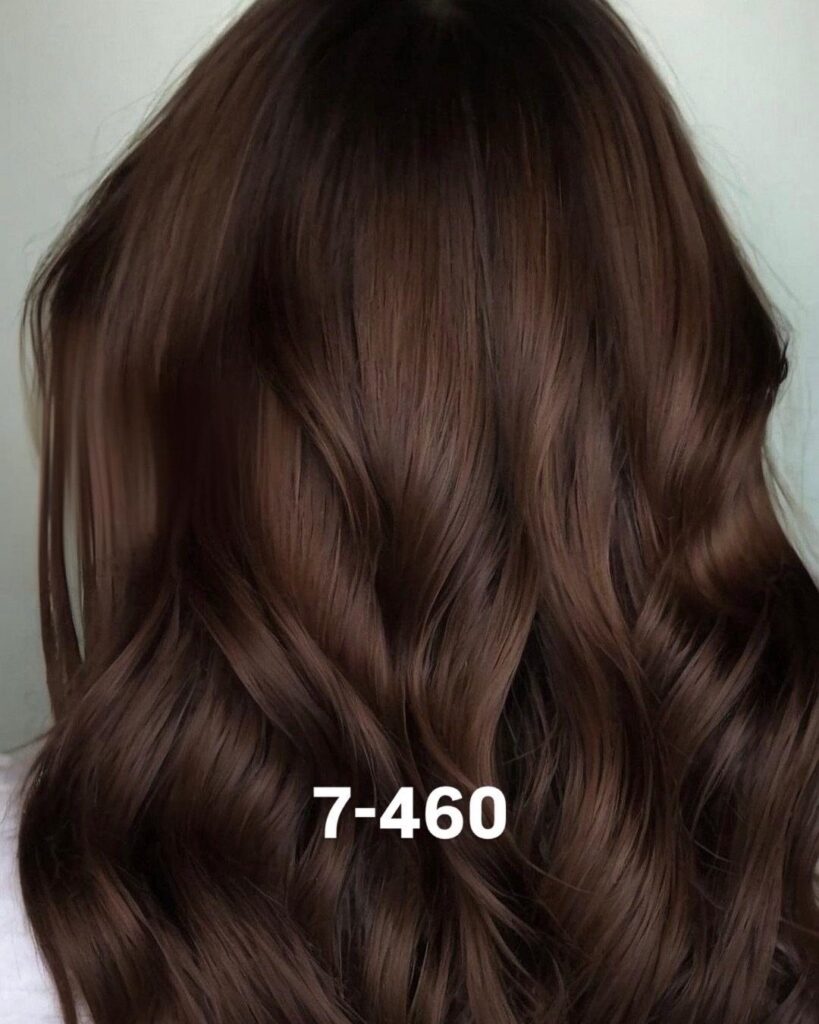
Skin undertone settles the decision faster than anything else: warm complexions glow in caramel and golden browns, cool ones look sharpest in espresso and ash, and neutral skin can pull off nearly the whole range.
With undertone decided, the options stretch from a deep, solid Mahogany Brown to Bronde Balayage and Sandy Beige Bronde, so how much dimension you want becomes the second decision.
1. Brown Ombre
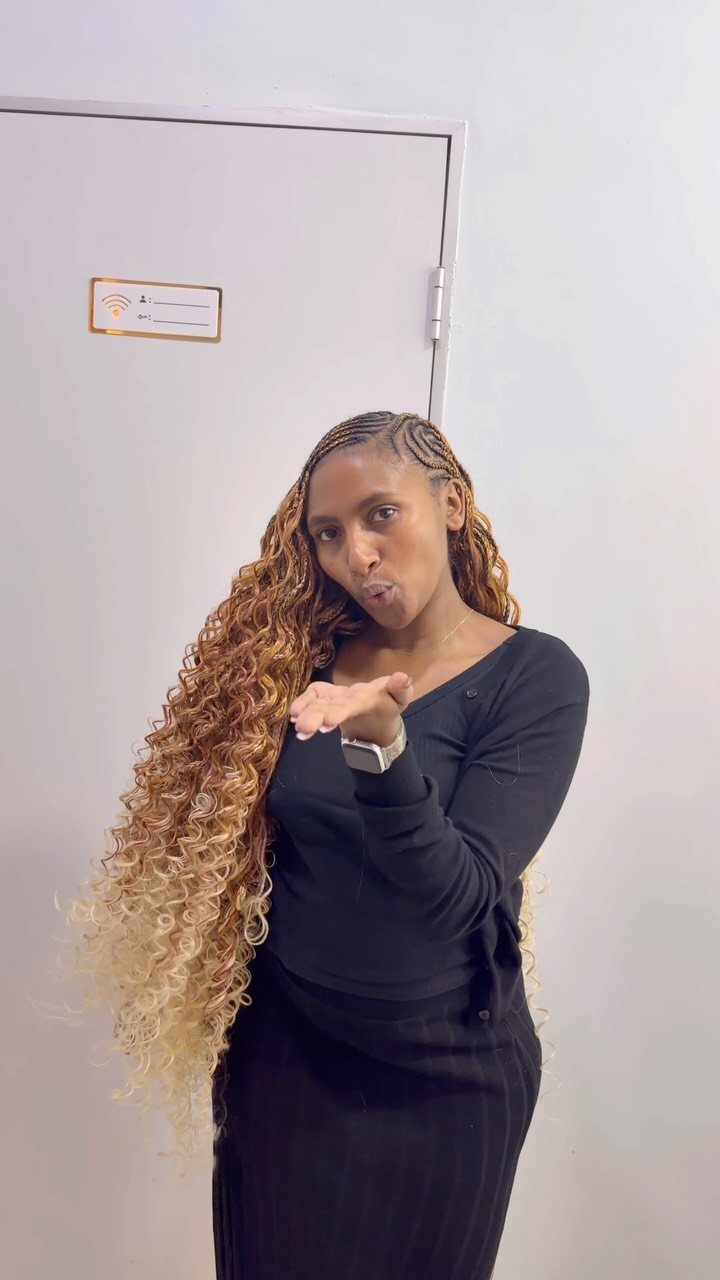
A dark root that melts into lighter ends is the lowest-maintenance way to go brighter without committing to all-over color. Since the root stays natural, grow-out never shows a harsh line, and you can stretch the time between appointments.
Curls like these suit it well, because the bends scatter the lighter ends through the dark and keep the shift from reading as 2 flat blocks.
I’d ask the colorist to keep the transition soft and gradual rather than a clean band.
2. Red Brown Hair
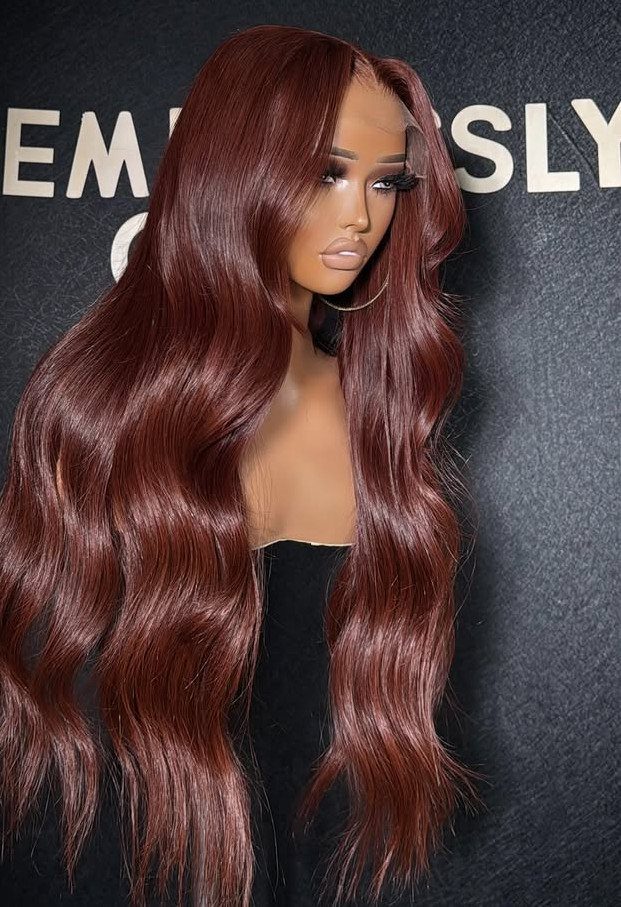
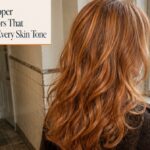
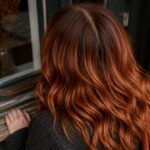
Copper at one end and deep auburn at the other give red-brown hair a wide range, so the first thing to settle is how much red you want showing.
Pick copper if you want warmth that catches light and gets noticed; pick auburn if you want brown that only turns red in sunlight.
Glossy, smooth lengths show this color best. Bring a photo to your colorist and point at the exact spot where the red should sit, since "red-brown" means different things to different people.
3. Ash Brown
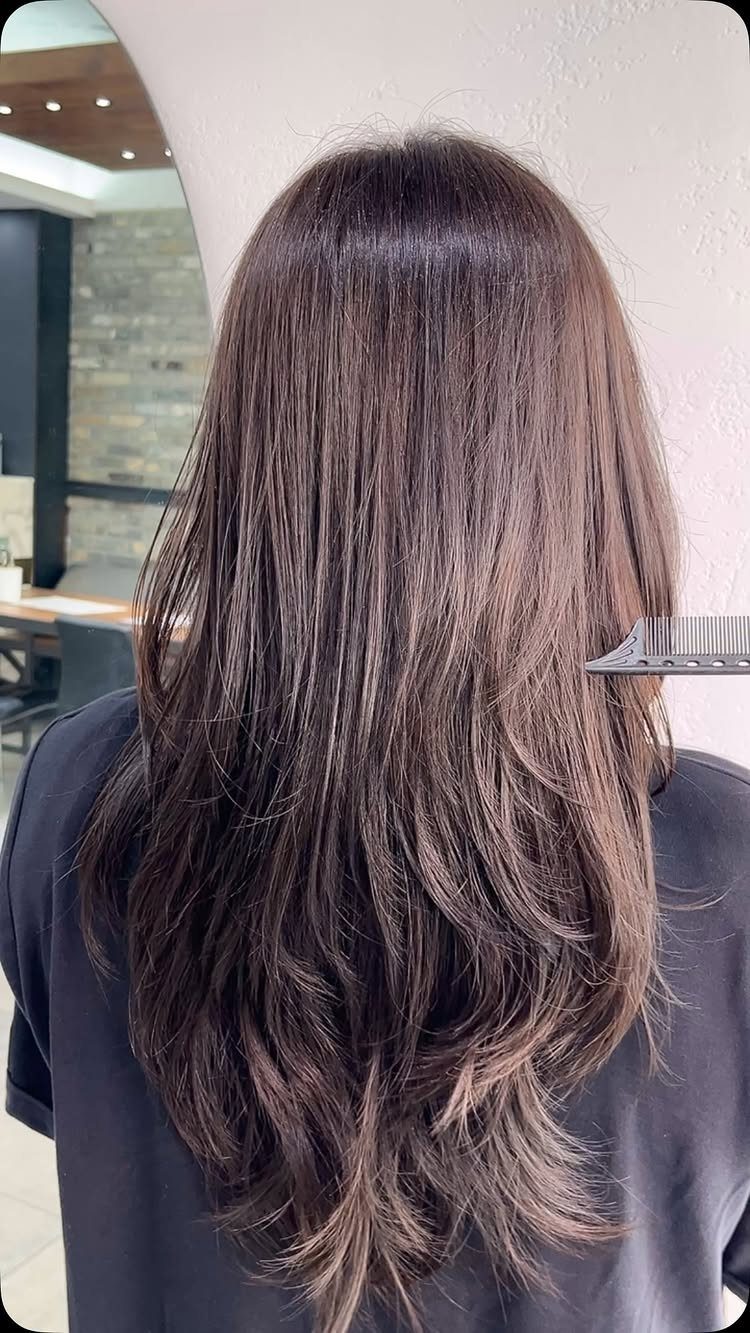
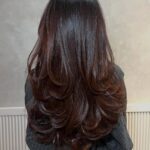
Ash brown is brunette with the warmth taken out, and that cool, slightly gray-leaning finish is the whole appeal. It looks best on layered lengths, where the shade shifts a little from layer to layer instead of sitting flat.
Ask for it by name and say "cool," not just "brown," because a colorist can read a request for plain brown as warm. Pairs well with cooler skin tones; if you’re warm-toned, I’d test it with a semi-permanent first.
4. Dark Brown Highlights
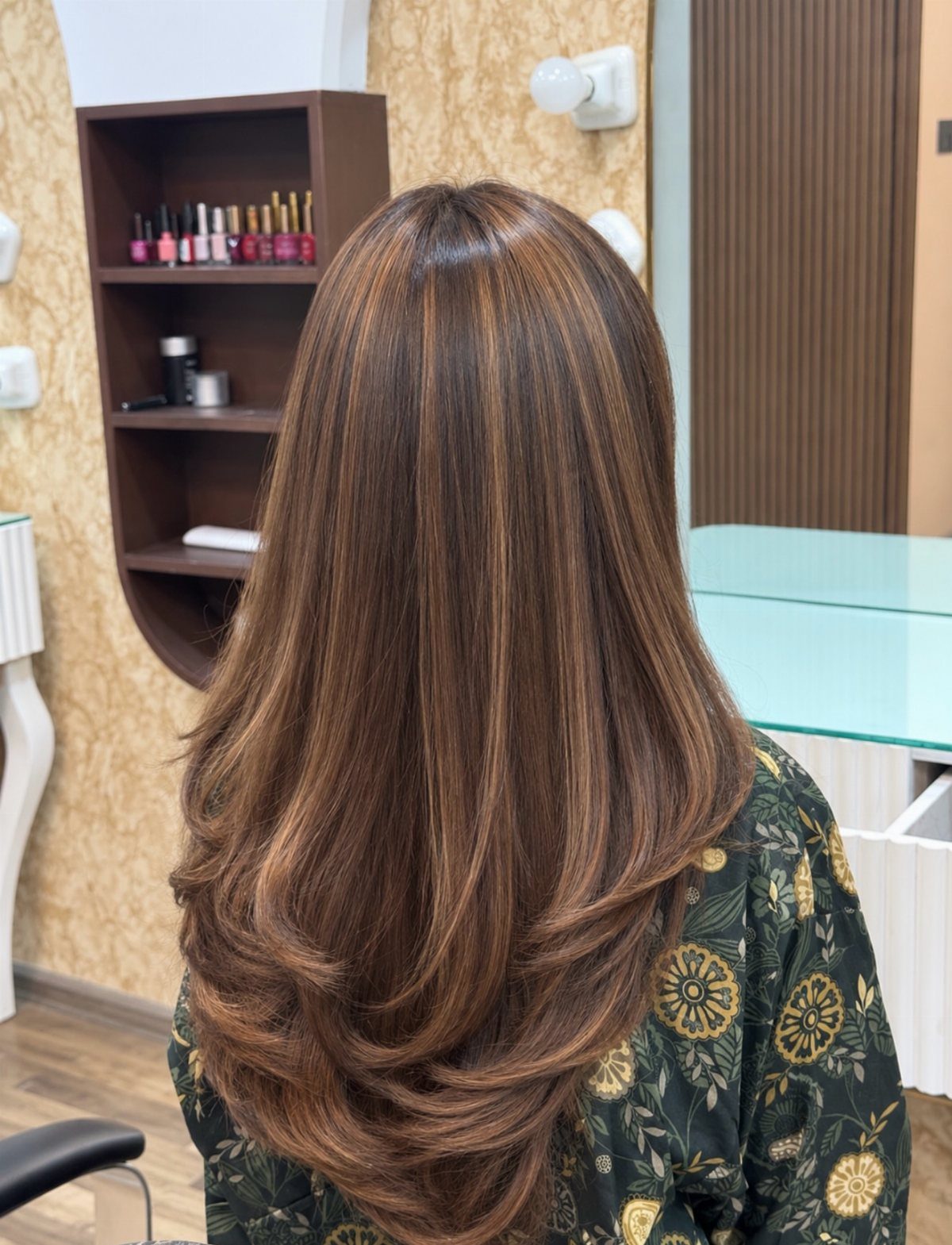
Highlights are what keep a deep brown from looking like one solid block. A few lighter pieces threaded through the lengths add contrast and catch the light, and layered ends make them show even more as they curl.
I like them when they stay a step or two above the base, so the hair still reads as dark brown with some life in it.
Tell your colorist how bright you want it to read, from barely lifted to clearly streaked.
5. Caramel Highlights
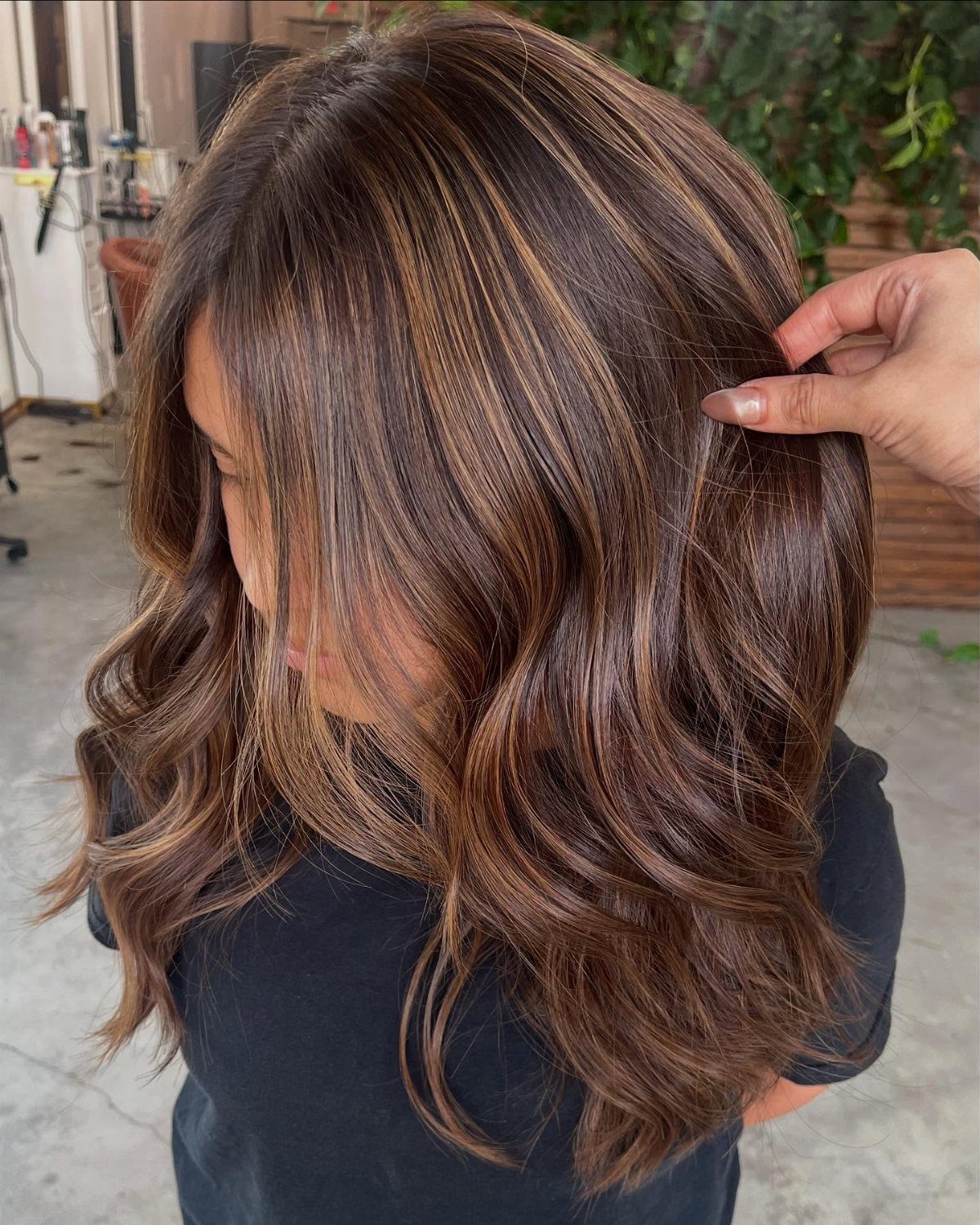
Caramel sits right between brown and gold, which is why it flatters so many brunettes.
Placed in separate pieces rather than blended all over, it gives waves and curls visible depth, and you can see the strands part to show the lighter tone.
Ask for caramel specifically; honey and gold can drift too yellow against a dark base. It’s a warm color, so I’d choose it over cooler tones if your skin leans golden.
6. Bronde Balayage
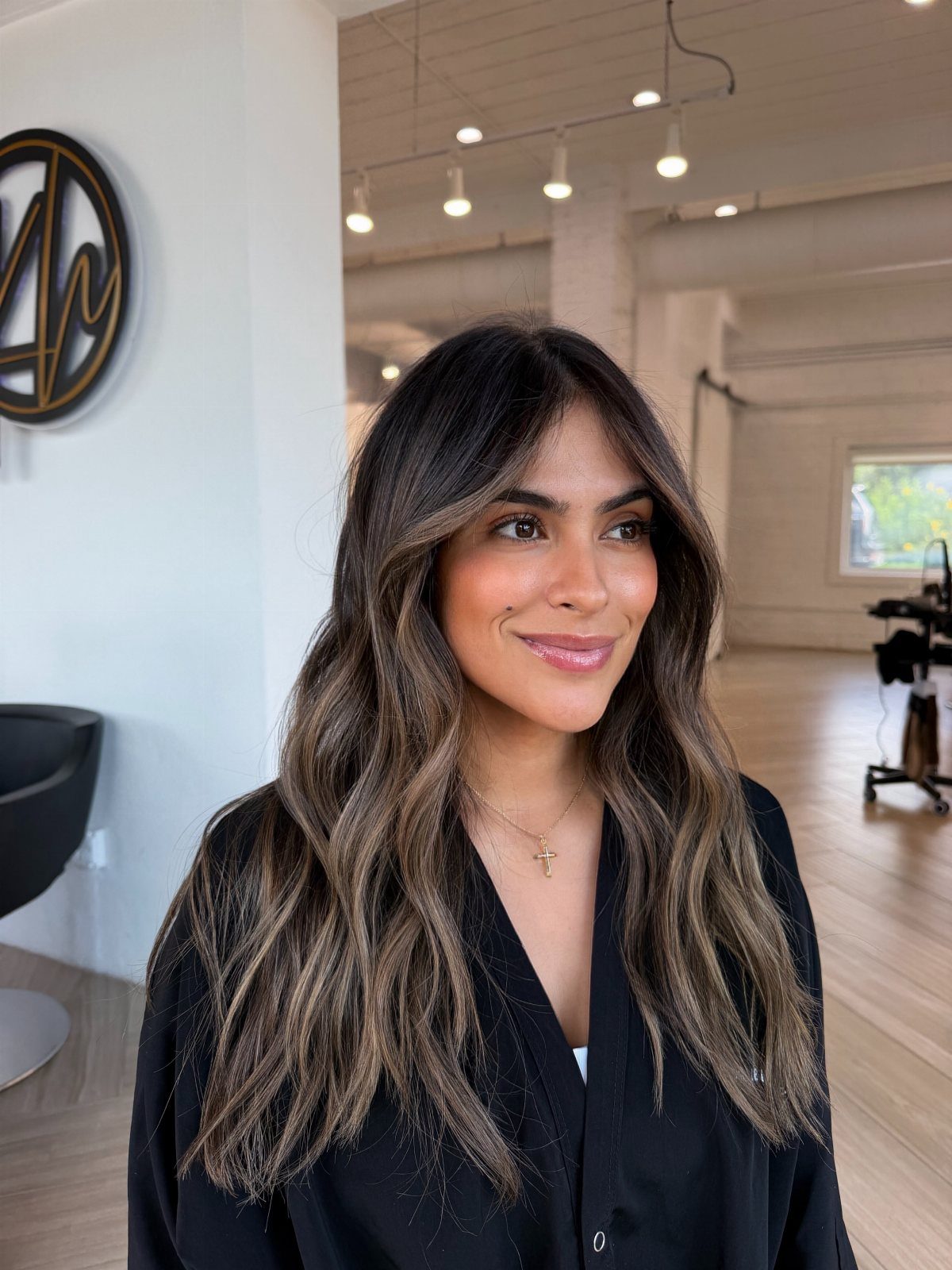
Bronde sits halfway between brunette and blonde, and balayage is the method that makes it look natural: the color is painted on by hand, so the blend is soft instead of striped.
Waves show it off best, since the movement spreads the blonde through the brown.
If you’re nervous about going blonde, this is the safer way to try it. Show your colorist a photo and say how close to blonde you want to land.
7. Espresso
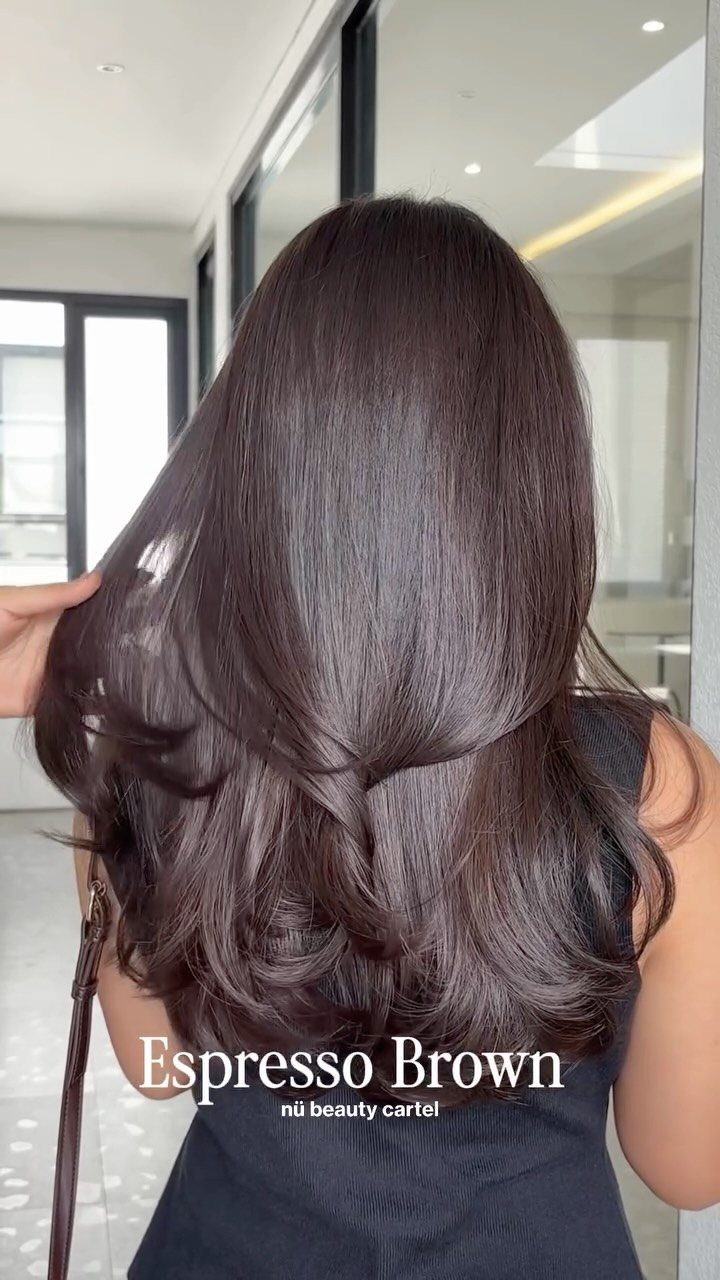
Espresso is the darkest brunette you can wear without crossing into black, and long waves are where the depth pays off. Under bright salon light, the glossy surface reads as dark coffee instead of flat color.
Ask your colorist for a single, even depth with no highlights, then protect the shine, since a dull finish makes this shade look closer to black than brown. Waves with a gloss-friendly finish suit it best.
8. Chocolate Brown
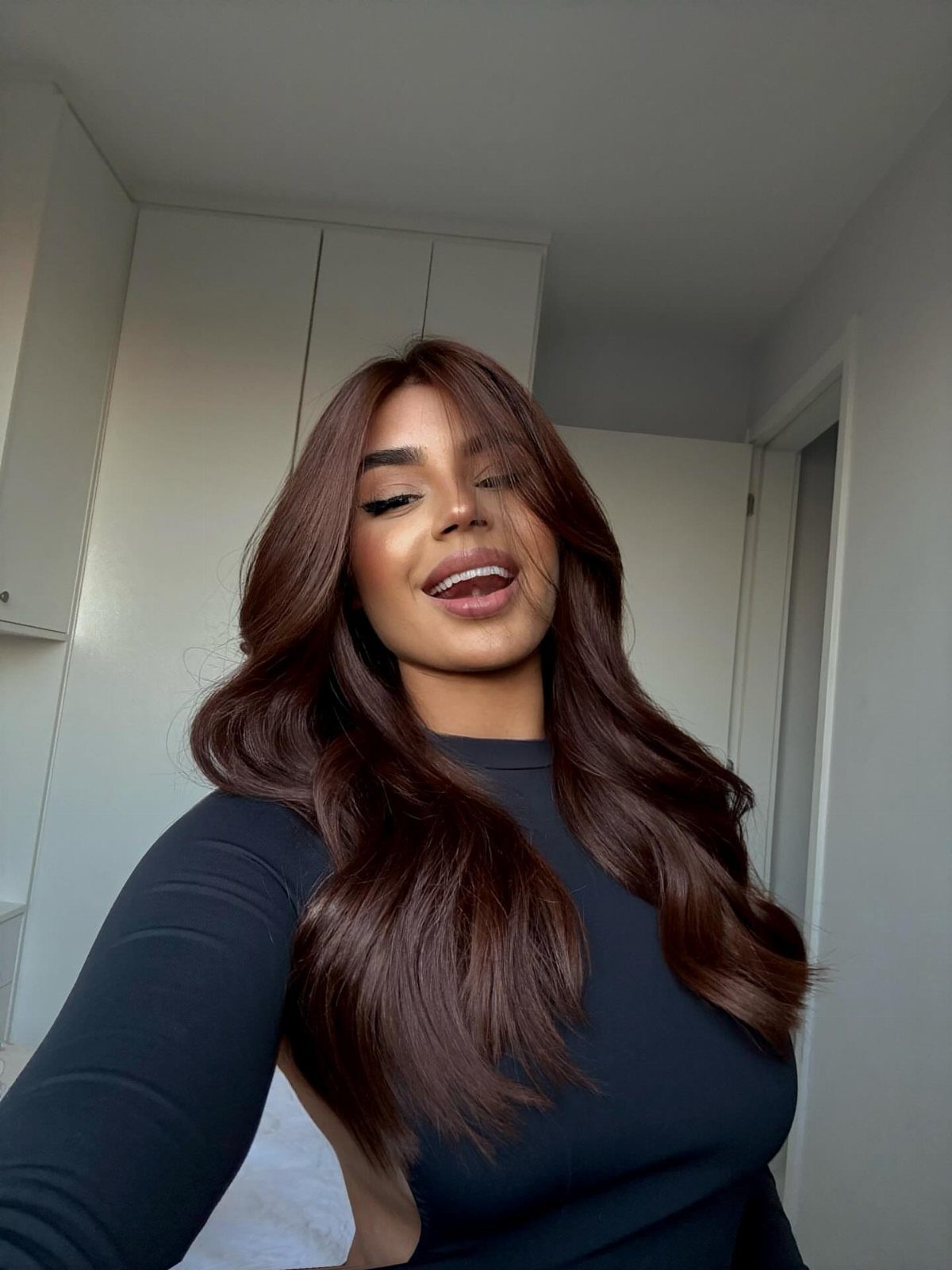
Warm undertones are what separate chocolate from a plain mid-brown, and loose waves let that warmth show in every bend. I’d choose this over espresso if you want dark hair that still looks soft up close.
Bring a photo and use the word "warm" with your colorist, because chocolate can drift cool or flat depending on who mixes it.
Selfie lighting is kind to this shade, so check the color near a window before you call it right.
Olivia Rodrigo is Miss Swiss Miss with dark brown hair straight from the chocolate powder packet. The cool undertone gives her hot cocoa hair a sophisticated, luxe vibe.
9. Golden Brown
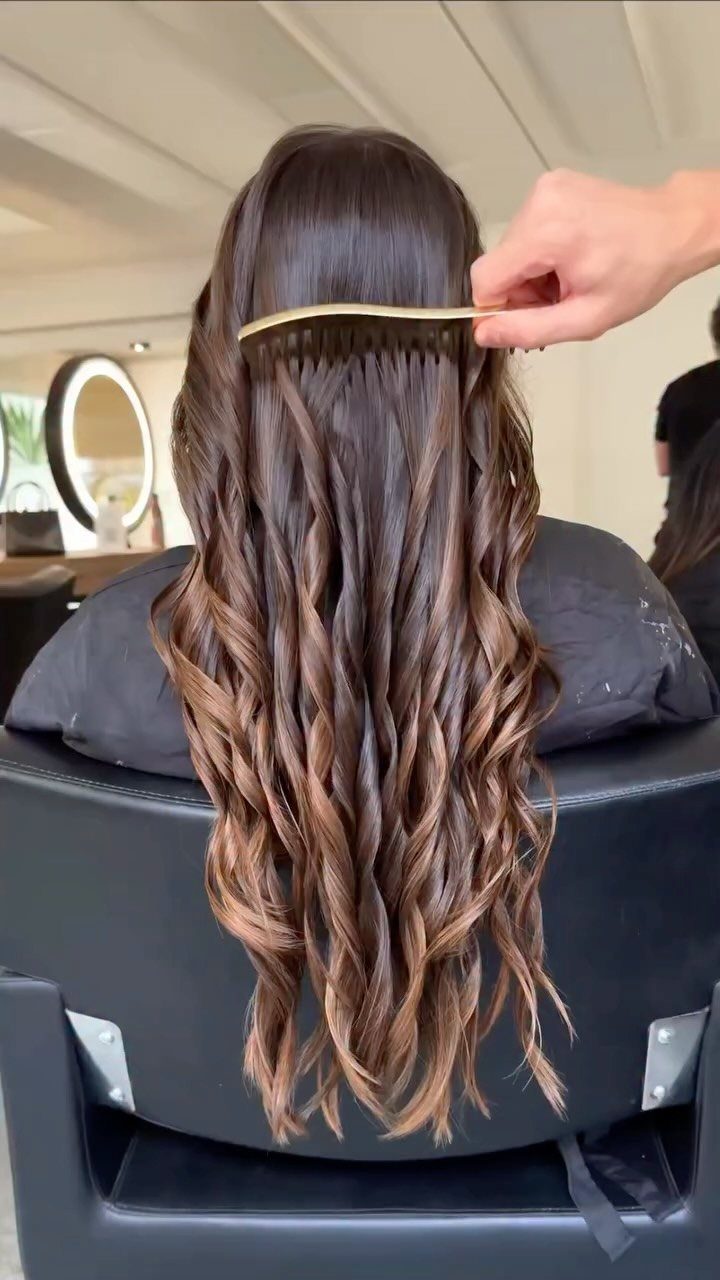
Golden brown works by putting the gold where light hits, mostly through the ends, while the top stays a true brown. Combed out, long waves show that shift best.
If your skin leans warm, this is an easy brown to wear.
Ask for gold tones, not "blonde," so the colorist keeps the base brunette. Gold fades toward yellow first, so I’d plan on a glaze between visits.
10. Mushroom Brown
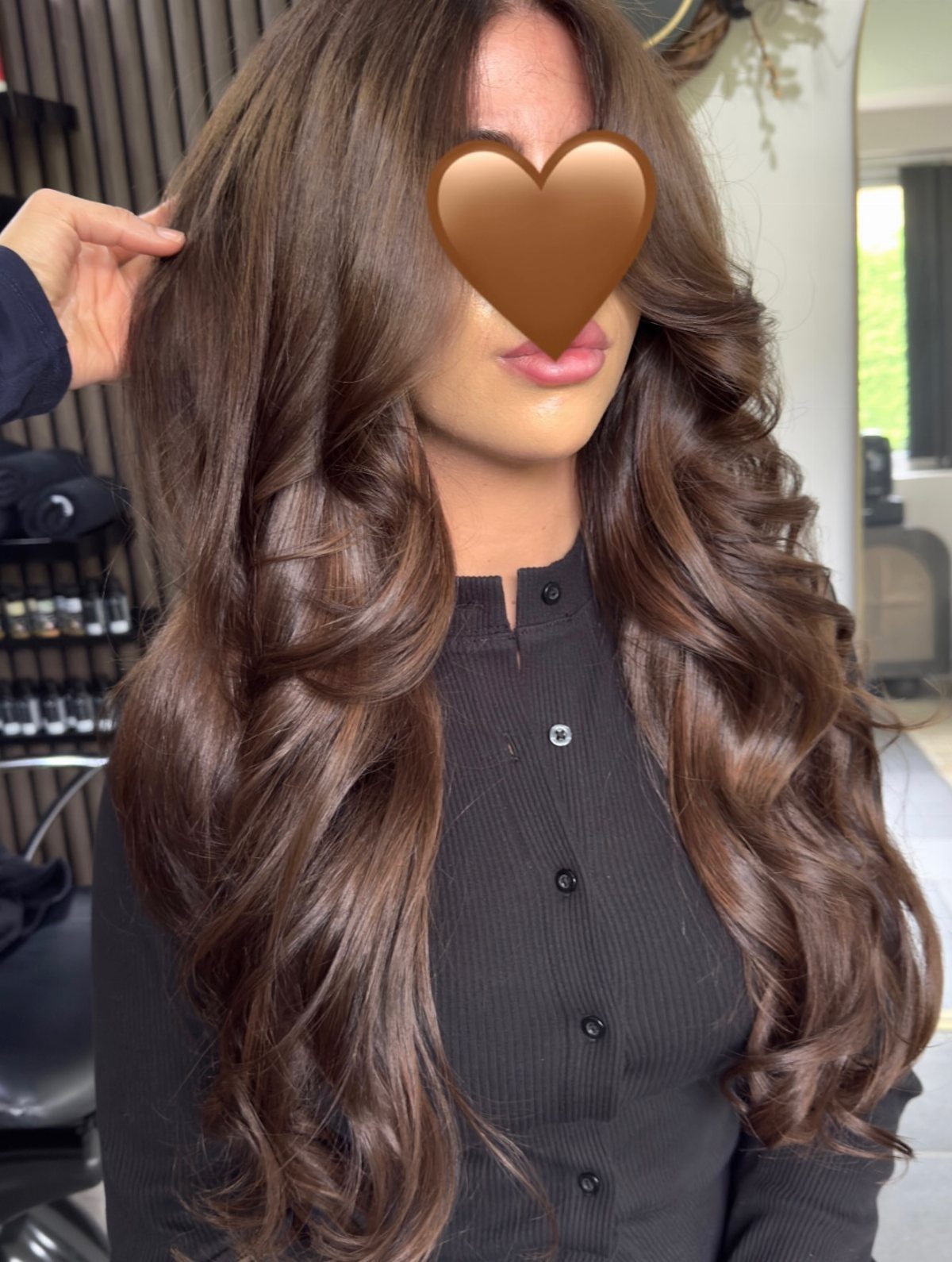
Mushroom brown is brunette gone quiet: cool, a little gray, and earthy rather than red or gold. Soft curls give it dimension without any added highlights.
Say "mushroom" and "cool" to your colorist, and bring a photo, since the name covers a range from nearly taupe to nearly ash.
Mushroom brown sits close to ash brown, but it reads softer and more muted, with a gray-beige cast instead of a cool blue-green one. Warm skin tones should test it first.
11. Chestnut Brown
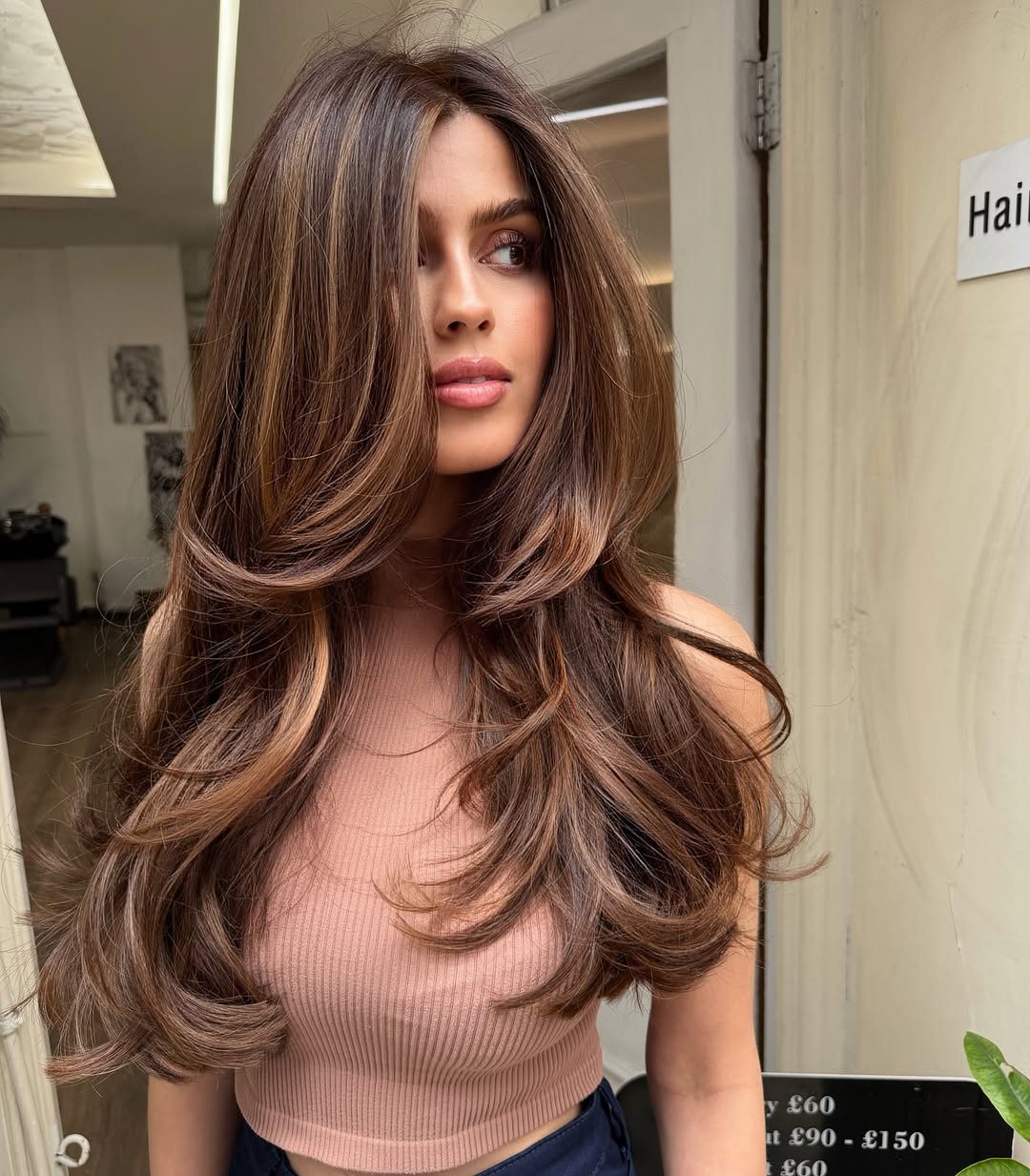
Chestnut has a reddish-gold warmth that sits between chocolate and auburn, and layers keep that warmth from looking like a solid sheet. Loose, voluminous waves let each layer catch a slightly different shade.
I’d pick it when chocolate feels too flat and red-brown feels like too much. Ask for chestnut by name, and point to where you want the warmth strongest: all over, or mostly through the mid-lengths and ends.
12. Old Money Brunette
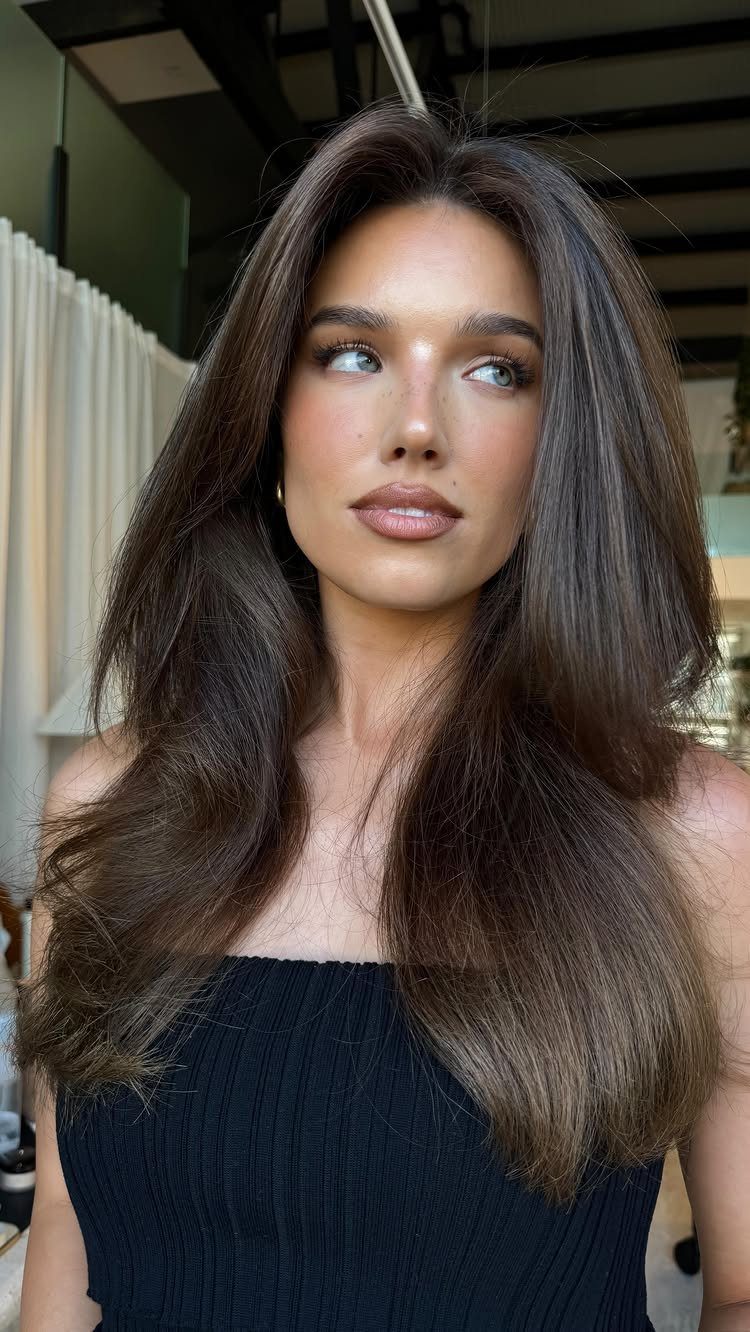
Old money brunette is about restraint: a neutral brown base with highlights so subtle you notice them only when the hair moves. The result looks expensive because nothing about it is loud.
Ask for "neutral" and "barely-there" together, since either word alone can come back too warm or too bright.
Voluminous blowout styling suits it, and the soft highlights keep long lengths from looking heavy. It is easy to wear every day.
13. Dark Suede
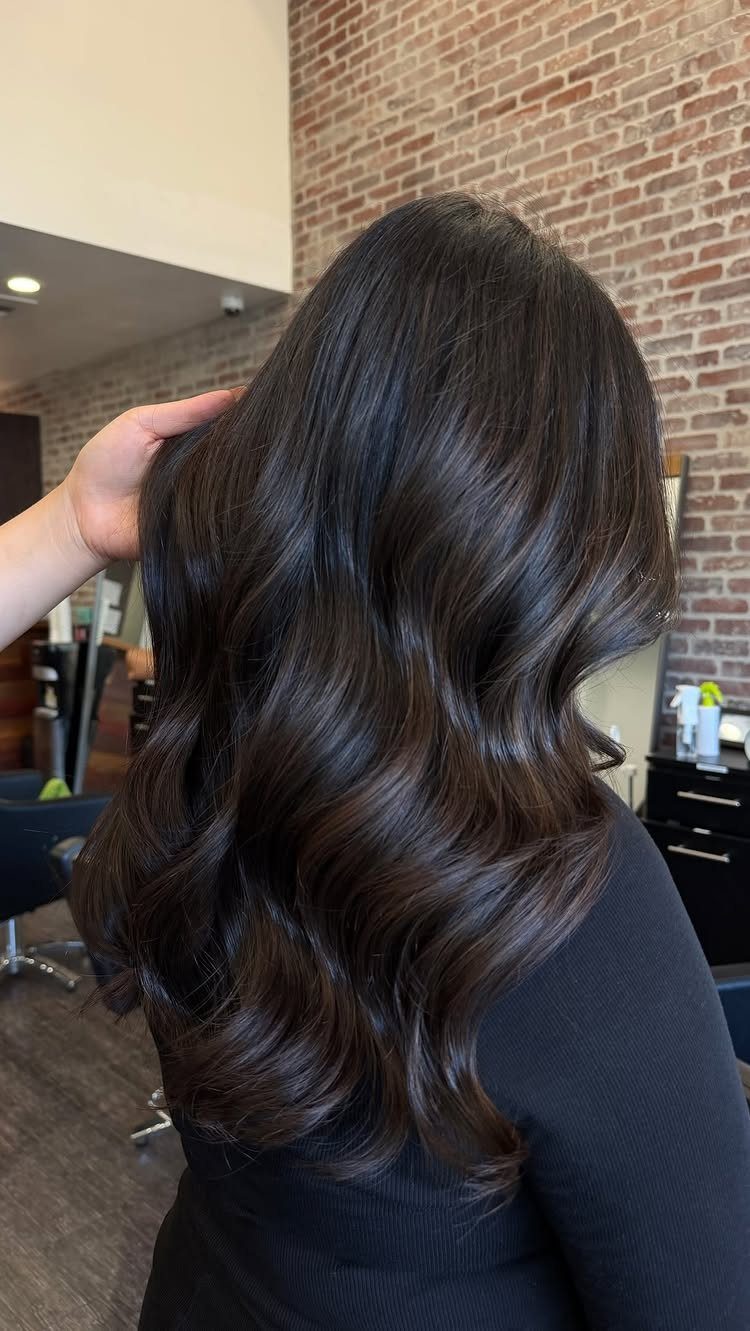
Dark suede reads as velvet because the brown isn’t one flat shade: warmth and depth shift slightly from root to end, so the surface looks soft instead of solid. Loose, glossy waves like these show that variation best.
Ask your colorist for "dark brunette with variation in warmth and depth," and bring a photo, since "suede" isn’t a standard color name. I’d pick this over espresso if you want dark hair with some movement in it.
14. Enchanted Espresso
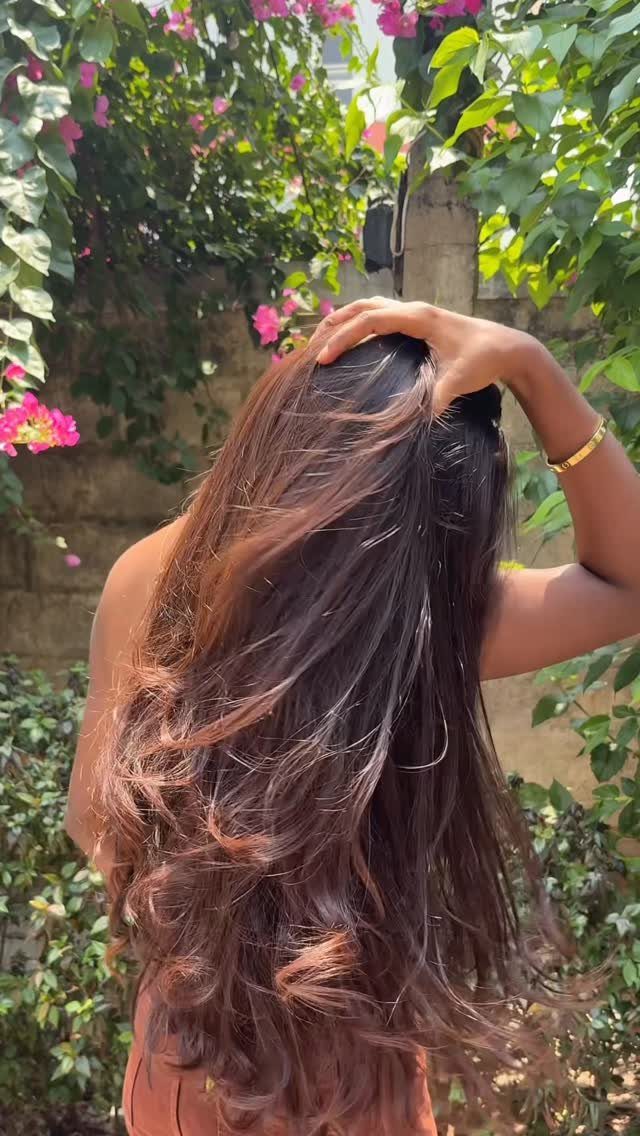
Sun-faded ends on a rich espresso base give dark hair a lived-in finish, as though the lengths lightened outdoors. The top stays deep while the ends soften a shade or two lighter.
Long, loose waves let that fade show, so I’d keep the length.
Ask your colorist for espresso with softly lightened ends, and say you want it gradual, not a visible band. A glossy finish keeps the dark part from going dull next to the lighter tips.
15. Honey Latte Ombré
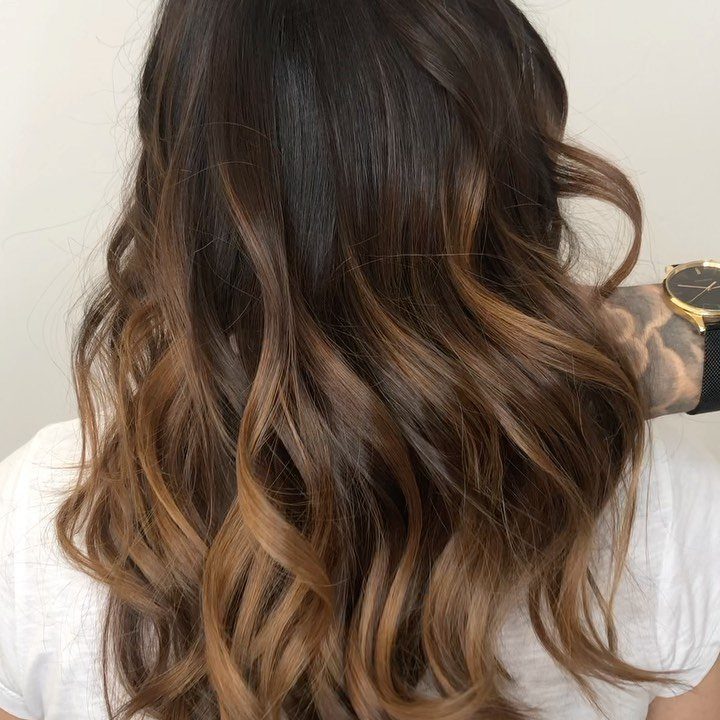
Honey latte ombré keeps the roots dark brown and lets the ends warm into a milky honey-brown. The shift is gentle, which makes it playful without being bright.
Long waves spread the lighter ends through the dark, so the color looks blended from behind.
Ask for "warm" ends and tell your colorist how far up the lightness should start. I’d keep it low, around the lower lengths, if you’re trying ombré for the first time.
16. Caramel Drizzle
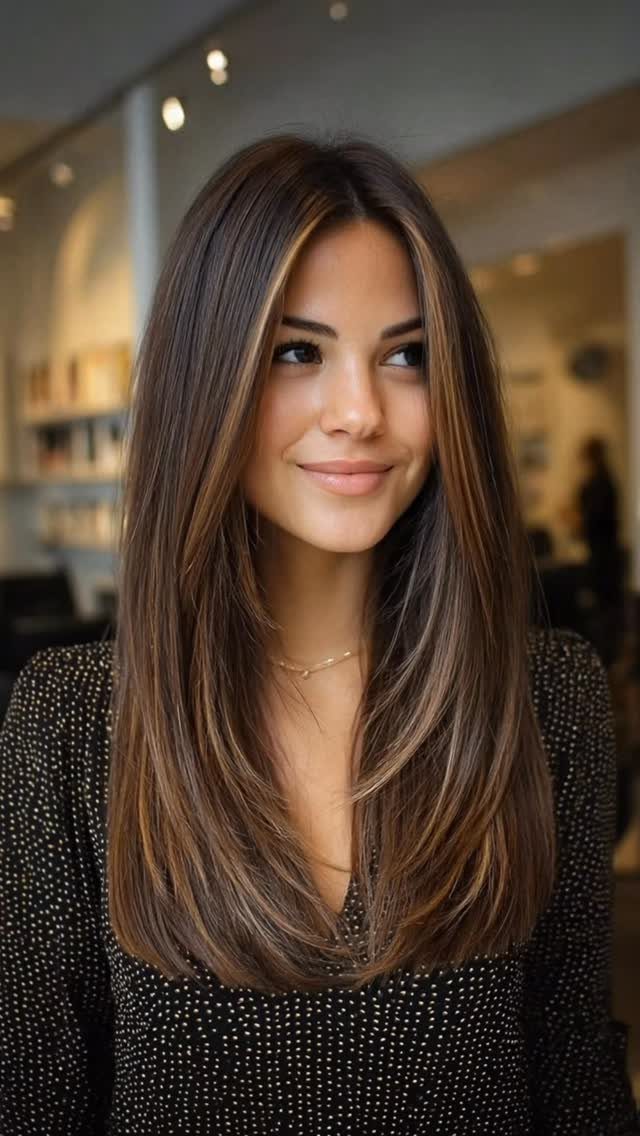
Caramel drizzle is dark brunette with a light scatter of golden caramel, so the hair stays brown overall and picks up warmth only where the light hits. Subtle is the point.
Straight or softly bent lengths show the golden undertones best. Ask for fine caramel pieces, not thick streaks, and name the golden undertone so the color doesn’t go orange or flat.
Caramel drizzle is a quieter option than full caramel highlights, with more of the brown showing and only a few thin strands of warmth running through it.
17. Strawberry Brown
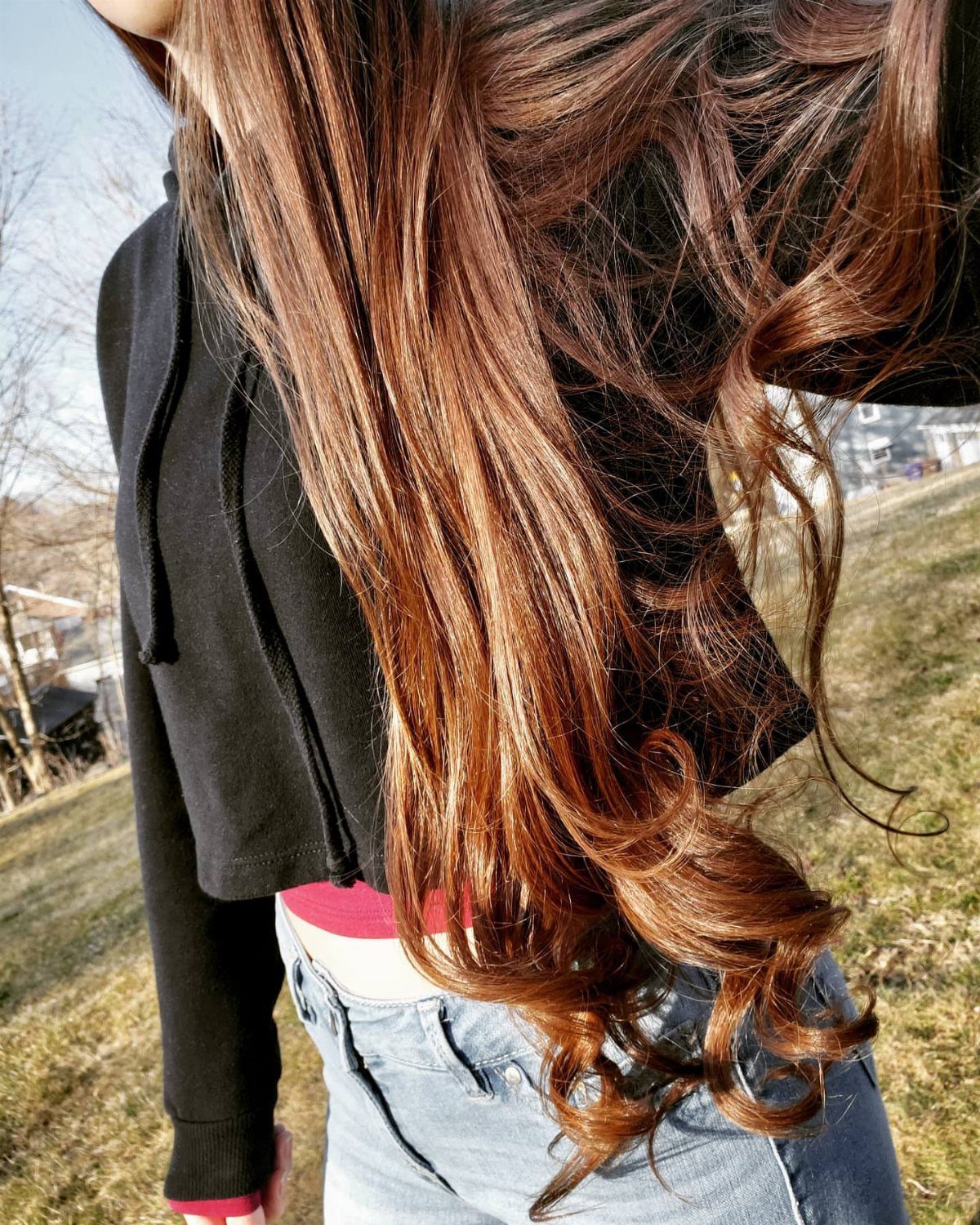
Strawberry brown is the brunette take on strawberry blonde: a brown base with coppery strands running through it. The red shows as a glow, not a bold stripe.
Long waves spread those coppery pieces and keep them from clumping.
Bring a photo and ask for copper over brown, since "strawberry" can drift pinker or blonder depending on the colorist. I’d keep the copper light if this is your first red tone; it’s easier to add than to remove.
18. Cool Smoke
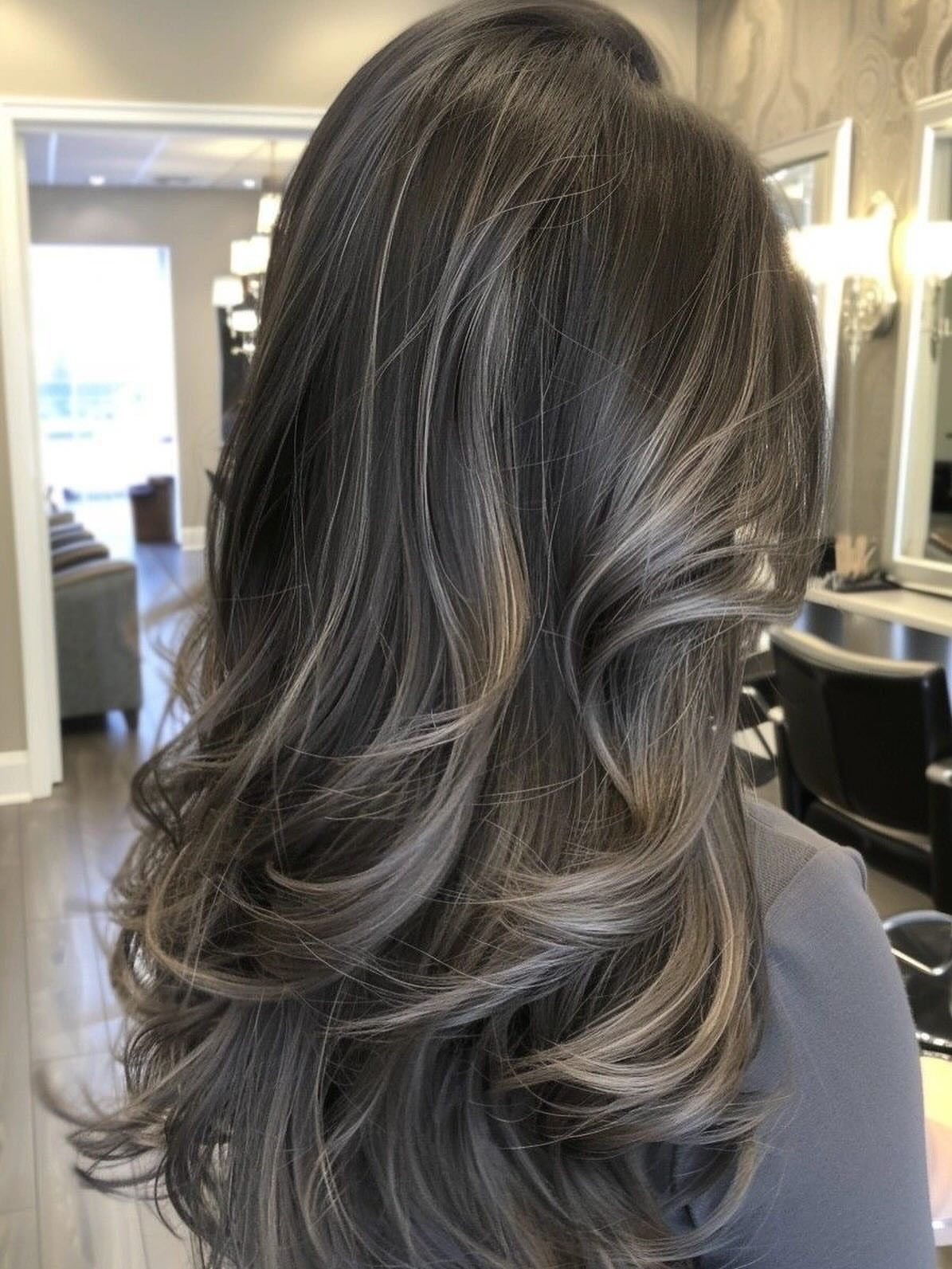
Cool smoke is brunette with a gray-silver cast: dark brown lengths with silvery highlights that look like haze instead of shine. Layers help, because each one catches the cool tone a little differently.
Ask for "cool" and "smoky" together and bring a photo, since the name isn’t standard and could come back warm.
It sits cooler and brighter than mushroom brown, thanks to the silver pieces. If your skin runs warm, I’d try a semi-permanent first.
19. Hazelnut Highlights
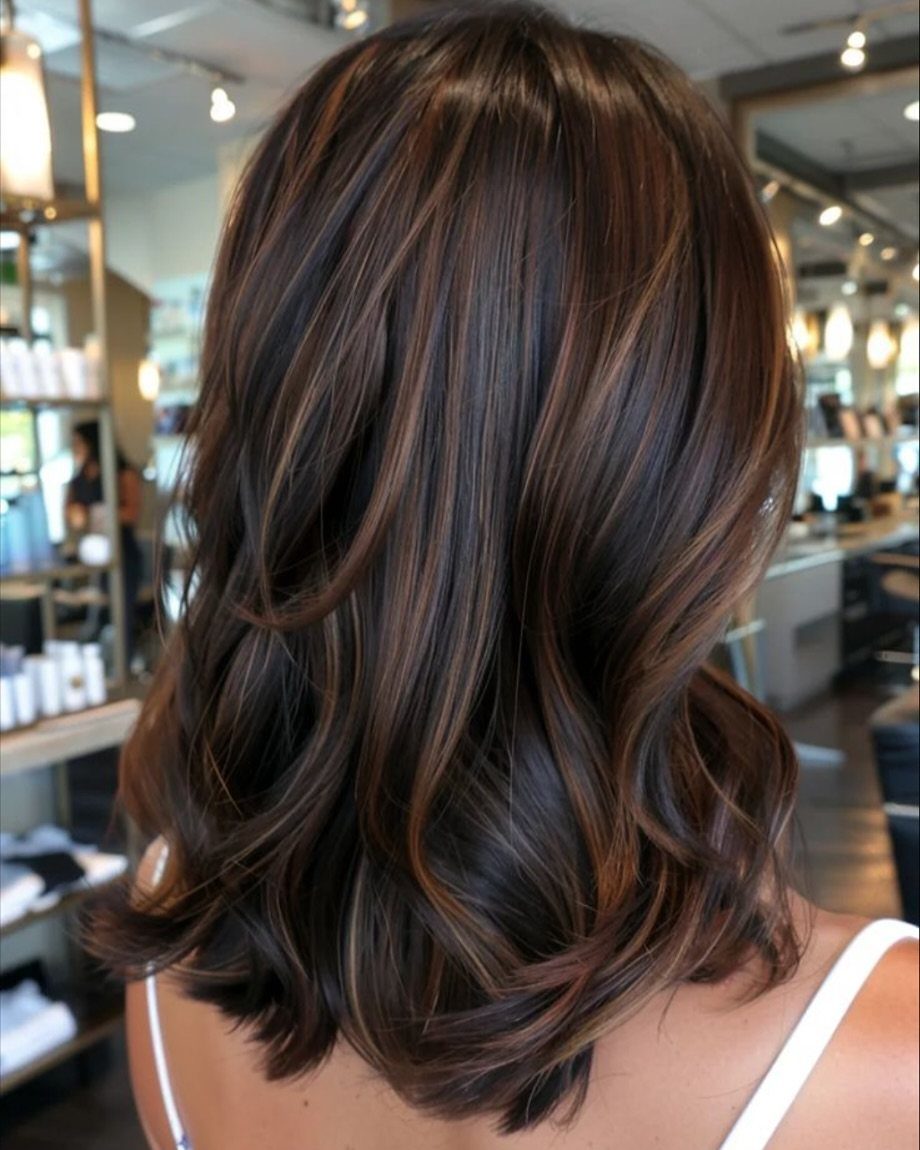
Hazelnut sits a shade lighter than the base and a touch warmer, which is why it works as a highlight on dark brown: it adds glow without turning the hair streaky.
Layers and curled ends, like these, give the lighter pieces room to show.
Ask your colorist for "hazelnut" and bring a photo, because the name can land closer to caramel or closer to a muted tan. I’d keep the pieces fine so the dark brown still leads.
20. Hot Cocoa
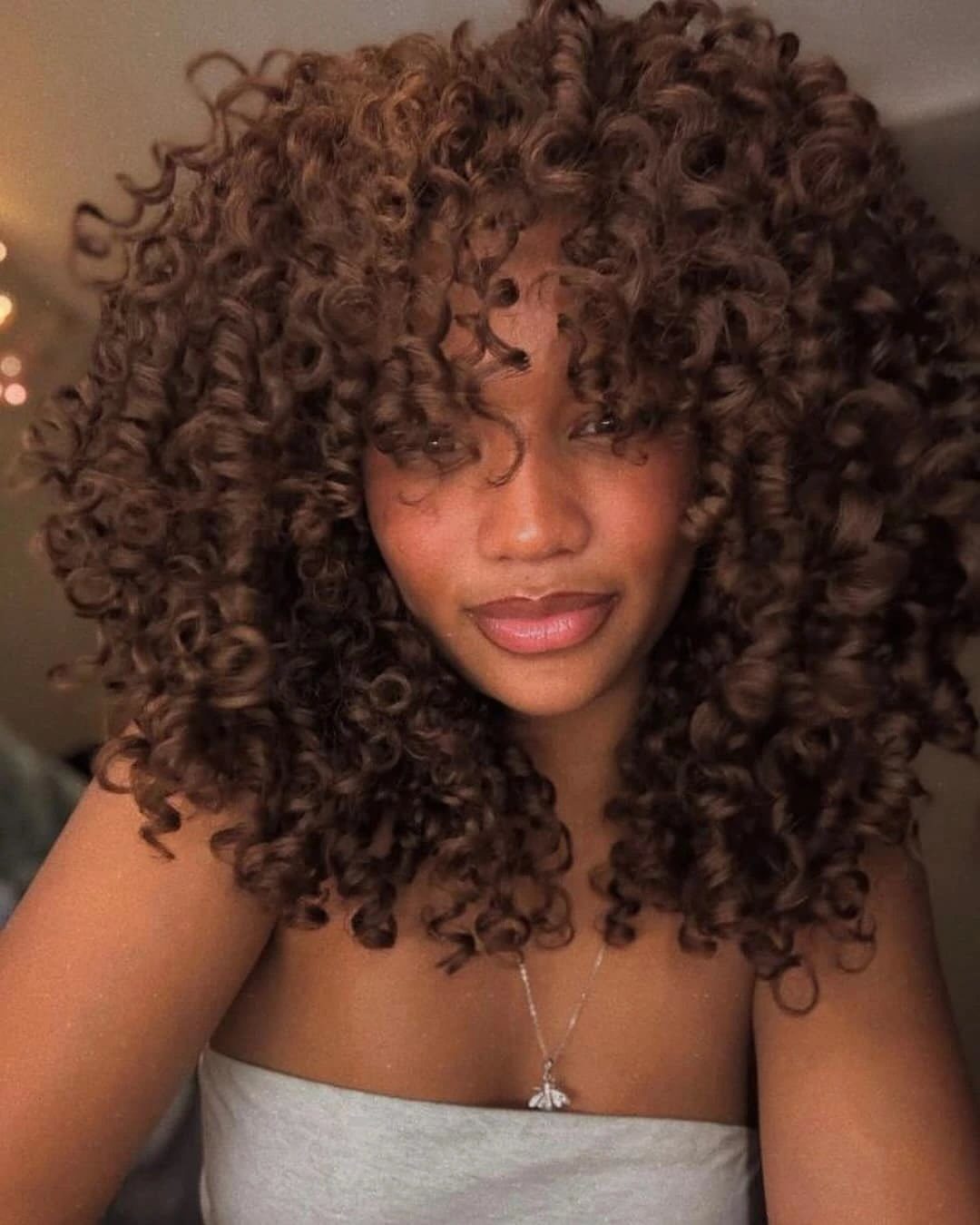
Big curls need a color that holds up at volume, and hot cocoa does: a deep, dark brown that reads rich and soft instead of stark.
Every curl catches the light a little differently, so the shade looks fuller than a flat brown would.
Hot cocoa isn’t a standard color name, so bring a photo to your colorist and say "dark brown, warm and soft." I’d pick this over a cooler dark brown if you want curls that look cozy up close.
21. Subtle Warm Dimension
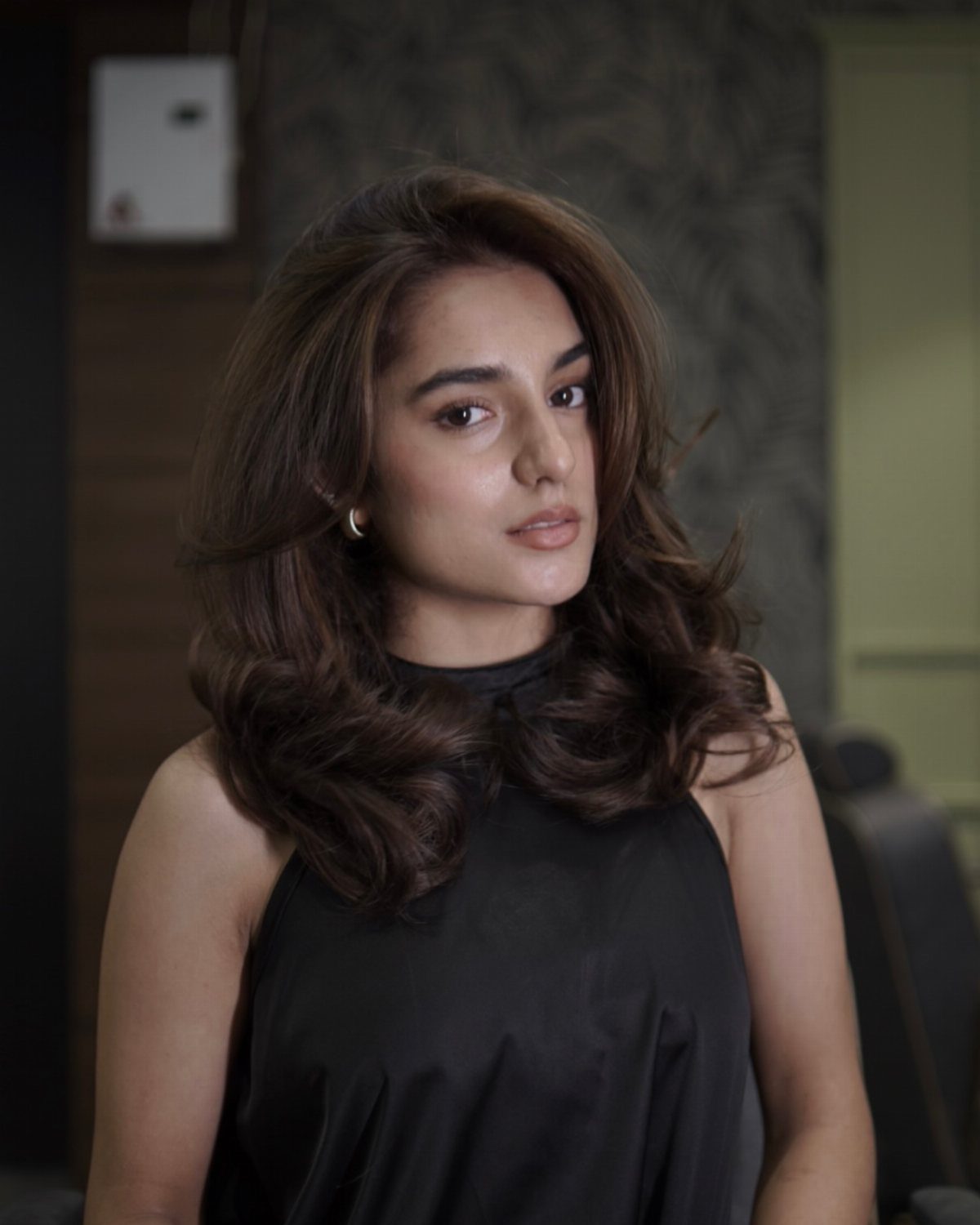
Subtle warm dimension is for anyone who wants dark brown hair that doesn’t look like one flat color. The base stays brunette, and a few warm pieces sit just above it, so the color only shows when the curls move.
Ask your colorist for "understated warm dimension" and keep the highlights close to your base shade.
Soft curls and some volume help the warmth show without much effort. Bold contrast works against a quiet look, so keep the warm pieces within 1–2 shades of your base color.
22. Sandy Beige Bronde
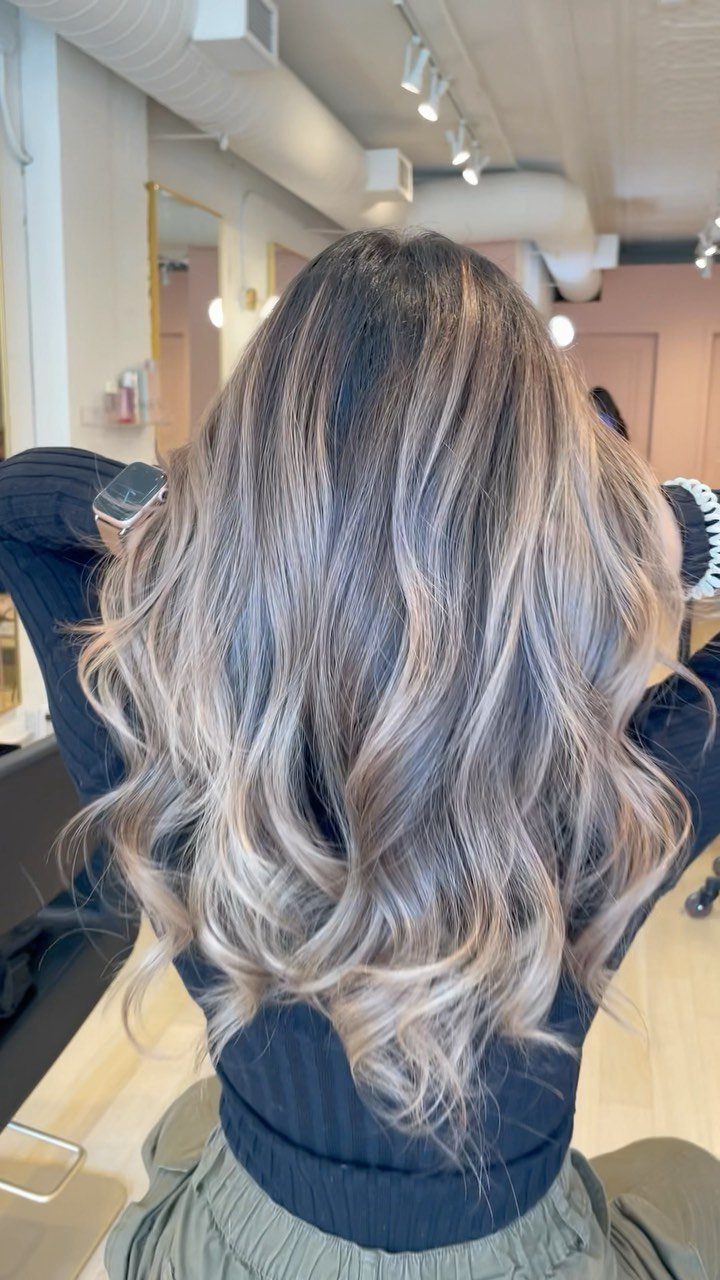
Sandy beige bronde swaps the golden glow of most blondes for a pale, soft, almost neutral tone woven through brown. Long waves in a salon blowout spread it evenly, so the brown and the beige look blended instead of striped.
Say "sandy beige" and "neutral," not just "blonde," or the colorist may reach for something warmer or brighter.
Pale means different things to different people, so bring a photo that shows how light you want the brightest pieces to go. If you’re nervous about lifting, I’d start with fewer, finer pieces.
23. Barely-There Ombré
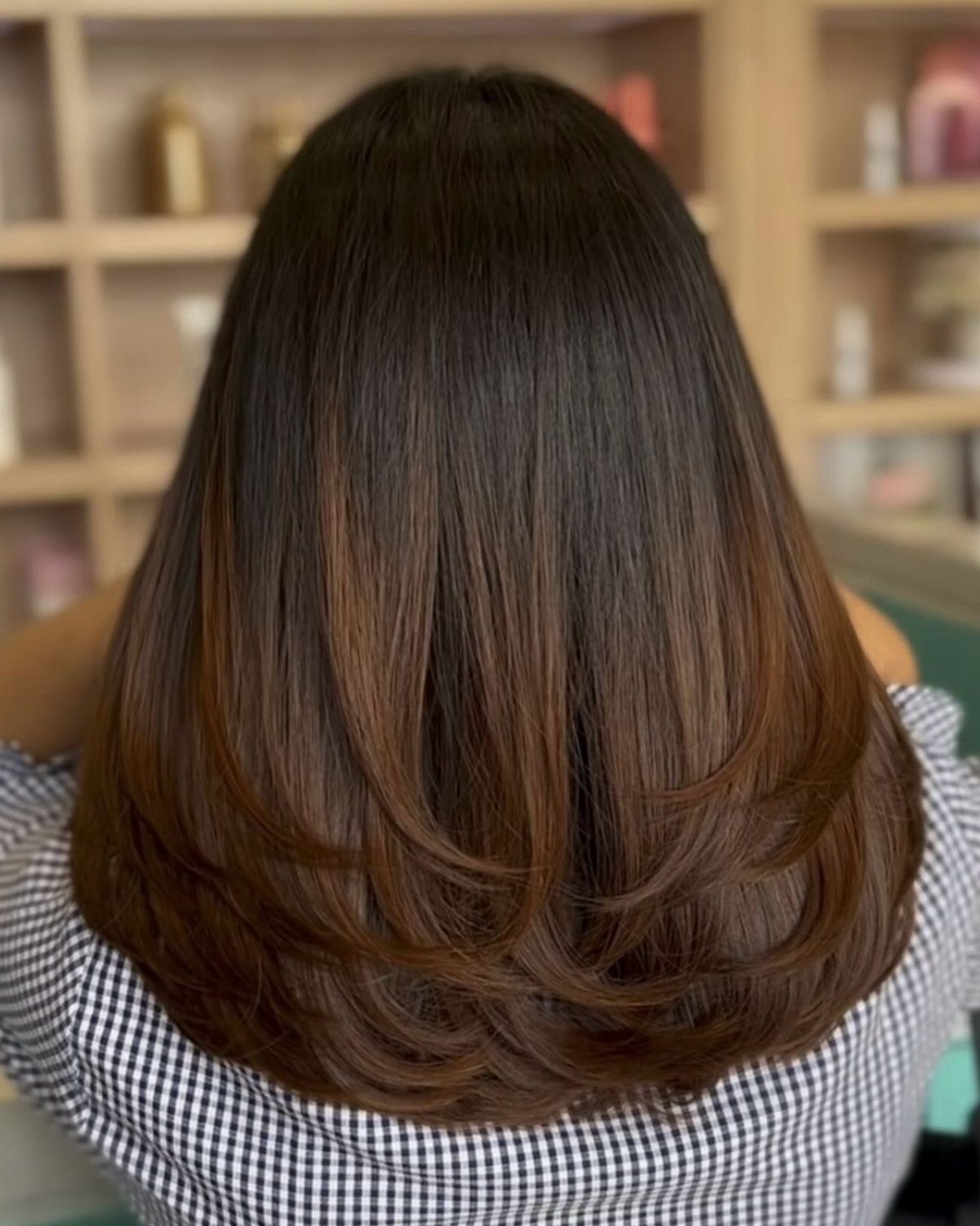
A barely-there ombré moves from dark brown at the roots to a softly lighter brown at the ends, with no obvious start to the fade. Curling the ends, as here, blurs the transition even more.
Ask your colorist for a "subtle, low ombré" and point to where the lightness should begin.
I’d keep it only a shade or two lighter than the base, since the appeal is a gentle shift, not a contrast. It suits anyone who wants a change without a dramatic one.
24. Undone Brown
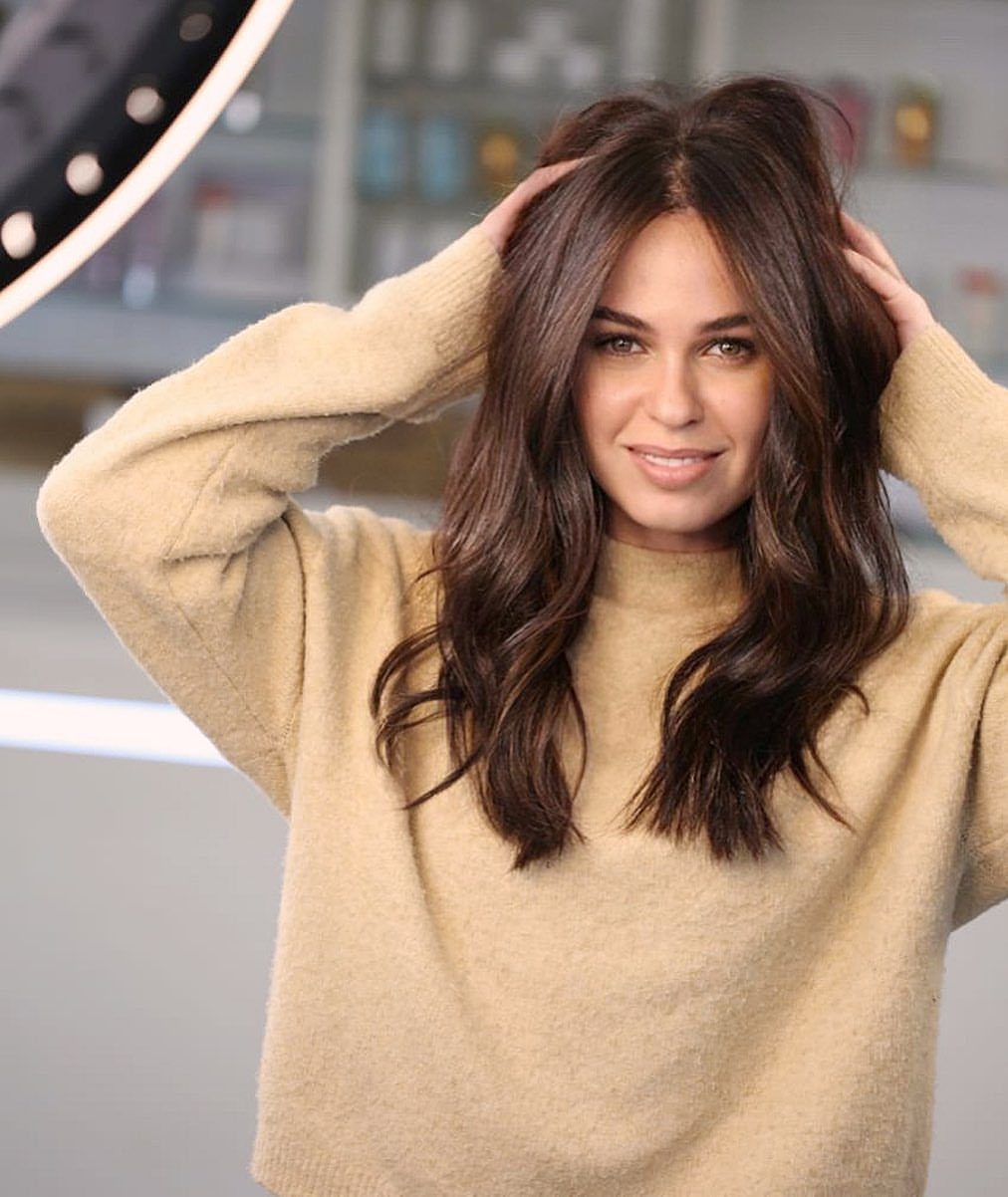
Undone brown is dark brown hair left loose and a little tousled, so the color reads as relaxed and natural instead of styled. Long, wavy lengths do the work: the uneven bends keep the shade from looking flat.
Because the look depends on texture, the color itself should stay simple.
Ask your colorist for one even dark brown and skip heavy highlights. I’d choose it if you’d rather spend your mornings on a quick rough-dry than a full style.
25. Dimensional Mocha
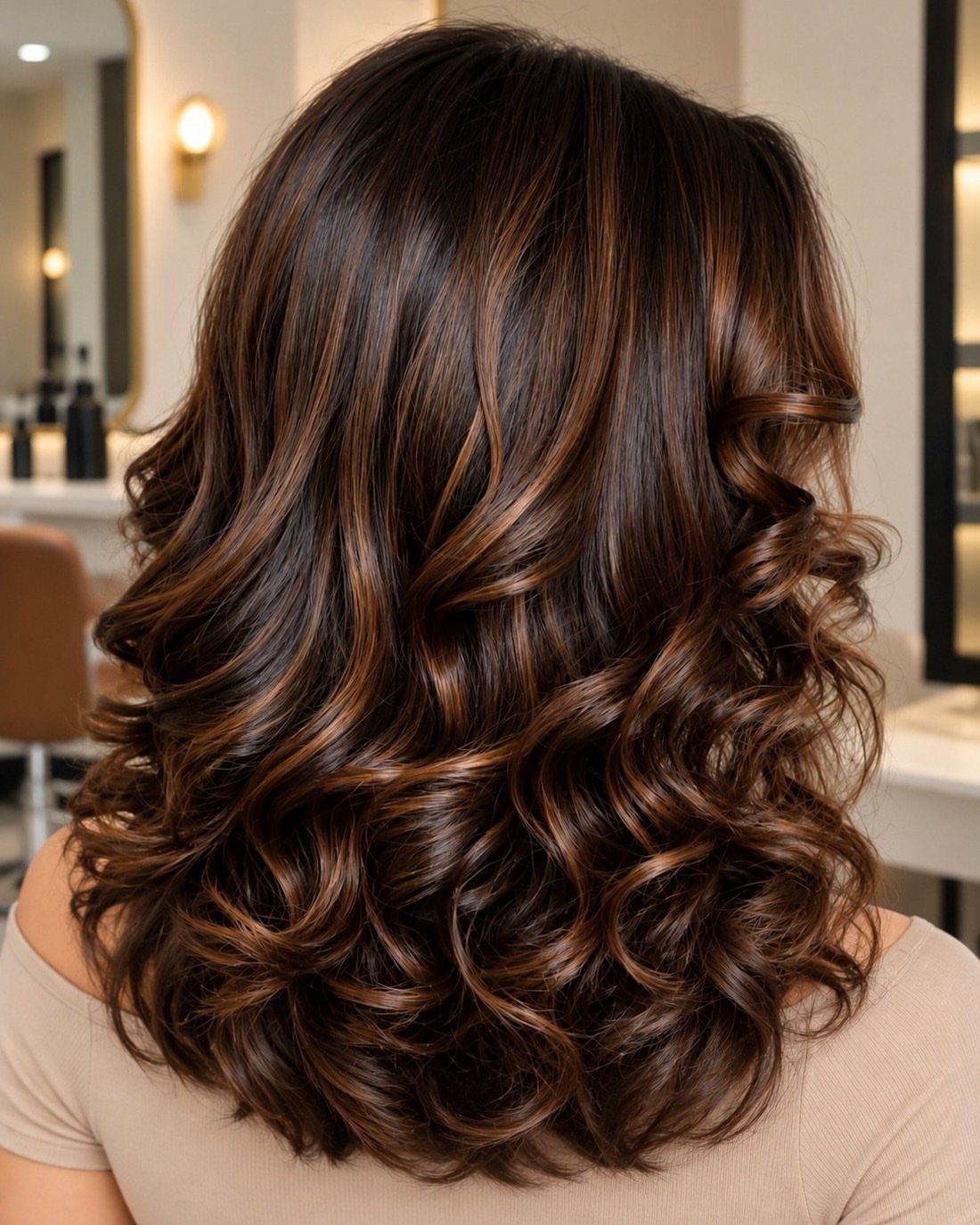
Mocha sits between chocolate and espresso, a dark brown with a soft, coffee-and-cream warmth. Dimension keeps it from reading as one flat shade, and tight curls show those subtle highlights in every ringlet.
Bring a photo and ask your colorist for "mocha with soft dimension," because the name isn’t standard. I’d keep the highlights close to the base so the brown still leads.
26. Sunkissed Streaks
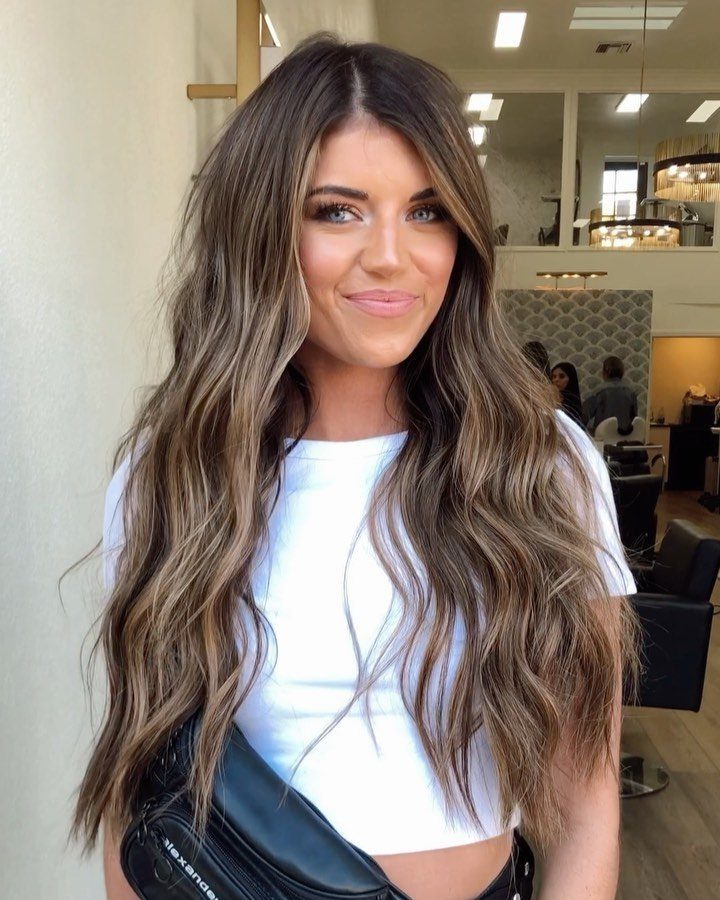
Sunkissed streaks are lightened pieces laid through brunette hair so it looks like a summer outdoors has done the work. Loose waves keep the lighter strands moving through the brown instead of sitting in stripes.
Ask your colorist for "sunlit, face-framing streaks" and bring a photo that shows how light you want them. Lightening takes some upkeep, so I’d go finer if you’re unsure.
27. Steamy Cappuccino
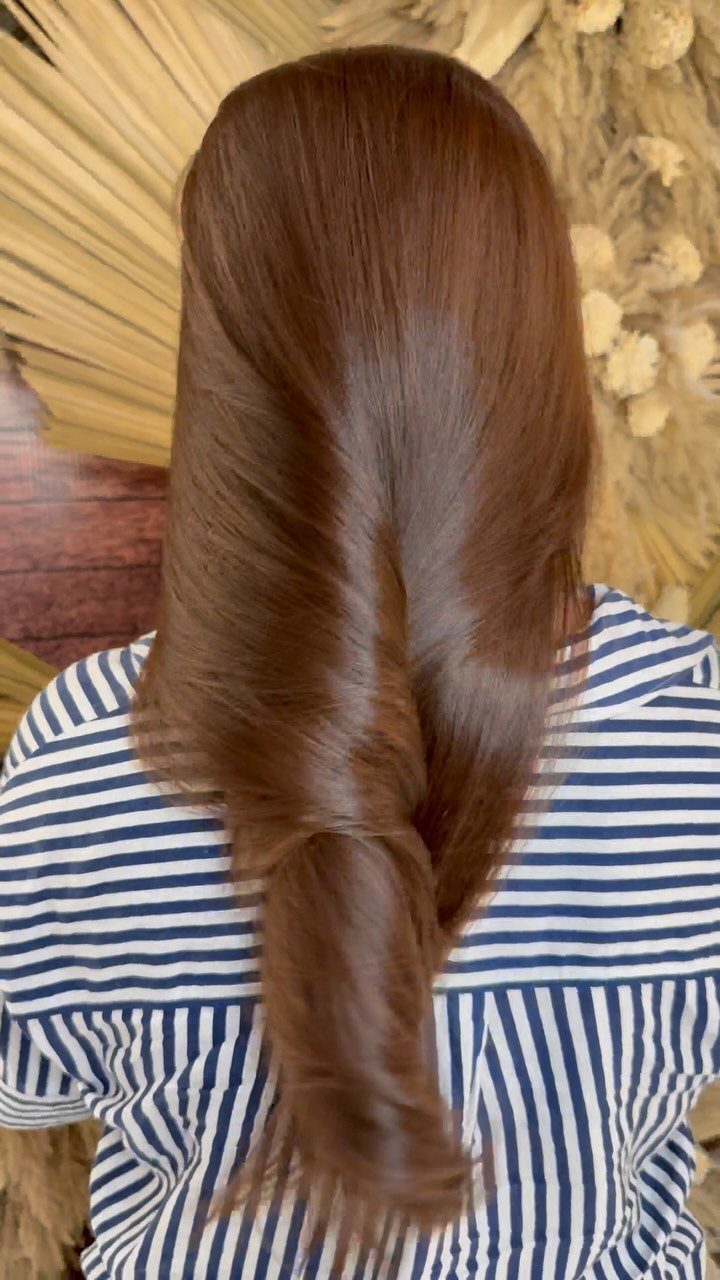
Steamy cappuccino is a glossy brown with a reddish warmth, closer to a stirred coffee than a flat espresso. Smooth, long lengths show off the shine, and a loose twist keeps the color in view without much styling.
The name isn’t standard, so bring a photo and say "warm brown with a hint of red." I’d choose it if cooler browns wash you out.
28. Cinnamon Espresso
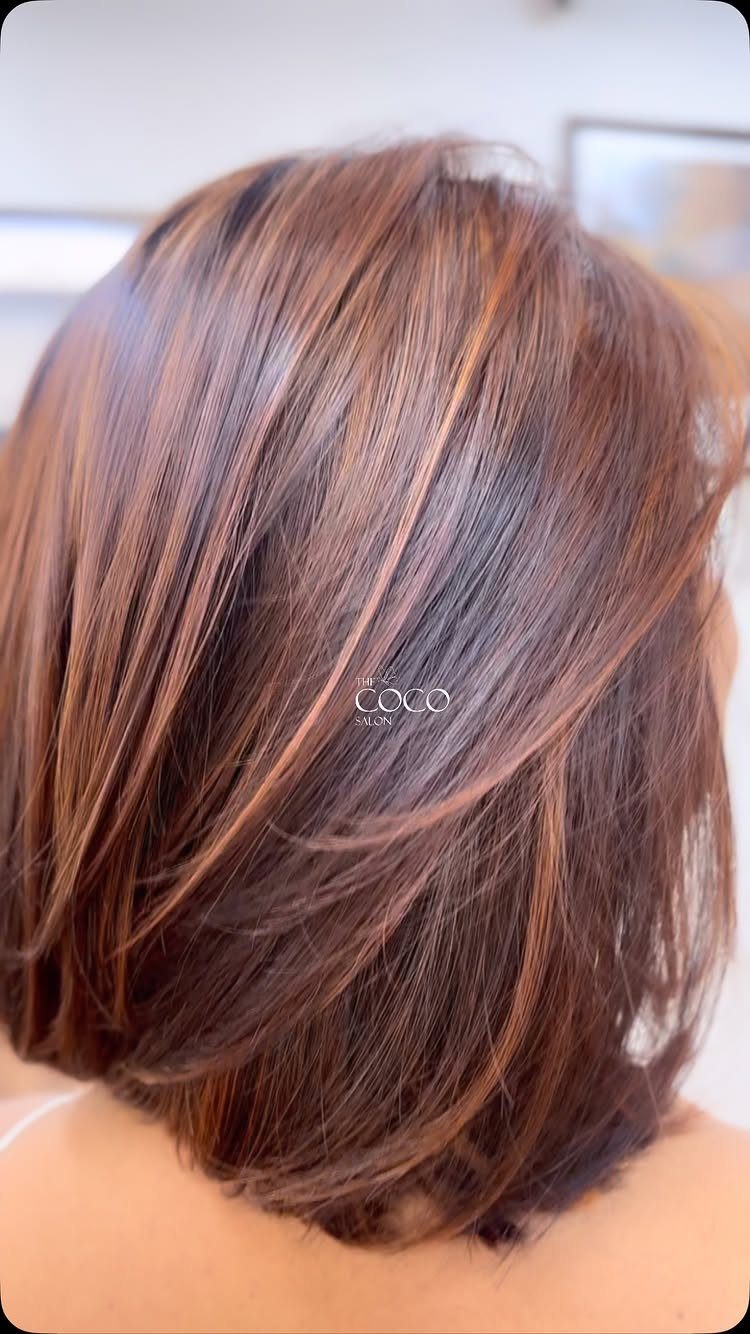
Auburn works quietly in short hair when it is tucked into dark brown: a few reddish strands inside a layered cut, visible mostly when the hair moves. Layers give the warm pieces more places to catch light.
At the salon, name espresso as the base and ask for auburn only as a faint warmth that shows up in direct light. On a short cut, I’d keep the warmth to a few fine pieces.
29. Fine Blonde Highlights
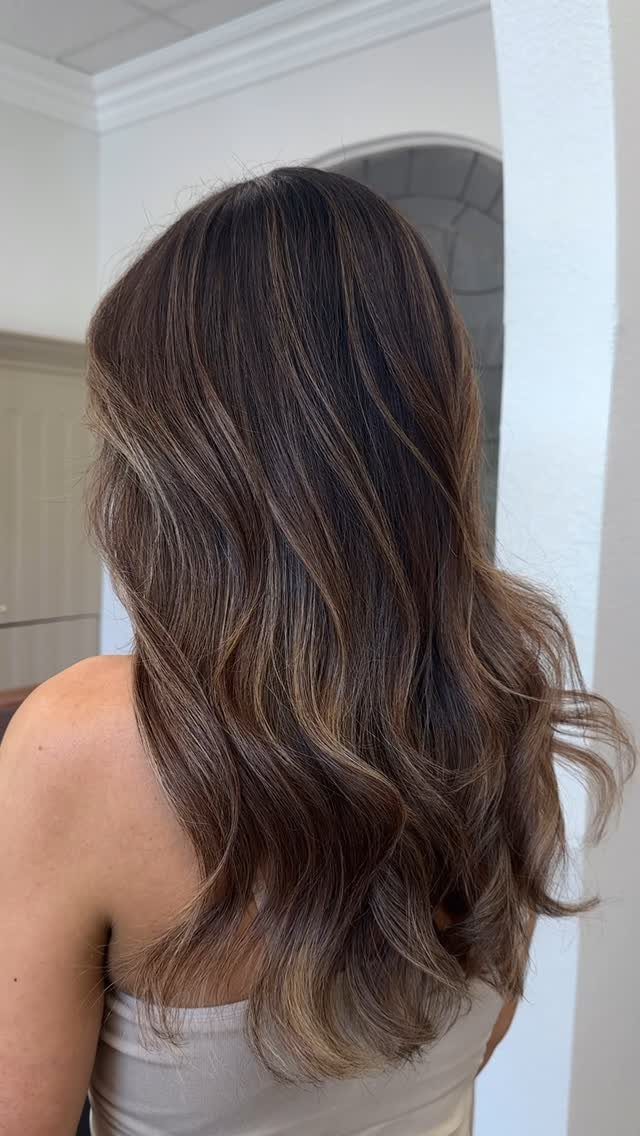
Ultra-fine blonde pieces on dark brown work like glints, not stripes. Long waves let them catch the light at different angles, so the hair looks lit from within while the base stays brunette.
Ask for "very fine" highlights and a cool blonde, then bring a photo so your colorist can see the thickness you mean. Thin pieces blend more easily than chunky ones, and I’d pick them for that reason alone.
30. Mahogany Brown
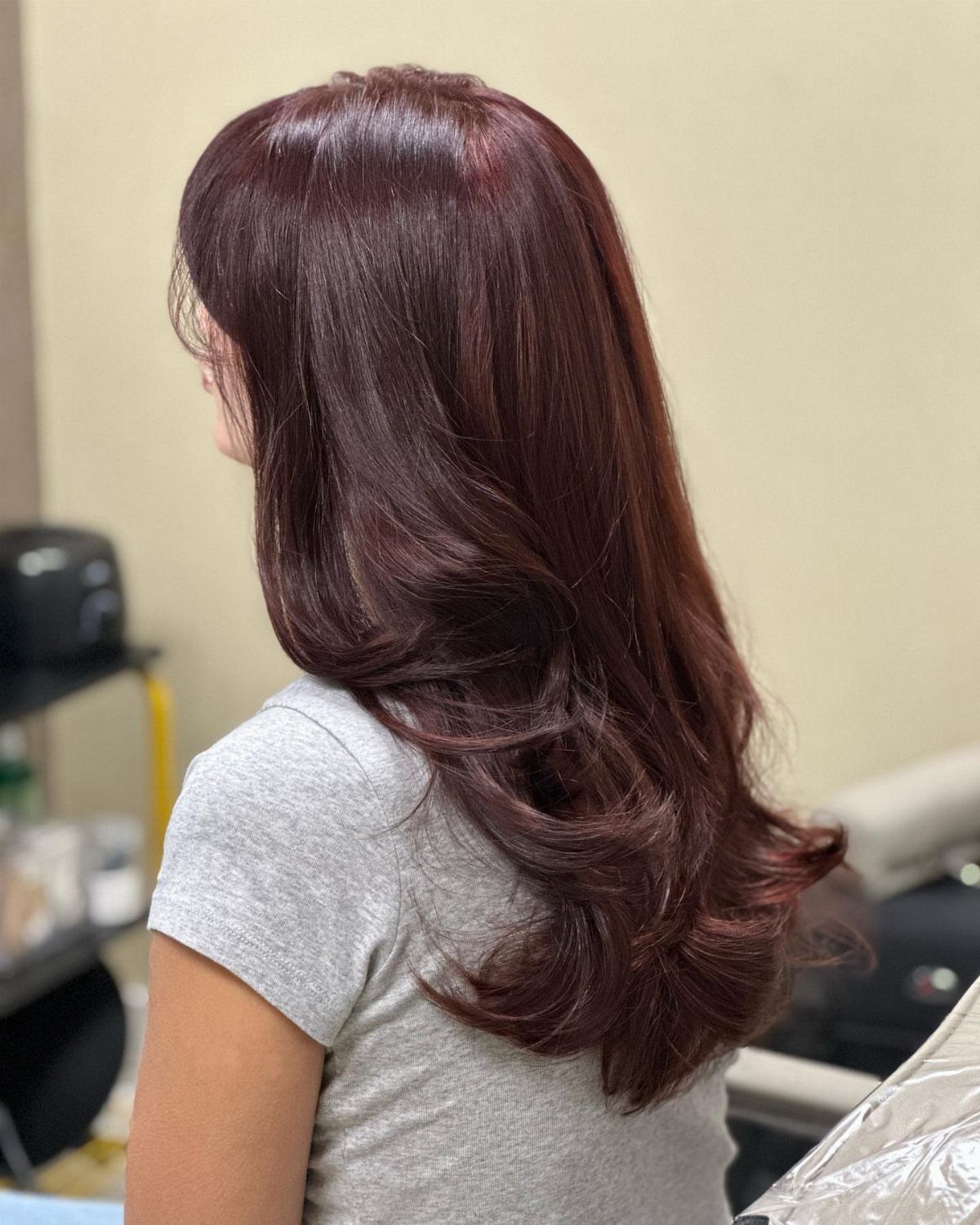
Mahogany is a deep brown with a red-violet richness, and wearing it in one shade, without highlights, is what makes it striking.
Mahogany is a single solid color, so loose waves or curled ends help a lot: the bends catch the light and give the shade depth that straight hair can flatten.
Ask your colorist for "mahogany brown, all over," and bring a photo, since it can drift redder or browner. I’d choose it over chestnut if you want a darker, richer red-brown.
31. Cocoa Brown
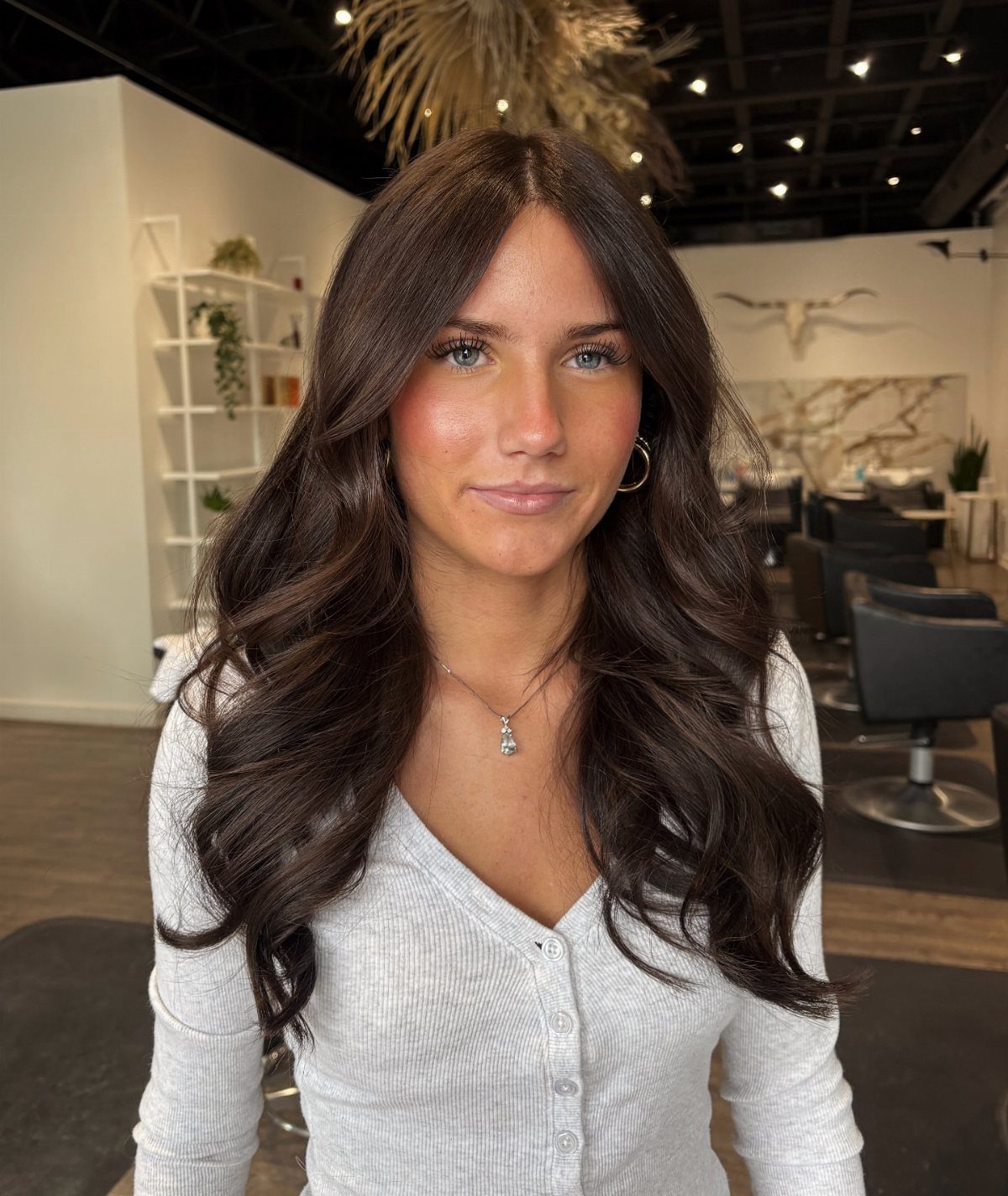
Cocoa brown is a rich chocolate-leaning brown with a trace of red running through it, enough to warm the color without turning it auburn.
Length and a loose wave let cocoa’s warmth catch the light instead of sitting flat against the head.
Cocoa can read flatter or redder depending on who mixes it, so bring a photo and ask for "cocoa brown with a hint of red" by name. I’d keep the red faint and let a glossy finish do the rest.
32. Burnished Bronze
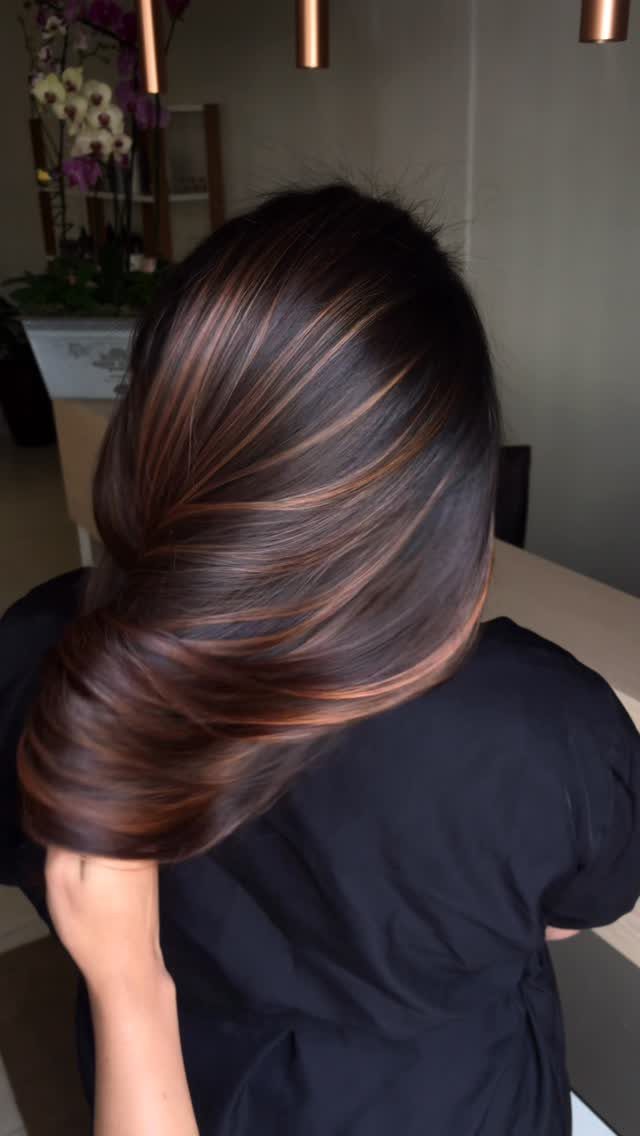
Bronze on dark brown works because it is shinier than it is bright: the coppery pieces pick up light and the base stays deep.
A smooth blowout, as here, lets the shine run in long, clean lines from crown to ends.
Ask for "bronze, not blonde" and bring a photo so the highlights don’t come back too gold or too orange. I’d choose this over caramel if you want warmth that reads polished, not sunny.
33. Dark Brown Bob
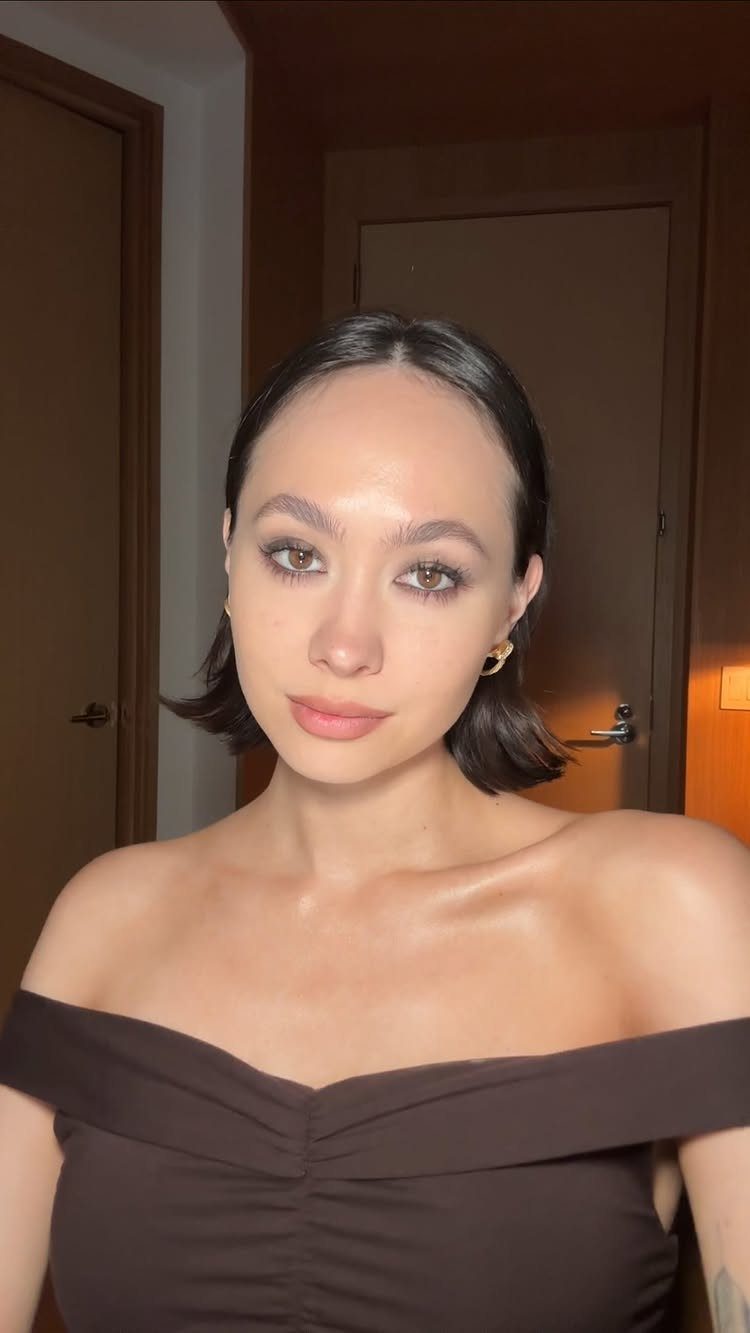
A sleek bob keeps a dark brunette shade in sharp focus, and a few warm highlights add dimension without breaking the clean line. With a center part, the color falls evenly on both sides, which suits a blunt cut.
For a dark brown bob, ask for "subtle warm highlights" and show your colorist a photo so the cut lands at the right length. With so little hair to spread color across, I’d keep the highlights fine and few.
34. Long Dark Brown Hair
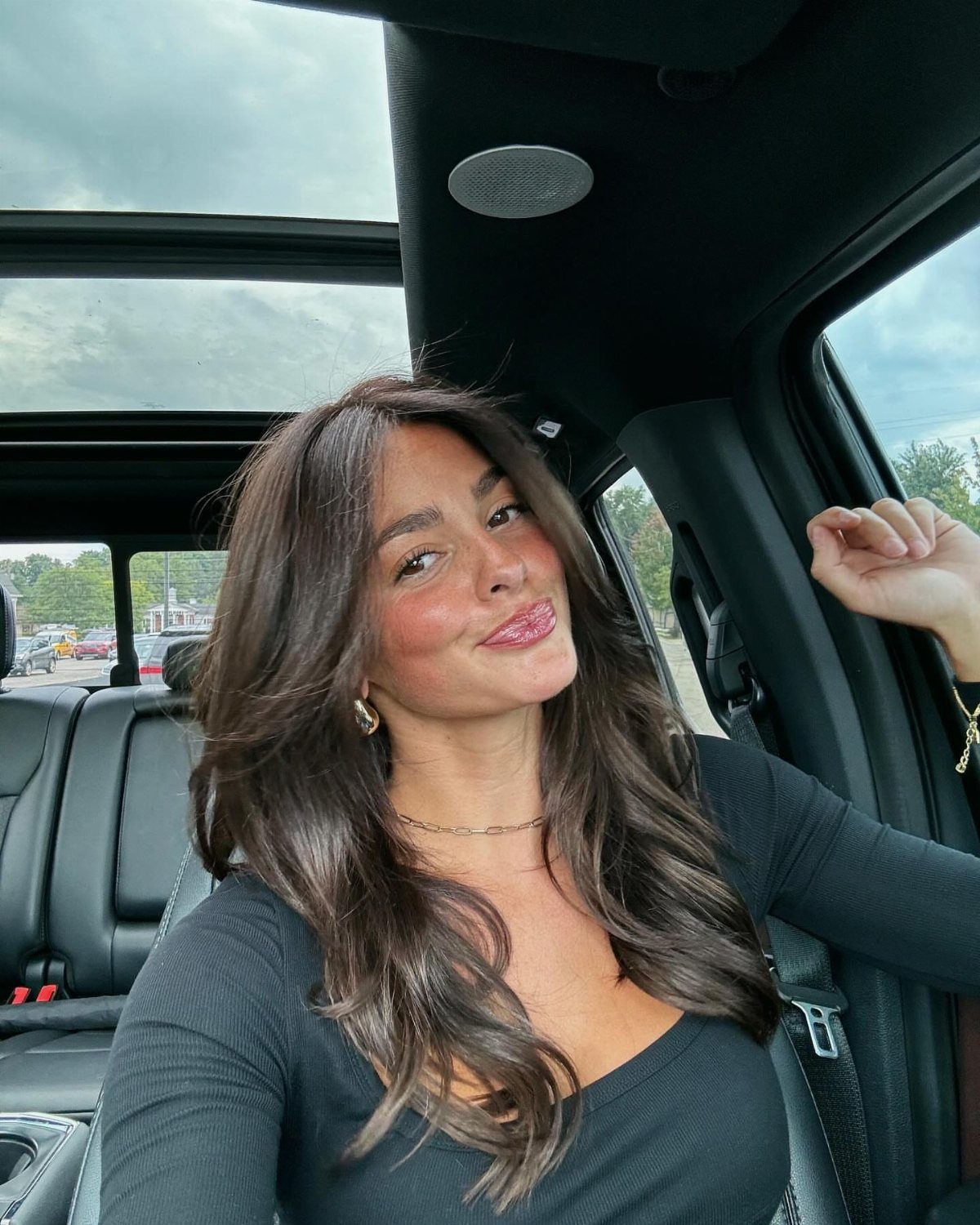
Long dark brown hair is the simplest way to wear this shade, because length does what highlights would otherwise do. Loose waves, like these, add movement and show the depth of one solid color.
Ask for one even shade of dark brown and finish the appointment with a gloss, which is what gives the color its shine.
A solid shade on long lengths shows every dry or damaged end, so I’d keep trims regular. It also suits anyone who prefers a low-effort color.
Choosing Brunette Shades
Undertone narrows the choice faster than any other detail.
Warm skin looks best in warm browns like caramel brown, which bring out its golden tones. Espresso and ash-toned brunettes sit best against cool skin, while a neutral complexion can pull off nearly any shade of brown.
If you can’t tell which you are, start with one of two safe picks. Deep golden brown carries warm undertones that suit most complexions, and dark chocolate is just as forgiving, flattering nearly everyone.
Brunette color also changes how your eyes and eyebrows read. Hold the photo next to your face in daylight and check that the whole look still balances, not just the hair.
Frequently Asked Questions
Is brunette hair black or brown?
Brunette hair is brown.
Espresso sits right on the border between brown and black, and a glossy finish is what keeps it reading as deep brown rather than going flat and inky. A dull surface pushes it closer to black.
How do I find the best brunette shade for my skin tone?
Match the warmth of the shade to your skin. Warm undertones suit golden, caramel browns, and cooler undertones do well with ash-toned browns or deep espresso.
Neutral undertones give you the widest range, because both golden and ashy browns sit comfortably against them. If you run warm and want a cool shade like ash, I’d test a semi-permanent version first.
How do I maintain brunette hair?
How often depends on how far your color sits from your natural shade. When the new shade is far from your natural color, or gray makes up a good share of your roots, expect to book a touch-up every 3–5 weeks.
If it’s close, you can go a few months with only a gloss in between. Color-safe shampoo and conditioner slow fading, and a shadow root that blends into lighter ends buys you even more time between salon visits.
How do I style brunette hair?
A big blowout does the most for brunette hair, and wide ceramic rollers add bounce and volume that make the color stand out.
A light finishing oil adds shine without weight. Loose waves suit dark brown well, since every curve throws the light back at a slightly different angle.