A dark natural base changes the whole plan: bright ginger over black or deep brown only shows after bleach has lifted the hair, while light brown or dark blonde can pick up copper with a lot less lightening.
The range runs from ginger brown, a brunette with a flicker of copper, up to bright orange and fiery ginger, and the brighter the shade, the more it becomes a salon job.
Balayage and ombre sit in the middle, since darker roots keep regrowth soft.
1. Auburn
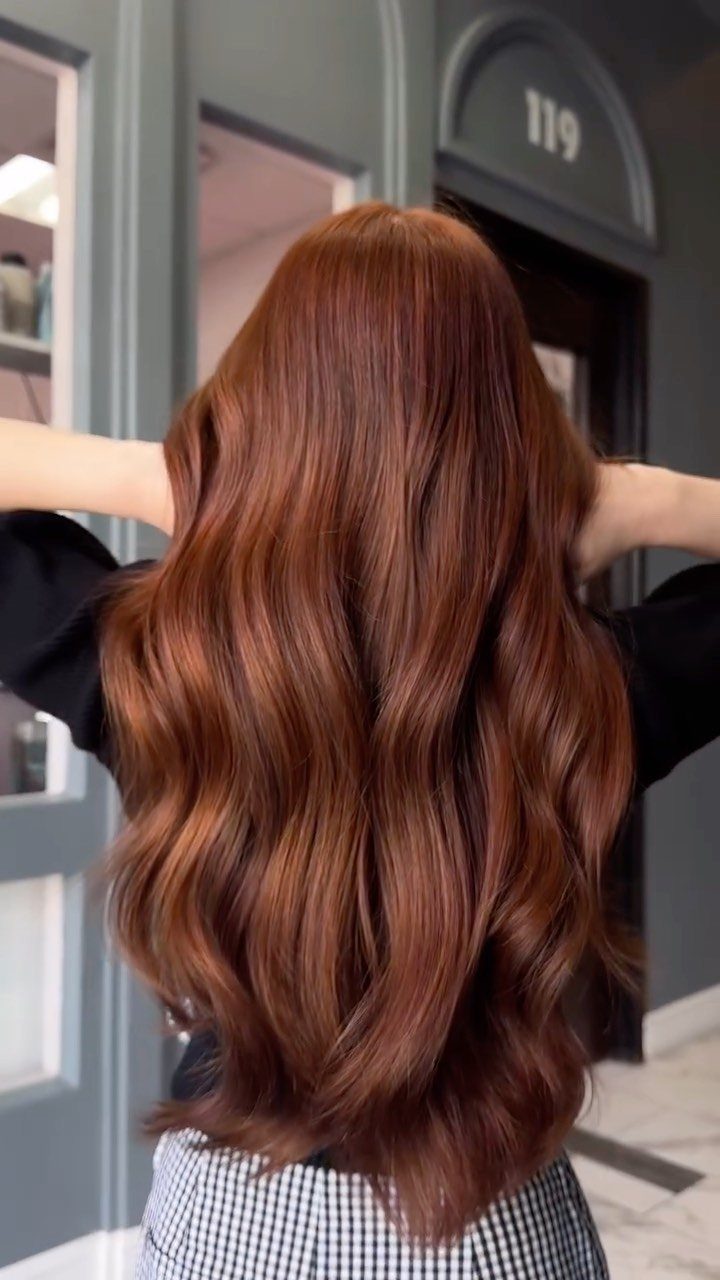
Auburn is the red for anyone who wants warmth without the glare of a true ginger. The brown base in the mix mutes the red, so it reads rich instead of loud.
On long, wavy hair like this, the shade shows best in the movement of the waves. I would pick it if you want a color that still looks natural in office light.
Bring a photo to the salon and ask for a red-brown, not a red.
2. Bright Auburn
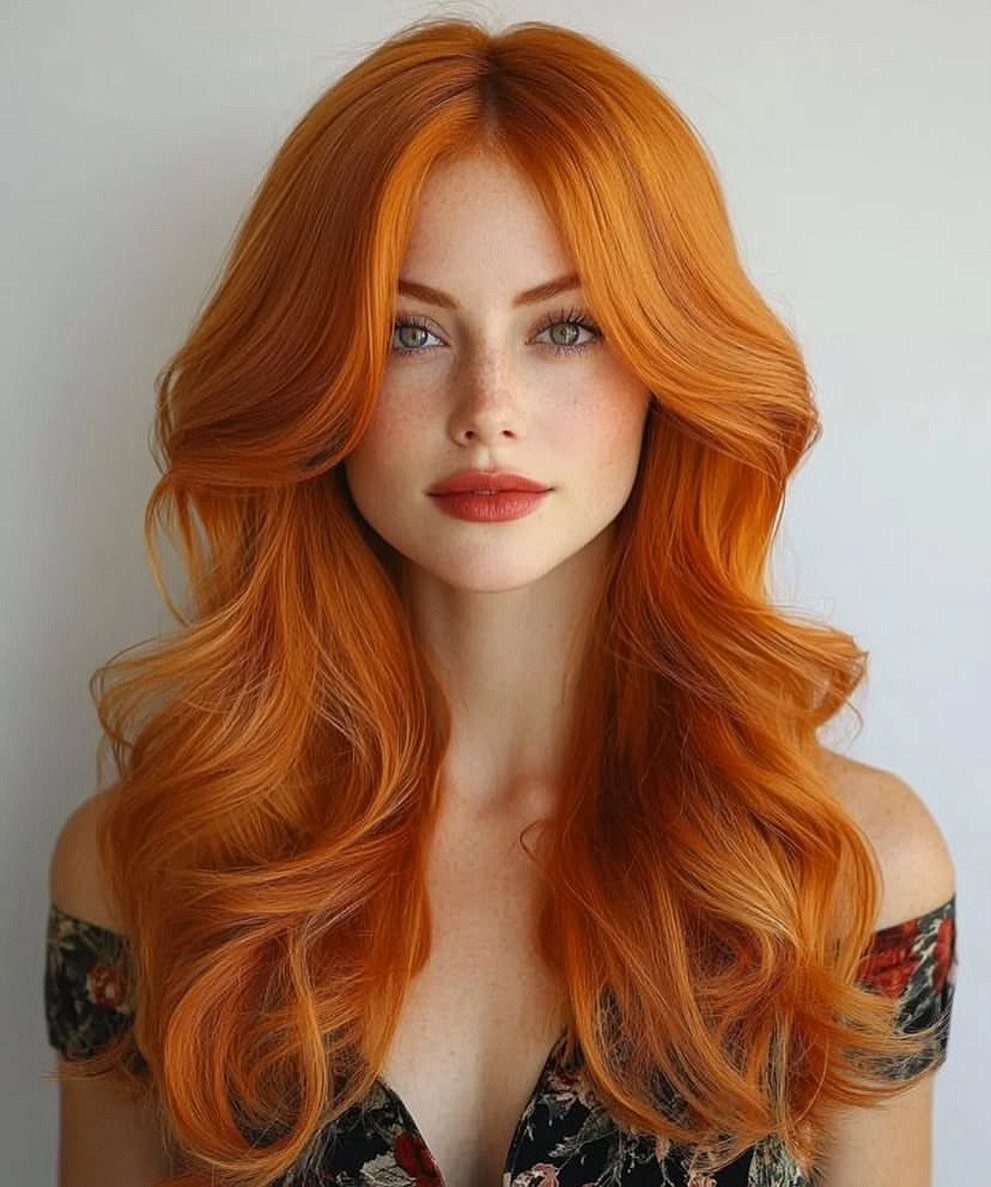
Orange-red is what separates this auburn from the deeper versions, and it is a color that gets noticed from across a room. Soft curls and a center part keep all that brightness balanced and even.
I like it best on fair skin with freckles, where the warm tint echoes what is already there. Ask your colorist for auburn with an orange lean, since "red" alone can land you somewhere much cooler.
3. Strawberry Blonde
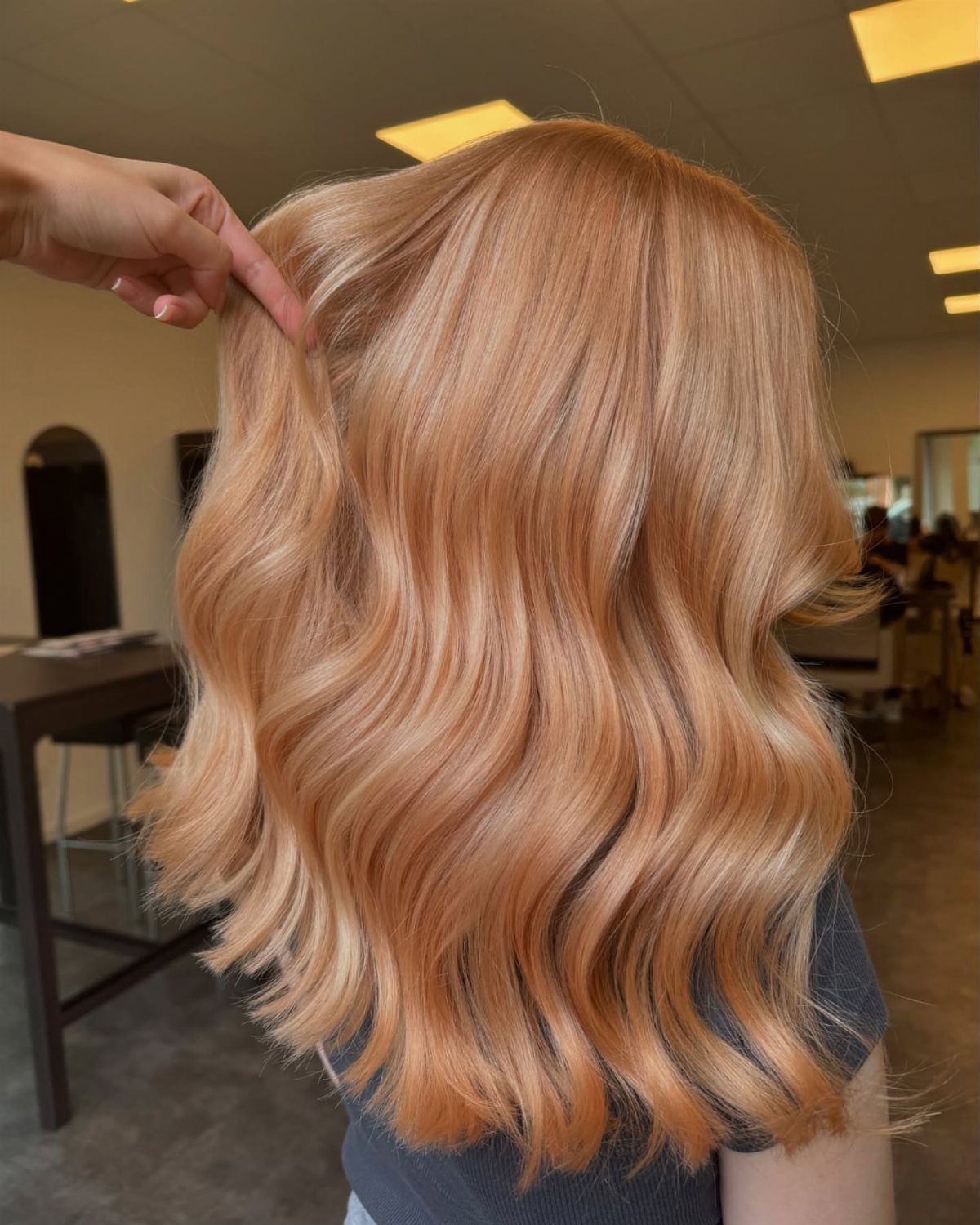
Light, warm and slightly peachy: strawberry blonde sits closer to blonde than to red, which makes it the gentlest way into ginger territory. The red only whispers, and the finish looks sunlit rather than dyed.
Loose waves show off the soft tones best, so I would style it that way. Because blonde leads, expect a colorist visit rather than a box if your starting point is darker.
4. Dark Ginger
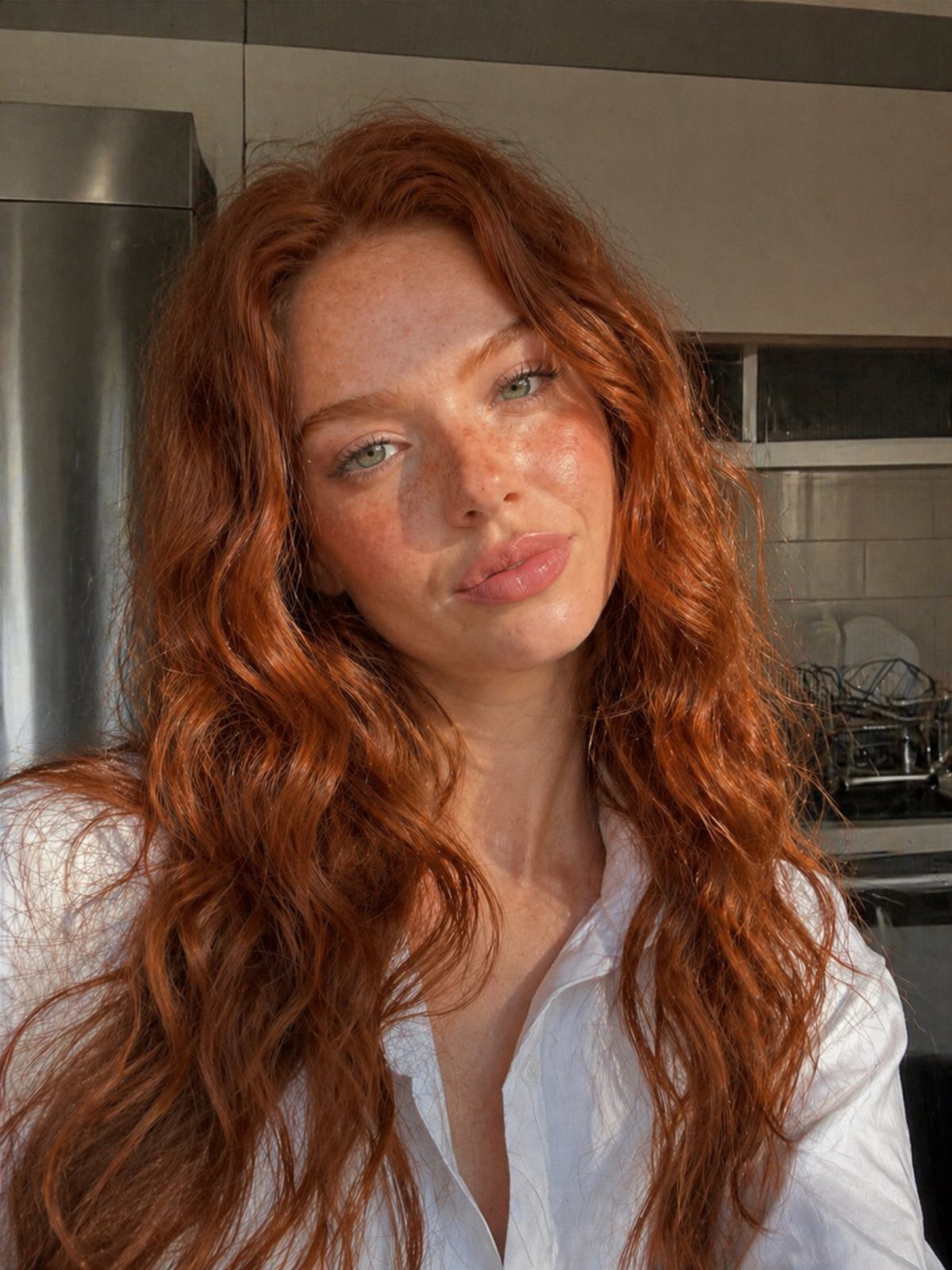
Brown and red share the work in dark ginger, and neither wins. In low light it can pass for a warm brunette; in sunlight the ginger comes forward.
That split personality is why I rate it for anyone nervous about going fully red. Long waves give the color room to shift as you move.
Ask for ginger with depth, and mention that you want brown in the base so the stylist does not go too bright.
5. Dark Red Balayage
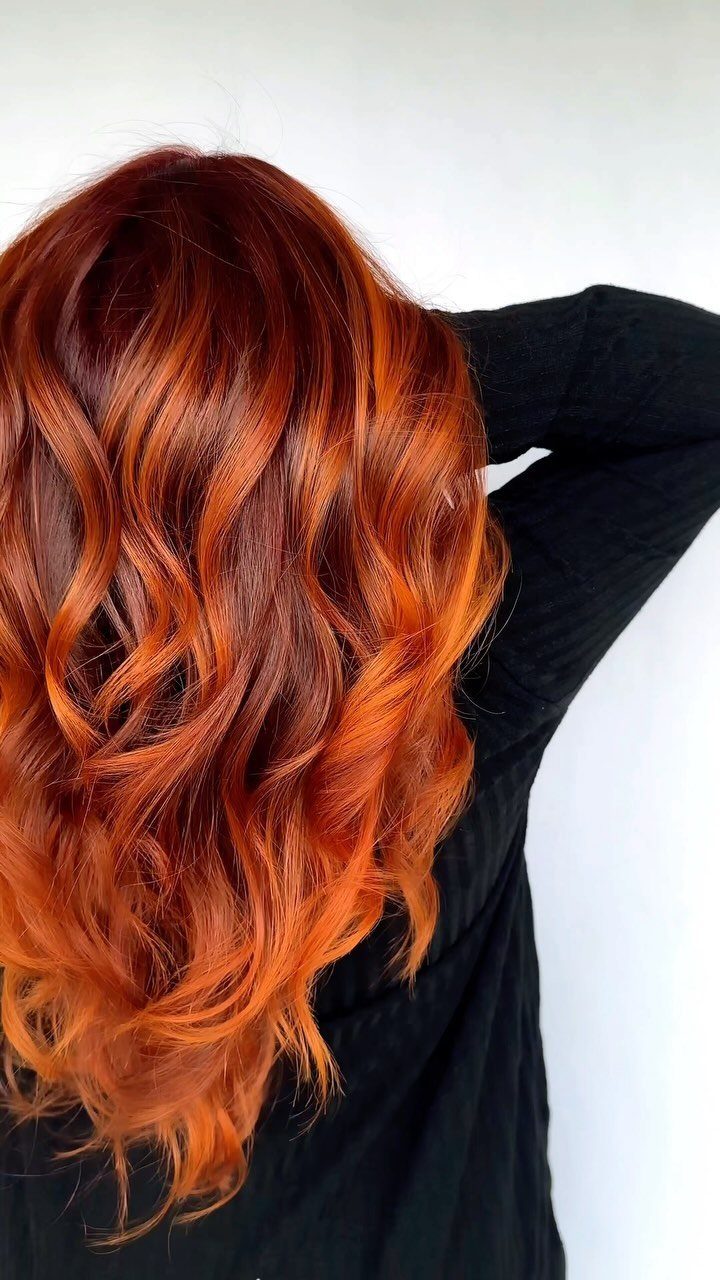
Olive skin and dark eyes are where I would put this one first. A dark auburn base, then copper-red balayage hand-painted through the lengths, gives the deep tones something bright to play against.
Balayage keeps the roots dark, so regrowth looks planned instead of stark. That is a real advantage if you want to stretch time between appointments.
Ask for the copper to start mid-length and build toward the ends, and keep the red-orange from taking over the whole head.
6. Ginger Brown
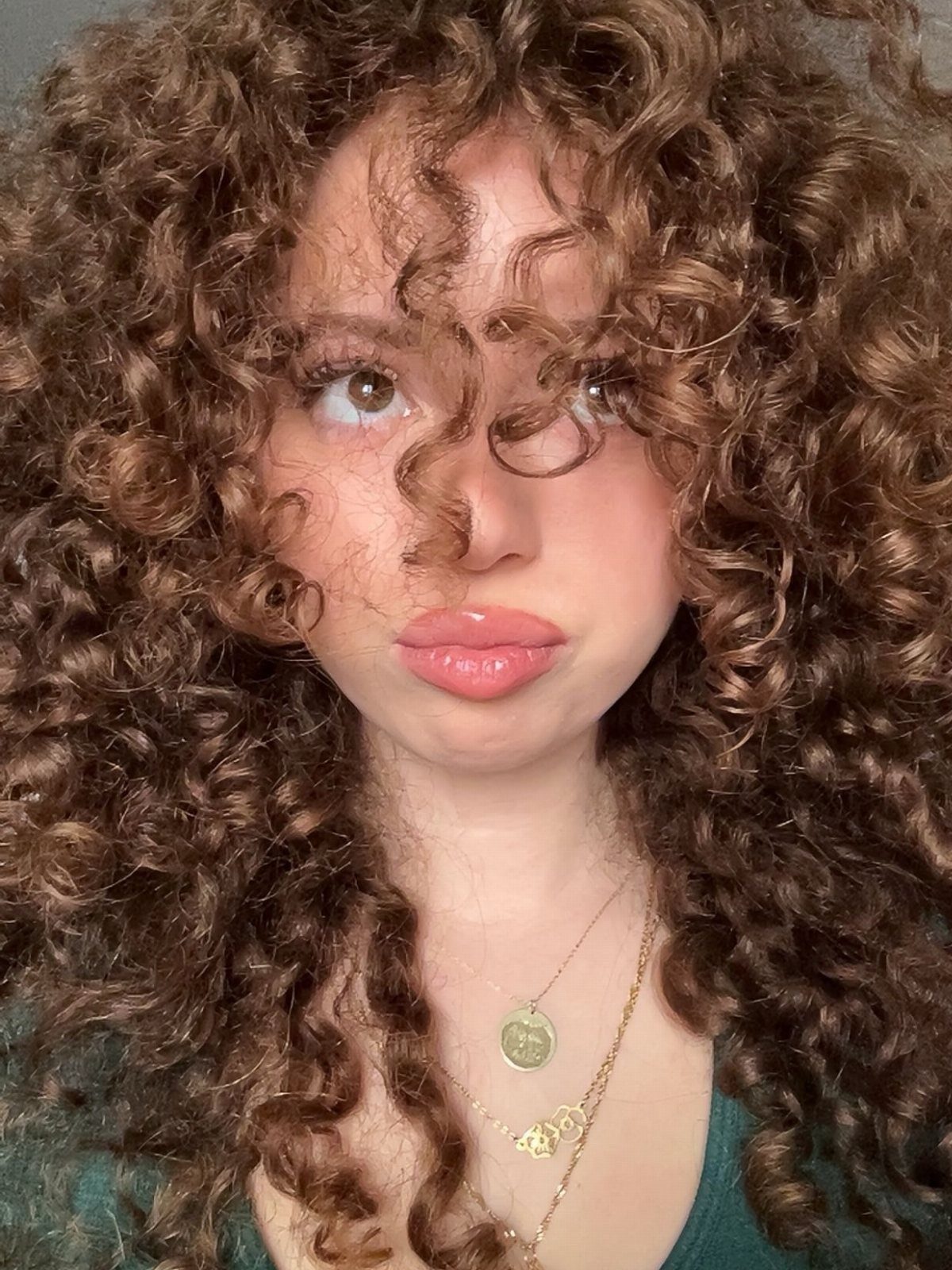
Mostly brunette, with a warm flicker of ginger that only shows when light hits the curls. Ginger brown is the quietest way to wear copper, and I think it is the most wearable of the gingers.
Curly texture suits it well because every curl catches the light at a different angle, so the red undertone reads as dimension. Ask a colorist for brown with red or ginger undertones, then skip anything labeled "cool."
7. Mahogany
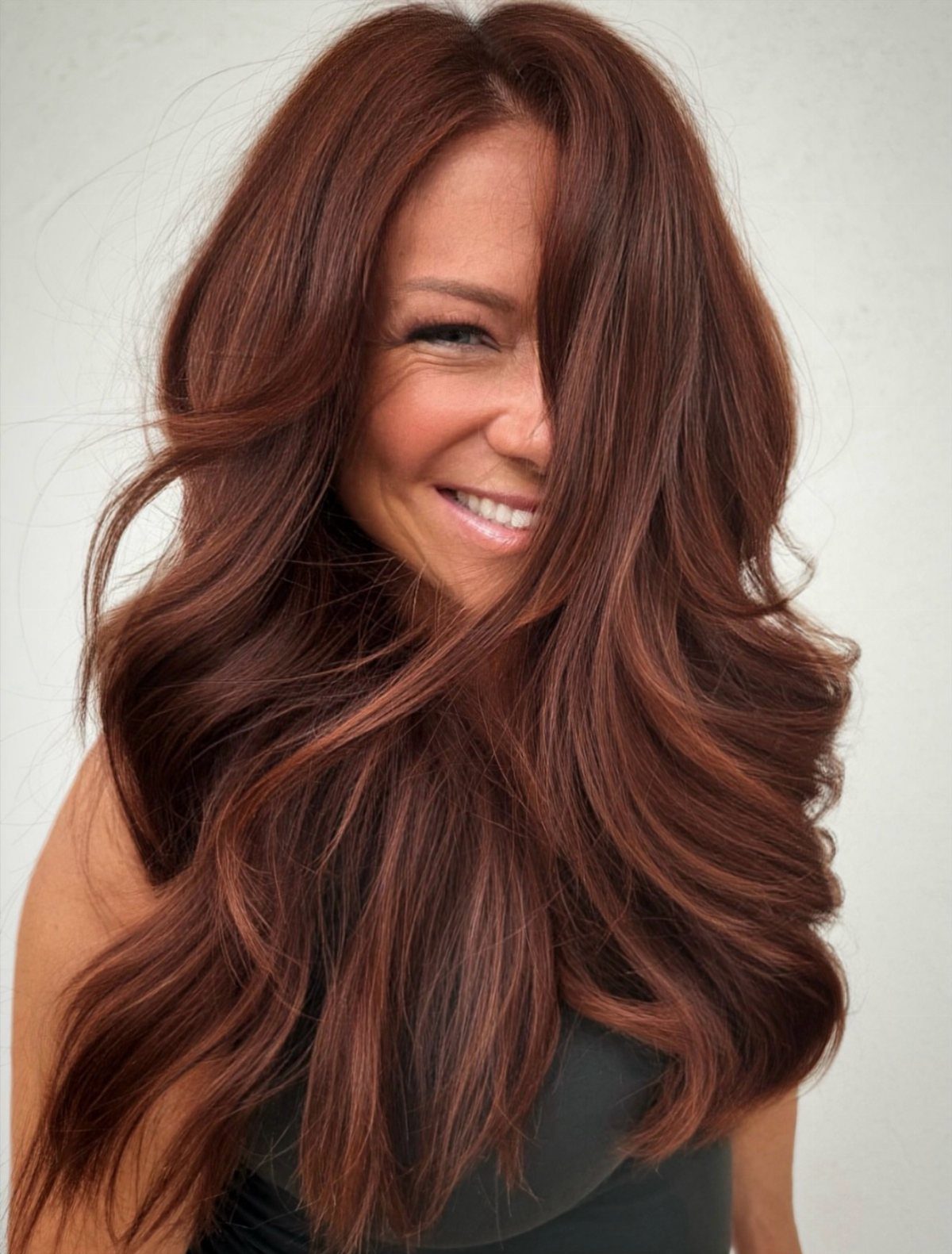
Chocolate and violet run underneath a red-brown base in mahogany, and that mix is what makes it feel so deep. It reads as a dark brunette from a distance and turns plum-red up close.
Loose waves past the shoulders are my pick for mahogany, since every bend in the strand catches light and pulls out that violet cast.
Ask your colorist for a dark red-brown with chocolate depth, and say you want a hint of violet rather than orange.
8. Bright Orange
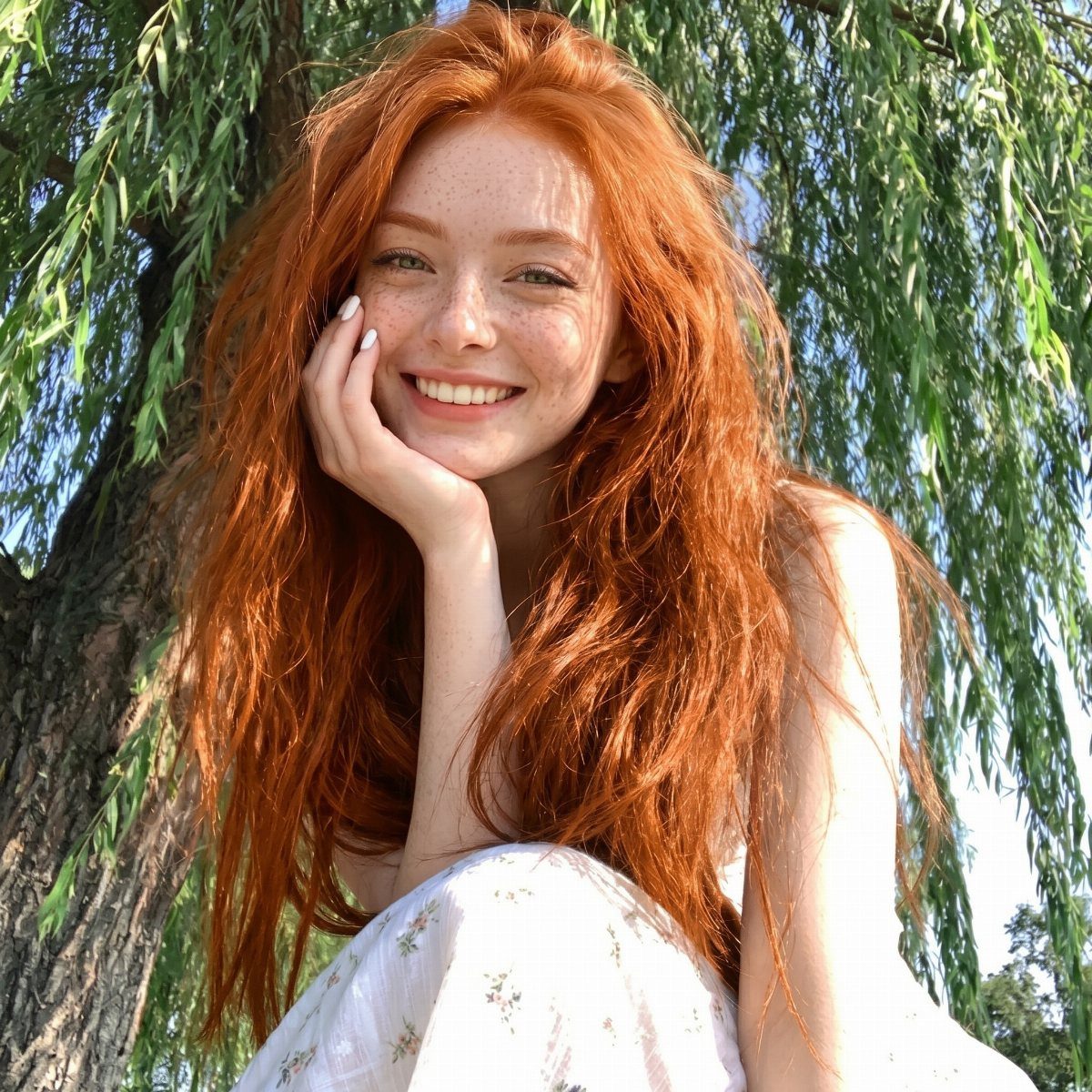
Nothing about bright orange is subtle, and that is why I like it. It is a statement shade, an orange-red that shows up in any light and makes the hair the first thing anyone sees.
Wavy lengths with a loose, undone finish suit it. Freckles sit well against the warmth.
Because the color is so vivid, I would go to a colorist and bring a photo, and say "orange-red" instead of just "red" so the tone lands where you want it.
9. Golden-Ginger Shade
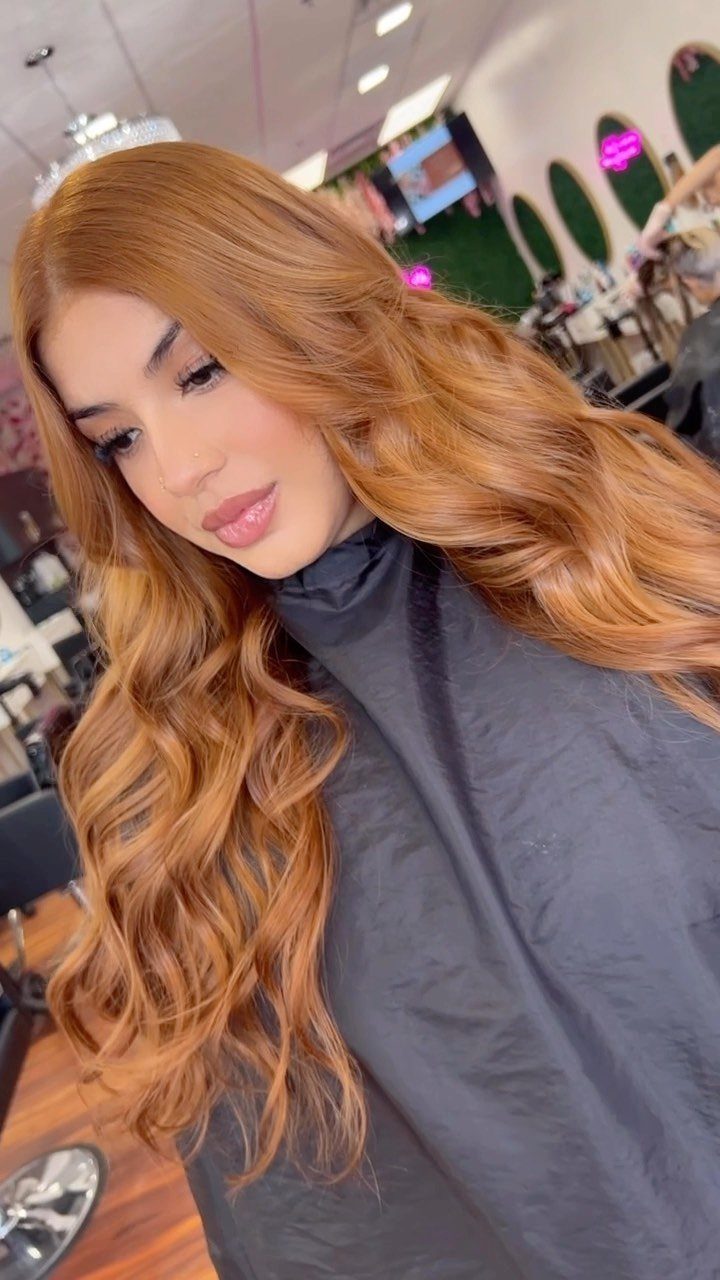
Golden ginger is the gentlest warmth you can add to dark blonde. Instead of turning the hair red, it pushes the blonde toward honey and copper, so the change looks like better light rather than a new color.
Long, loose waves spread that glow evenly. I would pick this for anyone who wants ginger without a big commitment.
Ask for a golden ginger over your dark blonde base, and keep the request on the soft side.
10. Copper
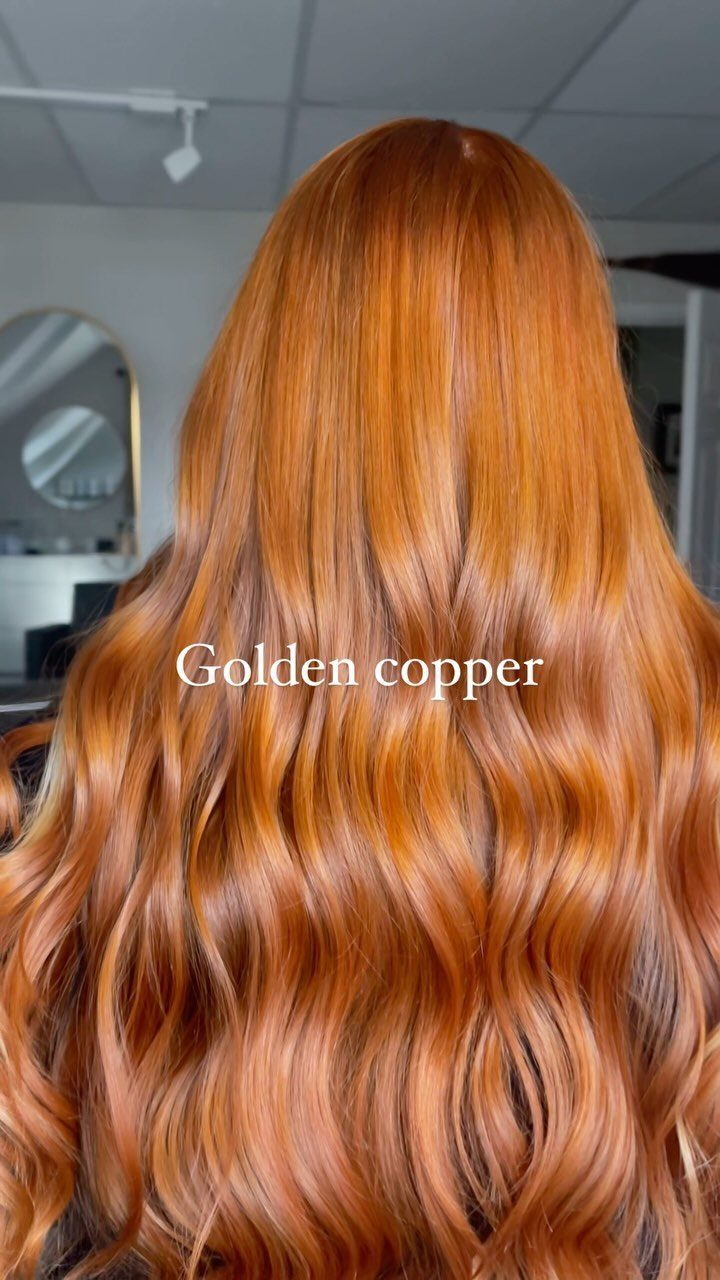
Shine does as much work as shade in copper. A warm orange-red with a bright, reflective finish looks richest when the hair lies smooth, so glossy waves are the way I would wear it.
The color is vivid but still friendly, a step softer than a true orange.
Ask for a golden copper if you want it warm and sunlit, and tell your colorist you want a high-shine result so the finish does not go flat.
11. Ginger Balayage
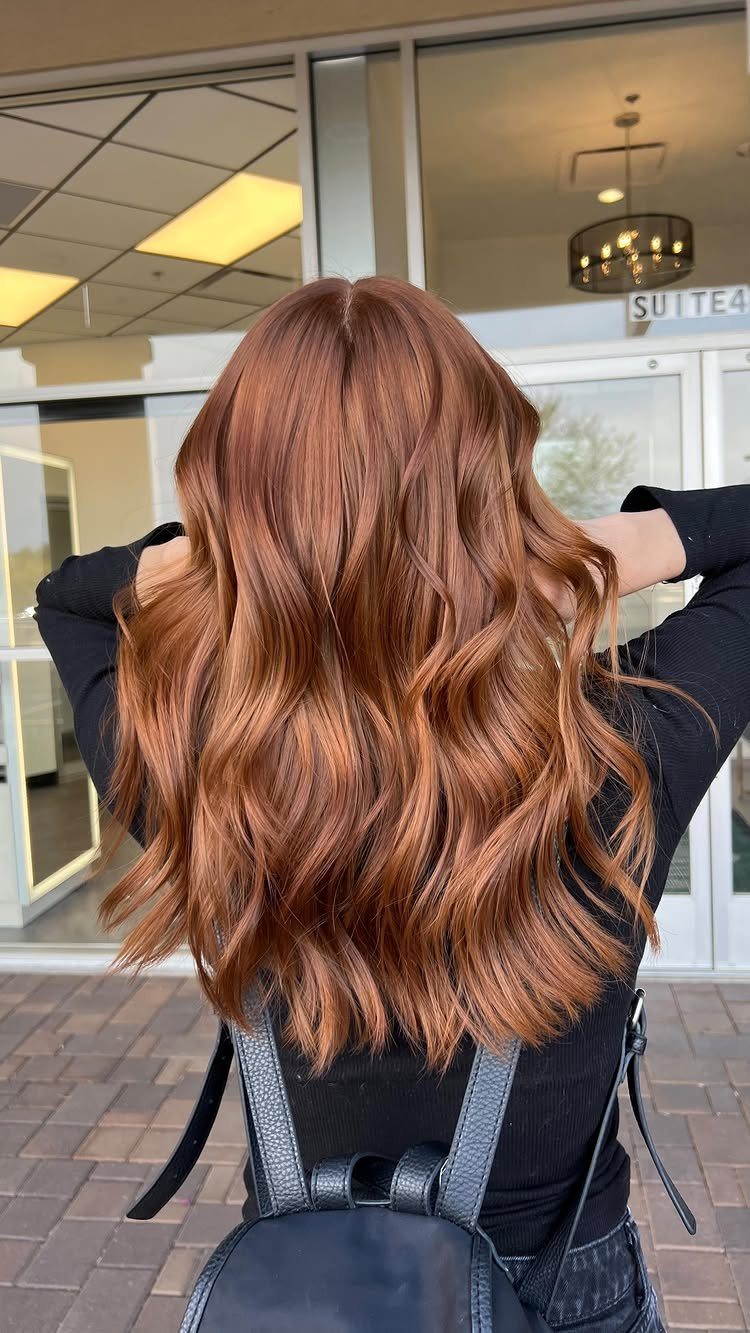
Darker roots are the best part of ginger balayage. The color is hand-painted in ginger and copper through the lengths, which adds dimension and leaves a deeper base at the top.
I like it for long, wavy hair, since the waves show off the shifts between tones. Regrowth blends in instead of drawing a hard line, so appointments can stretch further apart.
Ask for the roots to stay darker and for the ginger to build toward the ends.
12. Cherry Red
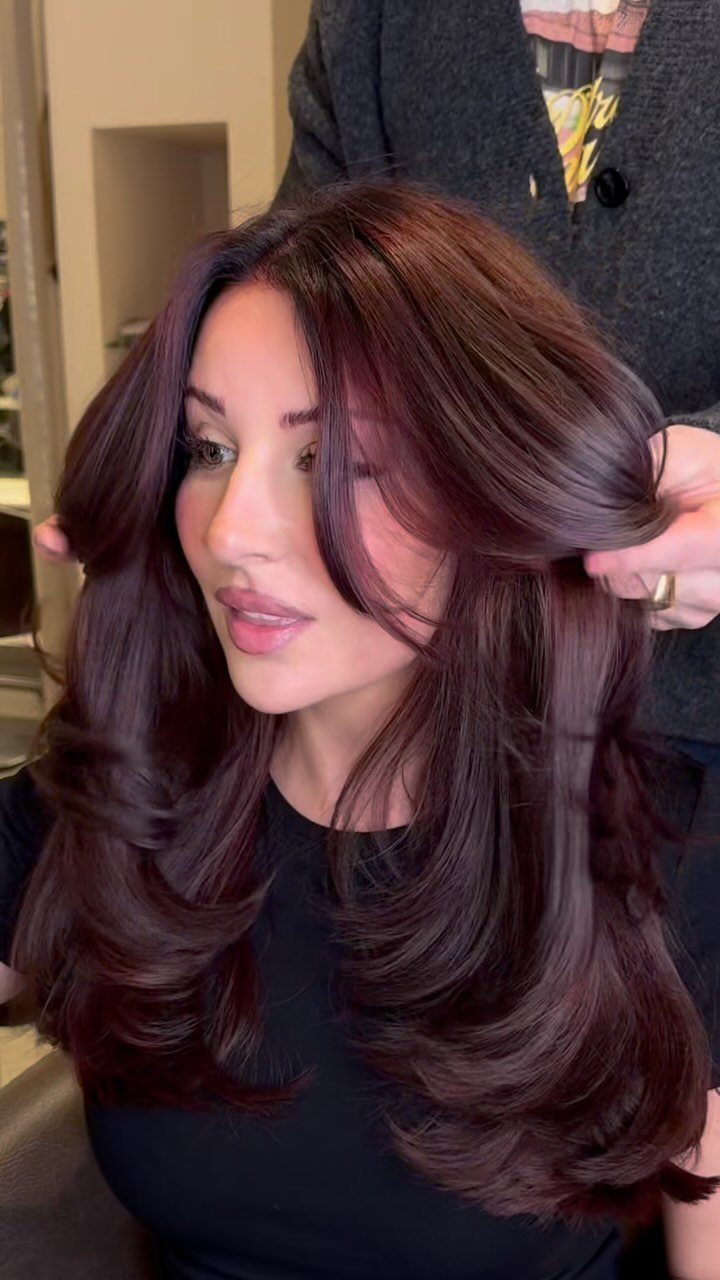
Cherry red leans on deep purple or blue undertones, which pull it away from orange and toward something closer to burgundy. That depth gives it a glossy, jewel-like finish.
Curls with layers and plenty of volume show the dimension best, and I would choose this over brighter reds if you want drama without any orange.
Screenshot your favorite shot before the appointment and ask your colorist for a deep red built on cool, violet undertones, so it stays away from orange.
Riverdale star Madelaine Petsch is one of colorist Rachel Bodt’s "favorite red references." She describes the red tone as soft and dusty, which means it won’t contrast too deeply with your skin tone.
— Allure
13. Pumpkin Spice

Red, copper and brown share the strands in pumpkin spice, and the mix is what keeps it from reading as one flat orange.
Long layers with wispy bangs let the tones separate, so some pieces look deeper and others catch the warmth.
I would pick it over a single-tone copper if you like color with some movement in it. Ask your colorist for a multi-tonal copper with brown mixed in, and bring a photo so the red-to-brown ratio matches what you picture.
14. Ginger Highlights
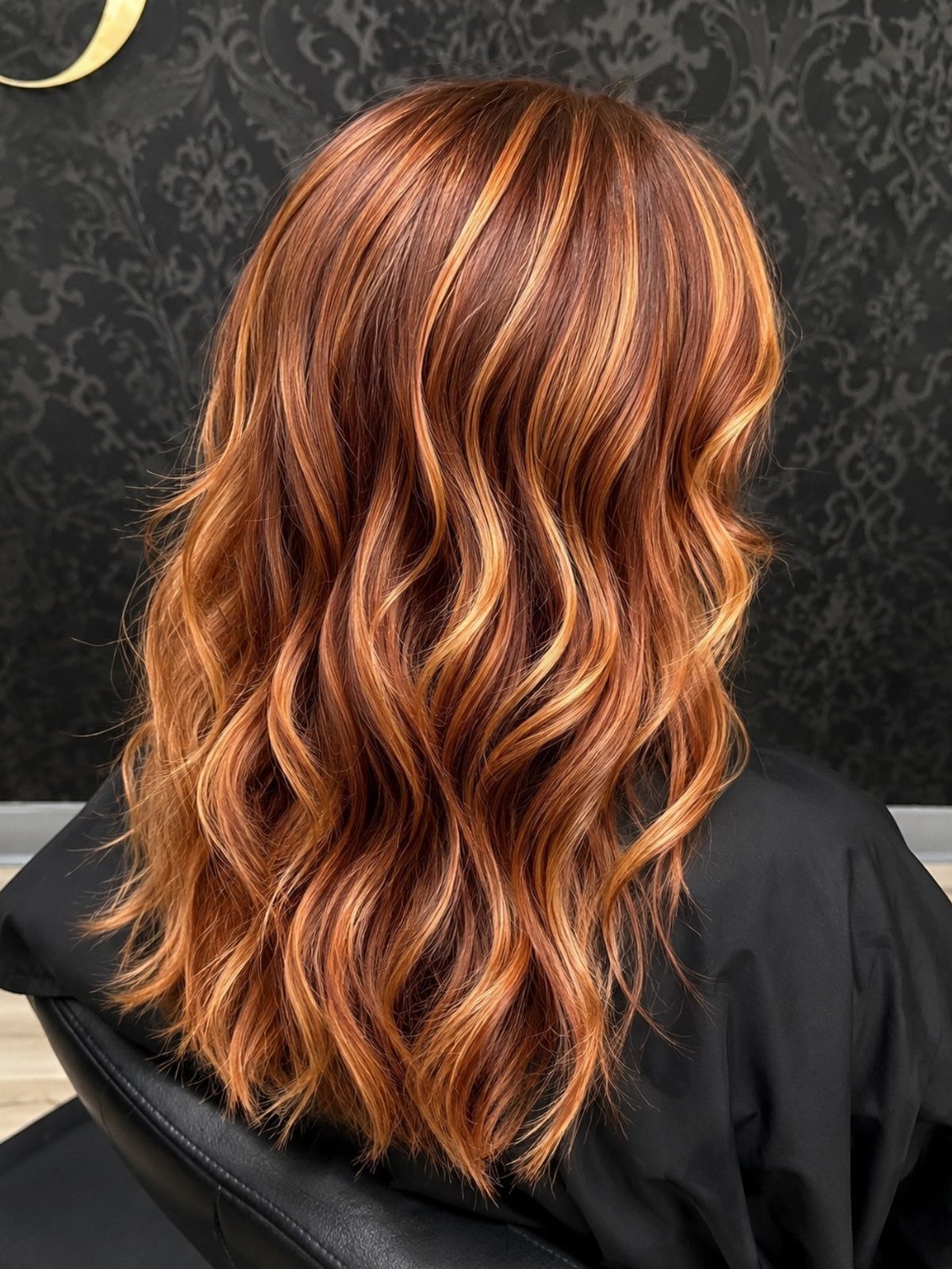
Ginger highlights are the low-commitment route: the base stays brown, and a scattering of copper strands does the warming. Only the highlighted pieces get lightened, so the rest of your hair is left alone.
On long, wavy hair the strands twist in and out of view, which spreads the glow instead of stacking it in one spot.
Ask for copper-ginger woven through the lengths, not a block of color, and expect a salon visit, since placing them evenly is hard to do at home.
15. Bright Copper Highlights
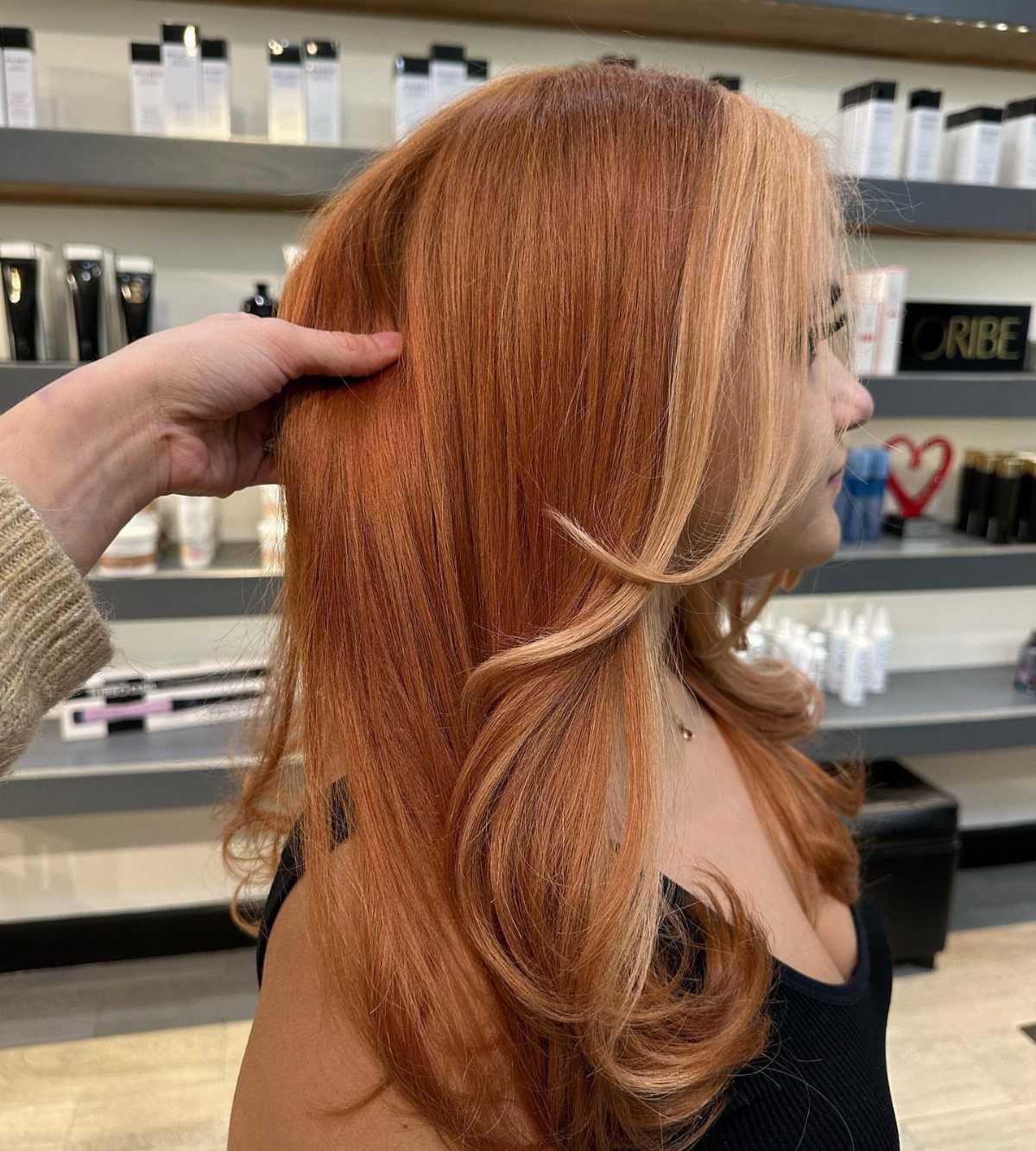
Copper hair with brighter copper pieces at the front is a small change with a big result, since the lightest strands sit right where the eye lands.
Money-piece strands frame the face and brighten the whole color, so ask your stylist for them 1–2 shades lighter than the base.
Curls make the contrast look soft rather than striped. I would ask for the front pieces to go a few steps brighter than the rest, staying warm rather than ash so the whole look holds together.
16. Spicy Red Money Pieces

Cheekbones are the reason to do this. Lighter, brighter strands at the front of a red base pull attention to the middle of the face, and the contrast does the contouring for you.
I like it best on straight or softly bent hair, where the pieces fall in clean lines beside the face.
Ask your colorist to keep the money piece warm and a little brighter than the red, since a cool blonde can look pasted on.
17. Ginger Spice Hair
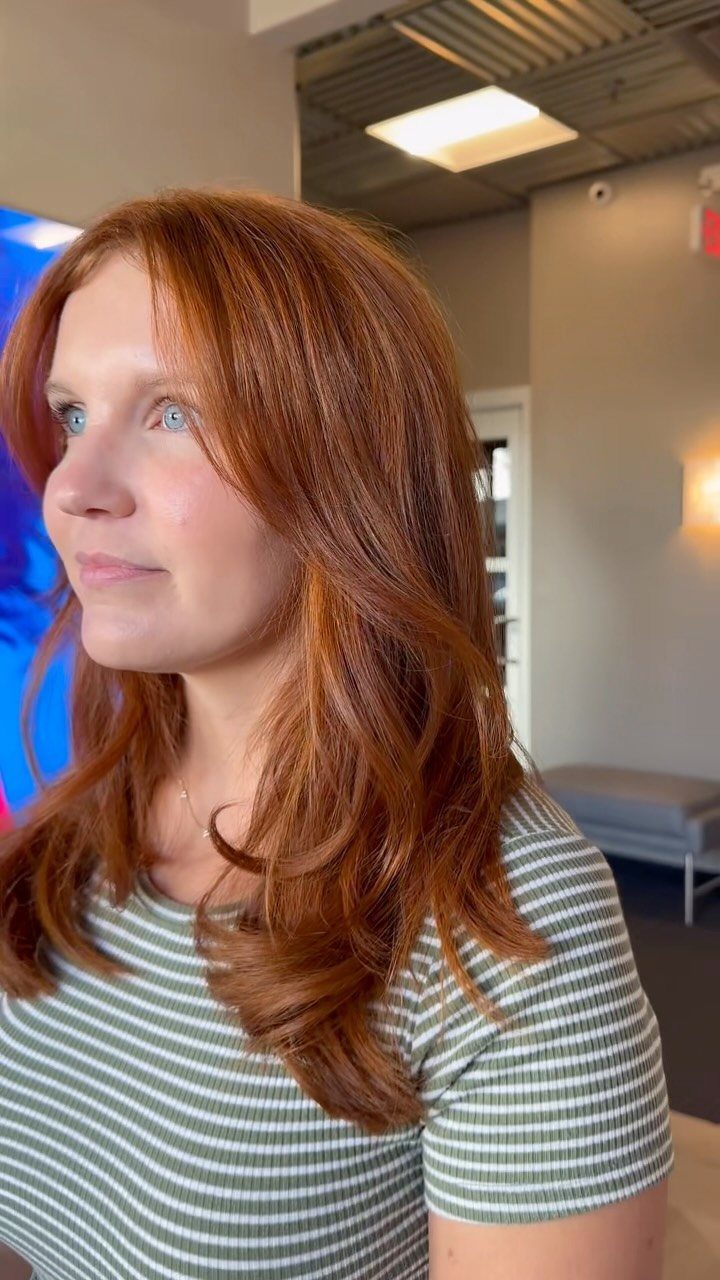
Rust is the word to use with your stylist: a bold, bright red with orange in it, brighter than auburn and warmer than cherry.
It is loud, and I think it looks best worn plain, with a center part and long waves to let the shade carry the look.
Bring a photo and say "rusty red," not just "ginger," since ginger covers everything from peach to brick. A vivid shade like this is a salon job.
18. Ginger Hair with Honey Money Piece
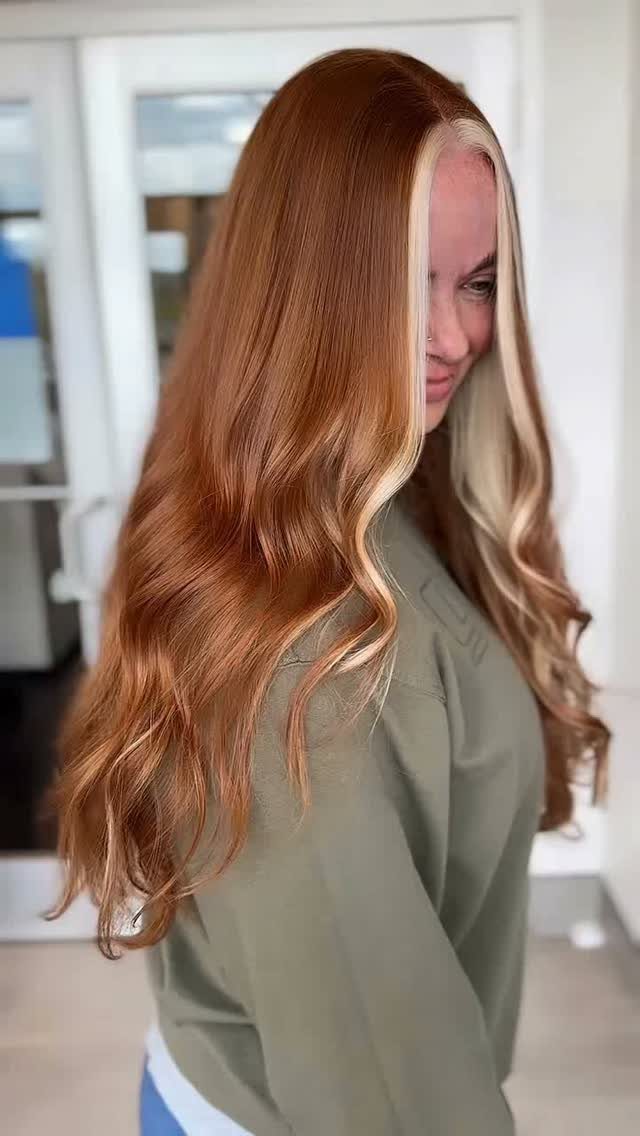
Warm honey against ginger is a gentler contrast than platinum would be, and that is why I prefer it. The pale strands frame the face and brighten the skin, while the ginger base keeps the color grounded.
Ask for the money piece in honey blonde, not ash, so it stays in the same warm family as the base. This is a colorist job: the front pieces need lightening, and the tone has to be matched by hand.
19. Burnt Orange
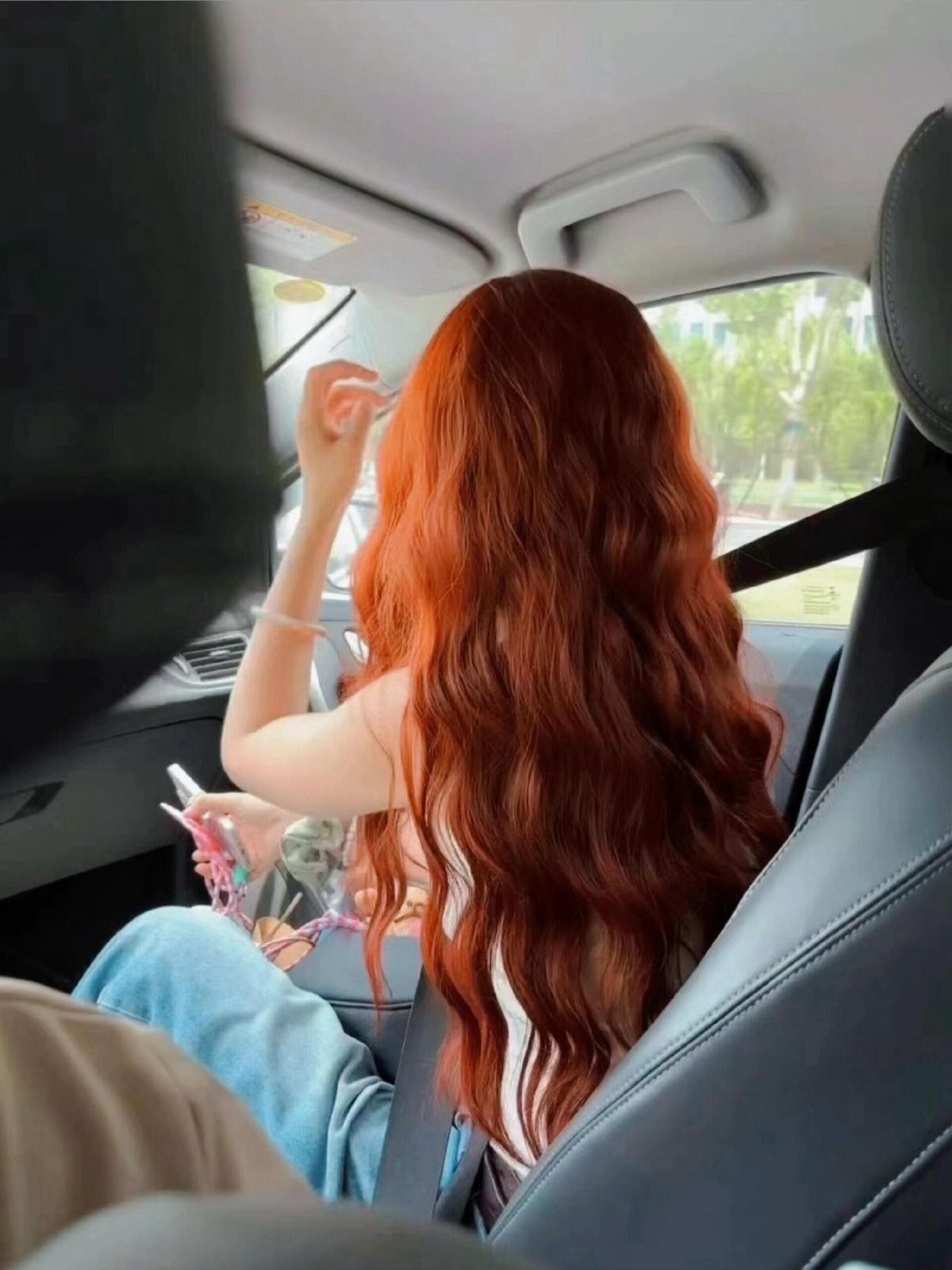
Rust sits at the center of burnt orange: a deep, muted orange that reads warmer than auburn and calmer than a true bright orange. Long waves let the color shift from copper to red as the hair moves.
I would choose it if you want orange without the glare.
Because the shade can lean in either direction, tell your colorist whether you want more red or more copper in it, and bring a photo so the balance lands where you picture it.
20. Fiery Ginger
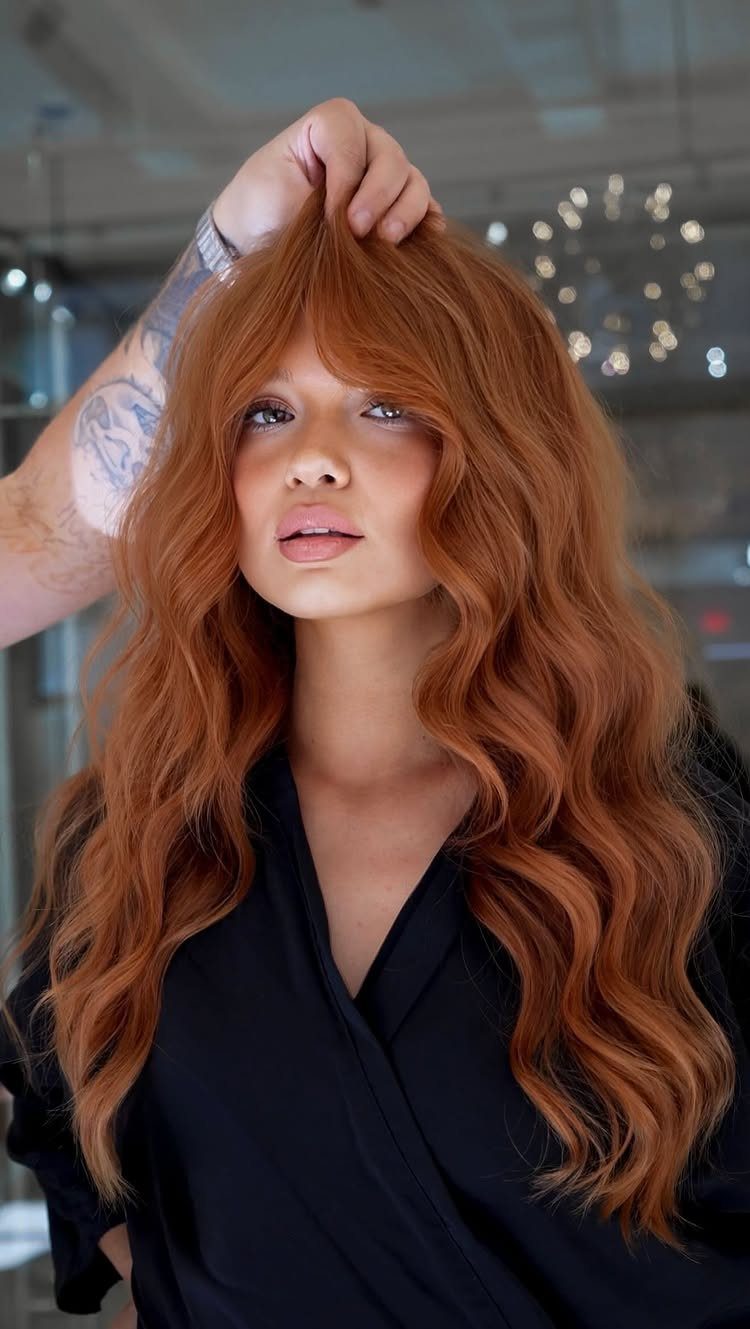
Fiery ginger lives or dies on brightness, and a layered, tousled cut gives that brightness room to move and catch the light.
Layers break the color into pieces that catch light at different angles, so the red looks dimensional rather than flat.
I like it with bangs and a bit of texture through the ends. A shade this vivid is a colorist job, so ask for a bold copper-red and bring a photo of the cut as well as the color.
21. Deep Ginger

Copper does the heavy lifting in deep ginger, and a blunt fringe turns it into a look with a clear edge.
Worn in long waves or pulled into a ponytail, the color stays the focus while the fringe frames the eyes.
I would pick the ponytail for busy mornings, since the shade still shows. Ask for a bright copper ginger and a straight-cut fringe, and expect to trim the fringe often to keep that line sharp.
22. Cayenne Ginger
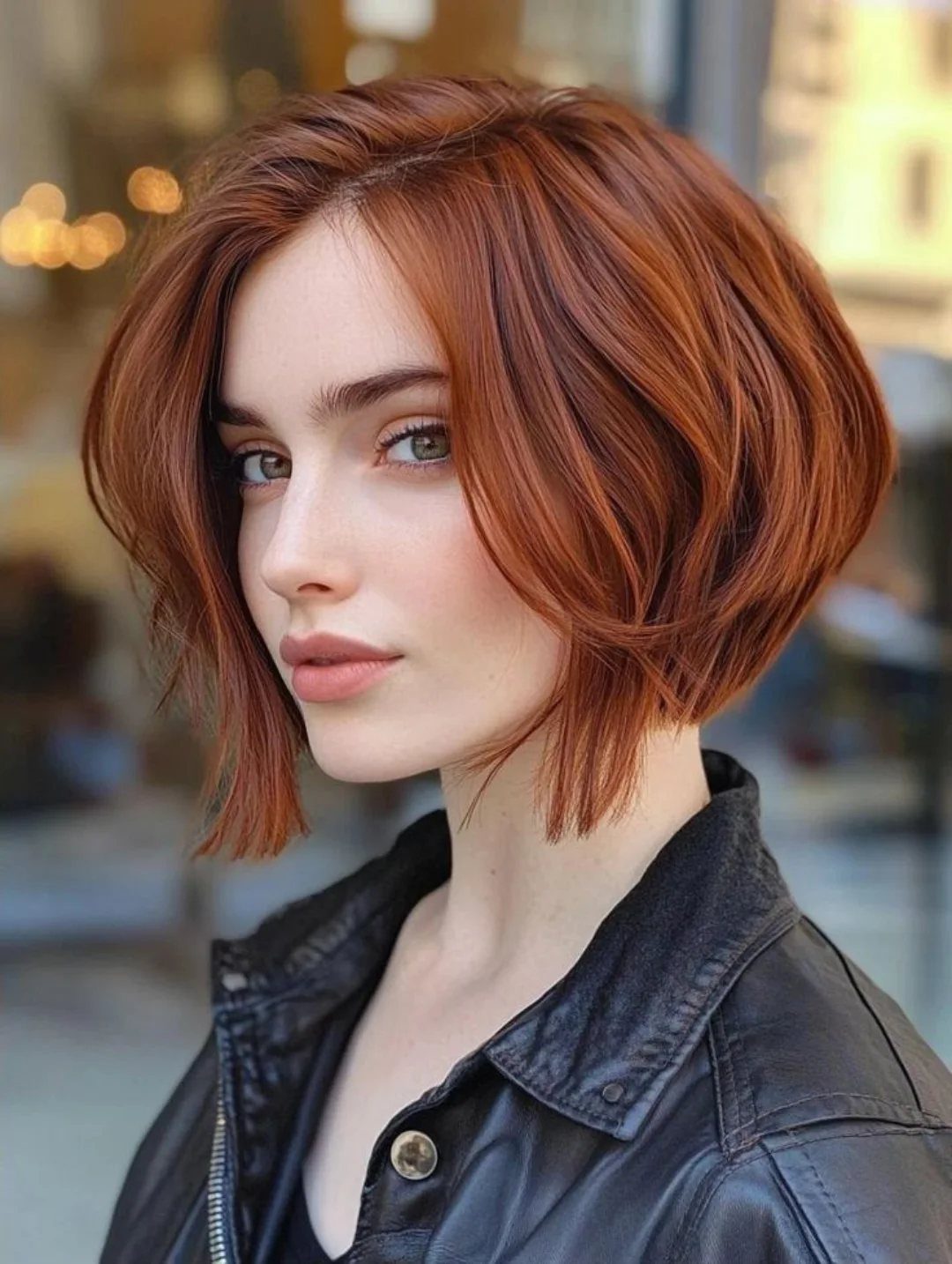
Short hair gives orange-red nowhere to hide, which is why cayenne ginger works so well as a shaggy bob. The choppy, layered shape adds texture, and the saturated color makes every piece easy to see.
I would choose this for anyone who wants a bold shade with minimal length to manage. Ask your colorist for an orange-red with a hint of spice, and ask your stylist for a shaggy bob with plenty of layers.
23. Copper Ombre Locks
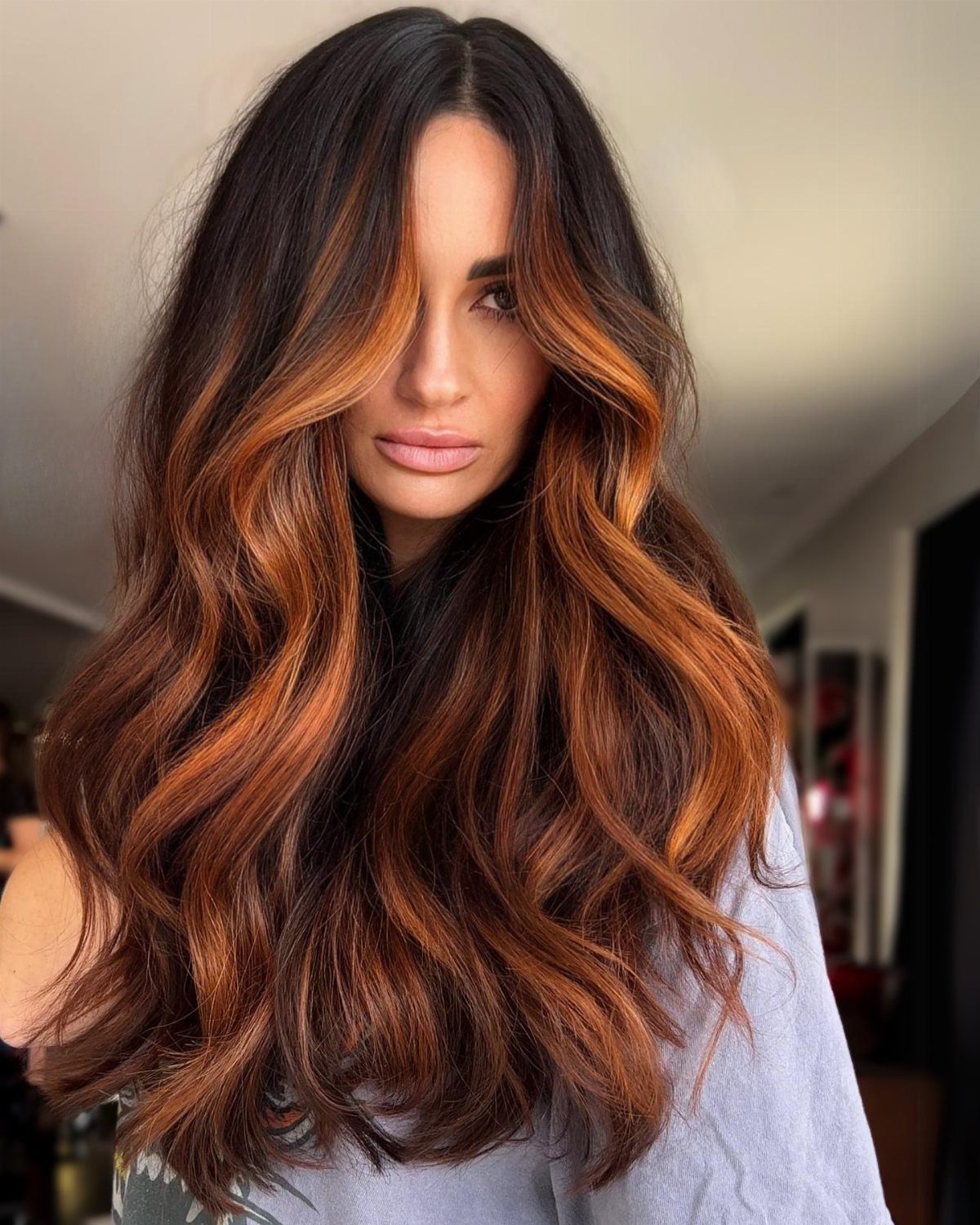
Dark roots melting into copper ends make this ombre a patient person’s color. The blend starts deep at the top and warms gradually toward the lengths, so growth never creates a hard line.
Long, loose waves show the shift best, and I prefer it over all-over copper for that reason.
Ask your colorist to keep the roots dark and soften the transition, so the copper builds slowly rather than starting at a visible stripe.
24. Brick Red Hair
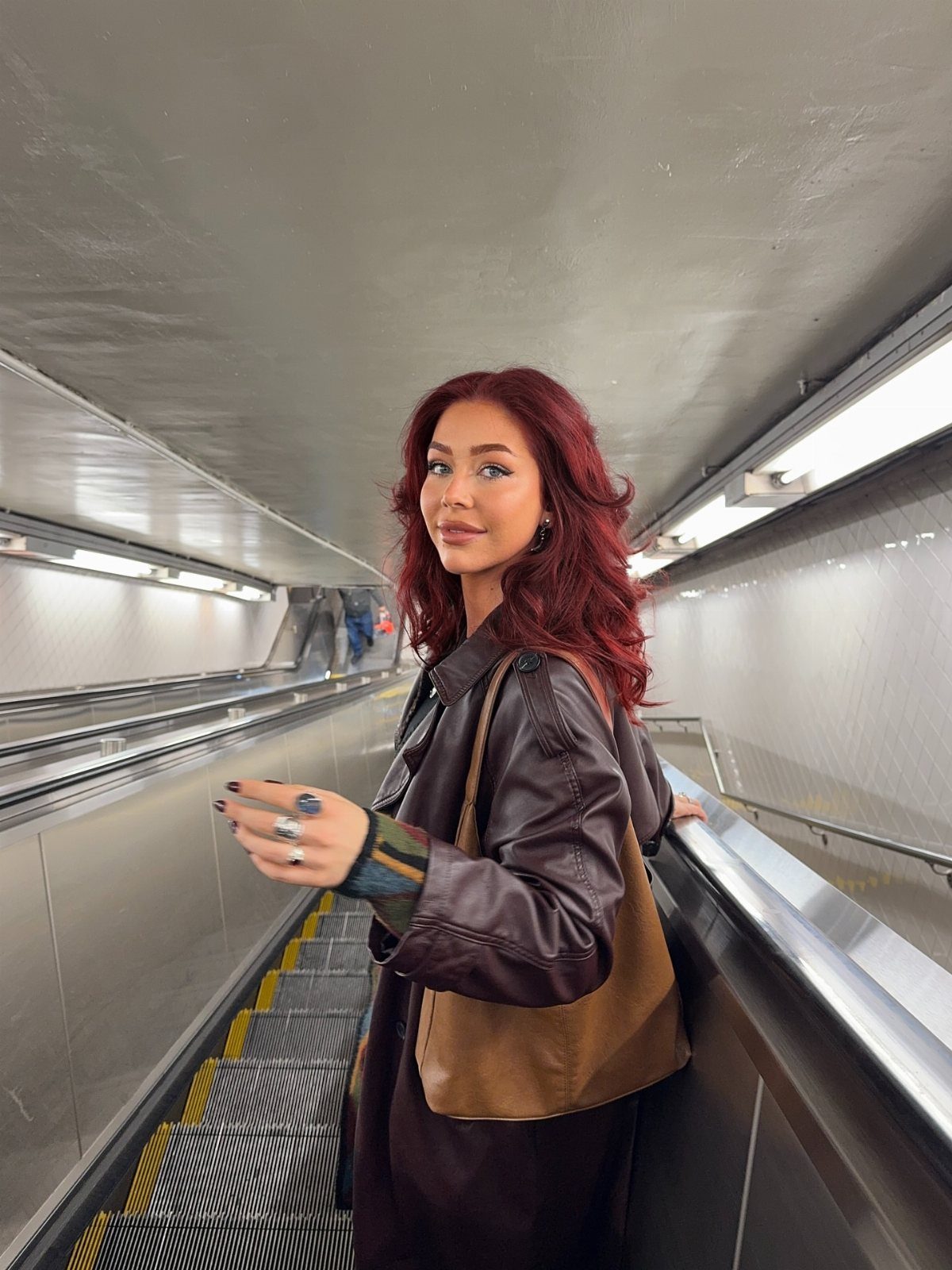
Brick red sits on the brown side of red, a muted, earthy shade that looks best against pale to medium skin and pairs well with hazel or brown eyes.
That combination is why I recommend it to anyone who finds brighter reds too loud.
Long waves keep it soft. Ask your colorist for a deep brick red and bring a photo, since "red" alone can land anywhere from orange to burgundy.
Red Color Fading and Upkeep
Wait 48 hours before the first wash so the cuticle can close around the fresh color.
Holding out to 3 days is safer for a vivid red. After that, use a sulfate-free, color-safe shampoo and lukewarm water: hot water opens the cuticle and speeds fading, while cold water doesn’t rinse residue away well.
Follow every shampoo with conditioner, and keep a leave-in on hand for the days between.
For the first 2–3 weeks, skip hot tools as much as you can, and after that put a heat protectant on before every pass. A weekly hydrating mask helps some shades hold up.
Expect the color to look brighter during week 1. Some colorists mix red hotter on purpose so it settles into the shade you asked for.
Between appointments, a color-depositing mask revives dull red in about 10 minutes. A salon gloss does similar work.
Choosing Red for Complexion
Skin tone and eye color are the 2 checks I trust before settling on a red. Pale skin usually does best with lighter, natural-looking reds, medium skin with warm hues, and olive skin with copper or deep blue-purple reds.
Deeper complexions can wear nearly any red, and I’d steer toward the richer, more saturated end of the range, because the deeper or brighter the red, the better it looks.
Saturated jewel tones look striking, so ruby red, burgundy, red velvet and cherry red are the strongest picks.
For a quieter version, go with chocolate cherry, cherry cola or deep mahogany. These glossy red-browns still read as red in the light without the full-volume effect.
If you want to go bold instead, coral and fire engine red also work, and both bring out your features. Hold swatches or a photo against your face in daylight before you commit.
Lightening Dark Hair First
Naturally dark hair has to be lifted before a bright ginger will show.
That means bleach, and bleach always causes some damage. Pre-lightened hair ends up drier and more fragile, so a vivid red takes as much work as blonde, sometimes more.
Book a consultation before the color appointment and ask how many levels of lift your hair needs.
A colorist can use professional lighteners that protect the hair’s structure better than a box kit, and can tell you honestly whether your hair is healthy enough to take it.
Plan on extra moisture afterward: a conditioner every wash and a weekly mask. If the hair is already dry or brittle, a deeper red that needs less lift is the kinder starting point, and you can go brighter later.
Frequently Asked Questions
What skin tone is best for ginger hair?
Some ginger shade works on nearly every skin tone, so the real choice is which one.
Fair skin looks best in softer, natural-leaning reds, medium tones glow in warm shades, and olive complexions pair well with copper or a deep red that leans blue-violet.
Deep skin tones carry nearly any red, and on them I lean toward the rich, saturated shades. Bright auburn is a safe middle ground that flatters fair through dark skin.
What hair color is considered ginger? Is it red or orange?
Ginger is a spectrum that takes in both red and orange, a little softer than a red-orange sunset.
Ginger spans a wide stretch, from peachy strawberry blonde through copper and rust down to deep brick, and the darkest versions can read as warm brown in dim light.
Since the word covers so much, bring a photo and name the tone, such as "orange-red" or "rusty red."
Is ginger a rare hair color?
Yes. Brown, blonde and black hair all outnumber ginger, and the natural kind shows up in just 1–2% of people worldwide.
Can you go red without bleaching your hair?
Sometimes, depending on your starting color. Starting from light blonde, almost any red will take on top, and a medium brown base can often reach mahogany with no lightening at all.
Dark natural hair has to be lifted before a brighter ginger can show, so bleach enters the picture, and it always costs the hair something.
What are the best red hair colors for dark or brunette hair?
Deeper reds suit dark hair best. Warm bases look richest in tone-on-tone shades like cherry chocolate, deep mahogany and cherry cola, while cool bases want blue or purple undertones, as in burgundy, violet-red and cherry.
Dark red balayage works well too: the roots stay deep, so grow-out looks intentional rather than harsh.