The range is wide: Micro Braids at the fine end, Jumbo Braids at the bold end, and Cornrows, Triangle Box Braids, a Braided Bun and a Braided Ponytail in between.
How much pull your scalp can take should steer the choice, with Knotless Braids on the gentler side and tight Cornrows on the firmer side.
If your scalp is sensitive, Knotless Braids, which grow from your own hair at the root, or a Braided Bun worn loose are where I would start, and I would mention the tenderness to your braider when you book.
1. Box Braids
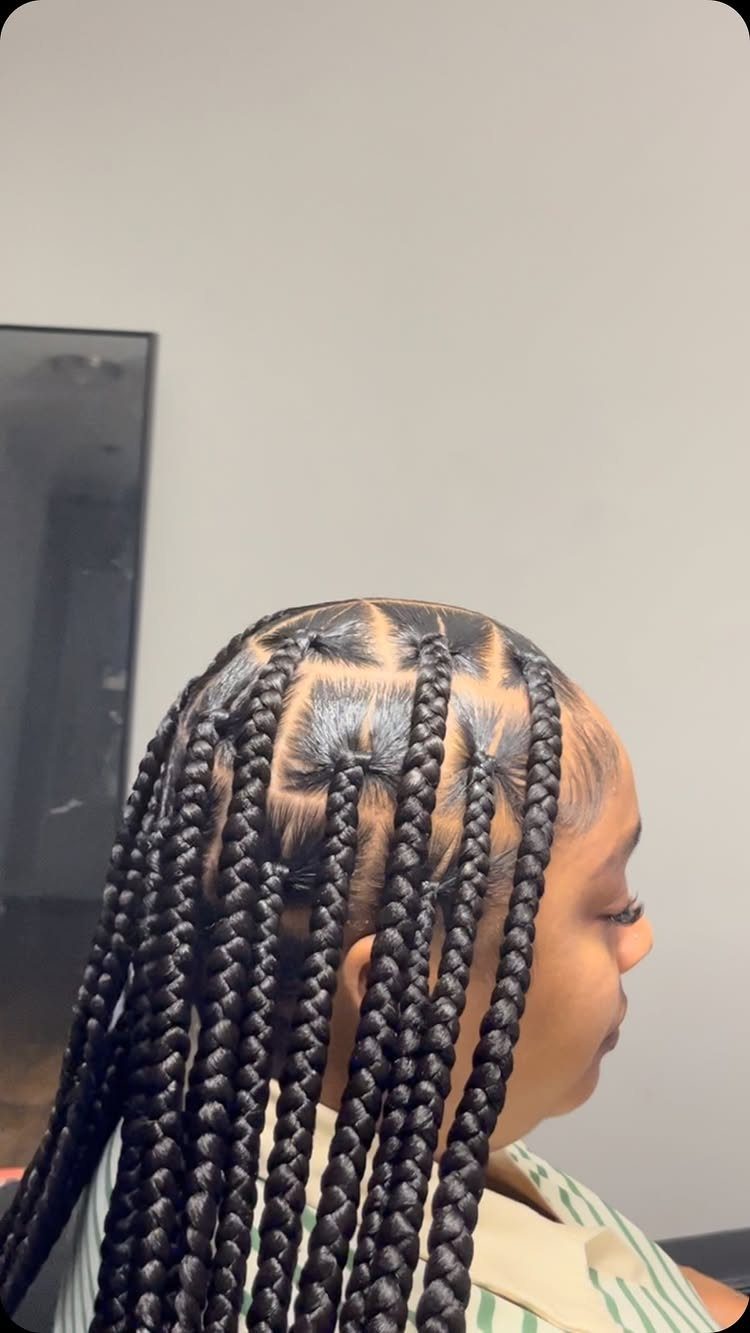
Square scalp sections give box braids their name, and crisp parting gives them that expensive look.
Each section holds one three-strand plait, so the grid shows at the root, and a crooked part will show for as long as the style stays in.
For long braids like these, I would ask for even section sizes over a dramatic length. Evenness reads as polished from every angle.
2. Fulani Braids
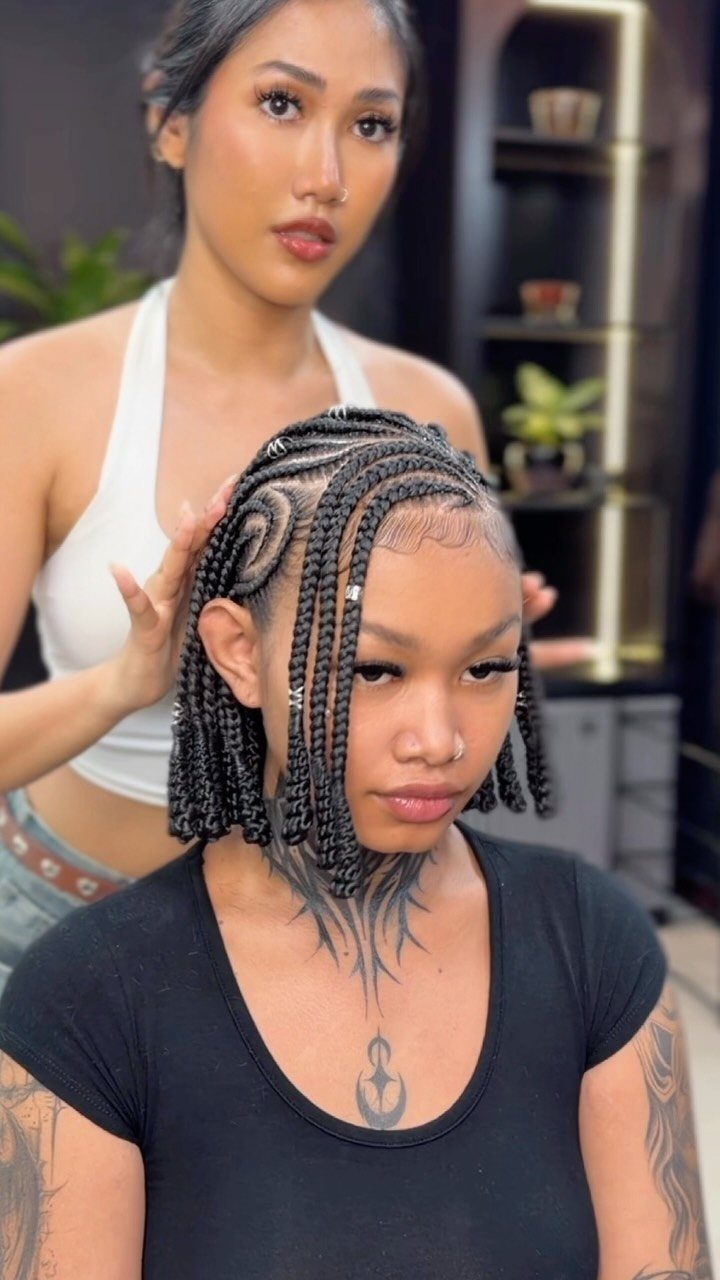
Fulani braids split the head into two jobs: one braid runs down the center or straight back, while others curve across the crown and sides. That layout is the part to name when you save a photo for your braider.
I like them on people who want structure at the scalp and movement at the ends. Bring a clear picture of the parting pattern, since the direction of each braid shifts how the finished style reads.
3. Goddess Braids
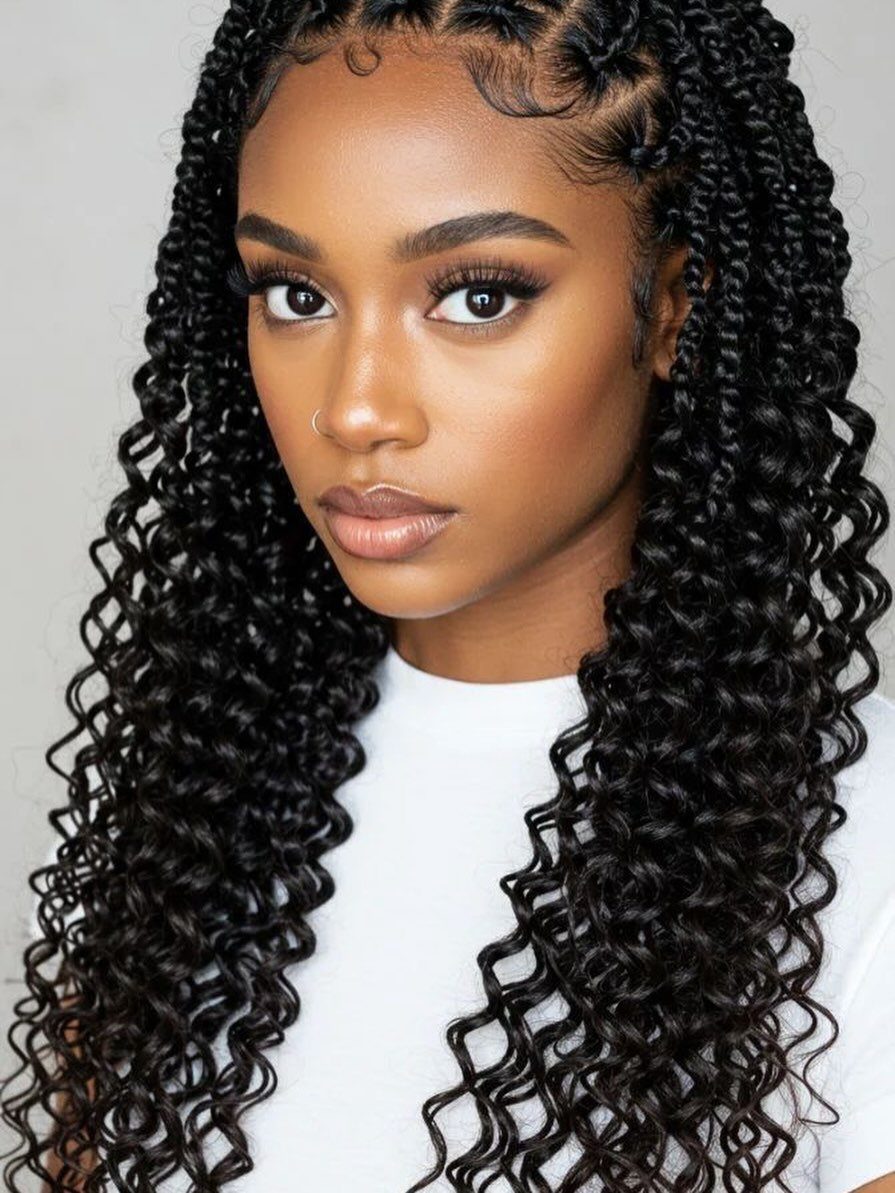
Thick braids at the scalp, loose curls everywhere else: that contrast defines goddess braids. The braids give a bold, sculpted top, and the curls soften it so it never looks severe.
If you are choosing between a braider and a home attempt, I would hand this one to a braider. Thick scalp braids need to lie flat and even, and that is hard to manage on your own head.
Leave it to Gabrielle Union to pull off one of the most intricate braided hairstyles of 2022. This circular masterpiece, done by Hairstylist Issac Poleon, is a testament to how versatile braids can be.
— Allure
4. Knotless Braids
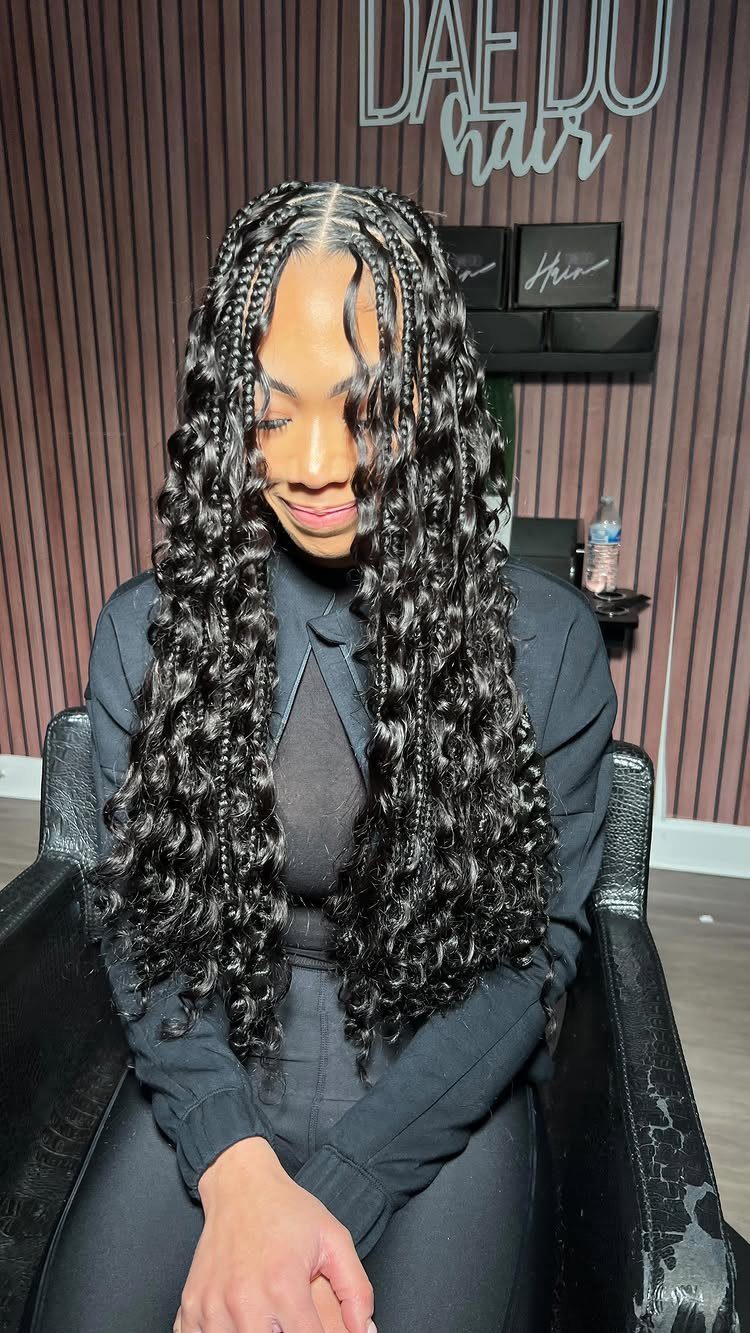
Instead of a knot at the root, a knotless braid begins with your own hair, and the stylist feeds in extension hair bit by bit as the braid travels down.
That feed-in method is the entire difference from standard box braids.
Because there is no bulky knot sitting at the scalp, I find the roots look flatter and more natural. With curly ends, the finish also looks softer from the top down.
5. Jumbo Braids
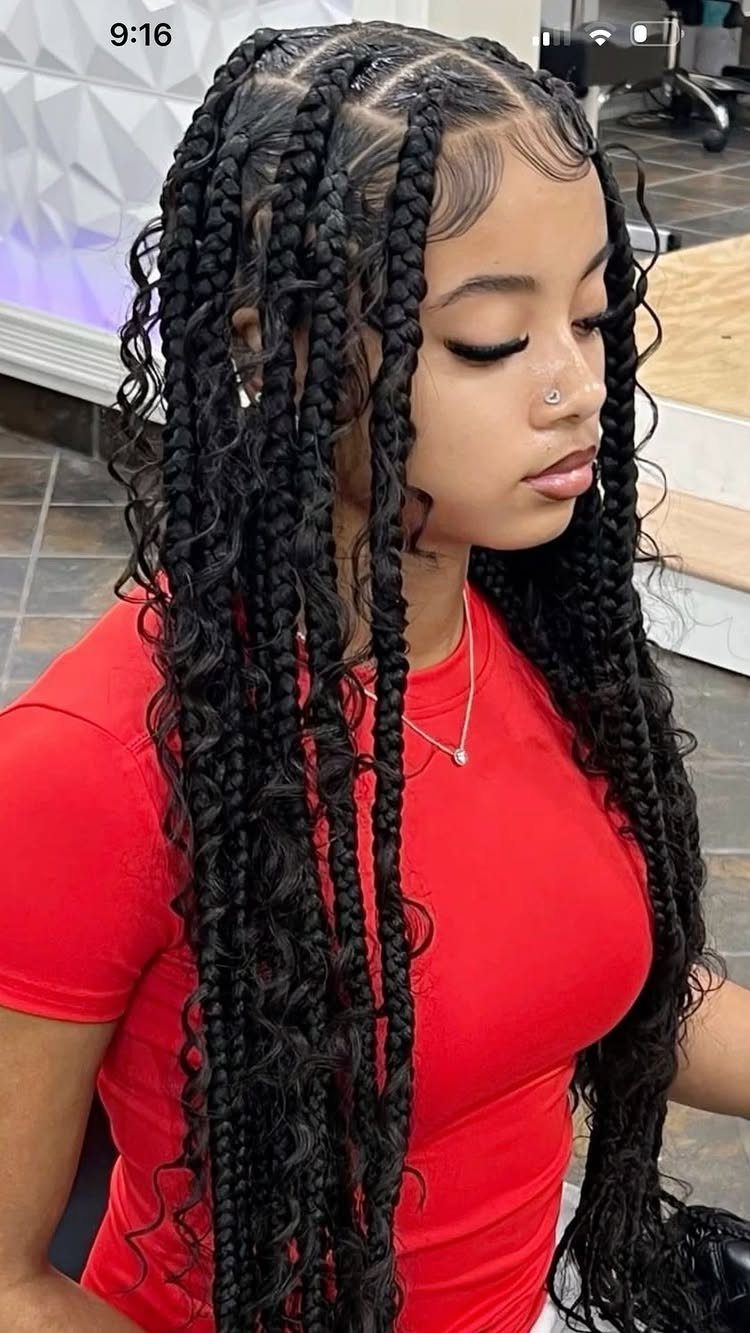
Jumbo braids are about scale: fewer, thicker braids that look bold and full even from a distance. Big sections mean a statement look without a complicated pattern.
Size drives this style, so pick it on purpose.
Go large for volume and a strong silhouette; for a lighter, more delicate look, choose a smaller braid. Curled ends give jumbo braids a softer finish.
6. Stitch Braids
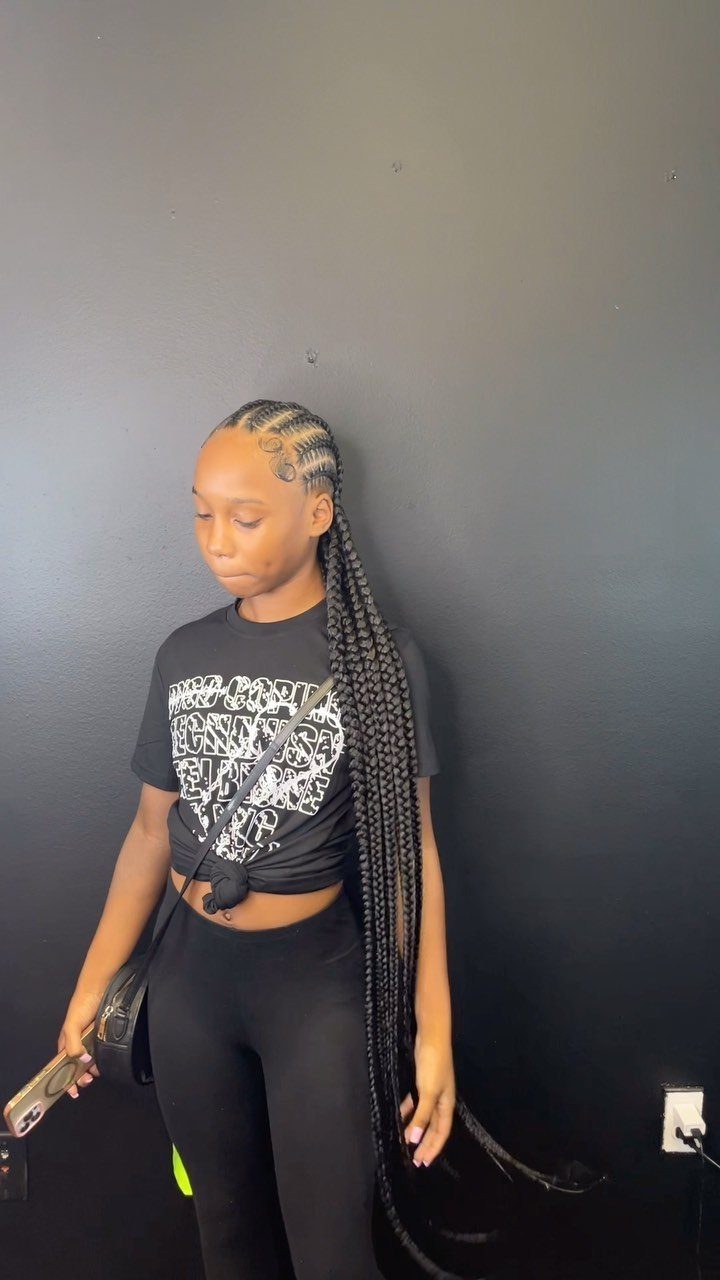
Stitch braids are cornrows with a neat, stitched look, and that effect comes from a specific braiding technique rather than from the style of the braid itself.
When you save one to show a stylist, point to the stitched lines on the scalp and request that technique by name.
I would pick curved lines over straight ones for a more graphic result, since curves make the stitching easier to see.
7. Cornrows
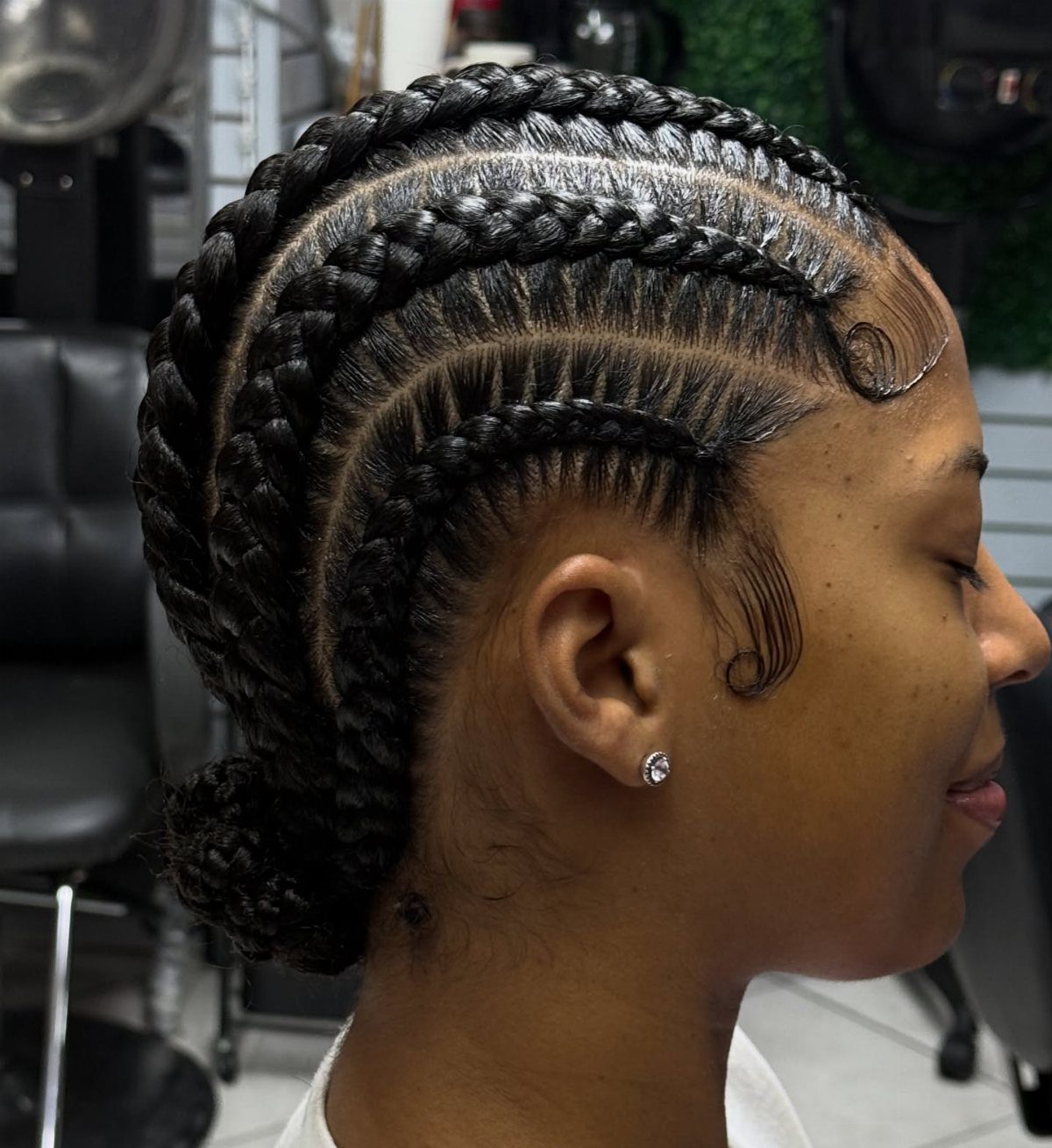
Straight rows of braids lie flat against the scalp, and that close, graphic line is the whole appeal of cornrows. Thick rows like these sweep back from the hairline and finish in a low bun, which keeps everything neat.
Because the rows sit so close, I would send this one to a braider. Even tension and clean parts are hard to get at the back of your own head.
8. Micro Braids
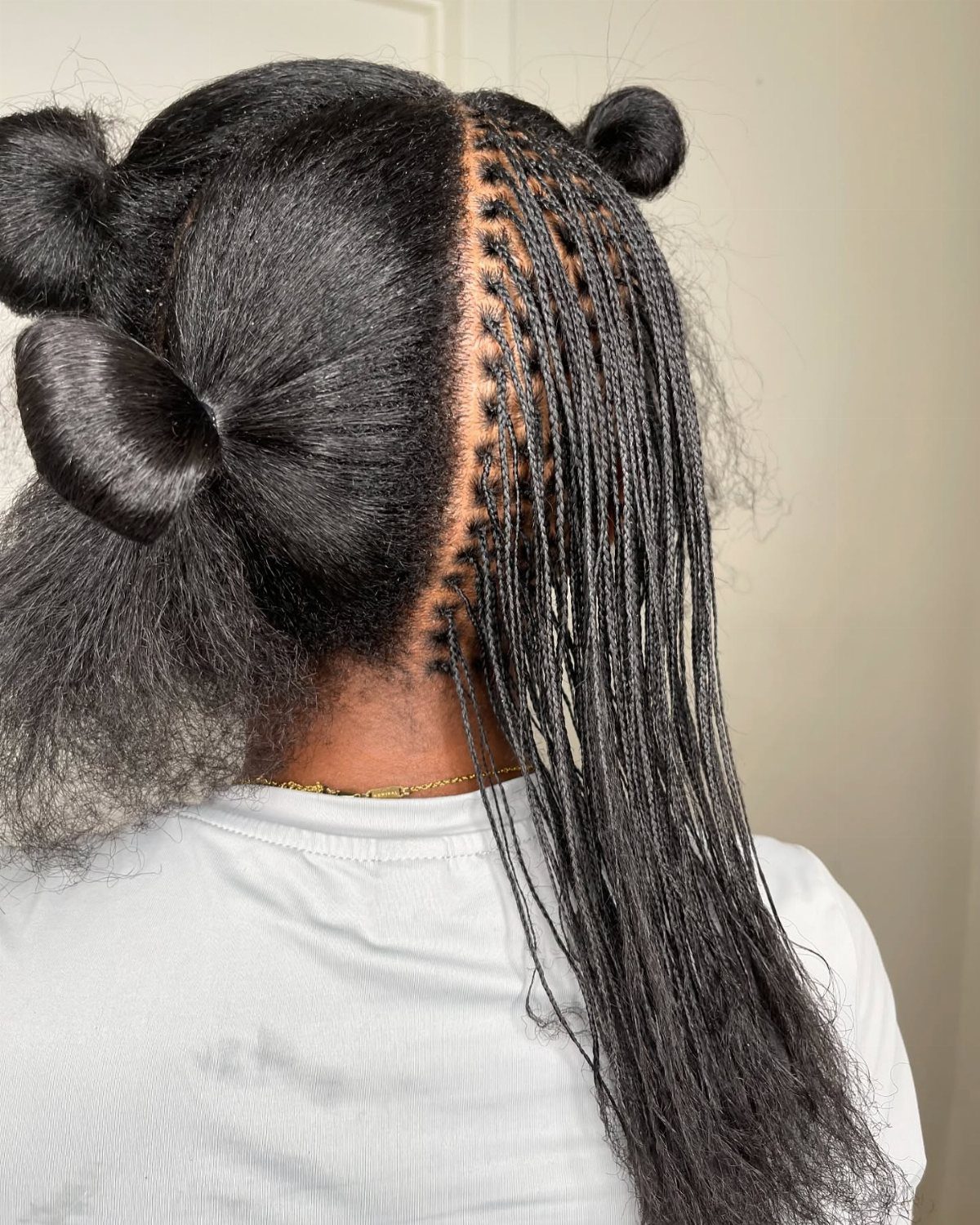
Micro braids are the smallest braids you can get, so each plait reads as a single fine strand rather than a visible braid.
Small plaits mean a lot of them, and I would expect a long appointment with a braider. Ask for the bun placement you want before the sectioning starts.
9. Braided Ponytail
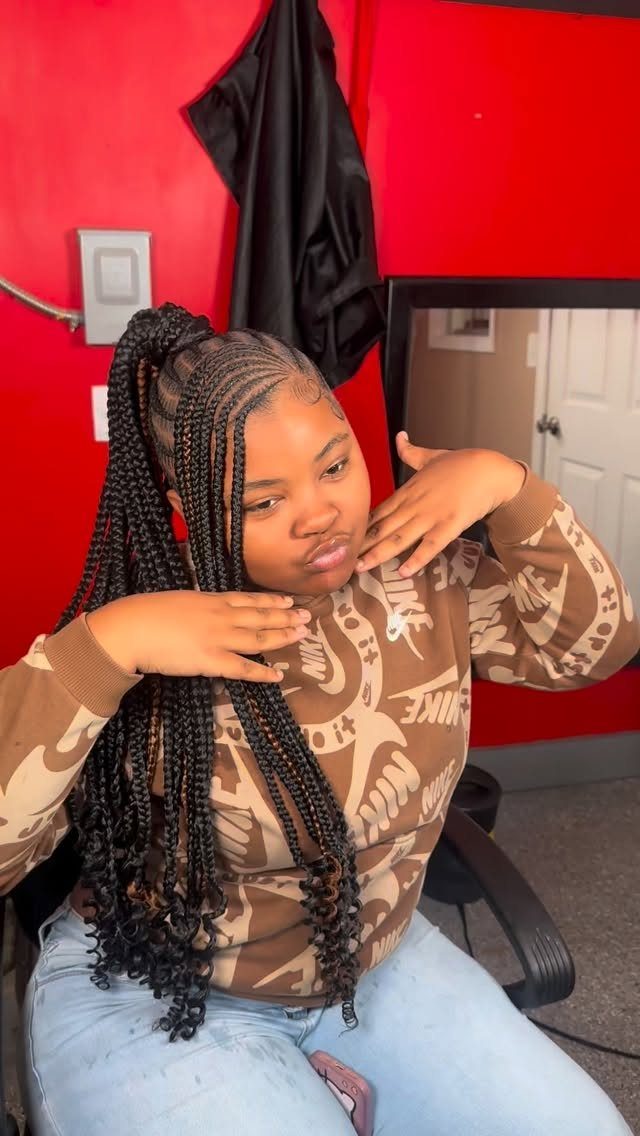
Gathering braids into a ponytail turns a long style into something you can wear off your neck in a minute.
High, low or side placement changes the mood: I like the high version for its lifted, clean line, as in this long set.
Decide on the position before the braids go in, because the ponytail sits best when the braider knows where it will land. One braider I’d point you toward takes clients ages 11+ and up, so check age policies when booking.
10. Braided Bun
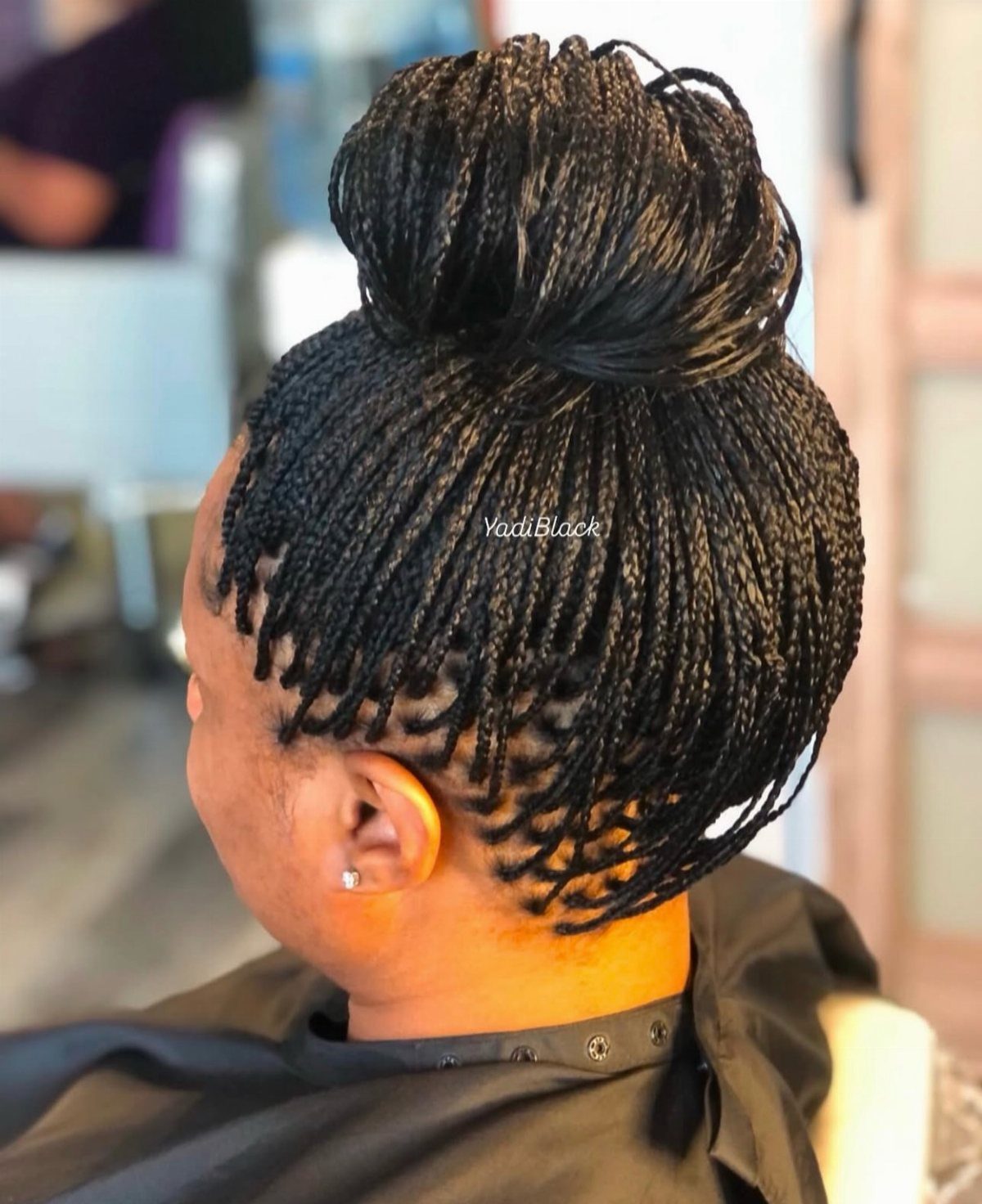
Wrapping thin braids into one big bun gives you a full, rounded shape that sits high on the head. Small box braids are enough to build it, and the volume comes from the braids themselves coiling around.
For a bun this large, I would ask for braids that are long enough to wrap generously. Show your braider the height you want, since a high bun and a low one need different placement.
11. Ghana Braids
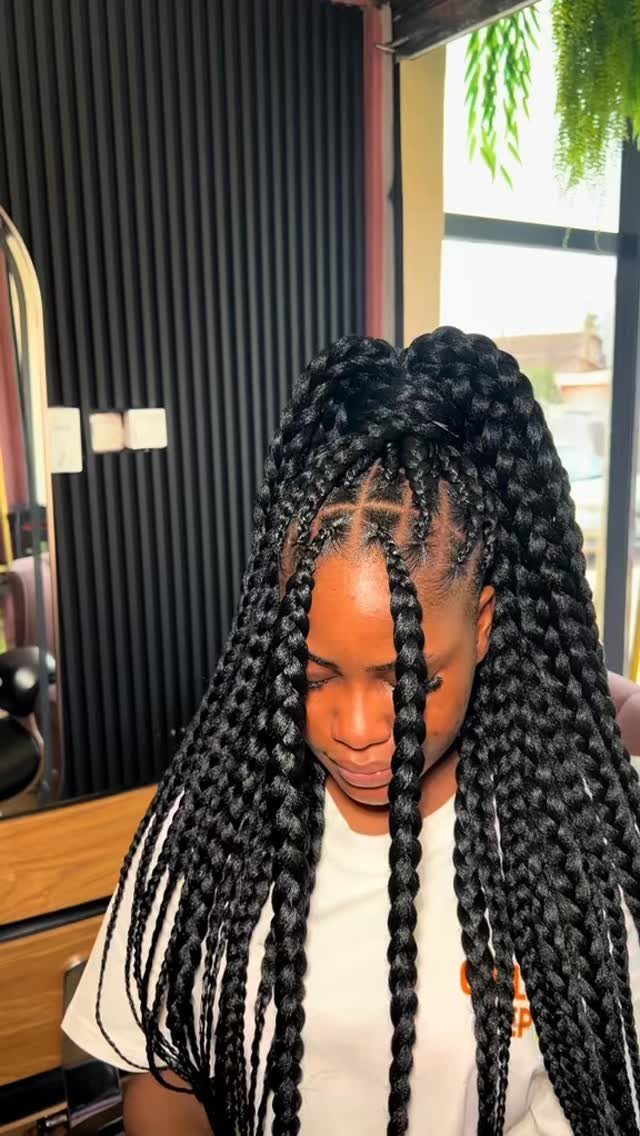
Ghana braids are cornrow-style braids where extension hair is fed in over the braid as it goes, so the finished rows look thick and continuous.
Pulled into a high ponytail with the ends left long, they fall in a heavy line down the back.
Name the feed-in technique when you book, because a plain cornrow will not give the same fullness. I would choose Ghana braids when you want the neatness of cornrows with more weight.
12. Braided Bob
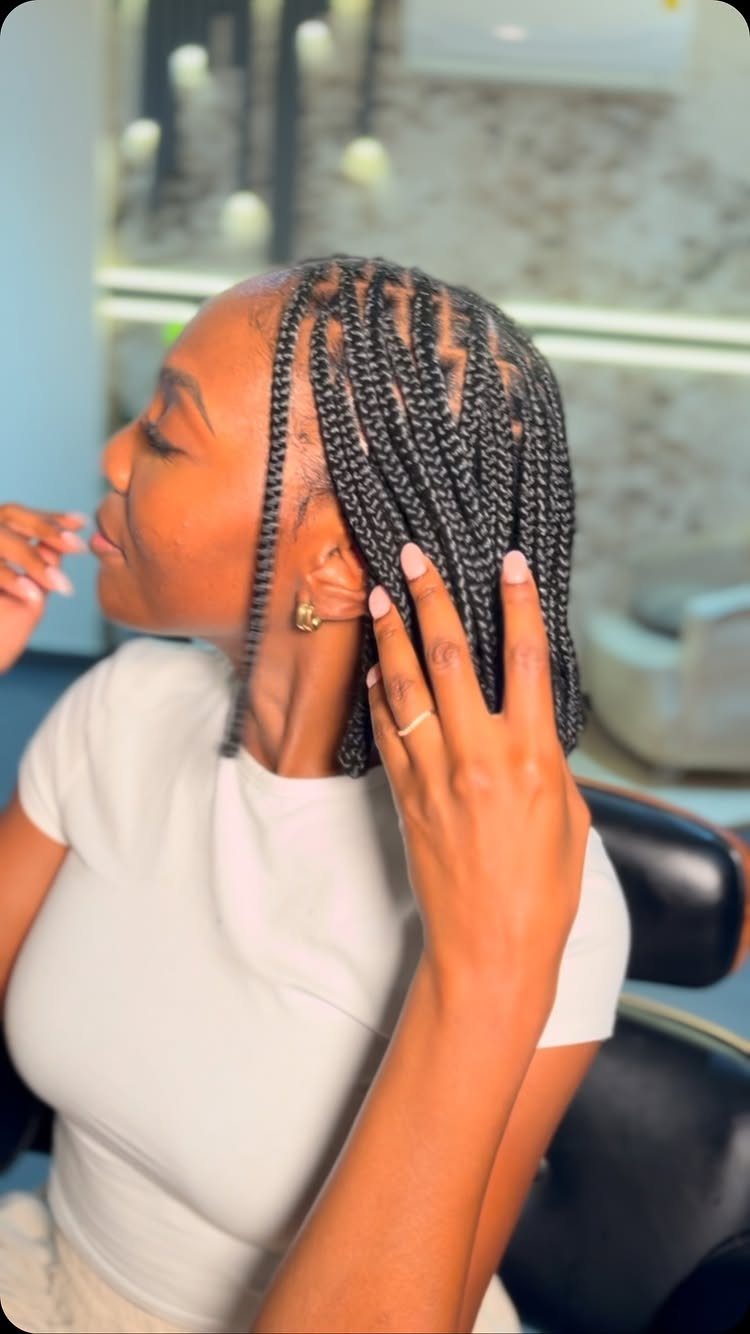
A braided bob stops at the shoulders, so it skips the weight of very long braids while keeping the style. Neat cornrowed roots lead into braids that end at shoulder length.
Ask your braider to set the length before the ends are trimmed, and bring a photo showing where the braids land. I like this cut for anyone who wants braids without hair swinging down the back.
13. Braided Pigtails
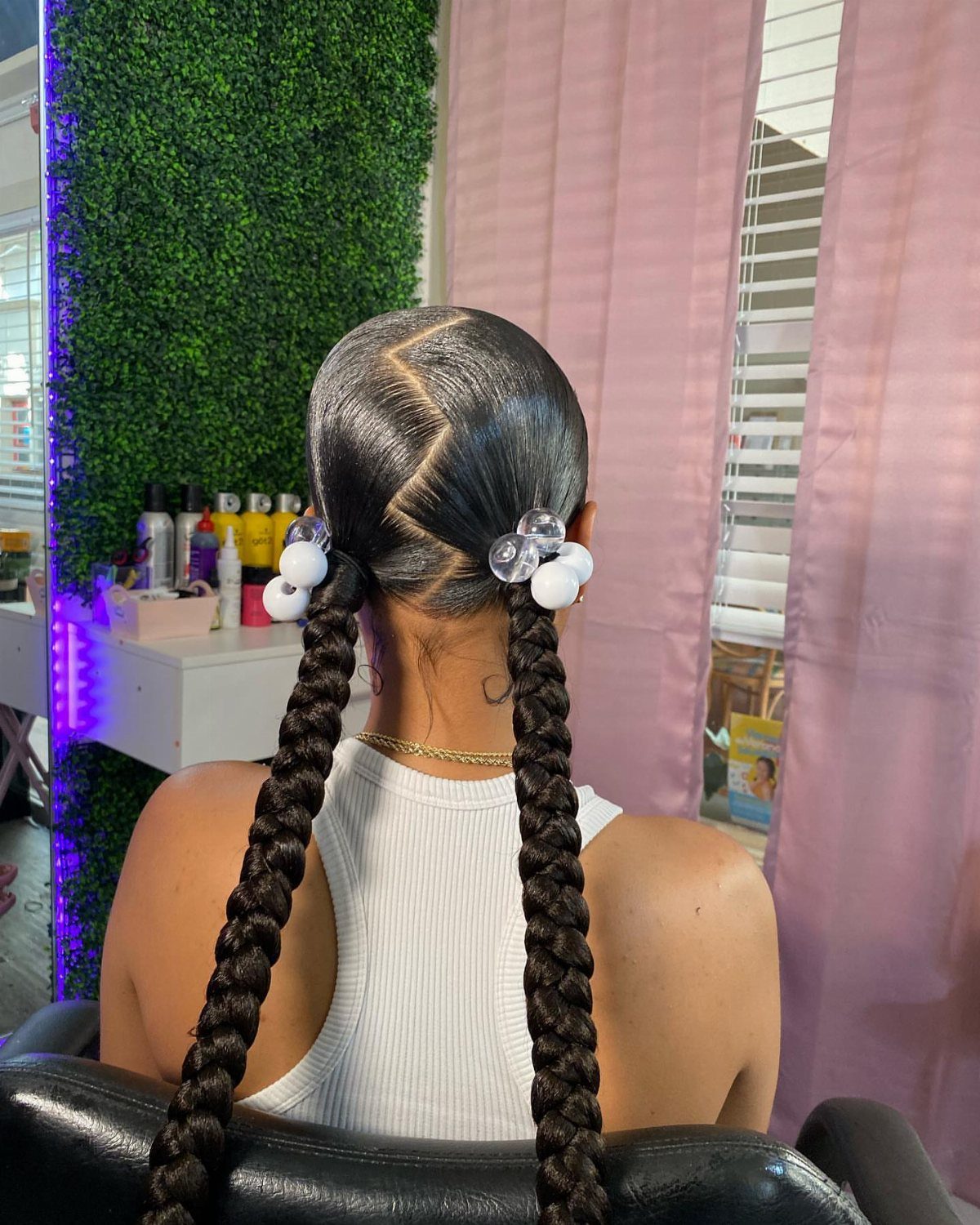
Two braids, one center part: braided pigtails keep the layout simple and let the length do the talking.
Braided pigtails hanging long on each side work well with small details like flower clips, which add a little color without weighing the style down.
I would ask the braider to draw the part first and check that it runs straight down the middle, since both sides need to match. Clips are an easy add-on you can bring yourself.
14. Twist Braids
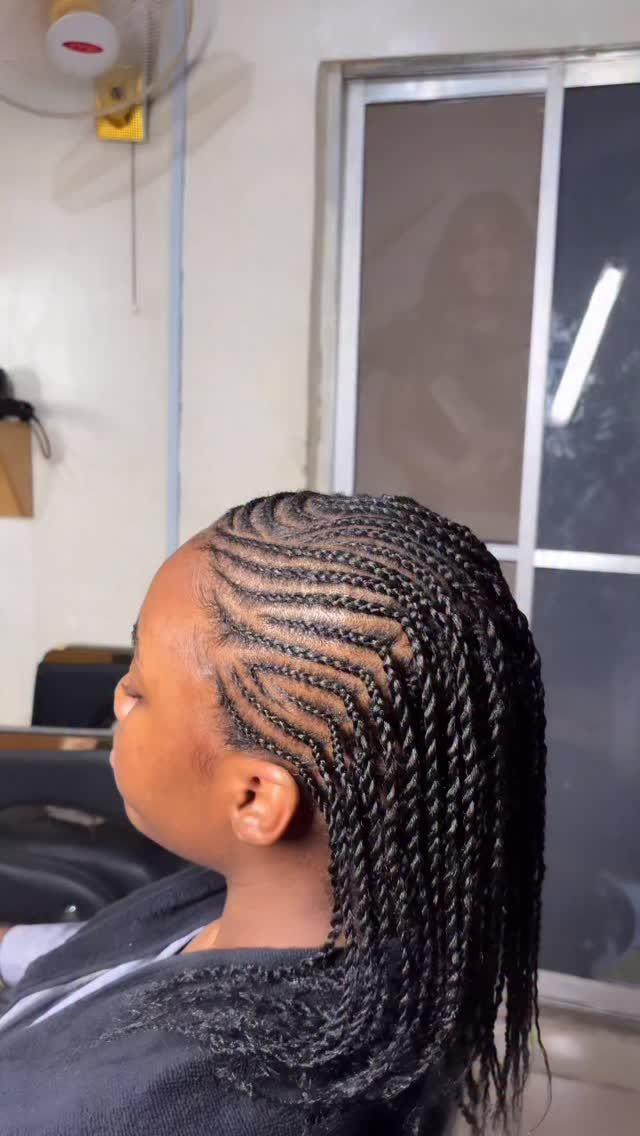
Chunky twists replace the braids below the cornrows, so the top lies flat while the lengths hang loose. That switch from flat rows to hanging twists is what to point to when you save the photo.
I like it for anyone who wants a neat crown without committing to braids all the way down. Ask your braider to set where the cornrows end and the twists begin, because that line changes the whole look.
15. Crochet Braids
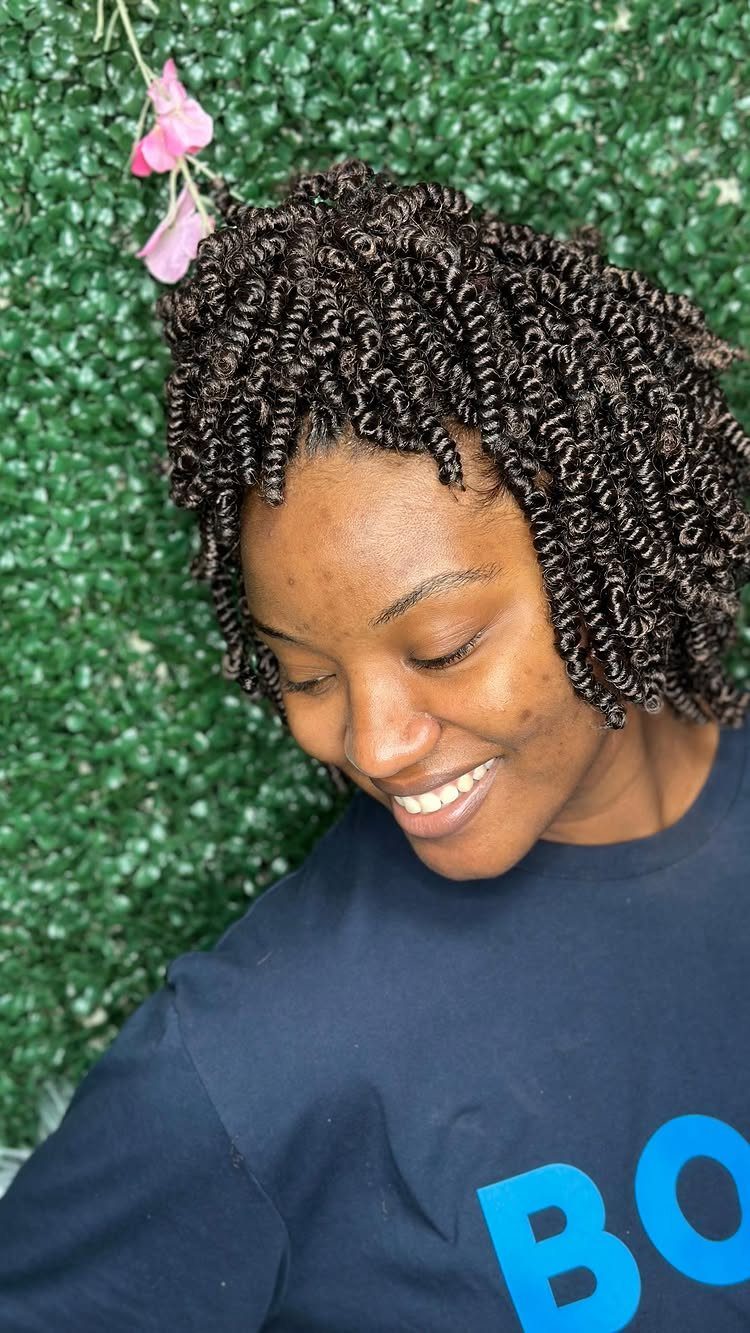
Crochet braids start with your natural hair braided into cornrows, then extensions are attached to those rows with a crochet or latch hook.
Because the hook does the attaching, the style skips braiding every strand of extension hair into the base.
Short lengths like this one look polished and easy to wear.
I would take this to a braider if you have not worked a latch hook before, since the cornrow base has to lie flat for the finish to look natural.
16. Feed-In Braids
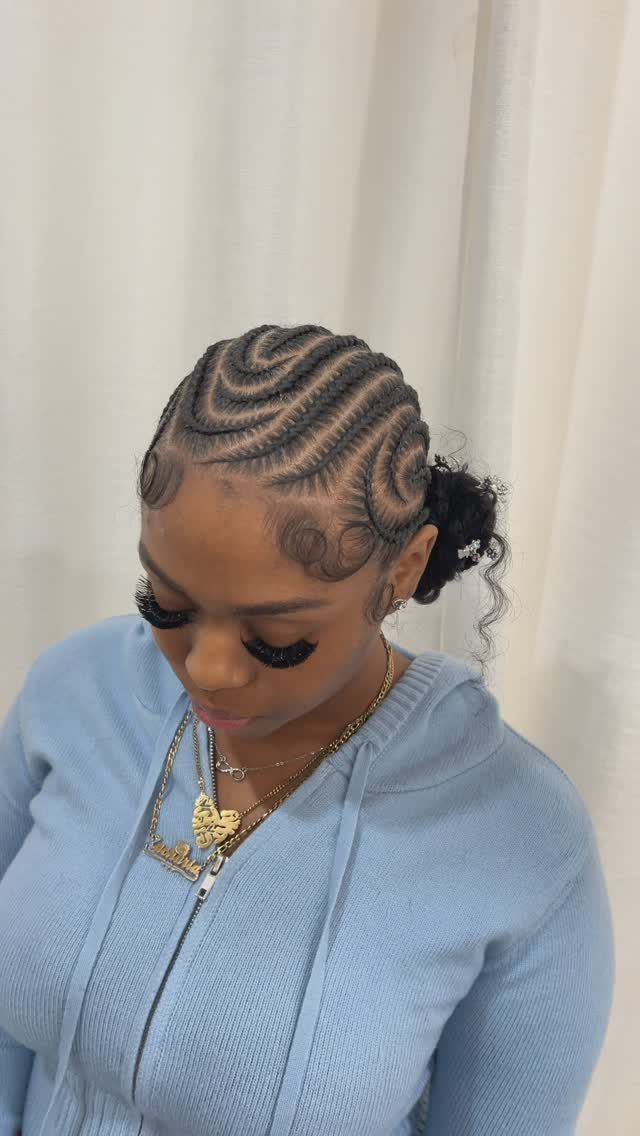
Braiding hair is added a little at a time as the braid travels along the scalp, so the rows start slim and gain thickness or length gradually. That gradual build keeps the look natural instead of abrupt.
Curved feed-in rows gathered into a bun are a good way to show off the technique, since the tapered start of each braid stays visible.
Ask for feed-in by name, and bring a photo of the curve you want, because the direction of each row is set before braiding begins.
17. Lemonade Braids
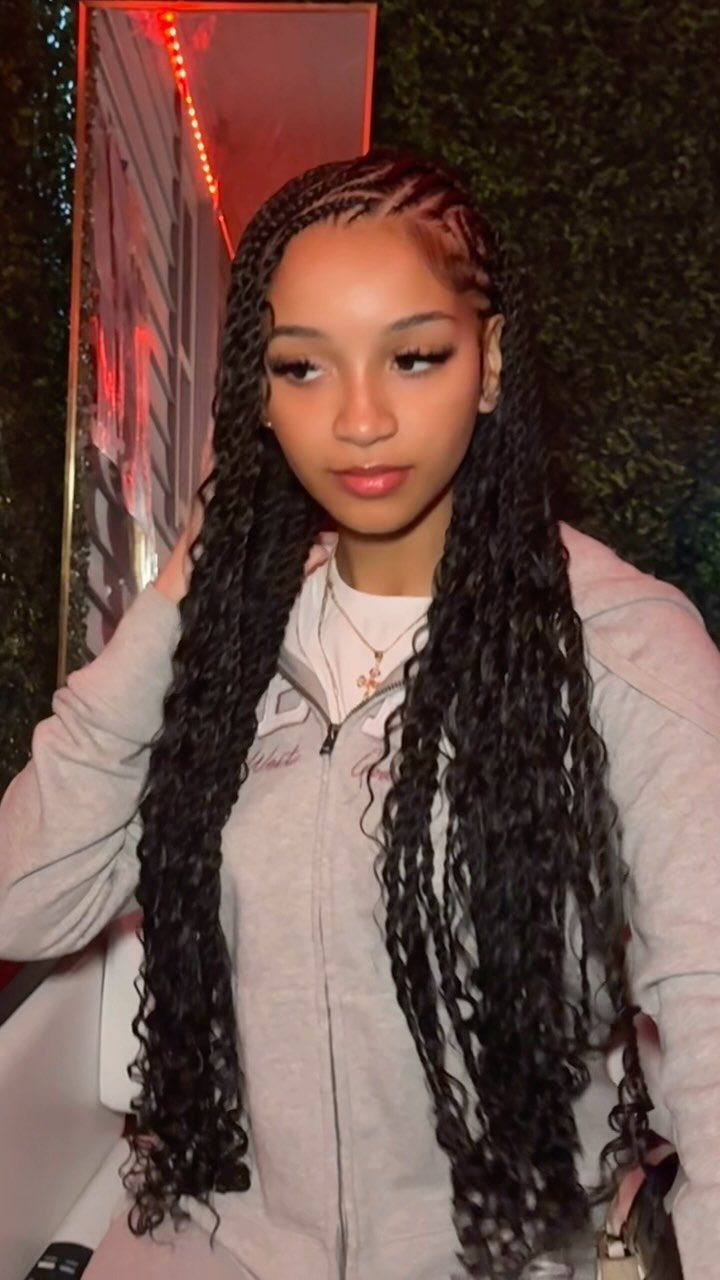
Every cornrow in lemonade braids sweeps to one side, which gives the style its dramatic, side-parted direction. Long rows like these can finish in curly braided extensions for a softer end.
I would choose the side-swept layout when you want a strong line across the head.
Show your braider which way the rows should travel, and mention the curly ends if you want them, since they are an add-on to the style.
18. Boho Braids
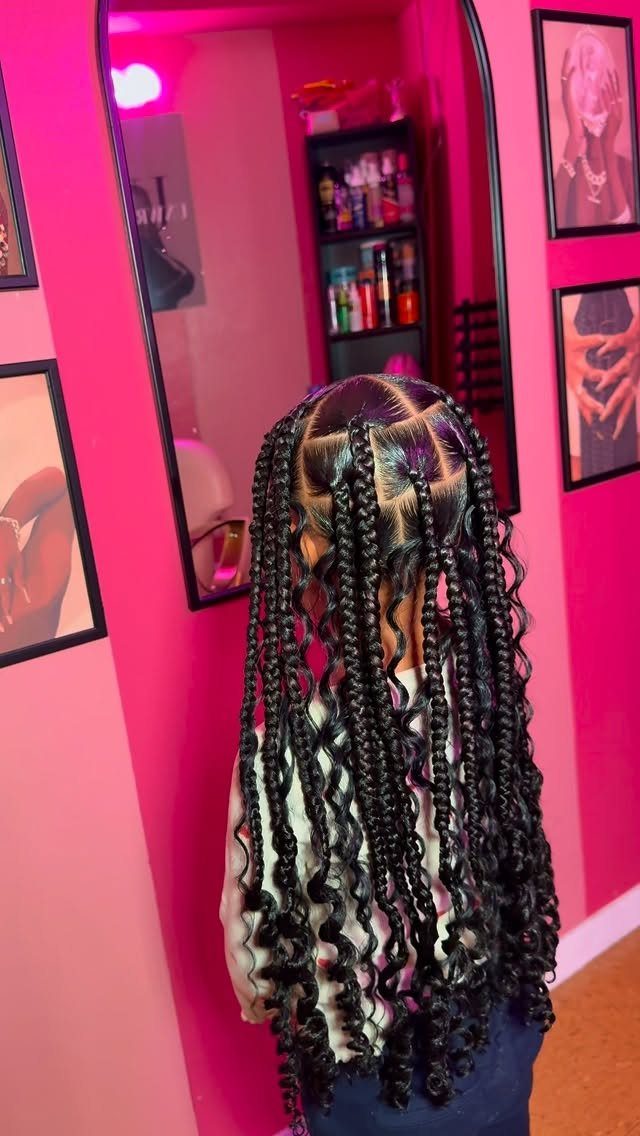
Loose, wavy strands are left out through the braids, and that carefree curl is what separates boho braids from a plain braided set. The braids stay long and the curls move around them.
I like boho braids for people who want a relaxed finish rather than a sleek one. Tell your braider how much loose hair you want, since a few strands and a full curly look are quite different.
19. Bantu Knots
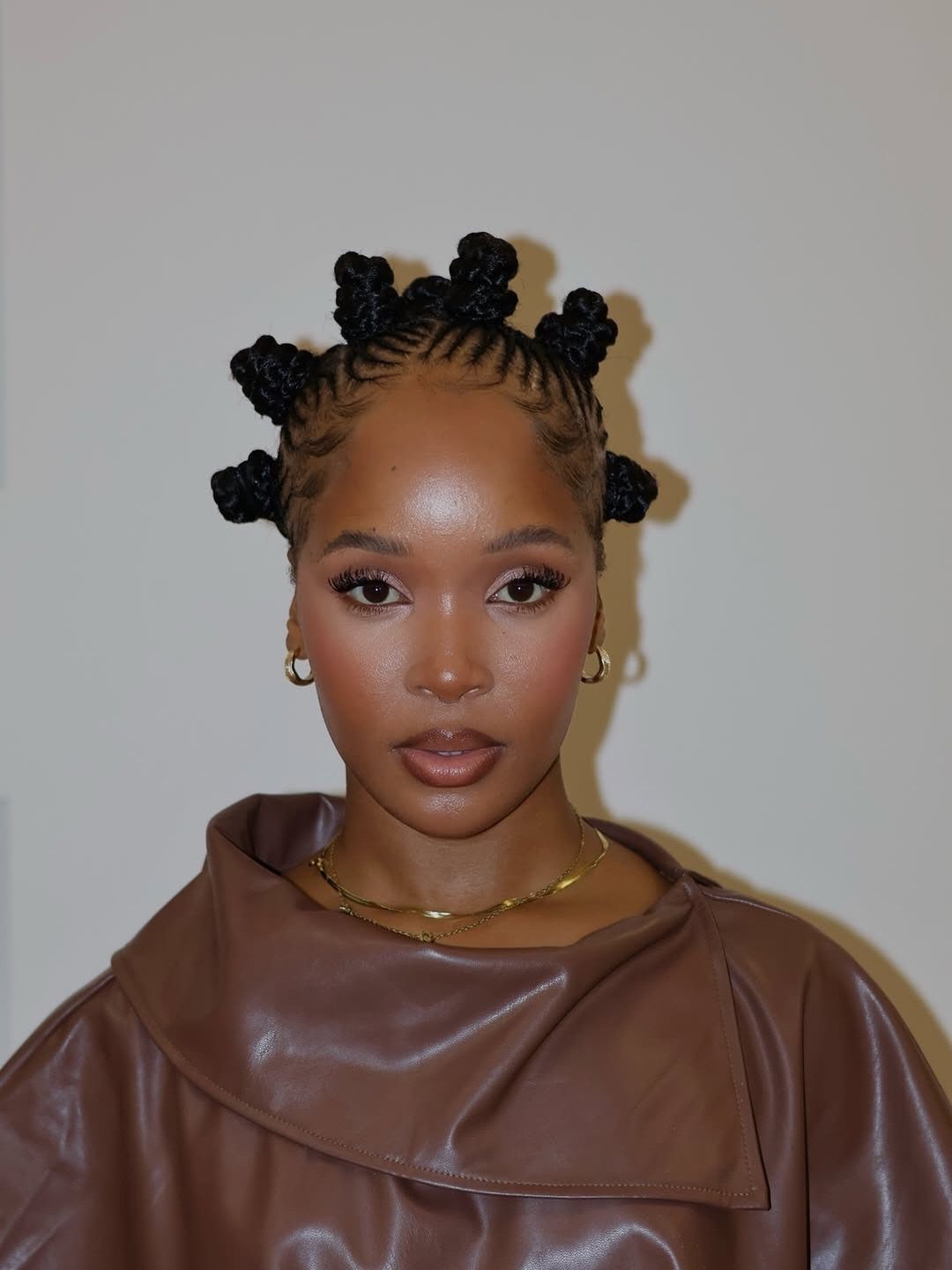
Small, tight coils of hair twisted and pinned into knots, set across the scalp in rows: Bantu knots work on braided or natural hair alike.
Each knot is its own little sculpture, so the parting between them matters as much as the knots.
I like them for anyone who wants a style that reads bold and graphic without adding length. Ask your stylist how small the knots should be, and bring a photo showing the spacing you want.
20. Halo Braid
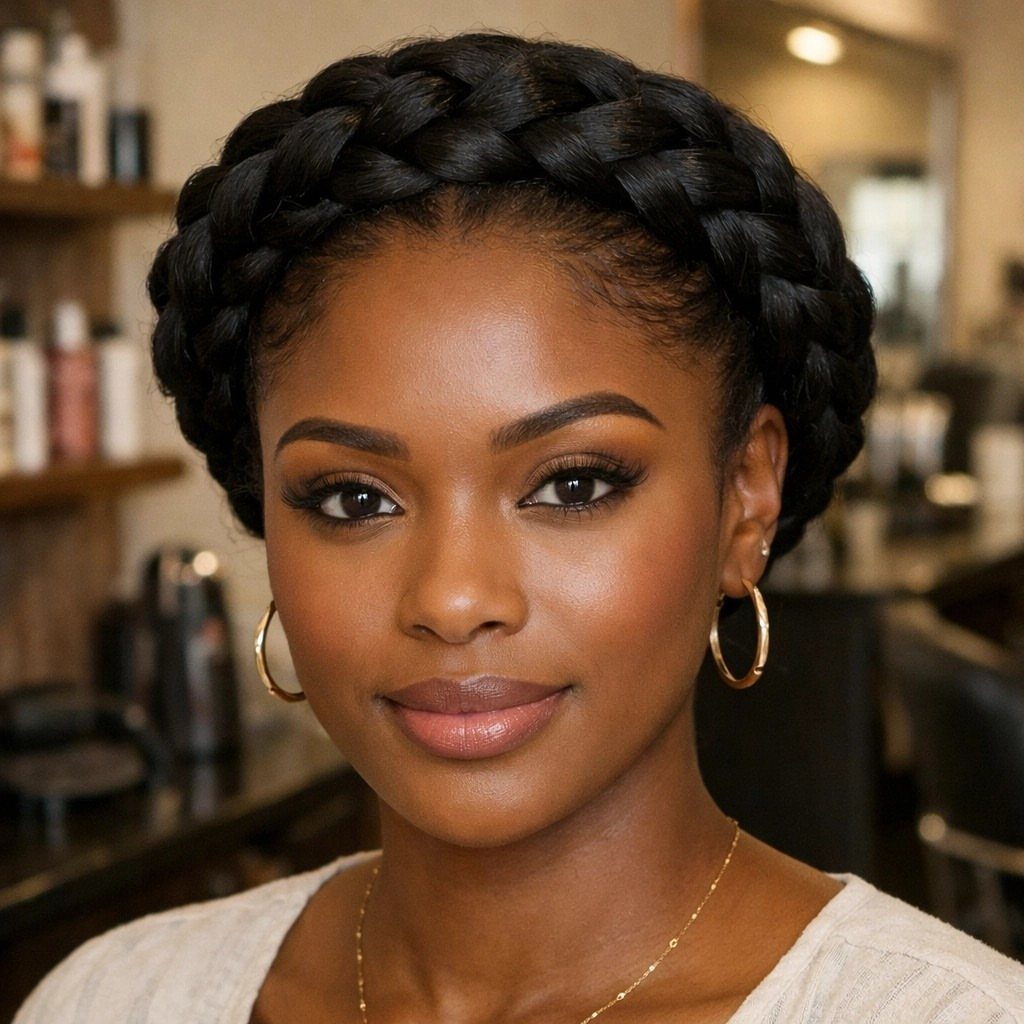
One thick braid circles the head like a crown, and that single unbroken loop is what makes a halo braid. Done with a thick plait, it reads as polished and a little regal.
I would give this one to a braider.
The braid has to follow the curve of the skull evenly all the way around, and the join where it ends is hard to hide when you are working behind your own head.
Show a photo of where the braid sits, higher or lower, since placement changes the whole look.
21. Senegalese Twists
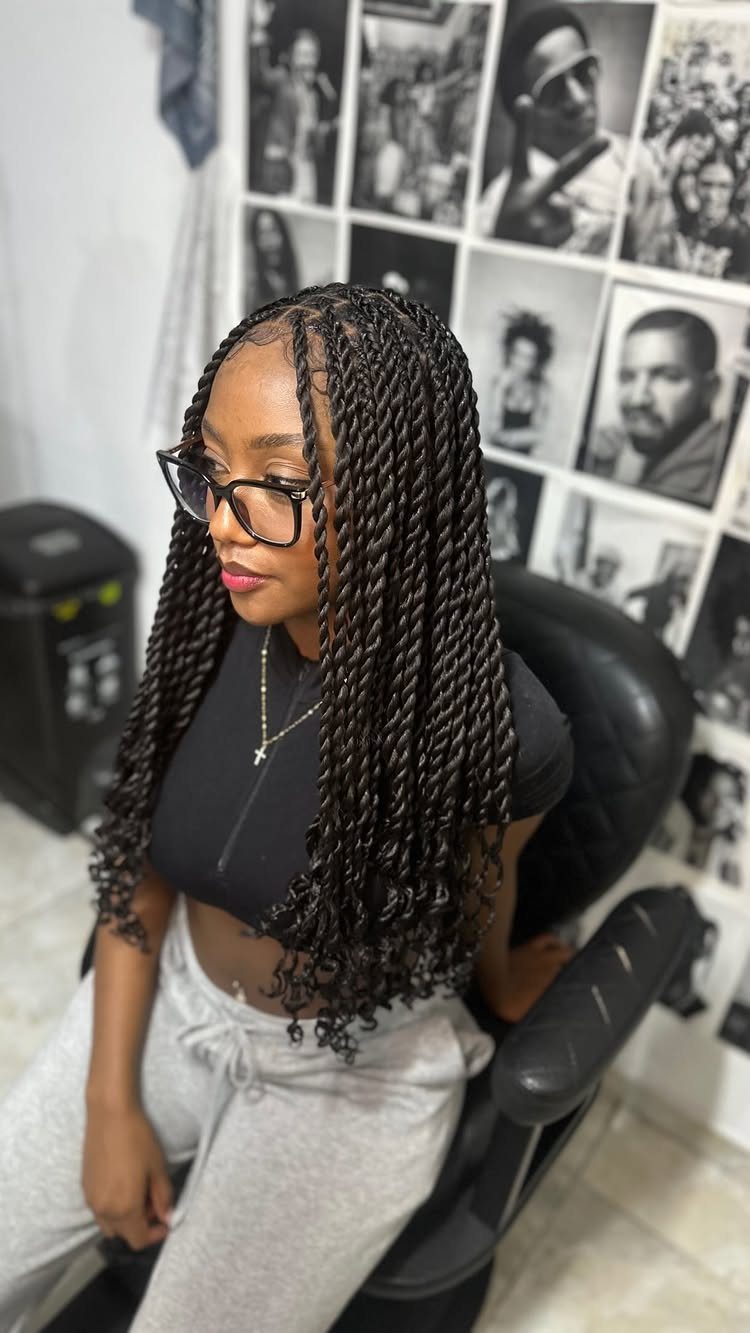
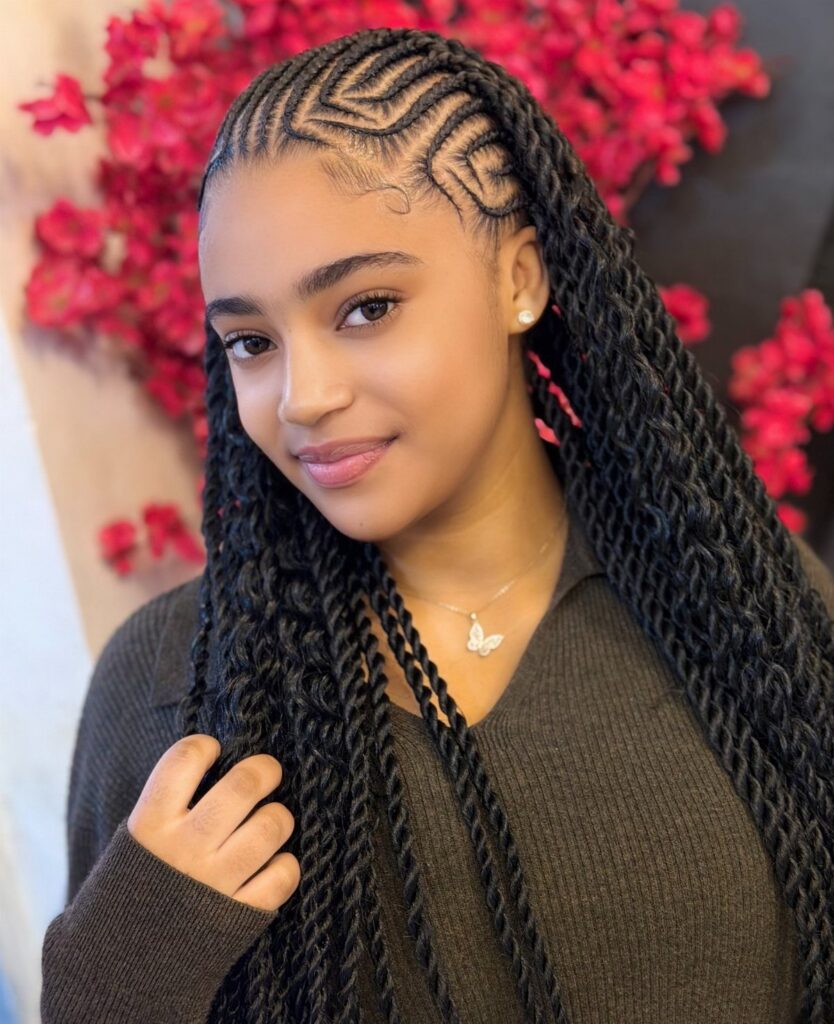
2 strands wrapped around each other down the length make a Senegalese twist, with added hair twisted in alongside your own so the finish stays smooth and rope-like. Compared with a three-strand braid, the surface is sleek and uninterrupted.
Name the twist by its wrapped, sleek finish when you book.
I would choose these over braids if you prefer a slim, polished line to a chunky one. Long lengths like these look best when the twists are even from root to tip.
22. Triangle Box Braids
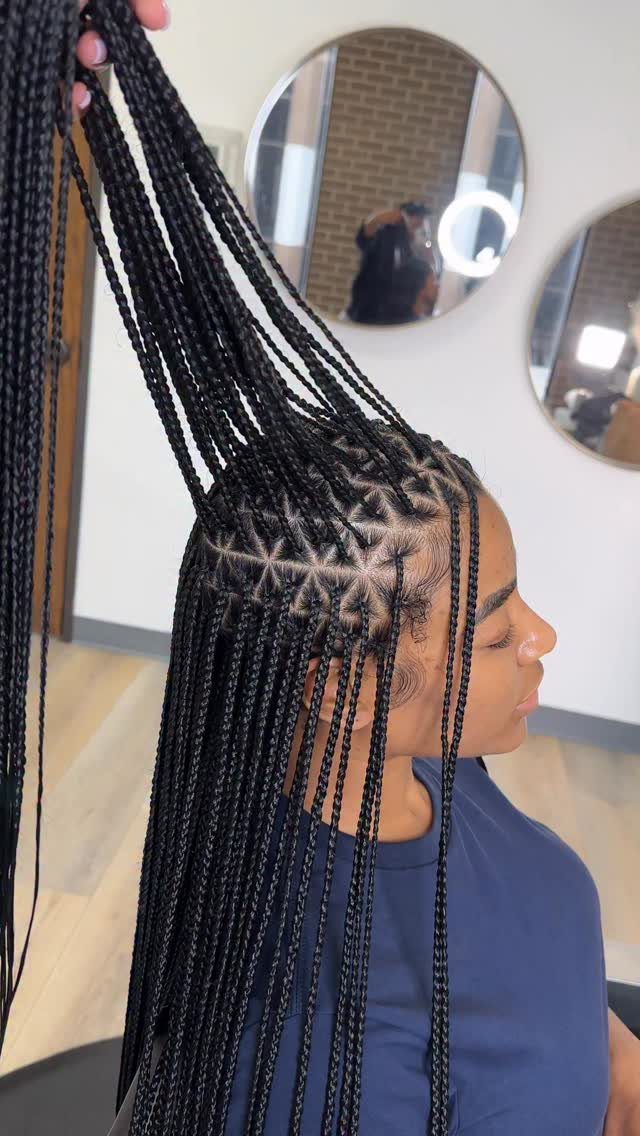
Triangle parts at the scalp are the entire twist on this style: instead of a square grid, each braid starts from a small triangle, so the root pattern looks sharper and more graphic.
Tell your braider you want triangle parts, not square ones, because the shape is set when the sections are cut.
I like it for long black braids, where the scalp pattern stays visible and gives a plain length some detail. Bring a close-up of the roots, not only a full-length shot.
23. Braided Mohawk
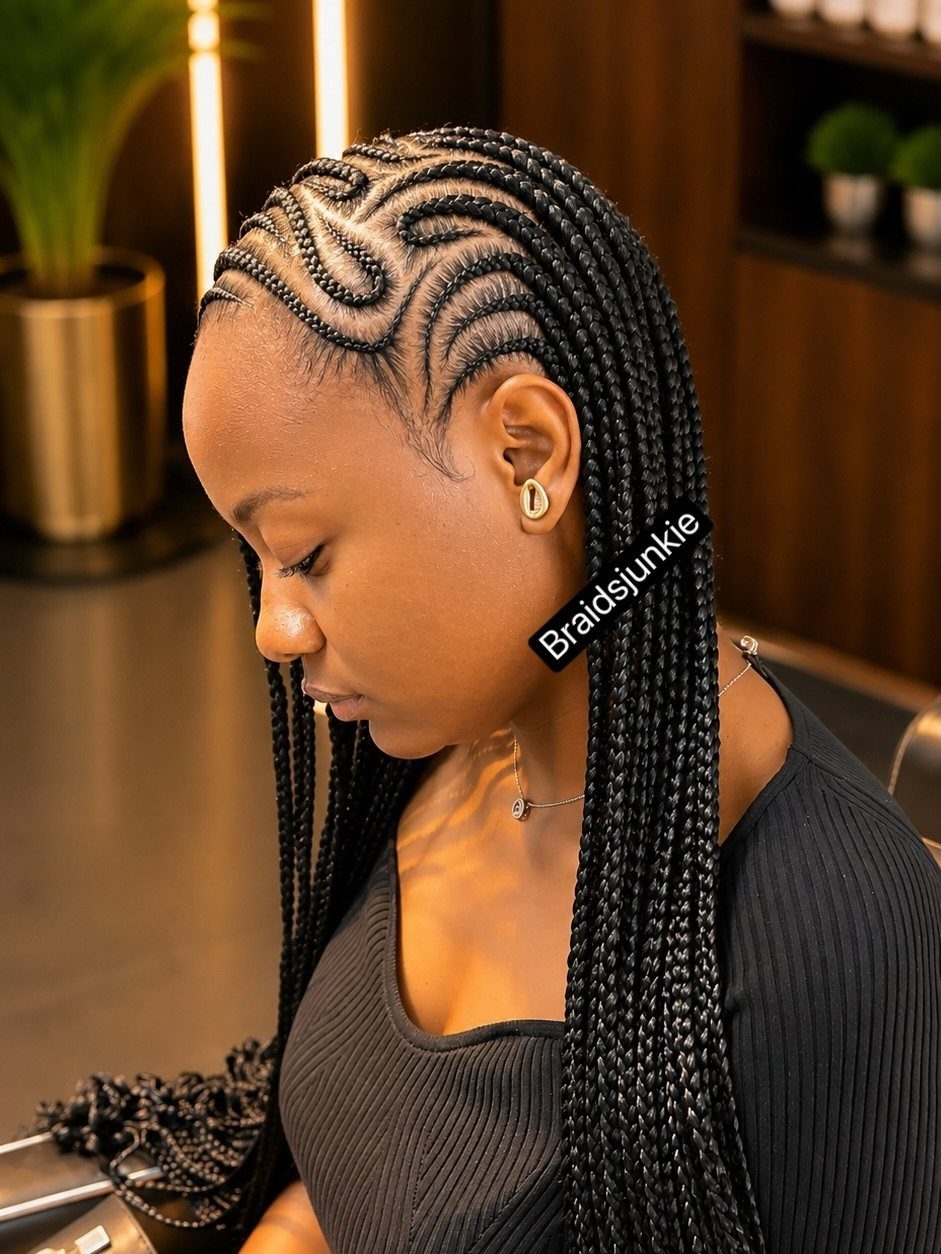
Curved cornrows run up the center while long braids hang free behind them, and together they form a mohawk silhouette. The raised center line is the focus; the sides stay close and neat.
I would take this to a braider, since the curve of each row decides how the shape reads.
Ask for the free-flowing braids to be left long if you want the style to move, and show a photo of where the cornrows should start and stop.
24. Space Buns
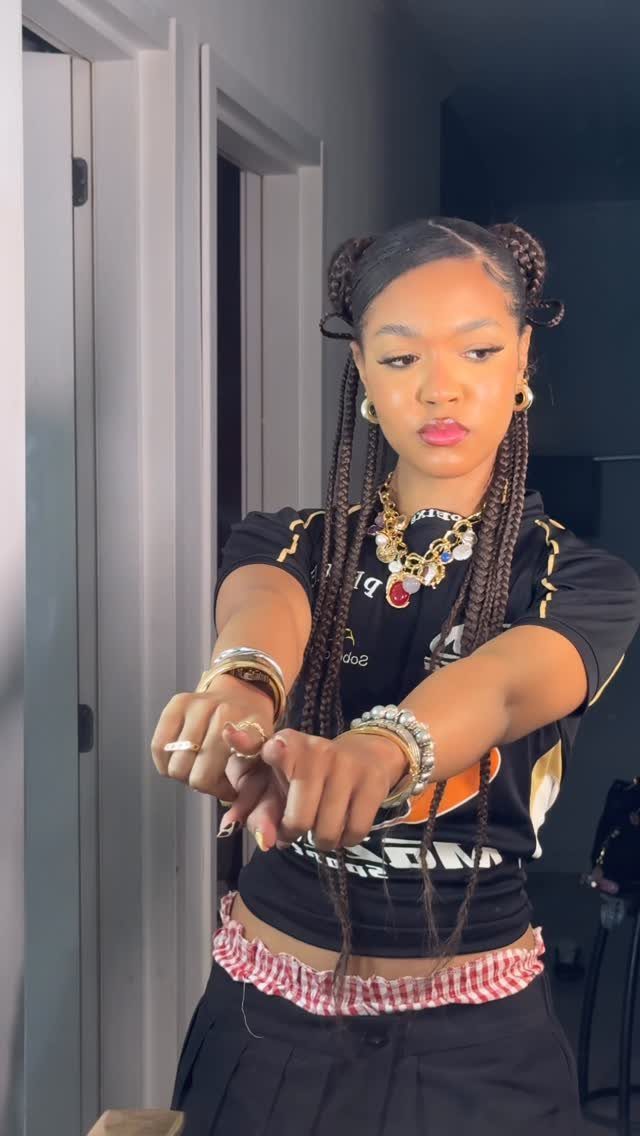
Two buns sit high on the head, one on each side, built from long braids gathered up and pinned. Space buns are a playful way to wear a long set, and they lift all that length off your neck.
Check that the 2 buns match in height and size before the braider finishes, since an uneven pair is the first thing people notice.
Length decides how full each bun looks, so braids that wrap around the base twice at minimum will keep the shape round and thick.
25. Braided Top Knot
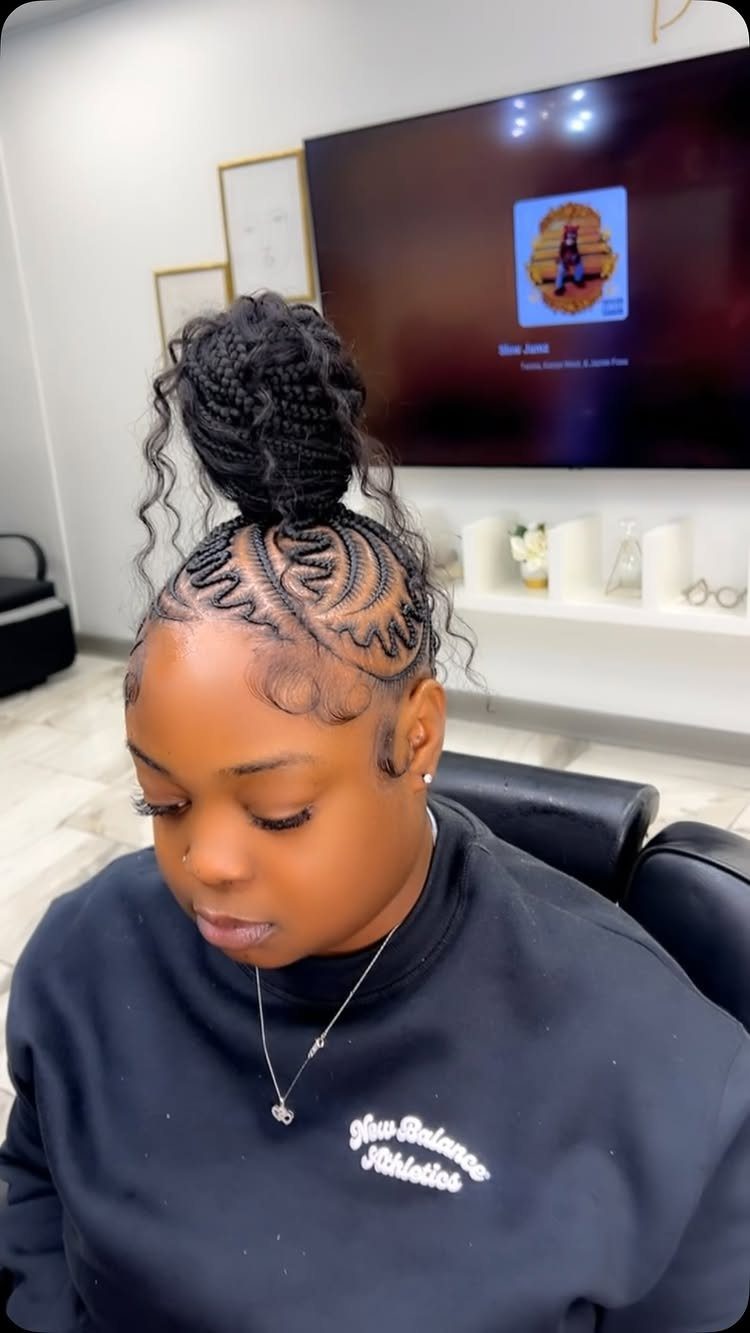
Cornrows run up the head and meet in one high knot, with loose curls left out around it. Knot height sets where every row has to end, so tell your braider where it should sit before parting begins.
I like this one for a polished look that doesn’t need much length. Curls are an optional extra on a braided top knot, so if you want them, ask for them by name and say how loose you want them.
26. Braids with Curly Ends
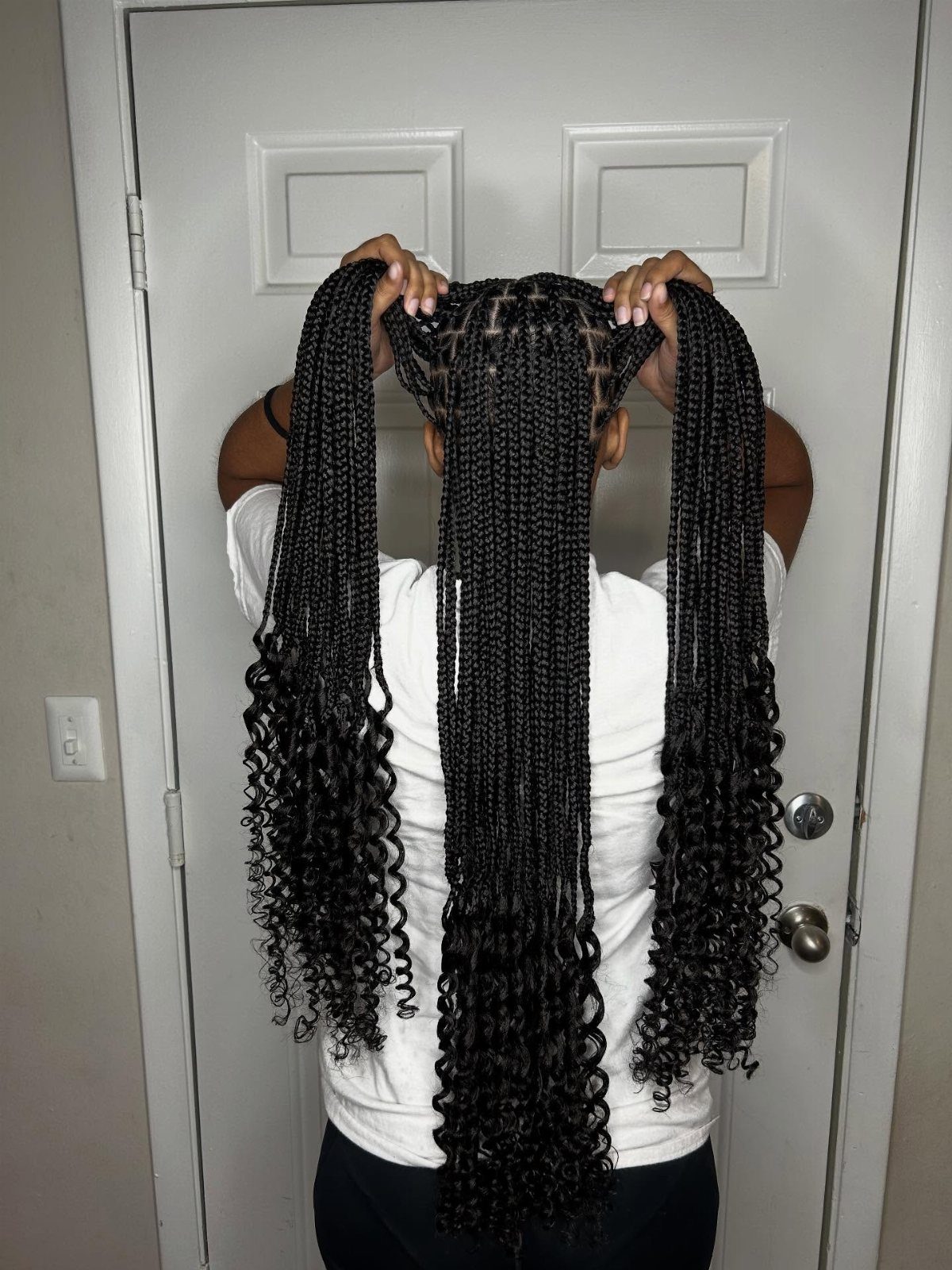
Stopping the braid short of the tip leaves long black braids finishing in loose curls instead of a blunt end.
Decide how much of each braid should stay curled before you book, because that length is set when the braiding stops.
A longer curl section moves more, while a short one keeps the braid line in charge. I would start short.
27. Straight Back Cornrow Braids
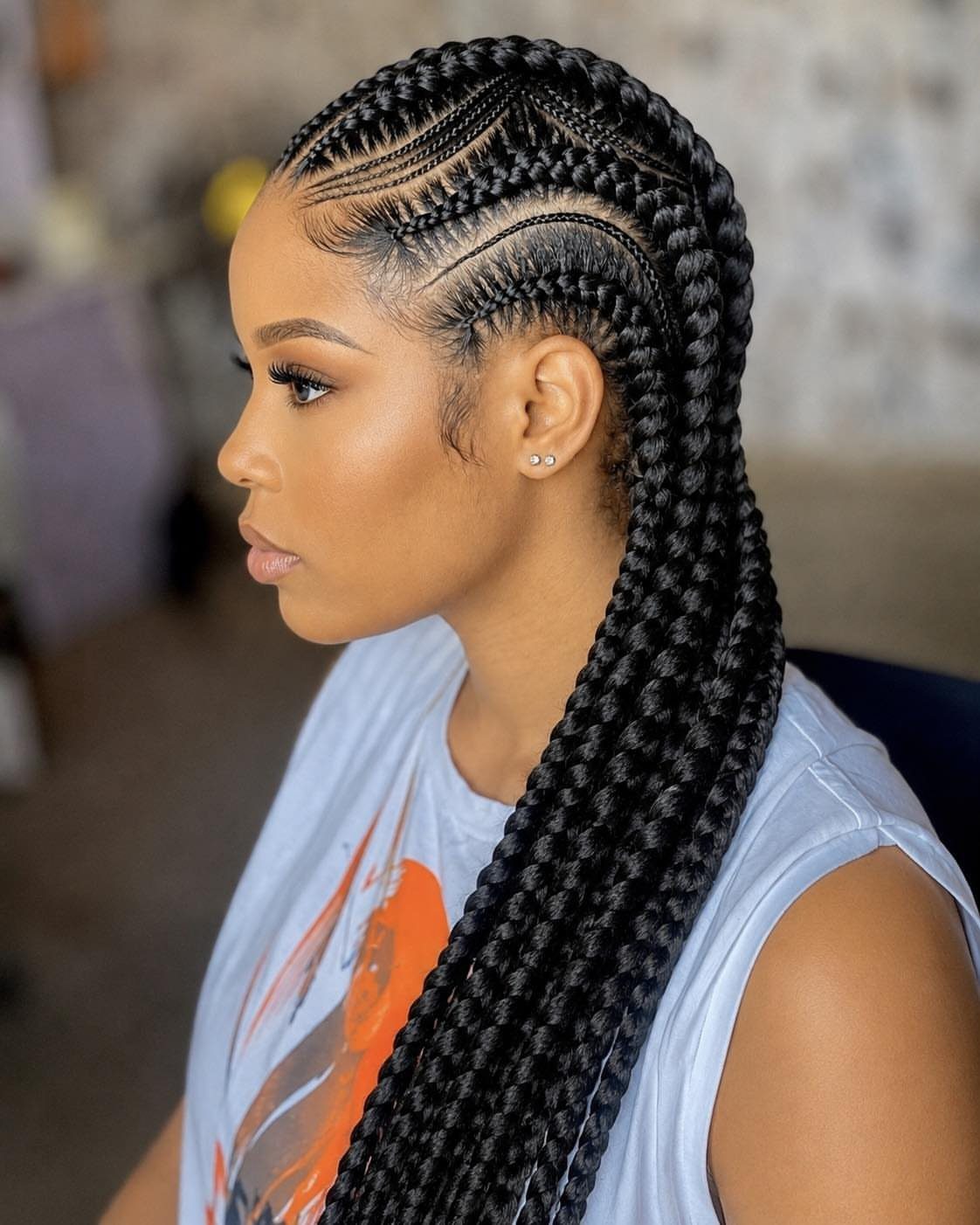
No curves and no pattern to map: rows that run straight back from the hairline are the simplest cornrow layout. That plainness is the appeal, because it balances easy installation with a style that holds up.
Thick rows like these keep the count low.
Bring a photo showing the thickness you want, and settle the number of rows before the first part is drawn. For a practical set that still looks finished, this is my pick.
28. Mermaid Braids
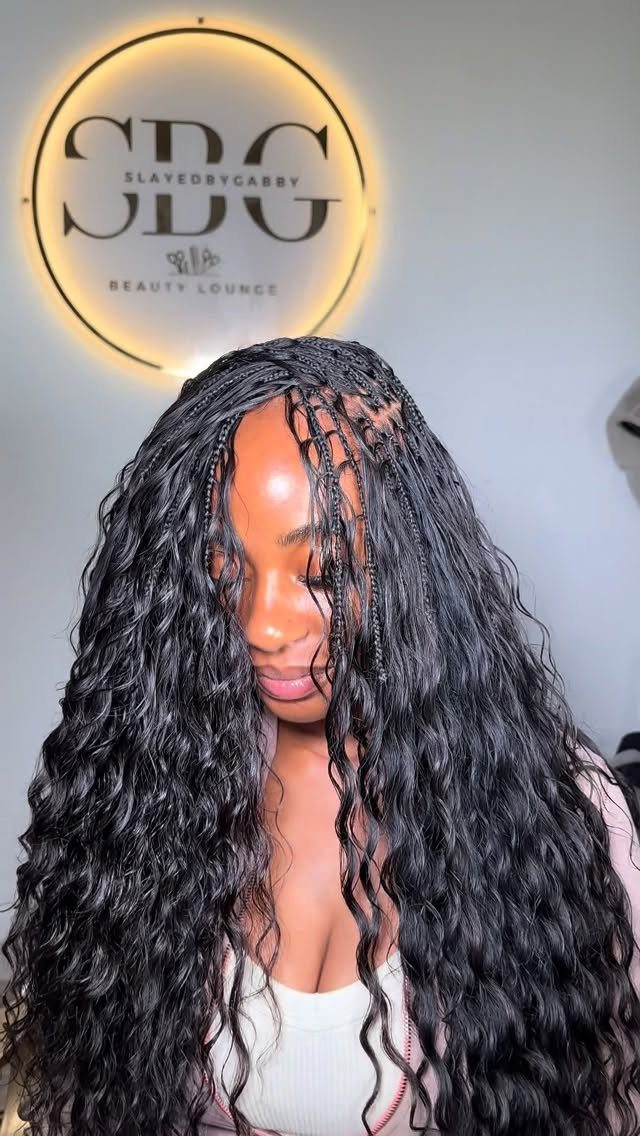
Braids at the crown and loose waves below: mermaid braids give you two textures in one head of hair. Ask where the braiding stops, since that line decides how much of the length flows free.
I like the contrast of neat braids against long, loose black waves. Show your braider a photo with the braided section marked, so both of you are working to the same line.
29. Micro Swoop
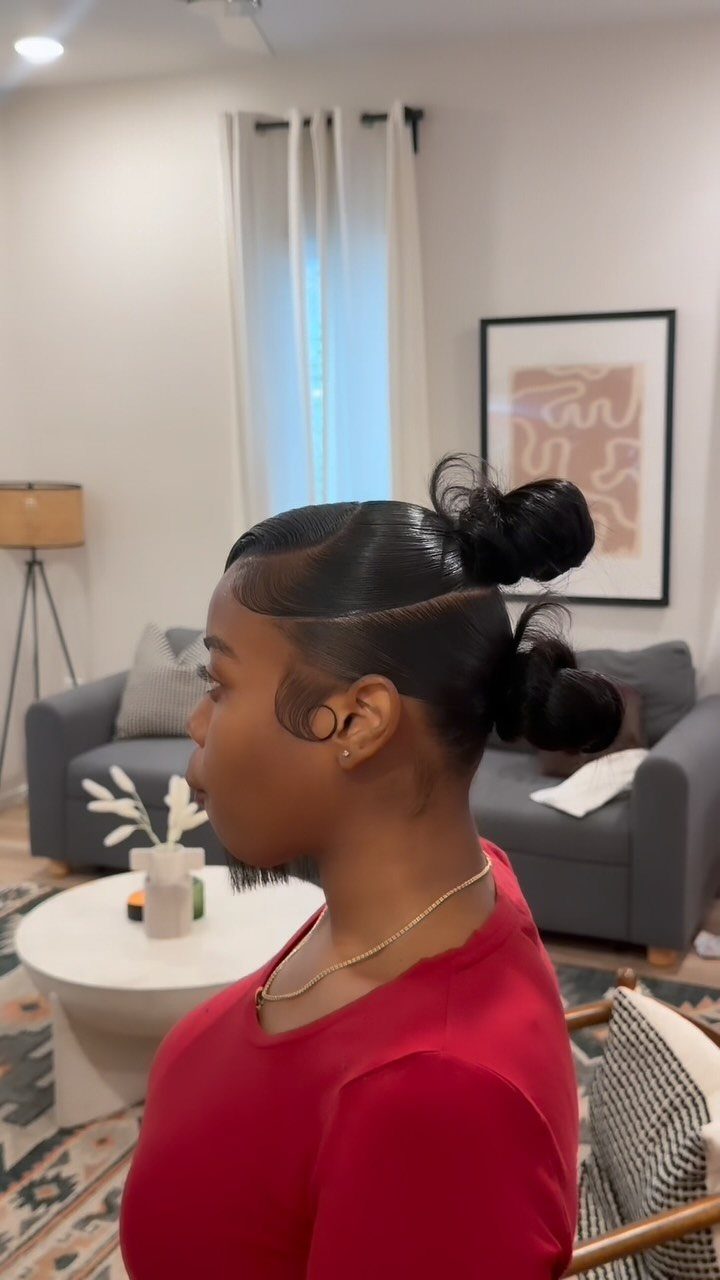
Direction is everything in a swoop: sleek sections sweep to one side and finish in two stacked buns, with sculpted baby hairs along the edge. Show your stylist which way each section should travel before any parting begins.
Bring a close-up of the baby hairs too, because their shape frames the face. I would choose this when you want a clean, graphic look with the hair off the shoulders.
30. Boho Knotless Braids
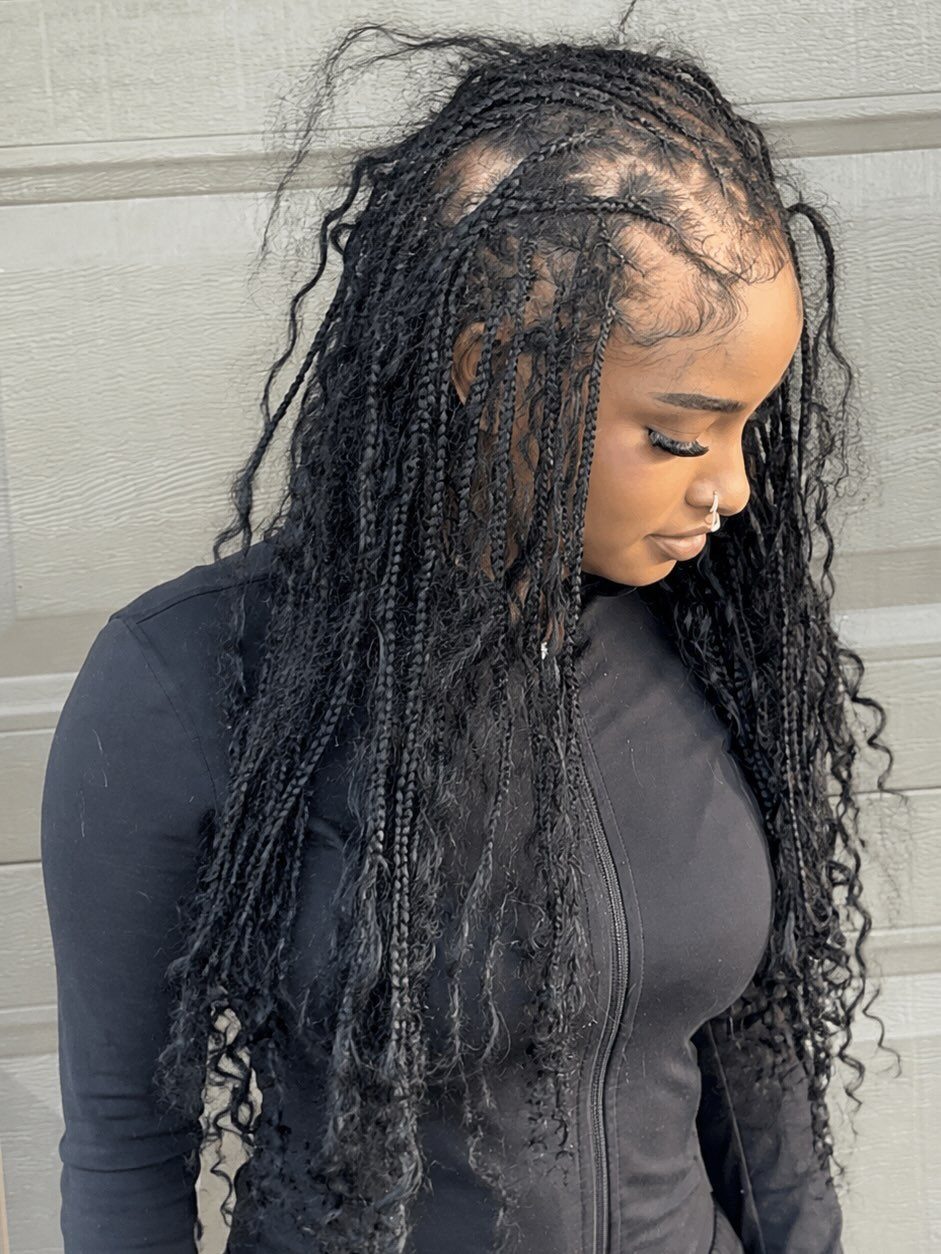
2 requests make this style: knotless braids and loose curls. Say both when you book, and name how many curly strands you want left out, since a few wisps and a full curly finish are quite different looks.
I prefer a generous amount of curl against long black braids, because the texture is the point. Bring a photo that shows the curl level you want.
31. Braided Band
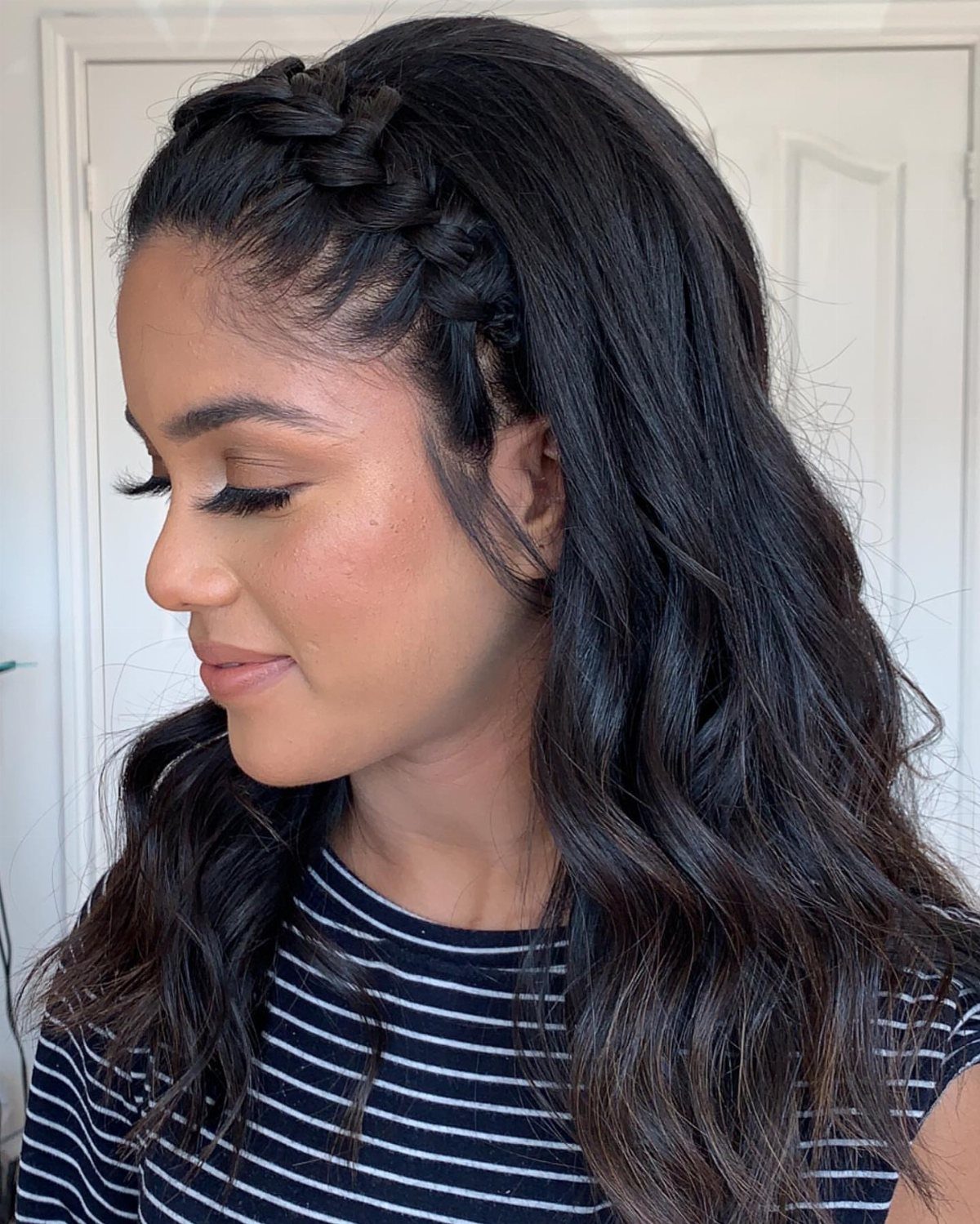
A thick braided band crossing the head frames the face and leaves the length behind it loose.
Leave the length in loose waves and let one thick braided band across the crown or hairline act as the only structured element; the contrast is what makes the style read as intentional.
Tell your braider where the band should sit, since the placement shifts the whole look. I like how it keeps hair out of the face without a clip or headband.
32. Braided Bubble Ponytail
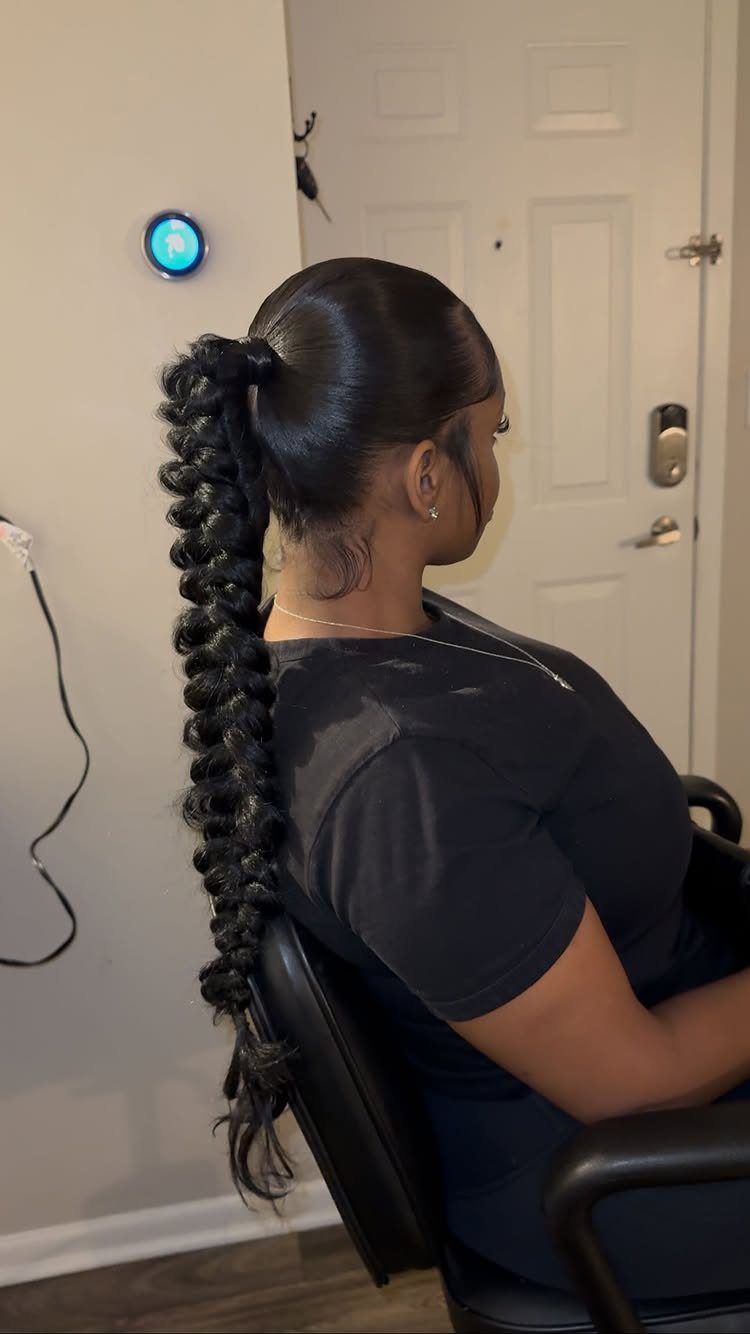
Sections of a long ponytail are tied off at intervals so each one puffs into a rounded bubble, and the sleek finish above them keeps the shape clean.
Ask for bubble ponytail by name, and bring a photo showing how many bubbles you want.
Spacing is the detail that decides the look.
I would pick evenly sized bubbles over a mix, because a tidy repeat reads as deliberate. This one is worth handing to a braider.
33. Braids with Ribbons
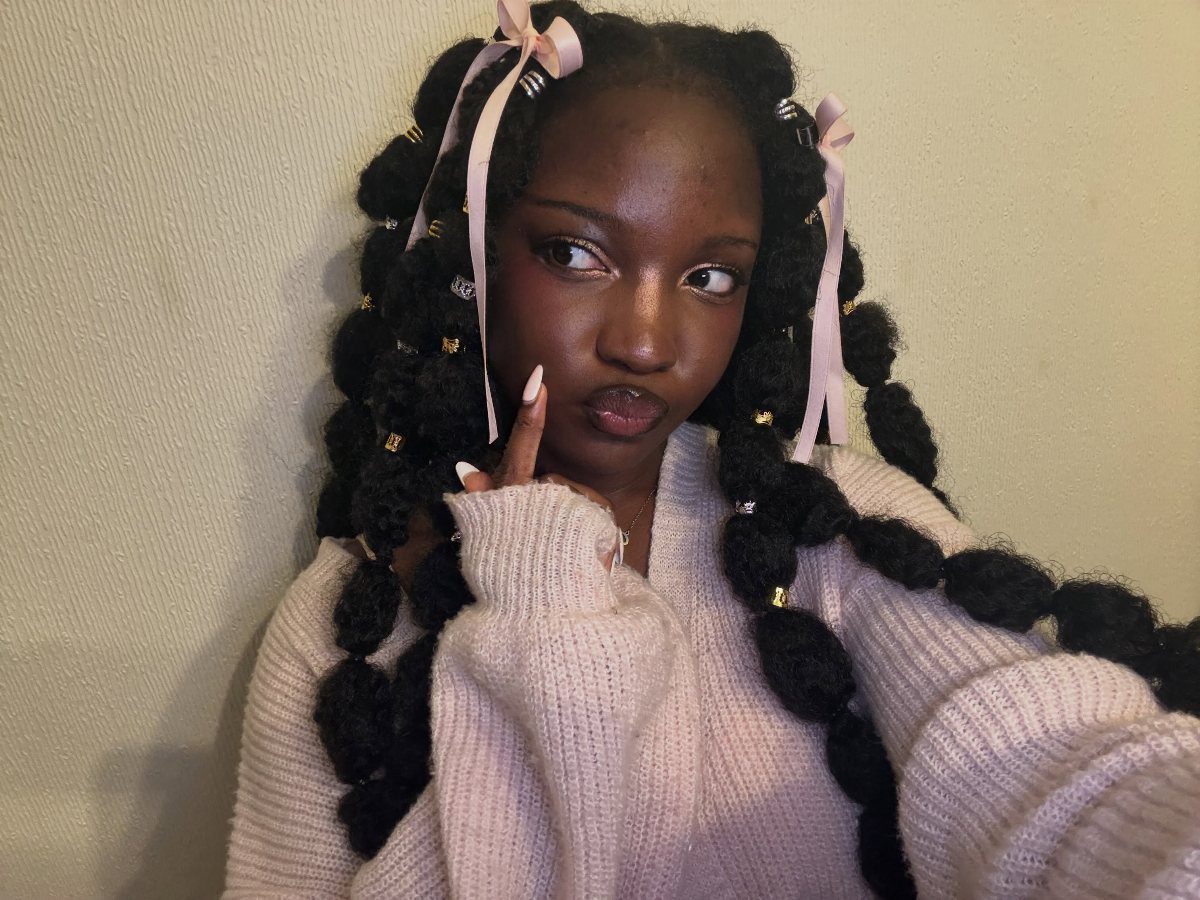
Ribbon turns a set of thick bubble braids into an accessory moment: pale pink bands and gold beads add color at the points where the braid is gathered.
Ribbon is easy to bring yourself, so choose a shade that contrasts with black hair, and hand it to your braider before the install starts.
I would keep the ribbon to one color. It stays soft and doesn’t compete with the braids.
34. Burgundy Braids
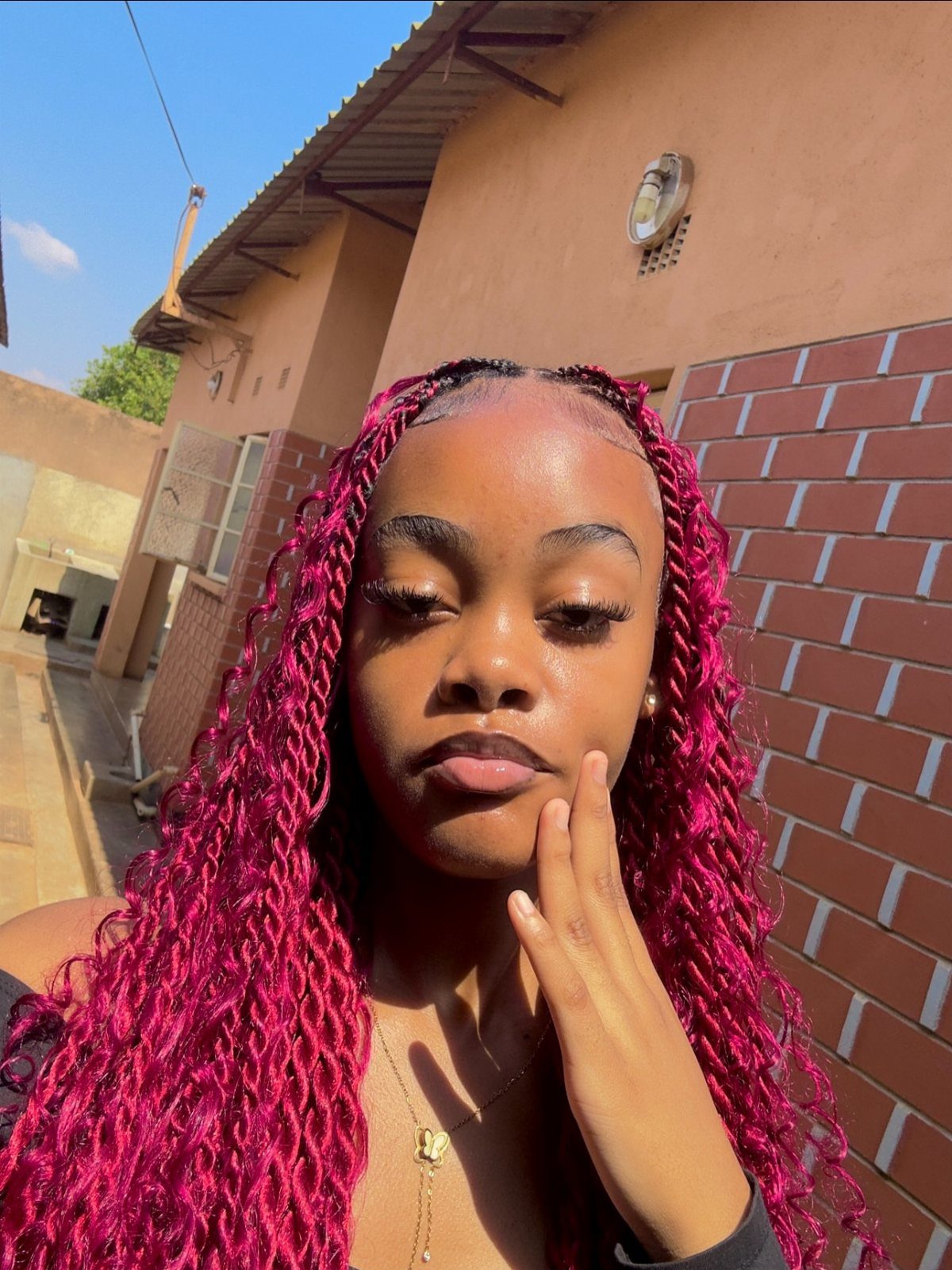
Long braids in burgundy give black hair a warm red cast that shows in sunlight.
Decide on the shade before you book, and bring a photo of the exact depth you want, since burgundy can run from dark wine to bright red.
I like this on long braids because the color reads clearly along the whole length. Gold jewelry suits burgundy braids well, since the warm metal picks up the red undertones and gives the whole look a finished feel.
Night and Scalp Care
Rubbing against cotton overnight frizzes braids faster than almost anything else, so a satin bonnet or satin pillowcase is the cheapest fix for keeping them neat longer. I treat it as part of the install, not an extra.
Start with a fresh shampoo before you sit down for braiding. During installation, a little castor oil on the scalp is worth asking for.
Once the style is in, wash the scalp on a schedule so it stays comfortable, and dry it fully afterward. Leftover dampness softens the bases and strains the edges.
If your scalp runs sensitive, plan around tension. Knotless braids and a loose bun both put less pull on the scalp, so mention the sensitivity when you book.
Frequently Asked Questions
What are the best braids for Black hair?
Cornrows and box braids are the 2 most-named picks. Cornrows are thin braids that lie close to the scalp and follow the parting, so they can be laid out in many patterns.
Box braids use square scalp sections with one three-strand plait each, and they can be worn down, in a ponytail or in a bun.
What braids are trending right now?
Fulani, lemonade and crochet braids come up most, along with cornrows gathered into a big bun.
Two names to ask for by name: Fulani braids run one braid straight back or down the center with curved braids around the crown and sides, and lemonade braids send every cornrow the same direction, off to one side.
Crochet braids are back in rotation: your natural hair is braided flat in cornrows, and a crochet hook loops the extension hair onto those braids.
Which braids can last for three months?
Ghana braids are cornrow-style rows with extension hair fed in as you go.
Most braided styles run closer to 4–6 weeks, and some reach 8 depending on the style and upkeep. Thicker braids frizz sooner, while small, tight ones hold longer.
What are the least damaging braids?
If you want the gentlest braid for your hair, I’d go with knotless.
There is no hard knot at the root; the braid begins with your own hair and the extension strands join in a little at a time, so the scalp feels less pull and the strands are less likely to snap.
They also tend to look flatter and more natural at the roots.