Match the black to your veins: blue veins and silver jewelry call for jet or blue-black, while greener veins and gold call for soft black or brown-black.
The exception is fair skin with a pink cast, where cool black reads washed out and dark brown works better. Jet and blue-black also need touch-ups every 4–6 weeks.
What Dark Black Hair Actually Looks Like
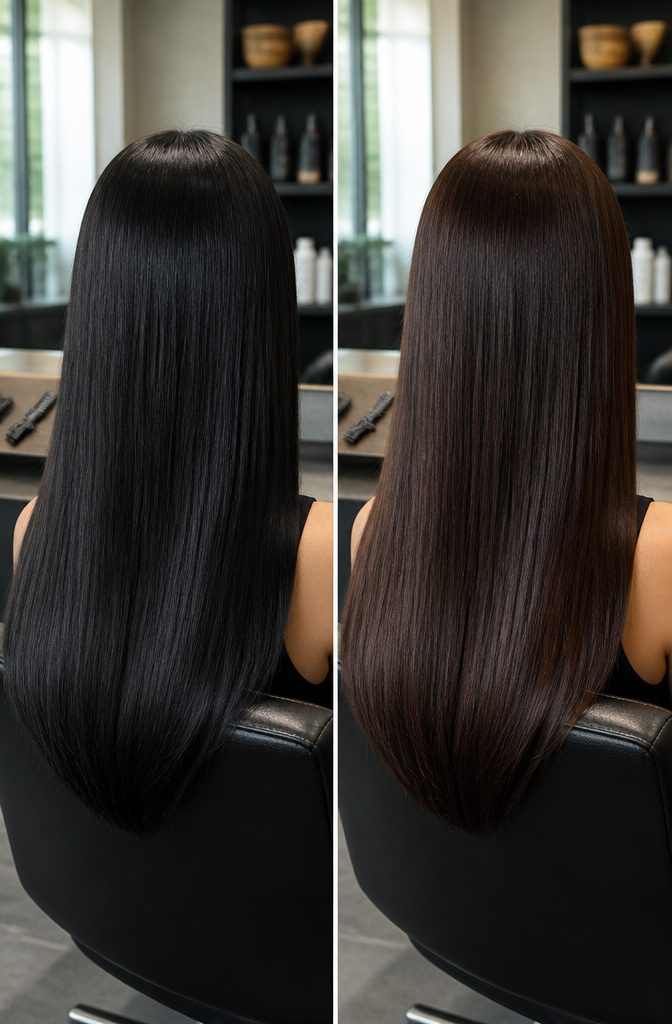
Dark black hair is the deepest, most intense black, with almost no tone change as the light moves across it.
Dark brown is lighter and softer by comparison, with a richer tone that shows brown, red or warm notes. If you can spot a warm cast in strong light, you are looking at dark brown, not black.
Pigment explains the gap.
Black hair carries the highest concentration of eumelanin of any hair color, with brown, blonde and red following behind. Natural black is really a very deep dark brown, and that dense eumelanin is what pushes it into such dark tones.
I think that overlap is why so many Pinterest "black" photos turn out to be brown once you hold them next to a true black.
1. Jet Black
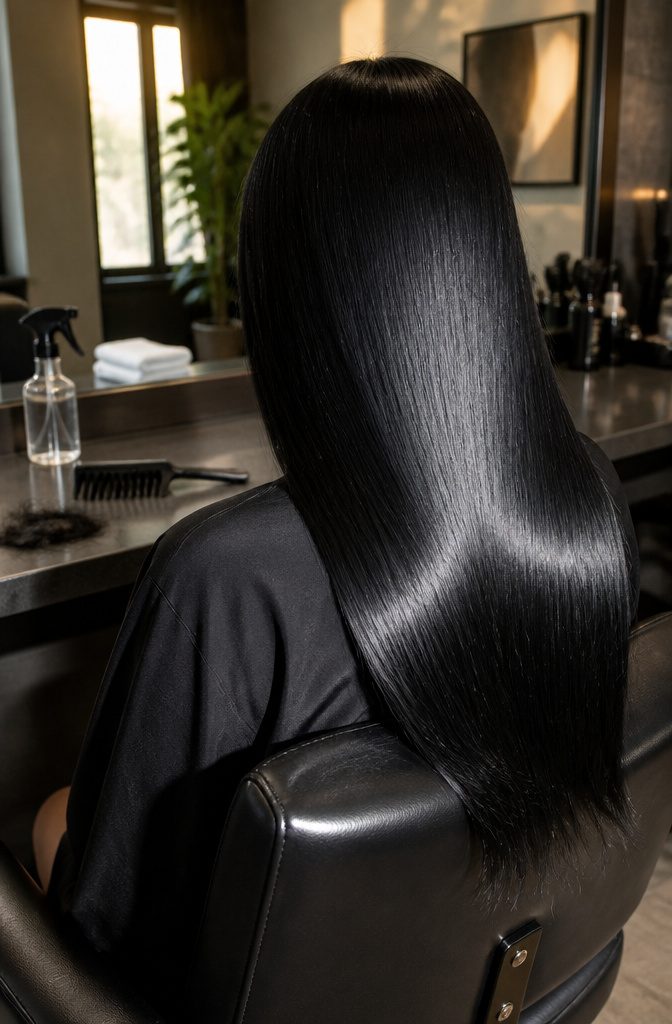
Jet black is shade 1: a true black with no visible brown undertones, usually with a glossy finish. Natural black (1B) is a deep brown that only reads black in most light, while jet has no brown to give away.
Hair.com calls it classic and universally flattering, and its shine advice is the useful part:
Jet black hair is a fairly low-maintenance color, but if you want it to look its best, you’ll want to up the shine. Simply spray your strands with Redken’s Shine Flash Hair Spray.
— Hair.com
Low-maintenance still has a limit: book touch-ups every 4–6 weeks to stop fading.
2. Soft Black
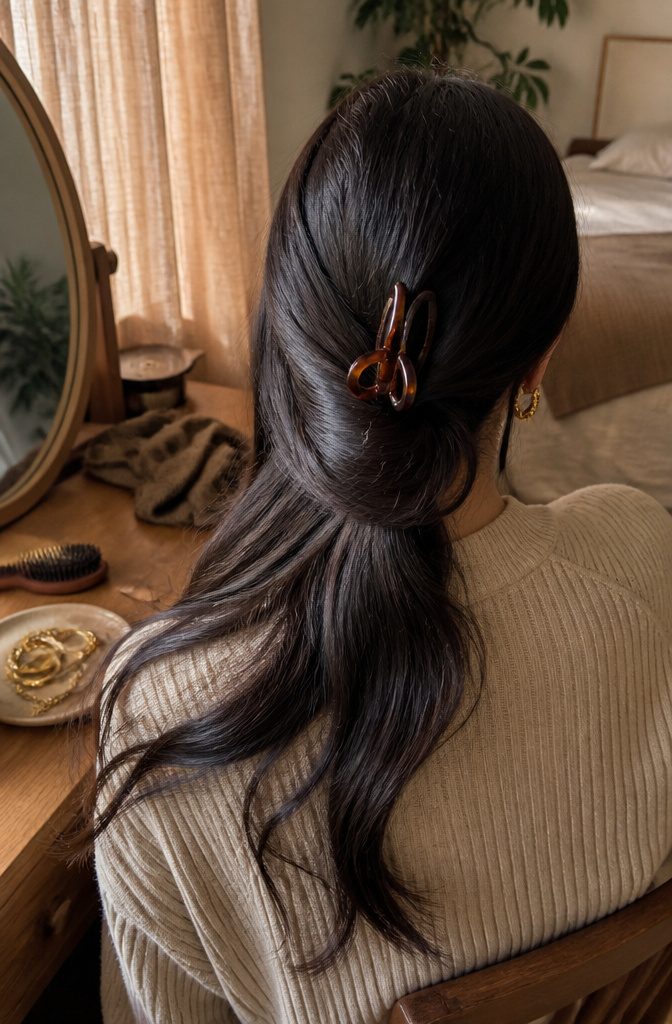
Soft black reads as black in most light but sits a step lighter than jet black, with warm undertones that keep it from looking flat or inky.
Jet black has no visible brown in it and a glossy, almost mirror finish. Soft black trades that intensity for something closer to what grows out of a naturally dark head, so the change looks subtle rather than dramatic.
If your veins look greener and gold jewelry flatters you, soft black is the black I’d steer you toward first.
The warmth adds richness without turning the color heavy. Cool-toned skin can find it a little muted, and jet black usually suits that coloring better.
3. Blue-Black
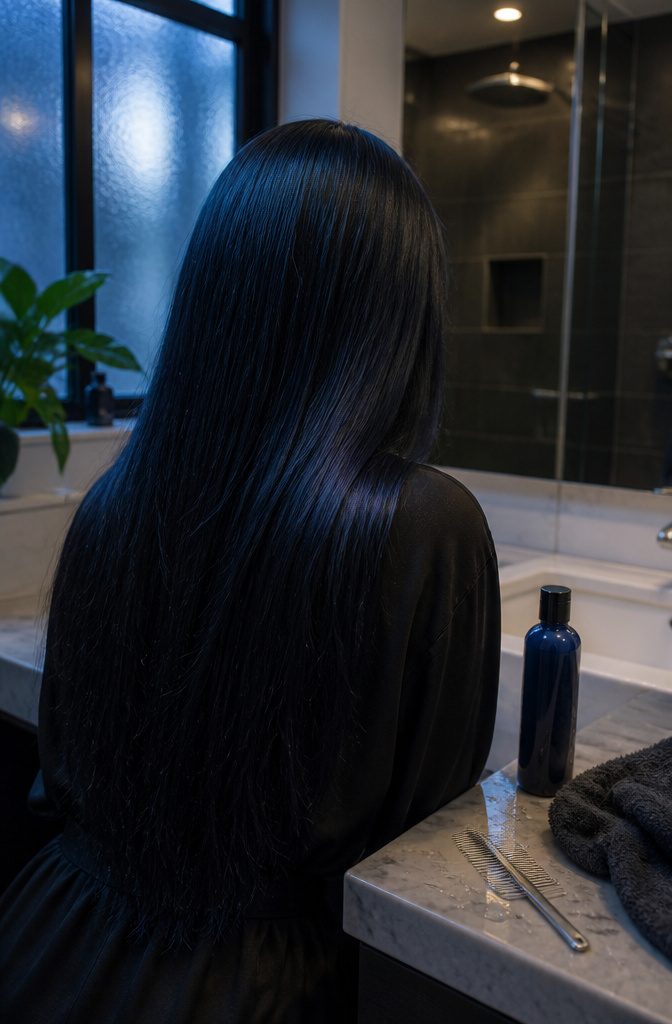
Blue-black is black blended with hints of navy or indigo, and its cool cast is the whole appeal.
If your veins look blue and silver jewelry flatters you more than gold, this is the black I’d steer you toward: it deepens cool skin instead of competing with it.
It’s an edgy, modern color that adds dimension where flat black can’t.
It is also high-maintenance.
Plan on a touch-up every 4–6 weeks, since black shows regrowth more than lighter shades do. Between appointments, a black or blue-black color-depositing shampoo or conditioner refreshes the tone.
Skip clarifying shampoos, which strip it. If warmth creeps in, an occasional purple shampoo knocks it back.
4. Brown-Black
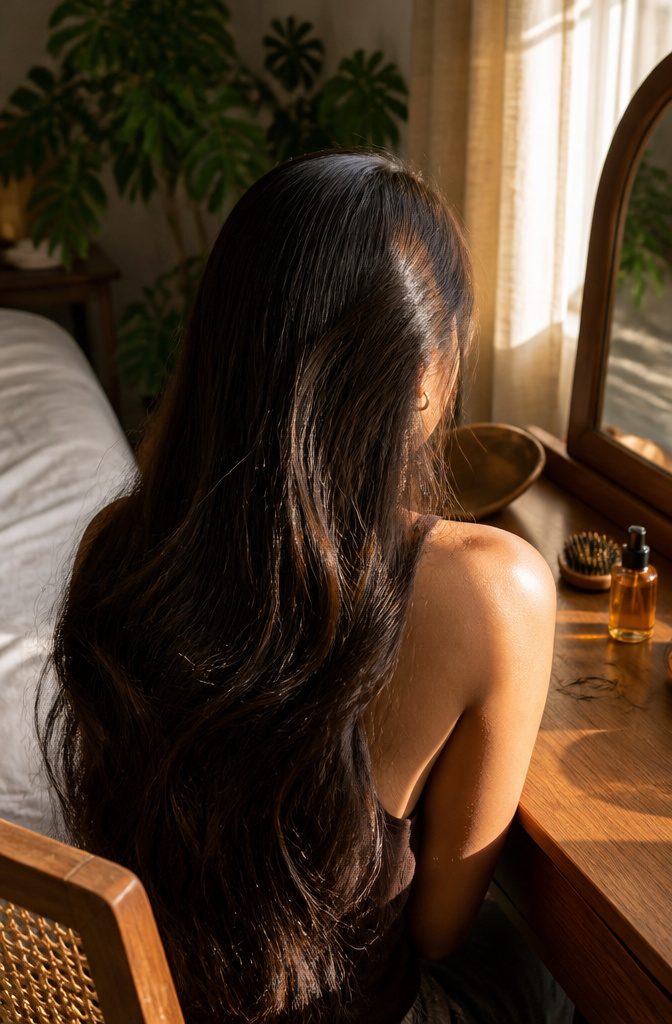
Brown-black sits between true black and dark brown: dark enough to read as black at a glance, with a trace of brown that shows when light hits it.
Jet black has no visible brown at all, so brown-black looks softer and less flat, and it still runs deeper than most browns.
If your veins look greener than blue and gold jewelry flatters you more than silver, brown-black is the black I’d point you toward.
Warm undertones pick up the brown in the shade, so you get richness without the color overpowering your face. Silver-leaning skin usually does better with a cooler black, and I’d skip this one there.
5. Natural Black (1B)
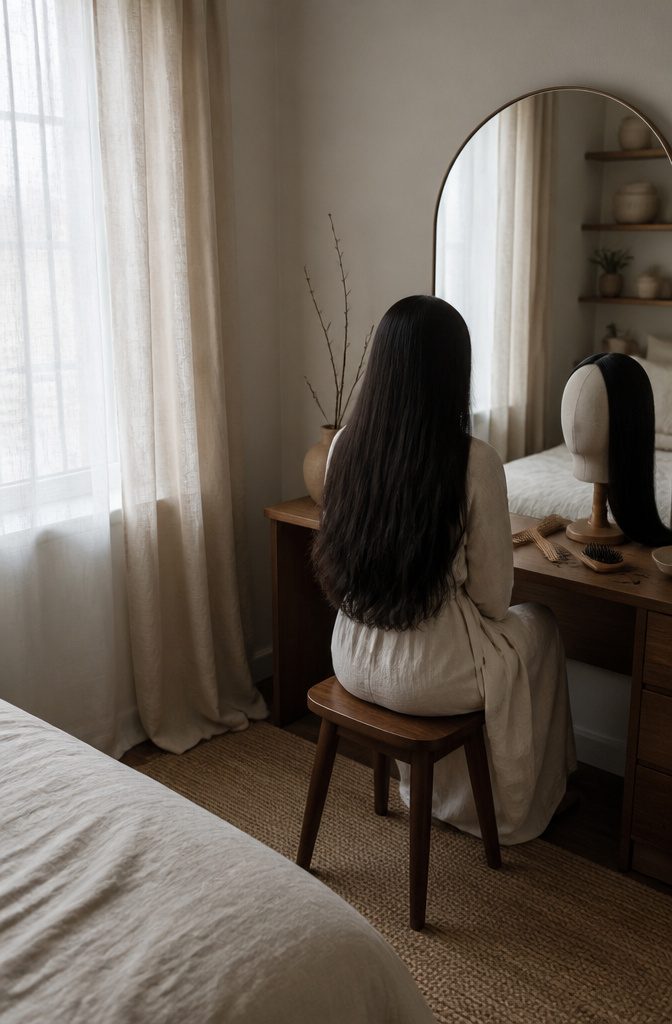
Natural black, labeled 1B in the wig industry, is a deep dark brown that reads as black in most lighting.
Set it beside jet black (labeled 1) and the gap shows: jet black has no visible brown undertones and a glossy finish, while 1B carries slightly more warmth.
Real natural black hair works the same way, since it is dark brown with a high concentration of eumelanin. Most black human-hair wigs come in 1B, and I think that default is right.
Pick 1B if you want black that looks like it grew from your scalp, and skip it if you want the flat, inky look of true jet.
6. Off-Black
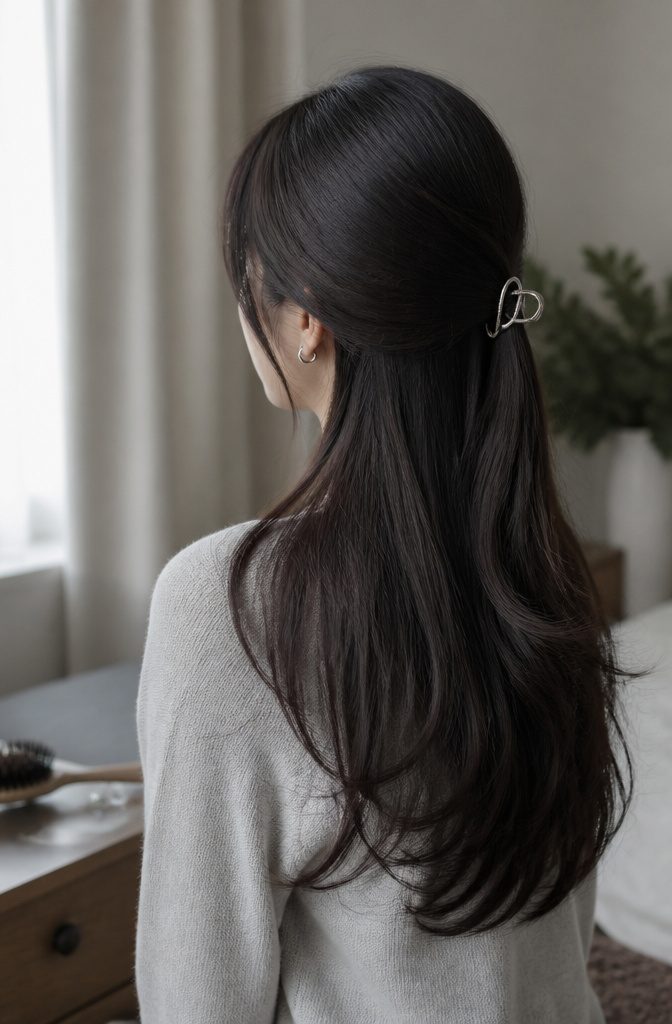
Off-black is deep brown with cool ash tones, and it sits at the softest end of the black spectrum. You get the depth of black without the full intensity of true black.
Jet black is high contrast, and that can wash out fair skin, especially skin with a cool or pink background, leaving the face paler than you want. Off-black lowers that contrast.
If your veins look blue and silver jewelry flatters you more than gold, off-black is the black I’d start with. For a cool-toned complexion that already looks pale next to dark hair, I’d choose it over jet black every time.
Which Black Suits Your Skin Tone
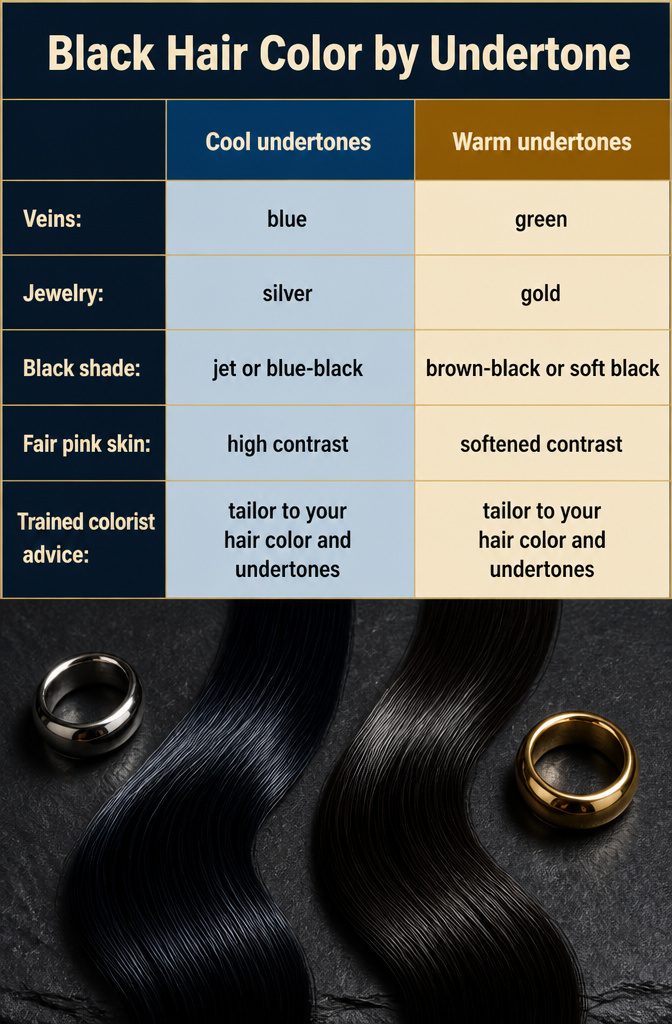
Blue veins and a pull toward silver jewelry mean cool undertones, and jet black or blue-black deepens that coloring. Greener veins and gold jewelry mean warm undertones, where brown-black or soft black adds richness without feeling heavy.
Fair skin with a pink cast is where black gets risky.
Cool black creates high contrast, so the face reads paler, even slightly washed out. Dark brown softens that contrast on light and medium skin tones, and I’d try it first there.
A trained colorist can tailor the hue to your hair color and undertones, which beats guessing from a box.
How Your Hair Type Takes Black Dye
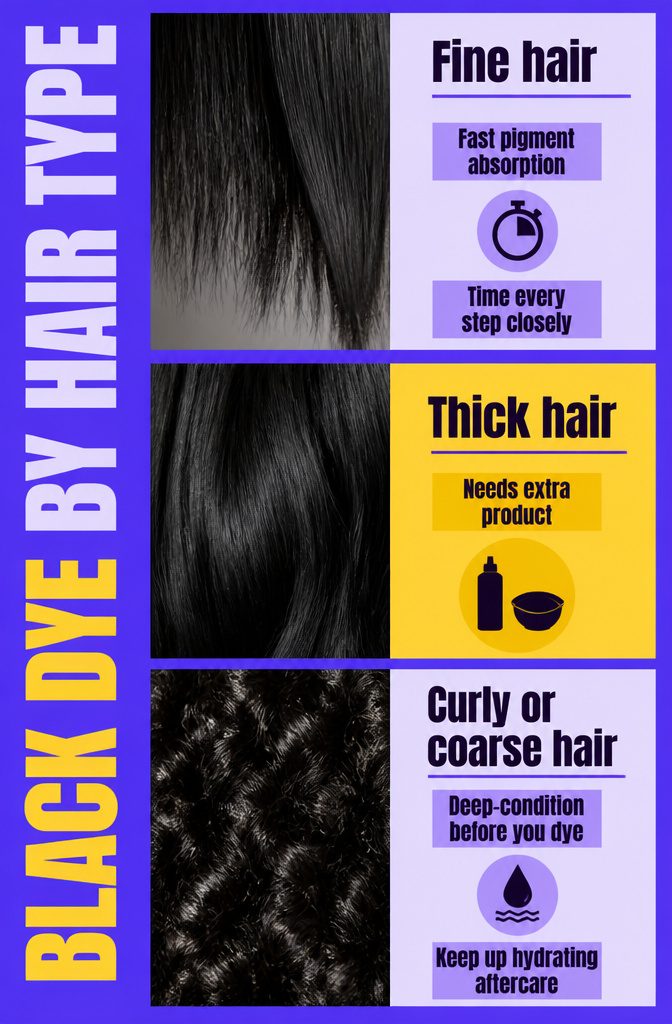
Your strand type decides how black dye behaves, so adjust the method to match:
- Fine hair absorbs color quickly and can grab too much pigment if the dye sits too long. I’d book a colorist, or at home, time every step closely.
- Thick hair takes longer to saturate and needs extra product. Running short halfway through leaves uneven coverage, so buy a second box or ask your stylist to mix more.
- Curly or coarse hair often looks drier after coloring. Deep-condition before you dye, then keep up hydrating aftercare so the black stays soft instead of dull.
Dyeing Your Hair Black at Home
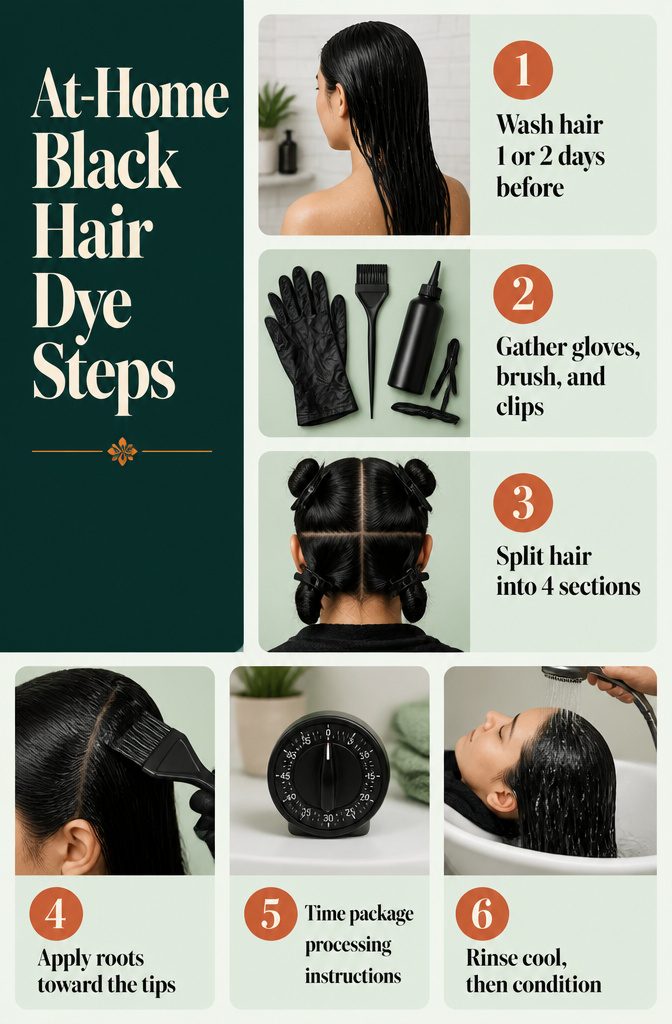
- Wash your hair 1 or 2 days before dyeing. Your scalp’s natural oils act as a shield, so skip oils and heavy styling products right before.
- Gather gloves, a tint brush or the bottle applicator, and clips. A brush places color more precisely along the part.
- Split your hair into 4 sections and clip each one out of the way.
- Work one section at a time, applying dye from the roots toward the tips.
- Set a timer for the processing time printed on the package, and follow it.
- Rinse with cool water, then condition.
When to See a Colorist Instead
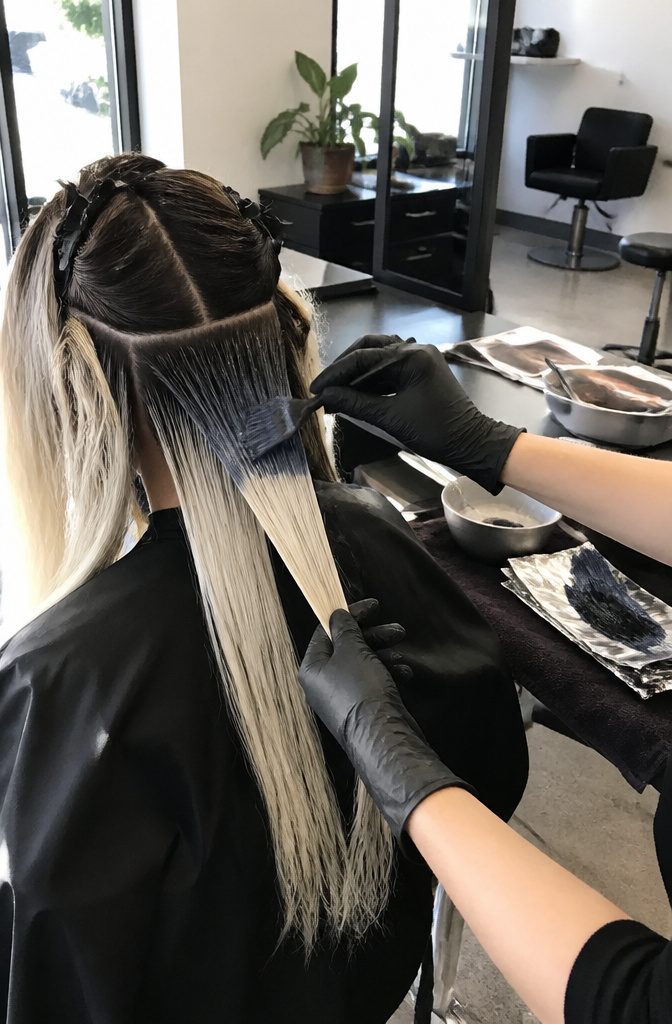
Going from blonde to black is the one color job I would hand to a professional.
Very light hair heading to black may need specialized processes to prevent damage, and a salon can match the method to what your strands can take.
Multi-tonal black, such as blue-black highlights, is the other case, since a single-shade box won’t build that dimension.
A trained colorist reads your current hair color and your skin’s undertones together, then customizes the black to flatter both.
Blue-black has hints of navy or indigo and works especially well on cool undertones, so a colorist can tell you whether it suits you or a softer black does. Bring your saved photos.
How Black and Dark Brown Fade
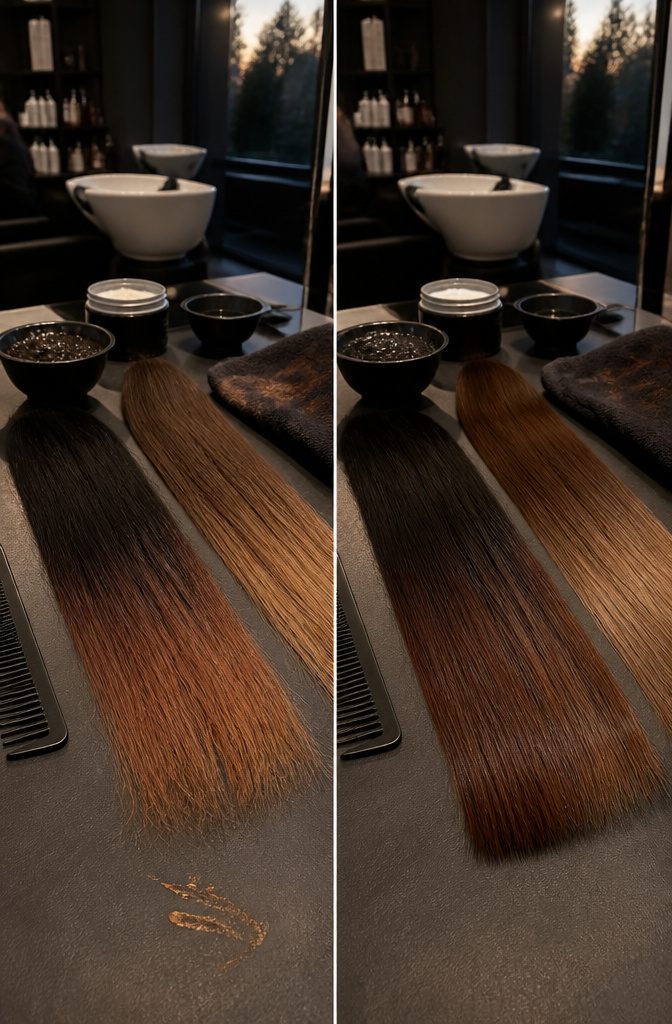
Black fades warm.
As the pigment wears down, dark black hair tends to drift reddish or brassy, especially at the ends. Dark brown goes the other direction: it lightens and slides toward caramel.
Black holds its tone longer than brown, which makes it the lower-maintenance choice if you dislike frequent touch-ups.
A color-depositing conditioner or mask is the easiest way to refresh faded color between appointments. Pick one in your current shade, not a darker one, so it blends instead of building up in patches.
A gloss treatment slows fading in both black and brown and brings back shine. I’d book it before the color looks tired, not after.
Keeping Black Hair Dark and Shiny
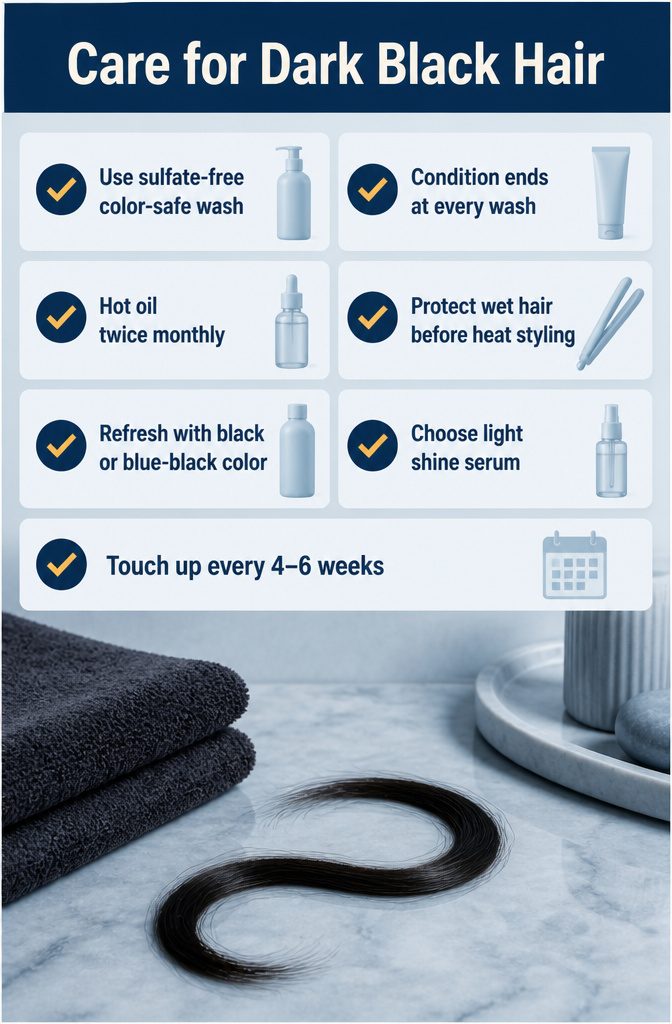
Black color shows dullness and regrowth faster than most shades.
- Wash with a sulfate-free, color-safe shampoo and conditioner. Skip clarifying formulas, which strip color.
- Condition at every wash, working it through the ends, the oldest and most fragile part of the hair.
- Add a hot oil treatment twice a month for moisture and elasticity.
- Apply heat protectant to wet hair before styling, and I’d keep flat irons and curling wands to a minimum.
- Between dye jobs, refresh with a black or blue-black color-depositing shampoo or conditioner.
- Finish with a light shine serum; heavy products weigh hair down.
- For jet or blue-black, plan touch-ups every 4–6 weeks, since black shows roots more than other shades do.
Frequently Asked Questions
How do I tell if my hair is black or dark brown?
Look at it in strong light. If you see a warm cast, it’s dark brown.
True black is the deeper, more intense of the two and barely changes tone as light moves across it, while dark brown reads softer and richer with brown, red or warm notes.
Is black hair just dark brown hair?
Natural black hair is a very deep dark brown with a high concentration of eumelanin, so in that sense the two overlap.
Dyed jet black is different because it has no visible brown undertones. Dark brown is not simply a lighter black either: it shows warm undertones and brown or red highlights, while black stays deep and neutral.
What are the different shades of black hair color called?
The six main types are jet black, soft black, blue-black, brown-black, natural black (1B) and off-black.
They run from the flat, glossy intensity of jet black to off-black, the softest of the group, which is a deep brown with cool ash tones.
Which dark black hair shade suits my skin tone?
Match the shade to your undertone. Blue veins and a pull toward silver jewelry mean cool undertones, which suit jet black or blue-black.
Greener veins and gold jewelry mean warm undertones, which suit brown-black or soft black. A colorist can fine-tune the hue if you’re unsure.
Will black hair wash out fair skin?
It can. A cool black creates strong contrast against fair skin, especially skin with a pink cast, and the face can look paler or washed out.
Off-black lowers that contrast, and dark brown gives lighter and medium skin tones a softer, more balanced look.
What is off-black hair?
Off-black is deep brown with cool ash tones, and it sits at the softest end of the black spectrum.
It gives you the depth of black without the full intensity of jet. It works well on cool-toned or pale complexions that look drained next to jet black.
Does black or dark brown hair fade less?
Black holds its tone longer than dark brown, so it usually needs fewer color refreshes.
As it does fade, it drifts reddish or brassy, mostly at the ends, while dark brown lightens toward caramel. A gloss treatment slows fading in both and restores shine.