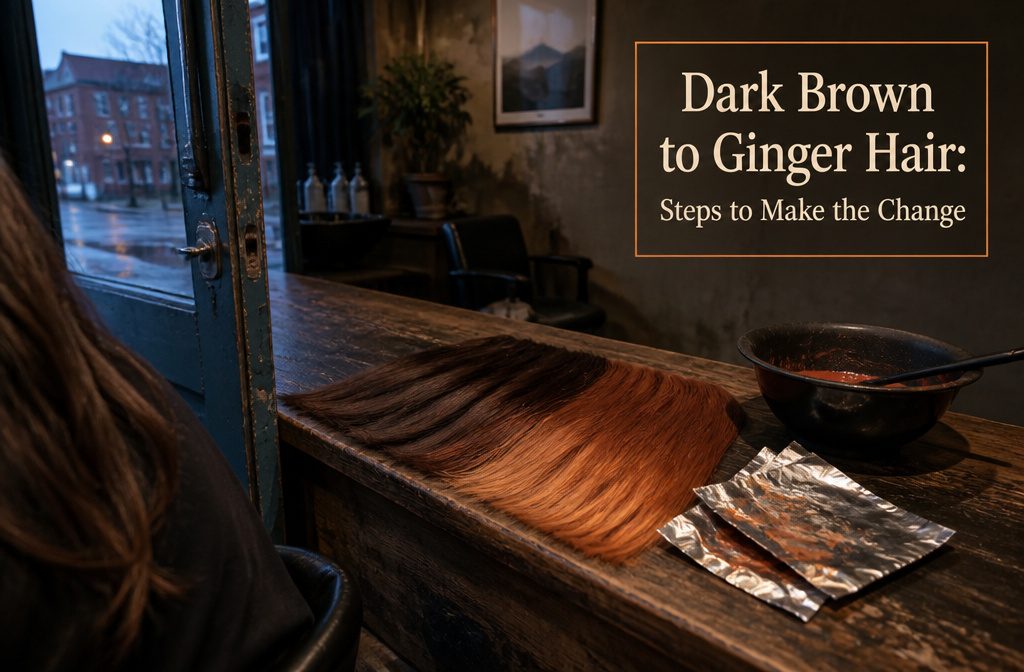
Ginger over dark brown is a copper-red dye job, and whether the red shows depends on your starting level.
Natural hair at level 6 or below, or any previously colored hair, needs bleach first. A 40-volume developer lifts up to 8 levels, to the pale yellow where red reads truest.
1. Assess Your Starting Hair and Choose Your Target Shade
The first thing to sort out is whether your hair is virgin or previously colored, because that changes what the color needs in order to stick.
Virgin dark brown hair can often take red dye without any bleach if you want a subtle reddish tint. Previously colored hair needs bleaching no matter what, since dye cannot lift dye.
The ginger-brown spectrum runs wide. On one end you have bright copper leaning hard into red, on the other a deeper brunette with just enough warmth to read as ginger in certain light.
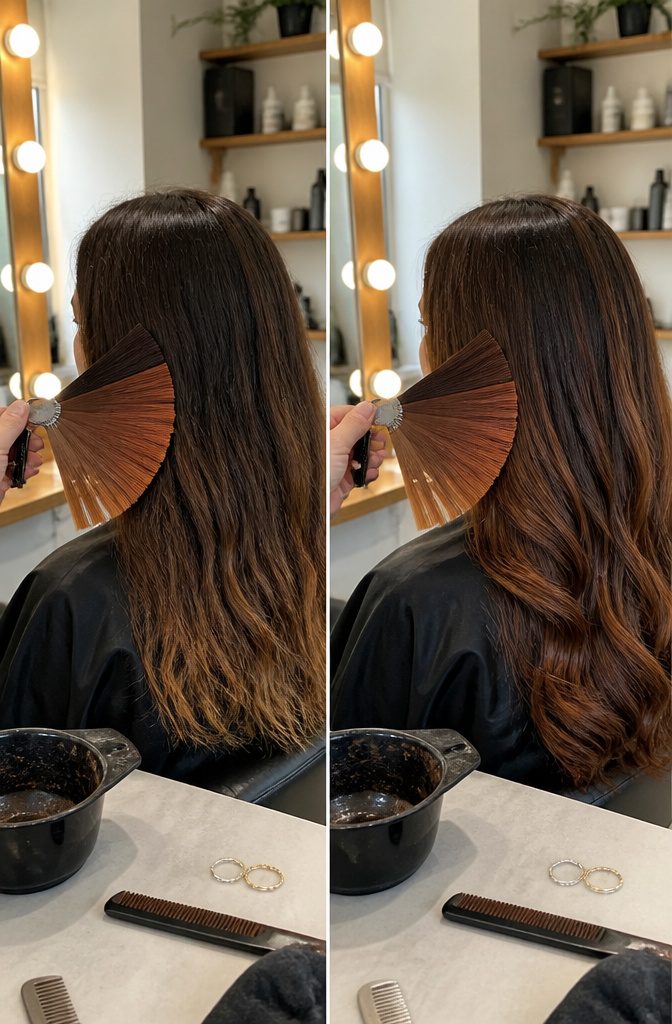
These shades typically live between level 4 and level 7, so the target matters before you buy anything. I find it helps to hold swatches against your face rather than trusting a box photo, which rarely matches the actual result.
Skin tone steers the choice. Follow the two-shade rule: pick a color at least two shades lighter or darker than your skin tone, or you risk looking washed out.
Warm undertones suit golden or copper ginger browns, cool undertones can pull off darker or ashier versions. If you are not sure which you are, think about whether gold or silver jewelry looks better on you.
2. Decide Whether to Pre-Lighten
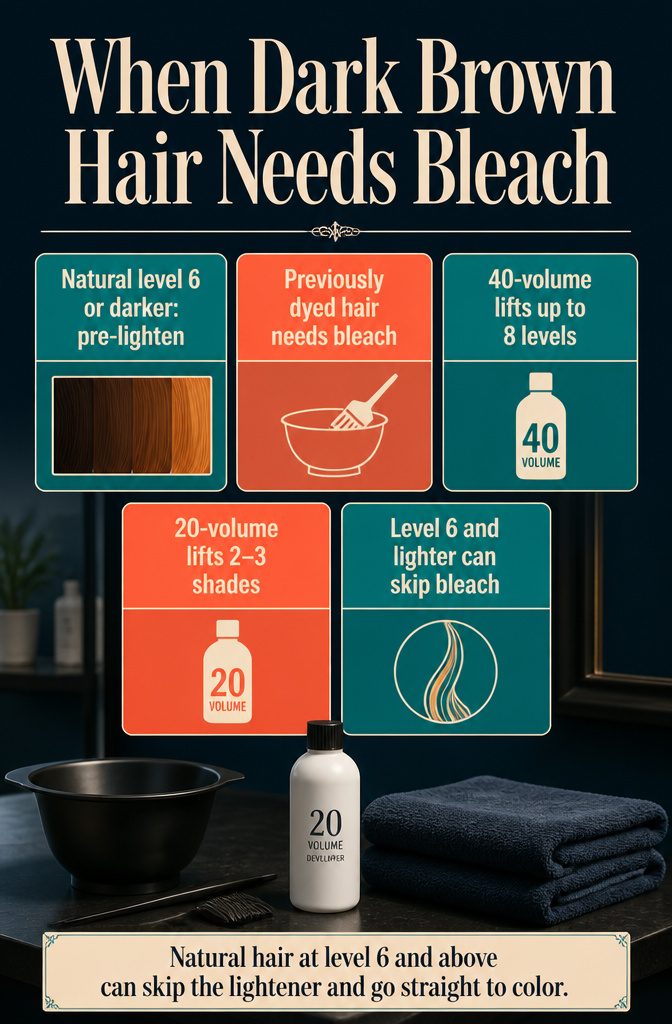
The question is whether your starting color is light enough to take red directly or whether it needs a bleach session first. If your hair is naturally dark brown at level 6 or below, you’re looking at pre-lightening.
The darker the base, the harder it is for red pigment to show without lifting first. Already-colored hair needs bleach too, since existing dye blocks new color from sticking the way virgin hair would.
For bright, coppery ginger, grab a kit with 30- or 40-volume developer. Forty-volume lifts up to 8 levels in one go, taking near-black hair to pale yellow where vivid red reads truest.
If you’re after darker, more brownish ginger, 20-volume developer is enough. It lightens 2 to 3 shades and gives you a warmer base without the full bleach commitment.
Natural hair at level 6 and above can skip the lightener and go straight to color.
The same goes if you want a reddish tint over your existing brown rather than a full ginger shift. I’d choose based on how much copper you want showing through: the lighter the base, the clearer the red.
3. Prepare and Lighten If Needed
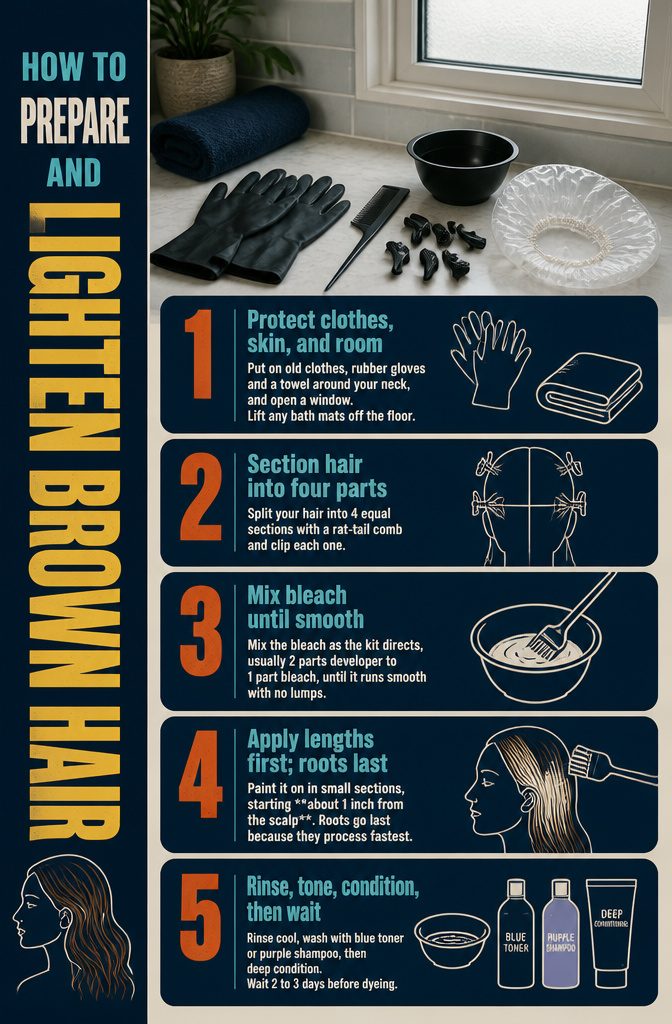
- Put on old clothes, rubber gloves and a towel around your neck, and open a window. Lift any bath mats off the floor.
- Split your hair into 4 equal sections with a rat-tail comb and clip each one.
- Mix the bleach as the kit directs, usually 2 parts developer to 1 part bleach, until it runs smooth with no lumps.
- Paint it on in small sections, starting about 1 inch from the scalp. Roots go last because they process fastest.
- Cover with a shower cap and wait about 30 minutes, following your kit’s exact timing. Check the lift as you go; pale yellow gives the truest ginger.
- Rinse cool, wash with blue toner or purple shampoo, then deep condition.
- Wait 2 to 3 days before dyeing.
I’d skip bleach on fragile, damaged or heavily colored hair. A lightener with bond protection limits the harm.
4. Choose and Apply the Color
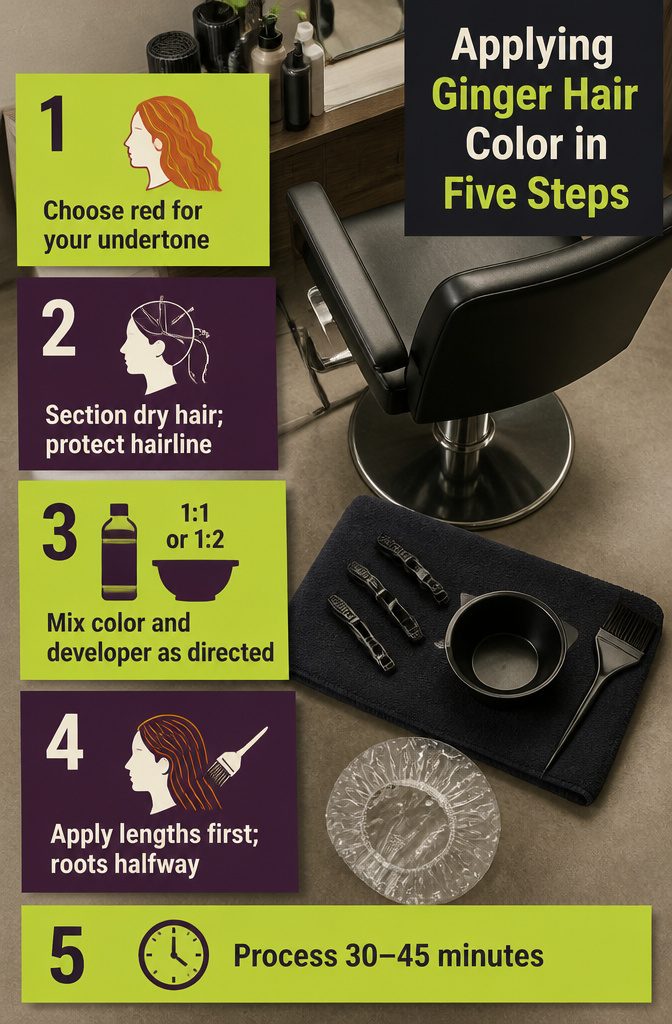
- Pick the red to match your undertone. Cool undertones (pink or pale skin, blue-looking wrist veins) suit cool, dark or ashy reds. Warm undertones (tan or olive skin, green-looking veins) suit bright or golden reds. Neutral undertones can wear almost any red.
- Part clean, dry or nearly dry hair into 4 sections and clip each one. Rub petroleum jelly along the whole hairline.
- Mix color and developer 1:1 or 1:2, as your box directs. For permanent color, use 20- or 30-volume; stronger developer means lighter color, which matters on dark brown.
- Start 1 inch from the scalp. Work from the back forward and saturate each section, top and underneath. Do the roots halfway through processing.
- Cover with a processing cap and leave it 30 to 45 minutes, per your product’s instructions.
5. Rinse and Condition
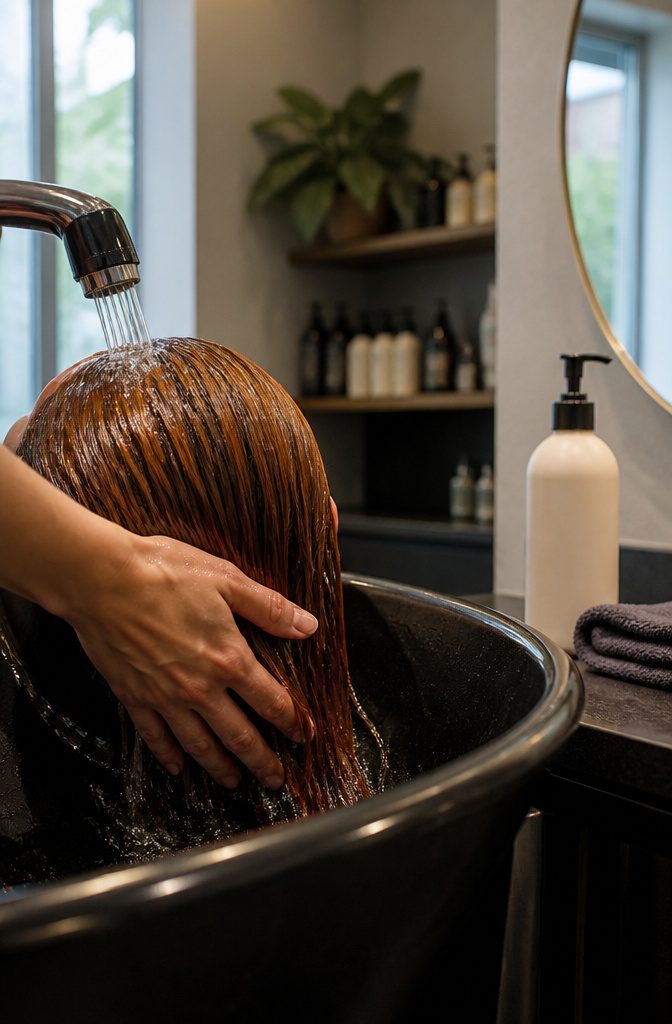
Rinse until the water runs clear, and keep it cool. Hot water lifts the cuticle and lets fresh ginger pigment slip out, which is how copper turns to a dull brown after one wash.
I run my hands through the roots and ends while rinsing, since leftover dye at the scalp can leave a darker band.
Finish with a color-safe conditioner.
It seals the cuticle, the outermost layer of each strand, and locks the tone in. Rinse once more with cool water, then blow dry or air dry.
Wait at least 3 days after coloring before you shampoo, so the color has time to set.
6. Maintain and Refresh the Shade
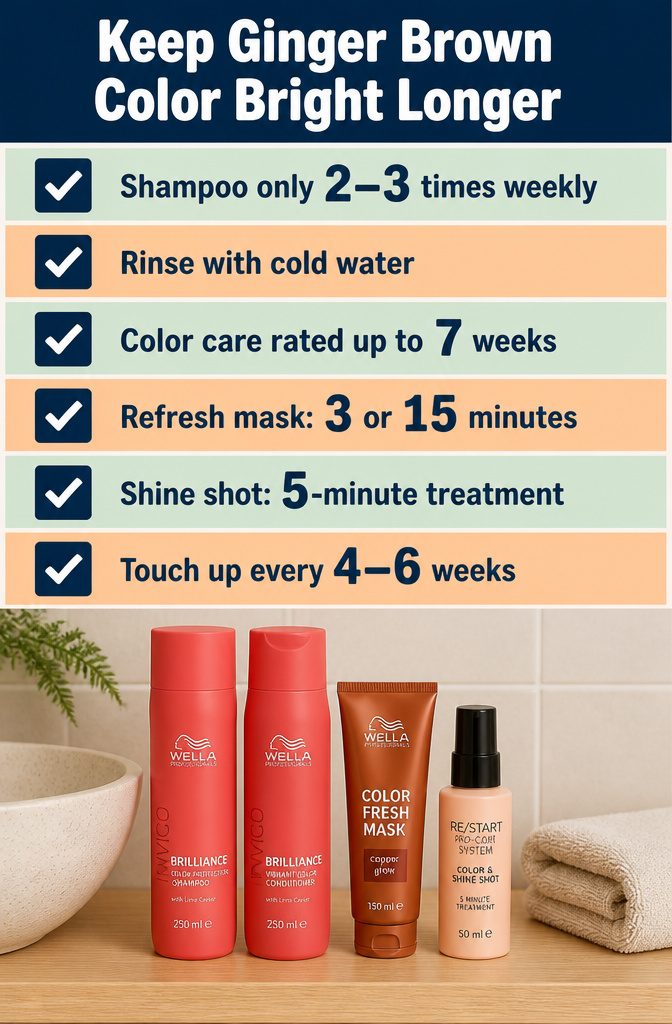
Red fades faster than any other shade, so the routine matters more here than the color you picked. After the first wash, shampoo only 2 or 3 times a week, and use cold water, since hot water pulls color out.
INVIGO Brilliance Color Protection Shampoo and Vibrant Color Conditioner are my pick for daily care: the low pH formula closes the cuticle, and the pair is rated for up to 7 weeks of radiance.
For tone, Color Fresh Mask in Copper Glow or Nutri Color Filters in 740 Light Copper and 400 Tangerine work on clean, towel-dried hair.
Leave them on 3 minutes to refresh or 15 for deeper color. The RE/START Pro-Care System Color & Shine Shot adds a 5-minute treatment.
Plan a touch-up every 4 to 6 weeks, left on 15 to 20 minutes.
Ginger Brown Shades for Different Skin Undertones
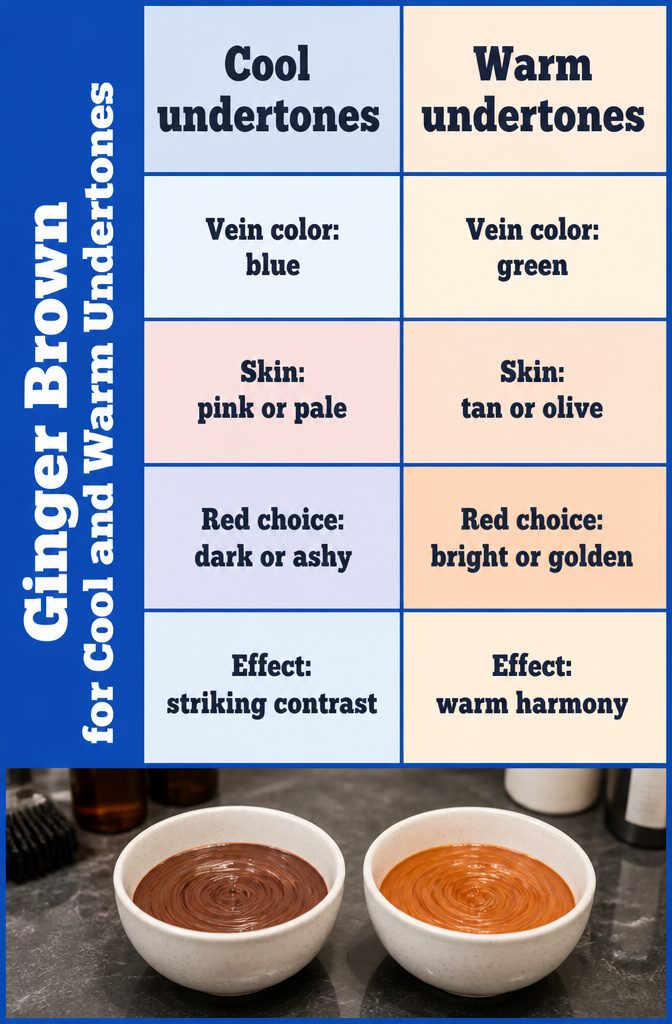
Ginger brown sits at the warmer end of the red-brown spectrum, blending copper, auburn and chocolate tones in a way that adjusts toward more red or more brunette depending on how much warmth you want.
The balance makes it adaptable rather than locked to one look, and the warmth itself does different work depending on your skin.
If you have cool undertones—pink or pale skin, blue veins at the wrist—opt for cool, dark or ashy reds.
The contrast between cool skin and warm ginger tones can look striking, but steering the shade toward a richer, less bright red keeps it grounded.
For warm undertones—tan or olive skin, green veins—bright or golden reds work in harmony with your complexion, and ginger brown feels like a natural extension of that warmth.
Neutral undertones get the widest latitude: you can pull off almost any red, so the choice comes down to whether you want the color to lean fiery or subdued.
Salon Formulas and Placement Techniques
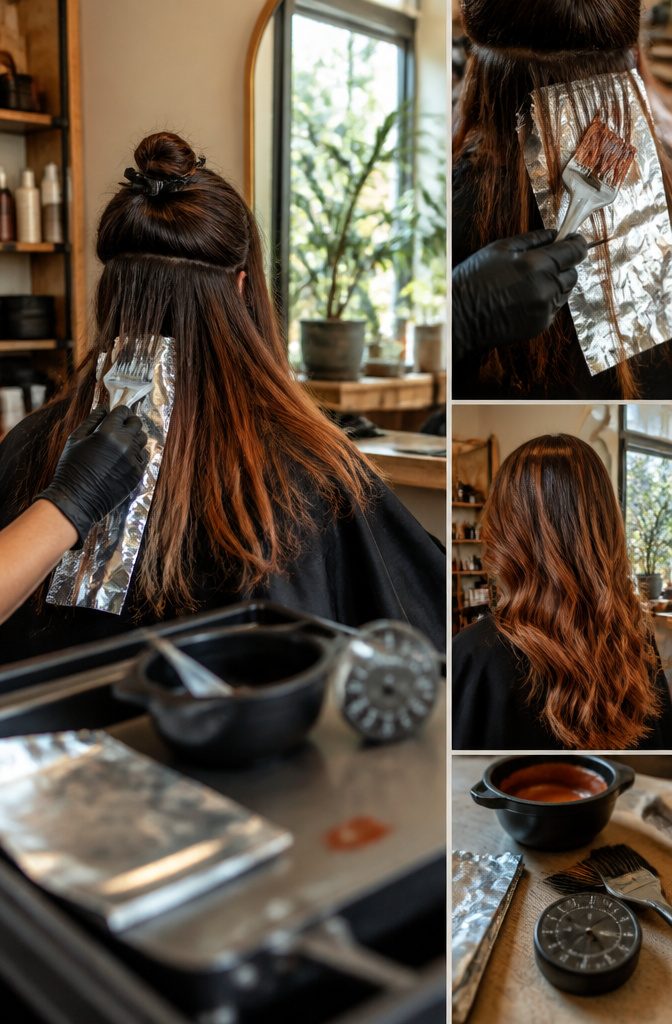
For a ginger that leans red more than brunette, the salon formula starts with BlondorPlex + 3% on virgin hair, lifting it to a blonde level 8.
Illumina Color 6/37 + 7/43 + 1.9% goes on the roots for 15 minutes, then gets melted through the lengths for another 15 minutes under heat. After the rinse, a five-minute gloss with Color Fresh Mask in Copper Glow finishes it.
If you want a gentler first step, the brunette-base version wins. Color Excel 5.23 plus a touch of 4 sits at the roots and blends into 7.43 with a touch of 6.4.
Apply it over lighter sections already in your hair for a reverse balayage, or refresh the pieces around your face first. The warmth suits all complexions, and I’d choose it for anyone nervous about going fully red.
Hair Damage and Recovery
Bleach is where the damage happens. One woman who bleached her light brown hair at 18 ended up with strands that held no color at all.
Her stylist dyed it back to brown and cut 14 inches into a blunt bob. She later dyed it ginger every month for seven years, so the cut was a reset, not an ending.
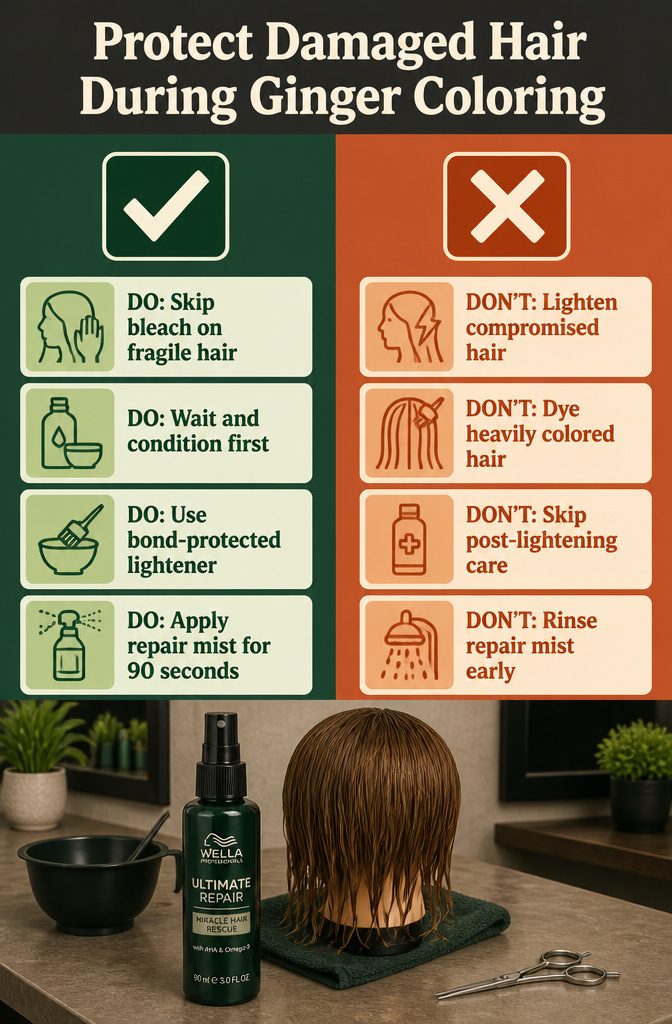
Skip bleach and dye entirely if your hair is fragile, compromised or already heavily colored. Wait and condition first.
If you do lighten, a quality lightener with bond protection, such as Magnet with its BondIN System, limits the harm.
Afterward, mist Ultimate Repair Miracle Hair Rescue on towel-dried hair and leave it 90 seconds. It lasts four washes.
Frequently Asked Questions
What is ginger brown hair?
Ginger brown is a blend of warm, red-infused shades: copper, auburn and chocolate.
It is what you get when brown and ginger meet in the middle. You can tilt it toward red or toward brunette depending on how much warmth you want, and it reads softer and more wearable than a bright copper.
How do you go from dark brown to ginger hair?
For true ginger, dark brown hair usually has to be lightened first, using 30- or 40-volume developer (40-volume lifts up to 8 levels).
For a deeper, brownish ginger, 20-volume developer lifts 2 to 3 shades and is enough. Virgin hair can often take a red dye with no bleach if you only want a subtle reddish tint, but previously colored hair always needs bleach.
After lightening, apply a red matched to your undertone, rinse with cool water, and wait at least 3 days before your first shampoo.