Your hair’s density decides how many layers to ask for: short layers make fine hair look fuller, while thick hair needs them to lose weight and separate softly.
The cuts here run from the Textured Pixie and Long Pixie up to the Layered Lob, with bobs, shags, a Curly Wolf Cut, a Curly Mullet and the Bixie Cut (part bob, part pixie) in between.
1. Shaggy Bob
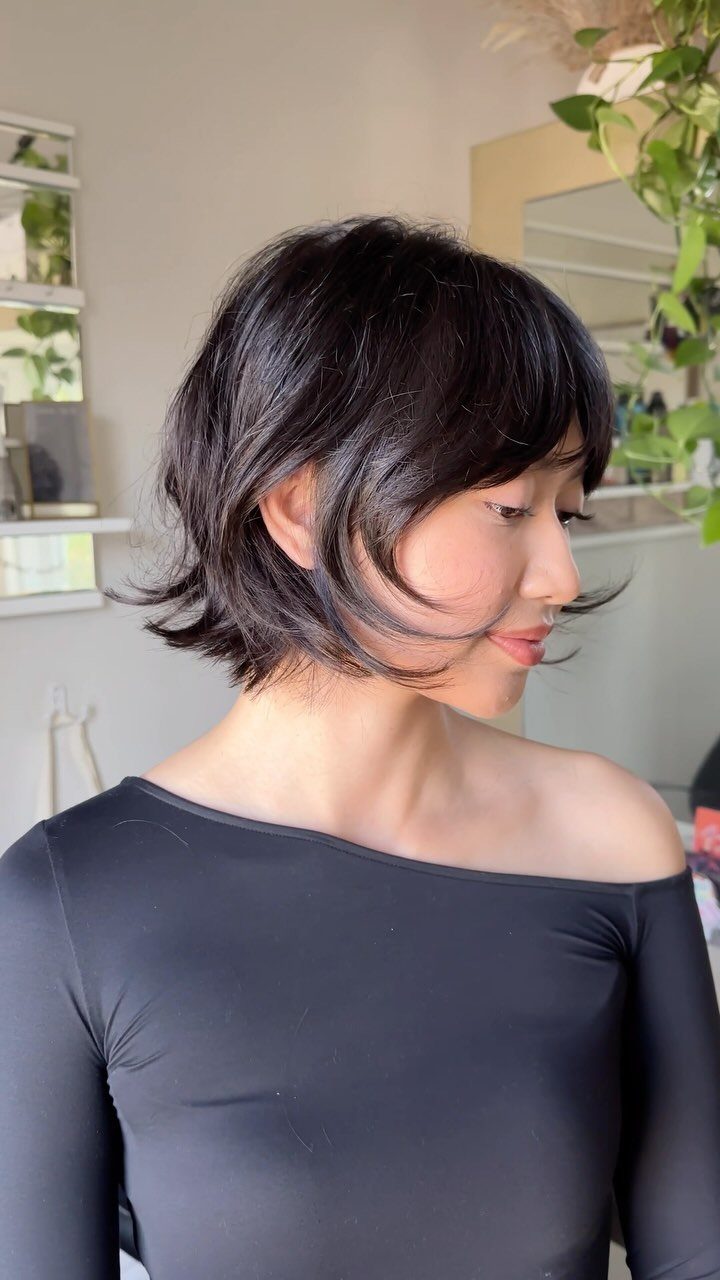
Grunge lives in the ends of this cut. Choppy layers interrupt the bob’s outline, so the hair looks lived-in rather than polished, and the ends flip outward with plenty of movement.
I like it best on dark hair, where the cut’s texture reads clearly. Ask for it by name, bring a photo, and say you want choppy layers, not a smooth, even line.
2. Bixie Cut
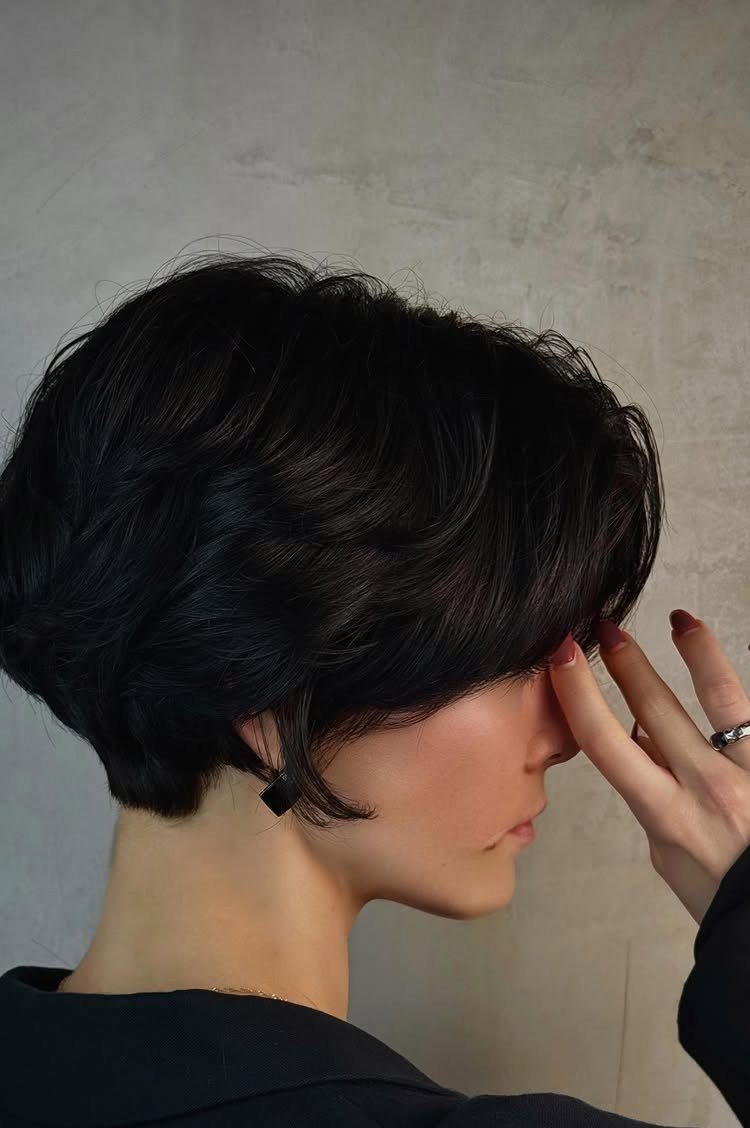
Half bob, half pixie: that is the bixie. It keeps a short, cropped shape but adds layers, so strands swing instead of sitting flat against the head.
I would pick it if you can’t decide between a bob and a pixie. Say both words to your stylist and show a photo, since "bixie" can mean slightly different things from one salon to the next.
Finch refers to the butterfly bob as “a shorter ‘Rachel from Friends’ haircut”, adding that the best way to visualize it is by comparing it to famous variations of ’90s-inspired bobs.
3. Layered Lob
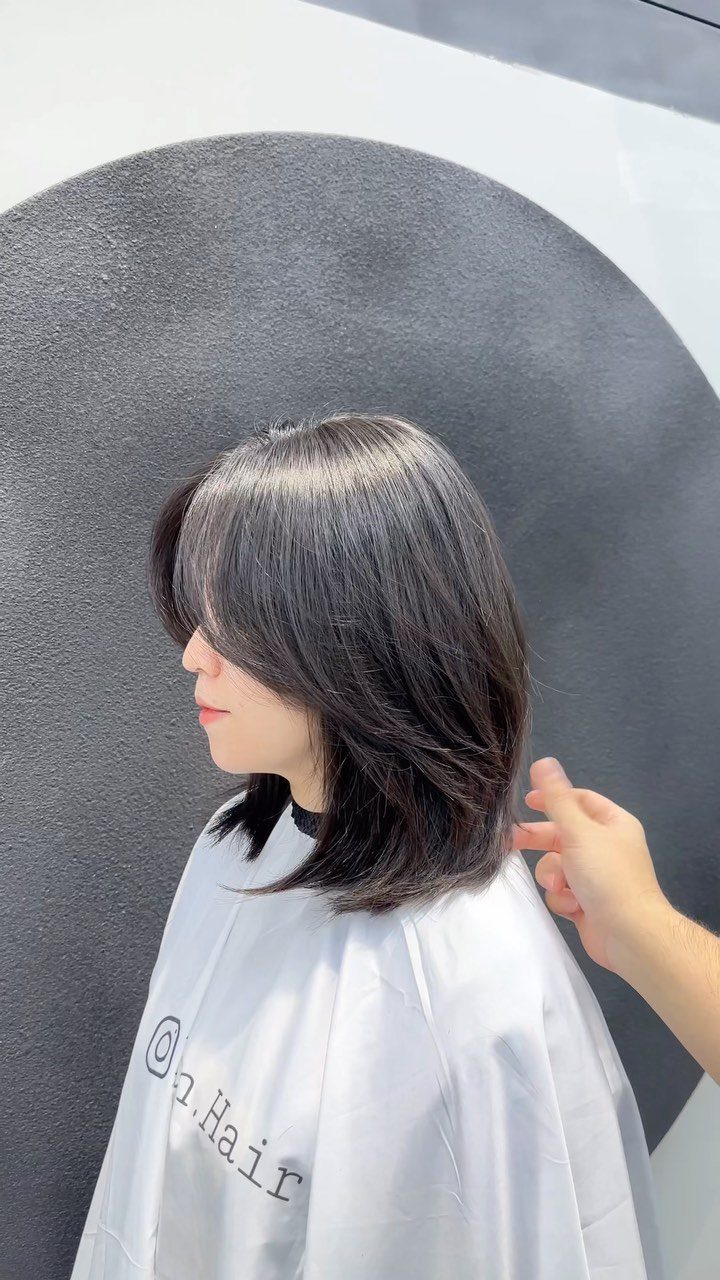
Ask for side-swept bangs and feathered ends, because they give a lob its softness. The length stays longer than a classic bob, while the layers keep it from falling in one heavy sheet.
Layers are the detail to specify when you book. Without them, a lob can look like a blunt cut that simply grew out, so I’d say the feathering earns this version its spot on your saved list.
4. Curly French Bob
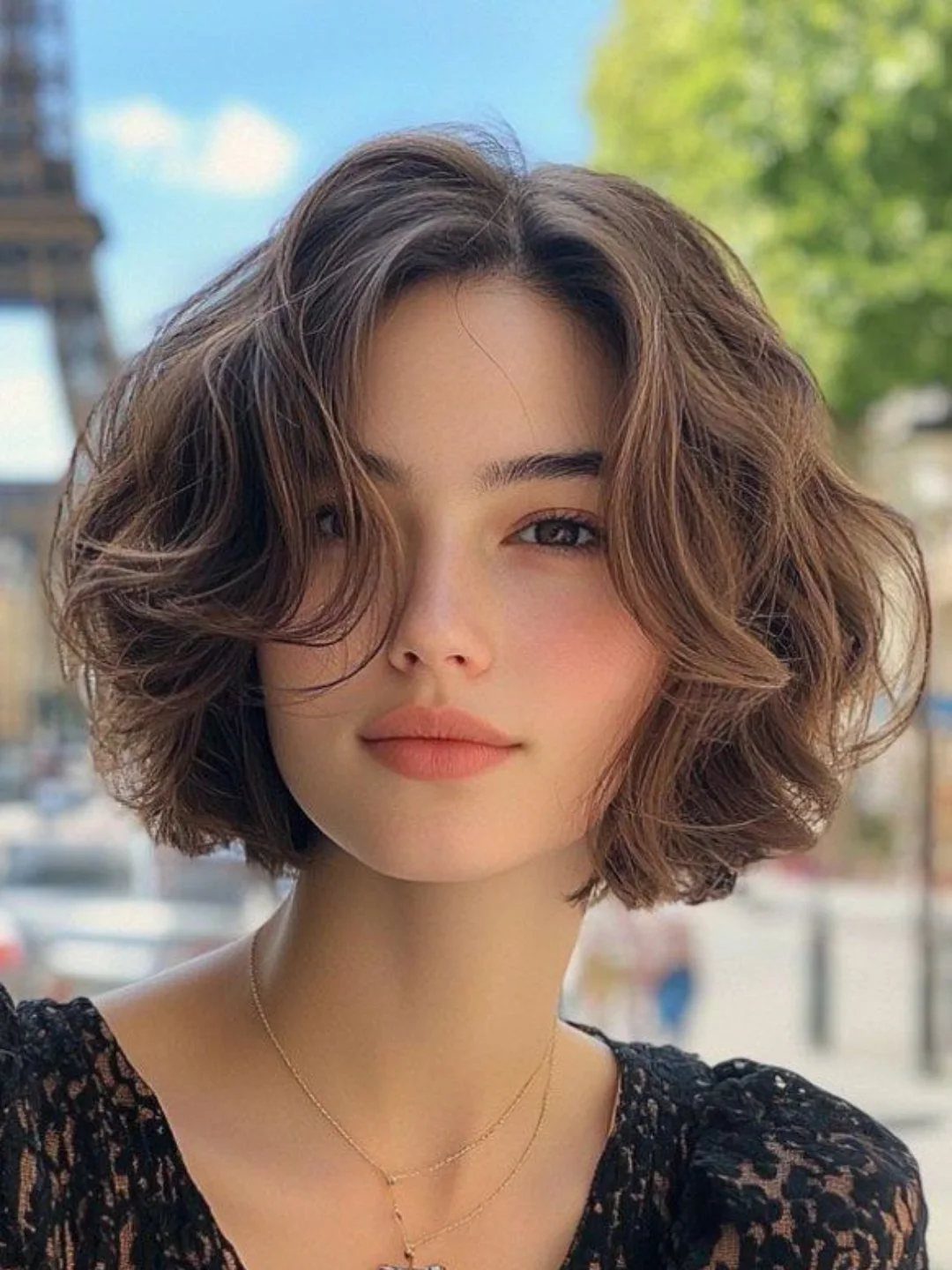
Chin-length, softly curled and layered: that is the French bob in its curly form. The layers give the curls room to sit in a rounded shape instead of stacking up at the sides.
Brown looks lovely here, because the curl pattern shows up in the shifts of light through each layer. Show your stylist a photo of the curl, not only the length, so the cut is shaped for it.
5. Layered Bob with Bangs
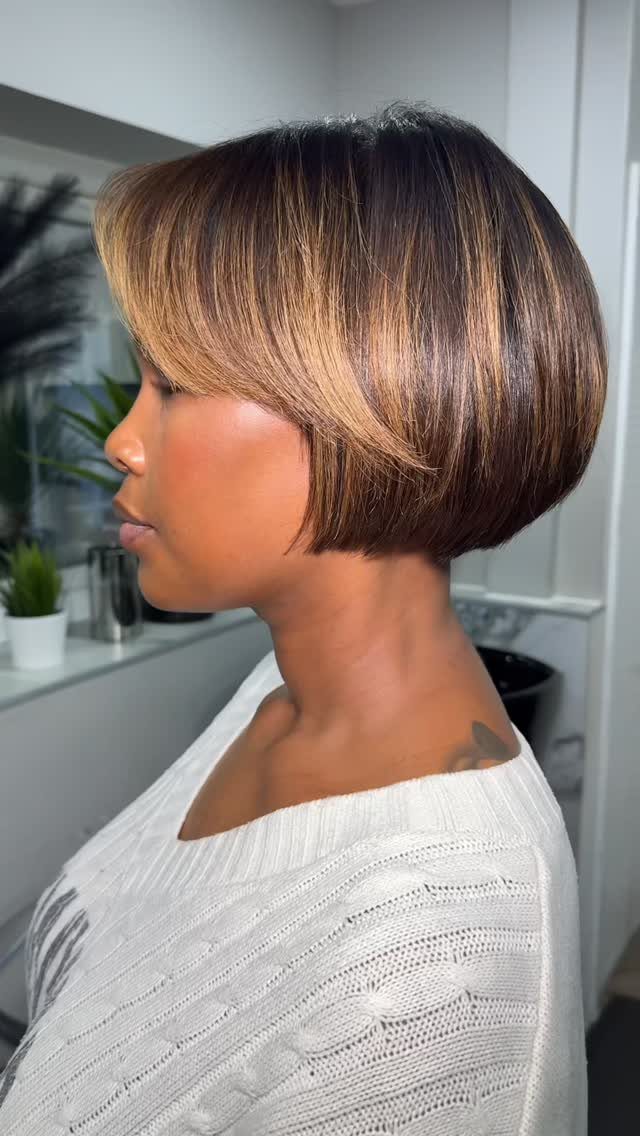
Bangs do the framing in this bob. Side-swept, they sweep across the forehead and lead the eye toward the layered ends, which keep the shape from feeling heavy.
Highlights show up well in a cut like this, since layers and fringe both reflect light at different angles. Choose side-swept over blunt for a softer line near the face.
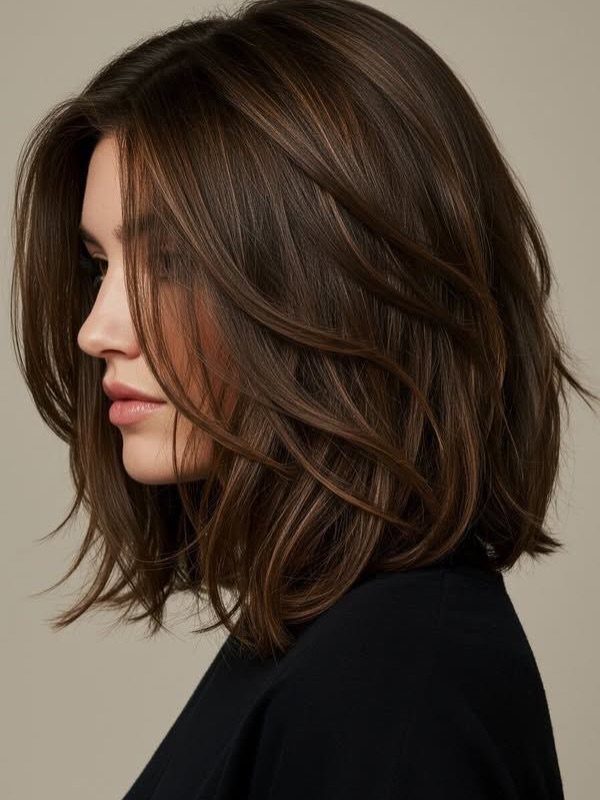
6. Beachy Layered Lob
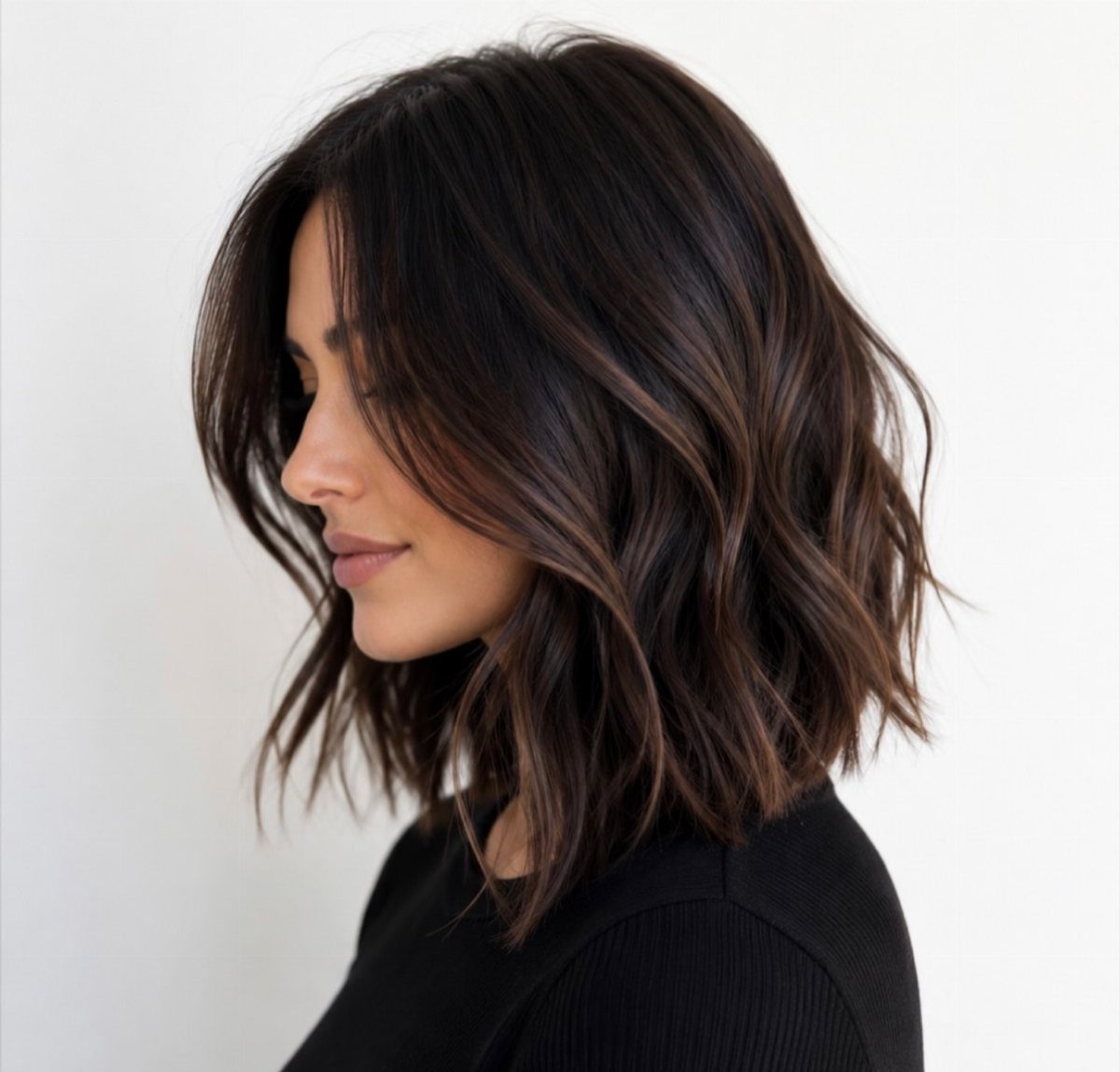
Tousled waves and soft face-framing layers define a beachy lob. It sits at the shoulders, and the layers around the face keep the length from looking one-note.
On dark brown hair, the waves give the cut dimension without any added color. I would ask for the layers to start near the face and let the texture do the rest.
7. Textured Pixie
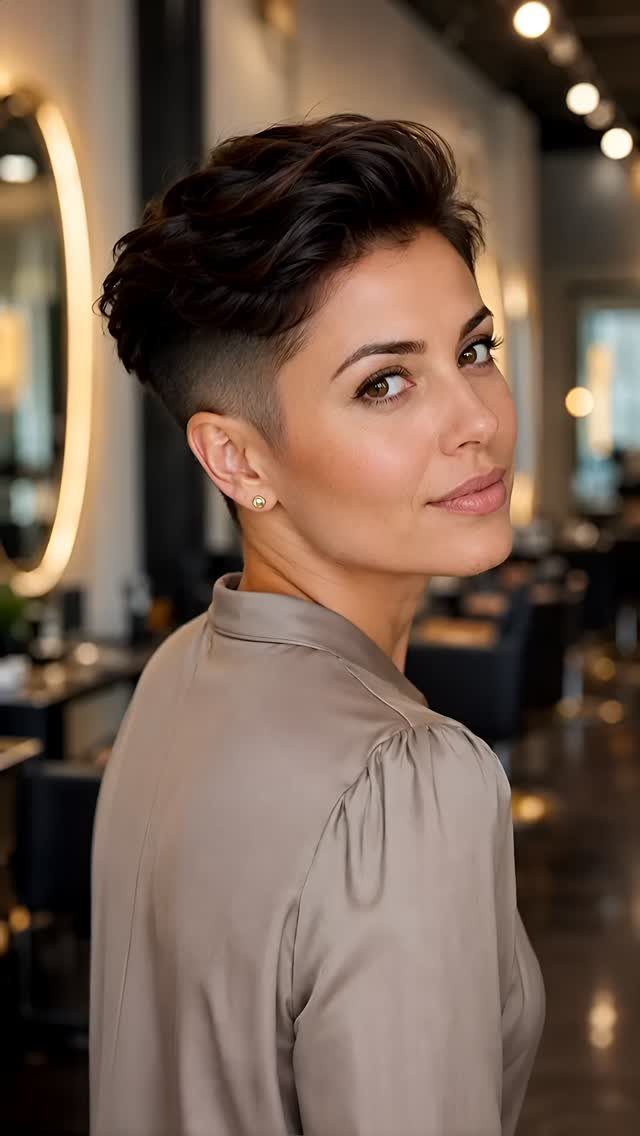
Layers build volume and definition in a textured pixie, so the cut looks deliberate rather than flat. The sides stay short, and the top gets more length, which gives you something to style if you want movement.
Ask for texture through the top and shorter sides.
If your hair is fine, this cut makes it look fuller. If it’s thick, the layers remove weight and keep the shape from going boxy.
8. Slicked Back Pixie Bob
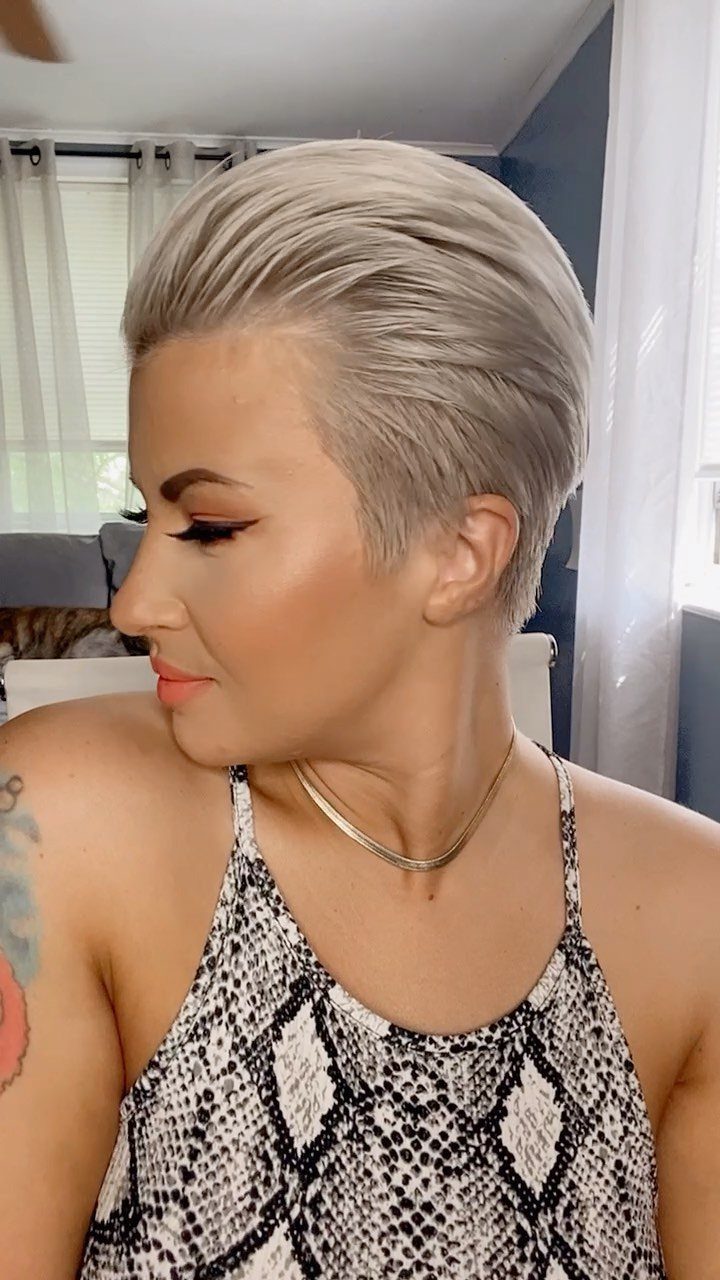
This pixie bob sits polished and close to the head, with the top slicked back and the sides tapered short. It’s a clean, high-shine look that works best when you style it wet with gel or pomade.
The tapered sides keep the shape sharp, and the length on top gives you enough to slick. I would choose this if you like a finished look and don’t mind restyling it every morning.
9. Tapered Face-Framing Bob
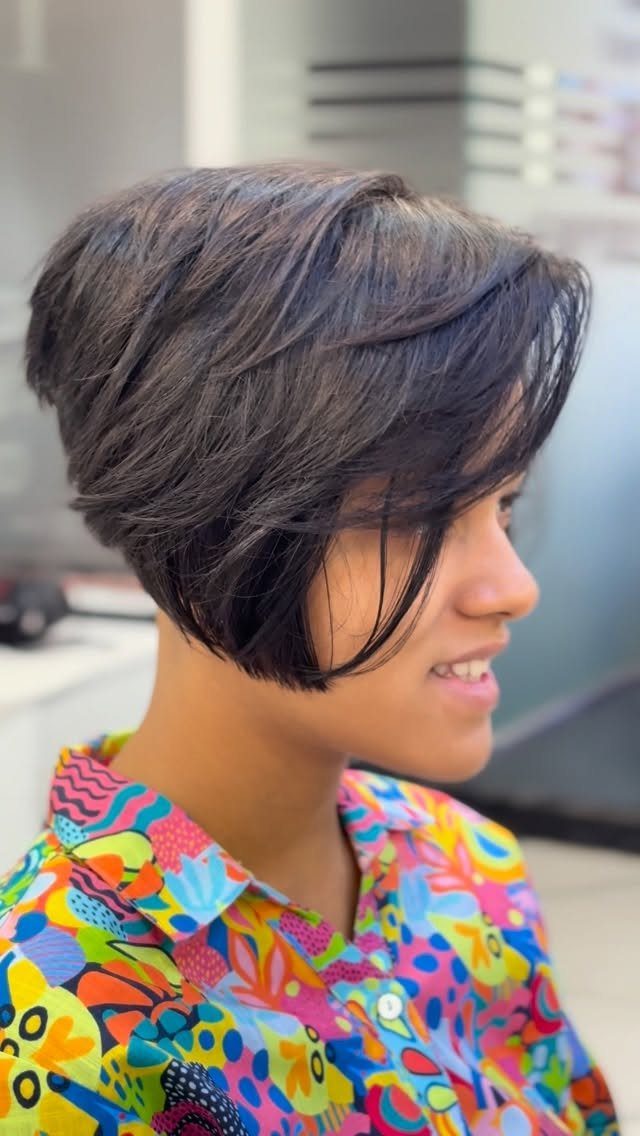
The tapered ends soften a short bob, and the face-framing pieces add length where it matters. The cut keeps the back short and the front slightly longer, so it opens up the face without losing the bob’s structure.
Tell your stylist you want a tapered nape and layers cut around the face, since those 2 terms cover the whole shape.
On dark hair, the shape shows up clearly, and you won’t need highlights to see the layers do their job.
10. Tapered Bixie
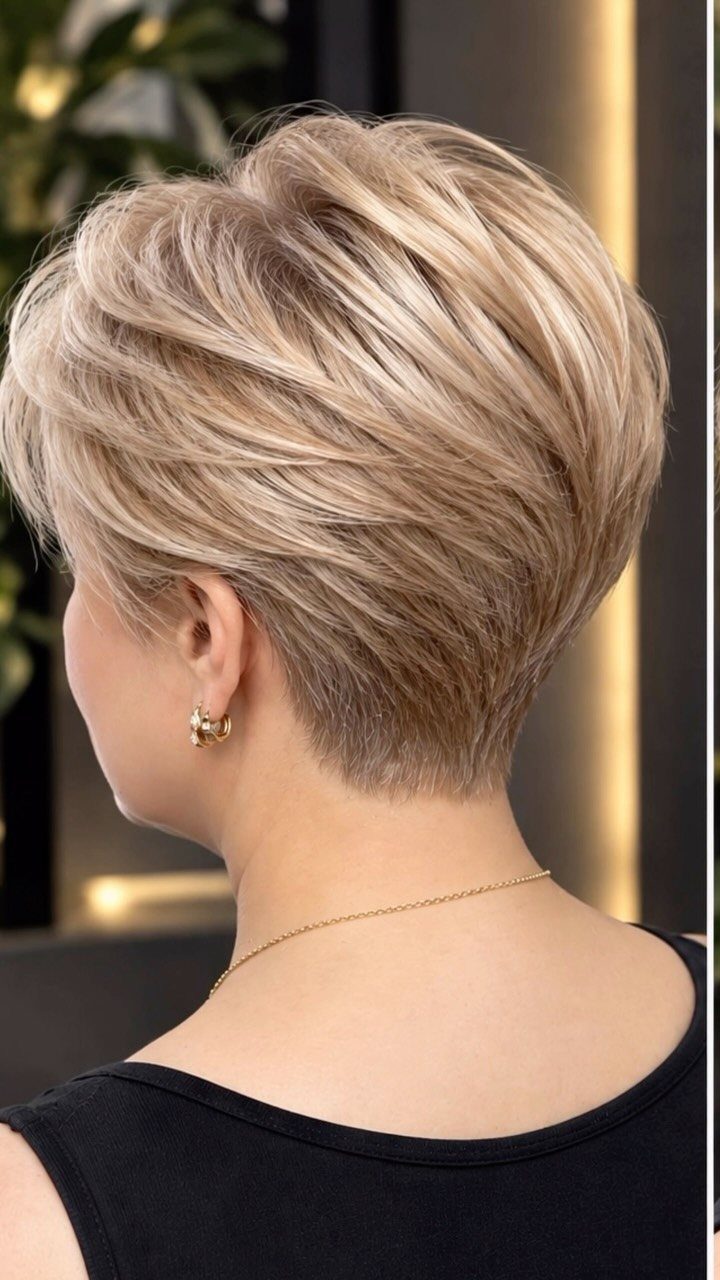
A tapered bixie keeps the lines crisp, with short, neat sides and a longer top that sweeps to one side. The taper at the nape makes the cut feel finished, not grown out.
Show your stylist a photo, because the taper is what separates this from a standard bixie. If you prefer a polished look over a messy one, the clean lines here will suit you better than a textured version.
11. Wispy Bob with Bangs
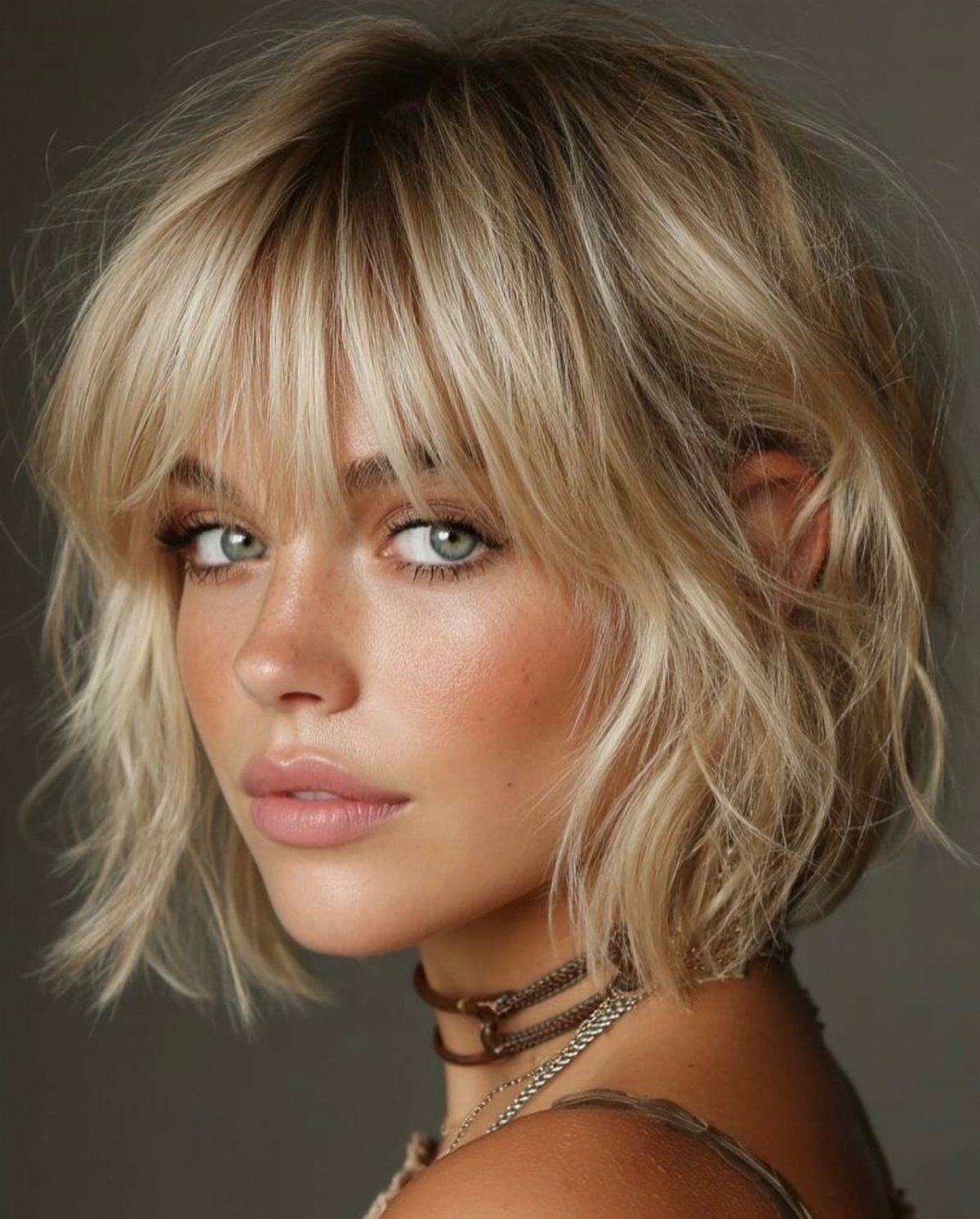
Wispy layers give this bob its softness, and the bangs keep the shape from feeling too structured. The ends are textured, not blunt, so they move when you turn your head.
For this cut, request wispy, see-through bangs and ends that are cut in layers so they separate softly.
On fine strands, the choppy ends create the look of more body while keeping the weight low. Blonde shows off the wispy texture well, but the cut works on any color that lets you see the layers.
12. Sleek Layered Bob
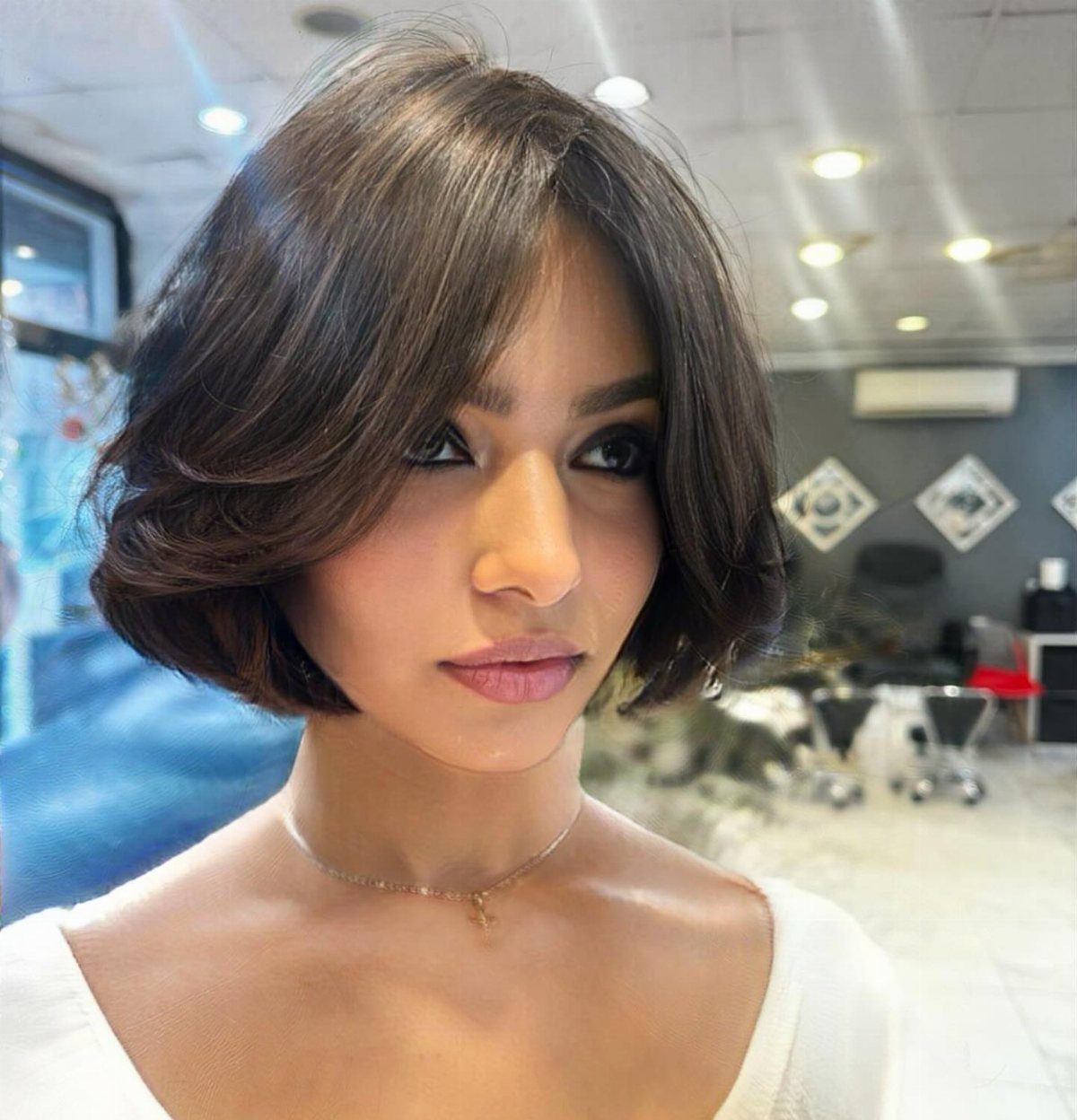
The layers in a sleek bob are subtle, blended so well that the cut looks polished rather than choppy.
Keep the length at chin level and have the bangs swept to one side, so the front softens without breaking up the outline.
I like this one for a more finished look.
The layers give the bob some movement, but you won’t spend time styling texture into it. Ask for blended layers and say you want sleek, not shaggy.
13. Pixie with Side Bangs
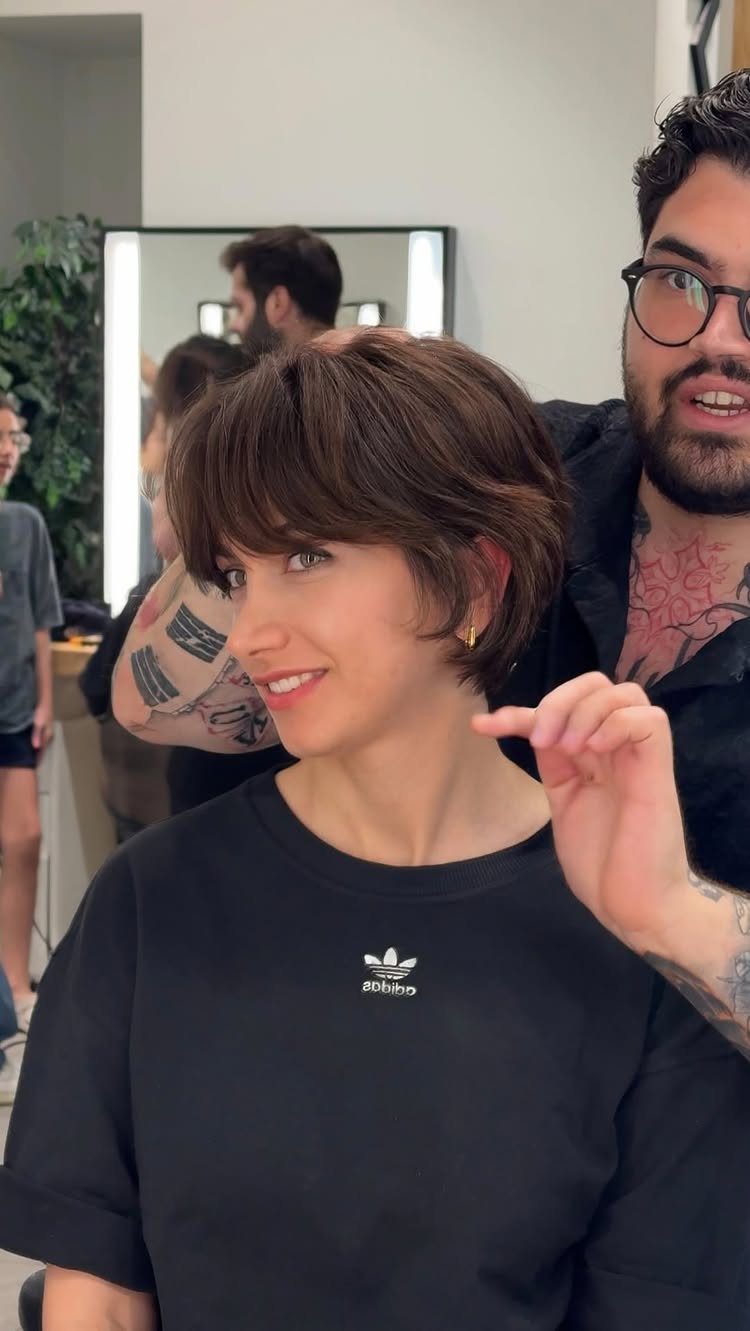
A long side-swept fringe against short, choppy layers gives a pixie its softness. The sides and back stay cropped, while the bangs sweep across the forehead and hide or reveal as much as you like.
On brown hair, the choppy layers read clearly.
Ask for texture cut through the crown and a fringe long enough to tuck behind the ear, then show your stylist a photo so the length of the bangs is settled before the scissors come out.
14. Short Shag with Wispy Bangs
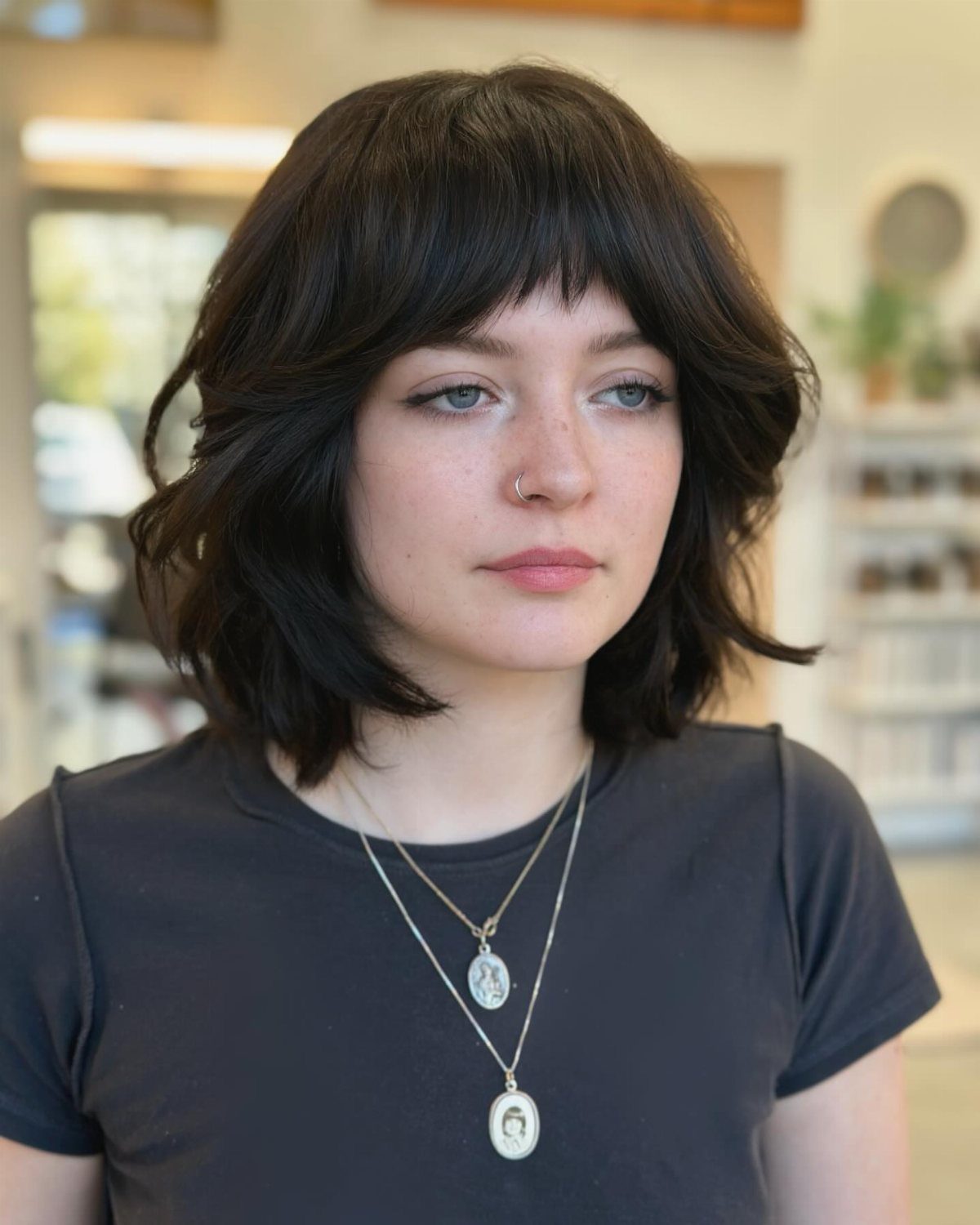
Wispy bangs make a short shag look lighter than the layers alone would. Dark brown shows off the shape well, since each choppy layer stays visible instead of blending into a single mass.
I would ask for the shag cut short with the fringe thinned out, not heavy. Bring a photo, and say "wispy" out loud, because a blunt fringe on this cut changes the whole look.
15. Curly Wolf Cut
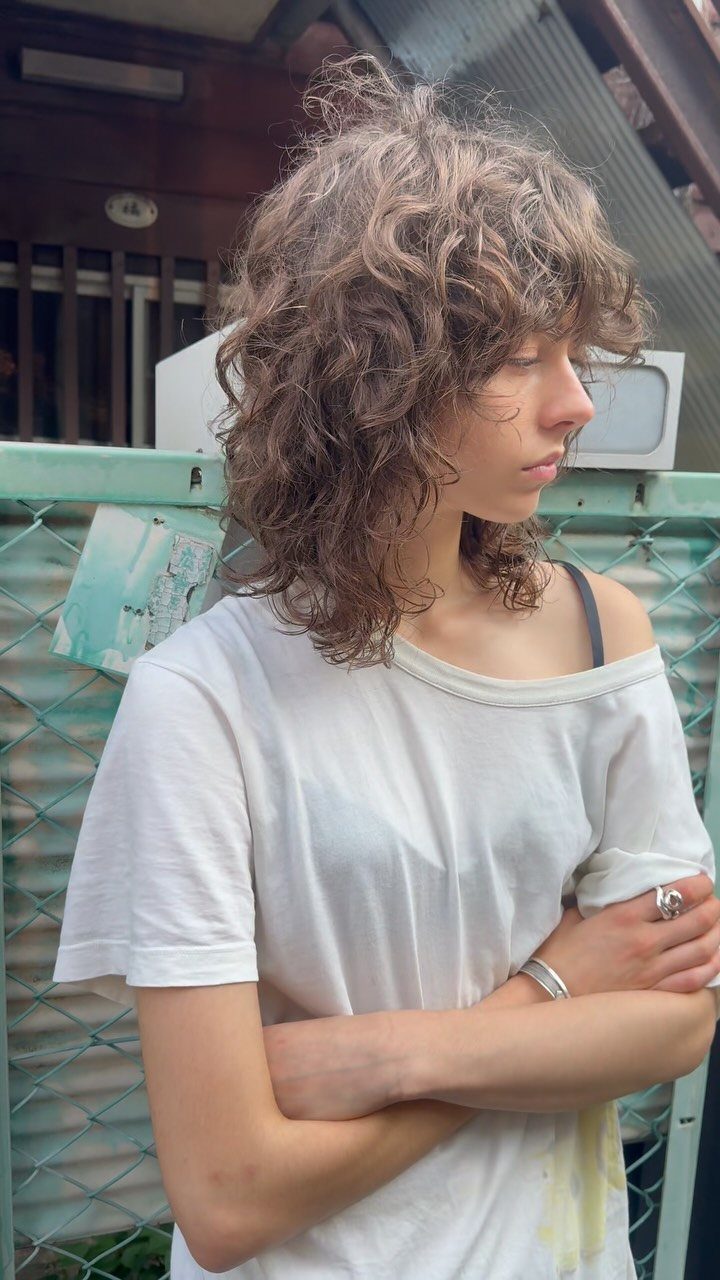
Curls are what make a wolf cut work this well. The layers separate into distinct pieces, and the back runs longer and shaggier, which gives the shape its mullet-like edge.
Tell your stylist you want the layers cut with your curl pattern in mind, and show a photo of the longer back.
On brown curls the tousled finish takes little effort, so I’d pick this if you want shape without a strict routine.
16. Short Curly Shag
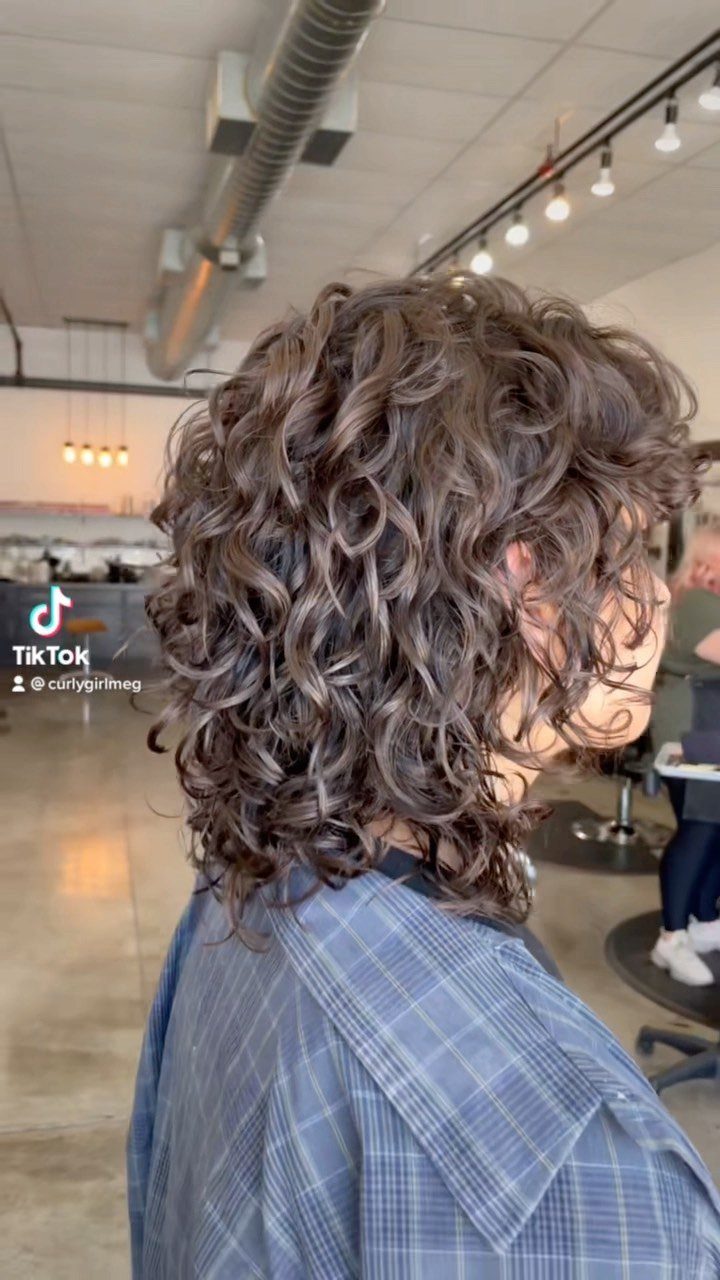
Natural curls deserve a shag cut around their own pattern. Choppy layers keep the curls from stacking into a triangle, and the short length lets each curl sit in its own space.
Ask for a stylist who cuts curly hair, and request layers shaped for curl, not straight-hair layering. I think dark curls suit this cut especially well, because the choppy pieces show up as clear, defined shapes.
17. Layered Shag
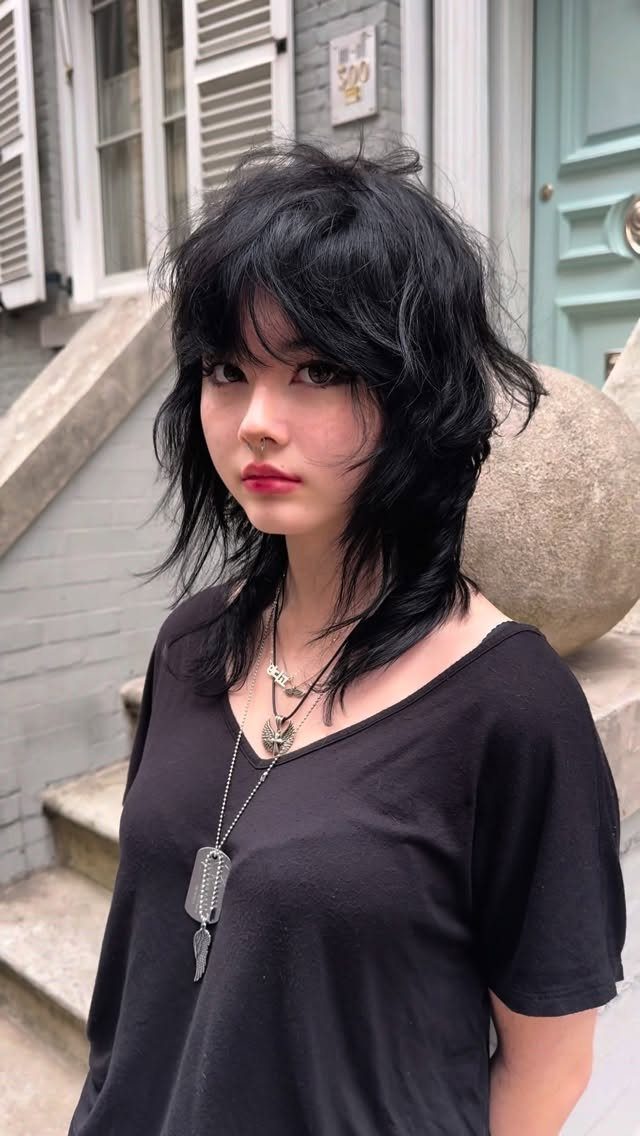
Black hair gives a layered shag its strongest outline. The layers stack with face-framing movement, and loose waves keep the shape from looking stiff.
Tell your stylist to begin the layering near the face, then let the texture build as it moves down toward the tips.
I’d choose this if you want the shaggy look but prefer a shape that moves softly over one that stands up in chunks.
18. Choppy Pixie
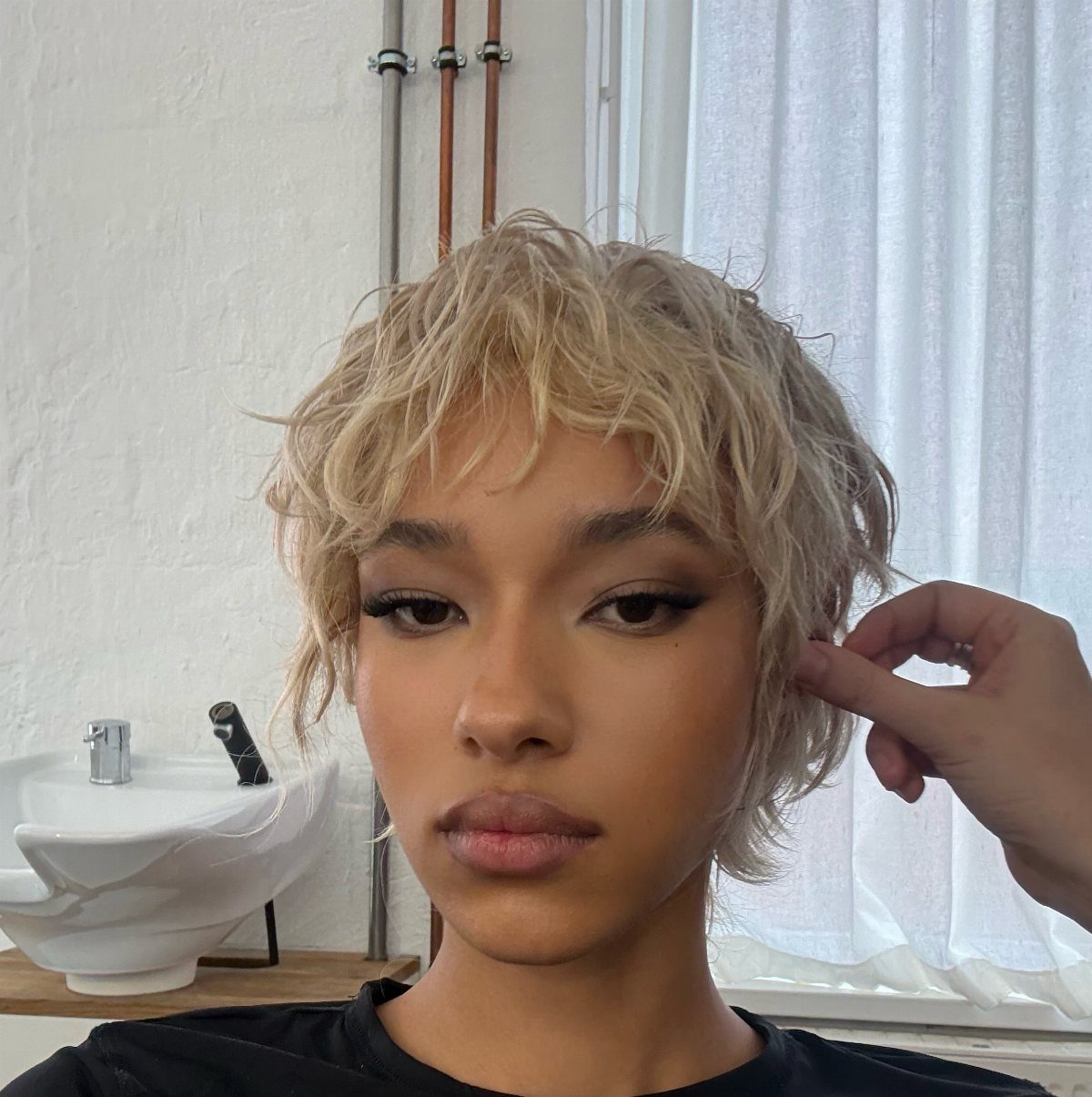
Edge is the whole idea of a choppy pixie: short layers cut at uneven lengths so the top stands up with volume. Blonde makes each piece visible, which suits the tousled finish.
Ask for choppy layers on top and a short, tidy perimeter. Fine hair gains the most, since the uneven lengths create lift, though I’d say plainly that a cut this short needs regular trims to keep its shape.
19. Choppy Blunt Bob
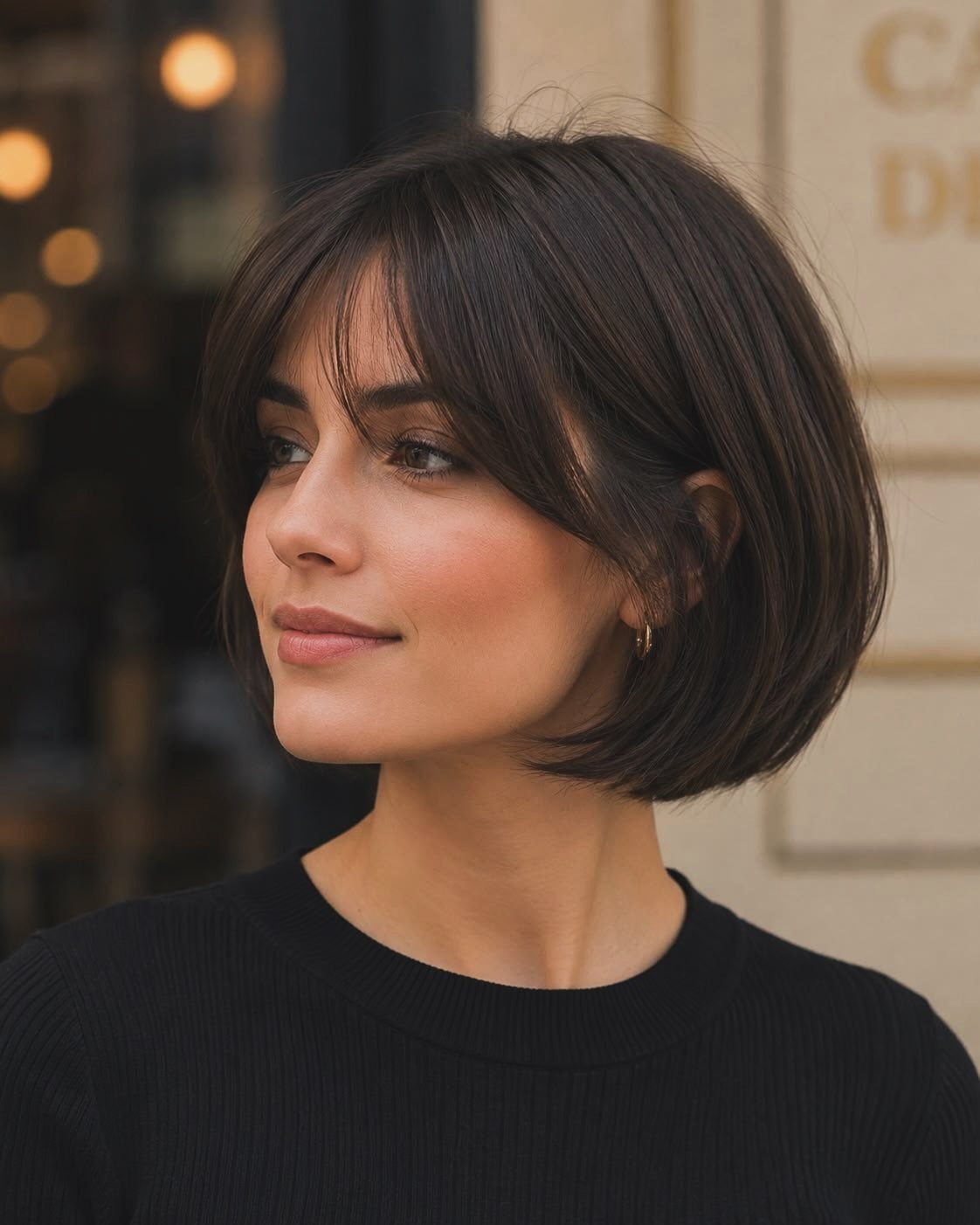
Blunt lines on the perimeter and choppy texture at the ends make this bob a study in contrast. The wispy fringe softens the front, so the cut reads relaxed even though the outline stays sharp.
Dark brown gives choppy ends the contrast they need, so every snipped, uneven tip stands out against the blunt line. Ask for a blunt perimeter with the ends point-cut for texture, and say you want the fringe thin, not heavy.
20. Long Pixie
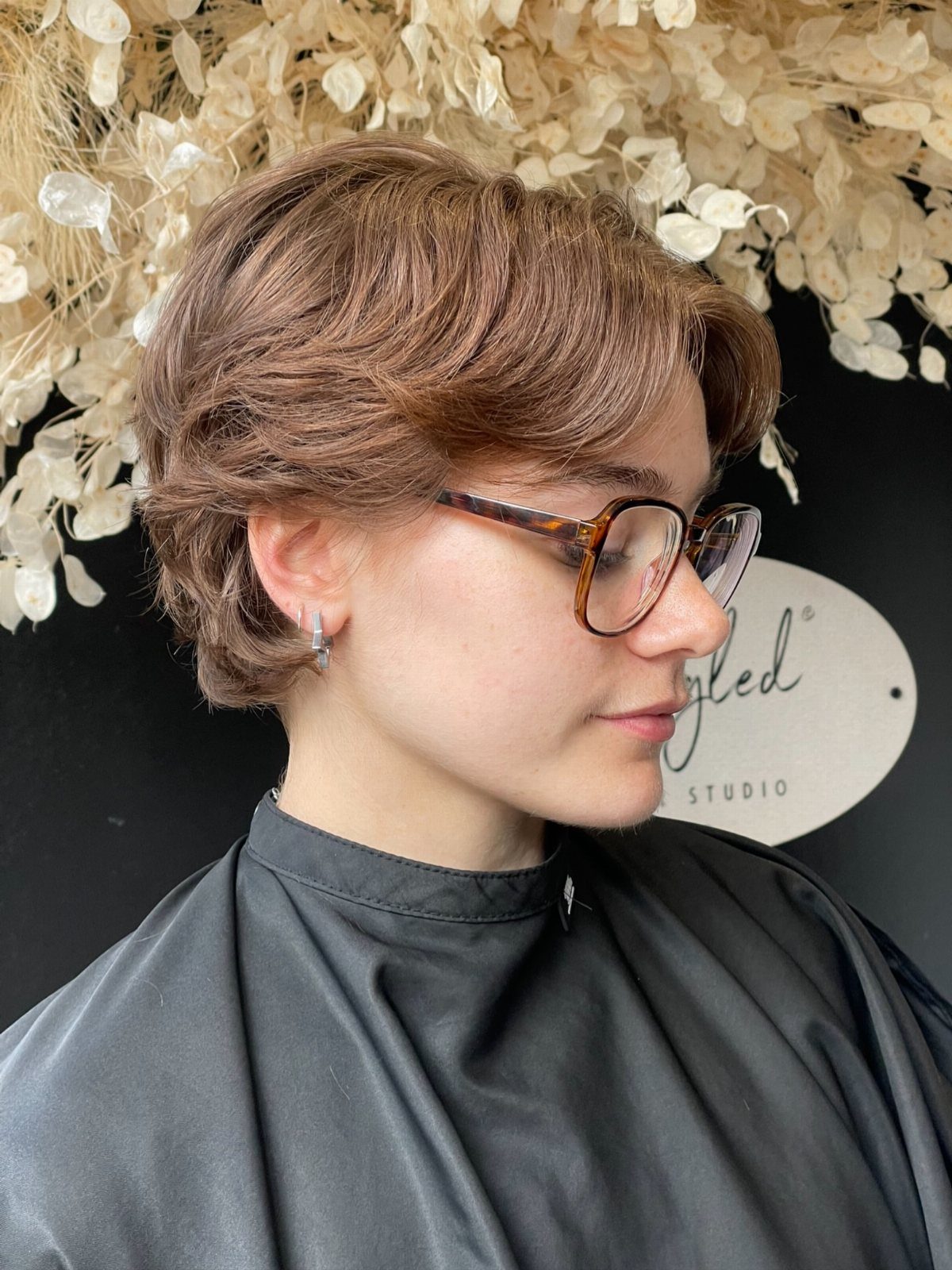
Longer on top and cropped around the ears: that is the long pixie. Piecey layers give the top its movement, and the bangs sweep down to skim the forehead.
Light brown suits it, since each layer catches light separately.
I’d choose this over a classic pixie if you want length to push to the side. Ask for visible layering through the top, and bring a photo so the bang length is agreed before the first cut.
21. Rounded Bob
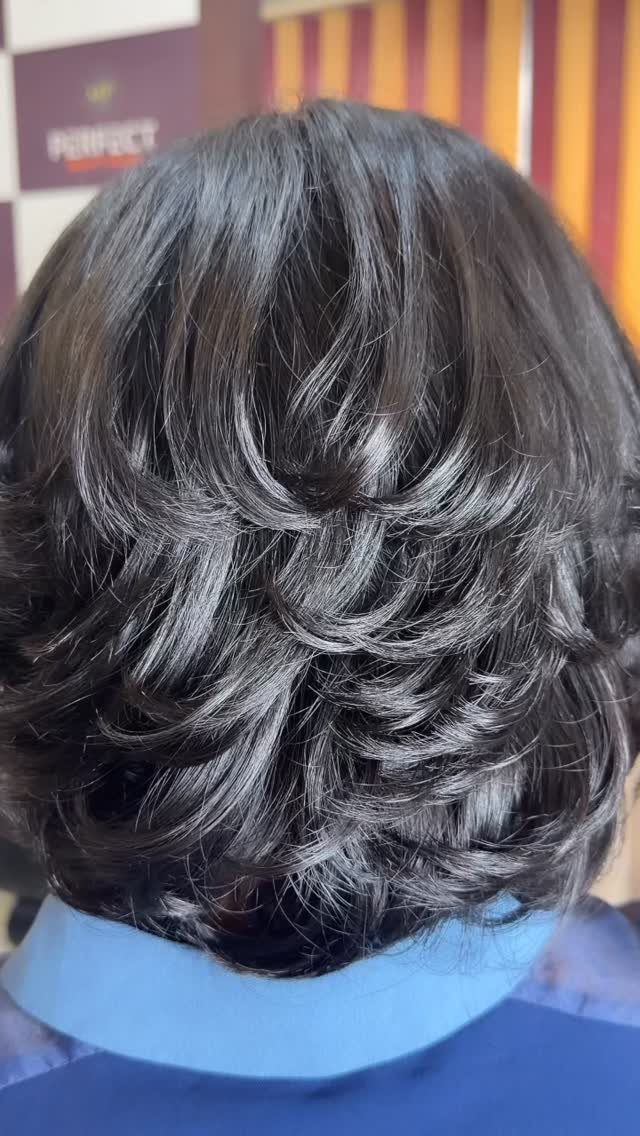
Volume sits at the curve of a rounded bob. The layers are tapered through the back so the shape builds fullness, and the ends curl under to finish the outline like a soft cap.
Dark brown shows that curve cleanly.
Ask for rounded layers with a tapered nape, and mention the curled-under ends so the stylist cuts for them. I like it for hair that tends to fall flat.
22. Graduated Layered Bob
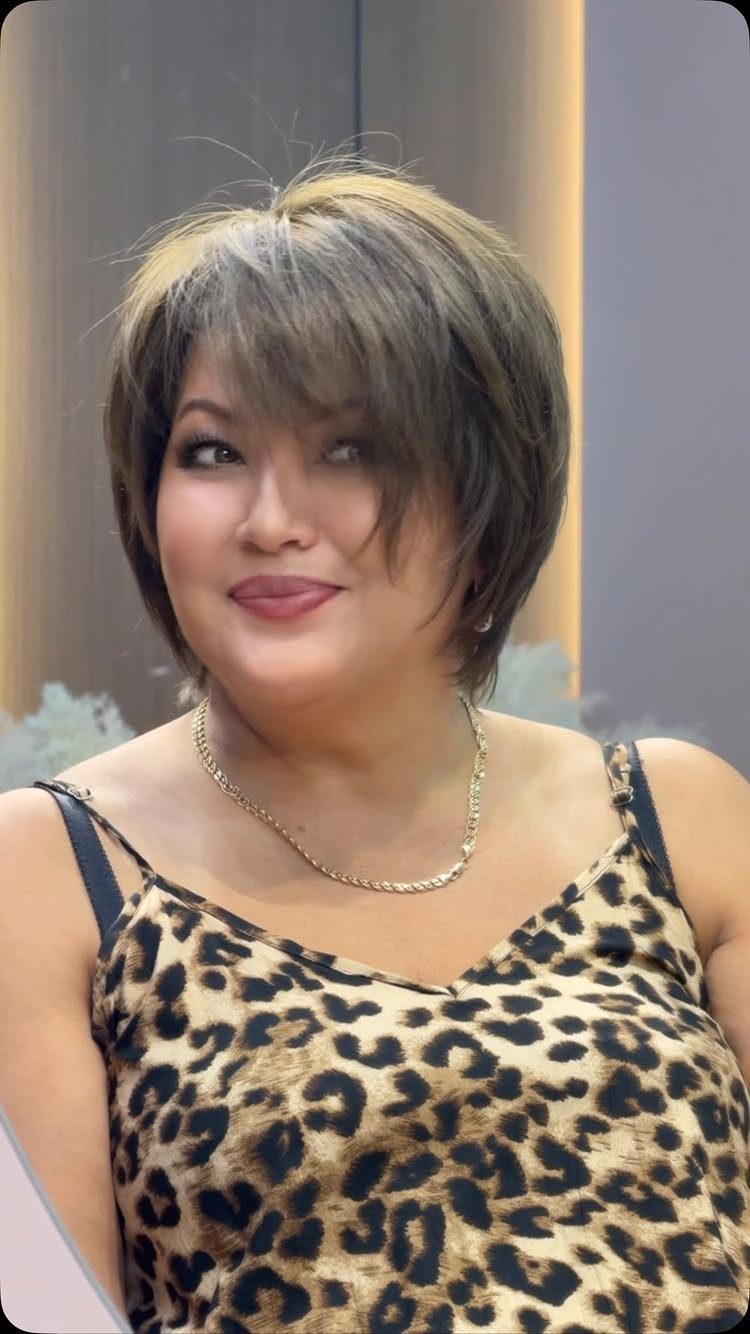
Height at the crown is what graduation buys you. Layers are stacked so they build upward toward the back of the head, and the side-swept fringe keeps the front soft.
Highlights make each step in the stacking easy to see, which is why I think this cut looks best with some dimension in the color.
Ask for graduated layers and crown lift, then show a photo of the profile, not just the front.
23. Layered Bob
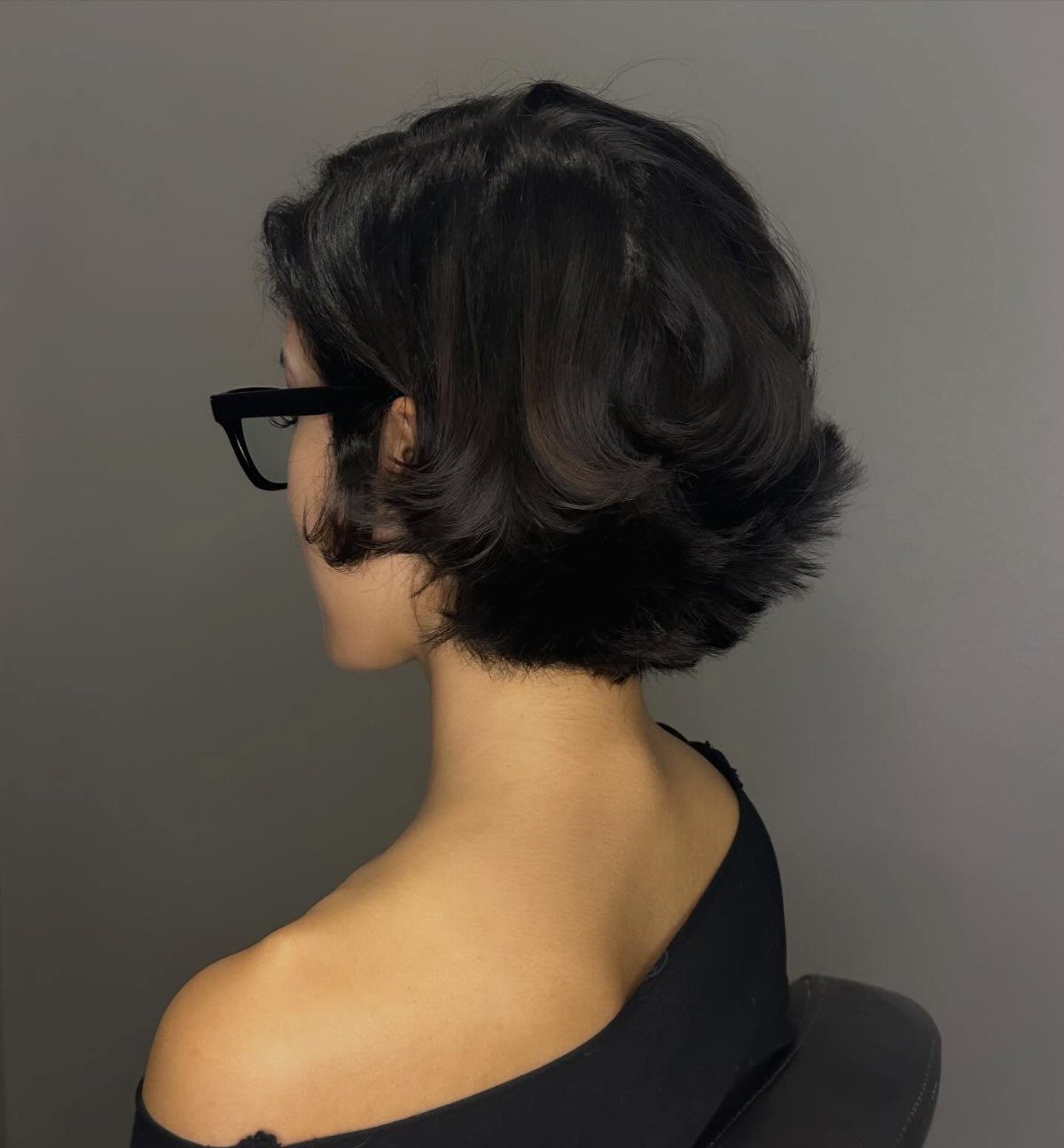
Movement is the reason to layer a bob. Here the dark hair ends in voluminous curves, so the shape bows outward at the bottom instead of hanging straight.
I would ask for layers placed to build that curve, then confirm with your stylist whether you want texture or volume, since the two call for different cutting.
Dark hair shows the shape clearly, so even a small change in layering is easy to read.
24. Layered Pixie Bob
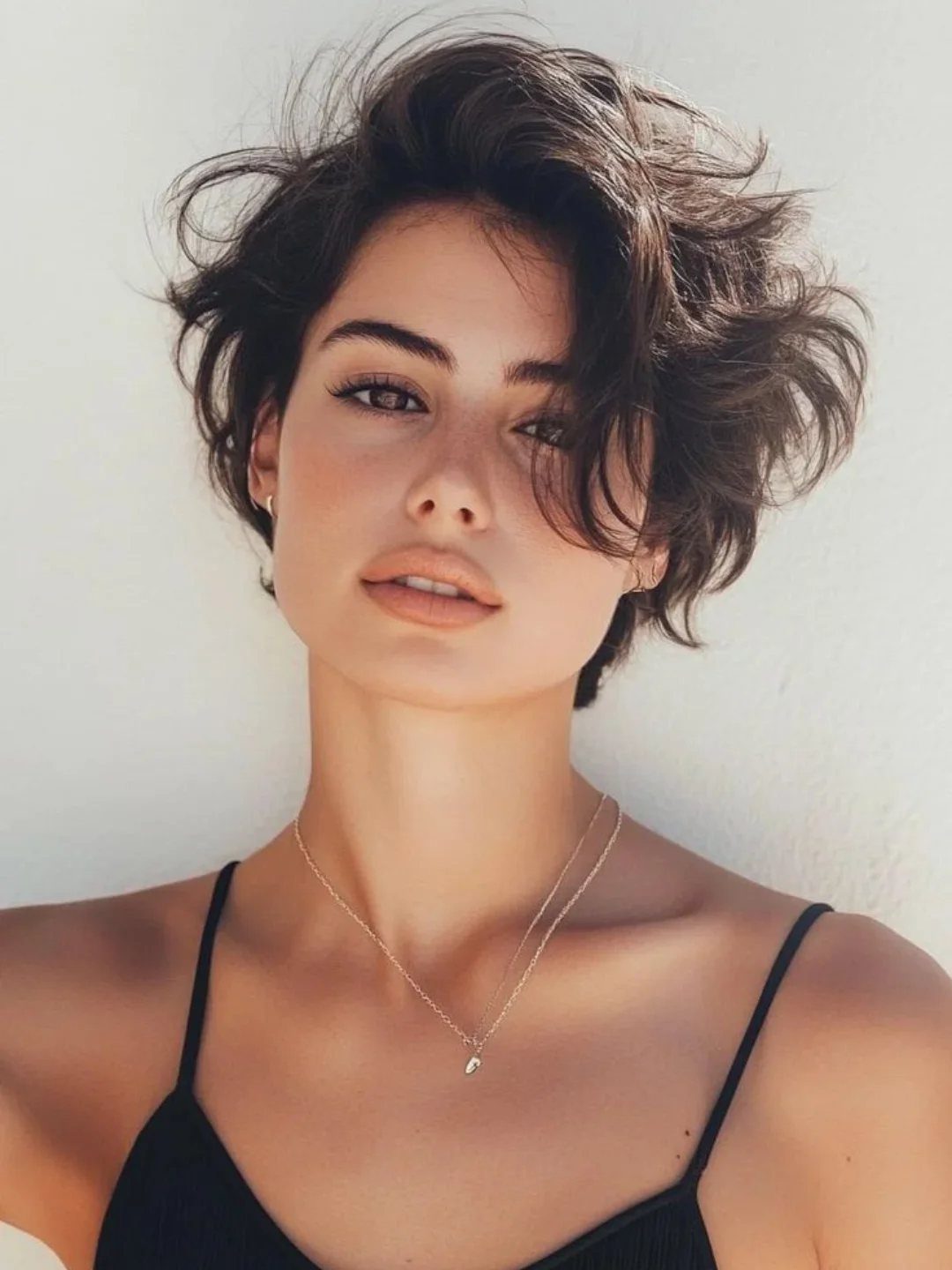
Tousled layers and a side-swept fringe give this pixie bob its easy, undone feel. It sits between a pixie and a bob, with enough length on top to break up into pieces.
Dark brown hair keeps those pieces defined.
Ask for layers through the top and a fringe that sweeps to one side. I’d pick it if you like a cropped shape but want something softer than a strict pixie.
25. Curly Mullet
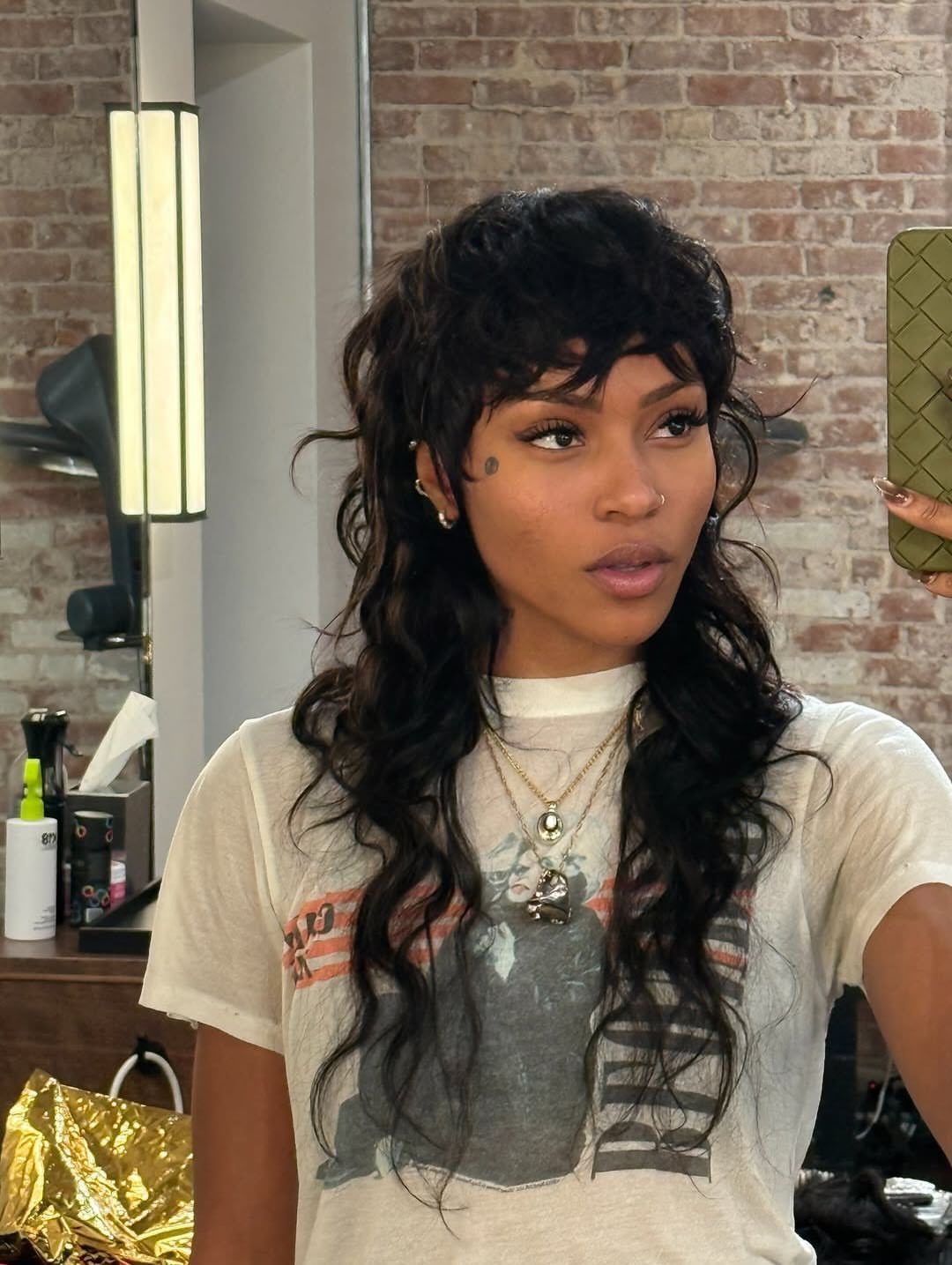
Short bangs up front and long, textured curls through the back give this mullet its edge. The curl pattern does the softening, so the contrast between the 2 lengths reads as lived-in, not stark.
Bring a photo to your stylist and point to the back length, since that is where a mullet can go wrong.
I’d choose this for dark curls that already have some body; ask for the layers to be cut around your curl pattern.
26. Boyish Wavy Crop
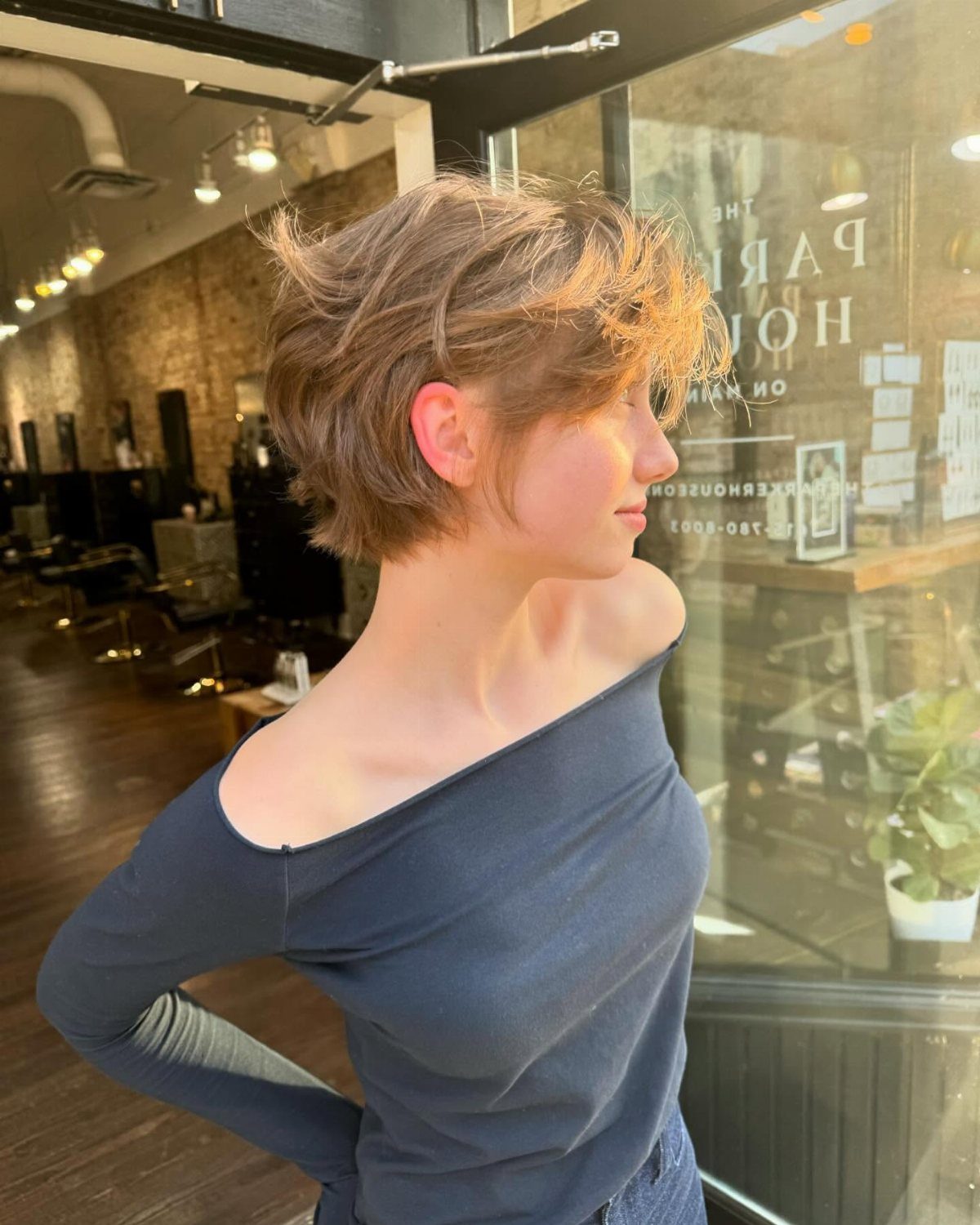
Cropped at the nape with wispy layers, this crop lets loose waves fall where they want. Boyish here means short and easy, not severe.
At the salon, the wording I’d use is light texturizing on top, with the nape kept tidy and just long enough to curl under.
A little texture product worked in with your fingers while the hair is damp is all the styling I’d bother with. Straight hair will need a heat tool to wave, so I’d choose this if your hair already bends.
27. Stacked Bob
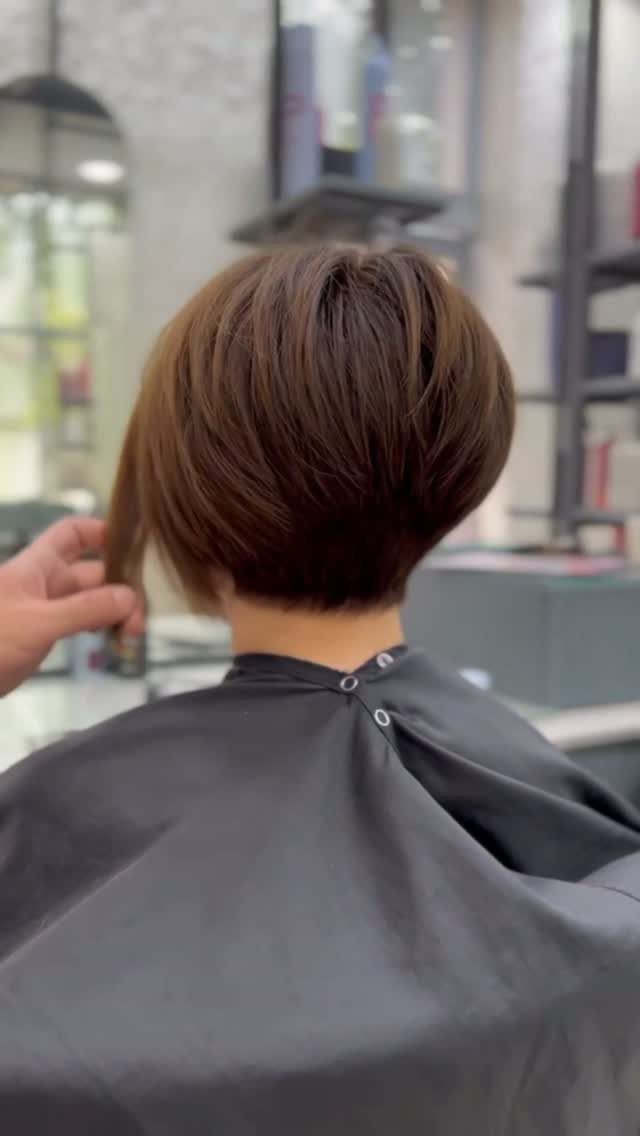
Stacking builds the fullness at the back of a bob: rounded layers sit on top of one another, then taper down to a tidy nape. The outline stays compact while the back gets lift.
Say "stacked" and "tapered nape" to your stylist, and bring a photo of the back, since this cut is judged from behind.
On brown hair the stacked steps catch light and read as clean, rounded tiers. I like it for anyone who wants shape without a long routine.
28. Textured Bob with Highlights
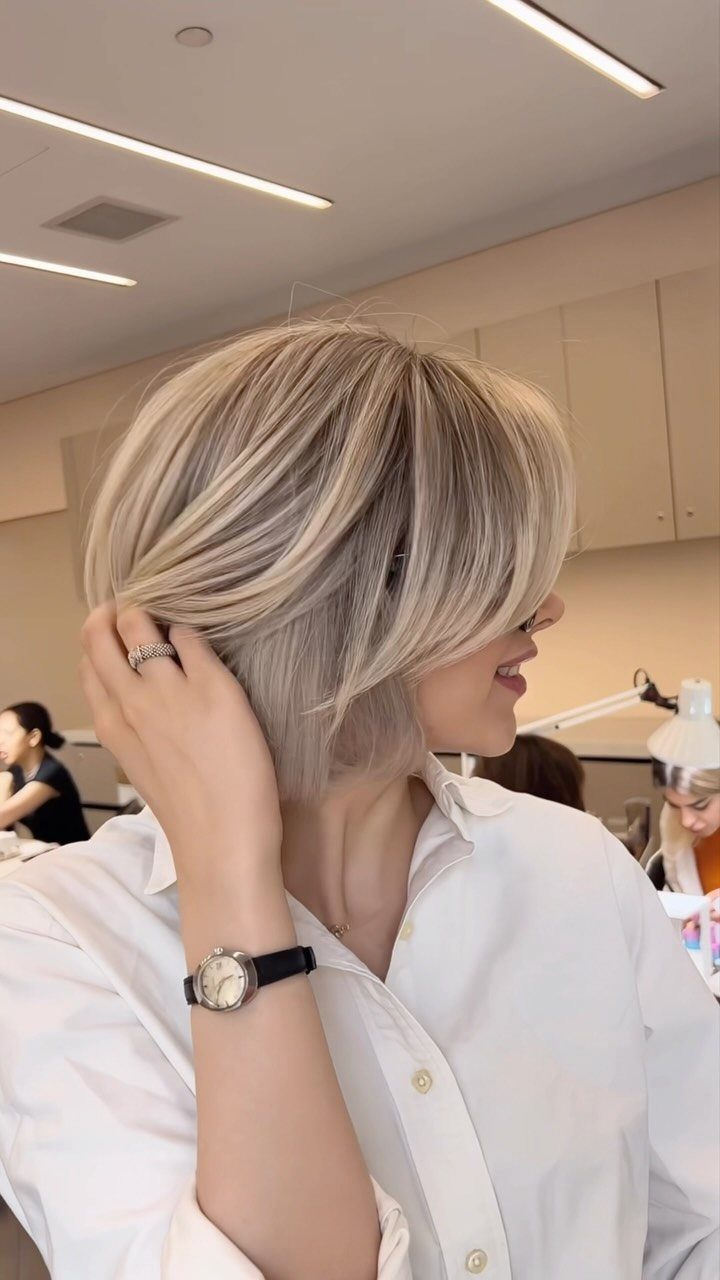
Silver-blonde highlights are what bring out the waves in this tousled bob. Each layer catches a different tone, so the texture reads even when the hair is only loosely styled.
Ask for layers that are textured, not blunt, and book the highlights with the cut so the placement follows the layering.
I’d pick this one for fine or flat hair, since the layers and the lighter pieces both add visual body.
29. Razored Pixie Bob
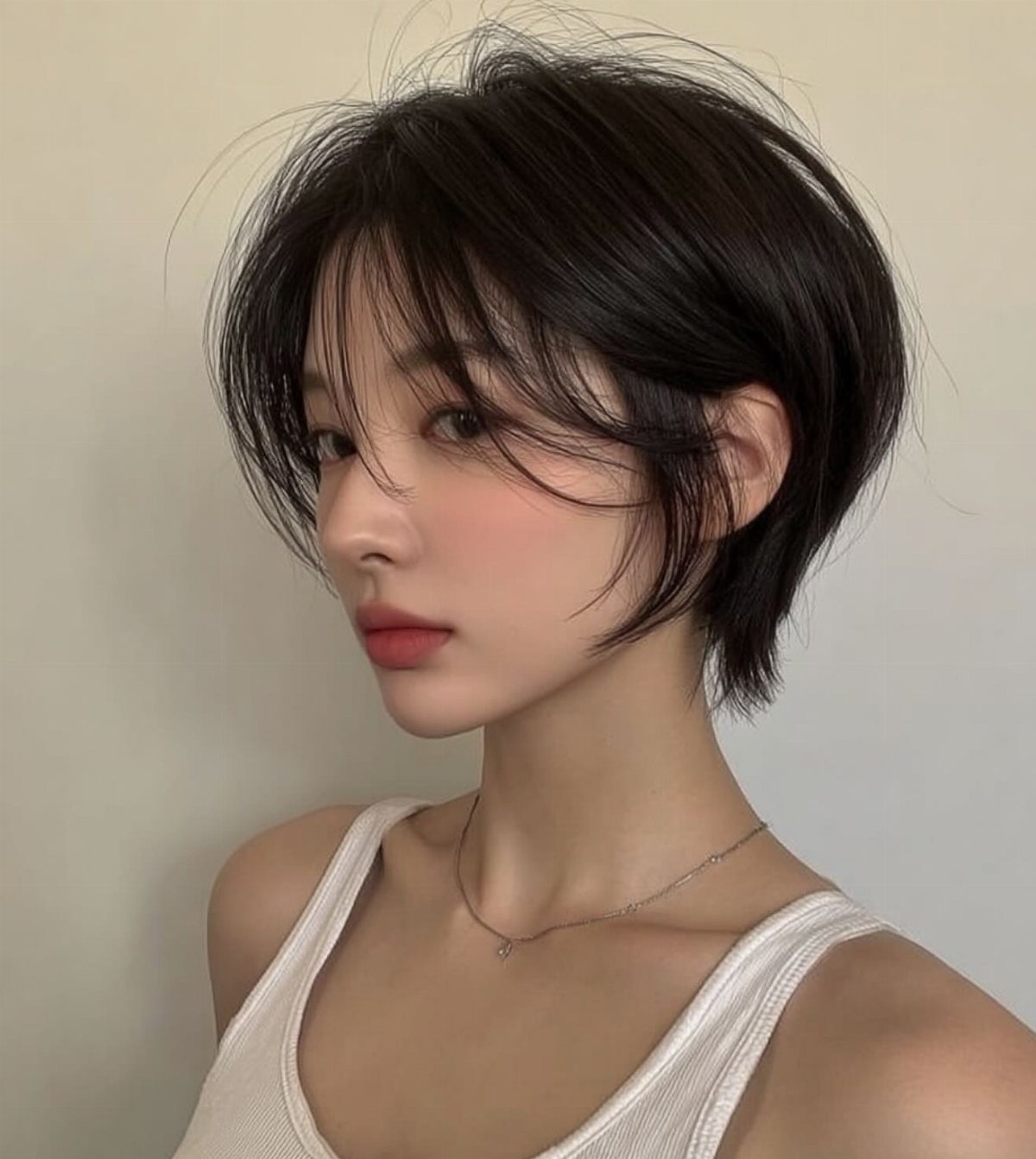
Volume is the point of this bixie, and teasing is how it gets there. The layers are tousled and the bangs run long and wispy, so the shape lands between a pixie and a bob.
Ask for razored layers, which give feathery ends, and a fringe left long enough to sweep.
Dark hair keeps those wispy ends easy to see. Expect to tease the crown lightly each morning to get the lift back.
30. Textured Inverted Bob
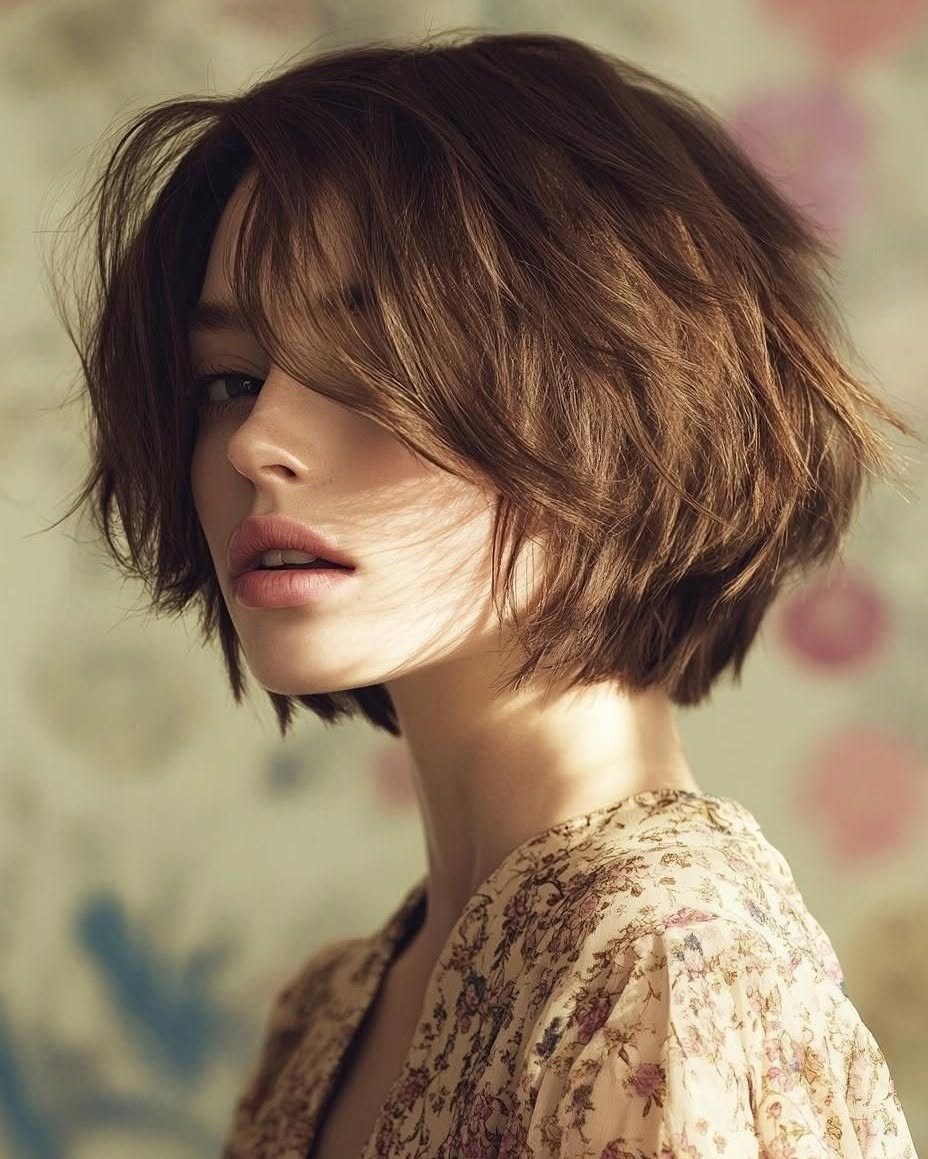
An inverted bob angles from short at the back to longer toward the front, and here the face-framing pieces point forward like arrows. Textured layers and messy waves keep that angle from looking severe.
Ask for an inverted line with layers cut through the ends, then show a photo of the side view.
On brown hair, the angle shows up well. I prefer the messy finish over a sleek one, because it forgives a few growing-out weeks.
31. Platinum Wavy Bob
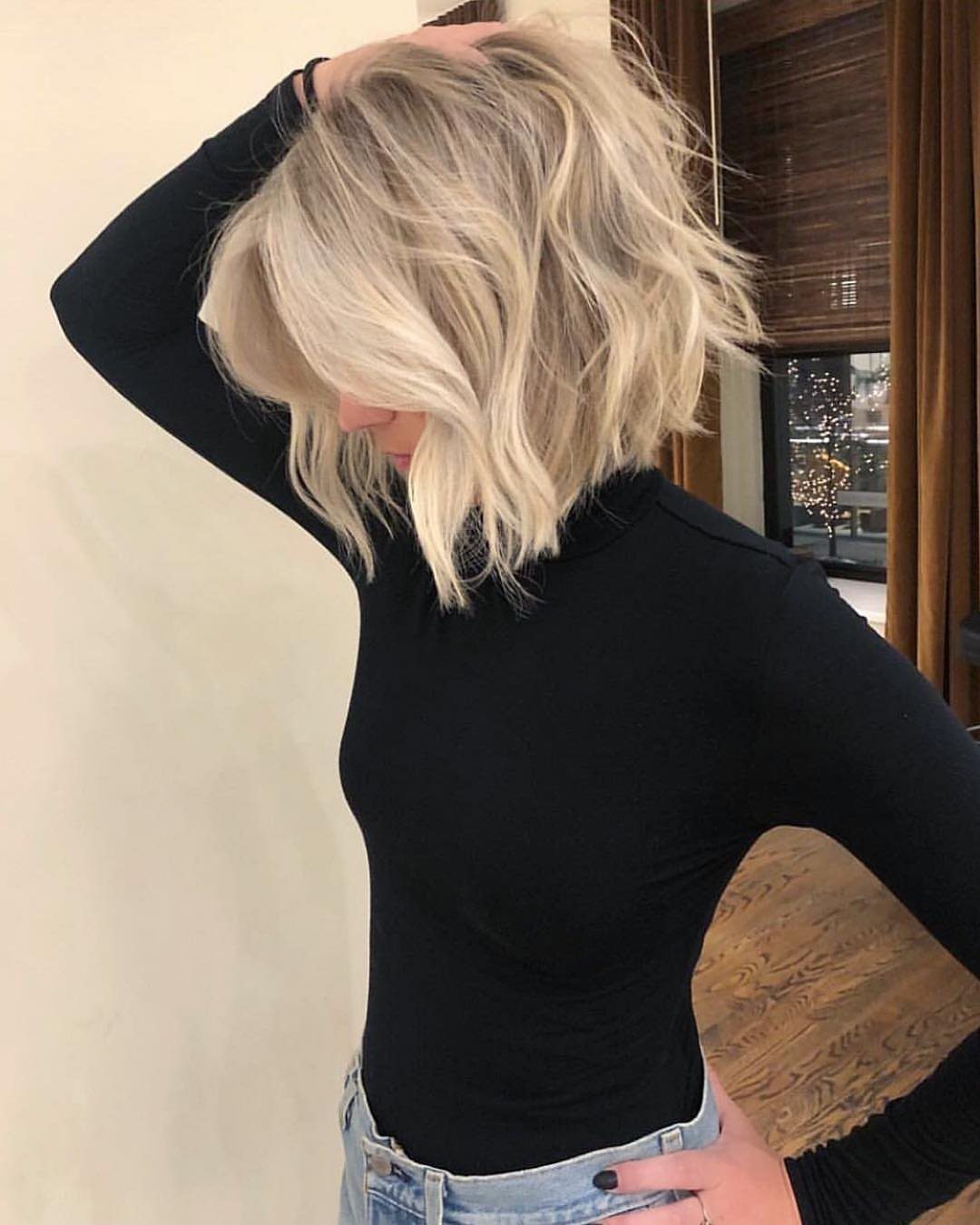
Platinum turns every wave in a layered bob into a light-catching ridge, so the shape reads from the side as much as the front.
The ends are layered, which keeps the lightest color from sitting in one heavy line at the bottom.
If you want to copy it, ask for layers through the ends and a wave pattern that looks soft, not set. I’d choose it only if you’re ready for a color that stands out in every light.
32. Short Layered Bob
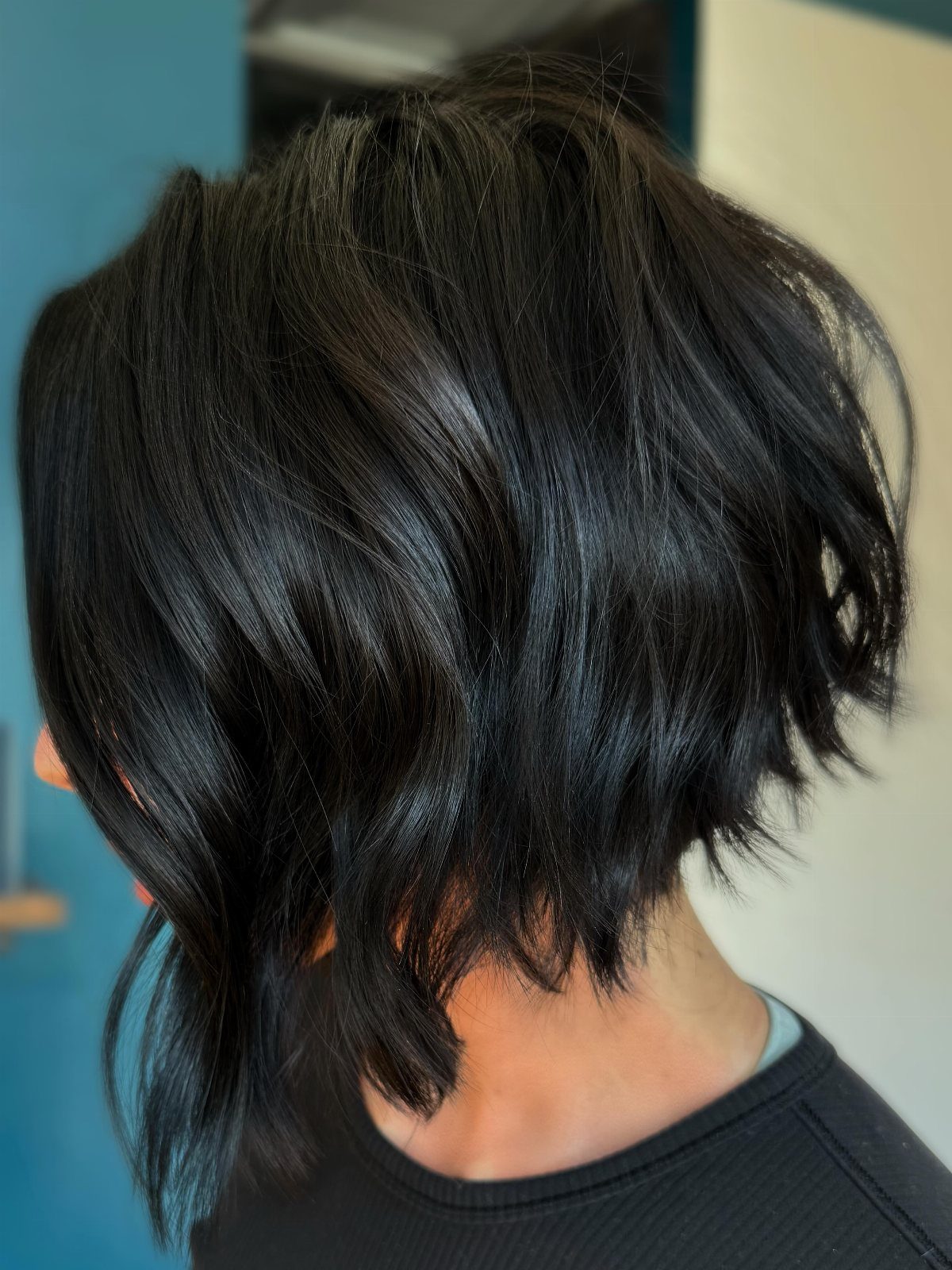
Jaw length keeps this bob compact, and the swept, tousled layers stop it from hanging as one flat block. Black hair makes the wavy ends easy to read, even from behind.
Layers that sweep one way are judged from behind, which makes a back-view photo the one to save.
For a short cut that moves without a fussy routine, this is the one I’d pick. Ask for soft, slightly piecey ends instead of a polished finish.
Layering and Hair Density
Hair density decides how many layers you should ask for.
Fine or thin hair responds the other way. A short layered cut makes it look fuller and thicker, and the shorter layers add body and movement.
For thick hair at chin length, I’d ask for shorter, messy layers. Layers remove weight from thick hair, so strands separate and sit softer, and fine hair gets lift it wouldn’t have at one blunt length.
If your hair is thin, color can help the layers along. Place the deeper tones at the roots and the lighter ones through the upper layers; the contrast reads as depth and makes the cut look fuller.
Density and growth shift with age, so a layering plan that worked for you a few years ago may need adjusting.
Face Shape and Hair Texture
Face shape is worth settling before you pick a length.
Texture matters just as much. Curly and wavy hair keeps its movement in a shorter layered cut, so you can go short without losing bounce.
Heavy layering or texture doesn’t have to look harsh. Even a bob cut with a lot of layers can read soft.
Every bob can be customized in length, shape, layers and color.
Choosing and Communicating a Cut
Talk with your stylist before the cut, not during it. Cover your face shape, your hair texture and how much time you will spend styling each morning.
That last part changes the answer. Expect more minutes and more product on some cuts, and how much depends on the cut itself, your face shape and your natural texture.
Save screenshots of the cuts you like and take them to the appointment, since a photo says more than "short layers" ever will. Photos show the layers far better than words do.
Before you leave the chair, ask which products suit your hair type and how to use them at home. I’d get that advice while the stylist can still point to your actual hair.
Frequently Asked Questions
Does layer cut look good on short hair?
Yes, and it works at both ends of the density range.
On fine or thin hair, short layers add body so the cut looks fuller. Thick hair gets lighter and easier to move once layers remove some bulk, so the strands separate instead of stacking in one heavy block.
How much styling time it needs depends on the cut, your face shape and your texture, so talk through the morning routine with your stylist before you book.
What are some popular short, layered haircuts for 2026?
The curly French bob, beachy lob, short curly shag and choppy blunt bob are all gaining traction, and none of them depend on a daily blowout.
The French bob is chin length, with layers that let curls settle into a rounded shape.
The beachy lob sits at the shoulders with tousled waves. A shag stops curls from piling into a triangle shape, while a choppy blunt bob gives you a crisp outline with softly point-cut ends.
What are some good short layered hairstyles for older women?
A textured inverted bob is a strong choice. Cutting the back shorter pushes volume up where it tends to go flat, and layers that start near the face add definition to an oval shape.
It suits straight to wavy hair of medium density and works well with natural gray. It’s low maintenance, but a little styling keeps the texture visible.