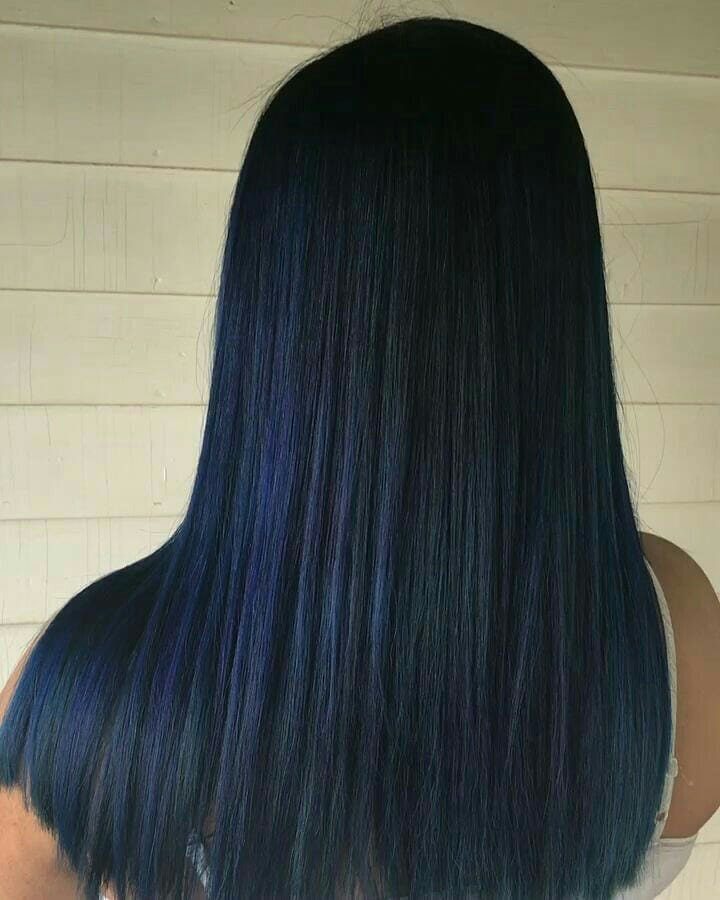
Where your hair starts sets the route, and natural black or deep dark brown takes blue black in a single session.
At one end sits true blue-black, which looks like ordinary black under indoor light and only turns blue in direct sun; at the other are navy shades and bright blue highlights you can spot from across a room.
Blue washes out ahead of black, so each of these looks needs a regular refresh to keep its tone.
1. Wavy Navy
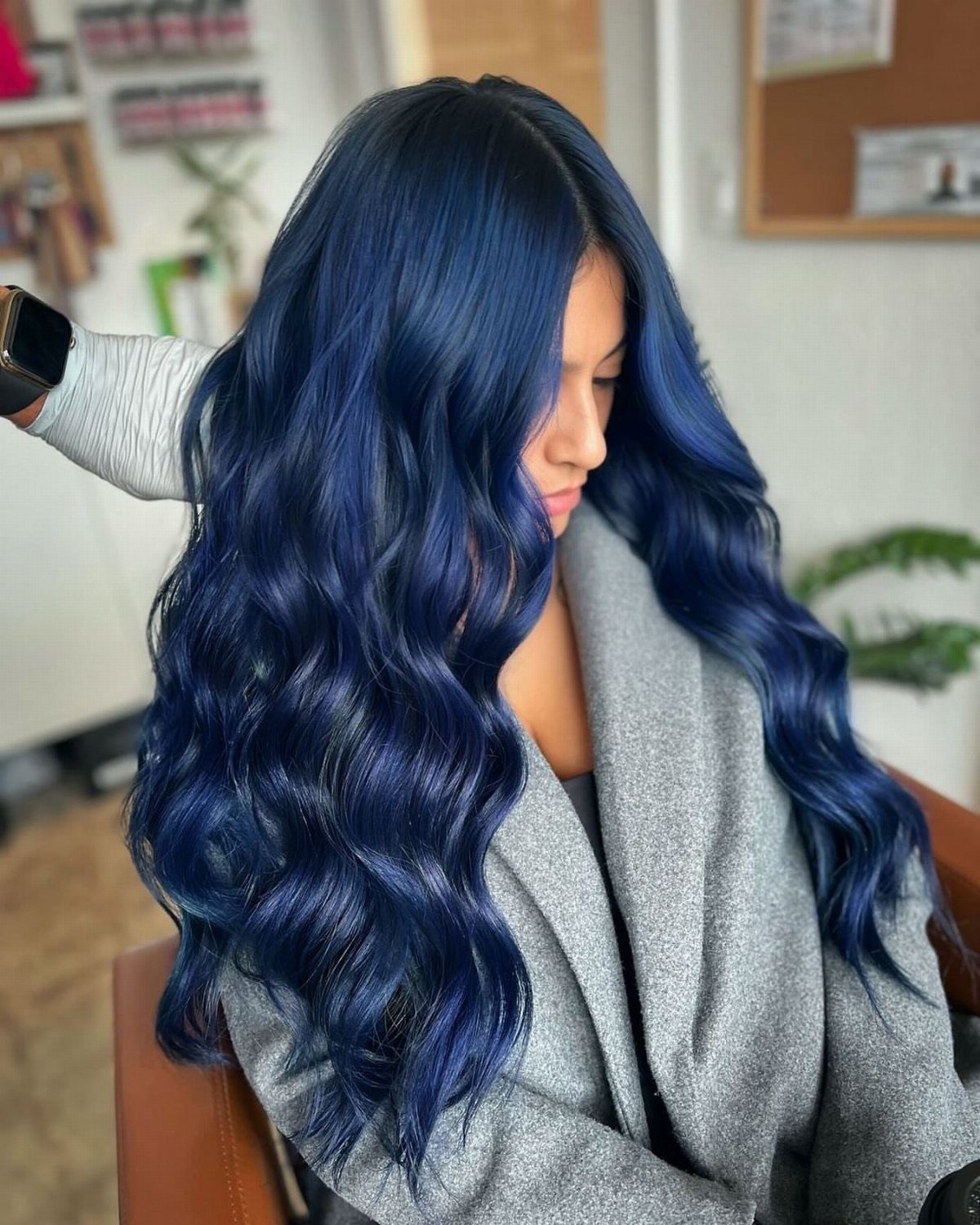
Navy takes over from root to end, catching more light than pure black and shifting cooler in bright sun.
The color reads navy first, hair second, so if you want something that passes as a natural shade this one will not do it.
On dark hair the dye can go straight on. Blue pigment fades faster than black, so keeping the tone this strong means reapplying on a regular schedule.
2. All-Over Blue Black
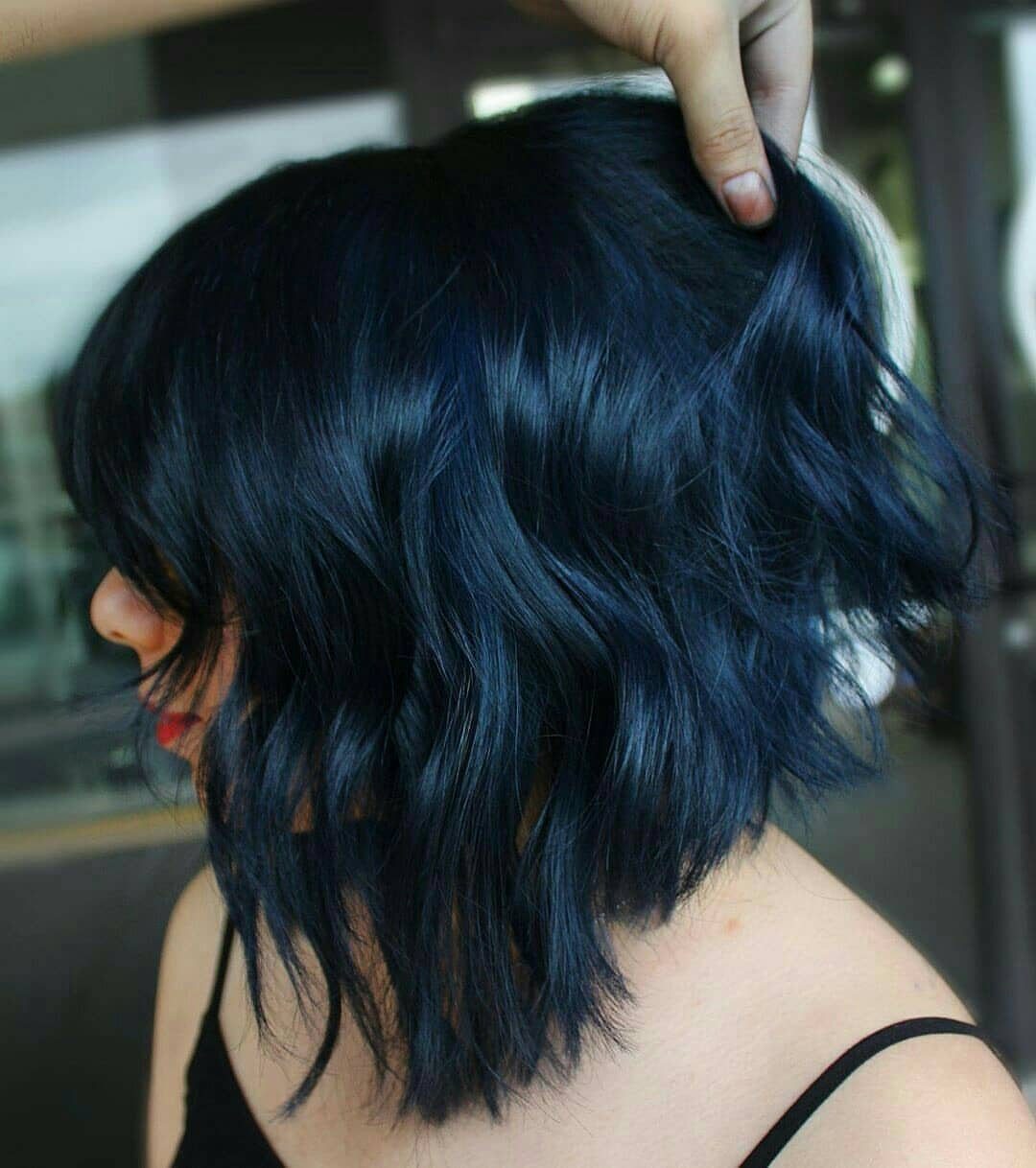
This version covers every strand in the same blue-black mix, so the color stays consistent in different light instead of shifting between sections.
The blue reflection sits underneath the black and shows up most under direct sun or bright indoor lighting.
Hair that starts out black or very dark brown reaches blue black in a single dye session.
Lighter starting colors will need a darker base first or the blue will overpower the black. The color holds better on hair that has not been bleached, and touch-ups can focus on new growth instead of the full length.
3. Midnight Blue

Midnight blue skews more toward the blue end than most blue-blacks, so the color announces itself even in low light.
Layers and side-swept bangs add movement, and that movement lets the color shift show as the hair catches light from different angles.
On naturally dark hair this shade usually needs one round of lightening to let the blue pigment show.
Skipping that step will leave you with black that barely reads blue. As it fades, the color passes through a lighter blue stage before it dulls out, so touch-ups are what keep the saturation.
4. Blue Highlights
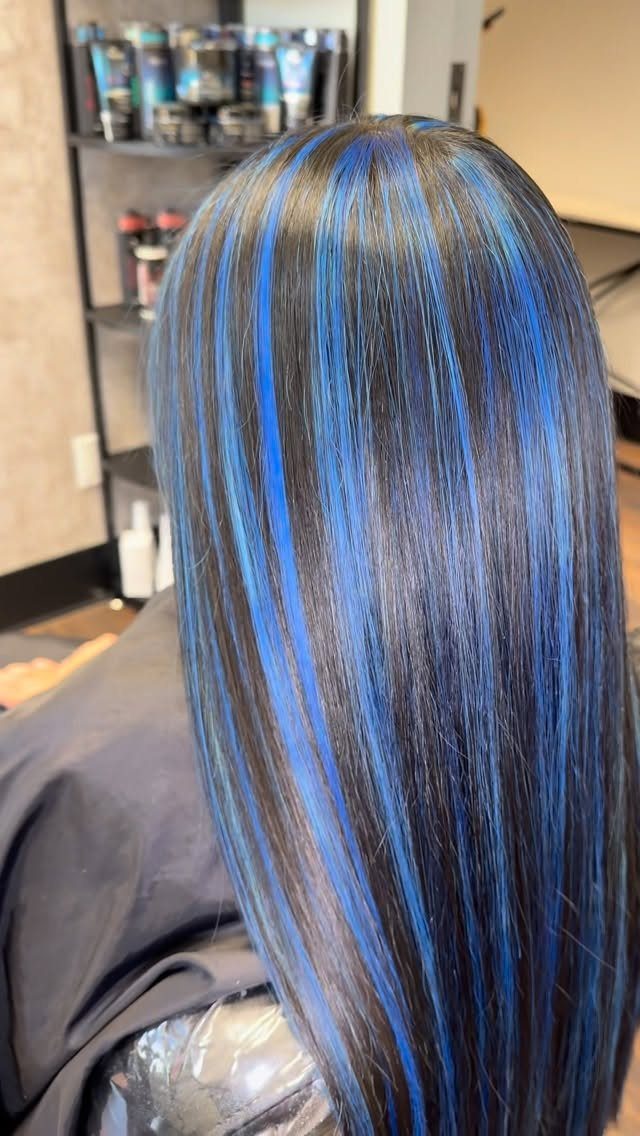
Bright blue sections thread through a dark base, giving you dimension without committing the whole head. Highlights placed in vertical ribbons stay visible whether the hair is worn straight or loose.
The blue sections need to be pre-lightened so the color shows true. How light they go depends on the blue you want: electric shades need pale blonde underneath, softer blues can start from light brown.
The dark base can stay untouched if it is already close to black, or dyed to match if it is lighter.
5. Dark Blue Accents

A handful of blue pieces frame the face or tuck into the top layers, so the accent shows when you want it and disappears when you do not.
Streaks work best when they are bright enough to contrast against brown but narrow enough to stay subtle.
If your base is dark you can leave it alone and only lift the sections you want blue.
Lighter hair can take the blue directly on the pieces without touching the rest. Two or three face-framing streaks are enough to see the effect, and because the rest stays natural the grow-out is not an issue.
6. Blue-Black Buzz
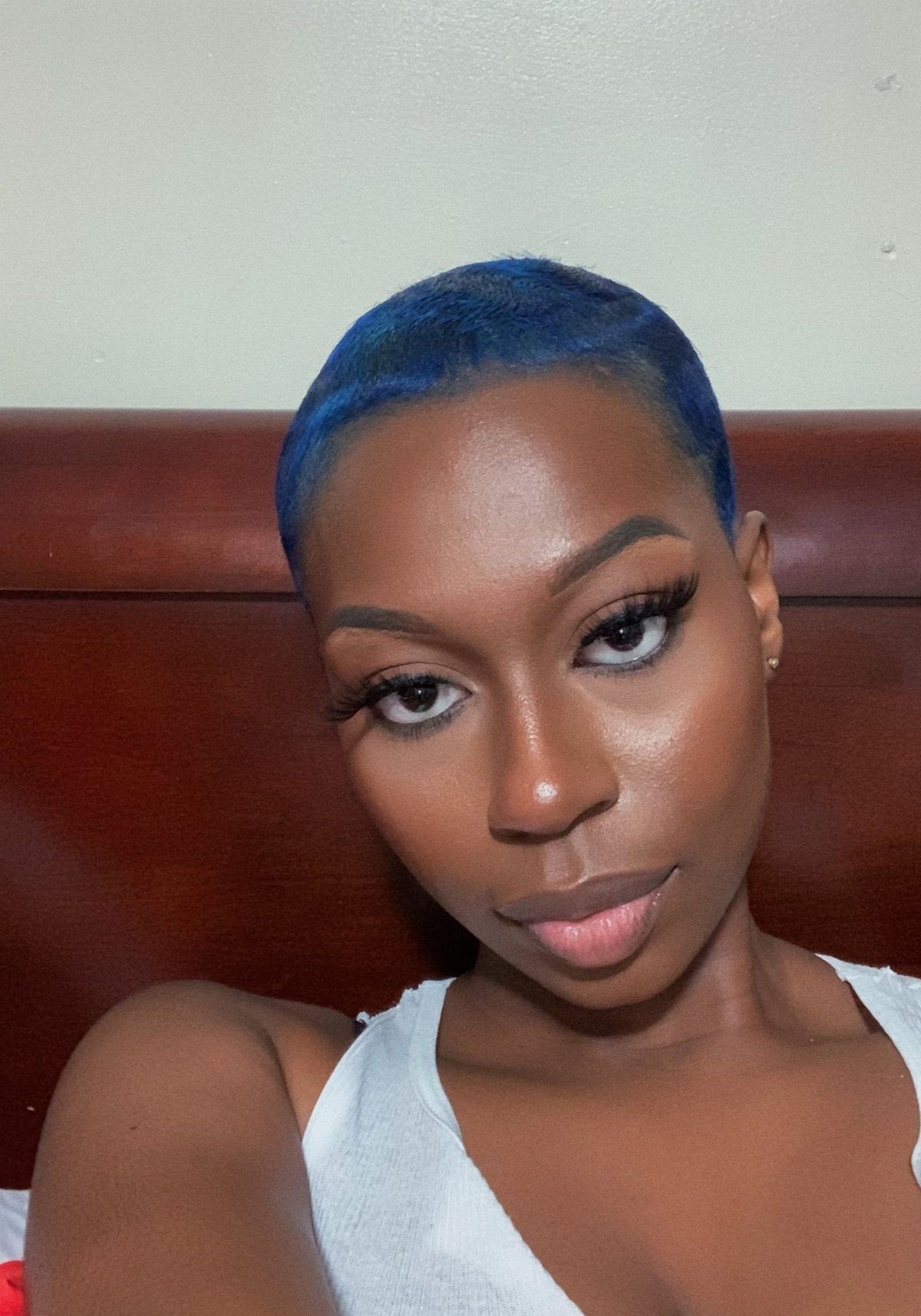
A buzz cut in blue-black delivers the color with no styling required and nothing to obscure it. At this length the scalp shows through slightly, which softens the color intensity and keeps it from looking flat.
The dye goes on in one session if your hair is already dark. Regrowth shows fast on hair this short, but if you change your mind, you can let it grow out completely and start over.
7. Classic Blue-Black
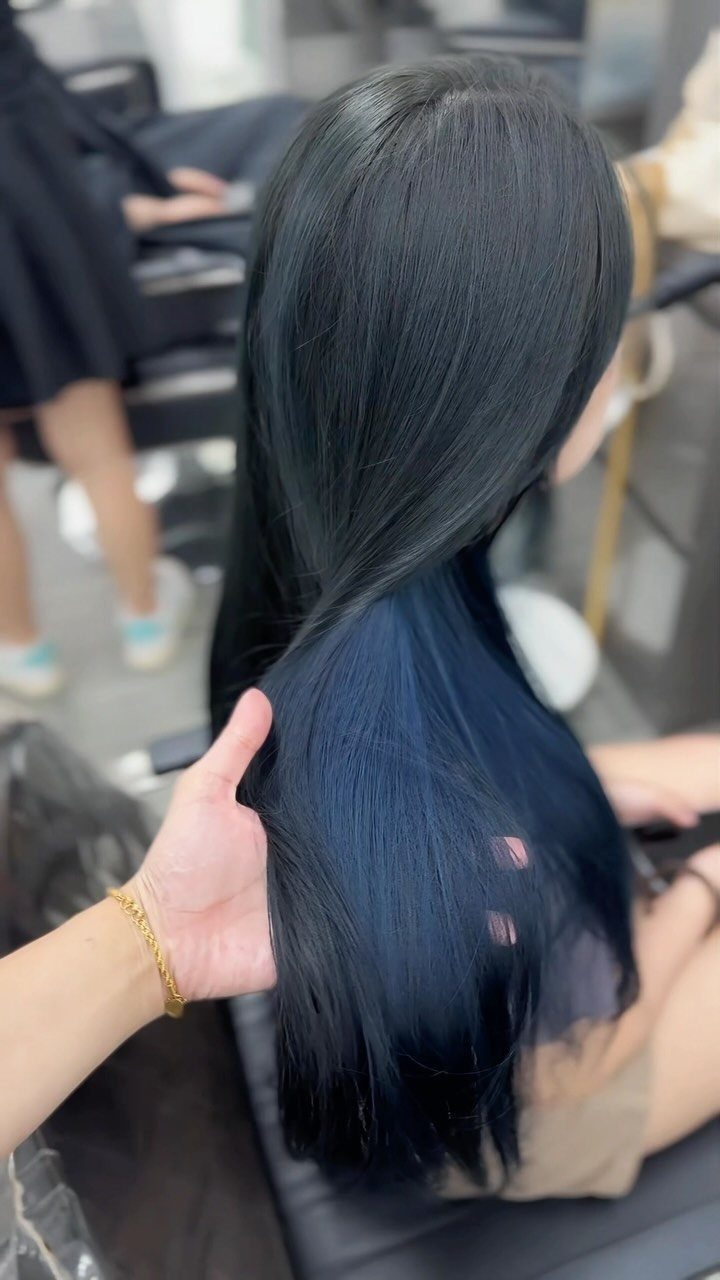
Long, straight and glossy is the cleanest way to wear blue-black, because a smooth surface gives the blue a clear line of light to sit in.
Frizz or rough ends scatter that shine, so a trim and a good conditioner matter as much as the dye.
From a few feet away it reads black, and the blue only comes out in sun.
For the subtlest take on the shade, classic blue-black is the one I’d choose: it reads as plain black indoors and only shows its blue in direct sunlight.
8. Blue Braids
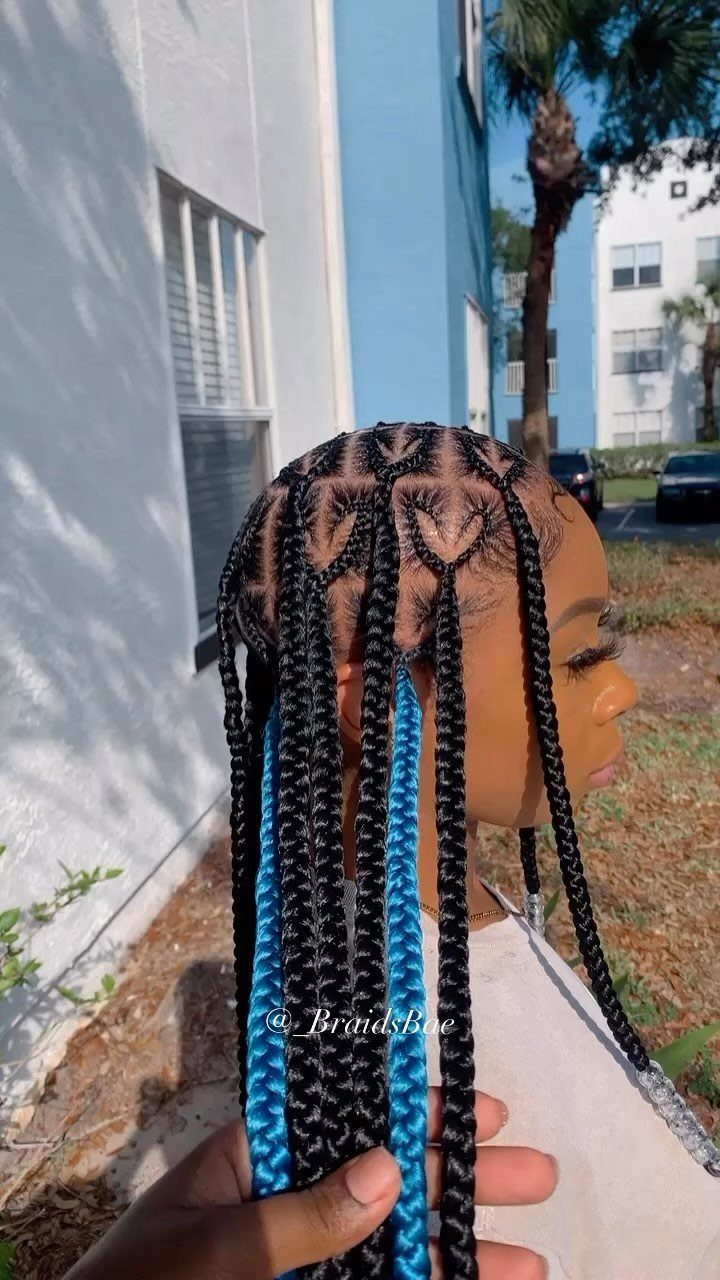
Black braids with vivid blue strands worked through them, laid out in a heart-shaped pattern, make the design the star and the color the accent.
Take a photo to your braider and ask for the heart by name, then decide where the blue goes.
I would keep the blue to a minority of strands. Against solid black, a little vivid blue reads louder than you expect.
9. Blue-Lights
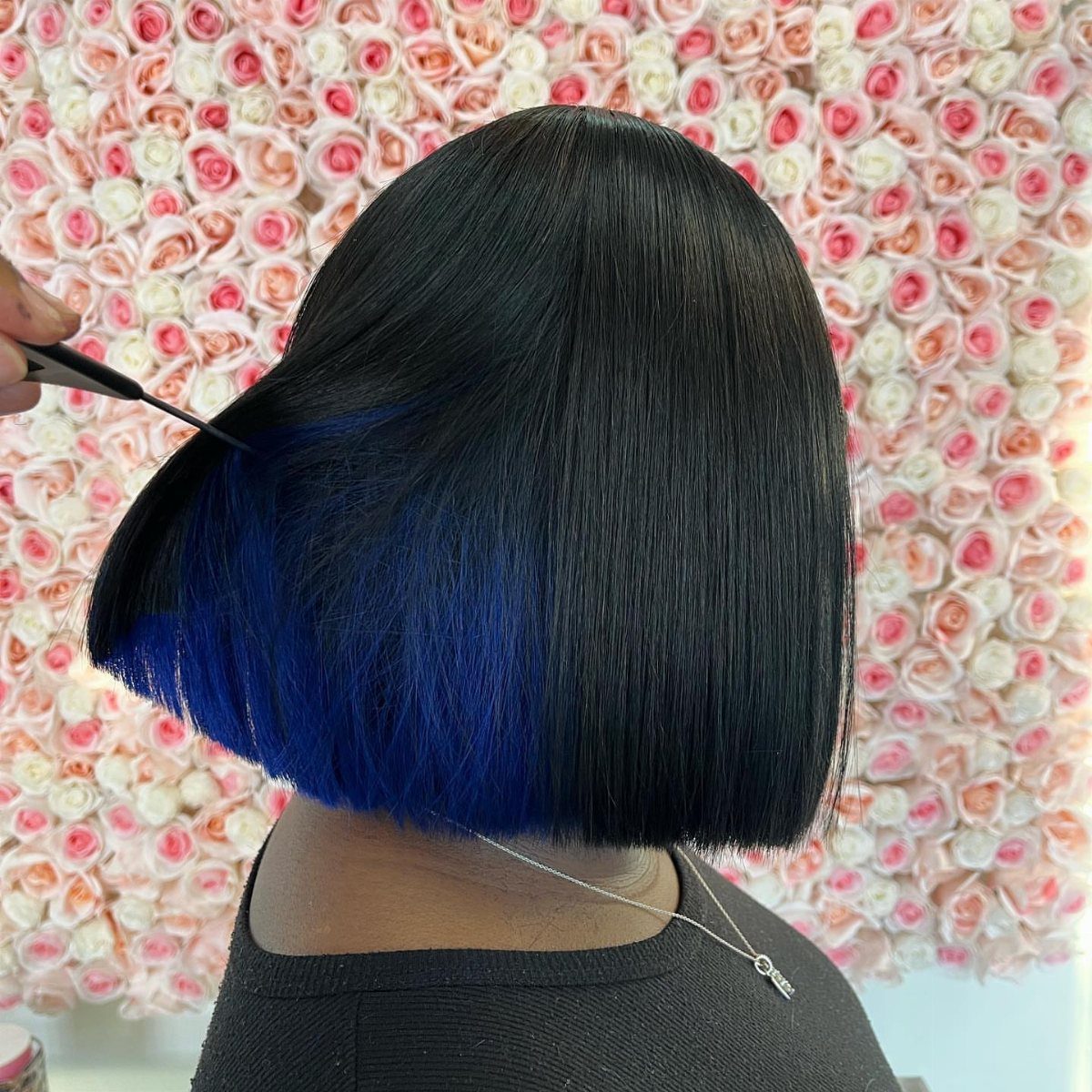
A black bob with a bright blue underlayer keeps the color hidden until the hair moves or you lift it. You choose when it shows, which suits anyone who wants blue without wearing it all day.
Lightening just the underlayer is enough, and that step is what lets the blue show true.
The black top layer can stay as it is. Regrowth tucked underneath is also easy to hide.
10. Sideswept Midnight
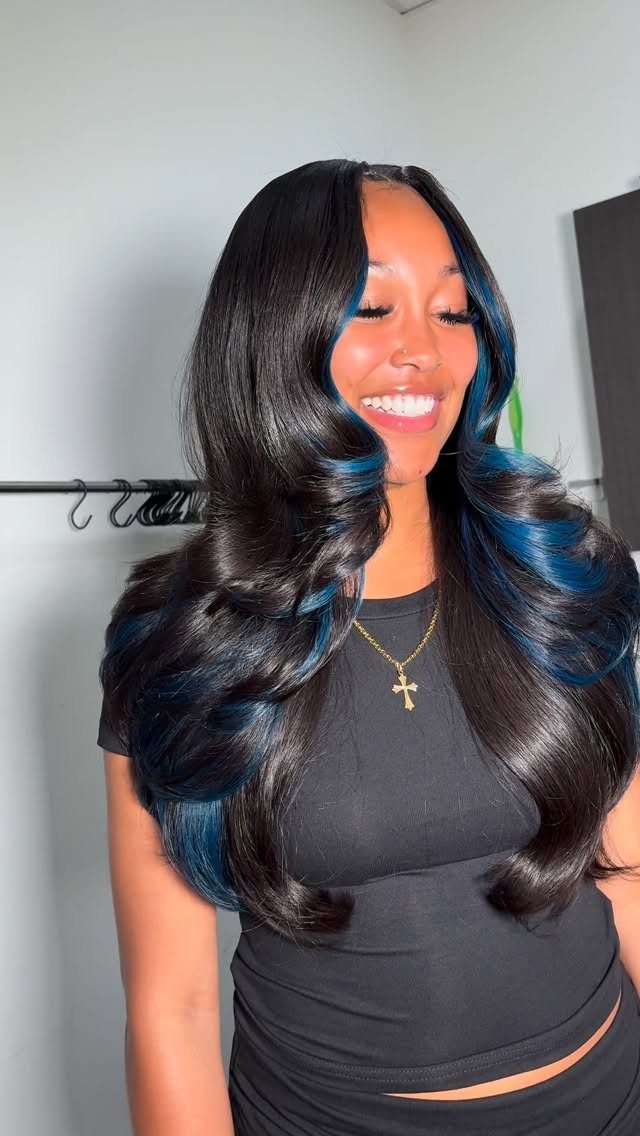
A deep side part sweeps the hair across one shoulder, and on long waves with glossy curls that puts the blue streaks right where the eye lands.
The curls add movement, so the midnight tone shifts between dark and bright as you turn.
Keep the streaks vivid and few. Against a base this dark they stand out without crowding it.
11. Blue Ombré
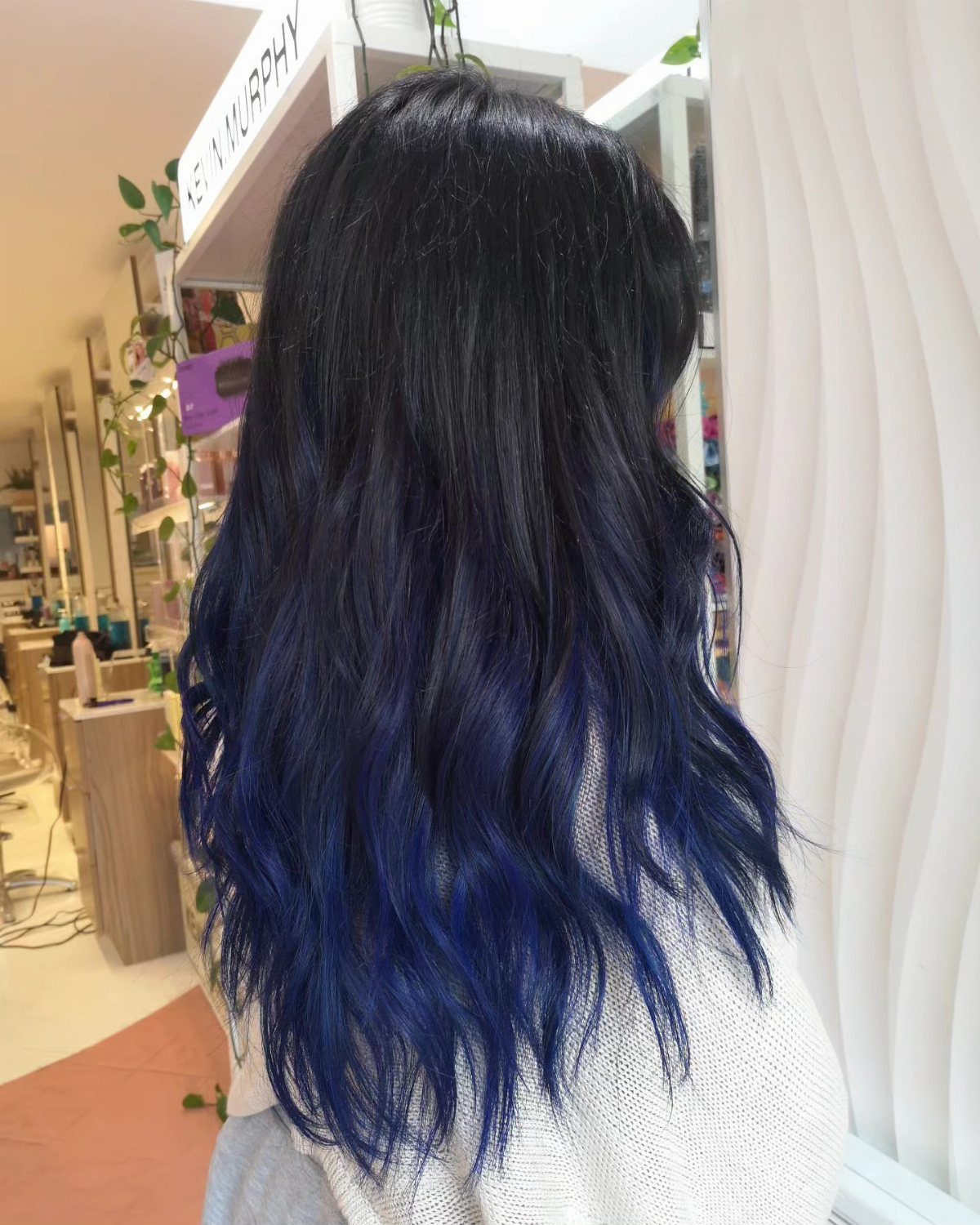
Black at the roots, deep blue at the ends: that fade is what you ask for when you want blue without a harsh line.
Long waves suit it well, since the curve of each wave spreads the blue across the lower lengths.
Only the ends need lightening to show blue, and the dark roots make regrowth almost invisible. Blue pigment fades faster than black, so the ends will need a color refresh before anything else does.
12. Blue-Black Bob
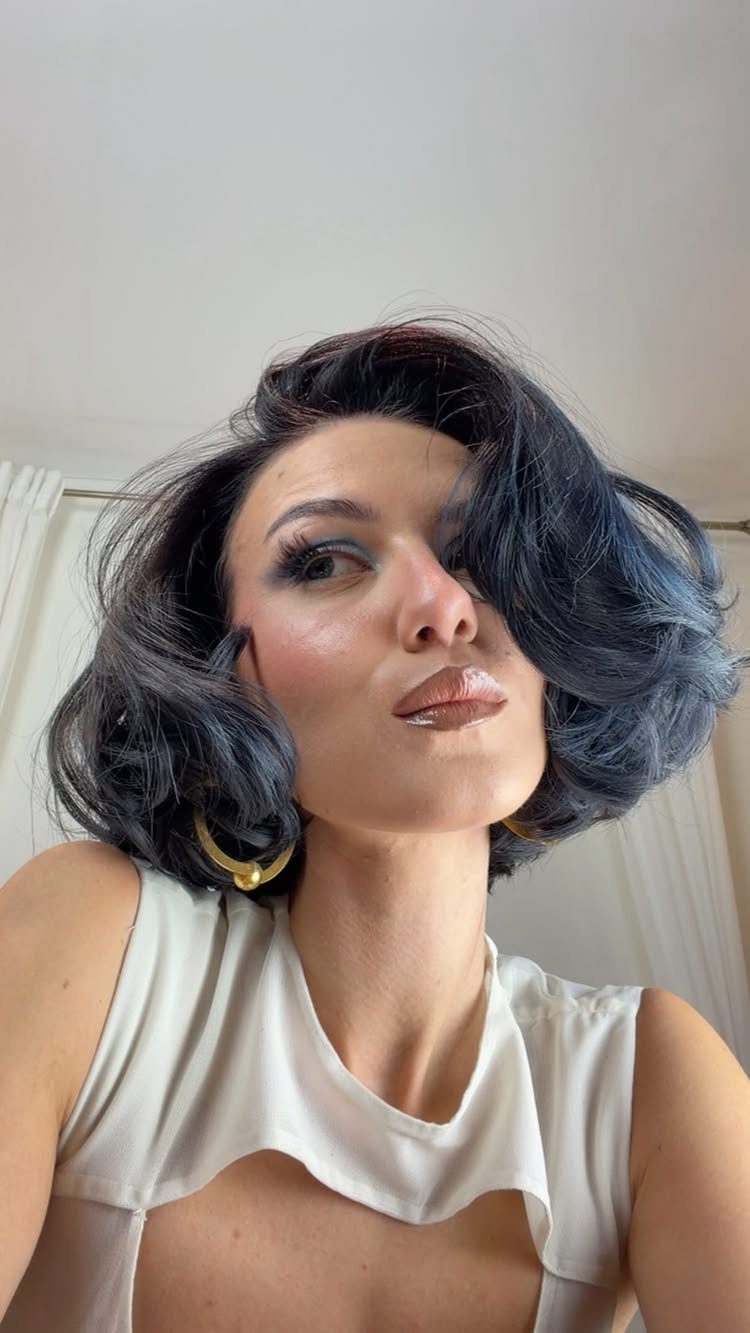
Waves and volume do the work in a blue-black bob. A shorter cut means more curve and more surfaces for the blue to catch light, so the color looks richer than it would on flat, heavy hair.
It is also a short stretch of hair to color. Once the shape grows past the jaw, the bob loses its fullness, so plan trims along with touch-ups.
13. Deep Blue-Black
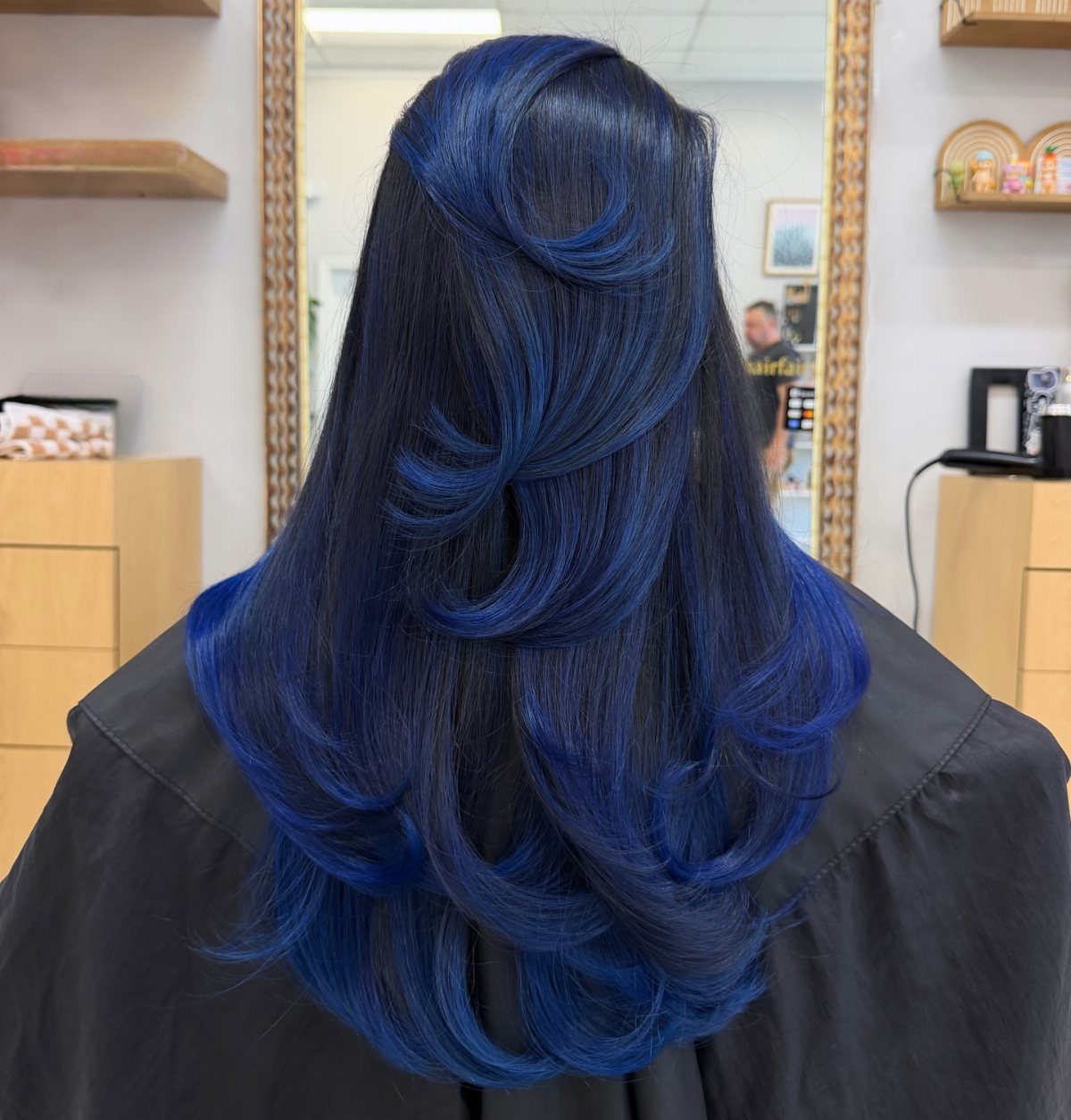
Long layers, glossy curls and a color dark enough that the blue only surfaces when the light hits it: that is deep blue-black.
On curls, light scatters across every bend, so the blue undertone reads deeper than it does on straight strands.
Pick this one if you want hair that reads as plain black indoors and only flashes blue in direct sun or bright light.
Keep the ends trimmed and the curls defined, because dry, frizzy lengths dull the gloss that makes the blue visible.
14. Navy Blue
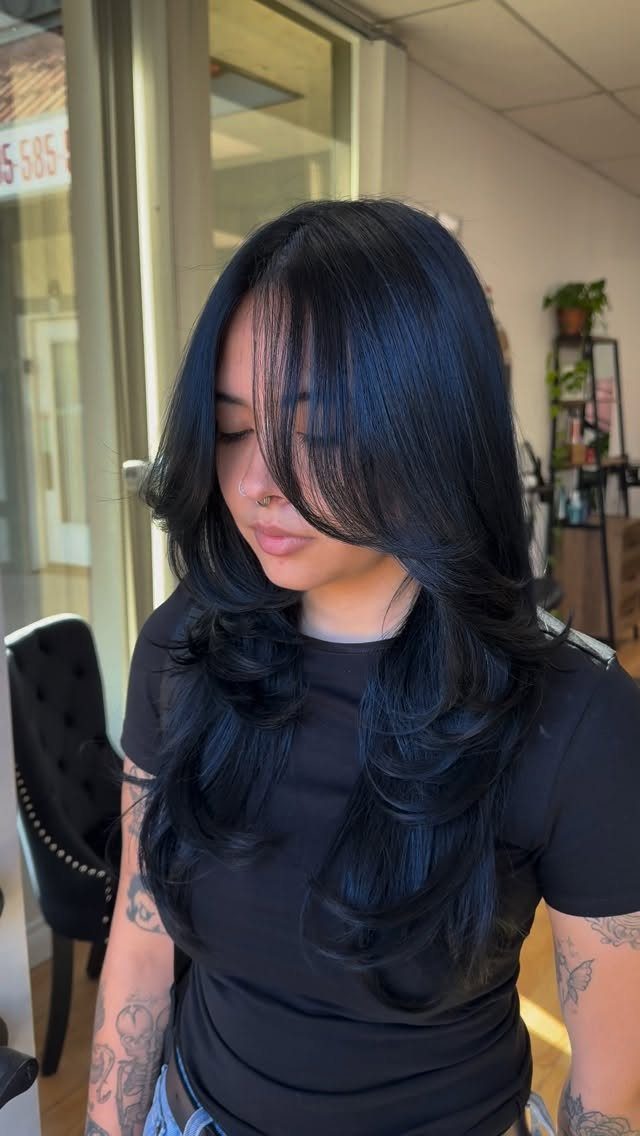
Navy with a blue-black depth, worn long and layered with the ends curled under, sits a step brighter than the shades around it. Layers break the color into softer and deeper patches, so it never looks like one flat block.
Curled ends do the styling for you.
Pairing navy with dark clothes, like a black tee, lets the blue stand out without any extra effort. Choose this over a true black-leaning shade if you want people to notice the color from a few feet away.
15. Natural Blue-Black
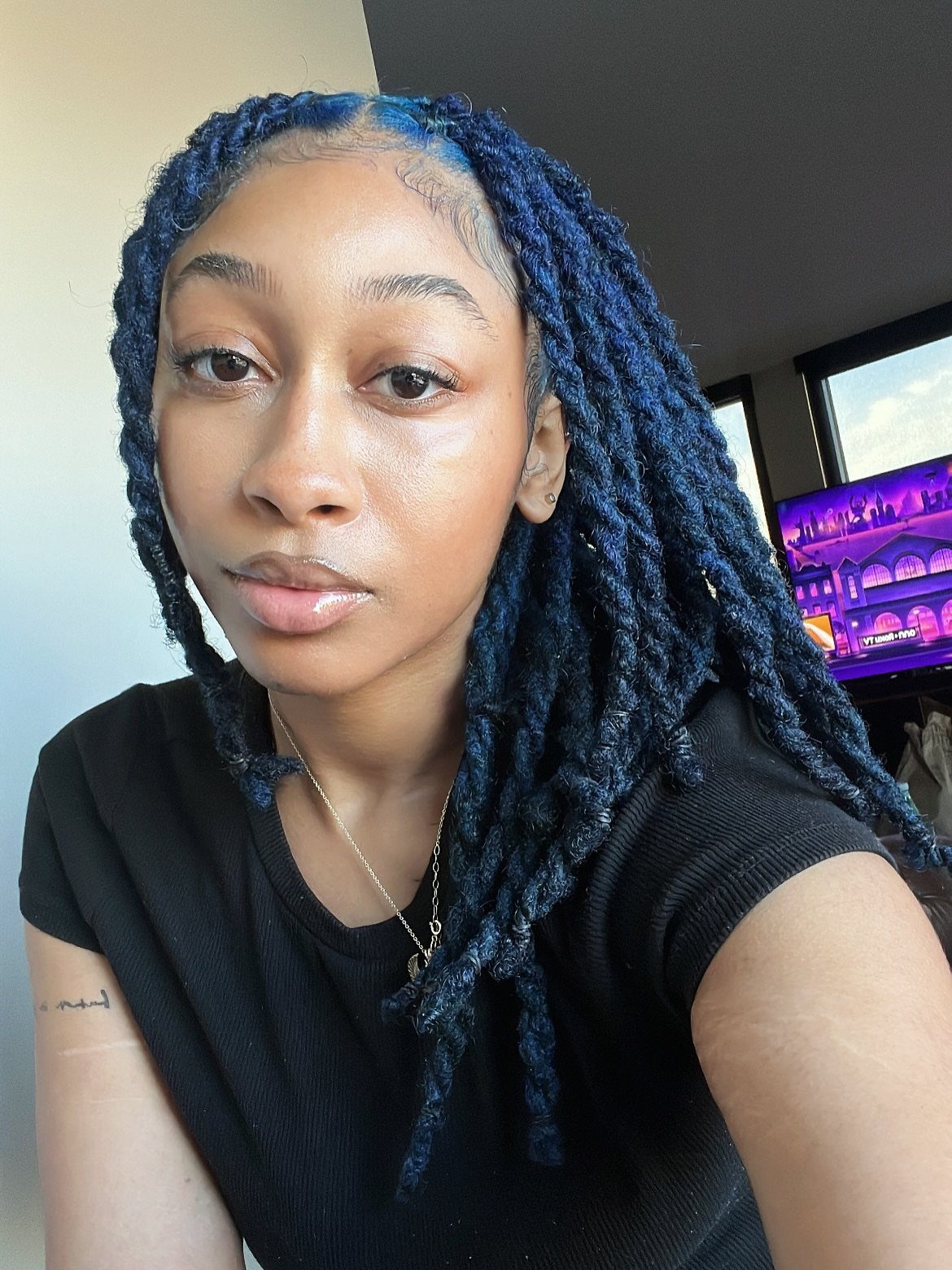
Blue-black faux locs hang long and heavy, and the color lives in the twists themselves, so there is nothing to touch up at the roots. Because the blue comes through the extension hair, your own hair stays as it is.
Ask your braider for blue-black twists by name and bring a photo.
Blue-black shows best in daylight and stays near black indoors, which makes this a low-key way to wear the shade. I like it for anyone who wants color without any bleach on their own hair.
16. Close-Crop Blue-Black
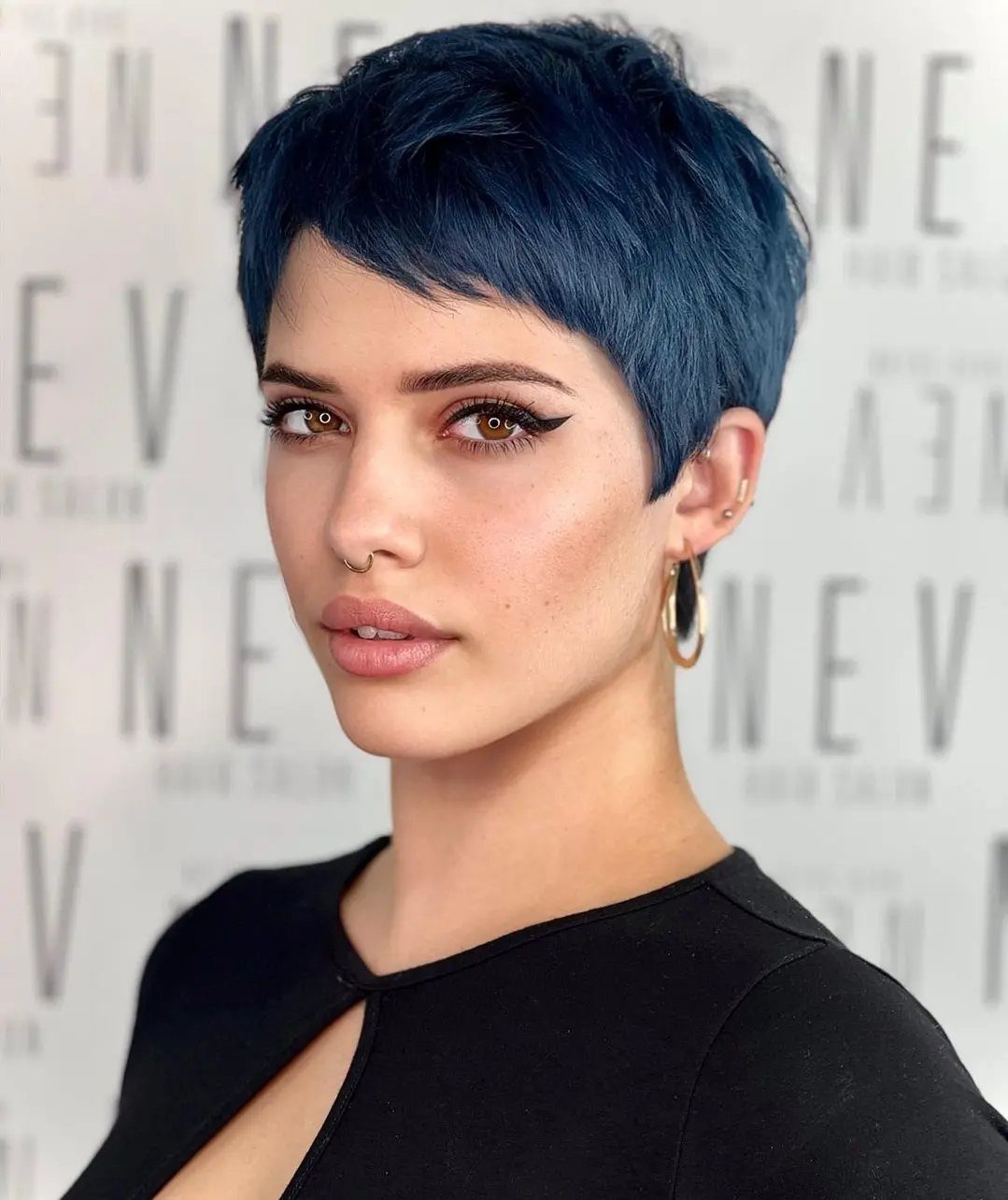
A close-cropped pixie leaves very little hair to carry the color, so a blue-black shade does all the work. Cut short and kept sleek, it reads as a clean dark shape with a blue sheen under strong light.
Saying "pixie" at the consult and showing a photo of the length you want saves your stylist a lot of guessing.
Short hair is quick to dye and quick to dry, and a hoop earring or 2 frames the cut well. Regrowth shows fast at this length, so expect frequent trims to keep the outline sharp.
Frequently Asked Questions
How to achieve blue black hair?
Your natural level sets the route, so figure that out before you buy anything.
Black or very dark brown hair usually reaches blue-black in one dye session, while lighter hair needs a darker base first or the blue overpowers the black.
Blue pigment slips away ahead of black, which means frequent refreshes if you want the tone to hold.
What does blue-black hair look like in real life?
Indoors it reads as plain black on most people; in daylight a blue cast appears, and flash or direct sun makes it shine back even brighter.
Deeper navy and midnight versions show their blue more openly, even in low light. Anyone who wants blue that is obvious in every light will find classic blue-black too quiet.
What skin tone suits blue-black hair?
Cool and neutral undertones suit it best, and some olive skin tones carry it well too. It also flatters most when your features have some natural contrast against the deep, cool color.
Do you need bleach for blue-black hair?
Usually not if your hair is already black or dark brown and you want a subtle, all-over finish.
You will likely need to lighten first for obvious blue on very dark hair, blue highlights, blue ombré, visible blue pieces, or hair with old color buildup.
Does blue-black hair look natural or too harsh?
A natural look comes from dark hair to begin with, features that have some contrast, and a face that handles cool or deep shades.
It can feel harsh on soft, muted, warm or golden coloring. A soft natural blue-black or a rich black sits easier on most people than a saturated midnight.
Should you dye blue-black hair at home or go to a salon?
Go to a salon if your hair was previously dyed black, is damaged or uneven, or if you want balayage, ombré, highlights or a very specific blue tone.
On healthy, dark hair a single all-over shade is the easy version, because the dye goes on with no lightening beforehand.
If you want a polished result with little room for regret, paying for a salon is usually money well spent.