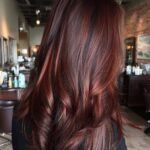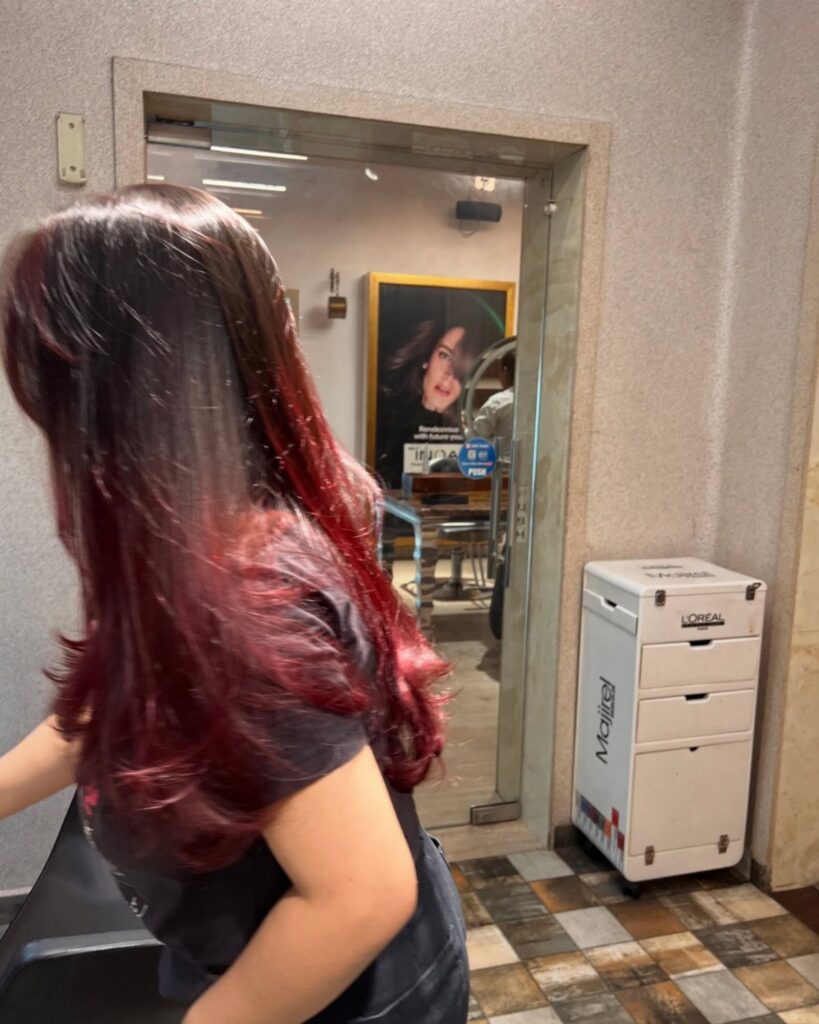
The looks run from dark red hints on nearly black hair to a deep brown base with scarlet balayage, or brown hair with coral highlights, and how deep you go is the next decision after tone.
For anyone unsure of their undertone, a blue-based red is my default, because it cancels brassiness and keeps its depth.
1. Dark-Red Hints on Nearly Black Hair
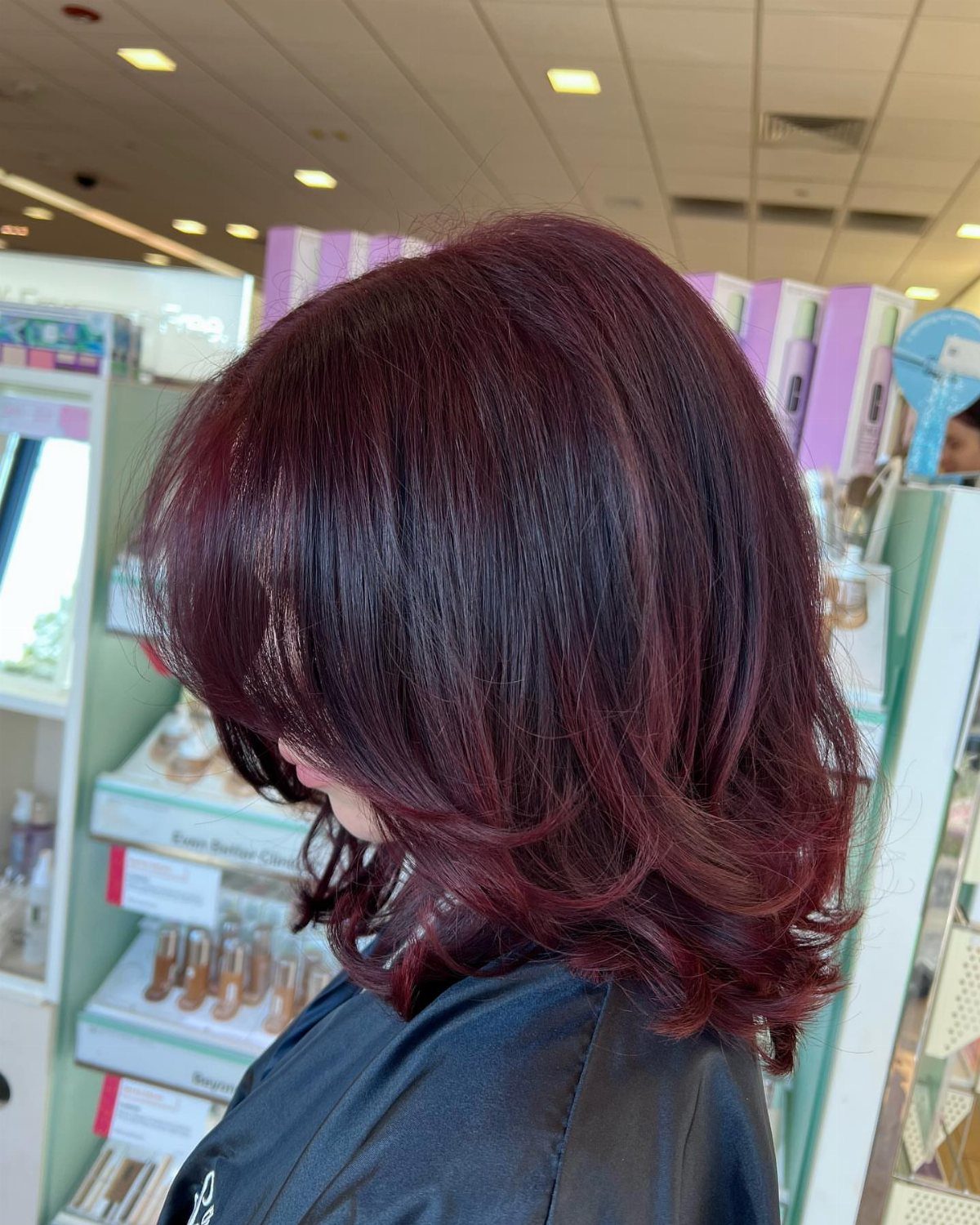
Nearly black hair with dark red hints reads as black in low light and turns burgundy when it catches the sun. That makes it the easiest red to wear if you want a change without a big announcement.
Layers help here, since each layer gives the red a separate place to show. I would ask a stylist for fine, scattered dark red pieces instead of one solid block.
Wavy texture suits it well, because movement keeps shifting which strands the light finds.
2. Black to Red Ombre
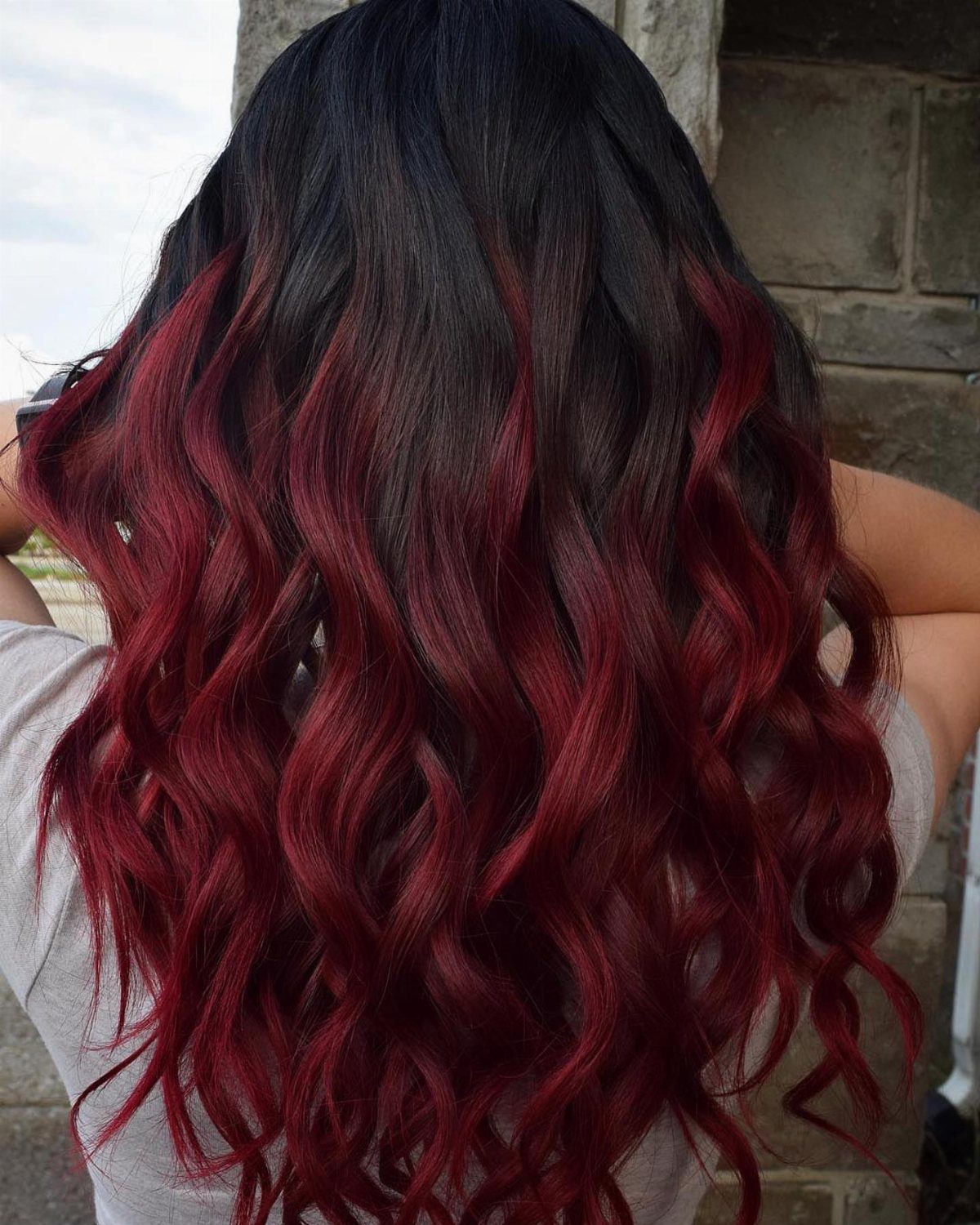
Black melting into deep cherry red is a bold ombre, and the blend decides whether it looks expensive. Ask for a soft, gradual fade, not a line, so the black roots slide into red through the mid-lengths.
Keeping the root dark is a practical perk too: regrowth never shows as a stripe.
Long, wavy hair gives the gradient room to stretch, and I would pick that length for this one. On a short cut, the transition has almost no space to happen.
3. Dark Red with Copper Highlights
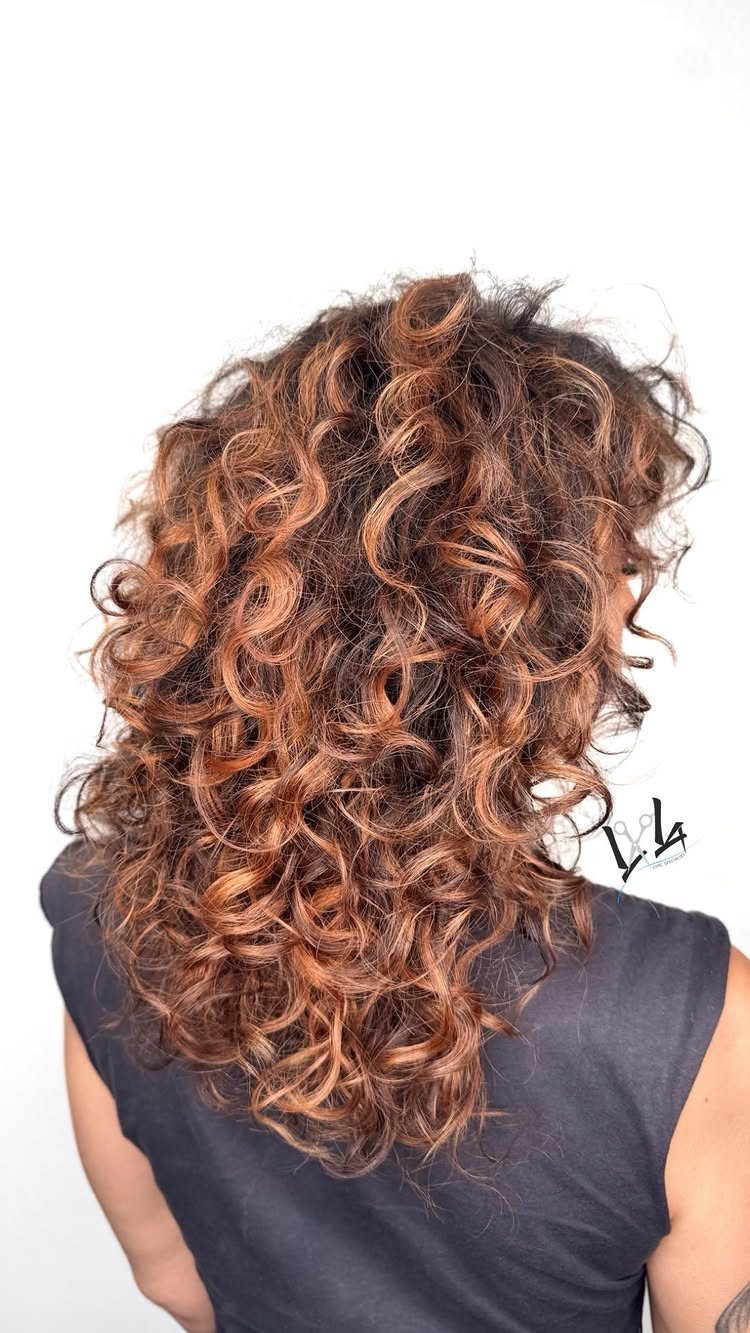
Copper highlights threaded through dark red curls give the color a warm glow where the curl turns.
Curls are the best canvas for this, since every coil catches light at a different angle and the copper shows up in flashes, not stripes.
If you pick this look, I would go with a few thick, hand-placed pieces over fine, even foils. That keeps the copper reading as an accent against the dark red.
4. Subtle Mahogany Red
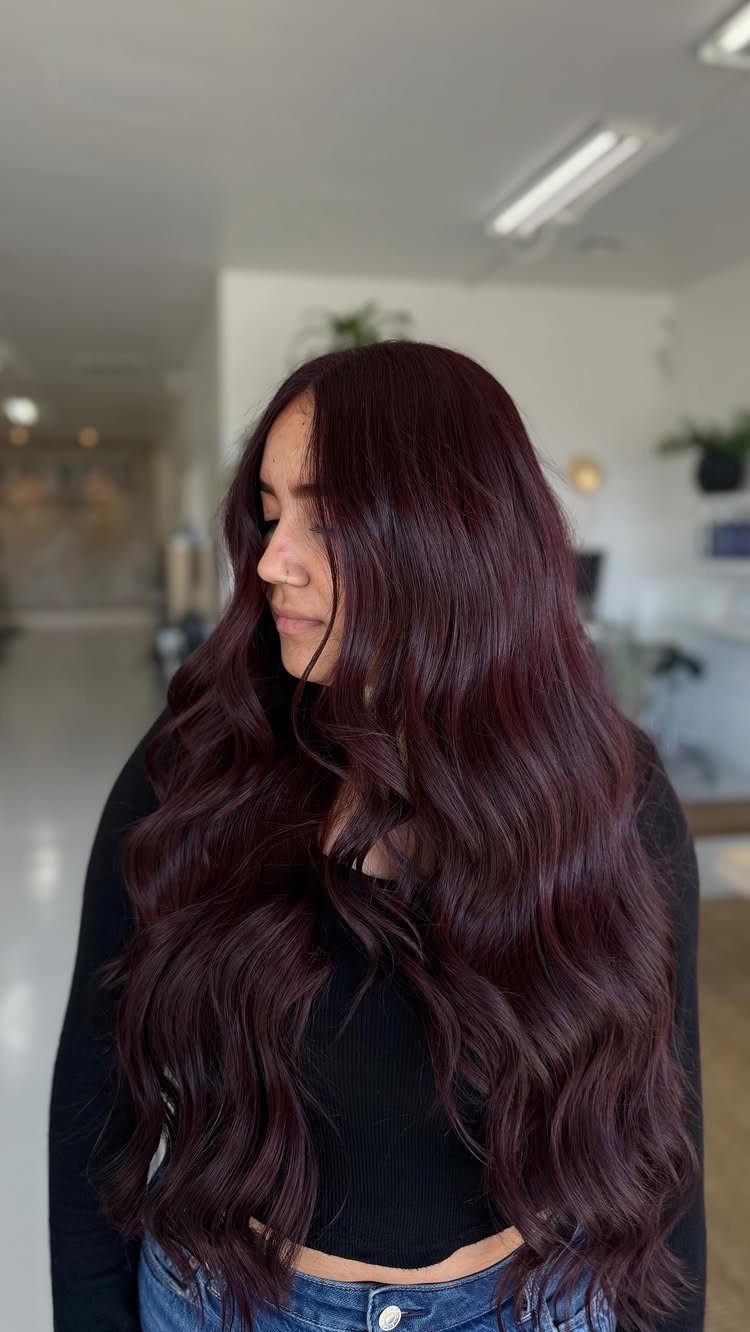
Mahogany is dark red with a brown undertone, which is why an all-over version feels bold without tipping into bright. Color this deep looks best on long hair, where the shade has plenty of surface to show off its richness.
Wavy texture adds shine in the bends.
If you have brown hair and want red with a little restraint, this is the version I would take to a stylist. Ask for mahogany by name and bring a photo of the exact depth you want.
5. Dark Red Balayage
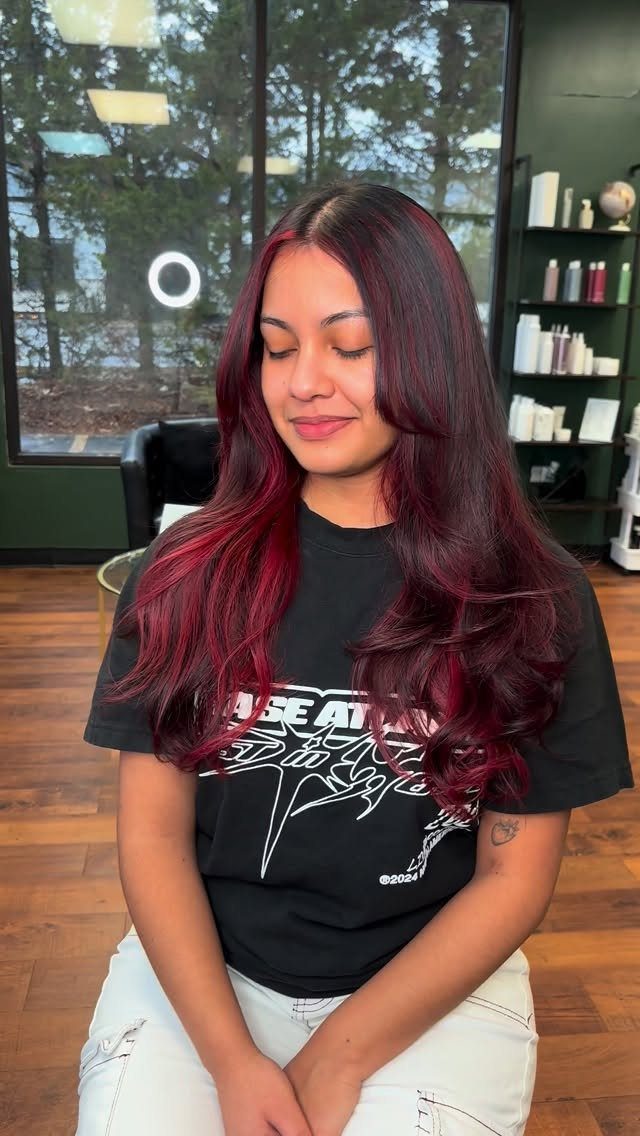
Dark red balayage is hand-painted color, so the shades run from deeper roots to lighter red through the lengths with no hard edges. On curls the effect is strong, because each ringlet shows a slightly different tone.
Painting by hand lets the stylist place brighter red where the curls fall forward, which foils cannot do as precisely.
I would choose balayage over all-over color if you want to grow out the root without a visible line.
6. Red All Over
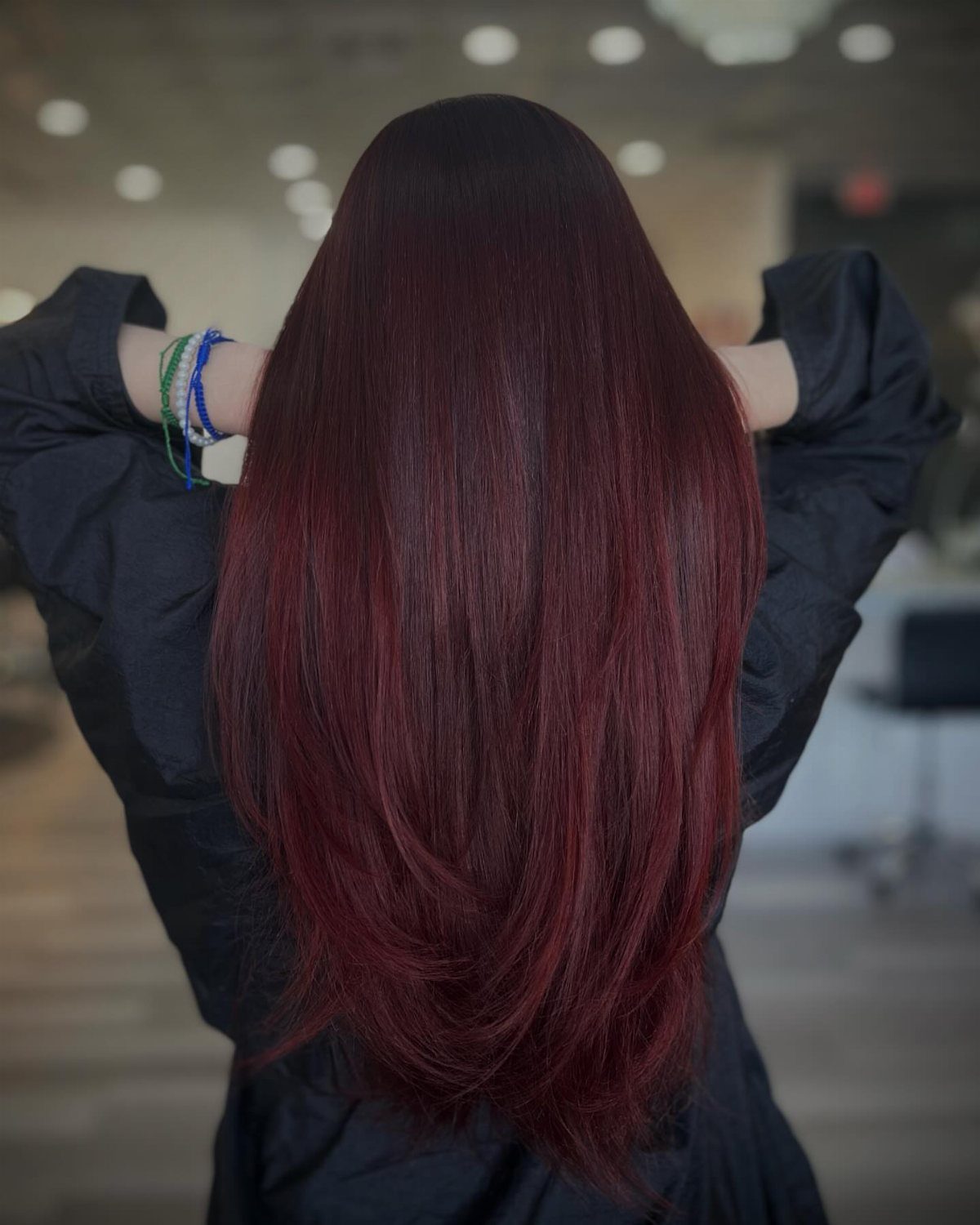
Straight, long hair shows off the gloss better than any other texture, since a smooth surface bounces light back evenly.
The darker root also softens regrowth, so you are not racing to the salon every few weeks.
If you are going from dark hair, I would say this is the clearest way to see a red shade at full strength, with no highlights competing for attention.
7. Burgundy Balayage Ends
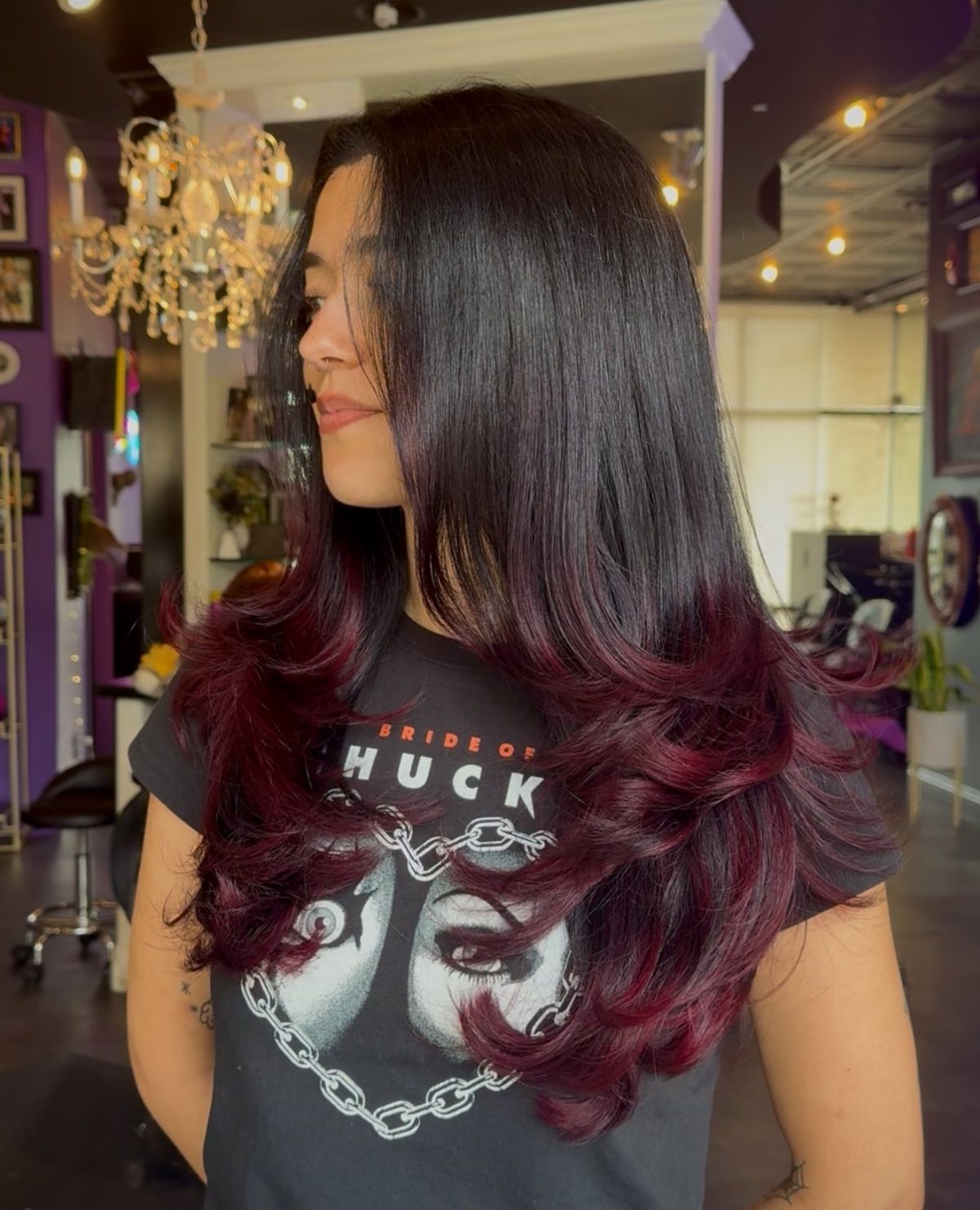
Burgundy ends on a dark brunette base add color without touching the roots, which is why I like this for anyone nervous about going red.
The deep wine tone sits well against cool-toned brown, and curling the ends shows it off.
When it fades, the ends can be trimmed or refreshed without redoing the whole head.
8. Deep Cherry Red
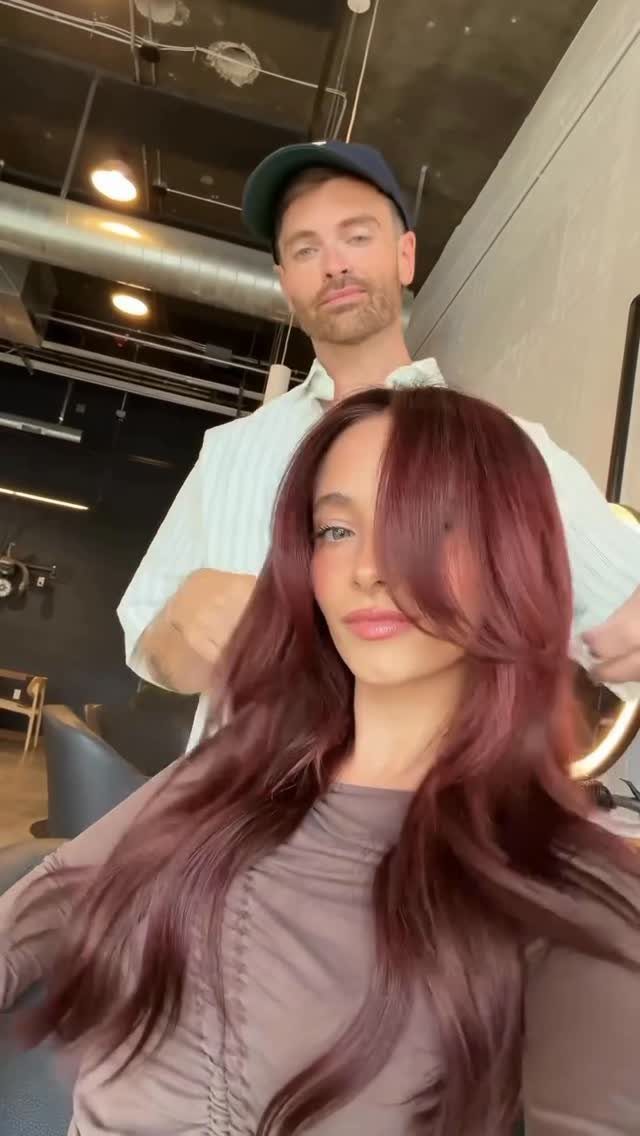
Against a darker base, cherry red turns into black cherry: a red so deep it looks almost wine-dark until the light hits it.
Long, smooth hair suits it, since the shine is what makes the shade read as rich and not flat.
Keep the base dark and let the red sit over it.
9. Deep Burgundy
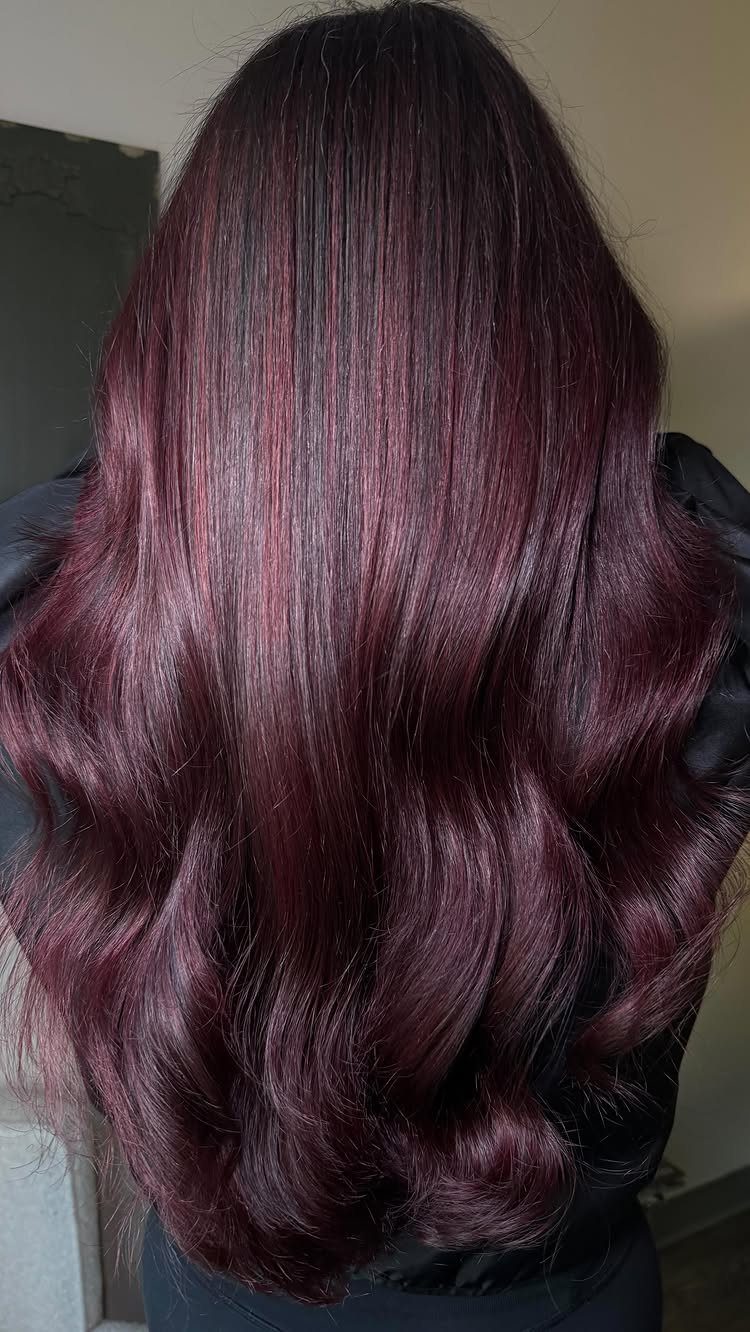
Deep burgundy worn all over is the commitment version, and I think it earns the attention. Every strand carries the same red-wine depth, so long waves look dense and glossy with no break in color.
Waves help here: the bends catch light and brighten the red in flashes. Because the shade is even, the look relies on shine, so a gloss treatment or a smoothing finish matters more than any extra highlight.
10. Deep Brown with Scarlet Balayage
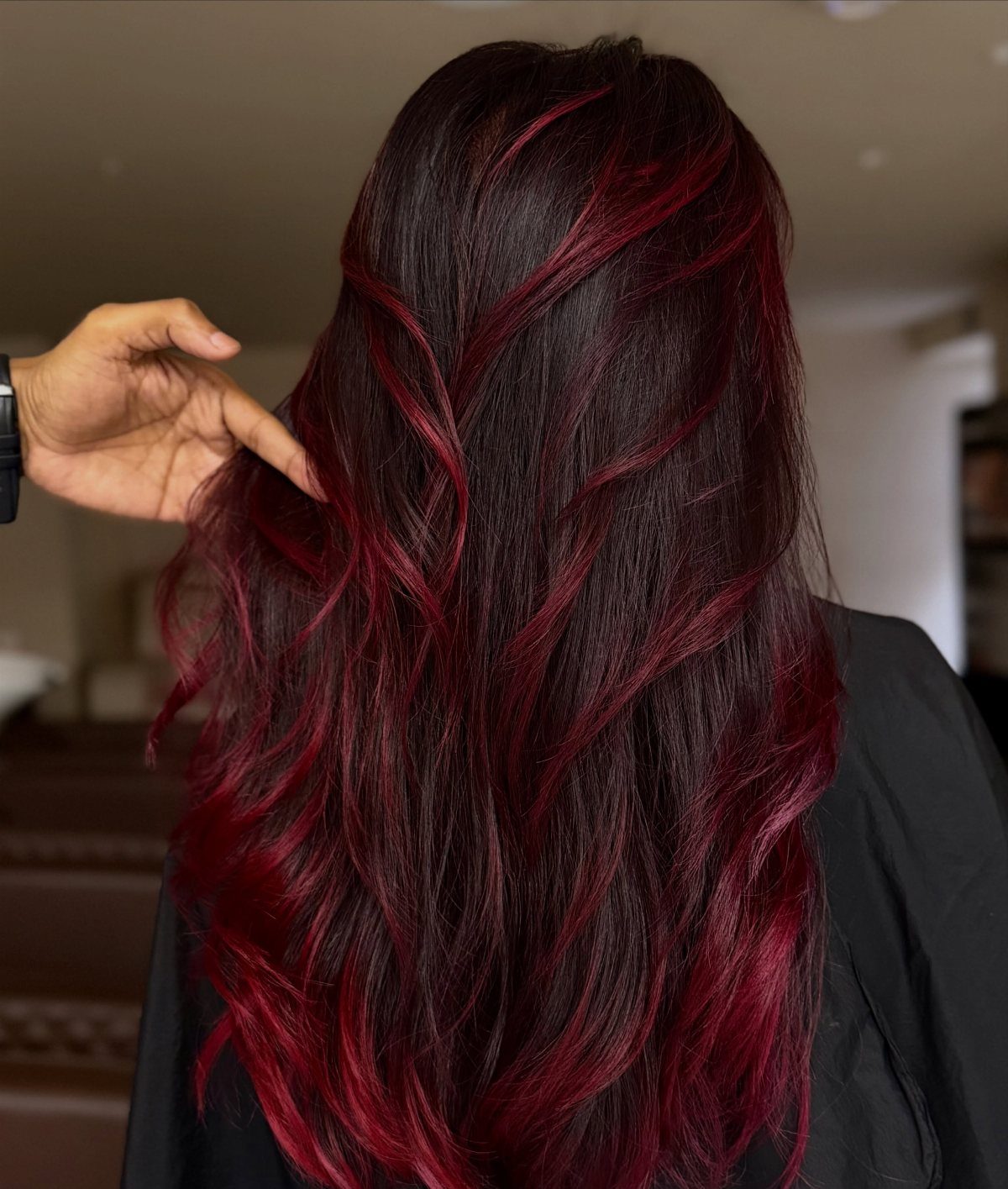
Scarlet is the loudest red in this group, and a deep brown base keeps it from going garish. The balayage moves from dark roots into bright red streaks, so the contrast does the work.
I would choose this over an all-over scarlet if you want the red to feel like an accent. Have the brightest pieces placed around the face and through the mid-lengths, and keep the roots brown.
11. Merlot and Black Hair
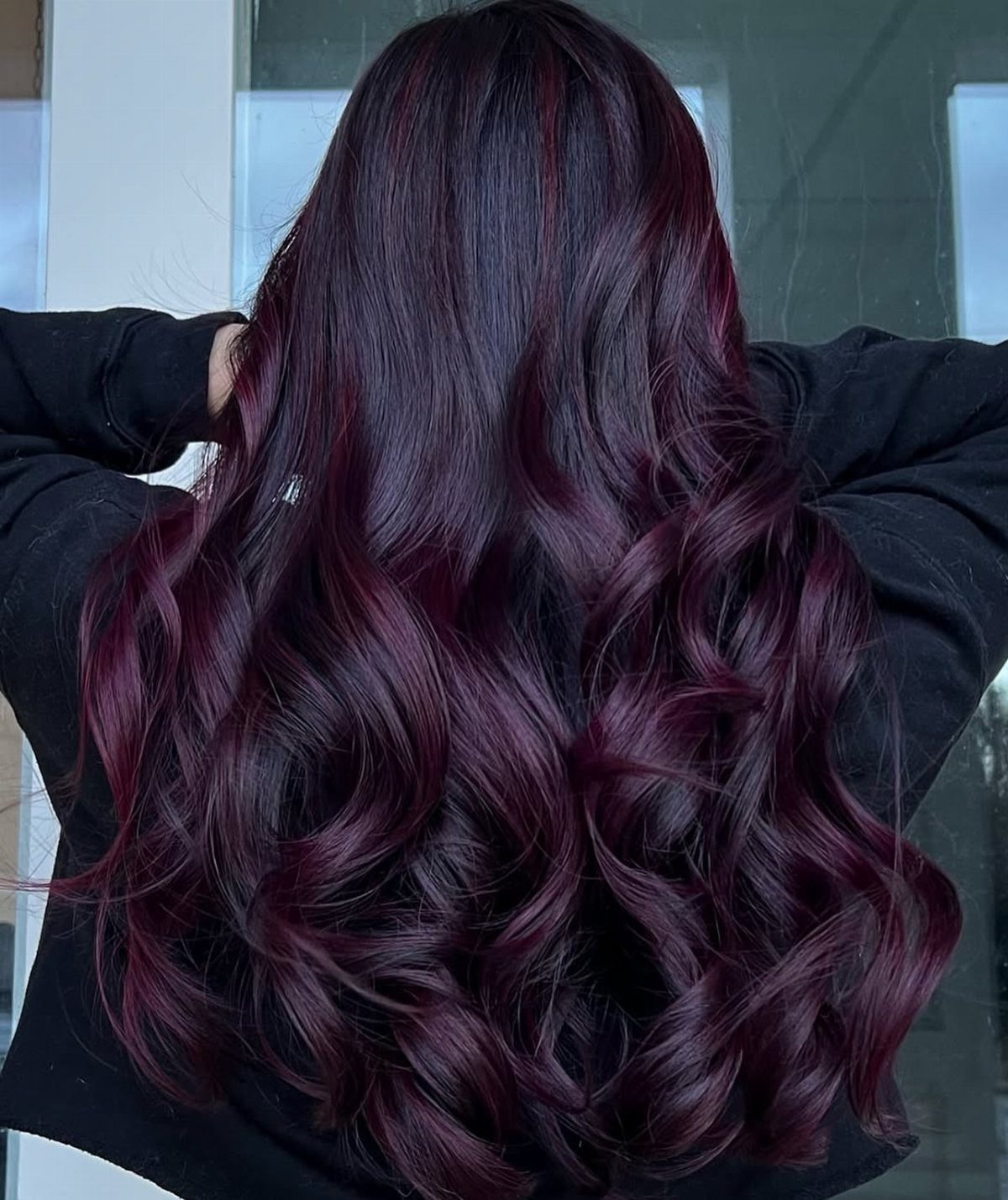
Merlot mixed with black gives hair a moody, low-lit look: mostly dark, with red showing up in the waves.
It is a softer move than a full burgundy, and I would take it to a stylist as "black with merlot woven through."
Long, wavy hair is the right canvas, since the movement keeps shifting where the red appears. Keep the black dominant if you want subtlety, or add more merlot for a richer, glossier finish.
12. Glossy Plum-Violet Red Hair
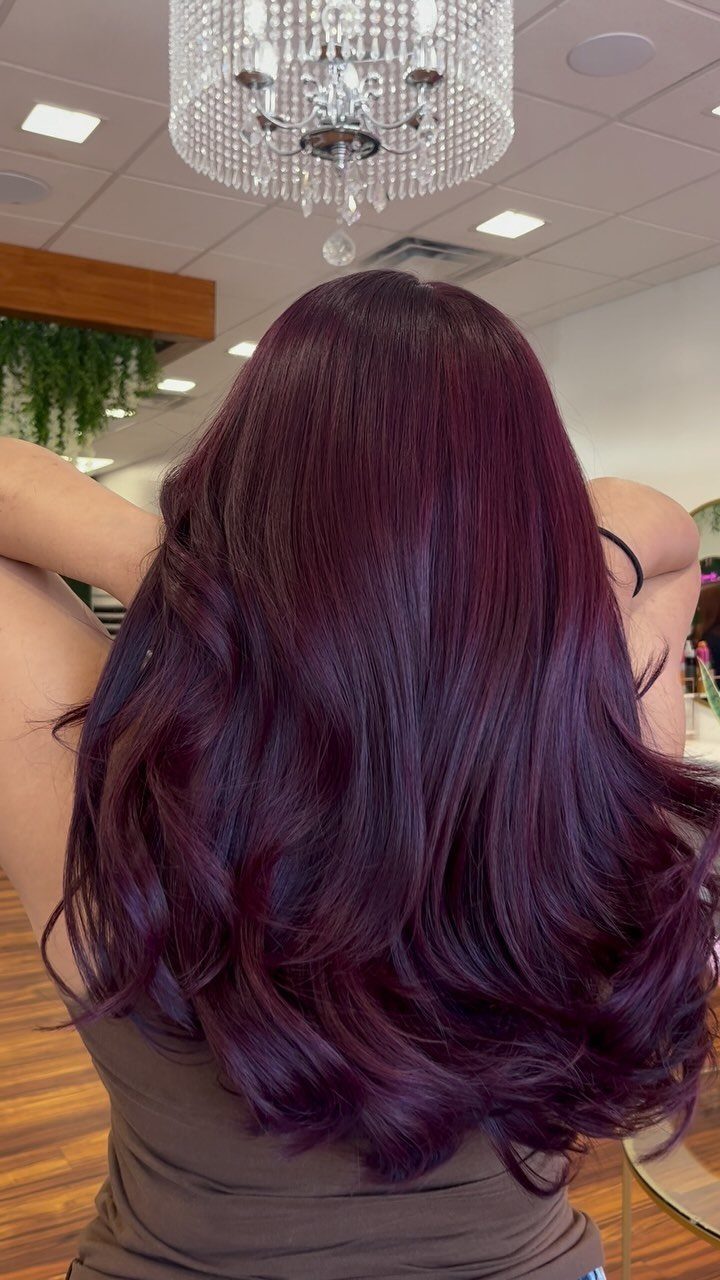
Plum-violet red is the winter shade here: cool, aubergine-leaning, and finished with a high gloss that gives it a frosted look.
Layers and loose curls help the sheen catch light from every angle, which is where plum-violet reds look their best.
The gloss is the point, so I would put it first when talking to a stylist. Ask for a violet-leaning red, not a plain burgundy, and plan on a shine treatment to keep the finish smooth.
13. Deep Auburn Red
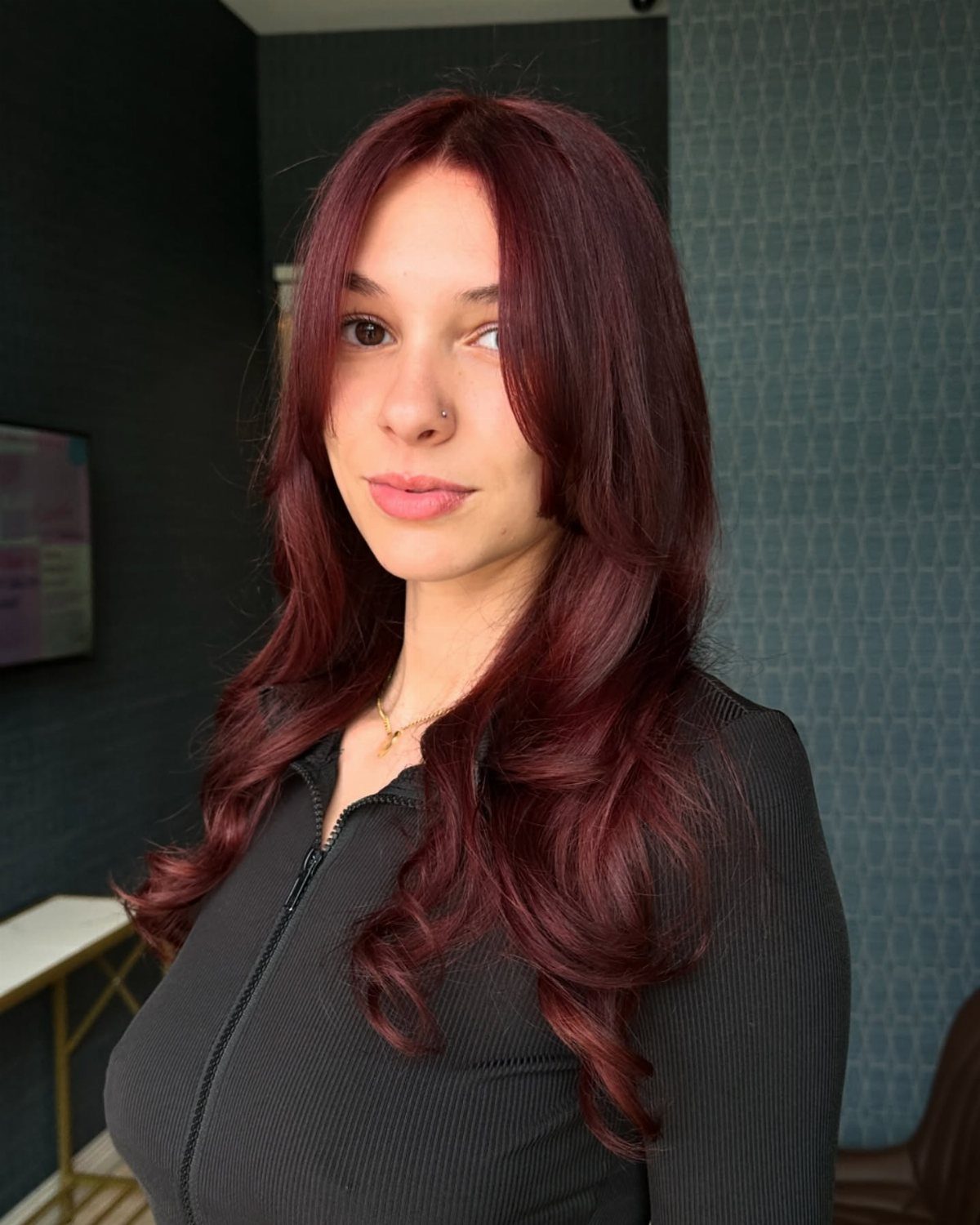
A darker auburn proves that red does not have to be bright to get noticed. The copper warmth sits under a deeper brown-red, so the shade reads rich and slightly smoky instead of fiery.
Loose curls and long length give the gloss somewhere to travel, and I would ask the stylist to finish with a shine treatment.
If you have brown hair, this is an easy step toward red, since the color stays close to your natural depth.
14. Juicy Raspberry Curls
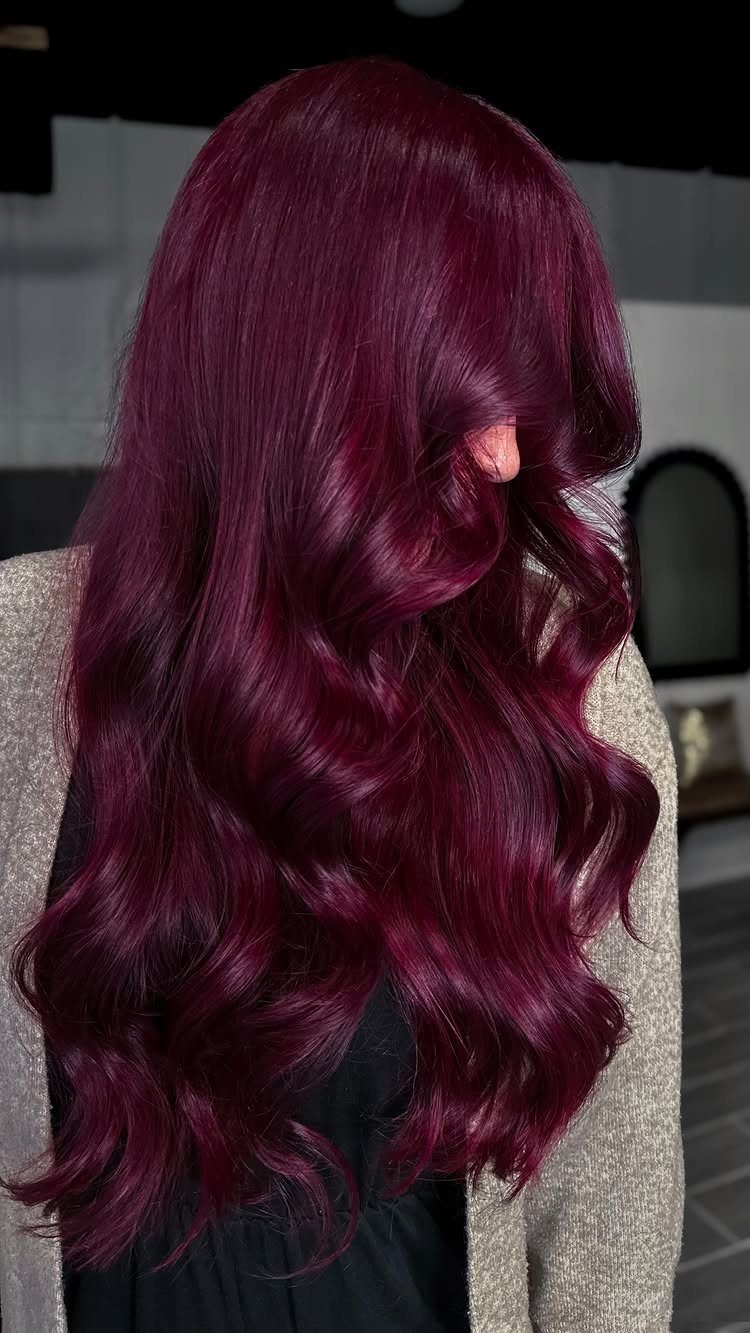
Raspberry is a red with pink in it, and that is what gives it the juicy, shimmering look. Curls help most: each loop catches light on a different side, so the pink flashes through the red.
Ask for a raspberry that leans fruity over brown, and bring a photo so the stylist knows how much pink you want.
Pink-leaning reds tend to look best with a curl set or loose waves, so I would plan on styling it rather than wearing it flat.
15. Auburn and Burgundy Hair
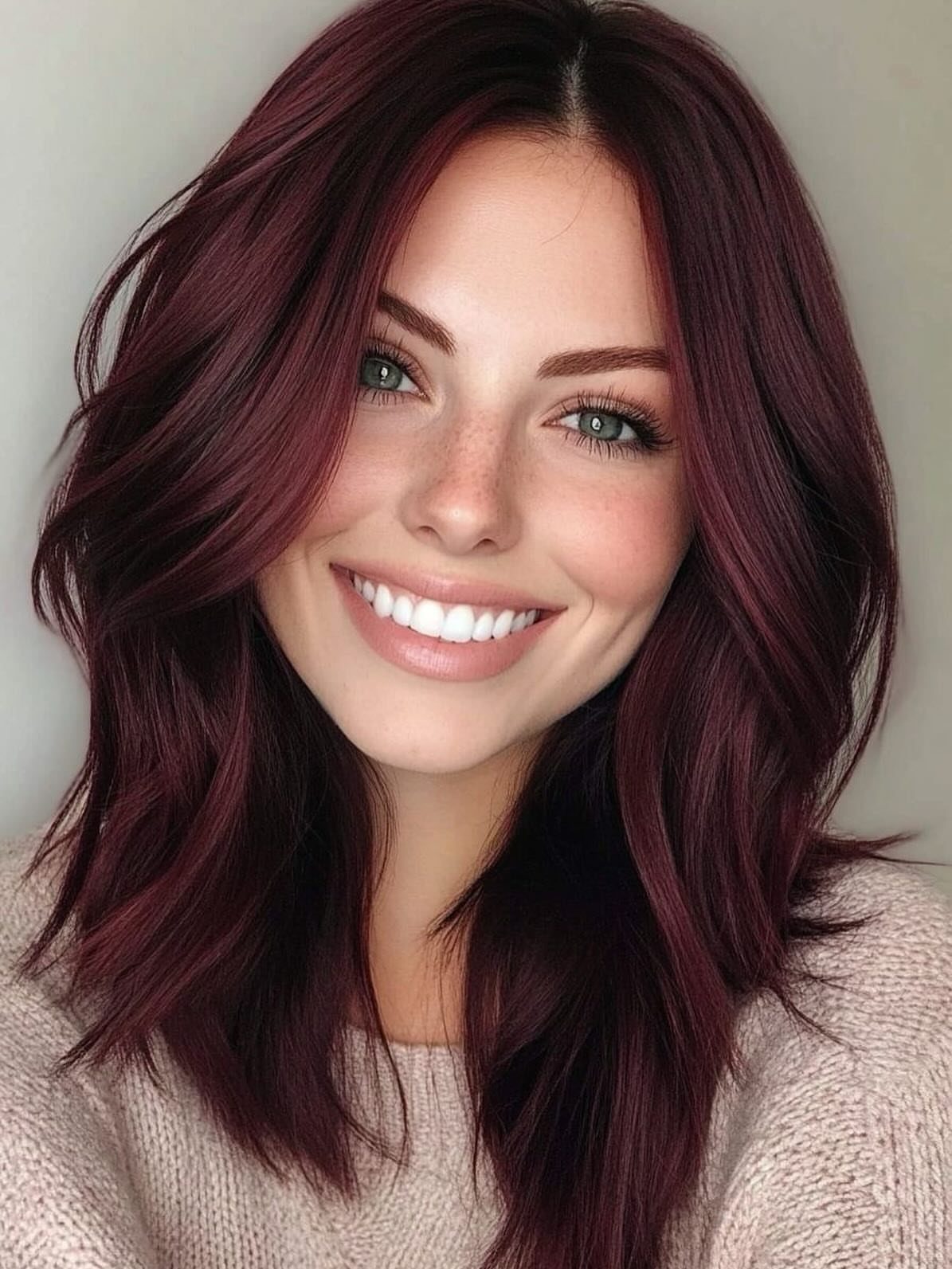
Auburn brings warmth and burgundy brings cool depth, and blending both over a darker base gives the hair 2 moods at once. Wavy length shows the mix well, with the lighter reddish pieces appearing as the waves turn.
I would ask for the burgundy through the underlayers and the auburn nearer the surface, so the warm tone catches the light first. Name both shades when you book, and let the stylist decide where each one sits.
16. Two-Tone Red Wine
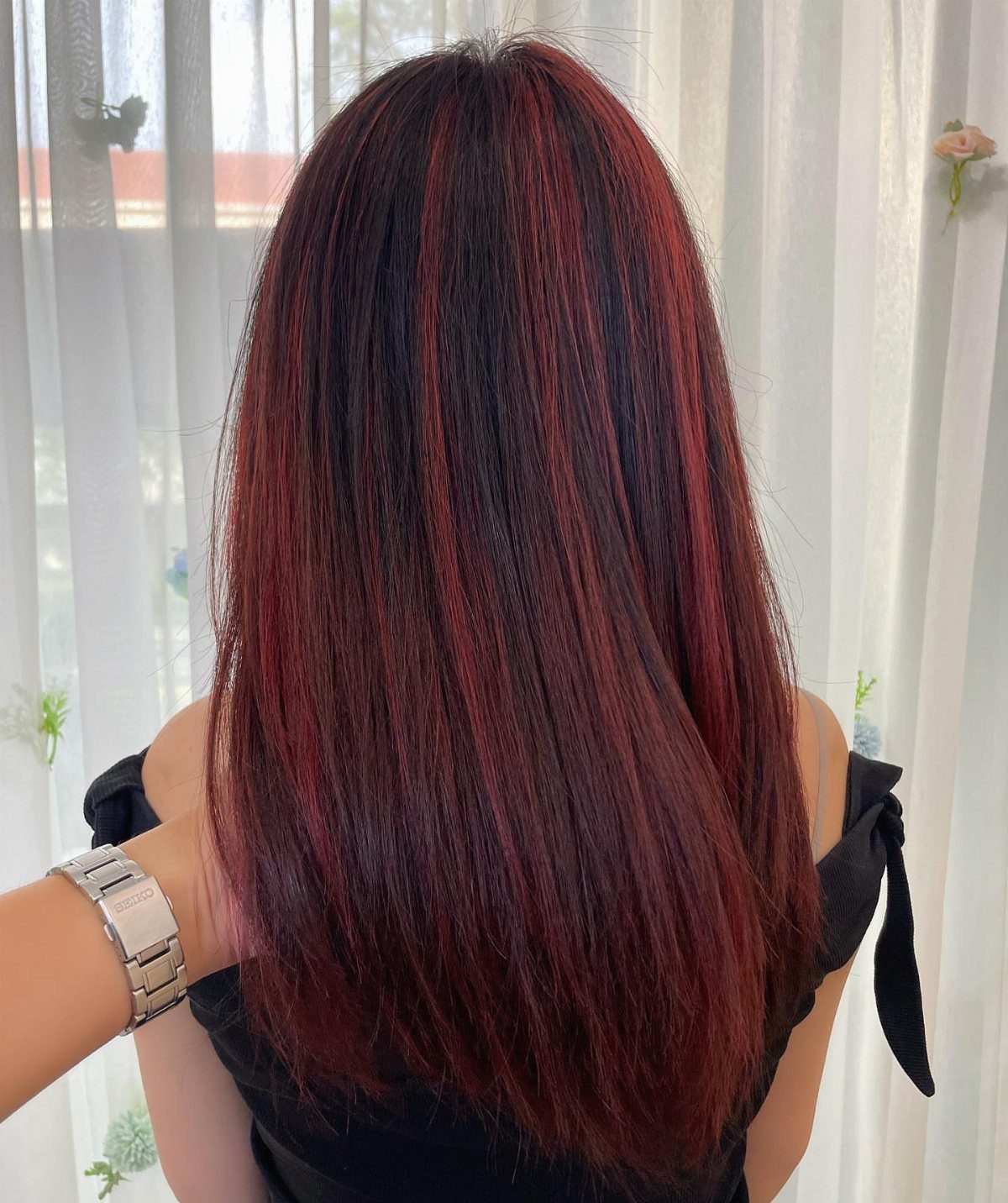
Two-tone red wine layers ruby and burgundy highlights through a dark red base, which makes the color look multi-tonal instead of flat.
Because the shades stay in the same family, the result is dimension without contrast, and it suits anyone who finds all-over red a little heavy.
I would pick this over a single solid burgundy if you want depth that moves. Ask for the ruby pieces to be a step brighter than the base, and keep the burgundy deeper.
17. Brown Hair with Coral Highlights
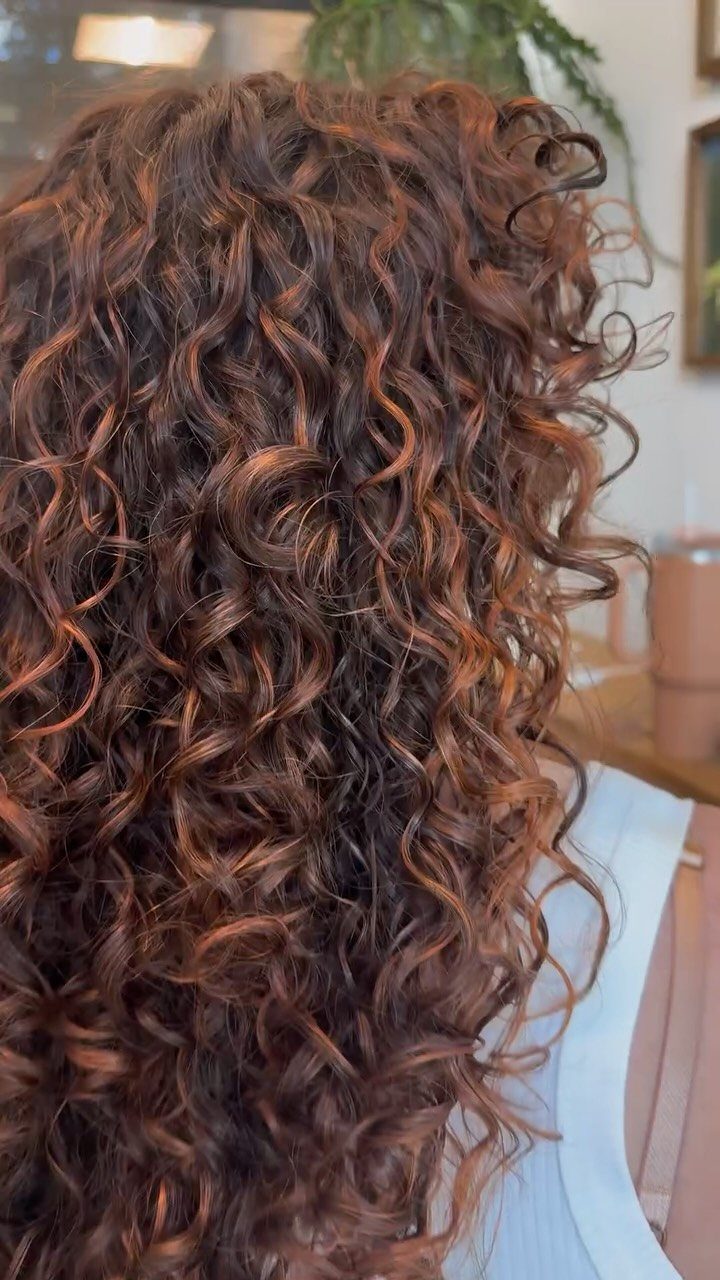
Coral highlights on curly brown hair add spice, and the warmth stands out against the brown. Curls are the right texture, since the coral shows up in glints rather than bands.
Keep the highlights few and chunky; I like this look best when the brown stays dominant and the coral reads as an accent.
For anyone wanting red without going dark, it is the playful route, and it asks for less commitment than a full color change.
Choosing Red by Undertone
Undertone decides whether a red looks rich or sallow, and the rules are short. Cool undertones suit blue-based reds like burgundy and violet-red, while warm undertones suit orangey reds and coppery auburns.
Olive skin is where the advice splits. Red-orange can make olive undertones look sallow, but a dark red can flatter olive or golden ones, so I would stay deep and keep the red away from orange.
If you can’t tell which undertone you have, go with a blue-based red. Blue sits opposite orange on the color wheel, so it cancels brassiness and the red holds its depth instead of sliding toward bronze.
On deeper skin tones, red creates strong contrast either way. Match the red to your undertone and it looks intentional.
Red Color Upkeep
Red fades faster than most dyed colors, so upkeep is part of the look from the first week.
Between salon visits, use a gloss or semi-permanent rinse in a red hue. Read the label and pick one marked red or burgundy, not neutral.
Wash with a sulfate-free shampoo and follow with a rich conditioner, then deep condition once a week. Wash with cooler water and end on a cold rinse; it keeps the cuticle flatter, which holds pigment in and adds shine.
For home touchups, mix a little of your dye into a color-safe conditioner and use that in place of full-strength color.
Test it on a small section first. Once the red starts pulling orange, a blue-violet shampoo used in place of your regular one now and then pulls the brass back.
Set hot tools to the lowest temperature that still works, and spray on a heat protectant before every pass.
Frequently Asked Questions
What is the best reddish brown hair dye?
Mahogany is my pick for brunettes: a dark red with brown underneath, it reads rich and bold without ever swinging bright.
Deep auburn is the other easy route, since its copper warmth sits under a brown-red and stays close to natural depth.
The gentlest route is burgundy ends over a dark brunette base, with the roots left exactly as they are. Say the shade name at the appointment and hand over a photo that shows the depth you’re after.
Can redheads have dark hair?
Yes, red works well on a very dark base. In dim rooms, black with a faint red cast looks plain black, then flashes burgundy in daylight; merlot threaded through black gives the same moody depth.
A dark base also keeps the red from looking loud, which is why it is the easiest way to try red.
What are the shades of red hair?
Dark reds run from mahogany (brown-leaning) and deep auburn (copper warmth under brown-red) to burgundy, merlot and black cherry. Cooler options include plum-violet, which leans aubergine.
Brighter reds include raspberry (pink-leaning), ruby, scarlet and coral. Warm shades suit orangey copper tones, and cool ones lean blue.
Can you put red dye over dark hair?
Yes. On dark hair, red shows up as a subtle tint that flashes in sunlight, and how strong it looks depends on how dark your base is.
Nearly black hair with dark red hints is a good example: it passes for black indoors and turns burgundy outside. For more visible red on a dark base, hand-painted balayage or a few thick highlights gives the color more presence.
Should I bleach my hair before dying it red?
Bleach is not required. Lightening the base only buys a more vivid red, and deep shades like burgundy, black cherry and mahogany look rich over a dark base as is.
Over deep brown, even a loud red like scarlet sits calmer, since the dark base holds it back from looking garish.
What skin tone does dark red hair look best on?
It depends on undertone more than depth. Olive and golden undertones can wear dark red well, but red-orange can make olive skin look sallow.
Unsure of your undertone? A blue-based red is the safer bet, because blue offsets brassiness and the color keeps its depth.