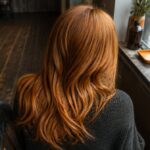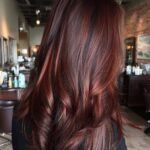
Layers work on any length because they redistribute weight rather than remove it, but the distance between your shortest and longest pieces determines whether the cut reads as soft movement or structured shape.
A shag might start layering at the crown while long cascading layers begin near the collarbone, and that spread changes how much volume you see at the top versus how much fullness stays through the ends.
1. Face-Framing Layers and Curtain Bangs
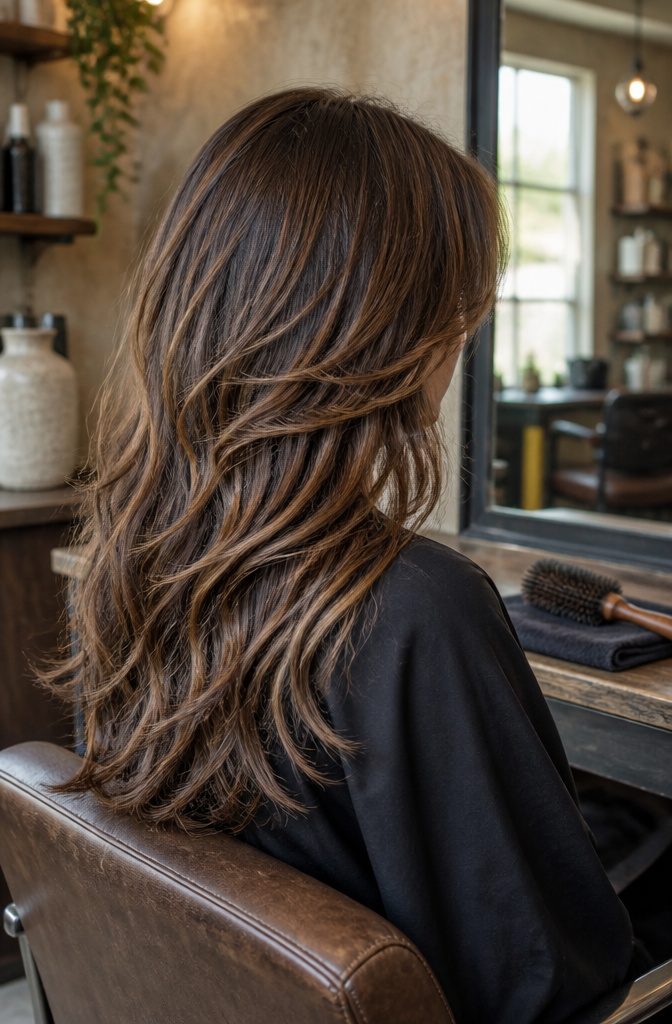
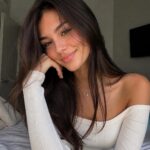
Face-framing layers are shorter pieces that begin near the cheekbones, jawline, chin, or collarbone and soften the area around the face.
They give you a noticeable change without layering the whole haircut, and you can still pull them back if the shortest piece starts at the chin or lower.
They blend into the rest of your length rather than sitting as a separate tier.
Curtain bangs are different.
They sit shorter, work more like fringe, and sweep to either side of the face. You can combine them with long layers for a look that keeps length while adding softness and structure around the front.
Mid-length or cascading layers behind the bangs preserve body and let the fringe frame your face without competing for attention.
Face-framing pieces look especially good blown out sleek and glossy, which shows off the choppy angles.
Tousled waves add volume around the face and make the shorter pieces move. A round brush lifts a curtain fringe so it stays light and airy rather than sitting heavy against your forehead.
2. Long, Flowing Layers
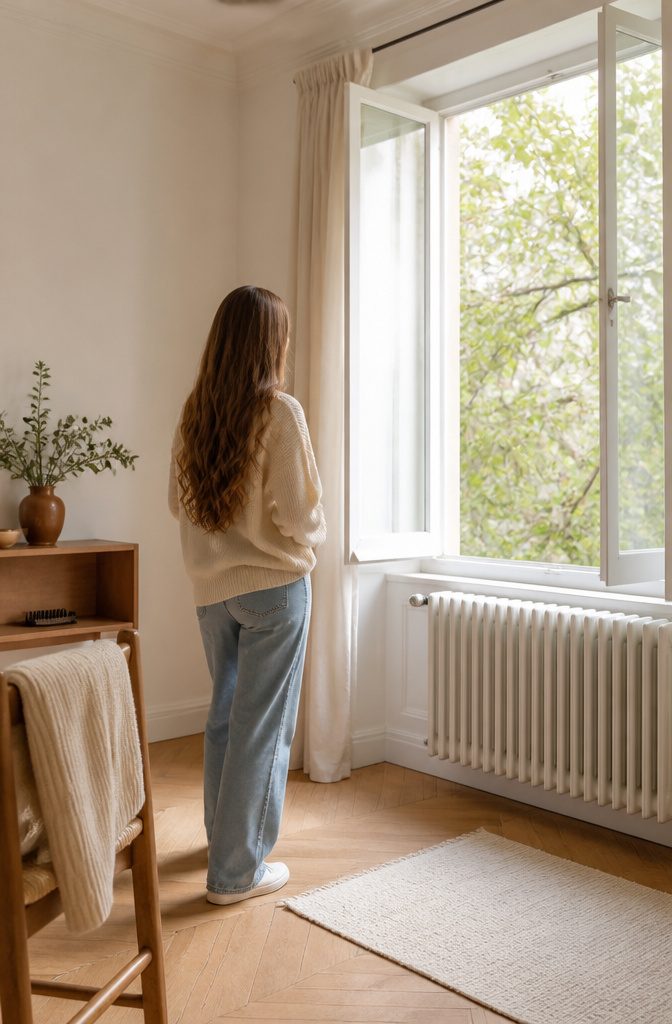
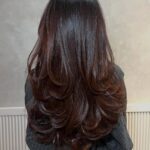
Long layers keep your length while adding movement through the mid-lengths and ends, and the cut works whether you call it waterfall, cascading, hippie, or boho.
The effect is fluid rather than choppy, and you get the weight reduction without making the shape feel lighter overall.
Long layers are usually kept within a couple of inches of the ends, so the change is visible in how the hair falls but not in the outline you see in the mirror.
I like this option when thickness feels heavy but you’re not ready to lose length.
The layers create soft, blended movement that air-dries well and shows up nicely in waves or a polished blowout. Face-framing pieces add more dimension if you want it, but the base cut preserves fullness through the bulk of the hair.
3. Layered Bobs and Lobs
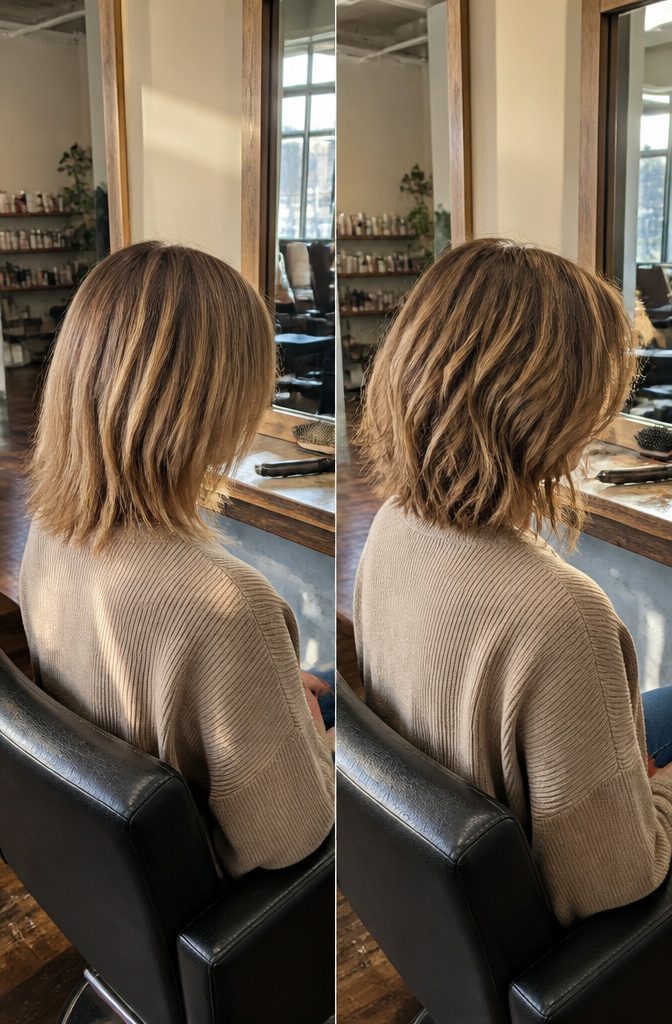
Layered Bobs and Lobs
A bob with layers can be cut from blunt and sleek to choppy and tousled, depending on how much texture you want and how heavy the hair feels.
The layered lob—a long bob—breaks up weight while keeping manageable length, and choppy layers through thick hair give it more bounce without the bulk.
A French bob gets soft layering just below the chin for a lighter, more lived-in finish than the classic blunt cut.
Angled bobs use graduation underneath, with shorter pieces at the back building to longer ones in front, creating fullness and structure.
Blow-dry with a paddle brush for polish, or add waves with a curling wand if you want movement instead of sleek.
4. Layered Pixies and Bixies
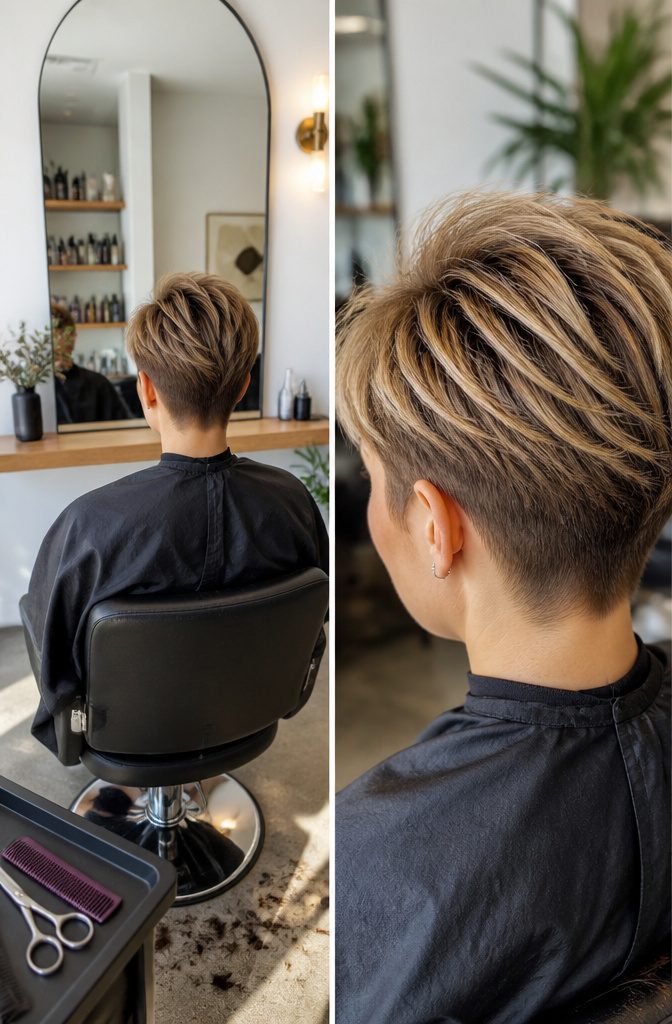
Short cuts put layers to work in ways long hair can’t: they build shape where there isn’t much length to lean on, lift roots without weighing anything down, and turn texture into the whole silhouette.
A pixie runs ear- to neck-length with short layers on top and long layers at the bottom, and that spread between shortest and longest is what gives the cut its architecture.
The layered pixie keeps slightly longer feathered pieces on top while the sides stay cropped, so you get dimension and movement without daily fussing.
A pixie with fringe adds a side-swept or longer piece across the forehead, and it’s an easy tweak that changes the whole look without committing to more length.
The feathered pixie uses texture and lift at the crown while keeping the neck and ears neat, and it reads modern rather than sculptural.
The bixie sits between a pixie and a bob, a bit longer through the back and sides but still short enough to style quickly, and it’s the one I’d pick if a full pixie feels like too much of a jump.
5. Shags and Wolf-Cut Layers
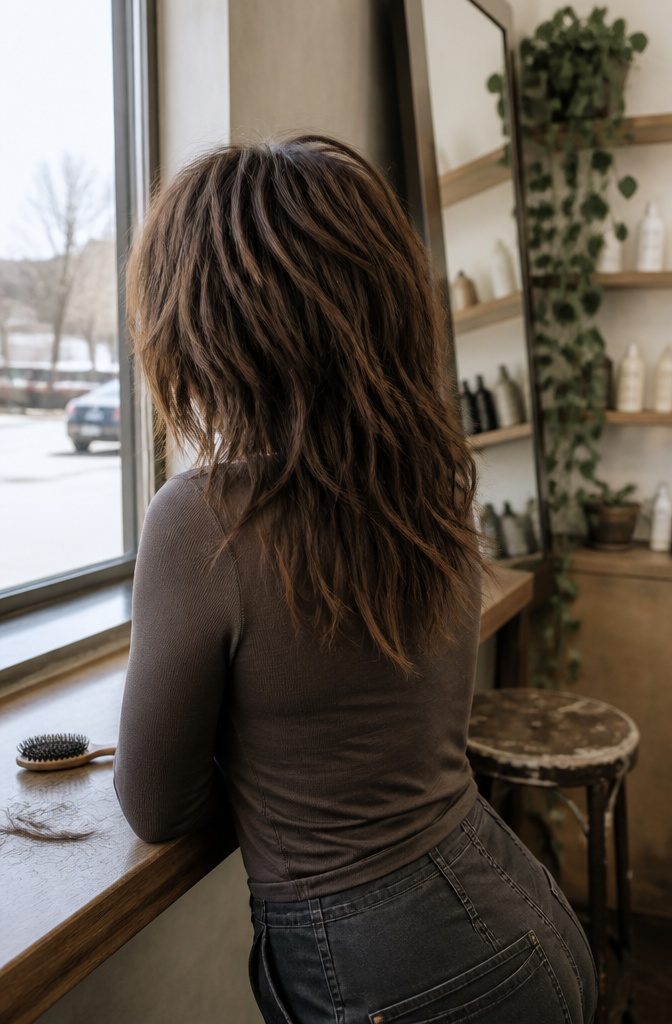
The modern shag cut and the wolf cut are the textured, undone cousins of the layered family. A shag generally uses shorter crown layers, face-framing pieces and a textured perimeter for that artfully-undone finish.
The wolf cut brings in a stronger contrast, with a voluminous top and thinner, tapered lengths below. Both take the weight out of thick hair and bring out your natural texture.
The shag with bangs frames your face and gives you crown volume without much fuss. A shaggy curtain fringe sits at the front, the rest falls in choppy, layered lengths from crown to ends.
If you like a lived-in appearance with significant movement, either cut delivers. The shaggy pixie bob is the short version, with tousle at the crown for extra height and a perimeter you can style messy or smooth.
6. Beachy Waves and Tousled Texture
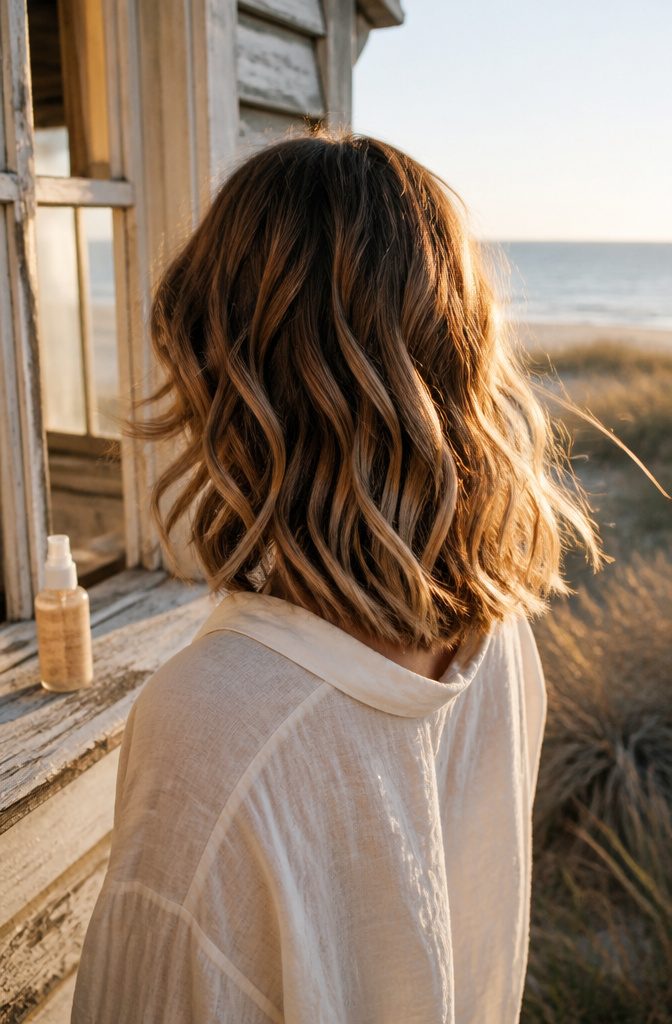
Tousled, wavy finishes show movement through the layers better than anything else.
Beachy waves add texture and dimension while keeping the look relaxed rather than fussy. Start with sea salt spray on damp hair to enhance natural waves, then use a curling wand to create loose waves through the mid-lengths and ends.
Scrunch the hair and let it air dry for that lived-in, South of France finish. For heatless waves, braid damp hair the night before and shake it out in the morning.
Polished waves sit on the opposite end: sleek, gleaming, intentional. The contrast between wavy texture and a smooth finish draws attention to the softness of long layers without losing the structure.
On a lob, slightly tousled waves with a center part give that effortless mermaid look while the styling stays controlled.
Choppy layers work well for a modern, undone feel, and random curling with a straightener creates an imperfect, uneven texture that reads as natural rather than styled.
7. Blowouts and Brushed-Out Curls
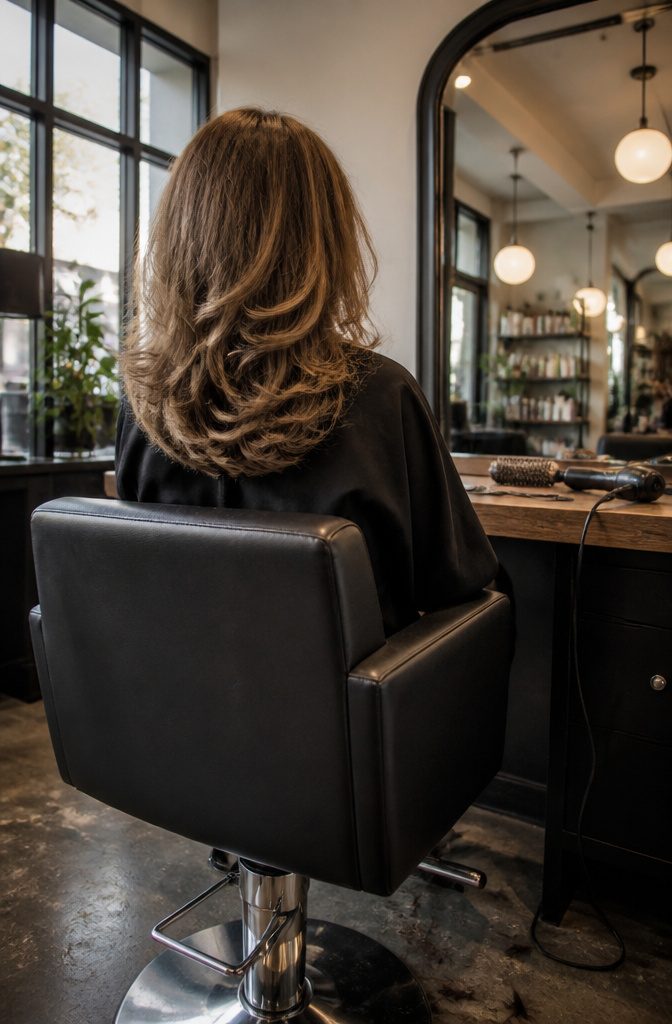
A blowout brings layers to life by lifting volume at the root and turning length smooth or softly curved. The difference between sleek and bouncy comes down to the brush and how much bend you leave in the ends.
A classic bouncy blowout uses a round brush to curl the ends slightly under while lifting at the crown, giving the cut shape and movement without looking stiff.
For something more polished, blow the hair straight with tension on each section and finish with a blast of cool air to lock the shine.
Brushed-out barrels sit somewhere between the two. Curl the hair in sections with a barrel iron, let it cool completely, then brush through the set until the ringlets soften into full, fluffy bends.
The layers catch light differently at each level, and the brushed finish keeps it from reading too formal.
8. Sleek, Straight Finishes
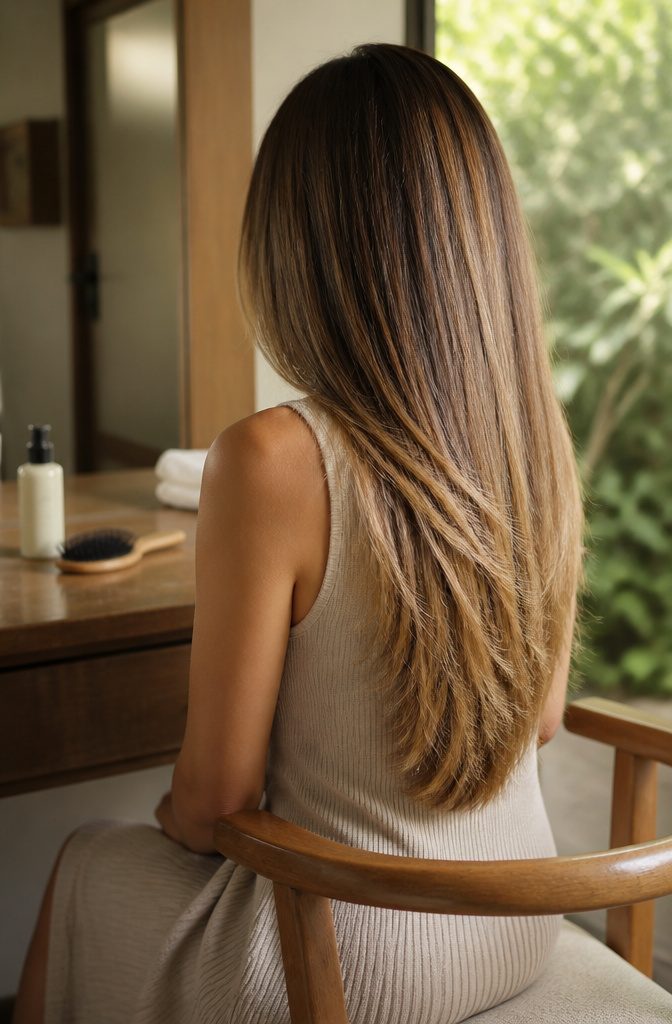
Straightening layered hair draws the eye down the length and makes every tier visible—which is the point when the cut is done well.
The layers create planes that catch light differently, so what might look like a single curtain of hair in a wavy finish turns architectural when pulled flat.
Start with a heat protectant—Davines MELU Hair Shield is one I reach for—then work in sections from the bottom up, keeping the iron moving so you don’t get kinks where the layers overlap.
A lightweight serum after, something like Davines Invisible Serum, smooths flyaways without weighing the ends down. The finish reads sophisticated, and it works equally well in a professional setting or out to dinner.
On straight hair, layers show up more than they do on wavy or curly textures, so decide ahead whether you want a smooth blend or deliberate separation between the tiers.
If you normally air-dry or diffuse, mention that when you book the cut—it changes how your stylist places the shortest pieces.
9. Half-Up Styles and Buns
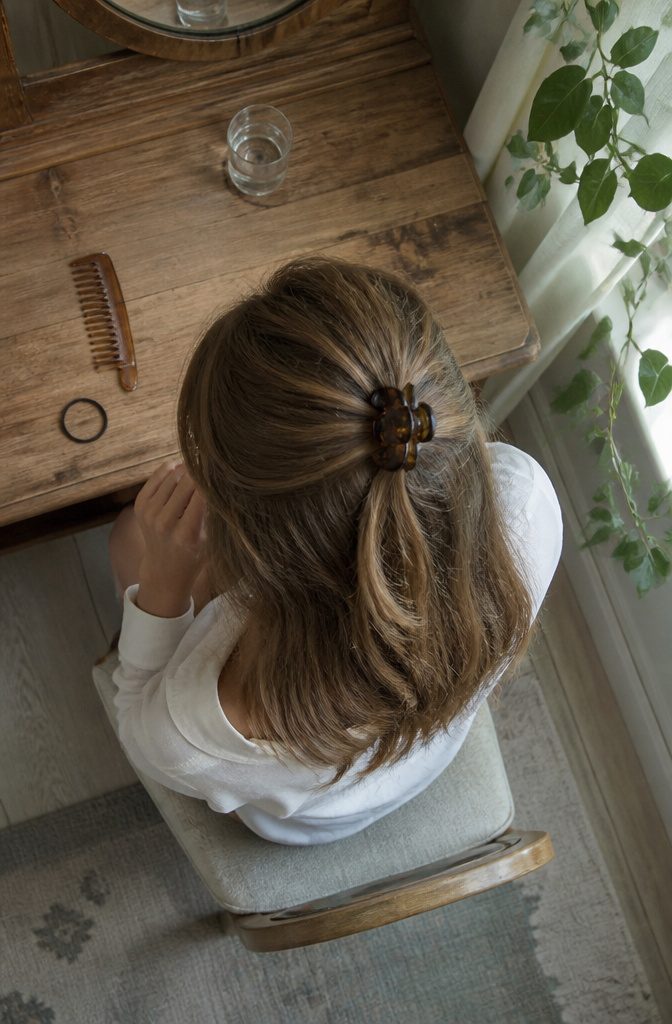
Half-up styles and buns keep some hair gathered while leaving layers visible.
The messy bun gathers hair into a high ponytail with face-framing pieces left out, then twists and secures it loosely; pulling a few strands creates a tousled finish that shows off the layered lengths underneath.
Half-up, half-down styles section the top portion and secure it with a clip or elastic, leaving the bottom layers loose to move and cascade freely. For more detail, twist or braid the top section before pinning it in place.
Both work well on medium to long layered hair and keep hair off your neck while the layers stay in view around your face and through the ends.
10. Color-Enhanced Dimension
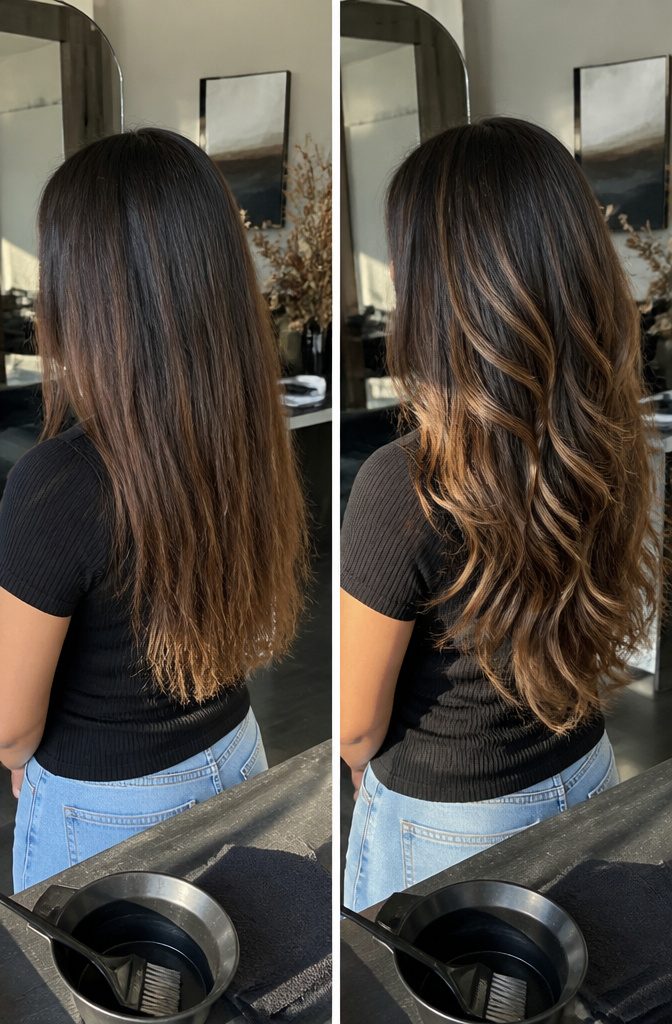
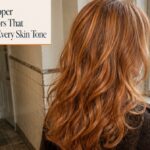
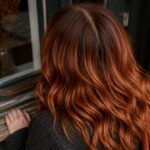
Highlights, balayage, and contrasting roots make the dimension in layered cuts far more visible. Color gives you depth you can see: different sections catch the light as the hair moves, and painted pieces emphasize the separation between lengths.
A bright root on a short bob or hand-painted ribbons through long, cascading layers turn texture into something that reads across a room instead of only up close.
If you’re planning both a major cut and color, talk through them together before the first appointment.
A haircut that removes several inches or adds significant face framing can change how existing color appears—what looked blended at shoulder length may suddenly feel disconnected once layers lift the ends or shorten the sides.
The cut reshapes the canvas, and that matters for where the color sits and how much contrast you’ll actually see when it’s finished.
Asking Your Stylist for the Layers You Want
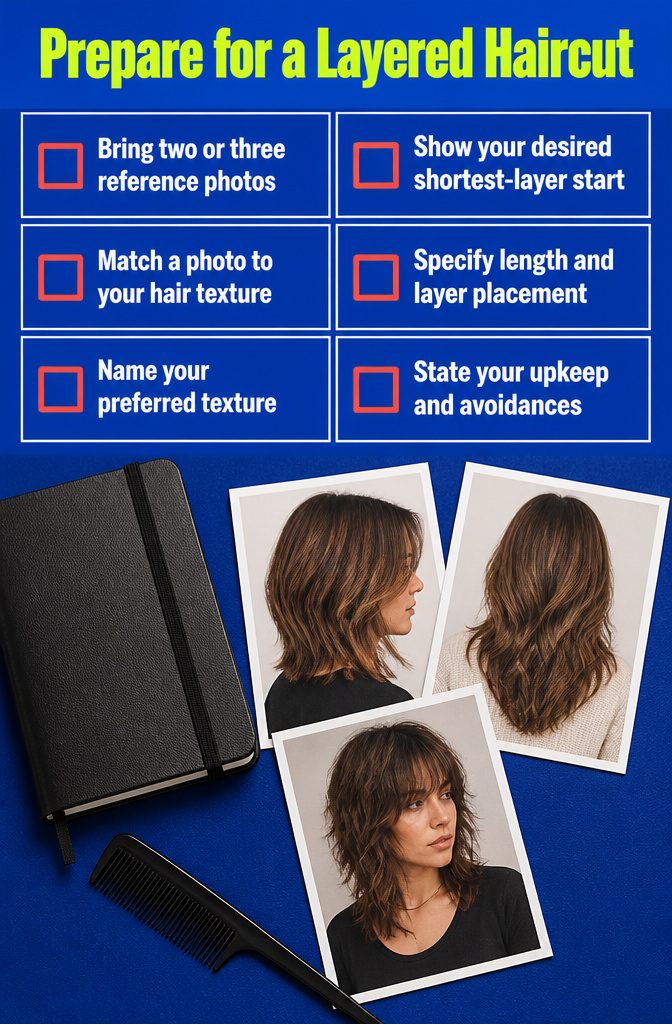
Photos win because terminology shifts by platform and salon. Bring two or three images showing the overall shape, where the shortest layer begins, and the amount of face framing you want.
Include a shot of hair with a texture close to your own so your stylist can explain adjustments for density or routine.
When you describe what you want:
- Specify length and placement — "soft layers starting around chin level" or "long layers beginning at the collarbone"
- Name the texture you’re after — choppy, blended, wispy ends, lived-in movement
- Mention how much upkeep you’ll do — minimal maintenance, air-dry friendly, or daily styling with heat tools
- Say what you don’t want — a photo of the opposite helps clarify the difference
Terms like short layers or choppy get interpreted differently depending on who cuts your hair. The distance between the longest and shortest layers matters more than the labels, and photos showing that contrast keep everyone on the same page.
Choosing Layers for Your Hair Type and Density
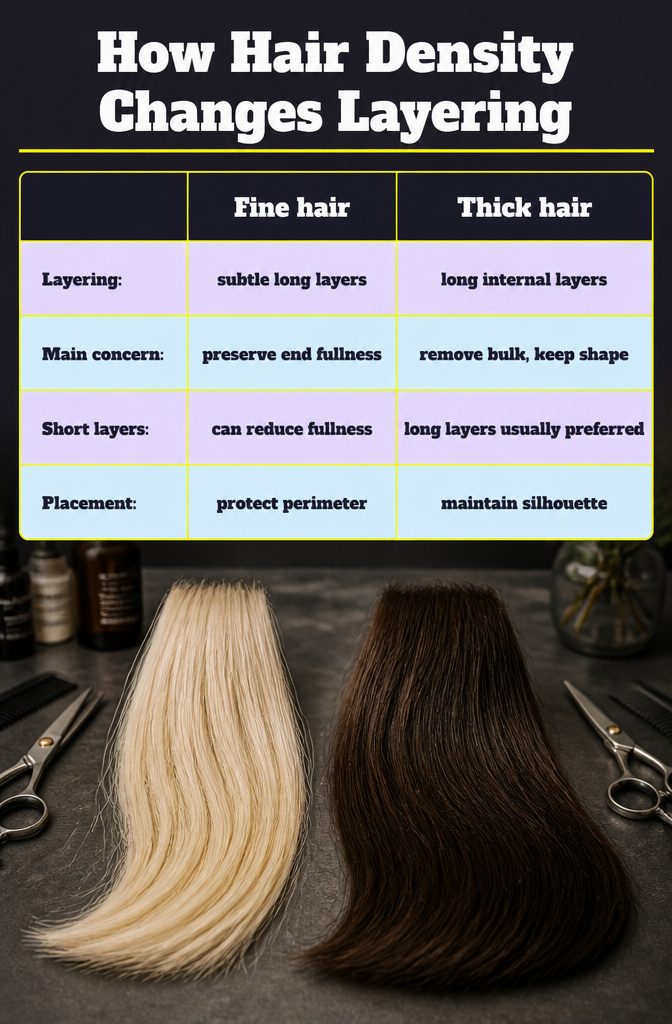
Fine hair (thin individual strands) and thin hair (lower overall density) can both wear layers, but fullness through the ends may matter more than aggressive volume at the crown.
Face-framing pieces, minimal long layers or subtle internal movement can shape without taking too much weight from the perimeter. Extensive short layering sometimes removes the fullness those densities need.
Thick or dense hair usually benefits from long layers and internal layering that removes bulk without compromising shape.
Straight hair shows the line of each layer cleanly, so placement needs to land where you want the weight to shift. Wavy hair can gain definition or lose frizz depending on where layers begin and how they blend.
Curly and textured hair need customized layering that accounts for shrinkage, density and differences between curl patterns; some curly cuts are performed dry, others wet, and some use a combination depending on the stylist’s technique and the client’s curl type.
Layers can improve shape, movement and volume in curls, but removing too much from the ends can collapse the silhouette or leave the bottom looking sparse.
Frequently Asked Questions
What type of layers creates the most volume?
Shorter layers placed near the crown can add lift and height, but the result depends on your density and how you style. Removing too much length through aggressive layering can actually reduce fullness, especially on fine or thin hair.
What layers are best for long hair?
Long, blended layers preserve your length while adding movement through the mid-lengths and ends. Face-framing pieces or butterfly layers create more noticeable dimension if you want a bigger change without losing overall length.
What layers are best for fine hair?
Fewer layers and a fuller perimeter help fine hair keep the fullness it needs. Face-framing pieces, minimal long layers, or subtle internal movement can add shape without stripping too much weight from the ends.
What layers are best for thick hair?
Long layers and internal layering remove bulk without compromising the overall shape. Strategic weight removal adjusted for your texture keeps the cut from feeling heavy while preserving structure.
Are layers good for curly hair?
Customized layers can improve shape, movement, and volume in curly hair when they account for shrinkage, density, and curl pattern. Some curly cuts are performed dry, others wet, and placement matters more than it does on straight hair.
What is the difference between long and short layers?
Long layers preserve more length and create softer, blended movement with only a couple of inches between the longest and shortest pieces.
Short layers begin higher up and create more contrast, volume, or texture because the distance between tiers is greater.
Are face-framing layers the same as curtain bangs?
Face-framing layers are longer pieces that begin near the cheekbones, jawline, or chin and blend into the rest of your hair.
Curtain bangs sit shorter, work more like fringe, and sweep to either side of the face, though you can combine both in one cut.
What type of hair looks best with layers?
Layers work on all hair types when customized for your density and texture. Thick hair benefits from weight removal, fine hair can gain movement without losing fullness, and wavy or curly hair can gain definition when layers are placed correctly.