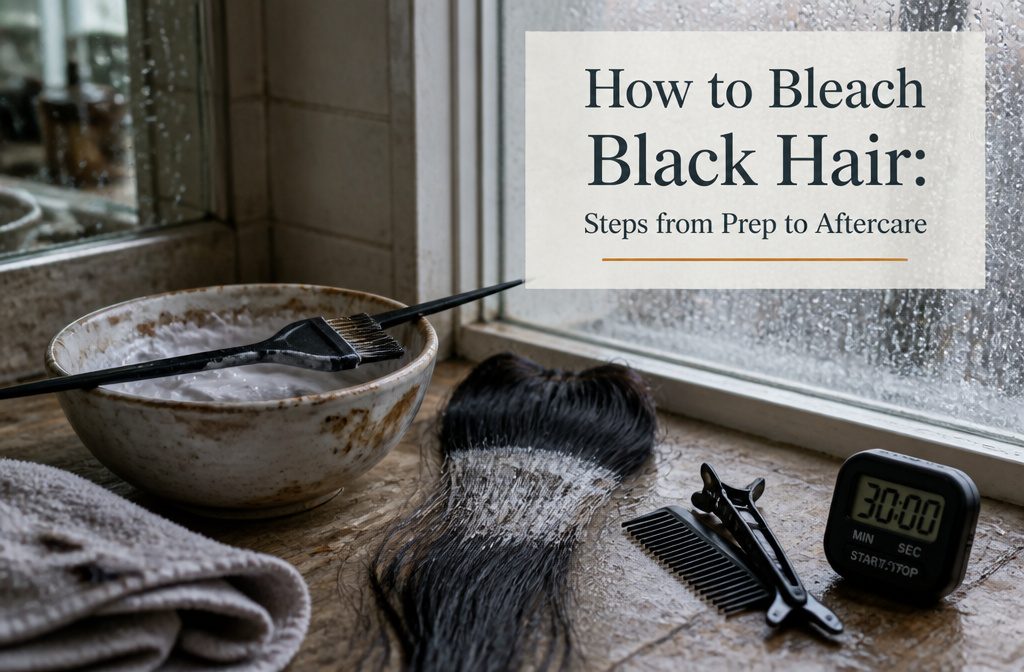
Bleaching black hair to blonde takes two to three weeks of prep, 30 to 40 minutes per session, and often multiple rounds spaced weeks apart.
The mistake is starting at the roots: they lift faster than the rest, so apply bleach mid-lengths first and save the scalp zone for last.
Brilliant Blondexx can take jet black to level 9 yellow in about 30 minutes, but expect orange or gold partway through.
1. Test a strand before bleaching the full head
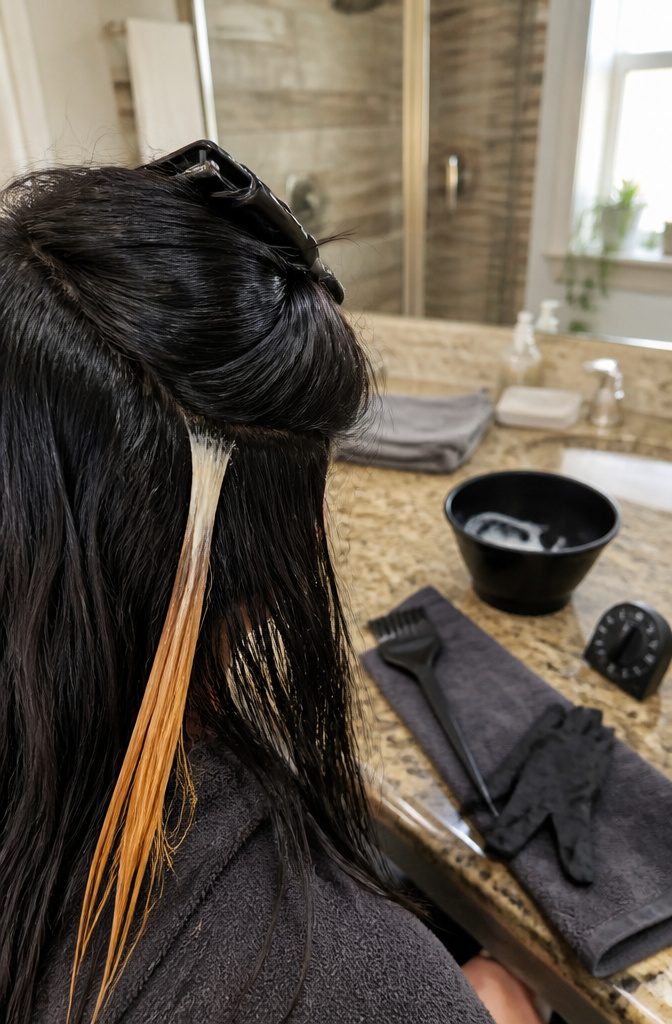
A strand test tells you three things before you commit: whether your hair can handle the lift, what color is actually going to show up, and how long the process will take.
Pick a piece from underneath, somewhere you can hide if things go sideways. Apply the bleach mix and check it every 10 minutes to see how the color is developing.
At the end of about 30 to 40 minutes you should have a good idea on how light your hair is going to go.
— Howcast
That window gives you the real answer, not the one you hoped for. Black hair almost always lifts to orange or gold first, and the strand test shows you exactly which warm tones you’re working with.
Once you know that, you can plan the toner or ash shade you’ll need to knock out the brass. Skip this step and you’re guessing with your whole head.
2. Condition deeply for at least two weeks before bleaching
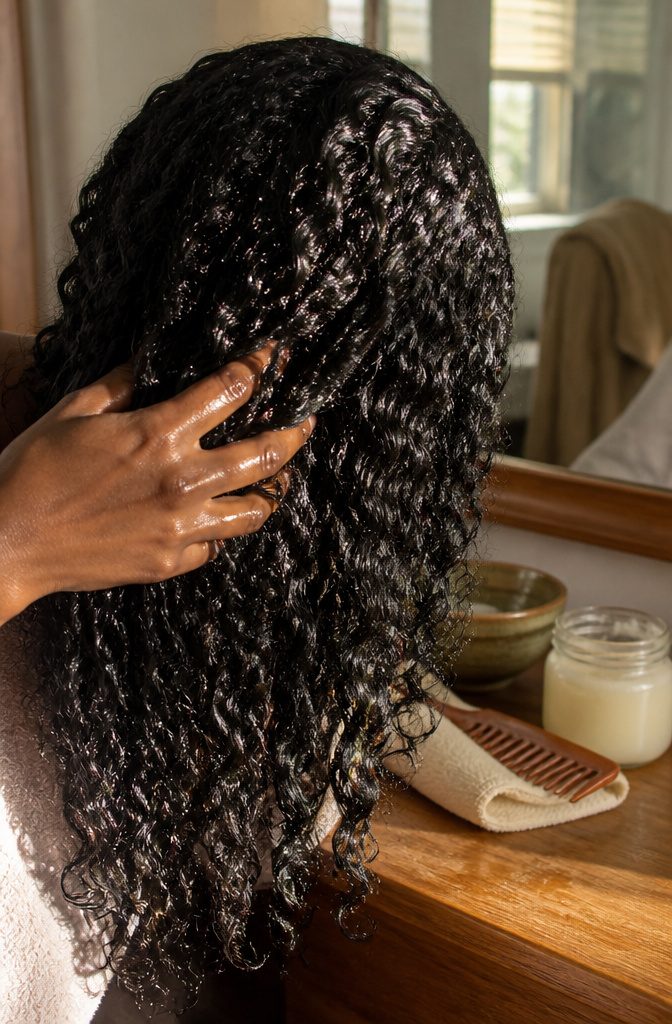
Start conditioning at least two weeks before the appointment. Bleach is a chemical stress, and hair that is hydrated and flexible handles it better than hair that is already dry.
A single treatment a few days out won’t do the same job. The benefit comes from repeating it across the full two weeks.
The night before, work coconut oil through dry hair and leave it for about a day, then keep it on while the bleach goes in.
It forms a protective barrier and minimizes damage. Black hair has the furthest to go, so I’d treat the oil as a firm step, not an optional extra.
3. Skip washing for 48 to 72 hours before you bleach
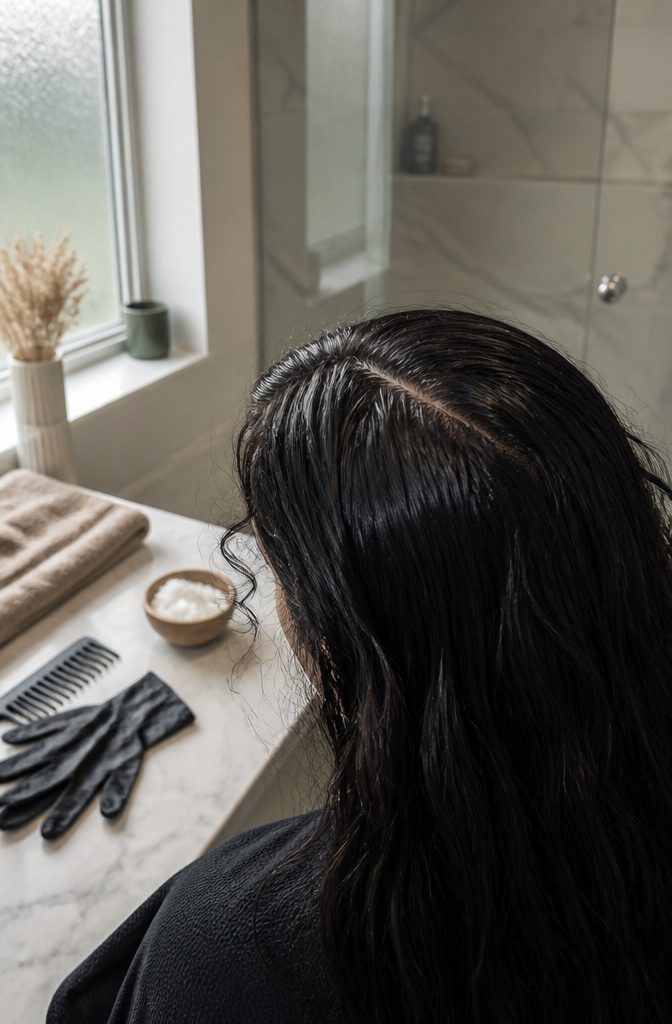
Your scalp’s own oil is the cheapest protectant you have. Wait 48 to 72 hours after your last wash before you open the bleach, and let sebum build up along the scalp and shaft.
That layer sits between the chemical and your skin, cutting down irritation and the risk of burns during processing.
Some people add coconut oil the day before and leave it on through the bleach itself for an extra barrier.
The oil does not stop lift, but it does blunt some of the harshness. If your scalp tends to react or you have had sensitivity before, the oil step is worth the extra prep time.
Showing up with squeaky-clean hair strips away the one buffer you had for free. A little grease is working in your favor here.
4. Mix bleach powder with developer at the correct ratio
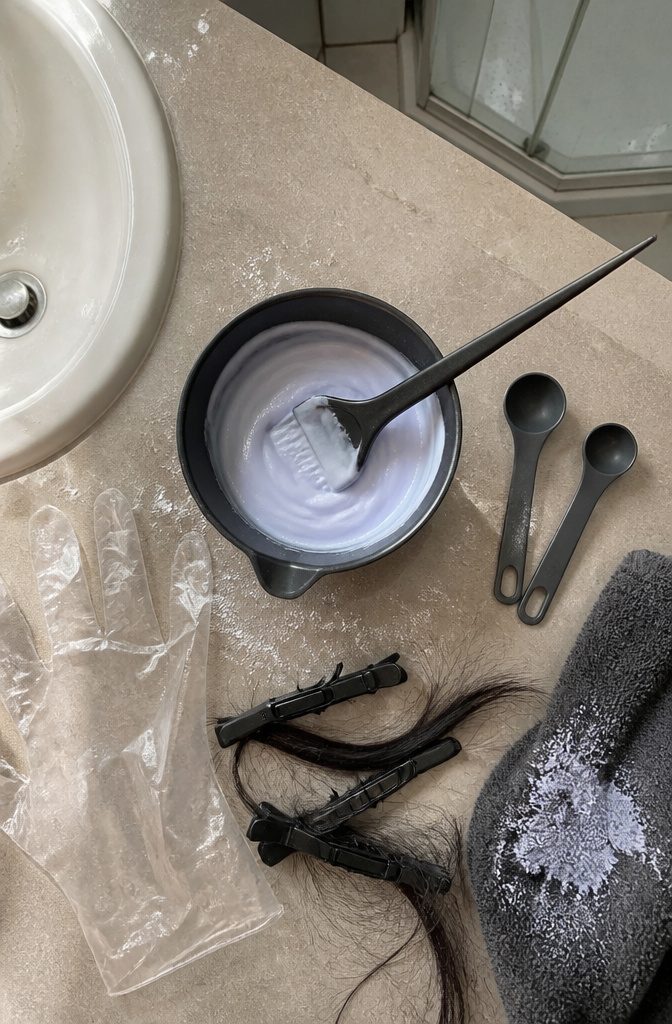
Black hair calls for 30-volume developer. Twenty volume is for lighter starting shades, and bleach powder comes in just one strength, so the developer sets how hard the mix works.
A 40-volume exists, but I’d stay at 30 and bleach a second time if the first round stops short.
The ratio depends on the powder. Ion Color Brilliance mixes 1:1 with 30-volume, and 6 tablespoons of each is a workable starting batch.
Brilliant Blondexx runs 1 part bleach to 2 parts developer, which gives a smooth, creamy white mix. Its Bond Protect makes it the one I’d pick for hair that has been colored many times.
Measure with the same spoon for both, and stir until the mix is smooth.
5. Apply bleach from the mid-lengths toward the ends first
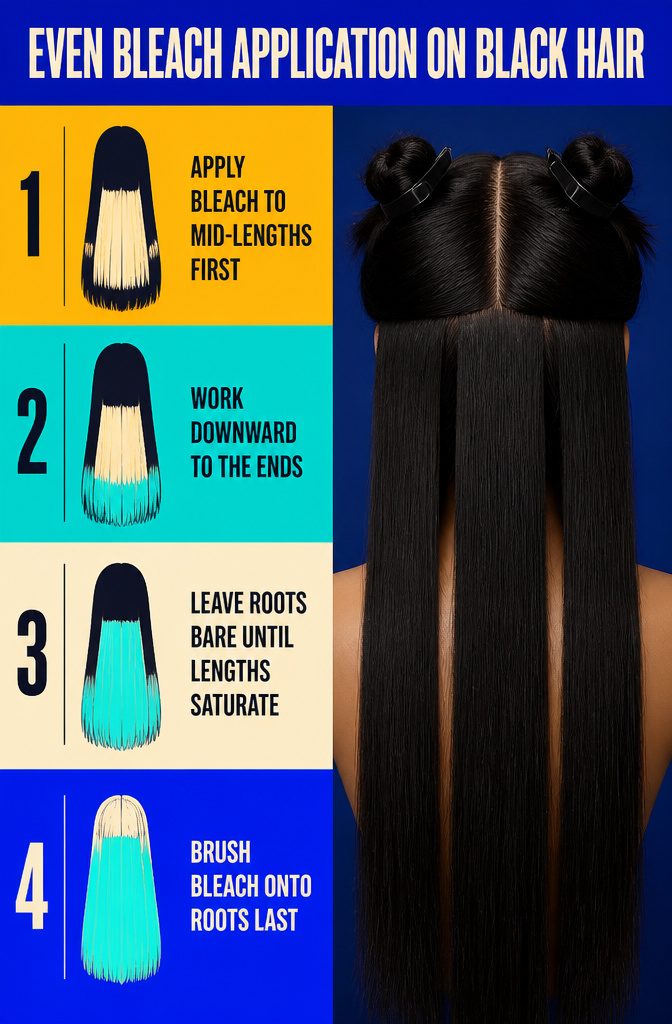
Roots lighten faster than the rest of your head. They are newer hair, and heat from your scalp speeds up processing, so bleach painted there first can race ahead of the lengths.
Start in the mid-lengths, work down to the ends, and leave about an inch at the roots bare until everything else is saturated. Then circle back and brush the roots last for a more even lift.
Going root-first is the common way to do it, and it’s fine if you’re dyeing over the result, but on black hair I’d skip it because uneven lift is hard to hide.
Bleach only works while it’s wet. If the mix starts drying out or lifting slows, apply a fresh batch over it.
6. Process and monitor, checking every 10 minutes
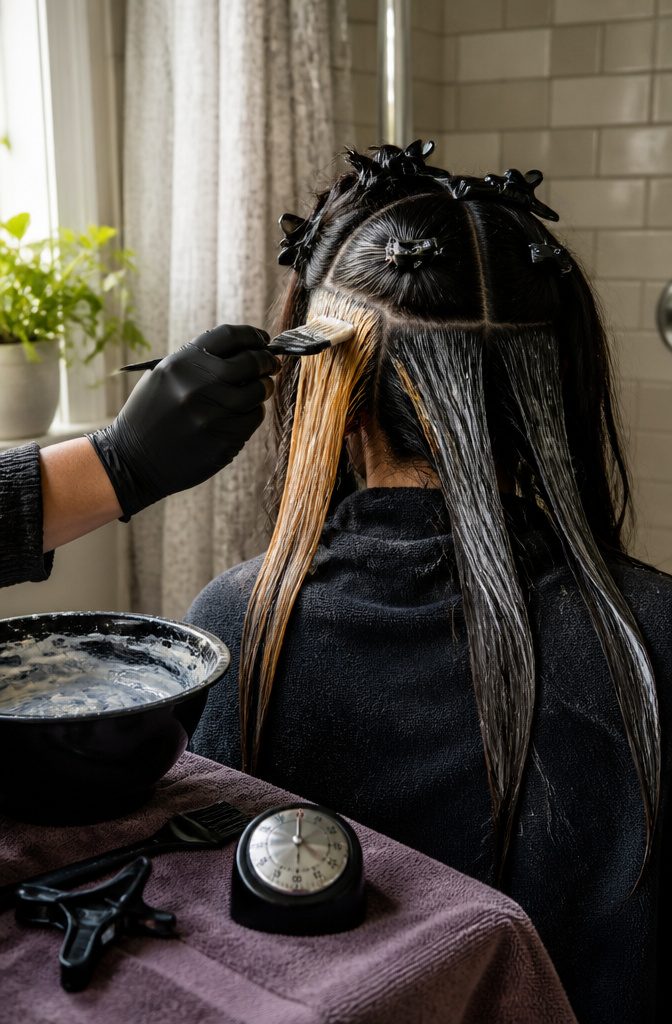
Check the hair every 10 minutes rather than once at the end.
By 30–40 minutes you’ll have a good idea how light it will go. Package directions cap processing at 50 minutes, and I treat that as a ceiling, not a target.
Bleach only works while it’s wet, so if sections look dry or the lift slows, brush on fresh mix. Brilliant Blondexx takes very dark black to level 9 in about 30 minutes, and that’s the point to rinse.
Your scalp gives the clearest warning.
If burning or itching won’t stop, rinse immediately, even if the hair isn’t done. On a first round with jet black, stopping at golden or caramel beats chasing white-blonde and ending up with mushy, breaking strands.
7. Rinse thoroughly and shampoo out the bleach
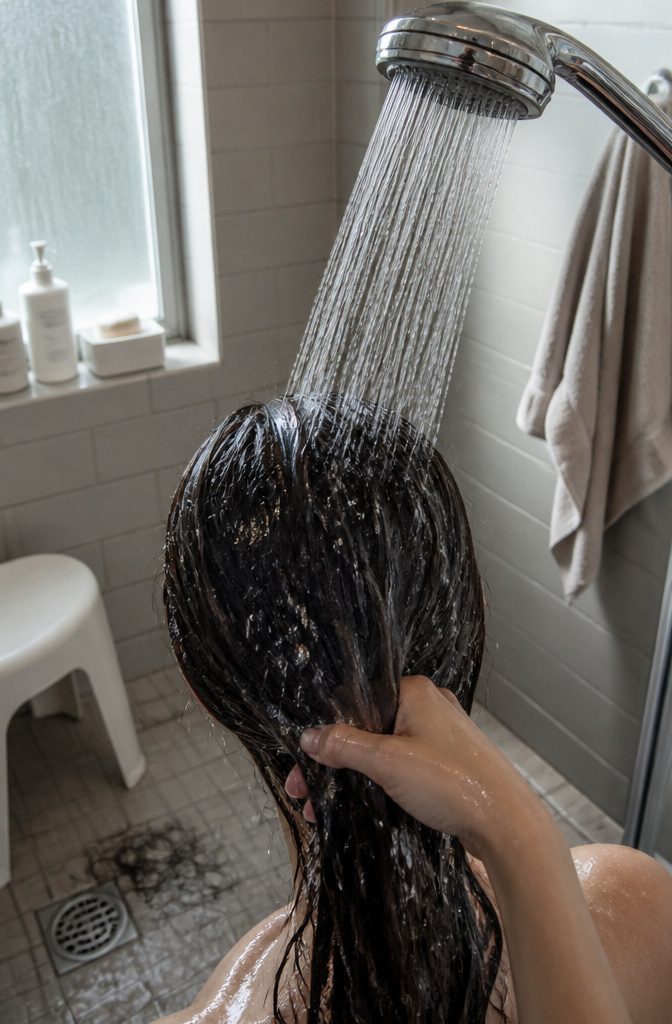
Once the processing time is up, head straight to the shower and rinse the bleach out completely with shampoo. Letting it sit longer than the package timing adds no lift and risks real damage.
The hair will look wet and dark under the water, so you will not get a clear read on the color until you towel off and check in better light.
After rinsing, look at what the bleach actually lifted to. You are checking for even coverage and whether the shade hit the yellow you were aiming for.
Black hair rarely lifts to pale blonde in one session, so expect orange, gold, or a brassy yellow depending on how long you processed.
If the color looks uneven or darker than expected in spots, note where before you move to toning or a second round.
The hair is at its most fragile right after bleaching, so handle it gently while rinsing and skip aggressive towel rubbing. You are prepping for the next step, whether that is toning down warmth or planning another session.
8. Tone to reduce orange, gold, and brassiness
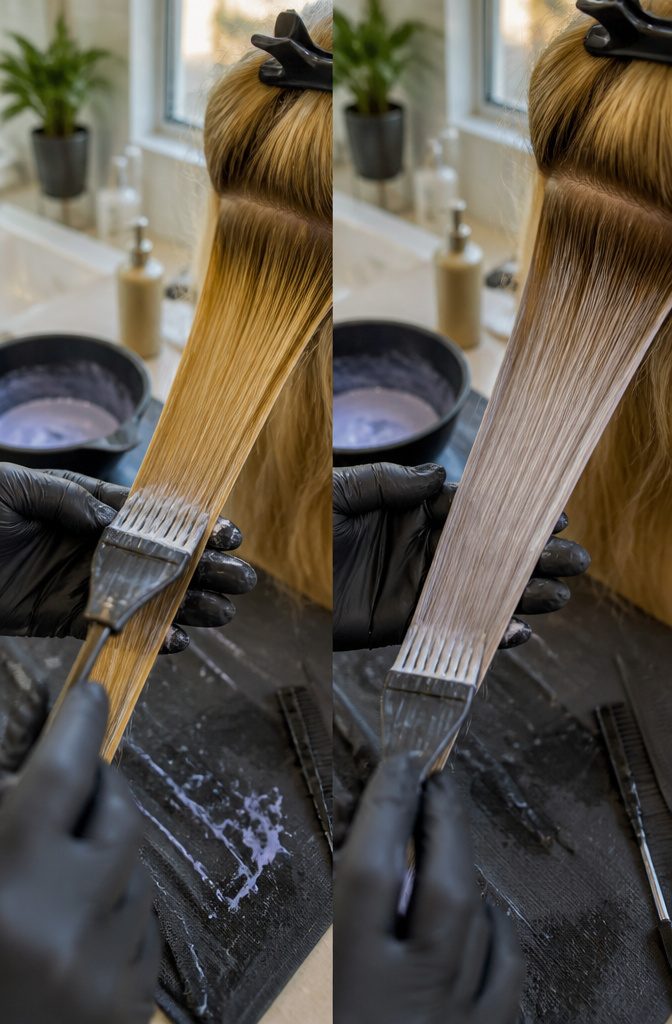
Once the hair lifts to pale yellow, toner neutralizes the warmth left behind.
Wella T18 Lightest Ash Blonde works well for this, though any cool or ashy shade with blue and violet pigment will knock back the orange and gold that shows up after lifting from level 2 or 3.
I like combining a blue-based ash blonde like 9.1B with a violet-based toner such as 10.2 or 10V when the yellow is particularly stubborn. Both bring enough pigment to handle what bleach leaves behind.
Process for 20 to 30 minutes, checking as you go.
Wipe a small section clean partway through to see whether the color is landing where you want it. If it still looks brassy, let it sit longer.
If it has already cooled down, rinse. That mid-process check keeps you from overshooting or pulling it off too soon.
9. Apply dye if moving to a specific color
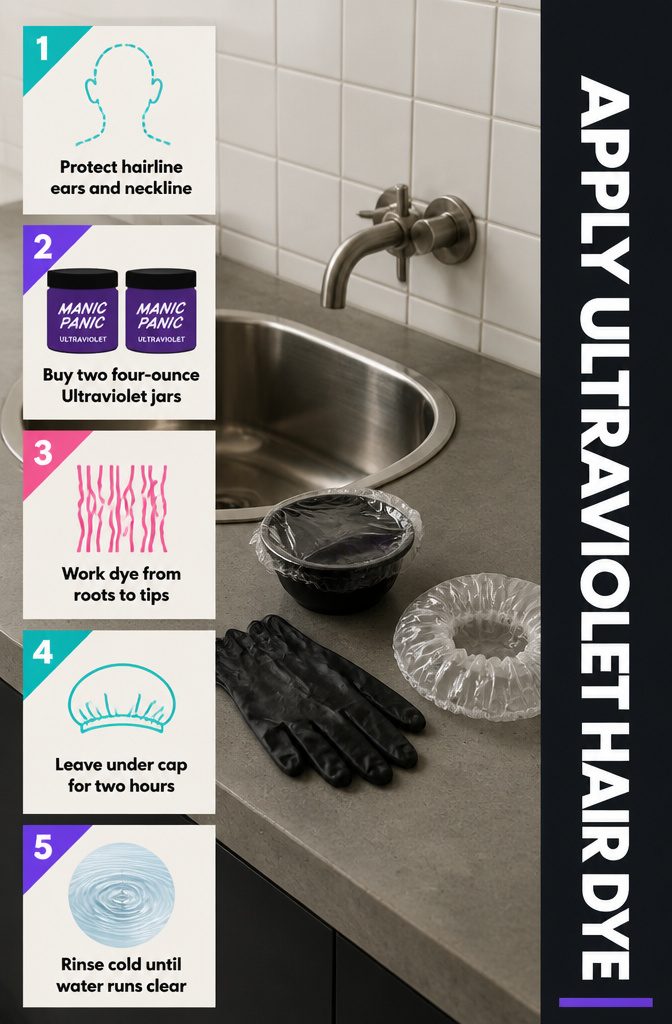
Rub Vaseline along the hairline, around the ears and down the neckline before any color touches your head. Long, thick hair needs two 4-ounce jars of Manic Panic Ultraviolet to cover fully, so buy both up front.
Gloved hands work the dye in from roots to tips more thoroughly than a brush does. Color gets stronger the longer it sits, and two hours under a fresh shower cap gives a deep Ultraviolet.
Rinse with cold water in a metal sink, until the water runs clear. Porous tubs soak up dye and stay stained.
10. Use an after-color treatment and remove stains
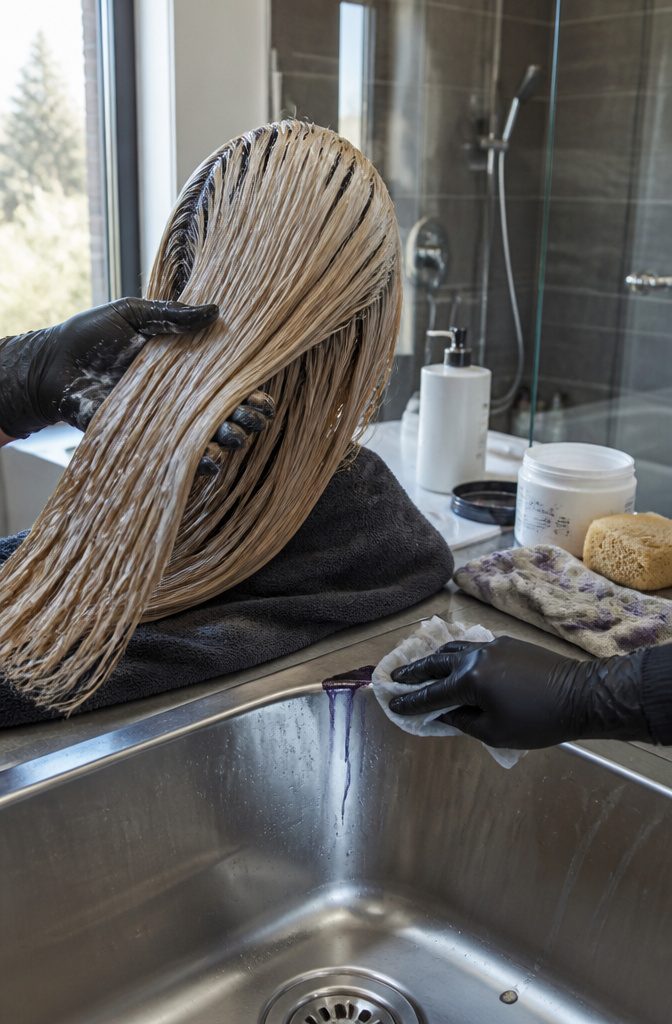
After the final rinse, an after-color treatment is the step I’d never skip.
It locks the color in and cuts the odds of dye rubbing onto towels, pillowcases and your forehead, which matters most if you sweat at the gym the next morning.
Stain remover handles the rest: use it on any skin the dye touched and on drips around the bathroom or kitchen, since sinks, walls and doors all take color.
Rinse in a metal sink with cold water if you have one, because porous tubs absorb dye and end up tinted. If a tub is your only option, white vinegar has been known to lift those stains.
What warm tones to expect when lifting black hair
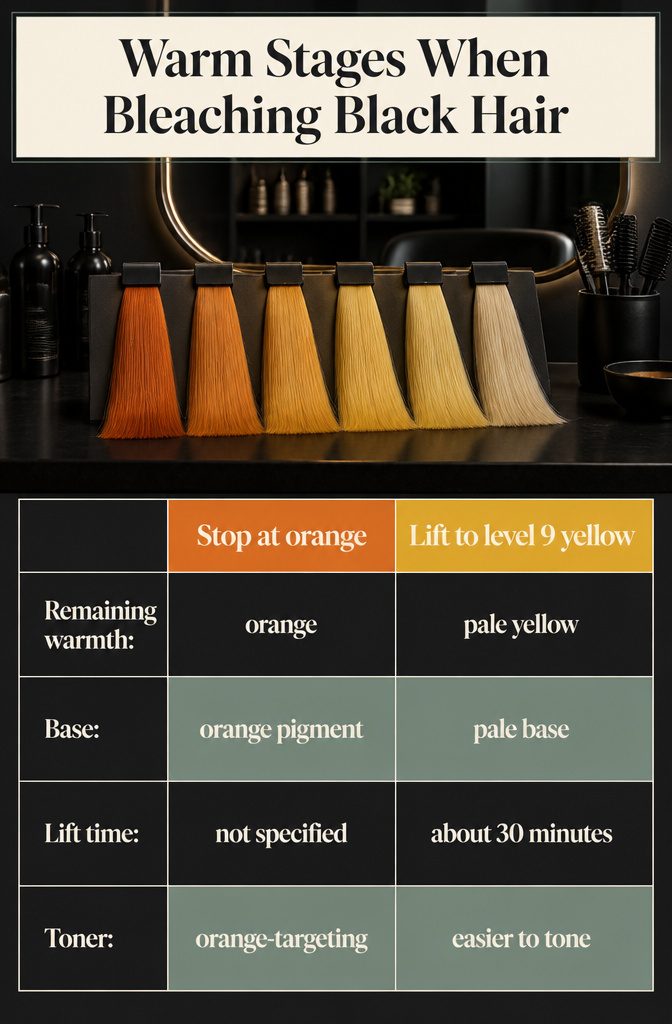
Black hair never jumps straight to blonde. As bleach strips melanin, the hair moves through orange, then gold, then yellow, and each stage is the natural underlying pigment showing, not a mistake.
Where you stop decides which warmth stays. Rinse at orange and you’re left with orange; keep going to level 9 yellow and you have a pale base that’s far easier to tone.
Brilliant Blondexx takes very dark black to level 9 in approximately 30 minutes, though I’d still check the strand often, because bleach that dries out stops lifting.
Pick your toner after you see where the hair actually landed. Wella T18 Lightest Ash Blonde is one that targets the brassy orange left behind.
How many bleach sessions black hair may need
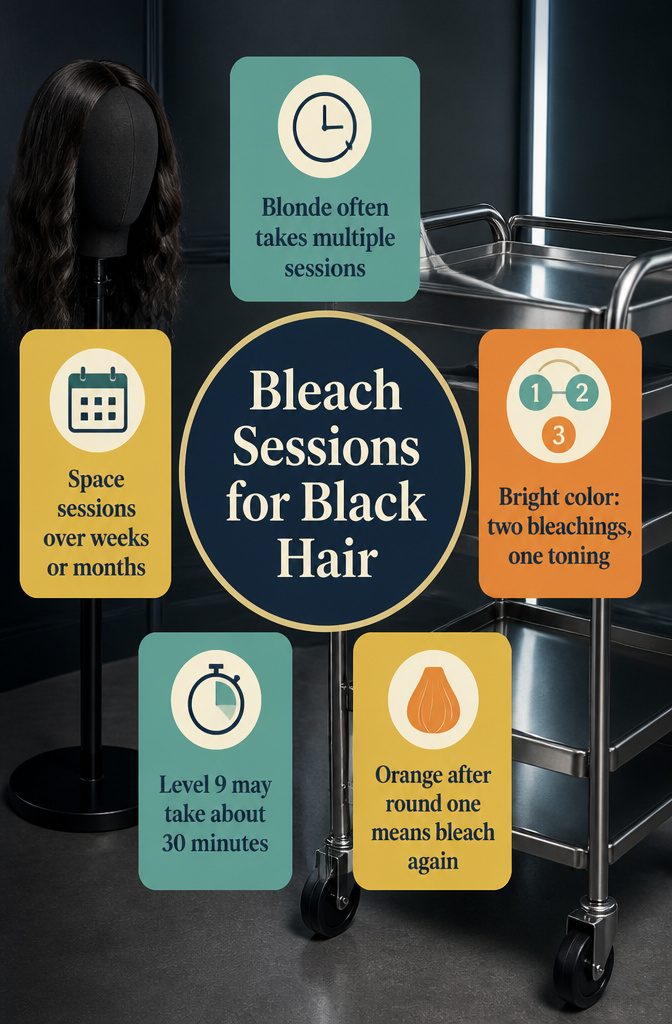
Very dark hair rarely goes blonde in one pass. Reaching blonde on black often takes multiple sessions over weeks or months, and lifting in stages is gentler on the strands than forcing one long, aggressive round.
For a bright color, I’d plan on two bleachings and one toning. Some very dark black does lift to level 9 in a single session of about 30 minutes, but I wouldn’t count on it.
Check the color after the first round.
If the hair looks more orange than blonde, bleach again before you tone. All-new-growth hair lifts more easily, which can cut the plan to a single round.
Wait at least two to three weeks between bleach sessions
Bleach takes a lot out of hair, and a second round before it recovers stacks damage on damage. Some people go a week between sessions, and a few go a single day with no obvious trouble.
I wouldn’t copy them, because hair varies and breakage doesn’t announce itself until it’s done. Leave at least two to three weeks between rounds, and stretch toward a month if your hair is fine or snaps easily.
Coconut oil softens the damage a little, but the strands are still being stripped. If you’re unsure how yours is holding up, a professional can check it before you book round two.
When to see a professional instead of bleaching at home
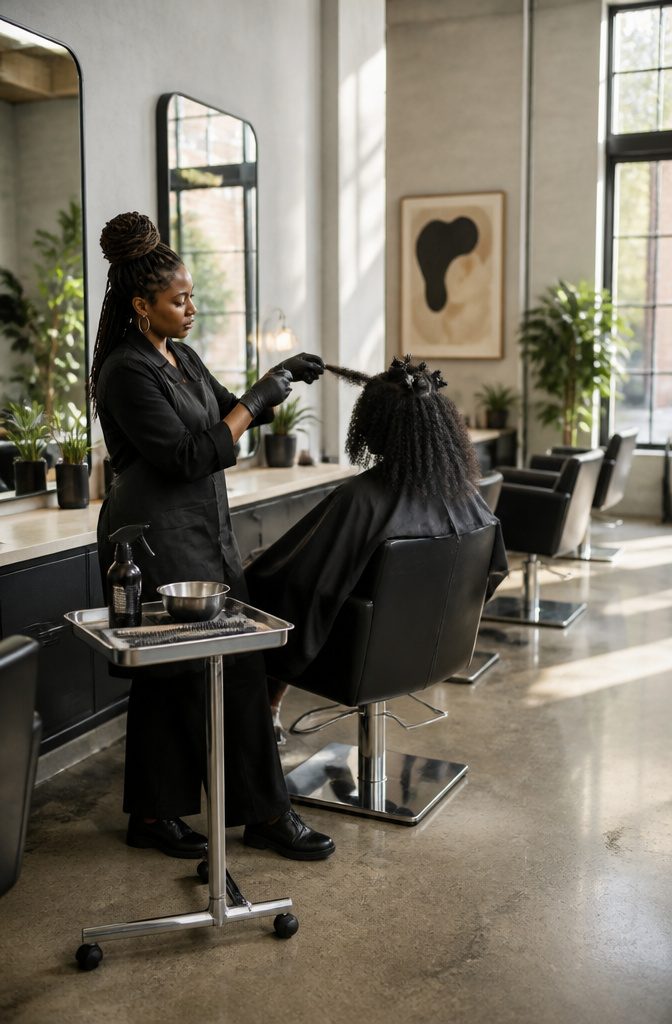
Book a licensed stylist if your hair is textured, already damaged, or starting at jet black and headed much lighter.
A pro can scan the hair and test a strand in a special solution to see whether it can handle the process.
Split ends, heavy shedding, or strands that stretch and snap when pulled mean you wait, or hand it over. Choose a stylist who specializes in textured hair; they know how to section, time and tone for your curl pattern.
Salon bleach-and-dye appointments can run $300–500 plus a 20% tip. That stings, but I’d pay it before risking breakage I can’t undo.
Aftercare: sulfate-free shampoo, conditioning, and gentle handling
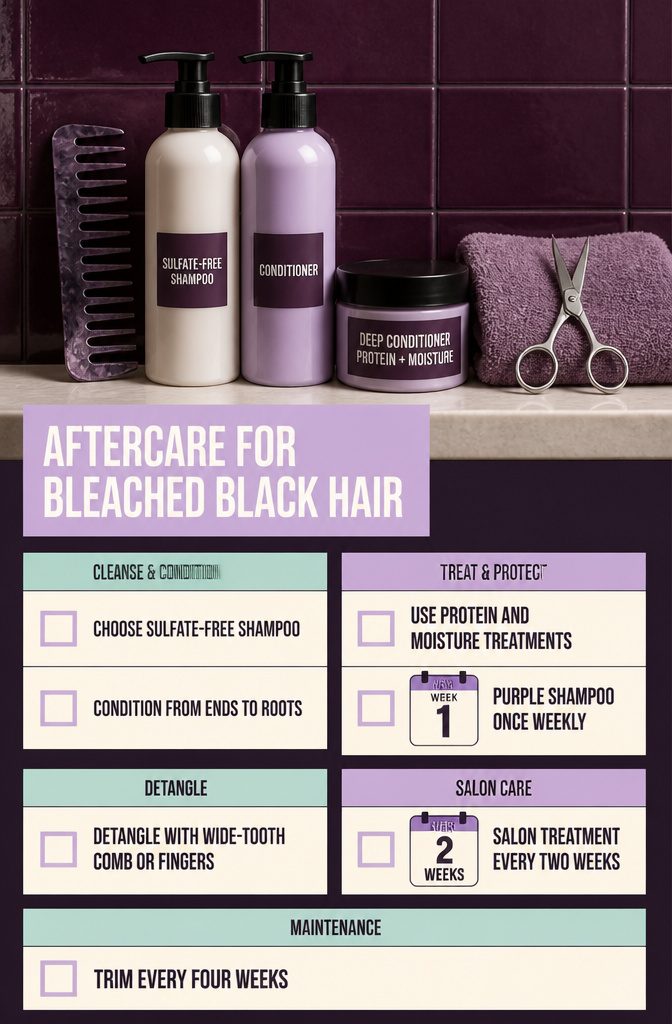
Bleached black hair is lighter, more porous and less elastic, so it dries out and tangles fast. These habits protect it:
- Switch to a sulfate-free shampoo, and never skip conditioner. Apply it from ends to roots.
- Use a deep conditioner that delivers both protein and moisture. Protein rebuilds structure; moisture keeps strands flexible.
- Use purple shampoo against brassiness once a week, not daily. More than that dries the hair out.
- Detangle with a wide-tooth comb or your fingers, plus a slip-rich leave-in. I’d treat these as non-negotiable.
- Get a salon treatment every two weeks. Schwarzkopf BC Color Freeze runs P1,200 (Philippine pesos) and keeps color-corrected hair smooth.
- Trim every four weeks so the cuticle doesn’t split.
Frequently Asked Questions
How do you protect your hair while bleaching?
Wait 48 to 72 hours after washing so natural scalp oil can build up, then apply coconut oil the night before and leave it on during bleaching.
The oil forms a protective barrier that cuts irritation and blunts some of the chemical harshness without stopping lift.
How many times do you need to bleach dark hair?
Very dark hair rarely lifts to blonde in one session and often takes two bleachings plus one toning, though all-new-growth hair can sometimes reach level 9 yellow in a single 30-minute round.
If the hair looks more orange than blonde after the first pass, bleach again before toning.
How long should you wait between bleaches?
Wait at least 2 to 3 weeks between bleach sessions, and stretch toward a month if your hair is fine or snaps easily.
Some people go a week or even a day without obvious trouble, but hair varies and breakage doesn’t announce itself until it’s done.
Do you need to tone your hair after bleaching?
Yes, once the hair lifts to pale yellow, toner neutralizes the orange and gold warmth left behind.
Black hair almost always lifts to warm tones first, and any cool or ashy shade with blue and violet pigment will knock back the brass.
What toner should I use on bleached black hair?
Wella T18 Lightest Ash Blonde works well for pale yellow bases, and combining a blue-based ash blonde like 9.1B with a violet-based toner such as 10.2 or 10V handles stubborn yellow.
Process for 20 to 30 minutes and wipe a section clean partway through to check progress.
What is the difference between lightening and toning?
Lightening strips melanin from the hair and brings it up through orange, gold, and yellow, while toning deposits cool pigment to neutralize the warm tones that remain. Bleach lifts, toner corrects.
What is the best way to bleach black hair?
Start with a strand test to see how the hair will lift, condition deeply for at least 2 weeks beforehand, and skip washing for 48 to 72 hours before bleaching.
Mix 30-volume developer with bleach powder, apply from mid-lengths to ends first and save the roots for last, then check every 10 minutes and rinse by 50 minutes maximum.