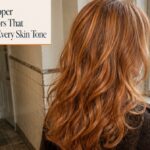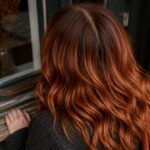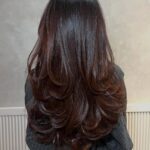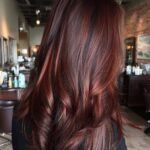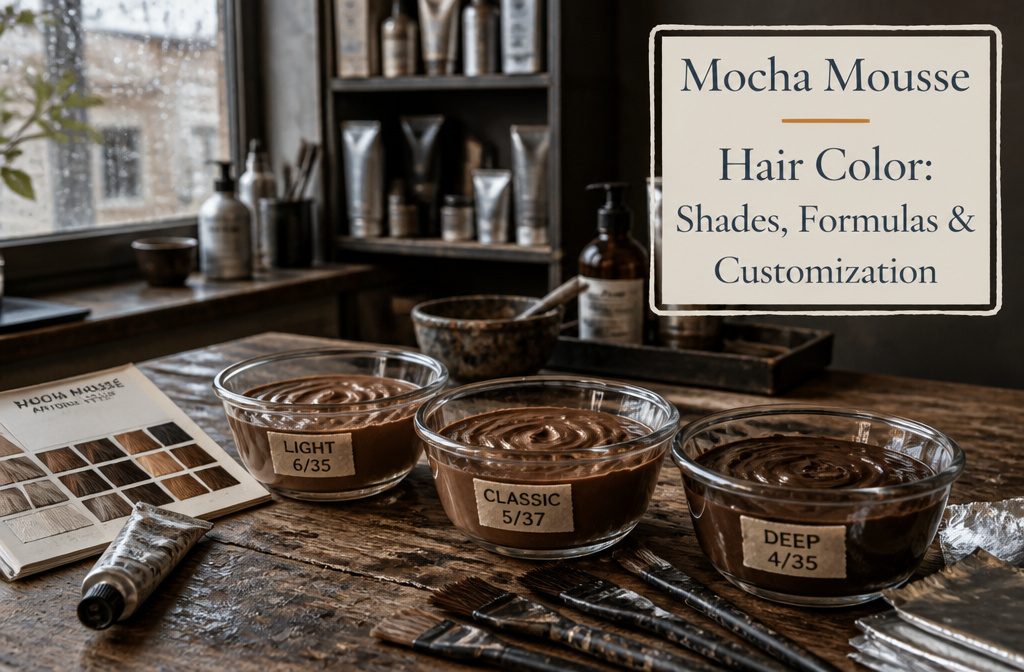
Mocha mousse is a medium-to-deep brown with a creamy, milk chocolate finish, named for Pantone 2025 color 17-1230.
Its neutral base flatters a wide range of undertones, but a level 9+ base should get pigment filler first or be skipped. Salons build it at Level 6/35 for light, 5/37 for classic and 4/35 for deep.
What Mocha Mousse Hair Color Is
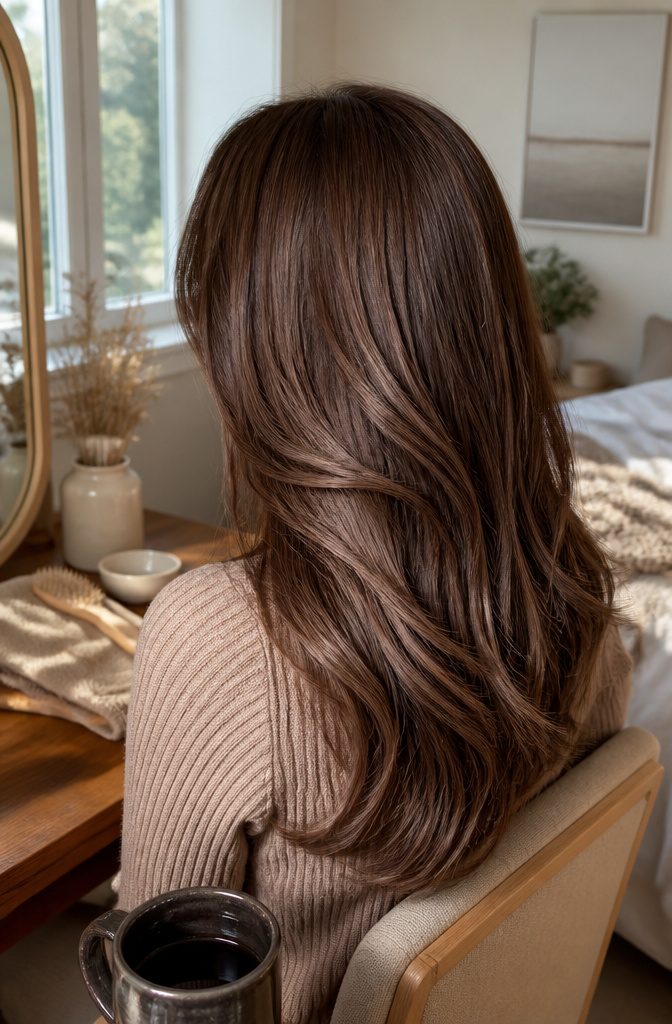
Mocha mousse hair color sits in the medium-to-deep brown range with a creamy, chocolate-like finish—think milk chocolate rather than dark or bittersweet.
The shade takes its name from Pantone 2025 color 17-1230, a warm medium brown with milk chocolate undertone, and carries the soft richness of coffee mousse without feeling heavy or flat.
The color can lean warm or cool depending on how you build it.
The palette spans #8B6F5E, #7A5C4A, #9C8070, #6B4F3D, #A48B78, #876654, #947560, and #B09888—warm taupes, cocoa browns, and softer roasted tones that layer well for dimension.
What makes it work across different skin tones is that neutral base: neither strictly warm nor cool, so it flatters a wide variety of undertones and blends easily with highlights, balayage, or ombré placement when you want more than a single shade.
Who It Suits and How to Customize It
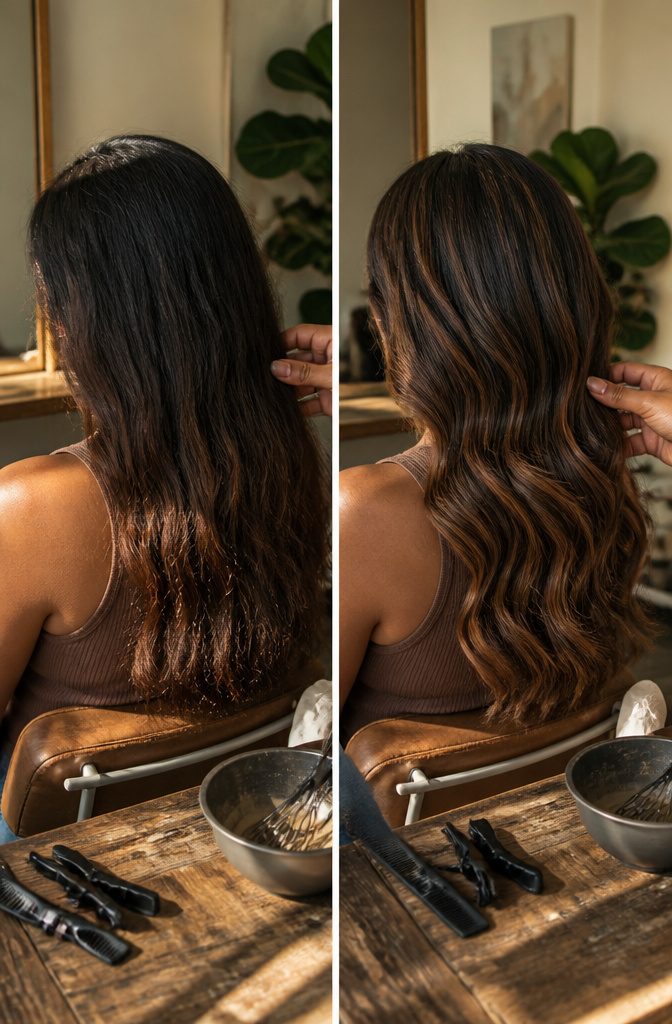
Mocha mousse lands in neutral territory between warm and cool, which puts it in range for medium-to-dark skin with warm or neutral undertones.
It shows up regularly in seasonal palettes like Soft Autumn, Warm Autumn and Warm Spring, though the shade’s adaptability means it rarely boxes anyone out.
The neutrality holds only if you want it to. Highlights shift the overall tone warmer, lowlights pull it cooler, and you can stay entirely within the same tonal family while adding dimension.
A rich medium-to-deep brown base threaded with lighter and darker pieces in matching tones gives you the highs and lows that define the look without jumping into contrasting color families.
That tonal layering is what makes mocha mousse work as a refresh for existing brunettes: it brightens without requiring a total rebuild, and the root line softens into a natural grow-out rather than announcing itself every few weeks.
Four Ways to Wear It
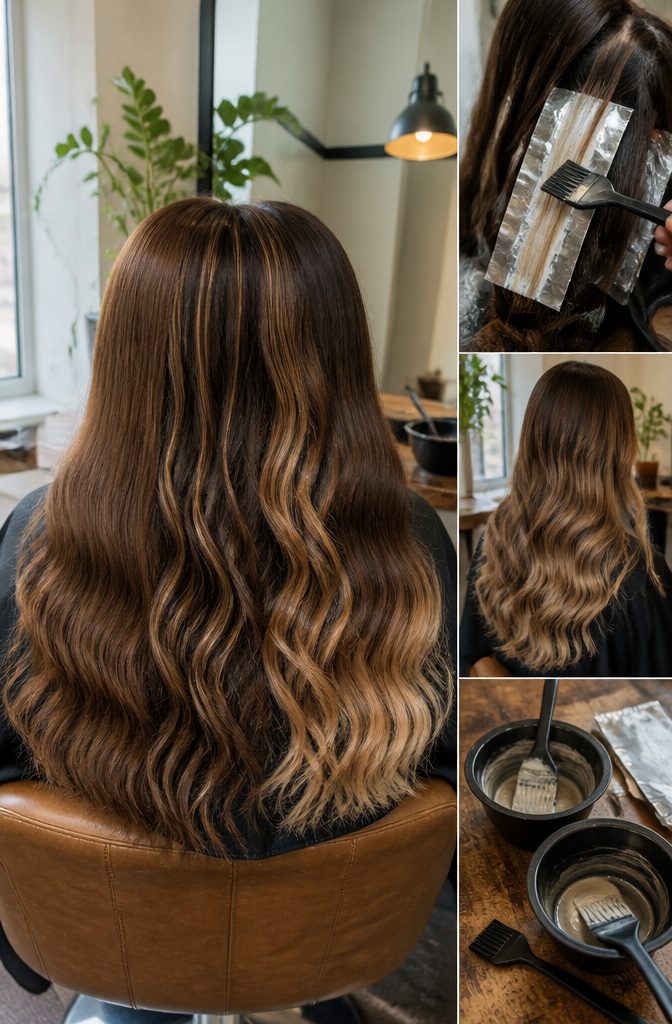
Mocha mousse works four different ways, and the application you pick changes how much of the shade shows up and where it sits on your head.
- All-over color covers every strand in the same mocha brown. Consistent from root to tip, this is the most saturated version of the look and reads as a solid base.
- Highlights place thin ribbons of mocha through darker hair, bringing warmth without replacing your underlying color. The contrast stays subtle if your base is already brown.
- Balayage hand-paints mocha onto the surface in a softer sweep, concentrating color where light would naturally hit. The blended result looks more lived-in than foil highlights.
- Ombré keeps roots darker and transitions into mocha mousse through the mid-lengths and ends. The gradient effect means less frequent root touch-ups as it grows out.
How to Get It at the Salon
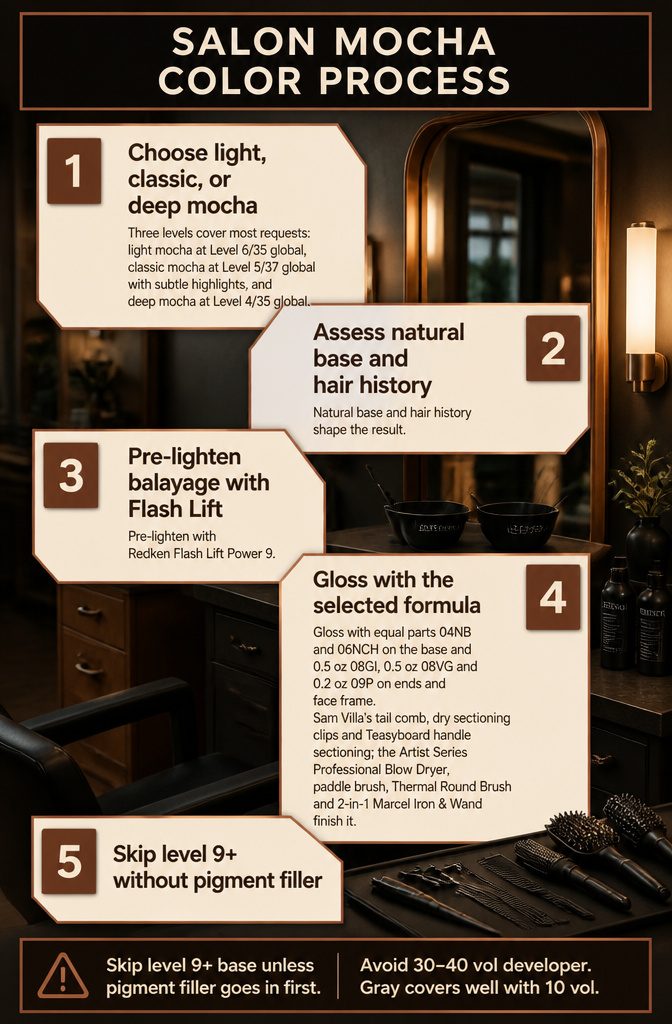
Three levels cover most requests: light mocha at Level 6/35 global, classic mocha at Level 5/37 global with subtle highlights, and deep mocha at Level 4/35 global. Natural base and hair history shape the result.
On balayage, pre-lighten with Redken Flash Lift Power 9, then gloss with equal parts 04NB and 06NCH on the base and 0.5 oz 08GI, 0.5 oz 08VG and 0.2 oz 09P on ends and face frame.
Sam Villa’s tail comb, dry sectioning clips and Teasyboard handle sectioning; the Artist Series Professional Blow Dryer, paddle brush, Thermal Round Brush and 2-in-1 Marcel Iron & Wand finish it.
Skip a level 9+ base unless pigment filler goes in first, and avoid 30–40 vol developer. Gray covers well with 10 vol.
At-Home Color Options
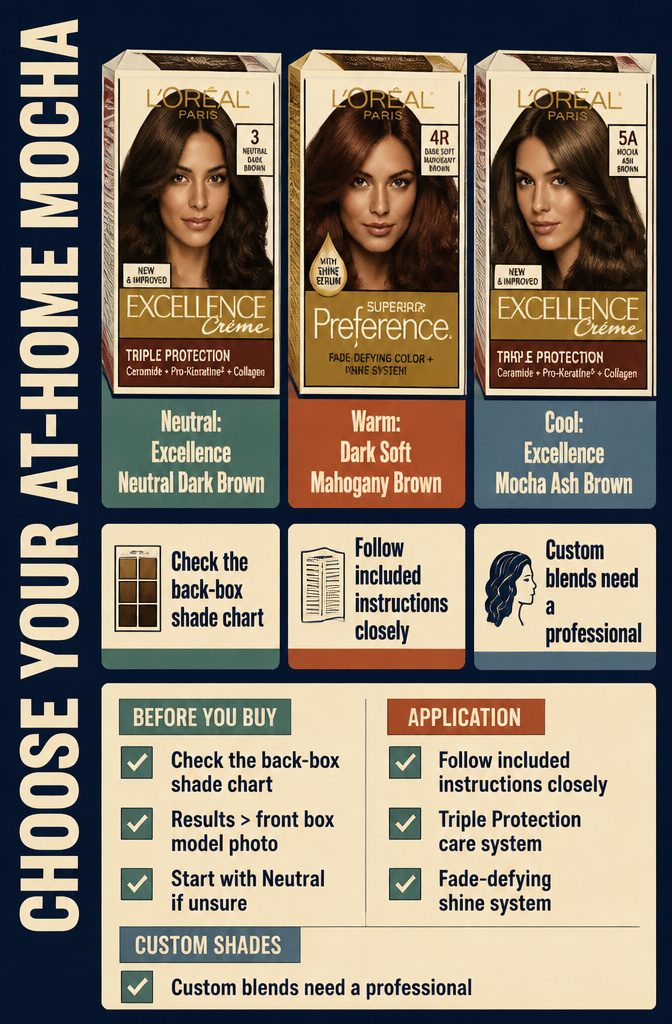
Three L’Oréal Paris box kits cover the three directions mocha can take:
- Neutral mocha: Excellence Créme Permanent Triple Protection Hair Color in Neutral Dark Brown. If you’re unsure of your undertone, I’d start here.
- Warm mocha: Superior Preference Fade-Defying Shine Permanent Hair Color in Dark Soft Mahogany Brown.
- Cool mocha: Excellence Créme in Mocha Ash Brown, where the ash tone keeps things cool.
- Before you buy: Check the shade chart on the back of the box, which previews the result better than the model photo on the front. Then follow the included instructions closely.
- Custom shades: A tailored blend is unlikely to be sold as supermarket box dye, so leave custom formulation to a professional.
Finishing and Upkeep
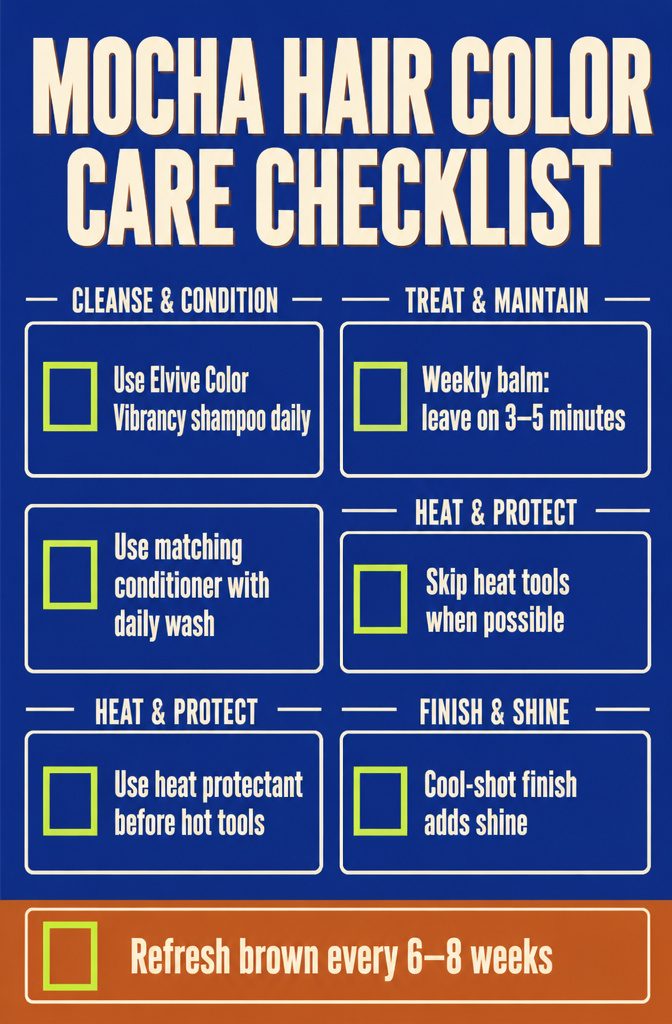
Daily washing with L’Oréal Paris Elvive Color Vibrancy Protecting Shampoo and Conditioner keeps a mocha tone from going flat.
One or two times a week, swap the conditioner for the Elvive Color Vibrancy Repair and Protect Balm and leave it on for three to five minutes before rinsing.
Heat tools damage color-treated strands, so I’d skip them when I can; braids and air-dried texture work fine.
Before any blow dryer or flat iron, spritz on L’Oréal Paris Advanced Hairstyle SLEEK IT Iron Straight Heatspray or BLOW DRY IT Quick Dry Primer Spray. The dryer’s cool-shot button adds shine at the end.
Browns usually need a refresh every 6–8 weeks, while red and copper reflects need one every 4–6. Porosity, formula type and wash frequency all shift that timing.
Professional Versus At-Home Coloring
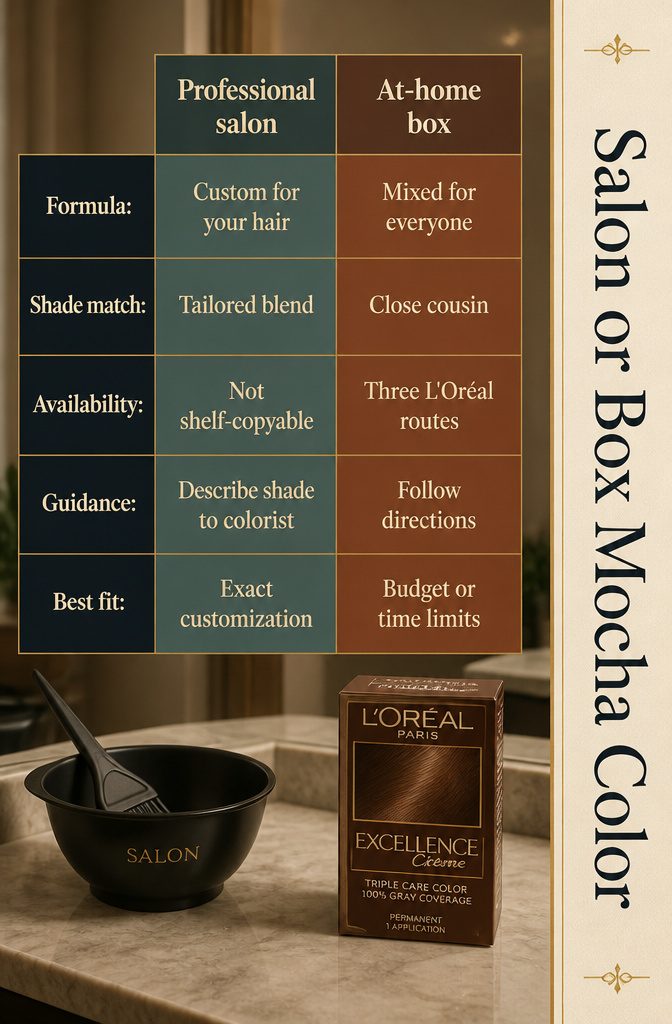
A salon formula is mixed for your hair, while a box is mixed for everyone.
For mocha mousse, describe the shade you want to a colorist and leave the formulating to them. A custom blend can’t be copied off a shelf, and a photo plus a few words gives them enough to work from.
The box is a fair starting point, though.
L’Oréal Paris sells three routes: Excellence Créme in Neutral Dark Brown for true mocha, Superior Preference in Dark Soft Mahogany Brown for warm, and Excellence Créme in Mocha Ash Brown for cool.
I’d choose one when budget or time rules out the salon, but expect a close cousin of your reference photo, not an exact match. Follow the directions closely.
Frequently Asked Questions
What is mocha mousse hair color?
Mocha mousse is a medium-to-deep brown with a creamy, milk chocolate finish, named for Pantone’s 2025 color 17-1230.
It looks rich but soft, closer to coffee mousse than to dark or bittersweet chocolate. The base is neutral, so the shade can be built warmer or cooler.
Who does mocha mousse hair color suit?
It suits medium-to-dark skin with warm or neutral undertones.
It shows up often in Soft Autumn, Warm Autumn and Warm Spring palettes. Because the base sits between warm and cool, it also works on a wider range of undertones than most browns.
What is the salon formula for mocha mousse hair color?
Light mocha is Level 6/35 applied globally, classic mocha is Level 5/37 global with subtle highlights, and deep mocha is Level 4/35 global. Your natural base and hair history change how each one turns out, so a colorist will adjust from there.
How long does mocha mousse hair color last?
Plan on a refresh every 6–8 weeks for brown mocha tones.
Red and copper reflects fade faster and need one every 4–6 weeks. Hair porosity, formula type and how often you wash all shift that timing.
What is the difference between mocha brown and regular brown?
Brown is a broad category, while mocha is one narrow slice of it: a medium-to-deep brown with a creamy milk chocolate finish.
Its base is neutral instead of strictly warm or cool. The palette runs from warm taupes and cocoa browns to softer roasted tones.
What color goes best with mocha hair?
Lighter and darker pieces of mocha in matching tones go best, since they add dimension without jumping to a different color family.
Highlights shift the overall look warmer and lowlights pull it cooler. Balayage and ombré placement work well on top of the same base.