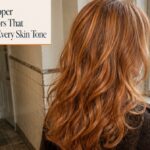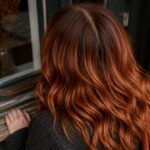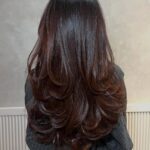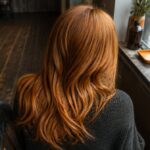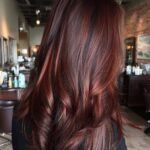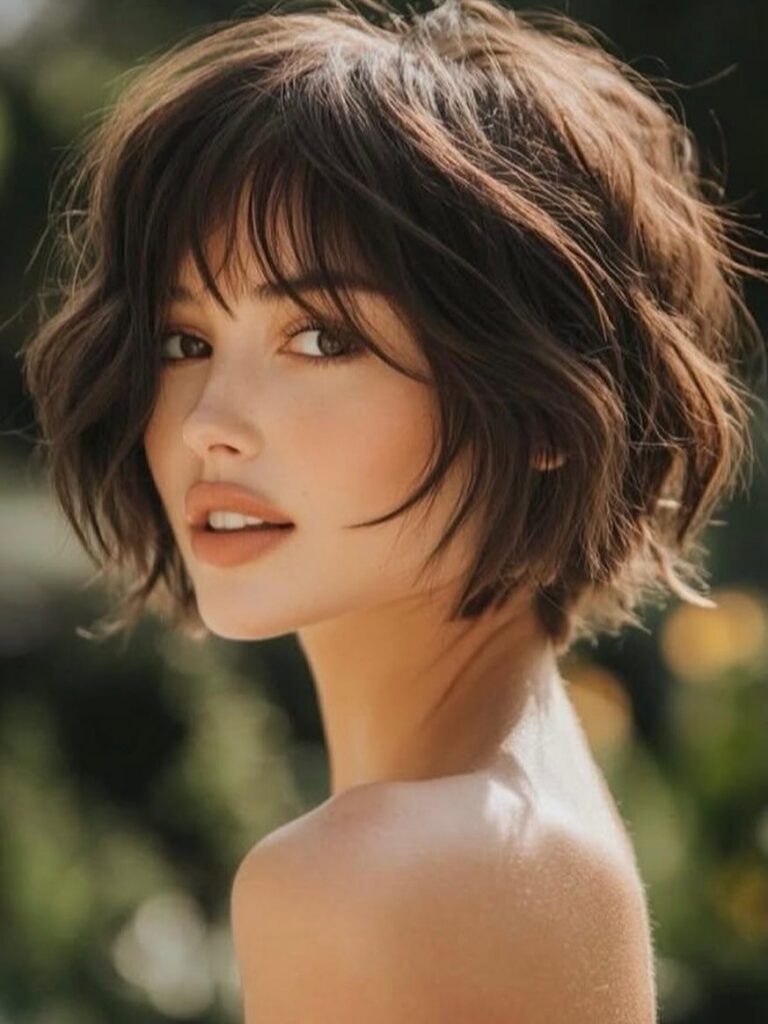
Your natural texture decides which of these cuts will work: waves and curls need layers cut dry so they land where the hair springs, while straight hair shows off sharp angles, blunt bangs and a crisp hem.
The list runs from a Mini Bob and a Chin-length Bob up to a Wavy Lob that skims the shoulders, and from a Shaggy Lob you can rough-dry to a Voluminous Bob that wants a blow-dry every morning.
1. Wavy Lob
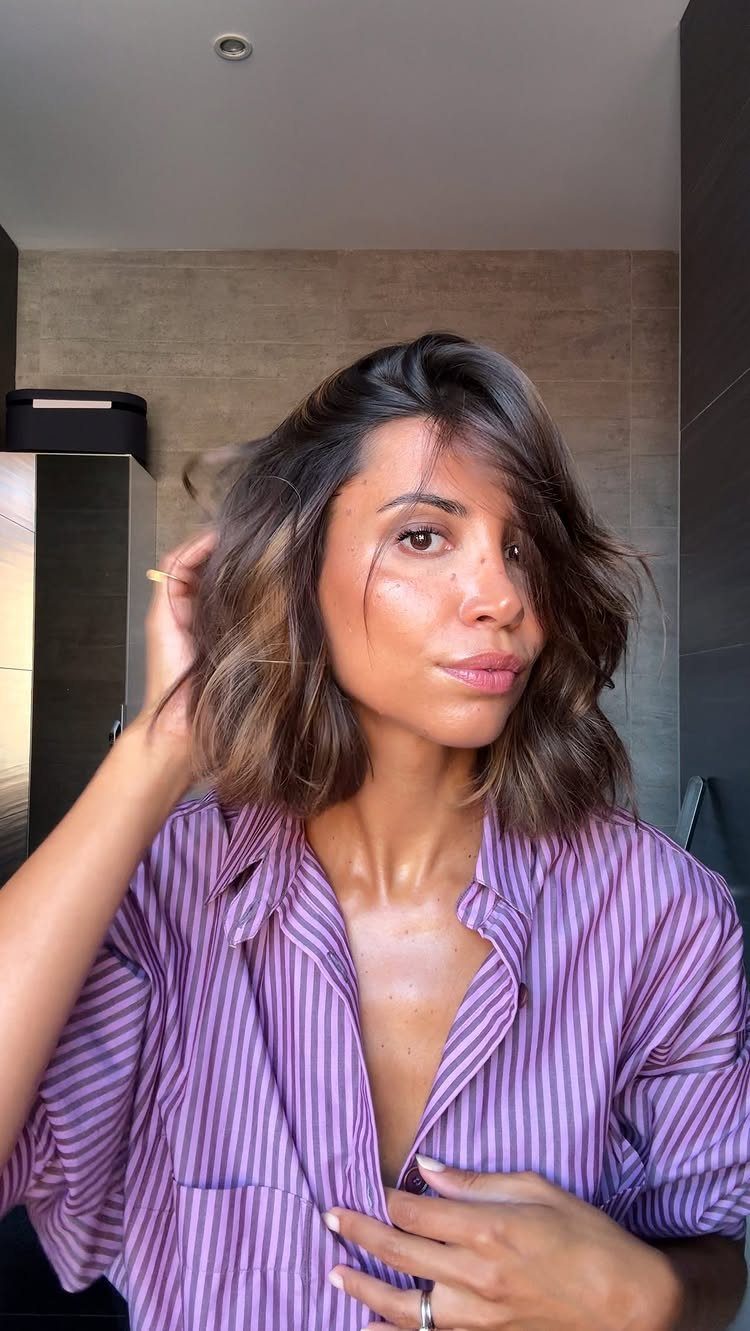
Waves are what keep a long bob from looking blunt, and the longer layers here let those waves stack loosely instead of puffing out at the sides.
At shoulder length the hair has enough weight to hang in an S-shape, so it reads relaxed rather than styled.
For a first step away from long hair that stops short of a true bob, this is the cut I would pick.
Ask for long layers only, and mention that you plan to wear it wavy so the cut follows your natural bend.
2. Wavy Bob with Fringe
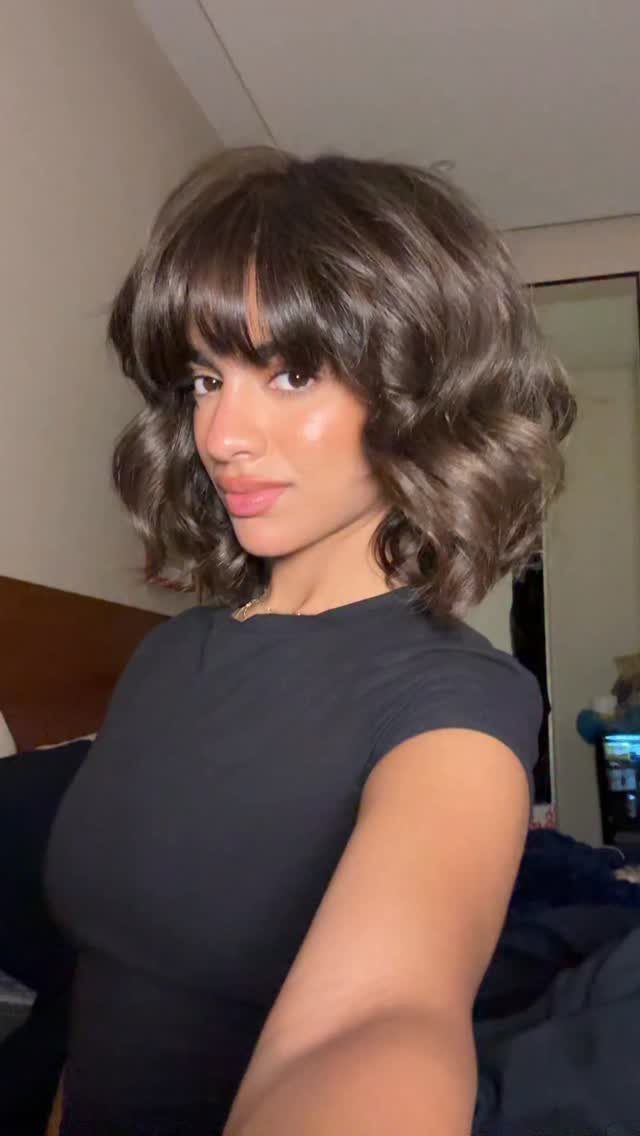
A full fringe on a wavy bob does the work of a contour: it shortens the forehead and pulls the eye toward the cheekbones. The curls that fall alongside it soften the line so it never looks severe.
Dark brown suits this best, because the fringe shows its shape clearly against the rest of the cut. Wavy hair springs up once it dries, so ask the stylist to cut the fringe a touch longer than the final length.
Trimming it dry, one curl at a time, is how I would do it.
3. Long Bob with Bangs
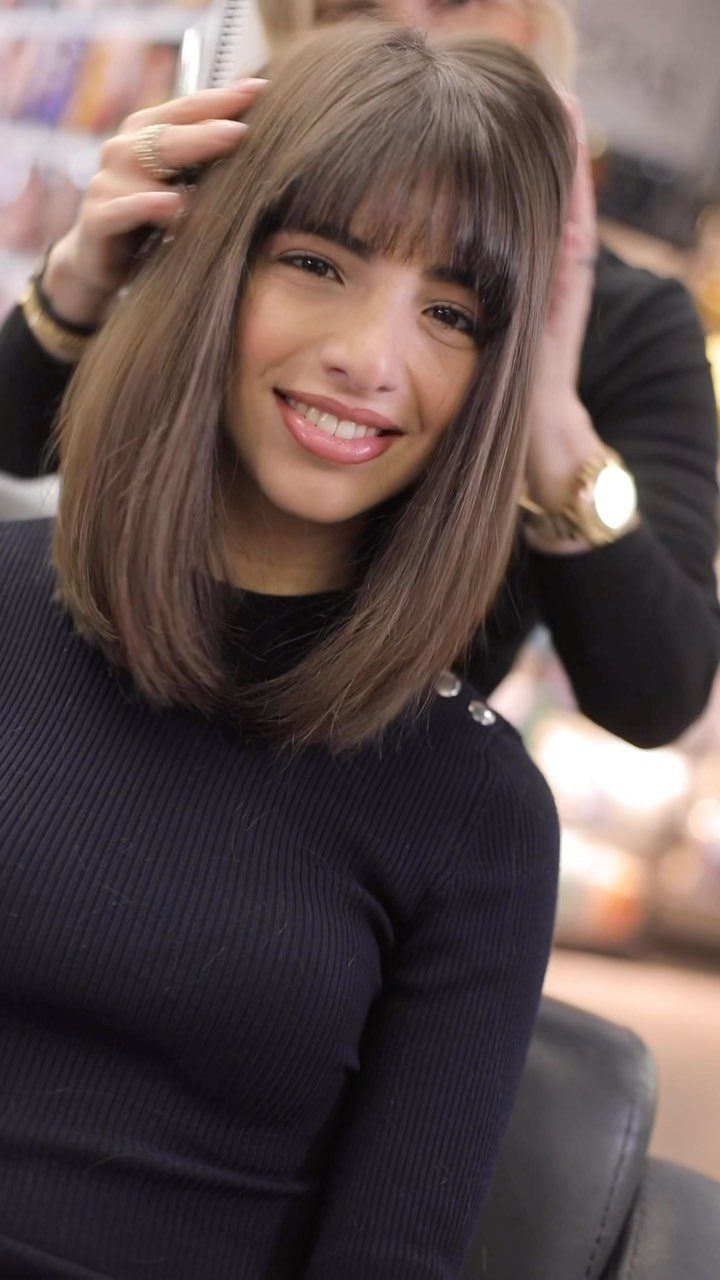
Bangs on a lob only look intentional when they melt into the first layer instead of stopping short of it.
Ask for that connection by name, and the fringe will blend into the length rather than sit on top of it.
This is a good match for straight to slightly wavy hair, and a smooth finish takes a blow-dry and a round brush.
Upkeep is the cost: bangs need regular trims to hold their shape, so budget for quick salon visits between full cuts.
4. Short Bob with Bangs
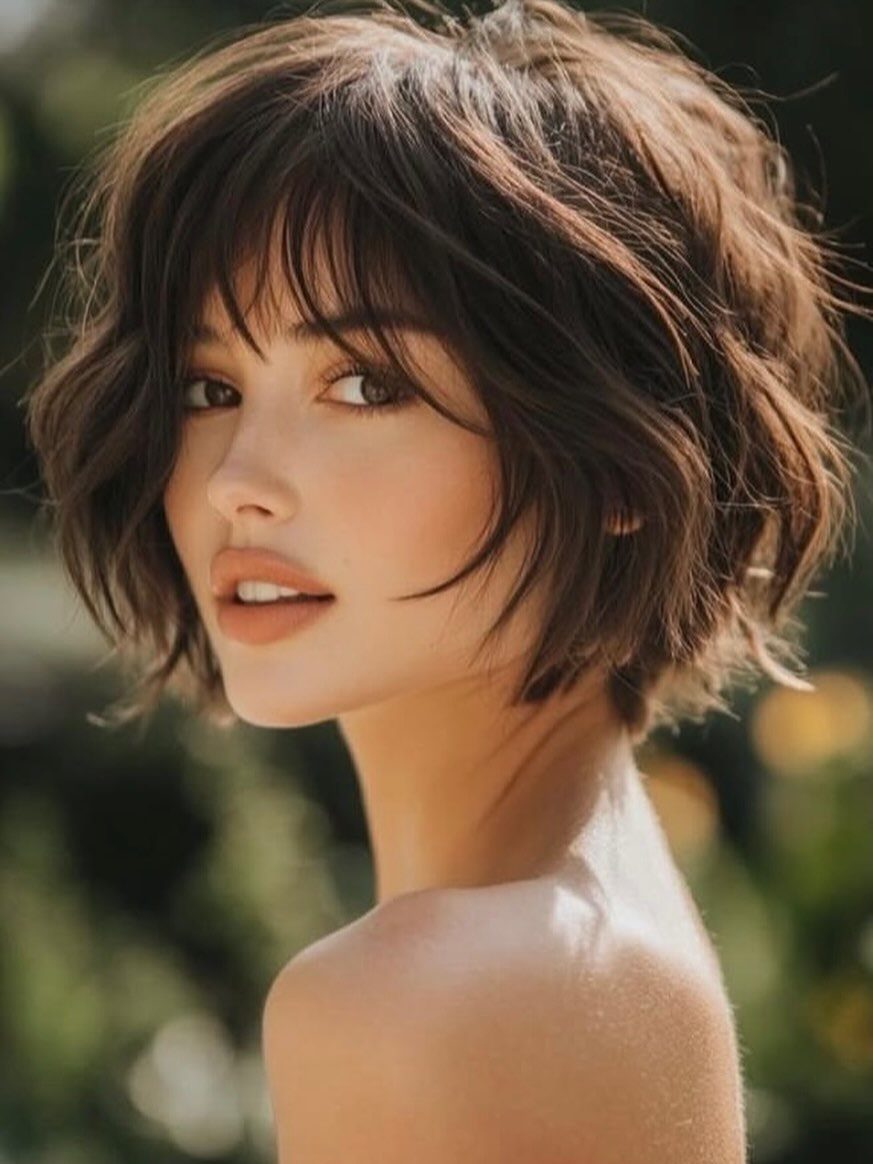
Chin length plus full bangs puts all the attention on the eyes, and soft layers stop the shape from feeling like a helmet.
Tousled waves finish the look and hide small mistakes in the cut, which makes it forgiving on busy mornings.
This works best on someone who wants a real change and feels comfortable showing more of their face.
The cut is short, so a regrown fringe will start to get in the way before the rest of the bob has moved much. Plan on frequent trims.
5. Shaggy Lob

A shaggy lob lives on choppy, uneven layers: the ends should look a little undone, never evenly trimmed. Shoulder length gives that texture room to move without turning into a full shag.
This cut works well when low effort at home is the priority. Rough-dry it, scrunch in a bit of texture product, and leave it alone.
Ask for layers cut at different lengths and say you’d like messy ends, since that is the detail that can go wrong if the stylist tidies it too much.
6. Angled Lob
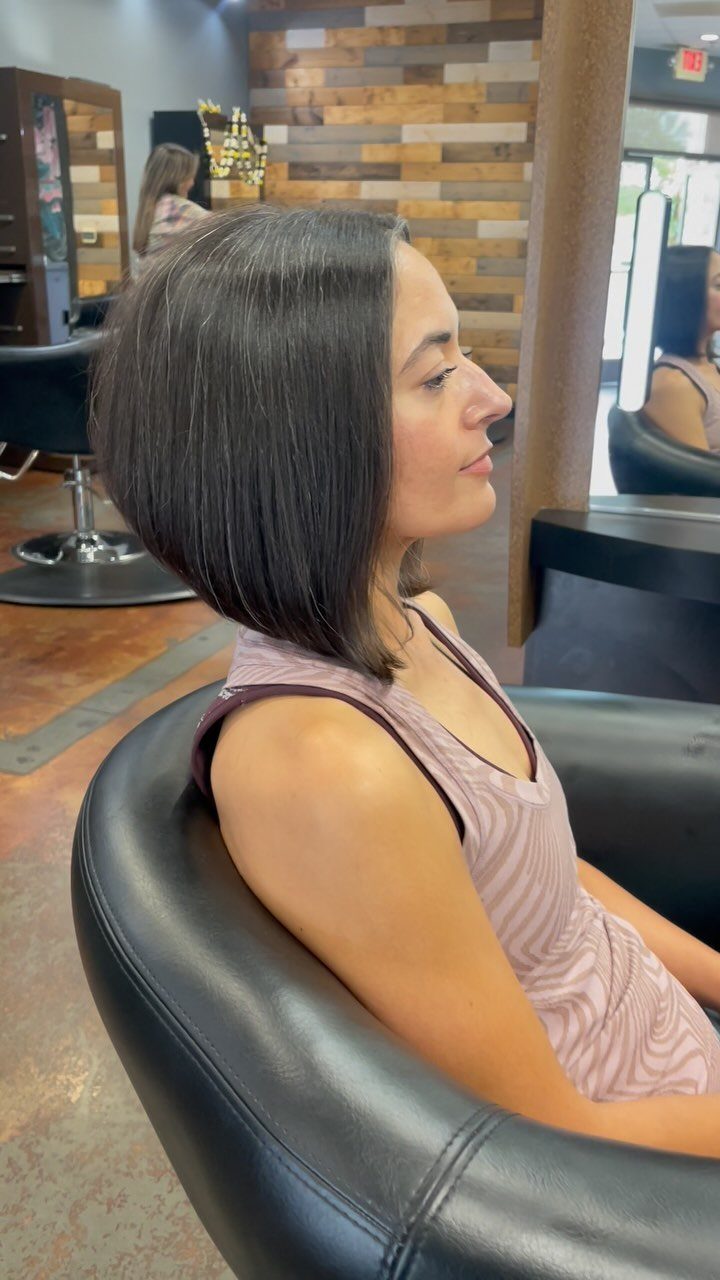
An angled lob gets longer as it moves from the back toward the face, and that slope draws a diagonal line that slims the jaw. Seen in profile, the longer front pieces are what make the shape.
Sleek, dark strands reveal the angle best, so straight or lightly smoothed styling is my choice.
The line is crisp, which means it needs a trim every so often to keep the slope clean. Ask your stylist how steep the angle should be for your face shape before the first cut.
7. Curly Layered Lob
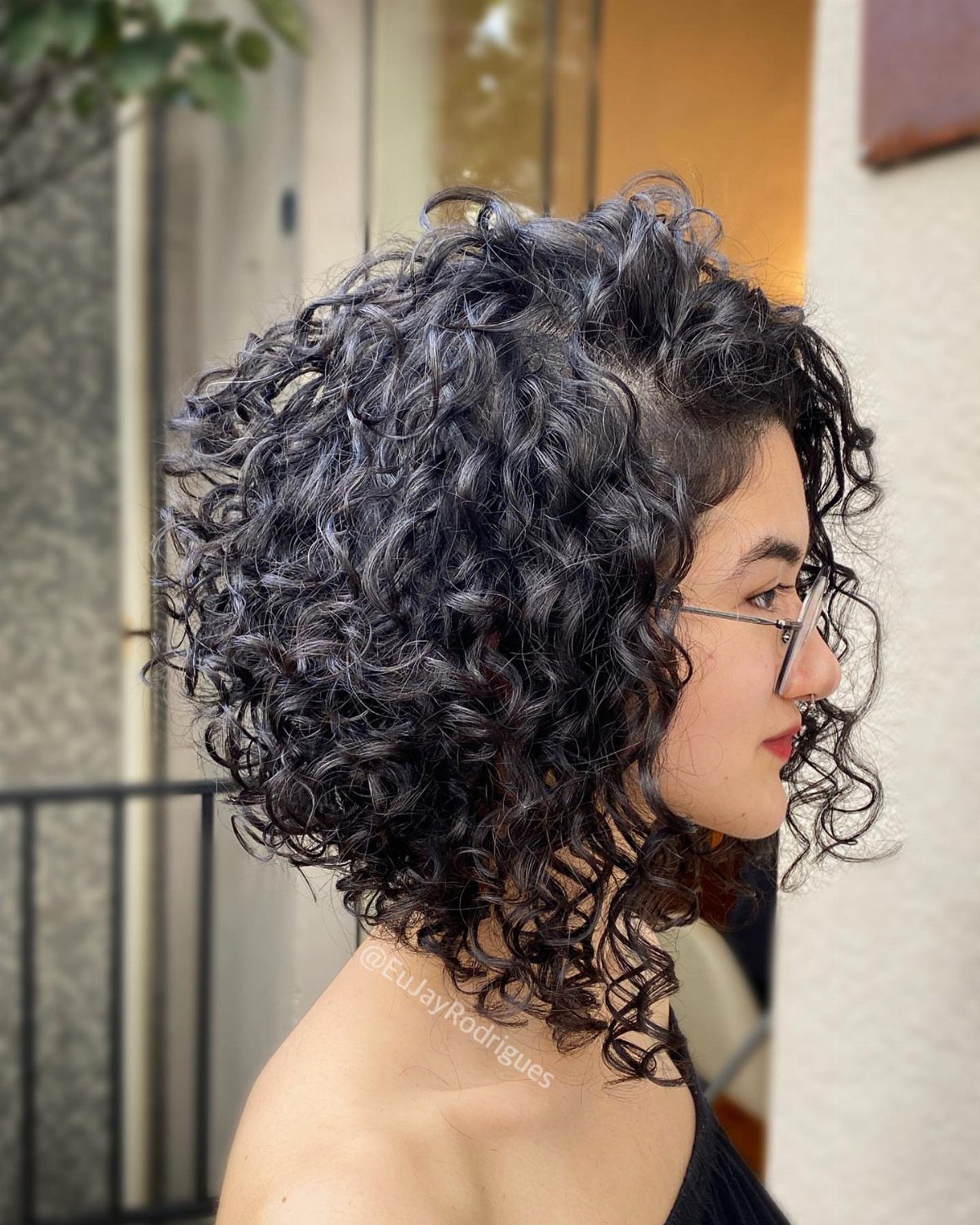
Curls give a layered lob its bounce, and the layers keep that bounce from collapsing into a heavy triangle. Cut at about shoulder length, the shape lets each curl sit in its own spiral instead of piling up.
If your hair is naturally curly, ask for the layers to be cut with the curls dry and in their natural pattern.
Straightened hair hides where the spring will land, so a cut made that way can end up uneven once the curls return.
The upkeep is mostly about keeping definition, not about styling every morning.
8. Angled Bob
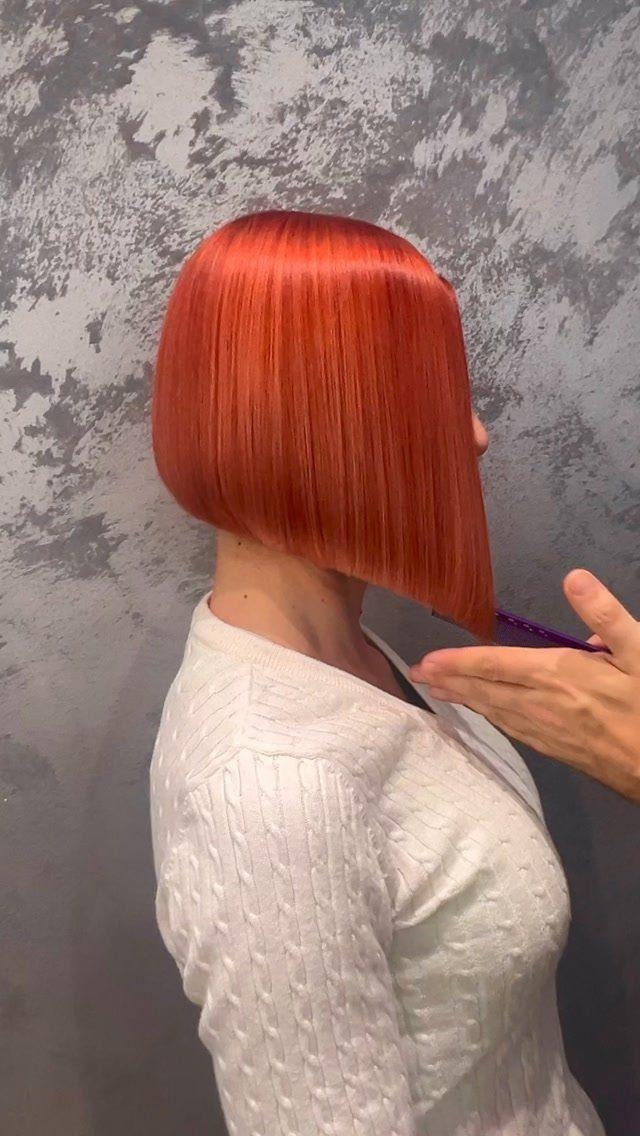
Short at the back, longer toward the face: that slope is the whole idea, and a copper-red shade makes it easy to read. Sleek, smooth strands show the line best, so I would blow-dry this one straight.
Ask your stylist to set the angle to suit your jaw and neck, because a steeper slope looks very different from a gentle one. Color this bright also shows every uneven inch, so the cut needs to be precise.
Plan on regular trims to keep the front from losing its edge.
9. Balayage Lob
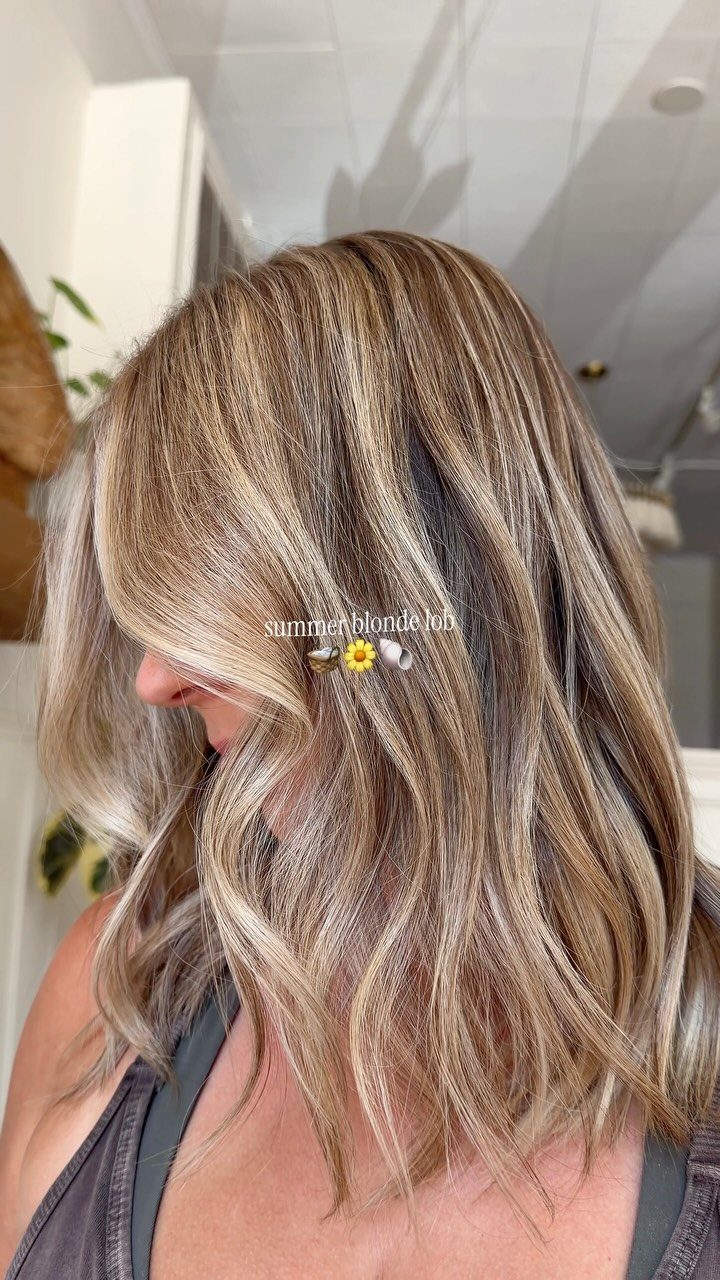
Dark roots melting into lighter, blended lengths are what make a balayage lob look lived-in rather than striped.
Because the color is painted on by hand, the regrowth line stays soft, and that suits anyone who doesn’t want a touch-up appointment every few weeks.
Bring a photo and ask for a blended root, not a bright band at the scalp. At shoulder length, the lightest pieces sit where the hair moves most, so the color catches light with every turn of the head.
10. Graduated Bob
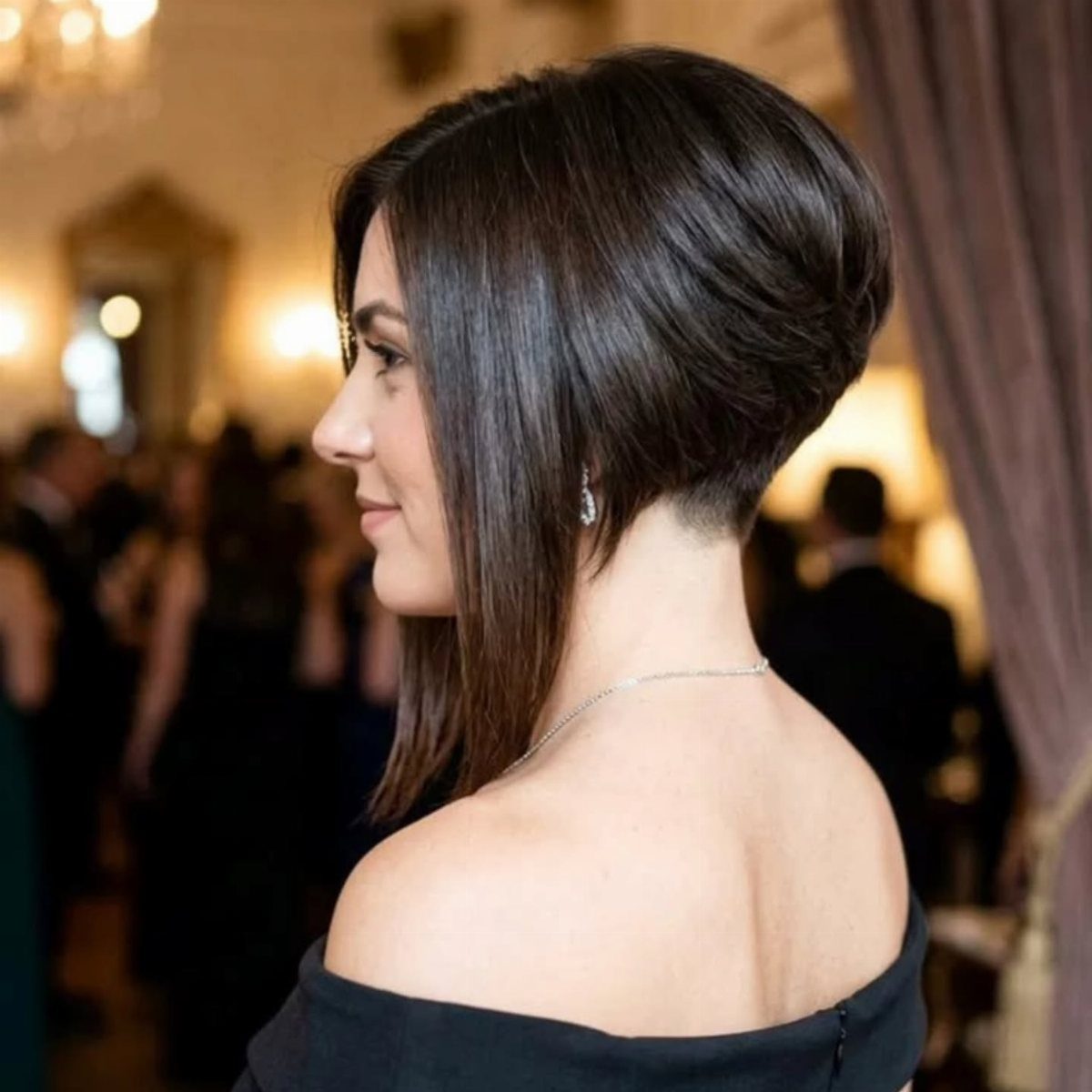
Shorter, fuller layers stacked at the back give a graduated bob its lift, while the longer pieces in front frame the face. On dark brown hair, that stacking shows up as a clean curve instead of a blur.
Fine hair benefits most, since the layering builds shape where a one-length cut would lie flat. Ask for the back to be graduated and the front left longer, and say how much volume you want at the nape.
A round brush at the crown keeps the lift going.
11. Inverted Bob
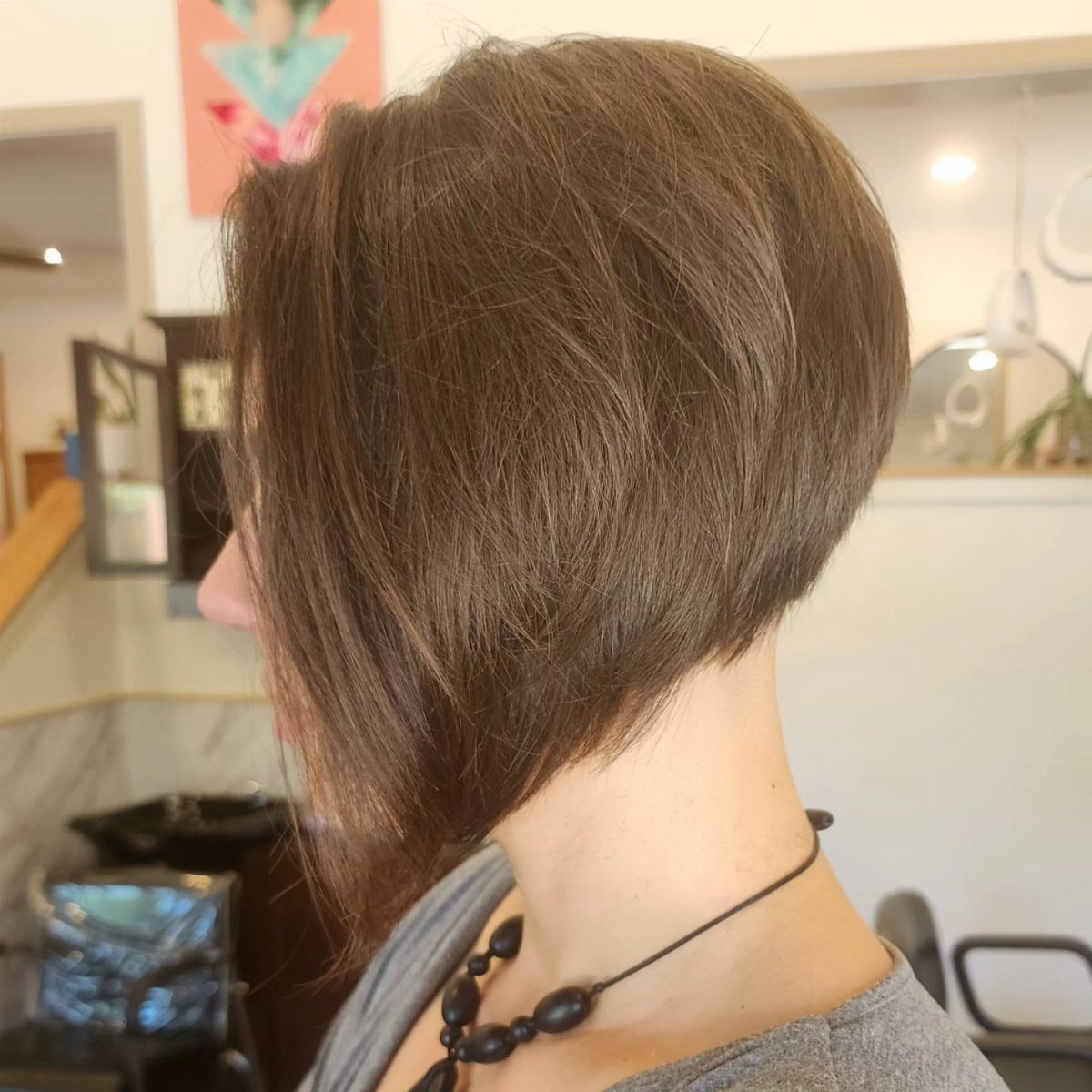
Longer in front, shorter and shaped at the back: an inverted bob puts its stacked nape right where the eye lands from the side. A brown shade keeps the shape easy to read.
Tell your stylist whether you want the back lightly stacked or more built up, since the difference changes the look a lot.
I would choose a subtle stack for a first inverted cut, because it’s easier to shorten later than to grow back.
Expect trims to keep the back from drooping.
12. Long Bob with Highlights
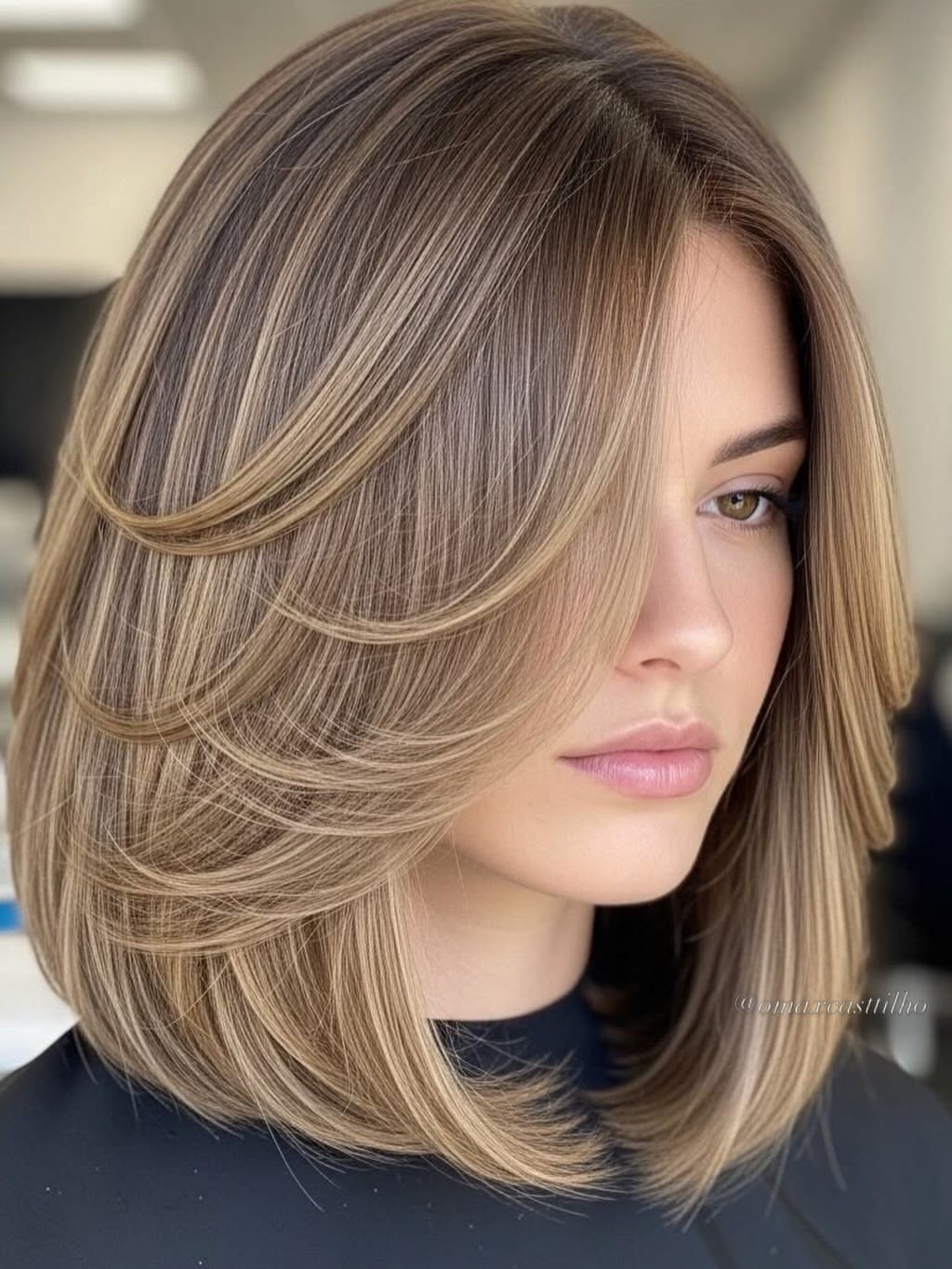
Highlights do something plain color can’t: they separate the layers, so each one catches light on its own. On a long bob with softly curved ends, that extra dimension makes the cut look fuller.
Ask for highlights placed to follow the layers rather than spread evenly, and have the stylist check the face-framing pieces first, since those show most. If you want the color to look soft and not stripy, request fine, blended placement.
Brighter strands also call for a gentler wash routine.
13. Side-parted Lob
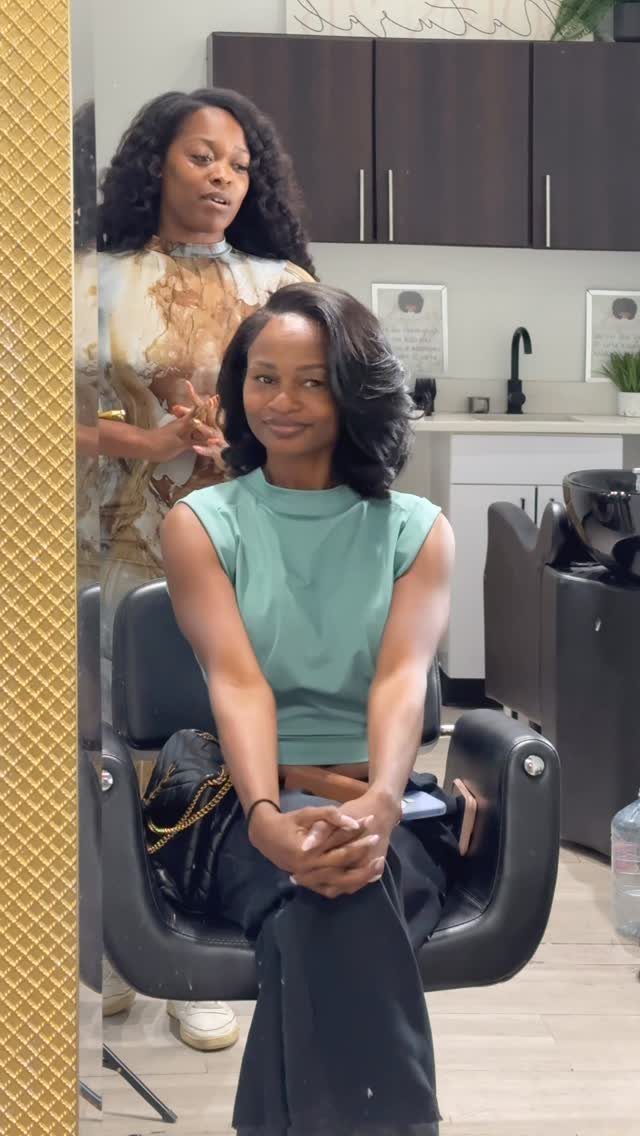
A side part throws the weight of a lob to one side, and that asymmetry adds lift at the root on the heavier side.
A deep side part throws the weight to one side, and that is what makes a shoulder-length lob look fuller.
Part your hair where it falls naturally, then flip it to the other side for a day to see which version gives more volume.
Show your stylist the part you plan to wear, since the cut should be shaped around it.
14. Wispy Layered Lob
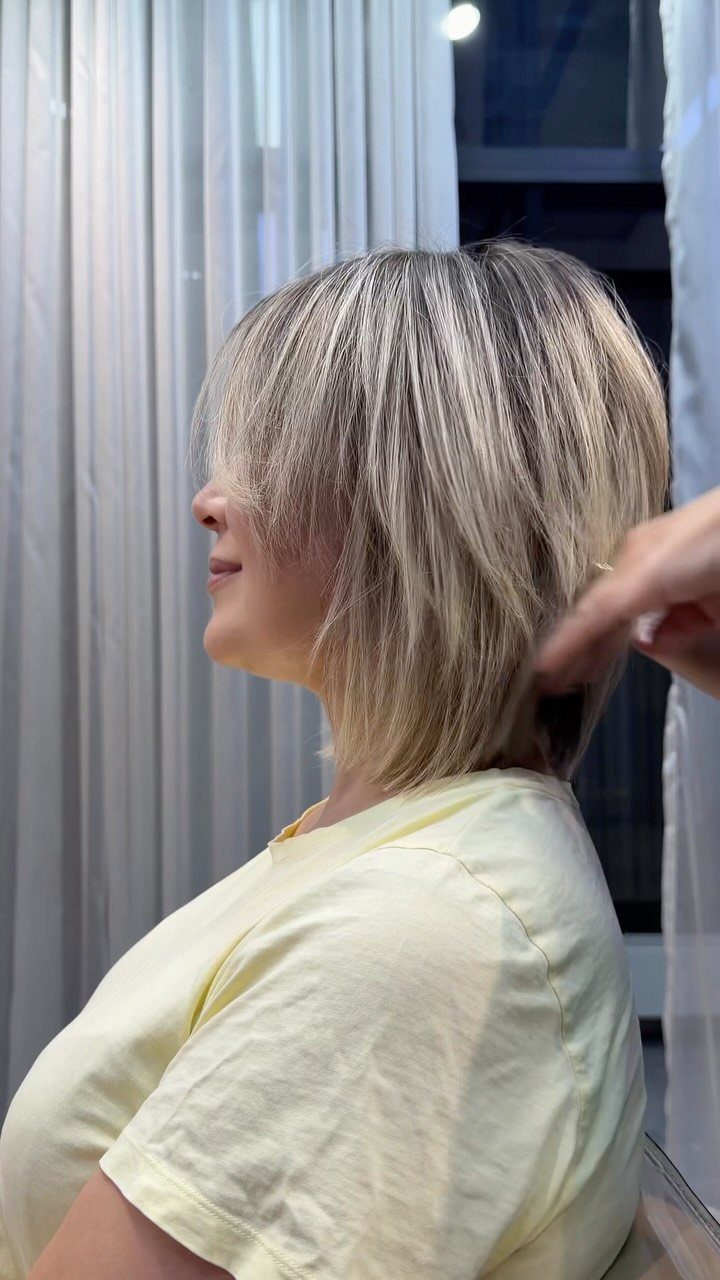
Feathered ends are what make this lob wispy: the layers are cut light enough to move but never so many that the shape turns choppy. A long fringe blends into them, so nothing sits apart from the rest.
Ask for soft, feathered layers and say you want movement, not a heavily layered look. On blonde hair, that restraint keeps the ends from looking thin.
I would keep styling simple, with loose, relaxed finishing that lets the layers do the work.
15. Short Butterfly Lob
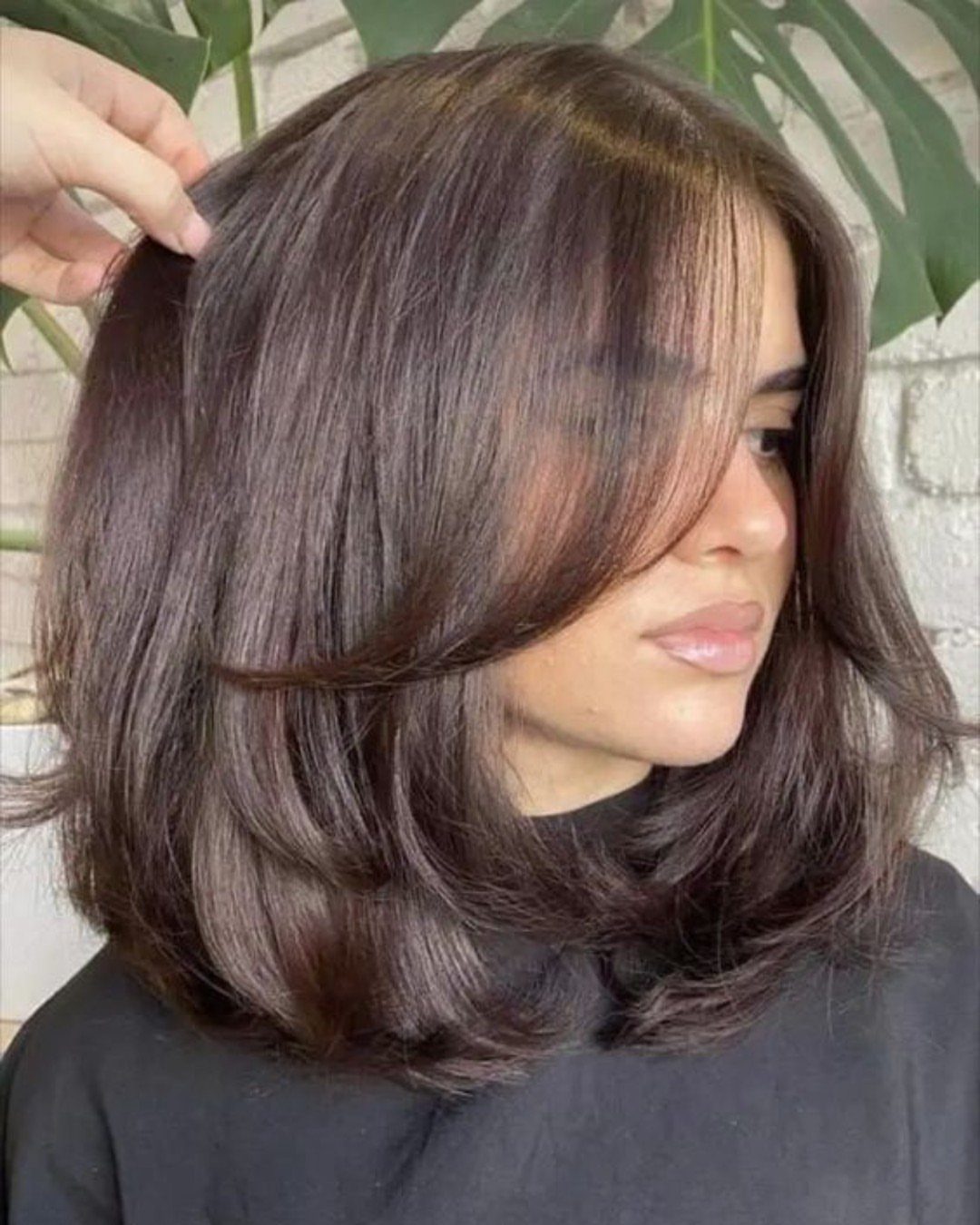
The butterfly shape stacks short, face-framing pieces over longer layers, and on a lob that gives you 2 kinds of volume at once: lift around the cheeks and bounce at the ends.
Curling the ends makes the layers read more clearly, and it matters most on dark brown hair, where straight ends tend to hide the layering.
Take a saved photo to your stylist and ask for butterfly layers cut into a lob.
Tell the stylist how short you want the face-framing pieces to start, since that is where the cut changes most from a plain layered lob.
16. Graduated Bob with Blunt Bangs
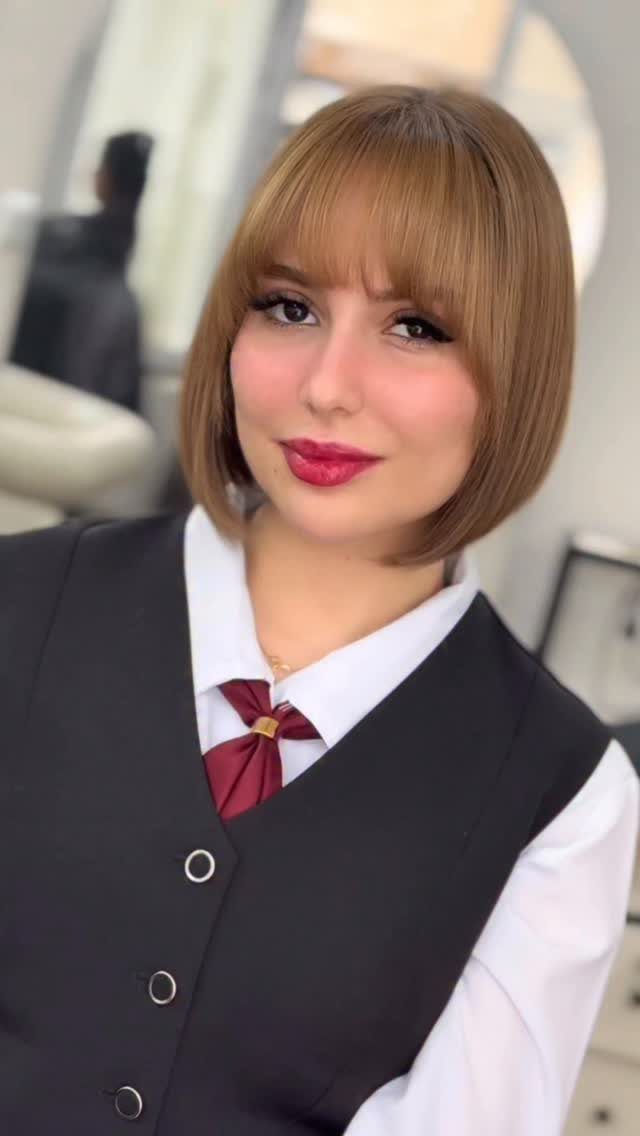
Blunt bangs set a hard horizontal line over the eyes, and a graduated, inverted shape below them gives the back more stack than the front.
A graduated back paired with blunt bangs makes a strong, deliberate frame, and light brown keeps those clean edges easy to see.
Ask your stylist to cut the bangs and the graduation as one plan, so the lengths agree. Blunt edges show every misstep, so they need regular trims to stay crisp.
Expect to spend time with a flat iron or a round brush if you want the fringe perfectly smooth.
17. Long Layered Bob
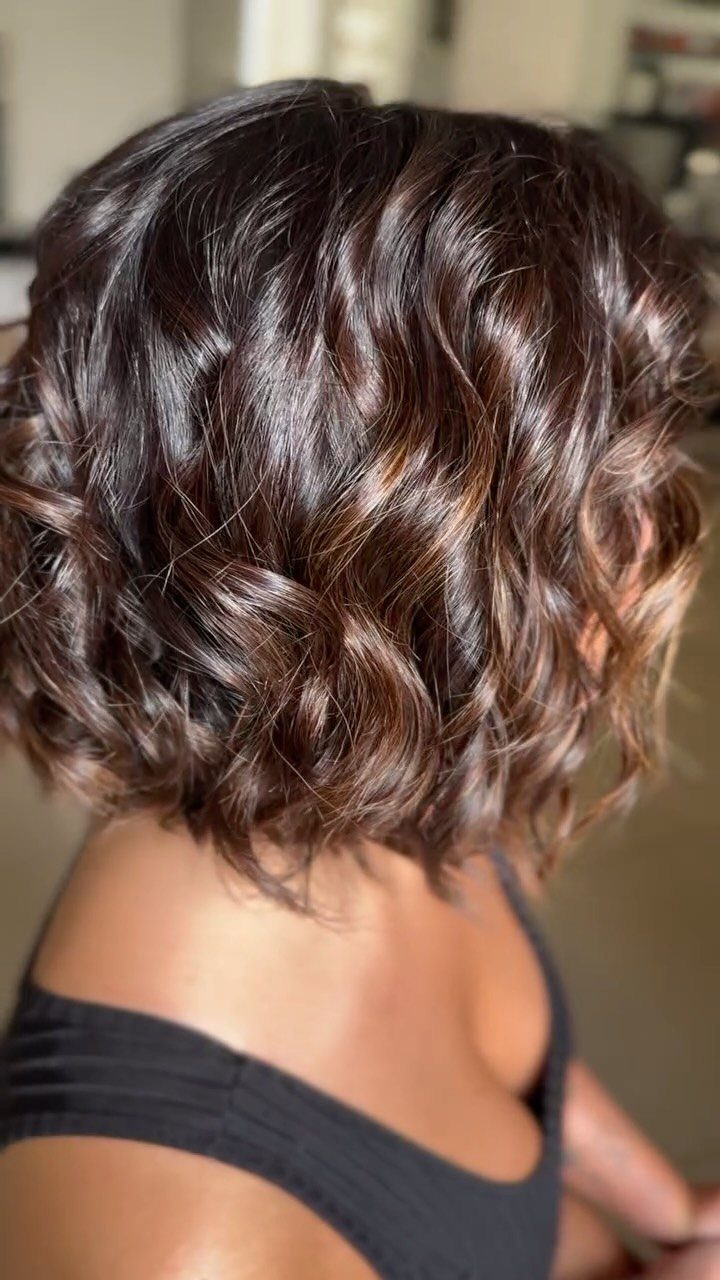
A longer bob with layers gives you room to choose: leave it smooth, or let the layers show as texture and waves.
On dark brown with highlights, loose waves make the layering easy to read from the back, because the lighter pieces trace each layer.
Ask for layers that start below the chin so the length stays intact while the ends gain movement. The layers also add volume, which helps if your hair tends to hang flat.
A long layered bob is one of the easier longer cuts to grow out, since the layers blend as length returns and no harsh line forms.
18. Lob with Curtain Bangs
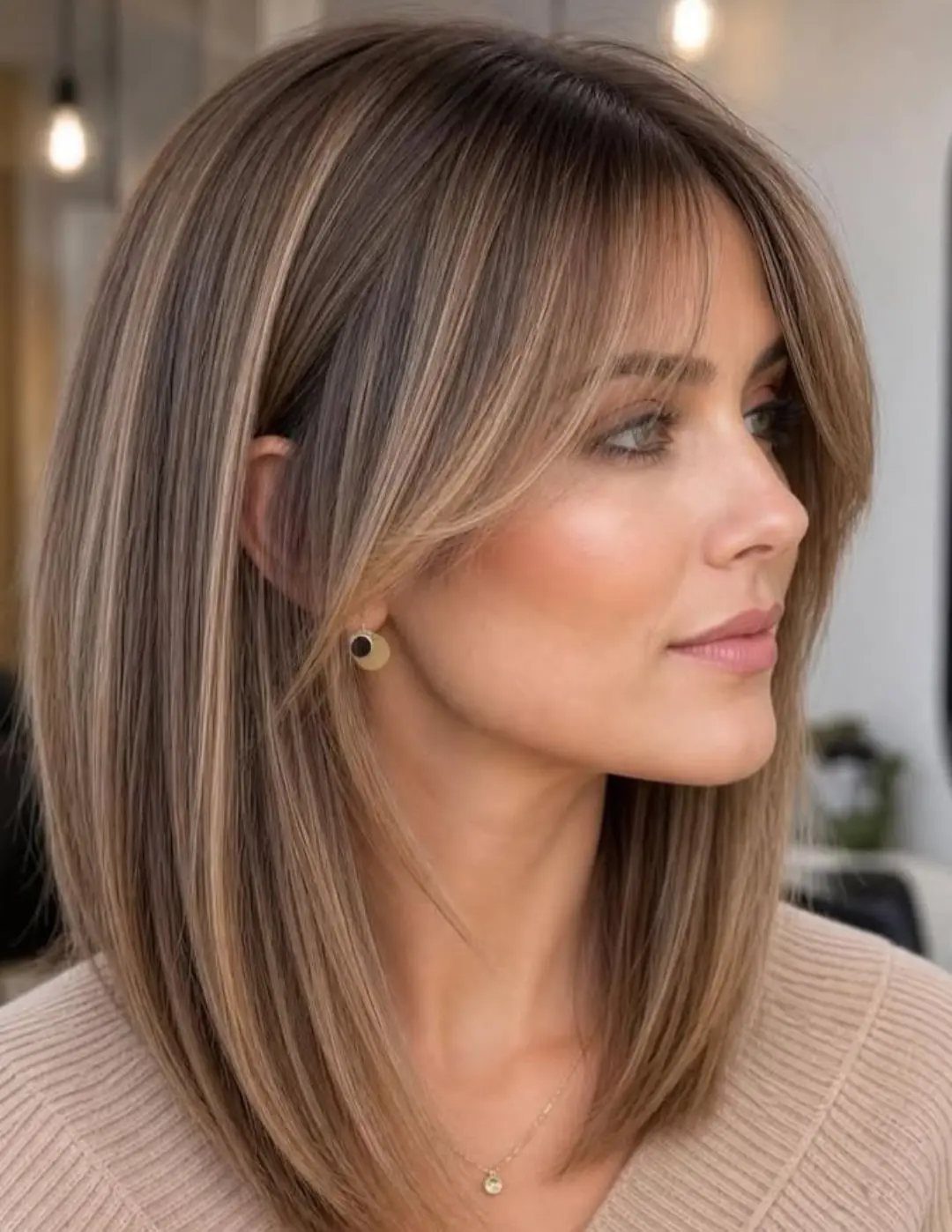
Curtain bangs part in the middle and sweep to each side, so they frame the face and then slide into the length of the lob instead of ending in a hard line.
Highlights help the swept curtain pieces stand out from the rest of the hair, and 2–3 shades lighter than the base is enough to show the movement.
Ask for bangs that blend into your first layer, and tell the stylist how far down the cheek you want them to reach.
They are gentler to grow out than blunt bangs, since the longer sides just join the rest of the cut.
19. Voluminous Bob
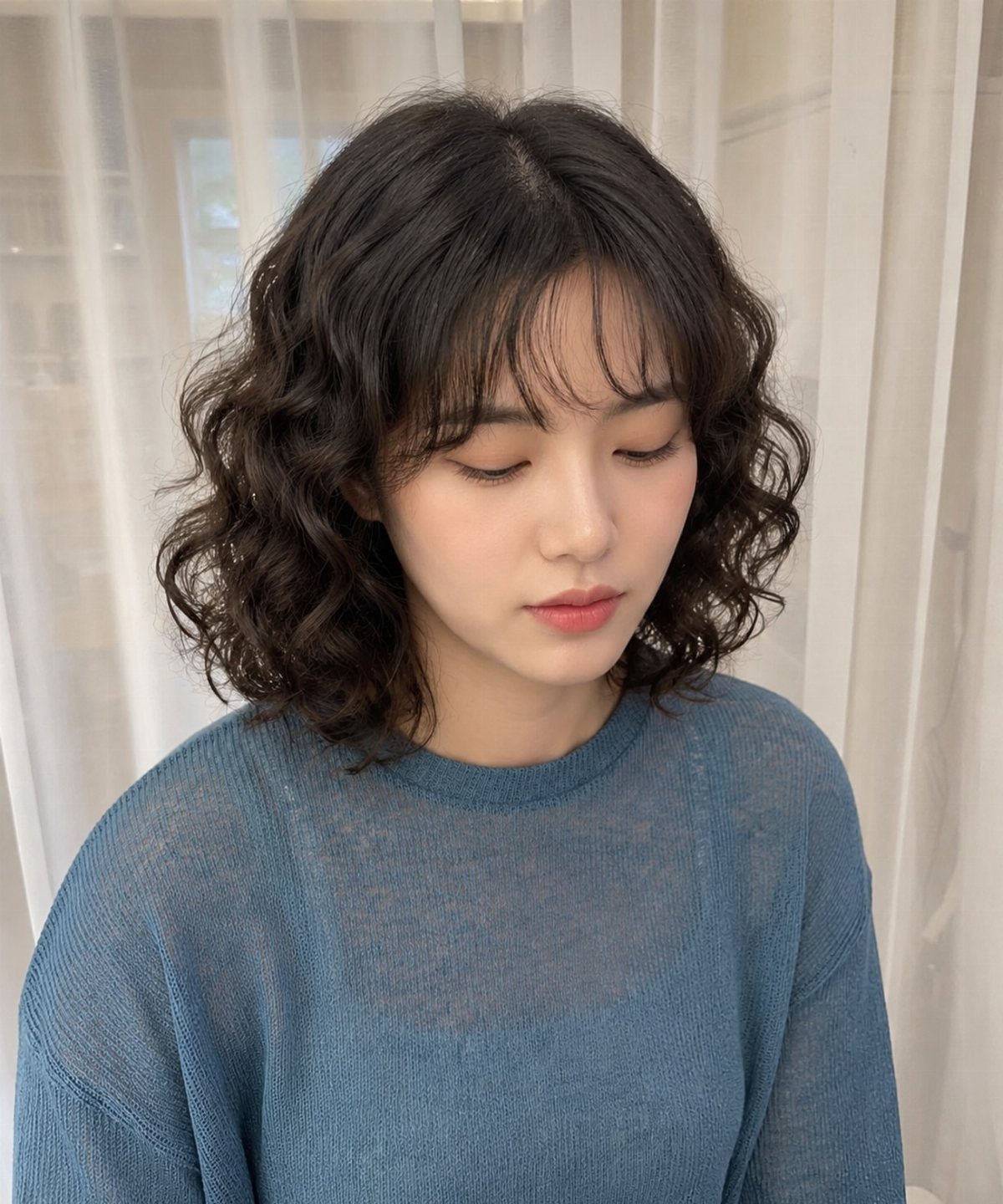
Layers are what keep a chin-length bob from going flat, and on wavy or curly hair they also stop the sides from puffing out into a bell. Cut to follow your natural texture, they add body without adding length.
Ask your stylist to cut the layers while the hair is dry, so the waves show where they will sit. Wispy bangs are an optional extra, and I like them here because they echo the soft shape of the rest.
20. Ombre Lob
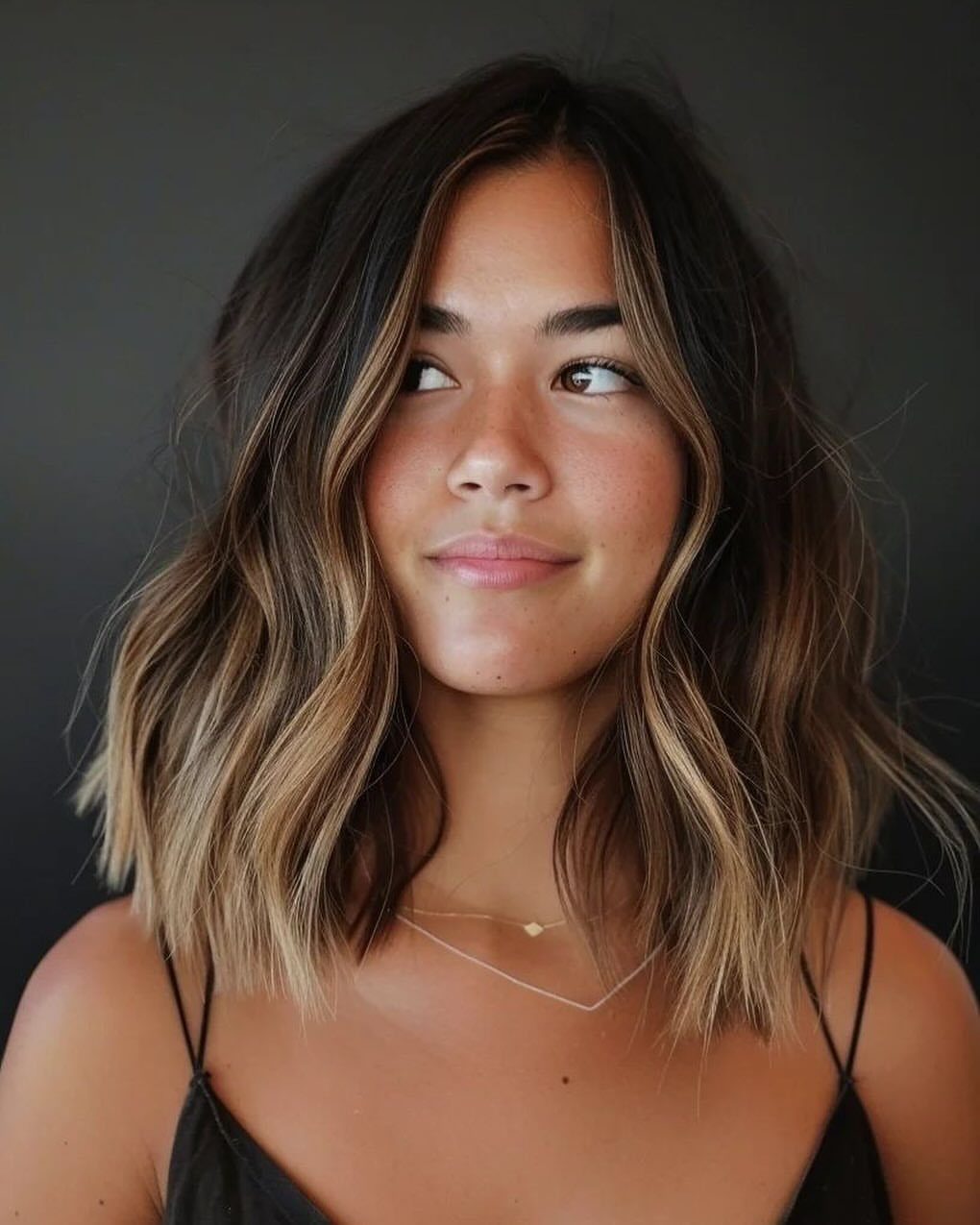
Ombre keeps the roots dark and lets the lengths drift toward blonde, which gives a straight or wavy lob more depth than one flat color. A center part shows the gradient evenly on both sides.
Wavy styling is my pick, since the bends in the hair spread the lighter ends across the shape instead of stacking them in one band.
Ask for a gradual blend, not a hard line at the middle, and bring a photo so the stylist can match how high the lightening starts.
21. Mini Bob
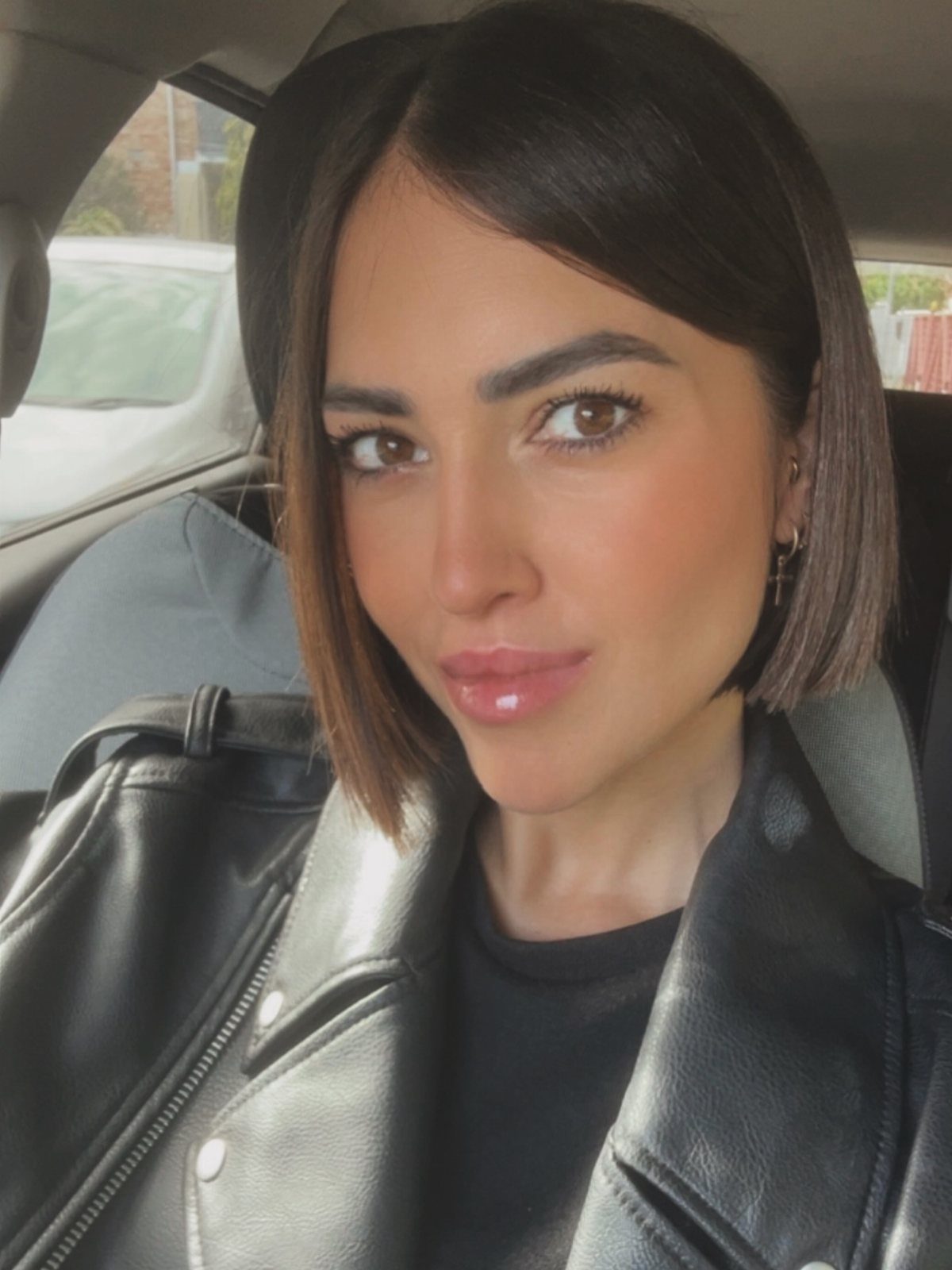
A mini bob sits high on the jaw, so there is no length to hide behind, and that is exactly why it reads as bold. Worn sleek with a side part, it looks sharp with almost no styling.
Be honest with yourself about the commitment: this is short, and short hair shows every uneven edge.
Ask for a precise line and book regular trims to keep it crisp. If you are nervous, start at chin length (see the chin-length bob below) and go shorter next time.
Too short and you end up with what can look like an uncommitted bob, and too long you end up with an insipid midi length.
— ELLE
22. Tousled Platinum Hairstyle
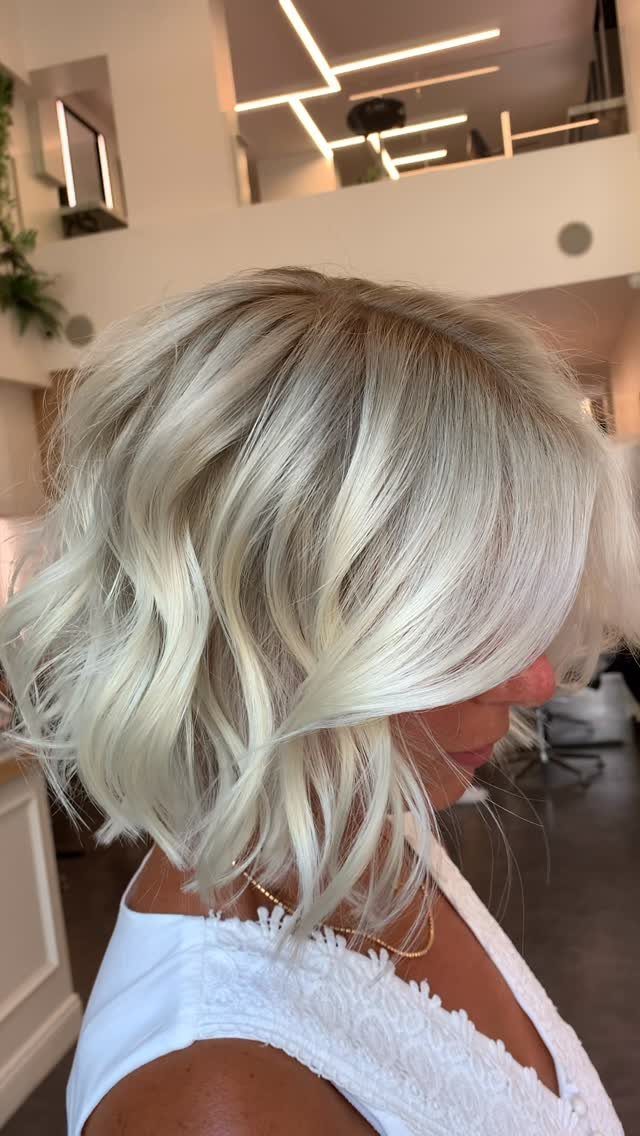
Short layers landing at the cheekbone and a side sweep that acts like an angled bang are what set this cut apart. Pieces that sweep across the front give the face a frame without needing a real fringe.
Ask your stylist for layers that start at cheekbone level and a front section long enough to sweep to one side.
Tousled waves finish it. Platinum with darker roots keeps the regrowth line soft, which suits anyone who would rather skip frequent color visits.
23. Flipped-layer Lob
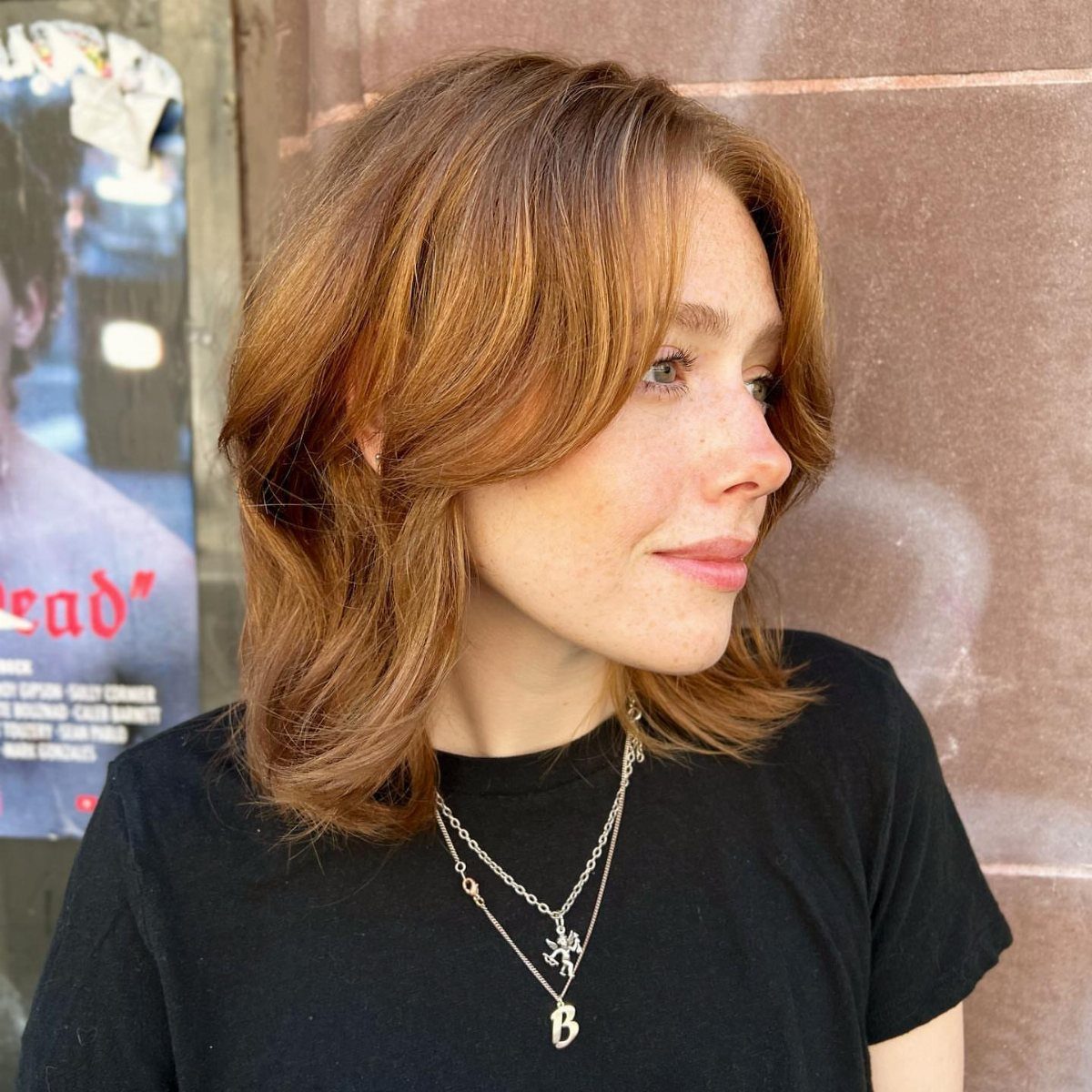
Flipped ends give a layered lob a bouncy, retro finish: the layers turn outward instead of tucking under, and the whole shape feels lighter. The look depends on the layers being cut to flip, so say so at the salon.
At home, a round brush and a blow-dryer get you there, rolling each end outward as you dry.
Light brown or reddish tones make the movement easy to see. I would skip heavy product, since weight pulls the flip back down.
24. Chin-length Bob
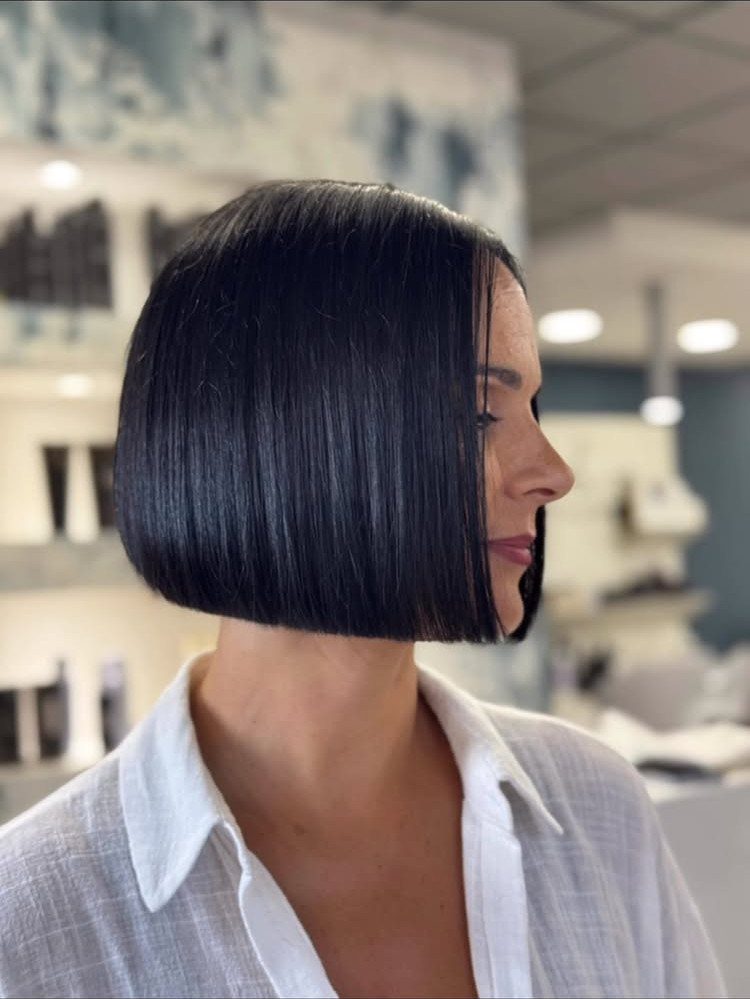
A chin-length bob stops at the jaw instead of the shoulders, and that one change gives it the cleanest, simplest outline of any long bob variation.
Worn sleek and dark, it lives or dies by the line, so the cut has to be sharp.
Ask for the hem to be cut even and say exactly where on the chin you want it, because a small difference in length shifts the look.
Straight hair shows the edge best. Since the cut is short, plan on regular trims to keep it from creeping toward the shoulders.
25. Face-framing Layered Lob
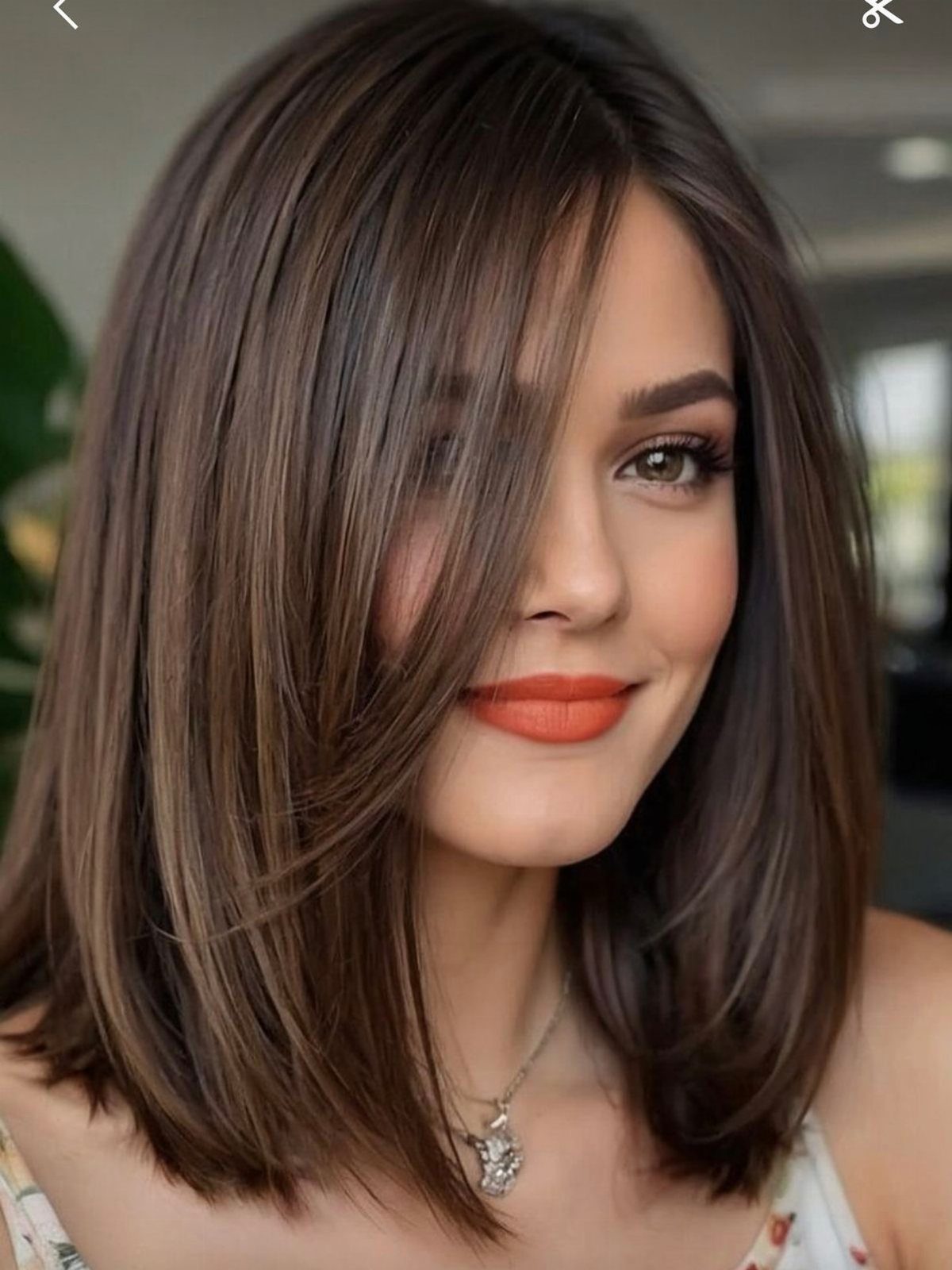
Long layers that begin near the cheeks and slide past the jaw frame the face and keep a shoulder-length lob from falling in one flat sheet.
Ask for the layers to start around cheek level and request soft, blended ends, not choppy steps.
Brown hair shows that gradual slope well. Bring a front-facing photo to the salon, since the framing is easiest to judge from the front.
26. Softly Curled Layered Lob
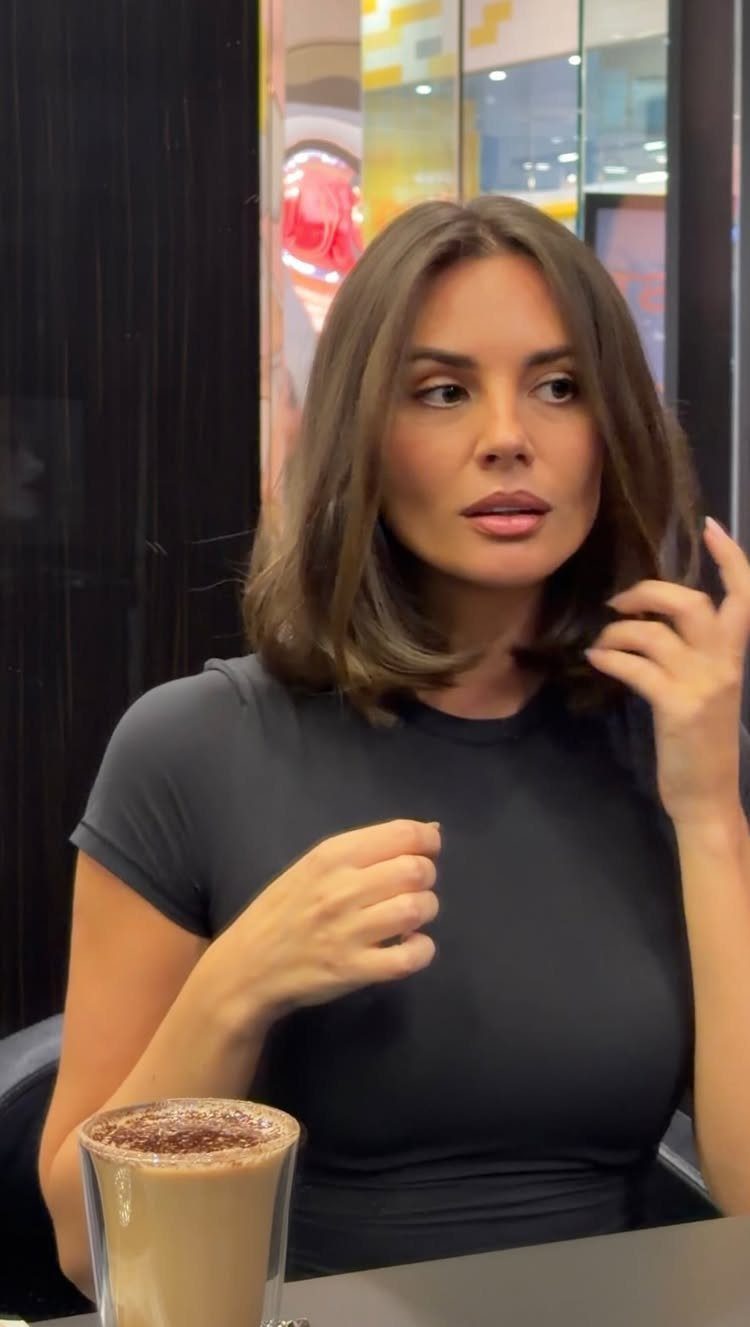
Ends that bend gently inward are what make this layered lob look finished. The layers should taper gently inward, which gives a softer line than the outward flip.
I would keep the curve soft, because tight curls would work against the smooth, polished look.
27. Tapered Layered Lob
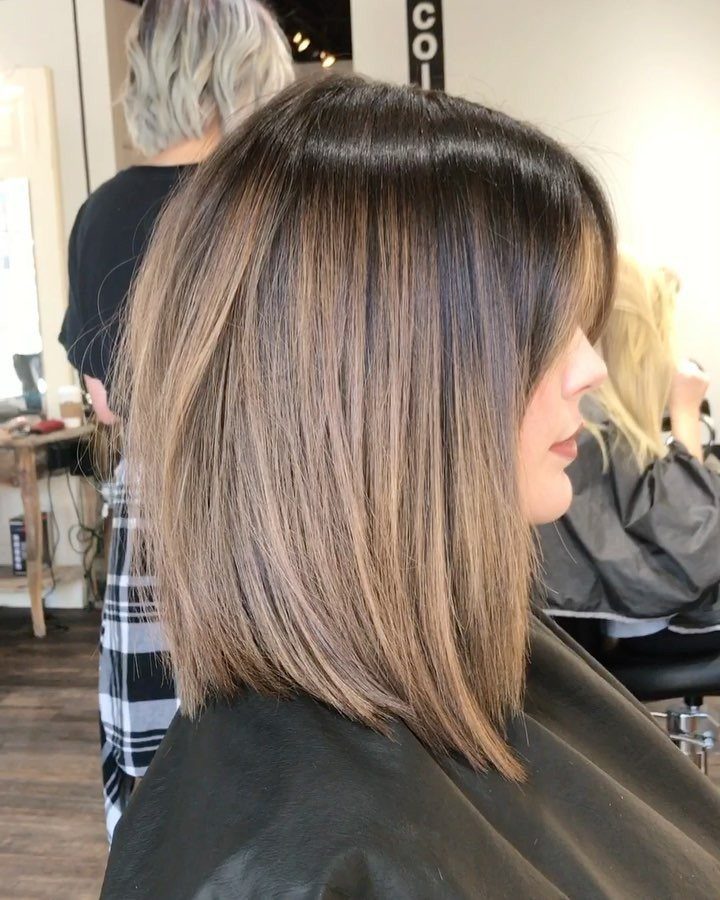
Tapered ends mean the perimeter is cut with a feathered edge instead of one blunt line, and sleek, straight hair shows that finish best. Brown with blonde highlights adds a second layer of detail along the taper.
Tell your stylist you want tapered, subtly layered ends and no hard hem.
28. Layered Lob with Pink Streak
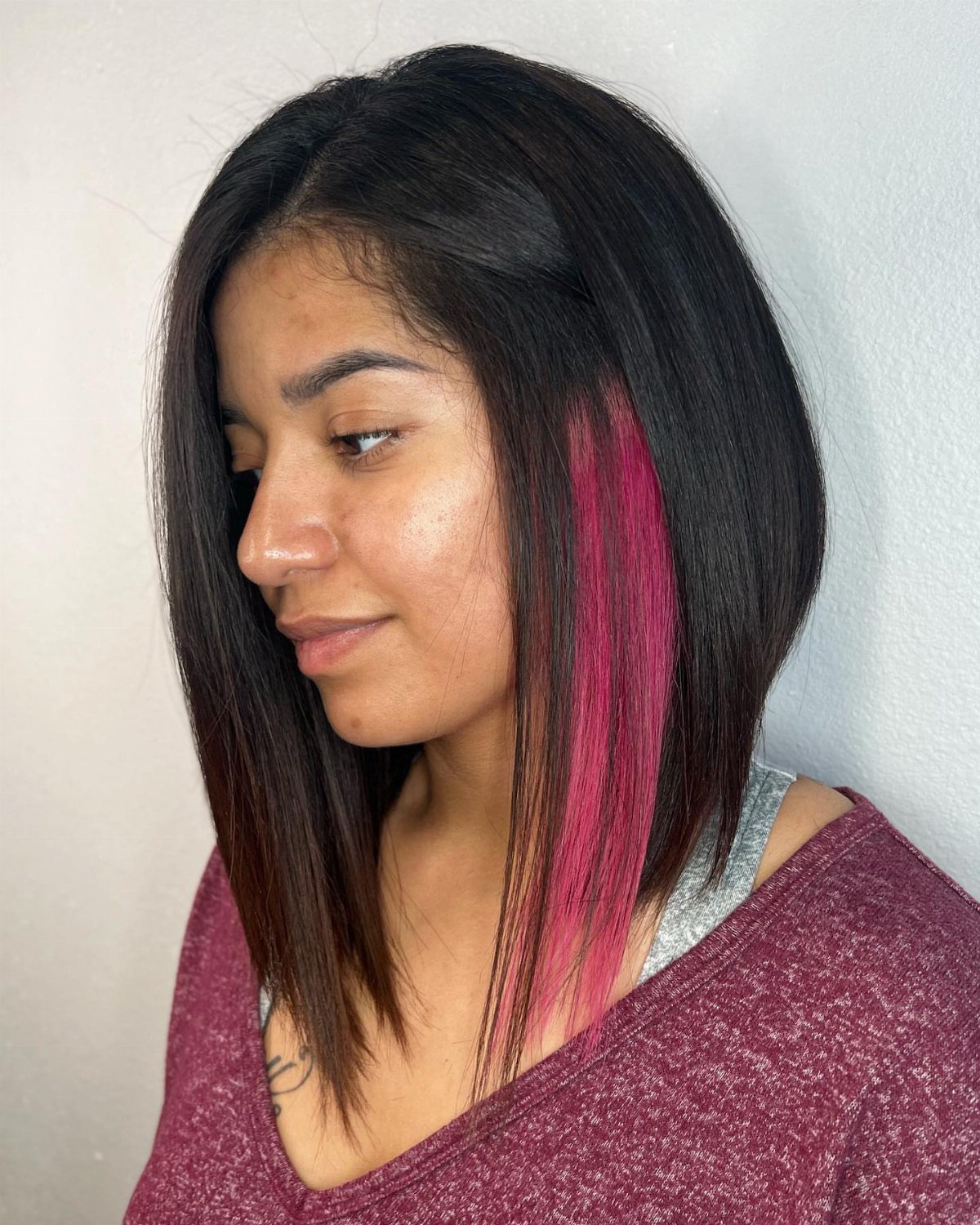
A pink streak does all the talking on a straight, dark bob, so I would keep the cut itself simple. Place it in one of the longer front sections and it shows every time the hair swings.
Bring a photo of the exact pink you want, since shades vary a lot. Ask during the consultation how the streak will be applied and how much extra time it adds to the appointment.
29. Classic Center-part Lob
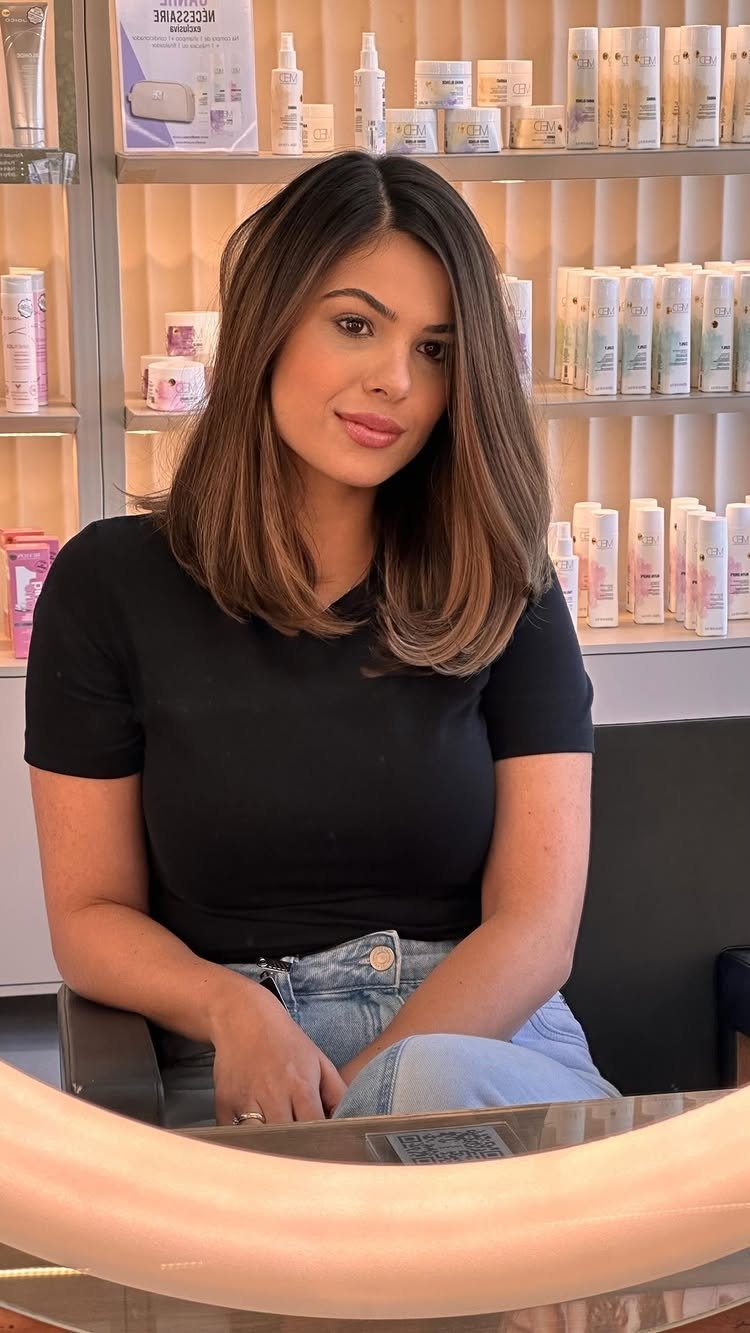
Part it down the middle and let the layers fall evenly on both sides: that is the classic lob. A center part puts both halves side by side, so any difference in length shows.
Ask your stylist to cut with the part already in place and to compare the 2 sides as they work.
Request soft layers that skim the shoulders. Styling stays easy, since a comb and a quick blow-dry do most of the job.
30. Voluminous Layered Lob
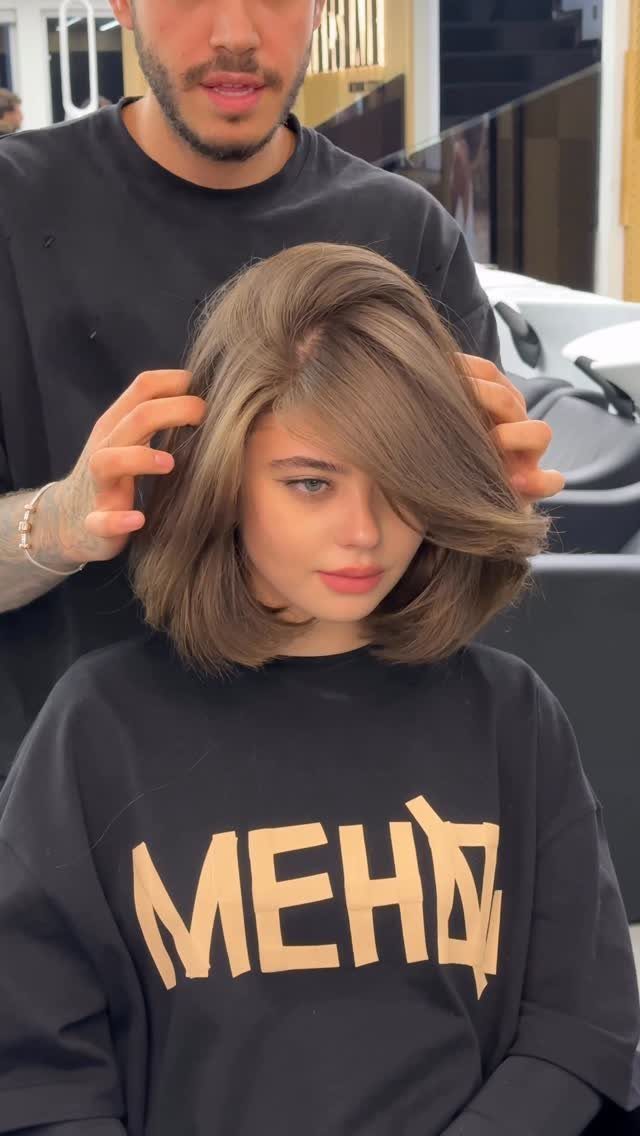
Lift at the roots is what this lob is built around, and a side part adds to it by throwing the weight to one side.
Tell your stylist how much fullness you want, so the layers are cut to support it.
To style, blow-dry the roots upward with a round brush, working from the part outward. Brown hair shows the extra body clearly, and the layers keep it from turning heavy at the ends.
31. Wavy Highlighted Lob
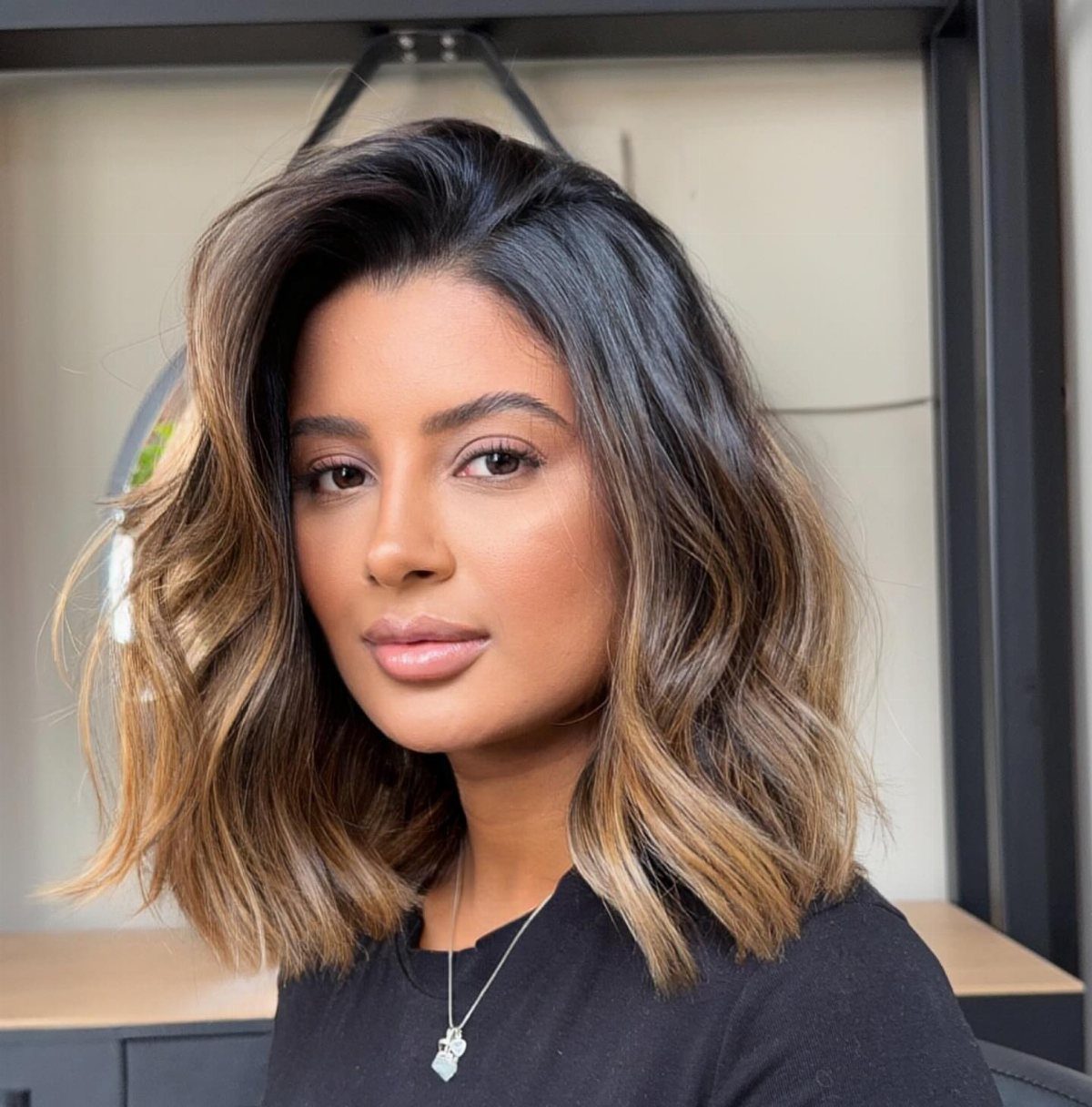
Loose waves and lighter highlights do most of the work on this layered brown lob. The waves bend the layers outward, and the highlights pick out each bend, so the shoulder-length shape looks fuller than a flat color would.
Ask your stylist to cut the layers with your waves in mind and to place the lighter pieces where the hair curves.
Bring a photo of the highlight shade you want, so the stylist can match how far it sits from your base.
I like it left a little undone.
32. Blonde Layered Lob
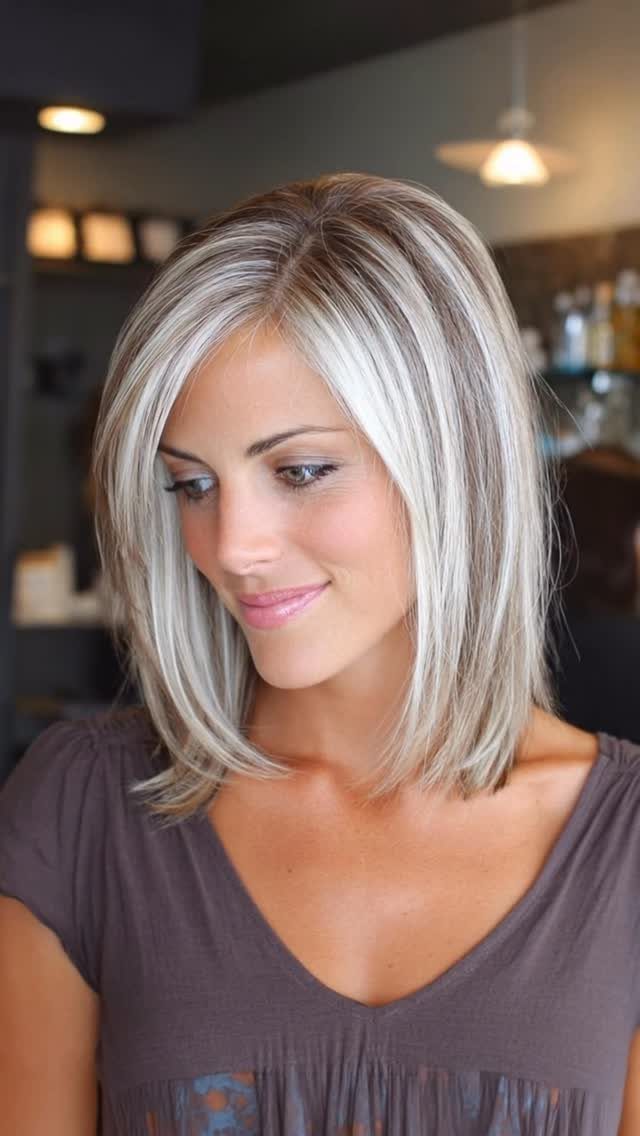
Darker roots are what keep a blonde lob like this from looking flat.
They give the color depth at the part, and a side part shows that contrast on one side while the smooth, subtly layered length falls on the other.
Ask for light layers that keep the shoulder-length line smooth, not choppy, and tell the stylist you want the roots left darker. That blend also hides regrowth, so fewer color visits.
A flat iron or a quick blow-dry keeps the finish sleek.
33. Longer-front Layered Lob
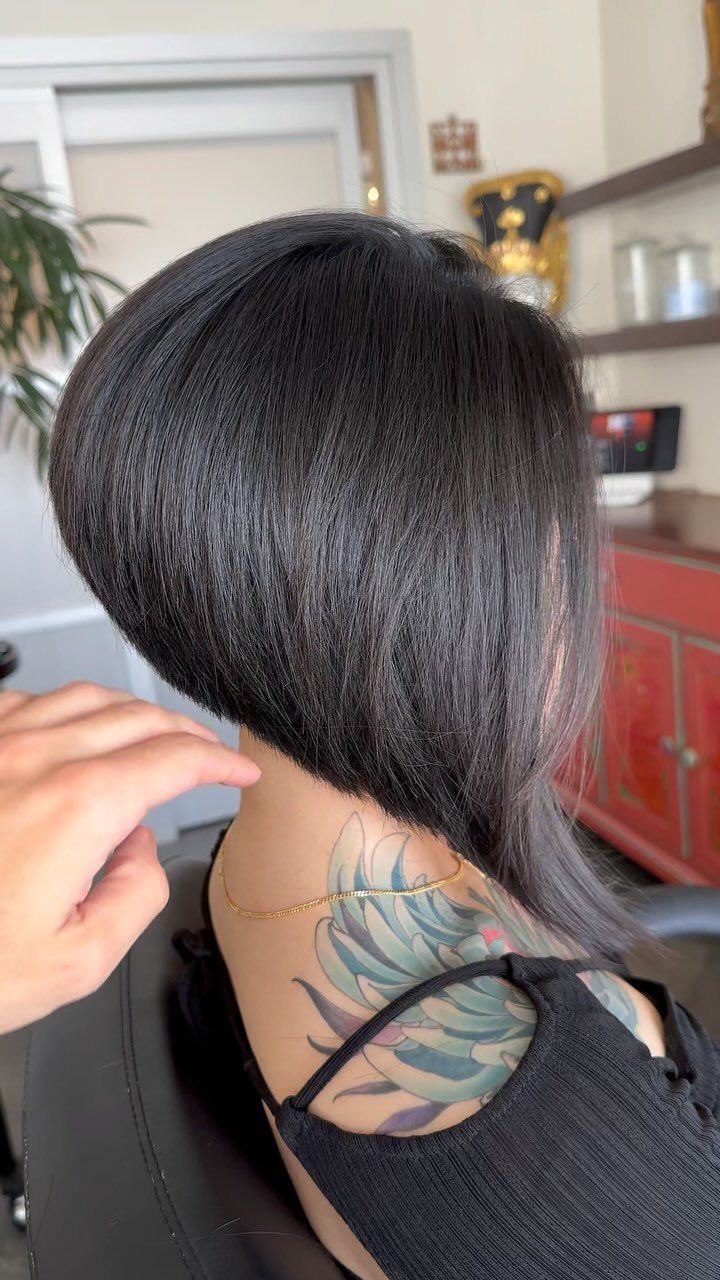
Leave the front sections longer than the back and the lob angles toward the face, which makes a smooth, dark layered cut look sharper without adding length overall. From behind, the shorter nape shows off the shape.
Tell your stylist how much longer you want the front, and ask to see the angle checked on both sides before the layers go in.
Uneven front pieces are easy to spot on dark hair, so the cut has to be precise.
Smooth styling suits it best.
Styling Time and Upkeep
A layered bob loses its shape quickly, so book the next trim for 6–8 weeks out or the layers start to blur into one heavy line.
Wait much longer and the layers drift out of the shape they were cut to hold.
A longer layered bob can mean fewer salon visits between trims, so if you want to book less often, ask your stylist to leave extra length.
Budget your mornings before you commit. At-home styling runs about 25 minutes for textured hair and 30 minutes for curly or straight hair, and a cut you can’t finish in that time ends up in a ponytail.
Choosing Length and Face Shape
Length is the decision that makes or breaks a lob.
Land the ends between the jaw and the top of the shoulders: shorter and it stops looking like a long bob, longer and the layers lose their bounce and just look like medium-length hair.
The cut also lengthens the neck and face, so weigh that before you sit in the chair. If you’re unsure, I would start at the longer end, since length can always be taken off but not put back.
Hair density changes the plan. Finer hair may do better with a cut above the shoulder, while thicker hair tends to suit a fringe or curtain bangs, plus weight removed from the ends.
Frequently Asked Questions
What is a layered bob haircut?
Think of it as a regular bob with shorter pieces cut inside the length, which gives the shape lift, movement and a bit of body it would not have blunt.
The bottom length lands somewhere between the shoulders and the ears, and the layers above it build the dimension. It works on all hair textures, and trims run about every 6–8 weeks.
What is a lob?
A lob is simply a longer bob, with the ends falling past the chin and landing around the collarbone, or just above where the shoulder blade begins.
Length defines it: too short and it looks like an uncommitted bob, too long and it becomes a plain mid-length cut. That in-between length also makes it a gentle first step if you’re nervous about going short.
Should a long bob be layered?
Usually yes. Longer layers add thickness, texture and movement, and they make the cut easier to style.
Begin the layers at chin level or lower and you keep your length while the ends pick up movement, a real help if your hair tends to fall flat.
If you want volume without an obviously layered look, ask for subtle layers tucked inside.
Which face shape suits a long bob haircut?
Just about every face shape. One stylist calls the lob flattering on every face and body shape, because the length draws vertical lines that elongate the neck and face.