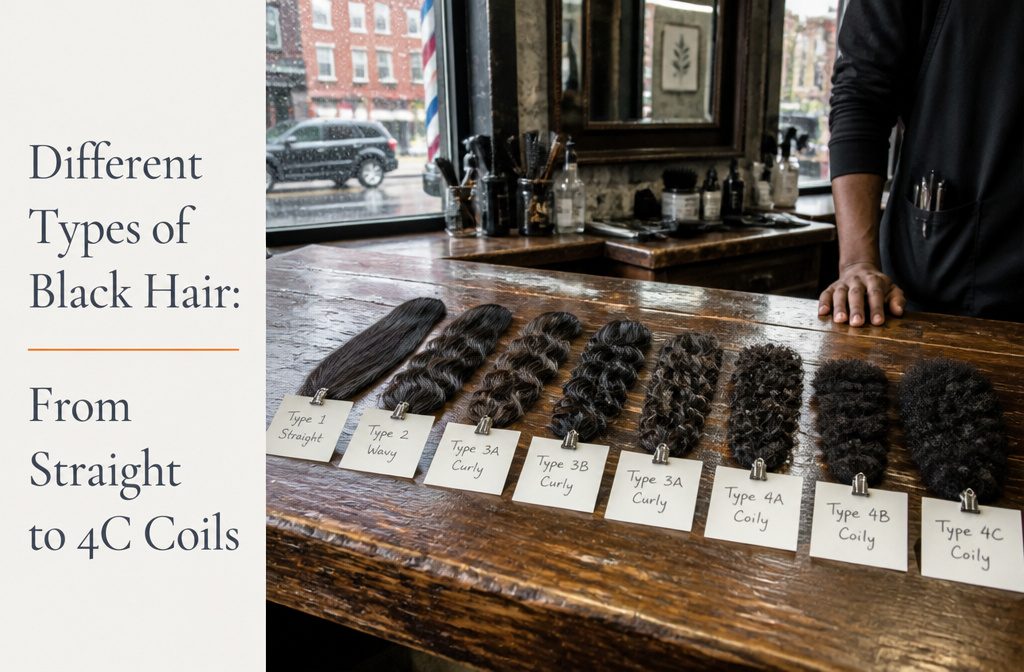
Black hair runs from straight Type 1 through wavy and curly to 4C coils, and curl pattern sorts you only so far.
Two people with the same number can need different products because porosity, how well hair absorbs and holds moisture, differs. Shrinkage shows the spread: 4B and 4C hair can pull up to 70 percent shorter than its true length.
1. Type 1 Straight Hair
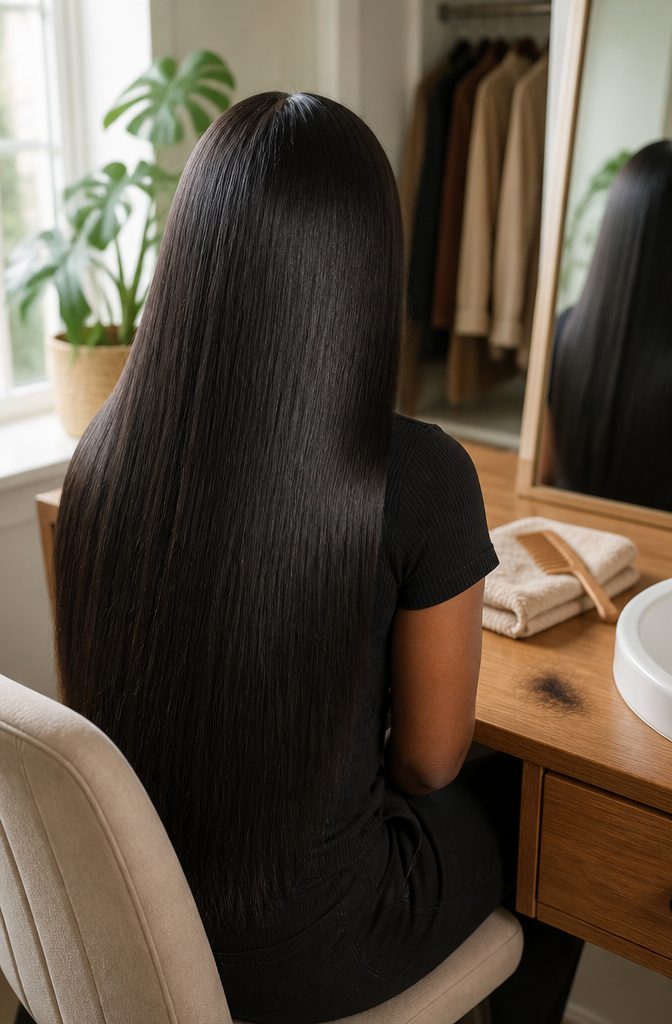
Type 1 straight hair sits flat from root to tip with no bend or wave. Scalp oils slide easily down the shaft, which gives it natural shine without much effort.
The numbered system breaks it into 1A, 1B and 1C based on thickness and body, but those divisions matter less here than in the textured categories.
I mention it because the numbered framework starts at one, and leaving it out makes the jump to Type 2 feel arbitrary.
But Type 1 is the least relevant part of a Black hair texture guide. Most of the care advice, the moisture strategies and the styling techniques that follow are built for curl and coil, not for hair that lies straight.
If you are reading this to identify your own pattern, the real work starts at Type 3.
2. Type 2 Wavy Hair
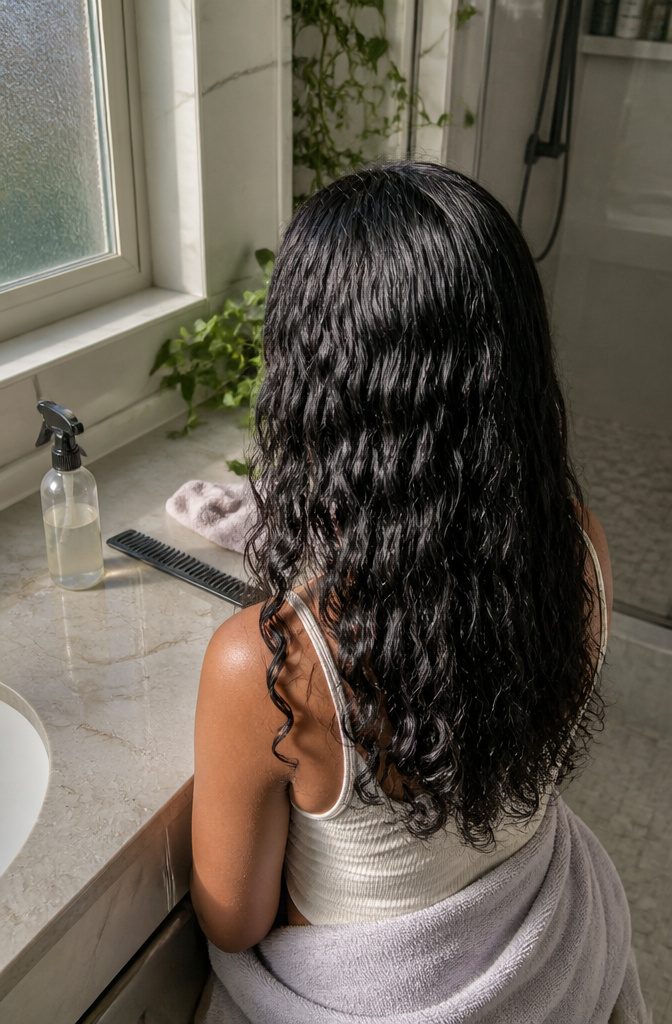
Wavy hair sits between straight and curly, forming loose S-shaped bends that run from root to ends.
The waves can hang close to the scalp or lift into more defined curves depending on the subcategory, but the pattern stays softer and more open than a true curl.
The texture gives you options that neither straight nor coiled hair allows as easily.
Waves hold shape without needing the moisture load that tighter coils demand, and they take heat styling faster than Type 1 hair because the natural bend gives you something to work with.
You can wear the wave as it dries or smooth it flat in minutes.
That versatility comes from the pattern itself.
Wavy hair reflects light almost as well as straight strands, so it reads glossy without product. At the same time, the bends create enough texture that styles lock in place and last through the day.
Lighter creams and sprays usually work better than heavy oils, since the looser structure doesn’t need as much weight to define the wave.
3. Type 3 Curly Hair
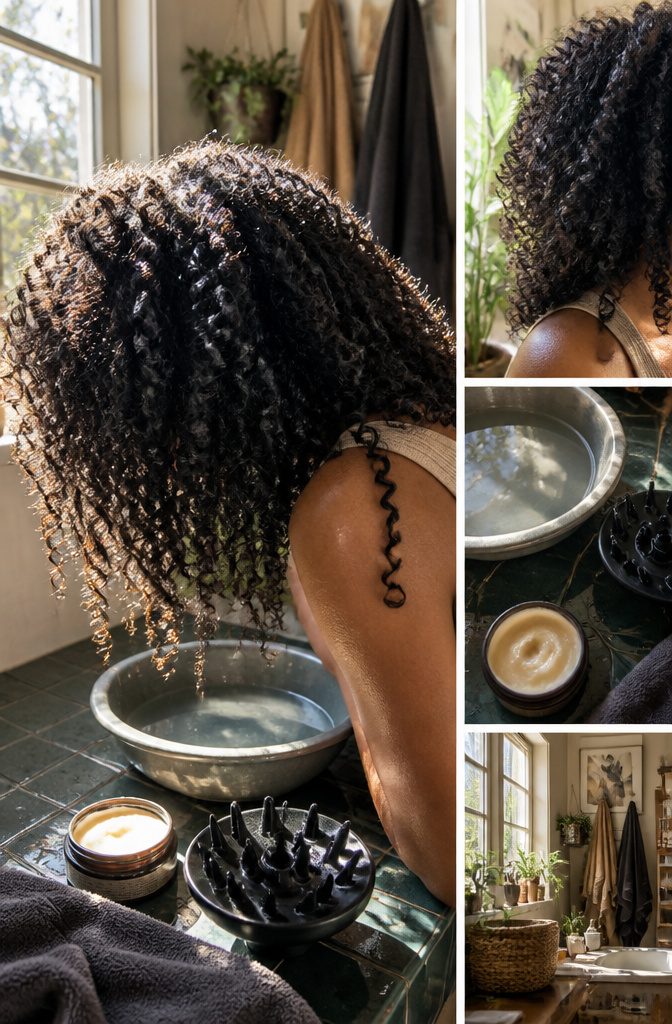
Type 3 curls form defined S-shaped spirals that range from loose and bouncy to tight corkscrews.
The category splits three ways: 3A holds big, loose curls with fine strands that look like soft waves or spirals, 3B brings tighter springy curls with medium texture, and 3C packs dense corkscrew curls with serious volume.
Tightness climbs from 3A through 3C, and so does shrinkage, the way curls coil up and look shorter than their actual length.
Moisture needs rise along the same track.
3A curls stay defined with lightweight creams and gels, 3B wants heavier products to lock in hydration, and 3C demands deep conditioning treatments and oil sealing to stay healthy. Frizz shows up fastest when any of them run dry.
Two people in the same subcategory can still need different routines if one has fine strands and the other thick, or if one head is dense and the other sparse. Pattern is just the starting point.
4. 4A Defined Coils
4A Defined Coils
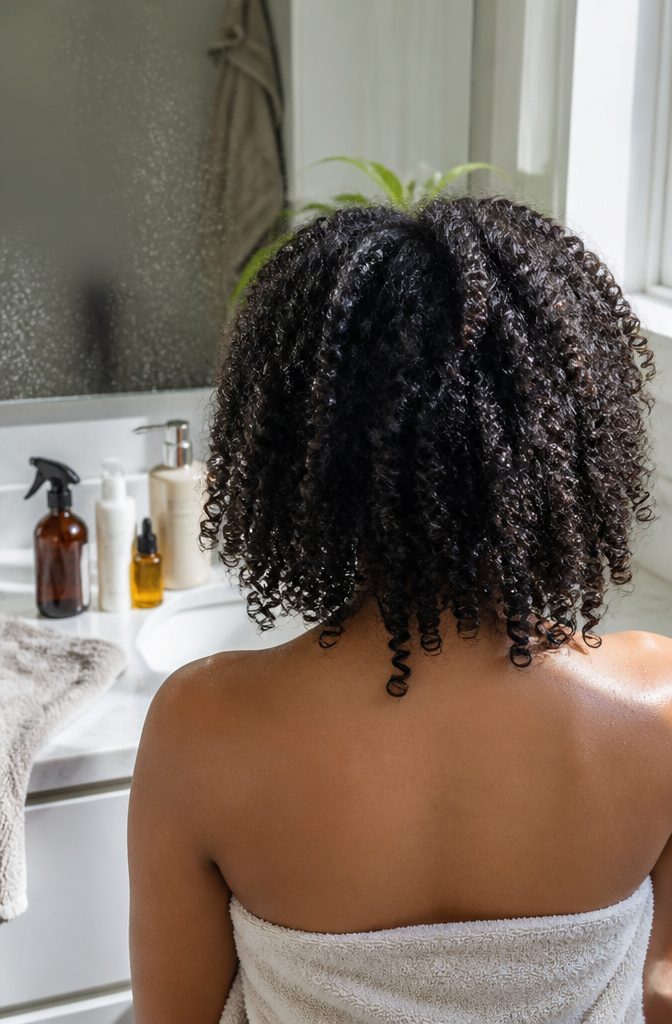
If your coils form springy, S-shaped spirals that hang relatively loosely and curl independently away from neighboring strands, you’re looking at 4A.
Yara Shahidi and Macy Gray both wear this pattern. The coils aren’t interlocked the way 4B and 4C are, which makes 4A the most forgiving of the Type 4 textures.
Each strand spirals on its own, about the circumference of a crochet needle, creating medium-sized curls with visible definition and bounce.
That loose structure means less breakage risk and easier styling. A wash-and-go routine works on most days without much fuss.
But 4A still shares the dryness problem common to all Type 4 hair. The tight coils make it hard for natural scalp oils to travel down the shaft, so regular moisture is non-negotiable.
Keep a spray bottle of water handy, spritz your scalp, and massage in your favorite oil to lock in hydration. Moisturizing shampoos, leave-in conditioners, and oils like jojoba or coconut do the heavy lifting here.
5. 4B Zigzag Coils
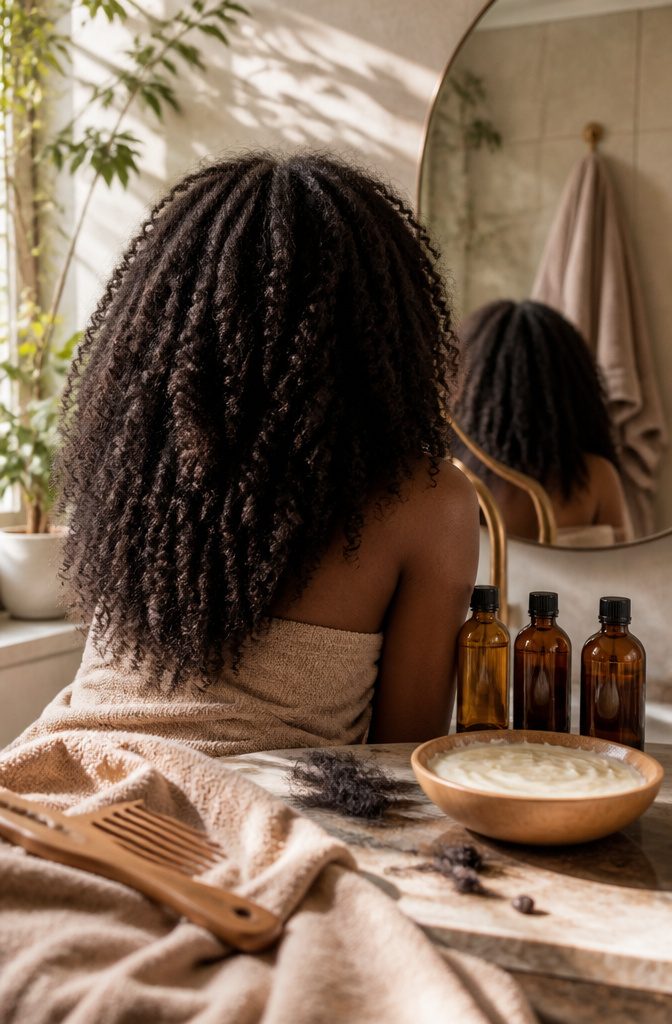
The coils bend in sharp angles instead of curves, forming a Z pattern where 4A hair would show an S. Each strand zigzags rather than spiraling, and the curl definition sits between 4A’s springy coils and 4C’s tightly packed texture.
Lauryn Hill and Esperanza Spalding both wear 4B hair, often with that cotton-candy volume the zigzag creates.
The coils are densely packed and prone to tangling, which makes single-strand knots a regular problem if you’re not careful.
Breakage is a bigger concern here than with 4A, and shrinkage can reach up to 70 percent of your actual length when the hair isn’t stretched.
That means what looks chin-length dry might fall past your shoulders when pulled. The texture itself ranges from wiry and coarse to fine and thin, depending on the individual strand thickness beneath the zigzag bends.
Moisture becomes non-negotiable. Argan, coconut, and grapeseed oils all work to keep the hair from drying out and breaking, and deep conditioning treatments prevent the brittleness that comes from stretching or manipulating the hair when it’s dry.
6. 4C Tightly Packed Coils
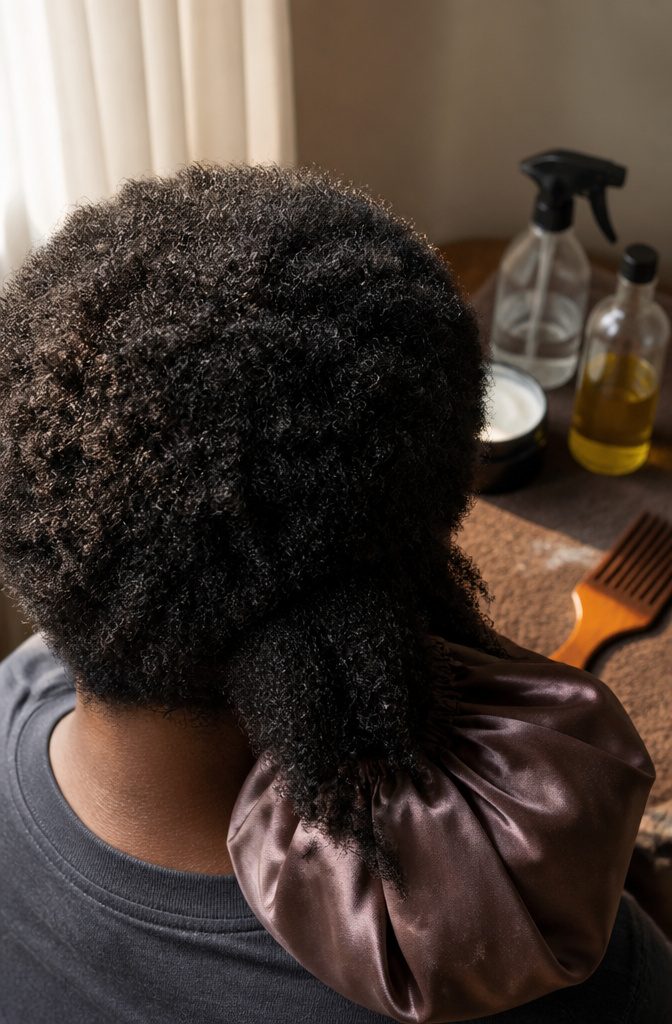
4C Tightly Packed Coils
The coils in 4C hair are so small and tightly wound that they’re hard to see from a distance.
Look closely and you’ll spot a mix of S and Z patterns, but there’s no uniform spiral the way 4A has. The strands don’t clump on their own, so definition comes from styling rather than the hair’s natural shape.
Shrinkage sits around 70 percent when the hair isn’t stretched, though some sources put it higher at 75 percent or more. That overlap appears with 4B figures too, since the line between the two types isn’t sharp and shrinkage varies between people.
Many hair experts call 4C the most fragile type in the system.
The tight coil structure makes the strands prone to breakage, and moisture retention is harder here than in any other category. Deep conditioning and protective styling aren’t optional if you want to keep length.
How the Numbered System Works
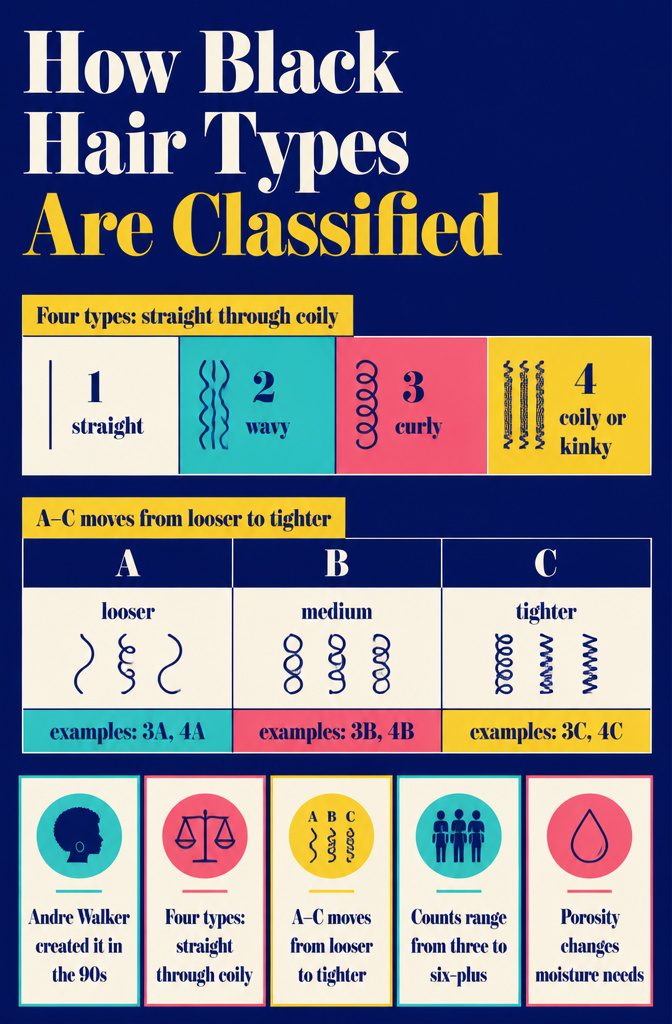
Andre Walker, Oprah’s hairstylist, created the system in the 90s. It sorts hair into four types: 1 is straight, 2 wavy, 3 curly, and 4 coily or kinky.
Letters A through C then run each type from looser to tighter, so type 3 spans loose curls to corkscrews and type 4 spans tight coils to Z-angled ones.
The system is simplified and disputed.
Counts of Black hair groups run from three to four, five, or six and up. I work with 3A through 4C, the range with the most detail behind it, and treat it as a starting point.
Curl pattern also leaves out porosity, meaning how well hair absorbs and holds moisture (low, medium or high). Two people with the same number can need different products.
Find Your Pattern
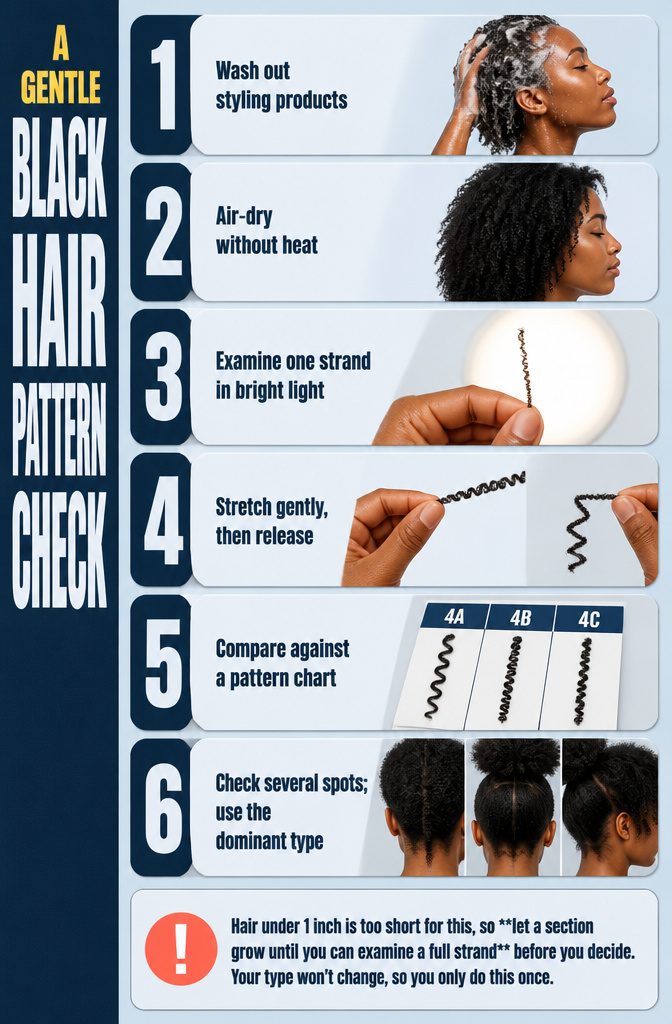
- Wash until your hair is clean and free of styling products.
- Air-dry it. Heat tools can change your natural pattern.
- Pluck one strand and hold it under bright light.
- Stretch it gently and let go. A 4B strand falls into a Z. Pulling dry hair hard can cause breakage.
- Match what you see against a chart.
- Check a few spots. One head can hold more than one type, so go by the dominant one.
Hair under 1 inch is too short for this, so let a section grow until you can examine a full strand before you decide. Your type won’t change, so you only do this once.
Moisture and Care Basics
The tighter the curl, the harder it is for oil from your scalp to slide down the shaft. That leaves Afro-textured hair naturally dry and prone to snap, especially at the ends.
Looser Type 3 curls can hold a bit more moisture and work well with lightweight, water-based leave-ins; tighter 4C coils need heavier creams, butters and oils to stay hydrated.
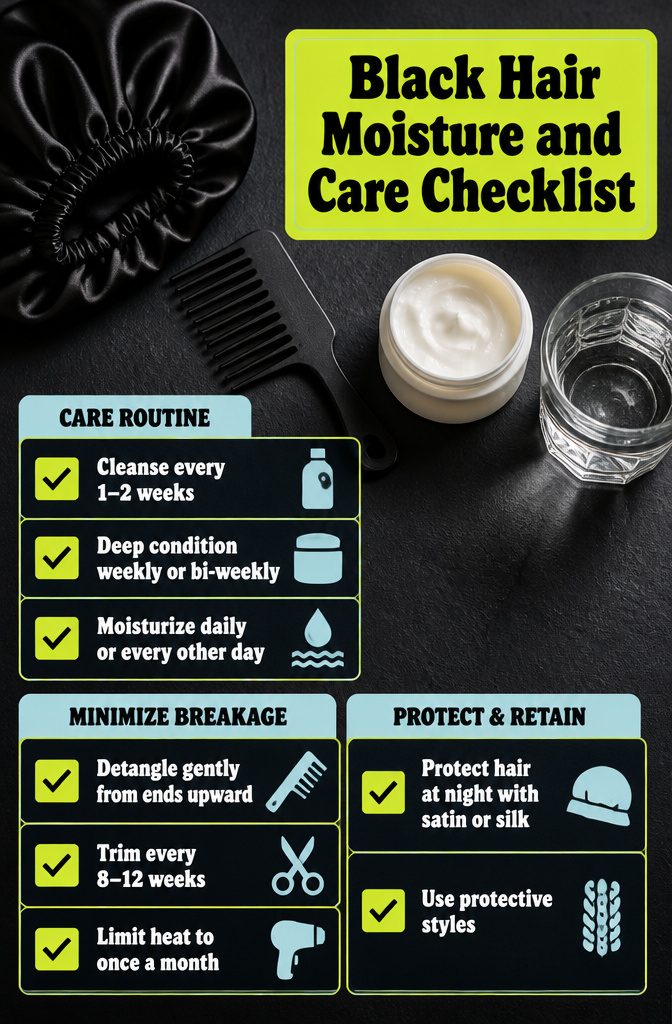
A consistent routine keeps breakage low:
- Cleanse every 1–2 weeks with a sulfate-free shampoo or cleansing conditioner to avoid stripping natural oils.
- Deep condition weekly or bi-weekly, using heat for low-porosity hair and protein-rich formulas for high porosity.
- Moisturize daily or every other day using the LOC method (liquid, oil, cream) or lighter layers for less porous strands.
- Detangle gently from the ends up with a wide-tooth comb or fingers while hair is damp and coated with conditioner.
- Trim every 8–12 weeks to stop split ends from traveling up the shaft.
- Protect at night with a satin or silk scarf, bonnet or pillowcase to prevent friction and moisture loss.
- Use protective styles like braids, twists or buns for 1–2 weeks or up to 6–8 weeks for longer styles, and keep moisturizing underneath.
- Limit heat to once a month or skip it entirely; 4C hair is especially vulnerable to heat damage that can ruin the curl pattern.
Frequently Asked Questions
How do I determine my hair type?
Wash out all product, let your hair air-dry, then look at a single strand under bright light.
Stretch it gently and compare the shape to a hair-type chart. Heat tools can change your natural pattern, and one head can hold more than one type, so go by the dominant one.
How do I find my hair type if my hair is too short?
Let a section grow until it’s long enough to examine a full strand.
Hair under 1 inch is too short to read. Your pattern doesn’t change, so holding off on a cut for a week or two, or as long as it takes, gives you a reliable answer.
What are the different types of hair in the numbered system?
The system sorts hair into 4 types: straight (1), wavy (2), curly (3) and coily (4).
Each type is split into A, B and C from looser to tighter, which is where the figure of 12 comes from. The system is simplified and disputed, so treat it as a starting point rather than a verdict.
What is the difference between 4A, 4B and 4C hair?
4A forms springy S-shaped spirals that curl on their own, 4B bends in sharp Z-shaped zigzags, and 4C packs tiny coils so tightly that the pattern is hard to see.
Shrinkage runs up to about 70 percent for 4B and around 70 percent for 4C. 4C is also the most fragile of the three.
What are 2A, 2B, 2C, 3A and 3B hair?
Type 2 is wavy hair with loose S-shaped bends, and the letters run from looser to tighter waves.
In Type 3, 3A has big, loose curls with fine strands, while 3B has tighter, springy curls with medium texture. Neither type shrinks or dries out as much as Type 4.
Why does my hair type matter?
Your type guides how much moisture your hair needs and which products suit it.
Looser Type 3 curls do well with lightweight, water-based leave-ins, while tighter 4C coils need heavier creams, butters and oils. It also shapes how often you wash, how you detangle and how you protect your hair.
What is hair porosity?
Porosity is how well your hair absorbs and holds moisture, and it’s graded as low, medium or high.
Two people with the same curl number can need different products because of it. Low-porosity hair responds well to heat during deep conditioning, and high-porosity hair benefits from protein-rich formulas.
How often should I wash afro-textured hair?
Every 1–2 weeks is the usual range, using a sulfate-free shampoo or cleansing conditioner.
Washing more often strips natural oils from hair that’s already dry. If you sweat a lot, you can co-wash between full washes.
What’s the best way to detangle without causing breakage?
Detangle while your hair is damp and coated with conditioner, using your fingers or a wide-tooth comb.
Start at the ends and work up toward the roots. Pulling through dry hair is what causes most of the snapping.
How do I prevent shrinkage in afro-textured hair?
Stretch your hair without heat by braiding or twisting it while damp.
Banding also works: tie small bands along sections and let the hair dry. Shrinkage is natural and strongest in 4B and 4C hair, so aim to reduce it rather than remove it.
What are protective styles, and how long can I keep them in?
Protective styles such as braids, twists and buns cut down on daily manipulation.
Wear them for 1–2 weeks, or up to 6–8 weeks for longer-lasting styles like box braids. Keep moisturizing underneath, and avoid pulling too tightly around your edges.
Can I use heat on afro-textured hair?
Yes, but sparingly.
Limit it to about once a month or skip it, and always apply a heat protectant first. 4C hair is especially vulnerable, since heat can ruin the curl pattern, so stretching methods that use no heat are the safer choice.
How can I keep my hair moisturized throughout the week?
Moisturize daily or every other day using the LOC method: liquid, then oil, then cream.
A leave-in conditioner or water-based spray works for reapplying between wash days. Seal with a natural oil or butter, and sleep in a satin or silk scarf, bonnet or pillowcase to hold the moisture in.
Is there a difference in hair type between men and women?
No.
The chemical composition of hair is the same, and the differences between men and women are mostly in styling rather than hair type. The same numbered system and care principles apply to both.