Dark brown wins for most people. It softens features, shows dimension in sunlight, and grows out without the stark contrast black gives you at the roots.
The warmth in chocolate, chestnut, or espresso tones flatters warm and neutral skin better than jet black, which can wash out fair or cool complexions and demands more upkeep when it fades to brass.
Color Depth and How Each Shade Appears
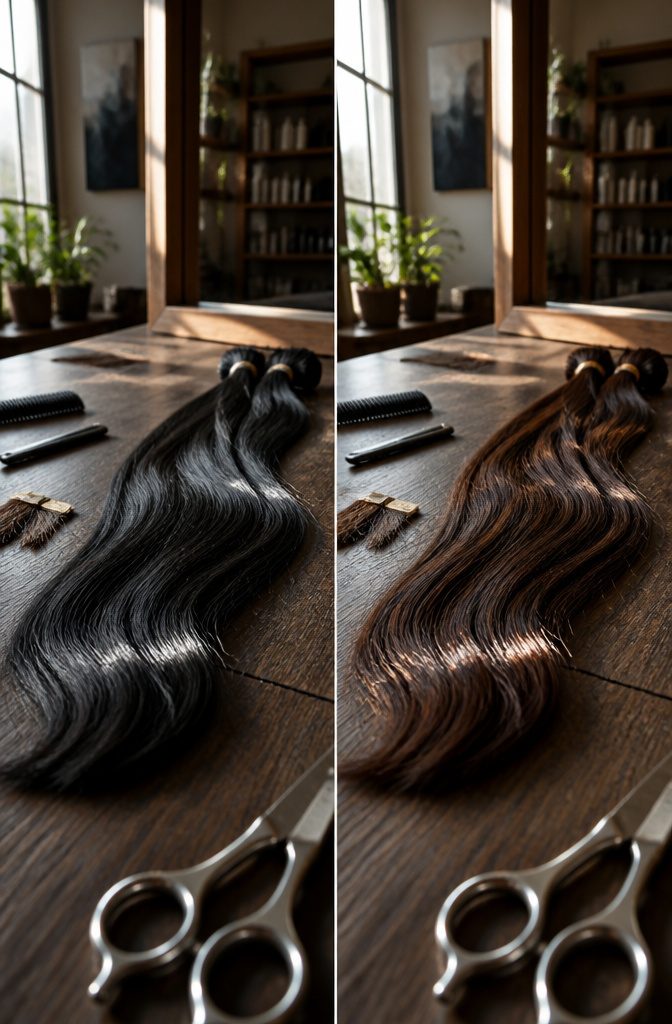
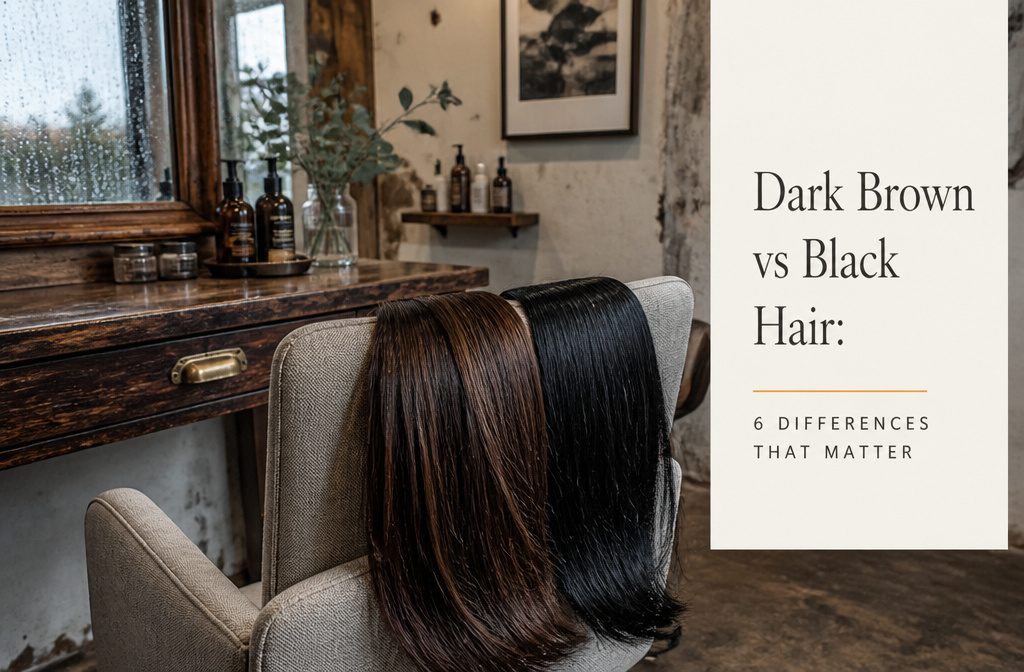
Black hair absorbs more light, giving it a denser, more uniform appearance that holds steady across most lighting conditions.
Dark brown reflects more, which is why it can look nearly black indoors but shift visibly in sunlight to reveal chocolate, auburn, or mahogany warmth.
That difference in reflectivity is what separates the two shades when you hold them side by side.
Some argue that natural black hair is actually very dark brown rather than true black, and the debate is worth keeping in mind.
Jet black exists as a glossy, cool-toned shade with no visible brown, but what most people call black hair often falls into the 1B range: deep dark brown that reads as black until strong light hits it.
Dark brown, even at its deepest, tends to show more visible variation and a softer finish than black.
Undertones and What Light Reveals
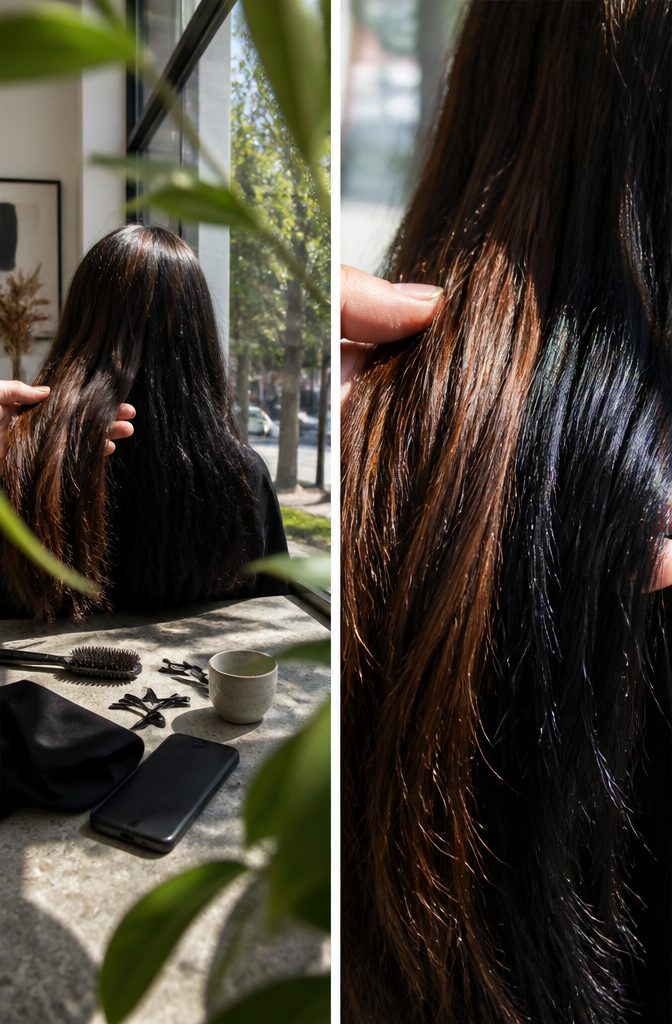
The simplest way to tell them apart is to watch what happens in direct light.
Dark brown hair reveals warm undertones — reddish, auburn, gold, or chocolate tones that black hair won’t show. Black appears neutral or cool, sometimes with a blue cast, but mostly it just looks black regardless of the angle.
That said, the line between them isn’t as clean as it sounds.
Natural black hair is technically very dark brown with concentrated pigment, which is why lighting can make black hair look brown and dark brown look black depending on where you stand.
If you’re still not sure which one you have, hold a strand next to something truly black — a piece of fabric, a phone case — and the difference usually shows up.
Brown will look softer and warmer by comparison. Black will match.
Which Shade Suits Your Skin Tone
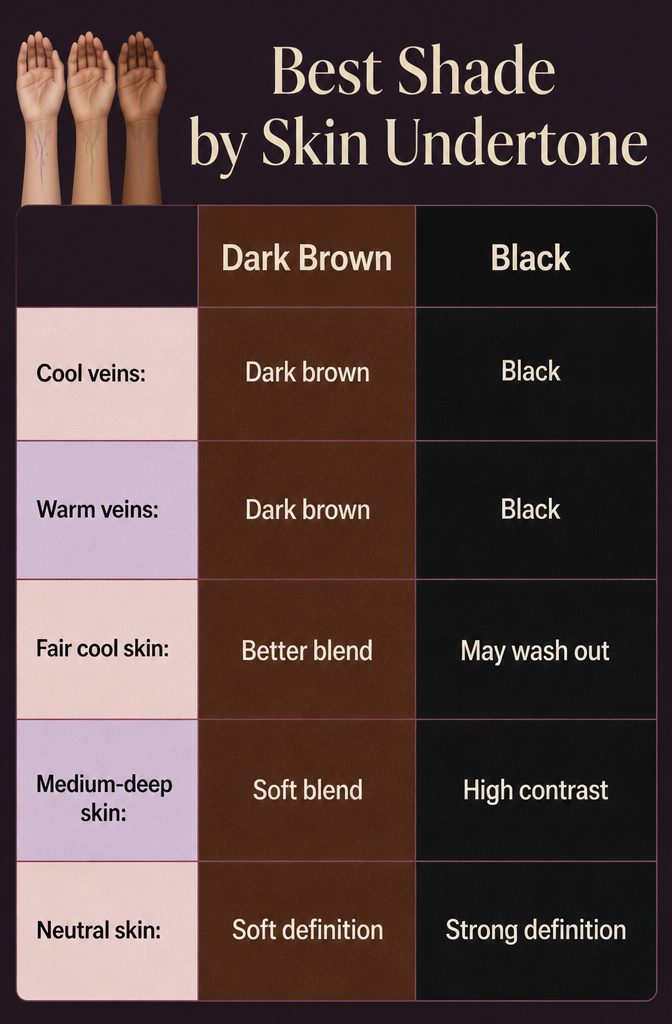
Turn your wrist over first: blue or purple veins mean a cool undertone, green means warm, and a mix of both means neutral.
Warm skin usually looks best in dark brown, where chocolate or chestnut warmth blends in softly. Cool and neutral skin can carry black or a deep black-brown, which adds definition.
Advice splits on cool skin, though. Some say black suits it; others warn that black can wash out fair, cool or pink-toned skin.
I side with the warning: on fair, cool skin, choose dark brown over jet black. Medium to deep complexions can wear either, so decide on effect: dark brown blends softly, black gives high contrast.
The Overall Style and Effect Each One Carries
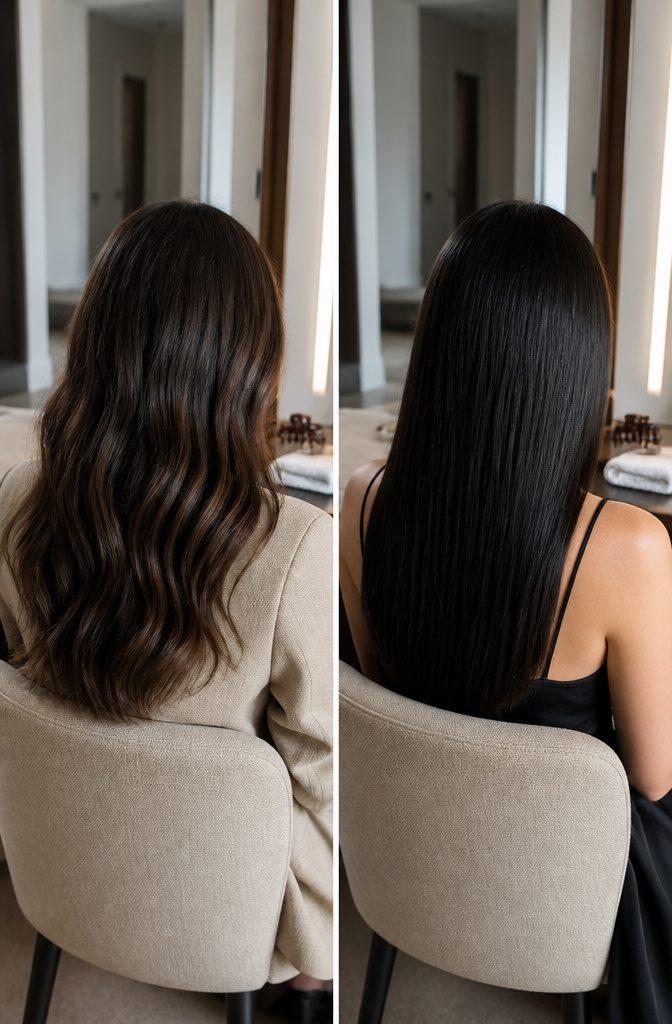
Dark brown gives you a softer, more natural appearance that works across casual and formal settings without announcing itself.
The warmth in the shade keeps things approachable, and the dimension you get in sunlight means the color reads as lived-in rather than applied.
I find it easier to wear day to day because it doesn’t demand the rest of your look match its intensity.
Black delivers drama and polish in a way brown doesn’t. It frames your face with high contrast, reads as sleek and deliberate, and carries that classic, timeless quality that works whether your hair is straight, curly, or cut short.
The look is bold without trying, and if your style leans edgy or you want your hair to make a statement, black does that work for you.
The finish can feel formal even when you’re not, and on mature skin it sometimes draws attention to fine lines where brown would soften them.
Maintenance, Fading, and Root Visibility
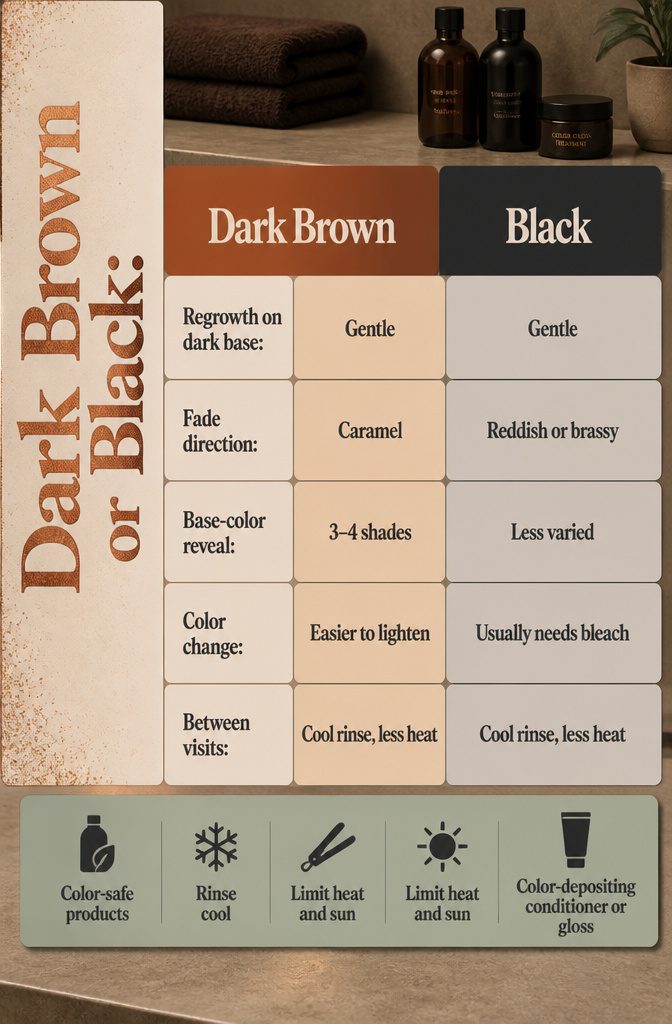
Roots are contested ground, since both shades get called the one that shows regrowth more. Your natural color settles it: if you’re already very dark, either shade grows out gently, while a lighter base makes both a commitment.
Fading splits the same way. Dark brown can slide toward caramel and may reveal 3–4 shades of base color as it loses depth, while black can turn reddish or brassy.
I’d pick dark brown if you like changing your mind, because it lightens more easily and black usually needs bleach to leave.
For either shade, use color-safe products, rinse cool, and limit heat and sun. A color-depositing conditioner or gloss refreshes tone between salon visits.
Choosing Your Shade
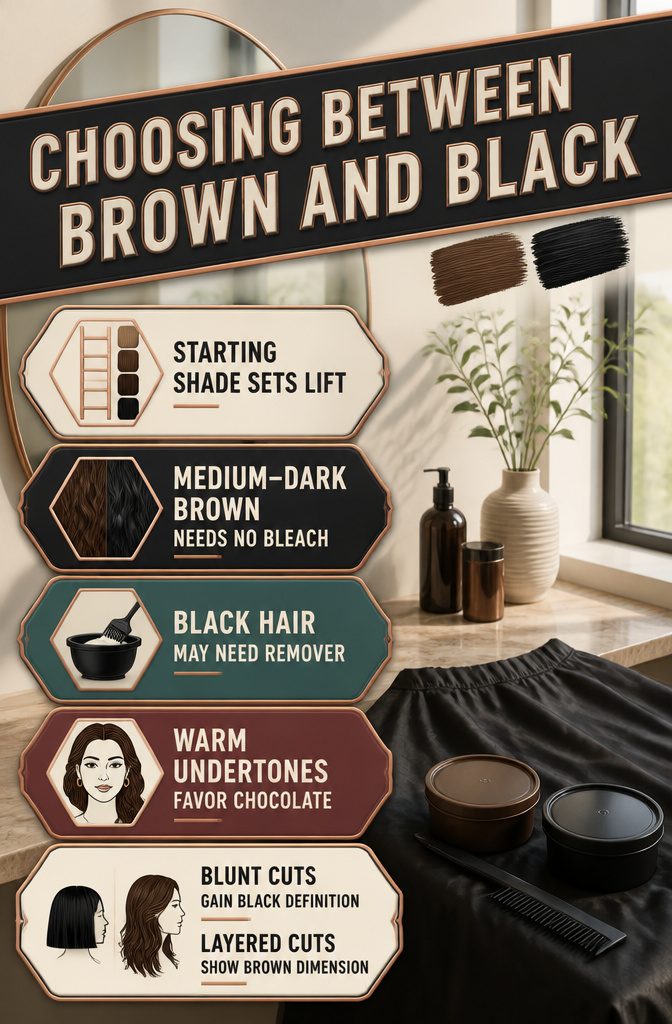
Your natural starting shade decides how much lift or deposit the color needs, and that matters more than most marketing copy admits. If your hair currently sits anywhere from medium brown to dark brown, either shade is reachable without bleach.
Black hair moving to dark brown usually needs a professional color remover or multiple sessions, because lifting black pigment at home tends to pull orange or brassy before it reaches brown.
Starting from light brown or previously lightened hair, dark brown is straightforward; black will take, but expect it to grab darker and more intense than the swatch suggests.
Skin tone, undertones, and eye color all play a role in which shade reads as intentional rather than mismatched. Warm undertones handle chocolate and mocha browns better than stark black, while cool undertones can carry both.
If gold jewelry flatters you more than silver, lean brown. If both work equally well, you have neutral undertones and either shade is on the table.
Your age and the cut you’re planning also factor in: shorter styles with blunt edges often benefit from the definition black provides, while longer cuts with layers tend to show dimension better in dark brown.
Neither shade is universally more attractive. Choose based on whether the color complements your features and feels like the look you actually want to maintain.
Extension Shade Labels: 1B, 1, and 4
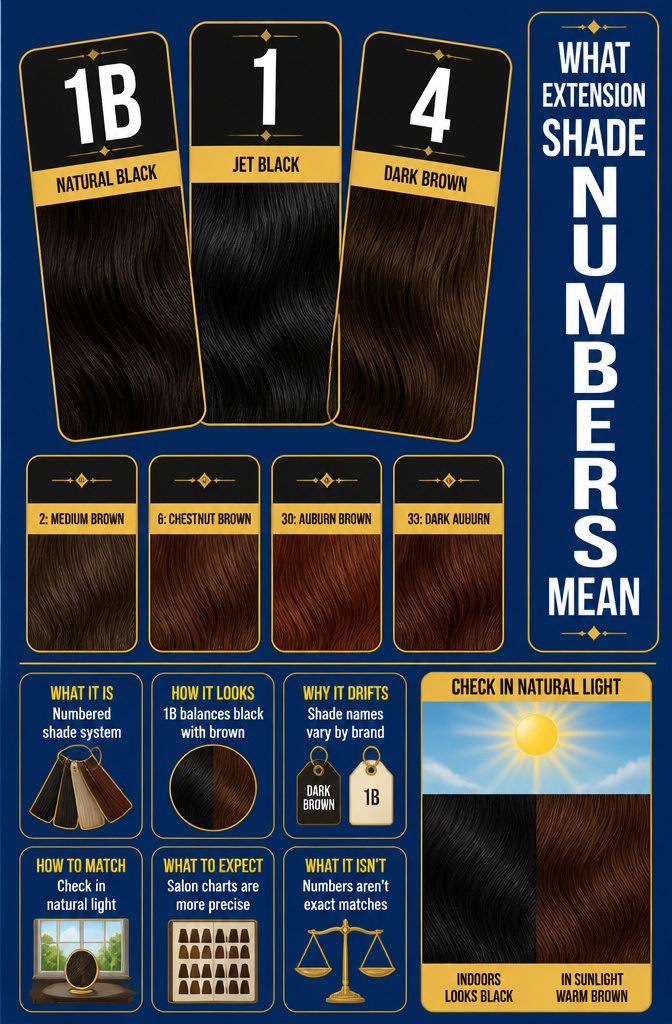
Extension brands use a numbered system that feels precise until you try to match a shade across manufacturers.
1B is labeled Natural Black and sits visually between brown and black—deep enough to read as black indoors but showing warm brown undertones in direct sun. 1 is Jet Black, the coolest and darkest option with no brown warmth.
4 is Dark Brown, a step lighter and noticeably warmer than 1B. You’ll also see 2 for Medium Brown, 6 for Chestnut Brown, 30 for Auburn Brown, and 33 for Dark Auburn on most charts.
The problem is that shade names drift between brands. Brown-black may be called dark brown, nearly black, almost black, or 1B depending on who made it.
One brand’s chocolate brown can land warmer and lighter than another’s, and salon color charts often split shades more finely than extension packaging does.
Treat the numbers as references rather than exact matches, and judge the final tone in natural light before committing.
Dark Brown Shades Worth Knowing
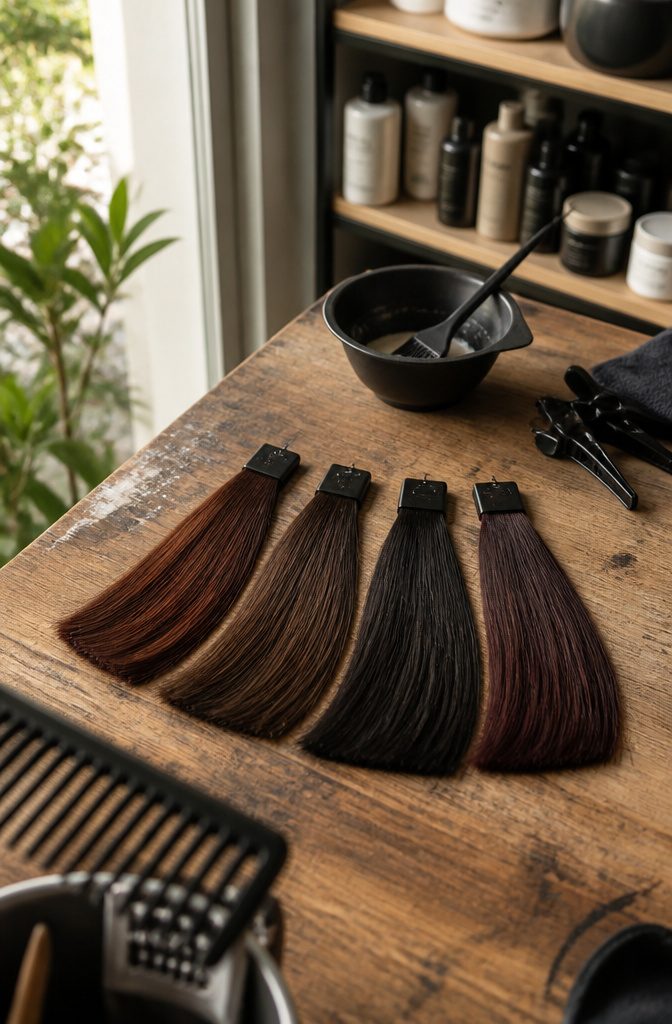
Dark brown covers more range than you’d think from the label.
The four shades that turn up most often are chocolate brown (warm, with reddish undertones), chestnut brown (medium-dark brown with golden or reddish highlights), espresso brown (deep, almost-black with neutral undertones), and mahogany brown (dark brown with reddish or burgundy undertones).
- Chocolate brown: warm and rich, the reddish undertones keep it from reading flat
- Chestnut brown: lighter than the others in this group, with golden or reddish highlights that catch light
- Espresso brown: the deepest of the four, sits closest to black and reads neutral rather than warm or cool
- Mahogany brown: darker than chocolate, with reddish or burgundy undertones that lean cooler
The warmth is what separates them.
Chocolate and mahogany both have red in them, but chocolate skews warmer while mahogany can read cooler depending on how much burgundy is in the mix. Chestnut sits lighter and brighter, espresso darker and more neutral.
Lightening Black Hair at Home
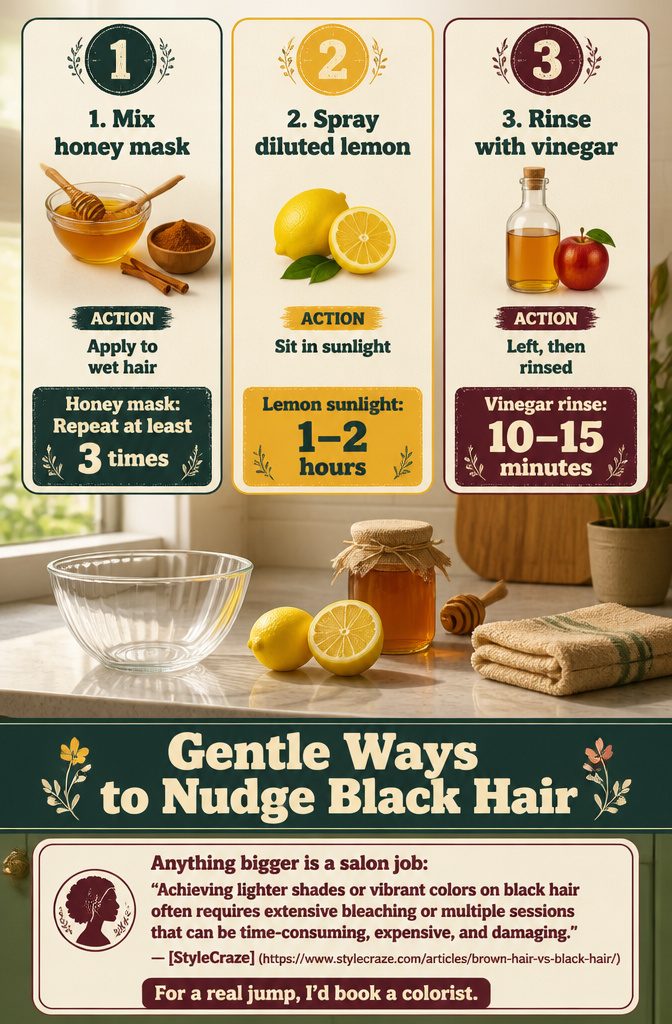
Black is harder to lighten than brown, so these kitchen methods only nudge it.
- Honey mask: mix 1/4 cup honey, 1 tablespoon cinnamon and 1/4 cup conditioner, apply to wet hair, cover, and leave 2–4 hours. Repeat at least 3 times.
- Lemon juice: spray it, diluted with water, then sit in sunlight for 1–2 hours. Rinse and condition.
- Vinegar rinse: 1 part apple cider vinegar to 2 parts water, left 10–15 minutes, then rinsed.
Anything bigger is a salon job:
Achieving lighter shades or vibrant colors on black hair often requires extensive bleaching or multiple sessions that can be time-consuming, expensive, and damaging.
For a real jump, I’d book a colorist.
Frequently Asked Questions
Are dark brown and black hair the same?
No. Black hair absorbs more light and looks denser and more uniform, while dark brown reflects more and shows warm reddish, auburn, or chocolate tones in sunlight.
Dark brown can pass for black indoors, so the gap shows most in bright light.
Is there actually black hair, or is it all dark brown?
Both are partly true.
Natural black hair is very dark brown with highly concentrated pigment, and much of what people call black is a deep dark brown around 1B. Jet black does exist as a glossy, cool shade with no visible brown.
How do I tell if my hair is dark brown or black?
Check it in direct natural light.
If you see brown, reddish, auburn, or caramel tones, it’s dark brown. You can also hold a strand next to something truly black, like fabric or a phone case: brown looks softer and warmer next to it, while black matches.
If your hair is dyed, judge the roots rather than the dyed strands.
Can black hair look brown in certain lighting?
Yes.
Sunlight and warm indoor light can bring out brown tones underneath black hair. It works the other way too: dark brown hair can look black in a dim room.
What makes hair black or brown?
Melanin in the hair shaft, specifically the amounts of black and brown eumelanin. More brown eumelanin gives a dark brown natural color, and a very high concentration of pigment reads as black.
Can hair color change from black to brown or the other way around?
Yes.
Dye, bleaching, sun exposure, and aging can all change how your color looks. Going from black to dark brown usually takes a professional color remover or several sessions, since lifting black at home tends to pull orange or brassy.
Fading shifts each shade differently: dark brown can slide toward caramel, and black can turn reddish or brassy.
Is black or dark brown hair more attractive?
Neither wins outright.
It depends on your skin tone, features, and style. Dark brown blends softly and suits warm undertones and fair, cool skin, while black gives a sleek, high-contrast look.